Bakuchiol Supplements for Skin: The Natural Retinol Alternative
Summarized from peer-reviewed research indexed in PubMed. See citations below.
Retinol is the dermatologist’s benchmark for anti-aging skin care, but a large share of people who try it end up stopping because of redness, peeling, and stinging. Bakuchiol, a compound extracted from the seeds of the babchi plant (Cullen corylifolium, formerly Psoralea corylifolia), is the most-studied natural alternative: a randomized, double-blind trial in 44 patients found that 0.5% bakuchiol cream used twice daily reduced wrinkle surface area and hyperpigmentation about as well as 0.5% retinol over 12 weeks, with significantly less scaling and stinging (PubMed 29947134). Gene-expression work shows why: bakuchiol changes the activity of many of the same collagen-related genes as retinol without activating the retinoic acid receptors that drive retinoid irritation (PubMed 24471735).
One thing needs to be clear before you buy anything: the evidence is for bakuchiol applied to the skin. Products marketed as “bakuchiol serum,” “bakuchiol cream,” or “bakuchiol capsules for topical use” are what the trials tested. Oral “bakuchiol supplements” in capsule form have no published human trials showing any skin benefit, and babchi seed extracts carry a psoralen phototoxicity concern that topical purified bakuchiol does not. So this guide reviews the real clinical data, recommends topical serums at the studied 0.5% concentration, and explains exactly where the oral-supplement marketing outruns the science.
Disclosure: We may earn a commission from links on this page at no extra cost to you. Affiliate relationships never influence our ratings. Full policy →
Quick Comparison: Top Bakuchiol Serums
| Product | Price | Key Ingredients | Format | Best For |
|---|---|---|---|---|
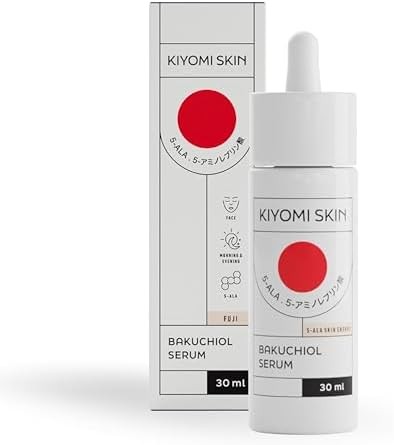
| Bakuchiol Serum with 5-ALA & Niacinamide | $49.90 | Bakuchiol, 5-ALA, niacinamide | 1 fl oz airless serum | Comprehensive anti-aging |
| HKH Plant Retinol Serum | $24.99 | Bakuchiol, rock rose, peptides | 30 single-use capsules | Budget + freshness |
| Thrive Natural Care Bakuchiol Serum | $36.95 | Bakuchiol, hyaluronic acid, antioxidant blend | 1 fl oz pump | Sensitive skin |
| PUREANCE Organic Plumping Serum | $49.00 | Bakuchiol, sea buckthorn, camu camu, jojoba | 1 fl oz serum | Organic, antioxidant-rich care |
None of these brands publishes its exact bakuchiol percentage on the Amazon listing, which is worth knowing because the clinical trials used 0.5% and the 2024 systematic review found that 4 of 15 human trials did not even state their concentration (PubMed 38564402). If a product does not disclose its percentage, contact the manufacturer and ask, or choose a brand that prints “0.5%” or higher on the label.
What Is Bakuchiol and Where Does It Come From?
Bakuchiol is a meroterpene phenol, a natural compound that plants make from a mix of terpene and phenol building blocks. Its only commercial botanical source is the fruit of Cullen corylifolium, the plant long known in herbal medicine as Psoralea corylifolia and commonly called babchi. The seeds of babchi have been used in traditional medicine across Asia for skin disorders and other conditions for centuries, and bakuchiol is the component modern cosmetic chemistry isolated from them (PubMed 33185126).
The compound became a skincare star for one specific reason: it does not look like a retinoid and does not bind the retinoic acid receptors, yet it produces retinol-like changes in how skin cells express genes. When researchers compared bakuchiol and retinol side by side on full-thickness skin models, the overall gene-expression fingerprints were remarkably similar, including upregulation of type I and type IV collagen, with type III collagen stimulation seen in mature fibroblast models. A finished 0.5% bakuchiol product used twice daily in the same paper’s clinical case study produced significant improvements in lines, wrinkles, pigmentation, elasticity, and firmness at 12 weeks without the irritation typical of retinol (PubMed 24471735).
A note on names: if you see “babchi,” “bakuchiol,” and “Psoralea corylifolia” used interchangeably on labels, they are related but not identical. Bakuchiol is a single purified compound. Babchi seed oil and whole-seed extracts contain bakuchiol plus many other molecules, including psoralens, and the two are not interchangeable for skin safety, a point we return to in the oral-supplement section below.
What Does the Clinical Research on Bakuchiol Show?
The human evidence on bakuchiol is small but real, and it is important to read it at full strength rather than through marketing summaries. A 2024 systematic review located 15 human clinical trials of topical bakuchiol, covering skin aging, acne, and post-inflammatory hyperpigmentation. The same review is blunt about quality: 12 of the 15 trials were open-label with no control group, 10 tested bakuchiol inside combination formulas, and 4 never stated their bakuchiol concentration, which rules out meta-analysis and leaves a high risk of bias across the literature (PubMed 38564402). Other reviews of the dermatology applications and of the in vitro and in vivo evidence reach similarly measured conclusions (PubMed 36176207, 35674758).
Against that backdrop, three studies carry most of the weight, and each is worth understanding precisely.
The Head-to-Head Trial: Bakuchiol vs. Retinol for Photoaging
The study everyone cites is the 2019 randomized, double-blind trial from the British Journal of Dermatology. Forty-four patients applied either 0.5% bakuchiol cream twice daily or 0.5% retinol cream once daily for 12 weeks. High-resolution facial photography analyzed at weeks 0, 4, 8, and 12 showed that both groups significantly decreased wrinkle surface area and hyperpigmentation, with no statistically significant difference between the two compounds. The tolerability story is where they split: retinol users reported significantly more facial scaling and stinging (PubMed 29947134).
What this does and does not mean: it means a 0.5% bakuchiol product used twice a day is a reasonable substitute for 0.5% retinol for photoaging in people who cannot tolerate retinol. It does not mean bakuchiol is stronger than retinol at every job: the trial enrolled patients with photoaging, not acne or other conditions, and it tested one concentration against one concentration.
The Sensitive-Skin Study: Tolerability Where Retinol Fails
Because the main reason people abandon retinoids is irritation, bakuchiol’s tolerability data matter as much as its efficacy data. In a 4-week study, 60 women aged 40-65 with sensitive skin (a panel built from one-third eczema/atopic dermatitis, one-third rosacea, and one-third cosmetic intolerance syndrome) used a nature-based bakuchiol cleanser and moisturizer twice daily. The regimen was well tolerated across all three sensitive-skin subgroups, with statistically significant investigator-rated improvements in smoothness, clarity, radiance, and overall appearance, and a 16% measured increase in cheek skin moisture (PubMed 33346506). Note that this trial used cleanser and moisturizer formats rather than a leave-on serum, which is exactly the gentle delivery that sensitive skin tolerates.
The Acne and Dark-Spot Study: Evidence for Skin of Color
Bakuchiol also has pilot data for acne and post-acne dark spots, conditions where retinoids are standard but irritation often limits use. In an open-label pilot, 13 people with mild to moderate acne, enriched for Fitzpatrick skin types III-VI, applied a 0.5% bakuchiol cream (UP256) twice daily for 12 weeks. Inflammatory lesion counts fell significantly and existing post-inflammatory hyperpigmentation improved, with good tolerability across all skin tones (PubMed 33683079). Mechanistic work on the same UP256 formula in cultured melanocytes, reconstituted skin, and zebrafish found it reduces melanin synthesis by lowering tyrosinase, TRP-1, TRP-2, and SOX9 activity and by limiting melanocyte dendrite formation (PubMed 32731326). Those are laboratory models, so view the mechanism as explanatory support, not human proof of a lightening effect.
What Does the Rest of the Trial Literature Look Like?
Beyond the three studies above, the wider literature is a collection of small trials that the systematic reviews describe more accurately than any single brand will. Fanning’s 2024 review, the most recent sweep of human data, identified 15 clinical trials of topical bakuchiol for facial skin conditions: aging, acne, and post-inflammatory hyperpigmentation dominated the list. Twelve of the 15 were open-label trials with no control group, ten tested bakuchiol inside combination products where its individual contribution cannot be isolated, and four did not even report the bakuchiol concentration used (PubMed 38564402). A 2022 systematic review of bakuchiol’s applications in dermatology and a 2022 review of the in vitro and in vivo evidence reach the same basic conclusion from different angles: the mechanism is plausible and the early clinical signal is consistent, but the study designs are too weak to support the kind of definitive claims the marketing uses (PubMed 36176207, 35674758).
Newer work is slowly raising the bar. A 2026 randomized, double-blind, placebo-controlled trial enrolled 80 men aged 45-65 and tested a genistein-plus-bakuchiol-and-vitamins product applied twice daily for 12 weeks against placebo, with blinded assessments of pigmentation, elasticity, hydration, barrier function, and wrinkles at weeks 4, 8, and 12 (PubMed 41562471). A placebo-controlled design in 80 people is a meaningful step up from the open-label pilots that dominate the bakuchiol literature, and it signals where the research is heading, even though one trial of a combination product will not by itself settle the ingredient’s reputation.
Why this matters when you shop: a product whose claims rest on “clinically proven” language may be citing a 13-person open-label pilot or a combination-formula study where bakuchiol was one of several actives. The honest mental filter is simple: prefer products that disclose their bakuchiol percentage, and judge claims against the three studies above rather than against the word “clinical” on a label.
The evidence shows: Across the controlled human data, 0.5% bakuchiol twice daily for 12 weeks matches 0.5% retinol for reducing wrinkle surface area and hyperpigmentation with less scaling and stinging (44-patient RCT, BJD 2019), is well tolerated in sensitive-skin panels including eczema and rosacea (60-woman study, 16% moisture gain), and shows pilot efficacy for acne lesions and post-acne dark spots in skin types III-VI, with the caveat that most bakuchiol trials are small, open-label, or combination-formula studies.
How Does Bakuchiol Work in the Skin?
Understanding bakuchiol’s mechanism explains both its promise and its limits.
To see why bakuchiol is gentle, it helps to know why retinoids are not. Retinol is converted inside skin cells into retinoic acid, which then binds to retinoic acid receptors (RARs) and retinoid X receptors (RXRs) in the nucleus. Those receptors act as transcription factors, switching dozens of genes on and off, including the collagen and cell-turnover programs that give retinoids their anti-aging and anti-acne effects. But the same receptor signaling drives the retinoid reaction: increased epidermal turnover thins the stratum corneum temporarily, inflammatory signaling rises, and the result is the classic retinoid dermatitis of redness, scaling, burning, and stinging that peaks in the first weeks of use. Prescription-strength retinoids and, to a lesser degree, over-the-counter retinol and retinal all run through this pathway, which is why irritation is dose-dependent and why manufacturers buffer it with slow-release formulations and moisturizing vehicles.
Bakuchiol’s structural trick is that it produces retinol-like gene-expression changes without engaging those nuclear receptors. In the EpiDerm full-thickness skin model, bakuchiol and retinol produced broadly overlapping gene-expression profiles, and bakuchiol upregulated type I and IV collagen in microarray analysis while stimulating type III collagen in mature fibroblast models (PubMed 24471735). Because it does not activate RAR signaling, it sidesteps the receptor-driven inflammatory cascade that makes retinoids hard to tolerate, which is the mechanistic reason the clinical trials consistently show gentler tolerability.
Retinol-like gene regulation without receptor binding. The practical consequence of the gene-expression work is a collagen-supporting program that resembles retinol’s without the receptor-driven irritation, and the clinical correlate showed up in the head-to-head trial: comparable wrinkle and pigmentation improvements with significantly less scaling and stinging (PubMed 29947134). Collagen support is the shared outcome; the irritation pathway is what bakuchiol skips.
Antioxidant and anti-inflammatory activity. Bakuchiol is a phenolic compound, and phenols are electron donors. Reviews of the in vitro and in vivo literature describe consistent antioxidant and anti-inflammatory effects alongside the collagen-related activity, which is the rationale for pairing it with morning vitamin C and sunscreen (PubMed 35674758). In a mouse model of UVB-induced photoaging, bakuchiol combined with glabridin reduced dermal thickening and mast cell infiltration in irradiated skin, experimental evidence that the compound can blunt UV-driven skin changes when applied topically (PubMed 38497297).
Pigmentation pathways. Beyond the clinical improvements in hyperpigmentation seen in the Dhaliwal trial, laboratory studies show bakuchiol-containing UP256 suppresses melanin production at several steps: reducing tyrosinase and related enzymes, limiting melanocyte dendrite outgrowth, and acting on Rho-dependent signaling (PubMed 32731326). This is consistent with the clinical observation that hyperpigmentation improved in both the photoaging and acne trials. Set expectations honestly: the trial data support gradual lightening of diffuse pigmentation and post-inflammatory marks over 12 weeks, not the removal of well-defined melasma patches, which typically needs prescription combinations and strict sun discipline. People with skin of color may find bakuchiol attractive precisely because hydroquinone and retinoids carry higher irritation and pigment-risk profiles in melanin-rich skin, and the Brownell pilot’s tolerability in types III-VI is encouraging, but a 13-person open-label pilot is a starting point, not a guarantee.
Cancer-cell biology is early-stage and should not be oversold. One study found bakuchiol suppresses proliferation of skin cancer cells in culture by directly targeting the kinases Hck, Blk, and p38 MAP kinase (PubMed 26910280). That is interesting basic science about one molecule’s targets; it is not evidence that a serum lowers skin cancer risk in people, and no responsible product claim should imply otherwise.
Key takeaway: Bakuchiol works through retinol-like gene regulation that favors collagen production, plus independent antioxidant, anti-inflammatory, and anti-pigment mechanisms, and it achieves this without engaging the retinoic acid receptors responsible for most retinoid irritation, which is why the human trials consistently show gentler tolerability at comparable wrinkle and pigmentation outcomes.
Can You Take Bakuchiol as an Oral Supplement?
This is the question the page title implies, and the honest answer is short: there is no clinical evidence that swallowing bakuchiol improves skin. Every human trial discussed above used a topical product. No published randomized trial has tested oral bakuchiol for wrinkles, pigmentation, acne, or any skin outcome, and no study has shown that orally ingested bakuchiol reaches the skin in meaningful concentrations. The “bakuchiol supplement” capsules sold online are typically babchi fruit or seed extracts, and that is where the caution begins.
What is actually in an oral bakuchiol supplement? Read the labels and you will find a wide spread of products: whole babchi seed powder, seed or fruit extracts standardized vaguely to “bakuchiol,” and a smaller number of capsules claiming purified bakuchiol at doses like 50-100 mg. The gap between those labels and the research is enormous. The clinical trials used 0.5% bakuchiol in a cream applied to the face, roughly 2-4 mg of bakuchiol delivered to a few square centimeters of skin over a day. An oral capsule can contain fifty times that amount, but the compound must survive digestion, survive first-pass metabolism in the liver, circulate in the blood, and then partition into skin at a concentration that matters, and none of those steps has been demonstrated in humans. Whole-seed products add another variable: bakuchiol content in unstandardized babchi material varies with plant source, extraction method, and batch, so two bottles with identical labels can deliver very different compounds and doses.
Why do some oral nutrients work for skin but bakuchiol has no data? It is fair to ask why orally ingested collagen peptides or vitamin C have skin evidence while oral bakuchiol does not. The difference is pharmacokinetic: collagen peptides and vitamin C are absorbed, measurable in blood, and have shown dose-dependent effects on skin in controlled trials, which gave researchers a reason to run those trials in the first place. Bakuchiol has no published human pharmacokinetic data, no blood-level measurements, and no skin-tissue concentration studies, so no investigator has had a foundation to justify a costly oral trial. That may change as the molecule attracts more research money, but today the asymmetry is real: topical bakuchiol has a controlled trial against retinol, and oral bakuchiol has nothing but marketing pages.
The psoralen problem. Babchi seeds contain psoralens, the furocoumarin compounds that are deliberately used, together with UVA light, in PUVA phototherapy for psoriasis and other skin conditions (PubMed 31753184). Psoralens are phototoxic by design: they intercalate into DNA and cross-link it when exposed to UVA. The same chemistry is why lime juice on skin plus sunlight produces phytophotodermatitis burns, a reaction driven by the lime’s furocoumarins (PubMed 34303384). A crude or poorly standardized babchi extract taken orally can deliver psoralens systemically, and systemic psoralen plus ordinary sun exposure is, in effect, unmeasured PUVA: it raises sunburn and skin-damage risk in ways the supplement label will not warn you about. Even topical use of raw babchi oil carries this hazard, which is why the studied and recommended form is purified bakuchiol, not whole-seed preparations.
What about traditional oral use? Babchi has a long history in Ayurvedic and traditional Chinese medicine, and a 2021 review catalogues pharmacological activities reported for bakuchiol in laboratory and animal research, including anti-inflammatory, antimicrobial, and metabolic effects (PubMed 33185126). None of that translates into a validated human dose, a bioavailability profile, or a skin outcome. Traditional use is a research lead, not a dosing manual.
Our guidance: If your goal is skin, use topical 0.5% bakuchiol. If you are considering an oral babchi product for a traditional-medicine purpose, approach it as a drug-grade decision: buy only from manufacturers that publish third-party testing for psoralen content and heavy metals, avoid sun exposure after dosing until you understand the product’s psoralen load, and review it with a doctor or pharmacist, especially if you take medications or are pregnant. Do not buy oral babchi capsules expecting a skin benefit, because no evidence supports that expectation.
Key takeaway: Oral bakuchiol supplements have zero published human trials for skin outcomes, their babchi-seed source material contains phototoxic psoralens that crude extracts can carry into your bloodstream, and every efficacy claim in this article applies to topical 0.5% bakuchiol applied to the skin twice daily, not to capsules.
The Best Bakuchiol Serums Reviewed
All four products below are genuine bakuchiol serums from established sellers, chosen because their formats match the tolerability and delivery principles from the clinical research. None of them discloses an exact bakuchiol percentage on its listing, so the single most useful question to ask the manufacturer before buying is: “What percentage of bakuchiol is in this formula?” You want 0.5% or higher, the concentration used in the pivotal trials.
How Do You Read a Bakuchiol Serum Label?
Most bakuchiol buyers never see a clinical trial, so the label is their only evidence, and labels hide more than they reveal. Here is what to look for:
Concentration. The pivotal research used 0.5% bakuchiol, so a label that states “0.5% bakuchiol” or higher is the gold standard. If the percentage is absent, the ingredient list is the only hint: cosmetic regulations require ingredients in descending order of concentration, so bakuchiol appearing in the first third of the list suggests a meaningful dose, while bakuchiol near the end of a long list is likely decorative. When in doubt, contact the seller, and view “bakuchiol complex” or “babchi extract” phrasing as a red flag that the actual bakuchiol content is low or undisclosed.
What else is in the formula. A serum that pairs bakuchiol with niacinamide, peptides, or hyaluronic acid is giving you complementary evidence-backed ingredients. A serum whose only other notable ingredients are fragrance, essential oils, and alcohol is more likely to irritate, especially on the sensitive skin that bakuchiol is usually bought for. Fragrance-free matters more than “natural.”
Packaging and stability. Bakuchiol is far more stable than retinol, which degrades quickly in light and air, but any active botanical oxidizes eventually. Airless pumps and single-dose capsules (like the HKH format below) protect the formula over months of use; dropper bottles expose it to air with every open. Check for an expiration or period-after-opening symbol, and store the bottle away from direct sunlight and bathroom heat.
Third-party testing. Look for brands that publish independent testing, whether through USP or NSF certification, or by stating that batches are tested for heavy metals and microbial contamination. This matters for every skincare product and is non-negotiable for any oral babchi product, where psoralen content and contaminants are genuine risks.
Bakuchiol Serum with 5-ALA & Niacinamide (Best Overall)
This German-formulated, vegan serum stacks three evidence-backed ingredients: bakuchiol for retinol-like collagen support, 5-ALA (5-aminolevulinic acid) for cellular renewal signaling, and niacinamide for barrier and pigmentation support. The 1 fl oz airless pump protects the formula from air exposure between uses, which matters more for unstable actives than for bakuchiol itself but is still good practice.
A note on 5-ALA, because the name invites confusion: 5-aminolevulinic acid is best known in dermatology as the photosensitizer precursor used in photodynamic therapy, where it is applied to precancerous lesions and activated with light to destroy them. That medical use involves concentrations and light activation that have nothing in common with a cosmetic serum. In skincare products, 5-ALA appears at low concentrations as a cell-communicating ingredient tied to energy and renewal pathways, and its cosmetic-claims evidence base is thin compared with bakuchiol’s or niacinamide’s. Treat it as a plausible bonus ingredient in this formula, not as the reason to buy it; bakuchiol and niacinamide are the actives with human data behind them.

HKH Plant Retinol Serum, 30 Capsules (Best Budget)
At $24.99 for 30 single-use capsules, HKH is the cheapest way into the bakuchiol category, and its capsule format solves a real problem: bakuchiol, like most active botanicals, oxidizes over time once exposed to air, and each one-dose capsule stays sealed until use. The formula pairs bakuchiol with rock rose extract and peptides, with SGS-certified clinical testing cited on the listing for visible results within 4 weeks, an on-label claim we would take as marketing language unless the study is shared.
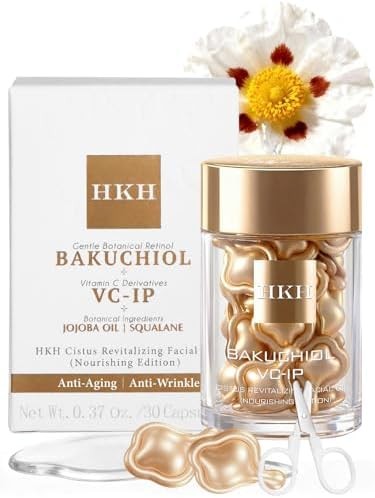
HKH Bakuchiol Plant Retinol Serum for Face 30 Single-Use Capsules
Check Price on AmazonAs an Amazon Associate we earn from qualifying purchases.
Thrive Natural Care Bakuchiol Serum (Best for Sensitive Skin)
Thrive’s formula is the closest match in this guide to what the sensitive-skin research actually tested: a gentle, fragrance-free bakuchiol serum built around hydration. It combines bakuchiol with plant-derived hyaluronic acid, a four-plant antioxidant blend (goji, fierrillo, coralillo), phytoglycogen, and a soothing complex, made in the USA in a recycled bottle. At $36.95 it sits in the middle of the price range, and the fragrance-free, lightweight texture is the profile that the Draelos sensitive-skin panel tolerated well (PubMed 33346506).
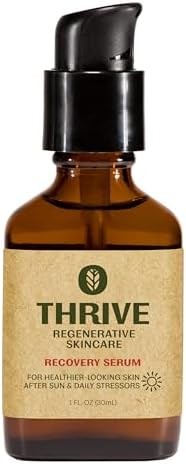
Thrive Natural Care Natural Bakuchiol Serum for Face - Healthier Retinol Alternative includes Hyaluronic Acid - Collagen Boosting Face Serum for Brighter, Firmer Skin - Vegan, Made in USA
Check Price on AmazonAs an Amazon Associate we earn from qualifying purchases.
PUREANCE Organic Plumping Serum (Best Organic Formula)
PUREANCE builds its bakuchiol serum on certified-organic botanicals: sea buckthorn for antioxidant carotenoids, camu camu for natural vitamin C, jojoba oil that closely matches skin’s own sebum, and red maple extract. It is the most “clean beauty” option here at $49.00, and the botanical blend gives it genuine antioxidant depth beyond bakuchiol alone. One ingredient deserves a flag: the formula includes babchi oil, and raw babchi oil can carry psoralens, so this serum is the one product in the guide where the morning-sunscreen rule is not optional, it is load-bearing.
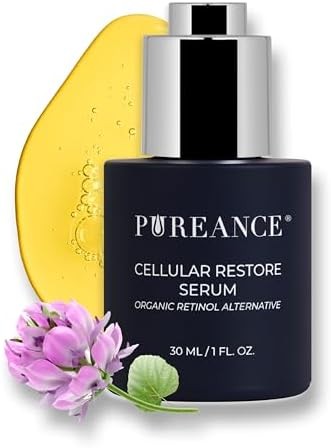
PUREANCE Cellular Restore Serum - Organic Bakuchiol Plumping Serum - Bakuchiol for Face Skin and Wrinkles - With Jojoba Oil, Sea Buckthorn, Camu Camu, Babchi, Maple Leaf Extracts & More - 1 Fl Oz
Check Price on AmazonAs an Amazon Associate we earn from qualifying purchases.
What this means for you: Buy the 5-ALA serum if you want the most complete anti-aging formula and will pay $49.90 for it; buy HKH if you want the cheapest way to test whether bakuchiol suits your skin ($24.99 for a month of capsules); buy Thrive if you have sensitive, eczema-prone, or rosacea-typed skin and want the gentle, fragrance-free, hydrating format the clinical research supports; buy PUREANCE if certified-organic sourcing matters more to you than price, and pair it with disciplined morning sunscreen because of the babchi oil content.
How Does Bakuchiol Compare With Other Retinol Alternatives?
Bakuchiol is one option in a crowded “gentler than retinol” aisle. Here is an honest comparison based on the evidence available for each.
Bakuchiol vs. Retinol
Retinol is the only comparator with a head-to-head randomized trial against bakuchiol, and the result was a draw on efficacy with a clear win for bakuchiol on tolerability: comparable reductions in wrinkle surface area and hyperpigmentation at 12 weeks, with significantly more scaling and stinging in the retinol group (PubMed 29947134). Retinol remains the better-documented ingredient overall with decades of research, and it is usually more potent per percentage point, which matters for deep photodamage. Bakuchiol wins for sensitive skin, for people who react to retinoids, and for anyone who wants a plant-derived option with morning-use flexibility.
Bakuchiol vs. Retinal and Prescription Retinoids
Retinal (retinaldehyde) is one oxidation step closer to retinoic acid than retinol, making it faster-acting and more irritating. Prescription retinoids such as tretinoin and adapalene are stronger still and are the medical standard for acne and advanced photodamage. Bakuchiol has not been directly compared with retinal or tretinoin in a published trial, so claims that it “equals tretinoin” are marketing, not data. The honest summary: if a dermatologist has prescribed a retinoid for a diagnosed condition, that prescription outranks any over-the-counter alternative, and you should discuss any switch with the prescriber.
Bakuchiol vs. Granactive Retinoid and Other Synthetic Retinoid Esters
Granactive retinoid (hydroxypinacolone retinoate) is a newer synthetic ester designed to be gentler than retinol. It has a thinner published evidence base than bakuchiol, which at least has the 2019 head-to-head trial and the 2024 systematic review to its name. Both are reasonable gentle options; bakuchiol has the stronger human literature of the two, while granactive retinoid is closer in structure to true retinoids.
Bakuchiol vs. Peptides and Other Collagen-Support Actives
Peptides signal fibroblasts to produce collagen through entirely different pathways, and the two are complementary rather than competing: bakuchiol shifts gene expression toward collagen production while peptides provide direct signaling. Combining them, as the HKH formula does, is more rational than choosing between them. The same logic applies to vitamin C, which works as an antioxidant and collagen cross-linking cofactor in the morning while bakuchiol or retinol works on gene expression at night.
Bakuchiol vs. Rosehip Oil and “Natural Retinol” Botanicals
Rosehip oil contains small amounts of vitamin A-related compounds but has never been shown in a controlled trial to produce retinol-like changes in wrinkle depth, and its “natural retinol” framing is mostly marketing. Bakuchiol is the only plant-derived compound with a head-to-head trial against actual retinol. If a label says “natural retinol” and the ingredient is not bakuchiol, view the claim with skepticism.
Bakuchiol vs. Alpha Hydroxy Acids and Exfoliants
Alpha hydroxy acids such as glycolic and lactic acid work on a different axis entirely: they dissolve the bonds between dead corneocytes on the skin surface, speeding desquamation and giving skin an immediate smoothness and glow. Bakuchiol works far deeper, on gene expression in living keratinocytes and fibroblasts, and its visible results take weeks. The two are not competitors so much as different tools, which is why a routine can reasonably include a gentle lactic or mandelic acid one or two nights a week for surface texture alongside nightly bakuchiol for the retinol-like collagen program. The one rule is sequencing: do not stack exfoliating acid and bakuchiol on the same night until you know your tolerance, because both increase cell turnover and together they can overwhelm a sensitive barrier.
Research shows: Bakuchiol’s evidence position is unusual for a natural ingredient: it has one randomized double-blind head-to-head trial against retinol itself (a draw on efficacy, better tolerability), supportive sensitive-skin and acne pilots, and a systematic review confirming the overall literature is small and mostly low-quality, which is exactly why the 0.5% concentration and the 12-week timeline from the controlled trial should anchor any purchase decision.
What Are the Side Effects and Cautions?
Bakuchiol’s selling point is tolerability, but “gentler than retinol” is not the same as “no reactions.”
Known side effects. In the head-to-head trial, the bakuchiol group reported less scaling and stinging than the retinol group, not zero irritation (PubMed 29947134). A small minority of users in the wider literature report mild redness, tingling, or breakouts in the first 1-2 weeks as skin adjusts. The sensitive-skin study, which included people with eczema and rosacea, found the gentle cleanser-and-moisturizer format well tolerated, but that was a hydrating format, not a high-percentage leave-on serum (PubMed 33346506).
Patch test first. Apply a small amount to the inner forearm or behind the ear daily for 3-5 days before using it on your face. This catches true allergies, which are rare but real, before they show up across your whole face.
Pregnancy and nursing. No controlled human studies exist. Bakuchiol does not activate retinoic acid receptors, the pathway that makes retinoids a pregnancy concern, which is why some dermatologists allow it, but that is extrapolation, not evidence. The conservative position is to ask your OB-GYN or midwife before using it during pregnancy, and to avoid it entirely if you are trying to conceive and prefer the strictest reading of the data.
Do not stack with prescription retinoids. Combining bakuchiol with tretinoin, adapalene, or tazarotene has not been studied, and layering two gene-expression actives is how people wreck their skin barrier. If you use a prescription retinoid, bakuchiol is an alternative to discuss with your dermatologist, not an addition.
Watch the source material. Purified bakuchiol is not phototoxic. Whole babchi oil and unstandardized seed extracts can contain psoralens, which are phototoxic in sunlight, so read ingredient lists and prefer products that name bakuchiol rather than vague “babchi extract” (PubMed 34303384).
Sun protection regardless. Bakuchiol does not cause the photosensitivity retinol does, but every clinical protocol still assumes daily sunscreen, because UV exposure is the primary driver of the wrinkles and pigment you are trying to reduce.
When to stop. If you develop persistent redness, swelling, itching, or blistering, stop the product and see a dermatologist. Mild tingling that fades within days is adaptation; anything that worsens with continued use is not.
Who Should Probably Skip Bakuchiol?
Bakuchiol is a gentle ingredient, but gentle does not mean universal. People with known allergy to babchi or to legume-family botanicals should patch test with extra care or skip it, since allergic contact dermatitis, while rare, is documented in the wider babchi literature. Anyone whose acne is moderate to severe, nodular, or scarring should not substitute bakuchiol for the prescription retinoids or other medical therapies that have real efficacy data for those presentations; the Brownell pilot enrolled mild to moderate acne only (PubMed 33683079). People already using tretinoin, adapalene, or tazarotene should regard bakuchiol as a possible replacement discussed with their dermatologist, never as an addition, because stacking gene-expression actives is how barriers get damaged. And anyone buying bakuchiol specifically because they want an oral “supplement” convenience should redirect: the product format with evidence is the topical serum, and the capsule format currently delivers psoralen risk without demonstrated skin benefit.
How Do You Build a Bakuchiol Skincare Routine?
Bakuchiol slots into a standard routine easily because it is photostable and gentle enough for twice-daily use, the frequency the pivotal trial used.
Morning routine:
- Gentle cleanser (or just water if your skin is dry)
- Vitamin C serum on dry skin (antioxidant layer)
- Bakuchiol serum (or save it for evening if your formula is rich)
- Moisturizer
- Broad-spectrum SPF 30+, applied last and reapplied if you are outdoors
Evening routine:
- Cleanser, double-cleansing if you wore sunscreen or makeup
- Bakuchiol serum on clean, dry skin
- Optional peptide or moisturizer layer
- Richer moisturizer or facial oil if your skin is dry
Weekly extras: a gentle exfoliant (lactic or mandelic acid) one to two nights per week is fine, but use bakuchiol on the other nights rather than stacking both on the same night until you know your tolerance.
The 12-week rule: the controlled data measured outcomes at 12 weeks, so judge any product at the 12-week mark, not the 2-week mark. If a serum has not shown you smoother texture by then, either the concentration is below 0.5% or the product is not right for you, and it is reasonable to switch.
What Should You Expect Week by Week?
The clinical trials took photographs and measurements at weeks 0, 4, 8, and 12, and you can borrow that schedule for your own expectations. In the first 1-2 weeks, most people notice nothing except, hopefully, the absence of irritation: no redness, no peeling, no stinging, which is the entire point of choosing bakuchiol over retinol. If your skin does react in this window, it is usually mild tingling or a few small breakouts as turnover adjusts, and it should settle within two weeks of consistent use. Around weeks 4-8, texture and hydration changes typically become noticeable, skin feels smoother and looks less dull, and this is where the sensitive-skin study’s 4-week tolerability and moisture findings fit (PubMed 33346506). The headline outcomes, reduced wrinkle visibility and lighter pigmentation, are the 8-12 week results from the head-to-head trial, so a fair self-assessment is: no irritation in week 2, smoother texture by week 8, and a real decision about whether the product is working at week 12 (PubMed 29947134). Photograph yourself in the same light at each checkpoint; memory smooths over slow changes, photographs do not.
What not to do: do not skip sunscreen because bakuchiol is “safe in the sun”; do not double up bakuchiol with retinol, retinal, or prescription retinoids; do not judge results before 8-12 weeks; and do not assume a higher price means a higher bakuchiol percentage, because price tracks branding and packaging far more than concentration.
When Should You See a Dermatologist?
Bakuchiol is an over-the-counter cosmetic ingredient, and most people can self-manage it. But a few situations call for a professional:
- Persistent irritation: redness, peeling, or stinging that lasts beyond two weeks or worsens with continued use
- Acne that is not improving: bakuchiol has pilot data for mild acne, but moderate to severe acne is a medical condition, and delaying prescription treatment (which may include adapalene, now available over the counter, or tretinoin) makes scarring more likely
- Dark spots that change: if a pigmented spot is new, asymmetric, multi-colored, or changing, that is a mole-check moment, not a serum decision
- Pregnancy planning: review your entire active-ingredient routine, not just bakuchiol, with your obstetric provider
- Prescription retinoid users: any switch or addition involving tretinoin or similar drugs should be run past the prescriber
The honest ceiling on this ingredient: bakuchiol is supported by one strong head-to-head trial, several small studies, and a lot of mechanistic work. It is a legitimate, gentler retinol alternative for photoaging, and a reasonable option for mild acne and post-acne pigment in people who cannot tolerate retinoids. It is not a replacement for prescription-strength treatments in people who need them, and it has no meaningful evidence behind oral use.
What’s the Bottom Line on Bakuchiol?
If you are searching for a “natural retinol alternative” because retinol irritates your skin, bakuchiol is the option the science actually supports: in the only head-to-head randomized trial, 0.5% bakuchiol twice daily matched 0.5% retinol on wrinkle surface area and hyperpigmentation over 12 weeks, with significantly less scaling and stinging (PubMed 29947134). The supporting literature adds a well-tolerated 4-week run in a 60-woman sensitive-skin panel that included eczema and rosacea, and a 12-week pilot showing fewer inflammatory acne lesions and improved post-acne dark spots in skin types III-VI (PubMed 33346506, 33683079).
Bottom line: Buy a topical serum with a disclosed 0.5% bakuchiol concentration, use it twice daily for a full 12 weeks, keep vitamin C and SPF 30+ in the morning routine, and skip oral bakuchiol capsules entirely, since no human trial shows they do anything for skin and their babchi-seed source material can carry phototoxic psoralens. Our picks: the 5-ALA and niacinamide serum at $49.90 if you want the fullest formula, HKH’s 30-capsule serum at $24.99 to test the ingredient cheaply, Thrive at $36.95 for sensitive skin, and PUREANCE at $49.00 if certified-organic sourcing is your priority. View any brand that claims bakuchiol “equals prescription retinol” or that sells oral capsules for skin with appropriate skepticism, because the evidence does not support either claim.
Related Reading
- Retinal vs Retinol for Anti-Aging: Which is Better?
- Niacinamide vs Retinol for Wrinkles: Which is Better for Sensitive Skin?
- Retinol vs Tretinoin for Wrinkles: Complete Scientific Comparison
- Best Supplements for Skin Health: Collagen, Vitamin C, Hyaluronic Acid and More
- Best Supplements for Skin Tightening and Anti-Aging: Collagen, Elastin, and What Research Shows
- Best Hyaluronic Acid Supplements for Skin
- Rhamnose for Skin Firming and Anti-Glycation
- Silica Benefits: Collagen, Hair, Skin, Nails, and Bone Health
References
- Prospective, randomized, double-blind assessment of topical bakuchiol and retinol for facial photoageing. Dhaliwal S, et al. Br J Dermatol, 2019.
- Bakuchiol: a retinol-like functional compound revealed by gene expression profiling and clinically proven to have anti-aging effects. Chaudhuri RK, Bojanowski K. Int J Cosmet Sci, 2014.
- Characteristics of bakuchiol - the compound with high biological activity and the main source of its acquisition - Cullen corylifolium (L.) Medik. Jafernik K, et al. Nat Prod Res, 2021.
- Clinical evaluation of a nature-based bakuchiol anti-aging moisturizer for sensitive skin. Draelos ZD. J Drugs Dermatol, 2020.
- A clinical study evaluating the efficacy of topical bakuchiol (UP256) cream on facial acne. Brownell L, et al. J Drugs Dermatol, 2021.
- Human clinical trials using topical bakuchiol formulations for the treatment of skin disorders: a systematic review. Fanning JE, et al. J Drugs Dermatol, 2024.
- Applications of bakuchiol in dermatology: systematic review of the literature. Puyana C, et al. J Cosmet Dermatol, 2022.
- The use of bakuchiol in dermatology: a review of in vitro and in vivo evidence. Greenzaid J, et al. J Drugs Dermatol, 2022.
- UP256 inhibits hyperpigmentation by tyrosinase expression/dendrite formation via Rho-dependent signaling and by primary cilium formation in melanocytes. Kang MC, et al. Int J Mol Sci, 2020.
- Bakuchiol suppresses proliferation of skin cancer cells by directly targeting Hck, Blk, and p38 MAP kinase. Kim JE, et al. Oncotarget, 2016.
- Effect of glabridin combined with bakuchiol on UVB-induced skin damage and its underlying mechanism: an experimental study. Peng G, et al. J Cosmet Dermatol, 2024.
- A spotlight on lime: a review about adverse reactions and clinical manifestations due to Citrus aurantiifolia. Alessandrello C, et al. Clin Mol Allergy, 2021.
- The science and (lost) art of psoralen plus UVA phototherapy. Richard EG. Dermatol Clin, 2020.
- A randomized controlled trial of the genistein plus bakuchiol and vitamins (GEN+) product for male facial skin: effects on skin appearance and properties. Na Takuathung M, et al. Skin Res Technol, 2026.
Join the discussion: Facebook | X | YouTube | Pinterest
This article is for informational purposes only and does not constitute medical advice. Consult a dermatologist or healthcare provider for personalized skin care recommendations, especially if you are pregnant, breastfeeding, or have specific skin conditions.
Recommended Products