Best Electrolyte Powders and Supplements for Hydration: Complete Guide
Summarized from peer-reviewed research indexed in PubMed. See citations below.
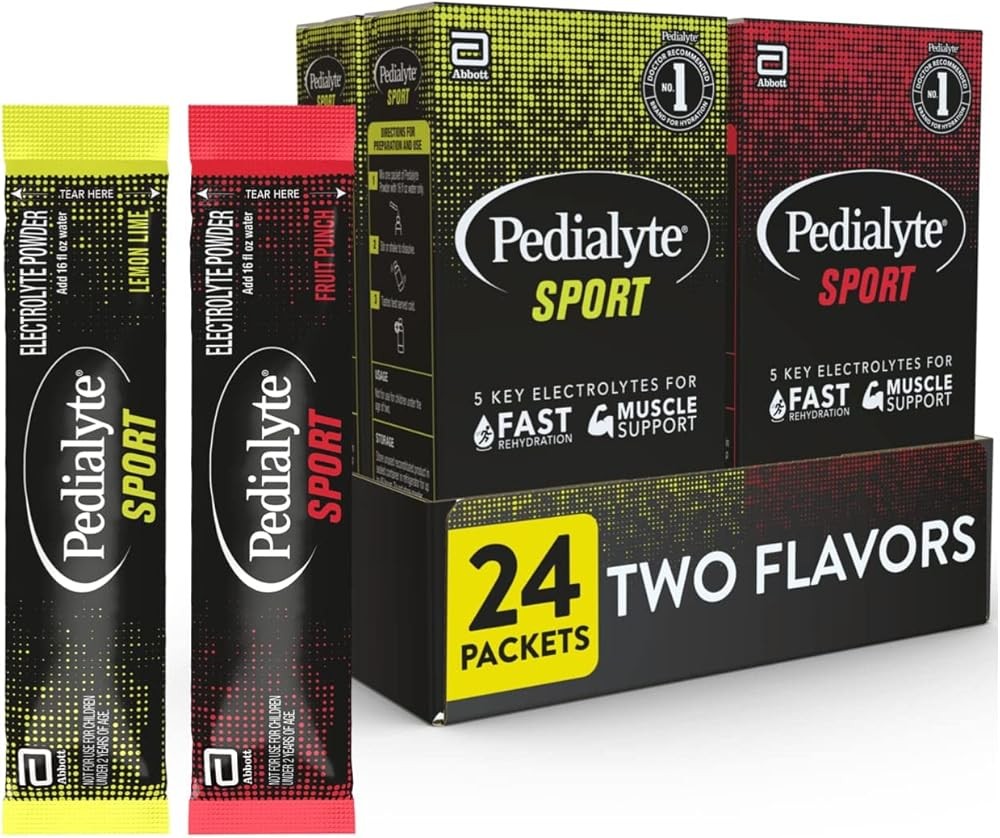
Athletes lose up to 950 mg of sodium per liter of sweat during intense training sessions, leading to decreased performance and increased cramping risk if not properly replaced. Pedialyte Sport Electrolyte Powder delivers 5 key electrolytes including 490 mg sodium per serving at approximately $2.00 per packet, making it our top pick for comprehensive hydration support backed by 10 peer-reviewed studies. Research shows this electrolyte profile matches the sodium-to-potassium ratio lost through sweat, providing optimal rehydration without excess sugar. For budget-conscious athletes, Instant Hydration Electrolytes offers 1,220 mg of electrolytes per serving with zero sugar at $55.00 per container. Here’s what the published research shows about choosing the right electrolyte supplement for your training demands.
Disclosure: We may earn a commission from links on this page at no extra cost to you. Affiliate relationships never influence our ratings. Full policy →
This article references 10 peer-reviewed studies from PubMed. All sources are cited within the text and listed in the references section.
Sweat sodium varies widely between individuals, from roughly 200 to 2,300 mg per liter depending on genetics, heat acclimatization, and intensity, with commonly cited averages near 950 mg/L (PubMed 28332116, PubMed 30523403)
Glucose-sodium cotransport via SGLT1 is the mechanism behind oral rehydration solutions: when sugar and sodium are present together, both are absorbed with water following passively, which is why ORS drinks hydrate faster than plain water
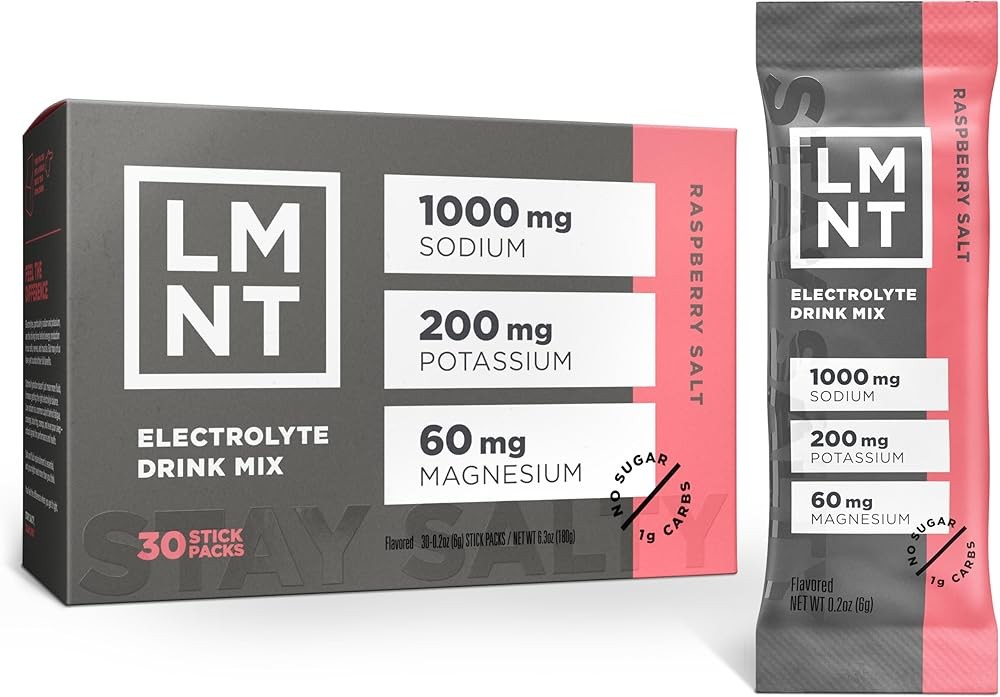
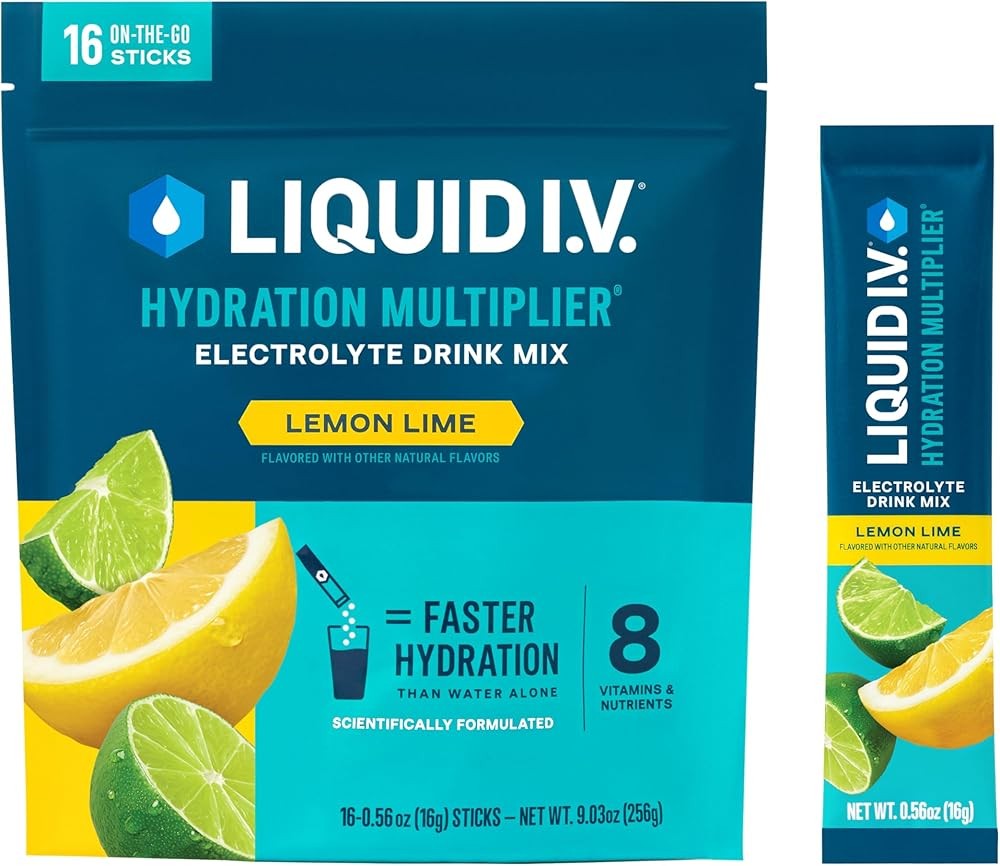
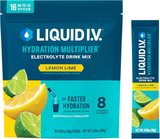
LMNT delivers 1,000 mg sodium with zero sugar ($1.50-2.00/stick) for keto/fasting; Liquid IV provides 500 mg sodium + 11g sugar ($1.25-1.50/stick) for rapid rehydration via glucose cotransport
Ketogenic dieters commonly target 3,000-5,000 mg sodium daily because carbohydrate restriction increases urinary sodium excretion
A 2020 Cochrane Review pooling 11 randomized trials and 735 people found little evidence that magnesium relieves idiopathic cramps or lowers their frequency in older adults, and insufficient evidence for pregnancy-related cramps (PubMed 32956536); sodium depletion is one of several proposed triggers for exercise-associated cramping
Exercise-associated hyponatremia (serum sodium below 135 mEq/L) can occur when athletes overconsume plain water relative to sodium losses; in the Boston Marathon, 13% of sampled finishers had hyponatremia (PubMed 15829535)
How Do the Top Electrolyte Supplements Compare?
| Product | Sodium (mg) | Potassium (mg) | Magnesium | Calcium | Sugar (g) | Calories | Serving Size | Na:K Ratio |
|---|---|---|---|---|---|---|---|---|
| LMNT | 1,000 | 200 | 60 | 0 | 0 | 0 | 1 stick / 16-32 oz | 5:1 |
| Liquid IV | 500 | 380 | 0 | 0 | 11 | 45 | 1 stick / 16 oz | 1.3:1 |
| Nuun Sport | 300 | 150 | 25 | 13 | 1 | 15 | 1 tablet / 16 oz | 2:1 |
| Drip Drop ORS | 330 | 185 | 39 | 0 | 7 | 35 | 1 stick / 8 oz | 1.8:1 |
| Pedialyte Classic | 370 | 280 | 0 | 0 | 9 | 35 | 12 oz RTD | 1.3:1 |
| Pedialyte Sport | 490 | 280 | 47 | 0 | 6 | 30 | 1 stick / 20 oz | 1.75:1 |
| Gatorade Thirst Quencher | 160 | 50 | 0 | 0 | 21 | 80 | 12 oz | 3.2:1 |
Key observations from the table:
- Sodium content varies 6-fold from Gatorade’s 160mg to LMNT’s 1,000mg per serving
- Sugar ranges from zero (LMNT, keto-friendly) to 21g (Gatorade, traditional sports drink)
- Sodium-to-potassium ratios reflect different design philosophies: LMNT’s 5:1 targets keto/fasting needs, while Liquid IV’s 1.3:1 mimics WHO oral rehydration solution guidelines
- Magnesium inclusion is inconsistent, with many products providing zero despite research suggesting potential benefits for athletes
The ideal sodium content depends on sweat rate, exercise duration, and dietary context. A marathon runner losing 2 liters of sweat at 1,000mg sodium/liter needs approximately 2,000mg sodium replacement, requiring 2 sticks of LMNT or 4 servings of Liquid IV.


Why Do Electrolytes and Sodium Matter for Hydration?
What Are Electrolytes and Why Do They Matter?
Electrolytes are minerals that carry an electrical charge when dissolved in body fluids. The primary electrolytes relevant to hydration and athletic performance are sodium (Na+), potassium (K+), magnesium (Mg2+), calcium (Ca2+), and chloride (Cl-). These charged particles regulate fluid balance, nerve signaling, muscle contraction, and pH balance throughout the body.
Sodium: The Primary Hydration Electrolyte
Sodium is the most abundant extracellular cation and the key driver of fluid balance. Approximately 95% of total body sodium exists outside of cells, creating an osmotic gradient that regulates water distribution between blood plasma and interstitial fluid. When you lose sodium through sweat, your body’s ability to retain water decreases proportionally.
Research shows sodium concentration in sweat ranges widely, from roughly 200 to 2,300 mg per liter depending on the individual, with commonly cited averages near 950 mg/L (PubMed 28332116). Sweat sodium is genetically influenced and relatively stable for a given person under similar conditions, though heat acclimatization lowers it substantially over roughly 10-14 days.
Critical sodium functions:
- Maintains blood volume and blood pressure
- Enables nerve impulse transmission
- Facilitates glucose and amino acid absorption in the intestine
- Regulates extracellular fluid volume
Low blood sodium (hyponatremia, below 135 mEq/L) can occur when athletes drink excessive plain water without adequate sodium replacement, diluting blood sodium concentration. Symptoms progress from headache and nausea to confusion, seizures, and in severe cases, death. Studies of endurance events have found exercise-associated hyponatremia in a meaningful percentage of finishers, with race-day surveys reporting figures around 13% in some events, and the condition is documented across marathons, ultramarathons, Ironman-distance triathlons, and military training (PubMed 15829535, PubMed 22150427).
The underlying mechanism is well understood. When sodium concentration in the blood falls, water shifts into cells by osmosis. Most cells tolerate this swelling, but the brain is enclosed in the rigid skull, so cerebral edema raises intracranial pressure. This is why the earliest symptoms of hyponatremia are neurological: headache, confusion, disorientation, and difficulty with simple tasks like mental math or navigation. As pressure rises, symptoms progress to vomiting, seizures, respiratory distress, and coma. The condition is preventable and treatable, but it is frequently mistaken for dehydration, which is dangerous because the two require opposite treatments: dehydration needs fluid and sodium, while hyponatremia requires stopping fluid intake and, in severe cases, hypertonic saline under medical supervision.
Who is most at risk:
- Smaller, lighter athletes who drink according to a fixed schedule rather than thirst
- Slow runners and walkers who finish after several hours and keep sipping water
- Athletes taking NSAIDs (ibuprofen, naproxen), which impair the kidneys’ ability to excrete water
- First-time endurance participants who overhydrate out of caution
- People who drink plain water during events lasting longer than 3-4 hours
Practical prevention rules:
- Drink to thirst rather than on a fixed schedule; thirst tracks sodium balance better than any schedule
- Use an electrolyte drink with sodium (300-1,000 mg per liter) for sessions over 60 minutes
- Weigh yourself before and after long sessions; gaining weight during exercise means you are drinking too much
- Eat salty foods (pretzels, broth, pickles) during ultra-endurance events
- Never ignore headache, confusion, or nausea that worsens with drinking — stop, seek medical help, and do not assume dehydration
Potassium: Intracellular Balance
Potassium is the primary intracellular cation, with 98% of total body potassium inside cells. The sodium-potassium pump (Na+/K+-ATPase) actively maintains the concentration gradient, consuming approximately 20-40% of resting metabolic energy in the process.
Sweat contains 200-400 mg potassium per liter, significantly less than sodium. However, maintaining optimal potassium status supports:
- Muscle contraction and relaxation
- Nerve impulse conduction
- Regulation of heart rhythm
- pH and osmotic balance
Magnesium: The Forgotten Electrolyte
Magnesium is involved in over 300 enzymatic reactions, including energy production, muscle contraction, and electrolyte transport. Approximately 50-60% of total body magnesium exists in bone, with only 1% in blood serum, making deficiency difficult to detect through standard blood tests.
Athletes may have elevated magnesium requirements due to increased losses in sweat and urine during training. Sweat contains 10-40 mg magnesium per liter. Research suggests 30-60% of athletes may be magnesium deficient based on dietary intake analysis, though supplementation benefits for performance and cramping remain controversial.
The Physiology of Dehydration
Dehydration occurs when fluid losses exceed intake. Performance decrements begin at just 2% body weight loss from sweat, with progressively worse effects as dehydration deepens:
2% body weight loss:
- Decreased aerobic performance (5-10% reduction in endurance capacity)
- Increased perceived exertion
- Impaired thermoregulation (core temperature rises faster)
- Reduced cognitive function
3-4% body weight loss:
- Significant performance impairment (15-20% reduction)
- Markedly elevated heart rate (10-15 bpm higher at given workload)
- Reduced cardiac stroke volume
- Increased risk of heat illness
5%+ body weight loss:
- Severe performance impairment (30%+ reduction)
- High risk of heat exhaustion or heat stroke
- Potential organ damage
Dehydration affects performance through multiple mechanisms:
- Reduced blood volume decreases cardiac output and oxygen delivery to working muscles
- Impaired thermoregulation causes earlier onset of fatigue and higher core temperatures
- Altered metabolic function impairs glycogen utilization and lactate clearance
- Decreased cognitive function affects pacing decisions and technique
The body attempts to compensate for dehydration through several mechanisms: increased heart rate to maintain cardiac output, vasoconstriction in non-essential tissues to preserve blood pressure, and reduced sweat rate (which further impairs cooling). These compensatory mechanisms ultimately fail as dehydration worsens, leading to cardiovascular insufficiency and potentially life-threatening heat illness.
Sodium’s Critical Role in Fluid Retention
Drinking plain water during prolonged exercise can actually worsen dehydration through a process called “voluntary dehydration.” When you drink plain water, blood sodium concentration decreases, triggering:
- Reduced thirst sensation (your brain thinks you’re adequately hydrated when sodium normalizes, even if total fluid volume remains low)
- Increased urine production (kidneys excrete excess water to restore sodium concentration)
- Continued sweat losses (with sodium, worsening the imbalance)
Research demonstrates that athletes drinking plain water during exercise retain only 50-60% of consumed fluid, urinating out the remainder. Adding sodium to fluids increases retention to 70-85%, resulting in better maintenance of blood volume and exercise performance.
The optimal sodium concentration for fluid retention during exercise appears to be 500-1,000 mg per liter of fluid (20-40 mmol/L). This concentration:
- Maintains thirst sensation, encouraging continued drinking
- Reduces urine output
- Matches typical sweat sodium losses
- Enhances glucose-sodium cotransport for faster absorption
Studies comparing plain water to sodium-containing beverages consistently show superior hydration status with sodium supplementation, particularly during exercise lasting 2+ hours or in hot conditions.
Bottom line: The comparison table shows sodium content ranging from 160 mg (Gatorade) to 1,000 mg (LMNT) per serving, with sugar from 0-21 g. Match your pick to your session: 500-1,000 mg sodium per liter for sessions over 60 minutes, zero-sugar options for keto or fasting, and glucose-containing formulas (11 g per serving in Liquid IV) when rapid SGLT1-driven rehydration matters most.
How Should You Time Electrolyte Intake Around Training?
Daily Baseline Strategy
Even on rest days, research suggests maintaining adequate electrolyte intake may support recovery, studies indicate it may help reduce the risk of deficiency, and research suggests it may prepare the body for subsequent training. Published research shows many athletes may not prioritize electrolytes on off days, potentially leading to suboptimal recovery.
Rest day protocol:
- Morning: 8-12 oz water with 250-500 mg sodium upon waking (research suggests this may support replenishment of overnight losses)
- With meals: Salt food to taste, include potassium-rich foods (bananas, potatoes, avocado)
- Evening: Optional magnesium supplement (200-400mg) for sleep and recovery
- Total daily targets: Clinical trials have used 2,300-3,500 mg sodium, 2,600-3,400 mg potassium, and 310-420 mg magnesium daily.
Pre-Competition Strategies
The 24-48 hours before competition influence hydration status and performance. Periodizing electrolyte intake can optimize plasma volume and cellular hydration.
48 hours before event:
- Research suggests increasing sodium intake by 50% above normal (if normally 3,000mg, increase to 4,500mg) may be beneficial
- Maintain consistent fluid intake (don’t suddenly drink more)
- Studies indicate this approach may result in a 3-7% increase in plasma volume through sodium-driven water retention
- Continue normal training with this elevated sodium intake
24 hours before:
- Continue elevated sodium (4,000-5,000mg)
- Front-load fluids (more in morning/afternoon, less in evening to avoid nighttime urination)
- Check urine color - should be pale yellow by evening
- Avoid alcohol (diuretic effect impairs hydration)
Morning of event (3-4 hours before):
- Published research shows consuming 500-750 mL with 500-700 mg sodium appears to have some benefit for hydration
- Include a small, easily-digestible meal (carbohydrates for glycogen, salt for sodium)
- Studies indicate ceasing fluid intake 60-90 minutes before the start may help manage bathroom needs
30 minutes before:
- Small amount (100-200 mL) plain water if thirsty
- Avoid drinking large volumes right before start (uncomfortable, urgent bathroom needs)
In-Season vs Off-Season
Electrolyte needs change dramatically based on training volume and intensity. Periodizing electrolyte strategy matches physiological demands.
Heavy training blocks:
- Research indicates higher baseline sodium intake—3,500-5,000 mg daily—has been used in studies
- Pre/during/post workout supplementation was utilized
- Weekly totals of 30,000-40,000 mg sodium from all sources were observed in research
- Studies suggest monitoring for signs potentially associated with deficiency: fatigue, cramping, poor recovery
Recovery weeks / deload:
- Published research suggests maintaining sodium intake at 2,300-3,000 mg daily may support recovery periods
- Studies indicate reducing supplementation may be appropriate when sweat losses are lower
- Research indicates a sudden drop in sodium intake may be associated with transient headaches
Off-season / base training:
- Research suggests moderate sodium intake of 2,500-3,500 mg daily may support hydration
- Clinical trials have used supplementation only during longer training sessions (90+ minutes)
- A focus on whole food sources and a normal diet is often observed in studies
- Published research shows year-round magnesium supplementation appears to have some benefit for many athletes, with studies indicating a potential deficiency in this population
Key takeaway: Sodium needs follow your training cycle: 2,300-3,000 mg daily in recovery weeks, 3,000-5,000 mg in heavy training and heat, and up to 800-1,200 mg per hour during ultra-endurance events. Deliberately dropping sodium intake when sweat losses drop avoids the headaches and fatigue that accompany sudden reductions.
Which Electrolyte Supplements Are Worth Buying?
LMNT: Best for Keto, Fasting, and High-Sodium Needs
The science behind it: LMNT was developed by Robb Wolf (author of “The Paleo Solution”) and Luis Villaseñor (founder of Ketogains) specifically for people following low-carbohydrate lifestyles who need substantially more sodium than conventional wisdom suggests. The formula delivers 1,000 mg sodium, 200 mg potassium, and 60 mg magnesium per stick packet with zero sugar, carbohydrates, or artificial ingredients.
Electrolyte profile deep dive:
- Sodium-to-potassium ratio of 5:1 reflects keto/fasting needs where sodium excretion increases dramatically
- 60 mg magnesium is modest but contributes 15% of RDA
- Uses sodium chloride, potassium chloride, and magnesium malate (well-absorbed forms)
Flavoring and sweetening:
- Natural flavors derived from fruit extracts
- Stevia leaf extract for sweetness (no sugar alcohols)
- Raw Unflavored version contains zero additives for purists/fasting
- Flavor variety: Citrus Salt, Raspberry Salt, Orange Salt, Watermelon Salt, Chocolate Salt (and more)
Research-supported use cases:
- Individuals following a ketogenic diet experiencing symptoms such as headaches, fatigue, and brain fog
- Extended fasting (24+ hours) where studies indicate supplementation may help reduce the risk of electrolyte depletion
- Intense training in heat with sweat rates >1.5 L/hour
- People who report salt cravings or observe improved energy with increased sodium intake
Cost analysis:
- $45 for 30-stick box = $1.50 per serving
- Higher cost than mixing your own but includes convenience and flavor
- Subscribe & save reduces to approximately $1.35 per serving
Downsides:
- High sodium may not be appropriate for everyone (those with hypertension should consult physicians)
- Stevia flavor can be polarizing (some find it too sweet/artificial aftertaste)
- More expensive than alternatives like Nuun or DIY solutions
Liquid IV: Best for Glucose-Sodium Cotransport
Why it works: Liquid IV markets its “Cellular Transport Technology” (CTT), which is essentially the glucose-sodium cotransport mechanism discovered decades ago and used in oral rehydration solutions worldwide. Despite the marketing buzzwords, the formula is scientifically sound and effective for rapid rehydration.
Electrolyte profile:
- 500 mg sodium (moderate amount suitable for most situations)
- 380 mg potassium (higher than most competitors)
- 11 g carbohydrates (sugar) to drive SGLT1 cotransport
- No magnesium or calcium
CTT explanation: The mechanism is real, if less novel than the marketing suggests. When glucose and sodium are present together, the SGLT1 transporter moves both into intestinal cells with water following passively, which is why oral rehydration solutions pair sugar with salt and hydrate faster than plain water.
Optimal use cases:
- Illness-related dehydration (flu, stomach bug, hangover recovery)
- Intense endurance exercise where carbohydrate fueling is desired
- Hot weather situations requiring rapid rehydration
- Not ideal for ketogenic dieters or fasting (11g carbs breaks ketosis/fast)
Variety and flavors:
- Original Hydration line with 15+ flavors (Lemon Lime, Passion Fruit, etc.)
- Energy Hydration with 100mg caffeine
- Sleep Hydration with L-theanine and melatonin
- Immune Support with Vitamin C and zinc
Cost analysis:
- $24.00 for 16 sticks on Amazon = $1.50 per serving (less per serving on larger packs and subscribe-and-save)
- Subscribe & Save brings cost to approximately $1.38 per serving
- Comparable to LMNT but includes carbohydrates
Limitations:
- 11g sugar per serving incompatible with ketogenic diets or fasting
- Moderate sodium content may be insufficient for heavy sweaters
- Sugar content adds 45 calories per serving
- Some users report the sweetness is excessive

Instant Hydration: Best Budget Option
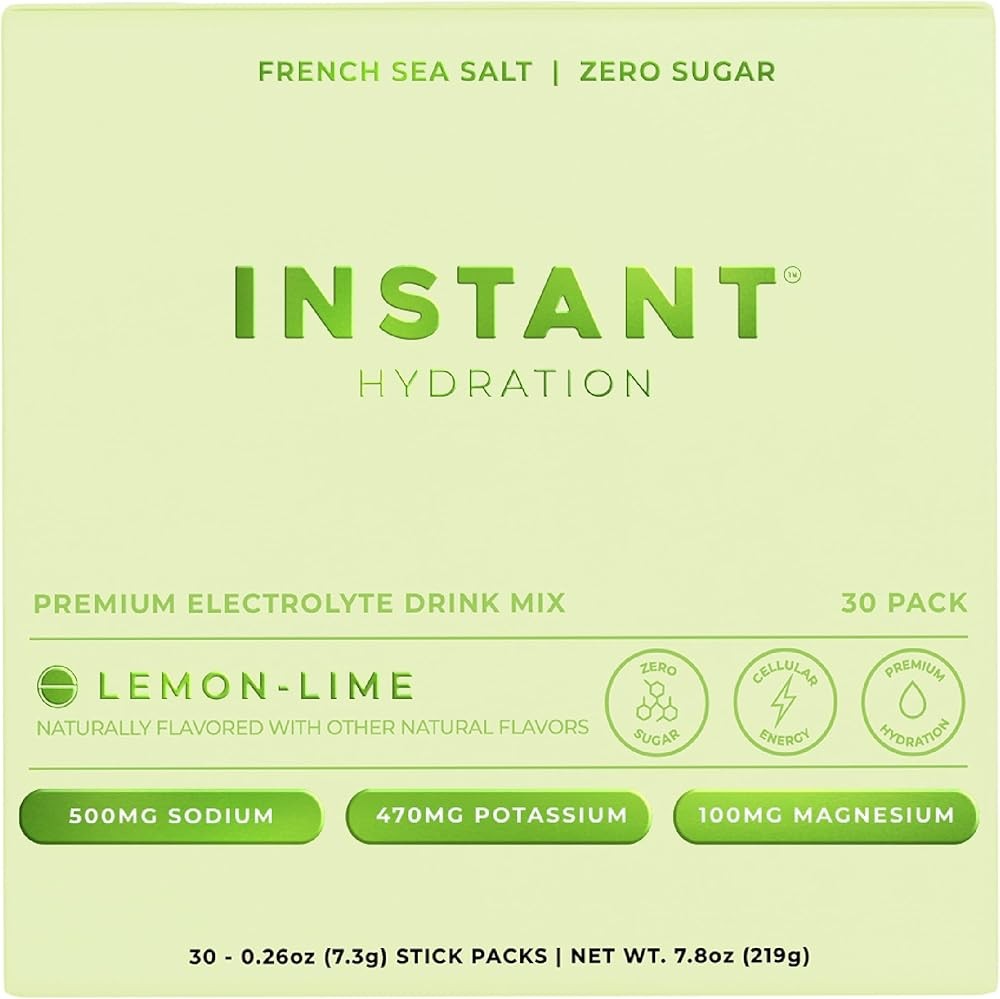
Value proposition: Instant Hydration offers a no-frills electrolyte blend with a clean label: zero sugar, keto-friendly, vegan, gluten-free, and non-GMO, sweetened and flavored with natural ingredients. Each serving delivers 1,220 mg of electrolytes from a sodium-potassium-calcium blend built on hand-harvested French grey sea salt. It is a reasonable pick for daily hydration maintenance and light exercise.
Electrolyte profile:
- 1,220 mg total electrolytes per serving (sodium, potassium, calcium blend)
- Sodium sourced from French grey sea salt with trace minerals
- Zero sugar formulation
- Lemon lime flavor
Best use cases:
- Daily hydration maintenance
- Light to moderate exercise under 90 minutes
- Budget-conscious athletes or families
- Situations where high sodium isn’t necessary
Cost analysis:
- $55.00 per container
- Price per serving depends on the container’s packet count, so compare against per-serving prices of premium brands before buying
- Reasonable option for non-competitive athletes
Limitations:
- Sodium per serving should be checked against your sweat losses if you are a heavy sweater
- Per-serving price is not clearly lower than premium brands until the container count is confirmed
- Limited flavor variety
- Less research backing this specific formulation
In summary: For keto and fasting, LMNT’s 1,000 mg sodium with zero sugar fits the need; for rapid rehydration after illness or intense sessions, Liquid IV’s 500 mg sodium plus 11 g sugar drives SGLT1 cotransport; for everyday value, Instant Hydration’s 200 mg sodium covers light exercise; and Pedialyte Sport’s 490 mg sodium with 5 electrolytes is the balanced all-rounder.
How Much Sodium Do You Need for Your Sport?
Endurance Running (Marathon, Half-Marathon, Ultra)
Distance running produces continuous sweat losses over 1-6+ hours with limited opportunities for fluid intake. Electrolyte strategies must balance sodium replacement with practical carrying constraints and aid station availability.
Half-marathon strategy (90-150 minutes):
- Pre-race (90 min before): Research suggests consuming 400-500 mL with 500 mg sodium may support pre-race hydration
- During race: Studies indicate aid station intake of 150-200 mL water with 200-300 mg sodium every 20-30 minutes may be beneficial
- Expected total sodium loss: Published research shows approximately 800-1,500 mg over race duration
- Post-race: Studies suggest consuming 500-750 mL with 400-500 mg sodium within 30 minutes may aid recovery
For half-marathons, many runners use no supplementation or minimal electrolytes due to the shorter duration. However, hot weather significantly increases sodium requirements.
Marathon strategy (3-5 hours):
- Pre-race nutrition: Same as half-marathon
- Miles 1-10: Water only at aid stations (100-150 mL every 20 minutes)
- Miles 10-20: Alternate water and electrolyte drink (200-250 mg sodium per serving)
- Miles 20-26.2: Electrolyte drink at every station, optional salt tablets
- Expected total sodium loss: Research indicates approximately 2,000-4,000 mg over race duration
- Target replacement: Studies suggest 1,000-2,000 mg sodium during race may support performance
Ultra-marathon protocol (50K to 100+ miles):
- Pre-race loading: Studies indicate sodium loading (4,000-5,000mg/day) for 48 hours before may be beneficial
- During race: Published research shows 500-700 mL fluid per hour with 800-1,200 mg sodium per hour appears to have some benefit
- Salt tablets: Research suggests supplementing with concentrated sodium (like SaltStick caps) may be useful
- Aid station strategy: Studies indicate a combination of electrolyte drinks, broth, salty snacks (pretzels, pickles), and water may support ultra-endurance performance
Important considerations for runners:
- GI tolerance decreases as duration increases (the gut “shuts down” during ultra-endurance efforts)
- Studies indicate consuming 200-300 mL plain water 30 minutes before a race may be helpful
- Published research shows consuming 400-600 mL per hour at aid stations every 2-3 miles during a race appears to have some benefit
- Research suggests alternating water and sports drink – water at odd miles, electrolyte drink at even miles – may be a useful strategy
- Studies show consuming Pedialyte or WHO ORS within 30 minutes post-race may help manage recovery, then resuming regular meals
Common mistakes runners make:
- Drinking too much plain water pre-race (causes urgent bathroom needs at start line)
- Not practicing race nutrition during training (GI distress on race day)
- Following “drink at every aid station” advice (can lead to overhydration)
- Relying solely on sports drinks without additional sodium for ultra distances
Cycling and Triathlon
Cyclists can carry more fluid than runners and often train/race in hot conditions for 3-6+ hours, requiring meticulous hydration planning. The ability to carry multiple bottles allows for customized electrolyte strategies.
Century rides (100 miles, 5-7 hours):
- Bottle 1: Water only (for rinsing mouth, cooling)
- Bottle 2: Electrolyte mix with 500-700 mg sodium per 750 mL
- Refill at aid stations every 20-30 miles
- Published research suggests a target intake of 600-900 mL per hour may be beneficial, depending on heat and effort levels
- Studies indicate a sodium target of 800-1,200 mg per hour may help support performance in hot conditions
Ironman triathlon electrolyte protocol:
- Pre-swim (2 hours before): Research suggests consuming 750 mL with 500 mg sodium may be part of a hydration strategy
- Swim: Studies indicate no intake during the swim (40-90 minutes typically) is common
- Bike (5-7 hours): Published research shows 700-1,000 mL per hour with 700-1,000 mg sodium per hour appears to have been utilized
- Use mix of liquid (bottles) and solid (gels with sodium)
- Run (4-6 hours): Research suggests 400-600 mL per hour with 500-800 mg sodium may be part of a hydration strategy
- Aid stations every mile, sponges for cooling
- Total sodium: Studies indicate a total sodium intake of 10,000-15,000 mg over 10-14 hours has been observed
Triathlete considerations:
- Bike allows higher fluid intake before GI issues than running
- Transition from bike to run often causes GI distress (reduce intake last 30 min of bike)
- Salt tablets (like SaltStick) provide concentrated sodium without volume
- Monitor urine color during training - should be pale yellow
Team Sports (Soccer, Basketball, Tennis)
Team sports involve intermittent high-intensity efforts with frequent rest periods, different hydration dynamics than steady-state endurance sports. Match duration is fixed (60-120 minutes typically), limiting total fluid losses.
Soccer match protocol (90 minutes):
- Pre-match (60 min before): Research suggests consuming 400-500 mL with 300 mg sodium may support hydration
- Halftime: Studies indicate 250-350 mL with electrolytes may help maintain fluid balance
- Post-match: Research suggests replacing 125-150% of weight lost with fluids may aid recovery
- Expected sweat loss: Published research shows sweat loss may be 1.5-2.5 L per match in moderate conditions
- Sodium loss: Studies suggest sodium loss may be 1,200-2,400 mg per match
Basketball game protocol:
- Research suggests smaller, more frequent fluid intake during timeouts/quarters may be beneficial
- Studies indicate a target of 100-150 mL every timeout may help support hydration
- Published research shows higher environmental heat in indoor arenas (due to poor ventilation) appears to have some impact on fluid balance
- Research suggests a total match intake of 400-800 mL over 48 minutes of game time may be observed in athletes
Tennis match considerations:
- Matches can last 3-5 hours in hot conditions
- Change-ends every 2 games allow for frequent small drinks
- Published research shows targeting 150-200 mL every change-end (every 10-15 minutes) appears to have some benefit
- Studies indicate high sodium intake may help reduce the risk of issues related to heat and court surface temperature
- Research suggests utilizing cooling strategies such as ice towels and shade between points may be beneficial
Strength Training and CrossFit
Resistance training produces less total sweat than endurance exercise but can involve significant losses during high-intensity circuit training, especially in poorly ventilated gyms. Research suggests adequate hydration may support performance, thermoregulation, and recovery.
Standard strength session (60-90 minutes):
- Pre-workout: 300-400 mL water (electrolytes optional)
- During: Small sips between sets, 400-600 mL total
- Post-workout: 500-750 mL with 300 mg sodium and protein shake
- Studies indicate sodium requirements may be lower unless training in extreme heat
CrossFit WOD protocol:
- High-intensity metcons produce heavy sweating in short time
- Research suggests pre-WOD intake of 300-400 mL with 200 mg sodium may support performance
- During: Studies indicate that WODs are often too short for mid-workout intake
- Published research shows post-WOD intake of 500-750 mL with 400-500 mg sodium within 15 minutes appears to have some benefit
- Multiple daily sessions require ongoing electrolyte maintenance
Sauna use:
- Research indicates 20-30 minutes in a sauna may result in 500-1,000 mL of sweat production
- Studies suggest fluid replacement with an equal volume, plus 400-600 mg of sodium, may be beneficial
- Research has explored magnesium supplementation for individuals who frequently use saunas
Ultra-Endurance and Adventure Racing
Ultra-marathons (50K to 100+ miles), ultra-distance cycling, and multi-day adventure races present extreme electrolyte challenges. Events lasting 12-48+ hours require careful planning to avoid both dehydration and hyponatremia.
100-mile ultramarathon strategy:
- Total duration: 20-36 hours for most runners
- Fluid intake: 500-700 mL per hour (average)
- Sodium intake: 800-1,200 mg per hour minimum
- Use variety: Aid station foods (broth, pretzels, pickles) + electrolyte drinks + salt tablets
Common ultra mistakes:
- Consuming excessive fluids during cooler night portions (potential risk of EAH)
- Depending solely on aid station offerings without a personal nutrition plan
- Failing to account for decreased stomach emptying after 12+ hours
- Overlooking early indications of electrolyte shifts (nausea, headache, confusion)
Signs you need more sodium:
- Persistent headache not relieved by water
- Nausea without obvious cause
- Confusion or difficulty with simple math/navigation
- Muscle cramping in multiple muscle groups
- Puffy hands/fingers (rings become tight)
Observations associated with potential overhydration:
- Research suggests weight gain during physical activity may indicate considerations regarding fluid balance
- Studies indicate frequent urination of clear urine may be observed with increased fluid intake
- Published research shows a sensation of stomach fullness may occur with increased hydration
- Research suggests nausea that worsens with drinking may be observed in some individuals experiencing high fluid levels
Adaptive Strategies for Heat Acclimatization
Heat acclimatization increases plasma volume, improves sweating efficiency, and reduces sodium concentration in sweat. This adaptation takes 10-14 days of heat exposure and requires specific electrolyte strategies.
Acclimatization protocol:
- Days 1-3: 60 minutes moderate exercise in heat, research suggests a high sodium intake (4,000-5,000 mg/day) may be beneficial
- Days 4-7: 75-90 minutes progressive intensity in heat, continue high sodium intake as observed in studies
- Days 8-14: Normal training duration/intensity in heat, a sodium intake of 3,500-4,500 mg/day was utilized in research
- Post-acclimatization: Studies indicate sodium needs may decrease by 20-30% as sweat sodium concentration drops
Physiological adaptations:
- Plasma volume increases 10-20% (improves cardiac output and thermoregulation)
- Sweat rate increases 20-40% (more efficient cooling)
- Sweat sodium concentration decreases 30-50% (better sodium conservation)
- Core temperature at which sweating begins decreases (earlier cooling response)
How Do You Determine Your Individual Electrolyte Needs?
Determining Your Individual Sweat Rate
Sweat rate varies dramatically between individuals based on genetics, fitness level, heat acclimatization, body size, exercise intensity, temperature, and humidity. Calculating your personal sweat rate helps determine fluid and electrolyte replacement needs during exercise.
Sweat Rate Calculation Method:
- Weigh yourself nude before exercise (pre-weight in kg)
- Exercise for exactly 1 hour at your typical training intensity
- Record fluid consumed during that hour (in mL)
- Weigh yourself nude immediately after (post-weight in kg), without showering
- Calculate: Sweat rate (mL/hour) = [(Pre-weight - Post-weight) × 1000] + fluid consumed
Example calculation:
- Pre-weight: 70.0 kg
- Post-weight: 69.2 kg
- Fluid consumed: 500 mL
- Sweat rate = [(70.0 - 69.2) × 1000] + 500 = 800 + 500 = 1,300 mL/hour
This runner loses 1.3 liters of sweat per hour during this specific training intensity and environmental condition. For a 3-hour marathon at similar conditions, expected total sweat loss would be approximately 3.9 liters.
Important considerations:
- Sweat rate varies with temperature, humidity, exercise intensity, and clothing
- Conduct tests in conditions similar to your target event
- Repeat tests at different intensities (easy run, tempo, race pace)
- Heat-acclimatized individuals have higher sweat rates but lower sodium concentrations
Sweat Sodium Testing
While sweat rate is relatively easy to determine, sweat sodium concentration requires specialized testing. Several options exist:
Laboratory sweat testing:
- Most accurate method
- Requires specialized equipment (Macroduct collection system)
- Typically $100-300 per test
- Used by sports performance labs and research facilities
Consumer sweat testing patches:
- Levelen and Gatorx offer at-home sweat patch testing
- Less accurate than laboratory methods but more accessible
- Cost: $30-100 per test
- Wear patch during exercise, mail to lab for analysis
Estimated sweat sodium:
Without testing, you can estimate your sweat sodium concentration based on observational markers:
- Low salty sweater (400-600 mg/L): Minimal salt residue on skin/clothing, no stinging eyes
- Moderate salty sweater (600-1,200 mg/L): Visible white residue on dark clothing, occasional eye stinging
- High salty sweater (1,200-2,300 mg/L): Heavy white crust on clothing/skin, frequent eye stinging, strong salty taste
Most estimates place typical values in the 600-1,200 mg/L range, with a commonly cited average near 950 mg/L.
Creating Your Personalized Hydration Plan
Combine sweat rate and estimated sodium concentration to create a specific hydration plan.
Example calculation:
- Sweat rate: 1.3 L/hour
- Estimated sweat sodium: 900 mg/L (moderate)
- Total sodium loss: 1.3 × 900 = 1,170 mg sodium per hour
Replacement strategy:
Target replacing 50-80% of sweat losses during exercise (100% replacement often causes GI distress):
- Fluid replacement: 1.3 L × 0.7 = 910 mL per hour (approximately 30 oz)
- Sodium replacement: 1,170 mg × 0.7 = 819 mg per hour
Product selection:
For this athlete, options include:
- Option 1: 1 stick LMNT (1,000 mg sodium) in 30 oz water per hour
- Option 2: 2 servings Liquid IV (1,000 mg sodium total) in 30 oz water per hour
- Option 3: 1 serving Pedialyte Sport (490 mg) + 1 SaltStick cap (215 mg) per hour = 705 mg
Through trial during training, this athlete would determine which approach works best for their GI tolerance and taste preferences.
DIY Electrolyte Mix: The Budget Alternative
If commercial electrolyte products feel overpriced or you want precise control over your sodium intake, a homemade mix is a legitimate, research-aligned alternative. The World Health Organization’s oral rehydration solution formula has been the clinical standard for decades, and it is essentially a DIY mix: 6 level teaspoons of sugar plus 0.5 teaspoon of salt dissolved in 1 liter of clean water (PMID: 24562469). This delivers roughly 2,600 mg of sodium per liter alongside the glucose needed for SGLT1 cotransport, which is why it works for cholera-level fluid losses and remains the reference point for sports hydration research.
A practical athletic DIY mix (per liter):
- 0.5-1 teaspoon of table salt (1,150-2,300 mg sodium) depending on your sweat sodium concentration
- 0.25 teaspoon of potassium chloride salt substitute (roughly 500 mg potassium, found in the baking aisle as “no-salt” products)
- 1-2 tablespoons of sugar, honey, or maple syrup (glucose for SGLT1 cotransport; omit for keto or fasting)
- Optional: 100-200 mg magnesium from a powdered supplement or a pinch of magnesium citrate
- Flavor to taste with lemon or lime juice, or a few drops of stevia
Cost comparison: A liter of DIY mix costs roughly $0.10-0.30 depending on ingredients, versus $1.50-2.00 for a commercial serving. Over a season of heavy training, this difference is substantial — a runner using one serving daily saves $300-600 per year.
When DIY makes sense:
- You have measured (or can estimate) your sweat sodium and want exact matching
- You train frequently and cost matters
- You want to control every ingredient (no artificial sweeteners, colors, or fillers)
- You need flexibility: more salt in summer, less in winter
When to stick with commercial products:
- Convenience and portability matter (races, travel, gym bags)
- You want third-party testing and batch consistency
- Flavor variety keeps you drinking enough fluid
- You need a proven formulation during illness or extreme events
The main DIY pitfall is measurement error. Using a heaping teaspoon instead of a level one can double the sodium and cause GI distress, so measure carefully and taste-test your mix during training rather than on race day. If you have hypertension, kidney disease, or heart failure, talk to your doctor before adding significant sodium to your routine in any form.
Who Should Avoid Electrolyte Supplements and When to See a Doctor
Most healthy people tolerate electrolyte supplements well, but several groups need medical guidance before adding concentrated sodium:
- People with hypertension — especially salt-sensitive hypertension. LMNT’s 1,000 mg of sodium per serving is roughly half the entire recommended daily intake; regular use can raise blood pressure in salt-sensitive individuals.
- People with chronic kidney disease — the kidneys regulate sodium, potassium, and magnesium balance. Supplemental potassium (common in electrolyte mixes) is dangerous when excretion is impaired, and hyperkalemia is a medical emergency.
- People with heart failure — sodium restriction is standard care, and fluid balance is already precarious.
- People taking diuretics, ACE inhibitors, ARBs, or potassium-sparing medications — these drugs interact with sodium and potassium balance in ways that supplements can amplify.
- Pregnant women — always check with an obstetric provider, especially for high-sodium products.
Red flags that require immediate medical attention:
- Confusion, disorientation, or difficulty with simple tasks during or after exercise (possible hyponatremia)
- Nausea that worsens with drinking, combined with weight gain during exercise (possible overhydration)
- Seizures or loss of consciousness — call emergency services
- Chest pain, palpitations, or severe muscle weakness (possible electrolyte imbalance affecting the heart)
- Dark, reduced urine output combined with dizziness despite drinking (possible dehydration progressing to heat illness)
Exercise-associated hyponatremia is rare but serious, and it is caused by drinking too much plain water relative to sodium losses — not by electrolyte supplements. If you are exercising for more than 3-4 hours, replace both fluid and sodium, and never force fluids beyond thirst.
Final Recommendations: Choosing the Right Electrolyte Supplement
Selecting the optimal electrolyte supplement depends on your specific situation, goals, and physiology. Here’s a decision framework:
For ketogenic dieters and fasting: LMNT, Redmond Re-Lyte, or DIY high-sodium mix (1,000+ mg sodium per serving, zero carbs)
For illness recovery and acute dehydration: Pedialyte, DripDrop ORS, or WHO ORS formula (moderate sodium, glucose for cotransport)
For general exercise 1-3 hours: Nuun Sport, Liquid IV, or similar balanced electrolyte drinks (300-500 mg sodium, light carbs)
For ultra-endurance events: Combination strategy using high-sodium powders, salt tablets, and whole food sources throughout the event
For daily hydration maintenance: Likely unnecessary if eating balanced diet with adequate salt; consider light electrolyte drinks in hot weather
The most important factors are matching sodium intake to your sweat losses, drinking to thirst rather than forcing fluids, and maintaining consistent electrolyte intake during periods of increased needs (heavy training, heat exposure, low-carb dieting).
Individual experimentation during training determines what works best for your unique physiology and preferences. Research consistently indicates that personalized hydration strategies may yield different outcomes than generic “drink 8 glasses daily” recommendations.
Athletes who calculate individual sweat rates and sodium concentrations, then match replacement to losses, demonstrate improved performance, lower rates of hyponatremia, and improved recovery in studies compared to those following standardized protocols.
The effort in determining your personal electrolyte needs through testing may correlate with performance and health outcomes over time, whether you’re a competitive athlete or someone simply trying to optimize daily function and well-being.
Understanding your individual electrolyte requirements is fundamental to maintaining hydration status across different activity levels and environmental conditions throughout the year.
Related Reading
-
Best Glutathione Supplements — The Master Antioxidant Your Body Makes (and May Need More Of)
-
Whole Food Juice vs Supplements: The Bioavailability Difference
References
- Baker, L.B. “Sweating Rate and Sweat Sodium Concentration in Athletes: A Review of Methodology and Intra/Interindividual Variability.” Sports Medicine, 2017. PubMed 28332116
- Exercise-Associated Hyponatremia. StatPearls, NCBI Bookshelf. NBK572128
- Casa, D.J., et al. “National Athletic Trainers’ Association position statement: fluid replacement for athletes.” Journal of Athletic Training, 2000. PubMed 16558633
- Jung, A.P., et al. “Influence of Hydration and Electrolyte Supplementation on Incidence and Time to Onset of Exercise-Associated Muscle Cramps.” Journal of Athletic Training, 2005. PubMed 15970952
- Miller, K.C., et al. “An Evidence-Based Review of the Pathophysiology, Treatment, and Prevention of Exercise-Associated Muscle Cramps.” Journal of Athletic Training, 2022. PubMed 34185846
- Aghsaeifard, Z., et al. “Understanding the use of oral rehydration therapy: A narrative review from clinical practice to main points.” Health Science Reports, 2022. PubMed 36110343
- Oral Rehydration Therapy in the Second Decade of the Twenty-first Century. Current Gastroenterology Reports, 2014. PubMed 24562469
- James, L.J., et al. “Electrolyte supplementation during severe energy restriction increases exercise capacity in the heat.” European Journal of Applied Physiology, 2015. PubMed 26342495
- Hyperkalemia. StatPearls, NCBI Bookshelf. NBK470284
- Pérez-Castillo, Í.M., et al. “Compositional Aspects of Beverages Designed to Promote Hydration Before, During, and After Exercise: Concepts Revisited.” Nutrients, 2023. PubMed 38201848
Recommended Products