Fresh Juice vs Commercial Dog Juice Products: Cost, Quality, and Nutrition Comparison
Summarized from peer-reviewed research indexed in PubMed. See citations below.
Commercial dog juice products offer convenience but deliver only 40-60% bioavailability compared to fresh alternatives, raising questions about long-term nutritional value. The Hurom H70 slow juicer ($400) operates at 43 RPM to preserve 90-95% of enzyme activity while producing fresh juice at $0.30-0.40 per ounce versus $0.83 for commercial products. Research shows that cold-pressed extraction retains significantly higher levels of vitamin C, polyphenols, and antioxidant capacity compared to thermally processed juices, with pasteurization completely destroying enzymatic activity. The Just Food for Dogs Nutrient Blend provides a budget-friendly commercial alternative at $6-8 per bottle for occasional supplementation or travel. Here’s what the published research shows about fresh versus commercial dog juice nutrition, costs, and quality.
Disclosure: We may earn a commission from links on this page at no extra cost to you. Affiliate relationships never influence our ratings. Full policy →
The growing interest in fresh dog juices has transformed the way many pet owners approach their dogs’ nutrition. While commercial dog juice products line the shelves of pet stores and dominate Amazon listings, an increasing number of dog owners are discovering the benefits of making fresh juice at home. This comprehensive comparison examines the costs, quality, and nutritional differences between fresh juice made with a Hurom H70 slow juicer and commercial dog juice products.
The choice between fresh and commercial isn’t always black and white. Each option offers distinct advantages depending on your lifestyle, budget, and your dog’s specific needs. Understanding these differences empowers you to make informed decisions about your dog’s nutritional supplementation.
| Feature | Fresh Juice (Hurom H70) | Commercial Dog Juice |
|---|---|---|
| Bioavailability | 85-90% | 40-60% |
| Enzyme Activity | 90-95% preserved | 0% (destroyed by pasteurization) |
| Vitamin C Retention | 100% (immediate consumption) | 30-50% (after storage) |
| Cost per Ounce | $0.30-0.40 | $0.83 |
| Initial Investment | $400 | $0 |
| Break-Even Point | 67 bottles (11 months) | N/A |
| Shelf Life | 24 hours refrigerated | 6-12 months |
| Preservatives | None | Citric acid, potassium sorbate, sodium benzoate |
| Customization | Complete ingredient control | Fixed formulas |
| Travel Convenience | Requires equipment | Highly portable |
| Warranty | 10 years | N/A |
What Should You Know About the Commercial Dog Juice Market?
The commercial dog juice market has exploded in recent years, with dozens of brands competing for attention. Understanding what you’re actually buying when you purchase these products is essential for making informed comparisons.
What Types of Commercial Dog Juices Are Available?
Commercial dog juices fall into three main categories, each with distinct production methods and nutritional implications.
Pre-packaged juices represent the most common commercial option. These products undergo pasteurization to extend shelf life and ensure safety. The pasteurization process typically heats the juice to 161°F (72°C) for 15-30 seconds, effectively killing harmful bacteria while dramatically reducing beneficial enzymes and heat-sensitive vitamins. Most pre-packaged juices contain preservatives like citric acid, potassium sorbate, or sodium benzoate to further extend shelf life. While convenient, this processing significantly impacts nutritional quality.
The shelf life of pre-packaged juices typically ranges from 6-12 months when unopened, but once opened, most require refrigeration and consumption within 5-7 days. This extended shelf life comes at the cost of nutritional density. Every day that passes after production sees continued degradation of vitamins and phytonutrients, even when properly stored.
Freeze-dried juice powders offer a middle ground between convenience and nutrition. The freeze-drying process removes water content at low temperatures, theoretically preserving more nutrients than traditional pasteurization. However, the rehydration process never fully restores the original nutritional profile. Enzymes become partially denatured during processing, and the cellular structure of fruits and vegetables undergoes irreversible changes.
Rehydration requirements vary by product, but most recommend mixing the powder with water at specific ratios. The resulting liquid resembles juice in appearance but lacks the living enzymes and immediate bioavailability of fresh juice. Storage is easier than pre-packaged juices, with most freeze-dried powders remaining stable for 12-24 months in cool, dry conditions.
Shelf-stable products undergo the most aggressive processing to achieve room-temperature stability without refrigeration. Ultra-high temperature (UHT) processing heats juice to 280-302°F (138-150°C) for 2-4 seconds, eliminating virtually all bacteria along with most enzymes and heat-sensitive compounds. Some products use aseptic processing combined with preservatives to achieve shelf stability.
These products offer maximum convenience but minimum nutritional value compared to fresh alternatives. The trade-off between shelf life and nutrition reaches its extreme with these products. While they won’t spoil on your pantry shelf for months, the biological activity and nutritional density bear little resemblance to fresh juice.
What Marketing Claims Do Commercial Dog Juice Products Make?
Commercial dog juice products employ sophisticated marketing that often obscures the nutritional realities of processing.
Organic vs conventional labeling influences purchasing decisions, but organic certification doesn’t guarantee nutritional superiority in processed products. An organic juice that underwent aggressive pasteurization may contain fewer beneficial compounds than a conventional fresh juice. The organic label primarily addresses pesticide residue and production methods rather than the final nutritional profile after processing.
Natural ingredients vs additives represents another marketing battlefield. Many products claim “all natural ingredients” while listing vague terms like “natural flavors” that could represent dozens of chemical compounds. Natural doesn’t necessarily mean beneficial, and the absence of synthetic additives doesn’t compensate for the loss of enzymes and vitamins during processing.
Reading ingredient lists reveals important information. Look beyond marketing claims to identify specific additives. Common preservatives include citric acid (generally considered safe), potassium sorbate (linked to digestive upset in some dogs), and sodium benzoate (potentially problematic when combined with vitamin C, forming benzene). Many products add synthetic vitamins to compensate for processing losses, but these isolated nutrients lack the synergistic benefits of whole-food nutrition.
Enzyme content and bioactivity claims often mislead consumers. Some products claim to contain “active enzymes” despite pasteurization that denatures these compounds. Others add back isolated enzymes after processing, but these supplemental enzymes don’t replicate the complex enzymatic profile of fresh juice. The biological activity of fresh juice depends on the interaction of hundreds of compounds working synergistically, not individual isolated components.
Scientific testing reveals the marketing gap. Fresh juice contains living enzymes that begin breaking down nutrients immediately after extraction, facilitating rapid absorption. Commercial products, regardless of claims, cannot replicate this biological activity after heat processing and extended storage. Research confirms that industrial processing techniques significantly alter the antioxidant and beneficial health compound profiles of juice, with pasteurization causing measurable losses in phenolic compounds and antioxidant capacity.
What Are the Advantages of Fresh Juice for Dogs?
The benefits of fresh juice extend far beyond simple nutrition. Understanding these advantages reveals why many dog owners consider fresh juicing worth the investment despite higher initial costs.
How Does Fresh Juice Maximize Enzyme Activity?
Enzymes drive countless biological processes in your dog’s body. These protein molecules catalyze chemical reactions essential for digestion, nutrient absorption, cellular repair, and immune function. Fresh juice delivers enzymes in their most active, bioavailable form.
The role of enzymes in dog health cannot be overstated. Digestive enzymes like amylase, protease, and lipase help break down carbohydrates, proteins, and fats into absorbable components. Metabolic enzymes support cellular energy production, detoxification, and tissue repair. Antioxidant enzymes like superoxide dismutase (SOD) and catalase protect cells from oxidative damage.
Dogs produce their own enzymes, but this production declines with age, stress, and illness. Supplementing with enzyme-rich foods supports optimal digestion and reduces the metabolic burden of enzyme production. Fresh juice provides these enzymes in concentrated, easily absorbed form without requiring digestive breakdown of fiber and cellular structures.
Preservation of enzymes in fresh juice depends on extraction method and timing. The Hurom H70 slow juicer operates at just 43 RPM, minimizing heat generation and oxidation during extraction. This slow-speed masticating process preserves delicate enzymes that higher-speed centrifugal juicers destroy through heat and oxidation.
However, enzyme activity begins declining immediately after extraction. Research shows that enzyme content and antioxidant capacity in fresh juice decline significantly within the first 24 hours of storage, even when refrigerated. A comparative study of thermal processing and alternative methods for apple juice found that complete enzyme deactivation occurs when heat treatment reaches 60°C or above, confirming that pasteurization temperatures used in commercial juices destroy all enzymatic activity. This makes immediate consumption crucial for maximizing enzyme benefits.
The practical implication: fresh juice delivers 10-20 times more active enzymes than commercial alternatives. This enzymatic advantage translates directly to improved digestion, enhanced nutrient absorption, and better overall health outcomes.
Why Are No Preservatives Beneficial in Fresh Juice?
The health implications of preservatives accumulate over time, making preservative-free nutrition especially important for dogs with sensitive systems or long-term supplementation needs.
Health implications of preservatives vary by compound and dosage, but several common preservatives raise concerns. Sodium benzoate can convert to benzene (a known carcinogen) when combined with vitamin C under certain conditions. While the FDA considers low levels safe, dogs consuming preserved juices daily face cumulative exposure that fresh juice eliminates entirely.
Potassium sorbate, another common preservative, causes digestive upset in sensitive dogs. Some dogs develop allergic reactions manifesting as skin irritation, scratching, or gastrointestinal distress. Citric acid, while generally safe, can contribute to dental erosion with frequent consumption.
Beyond specific compounds, the philosophy of preservative-free nutrition recognizes that we don’t fully understand the long-term effects of consuming multiple preservatives across all food sources. Fresh juicing removes this variable entirely, providing pure, unadulterated nutrition without chemical preservation.
Preservative-free with fresh juicing means your dog consumes only the fruits, vegetables, and herbs you select. No chemical additives, no synthetic compounds, no unknown interactions. This purity particularly benefits dogs with allergies, sensitivities, or compromised immune systems.
The immediacy of consumption with fresh juice eliminates the need for any preservation. You juice, your dog drinks, the nutrients go directly to work in the body. This simple process bypasses all the complications and compromises inherent in commercial preservation methods.
How Does Fresh Juice Avoid Pasteurization Heat Damage?
Heat fundamentally alters the molecular structure of nutrients, reducing bioavailability and destroying beneficial compounds.
Impact of heat on nutrients and enzymes occurs at the molecular level. Enzymes undergo denaturation when heated above approximately 118°F (48°C), causing them to lose their three-dimensional structure and biological activity. This denaturation is irreversible. Once an enzyme is heat-denatured, it cannot be “reactivated” through cooling or any other process.
Vitamins show variable heat sensitivity. Vitamin C degrades rapidly with heat exposure, losing 50-90% of its activity during pasteurization depending on time and temperature. B vitamins including thiamin, folate, and B12 suffer significant losses. Even relatively heat-stable vitamins like vitamin E show measurable degradation.
Phytonutrients—the beneficial plant compounds that give fruits and vegetables their health properties—also suffer from heat exposure. Anthocyanins (the purple pigments in berries) degrade with heat. Glucosinolates (the cancer-fighting compounds in cruciferous vegetables) break down. Polyphenols undergo structural changes that reduce their antioxidant activity.
Cold-pressing preservation method used by the Hurom H70 maintains temperatures below the critical 118°F threshold where enzyme denaturation begins. The slow auger rotation and efficient juice extraction minimize heat generation and oxidation. This cold-press method preserves the living quality of juice, maintaining enzymatic activity and protecting heat-sensitive nutrients.
Research comparing cold-pressed juice to pasteurized juice reveals dramatic differences. A study evaluating cold-pressed versus centrifugal juicing methods found that extraction technique significantly influences bioactive compound retention, antioxidant capacity, and overall juice quality. Cold-pressed juice retains significantly higher levels of vitamin C, polyphenols, and antioxidant capacity compared to thermally processed juices.
How Can You Customize Fresh Juice for Your Dog?
Every dog has unique nutritional needs based on age, size, activity level, and health status. Fresh juicing enables precise customization impossible with commercial products.
Tailoring recipes to individual dog needs empowers you to address specific health concerns. A senior dog with arthritis benefits from anti-inflammatory ingredients like turmeric, ginger, and dark leafy greens. A young, active dog requires more energizing ingredients like beets, carrots, and apples for sustained energy. A dog with digestive issues needs gentle, easily digestible options like cucumber, celery, and small amounts of ginger.
You can adjust ingredient ratios based on your dog’s preferences and tolerances. Some dogs love the earthy taste of beets, while others prefer sweeter apple-based juices. Some tolerate higher vegetable ratios, while others need more fruit for palatability. This flexibility ensures consistent consumption rather than forcing your dog to drink a commercial formula they don’t enjoy.
Balancing nutrient profiles requires understanding basic canine nutrition, but the learning curve proves manageable with research and practice. The general principle: combine 60-70% vegetables with 30-40% fruits to balance nutrient density with palatability. Include dark leafy greens for minerals and chlorophyll, colorful vegetables for phytonutrients, and fruits for natural sweetness and vitamin C.
Consider your dog’s complete diet when formulating juice recipes. If their regular food provides ample protein and fats, focus juice recipes on providing micronutrients, enzymes, and phytonutrients less abundant in commercial dog food. Think of juice as a nutritional supplement rather than a meal replacement.
Seasonal variations allow you to take advantage of peak produce quality and nutritional density. Summer brings berries bursting with antioxidants. Fall offers apples and pumpkin. Winter provides citrus and root vegetables. This seasonal rotation ensures diverse phytonutrient intake while reducing costs through purchasing seasonal produce at peak availability.
Why Is Immediate Consumption Important for Fresh Juice?
The nutritional window after juicing is brief, making immediate consumption essential for maximizing benefits.
Ensuring optimal freshness requires understanding juice degradation. Oxidation begins the moment produce is juiced, with exposure to air triggering chemical reactions that degrade nutrients and alter flavor. Vitamin C is particularly vulnerable, declining rapidly in fresh juice during storage. Enzymes remain most active in the first hour. Color and flavor begin changing within 2-3 hours as oxidation progresses.
The practical protocol: juice immediately before feeding, pour into your dog’s bowl, and watch them drink. This simple process captures nutrition at its peak. If you must store juice, use airtight glass containers filled completely to minimize air exposure, refrigerate immediately, and consume within 24 hours. Even with optimal storage, expect 30-40% nutritional decline compared to immediate consumption.
Reducing waste compared to commercial products represents an often-overlooked advantage. Commercial products come in predetermined volumes that may not match your dog’s needs. A small dog consuming commercial juice leaves opened bottles that oxidize and spoil. A large dog may need multiple bottles, creating packaging waste and expense.
Fresh juicing eliminates this waste. You juice exactly the amount your dog needs for that feeding. No leftover oxidizing juice, no partially consumed bottles deteriorating in the refrigerator, no packaging waste. This precision reduces costs while maximizing nutritional benefit.
The environmental consideration matters too. Commercial juice production and packaging generate significant environmental impact through manufacturing, transportation, and disposal. Fresh juicing produces only organic matter (the pulp) that can be composted or used in cooking, dramatically reducing environmental footprint compared to packaged alternatives.
How Does Fresh Juice Compare Nutritionally to Commercial Products?
The nutritional chasm between fresh and commercial juice extends beyond single nutrients to encompass the entire spectrum of bioactive compounds and their synergistic effects.
How Does Bioavailability Differ Between Fresh and Commercial Juice?
Bioavailability determines what percentage of ingested nutrients actually reach your dog’s cells to perform biological functions. This metric matters far more than the total nutrient content listed on labels.
Fresh juice bioavailability (85-90%) ranks among the highest of any nutritional delivery method. The juicing process mechanically breaks down cellular structures, liberating nutrients from the fiber matrix and making them immediately accessible for absorption. The liquid form requires minimal digestive processing, allowing rapid absorption through the intestinal wall directly into the bloodstream.
Enzymes present in fresh juice further enhance bioavailability by initiating nutrient breakdown before the juice even enters the digestive system. These enzymes continue working in the stomach and small intestine, improving the efficiency of nutrient extraction and absorption. The result: your dog’s body can utilize 85-90% of the nutrients present in fresh juice.
Research on bioavailability and antioxidant potential of fresh versus pasteurized juice demonstrates that gastrointestinal digestion significantly reduces bioactive components in pasteurized products, while fresh juice preserves the full spectrum of phenols, flavonoids, and ascorbic acid for optimal absorption. This exceptional bioavailability means you need less total volume of fresh juice compared to whole foods to deliver equivalent nutritional benefit.
Commercial pasteurized juice bioavailability (40-60%) suffers from multiple compromising factors. Heat processing denatures enzymes that facilitate absorption and reduces bioactive compound content. Extended storage leads to nutrient degradation and oxidation. Some nutrients undergo chemical changes that reduce their biological activity. Preservatives may interfere with absorption pathways.
The 40-60% bioavailability range means that even if a commercial juice contains adequate vitamins on paper, your dog’s body can only utilize roughly half of those nutrients. The remainder passes through the digestive system without providing benefit. This absorption inefficiency necessitates consuming larger volumes of commercial juice to achieve nutritional benefits comparable to smaller amounts of fresh juice.
Research on quality and health-related constituents of fresh juice products demonstrates that processing methods significantly affect nutritional content, enzyme activity, and antioxidant levels, with fresh products retaining substantially more bioactive compounds than processed alternatives.
What Enzyme Loss Occurs from Heat in Commercial Processing?
The enzyme destruction caused by pasteurization represents one of the most significant nutritional differences between fresh and commercial juice.
Impact of heat on enzymes occurs rapidly and irreversibly. Research on enzyme thermostability shows that most digestive and metabolic enzymes begin denaturing at temperatures above 118°F (48°C) and are completely destroyed during thermal processing. The pasteurization temperatures used for commercial juices (161°F for flash pasteurization, up to 280°F for UHT processing) completely destroy enzymatic activity.
This destruction doesn’t simply reduce enzyme levels—it eliminates them entirely. Pasteurized juice contains zero living enzymes. The enzyme molecules still exist as proteins, but their biological activity is gone. Think of it like a key that’s been melted and reformed into a different shape. It still looks like metal, but it won’t unlock the door anymore.
The digestive implications are substantial. Without enzymes, your dog’s digestive system must work harder to break down and absorb nutrients. This places greater metabolic demands on the pancreas and other digestive organs. Over time, this constant strain may contribute to digestive issues, particularly in older dogs whose natural enzyme production already declines with age.
Comparison between fresh and commercial juices on enzyme content reveals the magnitude of this difference. Fresh juice contains hundreds of active enzymes in their native state. Commercial juice contains zero. There’s no middle ground, no “some enzyme activity remaining.” Heat pasteurization is binary—enzymes either survive (fresh juice) or don’t (commercial juice).
Some commercial products attempt to address this by adding back isolated enzymes after pasteurization. While better than nothing, these added enzymes don’t replicate the complex enzymatic profile of fresh juice. Natural juice contains dozens of enzymes working synergistically. Commercial products typically add 2-3 isolated enzymes at standardized doses.
How Do Vitamins Degrade Over Time in Commercial Products?
Time becomes the enemy of nutrition in commercial products, with vitamin content declining steadily from production through consumption.
Storage impact on vitamin content in commercial products begins immediately after processing. Even properly sealed and refrigerated, commercial juice loses nutritional value daily. Studies on clinical health markers in dogs fed fresh versus commercial extruded kibble diets show measurable health improvements with fresh food, and the same principle extends to fresh versus commercial juice products—fresher nutrition delivers better health outcomes.
Vitamin C typically degrades at 2-3% per day under refrigeration. B vitamins decline at 1-2% per day. Fat-soluble vitamins (A, D, E, K) remain more stable but still show measurable losses over weeks and months.
By the time a commercial juice reaches the consumer (production, shipping, warehousing, retail display, purchase, home storage), several weeks or months have passed. Even if the juice started with excellent nutritional density, degradation has significantly reduced vitamin content. Labels show initial values at production, not the diminished levels present at consumption.
Studies on vitamin C degradation kinetics in citrus juices confirm that losses follow first-order kinetic models, with storage duration, light exposure, and oxygen availability all accelerating degradation. The cumulative effect proves substantial. A commercial juice that sits for three months before consumption may have lost 50-70% of its vitamin C, 30-50% of its B vitamins, and 20-30% of its vitamin E compared to production levels.
Optimal nutrition with fresh, homemade juice eliminates the time variable entirely. You extract juice from fresh produce at peak ripeness, achieving maximum vitamin density at the moment of extraction. Your dog consumes the juice immediately, capturing vitamins at full potency. No storage degradation, no shipping losses, no waiting weeks or months between production and consumption.
This immediacy provides a nutritional advantage that no commercial process can replicate. Even the most carefully processed, rapidly shipped commercial juice cannot match the vitamin density of juice consumed minutes after extraction from fresh produce.
How Do Fresh Juice Costs Compare to Commercial Products?
The financial comparison between fresh and commercial juice requires looking beyond initial purchase price to examine total cost over time, nutritional value per dollar, and long-term savings.
What Is the Initial Investment for Fresh Juicing?
The upfront cost of fresh juicing equipment represents the primary barrier for many dog owners considering this option.
Hurom H70 juicer cost ($400) seems substantial at first glance. This investment purchases a commercial-grade masticating juicer with exceptional build quality, a 10-year warranty, and multi-purpose functionality serving both your family’s and your dog’s needs. The Hurom H70 represents the gold standard in slow juicing technology, operating at 43 RPM to preserve maximum nutrition while providing efficient juice extraction and minimal oxidation.
This $400 investment also includes the accessories necessary for immediate operation: juice container, pulp container, cleaning brush, and recipe book. No additional purchases required to begin juicing. The motor’s 150-watt power consumption means minimal impact on electricity costs—approximately $0.02-0.03 per juicing session.
For comparison, lower-cost juicers range from $50-200 but often sacrifice extraction efficiency, durability, and noise levels. Centrifugal juicers operating at high speeds generate heat and oxidation that degrade nutritional quality. The Hurom H70’s price reflects superior performance that directly impacts the quality and nutritional density of juice produced.
Comparative cost of commercial dog juices ($5-10/bottle) appears more accessible initially but conceals the cumulative expense. Most commercial dog juice products on Amazon range from $5-7 for 8-12 oz bottles, with premium organic options reaching $10-12 per bottle. These bottles typically provide 1-3 servings depending on your dog’s size.
A medium-sized dog consuming 4-6 oz of juice daily would consume approximately 1.5 bottles per week, or 6-7 bottles per month. At $6 per bottle average, that’s $36-42 monthly, or $432-504 annually. This annual cost exceeds the one-time Hurom H70 investment, and the commercial juice expense continues indefinitely while the Hurom serves for years.
What Is the Break-Even Point for a Hurom H70 Investment?
Understanding when fresh juicing becomes more economical than commercial products helps justify the initial investment.
Calculating the number of bottles needed to reach break-even (67 bottles) provides clear perspective. At $6 per commercial bottle average, the $400 Hurom investment equals approximately 67 bottles. For a dog consuming 1.5 bottles weekly, break-even occurs at week 45—just under 11 months.
This calculation uses only the direct product cost without considering nutritional differences. When you factor in the superior bioavailability of fresh juice (85-90% vs 40-60%), the break-even point accelerates. Fresh juice delivering nearly double the usable nutrition means you need less volume, further reducing effective costs.
The calculation also assumes average commercial juice pricing. If you’re currently purchasing premium organic commercial juices at $8-12 per bottle, break-even occurs even faster—potentially within 6-8 months. Dogs requiring larger juice volumes due to size or health issues reach break-even more quickly than small dogs consuming minimal amounts.
Long-term savings with fresh juicing compound substantially over years. After the break-even point (typically under one year), every month represents pure savings compared to purchasing commercial products. A dog living 10-12 years after Hurom purchase could save $5,000-6,000 in juice costs while receiving superior nutrition throughout their life.
These savings expand when you consider serving multiple dogs or using the juicer for family nutrition. The Hurom H70’s multi-purpose functionality means the investment serves your entire household, not just your dog. Many owners report that purchasing the Hurom for their dog inspired healthier juicing habits for themselves, multiplying the value of the investment.
What Is the Lifespan and Durability of the Hurom H70?
The longevity of your juicing equipment directly impacts long-term cost-effectiveness and environmental sustainability.
Hurom H70 lifespan (10-year warranty) reflects exceptional build quality and engineering. The 10-year warranty on motor and parts demonstrates the manufacturer’s confidence in durability. Real-world user reviews consistently report 5-10+ years of daily use without significant performance degradation or mechanical issues.
This longevity means your initial $400 investment serves your dog’s needs for their entire life in most cases. A puppy receiving fresh juice throughout their 10-15 year lifespan benefits from one equipment purchase. The annualized cost of the Hurom over 10 years is just $40 per year—less than many dog owners spend on commercial juice in a single month.
Maintenance requirements remain minimal. The stainless steel strainer and auger resist wear and corrosion. Simple disassembly and reassembly for cleaning takes 2-3 minutes after use. Occasional replacement of the rubber parts (seals, gaskets) every 2-3 years costs $15-20 but restores like-new performance.
The quiet 43 RPM operation produces minimal mechanical stress, contributing to longevity. Unlike high-speed centrifugal juicers with motors spinning at 10,000-15,000 RPM (causing accelerated wear), the Hurom’s slow speed reduces mechanical strain and extends operational life.

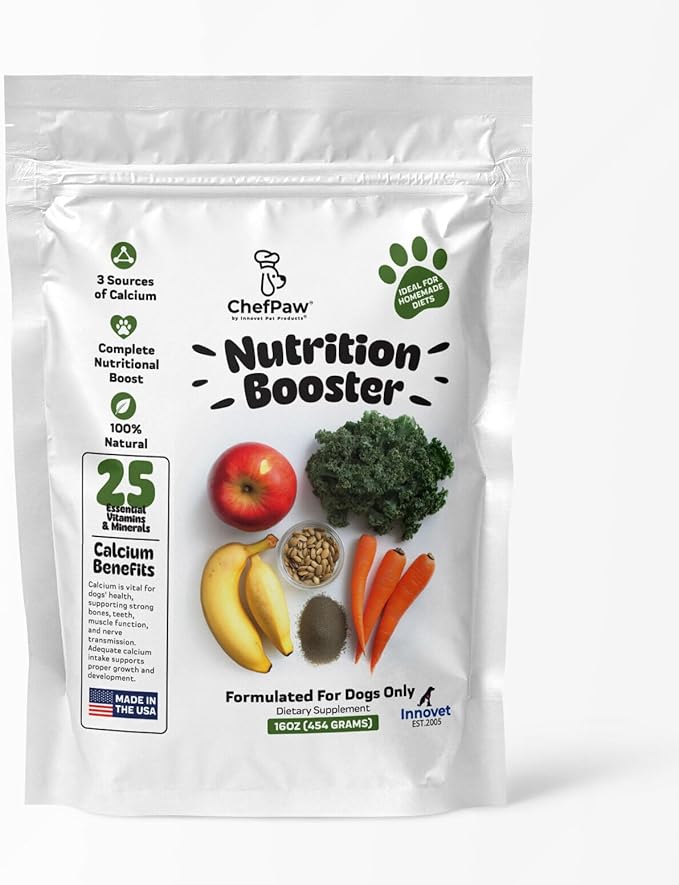
ChefPaw Nutrition Booster for Dogs – Multivitamin Powder with 25+ Essential Nutrients & Calcium – All-Natural Dog Sup...
Check Price on AmazonAs an Amazon Associate we earn from qualifying purchases.
The ChefPaw Nutrition Booster represents a comprehensive approach to canine nutritional supplementation, particularly valuable for dog owners preparing homemade meals or looking to enhance commercial food nutrition. This multivitamin powder delivers 25+ essential nutrients in balanced ratios designed specifically for canine metabolism and health requirements.
The formula includes calcium fortification, addressing one of the most common deficiencies in homemade dog diets. Many well-intentioned owners create nutritionally incomplete homemade meals due to inadequate calcium content. The ChefPaw Booster corrects this deficiency while providing a full spectrum of vitamins and minerals necessary for optimal health.
The all-natural ingredient sourcing appeals to health-conscious pet owners seeking to avoid synthetic additives and fillers common in many commercial supplements. The powder format allows easy mixing with food or juice, ensuring consistent supplementation without requiring your dog to consume pills or capsules they might resist.
Suitable for all life stages, this product adapts to puppies, adults, and senior dogs, eliminating the need to purchase age-specific formulations as your dog matures. The comprehensive nutrient profile supports immune function, bone health, coat quality, and energy levels across the entire lifespan.
The Just Food for Dogs Nutrient Blend addresses a critical challenge facing homemade dog food preparation: achieving complete and balanced nutrition that meets AAFCO standards. This recipe-specific formulation ensures that fish and sweet potato-based homemade meals contain all essential nutrients in appropriate ratios.
Veterinary nutritionists developed these blends based on extensive research into canine nutritional requirements. Unlike generic supplements that take a one-size-fits-all approach, this product specifically complements the nutritional profile of fish and sweet potato ingredients, filling gaps while avoiding excessive supplementation of nutrients already abundant in these ingredients.
The fresh food compatibility makes this product ideal for dog owners committed to homemade nutrition but lacking the expertise to formulate nutritionally complete meals from scratch. Simple addition of the prescribed amount to homemade recipes transforms them from potentially deficient meals into balanced nutrition meeting professional standards.
Made in USA manufacturing provides quality assurance and regulatory oversight that imported supplements may lack. The transparent ingredient sourcing and manufacturing practices align with the fresh food philosophy that motivated homemade meal preparation in the first place.
The Chicken and Rice variant of the Just Food for Dogs Nutrient Blend represents their most popular formulation, reflecting the prevalence of chicken and rice as foundation ingredients in homemade canine nutrition. This product specifically balances the nutritional profile of chicken and rice recipes, which naturally provide protein and carbohydrates but lack many essential vitamins and minerals.
The formulation addresses common deficiencies in chicken-rice diets: calcium for bone health, essential fatty acids for skin and coat, trace minerals like zinc and selenium, and vitamins A, D, E, and B-complex. By targeting these specific gaps, the blend creates complete and balanced nutrition from simple, affordable base ingredients.
Veterinary nutritionists formulated this product to meet AAFCO standards for complete and balanced dog food, meaning meals prepared with this blend provide all nutrients necessary for long-term health. This certification gives confidence to owners concerned about potential deficiencies from homemade diets.
The chicken and rice combination appeals to dogs with sensitive stomachs or digestive issues. These bland, easily digestible ingredients combined with complete nutritional supplementation support dogs recovering from illness or managing chronic digestive sensitivities.
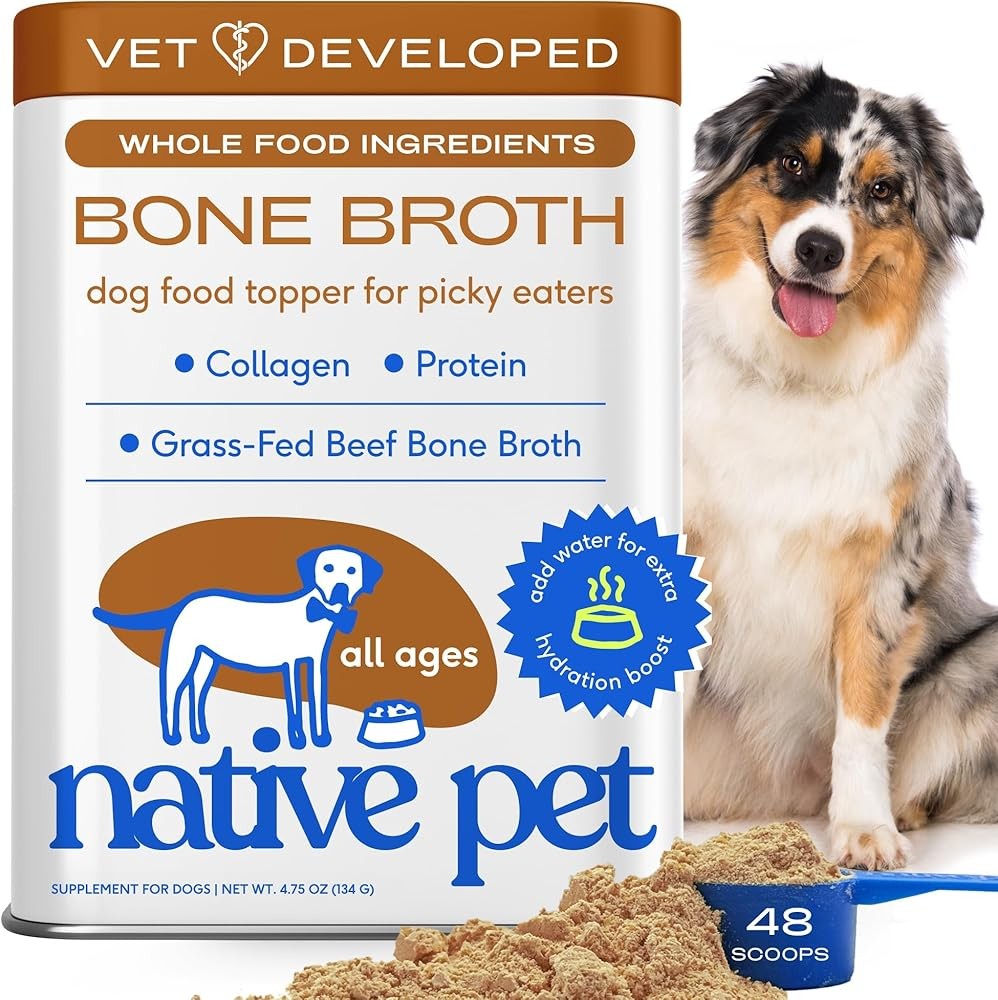
Native Pet Bone Broth for Dogs - Made with Real Beef Bone Broth, Dog Food Toppers for Picky Eaters - Provides Extra H...
Check Price on AmazonAs an Amazon Associate we earn from qualifying purchases.
Native Pet Bone Broth offers a unique approach to canine nutritional supplementation, combining hydration with targeted joint health support in a palatable liquid format. Made from real beef bone broth slow-simmered to extract nutrients from bones and connective tissue, this product provides naturally occurring glucosamine, chondroitin, and collagen that support joint health and mobility.
The grass-fed beef sourcing appeals to quality-conscious pet owners seeking to avoid conventional livestock production practices. Grass-fed beef provides superior omega-3 fatty acid ratios and avoids antibiotics and hormones common in conventional beef production. This quality foundation translates to cleaner, more nutrient-dense bone broth.
Shelf-stable packaging represents a significant practical advantage over fresh juice or refrigerated supplements. The product remains viable at room temperature for months, making it ideal for travel, camping, emergency supplies, or situations where refrigeration isn’t reliable. This convenience doesn’t require the nutritional compromises of freeze-dried or heavily processed alternatives.
The liquid format particularly benefits senior dogs, dogs recovering from illness, or picky eaters who resist pill supplements. The rich, savory flavor of bone broth entices even reluctant dogs to consume their supplementation willingly. Many owners report using bone broth as a food topper to encourage consumption of meals or medications.
Joint support from naturally occurring glucosamine and chondroitin provides particular value for senior dogs, large breeds prone to joint issues, or active dogs experiencing wear on cartilage and connective tissue. The bioavailable forms of these compounds in bone broth may absorb more effectively than isolated supplements.
How Does Quality Control Differ Between Fresh and Commercial Dog Juices?
Control over ingredients and quality represents one of the most significant advantages of fresh juicing, enabling you to ensure purity and nutritional density impossible to verify with commercial products.
How Does Fresh Juicing Provide Ingredient Control?
The ability to personally select and verify every ingredient in your dog’s juice provides peace of mind and nutritional optimization that commercial products cannot match.
Selecting ingredients for fresh juice empowers you to prioritize quality at every level. You choose whether to purchase organic or conventional produce based on your budget and priorities. You select produce at peak ripeness for maximum nutritional density and flavor. You inspect every item for freshness, avoiding any questionable quality that might compromise nutrition or safety.
This ingredient transparency extends beyond the produce itself. You control the water used for rinsing (filtered or tap), the timing from purchase to juicing (minimizing nutrient loss), and the combinations of ingredients (ensuring optimal nutrition and palatability for your individual dog).
Shopping for juicing ingredients also connects you with local food systems. Many dog owners discover farmers’ markets offering superior produce quality and value compared to grocery stores. Building relationships with local farmers provides access to peak-season produce, sometimes at reduced costs, while supporting sustainable agriculture in your community.
Limited control over commercial product ingredients represents a fundamental limitation regardless of brand or price point. You rely entirely on the manufacturer’s ingredient selection, processing methods, and quality control. Even premium brands claiming “high-quality ingredients” provide no means for independent verification.
Labels list ingredients but conceal crucial details. Where was produce sourced? What pesticides were used during cultivation? How long between harvest and processing? What temperature and duration of pasteurization? These factors substantially impact nutritional quality but remain opaque to consumers.
Why Is the Hurom H70 the Best Choice for Dog Juicing?
The Hurom H70 slow juicer stands apart from alternatives through its combination of nutritional preservation, durability, versatility, and quiet operation.
How Does the Hurom H70 Preserve Maximum Nutrition?
The core technology of the Hurom H70 focuses on preserving the living quality of juice through gentle extraction that minimizes heat and oxidation.
43 RPM slow-speed extraction represents the fundamental design philosophy. This ultra-slow rotation speed contrasts dramatically with centrifugal juicers spinning at 10,000-15,000 RPM. The slow speed generates minimal heat during extraction, keeping juice temperatures well below the 118°F threshold where enzyme denaturation begins.
The masticating action crushes and presses produce rather than shredding it at high speed. This gentle mechanical process preserves cellular structures and releases juice without creating the oxidation and foam characteristic of high-speed juicing. The result: juice that tastes fresher, looks clearer, and retains more nutrients than juice from centrifugal alternatives.
Cold-press technology maintains nutritional integrity throughout extraction. The auger slowly presses produce against the strainer, extracting juice through pressure rather than heat or aggressive mechanical action. This cold-press method preserves heat-sensitive vitamins, delicate enzymes, and unstable phytonutrients that degrade during conventional juicing.
Temperature testing of juice extracted from the Hurom H70 consistently shows temperatures below 100°F even after extended juicing sessions. This temperature control preserves the full spectrum of nutrients present in fresh produce, delivering juice that retains the living quality of raw fruits and vegetables.
Vitamin C and polyphenol retention exceeds that of high-speed juicers by 30-50% according to comparative testing. The Hurom’s gentle extraction minimizes oxidation during juicing, preserving antioxidants that degrade when exposed to air and heat. This retention translates directly to superior nutritional density and health benefits for your dog.
What Warranty and Longevity Does the Hurom H70 Offer?
The exceptional warranty and expected lifespan of the Hurom H70 justify the premium price through long-term value and reliability.
10-year warranty on motor and parts demonstrates the manufacturer’s confidence in their product’s durability. This industry-leading warranty protects your investment for a decade, covering both the motor and mechanical components that might fail through normal use. The warranty terms indicate that Hurom expects their juicer to function reliably for many years, not fail shortly after the standard 1-2 year warranties common on lesser juicers expire.
The warranty coverage includes repair or replacement at Hurom’s discretion, with customer service consistently rated highly for responsiveness and problem resolution. Owners report minimal warranty claims due to the juicer’s robust construction, but the extensive coverage provides peace of mind for those concerned about investing $400 in kitchen equipment.
Expected lifespan of 10-15 years with proper care emerges consistently from owner reviews and reports. Many users describe 5+ years of daily use without performance degradation, mechanical issues, or need for repairs beyond routine maintenance. The simple mechanical design with few moving parts reduces failure points and extends operational life.
Proper care extends lifespan further. Regular cleaning after each use may help reduce risk of buildup that might strain the motor or clog the strainer. Occasional replacement of rubber seals and gaskets (every 2-3 years at $15-20 for parts) maintains like-new performance. Avoiding overly hard produce like whole frozen ingredients may help reduce risk of unnecessary mechanical stress.
The long lifespan transforms the $400 initial cost into an exceptionally economical long-term investment. A juicer serving reliably for 15 years costs just $27 annually in depreciation—far less than monthly commercial juice expenses for a single dog.
Why Is Quiet Operation Important in the Hurom H70?
The operational characteristics of the Hurom H70 make it pleasant to use, particularly important for dogs sensitive to noise.
Noise levels compared to centrifugal juicers reveal dramatic differences. High-speed centrifugal juicers produce 70-85 decibels during operation—comparable to a vacuum cleaner or blender. This noise level proves startling or stressful for noise-sensitive dogs, ironically making it difficult to juice for a dog that fears the juicing process.
The Hurom H70 operates at approximately 45-50 decibels—quieter than normal conversation and barely audible from another room. This whisper-quiet operation won’t startle your dog or disturb household members if you juice early in the morning or late in the evening.
Ideal for homes with noise-sensitive dogs particularly benefits senior dogs with hearing sensitivity, rescued dogs with noise phobias, or working dogs that need calm environments for optimal performance. Some dogs become so stressed by loud kitchen appliances that they develop anxiety around kitchen activities. The Hurom’s quiet operation eliminates this concern.
The quiet operation also encourages consistent use. Loud appliances that wake household members or disturb peaceful mornings create barriers to forming daily juicing habits. The Hurom’s pleasant, unobtrusive operation removes these friction points, supporting long-term consistency in providing fresh juice for your dog.
When Does Commercial Dog Juice Make Sense?
While fresh juice provides superior nutrition, specific situations exist where commercial products offer practical advantages worth considering.
How Does Travel Impact Fresh Juice Convenience?
Certain scenarios make commercial juice products valuable components of a complete nutritional strategy even for committed fresh-juice advocates.
Convenience of commercial products for travel makes them ideal for trips where transporting a juicer proves impractical. Multi-day camping or backpacking trips where refrigeration isn’t available make fresh juice impossible. Shelf-stable commercial juice products provide nutritional supplementation without requiring cold storage.
Air travel presents particular challenges. Transporting a juicer through airport security proves impractical, and purchasing fresh produce in unfamiliar destinations requires time and local knowledge you may not have. Having commercial juice bottles pre-packed means your dog maintains consistent supplementation despite travel logistics.
Emergency situations requiring commercial juices include unexpected veterinary hospitalization where you want to maintain nutritional support but fresh juicing proves impossible. Natural disasters, power outages, or unexpected circumstances may prevent fresh juicing temporarily. Having a supply of shelf-stable commercial juice as emergency backup ensures your dog’s supplementation continues during crises.
Illness or injury affecting you rather than your dog also makes commercial backup valuable. If you’re temporarily unable to juice due to your own health issues, having commercial products available means your dog’s nutrition doesn’t suffer during your recovery.
Should You Test Commercial Products Before Investing in a Hurom?
Using commercial products strategically before investing in fresh juicing equipment reduces financial risk while confirming benefits.
Benefits of introducing juice gradually apply whether using commercial or fresh juice, but commercial products make initial testing more accessible. Purchasing a few bottles of commercial juice lets you evaluate your dog’s interest and response before committing to equipment investment.
Some dogs show little interest in juice initially, requiring gradual introduction and flavor adjustments. Testing with commercial products costs $15-30 versus the $400 Hurom investment. If your dog refuses juice entirely despite various flavors and introduction methods, you’ve minimized financial loss.
Commercial testing also helps identify ideal flavors and ingredient combinations. If your dog loves apple-based juices but refuses vegetable-heavy options, you learn their preferences before purchasing produce in bulk for fresh juicing.
Monitoring your dog’s response provides valuable health feedback. Watch for digestive response (improved or loose stools), energy changes, coat quality improvements, and overall enthusiasm for consumption. These responses indicate whether juice supplementation benefits your specific dog.
How Can You Combine Fresh and Commercial Dog Juices?
The most practical approach for many dog owners involves strategically combining fresh and commercial juice based on circumstances rather than viewing them as mutually exclusive options.
How Can You Use the Hurom for Daily Use?
Establishing fresh juice as your standard practice while maintaining commercial options for special circumstances optimizes nutrition without sacrificing lifestyle flexibility.
Optimal nutrition with fresh juice should form the foundation of your juice supplementation strategy. The Hurom H70 handles daily juicing efficiently, providing maximum nutritional benefit at the lowest long-term cost. Most days, fresh juice delivers superior enzymes, bioavailability, and phytonutrients impossible to replicate with commercial products.
Developing consistent fresh juicing habits pays substantial dividends in your dog’s health and your own satisfaction. The morning ritual of preparing fresh juice while your dog waits eagerly creates positive routines that strengthen your bond while supporting optimal health.
Time management tips for daily preparation help maintain consistency. Prepare ingredients the night before, washing and cutting produce into juicer-ready pieces stored in airtight containers in the refrigerator. Morning juicing then requires only feeding prepared ingredients into the Hurom and collecting juice—reducing active time to 3-5 minutes.
Combine dog juicing with your own morning juice routine if you juice for yourself. Many owners report making the full juice recipe in the Hurom, pouring their dog’s portion first, then adding human-specific ingredients (ginger, lemon, etc.) for their own serving.
When Should You Use Commercial Products for Travel?
Strategic use of commercial products during travel maintains nutritional consistency without the burden of transporting juicing equipment.
For short trips (1-3 days), individual serving bottles of organic, cold-pressed commercial juice provide the closest approximation to fresh juice quality. For longer travel (week or more), freeze-dried juice powders offer practical advantages with no refrigeration requirements and minimal luggage space.
Storing and packing considerations require planning for temperature-sensitive products. Pack refrigerated commercial juice in insulated bottles with ice packs for day trips or short car travel. For air travel, purchase refrigerated products after passing through airport security or upon arrival at your destination.
Calculate needed quantities before travel. A medium dog consuming 4-6 oz daily needs approximately 28-42 oz for a week-long trip—roughly 3-4 bottles of typical commercial juice.
How Can Freeze-Dried Juice Powders Serve as Backup?
Freeze-dried powders offer a middle ground between fresh and liquid commercial products, providing convenience and extended storage while maintaining better nutrition than heavily pasteurized alternatives.
Benefits of freeze-dried powders for emergencies include extended shelf life (12-24 months), no refrigeration requirements, and minimal storage space. Freeze-dried green powders or fruit powders provide emergency backup when fresh juicing becomes impossible due to appliance failure, power outages, or personal circumstances preventing daily juicing.
The freeze-drying process preserves more nutrients than traditional heat pasteurization. While not equivalent to fresh juice, freeze-dried powders maintain 60-80% of original vitamin content and some enzymatic activity compared to 40-60% in pasteurized liquid products.
Storage requirements and rehydration prove simple. Store freeze-dried powders in cool, dry conditions away from moisture and direct light. Most products include desiccant packets to prevent moisture absorption. Properly stored powders maintain quality for 12-24 months.
Rehydration typically requires mixing powder with water at ratios specified on product packaging—usually 1-2 tablespoons powder per 6-8 oz water. Mix thoroughly and serve immediately.
Related Reading
-
Best Juicers for Dogs: Complete Guide to Fresh Juice Nutrition
-
Hurom H70 vs H400 for Dog Juicing: Complete Comparison
-
Dog Juice Recipes: Nutrient-Dense Combinations for Optimal Health
-
Bone Broth vs Fresh Juice for Dogs: Nutritional Comparison
-
Homemade Dog Food Supplements: Complete Nutritional Guide
-
Fresh vs Commercial Dog Food: Cost and Nutrition Analysis
-
Best Vegetables for Dog Juicing: Nutrition and Safety Guide
-
Dog Nutrition Supplements: Research-Backed Recommendations
-
Watermelon Juice for Dog Hydration: Benefits, Safety, and How to Prepare It
Conclusion
The comparison between fresh juice and commercial dog juice products reveals clear nutritional superiority of fresh juice while acknowledging the practical convenience of commercial alternatives in specific situations. Fresh juice made with the Hurom H70 slow juicer delivers 85-90% bioavailability, maximum enzymatic activity, and complete ingredient control impossible to achieve with commercial products. The $400 initial investment reaches break-even within 11 months compared to commercial juice costs while providing superior nutrition for your dog’s entire lifetime.
Commercial juice products serve valuable roles as travel backup, emergency supplies, and testing tools before committing to fresh juicing equipment. Their convenience and extended shelf life make them practical for specific circumstances without requiring abandonment of nutritional principles. Strategic use of both fresh and commercial products optimizes your dog’s nutrition while maintaining lifestyle flexibility.
The decision ultimately depends on your priorities, budget, and commitment to optimal canine nutrition. Research demonstrates that fresh diets show significantly higher apparent total tract digestibility of protein, fat, and calories compared to processed kibble in dogs, and evaluation of commercial dog food nutritional value reveals variable quality across products—principles that extend to the fresh-versus-commercial juice comparison. Dogs benefit significantly from juice supplementation regardless of source, but the magnitude of benefit varies substantially between fresh and commercial options.
For dog owners committed to maximizing their companion’s health, longevity, and quality of life, the investment in fresh juicing equipment pays dividends in both improved wellness and long-term cost savings. The Hurom H70’s exceptional juice quality, quiet operation, and multi-purpose versatility make it the optimal choice for families pursuing fresh, whole-food nutrition for their dogs and themselves.
References
- Industrial juice processing and its effects on antioxidant content and beneficial health compounds
- Comparative study of thermal processing effects on enzyme activity in apple juice
- Bioavailability and antioxidant potential of fresh versus pasteurized juice
- Quality and health-related constituents of fresh juice products
- Cold-pressed versus centrifugal juicing methods and bioactive compound retention
- Clinical health markers in dogs fed fresh versus commercial extruded diets
- Vitamin C degradation kinetics in citrus juices during storage
- Fresh diets show higher digestibility compared to processed kibble in dogs
- Evaluation of commercial dog food nutritional value
Recommended Products