Hurom H70 Cost-Benefit Analysis: Is It Worth the Investment?
Summarized from peer-reviewed research indexed in PubMed. See citations below.
Daily juice bar visits drain $3,285 annually for a 16 oz juice habit, and the honest question is whether a premium slow juicer changes that math. The Hurom H70 costs $649 and operates at 43 RPM with a strainer-free two-part auger chamber that is easier to clean than traditional mesh-filter designs. Published research does not support the dramatic nutrient claims some marketers attach to slow juicers: a 2019 comparison study found no significant difference between cold-pressed and centrifugal juice in vitamin C, total phenolics, or carotenoids measured immediately after extraction, though refrigerated cold-pressed juice retained its antioxidant capacity through day five of storage while warm storage degraded it within 48 hours (PubMed 31286079). A separate grape juice study did find higher polyphenol, anthocyanin, and vitamin C content from a low-speed masticating juicer than from a high-speed centrifugal one (PubMed 30263614). The value case for the H70 rests on extraction efficiency with greens, refrigerated shelf life, cleaning convenience, and a 10-year motor warranty, not on a nutrient miracle. Here is what the research and the arithmetic actually show.
Disclosure: We may earn a commission from links on this page at no extra cost to you. Affiliate relationships never influence our ratings. Full policy →
Why Do the Real Numbers Matter for This Purchase?
Few kitchen appliances attract as much marketing math as slow juicers. Claims of “90-95% nutrient preservation,” “2-3x more juice,” and “payback in six weeks” circulate constantly, and most of them fall apart under inspection. The claims fall apart for two reasons.
First, the published research does not show the dramatic nutrient differences claimed. The most direct study available, a 2019 comparison of cold-pressed and centrifugal juicing, measured vitamin C, total phenolics, total carotenoids, and antioxidant capacity in fresh juices and found no significant difference between the two methods immediately after extraction. The difference appeared over time: cold-pressed juice held its antioxidant capacity through day five under refrigeration, while juice stored warm degraded within 48 hours (PubMed 31286079). A grape juice study using commercial masticating and centrifugal juicers found the opposite of “no difference” for some compounds: the low-speed masticating juicer produced juice with higher polyphenols, anthocyanins, and vitamin C than the high-speed centrifugal model (PubMed 30263614). Both studies are real; the difference is produce type, measurement timing, and study design. The honest summary is that slow juicers range from equal to modestly better on nutrients depending on what you juice and when you measure, and their clearest advantage is refrigerated shelf life.
Second, the payback arithmetic in most articles ignores the largest cost in home juicing. A $9 juice bar drink compared against a $0.21 equipment charge produces dramatic “savings” only if you forget that the produce for a 16 oz glass costs about $5 at retail. This article does the math both ways and lets the assumptions sit in the open, because a cost-benefit analysis that hides the produce line is not worth reading.
Bottom line: The marketing math around slow juicers overstates both nutrient differences and payback speed; the published research shows cold-pressed juice is equal to modestly better on nutrients depending on produce and timing, and any honest cost model must include the $5 of produce in every 16 oz glass of home juice.
What Does the Published Research Actually Show About Extraction and Nutrients?
What Did the 2019 Cold-Press Versus Centrifugal Study Find?
The most frequently cited study in this debate is Khaksar et al. 2019 in Heliyon, which compared cold-pressed and centrifugal juicing of several fruits and vegetables (PubMed 31286079). The key findings are often summarized inaccurately, so they are worth stating precisely:
- Immediately after extraction, there was no significant difference in vitamin C, total phenolic content, total carotenoid content, or antioxidant capacity between cold-pressed and centrifugal juices.
- Over refrigerated storage, cold-pressed juice retained its antioxidant capacity through day five, while juice stored at warm temperatures degraded within 48 hours.
- The practical implication is not “cold press preserves 90-95% of nutrients and centrifugal destroys them.” It is “both methods produce nutritionally similar fresh juice, and cold pressing buys you longer refrigerated shelf life.”
For a cost-benefit analysis, that finding matters in two ways. It removes the strongest emotional argument for spending $649, and it redirects the value case toward yield, convenience, and longevity, which are the categories where the H70 actually earns its price.
What Does the Grape Juice Study Show?
A 2017 study in Food Science and Biotechnology compared fresh grape juices prepared with a low-speed masticating juicer and a high-speed centrifugal juicer (PubMed 30263614). The masticating juicer produced juice with significantly higher total polyphenols, anthocyanins, and vitamin C than the centrifugal model. This is the study that supports the claim that slow extraction can preserve more of certain compounds, particularly in pigmented fruits where anthocyanins are concentrated in the skin. The effect is real but modest and produce-dependent, which is consistent with the 2019 findings rather than contradictory to them: grapes respond well to gentle pressing, and the differences show up in compounds measured soon after extraction.
What Do the Older Extraction Reviews Say?
The literature on juice extraction goes back decades. A 1997 review in Critical Reviews in Food Science and Nutrition on juice extraction from apples and other fruits and vegetables documents the trade-offs between grinding, pressing, and enzyme-assisted extraction that still shape modern designs (PubMed 9315434). The review predates the current generation of masticating juicers but remains useful for understanding why yield and clarity pull in opposite directions. A 2013 study on orange juice processing similarly showed that the way fruit is crushed and the temperature it reaches during processing measurably affect the flavonoid and phenolic content of the finished juice (PubMed 23408388). The consistent thread across these papers is that gentler, cooler processing preserves more of the heat- and oxygen-sensitive compounds, which is the mechanistic basis for slow juicing even where head-to-head fresh-juice studies show smaller differences than the marketing claims.
What Does the Research Say About Juice Shelf Life and Processing?
The storage studies reinforce the shelf-life case for slow juicing and give the H70 buyer realistic expectations about how long fresh juice keeps. A 2023 study on thermosonication of an orange-carrot juice blend tracked overall quality during refrigerated storage and found that the way juice is processed measurably shapes how well it holds up over days (PubMed 36903442). A 2024 study on blueberry juice found that anthocyanin and ascorbic acid stability during cold storage depended heavily on the processing method used (PubMed 38739462). Research on strawberry nectar reached the same conclusion, showing that conventional and non-conventional processing technologies leave different fingerprints on phenolic compounds and polysaccharides (PubMed 41581484).
The practical message for a home juicer is straightforward: gentle, low-temperature extraction and prompt refrigeration preserve the compounds that degrade over time, and the H70’s 43 RPM pressing is about as gentle as home extraction gets. A 2026 study of grape juice pasteurization technologies similarly found that non-thermal processing preserved quality better than thermal methods (PubMed 41750861), and kinetic modeling of vitamin C degradation in tropical juices confirms that refrigerated storage slows, but does not stop, nutrient loss over days (PubMed 42195926). Even melon juice, a relatively fragile product, shows measurable quality differences depending on whether processing is thermal or non-thermal (PubMed 42436745).
None of this makes the H70 a nutrient-preserving miracle machine. What it does is explain why the two-to-three-day refrigerated window for homemade cold-pressed juice is the honest, research-backed claim: process gently, refrigerate promptly, drink within a few days, and you are getting measurably better-preserved juice than anything that sat warm or was processed harshly.
What About Heat and Enzyme Degradation?
Heat is the enemy of several juice components. Research on thermal degradation of antioxidant micronutrients in citrus juice documents how processing temperatures accelerate the breakdown of vitamin C and related compounds (PubMed 17451252). High-speed centrifugal juicers generate friction heat and whip air into the juice, both of which accelerate oxidation. A slow 43 RPM auger minimizes both. The effect is measurable in stored juice and modest in fresh juice, which again points to the same conclusion: slow juicing is a shelf-life and gentleness play, not a fresh-juice nutrient miracle.
Bottom line: The research shows cold-pressed juice is nutritionally similar to centrifugal juice when fresh, retains antioxidants longer under refrigeration, and can be meaningfully higher in polyphenols and anthocyanins for pigmented produce like grapes; heat and oxidation degrade sensitive compounds, which supports slow extraction as a gentler method without supporting the exaggerated nutrient claims in most marketing.
What Makes the Hurom H70 Worth Its Premium Price?
The H70’s $649 price puts it in the upper tier of household slow juicers. Understanding what that money buys requires looking at the technology, the build, the cleaning design, and the warranty rather than at nutrient marketing.
What Is the H70’s Core Technology?
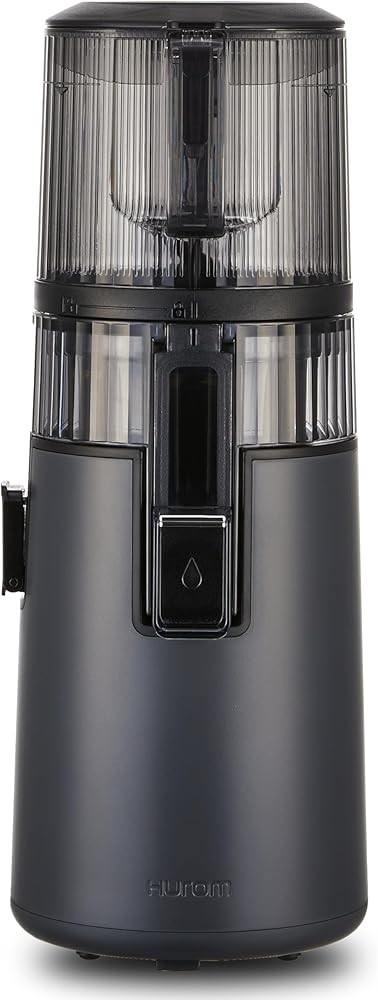
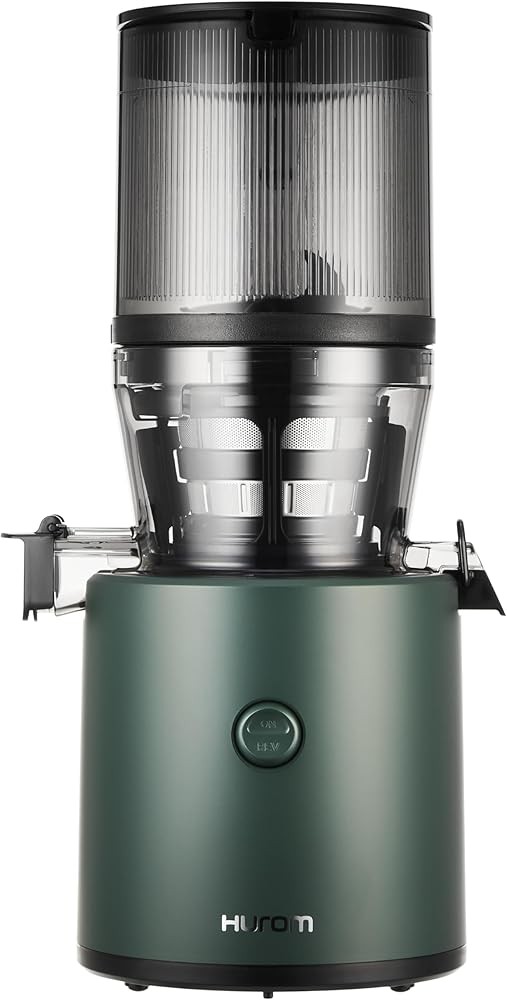
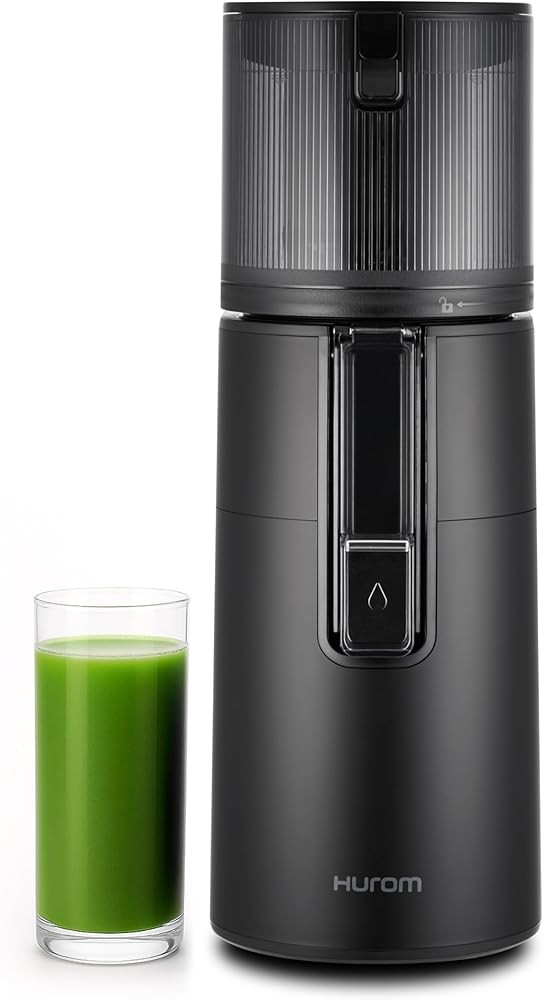
The H70 uses Hurom’s slow auger design, which crushes and presses produce at 43 RPM instead of shredding it at centrifugal speeds. The auger feeds into a two-part chamber with no mesh strainer. Hurom calls this strainer-free design its easiest-cleaning architecture, and it is genuinely different from the mesh-filter slow juicers that dominate the budget end of the market. A mesh strainer is the single hardest part to clean on most masticating juicers; removing it from the design eliminates the most tedious step of daily maintenance.
The self-feeding hopper accepts whole or roughly cut produce, which reduces prep time. The motor is a low-speed AC motor rated for continuous use, and the machine is quiet enough for early-morning operation without waking a household.
What Is the Cleaning Advantage Worth?
Cleaning time is the hidden cost of juicing. Budget masticating juicers with mesh strainers require brushing pulp out of the filter after every session, which takes several minutes and is the reason many machines end up in storage. The H70’s two-part chamber rinses clean under running water in roughly a minute, and both parts are dishwasher-safe. For a daily juicer, saving three to five minutes per session is worth roughly 18 to 30 hours a year of your time. Valued even at $10 an hour, that is $180 to $300 annually of implicit value, which is a large part of the H70’s justification over a $150 mesh-filter machine.
How Does Build Quality Support a 10-Year Life?
The H70 is built around a brushless AC motor with a 10-year warranty, which is the strongest signal Hurom offers about expected service life. The auger and chamber use food-grade materials chosen for durability, and the strainer-free design removes the part most likely to wear out or break on other machines. Replacement parts for the H70 are limited to the auger, the chamber, and the caps, none of which are consumables that need regular replacement.
Compare that with the budget segment, where $120-150 masticating juicers typically carry a one-year warranty and are built to a price. The realistic service life of a budget masticating juicer is three to five years with daily use, at which point the motor or the mesh strainer fails and the economics of replacement start over. Over a decade, the budget path means buying two to three machines, which erases most of the upfront savings.
Bottom line: The H70’s $649 price buys a strainer-free two-part chamber that cleans in about a minute, a self-feeding hopper, a quiet low-speed AC motor, and a 10-year motor warranty; the cleaning-time savings alone are worth $180-300 a year versus a mesh-filter machine for daily users, and the build is designed around a decade-plus service life rather than the three-to-five-year life of budget alternatives.
What Does Daily H70 Maintenance Actually Involve?
The single biggest reason expensive juicers end up unused is cleaning friction, so the maintenance section belongs in a cost analysis.
How Do You Clean the H70?
The H70’s strainer-free chamber is its defining maintenance feature. After juicing, you disassemble the unit into the auger, the two chamber halves, the hopper, and the juice cap. Every part rinses under running water, and a narrow brush clears the auger grooves in a few passes. There is no mesh screen to scrub, which is the step that dominates cleaning on other slow juicers.
A realistic daily cleaning routine takes about one minute with the H70, versus three to five minutes for a mesh-filter masticating juicer and similar time for a centrifugal machine with its basket filter. The chamber parts are also dishwasher-safe for a deeper clean on weekends.
What Parts Wear Out Over 10 Years?
No appliance is maintenance-free, and the H70’s parts list is shorter than most:
- Auger and chamber: food-grade materials rated for years of daily use; replacement only needed if cracked from a drop or a hard object (citrus seeds and pits should never go in).
- Juice cap and pulp cap: small parts that can be lost or cracked; inexpensive to replace.
- Cleaning brush: wears out with daily use and costs a few dollars.
There are no mesh screens to replace every year or two, which is a real cost difference versus other designs. The $130 maintenance allowance in the ten-year model covers these parts plus a buffer for the unexpected.
Bottom line: The H70’s strainer-free design keeps daily cleaning to about one minute with no mesh screen to scrub, all parts are dishwasher-safe, and the ten-year maintenance allowance of about $130 covers the short parts list with no recurring screen replacements, which is a genuine cost advantage over mesh-filter juicers.
How Does the H70 Compare to Juice Bar Costs?
The most direct financial comparison for most buyers is not H70 versus a cheaper juicer. It is H70 versus the juice bar they already visit.
What Does Juice Bar Consumption Actually Cost?
A 16 oz fresh juice at a retail juice bar runs $8 to $12 depending on the market and ingredients. Using $9 as the working figure, the annual cost of a daily habit is $3,285. A three-times-weekly customer spends about $1,404 a year, and a once-weekly customer about $468. Those figures exclude tips, parking, and the time cost of the trip, which for a 15-minute round trip three times a week amounts to roughly 39 hours a year.
What Does Home Juicing Actually Cost?
The honest home-juicing ledger has three lines:
- Produce: a 16 oz glass of juice requires roughly 1.5 to 2 pounds of produce, which retails at $3 to $7 depending on the ingredients. The working figure here is $5 per glass.
- Equipment amortization: the H70 at $649, with roughly $130 of maintenance and replacement parts over ten years, spread across 3,650 daily juices, comes to about $0.21 per glass.
- Electricity: 150 watts for five minutes is 0.0125 kWh, about $0.0015 at the average US residential rate, or $0.55 a year for daily use.
The total is about $5.21 per 16 oz glass, of which the produce is 96%.
When Does the H70 Pay for Itself?
The payback calculation depends entirely on the comparison:
- Against a daily $9 juice bar habit, each home glass saves $3.79. The $649 machine pays for itself in about 171 days of daily use, or roughly six months, and saves about $1,383 in year one.
- Against a three-times-weekly habit, each home glass still saves $3.79, and the machine pays for itself in about 400 days of use, or roughly 13 months.
- Against a once-weekly habit, payback stretches past three years, which is long enough that the purchase only makes sense if you plan to increase frequency.
- Against a budget masticating juicer at $150, the H70 never “pays for itself” in produce savings, because both machines make the same juice. The H70 premium is justified by cleaning time, warranty, and longevity, not by yield alone.
The six-month payback figure for daily juice bar customers is the honest headline number. The 44-to-66-day figures circulated in older marketing copy were computed by dividing the machine price by the full $9 bar price while ignoring the $5 produce cost of every home glass, which is arithmetic designed to sell juicers rather than inform buyers.
Bottom line: A 16 oz home juice costs about $5.21 including produce, equipment, and electricity versus $9 at a juice bar; the $649 H70 pays for itself in roughly six months of daily use or about 13 months at three times weekly, and the honest payback math must include the $5 produce cost that most marketing calculations omit.
What About Centrifugal Juicers as the Cheaper Option?
No cost analysis is complete without examining the cheapest path: a $60-150 centrifugal juicer. For some buyers that is genuinely the right answer, and for others it is the most expensive bargain in the kitchen.
What Does a Centrifugal Juicer Cost Over 10 Years?
A centrifugal juicer costs $60 to $150 upfront, which looks unbeatable next to the H70’s $649. The full picture changes when you account for lifespan and usage. Budget centrifugal machines typically last two to four years with regular use; the motor brushes and the spinning basket assembly wear out, and the fine mesh basket is prone to clogging and tearing. Over ten years, a centrifugal buyer realistically purchases three or four machines, which brings the ten-year hardware cost to $300-500 with maintenance, not far below the H70’s $779 total. Meanwhile the centrifugal path never delivers the greens performance, the refrigerated shelf life, or the cleaning simplicity of the slow machine.
What Does a Centrifugal Juicer Cost in Produce Waste?
The hidden centrifugal cost is yield. High-speed extraction leaves more juice in the pulp, and it struggles badly with leafy greens. The grape juice study gives a concrete anchor: the low-speed masticating machine produced higher polyphenol, anthocyanin, and vitamin C levels than the centrifugal model from the same fruit (PubMed 30263614). For a daily juicer spending $5 per session on produce, a 15-20% yield shortfall on the centrifugal machine means $270-365 a year of effectively wasted produce. Over ten years that is $2,700-3,650, which dwarfs every hardware cost in the comparison.
The honest caveat is that a centrifugal machine makes perfectly good orange and apple juice. If your juice repertoire is limited to soft fruit and citrus, the yield gap narrows, and the $80 machine may be all you need. The centrifugal trade-off only becomes expensive when you juice greens and fibrous vegetables, which is exactly what most people buy a slow juicer to do.
Who Should Buy Centrifugal and Who Should Not?
A centrifugal juicer makes sense for someone who juices soft fruit occasionally, is price-sensitive, and does not mind the noise and the basket cleaning. It is a poor fit for daily green-juice drinkers, anyone who wants two-to-three-day refrigerated juice, and anyone who will abandon the machine because cleaning a clogged mesh basket is unpleasant. That last group is larger than most buyers admit, and it is the group for whom the H70’s one-minute rinse is the actual value proposition.
Bottom line: A $60-150 centrifugal juicer costs $300-500 over ten years after repeated replacements and wastes an estimated $270-365 a year in produce for green-juice users through lower yield; it is the rational choice for occasional soft-fruit juicing but the expensive choice for daily green juice, where the H70’s yield, shelf life, and one-minute cleaning carry the day.
How Do Produce Choices Change the Economics?
The cost-per-glass math in this article assumes $5 of produce per 16 oz glass, which is a blend of cheap and expensive ingredients. The real number depends heavily on what you juice.
Which Produce Makes Home Juicing Cheapest?
The most economical juices are built on low-cost, high-yield bases:
- Carrots: often $1-2 per pound and yield heavily. A carrot-heavy juice can cost $2-3 per 16 oz glass.
- Apples: cheap in season and high-yield, though higher in sugar.
- Celery and cucumber: inexpensive and hydrating, and both extract well in a slow juicer.
- Citrus: affordable in season, though a dedicated citrus press is more efficient for orange-only juice.
Which Produce Makes It Expensive?
The expensive end of the spectrum is where the H70 earns its keep:
- Leafy greens: kale, spinach, and wheatgrass cost $3-5 per bunch and yield a fraction of their weight as juice. A greens-forward 16 oz glass can cost $6-8 in produce.
- Berries: $4-6 per pint and relatively low-yield.
- Ginger and turmeric: priced by the ounce and used in small quantities, but they dominate the per-glass cost of a wellness shot.
- Out-of-season produce: everything costs more in winter, which is exactly when many people start a juicing habit.
What Is the Realistic Blended Cost?
A realistic daily juice that balances cost and variety uses a carrot or apple base with a handful of greens, celery, cucumber, and a thumb of ginger. That blend lands at $4-6 per 16 oz glass in most US markets, which is why this article uses $5 as the working figure. If your recipe is all greens and berries, budget $7-8; if it is mostly carrots and apples, you can get under $3.
The produce choice also changes the yield comparison. The H70’s advantage over centrifugal machines is largest on the expensive greens, which means the machine pays for itself fastest precisely for the users whose juice costs the most to make. That is a useful way to think about the purchase: the H70 is a tool that reduces waste on the most expensive ingredients you put through it.
Bottom line: A realistic blended 16 oz juice costs $4-6 in produce, with carrot-apple bases under $3 and greens-forward recipes at $6-8; the H70’s yield advantage is largest on expensive leafy greens, so the machine pays for itself fastest for the users whose produce costs the most, which reframes the purchase as waste reduction on premium ingredients.
What Is the Payback Sensitivity Analysis?
The payback math depends on three variables: juice bar price, produce cost, and frequency. The table below shows how the H70’s payback period changes across realistic combinations.
| Juice bar price | Produce cost per glass | Frequency | Savings per glass | Payback period |
|---|---|---|---|---|
| $9 | $5 | Daily | $3.79 | ~171 days |
| $9 | $5 | 3x weekly | $3.79 | ~400 days |
| $12 | $5 | Daily | $6.79 | ~96 days |
| $12 | $7 | Daily | $4.79 | ~135 days |
| $8 | $5 | Daily | $2.79 | ~233 days |
| $9 | $3 | Daily | $5.79 | ~112 days |
The pattern is intuitive: the payback period compresses in expensive juice markets and for users who build juice on cheap, high-yield produce, and it stretches in cheap markets or for users who juice expensive greens. What never changes is that the produce cost must be subtracted from the juice bar price before dividing the machine cost. Every calculation that skips that step overstates the savings.
The other frequency insight is that payback is not linear in use. A daily user at $9 juice and $5 produce pays the machine off in about six months; a three-times-weekly user takes more than a year. The difference is not the machine. It is that the savings only accrue when the machine runs, so the purchase decision should be made on your actual, demonstrated frequency, not the frequency you intend to start next month.
Bottom line: The H70’s payback ranges from about 96 days for a daily user in a $12 juice market to over 400 days for a three-times-weekly user in a $9 market, driven by juice bar price, produce cost, and frequency; the calculation only works when produce cost is subtracted from the bar price, and the purchase should be based on demonstrated frequency rather than intended frequency.
What Is the True 10-Year Cost of Ownership?
What Are the Operating Costs?
Electricity is nearly a rounding error. At 150 watts and five minutes per session, daily use consumes about 4.6 kWh a year, or roughly $0.55 at the average US residential rate. Over ten years, that is about $5.50. Even a heavy user who runs the machine for 20 minutes a day would spend only about $2.20 a year.
Maintenance is where the H70’s strainer-free design helps again. The parts that need periodic attention are the auger assembly, the chamber caps, and the cleaning brush. A reasonable ten-year allowance is $100 to $150, mostly for replacement chambers and caps if they are dropped or cracked. Mesh-filter machines carry an additional recurring cost: replacement strainer screens, which budget models need every one to two years at $10 to $25 each.
How Does the 10-Year Total Compare Across Options?
The table below shows the ten-year cost of ownership for the realistic buying paths, assuming daily use:
| Path | Upfront | Replacements over 10 years | Maintenance | 10-year total |
|---|---|---|---|---|
| Hurom H70 ($649) | $649 | $0 | $130 | $779 |
| Hurom H320 ($599) | $599 | $0 | $130 | $729 |
| Budget masticating ($150, 3-5 yr life) | $150 | $300-450 (2-3 machines) | $100 | $550-700 |
| Centrifugal ($100, 2-4 yr life) | $100 | $300-400 (3-4 machines) | $50 | $450-550 |
| Daily juice bar ($9 x 365) | $0 | n/a | n/a | $32,850 |
Two findings stand out. The first is that the budget masticating path costs nearly as much as the H70 over a decade once replacements are counted, while delivering a mesh strainer to clean and a one-year warranty. The second is that every machine path is dramatically cheaper than the juice bar, which is the comparison that actually justifies the purchase.
Bottom line: The H70’s ten-year cost of ownership is about $779 including maintenance versus $550-700 for a budget masticating path that requires two or three replacement machines, $450-550 for repeated centrifugal purchases, and $32,850 for a daily juice bar habit; the H70 premium over budget machines is largely recovered through longevity, and the machine versus juice bar comparison is not close.
How Does the H70 Compare to Competing Slow Juicers?
What Are the Main Premium Alternatives?
The premium slow juicer market includes several well-regarded machines in the same price band:
- Omega NC900 series: a horizontal masticating juicer with a 15-year warranty and a strong reputation, typically priced near or above the H70. Horizontal machines have a larger footprint and more parts to clean, but the Omega warranty is the best in the category.
- Tribest Slowstar: a vertical slow juicer with a good reputation and a 10-year warranty, usually priced close to the H70.
- Kuvings whole slow juicers: vertical machines with wide feed chutes that reduce prep time, typically priced from the high $300s to over $600 depending on the model.
All of these are capable machines, and the differences that matter are cleaning architecture, warranty, footprint, and feed chute size rather than juice quality. Published comparisons of extraction across brands are scarce; the available research compares methods (slow versus centrifugal) rather than specific models (PubMed 31286079, PubMed 30263614).
The H70’s positioning in this group is straightforward: it is the compact strainer-free option with the easiest daily cleaning, a 10-year motor warranty, and a self-feeding hopper. Buyers who value the longest warranty may prefer the Omega NC900; buyers who want the widest feed chute may prefer Kuvings; buyers who want the easiest cleaning routine should weight the H70’s two-part chamber heavily.
What About the Hurom Lineup?
Within Hurom’s own lineup, the choice is between the H70 at $649, the H320 at $599, and the H400 at $749.
- The H320 adds a pulp-control lever and fine and coarse strainers to the same family-size self-feeding platform, and it is the most affordable Hurom in this comparison. The strainers bring back the mesh-cleaning step the H70 eliminates, which is the trade for pulp control.
- The H70 is the compact strainer-free model. It is the best choice for a single person or couple who juice daily and want the minimum cleaning routine.
- The H400 is the wide-mouth high-volume model, built for households that batch-juice several days of juice at once. Its larger auger and chamber process whole produce faster, and the easy-clean two-part chamber design carries over.
For most daily users, the H320 at $599 is the value pick within the brand, and the H70 at $649 is the pick for anyone who ranks cleaning ease above pulp control. The H400 earns its premium only for batch juicers and larger households.
Bottom line: Among premium slow juicers, the H70 competes on compact size, strainer-free cleaning, and a 10-year warranty, while Omega offers the longest warranty and Kuvings the widest feed chute; within Hurom’s lineup, the H320 is the value pick at $599, the H70 suits daily users who hate cleaning strainers, and the H400 justifies its $749 price only for batch juicing households.
How Do the Three Hurom Models Compare on Paper?
| Feature | Hurom H70 | Hurom H320 | Hurom H400 |
|---|---|---|---|
| Price (verified) | $649 | $599 | $749 |
| Design | Compact vertical | Family-size vertical | Wide-mouth vertical |
| Chamber | Strainer-free two-part | Fine + coarse strainers | Strainer-free two-part |
| Feed | Self-feeding hopper | Self-feeding hopper | Wide self-feeding hopper |
| Pulp control | No | Yes (control lever) | No |
| Motor warranty | 10 years | 10 years | 10 years |
| Best for | Daily single-glass users | Users who want pulp control | Batch juicing households |
The table makes the trade structure clear. The H320 is the cheapest and the only one with pulp control, but its mesh strainers are the cleaning step the other two eliminate. The H70 and H400 share the strainer-free chamber; the H400 trades a wider mouth and faster throughput for a higher price and a larger footprint.
What Does the H70’s Yield Advantage Look Like in Practice?
The grape juice research is the most useful real-world anchor for yield expectations. In that study, the low-speed masticating juicer produced juice with higher polyphenols, anthocyanins, and vitamin C than the centrifugal model, and the difference was driven by gentler cell-wall disruption and less oxidation during extraction (PubMed 30263614). For leafy greens and fibrous vegetables, the practical difference is larger still, because centrifugal machines struggle to extract liquid from kale, spinach, celery, and wheatgrass at all.
A realistic expectation for a daily user is not a 2-3x juice miracle. It is a measurable improvement on greens and berries, drier pulp, and juice that keeps its quality longer in the refrigerator. Over a year of daily juicing, even a 10-15% yield improvement on $5 of produce is worth $180-270, which is real money but not the headline number in the marketing copy.
Bottom line: Within Hurom’s lineup, the H320 is the value pick with pulp control, the H70 is the compact strainer-free daily machine, and the H400 is the wide-mouth batch model; yield research supports a modest real improvement on greens and pigmented fruits, worth roughly $180-270 a year for daily users, not the dramatic multiples some marketing claims.
What Are the Intangibles Worth?
How Much Time Does Daily Juicing Reclaim?
A daily juice bar customer spends at least 15 minutes per trip, often more in urban areas with lines and parking. Over a year, a daily habit consumes 90-plus hours just in transit and waiting. Home juicing with the H70 takes about five minutes of active time plus one minute of cleaning. The time saving for a daily user is on the order of 60 to 100 hours a year, which is worth real money to anyone who values their time.
What Is Ingredient Control Worth?
Juice bar menus are limited to what the bar stocks, and many commercial juices add apple or pear juice for sweetness, which raises the sugar content of drinks marketed as healthy. Home juicing puts the ingredient list entirely in your hands: you choose the produce, the ripeness, the ratio of vegetables to fruit, and whether anything is added. For people managing sugar intake, that control is not cosmetic.
What Is the Freshness Advantage Worth?
The shelf-life research matters here. Cold-pressed juice retains its antioxidant capacity through day five under refrigeration, while warm-stored juice degrades within 48 hours (PubMed 31286079). Commercial cold-pressed juices are often several days old by the time they reach the shelf, which means the juice you buy at the store has already spent part of its useful life in the distribution chain. Juice made at home is consumed at its freshest point, and any leftover keeps well for two to three days in a sealed glass container in the refrigerator. This is a genuine, research-backed advantage of home juicing, and it applies to the H70 no less than to any other slow juicer.
What Is the Waste Reduction Worth?
Every juice bar visit generates a plastic cup, a lid, and often a straw and a sleeve. A daily habit produces more than 300 single-use cups a year. Home juicing eliminates that waste stream entirely. The environmental benefit is real but should not be oversold: it is a reason to prefer home juicing over juice bars, not a reason to choose the H70 over a cheaper slow juicer, since every slow juicer makes the same environmental contribution.
Bottom line: The intangible value of the H70 comes from reclaiming 60-100 hours a year versus juice bar trips, controlling ingredients and sugar content, drinking juice at its freshest point with two-to-three-day refrigerated shelf life, and eliminating hundreds of single-use cups a year; these benefits justify slow juicing generally and weight the H70’s value specifically for daily users.
When Does the H70 NOT Make Economic Sense?
A rigorous cost-benefit analysis has to identify the buyers for whom the machine is the wrong answer.
Occasional juicers. If you juice once or twice a month, the H70’s payback period stretches past a decade, and a $50-80 centrifugal juicer or simply buying juice is the rational choice. The machine’s value scales with frequency, and there is no way around that arithmetic.
First-time juicers without a habit. The most common failure mode for expensive juicers is not mechanical; it is behavioral. Machines bought during a wellness phase and used three times before being shelved are the real cost. If you have never maintained a regular juicing habit, the rational purchase is a budget masticating juicer to establish the routine, with the H70 as the upgrade once the habit is real.
Buyers who will not clean the machine daily. The H70’s cleaning is fast, but it is still daily cleaning. Buyers who know they will not rinse the chamber every day should buy a machine they are willing to clean, or skip juicing entirely.
Buyers expecting a nutrient miracle. If the purchase is driven by the belief that the H70 will deliver dramatically more nutrients than a cheaper juicer, the research does not support that expectation, and the buyer will be disappointed. The H70’s case is cleaning, longevity, and yield on greens, not superior fresh-juice nutrition.
Households that prefer smoothies. If most of your produce consumption is blended rather than juiced, a blender is the correct tool. Juicing removes fiber, and for many people the fiber is the point.
Bottom line: The H70 does not make sense for occasional juicers, first-time buyers without an established habit, buyers who will not clean daily, buyers expecting dramatic nutrient advantages, or households that mostly want smoothies; the machine is a rational purchase for daily and near-daily juicers who value cleaning ease and longevity.
Frequently Asked Questions About the H70’s Value
Is the Hurom H70 the best juicer for the money?
It depends on the comparison. Against the juice bar, yes: no retail juice purchase can compete with $5 of produce plus $0.21 of equipment per glass. Against other slow juicers, the H70 is the strongest choice for buyers who prioritize cleaning ease and compact size, while the H320 offers pulp control at a lower price and the H400 adds wide-mouth throughput for batch households. Against a $100 centrifugal machine, the H70 only wins if you juice greens and fibrous vegetables regularly, because that is where slow extraction’s yield and shelf-life advantages actually show up in the research (PubMed 30263614, PubMed 31286079).
Does the H70 really preserve 90-95% of nutrients?
No. That figure is marketing, and the published research does not support it. The 2019 comparison study found no significant difference between cold-pressed and centrifugal juice in vitamin C, total phenolics, or total carotenoids measured immediately after extraction (PubMed 31286079). What the research does show is that refrigerated cold-pressed juice retains its antioxidant capacity longer, and that some produce, like grapes, yields higher polyphenols and anthocyanins from a masticating juicer (PubMed 30263614). Buy the H70 for its cleaning design, its longevity, and its shelf-life advantage, not for a 90-95% nutrient claim that no study supports.
How many juices per day do you need to justify the H70?
At one 16 oz juice per day, with $5 of produce and a $9 juice bar comparison, the H70 pays for itself in roughly six months. At three juices per week, payback stretches past a year. Below three juices per week, the machine is hard to justify economically, and the honest recommendation is a cheaper masticating juicer or the juice bar itself. The crossover point where the H70’s cleaning and warranty advantages over a $150 machine become worth their premium is roughly five or more sessions per week.
Can you make the H70 pay for itself faster?
Yes, in three ways. Juice in markets where retail juice is expensive, because every dollar of bar price is a dollar of potential savings. Build your recipes on cheap high-yield produce like carrots and apples rather than all-greens blends. And actually use the machine daily, since the savings only accrue per session. None of these require any special skill; they are arithmetic choices.
Does the H70 handle frozen fruit or nuts?
No, and this matters for the buying decision. The H70 is designed for fresh fruit, vegetables, and leafy greens. Frozen fruit should be thawed first, and hard items like nuts, seeds with hard shells, and pits can damage the auger and chamber. If your planned use includes nut milks or frozen smoothie-style juices, check whether a different machine or a blender is the better tool before spending $649.
What happens if the H70 breaks after the warranty?
Hurom’s support network sells replacement parts for the auger, chambers, caps, and brushes, and the strainer-free design has a short parts list compared with mesh-filter machines. The realistic failure points after years of use are the small caps and the cleaning brush, both inexpensive. The motor itself carries a 10-year warranty, which covers the most expensive component. This parts availability is one of the quieter arguments for buying a major-brand machine rather than an obscure budget model whose replacement parts vanish after a couple of years.
Should I buy the H70 or the H400 for a family?
For a family that juices two to four glasses per session, the H400’s wide mouth and higher throughput reduce prep time meaningfully, and its easy-clean two-part chamber keeps the maintenance burden low. For a family that juices one glass at a time, the H70’s compact footprint and identical cleaning design are the better fit at a lower price. The H400 is a batch machine; if you do not batch, you are paying for capacity you will not use.
What Is the Final Cost-Benefit Verdict?
The H70’s value proposition is strong for a specific buyer and weak for everyone else. The buyer it fits is a daily or near-daily juicer who currently spends $8-12 per 16 oz glass at a juice bar, or who owns a mesh-filter masticating juicer and resents the cleaning. For that buyer:
- The machine pays for itself in roughly six months of daily use against juice bar prices, about 13 months at three times weekly.
- The strainer-free design saves an estimated 18-30 hours a year of cleaning time versus a mesh-filter machine.
- The 10-year motor warranty and durable construction support a decade-plus service life, which makes the ten-year cost of ownership competitive with buying two or three budget machines.
- The refrigerated shelf life of cold-pressed juice means home juice is at its best when consumed immediately and still good two to three days later, which the juice bar cannot match.
For the buyer who juices occasionally, who has not established a habit, or who is chasing a nutrient advantage the research does not show, the H70 is not worth $649, and this article should save them the money.
The honest bottom line is that the H70 is one of the highest-value kitchen appliances available for people who actually use it daily, and one of the most expensive dust collectors for people who do not. Know which one you are before you buy.
The H70 is the pick for daily users who rank cleaning ease first. The strainer-free two-part chamber rinses in about a minute, the self-feeding hopper reduces prep time, and the 10-year motor warranty backs a machine designed to last a decade or more. The research case for it is honest: slow extraction is equal to modestly better on fresh-juice nutrients depending on produce, clearly better on refrigerated shelf life, and the cleaning and longevity advantages are real and measurable (PubMed 31286079, PubMed 30263614).
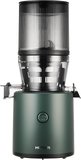
The H320 is the value pick in Hurom’s current lineup. It shares the family-size self-feeding platform and the same slow extraction technology as the H70, adds a pulp-control lever with fine and coarse strainers, and costs $50 less. The trade is the return of mesh strainers to clean. Buyers who want pulp control more than they hate cleaning strainers should take the H320 and save the money.
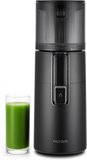
The H400 is the high-volume choice for households that batch-juice two to three days of juice at once. The wide mouth accepts larger pieces of produce, and the two-part easy-clean chamber keeps the maintenance burden reasonable despite the bigger throughput. The premium over the H70 only makes sense if you actually juice in volume; for single glasses daily, the H70 or H320 is the better buy.
Related Reading
- Hurom H70 Review Worth the Price
- Cold Press vs Centrifugal: The Nutrient Retention Showdown
- 10 Juice Recipes That Replace Your Daily Supplements
- Turmeric Juice vs Curcumin Supplements
- The Ultimate Guide to Juicing for Better Immunity
- Juicing for Dogs
- Juice vs Whole Food: Bioavailability Compared
References
-
Khaksar G, Assatarakul K, Sirikantaramas S. Effect of cold-pressed and normal centrifugal juicing on quality attributes of fresh juices: do cold-pressed juices harbor a superior nutritional quality and antioxidant capacity? Heliyon. 2019;5(6):e01917. PubMed: 31286079
-
Kim MJ, Jun JG, Park SY, et al. Antioxidant activities of fresh grape juices prepared using various household processing methods. Food Science and Biotechnology. 2017;26(4):861-869. PubMed: 30263614
-
Beveridge T. Juice extraction from apples and other fruits and vegetables. Critical Reviews in Food Science and Nutrition. 1997;37(5):449-469. PubMed: 9315434
-
Bai J, et al. Effect of extraction, pasteurization and cold storage on flavonoids and other secondary metabolites in fresh orange juice. Journal of the Science of Food and Agriculture. 2013;93(11):2771-2781. PubMed: 23408388
-
Dhuique-Mayer C, et al. Thermal degradation of antioxidant micronutrients in citrus juice: kinetics and newly formed compounds. Journal of Agricultural and Food Chemistry. 2007;55(10):4209-4216. PubMed: 17451252
Recommended Products