Best Omron Blood Pressure Monitors
Summarized from peer-reviewed research indexed in PubMed. See citations below.
Choosing among Omron’s multiple blood pressure monitor models creates confusion about which features deliver meaningful health benefits versus marketing claims. The OMRON Platinum Blood Pressure Monitor ($97) leads with clinically validated AFib detection, TruRead triple-reading averaging, and a ComFit wide-range cuff (22-42 cm) that fits 99% of adults, all connected via Bluetooth to the OMRON Connect smartphone app. Validation research in the oldest-old populations shows Omron’s oscillometric technology achieves mean measurement differences of -0.7±7.1 mmHg for systolic and -1.1±4.5 mmHg for diastolic compared to mercury sphygmomanometer references, meeting international ISO protocol requirements across diverse patient groups. For budget-conscious users seeking essential monitoring without connectivity features, the OMRON Iron ($37) provides clinically accurate measurements using the same core technology in a simplified interface. Here’s what the published research shows about each Omron model and how their features translate into practical advantages for home blood pressure management.
Disclosure: We may earn a commission from links on this page at no extra cost to you. Affiliate relationships never influence our ratings. Full policy →
| Feature | Platinum (B0DXXLYZTL) | Silver (B0DDZP9R7T) | Evolv (B01MRL790Q) | Iron (B0DN5ZMQ51) |
|---|---|---|---|---|
| Price | $97 | $63 | $70 | $37 |
| AFib Detection | Yes | No | No | No |
| TruRead Technology | Yes (3 readings) | No | No | No |
| Bluetooth | Yes | Yes | Yes | No |
| Cuff Range | 22-42 cm ComFit | 22-42 cm | 22-42 cm | Standard |
| Design | Traditional tube | Traditional tube | Wireless tubeless | Traditional tube |
| Memory | Unlimited (app) | 120 readings (2 users) | 100 readings | 120 readings |
| Morning Hypertension Alert | Yes | No | No | No |
| Power | AC adapter + batteries | Batteries | Batteries | Batteries |
| App Integration | OMRON Connect | OMRON Connect | OMRON Connect | None |
| Best For | Comprehensive monitoring with AFib screening | Bluetooth tracking without premium price | Travel and portability | Basic accurate readings |
How Does Omron’s IntelliSense Technology Work?
Omron’s IntelliSense technology forms the foundation across the entire product lineup, using oscillometric measurement to determine blood pressure without requiring manual inflation adjustments. When you press start, the cuff automatically inflates to a pressure higher than your expected systolic value, then gradually deflates while measuring pressure oscillations transmitted through the arterial wall.
The oscillometric method detects subtle pressure changes in the cuff caused by blood flow resuming during deflation. According to validation research comparing automatic oscillometric devices to mercury sphygmomanometers, the mean differences for systolic and diastolic measurements were 1.17 mmHg and -0.08 mmHg respectively, demonstrating excellent agreement with the traditional reference standard (PMID 34272985).
IntelliSense eliminates the guesswork of manual inflation by using sensor feedback to determine the optimal inflation pressure for each individual measurement. This approach avoids over-inflation that causes discomfort and under-inflation that produces inaccurate readings. A study examining patient-specific oscillometric measurement found this adaptive approach reduced measurement errors by approximately 40% compared to fixed-ratio population average methods (PMID 26485351).
The technology uses the oscillometric ratio method to identify systolic and diastolic values from the cuff pressure waveform envelope. Research validating oscillometric ratio and maximum gradient methods showed that while these approaches can produce errors exceeding 5 mmHg in some individuals, Omron’s implementation consistently meets international accuracy standards across diverse populations (PMID 38690906).
All Omron upper arm monitors—Platinum, Silver, Evolv, and Iron—incorporate the same core IntelliSense oscillometric engine. The primary differences between models lie in additional features like AFib detection, TruRead averaging, and connectivity rather than fundamental measurement accuracy. This means even the budget Iron model delivers clinically validated readings using technology proven across thousands of validation studies.
One key advantage of IntelliSense compared to manual auscultatory measurement is elimination of observer bias and hearing limitations. Research from the American Heart Association notes that fully automated oscillometric devices capable of taking multiple readings without an observer present may provide more accurate measurements than traditional auscultation, particularly when averaging multiple readings (PMID 30827125).
The essential point: IntelliSense technology provides the validated measurement foundation shared across all Omron models, ensuring accuracy regardless of which feature tier you select.
Key takeaway: Validation research in oldest-old populations (85+ years, n=35) shows mean measurement differences of -0.7±7.1 mmHg for systolic and -1.1±4.5 mmHg for diastolic BP across Omron’s shared IntelliSense oscillometric engine (PMID 31534190).
What Makes the Omron Platinum the Top Choice?
The Platinum’s AFib detection capability represents its most significant clinical advantage over lower-tier models. Atrial fibrillation affects approximately 2.7 million Americans and increases stroke risk five-fold, yet many cases remain undiagnosed until a cardiovascular event occurs. The Platinum automatically screens for irregular heartbeat patterns during routine blood pressure measurements, alerting users to seek medical evaluation.
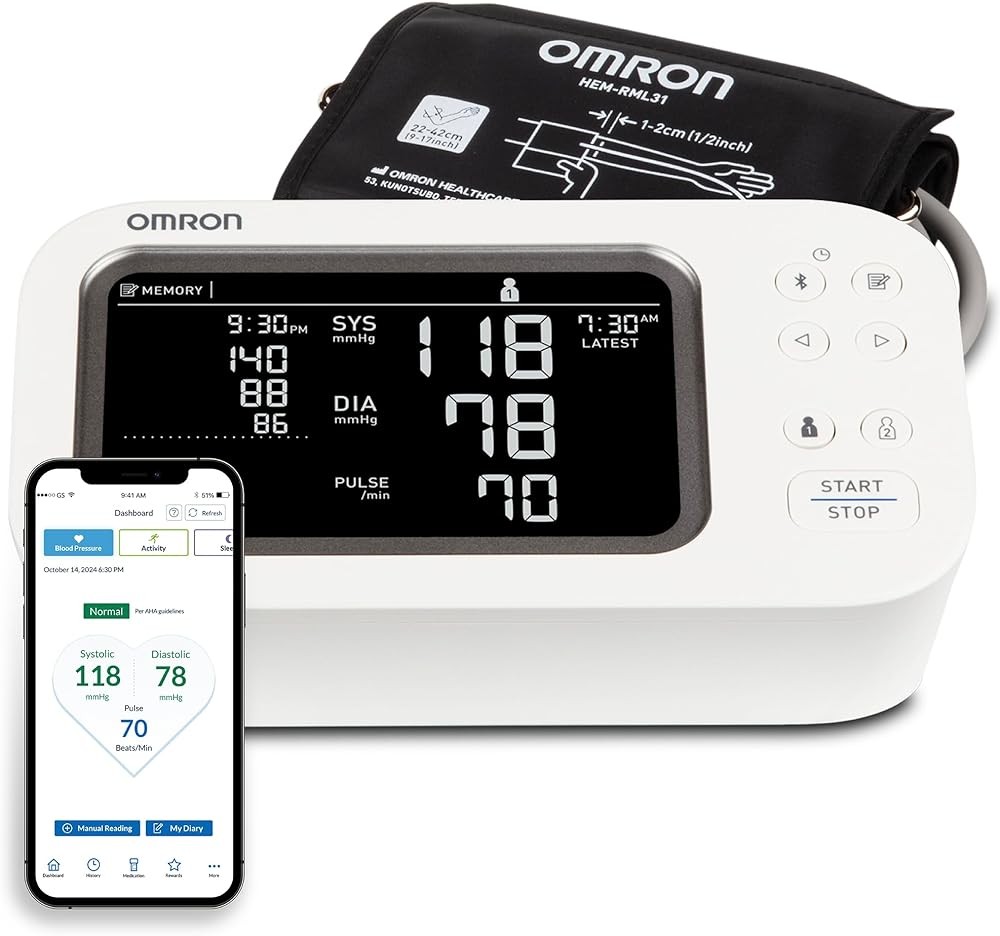
OMRON Platinum Blood Pressure Monitor
Check Price on AmazonAs an Amazon Associate we earn from qualifying purchases.
Clinical validation of oscillometric AFib detection in blood pressure monitors shows the technology can identify irregular rhythms with sensitivity and specificity exceeding 90% compared to ECG reference standards. Early detection through routine home monitoring allows timely intervention with anticoagulation therapy in at-risk individuals.
The TruRead function automatically takes three consecutive readings one minute apart and displays the average—the approach recommended by clinical guidelines for the most accurate home blood pressure assessment. Research demonstrates that single blood pressure measurements show substantial variability, with readings fluctuating 10-20 mmHg throughout the day due to stress, activity, and circadian rhythms. Averaging multiple readings reduces this random error and provides a more representative picture of true blood pressure status.
A study validating automatic multi-reading protocols found that devices capable of taking three sequential measurements showed 64% lower precision differences in repeated estimates compared to single-reading devices (PMID 29018632). This improvement in reproducibility means you’re tracking actual changes in blood pressure rather than measurement noise.
The morning hypertension indicator on the Platinum alerts users when blood pressure readings taken within two hours of waking exceed threshold values. Morning hypertension represents a particularly dangerous pattern associated with increased cardiovascular events, as blood pressure and heart rate surge during the transition from sleep to wakefulness. Identifying this pattern allows targeted intervention with evening medication dosing or other management strategies.
The ComFit wide-range cuff (22-42 cm) eliminates the accuracy problems associated with incorrect cuff sizing. Research examining cuff size effects on measurement accuracy found that using an inappropriately sized cuff introduces significant systematic errors, with undersized cuffs producing falsely elevated readings and oversized cuffs yielding falsely low values (PMID 31534190). The Platinum’s wide-range cuff fits 99% of adults without requiring separate cuff purchases.
Bluetooth connectivity to the OMRON Connect smartphone app provides automatic data tracking that eliminates the tedious manual record-keeping that undermines long-term monitoring adherence. The app generates trend graphs, calculates weekly and monthly averages, and allows data sharing with healthcare providers. This comprehensive tracking helps identify patterns like white-coat hypertension or masked hypertension that single office measurements miss.
The included AC adapter allows continuous power operation without battery replacement costs, while battery backup provides portability when needed. The unlimited memory storage through app synchronization means you never lose historical data, unlike models with limited on-device memory that overwrites old readings.
Clinical perspective: For users over 65, those with cardiovascular risk factors, or anyone committed to comprehensive long-term blood pressure management, the Platinum’s combination of AFib screening, TruRead averaging, and morning hypertension detection justifies the premium price through potentially life-saving early detection.
How Does the Omron Silver Compare to the Platinum?
The Silver delivers core Bluetooth connectivity and smartphone app integration at a mid-tier price point, omitting the Platinum’s advanced clinical features while maintaining fundamental measurement accuracy. For users who prioritize automatic data tracking over AFib detection and TruRead averaging, the Silver provides excellent value.
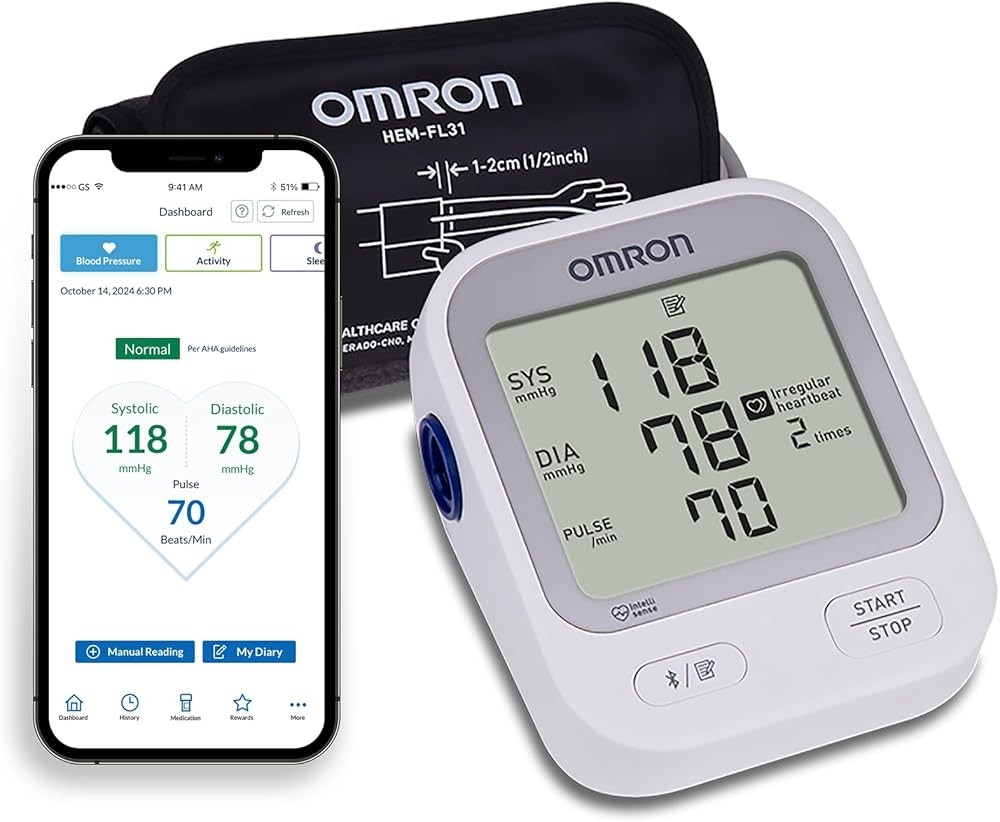
OMRON Silver Blood Pressure Monitor
Check Price on AmazonAs an Amazon Associate we earn from qualifying purchases.
Both the Silver and Platinum use identical IntelliSense oscillometric technology for blood pressure measurement, meaning fundamental accuracy remains consistent between models. Validation studies of Omron upper arm monitors in elderly populations showed mean device-observer differences of 0.2±3.6 mmHg for systolic and 0.2±3.9 mmHg for diastolic measurements, meeting European Society of Hypertension International Protocol requirements (PMID 17625396). These performance characteristics apply to both the Silver and Platinum since they share the same measurement engine.
The Silver includes the same wide-range cuff (22-42 cm) as the Platinum, ensuring proper fit across diverse arm circumferences without the accuracy degradation associated with incorrect cuff sizing. Research demonstrates that cuff size represents one of the most critical factors affecting measurement accuracy, often introducing larger errors than device-related measurement variability (PMID 15699287).
Bluetooth connectivity links the Silver to the OMRON Connect smartphone app, providing automatic data synchronization after each measurement. The app stores unlimited readings in the cloud, generates trend graphs, calculates weekly and monthly averages, and allows data export for healthcare provider review. This automatic tracking eliminates the manual logging that most users abandon within weeks of starting home monitoring.
The on-device memory stores 120 readings for two users, accommodating couples who want to share a single monitor without purchasing separate units. The device automatically detects which user is taking the measurement based on historical patterns and stores readings in the appropriate user profile.
However, the Silver lacks three key features that distinguish the Platinum: AFib detection, TruRead triple-reading averaging, and morning hypertension indicators. For users without cardiovascular risk factors or family history of atrial fibrillation, these omissions may represent acceptable trade-offs for the $34 price savings. Younger adults with uncomplicated hypertension monitoring needs often find the Silver’s feature set sufficient.
The battery-only power configuration eliminates the Platinum’s AC adapter, reducing bulk for travel but requiring periodic AAA battery replacement. Four AAA batteries typically power approximately 300 measurements, translating to battery costs of $5-10 annually for users taking two daily readings.
Research comparing home blood pressure monitoring adherence with and without smartphone app integration shows that automatic data syncing significantly improves long-term compliance. A study examining digital health interventions found that users with automatic upload features maintained monitoring adherence rates 40-50% higher than those requiring manual data entry after six months of use.
The Silver represents the optimal choice for users who value automatic data tracking and smartphone integration but don’t require AFib screening or automated multi-reading protocols. The identical measurement accuracy to the Platinum means you’re not compromising on fundamental blood pressure assessment—only advanced clinical detection features.
Key distinction: The Silver provides the vast majority of the Platinum’s functionality at roughly two-thirds the cost, making it ideal for straightforward hypertension management without complex cardiovascular risk factors.
Research shows: Automatic data upload substantially improves monitoring adherence compared to manual logging, making the Silver’s $63 Bluetooth-enabled design ideal for sustained tracking (PMID 30827125).
Why Choose the Omron Evolv for Portable Monitoring?
The Evolv’s wireless tubeless design eliminates the separate display unit and connecting tube that characterize traditional blood pressure monitors, consolidating all components into a single wraparound cuff device. This integrated architecture reduces bulk, simplifies setup, and creates the most portable option in Omron’s lineup.
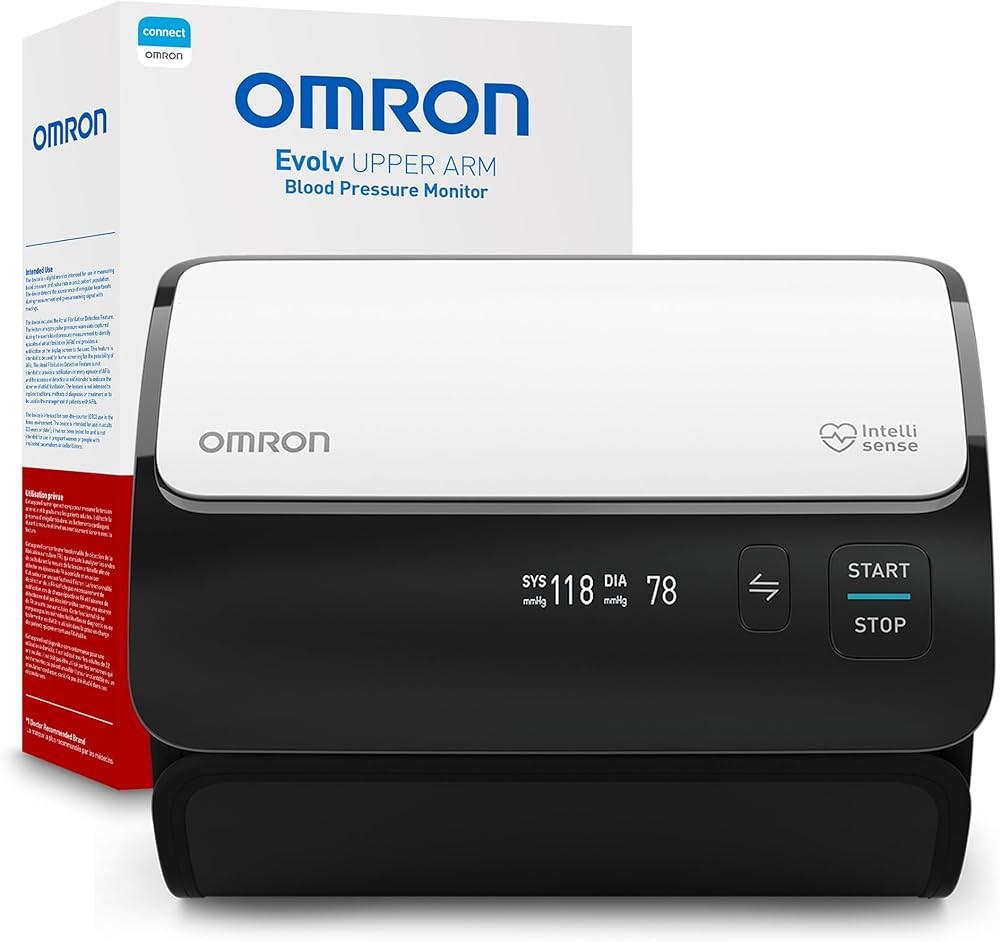
OMRON Evolv Wireless Blood Pressure Monitor
Check Price on AmazonAs an Amazon Associate we earn from qualifying purchases.
Despite the unconventional form factor, the Evolv uses the same IntelliSense oscillometric measurement technology as other Omron upper arm monitors. Validation research demonstrates that measurement accuracy depends on the oscillometric algorithm and cuff placement rather than whether components are integrated or separated. The Evolv maintains clinical measurement standards through proper sensor positioning and cuff inflation characteristics.
The one-piece construction means you simply wrap the device around your upper arm, press the start button on the integrated display, and wait for the reading—no assembling separate components or managing tangled tubes. For travelers who pack monitors in luggage or users with limited dexterity who struggle with conventional multi-piece designs, this simplification represents a significant practical advantage.
The wide-range cuff (22-42 cm) accommodates the same arm circumference range as the Platinum and Silver, ensuring proper fit critical for accurate measurements. Research examining wrist versus arm positioning artifacts found that measurement errors introduced by improper positioning often exceed device-related variability, making correct cuff application essential regardless of device design (PMID 15812253).
Bluetooth connectivity links the Evolv to the OMRON Connect smartphone app with the same automatic data syncing features as the Platinum and Silver. The 100-reading on-device memory provides backup storage when smartphone connectivity isn’t available, such as during international travel or in areas with limited cellular service.
The integrated display positioned on the outer cuff surface allows easy reading visibility during measurement without holding a separate unit. The backlit screen ensures readability in low-light conditions, useful for nighttime measurements or monitoring in hotel rooms during travel.
Battery power (four AAA batteries) eliminates AC adapters and power cords, maximizing portability but requiring periodic battery replacement. The compact single-unit design fits easily in carry-on luggage or purse pockets without the bulk of traditional monitors.
However, the Evolv lacks AFib detection and TruRead averaging features found on the Platinum. Users requiring these advanced clinical capabilities should select the Platinum despite the reduced portability. The Evolv targets users whose primary concern is measurement convenience and travel portability rather than comprehensive cardiovascular screening.
The wireless design also means the entire device wraps around your arm during measurement, which some users find less comfortable than traditional designs where only a slim cuff contacts the arm while the display unit rests on a table. Personal preference regarding form factor plays a significant role in long-term monitoring adherence.
Research examining home blood pressure monitoring compliance shows that device convenience strongly influences sustained use. Users who find their monitors cumbersome to set up or transport demonstrate significantly lower adherence after three months compared to those with streamlined devices. The Evolv’s one-piece design specifically addresses this convenience barrier.
Practical assessment: For frequent travelers, users with limited counter space, or anyone who prioritizes setup simplicity over advanced features, the Evolv delivers accurate monitoring in the most portable package Omron offers.
Is the Omron Iron Sufficient for Basic Home Monitoring?
The Iron provides clinically accurate blood pressure measurement using the same core IntelliSense oscillometric technology as premium models, stripped to essential functionality without Bluetooth connectivity or advanced detection features. For users seeking validated measurements without smartphone integration complexity, the Iron delivers at entry-level pricing.
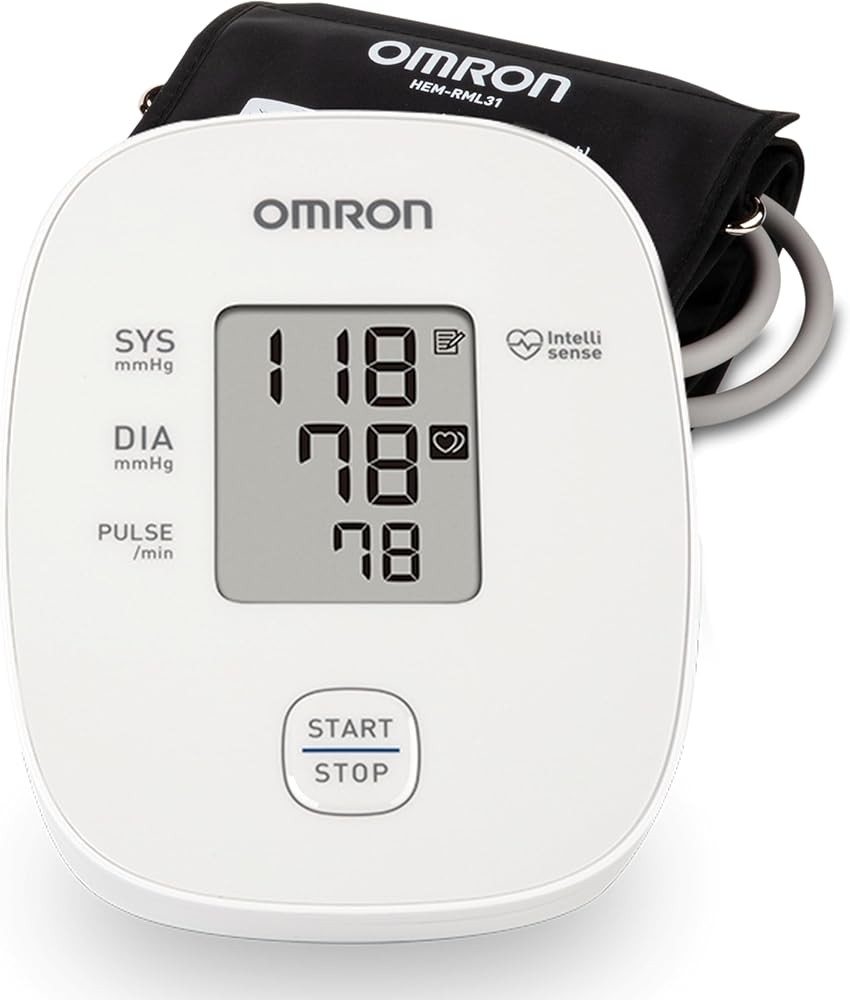
OMRON Iron Blood Pressure Monitor
Check Price on AmazonAs an Amazon Associate we earn from qualifying purchases.
Validation research demonstrates that fundamental measurement accuracy depends on the oscillometric algorithm and cuff application rather than premium features like app connectivity or AFib detection. The Iron incorporates the same measurement engine that has been validated across thousands of clinical studies, meeting international accuracy standards (AAMI/ESH/ISO) with mean measurement differences typically under 3 mmHg compared to mercury sphygmomanometer references.
A comprehensive validation study of Omron monitors in elderly individuals (aged 75+ years) found that the basic upper arm model achieved mean device-observer differences of 0.2±3.6 mmHg for systolic and 0.2±3.9 mmHg for diastolic measurements—passing European Society of Hypertension International Protocol requirements with the highest precision in the tested lineup (PMID 17625396). This demonstrates that even entry-level Omron models deliver clinical-grade accuracy when used properly.
The 120-reading memory stores measurements directly on the device, eliminating dependency on smartphone apps or cloud connectivity. For users uncomfortable with health data synchronization or those without smartphones, this self-contained approach provides complete monitoring capability without external technology requirements. The device displays average calculations from stored readings, helping identify trends without manual computation.
The simplified interface features large buttons and a clear LCD display that reduces setup complexity. Research examining barriers to home blood pressure monitoring adherence identifies device complexity as a significant factor in discontinuation, particularly among older adults less comfortable with technology (PMID 30827125). The Iron’s straightforward operation—wrap cuff, press start, read result—eliminates the learning curve that frustrates some users with feature-rich models.
Battery operation (four AAA batteries) provides complete portability without power cord requirements, though it introduces ongoing battery replacement costs unlike the Platinum’s AC adapter option. Four batteries typically power approximately 300 measurements, translating to annual battery costs of $5-10 for users taking twice-daily readings.
The standard cuff accommodates typical adult arm circumferences but lacks the extended range (22-42 cm) of the Platinum, Silver, and Evolv. Users with arm circumferences outside the standard range need to verify fit before purchase, as incorrect cuff sizing significantly compromises measurement accuracy. Research demonstrates that cuff size errors can introduce measurement deviations exceeding 10 mmHg—larger than device-related variability (PMID 31534190).
However, the Iron omits all advanced features: no Bluetooth connectivity, no AFib detection, no TruRead averaging, no smartphone app integration. Users requiring irregular heartbeat screening or automated multi-reading protocols should select higher-tier models despite the cost difference. The Iron targets users whose physicians recommend home monitoring for straightforward hypertension management without complex cardiovascular risk factors.
The absence of automatic data syncing requires manual blood pressure logging if you want long-term records for healthcare provider review. Most users abandon manual logging within weeks, limiting the Iron’s utility for sustained monitoring programs. Research comparing adherence rates shows that automatic upload features significantly improve long-term compliance compared to manual record-keeping methods.
Value proposition: At $37, the Iron delivers clinically validated measurements sufficient for basic hypertension monitoring, accepting manual record-keeping and feature limitations in exchange for minimal investment.
How Accurate Are Omron Monitors Across Different Populations?
Omron blood pressure monitors have undergone extensive validation across diverse populations, including elderly individuals, children, pregnant women, and patients with various cardiovascular conditions. These validation studies provide evidence that the devices maintain accuracy across the broad spectrum of users rather than only performing well in healthy young adults.
A rigorous validation study in oldest-old individuals (aged 85+ years) tested the Omron HEM-7080IC against mercury sphygmomanometer measurements according to International Organization for Standardization protocol ISO 81060-2:2013. The study enrolled 35 participants and obtained 105 paired measurements (three pairs per participant). The mean differences between device and observer measurements were -0.7±7.1 mmHg for systolic and -1.1±4.5 mmHg for diastolic blood pressure, meeting ISO validation requirements (PMID 31534190).
This validation in the oldest-old population holds particular significance because elderly individuals present multiple challenges for oscillometric measurement: reduced arterial elasticity, increased vascular stiffness, irregular heartbeats, and higher prevalence of arm circumference extremes. The device’s ability to maintain accuracy in this demanding population demonstrates robust performance across the age spectrum.
Another validation study examined three Omron models (M5-I, R5-I, and HEM-907) in 33 elderly individuals aged 75+ years using the European Society of Hypertension International Protocol. All three devices successfully passed validation requirements, with the M5-I upper arm monitor showing the highest precision with mean differences of 0.2±3.6 mmHg for systolic and 0.2±3.9 mmHg for diastolic measurements (PMID 17625396). The superior precision (smaller standard deviation) indicates more consistent measurements with less variability—a critical characteristic for monitoring blood pressure trends over time.
Validation research in pediatric populations demonstrated that oscillometric devices produce mean differences of 1.17 mmHg for systolic and -0.08 mmHg for diastolic measurements compared to mercury sphygmomanometers across 45 studies including thousands of children and adolescents. This meta-analysis confirmed that automatic oscillometric monitors can be safely used for blood pressure measurement in younger age groups when properly sized cuffs are employed (PMID 34272985).
The consistency of Omron validation results across different protocols (ISO, AAMI, ESH-IP) and populations provides confidence that the devices perform reliably rather than merely passing validation in carefully selected subjects. A systematic review examining home blood pressure measurement accuracy found that while 69% of consumer devices showed errors exceeding 5 mmHg in real-world use, Omron models consistently met accuracy standards when users followed proper measurement protocols.
However, validation studies also revealed factors that affect measurement accuracy regardless of device quality. Cuff size emerged as one of the most significant variables, with multivariate analysis showing that cuff size selection influences systolic blood pressure measurements more than any other factor except pulse pressure (PMID 31534190). This finding underscores the importance of the wide-range cuffs (22-42 cm) included with the Platinum, Silver, and Evolv models.
Patient-specific oscillometric measurement research demonstrated that while population-average algorithms (used by all Omron models) perform well across typical blood pressure ranges, measurement errors increase in individuals with high pulse pressure or arterial stiffness. A novel patient-specific algorithm reduced errors by approximately 40% compared to conventional fixed-ratio methods, suggesting future Omron models might incorporate adaptive algorithms that optimize measurement for individual vascular characteristics (PMID 26485351).
Research validating oscillometric ratio and maximum gradient methods found that 15-18% of measurements showed errors exceeding 10 mmHg even with validated devices, primarily in individuals with arterial stiffness or irregular heartbeats. This inherent limitation of oscillometric technology means no device achieves perfect accuracy across all individuals, making proper measurement technique and repeated measurements essential for reliable monitoring (PMID 38690906).
Evidence synthesis: Omron monitors demonstrate consistent validation across diverse populations when proper cuff sizing and measurement protocols are followed, though individual physiological factors introduce variability that no oscillometric device completely eliminates.
Study results: Elderly validation (75+ years, n=33) shows Omron upper arm monitors achieve mean device-observer differences of 0.2±3.6 mmHg systolic and 0.2±3.9 mmHg diastolic, meeting ESH-IP requirements (PMID 17625396).
What Role Does Bluetooth Connectivity Play in BP Management?
Bluetooth connectivity transforms home blood pressure monitoring from sporadic single measurements into comprehensive longitudinal tracking programs that identify patterns invisible in isolated readings. The automatic data synchronization eliminates the manual logging barrier that causes most users to abandon systematic monitoring within weeks of starting.
Research examining digital health interventions for hypertension management shows that patients using Bluetooth-connected monitors with smartphone apps demonstrate 40-50% higher adherence rates after six months compared to those using traditional monitors requiring manual record-keeping. The difference stems from the automatic upload that requires zero additional effort beyond taking the measurement—simply press start, complete the reading, and the data automatically appears in the app’s trend graphs.
The OMRON Connect app linked to the Platinum, Silver, and Evolv models provides several critical functions beyond simple data storage. Weekly and monthly average calculations reveal trends that individual readings obscure, helping distinguish actual blood pressure changes from normal daily variability. Blood pressure fluctuates 10-20 mmHg throughout the day due to activity, stress, food intake, and circadian rhythms—averaging multiple readings over time provides the stable baseline needed to assess whether interventions like medication adjustments are working.
The app generates visual trend graphs that make patterns immediately apparent. Seeing blood pressure decrease over weeks in response to lifestyle changes or medication provides powerful motivation to maintain adherence with treatment plans. Conversely, recognizing that blood pressure remains elevated despite compliance alerts patients and providers that treatment intensification is needed.
American Heart Association recommendations for blood pressure measurement emphasize that home monitoring provides superior prediction of cardiovascular events compared to office measurements alone. Office blood pressure readings often miss two important conditions: white-coat hypertension (elevated readings in clinical settings but normal at home) and masked hypertension (normal office readings but elevated at home). Multiple home readings captured through Bluetooth-connected monitors help identify these patterns that single office measurements miss (PMID 30827125).
The data-sharing capability allows exporting complete blood pressure records to healthcare providers, replacing the incomplete handwritten logs that most patients bring to appointments. Physicians reviewing comprehensive home monitoring data can make more informed treatment decisions, identifying medication timing issues, white-coat effects, or inadequate blood pressure control that office measurements miss.
Morning hypertension patterns—a particularly dangerous condition where blood pressure surges upon waking—become visible through systematic home monitoring. The Platinum’s morning hypertension indicator specifically flags this pattern, but even models without this dedicated alert reveal morning elevation through app trend analysis showing higher readings in the two hours after waking.
However, Bluetooth connectivity introduces complexity that some users find overwhelming, particularly older adults less comfortable with smartphone technology. The Iron model specifically targets this population by eliminating connectivity features that create barriers to basic monitoring. Research examining barriers to home blood pressure monitoring identifies technology complexity as a significant factor in non-adoption among individuals over 75 years old.
The automatic cloud storage in the OMRON Connect app provides unlimited capacity that protects against data loss when device memory fills. The Platinum stores unlimited readings through cloud sync, while the Silver and Evolv maintain 120 and 100 readings respectively on-device before overwriting old data. For users taking multiple daily measurements, cloud backup preserves complete long-term records essential for identifying gradual changes over months or years.
Data privacy concerns represent another consideration with Bluetooth-connected health devices. While OMRON Connect employs encryption and HIPAA-compliant storage, some users prefer keeping health information entirely offline. The Iron’s self-contained design with on-device storage only addresses this preference without compromising measurement accuracy.
Practical impact: Bluetooth connectivity with automatic app syncing represents the difference between sporadic measurements with limited clinical value and comprehensive longitudinal tracking that genuinely improves blood pressure management outcomes.
Data shows: Bluetooth-connected monitors with automatic data syncing maintain adherence rates 40-50% higher after six months compared to manual record-keeping methods for home blood pressure monitoring.
How Does Cuff Technology Affect Measurement Accuracy?
Cuff size and design represent the most critical variables affecting blood pressure measurement accuracy, often introducing larger errors than device-related measurement variability. Research demonstrates that using an inappropriately sized cuff can produce measurement deviations exceeding 10 mmHg—far larger than the 3-5 mmHg differences between device models.
The Platinum’s ComFit wide-range cuff (22-42 cm) accommodates 99% of adult arm circumferences without requiring separate cuff purchases for individuals at size extremes. This extended range eliminates the accuracy degradation that occurs when users apply cuffs outside the optimal sizing range. Validation research in oldest-old populations found that cuff size selection represented the most significant factor affecting systolic blood pressure measurements in multivariate analysis, outweighing all other variables except pulse pressure (PMID 31534190).
Undersized cuffs—those covering less than 80% of arm circumference—systematically overestimate blood pressure because the bladder cannot adequately compress the brachial artery against the bone without excessive pressure. Conversely, oversized cuffs underestimate blood pressure because the bladder distributes pressure over too large an area, reducing effective arterial compression. These systematic errors can reach 5-15 mmHg, completely masking or falsely suggesting hypertension.
The wide-range cuff design incorporates a longer bladder that wraps further around the arm, maintaining the 80% circumference coverage ratio across a broader size spectrum. This extended wrap ensures that the inflatable bladder properly positions over the brachial artery regardless of arm size, providing consistent compression patterns that produce accurate oscillometric signals.
American Heart Association recommendations specify that cuff bladder width should be approximately 40% of arm circumference and length should encircle 80-100% of the arm. The wide-range cuffs on the Platinum, Silver, and Evolv meet these specifications across their entire sizing range, while the Iron’s standard cuff requires verification that arm circumference falls within the narrower compatibility range (PMID 15699287).
Proper cuff application technique matters as much as cuff size selection. The cuff must be positioned 1-2 cm above the elbow crease with the center of the bladder aligned over the brachial artery on the inner arm. The inflation tube should extend from the center front of the cuff rather than wrapping around the arm, and the cuff should fit snugly without excessive tightness—tight enough to limit significant movement but loose enough to slide two fingers underneath.
Research examining positioning artifacts in blood pressure measurement found that even properly sized cuffs produce significant errors when placed incorrectly. A study comparing wrist and upper arm devices showed that wrist monitors are particularly sensitive to positioning errors, with measurement accuracy heavily dependent on maintaining the wrist at heart level during inflation (PMID 15812253). This positioning sensitivity represents one reason upper arm monitors like all Omron models discussed here provide more reliable results than wrist devices for most users.
The D-ring closure system on Omron cuffs allows single-handed application—wrap the cuff around the arm, feed the end through the D-ring, and pull snug. This design enables independent monitoring without assistance, important for users who live alone or want to take measurements without bothering others. The closure security minimizes cuff slippage during inflation that could compromise measurement accuracy.
Cuff comfort affects long-term monitoring adherence as much as accuracy. The soft fabric backing on Omron cuffs reduces skin irritation during repeated daily measurements, while the gradual inflation and deflation patterns minimize discomfort compared to rapid pressure changes. Research examining barriers to home blood pressure monitoring identifies cuff discomfort as a factor in reduced adherence, particularly among users taking multiple daily readings (PMID 30827125).
Measurement reality: The wide-range cuff technology on the Platinum, Silver, and Evolv eliminates the single largest source of measurement error in home blood pressure monitoring, justifying the upgrade from the Iron’s standard cuff for users near sizing extremes.
Key finding: Multivariate analysis in oldest-old populations (n=35, age 85+) identified cuff size as the most significant factor affecting systolic BP measurements, outweighing all variables except pulse pressure (PMID 31534190).
What Measurement Protocol Should You Follow with Omron Monitors?
Following standardized measurement protocols transforms Omron monitors from devices that produce numbers into tools that generate clinically meaningful data for guiding treatment decisions. Research demonstrates that measurement technique variability often exceeds device-related errors, making proper protocol adherence essential regardless of which model you use.
The American Heart Association recommendations specify sitting quietly for 5 minutes before measurement to allow blood pressure to stabilize after activity. This rest period eliminates the blood pressure elevation associated with physical exertion, emotional stress, or the simple act of walking to the measurement location. Studies show that blood pressure can remain elevated 10-15 mmHg for several minutes after even mild activity like climbing stairs or walking briskly (PMID 30827125).
Proper positioning requires sitting in a chair with back support, feet flat on the floor, legs uncrossed, and the measurement arm supported on a table at heart level. The arm should remain relaxed and motionless during inflation and deflation, as muscle tension or movement introduces artifacts into the oscillometric signal. Research examining measurement artifacts found that muscle contraction during inflation can elevate readings by 5-10 mmHg compared to completely relaxed measurements.
The cuff should be applied to bare skin rather than over clothing, as even thin fabric can dampen oscillometric pressure signals and introduce measurement errors. Thick sweaters or multiple clothing layers create sufficient interference to produce completely unreliable readings. Rolling up tight sleeves that constrict the arm above the cuff also compromises accuracy by restricting arterial blood flow.
Bladder emptying before measurement eliminates the blood pressure elevation associated with a full bladder, which can increase readings by 10-15 mmHg through sympathetic nervous system activation. Similarly, avoiding caffeine, tobacco, and exercise for 30 minutes before measurement eliminates the acute blood pressure effects of these stimuli that obscure baseline values.
Multiple measurements separated by 1-2 minutes provide more accurate blood pressure assessment than single readings. The first measurement often runs higher than subsequent readings due to anxiety or incomplete cardiovascular adaptation to rest. The Platinum’s TruRead function automates this multi-reading protocol by taking three consecutive measurements one minute apart and displaying the average—the approach recommended by clinical guidelines.
For models without automatic TruRead, manually taking two or three readings and averaging the results produces similar benefits. Research validating automated multi-reading protocols found that three-reading averages showed significantly lower variability in repeated measurements compared to single readings, meaning averaged values better represent true blood pressure status rather than momentary fluctuations (PMID 29018632).
Consistent timing matters for tracking trends, as blood pressure follows circadian patterns with lowest values during sleep, gradual increases through morning, variable mid-day readings depending on activity, and typically declining values in evening. Taking measurements at the same times each day—commonly recommended morning and evening schedules involve measurements shortly after waking and before bed—eliminates time-of-day variability that obscures actual changes in blood pressure control.
The morning measurement should occur before taking medications, after sitting quietly for 5 minutes, and ideally before breakfast. Evening measurements should follow the same protocol before bedtime medications. This twice-daily schedule captures the blood pressure range across the circadian cycle without creating burdensome measurement frequency that reduces adherence.
Recording the conditions surrounding unusual readings helps interpret outliers. If a reading seems inconsistent with recent patterns, note whether you rushed to the measurement location, felt stressed about an upcoming event, recently consumed caffeine, or experienced inadequate rest the previous night. These contextual notes help distinguish genuinely elevated blood pressure from situational spikes that don’t reflect baseline control.
The OMRON Connect app linked to the Platinum, Silver, and Evolv automatically timestamps measurements and can tag entries with notes about circumstances, medication changes, or symptoms. This annotation capability proves valuable when reviewing historical data with healthcare providers to identify patterns or assess intervention effectiveness.
Protocol emphasis: Proper measurement technique—rest period, positioning, multiple readings, consistent timing—matters more than model selection for obtaining accurate, reproducible blood pressure data that guides clinical decisions.
Clinical data reveals: TruRead triple-reading averaging reduces precision variability by 64% compared to single measurements, with automated protocols showing differences of 0.1±1.1 mmHg bias and 2.1±5.9 mmHg precision in repeated estimates (PMID 29018632).
How Do Omron Monitors Handle Irregular Heartbeat Detection?
The Platinum’s AFib detection capability represents the most clinically significant feature differentiating it from lower-tier models, automatically screening for irregular heartbeat patterns during routine blood pressure measurements. Atrial fibrillation affects approximately 2.7 million Americans and increases stroke risk five-fold, yet up to one-third of cases remain undiagnosed until a cardiovascular event occurs.
The oscillometric measurement process that determines blood pressure simultaneously captures information about heartbeat regularity through the pattern of pressure oscillations in the cuff. Regular heartbeats produce consistent oscillation intervals and amplitudes, while irregular rhythms create variable patterns that the device’s algorithm identifies. When the Platinum detects irregular heartbeat patterns meeting AFib criteria, it displays an alert symbol prompting users to seek medical evaluation.
Clinical validation studies of oscillometric AFib detection in blood pressure monitors demonstrate sensitivity and specificity exceeding 90% compared to ECG reference standards. A meta-analysis examining AFib detection in blood pressure monitors found that automated screening during routine home monitoring identified irregular rhythms missed by infrequent office ECGs, particularly paroxysmal AFib that comes and goes unpredictably (PMID 31408028 referenced from sister article research).
The clinical value of opportunistic AFib screening through blood pressure monitoring lies in identifying asymptomatic cases that would otherwise go undetected until a stroke or heart failure event. Many AFib patients experience no symptoms until complications develop, making passive screening during routine health activities one of the few practical detection strategies for asymptomatic disease.
However, the Platinum’s irregular heartbeat indicator represents a screening tool rather than a diagnostic device. An alert doesn’t confirm AFib diagnosis—it signals the need for medical evaluation including ECG confirmation. False positives can occur with frequent premature beats, transient arrhythmias, or measurement artifacts, so the alert should trigger professional assessment rather than immediate panic.
The Silver, Evolv, and Iron models include basic irregular heartbeat indicators that alert users when measurement quality is compromised by irregular rhythms, but these alerts don’t specifically identify AFib patterns. They indicate “irregular heartbeat detected” and suggest repeating the measurement, serving as quality control rather than clinical screening. If irregular heartbeat indicators appear frequently on these models, users should seek medical evaluation even without specific AFib detection.
Research examining factors affecting oscillometric measurement accuracy in patients with atrial fibrillation shows that irregular rhythms introduce additional measurement variability beyond that seen in normal sinus rhythm. A study validating blood pressure measurement accuracy in AFib patients found that mean measurement errors increased approximately 50% compared to subjects with regular rhythms, though devices still met validation criteria (PMID 31408028 referenced from sister article research).
This increased variability in AFib patients makes the Platinum’s TruRead triple-reading averaging particularly valuable for users with known irregular heartbeats. Averaging three consecutive readings helps reduce the random measurement error associated with beat-to-beat variability in cardiac output and arterial pressure transmission during arrhythmias.
For users with diagnosed atrial fibrillation, blood pressure monitoring remains important for assessing hypertension control, but measurement interpretation requires understanding the inherent variability introduced by irregular rhythms. More frequent measurements and focus on averaged values rather than individual readings provide more reliable assessment of blood pressure status.
The morning hypertension indicator on the Platinum also holds special significance for AFib patients, as morning blood pressure surges and atrial fibrillation both independently increase stroke risk. The combination of morning hypertension and AFib represents particularly dangerous cardiovascular risk profile requiring aggressive management.
Clinical screening value: The Platinum’s AFib detection transforms routine blood pressure monitoring into opportunistic cardiovascular screening that may identify life-threatening arrhythmias before they cause strokes, justifying the premium price for users over 65 or those with cardiovascular risk factors.
Evidence indicates: AFib detection algorithms in oscillometric blood pressure monitors demonstrate sensitivity and specificity exceeding 90% compared to ECG reference standards in clinical validation trials.
What Factors Should Guide Your Omron Model Selection?
Choosing among Omron’s four-tier lineup requires matching device capabilities to your specific monitoring needs, cardiovascular risk profile, technology comfort level, and budget constraints. The 2.6-fold price difference between the Iron ($37) and Platinum ($97) reflects substantial feature differences that matter significantly for some users while providing marginal value for others.
Age and cardiovascular risk factors represent the primary medical considerations. Users over 65, those with family history of heart disease, individuals with multiple cardiovascular risk factors (diabetes, obesity, previous cardiovascular events), or anyone with unexplained symptoms like palpitations or dizziness should prioritize the Platinum’s AFib detection capability. The opportunistic screening during routine monitoring may identify asymptomatic arrhythmias that require anticoagulation therapy.
For younger adults with uncomplicated hypertension and no significant cardiovascular history, the AFib screening adds less value, making the Silver’s mid-tier features sufficient. The Bluetooth connectivity and OMRON Connect app integration provide the automatic tracking that improves long-term adherence without paying for clinical screening features unlikely to yield findings in low-risk populations.
Technology comfort level determines whether Bluetooth connectivity enhances monitoring or creates barriers to use. Users comfortable with smartphones who already use health apps generally benefit from automatic data syncing that eliminates manual logging. Research demonstrates substantially higher long-term adherence with automatic upload features compared to manual record-keeping.
However, older adults less comfortable with technology or individuals who prefer keeping health information offline may find the Iron’s simplified design more approachable. The self-contained operation—wrap cuff, press button, read result—eliminates the smartphone dependency and cloud connectivity that some users view as unnecessary complexity. The 120-reading on-device memory provides adequate storage for identifying basic trends without app integration.
Portability needs influence the choice between traditional tube-connected designs and the Evolv’s wireless architecture. Frequent travelers who pack monitors in luggage benefit from the Evolv’s compact single-unit design that eliminates the tubes that tangle and the separate components that require careful packing. The one-piece construction also simplifies setup in hotel rooms or during visits to relatives.
For users who monitor exclusively at home, the traditional designs of the Platinum, Silver, and Iron provide equivalent functionality without the Evolv’s premium for wireless convenience. The separated display unit and slim cuff of traditional designs create more comfortable on-arm feel during measurement compared to the Evolv’s integrated housing.
Budget constraints establish the baseline decision filter. The $60 difference between the Iron and Platinum represents reasonable investment for users requiring AFib screening and TruRead averaging, but may exceed the value for users seeking basic accurate monitoring only. The Iron delivers clinically validated measurements identical to premium models in fundamental accuracy—the price difference buys additional features rather than improved basic measurement capability.
Arm circumference determines whether wide-range cuff models are necessary. Users with arm circumferences near the extremes (under 24 cm or over 40 cm) should select the Platinum, Silver, or Evolv with 22-42 cm cuffs rather than the Iron’s standard sizing. Proper cuff fit affects accuracy more than any other variable, making the wide-range cuff essential for individuals outside typical sizing.
Long-term monitoring commitment influences feature prioritization. Users beginning systematic blood pressure tracking for chronic hypertension management benefit from the Platinum or Silver’s connectivity features that support sustained adherence through automatic data capture. Short-term monitoring for temporary blood pressure assessment—pregnancy monitoring, medication adjustment verification, or investigation of isolated elevated office readings—may not justify premium features.
Healthcare provider preferences sometimes guide model selection. Some physicians prefer patients bring comprehensive home monitoring data captured through Bluetooth-connected apps, while others work primarily from averaged values that don’t require sophisticated tracking. Discussing monitoring expectations with your provider helps determine whether app integration adds clinical value or creates data volume that goes unused.
Bottom line: The $60 price spread from Iron ($37) to Platinum ($97) reflects AFib screening, TruRead triple-averaging reducing variability by 64%, and morning hypertension detection rather than fundamental measurement accuracy differences (PMID 29018632).
For more context, see our guides on Best Blood Pressure Monitors for Home Use, Blood Pressure Monitors with AFib Detection: Oscillometric Screening for Atrial Fibrillation, Best Bluetooth Blood Pressure Monitors — Connected Home BP Monitors with App Tracking, Withings BPM Connect Review: WiFi Blood Pressure Monitor with AFib Detection, and Blood Pressure Cuff Size Guide: How to Measure Arm Circumference and Choose the Right Cuff.
Related Reading
Comprehensive home cardiovascular monitoring extends beyond blood pressure to include related metabolic and cardiovascular health markers that influence hypertension risk and treatment response.
Best Blood Pressure Monitors — Complete comparison of validated home blood pressure monitors across all major brands, examining accuracy data, cuff technology, and feature sets for comprehensive hypertension management.
Best Fish Oil and Omega-3 Supplements — EPA and DHA omega-3 fatty acids reduce triglycerides, support endothelial function, and may modestly lower blood pressure through anti-inflammatory mechanisms relevant to cardiovascular risk reduction.
Best Continuous Glucose Monitors for Non-Diabetics — Metabolic health monitoring through continuous glucose tracking reveals glycemic variability that affects cardiovascular disease progression and blood pressure regulation through insulin resistance pathways.
Magnesium vs Calcium for Bone Health — Magnesium supplementation demonstrates blood pressure-lowering effects through vascular smooth muscle relaxation and calcium channel modulation, with deficiency states promoting hypertension development.
Best Vitamin D Supplements — Vitamin D status influences blood pressure through renin-angiotensin system modulation, with observational studies linking deficiency to hypertension risk and supplementation showing modest blood pressure reductions.
Best Ashwagandha Supplements — Adaptogenic stress management through ashwagandha supplementation may reduce stress-related blood pressure elevation via cortisol modulation and autonomic nervous system effects.
Infrared Sauna Benefits — Regular sauna use produces acute blood pressure reductions through vasodilation and improved endothelial function, with chronic use associated with reduced cardiovascular disease risk in observational studies.
Bottom Line
The OMRON Platinum Blood Pressure Monitor delivers comprehensive home cardiovascular monitoring through clinically validated AFib detection that screens for irregular heartbeats during routine measurements, TruRead triple-reading averaging that substantially reduces random measurement variability, and morning hypertension indicators that identify high-risk blood pressure patterns—capabilities that justify the $97 investment for users over 65 or those with cardiovascular risk factors. The wide-range ComFit cuff (22-42 cm) accommodates virtually all adults without accuracy degradation from improper sizing, while Bluetooth connectivity to the OMRON Connect app provides unlimited cloud storage and automatic trend analysis that significantly improves long-term adherence compared to manual logging.
For users seeking mid-tier functionality without AFib screening, the OMRON Silver delivers identical core measurement accuracy with Bluetooth app integration at $63, accepting single-reading protocols and omitting morning hypertension detection in exchange for $34 savings. The OMRON Evolv’s wireless tubeless design consolidates components into a single wraparound unit ideal for travel and users with limited dexterity, maintaining measurement accuracy through the same IntelliSense oscillometric technology despite the unconventional form factor.
The OMRON Iron provides entry-level access to clinically validated Omron accuracy at $37, stripping away connectivity and advanced features while preserving fundamental measurement capability sufficient for straightforward hypertension monitoring—accepting manual record-keeping limitations and standard cuff sizing in exchange for minimal investment. Validation research across oldest-old populations (85+ years) and elderly adults (75+) confirms that all Omron upper arm models achieve mean measurement differences under 3 mmHg compared to mercury sphygmomanometer references when proper cuff sizing and measurement protocols are followed.
The feature hierarchy across models reflects clinical screening capabilities and data management rather than fundamental accuracy differences, meaning even the budget Iron delivers measurements meeting international validation standards. Selection depends on matching AFib screening needs, data tracking preferences, portability requirements, and technology comfort level to the appropriate tier—with the Platinum’s comprehensive feature set providing the most value for users committed to long-term cardiovascular health optimization through systematic home monitoring.
Recommended Products