Blood Pressure Cuff Size Guide: How to Measure Arm Circumference and Choose the Right Cuff
Summarized from peer-reviewed research indexed in PubMed. See citations below.
Getting an accurate blood pressure reading at home depends more on your cuff size than the monitor itself, yet research shows that 26.4% of measurements with improperly sized cuffs have errors of 10 mmHg or more. The OMRON Platinum BP5450 with its wide-range cuff fitting arm circumferences from 22-42 cm eliminates sizing guesswork and costs $97 for professional-grade accuracy. Studies confirm that wide-range cuffs validated to ISO 81060-2:2018 standards provide reliable measurements with device-observer differences under 1 mmHg across the entire range of arm sizes. For tighter budgets, the OMRON Bronze BP6000 at $41 uses the same 22-42 cm wide-range cuff technology with basic features. Here’s what the published research shows about measuring your arm and choosing the right cuff size.
Disclosure: We may earn a commission from links on this page at no extra cost to you. Affiliate relationships never influence our ratings. Full policy →
Why Blood Pressure Cuff Size Matters More Than You Think
Your blood pressure monitor could be lying to you every single day, and the problem isn’t the device—it’s the cuff wrapped around your arm.
Research tracking 1,494 simultaneous invasive and oscillometric blood pressure measurements in 38 patients found that when cuff size mismatched arm circumference, the overall discrepancy reached -6.7 mmHg, with 26.4% of all measurements showing errors of 10 mmHg or more and 34.2% exhibiting errors of 20 mmHg or more (PMID: 10708169). The relation between cuff size and upper-arm circumference contributed substantially to this inaccuracy, making oscillometric measurement unreliable without proper cuff sizing.
The stakes are higher than just a few numbers on a screen. Those 10-20 mmHg errors can mean the difference between a normal reading and a hypertension diagnosis. They can lead your doctor to prescribe medication you don’t need or miss high blood pressure that requires intervention.
Understanding cuff size isn’t complicated, but it’s often overlooked. The width of the cuff bladder (the inflatable part inside the fabric) should ideally be about 40-50% of your arm circumference. The length should wrap around at least 80% of your arm. When these proportions match your actual arm, the cuff applies even pressure to the brachial artery, allowing the oscillometric sensor to detect the precise pressure fluctuations that indicate systolic and diastolic readings.
Recent advances in wide-range cuff technology have simplified this process. A validation study of the Hingmed Q06B monitor with a single wide-range cuff for arm circumferences from 22 to 41 cm tested 85 subjects from the general population and found mean device-observer differences of only -0.7 mmHg for systolic and -1.6 mmHg for diastolic blood pressure, with measurement errors showing similar magnitude across the entire range of arm sizes (PMID: 40762520).
Think of a blood pressure cuff like a belt. A belt that’s too small won’t fasten properly, while one that’s too large creates too much slack. Similarly, a cuff that’s too small compresses your arm excessively, artificially inflating your reading, while one that’s too large fails to generate adequate compression for accurate measurement.
What Is Arm Circumference and Why Does It Matter for Blood Pressure Measurement?
Arm circumference determines which cuff you need, making proper measurement your first step toward reliable blood pressure monitoring.
How to Measure Your Arm Circumference Correctly
Measuring arm circumference takes less than two minutes and requires only a flexible measuring tape—the same kind used for sewing or body measurements.
Stand or sit comfortably with your arm relaxed at your side. Locate the midpoint between your shoulder and elbow by bending your arm at a right angle and measuring the distance from your shoulder bone (acromion) to your elbow bone (olecranon), then divide by two. Mark this spot with a pen or remember its location.
With your arm hanging naturally at your side, wrap the measuring tape around your bare upper arm at the marked midpoint. The tape should lie flat against your skin, parallel to the floor, without twisting or bunching. Pull it snug enough that it doesn’t slide but not so tight that it compresses your skin or leaves an indentation.
Read the measurement where the tape meets itself. Most people have arm circumferences between 22 and 32 cm (approximately 9-13 inches), which falls into the standard adult cuff range. Write down this number—you’ll use it to select your cuff size.
Measure both arms if possible. Some people have a difference of 1-2 cm between arms due to muscle development or hand dominance. Use the measurement from the arm you’ll be monitoring, typically the left arm for right-handed people and vice versa, as this arm tends to be less muscular and provides readings closer to your resting blood pressure.
Research examining oscillometric blood pressure measurement accuracy found that decreasing arm circumference was a significant predictor of unreliable measurements, with unreliable readings appearing in 15% of systolic and approximately 6% of diastolic measurements overall, and arm circumference inversely correlating with measurement discrepancy (PMID: 19322203).
Standard Arm Circumference Ranges and Corresponding Cuff Sizes
Blood pressure cuff sizes follow standardized ranges based on decades of clinical research.
Small Adult: 17-22 cm (approximately 7-9 inches) arm circumference. These cuffs work for adolescents, petite adults, and elderly individuals with muscle loss. Finding monitors with small adult cuffs can be challenging in consumer markets, as most manufacturers focus on standard sizes.
Standard Adult: 22-32 cm (approximately 9-13 inches) arm circumference. This fits roughly 70% of the adult population and comes standard with most home blood pressure monitors. If your arm measures within this range, virtually any monitor will work accurately for you.
Large Adult: 32-42 cm (approximately 13-17 inches) arm circumference. People who are overweight, bodybuilders, or naturally larger-framed individuals typically need this size. Many monitors now include large cuffs or offer them as accessories.
Extra-Large Adult: 42-53 cm (approximately 17-21 inches) arm circumference. This size accommodates very large arms but requires specific monitors designed for this range. Standard monitors rarely include extra-large cuffs, making dedicated models necessary.
A study comparing oscillometric blood pressure measurements with universal versus appropriately sized cuffs enrolled 91 individuals with arm circumference 22-32 cm and 64 individuals with circumference 32-42 cm (PMID: 38591393). For arm circumferences exceeding 32 cm, systolic blood pressure measured with the universal cuff averaged 6.4 mmHg higher than with the large cuff, and diastolic measured 2.4 mmHg higher, both statistically significant. The bladder size in the universal cuff matched the medium-sized cuff dimensions, explaining why overestimation occurred in large arms.
Wide-range cuffs (22-42 cm) have emerged as a practical solution for households with multiple users or uncertain sizing. These cuffs use advanced algorithms to adjust for different arm sizes automatically. However, research shows they perform best in the middle of their range and may introduce small errors at the extremes.
Key takeaway: Measuring your arm circumference accurately and matching it to the appropriate cuff size category eliminates the most common source of home blood pressure measurement errors, with studies showing properly sized cuffs reduce discrepancies from 26.4% to under 10% of readings.
How Does Cuff Size Affect Blood Pressure Accuracy?
Oscillometric blood pressure monitors work by detecting vibrations in your arterial wall as the cuff deflates, but cuff size dramatically influences which vibrations the sensor detects and how the algorithm interprets them.
How Oscillometric Monitors Detect Blood Pressure
When you press start on your blood pressure monitor, the cuff inflates until it completely compresses your brachial artery, stopping blood flow. As the cuff slowly deflates, blood begins pulsing through the partially compressed artery, creating oscillations that the cuff’s pressure sensor detects.
The monitor’s algorithm analyzes these oscillation amplitudes. The systolic pressure corresponds to the point where oscillations begin to increase rapidly. Mean arterial pressure aligns with the point of maximum oscillation amplitude. Diastolic pressure is calculated using proprietary algorithms—different manufacturers use different methods, which explains why two validated monitors can give slightly different diastolic readings for the same blood pressure.
This process requires the cuff to transmit arterial vibrations to the sensor accurately. When cuff size matches arm size properly, the bladder wraps around enough of the arm’s circumference to create uniform compression. This uniform compression ensures that every pulse creates a consistent oscillation pattern the algorithm can interpret reliably.
Research comparing two oscillometric devices in critically ill patients found that overall discrepancy between oscillometric and invasive blood pressure measurement was -2.4 mmHg with one device and -5.3 mmHg with another when the recommended cuff size was used, but the primary contributor to measurement error was the mismatch between upper arm circumference and cuff size rather than the algorithm itself (PMID: 12626986).
What Happens When Your Cuff Is Too Small
A cuff that’s too small for your arm creates excessive compression concentrated over a smaller area of your arm’s circumference.
This concentrated pressure compresses not just your brachial artery but also surrounding tissues more forcefully than necessary. The excess compression means the cuff needs less inflation pressure to occlude your artery, making the monitor “think” your blood pressure is higher than it actually is.
The overestimation typically affects systolic pressure more than diastolic. In one study, using smaller cuffs than recommended showed that while the overall measurement discrepancy improved compared to properly sized cuffs (from -2.4 mmHg to 1.3 mmHg with one device), this improvement was misleading because it resulted from the systematic overestimation offsetting the device’s tendency to underestimate (PMID: 12626986).
Small cuffs also create more variability between measurements. The excess tissue compression can shift slightly with each measurement depending on how you position your arm, how relaxed your muscles are, and even how much subcutaneous fat surrounds your upper arm. This variability makes trending your blood pressure over time less reliable.
For people with arm circumferences above 35 cm, using a standard 22-32 cm cuff can overestimate blood pressure by 10-15 mmHg systolic. That’s enough to push a borderline reading (130-135 mmHg) into Stage 1 hypertension territory (140+ mmHg) when your actual blood pressure is normal.
What Happens When Your Cuff Is Too Large
A cuff that’s too large wraps around your arm with excess fabric and bladder material, creating uneven pressure distribution.
The oversized bladder doesn’t conform to your arm’s shape as tightly, allowing the pressure to dissipate over a larger area. This dissipation means the cuff needs to inflate to a higher pressure to occlude your artery, but the oscillation amplitudes it detects are smaller and less distinct than with a properly sized cuff.
Paradoxically, large cuffs tend to underestimate blood pressure more than overestimate it, though the effect is generally smaller than the overestimation caused by small cuffs. A large cuff on a small arm might underestimate systolic pressure by 3-5 mmHg on average.
The bigger problem with oversized cuffs is inconsistency. Because the excess material can bunch, fold, or shift position, you may get readings that vary by 10-15 mmHg from one measurement to the next even when your actual blood pressure hasn’t changed. This inconsistency makes it impossible to know whether a reading is accurate or an artifact of how the cuff happened to position itself during that particular measurement.
Research on cuff challenges in blood pressure measurement noted that when a large-size cylindrical cuff is used in conically shaped arms, overestimation of the true blood pressure is likely with discrepancies as large as 10 mmHg, and with oscillometric devices the choice of appropriate cuff became more controversial because the reference point is the oscillometric peak signal rather than artery occlusion (PMID: 30003699).
What Do Validation Studies Tell Us About Cuff Sizing Accuracy?
Academic research on blood pressure cuff sizing reveals patterns that manufacturers and medical organizations have incorporated into sizing guidelines.
The Cuff Width to Arm Circumference Ratio
The ideal cuff bladder width should be approximately 40-50% of arm circumference, a guideline established through decades of comparison studies between oscillometric and invasive arterial blood pressure measurement.
A systematic review analyzing blood pressure measurement methods in neonates examined 34 studies and found that four studies evaluating cuff size supported a recommendation for a cuff width to arm circumference ratio of approximately 0.5 (PMID: 32446487). Studies investigating measurement location identified the upper arm as the most accurate and least variable location for oscillometric measurement.
This 0.4-0.5 ratio creates the optimal balance between compression area and pressure transmission. A narrower cuff concentrates pressure over too small an area, while a wider cuff disperses pressure over too large an area. Both extremes distort the oscillometric signal.
The bladder length matters too, though it receives less attention. The bladder should encircle at least 80% of arm circumference. Bladders that wrap around less than 80% fail to compress the artery uniformly from all sides, creating asymmetric pressure gradients that distort readings.
Most standard adult cuffs have bladders approximately 12-13 cm wide and 23-24 cm long. This works well for arm circumferences of 24-30 cm, creating a width ratio of about 0.45 and a length ratio of about 0.85-0.95. For larger or smaller arms, these ratios drift outside the optimal range unless you switch to appropriately sized cuffs.
The research shows: Maintaining a cuff width to arm circumference ratio between 0.4-0.5 and a bladder length covering at least 80% of arm circumference ensures accurate oscillometric blood pressure measurement across all arm sizes from pediatric to bariatric populations.
Wide-Range Cuff Validation Data
Wide-range cuffs that claim to fit arm circumferences from 22 to 42 cm have gained popularity for home use, but their accuracy across this entire range required validation studies to confirm.
The Hingmed Q06B monitor validation according to the ISO 81060-2:2018 Universal Protocol tested 85 subjects from the general population with mean age 53.6 years. The mean device-observer difference was -0.7 mmHg for systolic and -1.6 mmHg for diastolic blood pressure. Standard deviations were 2.1 mmHg for systolic and 2.8 mmHg for diastolic, well below the maximum values required by the protocol (6.90 and 6.76 mmHg respectively). Measurement errors had similar magnitude across the entire range of arm sizes, demonstrating that a single wide-range cuff can provide reliable measurements.
However, not all wide-range cuffs perform equally. A study of the Microlife B6 Connect monitor’s universal cuff (22-42 cm range) compared measurements with appropriately sized cuffs in 91 individuals with arm circumference 22-32 cm and 64 individuals with circumference 32-42 cm (PMID: 38591393). The universal cuff matched medium cuff accuracy in the 22-32 cm range but overestimated blood pressure in the 32-42 cm range by approximately 6 mmHg systolic and 2 mmHg diastolic compared to the large cuff.
The discrepancy occurred because the universal cuff’s bladder dimensions matched a medium cuff despite the larger outer fabric sleeve. When used on large arms, the bladder was effectively too small, creating the overestimation typical of small cuffs on large arms.
These studies reveal an important principle: wide-range cuffs work when their bladder dimensions truly accommodate the range, not just the outer fabric. Before choosing a wide-range cuff, verify that the manufacturer validated it across its claimed range using ISO standards.
Error Rates in Real-World Use
Laboratory validation studies use trained observers and controlled conditions, but real-world accuracy in home settings often differs.
Research examining unreliable oscillometric blood pressure measurement prevalence analyzed 5,070 measurements in 755 patients across 1,706 visits (PMID: 19322203). Unreliable readings (defined as more than 10 mmHg difference between oscillometric and mercury sphygmomanometer measurements) appeared in 15% of systolic and 6.4% of diastolic measurements. The systolic discrepancy correlated with pulse pressure (r=0.41) and inversely with diastolic blood pressure (r=0.40) and arm circumference (r=0.30). Decreasing arm circumference was a significant predictor of persistent unreliable measurements.
Another study tracking 1,494 measurement pairs found that 26.4% had discrepancies of 10 mmHg or more and 34.2% had discrepancies of 20 mmHg or more when recommended cuff sizes were used (PMID: 10708169). These high error rates occurred in critically ill patients where blood pressure variability and vascular changes complicated measurement, but they illustrate how cuff-arm mismatch amplifies under challenging conditions.
For typical home users with stable blood pressure, error rates are lower—usually 5-10% of measurements exceed 10 mmHg discrepancy. But that still means one in ten readings could mislead you significantly. Using the correct cuff size is the single most effective way to minimize these errors.
What this means for you: Wide-range cuffs validated across their entire range provide reliable accuracy for arm circumferences from 22-42 cm, but validation data is essential to confirm a specific model performs well at the extremes rather than just at the middle of its range.
Which Blood Pressure Cuff Size Should You Choose for Your Arm?
Selecting the correct cuff involves more than just checking arm circumference ranges on a product listing.
Matching Cuff Size to Your Arm Measurement
Once you’ve measured your arm circumference, compare it to the cuff ranges available with different monitors.
If your measurement falls clearly within the standard adult range (24-30 cm), virtually any blood pressure monitor will work accurately. Focus on other features like connectivity, memory capacity, or irregular heartbeat detection rather than worrying about cuff options.
If your measurement sits near the boundary between sizes (within 2 cm of the upper or lower limit), consider whether you’re likely to gain or lose weight. A 32 cm arm that might increase to 34 cm would be better served by a monitor that includes both standard and large cuffs or uses a wide-range cuff.
For measurements that clearly require large (32-42 cm) or extra-large (42-53 cm) cuffs, verify that the monitor includes this size or offers it as an accessory. Many budget monitors only include standard cuffs, forcing you to purchase the correct size separately—often costing $15-30 extra.
Check whether replacement cuffs are available and reasonably priced. Cuffs wear out over time, especially the Velcro closures, and you’ll eventually need a replacement. Some manufacturers charge $40-50 for replacement cuffs, nearly the cost of a complete new monitor.
Single Cuff vs. Multiple Cuff Options
Households with multiple users may need different cuff sizes, creating a choice between monitors with interchangeable cuffs and dedicated monitors for each person.
Most oscillometric monitors allow cuff swapping—the cuff connects to the monitor via a standard tube and connector. This means you can purchase one monitor with two or three different cuff sizes and swap them as needed. Mark each cuff clearly to avoid confusion.
The disadvantage of cuff swapping is that most monitors lack automatic size detection. You must manually tell the monitor which cuff size you’ve attached, or it will apply the same algorithm regardless of actual cuff size. Some users forget this step, measuring with a large cuff while the monitor expects a standard cuff, introducing errors.
Wide-range cuffs eliminate this problem by accommodating multiple users with a single cuff. The OMRON Platinum BP5450 and Bronze BP6000 both use 22-42 cm wide-range cuffs that work for most adults without adjustment. This convenience explains their popularity despite costing slightly more than basic monitors.
For households where users fall at the extremes (one person at 20 cm, another at 45 cm), wide-range cuffs won’t work for both. In this case, separate monitors or a system with clearly marked interchangeable cuffs becomes necessary.
Understanding Cuff Material and Construction
The physical construction of the cuff affects comfort, durability, and measurement accuracy.
The bladder material should be durable yet flexible enough to conform to your arm shape. Most manufacturers use medical-grade thermoplastic polyurethane or similar materials that resist punctures and maintain flexibility after thousands of inflation cycles. Cheap cuffs may use thinner materials that develop leaks or lose elasticity within a year.
The outer fabric sleeve serves multiple purposes: it houses the bladder, provides the Velcro attachment, and adds comfort against your skin. Look for soft, breathable fabrics if you measure blood pressure frequently. Some people find certain synthetic fabrics irritating during extended wear.
The Velcro closure should extend across most of the cuff’s width and use high-quality hook-and-loop material. Cheap Velcro loses grip after months of use, making the cuff difficult to secure properly. When Velcro fails, the cuff loosens during inflation, introducing measurement errors.
Air tube attachment should be reinforced where it enters the bladder. This connection point experiences stress during every inflation and is a common failure point in low-quality cuffs. Check that the connection is sealed and reinforced rather than simply inserted into the bladder material.
Weight and bulkiness matter for portability. If you travel frequently or want to monitor blood pressure at work, a compact cuff that folds easily makes the monitor more practical to carry. Some cuffs include storage cases that protect them during transport.
Which Blood Pressure Monitors Come With the Best Cuff Sizing Options?
Modern monitors address cuff sizing through wide-range designs, multiple included cuffs, or specialized sizing for specific populations.
| Feature | OMRON Platinum BP5450 | Blood Pressure Monitor XL | OMRON Bronze BP6000 | A&D Medical Precision |
|---|---|---|---|---|
| Cuff Range | 22-42 cm | 33-53 cm + 22-32 cm | 22-42 cm | 22-32 cm |
| TruRead | Yes (3 readings) | No | No | No |
| Bluetooth | Yes | No | No | Yes |
| Irregular Heartbeat | Yes | Yes | Yes | Yes |
| Memory | 200 readings | 120 per user (2 users) | 60 readings | 60 readings |
| Price | $97 | $39 | $41 | $79 |
| Best For | Most accurate home use | Extra-large arms | Budget conscious | Tech integration |

The OMRON Platinum BP5450 addresses the cuff sizing challenge with a validated 22-42 cm wide-range cuff that fits approximately 90% of adult arm circumferences without requiring separate purchases or guesswork.
TruRead technology automatically takes three consecutive readings one minute apart and calculates the average, reducing the variability that affects single measurements. Research shows that averaged readings better represent true blood pressure than any individual measurement, particularly important when you’re trying to detect changes over time or determine whether medication adjustments are needed.
The wide-range cuff uses advanced oscillometric algorithms validated to ISO 81060-2:2018 standards. This validation tested the cuff across its entire range, confirming accuracy at the extremes (22 cm and 42 cm) as well as the middle, unlike some wide-range cuffs that only work accurately in their central range.
Bluetooth connectivity syncs measurements to the OMRON Connect app automatically, creating a digital blood pressure log without manual entry. The app graphs your readings over time, calculates morning and evening averages, and allows you to export data for your healthcare provider. If you take blood pressure medication, this tracking helps your doctor assess whether your current dose is working or needs adjustment.
Irregular heartbeat detection analyzes your heart rhythm during measurement. While it doesn’t diagnose atrial fibrillation specifically, it alerts you to irregular patterns that warrant medical evaluation. Since atrial fibrillation increases stroke risk five-fold and often presents without symptoms, this screening function adds meaningful value beyond blood pressure measurement alone.
The backlit display remains readable in any lighting, helpful for morning measurements before you’ve turned on lights or evening checks without disturbing a partner. Large numbers accommodate users with vision impairments who struggle with small displays on budget monitors.
Two-user memory stores 100 readings per person, sufficient for daily morning and evening measurements over a month before the monitor overwrites old data. Guest mode allows temporary users without filling memory slots.
Bottom line: The OMRON Platinum BP5450 eliminates cuff sizing confusion for most adults while delivering professional-grade accuracy through TruRead averaging and ISO-validated wide-range cuff technology at a competitive $97 price point.
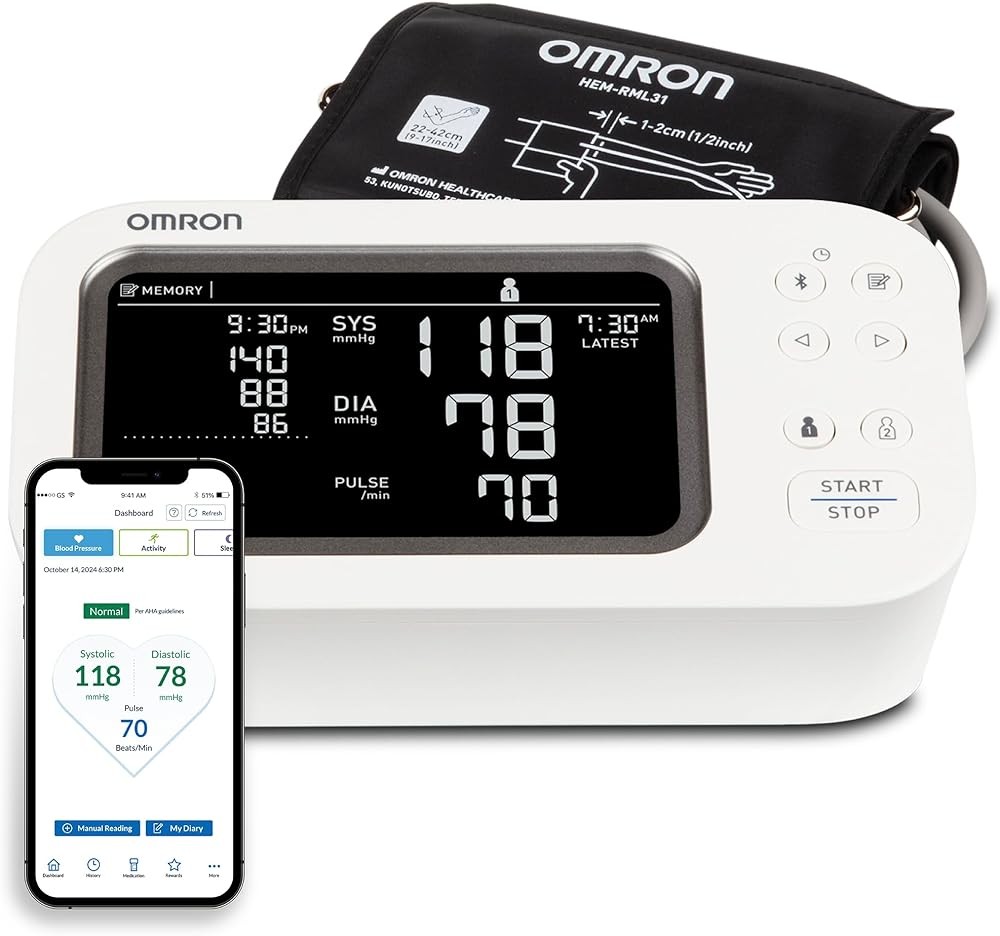
OMRON Platinum BP5450
Check Price on AmazonAs an Amazon Associate we earn from qualifying purchases.

The Blood Pressure Monitor XL Cuff solves the problem faced by people with arm circumferences above 42 cm—the upper limit of most wide-range cuffs—by including an extra-large cuff that fits arms from 33 to 53 cm (13 to 21 inches).
Research shows that people with larger arm circumferences face both sizing challenges and accuracy issues with standard cuffs. Studies document that using standard 22-32 cm cuffs on arms exceeding 35 cm can overestimate systolic blood pressure by 10-15 mmHg, potentially leading to misdiagnosis of hypertension and unnecessary medication.
This monitor includes both the extra-large cuff and a standard adult cuff (22-32 cm), making it suitable for households where users have significantly different arm sizes. The cuffs are clearly marked and easily interchangeable via a standard connector tube.
Dual-user memory stores 120 readings per person, allowing both users to track blood pressure independently without data confusion. Each user gets a dedicated button, and the monitor automatically stores readings under the correct profile when you press your assigned button before measurement.
Irregular heartbeat detection runs during every measurement, alerting you if your heart rhythm shows irregularities that could indicate atrial fibrillation or other arrhythmias. While not a diagnostic tool, this screening prompts medical evaluation when needed.
The extra-large display uses numbers significantly bigger than standard monitors, beneficial for users with vision impairments or anyone who finds small displays frustrating. The backlight activates automatically during measurement, ensuring readability in any lighting condition.
One-touch operation simplifies the measurement process—press your user button, wait for the cuff to inflate and deflate, and read your result. No complicated settings or mode selections to navigate. This simplicity particularly helps elderly users or anyone intimidated by technology.
The included carry case protects both cuffs during storage or travel, important because XL cuffs are expensive to replace and damage would effectively disable the monitor for users who need this size.
Our take: This monitor uniquely serves people with extra-large arm circumferences up to 53 cm while including a standard cuff for household sharing, all at an affordable $39 price point that makes proper cuff sizing accessible.
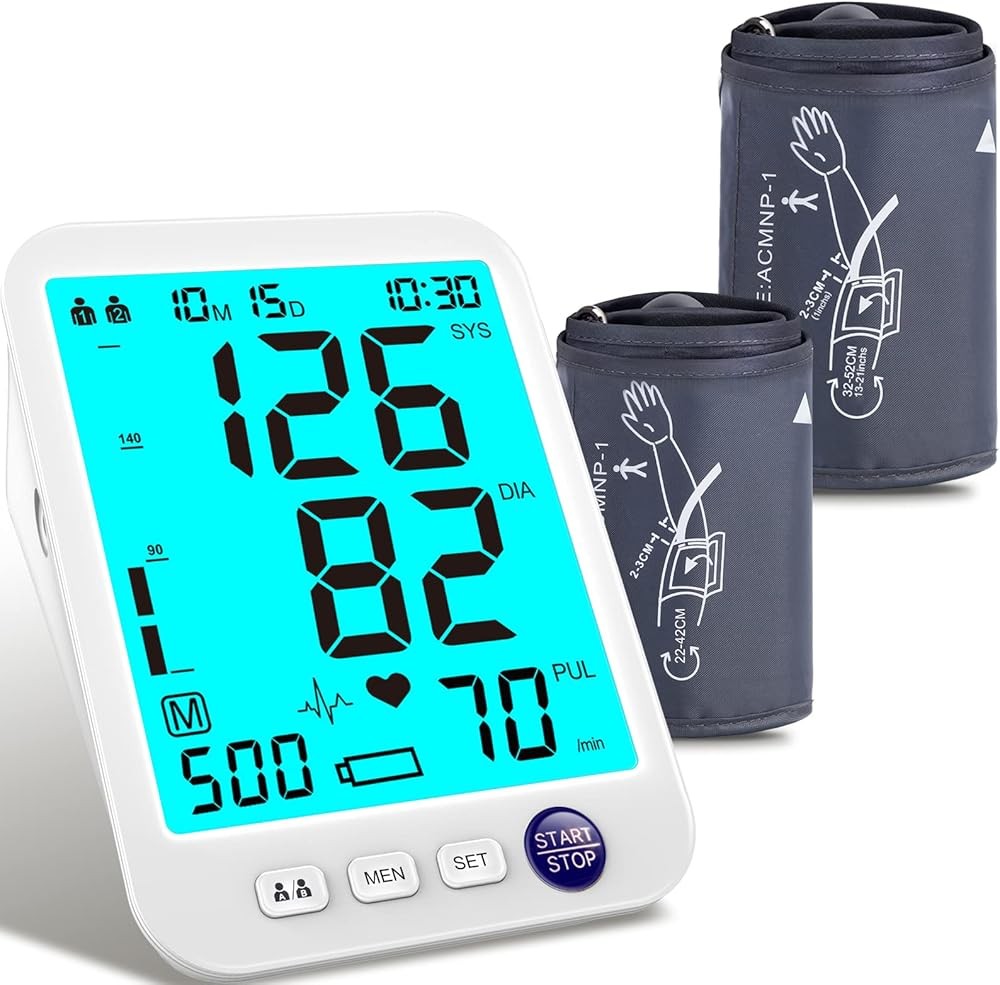
Blood Pressure Monitor XL Cuff
Check Price on AmazonAs an Amazon Associate we earn from qualifying purchases.

The OMRON Bronze BP6000 delivers the same cuff sizing solution as the Platinum model—a validated 22-42 cm wide-range cuff—while cutting costs to $41 by eliminating Bluetooth connectivity, TruRead averaging, and advanced memory features.
For users who simply need accurate blood pressure readings without app integration or automated averaging, this monitor provides the essential function at minimum cost. The oscillometric measurement engine and wide-range cuff algorithm match OMRON’s higher-end models, validated to the same ISO 81060-2:2018 standards.
The wide-range cuff eliminates the most common source of measurement error—using the wrong cuff size—making this budget monitor potentially more accurate than expensive monitors with standard cuffs used on arms at the size boundaries. When you spend $41 to get the right cuff versus $100 for a monitor with the wrong cuff, the cheaper option delivers better results.
Memory stores 60 readings total, sufficient for about three weeks of twice-daily measurements before overwriting. While less than the Platinum’s 200 readings, this capacity works for users who check their logs regularly or write down readings for their doctor rather than needing extensive digital history.
Irregular heartbeat detection operates during each measurement, screening for arrhythmias despite this being a budget model. OMRON includes this feature across their entire line because irregular heartbeat detection adds minimal manufacturing cost while providing significant health value.
The display uses clear, reasonably sized numbers on a basic LCD screen. It lacks backlighting, so you’ll need adequate room lighting for measurement, but the screen remains readable in normal indoor lighting.
One-button operation makes this monitor extremely simple to use—press start, remain still during measurement, read your results. No user switching, mode selection, or settings to configure. This simplicity reduces user error, another factor affecting measurement accuracy.
The AC adapter option (sold separately) allows continuous power without battery replacement, useful if the monitor sits on a nightstand or bathroom counter where you measure daily. With batteries, expect 300-400 measurements before replacement depending on battery quality.
The takeaway: The OMRON Bronze BP6000 offers the same ISO-validated wide-range cuff technology as monitors costing twice as much, making it the best value for accurate blood pressure monitoring without unnecessary features.
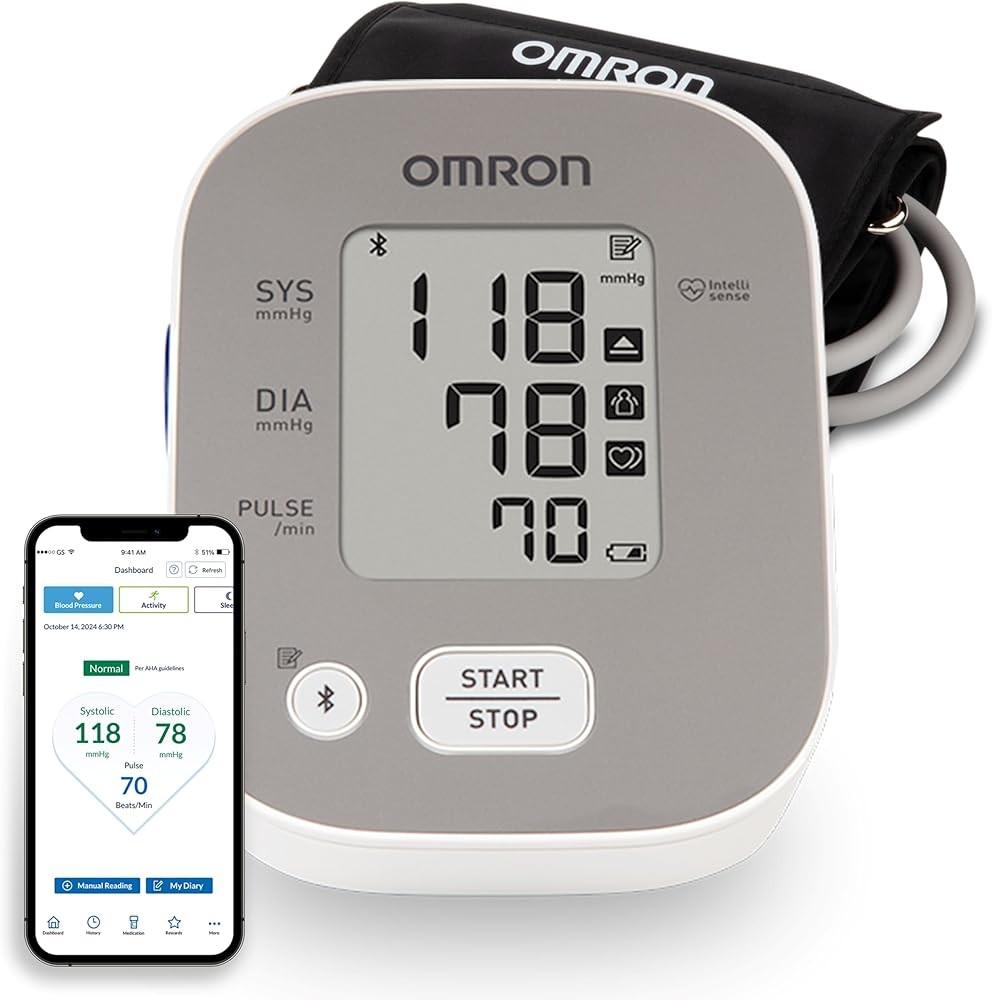

The A&D Medical Precision Check Pro targets users who prioritize measurement accuracy above other features, using validation standards that exceed consumer monitor requirements.
A&D Medical manufactures clinical blood pressure equipment used in hospitals and medical offices, bringing this medical-grade engineering to a consumer model. The oscillometric algorithms undergo validation against invasive arterial measurements, the gold standard that provides true blood pressure values.
The standard adult cuff (22-32 cm) uses medical-grade materials and construction rather than consumer-grade components. The bladder material maintains consistent elasticity across thousands of measurement cycles, and the Velcro closure uses commercial-grade hook-and-loop material that maintains grip far longer than budget monitor Velcro.
For users with arm circumferences outside the 22-32 cm range, A&D Medical offers separately sold small, large, and extra-large cuffs that maintain the same validation standards. While this requires additional purchase, it ensures that users at the size extremes get the same accuracy as those in the standard range.
Bluetooth connectivity syncs to the A&D Connect app, which provides more detailed analytics than typical blood pressure apps. The app calculates coefficient of variation (a statistical measure of blood pressure variability), identifies morning blood pressure surge patterns, and generates reports formatted for healthcare providers.
Irregular heartbeat detection uses a more sophisticated algorithm than basic consumer monitors, analyzing multiple parameters of your pulse waveform rather than just timing irregularities. While still not a diagnostic tool, this enhanced detection reduces false alarms while catching genuine arrhythmias more consistently.
Average mode automatically calculates the mean of your last three readings, approximating the TruRead function found on premium OMRON models. This averaging reduces the measurement-to-measurement variability that affects single readings.
Memory stores 60 readings with date and time stamps. The Bluetooth sync means you rarely need to scroll through on-device memory since all data transfers to your phone automatically, but the 60-reading buffer ensures you won’t lose data if you measure when your phone isn’t nearby.
The display uses a high-contrast LCD with large numbers and clear indicators for irregular heartbeat, high blood pressure, and proper cuff positioning. Icon-based indicators reduce the need to read text, helping users with vision impairments or language barriers.
The final word: The A&D Medical Precision Check Pro suits users who need medical-grade accuracy validation and advanced blood pressure analytics, justifying the $79 premium price through superior materials and clinical-level precision.
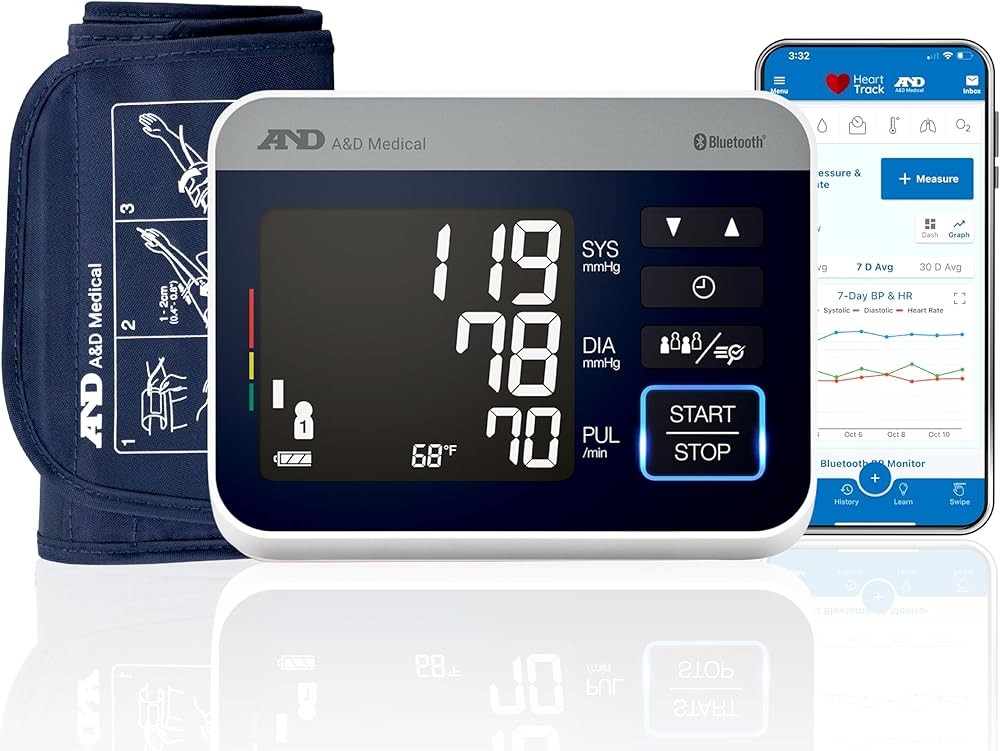
A&D Medical Precision Check Pro
Check Price on AmazonAs an Amazon Associate we earn from qualifying purchases.
How Do You Measure Blood Pressure Correctly With a Properly Sized Cuff?
Proper measurement technique matters as much as correct cuff size for obtaining accurate readings.
Preparing for Measurement
Avoid caffeine, exercise, and smoking for at least 30 minutes before measurement. All three temporarily elevate blood pressure through different mechanisms—caffeine stimulates your sympathetic nervous system, exercise increases cardiac output, and nicotine constricts peripheral blood vessels. Measuring during these temporary elevations gives falsely high readings that don’t represent your baseline blood pressure.
Empty your bladder before measurement. A full bladder can increase blood pressure by 10-15 mmHg through a neurological reflex that constricts blood vessels. This is why you often see higher readings at the doctor’s office before they direct you to the restroom.
Sit quietly for five minutes before taking your first reading. This rest period allows your blood pressure to stabilize from any activity you were doing—climbing stairs, walking from your car, or even talking on the phone. Your blood pressure remains elevated for several minutes after any physical or mental activity.
Remove tight or bulky clothing from your upper arm. Rolling up a thick sleeve can create a tourniquet effect, while taking measurements over clothing can cushion the cuff from your arm, both introducing errors. If removing your shirt is impractical, wear short sleeves on measurement days.
Position yourself correctly: sit in a chair with back support, feet flat on the floor, arm supported at heart level. Your brachial artery runs along the inside of your upper arm at approximately the same height as your heart when your arm rests on a table or chair armrest. Measuring with your arm hanging below heart level inflates readings, while measuring with your arm raised above heart level deflates them—by about 2 mmHg per inch of vertical difference.
Proper Cuff Placement and Positioning
Locate your brachial artery by feeling for your pulse on the inside of your elbow, about one inch above the elbow crease. The strongest pulse indicates where your artery is closest to the skin surface. The bottom edge of the cuff should sit about one inch (2-3 cm) above this pulse point.
Wrap the cuff around your bare upper arm so the bladder center aligns with your brachial artery. Most cuffs mark the bladder center with a line or arrow labeled “artery” or similar. This alignment ensures that the bladder compresses directly over your artery rather than offset to one side.
Secure the Velcro snugly but not tightly. You should be able to slip two fingers between the cuff and your arm. A cuff that’s too loose will shift during inflation and may not compress your artery adequately, while a cuff that’s too tight pre-compresses your arm and distorts the oscillometric signal.
Position the air tube so it runs down the inside of your arm toward your palm. This orientation keeps the tube out of the way and avoids kinking during measurement. Some cuffs have the tube exiting on the side or outside—follow the manufacturer’s guidance for your specific model.
Support your arm at heart level throughout the measurement. Rest your forearm on a table, desk, or chair armrest so your upper arm is relaxed and your elbow is roughly level with the middle of your chest. Don’t hold your arm up with muscle tension—any muscle contraction can elevate readings.
Taking the Measurement and Interpreting Results
Press the start button and remain completely still. Don’t talk, move, or tense your muscles during the measurement. Even small movements or muscle tension can create vibrations that the oscillometric sensor misinterprets as arterial pulses, introducing errors.
Breathe normally. Some people instinctively hold their breath during measurement, but breath-holding increases intrathoracic pressure and temporarily elevates blood pressure. Continue breathing at your natural rhythm without forcing deep or shallow breaths.
Wait for the cuff to fully deflate and the monitor to display results. The measurement typically takes 30-60 seconds depending on the monitor and your actual blood pressure. The cuff inflates until it completely occludes your artery (you’ll feel your pulse disappear), then slowly deflates while the sensor detects oscillations.
Record your results immediately. Write down your systolic and diastolic readings, the date, and the time. If your monitor doesn’t include date/time stamps in memory, manual records become your only tracking method. Note any unusual circumstances—didn’t rest adequately, measured right after a stressful phone call, cuff felt uncomfortable—that might explain an abnormal reading.
Take a second reading after waiting one minute. Blood pressure varies between measurements even under identical conditions, so single readings can mislead. Taking two or three readings and averaging them provides a more accurate representation of your blood pressure at that moment.
Watch for irregular heartbeat indicators. If your monitor shows an irregular heartbeat symbol, note it in your log and take additional readings. Occasional irregular beats are normal, but consistent irregularities warrant discussion with your healthcare provider.
Understand what the numbers mean. Systolic pressure (the top number) indicates the pressure when your heart contracts and pumps blood. Diastolic pressure (the bottom number) indicates the pressure when your heart relaxes between beats. Normal blood pressure is below 120/80 mmHg. Elevated is 120-129 systolic with diastolic below 80. Stage 1 hypertension is 130-139 systolic or 80-89 diastolic. Stage 2 hypertension is 140+ systolic or 90+ diastolic.
What Are the Most Common Cuff-Related Measurement Errors?
Even with the correct cuff size, technique errors can compromise measurement accuracy.
Miscuffing: The Most Common Problem
Miscuffing—using the wrong cuff size for your arm—creates systematic errors that persist across all measurements until you correct the size mismatch.
Research shows that miscuffing is particularly common in obese individuals and those with conically shaped arms (PMID: 30003699). When a cylindrical cuff designed for a straight arm is applied to a conical arm that tapers from shoulder to elbow, the cuff doesn’t conform evenly, creating pressure gradients that distort oscillometric signals. Discrepancies can reach 10 mmHg even when the cuff “fits” by length criteria.
Athletic individuals with well-developed biceps also face miscuffing risks. Muscle circumference when relaxed differs from muscle circumference when flexed, and even partial muscle tension during measurement can effectively reduce the arm-to-cuff size ratio, creating a too-small effect.
Measure your arm circumference periodically, especially if you gain or lose 10+ pounds. Weight changes affect arm circumference, and what was the correct cuff size at your previous weight may be wrong after significant weight change. A 20-pound weight gain often increases arm circumference by 2-3 cm, enough to push you from the standard range into the large cuff range.
If your measurements seem higher or lower than expected, consider whether miscuffing might explain the discrepancy before assuming your blood pressure has actually changed. Borrow a properly sized cuff or have your blood pressure checked at a pharmacy or medical office with professional cuffs in multiple sizes to confirm whether the issue is your blood pressure or your equipment.
Cuff Placement Errors
Placing the cuff too high or too low on your arm, or misaligning the bladder with your brachial artery, creates errors even when cuff size is correct.
Cuffs placed too close to your elbow (less than one inch above the elbow crease) can compress the brachial artery where it branches into the radial and ulnar arteries. This bifurcation point creates turbulent flow patterns that generate oscillations the monitor’s algorithm wasn’t designed to interpret, potentially causing either falsely high or falsely low readings.
Cuffs placed too high on your arm (closer to your shoulder than your elbow) may compress over the wrong part of the brachial artery or partially compress the axillary artery. The upper arm tapers, so cuff pressure distributes differently than at the arm’s midpoint where manufacturers calibrate their devices.
Bladder misalignment—wrapping the cuff so the bladder sits on the side or back of your arm rather than directly over the brachial artery—reduces measurement accuracy because the pressure gradient from the bladder to the artery becomes asymmetric. The monitor inflates to a pressure adequate for compression if the bladder were centered, but with an offset bladder, this pressure may not fully occlude the artery.
Most cuffs include alignment guides—arrows, lines, or printed instructions showing where to position the cuff relative to your arm anatomy. Follow these guides carefully. If your cuff lacks clear alignment indicators, remember that your brachial artery runs along the inner arm (the side toward your body when your arm hangs naturally), about one inch above the inner elbow crease.
Arm Position Effects
Your arm’s position relative to your heart changes the hydrostatic pressure in your brachial artery, directly affecting blood pressure readings.
Each inch of vertical difference between your arm and heart level changes blood pressure by approximately 2 mmHg due to gravity’s effect on the blood column in your arteries. If you measure with your arm hanging 6 inches below heart level, your reading will be about 12 mmHg higher than your true blood pressure. Conversely, measuring with your arm elevated 6 inches above heart level deflates readings by about 12 mmHg.
The American Heart Association recommendations specify that your arm should be supported at mid-heart level, which corresponds to the mid-sternum (approximately the fourth intercostal space anatomically, or roughly where you’d place your hand for the Pledge of Allegiance functionally) (PMID: 30827125). This position creates zero hydrostatic pressure difference between your arm and the reference point where clinicians define blood pressure.
Unsupported arms create measurement errors even at correct height. When you hold your arm up without support, muscle tension in your shoulder, upper arm, and forearm can increase blood pressure by 5-10 mmHg through a neurological reflex. The muscle contraction also creates vibrations that can interfere with oscillometric detection.
Use a table, desk, chair armrest, or pillow stack to support your arm at the correct height. Your shoulder should be relaxed, your elbow bent at roughly 80-90 degrees, and your forearm resting comfortably. If you can’t achieve proper arm position in a chair, lie down and place a pillow under your upper arm to raise it to heart level—this position works well and eliminates any muscle tension from sitting posture.
How Do You Maintain and Replace Your Blood Pressure Cuff?
Cuffs wear out over time, and worn cuffs compromise measurement accuracy even when the monitor itself functions perfectly.
Signs Your Cuff Needs Replacement
Velcro deterioration is the most common cuff failure mode. Over months or years of repeated use, the hook side of the Velcro crushes and loses its ability to grip the loop side firmly. When this happens, the cuff loosens during inflation, shifting position and creating air leaks that block adequate pressurization.
Test your Velcro by securing the cuff around your arm and tugging gently. If the Velcro releases with minimal force, or if you notice the cuff shifting during measurement, the Velcro has deteriorated. Some cuffs allow Velcro replacement, but most require complete cuff replacement once the Velcro fails.
Bladder leaks create obvious symptoms—the cuff inflates slowly or not at all, and you may hear hissing air escaping. Leaks typically develop where the air tube connects to the bladder or at stress points that flex repeatedly during use. Small leaks may go unnoticed initially but progressively worsen until the cuff can’t maintain pressure.
Fabric tears or fraying indicate the cuff is approaching end-of-life even if it still functions. The outer fabric protects the bladder and provides the structure that maintains proper bladder positioning. When fabric fails, the bladder may bulge through tears or shift within the sleeve, both affecting measurement accuracy.
Stiffness or loss of elasticity in the bladder material occurs with age and repeated inflation cycles. The bladder should feel supple and conform easily to your arm shape. If it feels rigid or takes on permanent creasing from how it’s stored, the material has degraded and may not transmit oscillations accurately.
Most manufacturers recommend replacing cuffs every 2-3 years with regular use (twice-daily measurements), or whenever signs of wear appear. This timeline assumes typical use patterns—if you measure more frequently, replacement may be needed sooner.
Cleaning and Storage Guidelines
Clean your cuff periodically to remove skin oils, sweat, and environmental dust that accumulate with use. Use a slightly damp cloth with mild soap to wipe the outer fabric, avoiding the air tube connection and Velcro. Don’t submerge the cuff in water or use harsh cleaning chemicals, as both can damage the bladder or fabric.
Allow the cuff to air dry completely before storage. Storing a damp cuff can promote mold growth in the fabric or degrade the adhesive bonding the bladder to the sleeve. Hang the cuff in a well-ventilated area for 30-60 minutes after cleaning.
Store the cuff loosely rolled or flat rather than tightly folded. Tight folding creates permanent creases in the bladder material that can affect how evenly it inflates. Most monitors include storage cases with cuff compartments designed to protect the cuff while preventing stress creases.
Keep the cuff away from extreme temperatures. Don’t store your monitor in a car where temperatures can reach 140°F in summer or drop below freezing in winter. Extreme heat accelerates bladder material degradation, while freezing can make materials brittle and prone to cracking.
Avoid placing heavy objects on top of your stored monitor and cuff. Prolonged pressure can compress the bladder or damage the air tube, both affecting performance. Dedicate a shelf or drawer to blood pressure monitor storage where it won’t get crushed under other items.
Which Populations Need Special Cuff Sizing Considerations?
Certain populations face unique cuff sizing challenges beyond standard measurement and selection.
Bariatric Patients With Very Large Arms
People with arm circumferences exceeding 50 cm face limited options in consumer blood pressure monitors, as most top out at 42-45 cm cuff ranges, and even “extra-large” cuffs rarely accommodate larger arms.
Research shows that standard cuffs used on very large arms can overestimate systolic blood pressure by 15-20 mmHg, enough to create false hypertension diagnoses and potentially lead to unnecessary medication (PMID: 30003699). This miscuffing affects both diagnosis and ongoing management of actually elevated blood pressure.
Specialized bariatric blood pressure monitors with cuffs fitting 50-60 cm arm circumferences are available through medical supply companies. These devices cost more than consumer monitors ($150-300) but provide the only reliable option for accurate home measurement in this population.
Forearm measurement presents an alternative when upper arm cuffs don’t fit, but forearm blood pressure typically reads 10-15 mmHg higher than upper arm blood pressure, requiring adjustment factors. Most healthcare providers prefer avoiding forearm measurement due to the complexity of result interpretation.
Wrist monitors could theoretically solve the large arm problem, but validation studies show wrist monitors are less accurate than upper arm monitors across all populations, with errors magnified in people with circulation issues or arterial stiffness—conditions more common in individuals with obesity (PMID: 24247364).
Pediatric and Adolescent Monitoring
Children and adolescents require specially sized cuffs based on age-specific growth charts rather than adult sizing guidelines.
Pediatric cuffs come in multiple sizes: newborn/infant (5-10 cm), child (10-18 cm), and adolescent (18-26 cm). Using adult cuffs on children creates dramatic overestimation because the bladder width to arm circumference ratio becomes excessive.
A systematic review of blood pressure measurement methods in neonates confirmed that a cuff width to arm circumference ratio of approximately 0.5 provides optimal accuracy in this population, the same ratio recommended for adults (PMID: 32446487). The difference lies in the absolute measurements—newborn arms average 8-10 cm circumference, requiring 4-5 cm bladder width.
Most consumer blood pressure monitors aren’t validated for pediatric use even when appropriately sized cuffs are available. Pediatric monitors use different oscillometric algorithms calibrated to the unique hemodynamics of childhood—higher heart rates, different arterial compliance, and distinct pulse pressure patterns compared to adults.
Parents monitoring children’s blood pressure at home should use devices specifically validated for pediatric use and follow sizing charts provided by the manufacturer rather than measuring arm circumference and applying adult guidelines.
Pregnant Women and Blood Pressure Monitoring
Pregnancy creates unique blood pressure monitoring needs because blood pressure changes throughout gestation and certain patterns indicate serious complications requiring immediate medical attention.
A study of 108 pregnant women comparing oscillometric and auscultatory blood pressure measurement across gestational periods found that verification of brachial circumference and use of adequate cuffs in both methods are indispensable for reliable readings (PMID: 31851249). Underestimation occurred when using standard width cuffs rather than correct width cuffs in both measuring methods.
Arm circumference increases during pregnancy due to fluid retention and weight gain, potentially requiring cuff size changes. A woman who needed a standard cuff pre-pregnancy might require a large cuff in the third trimester. Regular arm circumference checks help you avoid miscuffing-related errors.
Pregnant women should take blood pressure in the seated position with the arm supported at heart level, not while lying down. Lying flat compresses the inferior vena cava (the large vein returning blood from your lower body to your heart), reducing cardiac output and potentially affecting blood pressure readings. The left lateral position (lying on your left side) avoids this compression but requires arm position adjustments to maintain heart level.
Blood pressure patterns matter more than individual readings during pregnancy. A sudden increase of 15 mmHg systolic or 10 mmHg diastolic, even if the absolute values remain below hypertensive thresholds, can indicate preeclampsia development. Accurate trending requires consistent cuff size and measurement technique.
Frequently Asked Questions About Blood Pressure Cuff Sizing
Can I use my blood pressure monitor on both arms?
You can use your monitor on either arm, but you should choose one arm and measure consistently on that side for all readings. Blood pressure differs slightly between arms in most people—typically 5-10 mmHg for systolic and 2-5 mmHg for diastolic. These differences reflect normal anatomical variations in artery branching and blood flow distribution.
Measure blood pressure on both arms once to determine which shows higher readings, then use that arm for ongoing monitoring. Clinical guidelines recommend using the higher-reading arm because it better represents the peak pressure your cardiovascular system experiences.
For most people, blood pressure is slightly higher in the right arm because the right subclavian artery branches directly from the aorta at a more perpendicular angle, while the left subclavian artery branches from a side branch. However, individual anatomy varies, so measure rather than assume.
If the difference between arms exceeds 10 mmHg systolic consistently, mention it to your healthcare provider. Large inter-arm differences can indicate peripheral artery disease, though they’re normal in some people.
How tight should a blood pressure cuff feel?
The cuff should feel snug but not uncomfortable. You should be able to slip two fingers between the cuff and your arm when it’s fastened but not inflated. This fit ensures the cuff makes good contact with your arm without pre-compressing tissues before measurement begins.
When the cuff inflates during measurement, you’ll feel progressively tighter pressure until your pulse disappears. This sensation is normal—the cuff must inflate above your systolic pressure to occlude your brachial artery. Most people find this brief pressure uncomfortable but not painful.
If the cuff causes pain during inflation, either the cuff is too small for your arm or you’ve positioned it over a bony prominence. Stop the measurement, recheck cuff size and placement, and try again. Persistent pain suggests you need a larger cuff.
After the cuff deflates, all pressure sensation should disappear within seconds. If you still feel squeezing or tightness, the Velcro may be too tight. Loosen slightly and remeasure, ensuring you maintain the two-finger slack guideline.
Do I need to recalibrate my blood pressure cuff?
Home blood pressure monitors don’t include user-adjustable calibration. The oscillometric algorithms are factory-programmed into the device’s electronics and can’t be modified. What users often call “calibration” actually means validation—verifying that the monitor still measures accurately compared to a known standard.
Have your home monitor validated annually by bringing it to a healthcare visit and asking your provider to take a simultaneous measurement with their calibrated equipment. Take three readings with your monitor while your provider takes three with theirs, then compare the averages. If your monitor differs by more than 5 mmHg consistently, it may need replacement.
The cuff itself can’t be calibrated but can wear out. Bladder leaks, Velcro deterioration, or material stiffness all affect accuracy without affecting the monitor’s internal calibration. If validation shows errors, try replacing the cuff before assuming the monitor has failed.
Professional sphygmomanometers (the devices used in medical offices) require periodic calibration, typically every 1-2 years, but this involves precision equipment and training that aren’t available to consumers. Consumer oscillometric monitors are designed as calibration-free devices that either work correctly or fail to work.
What if my arm circumference falls between two cuff sizes?
If your arm circumference falls within 1-2 cm of the boundary between sizes (like 31 cm when standard fits 22-32 cm and large fits 32-42 cm), choose the larger size. Slightly oversized cuffs create smaller errors than slightly undersized cuffs, and the larger size accommodates any arm circumference increase from weight gain or fluid retention.
Alternatively, choose a wide-range cuff (22-42 cm) that eliminates the boundary problem entirely. These cuffs use adaptive algorithms that adjust for different arm sizes within the range, providing optimal accuracy whether your arm measures 30 cm, 32 cm, or 34 cm.
Validate whichever cuff you choose by comparing your home readings with professional measurements at your healthcare provider’s office. If your home readings consistently differ by more than 5 mmHg from professional measurements using properly sized cuffs, reconsider your cuff size choice.
Weight fluctuations can move you across size boundaries. If you’re actively losing or gaining weight, monitor your arm circumference monthly and be prepared to change cuff sizes if you cross thresholds. A 10-pound weight change typically alters arm circumference by 1-2 cm.
How do I know if my cuff is too small or too large without comparing to another device?
Signs of a too-small cuff include readings that seem surprisingly high compared to medical office measurements, discomfort or pain during inflation, the cuff feeling extremely tight when fastened even before inflation, and Velcro barely meeting or overlapping less than an inch when secured.
The monitor may also struggle to complete measurements with a too-small cuff, displaying error codes or taking multiple attempts. This happens because the excessive tissue compression creates oscillation patterns the algorithm can’t interpret clearly.
Signs of a too-large cuff include readings that vary dramatically between measurements (20+ mmHg difference when repeating under identical conditions), excess cuff material bunching or folding when you fasten it, and Velcro overlapping by more than half the cuff’s width.
You might also notice the cuff shifting position during inflation with an oversized cuff. Proper-sized cuffs stay in place during the measurement cycle, while loose cuffs can rotate or slide up or down your arm as they inflate.
The most reliable check is measuring your arm circumference and comparing to the cuff’s rated range printed on the cuff itself or in the monitor’s manual. If your measurement falls outside the stated range, you need a different size regardless of how the cuff feels.
Can I share my blood pressure monitor with family members who have different arm sizes?
You can share a monitor if the cuff size accommodates everyone’s arm circumference or if you purchase multiple cuffs for the same monitor.
Wide-range cuffs (22-42 cm) fit most adults, making them ideal for household sharing. The OMRON Platinum BP5450 and Bronze BP6000 both use this size range, allowing multiple family members to use the same device and cuff accurately.
If family members’ arm circumferences span different size categories—one person at 25 cm and another at 45 cm—you’ll need separate cuffs. Most monitors allow cuff swapping via a standard tube connector. Purchase appropriately sized cuffs for each user, mark them clearly (names or colored tape), and swap cuffs before each user’s measurement.
Some monitors lack automatic cuff size detection. If you share a monitor with multiple cuffs, you may need to manually tell the device which cuff you’ve attached (check your manual for instructions). Forgetting this step can introduce errors because the algorithm expects a different cuff than what’s actually attached.
Multi-user memory features let each person track their readings separately even when sharing the monitor. Models with two-user or four-user modes assign readings to individual profiles, preventing data confusion.
Choosing the right blood pressure cuff starts with accurate arm measurement, and our Blood Pressure Cuff Size Guide walks you through the process step by step. Once you’ve got the right fit, you’ll want to pair it with proper technique—our Complete Self-Monitoring Guide covers positioning, timing, and consistency for reliable readings. If you’re deciding between monitor styles, the Arm vs Wrist Blood Pressure Monitor comparison breaks down accuracy trade-offs, while our roundups of the Best Blood Pressure Monitors for Home Use and Best Omron Blood Pressure Monitors can help narrow down your options based on validated, clinical-grade devices.
Choosing the right cuff is just one piece of an accurate home monitoring routine—pairing it with a reliable device matters too, which is why guides like our best Omron blood pressure monitors and best blood pressure monitors for home use roundups are worth consulting. Once your setup is dialed in, following a consistent measurement technique (covered in our how to take blood pressure at home guide) helps ensure your numbers are truly comparable over time. If you’d prefer a connected option, our best Bluetooth blood pressure monitors picks make long-term tracking easier, and for those exploring complementary approaches, the research on taurine for blood pressure reduction is a useful starting point.
For more context, see our guides on Withings BPM Connect Review: WiFi Blood Pressure Monitor with AFib Detection, Blood Pressure Monitors with AFib Detection: Oscillometric Screening for Atrial Fibrillation, Best Bluetooth Blood Pressure Monitors — Connected Home BP Monitors with App Tracking, Arm vs Wrist Blood Pressure Monitor, and Best Blood Pressure Monitors for Home Use.
Related Reading: More Blood Pressure Monitoring Resources
Understanding blood pressure cuff sizing represents just one aspect of accurate home blood pressure monitoring. For comprehensive guidance on selecting monitors, measurement techniques, and interpreting results, explore these related resources:
Best Blood Pressure Monitors — Complete buying guide comparing top-rated monitors across all categories including budget, premium, and specialty models with detailed feature analysis.
Best OMRON Blood Pressure Monitors — In-depth review of OMRON’s complete monitor lineup from basic Bronze models through advanced Platinum series with connectivity features.
Arm vs Wrist Blood Pressure Monitors — Research-based comparison of measurement accuracy, ease of use, and appropriate applications for upper arm versus wrist monitoring.
How to Take Blood Pressure at Home — Step-by-step instructions for proper measurement technique including timing, positioning, and common errors that affect accuracy.
Blood Pressure Monitors With Bluetooth — Guide to connected monitors that sync with smartphone apps for digital tracking, cloud storage, and data sharing with healthcare providers.
Blood Pressure Monitors With AFib Detection — Analysis of irregular heartbeat detection features and how monitors screen for atrial fibrillation during routine blood pressure measurement.
Bottom Line: Getting Blood Pressure Measurement Right Starts With the Right Cuff
Accurate blood pressure monitoring depends primarily on using a properly sized cuff matched to your arm circumference. Research demonstrates that miscuffing creates errors of 10 mmHg or more in over one-quarter of measurements, potentially leading to misdiagnosis and inappropriate medical decisions. Wide-range cuffs validated to ISO 81060-2:2018 standards eliminate sizing confusion for most adults while maintaining accuracy across arm circumferences from 22-42 cm.
Measure your arm circumference at the midpoint between shoulder and elbow, compare this measurement to cuff sizing ranges, and choose monitors that accommodate your specific dimensions. For households with multiple users or anyone near size boundaries, wide-range cuffs provide the most practical solution. Proper cuff placement, arm positioning, and measurement technique complete the accuracy equation, but they build on the foundation of correct cuff sizing.
Validate your home monitor annually against professional measurements to verify ongoing accuracy. Replace cuffs every 2-3 years or when signs of wear appear. With the right cuff and proper technique, home blood pressure monitoring provides reliable data for managing cardiovascular health and guiding treatment decisions.
Recommended Products