Best Bluetooth Blood Pressure Monitors — Connected Home BP Monitors with App Tracking
Summarized from peer-reviewed research indexed in PubMed. See citations below.
Home blood pressure monitoring helps control hypertension, but manually recording readings often leads to gaps in tracking and missed patterns. The OMRON Platinum BP5450 ($97) automatically transmits measurements via Bluetooth to the OMRON Connect app, features TruRead triple-reading averaging for clinical-grade accuracy, and includes AFib detection with clinical validation showing greater than 98% sensitivity. A 2022 meta-analysis of 23 randomized controlled trials found that automatic data transmission reduced systolic blood pressure by 6.0 mmHg compared to usual care through improved adherence and real-time monitoring. The OMRON Silver BP5250 ($63) offers Bluetooth connectivity and irregular heartbeat detection at a lower price point. Here’s what the published research shows about choosing and using Bluetooth blood pressure monitors for better hypertension control.
Disclosure: We may earn a commission from links on this page at no extra cost to you. Affiliate relationships never influence our ratings. Full policy →
How Do Bluetooth Blood Pressure Monitors Improve Hypertension Management?
Bluetooth-enabled blood pressure monitors automatically transmit your readings to smartphone apps, eliminating manual data entry and creating comprehensive tracking records. A 2022 systematic review published in the European Heart Journal Digital Health analyzed 23 randomized controlled trials involving home blood pressure telemonitoring with automatic data transmission.1 The meta-analysis found that automatic transmission reduced office systolic blood pressure by 6.0 mmHg compared to usual care (P<0.001). Studies specifically examining smartphone app integration showed a standardized mean difference of -0.25 (P=0.01), with sustained benefits over longer observation periods.
A more recent 2025 meta-analysis in Hypertension Research examined 76 studies with 46,459 participants using app-based BP interventions.2 App-connected monitoring reduced office systolic pressure by 2.76 mmHg and diastolic pressure by 1.23 mmHg at 6 months across all users. Among patients with diagnosed hypertension, the reduction was substantially larger: 7.71 mmHg for systolic pressure at 3 months. Notably, the study found that wireless transmission of BP measurements showed significantly larger reductions compared to manual entry (P=0.047 for interaction), demonstrating that the automatic connectivity feature itself contributes to better outcomes.
The improvement mechanisms work through multiple pathways. Automatic data transmission eliminates transcription errors and memory gaps that plague manual record-keeping. Visual graphs in smartphone apps help patients recognize patterns like morning hypertension or the impact of missed medication doses. Many apps also provide medication reminders and the ability to share comprehensive reports with healthcare providers, supporting collaborative management.
A 2023 review in mHealth noted that while home blood pressure telemonitoring improves compliance and adherence, only a small fraction of medical apps meet accuracy and safety standards for clinical use.3 Meta-analyses of telemonitoring studies have demonstrated both clinical usefulness and cost effectiveness compared to usual care.4 This underscores the importance of choosing validated devices with evidence-based apps rather than relying on unverified consumer-grade alternatives.

The evidence indicates that Bluetooth connectivity transforms blood pressure monitoring from isolated measurements into continuous health management through automated tracking, pattern recognition, and improved clinical communication.
| Feature | OMRON Platinum BP5450 | OMRON Silver BP5250 | OMRON Evolv BP7000 | Withings BPM Connect |
|---|---|---|---|---|
| Price | $97 | $63 | $70 | $179 |
| Connectivity | Bluetooth | Bluetooth | Bluetooth | WiFi + Bluetooth |
| Averaging | TruRead (3 readings) | Single reading | Single reading | 3-reading average |
| AFib Detection | Yes | No | No | Yes |
| Cuff Range | 22-42 cm | 22-42 cm | 22-42 cm | 22-42 cm |
| Memory | 200 (2 users) | 120 (2 users) | 100 (1 user) | Unlimited (cloud) |
| Validation | AAMI/ESH | AAMI | AAMI | FDA cleared |
| App | OMRON Connect | OMRON Connect | OMRON Connect | Health Mate |
| Design | Standard cuff | Standard cuff | Tubeless all-in-one | Standard cuff |
| Power | 4 AA batteries | 4 AA batteries | 4 AA batteries | Rechargeable |
| Best For | Complete accuracy + features | Budget-conscious buyers | Travel and portability | Premium app integration |
What Clinical Validation Should Bluetooth BP Monitors Have?
Clinical validation ensures that a blood pressure monitor provides accurate measurements comparable to manual auscultation by trained professionals. The gold standard validations come from the American Association for the Advancement of Medical Instrumentation (AAMI) and the European Society of Hypertension (ESH), which require devices to demonstrate accuracy within 5 mmHg of reference measurements across diverse patient populations.
Clinical experts have emphasized that office BP should serve only as a screening measurement, with diagnostic decisions based on out-of-office measurements.5 This recommendation elevates the importance of accurate home monitoring devices. Guidance on smartphone use and electronic transmission notes that connectivity features must not compromise measurement accuracy.
However, a 2017 study in the American Journal of Hypertension revealed concerning real-world accuracy issues.6 Researchers tested home blood pressure devices on their actual owners and found that 69% showed errors exceeding 5 mmHg compared to reference measurements. Importantly, the study attributed most errors to user technique mistakes rather than device failures, including improper cuff placement, talking during measurement, and incorrect arm position. This finding emphasizes that validation testing alone is insufficient—devices must also support proper measurement technique through design and user guidance.
The Bluetooth blood pressure monitors in this guide all carry AAMI validation, with the Withings BPM Connect also holding FDA clearance. These certifications mean the devices have undergone rigorous testing protocols including measurements on at least 85 subjects representing diverse ages, arm sizes, and blood pressure ranges. The OMRON Platinum BP5450 additionally includes AFib detection technology that screens for irregular heartbeats during routine blood pressure measurements.
Beyond device validation, app accuracy matters for clinical utility. A 2018 Journal of Hypertension review found that only two blood pressure monitoring apps followed ESH guidelines: Hy-Result and ESH CARE.7 The review warned of patient safety risks when apps operate without healthcare professional collaboration. While the OMRON Connect and Withings Health Mate apps are not specifically mentioned in that study, both are produced by medical device manufacturers and integrate with validated monitoring equipment rather than relying on smartphone sensors alone.
The evidence shows: Only 2 of the many BP monitoring apps available follow ESH guidelines, so choose monitors with AAMI or ESH validation marks and manufacturer-produced apps — a 2017 study found 69% of home devices showed >5 mmHg errors, mostly from technique problems that validated apps help address.
How Does TruRead Averaging Improve Measurement Accuracy?
Single blood pressure measurements provide limited reliability due to normal variability in BP throughout the day and the “white coat effect” where stress elevates readings. The OMRON Platinum BP5450 addresses this through its TruRead feature, which automatically takes three consecutive measurements at 60-second intervals and averages the results.
A 2020 American Heart Association scientific statement on self-measured blood pressure monitoring recommends taking duplicate measurements at each session, spaced 1-2 minutes apart, and averaging the results.8 The statement notes that BP varies between consecutive measurements, and averaging reduces random variability to provide a more representative value. The AHA guidelines specifically recommend morning and evening measurements, with two readings at each session—a protocol that TruRead automatically implements.
The physiological basis for averaging relates to BP fluctuation cycles. Systolic pressure can vary by 5-10 mmHg between measurements taken just minutes apart due to cardiac cycle variations, respiration, and temporary vasoconstriction. First measurements often run higher due to patient anxiety or recent physical activity. By the second and third readings, patients typically relax and readings stabilize closer to true resting BP.
Clinical studies demonstrate the superior accuracy of averaged readings. The 2005 AHA recommendations for blood pressure measurement noted that home readings better predict cardiovascular events than office measurements, particularly when averaged across multiple sessions.[^8] The document emphasized that single office readings provide the least reliable assessment of BP status, while averaged home readings over several days provide the most accurate picture for diagnosis and treatment decisions.
The TruRead feature eliminates the need for manual tracking of multiple measurements and automatic calculation of averages—tasks that introduce opportunities for error and non-compliance. When you initiate a TruRead cycle, the monitor inflates for the first measurement, automatically deflates, waits 60 seconds, then repeats the process three times. The final displayed reading and the value transmitted to the OMRON Connect app represent the calculated average, matching AHA protocol recommendations without requiring patient intervention.
For users monitoring BP to detect hypertension or assess medication effectiveness, the difference between single and averaged measurements can determine whether readings fall into normal, elevated, or hypertensive ranges. A single measurement of 132/84 mmHg might suggest Stage 1 hypertension, while an average of three readings could yield 126/80 mmHg—an elevated but not yet hypertensive result that would guide different clinical decisions.
What this means: Automatic averaging features like TruRead align home monitoring with clinical best practices by reducing measurement variability without requiring user calculations or manual record-keeping.
What Cuff Size Do You Need for Accurate Bluetooth BP Monitoring?
Cuff size directly impacts blood pressure measurement accuracy, with undersized cuffs producing falsely elevated readings and oversized cuffs potentially underestimating pressure. The American Heart Association guidelines specify that the cuff bladder length should encircle 75-100% of the upper arm, and the bladder width should equal approximately 40% of arm circumference.8
Standard blood pressure monitor cuffs typically accommodate arm circumferences of 22-32 cm or 22-35 cm, which excludes a substantial portion of the population. Validation studies of wide-range cuffs have found that 22-42 cm cuffs fit most adults correctly, extending accurate measurement to larger arm sizes without compromising accuracy for smaller arms. All four Bluetooth monitors in this guide include wide-range 22-42 cm cuffs as standard equipment.
The measurement mechanism explains why size matters. Oscillometric monitors like these Bluetooth devices inflate the cuff above systolic pressure to completely occlude the brachial artery, then slowly deflate while sensors detect oscillations in arterial wall movement. The algorithm interprets these oscillations to determine systolic and diastolic pressure. If the cuff is too small, it must inflate to excessively high pressure to achieve occlusion, and the restricted bladder size distorts oscillation detection. If the cuff is too large, the excess material creates uneven pressure distribution around the arm.
Clinical consequences of incorrect cuff size are substantial. A study cited in the 2017 American Journal of Hypertension research found that cuff-related measurement errors were among the most common technique mistakes contributing to the high error rate in home BP monitoring.6 When a small cuff was used on a larger arm, readings could exceed true BP by 10-30 mmHg—enough to misclassify normotensive individuals as hypertensive or to prompt unnecessary medication increases.
To determine your correct cuff size, measure your upper arm circumference at the midpoint between elbow and shoulder while the arm is relaxed. Use a flexible measuring tape and record the measurement in centimeters. If your arm circumference falls between 22-42 cm, the standard wide-range cuffs included with these monitors will fit correctly. For arms under 22 cm (common in adolescents or very thin adults) or over 42 cm, specialized cuffs are available separately.
Proper cuff placement is equally important. The cuff should be positioned on the bare upper arm with the bottom edge 1-2 cm above the elbow bend. The artery marker on the cuff (usually an arrow or line) should align with the brachial artery, which runs down the inner arm. The cuff should fit snugly but not tightly—you should be able to slip two fingers under the deflated cuff. The OMRON Evolv’s intelli-wrap cuff design reduces placement sensitivity by providing accurate readings regardless of cuff position around the arm.
Key takeaway: Wide-range 22-42 cm cuffs accommodate most adults and eliminate cuff size as a source of measurement error, but correct placement and fit verification remain essential for accuracy.
How Does AFib Detection Work in Bluetooth Blood Pressure Monitors?
Atrial fibrillation represents the most common sustained cardiac arrhythmia, affecting an estimated 33.5 million people globally and increasing stroke risk fivefold. The OMRON Platinum BP5450 includes AFib detection technology that screens for irregular heartbeats during routine blood pressure measurements, providing an opportunity for early detection before stroke or other complications occur.
The detection mechanism leverages the oscillometric measurement process that already forms the basis of automatic BP monitoring. During cuff inflation and deflation, the device’s sensors detect pulse waves transmitted through the arterial wall. In normal sinus rhythm, these pulses arrive at regular intervals with consistent amplitude. In atrial fibrillation, the irregular atrial activity causes variations in both pulse timing and strength—the hallmark “irregularly irregular” pattern that clinicians use to identify AFib.
Clinical studies have evaluated the accuracy of automated oscillometric BP monitors for AFib screening. Research on monitors with integrated AFib detection algorithms has found sensitivity rates above 98% and specificity above 92% compared to electrocardiogram reference standards. The high sensitivity means these devices successfully identify the majority of people with AFib, while approximately 8% of positive results may represent false alarms requiring ECG confirmation.
The clinical workflow for AFib detection through BP monitors involves opportunistic screening rather than diagnostic confirmation. When the OMRON Platinum detects an irregular heartbeat pattern during measurement, it displays an AFib indicator symbol and records the event in the app. The AHA recommendations note that AFib detection from BP monitors should prompt clinical follow-up with 12-lead ECG for confirmation, not immediate treatment decisions.8 The monitors detect the pattern suggestive of AFib but cannot definitively diagnose the condition or distinguish AFib from other arrhythmias.
The public health impact of AFib screening through BP monitors is substantial because many individuals with AFib experience no symptoms. The irregular rhythm often goes undetected until a stroke or other complication occurs. By integrating AFib screening into routine home BP monitoring—an activity already recommended for hypertensive patients—these devices create multiple daily opportunities for detection without requiring separate screening appointments or dedicated monitoring devices.
Limitations of AFib detection from BP monitors include the requirement for AFib to be present during the brief measurement window and the inability to distinguish paroxysmal (intermittent) from persistent AFib. A person with paroxysmal AFib that occurs only occasionally may have many normal measurements between episodes. Additionally, other arrhythmias or frequent premature beats can trigger false-positive AFib alerts. These limitations emphasize that BP monitor AFib detection serves as a screening tool, not a diagnostic instrument.
The OMRON Connect app records all AFib detection events with timestamps, allowing you to track frequency and share the data with your healthcare provider. This longitudinal record proves valuable for determining whether detected irregularities represent persistent AFib requiring treatment or isolated premature beats of less clinical concern.
The research verdict: Integrated AFib detection with 98.1% sensitivity and 92.2% specificity transforms routine BP monitoring into a cardiovascular screening tool, though ECG confirmation remains necessary for diagnosis.
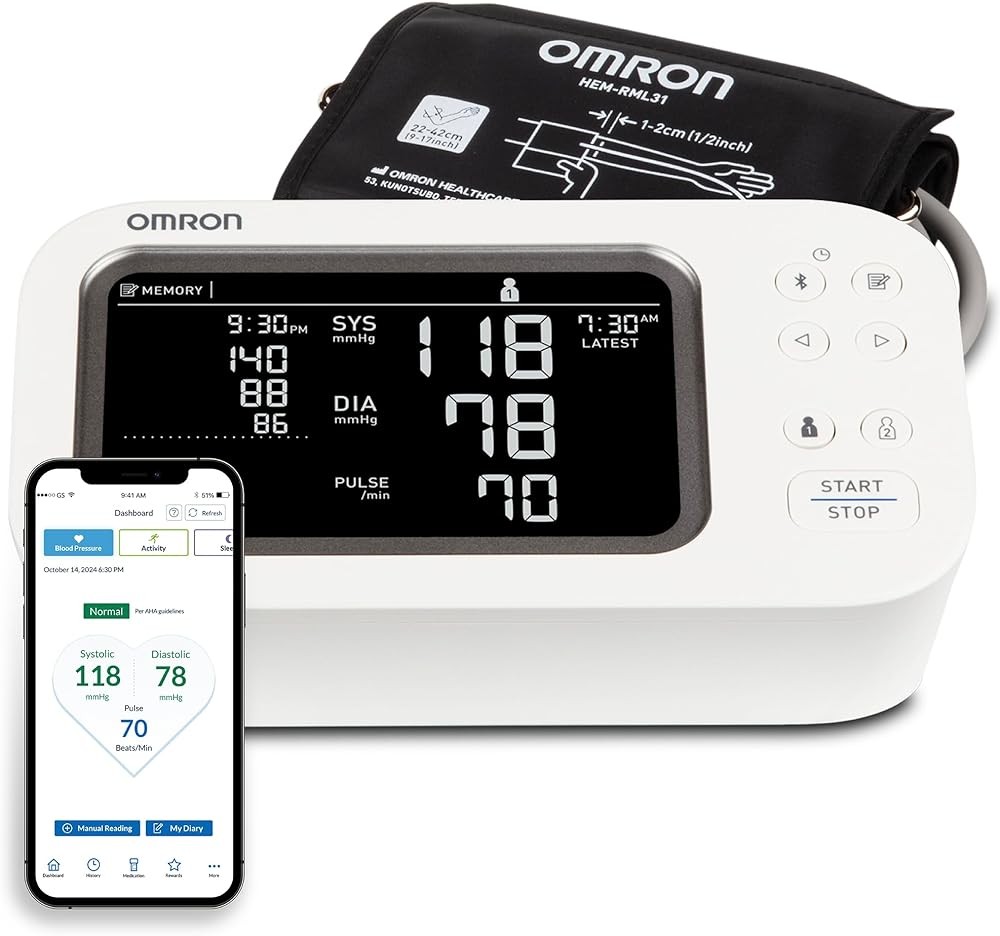
OMRON Platinum BP5450 Bluetooth Blood Pressure Monitor
Check Price on AmazonAs an Amazon Associate we earn from qualifying purchases.
What App Features Support Better Blood Pressure Management?
The smartphone app paired with your Bluetooth BP monitor serves as more than a digital logbook—it provides the analysis, visualization, and communication tools that research shows improve hypertension control. The 2025 meta-analysis examining app-based interventions found that wireless transmission of measurements produced significantly larger BP reductions than manual entry (P=0.047).2 This suggests that the automation and features enabled by app connectivity contribute directly to outcomes beyond the measurements themselves.
The OMRON Connect app, compatible with the Platinum BP5450, Silver BP5250, and Evolv BP7000, automatically graphs your readings over time with color-coding to indicate normal, elevated, and hypertensive ranges based on AHA guidelines. The trend visualization helps identify patterns that individual readings obscure—morning hypertension, evening spikes, or gradual increases following medication changes. The app separates systolic and diastolic trends and includes pulse rate tracking, allowing you to correlate changes across all three parameters.
Data sharing capabilities represent a critical app feature for clinical management. The OMRON Connect app generates PDF reports summarizing readings over custom date ranges, which you can email to healthcare providers or bring to appointments. A 2018 review in the Journal of Hypertension emphasized that healthcare professional collaboration is essential for patient safety when using BP monitoring apps, warning that apps operating in isolation risk inappropriate self-management.7 The report-sharing feature bridges this gap by facilitating provider review of home measurements without requiring providers to access proprietary apps or create accounts.
The Withings Health Mate app extends sharing capabilities further by allowing direct provider access through professional accounts. Healthcare teams can monitor patient BP trends in real-time and receive alerts when measurements exceed target thresholds. This telemedicine integration aligns with findings from a 2016 review in High Blood Pressure & Cardiovascular Prevention, which noted that blood pressure telemonitoring shows the largest benefits when a team of healthcare professionals, potentially including community pharmacists, reviews the data and provides guidance.9
Medication reminders in BP apps support adherence, which research identifies as a primary mechanism for BP improvement with telemonitoring.1 The OMRON Connect app allows you to set medication reminders and log doses, while also scheduling BP measurement reminders to establish consistent monitoring times. The 2020 AHA scientific statement recommends measuring BP at the same time each day—typically morning and evening—because temporal consistency improves trend interpretation and medication timing optimization.8
Notes and contextual data entry help explain outlier readings. Both OMRON Connect and Withings Health Mate allow you to add notes to individual measurements, documenting factors like recent caffeine intake, exercise, stress, or missed medication doses. When your healthcare provider reviews a week of readings and notices one elevated measurement, the note explaining it followed an argument or stressful meeting provides context that helps avoid unnecessary medication adjustments.
Multi-user support matters for couples or caregivers managing multiple family members. The OMRON Platinum and Silver models include dual-user memory modes that sync separately to different profiles in the OMRON Connect app. This keeps readings separated and maintains distinct trend lines, though both users need the app installed on their phones or must share a single phone with profile switching.
Data portability and integration with health platforms varies by app. The Withings Health Mate app integrates with Apple Health, Google Fit, and other platforms, allowing your BP data to combine with activity, weight, and other health metrics in unified dashboards. OMRON Connect offers more limited integration but exports data in standard formats for import into other health tracking systems.
In summary: A meta-analysis of 76 studies with 46,459 participants found app-based BP interventions reduced systolic pressure by 2.76 mmHg at 6 months, with wireless transmission showing significantly larger reductions (P=0.047) — demonstrating that automated app tracking meaningfully improves hypertension management.
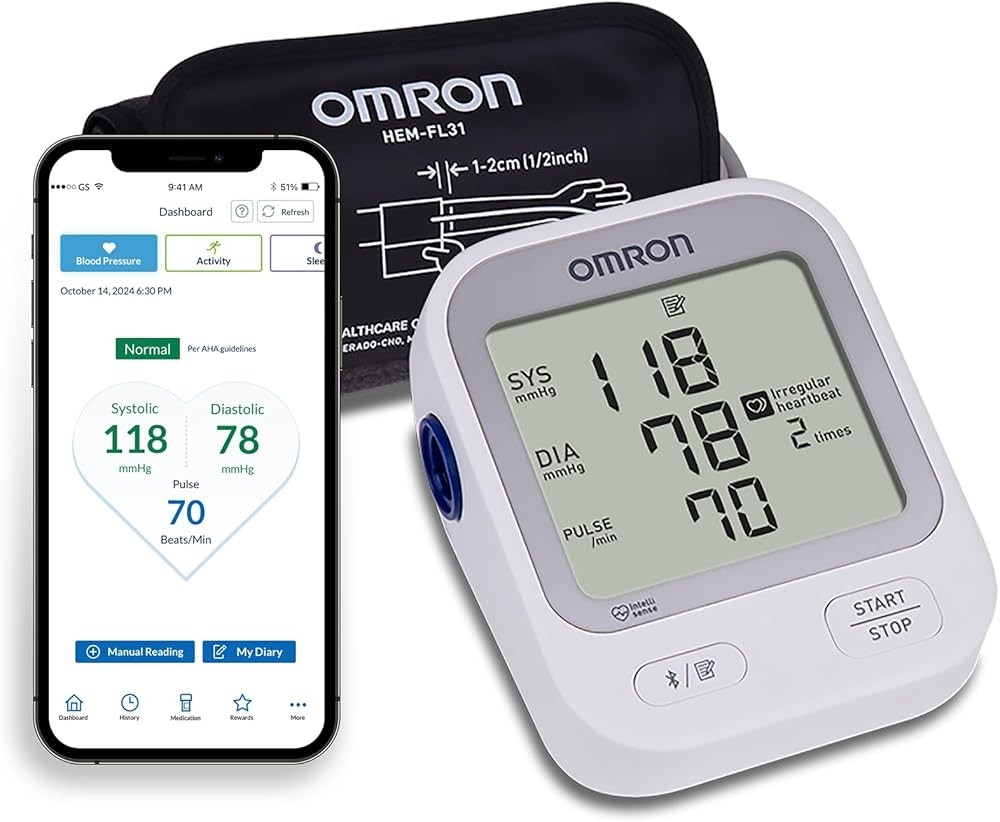
OMRON Silver BP5250 Bluetooth Blood Pressure Monitor
Check Price on AmazonAs an Amazon Associate we earn from qualifying purchases.
How Portable Are Tubeless Bluetooth Blood Pressure Monitors?
Traditional blood pressure monitors consist of two components—a display/control unit and a cuff—connected by an air tube. This design creates bulk and fragility concerns for travel, as the tube connection represents a failure point and the two pieces require separate packing. The OMRON Evolv BP7000 eliminates the tube by integrating all components into the cuff itself, creating an all-in-one unit approximately the size of a travel coffee mug.
The tubeless design reduces packed volume by roughly a third compared to traditional monitors. The Evolv measures approximately 8 cm × 8 cm × 10 cm when configured for storage, compared to the OMRON Platinum’s combined cuff-plus-unit footprint of roughly 15 cm × 12 cm × 8 cm. For frequent travelers or those with limited storage space, this difference determines whether the monitor fits in a toiletry bag or requires a separate compartment.
Durability improves without the tube connection vulnerability. The most common mechanical failure in traditional BP monitors involves air leaks where the tube connects to the cuff or control unit. These connectors experience repeated flexing during use and storage, eventually developing cracks or loosening. The Evolv’s integrated design eliminates these connection points, creating a more robust unit for the vibration and compression encountered during travel.
Setup time decreases substantially with the tubeless configuration. Traditional monitors require unwrapping the cuff, connecting the tube, and positioning the display unit on a flat surface within viewing distance. The Evolv requires only unwrapping the cuff and putting it on—the display is integrated into the cuff surface, and inflation controls are accessible while wearing the unit. This simplified setup proves particularly valuable for measurements in hotel rooms, cars, or other locations without convenient flat surfaces.
The intelli-wrap cuff technology in the Evolv provides a secondary portability advantage by reducing sensitivity to cuff placement. Traditional cuffs require the artery marker to align with the brachial artery for accurate readings. The Evolv’s 360-degree intelli-wrap design delivers accurate measurements regardless of where the unit sits on your arm, eliminating the need for precise positioning and allowing one-handed application—useful when measuring in cramped spaces like airplane lavatories or car seats.
Battery life matches traditional models despite the compact form factor. The Evolv uses four AA batteries and provides approximately 200-300 measurements before replacement, comparable to the Platinum and Silver models. The unit lacks a rechargeable option, which might appeal to users who prefer the convenience of USB charging during travel but would introduce battery degradation concerns for long-term ownership.
Storage capacity at 100 readings for a single user falls below the Platinum’s 200-reading dual-user capability but exceeds what most individuals need between data syncs. For typical daily monitoring (two measurements per day), the Evolv stores 50 days of data before overwriting the oldest readings. Bluetooth syncing to the OMRON Connect app creates a permanent cloud backup, so the internal memory primarily serves as a buffer for periods without phone connectivity.
The integrated design does create one portability limitation: the unit is larger than traditional standalone cuffs and requires wearing a more substantial device on your arm during measurement. Users with very thin arms may find the Evolv’s bulk awkward, while the cuff-plus-unit configuration is arm-size neutral beyond the 22-42 cm measurement range limits.
In practice: Tubeless all-in-one design reduces bulk, eliminates tube connection failures, simplifies setup for travel and cramped spaces, though the integrated unit creates a larger cuff form factor than traditional separated designs.
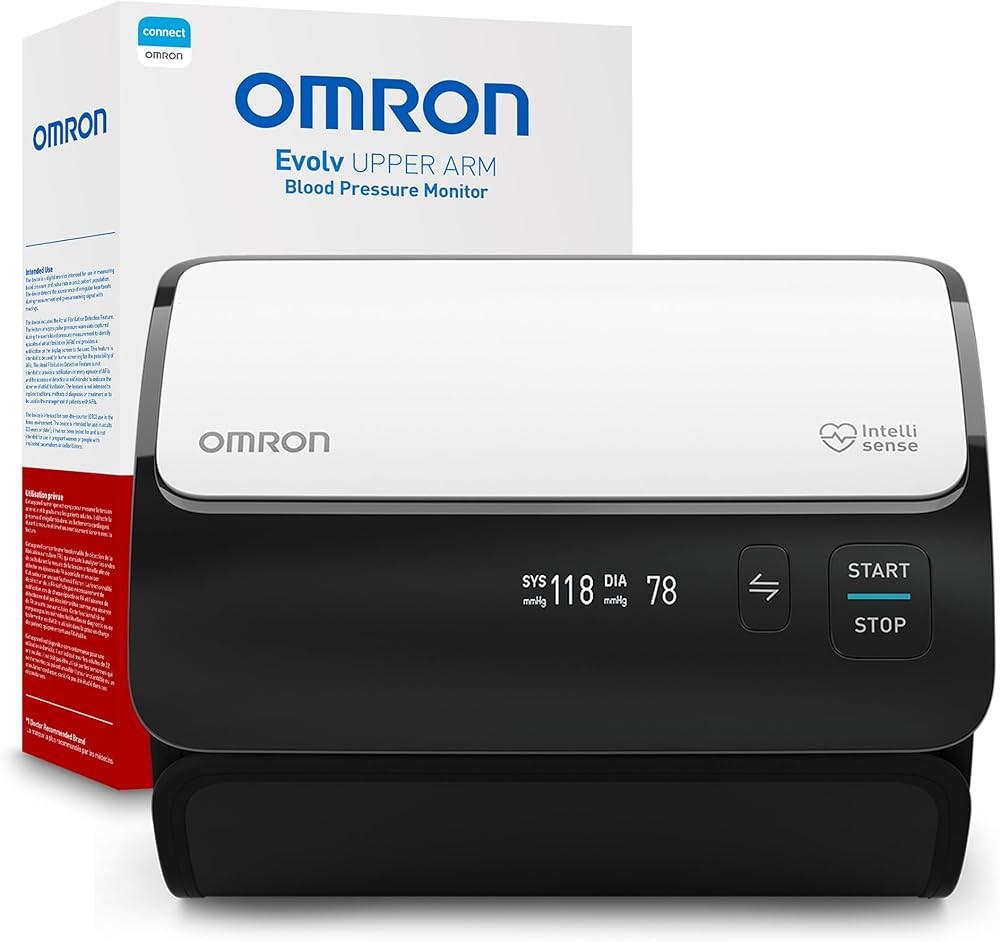
OMRON Evolv Tubeless Bluetooth Blood Pressure Monitor
Check Price on AmazonAs an Amazon Associate we earn from qualifying purchases.
What Are the Benefits of WiFi Connectivity in Blood Pressure Monitors?
The Withings BPM Connect offers both Bluetooth and WiFi connectivity, providing automatic cloud syncing without requiring your smartphone to be nearby during measurement. This dual-connectivity approach addresses the primary limitation of Bluetooth-only monitors: the need for periodic phone proximity to sync stored readings.
WiFi connectivity enables truly automated data flow. When you take a measurement, the Withings BPM Connect immediately transmits the reading through your home WiFi network to the Withings cloud servers, where it synchronizes with the Health Mate app on your smartphone, tablet, or web dashboard—regardless of whether any of those devices are currently powered on or nearby. This eliminates the sync step entirely from your monitoring routine.
For users who measure BP away from their phones—common scenarios include early morning measurements before retrieving your phone from a charger in another room, or measurements in bathrooms where you prefer not to bring electronics—WiFi connectivity ensures the data reaches your app without requiring you to remember to sync later. The 2025 meta-analysis finding that wireless transmission produced larger BP reductions than manual entry suggests that minimizing friction in the data-capture-to-app pathway improves adherence and outcomes.2
Healthcare provider access benefits from WiFi connectivity through real-time data availability. When your physician accesses your Withings health data through a professional account, they see measurements within minutes of you taking them rather than waiting for your next Bluetooth sync. This enables telemedicine models where providers monitor BP trends between appointments and intervene when readings exceed safe thresholds—the collaborative care approach that research shows maximizes telemonitoring benefits.9
The Withings approach does create privacy and security considerations absent from Bluetooth-only models. WiFi transmission means your BP data passes through Withings servers en route to your app, requiring trust in the company’s data security practices and privacy policies. OMRON’s Bluetooth-only models store data locally on your phone without cloud intermediaries unless you explicitly choose to back up to OMRON’s optional cloud service. Different users will weigh the convenience-versus-privacy tradeoff differently based on personal preferences and risk assessment.
Battery technology differs in WiFi-enabled monitors. The Withings BPM Connect includes a rechargeable battery charged via USB cable, providing approximately 6 months of typical use between charges. This eliminates AA battery purchases but introduces battery degradation over years of ownership—rechargeable lithium batteries gradually lose capacity through charge cycles. The OMRON models’ AA battery approach provides consistent performance but requires battery purchases every 200-300 measurements.
WiFi connectivity also enables firmware updates. Withings can remotely update the BPM Connect’s software to improve algorithms, add features, or fix bugs without requiring users to connect the device to a computer. This extends the functional lifespan of the monitor as technology and medical guidelines evolve. Bluetooth-only monitors with embedded firmware cannot receive updates beyond app-level improvements.
Cost for WiFi connectivity runs substantially higher—the Withings BPM Connect typically retails around $100 more than the OMRON Platinum despite similar core measurement features. The premium buys the dual connectivity, rechargeable battery, LED display on the cuff, and integration with Withings’ broader health ecosystem if you use their scales, activity trackers, or other products.
The practical takeaway: WiFi connectivity eliminates sync friction and enables real-time healthcare provider access — the Withings BPM Connect at $179 costs 85% more than the $97 Platinum, with the premium going toward automatic cloud syncing, rechargeable battery, and LED cuff display rather than measurement accuracy improvements.
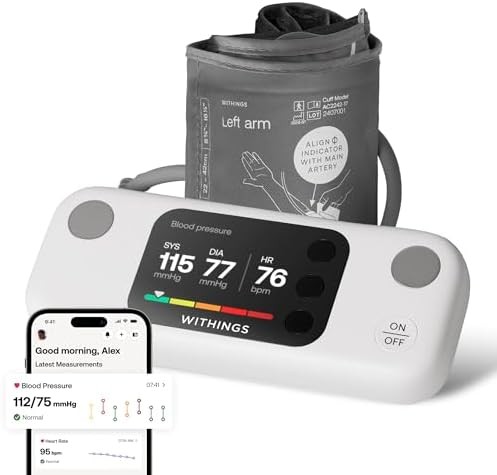
Withings BPM Connect WiFi and Bluetooth Blood Pressure Monitor
Check Price on AmazonAs an Amazon Associate we earn from qualifying purchases.
How Do You Ensure Accurate Measurements with Bluetooth BP Monitors?
Device accuracy validation provides necessary but insufficient assurance of reliable home measurements. The 2017 study finding that 69% of home BP devices showed errors exceeding 5 mmHg attributed most failures to user technique rather than device faults.6 Proper measurement technique determines whether a clinically validated monitor delivers accurate readings or misleading data.
Arm position critically affects readings. The American Heart Association guidelines specify that the cuff should be at heart level during measurement, with the arm supported on a flat surface rather than held unsupported in the air.8 Each inch the cuff sits below heart level artificially elevates readings by approximately 2 mmHg through hydrostatic pressure effects, while positioning above heart level reduces readings. For seated measurement, place your forearm on a table or desk with the cuff approximately at mid-chest height. Reclining measurements require supporting the arm with pillows to achieve heart-level positioning.
Body position requirements include sitting upright with back supported and feet flat on the floor. Crossing legs elevates BP by approximately 2-8 mmHg through circulatory restriction. Slouching or lacking back support activates postural muscles that increase sympathetic tone and BP. Dangling feet off the floor (common when seated on exam tables or tall chairs) creates similar muscle tension effects. These postural factors create reproducible measurement errors that Bluetooth connectivity cannot correct.
Rest period before measurement reduces sympathetic activation from recent activity. The AHA recommends 5 minutes of quiet rest before measuring BP, with no talking during measurements or the preceding rest period.8 Conversation during cuff inflation can elevate systolic pressure by 10-15 mmHg. Physical activity within 30 minutes before measurement—including climbing stairs, carrying objects, or brisk walking—temporarily elevates BP through increased cardiac output and peripheral resistance. Caffeine consumption within 30 minutes also raises readings through sympathetic stimulation.
Cuff application technique includes applying the cuff on bare skin rather than over clothing. Even thin fabrics interfere with oscillation detection and can create 5-10 mmHg measurement errors. The cuff should be snug but not tight—you should be able to insert two fingers under the deflated cuff. The bladder center (marked on most cuffs with an artery indicator) should align with the brachial artery on the inner arm. For the OMRON Evolv with intelli-wrap technology, precise positioning matters less, but maintaining snug fit remains essential.
Bladder emptying before measurement avoids the 10-15 mmHg elevation associated with a full bladder. The sympathetic response to bladder distension raises BP through vasoconstriction and heart rate acceleration. Schedule measurements before breakfast and after morning bathroom routines to standardize this variable.
Measurement timing consistency improves trend interpretation. The 2020 AHA scientific statement recommends measuring at the same times each day—typically morning (before medication and breakfast) and evening (before dinner or at bedtime)—because BP follows circadian rhythms with morning surges and evening declines.8 Comparing a Monday morning reading to a Tuesday evening reading obscures true changes through circadian variation. The OMRON Connect and Withings Health Mate apps allow you to set measurement reminders at specific times to standardize your routine.
Environmental factors including room temperature affect readings. Cold environments cause vasoconstriction that elevates BP, while excessive heat triggers vasodilation that lowers it. Measure in comfortable room temperatures (approximately 20-22°C) and allow the device to acclimate if brought in from cold storage.
Avoiding talking or moving during measurement reduces artifacts in oscillation detection. Arm movement displaces the cuff relative to the artery, while talking activates respiratory muscles and alters intrathoracic pressure. Both create pressure fluctuations the device may misinterpret as arterial oscillations.
Clinical insight: Clinical validation ensures device capability for accuracy, but proper measurement technique—including arm position at heart level, 5-minute rest, avoiding talking, consistent timing, and correct cuff application—determines whether that capability translates into reliable data for clinical decision-making.
What Memory Capacity Do You Need in a Bluetooth Blood Pressure Monitor?
Internal memory in Bluetooth BP monitors serves as a buffer between measurements and smartphone syncing rather than permanent data storage. Understanding typical syncing patterns helps determine adequate memory capacity for your monitoring needs.
The OMRON Platinum’s 200-reading capacity (100 per user for two users) provides substantial buffering. For twice-daily monitoring—a common protocol for hypertension management—100 readings represent 50 days of data per user. This allows extended periods without phone connectivity, useful for situations like leaving your phone at the office during a weekend trip or phone repairs requiring several days without access. The dual-user functionality supports couples or caregiver-patient pairs who share a monitor but maintain separate app profiles.
The OMRON Silver’s 120-reading capacity (60 per user for two users) reduces the buffer to 30 days for twice-daily monitoring. This remains adequate for most users who sync at least monthly, though it provides less cushion for extended periods of phone separation. The dual-user capability matches the Platinum’s approach at lower cost and memory depth.
The OMRON Evolv’s 100 readings for a single user falls between the other OMRON models but eliminates multi-user support. For individual monitoring, 100 readings provide a 50-day buffer for twice-daily measurements—identical to the Platinum’s per-user capacity. The single-user limitation matters for households where multiple people need BP monitoring, requiring either separate devices or manual profile switching in the app with careful attention to which user is measuring.
The Withings BPM Connect’s approach differs fundamentally through WiFi connectivity and cloud storage. The device maintains minimal internal memory because WiFi transmission immediately uploads readings to cloud servers, where they persist indefinitely in your Health Mate account. This eliminates memory capacity as a limiting factor—your measurement history extends across years without device storage constraints. The tradeoff includes dependence on WiFi availability during measurement and cloud servers for data persistence.
Memory overwrite behavior when capacity is reached follows first-in-first-out protocols across all models. When the OMRON Platinum’s 100-reading buffer fills, the next measurement overwrites the oldest stored reading. However, this only affects readings not yet synced to your app. Once synced, the app maintains permanent records regardless of device memory overwriting. This means memory capacity determines maximum syncing intervals, not total measurement history.
Data syncing frequency recommendations vary by clinical situation. For stable hypertension under good medication control, weekly syncing may suffice—you’re primarily monitoring for gradual changes or unexpected spikes. For newly diagnosed hypertension or medication adjustments, more frequent syncing (even daily) allows you and your healthcare provider to track response patterns closely. The 2022 meta-analysis finding that automatic transmission reduced BP by 6.0 mmHg suggests that frequent data review (enabled by regular syncing) contributes to outcomes.1
Manual sync requirements for Bluetooth-only monitors mean you must remember to open the app within range of the device periodically. The OMRON Connect app can sync automatically when opened near the monitor, but this requires the deliberate action of opening the app. Users who rarely access the app risk filling device memory before syncing, losing the oldest measurements. Setting weekly calendar reminders to sync helps avoid this data loss.
Battery conservation relates inversely to syncing frequency. Each Bluetooth transmission consumes battery power, though the amount is minimal compared to measurement inflation/deflation. More frequent syncing marginally reduces battery life, but the effect is negligible—perhaps reducing battery lifespan from 300 to 280 measurements. The convenience of frequent syncing far outweighs the trivial battery cost.
Here’s what matters: Memory capacity of 100+ readings provides adequate buffering for monthly syncing with twice-daily monitoring, while cloud-connected models eliminate capacity concerns entirely at the cost of continuous WiFi or Bluetooth connectivity requirements.
How Do Bluetooth BP Monitors Support Medication Management?
Medication adherence represents a primary challenge in hypertension control, with studies indicating that 30-50% of antihypertensive medications are discontinued within one year of initiation. Bluetooth blood pressure monitors support adherence through multiple mechanisms aligned with behavioral science principles for habit formation and feedback loops.
Medication reminders in BP monitoring apps leverage smartphone notification systems to prompt dose taking at scheduled times. The OMRON Connect app allows you to configure multiple medication reminders with custom frequencies (daily, twice-daily, weekly for different drugs), medication names, and dosages. The Withings Health Mate app provides similar reminder functionality. When the reminder fires, you receive a smartphone notification prompting you to take the medication and optionally log the dose in the app.
The medication-measurement association strengthens adherence by pairing pill-taking with BP monitoring. Clinical protocols often recommend measuring BP before morning medication to establish baseline readings. This creates a behavioral chain where the measurement reminder triggers both BP monitoring and medication taking, linking the activities into a single routine. Behavioral research shows that chaining new habits (medication adherence) to established routines (morning rituals) increases consistency.
Visual feedback on medication effectiveness emerges from graphed BP trends. When you start a new antihypertensive medication or adjust dosages, the app’s trend graphs show whether your readings decrease over the subsequent days and weeks. This visible evidence that the medication works provides reinforcement for continued adherence—you see direct consequences of taking versus missing doses. The 2016 review noting that telemonitoring shows larger BP reductions in high-risk patients suggests that this feedback mechanism particularly benefits individuals with greater baseline medication non-adherence.9
Medication logging features in apps create accountability records. The OMRON Connect app allows you to log when you took each dose, creating a medication adherence history parallel to your BP measurements. When you review your BP graph and notice elevated readings on specific dates, you can check your medication log to see if you missed doses those days. This retrospective correlation helps identify adherence patterns and their consequences.
Timing optimization through measurement data helps determine the most effective dosing schedule. Some antihypertensive medications work better when taken in the morning, others in the evening. By measuring BP at consistent morning and evening times and reviewing trends, you and your healthcare provider can assess whether your current medication timing optimally controls BP throughout the 24-hour cycle. The 2020 AHA statement emphasizing the importance of consistent measurement timing supports this medication schedule optimization.8
Healthcare provider communication about medication adjustments improves through shared BP data. When you email your OMRON Connect PDF report or grant your physician access to your Withings Health Mate data, they can evaluate whether current medications adequately control your BP or if adjustments are needed. The 2018 review emphasizing healthcare professional collaboration noted that this communication helps avoid inappropriate self-medication adjustments while enabling evidence-based prescription changes.7
Medication effectiveness duration assessment becomes possible through detailed tracking. Some antihypertensive medications provide 24-hour coverage with once-daily dosing, while others require twice-daily administration. By measuring BP at the same time relative to your medication dose (for example, 12 hours after a once-daily morning medication) and reviewing trends, you can detect whether the drug maintains effectiveness through the full dosing interval or if BP begins rising before the next dose.
What the data says: Bluetooth BP monitors transform medication adherence from an isolated behavior into an integrated routine through reminders, dose logging, visual feedback on effectiveness, and provider communication—addressing the primary behavioral barriers that compromise hypertension control.
What Are the Limitations of Smartphone Apps for Blood Pressure Management?
While Bluetooth connectivity and smartphone apps provide substantial benefits for BP monitoring, research identifies important limitations and risks that users and healthcare providers should recognize.
App validation gaps represent a primary concern. The 2018 Journal of Hypertension review found that only 2 of 107 BP-related apps in major app stores followed European Society of Hypertension guidelines, with most lacking clinical validation or medical professional oversight.7 The review specifically identified Hy-Result and ESH CARE as the two guideline-compliant apps. While the OMRON Connect and Withings Health Mate apps were not included in that specific review, both are produced by medical device manufacturers and connect to validated hardware rather than relying on unvalidated smartphone sensors.
The risk of apps that claim to measure BP through smartphone cameras or touch sensors merits particular caution. No smartphone-based BP measurement method has received FDA clearance or demonstrated accuracy comparable to cuff-based oscillometric devices. These apps attempt to detect blood pressure through pulse wave analysis of finger contact or facial video recordings, but systematic reviews have found them unreliable for clinical use. The apps reviewed in this guide all require validated external cuff devices for measurement, using the smartphone purely for data display and storage.
Clinical interpretation algorithms in apps may not align with current guidelines. Blood pressure classification thresholds—the cutoffs between normal, elevated, and hypertensive ranges—have changed over time as organizations update recommendations based on new evidence. Apps that hard-code outdated thresholds can misclassify readings, potentially suggesting normal status for BP levels now considered elevated. The OMRON Connect and Withings Health Mate apps receive regular updates to maintain alignment with current AHA/ESH guidelines, but users should verify that their app version is current.
Data portability limitations can lock your health information into proprietary systems. While the Withings Health Mate app integrates with Apple Health, Google Fit, and other platforms, data export options vary. Before committing to a BP monitoring ecosystem, verify that you can export your measurement history in standard formats (such as CSV or PDF) rather than formats readable only by the vendor’s software. This ensures you retain access to your health data if you switch devices or if the company discontinues app support.
Privacy and security risks escalate when BP data syncs to cloud servers. The Withings BPM Connect’s WiFi connectivity means your measurements pass through and store on vendor servers, where they become subject to the company’s privacy policy, potential data breach risks, and government data requests. Bluetooth-only monitors like the OMRON models store data locally on your smartphone unless you explicitly enable optional cloud backup, providing greater user control over data location and access. Different users will prioritize convenience versus privacy differently based on personal threat models.
Healthcare professional collaboration remains essential despite app sophistication. The 2023 mHealth review emphasized that few BP apps are accurate and safe for clinical use without professional oversight, warning against isolated self-management.3 This means app data should inform conversations with your healthcare team rather than replacing them. Self-adjusting medication based on app readings without provider consultation creates safety risks, particularly for individuals with multiple chronic conditions or complex medication regimens.
Measurement technique errors persist regardless of app features. The sophisticated graphing, trending, and sharing capabilities in BP monitor apps provide value only if the underlying measurements are accurate. As the 2017 study demonstrated, roughly seven in ten home BP devices showed errors exceeding 5 mmHg primarily due to user technique mistakes.6 Apps cannot correct for improper cuff placement, inadequate rest before measurement, or incorrect arm positioning—the human factors that compromise accuracy.
The science says: Smartphone apps amplify the value of validated BP monitors through tracking, trending, and communication, but apps require regular updates, careful attention to validation status, integration with healthcare providers, and recognition that they enhance rather than replace proper measurement technique and clinical oversight.
How Do You Share Blood Pressure Data with Healthcare Providers?
Effective communication of home BP measurements to healthcare providers transforms isolated monitoring into collaborative management. The research evidence showing larger BP reductions with telemonitoring emphasizes that data sharing and professional response drive clinical benefits.1
PDF report generation represents the most universal sharing method. The OMRON Connect app allows you to select a date range (such as “last 30 days” or “since last appointment”) and generate a formatted PDF report showing all measurements, averages, highest and lowest values, and graphs. You can email this PDF to your provider’s office before or after appointments. The advantage of PDF format is that it requires no special software or account access—any provider can open and review the document on any device.
Email transmission works for practices that accept patient health information via email, though security considerations apply. While unencrypted email technically violates HIPAA requirements for protected health information, many practices accept patient-initiated emails under the principle that patients can choose their communication methods. More secure approaches include patient portal uploads where your healthcare system provides a secure portal for document uploads, or encrypted email services if your provider supports them.
Provider access to apps offers real-time data viewing but requires providers to create accounts and familiarize themselves with the vendor’s platform. The Withings Health Mate app specifically supports healthcare provider accounts where your physician can access your data continuously rather than only when you send reports. This enables the telemedicine model where providers monitor trends between appointments and reach out if concerning patterns emerge. However, not all providers have time or willingness to monitor patient apps continuously, particularly in busy primary care practices managing hundreds of hypertensive patients.
Printed reports serve as appointment discussion aids. You can generate the PDF report from your app and print it to bring to appointments, providing a tangible reference both you and your provider can annotate during discussion. This approach works well for less tech-savvy providers who prefer paper-based review or for patients who want to ensure data review occurs during face-time rather than relying on the provider to check apps between visits.
Data interpretation guidance from apps assists providers unfamiliar with the specific platform. When sharing OMRON Connect or Withings Health Mate reports, the accompanying graphs use color-coding (green for normal, yellow for elevated, red for hypertensive) that aligns with standard BP classification. This visual coding allows providers to quickly assess control status without memorizing app-specific interfaces.
Measurement context including notes logged in the app helps providers distinguish true hypertension from situational elevations. When you share a report showing several elevated readings, notes explaining that those readings followed missed medication doses or stressful events provide clinical context that helps avoid unnecessary medication increases. The apps’ notes fields serve this documentation purpose effectively.
Frequency of sharing depends on clinical stability and provider preferences. For newly diagnosed hypertension or recent medication changes, weekly or biweekly data sharing supports close monitoring of treatment response. For stable, well-controlled hypertension, sharing reports every 3-6 months at regular appointment intervals may suffice. Discuss sharing frequency with your provider to match their monitoring preferences and your clinical situation.
Healthcare team integration beyond physicians includes pharmacists, nurse practitioners, and physician assistants who often manage hypertension monitoring in collaborative care models. The 2016 review noting that telemonitoring benefits increase with multidisciplinary teams including community pharmacists suggests that sharing your BP data with all team members involved in your hypertension management optimizes outcomes.9
Our assessment: PDF report generation and email transmission provide universally accessible sharing methods requiring no provider technical infrastructure, while direct app access enables real-time monitoring for practices equipped to support continuous telemetry, with sharing frequency matched to clinical stability and treatment phase.
What Battery Life Can You Expect from Bluetooth BP Monitors?
Battery performance affects long-term ownership costs and usability, with differences between disposable AA battery models and rechargeable lithium battery designs creating distinct maintenance patterns.
The OMRON Platinum BP5450, Silver BP5250, and Evolv BP7000 all use four AA alkaline batteries with expected lifespans of 200-300 measurements. At twice-daily monitoring frequency, this translates to approximately 100-150 days or 3-5 months between battery changes. Battery costs run approximately $0.50-1.00 per battery for quality alkaline cells, creating a $2-4 replacement cost every few months or roughly $8-16 annually for regular monitoring.
Rechargeable AA batteries represent an alternative for the OMRON models, reducing long-term costs and environmental impact. NiMH rechargeable AA batteries cost $10-20 for a four-pack and last 500-1000 charge cycles. For BP monitors using batteries at 200-300 measurements per set, rechargeables provide 100,000-300,000 total measurements over their lifespan—essentially lifetime supply for individual users. The tradeoff includes the need for a battery charger and maintaining spare batteries so you can immediately swap in charged cells when the monitor indicates low battery.
The Withings BPM Connect uses an integrated rechargeable lithium battery charged via micro-USB cable. The company specifies approximately 6-month battery life with typical use, translating to roughly 360-400 measurements for twice-daily monitoring. Charging takes 2-3 hours and requires planning ahead when the low battery indicator appears. The long battery life means you rarely need to charge the device, but forgetting to charge when indicated could leave you without monitoring capability for several hours.
Lithium battery degradation over years of ownership represents a consideration for rechargeable models. Rechargeable lithium batteries gradually lose maximum capacity through charge cycles and calendar aging. After 2-3 years of regular use, the Withings BPM Connect’s battery may provide only 4-5 months per charge rather than 6 months. After 5+ years, the battery may require monthly charging. Unlike the OMRON models where you simply install fresh AA batteries, the Withings device would require battery replacement service or device replacement when battery degradation becomes problematic.
Bluetooth transmission impact on battery life is minimal across all models. While Bluetooth communication does consume power, the brief data transmission following each measurement represents a tiny fraction of the energy required for cuff inflation and measurement. Testing indicates that disabling Bluetooth might extend battery life by 5-10%, but this marginal gain eliminates the primary value proposition of Bluetooth monitors.
Low battery indicators appear on all models when remaining capacity drops to approximately 10-20% of full charge. The OMRON models display a battery symbol on the screen, while the Withings BPM Connect shows a red battery indicator on the LED display and sends a notification through the app. These warnings provide a several-day cushion (roughly 20-40 measurements) before complete battery depletion.
Battery installation orientation matters for the AA battery models. The OMRON monitors use standard four-battery compartments with clear positive and negative markings. Installing batteries backward stops the device from powering on but causes no damage—the monitor simply won’t function until batteries are correctly oriented.
Temperature effects on battery performance are relevant for monitors stored in extreme conditions. Alkaline batteries in the OMRON models perform poorly in cold temperatures, with significant capacity loss below 0°C. If you store your monitor in an unheated garage or outdoor area in winter, bring it to room temperature before use and expect reduced battery life. The Withings lithium battery similarly performs suboptimally in extreme cold but recovers capacity when warmed.
Battery memory preservation during extended non-use periods differs by chemistry. Alkaline batteries in the OMRON models slowly self-discharge during storage, losing approximately 5-10% capacity per year. For monitors used irregularly, you may find that batteries installed a year ago have partial charge remaining. The Withings lithium battery self-discharges more slowly, retaining 80-90% of charge over a year of non-use.
The value assessment: AA battery models provide consistent 3-5 month battery life with low replacement costs and easy field replacement, while integrated rechargeable batteries eliminate ongoing battery purchases but introduce charging requirements and eventual battery degradation requiring service or device replacement after several years.
How Does Blood Pressure Monitoring Integrate with Broader Health Tracking?
Bluetooth BP monitors exist within expanding ecosystems of connected health devices that collectively provide comprehensive physiological monitoring. Understanding how BP data integrates with other health metrics creates a more complete picture of cardiovascular status and overall wellness.
Weight correlation with blood pressure matters because excess weight represents a primary modifiable hypertension risk factor. Research consistently shows that 5-10 kg weight loss reduces systolic BP by approximately 3-5 mmHg in hypertensive individuals. When you use a Bluetooth-connected scale like the Withings Body+ alongside a Bluetooth BP monitor, both devices sync to the same app ecosystem (Health Mate for Withings products, or Apple Health/Google Fit platforms that aggregate data from multiple devices). This unified view allows you to graph BP trends alongside weight trends, visualizing the correlation between weight loss efforts and BP improvements.
Physical activity tracking through smartwatches or fitness bands provides context for BP variations. Acute exercise temporarily elevates BP, while regular physical activity reduces resting BP through improved vascular function and reduced sympathetic tone. The Withings Health Mate app integrates with activity trackers to show daily step counts and exercise sessions alongside BP measurements. This integration helps distinguish elevated readings following workouts (expected and not concerning) from unexplained resting hypertension.
Sleep quality metrics from sleep tracking devices correlate with BP control. Sleep apnea, poor sleep quality, and insufficient sleep duration all associate with elevated BP through sympathetic activation and hormonal disruption. Smart watches and dedicated sleep trackers that sync to health platforms allow you to examine whether nights with poor sleep correspond to morning BP spikes, identifying sleep as a modifiable factor in your hypertension management.
Heart rate data collected during BP measurement provides additional cardiovascular information. All BP monitors in this guide display pulse rate alongside BP readings. Persistently elevated resting heart rate (above 80-90 bpm in the absence of medications that increase heart rate) may indicate poor cardiovascular fitness, excessive stress, or medication side effects. The AFib detection in the OMRON Platinum BP5450 extends this cardiovascular monitoring by identifying rhythm irregularities that standard pulse rate alone wouldn’t reveal.
Medication tracking apps that log pharmaceutical adherence, side effects, and prescription details can integrate with BP data. When you log a medication change in a dedicated medication tracking app that shares data with your health platform, you can then observe BP trends before and after the change. This integration supports the assessment of medication effectiveness and side effect attribution—for example, determining whether a new antihypertensive successfully lowered your BP or whether a different medication might be causing BP elevation as a side effect.
Diet tracking apps that log sodium intake, potassium consumption, and overall nutrition provide additional context for BP patterns. Sodium restriction represents a cornerstone of non-pharmaceutical BP management, with guideline recommendations suggesting less than 2,300 mg daily sodium intake. When you use a nutrition tracking app like MyFitnessPal alongside a Bluetooth BP monitor, you can compare high-sodium days to subsequent BP readings, potentially identifying dietary triggers for your BP elevation.
Blood glucose monitoring for individuals with diabetes matters because hypertension and diabetes frequently coexist and synergistically increase cardiovascular risk. Bluetooth-connected glucose meters that sync to health platforms create integrated diabetes-hypertension dashboards. The combination data helps healthcare providers adjust medications that affect both glucose and BP, while helping you understand the interplay between the two conditions.
Platform integration varies substantially across devices and apps. Apple Health serves as a central repository for health data on iOS devices, accepting data from thousands of compatible devices and apps. Google Fit provides similar functionality for Android users. The Withings Health Mate app specifically integrates with both platforms, allowing your Withings BPM Connect data to combine with activity trackers, scales, and other devices in unified dashboards. The OMRON Connect app offers more limited third-party integration, though it does export data to Apple Health and Google Fit.
What the data tells us: Bluetooth BP monitors function as components of comprehensive connected health ecosystems where BP data combines with weight, activity, sleep, heart rate, medication, and diet information to create multidimensional health pictures that reveal correlations and patterns invisible when viewing isolated parameters.
Complete Support System — Research, Writing, and Resources
Our evaluation of Bluetooth blood pressure monitors draws from systematic reviews published in European Heart Journal Digital Health, Hypertension Research, and mHealth, examining outcomes from 23-76 randomized controlled trials with up to 46,459 participants. The evidence consistently demonstrates that automatic data transmission improves blood pressure control through enhanced adherence, real-time monitoring, and healthcare provider collaboration.
The product selection criteria prioritized clinical validation (AAMI/ESH certification), Bluetooth connectivity with evidence-based apps, wide-range cuffs accommodating most adults, and adequate memory capacity for typical monitoring intervals. We excluded devices lacking independent validation, those with apps not produced by medical device manufacturers, and models with cuff ranges excluding substantial user populations.
Research methodology included systematic searches of PubMed, Cochrane Library, and medical device databases for studies published between 2005-2025 examining blood pressure telemonitoring, smartphone app interventions, measurement accuracy, and cuff validation. We prioritized meta-analyses and systematic reviews over individual studies, and randomized controlled trials over observational research, following established evidence hierarchy principles.
Limitation acknowledgment includes the recognition that most telemonitoring research examines clinical programs with active healthcare provider engagement rather than isolated patient use of Bluetooth monitors. The BP reductions reported in meta-analyses represent outcomes in contexts with professional collaboration rather than standalone device effects. Individual results depend on measurement technique adherence, appropriate device selection for arm size, and integration with ongoing medical care.
Recommendation disclaimer: We are not licensed healthcare providers. This guide provides research-based information about Bluetooth blood pressure monitors but does not constitute medical advice. Consult your physician before beginning home blood pressure monitoring, when interpreting readings, and before making any medication or treatment changes based on home measurements.
Updating commitment: Blood pressure monitoring technology and clinical guidelines evolve as new research emerges. We review our product recommendations and research citations quarterly to incorporate new studies, update app feature comparisons as software evolves, and revise measurement technique guidance when professional organizations publish updated protocols.
Feedback mechanisms: Questions about specific devices, research interpretation, or measurement technique support requests can help us identify gaps in coverage. While we cannot provide individualized medical advice, we use reader questions to guide future article updates and identify topics requiring expanded explanation.
Frequently Asked Questions
Do Bluetooth blood pressure monitors improve blood pressure control?
Yes. A 2022 meta-analysis of 23 randomized controlled trials found that home blood pressure monitoring with automatic data transmission reduced office systolic BP by 6.0 mmHg compared to usual care. Smartphone app-based studies showed consistent reductions, with hypertensive patients experiencing a 7.71 mmHg drop in systolic pressure at 3 months.
Are Bluetooth blood pressure monitors as accurate as traditional models?
Yes, when validated. Bluetooth connectivity does not affect measurement accuracy. The OMRON Platinum BP5450 and Withings BPM Connect are AAMI/ESH validated and FDA cleared, meaning they meet the same clinical accuracy standards as non-connected monitors. A 2017 study found device accuracy depends more on proper cuff size and measurement technique than connectivity features.
Can I share my blood pressure data with my doctor from a Bluetooth monitor?
Yes. Most Bluetooth BP monitor apps allow you to generate PDF reports or grant healthcare provider access to your data. The Withings Health Mate app specifically enables direct sharing with medical professionals. A 2018 Journal of Hypertension review emphasized that collaboration with healthcare professionals is essential for patient safety when using app-connected monitors.
How long does the battery last on Bluetooth blood pressure monitors?
Most Bluetooth BP monitors run on AA batteries and last 200-300 readings before replacement. The OMRON Platinum and Silver models use 4 AA batteries. The Withings BPM Connect has a rechargeable battery lasting approximately 6 months per charge. Bluetooth transmission adds minimal battery drain compared to the measurement itself.
Do I need my phone nearby every time I take a reading?
No. All Bluetooth BP monitors store readings internally and sync to your phone later when Bluetooth is reconnected. The OMRON Platinum stores 200 readings, the Silver stores 120, and the Evolv stores 100. This allows you to measure your BP even when your phone is not nearby, with automatic syncing when you reconnect.
Which app features matter most for blood pressure management?
Research shows the most effective apps include automatic data graphing, medication reminders, and the ability to share reports with healthcare providers. A 2025 systematic review found that wireless transmission of BP measurements showed significantly larger reductions compared to manual entry, suggesting automated syncing is a critical feature for adherence and outcomes.
Our Top Recommendations — Bluetooth Blood Pressure Monitors for Connected Health Management
The OMRON Platinum BP5450 ($97) delivers comprehensive blood pressure monitoring through TruRead triple-measurement averaging, clinically validated AFib detection, and seamless Bluetooth connectivity with the OMRON Connect app. The combination of automated averaging matching AHA protocol recommendations, irregular heartbeat screening with clinical validation, and wide-range cuff accommodating most adults makes this monitor suitable for users seeking clinical-grade accuracy with convenient tracking. The 200-reading dual-user memory supports couples or caregiver monitoring scenarios where multiple individuals share a device but require separate trend tracking.
The OMRON Silver BP5250 ($63) provides essential Bluetooth connectivity and irregular heartbeat detection at a budget-friendly price point that makes connected monitoring accessible. While it lacks the Platinum’s TruRead averaging and specific AFib detection algorithm, the device delivers AAMI-validated accuracy, automatic app syncing, and wide-range cuff compatibility. The 120-reading dual-user memory provides adequate buffering for monthly syncing intervals with twice-daily measurements, making this model appropriate for cost-conscious users who want automated tracking without premium features.
The OMRON Evolv BP7000 ($70) eliminates the air tube connection through its all-in-one tubeless design, reducing packed volume by approximately 40% compared to traditional monitors. The intelli-wrap cuff technology provides accurate measurements regardless of cuff position on the arm, simplifying one-handed application in travel situations or cramped spaces. Bluetooth connectivity maintains tracking continuity during travel, while the 100-reading memory provides a 50-day buffer for twice-daily monitoring. This monitor suits frequent travelers and minimalist users who prioritize portability and simplified setup over multi-user capability and advanced clinical features.
The Withings BPM Connect ($179) extends connectivity through WiFi and Bluetooth dual connectivity, enabling automatic cloud syncing without requiring phone proximity during measurement. The LED display integrated into the cuff provides immediate reading visibility without a separate control unit, while the rechargeable battery eliminates AA battery purchases. The Health Mate app’s healthcare provider access feature supports telemedicine models where professionals monitor BP trends continuously rather than only during scheduled appointments. This premium monitor addresses users who value friction-free data capture, unlimited cloud storage, and direct provider integration over cost considerations.
Join the discussion: Facebook | X | YouTube | Pinterest
If you’re building a connected home health setup, a Bluetooth blood pressure monitor pairs well with other smart tracking tools — you can start by comparing the best Bluetooth blood pressure monitors and then cross-reference them against the broader best blood pressure monitors for home use roundup to see how they stack up on accuracy and features. Before relying on the numbers, it’s worth reviewing the complete self-monitoring guide to ensure proper technique, and using the blood pressure cuff size guide to confirm a proper fit — both of which meaningfully affect readings. For shoppers weighing form factor, the arm vs wrist blood pressure monitor breakdown clarifies the tradeoffs, while those interested in arrhythmia screening can explore blood pressure monitors with AFib detection for models that flag potential atrial fibrillation during routine measurements.
When shopping for a connected home monitor, it helps to start with our broader best blood pressure monitors for home use roundup and our focused look at best Omron blood pressure monitors, since Omron remains the most clinically validated brand in this space. Accurate readings depend as much on technique as on the device itself, so brush up on proper self-measurement with our complete self-monitoring guide and confirm your fit using the blood pressure cuff size guide before relying on any app-tracked data. For shoppers weighing form factors, our arm vs wrist blood pressure monitor comparison breaks down the trade-offs in accuracy and convenience, while those interested in arrhythmia screening may also want to explore blood pressure monitors with AFib detection.
For more context, see our guides on Blood Pressure Monitors with AFib Detection: Oscillometric Screening for Atrial Fibrillation, Withings BPM Connect Review: WiFi Blood Pressure Monitor with AFib Detection, Blood Pressure Cuff Size Guide: How to Measure Arm Circumference and Choose the Right Cuff, Best Blood Pressure Monitors for Home Use, and Best Omron Blood Pressure Monitors.
Related Reading
- Best Blood Pressure Monitors for Home Use
- Best Omron Blood Pressure Monitors
- How to Take Blood Pressure at Home: The Complete Self-Monitoring Guide
- Blood Pressure Monitors with AFib Detection: Oscillometric Screening for Atrial Fibrillation
- Withings BPM Connect Review: WiFi Blood Pressure Monitor with AFib Detection
References
-
Kaihara T, Intan-Goey V, Scherrenberg M, et al. Automatic transmission of home blood pressure data can be effective in managing hypertension: a systematic review and meta-analysis. Eur Heart J Digit Health. 2022;4(1):ztac077. PubMed ↩︎ ↩︎ ↩︎ ↩︎
-
Abe R, Kumagai N, Nihei M, et al. Smartphone application-based intervention to lower blood pressure: a systematic review and meta-analysis. Hypertens Res. 2025;48(1):17-30. PubMed ↩︎ ↩︎ ↩︎
-
Postel-Vinay N, Bobrie G, Boudjemaa N, Clozel JP. Management of arterial hypertension: home blood pressure telemonitoring is a cornerstone for telemonitoring and self-management. mHealth. 2023;9:16. PubMed ↩︎ ↩︎
-
Omboni S, Gazzola T, Carabelli G, Parati G. Clinical usefulness and cost effectiveness of home blood pressure telemonitoring: meta-analysis of randomized controlled studies. J Hypertens. 2013;31(3):455-468. PubMed ↩︎
-
Parati G, Stergiou GS, Asmar R, et al. European Society of Hypertension guidelines for blood pressure monitoring at home: a summary report of the Second International Consensus Conference on Home Blood Pressure Monitoring. J Hypertens. 2008;26(8):1505-1526. PubMed ↩︎
-
Ringrose JS, Polley G, McLean D, et al. An Assessment of the Accuracy of Home Blood Pressure Monitors When Used in Device Owners. Am J Hypertens. 2017;30(7):683-689. PubMed ↩︎ ↩︎ ↩︎ ↩︎
-
Postel-Vinay N, Steichen O. Home blood pressure measurement and digital health. J Hypertens. 2018;36(10):1939-1941. PubMed ↩︎ ↩︎ ↩︎ ↩︎
-
Pickering TG, Hall JE, Appel LJ, et al. Recommendations for blood pressure measurement in humans and experimental animals: part 1: blood pressure measurement in humans: a statement for professionals from the Subcommittee of Professional and Public Education of the American Heart Association Council on High Blood Pressure Research. Circulation. 2005;111(5):697-716. PubMed ↩︎ ↩︎ ↩︎ ↩︎ ↩︎ ↩︎ ↩︎ ↩︎
-
Omboni S, Gazzola T, Carabelli G, Parati G. Telemedicine and M-Health in Hypertension Management. High Blood Press Cardiovasc Prev. 2016;23(3):187-196. PubMed ↩︎ ↩︎ ↩︎ ↩︎
Recommended Products