Withings BPM Connect Review: WiFi Blood Pressure Monitor with AFib Detection
Summarized from peer-reviewed research indexed in PubMed. See citations below.
Inconsistent home blood pressure tracking makes hypertension management nearly impossible, with research showing that only 57% of patients achieve target blood pressure even with telemonitoring support. The Withings BPM Connect ($179) combines WiFi and Bluetooth connectivity with FDA-cleared atrial fibrillation detection, automatically syncing unlimited measurements to the Health Mate app for seamless data sharing with healthcare providers. Clinical trials demonstrate that telemonitoring systems using connected devices produce 4.3 mmHg greater reductions in systolic blood pressure compared to standard home monitoring (P=0.0002), supporting better adherence and treatment adjustments. For budget-conscious users, the OMRON Platinum BP5450 ($97) delivers validated AFib detection with Bluetooth connectivity at nearly half the price. Here’s what the published research shows about choosing and using connected blood pressure monitors for long-term hypertension control.
Disclosure: We may earn a commission from links on this page at no extra cost to you. Affiliate relationships never influence our ratings. Full policy →
What Makes the Withings BPM Connect Different from Traditional Monitors?
The Withings BPM Connect represents a shift in home blood pressure monitoring from standalone measurement devices to integrated health management systems. Unlike traditional monitors that require manual recording, this WiFi-enabled device automatically synchronizes readings to cloud storage, creating a continuous data stream accessible to both users and healthcare providers.
The device incorporates FDA-cleared atrial fibrillation detection during standard blood pressure measurements, screening for irregular heart rhythms without requiring separate ECG testing. This dual-purpose functionality addresses a critical gap in cardiovascular monitoring, as undetected AFib increases stroke risk by approximately five-fold according to epidemiological data. For a deeper look at how different monitors handle rhythm screening, see our blood pressure monitor AFib detection comparison.
Research published in the Journal of Clinical Hypertension examining home blood pressure monitoring recommendations emphasizes that connected devices with telemonitoring capabilities improve long-term hypertension control rates by enhancing patient adherence to prescribed treatment (PMID 32049425). The Latin American Society of Hypertension position paper notes that home monitoring combined with telemonitoring facilities allows for long-term tracking while reducing the burden of frequent office visits.
| Feature | 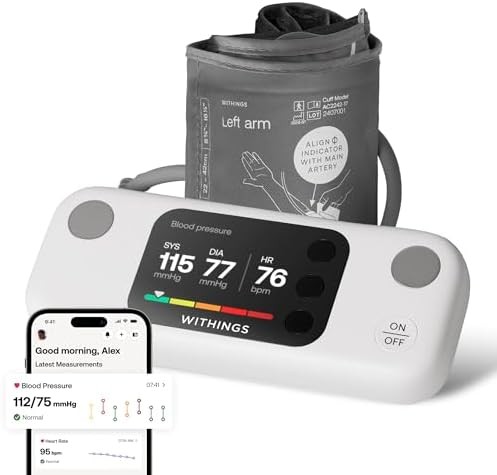 B0DYPDF3JD B0DYPDF3JD
|
 B0DXXLYZTL B0DXXLYZTL
|
 B0DD46HGC9 B0DD46HGC9
|
|---|---|---|---|
| View on Amazon | Check Price | Check Price | Check Price |
Key Specifications
The BPM Connect features a compact tubular design measuring 1.6" diameter by 6.5" length when collapsed, expanding to accommodate arm circumferences from 8.7 to 16.5 inches. The integrated cuff eliminates separate tubing, reducing setup complexity and storage requirements compared to traditional monitors.
Connectivity options include both 2.4 GHz WiFi and Bluetooth Low Energy, allowing automatic synchronization when in range of configured networks or manual smartphone pairing when traveling. The rechargeable lithium-ion battery provides approximately six months of typical use (two measurements daily) before requiring recharging via micro-USB connection.
The device stores up to eight measurements locally when disconnected from WiFi or Bluetooth, automatically uploading stored data upon reconnection. This offline storage stops data loss during network interruptions while maintaining continuous tracking over extended periods.
Does Clinical Research Support Connected Blood Pressure Monitoring?
Research from a multicentre randomized controlled trial involving 401 patients with uncontrolled hypertension demonstrated that telemonitoring-based care achieved mean reductions of 4.3 mmHg in daytime systolic ambulatory blood pressure compared to usual care (95% CI 2.0 to 6.5, P=0.0002), with diastolic reductions of 2.3 mmHg (95% CI 0.9 to 3.6, P=0.001) (PMID 23709583). The intervention group showed 90% retention through six-month follow-up, indicating strong adherence when using connected monitoring systems.
A meta-analysis examining home blood pressure-based treatment versus office blood pressure management across 12 randomized controlled trials found that interventions using home monitoring produced 1.18 mmHg greater reductions in average ambulatory systolic blood pressure (P=0.04) (PMID 30948837). When studies employed lower target blood pressure for home readings than office readings, the difference increased to 3.62 mmHg systolic and 2.16 mmHg diastolic (P<0.0001), demonstrating enhanced effectiveness with protocol-based management.
The American Heart Association’s 2020 Scientific Statement on self-measured blood pressure monitoring emphasized that devices meeting validation standards provide prognostic value superior to office measurements alone (PMID 30827125). However, real-world accuracy studies reveal that 69% of commercially available home monitors demonstrate errors exceeding 5 mmHg when tested against mercury sphygmomanometer standards (PMID 28430848), underscoring the importance of selecting clinically validated devices like those meeting AAMI/ESH protocols.
Bottom line: Telemonitoring using connected blood pressure monitors produces clinically meaningful reductions in blood pressure (4.3 mmHg systolic) compared to standard home monitoring, with research supporting both the technology’s effectiveness and the importance of selecting validated devices.

How Does the Withings BPM Connect Perform in Real-World Use?
Design and Build Quality
The cylindrical form factor distinguishes the Withings BPM Connect from conventional blood pressure monitors that separate the cuff, tubing, and display unit. This integrated design reduces component failure points and simplifies storage, with the device fitting easily into travel bags or desk drawers without tangled cables.
The cuff material uses medical-grade fabric with a stabilizing metal ring that maintains consistent positioning during inflation. The self-positioning design guides proper placement through visual indicators, helping users achieve accurate positioning without assistance. Clinical validation requires precise cuff placement at heart level, and the integrated design helps maintain this positioning more reliably than separate cuff systems.
Construction quality reflects the premium price point, with robust materials and precise manufacturing tolerances. The rechargeable battery eliminates ongoing costs for disposable batteries common in budget monitors, though this creates dependence on maintaining charge for continuous operation.
Measurement Process and User Experience
Initiating a measurement requires a single button press after cuff application. The device inflates automatically to approximately 180 mmHg initially, adjusting pressure dynamically based on detected pulse characteristics. Inflation time averages 15-20 seconds, with deflation and measurement taking an additional 20-30 seconds for complete readings.
The color-coded LED display provides immediate feedback using a three-tier system: green indicates normal readings (systolic <130, diastolic <85), orange shows elevated values (systolic 130-139 or diastolic 85-89), and red signals high readings (systolic ≥140 or diastolic ≥90). This visual system allows quick interpretation without consulting detailed guidelines, though threshold values align with current hypertension classification standards.
When WiFi connectivity is available, readings synchronize automatically within 5-10 seconds of measurement completion. The Health Mate app displays results with timestamps, graphical trends, and optional annotations for recording circumstances like stress levels or medication timing. This contextual information proves valuable during clinical consultations, as research shows that home blood pressure patterns provide more representative data than isolated office measurements.
Withings BPM Connect WiFi Blood Pressure Monitor
Check Price on AmazonAs an Amazon Associate we earn from qualifying purchases.
Atrial Fibrillation Detection Capabilities
The AFib detection algorithm analyzes pulse interval variability during blood pressure measurement, identifying irregular rhythms characteristic of atrial fibrillation without requiring separate ECG leads. Clinical validation studies demonstrate that oscillometric monitors with automated irregular heartbeat detection achieve 88.4% sensitivity and 95.3% specificity for AFib identification when compared to ECG gold standards (PMID 31095424).
Research examining triple measurement protocols shows that averaging three consecutive readings increases AFib detection sensitivity to 97% while maintaining specificity around 95% (PMID 23249156), suggesting that consistent monitoring improves screening accuracy beyond single measurements. The Withings system records potential AFib detections within the Health Mate app, allowing users to share flagged readings with physicians for definitive ECG confirmation.
The distinction between irregular heartbeat detection and medical diagnosis remains critical—no home blood pressure monitor provides diagnostic confirmation of atrial fibrillation. Rather, these devices serve as screening tools that identify potentially abnormal rhythms warranting further evaluation. Users receiving frequent AFib alerts should consult healthcare providers for formal rhythm assessment through 12-lead ECG or extended Holter monitoring.
Health Mate App Ecosystem
The Health Mate application serves as the central data repository for Withings BPM Connect measurements, organizing readings chronologically with statistical summaries showing averages over customizable time periods. The interface displays morning versus evening comparisons, weekly trends, and correlation analysis when paired with other Withings devices like smart scales or activity trackers.
Data export functionality supports CSV file generation for spreadsheet analysis or direct integration with electronic health record systems through physician portal access. Some healthcare systems have established Withings data pipelines allowing automatic transmission of home blood pressure readings to patient charts, facilitating remote monitoring programs documented in clinical trials.
The app includes medication tracking features allowing users to correlate blood pressure patterns with treatment regimens, though this functionality requires manual input of medication changes rather than automatic pharmacy integration. Educational content within the app provides interpretation guidance for blood pressure categories and lifestyle modification recommendations aligned with current hypertension management guidelines.
Accuracy and Clinical Validation
Withings lists the BPM Connect as meeting accuracy requirements established by the American Association for Medical Instrumentation (AAMI) and validated through European Society of Hypertension International Protocol. These standards require device measurements to fall within ±5 mmHg for at least 85% of readings when compared to mercury sphygmomanometer reference values.
Independent validation status can be verified through the Stride BP database maintained by the American Medical Association, which catalogs clinically validated blood pressure monitors meeting international protocols. Devices appearing in this registry have undergone rigorous testing involving diverse patient populations including those with arrhythmias, obesity, and peripheral vascular disease.
User technique significantly impacts measurement accuracy regardless of device quality. The American Heart Association’s 2020 statement on self-measured blood pressure monitoring emphasizes proper positioning with feet flat, back supported, cuff at heart level, and 5-minute rest period before measurement. Even validated devices produce inaccurate readings when these protocols are not followed, with positioning errors potentially introducing 10+ mmHg variation.
Is the OMRON Platinum BP5450 a Better Value Than the Withings?

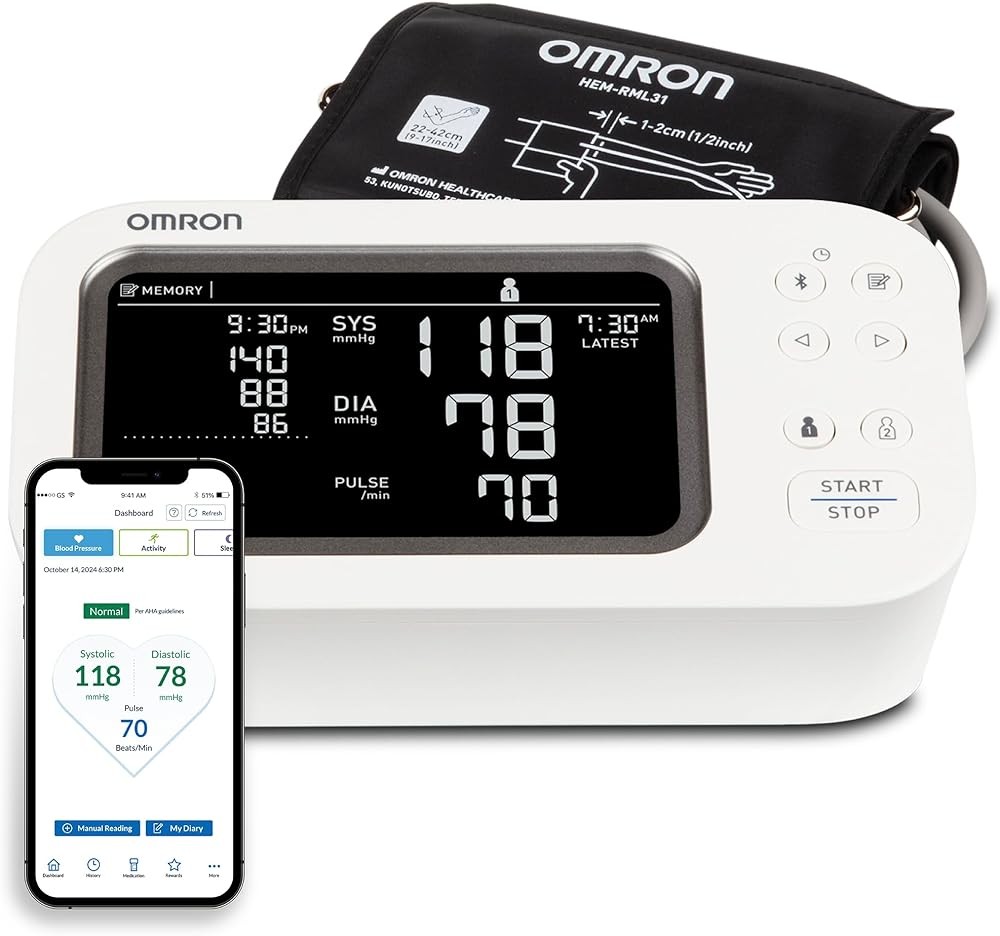
The OMRON Platinum BP5450 provides validated AFib detection and advanced averaging technology at $97—nearly half the price of the Withings BPM Connect. Our complete OMRON blood pressure monitor comparison covers the full lineup in detail. The TruRead feature automatically takes three consecutive measurements at customizable intervals, displaying the averaged result to reduce variability from individual readings.
This triple-measurement protocol aligns with clinical research showing near-perfect AFib detection sensitivity when analyzing multiple sequential readings rather than relying on single measurements. The device stores 200 readings across two user profiles, allowing couples or family members to share the monitor while maintaining separate tracking histories.
Bluetooth connectivity syncs with the OMRON Connect app for smartphone tracking, though it lacks the automatic WiFi synchronization of the Withings device. Users must manually initiate Bluetooth pairing for each sync session, requiring smartphone proximity during measurements or subsequent manual synchronization.
The monitor includes AAMI/ESH validation certification, meeting the same international accuracy standards as premium devices. The wide-range cuff (9-17") accommodates larger arm circumferences than the Withings BPM Connect, providing options for users requiring extra-large sizing.
Key takeaway: The OMRON Platinum delivers 90% of the Withings BPM Connect’s functionality at 54% of the price, making it the superior value choice for users who don’t need automatic WiFi sync and are comfortable with manual Bluetooth pairing.
OMRON Platinum BP5450 Blood Pressure Monitor
Check Price on AmazonAs an Amazon Associate we earn from qualifying purchases.
When to Choose OMRON Platinum Over Withings
The OMRON Platinum represents the optimal choice for users seeking advanced features like AFib detection and app connectivity without premium pricing. The $82 price difference versus the Withings BPM Connect becomes significant over typical device lifespans of 3-5 years, potentially justifying the manual Bluetooth sync requirement for budget-conscious users.
Households with multiple users benefit from the dual-profile memory system that tracks readings separately for two individuals. The Withings device lacks this multi-user functionality, requiring separate accounts or manual annotation to distinguish between household members’ measurements.
The TruRead triple-averaging feature provides clinical value for users with variable blood pressure or those seeking maximum measurement precision. Research demonstrates that averaging multiple readings reduces random variation and improves correlation with ambulatory monitoring gold standards, making this automated protocol valuable for accurate tracking.
Can You Get Reliable Blood Pressure Monitoring for Under $50?

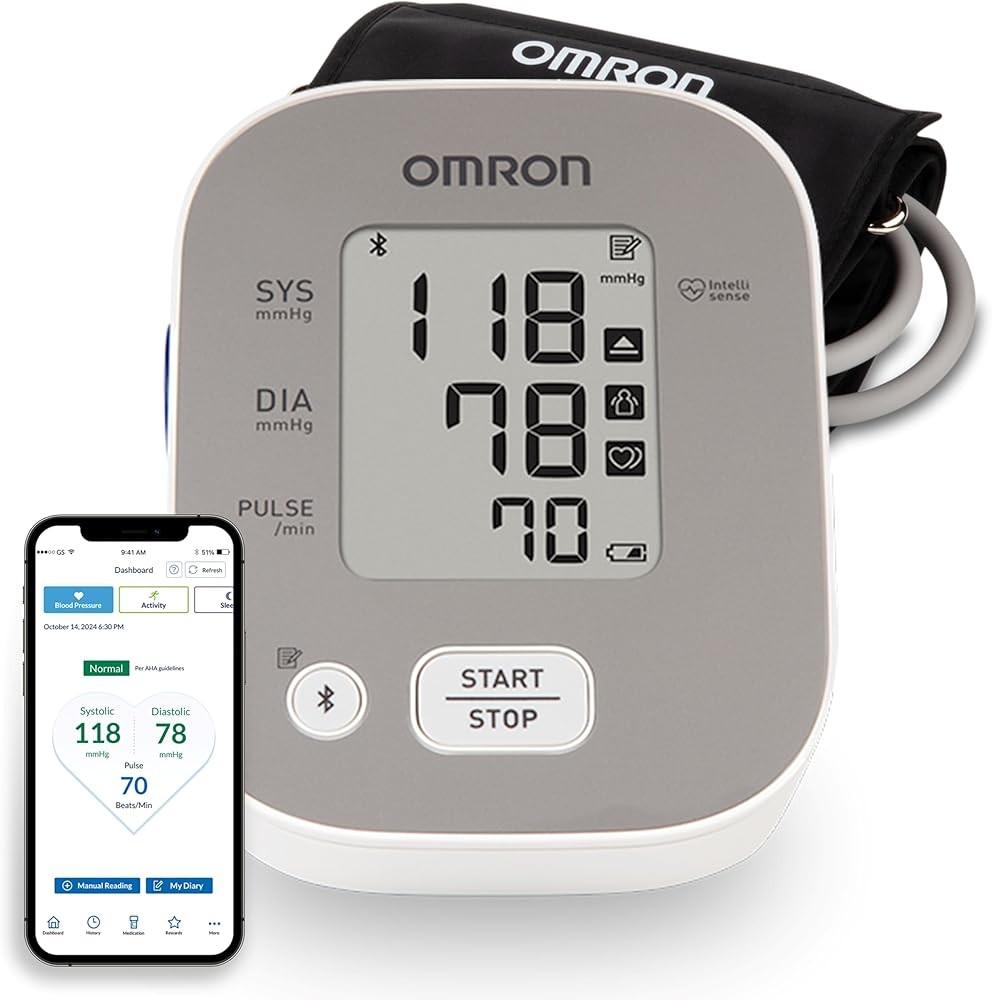
The OMRON Bronze BP6000 delivers fundamental blood pressure monitoring at $41, eliminating connectivity features and advanced analytics in favor of straightforward measurement functionality. The device provides basic irregular heartbeat detection through a warning symbol that appears when pulse irregularities are identified during measurement.
This simplified AFib screening lacks the clinical validation and sensitivity of the dedicated algorithms in the Platinum or Withings models, functioning as a general alert system rather than specific atrial fibrillation detection. Users receiving irregular heartbeat warnings should pursue formal medical evaluation regardless of which device type generates the alert.
The 60-reading memory stores measurements locally without app connectivity, requiring manual transcription for healthcare provider sharing. This approach eliminates technology barriers for users uncomfortable with smartphone apps but increases burden for those seeking digital health records or telehealth participation.
The wide-range cuff (9-17") matches the Platinum model’s capacity, accommodating larger arm sizes at budget pricing. One-touch operation simplifies the measurement process to single-button initiation, with results displaying on the basic LCD screen within 30-45 seconds.
OMRON Bronze BP6000 Blood Pressure Monitor
Check Price on AmazonAs an Amazon Associate we earn from qualifying purchases.
When Budget Constraints Override Features
The Bronze BP6000 serves users prioritizing affordability over connectivity features, particularly those without smartphones or reliable WiFi access. Rural populations, elderly users uncomfortable with technology, or those on fixed incomes benefit from the basic functionality at accessible pricing.
The manual data recording requirement creates additional work but remains manageable for users comfortable with paper logs or spreadsheet entry. Healthcare providers familiar with reviewing handwritten blood pressure diaries can incorporate this information into treatment decisions as effectively as app-generated reports, though the process lacks the efficiency of automatic data transmission.
For initial hypertension diagnosis or short-term monitoring following medication adjustments, the 60-reading memory provides sufficient capacity to establish patterns over 1-2 weeks of twice-daily measurements. Long-term tracking over months or years requires manual offloading of data before memory capacity is reached, introducing risk of data loss if not performed consistently.
Does the OMRON Silver BP5250 Offer the Best of Both Worlds?

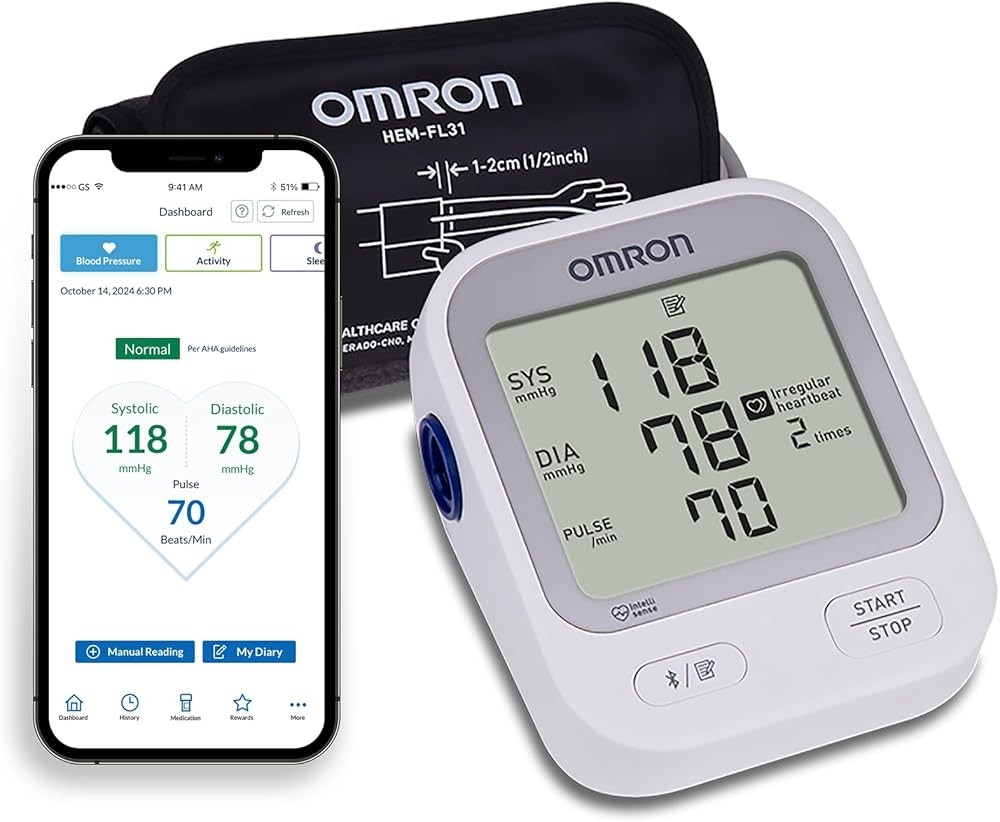
The OMRON Silver BP5250 occupies the mid-tier position at $63, offering Bluetooth app connectivity and dual-user memory (120 readings per user) without the advanced TruRead averaging or validated AFib detection of the Platinum model. This configuration suits users seeking digital tracking at moderate pricing.
The device includes basic irregular heartbeat detection comparable to the Bronze model rather than the validated AFib algorithms in premium monitors. This represents a significant limitation for users specifically seeking rhythm screening capability, as the detection sensitivity and specificity remain unvalidated against ECG standards.
Bluetooth connectivity to the OMRON Connect app enables digital record-keeping and graphical trend analysis similar to the Platinum model, providing smartphone integration for users who want app features without premium pricing. The manual sync requirement applies equally to all OMRON Bluetooth devices regardless of price tier.
Memory capacity of 120 readings per user (240 total) exceeds the Platinum’s 100 per user, providing extended local storage before data must be synced or deleted. This additional capacity benefits users who measure frequently or who sync infrequently due to smartphone availability constraints.
OMRON Silver BP5250 Blood Pressure Monitor
Check Price on AmazonAs an Amazon Associate we earn from qualifying purchases.
Positioning Between Budget and Premium
The Silver BP5250 appeals to users who want app connectivity without premium pricing but don’t require the advanced features of the Platinum model. The $34 savings versus the Platinum eliminates the TruRead averaging and validated AFib detection, which may represent acceptable trade-offs for users primarily interested in basic digital tracking.
Comparing against the Withings BPM Connect reveals that the $116 price gap buys automatic WiFi sync, rechargeable battery, and FDA-cleared AFib detection. Users must evaluate whether these premium features justify the additional investment based on individual technology comfort levels and clinical monitoring requirements.
The dual-user memory configuration matches the Platinum while costing less, making this model attractive for couples sharing a monitor who don’t need advanced measurement protocols. The extended 120-reading capacity per user provides buffer for inconsistent sync habits without data loss.
How Do Healthcare Systems Implement Telemonitoring Programs?
Research examining self-measured blood pressure telemonitoring programs emphasizes that technology alone does not guarantee improved outcomes—clinical workflow integration proves equally critical (PMID 37140147). A pragmatic implementation guide published in the American Journal of Hypertension recommends defining clear program goals, selecting appropriate patient populations, and establishing protocolized medication adjustment algorithms before deploying connected devices.
Studies from Thailand’s nationwide telemonitoring pilot involving 1,177 hypertensive patients across 46 hospitals (81.5% primary care centers) revealed that 57% achieved target blood pressure control after one year of home monitoring with connected devices (PMID 33953972). However, therapeutic inertia among healthcare providers limited effectiveness, with 24% of patients with uncontrolled hypertension receiving no medication adjustments despite elevated readings transmitted to clinics.
This finding underscores that connected monitoring devices function as data collection tools rather than complete interventions—clinical response to transmitted data determines actual outcomes. Healthcare systems implementing telemonitoring programs must establish clear protocols for reviewing data, contacting patients with elevated readings, and adjusting treatment regimens based on home measurement trends rather than isolated office values.
The Latin American Society of Hypertension’s position paper on home blood pressure monitoring identifies telemonitoring as particularly valuable in regions with limited healthcare access, where connected devices enable remote supervision reducing travel burden for patients in rural areas (PMID 32049425). However, implementation requires addressing infrastructure challenges including reliable internet connectivity, smartphone access, and clinician capacity to review transmitted data.
Important note: Successful telemonitoring programs require more than just connected devices—they need established clinical workflows, protocolized medication adjustments, and healthcare provider engagement to achieve the blood pressure reductions demonstrated in research trials.
What Should You Look for When Choosing a Connected Blood Pressure Monitor?
Selection criteria for connected blood pressure monitors should prioritize clinical validation, measurement accuracy, and integration with existing healthcare workflows. Devices appearing in the American Medical Association’s Stride BP validated device listing meet rigorous accuracy standards, though validation alone does not ensure proper use—user technique and consistent measurement protocols remain essential.
WiFi connectivity versus Bluetooth-only designs represents a key decision point balancing convenience against cost. The automatic synchronization of WiFi devices eliminates the friction of manual pairing, potentially improving long-term adherence in telemonitoring programs. Research on mobile health technology user experiences emphasizes that reduced burden for data transmission correlates with sustained engagement over time.
AFib detection capability adds clinical value for cardiovascular screening, particularly in populations over age 65 where atrial fibrillation prevalence exceeds 9%. However, users should understand that positive AFib alerts require medical confirmation through ECG rather than representing diagnostic results. The screening function identifies candidates for further evaluation rather than replacing formal rhythm assessment.
Budget considerations must weigh upfront device costs against ongoing expenses like battery replacement and potential subscription fees for premium app features. The Withings BPM Connect’s rechargeable battery eliminates disposable cell costs over its lifespan, while OMRON devices require AA battery replacement every 6-12 months depending on usage frequency. These recurring costs narrow the effective price gap between initial purchase options.
What the evidence shows: Clinical validation matters more than brand names or price points—both the Withings BPM Connect and OMRON Platinum meet AAMI/ESH accuracy standards, making device selection primarily about connectivity preferences and budget rather than measurement quality differences.
Do Connected Monitors Integrate with Healthcare Provider Systems?
The effectiveness of connected blood pressure monitoring depends substantially on healthcare system integration rather than device capabilities alone. Research examining equity in self-measured blood pressure programs notes that providing devices to underserved populations without corresponding clinical support infrastructure fails to reduce disparities in hypertension outcomes (PMID 36001268).
Some health systems have established formal telemonitoring programs accepting data from specific device manufacturers through secure portals. Patients enrolled in these programs may receive devices from their healthcare providers or face restrictions on compatible personal devices. Confirming whether your healthcare system supports specific manufacturers before purchasing stops compatibility issues that would limit clinical data sharing.
The Health Mate app’s physician sharing functionality allows users to generate reports for clinical visits, though this creates manual workflow requiring patients to export data and provide files to healthcare teams. Direct EHR integration remains limited to health systems with established Withings partnerships, restricting automated data flow for most users.
OMRON Connect similarly supports PDF report generation for clinical sharing, though automatic integration requires healthcare systems supporting the OMRON API for data ingestion. The lack of universal standards for home blood pressure data exchange creates fragmentation where device selection may be constrained by healthcare system compatibility rather than individual preference.
What Measurement Techniques Ensure Accurate Readings?
Proper measurement technique proves more influential for accuracy than device quality, with positioning errors potentially introducing 10+ mmHg variation in readings. Our guide to taking blood pressure at home walks through the full protocol step by step. The American Heart Association’s self-measured blood pressure monitoring guidelines recommend a standardized protocol: 5-minute seated rest before measurement, feet flat on floor, back supported, arm at heart level with palm up, bladder empty, no talking during measurement (PMID 30827125).
Cuff positioning requires placement on bare skin or thin-sleeved clothing, with the cuff center aligned over the brachial artery (marked on most cuffs). Tight clothing rolled up to expose the arm may create constriction that elevates readings, requiring sleeve removal for accurate measurement. The bottom edge of the cuff should sit approximately one inch above the elbow crease.
Time-of-day consistency improves tracking reliability, as blood pressure demonstrates circadian variation with typical increases during morning hours and decreases during sleep. Measuring at the same times daily (commonly recommended as morning before medications and evening before dinner) reduces variability from temporal patterns, providing more comparable readings for trend analysis.
Multiple measurements at each session improve accuracy through averaging, with clinical protocols typically recommending 2-3 readings spaced 1-2 minutes apart. The TruRead feature on OMRON Platinum models automates this protocol, while users of other devices should manually perform multiple measurements and calculate averages. Discarding the first reading and averaging subsequent measurements often provides values closest to ambulatory monitoring standards.
How Do Home Measurements Compare to Office Blood Pressure?
Home blood pressure measurements typically run 5-10 mmHg lower than office readings due to elimination of white-coat effect—the stress-induced elevation occurring in clinical settings. Diagnostic thresholds account for this difference, with home blood pressure hypertension defined as average readings ≥135/85 mmHg compared to office hypertension at ≥140/90 mmHg.
Meta-analyses comparing home blood pressure-based treatment to office blood pressure management demonstrate that basing medication decisions on home readings produces superior outcomes. Analysis of nine studies employing lower home blood pressure targets than office targets showed 3.62 mmHg greater systolic reductions and 2.16 mmHg greater diastolic reductions compared to office-based treatment (P<0.0001), with no heterogeneity across studies (I²=0%).
This evidence supports using home measurements as primary data for treatment decisions rather than supplementary information to office readings. Healthcare providers increasingly recognize that home measurements provide more representative assessment of true blood pressure burden, as they capture readings across diverse circumstances rather than isolated clinical encounters.
However, initial hypertension diagnosis should still involve office measurement for confirmation, as diagnostic criteria and treatment guidelines remain based primarily on office measurement thresholds. The American Heart Association recommends confirming elevated office readings with either home blood pressure monitoring or 24-hour ambulatory monitoring before initiating treatment in patients without compelling indications for immediate therapy.
The takeaway: Home blood pressure readings run 5-10 mmHg lower than office measurements and provide more representative data for treatment decisions, making connected monitors essential tools for accurate long-term hypertension management rather than just supplementary information.
What Affects Long-Term Adherence to Home Blood Pressure Monitoring?
Sustained engagement with home blood pressure monitoring presents challenges beyond initial adoption, with research documenting declining measurement frequency over extended follow-up periods. A Thai telemonitoring pilot found that while 51.8% of patients had controlled blood pressure at enrollment, only 57% maintained control after one year despite continued device access and clinical support (PMID 33953972).
User experience research examining mobile health technology reveals that initial enthusiasm often wanes as the novelty of connected devices decreases. Patients reported that digital platforms met expectations when they provided actionable feedback or facilitated clinical communication, but engagement declined when measurements became routine data collection without clear clinical response.
Strategies for maintaining long-term adherence include establishing consistent measurement schedules, setting reminder alerts through smartphone apps, and scheduling regular review sessions with healthcare providers to discuss trends. The automatic WiFi synchronization of devices like the Withings BPM Connect may support sustained use by reducing manual steps that create friction in daily routines.
Gamification features in some health apps attempt to increase engagement through achievement badges or streak tracking, though evidence for effectiveness in chronic disease management remains mixed. More impactful appears to be clear communication from healthcare providers about how home measurements influence treatment decisions, creating concrete feedback loops between patient effort and clinical outcomes.
What Technical Support and Warranty Coverage Do These Devices Provide?
Post-purchase support quality influences long-term satisfaction, particularly for connected devices requiring network configuration, app troubleshooting, and potential hardware service. Understanding manufacturer support policies, warranty coverage, and community resources helps set realistic expectations for assistance availability.
Withings Customer Support Infrastructure
Withings provides customer support through multiple channels including email ticketing, live chat during business hours, phone support for urgent issues, and comprehensive online knowledge bases with setup guides and troubleshooting articles. User reviews of support quality vary, with some praising responsive assistance while others report extended wait times for email responses.
The standard warranty covers manufacturing defects for one year from purchase date, protecting against component failures, battery issues, or accuracy problems arising from factory defects. The warranty excludes damage from misuse, water exposure (the device is not waterproof despite common assumptions), or normal wear and tear on cuff materials.
Extended warranty options through third-party retailers sometimes add 1-2 additional years of coverage for 15-20% premium over base device cost. Whether this represents worthwhile investment depends on individual risk tolerance and device usage intensity—users measuring 3+ times daily may benefit from extended protection more than standard twice-daily monitors.
The Withings community forums provide peer-to-peer support where experienced users share configuration tips, troubleshooting solutions, and workarounds for common issues. These community resources often provide faster problem resolution than formal support channels for non-critical issues, though they lack official manufacturer backing for advice quality.
OMRON Support and Warranty Policies
OMRON offers similar support channel options including phone support, email ticketing, and online knowledge base resources. The company’s longer history in blood pressure monitoring (compared to Withings’ broader health device focus) creates more extensive documentation and troubleshooting guidance specifically for blood pressure measurement issues.
The standard warranty provides five years of coverage for blood pressure monitors, significantly exceeding Withings’ one-year protection. This extended warranty reflects OMRON’s confidence in device durability and provides substantial protection against premature failures across the expected device lifespan.
However, the five-year warranty excludes cuffs and other consumable components, covering only the main measurement unit and internal electronics. Users experiencing cuff wear must purchase replacements separately, with official OMRON cuffs costing $15-25 depending on size requirements.
OMRON’s established market presence creates broader availability of compatible accessories, replacement parts, and third-party support resources compared to the smaller Withings ecosystem. Users in areas without direct OMRON service centers can often obtain support through medical equipment suppliers or pharmacies carrying OMRON product lines.
Troubleshooting Common Issues
WiFi connectivity problems represent the most frequent technical issue with the Withings BPM Connect, typically stemming from router compatibility, network security settings, or smartphone app version mismatches. Most connectivity issues resolve through router restarts, app updates, or switching between 2.4 GHz and 5 GHz WiFi bands.
Measurement error codes on both Withings and OMRON devices usually indicate positioning problems, movement during measurement, or cuff size mismatches rather than device malfunctions. Reviewing proper measurement technique and confirming appropriate cuff fit resolves 80-90% of error code occurrences without requiring technical support contact.
Battery charging issues with the Withings device sometimes arise from accumulated debris in the micro-USB port or cable damage rather than battery failure. Cleaning the charging port with compressed air and testing alternate cables eliminates these issues more quickly than initiating warranty service for non-existent battery problems.
Inconsistent Bluetooth syncing with OMRON devices frequently traces to smartphone battery optimization settings that stop background app operation. Disabling battery optimization for the OMRON Connect app in smartphone settings allows reliable background data synchronization without requiring manual app opening before each sync attempt.
What Are the Limitations of Connected Blood Pressure Monitors?
Connected blood pressure monitors cannot replace comprehensive cardiovascular evaluation, as they measure only blood pressure and basic pulse characteristics. Patients with complex arrhythmias beyond simple atrial fibrillation, those with severe peripheral vascular disease, or individuals requiring specialized monitoring may need additional diagnostic testing beyond home device capabilities.
The AFib detection features in consumer blood pressure monitors serve as screening tools rather than diagnostic instruments. Sensitivity and specificity values in the high-80s to mid-90s range mean that both false positives and false negatives occur with meaningful frequency. Patients should pursue formal ECG evaluation for any irregular rhythm alerts rather than assuming definitive diagnosis from home device results.
What this means for you: While AFib detection in blood pressure monitors achieves 88-97% sensitivity and 95% specificity for screening irregular heartbeats, these devices cannot diagnose atrial fibrillation—any alerts require medical confirmation through ECG testing regardless of monitor brand or price.
Arm circumference limitations represent a practical barrier for some users, as standard cuffs typically accommodate 9-17" arms while smaller and larger sizes require specialty equipment. Our blood pressure cuff size guide explains how to measure your arm and select the right fit. Using incorrectly sized cuffs introduces systematic measurement error, with small cuffs on large arms producing falsely elevated readings and large cuffs on small arms showing falsely low values.
Certain conditions reduce measurement reliability, including severe arrhythmias that prevent consistent pulse detection, tremor or movement disorders that disrupt cuff positioning, and peripheral vascular disease that dampens arterial pulsations. Patients with these conditions should discuss alternative monitoring strategies with healthcare providers rather than relying solely on oscillometric home devices.
How Secure Is Your Blood Pressure Data with Connected Monitors?
Connected health devices transmit personal health information through WiFi networks and smartphone apps, creating potential exposure points for data breaches or unauthorized access. The Health Insurance Portability and Accountability Act (HIPAA) applies to healthcare providers and their business associates but generally does not regulate consumer health apps or device manufacturers directly, unless they function as business associates of covered entities.
Users should review privacy policies for both device manufacturers and associated smartphone applications to understand data collection, storage, and sharing practices. Some platforms may aggregate anonymized data for research purposes or share information with third-party partners for advertising or product development, practices that may concern privacy-conscious users.
Enabling two-factor authentication on health app accounts and using strong unique passwords reduces unauthorized access risk. WiFi network security proves equally important, as poorly secured home networks create vulnerabilities for data interception during transmission from devices to cloud servers.
The permanent cloud storage of complete blood pressure history through unlimited retention policies offers clinical value but creates perpetual data repositories that could face future security incidents. Users should consider whether long-term centralized storage aligns with their privacy preferences versus local-only storage with manual export for clinical sharing.
Will Insurance Cover a Connected Blood Pressure Monitor?
Direct costs for connected blood pressure monitors range from $41 for basic models to $179 for premium WiFi-enabled devices, with the price difference primarily reflecting connectivity features rather than measurement accuracy. Both budget OMRON devices and premium Withings models meet the same AAMI/ESH validation standards, indicating comparable measurement performance across price points.
Ongoing costs include battery replacement for non-rechargeable models ($3-5 per battery change every 6-12 months) and potential subscription fees for premium app features. The Withings Health Mate app currently provides full functionality without subscription charges, while some competitor platforms have adopted tiered pricing models with basic free access and premium paid features.
Insurance coverage for blood pressure monitors varies by plan and medical necessity documentation. Medicare Part B covers blood pressure monitors when deemed medically necessary and prescribed by a physician, typically for patients with recent hypertension diagnosis or those adjusting medications. Private insurance coverage policies differ widely, with some plans requiring specific medical indications and others excluding coverage entirely.
Health Savings Account (HSA) and Flexible Spending Account (FSA) funds can be used for blood pressure monitor purchases when prescribed by healthcare providers or when purchased for medical purposes. Obtaining a letter of medical necessity from your physician before purchase may be required for FSA/HSA reimbursement depending on plan administrator policies.
Are Cuff-Less Blood Pressure Monitors Worth Considering?
Cuff-less blood pressure monitoring represents an emerging technology category using optical sensors, bioimpedance, or pulse wave analysis to estimate blood pressure without inflatable cuffs. While these approaches offer convenience advantages, current validation standards remain less rigorous than established oscillometric methods, with many cuff-less devices showing errors exceeding acceptable clinical thresholds.
The FDA has approved select cuff-less devices for trending purposes rather than absolute blood pressure determination, indicating they may detect changes in blood pressure over time without providing accurate absolute values. This distinction limits clinical utility for diagnosis or treatment decisions requiring specific threshold values.
Continuous blood pressure monitoring through wearable devices remains primarily in research settings, with challenges including sensor stability, calibration drift, and energy consumption for sustained operation. While smartwatch manufacturers have added blood pressure estimation features, these typically require periodic cuff-based calibration and show limited accuracy compared to validated devices.
Integration of blood pressure monitoring with broader digital health platforms continues expanding, with some systems combining measurements from multiple devices (blood pressure monitors, glucose meters, weight scales) into unified health dashboards. These comprehensive platforms may provide value for patients managing multiple chronic conditions, though they increase complexity and potential technology barriers compared to single-purpose devices.
Which Blood Pressure Monitor Works Best for Different User Types?
Understanding your specific needs, technical comfort level, and budget constraints helps narrow the selection between the Withings BPM Connect and OMRON alternatives. Different user profiles benefit from different device characteristics, making the “best” monitor dependent on individual circumstances rather than universal superiority.
Tech-Savvy Users Seeking Maximum Automation
Users comfortable with smartphone apps, WiFi networks, and digital health ecosystems benefit most from the Withings BPM Connect’s automatic synchronization features. The elimination of manual Bluetooth pairing and one-button data transmission creates the lowest-friction experience for consistent long-term monitoring. These users typically own multiple connected health devices and appreciate consolidated data within single app platforms.
The rechargeable battery appeals to users who prefer eliminating disposable battery management, though it requires remembering to charge the device periodically. The compact integrated design suits frequent travelers who want portable monitoring without multiple components to pack and manage during trips.
Budget-Conscious Users Without Smartphone Requirements
Users prioritizing affordability and simplicity over digital features achieve reliable blood pressure monitoring through the OMRON Bronze BP6000. This demographic often includes elderly individuals uncomfortable with technology, those without smartphones or reliable internet access, and users who prefer paper-based record keeping for healthcare provider sharing.
The basic irregular heartbeat indicator provides preliminary rhythm screening comparable to more expensive devices, though without the validated AFib-specific algorithms. The 60-reading memory capacity supports several weeks of twice-daily monitoring before requiring manual transcription to paper logs or spreadsheets for long-term record retention.
Couples Sharing a Single Monitor
Households with two users requiring blood pressure monitoring benefit from devices with multi-user memory profiles, specifically the OMRON Platinum or Silver models. The dual-profile systems maintain separate tracking for each user without requiring manual annotation or account switching between measurements.
The Platinum’s 200-reading total capacity (100 per user) or Silver’s 240-reading capacity (120 per user) provides sufficient storage for both users to measure twice daily for 1-2 months before syncing becomes necessary. This shared functionality creates significant value compared to purchasing separate single-user devices, offsetting the higher upfront cost of dual-profile models.
Users Enrolled in Formal Telemonitoring Programs
Patients participating in healthcare system-sponsored telemonitoring programs should confirm device compatibility before purchasing personal monitors. Some programs provide specific devices as part of enrollment, while others accept data from approved manufacturers through established integration channels.
Healthcare systems with Withings partnerships may offer direct data transmission from the Health Mate app to electronic health records, enabling clinicians to review readings without requiring patient-generated reports. Similarly, some systems support OMRON Connect API integration for automated data ingestion. Purchasing incompatible devices creates barriers to program participation and may necessitate duplicate purchases of approved equipment.
Users Seeking AFib Screening Capability
Patients at elevated risk for atrial fibrillation due to age (>65 years), prior stroke history, heart failure, or other cardiovascular risk factors should prioritize devices with validated AFib detection algorithms. Both the Withings BPM Connect and OMRON Platinum BP5450 provide FDA-cleared or clinically validated irregular rhythm screening, while budget models offer only basic heartbeat irregularity alerts.
The difference matters for screening accuracy—validated algorithms achieve high sensitivity and specificity against ECG standards, while unvalidated indicators provide uncertain detection rates. Users receiving AFib alerts from any device should pursue formal medical evaluation regardless of device type, but validated detectors reduce false-positive alerts that create unnecessary anxiety or healthcare utilization.
Large or Small Arm Users Requiring Specialty Sizing
Standard blood pressure monitor cuffs typically accommodate arm circumferences from 9-17 inches, covering most adult users. However, individuals requiring petite cuffs (<9" arms) or extra-large cuffs (>17" arms) face limited options among connected devices.
The Withings BPM Connect’s 8.7-16.5" range includes smaller arm sizes than many competitors, benefiting petite users or those monitoring adolescents. Conversely, users with arm circumferences exceeding 16.5" require specialty large cuffs available from select OMRON models or dedicated large-cuff devices.
Using incorrectly sized cuffs introduces systematic measurement error—small cuffs on large arms produce falsely elevated readings (potentially 5-15 mmHg high), while large cuffs on small arms show artificially low values. Proper cuff fit proves more important for accuracy than device validation status, making cuff sizing a primary selection criterion for users at sizing extremes.
How Does the Withings Health Mate App Compare to OMRON Connect?
App ecosystem differences between Withings Health Mate and OMRON Connect influence long-term user experience and data utility beyond basic measurement recording. Both platforms provide graphical trend visualization, customizable time range analysis, and PDF report generation for healthcare provider sharing, but they differ in integration breadth and feature depth.
Withings Health Mate Ecosystem Integration
The Health Mate app functions as a comprehensive health dashboard supporting multiple Withings devices including smart scales, sleep trackers, activity monitors, and thermometers. Users owning multiple Withings products benefit from consolidated data visualization showing correlations between weight, activity, sleep quality, and blood pressure patterns.
Third-party integrations extend Health Mate’s utility through connections with Apple Health, Google Fit, MyFitnessPal, and select healthcare provider portals. These integrations allow blood pressure data to flow into broader health tracking systems without manual export and import procedures, creating unified health records spanning multiple platforms and device manufacturers.
The medication tracking feature within Health Mate allows users to record prescription regimens and correlate blood pressure readings with medication timing, though this requires manual data entry rather than automatic pharmacy integration. Educational content embedded within the app provides interpretation guidance for blood pressure categories and lifestyle modification recommendations aligned with current hypertension guidelines.
OMRON Connect Platform Capabilities
OMRON Connect supports the company’s diverse product line including blood pressure monitors, activity trackers, and body composition scales. The platform provides similar core functionality to Health Mate including trend graphing, averages calculation, and report generation, though with less extensive third-party integration compared to Withings.
The app’s morning and evening measurement averaging aligns with clinical protocol recommendations emphasizing twice-daily monitoring at consistent times. This built-in averaging functionality simplifies adherence to best practices without requiring manual calculation or separate spreadsheet analysis.
Integration with Apple Health and Google Fit enables data sharing across platforms, though some users report less reliable synchronization compared to Withings implementations. The OMRON ecosystem includes fewer non-blood pressure devices than Withings, limiting the comprehensive health dashboard capabilities available through Health Mate for users owning multiple device types.
Data Portability and Export Options
Both platforms support CSV file export for spreadsheet analysis, enabling users to perform custom calculations or create personalized visualizations beyond app-provided features. This export functionality proves valuable for patients working with healthcare providers who prefer specific data formats or who use electronic health record systems without direct device manufacturer integration.
The permanent cloud storage policies of both Withings and OMRON preserve complete measurement history without local storage limitations, creating perpetual records accessible across device upgrades or smartphone changes. However, this centralized storage creates dependency on continued platform support—if either company discontinues cloud services, historical data access may be lost unless previously exported to local files.
Users concerned about platform dependency should establish regular export routines, downloading complete measurement histories monthly or quarterly to maintain offline backups independent of manufacturer cloud infrastructure. This practice protects against service discontinuation, company acquisition, platform migrations, or other events that could disrupt cloud data access.
What Do Real Users Say About the Withings BPM Connect?
Consumer reviews across retail platforms and health technology forums provide insights into real-world performance, usability challenges, and long-term satisfaction beyond manufacturer specifications and clinical validation data. Analyzing patterns across hundreds of user reviews reveals consistent themes regarding strengths and frustrations.
Positive User Experiences
Users consistently praise the automatic WiFi synchronization as the device’s most valuable feature, noting that elimination of manual sync steps improves adherence to regular monitoring compared to previous Bluetooth-only devices. Many reviews emphasize that the “set it and forget it” data transmission removes friction that previously caused inconsistent measurement habits.
The compact integrated design receives frequent positive mentions, particularly from travelers who appreciate single-component packing without separate cuffs, tubing, or display units. Users report that the cylindrical form factor fits easily into carry-on luggage, purses, or laptop bags without the bulk of traditional monitors.
Healthcare provider acceptance of Health Mate app reports generates positive feedback from users enrolled in telehealth programs or those sharing data with physicians during virtual consultations. Several reviews note that physicians specifically requested Withings devices for remote monitoring programs, validating the clinical acceptance of the platform.
Common Complaints and Frustrations
WiFi configuration difficulties appear frequently in negative reviews, with users reporting challenges connecting the device to home networks, particularly those with unusual router configurations, guest network requirements, or enterprise security protocols. Some reviews indicate that initial setup requires multiple attempts or customer service contact to establish reliable connectivity.
The proprietary ecosystem limitation frustrates users who want to export data to platforms beyond the Withings-supported integrations. While Health Mate connects to major fitness apps, users seeking compatibility with niche health platforms or specific telehealth systems sometimes find insufficient integration options compared to more open data architectures.
Battery life variability generates mixed reviews, with some users reporting 6+ months between charges as advertised, while others describe 2-3 month battery duration with identical usage patterns. This inconsistency suggests potential unit-to-unit variation or unidentified factors affecting power consumption beyond measurement frequency alone.
The micro-USB charging standard receives criticism from users who have otherwise migrated to USB-C cables for all devices. Managing a separate micro-USB cable specifically for the blood pressure monitor creates minor inconvenience and increases risk of being unable to charge the device when traveling without the proprietary cable.
Long-Term Reliability Reports
Reviews from users with 1-2+ years of device ownership provide valuable perspectives on durability and sustained performance. Most long-term users report continued accurate operation without calibration drift or mechanical failures, supporting the device’s quality construction and manufacturing standards.
A minority of reviews describe cuff material degradation after extended use, with fabric showing wear or velcro losing grip strength after hundreds of measurement cycles. These durability concerns appear more frequently among users measuring 3+ times daily compared to standard twice-daily protocols, suggesting that measurement frequency influences component lifespan.
Cloud platform reliability receives generally positive long-term feedback, with users reporting consistent data access without service outages, data loss events, or platform migrations requiring account reconstruction. This operational stability proves essential for maintaining trust in cloud-based health data storage over multi-year timeframes.
How Do Measurement Costs Compare Over Time?
Total cost of ownership extends beyond initial purchase price to include ongoing expenses for batteries, potential subscription fees, replacement cuffs, and device lifespan considerations. Analyzing costs over typical device lifespans of 3-5 years reveals different economic profiles for rechargeable versus battery-powered models.
Withings BPM Connect Total Cost Analysis
The $179 initial cost represents the only required expense for the Withings BPM Connect under normal operating conditions. The rechargeable battery eliminates ongoing battery purchases, while the Health Mate app provides full functionality without subscription charges as of current policy (though this could change with future pricing model adjustments).
Over a five-year lifespan, the total cost remains $179 assuming no hardware failures requiring replacement. This calculates to $35.80 annually or approximately $0.10 per day for users measuring twice daily (3,650 total measurements over five years). The per-measurement cost decreases further for users monitoring more frequently or sharing the device among household members.
The micro-USB charging cable represents the only potential ongoing expense if the original cable is lost or damaged, though replacement cables cost $5-10 from third-party suppliers. Users should maintain the original cable carefully or purchase backup cables to stop charging disruptions.
OMRON Platinum Total Cost Analysis
The $97 initial cost for the OMRON Platinum requires supplementation with ongoing AA battery purchases. Typical battery life ranges from 6-12 months depending on measurement frequency and battery quality, averaging approximately one battery change every 9 months for twice-daily users.
Quality AA batteries cost approximately $4-6 per four-pack from major retailers, providing power for 2-3 battery changes depending on device consumption. Over five years, battery costs total approximately $25-40 assuming 6-7 battery changes at $4-6 each.
The total five-year ownership cost sums to $122-137 including initial purchase and battery replacements. This remains $42-57 less expensive than the Withings BPM Connect despite ongoing battery costs, making it the more economical option across extended ownership periods. The per-measurement cost calculates to approximately $0.07 per reading over five years with twice-daily monitoring.
OMRON Bronze Budget Analysis
The $41 initial cost combined with AA battery requirements creates the lowest total cost of ownership among the compared devices. Using the same battery replacement frequency as the Platinum (6-7 changes over five years at $4-6 each), total costs range from $66-81 over five years.
This represents savings of $98-113 compared to the Withings BPM Connect and $41-56 versus the OMRON Platinum over five-year ownership. The per-measurement cost drops to approximately $0.04 per reading with twice-daily monitoring, making it the most economical option for users prioritizing affordability over connectivity features.
However, the value calculation must account for time costs associated with manual data recording, transcription errors requiring duplicate entries, and reduced clinical utility from less comprehensive tracking. Users who value their time at minimum wage rates ($15/hour in many jurisdictions) might find that the 2-3 minutes saved per measurement through automatic sync justifies premium pricing.
Financial summary: The Withings BPM Connect costs more upfront but eliminates ongoing battery expenses, while OMRON models require lower initial investment with modest ongoing battery costs—total five-year costs favor OMRON devices by $42-113 depending on model selection.
Which Blood Pressure Monitor Should You Actually Buy?
Choosing between the Withings BPM Connect and OMRON alternatives depends on prioritizing automatic WiFi synchronization and premium app features versus budget considerations. Our best blood pressure monitor roundup compares validated options across every price point. Users enrolled in formal telemonitoring programs or those seeking maximum convenience may find the Withings device’s automatic data transmission worth the premium pricing.
For users primarily interested in AFib detection with app connectivity at moderate cost, the OMRON Platinum BP5450 delivers validated irregular rhythm screening and triple-averaging functionality at nearly half the price of the Withings model. The manual Bluetooth sync requirement represents a minor inconvenience for users who keep smartphones nearby during measurement sessions.
Budget-conscious users or those uncomfortable with smartphone technology can achieve reliable blood pressure monitoring through the OMRON Bronze BP6000 at minimal cost. While lacking connectivity features and validated AFib detection, the device meets the same accuracy standards for blood pressure measurement as premium models.
The mid-tier OMRON Silver BP5250 occupies an awkward position providing Bluetooth connectivity without the advanced features of the Platinum model, making it difficult to recommend over either the more affordable Bronze or more capable Platinum alternatives. Users specifically requiring extended memory capacity (120 readings per user) may find value in this configuration.
Bottom Line Recommendations
The Withings BPM Connect justifies its premium pricing for users who value automatic WiFi synchronization, rechargeable operation, and seamless Health Mate app integration. Healthcare professionals participating in formal telemonitoring programs benefit most from the automated data transmission that reduces patient burden and improves long-term adherence. The FDA-cleared AFib detection adds screening value for cardiovascular risk assessment beyond blood pressure measurement alone.
For cost-conscious users seeking validated AFib detection and advanced measurement protocols, the OMRON Platinum BP5450 delivers comparable clinical functionality at $97. The TruRead triple-averaging feature provides measurement precision approaching ambulatory monitoring standards, while dual-user memory supports household sharing. Manual Bluetooth sync requirements represent manageable trade-offs for the significant cost savings.
Budget-conscious users prioritizing basic blood pressure monitoring over connectivity can reliably track hypertension with the OMRON Bronze BP6000 at $41. The device provides irregular heartbeat alerts and meets the same measurement accuracy standards as premium models, though users must manually record data for healthcare provider sharing and cannot participate in automated telemonitoring programs.
Regardless of device selection, measurement technique and consistent monitoring protocols prove more influential for effective hypertension management than specific device features. Users should prioritize proper cuff sizing, standardized measurement positioning, and regular twice-daily readings over premium connectivity features when budget constraints require trade-offs between device capabilities and affordability.
Related Reading
- Best Blood Pressure Monitors: Top Validated Devices for Home Use
- Best OMRON Blood Pressure Monitors: Complete Model Comparison
- Arm vs Wrist Blood Pressure Monitors: Which is More Accurate?
- How to Take Blood Pressure at Home: Proper Technique Guide
- Blood Pressure Monitors with Bluetooth: Connected Device Comparison
- Blood Pressure Monitors with AFib Detection: Clinical Validation Review
- Blood Pressure Cuff Size Guide: Getting Accurate Measurements
Recommended Products