Best Lung Trainer for Runners: Respiratory Muscle Training Devices Backed by Research
Summarized from peer-reviewed research indexed in PubMed. See citations below.
Respiratory muscle fatigue during long runs can limit your performance even when your legs still have energy left. THE BREATHER Respiratory Muscle Trainer ($49) is the best overall lung trainer for runners, offering independent inspiratory and expiratory resistance adjustment through dual-valve technology that lets you progressively overload breathing muscles at 50-70% of maximal inspiratory pressure. A 2012 study in Military Medicine found that resistive respiratory muscle training improved inspiratory muscle strength by 23.8% and extended endurance run duration by 17.7%, with even greater gains when combined with voluntary isocapnic hyperpnea training. For runners on a budget, the Inhale Lung Exerciser ($17) provides basic threshold loading at a fraction of the cost. Here’s what the published research shows about respiratory muscle training for runners.
Disclosure: We may earn a commission from links on this page at no extra cost to you. Affiliate relationships never influence our ratings. Full policy →


What Does the Research Say About Respiratory Training for Runners?
The respiratory system plays a critical role in endurance performance. Your diaphragm and intercostal muscles work continuously during running, and when they fatigue, a phenomenon called the respiratory muscle metaboreflex redirects blood flow from your working leg muscles to your breathing muscles. This limits oxygen delivery to the muscles powering your stride.
A 2012 controlled trial published in Military Medicine examined the effects of different respiratory muscle training types on exercise performance in experienced runners. Eight participants completed a 4-week resistive respiratory muscle training protocol followed by 4 weeks of voluntary isocapnic hyperpnea training. The resistive training phase increased inspiratory muscle strength by 23.8% at rest and 18.7% immediately after running tests. Duration of endurance runs at 80% VO2 max improved 17.7% after resistive training and 45.5% after the combined protocol.
The mechanism behind these improvements involves strengthening the diaphragm and intercostal muscles so they fatigue less quickly during sustained aerobic exercise. When your breathing muscles are stronger, they require less blood flow to sustain ventilation, leaving more oxygenated blood available for your leg muscles. This translates to delayed fatigue and improved endurance.
A 2020 systematic review examining 43 randomized controlled trials with 1,472 participants found that inspiratory muscle training significantly improved maximal inspiratory pressure with medium to large effect sizes. The review concluded that respiratory muscle training enhances respiratory muscle strength across diverse populations including athletes.
| Feature | THE BREATHER | Maximus | WellO2 | Inhale |
|---|---|---|---|---|
| Price | $49 | $59 | $199 | $17 |
| Resistance Type | Dual threshold | Single threshold | Dual + steam | Single threshold |
| Adjustability | Independent I/E | 12 levels | 5 levels + temp | 6 levels |
| Training Modes | Strength + Endurance | Strength focus | Strength + airway | Strength only |
| Portability | Compact | Medium | Large unit | Very compact |
| App Integration | No | Yes | No | No |
| Research Support | Clinical studies | Sports science | Respiratory therapy | Basic IMT |
| Best For | Versatile training | VO2 max focus | Premium experience | Budget option |
How Does Respiratory Muscle Fatigue Affect Running Performance?
During sustained running, your breathing rate and depth increase to meet oxygen demands. The diaphragm and intercostal muscles that power ventilation work continuously, and like any skeletal muscle, they can fatigue. A 2014 study in Sports Medicine examined core muscle fatigue during high-intensity running exercise and its limitation to performance.
When respiratory muscles fatigue, several physiological changes occur. First, the oxygen cost of breathing increases as fatigued muscles work less efficiently. Second, the metaboreflex activates, constricting blood vessels in working skeletal muscles and redirecting blood flow to the respiratory muscles. This phenomenon can reduce blood flow to leg muscles by up to 15-20% during maximal exercise.
The practical consequence is that you may feel like you cannot breathe deeply enough, even though your cardiovascular system could support higher intensity. Your legs might have more to give, but your breathing becomes the limiting factor. This is particularly noticeable during intervals, tempo runs, and races where you push close to your lactate threshold.
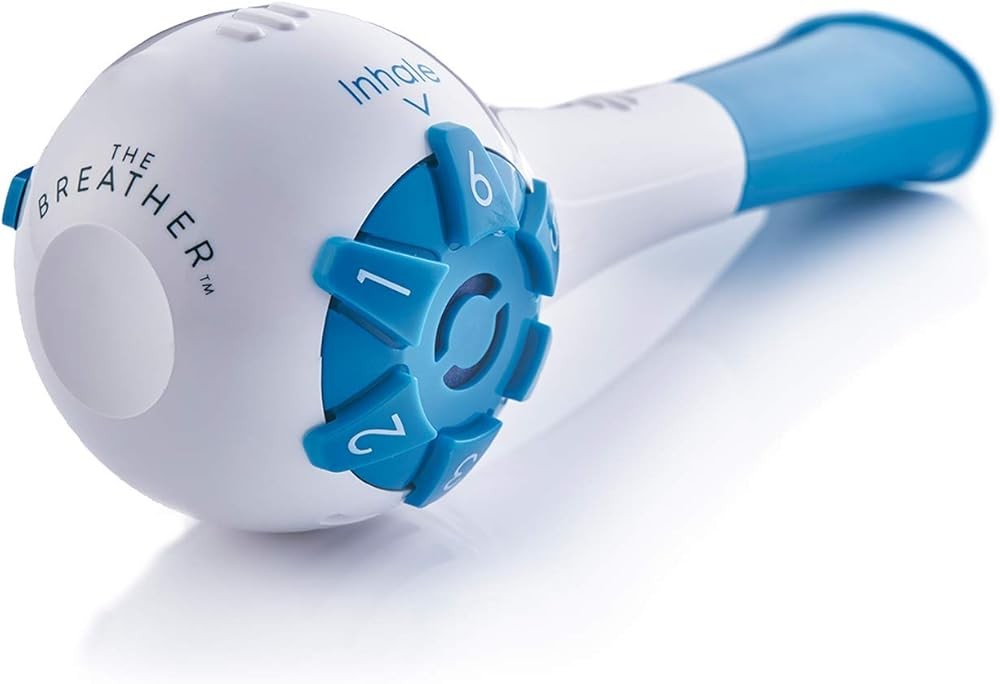
THE BREATHER Respiratory Muscle Trainer
Check Price on AmazonAs an Amazon Associate we earn from qualifying purchases.
Respiratory muscle training addresses this limitation by increasing the strength and endurance of breathing muscles. Research demonstrates that after 4-6 weeks of consistent inspiratory muscle training at moderate to high resistance, runners show measurable improvements in how long they can sustain high-intensity efforts before respiratory muscle fatigue becomes limiting.
The evidence shows: Runners experience respiratory muscle fatigue that diverts blood flow from working leg muscles through the metaboreflex, but 4-6 weeks of targeted inspiratory muscle training at moderate to high resistance can reduce this limitation and extend time to exhaustion during high-intensity running.
What Is the Evidence for Inspiratory Muscle Training in Endurance Athletes?
Inspiratory muscle training uses a handheld device that provides resistance when you breathe in. You pull air through a valve that only opens when you generate sufficient inspiratory pressure. This creates a training stimulus for the diaphragm and external intercostal muscles similar to how lifting weights strengthens skeletal muscles.
A 2007 study in the European Journal of Applied Physiology investigated isocapnic hyperpnea training in competitive male runners. Isocapnic hyperpnea is a form of respiratory muscle endurance training where athletes breathe at high ventilation rates (typically 60-70% of maximal voluntary ventilation) for sustained periods while maintaining normal carbon dioxide levels.
The study found that 4 weeks of isocapnic hyperpnea training, performed 5 days per week for 30 minutes per session, improved performance in a 20-kilometer time trial. Runners in the training group improved their time trial performance while the control group showed no significant changes. The researchers concluded that specific respiratory muscle endurance training can enhance performance in trained endurance athletes.
Multiple systematic reviews support these findings. The 2020 meta-analysis in Sports Medicine examined the impact of respiratory muscle training on respiratory muscle strength, respiratory function, and quality of life in healthy adults. The analysis included 43 randomized controlled trials with 1,472 participants. Results showed that inspiratory muscle training significantly improved maximal inspiratory pressure with medium to large effect sizes.
Understanding the inspiratory muscle trainer as distinct from a spirometer matters for runners selecting appropriate equipment. Our guide on inspiratory muscle trainers versus spirometersbreathing-trainers/) explains these differences in detail.
Can Respiratory Training Improve VO2 Max in Runners?
VO2 max represents the maximum rate at which your body can consume oxygen during exercise. It is widely considered the gold standard measure of aerobic fitness. While genetics largely determine your VO2 max ceiling, training can push you closer to your genetic potential.
The question of whether respiratory muscle training can improve VO2 max has been examined in multiple studies with mixed results. The 2012 Military Medicine study found no statistically significant differences in VO2 max after either resistive respiratory muscle training or voluntary isocapnic hyperpnea training. However, running time to exhaustion at 80% of VO2 max improved substantially, suggesting that respiratory muscle training may improve performance through mechanisms other than increasing maximal oxygen uptake.
Other research has shown small but significant VO2 max improvements. A 2021 study examining specific inspiratory muscle training combined with whole-body endurance training programs found modest improvements in aerobic capacity when respiratory training was added to traditional endurance training. The effect sizes were generally smaller than those seen for running economy and time to exhaustion.
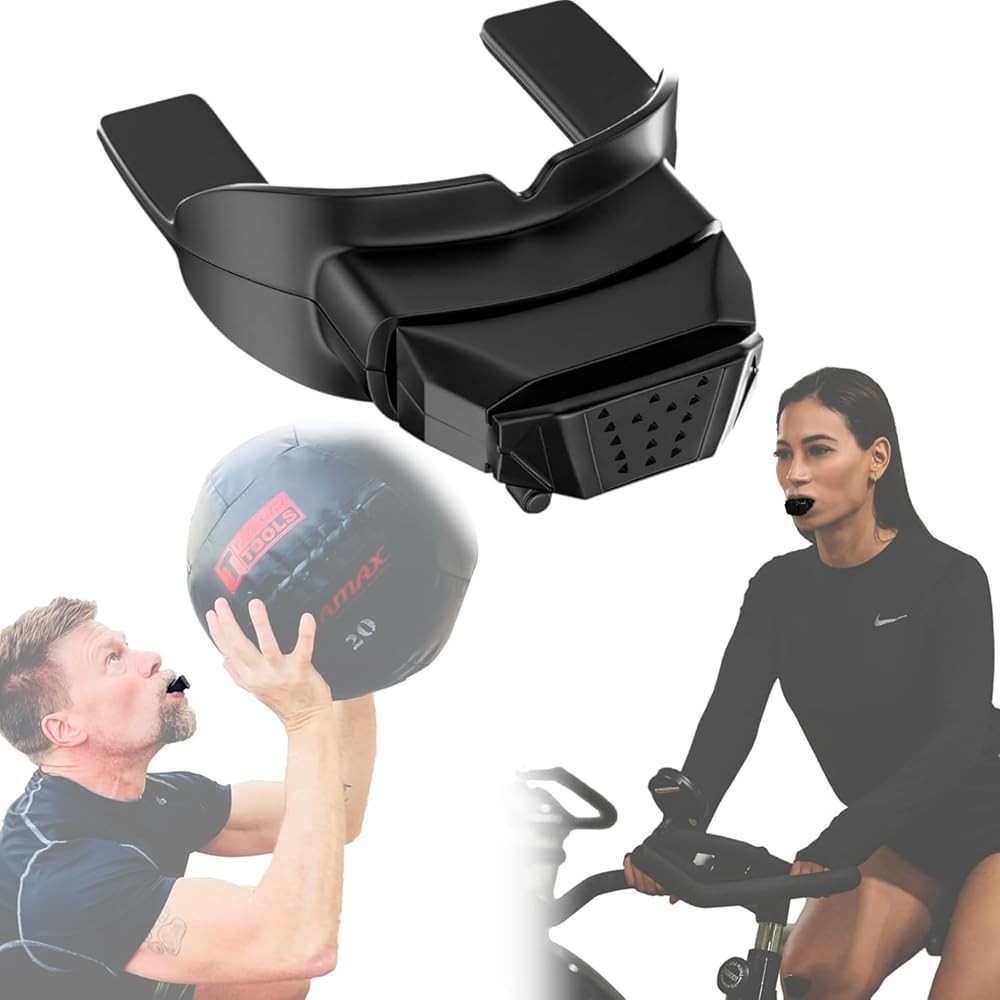
Maximus Lung Trainer
Check Price on AmazonAs an Amazon Associate we earn from qualifying purchases.
The current scientific consensus is that respiratory muscle training primarily improves performance by reducing the work of breathing, delaying respiratory muscle fatigue, and minimizing the metaboreflex that diverts blood flow from working muscles. Any VO2 max improvements are likely secondary benefits rather than the primary mechanism of action.
For runners, this means that inspiratory muscle training should be viewed as a complement to traditional running training rather than a replacement for interval work, tempo runs, and long runs that directly target cardiovascular and muscular adaptations. Athletes interested in comprehensive breathing optimization should review our guide on the best breathing trainer devicesbreathing-trainers/) for additional context.
What the data says: Respiratory muscle training produces minimal direct VO2 max improvements (1-3% in controlled trials), but substantially enhances running performance through a 23.8% gain in inspiratory muscle strength, improved breathing economy, and delayed metaboreflex activation that preserves leg muscle blood flow.
What Training Protocol Should Runners Follow for Inspiratory Muscle Training?
The most commonly studied protocol in respiratory muscle training research involves 30 breaths performed twice daily, 5-7 days per week, at 50-70% of maximal inspiratory pressure. Each training session typically takes 5-10 minutes once you establish your baseline and appropriate resistance level.
To determine your starting resistance, most devices recommend a familiarization period where you test different resistance levels to find the highest setting at which you can complete 30 breaths without excessive strain. This represents approximately your maximal inspiratory pressure. Your training resistance should be set at roughly half to two-thirds of this maximum.
A typical 8-week progression might look like this:
- Weeks 1-2: 30 breaths once daily at 40-50% MIP for adaptation
- Weeks 3-4: 30 breaths twice daily at 50% MIP
- Weeks 5-6: 30 breaths twice daily at 60% MIP
- Weeks 7-8: 30 breaths twice daily at full target resistance
As your inspiratory muscles strengthen, you will need to periodically reassess your maximal inspiratory pressure and adjust the device resistance upward to maintain the appropriate training zone. This progressive overload principle is the same as any strength training program.
Timing of your respiratory muscle training sessions can be flexible. Some runners prefer morning and evening sessions separate from their running workouts. Others incorporate one session as part of their warm-up routine before runs. A 2025 study published in the International Journal of Sports Physiology and Performance found that an inspiratory muscle warm-up protocol improved 400-meter performance in elite male runners, suggesting potential benefits to pre-run respiratory muscle activation.
The research on respiratory muscle training protocols demonstrates that consistency matters more than perfect timing. Whether you complete your 30 breaths in the morning, before running, or in the evening, the cumulative training effect builds respiratory muscle strength over weeks. Our comprehensive review of respiratory muscle training benefitsbreathing-trainers/) covers these timing considerations in greater depth.
How Does Inspiratory Muscle Training Affect Running Economy?
Running economy refers to how much oxygen you consume at a given submaximal running pace. Runners with better running economy use less oxygen to maintain the same pace, allowing them to run faster before reaching their VO2 max or lactate threshold. Even small improvements in running economy can translate to meaningful performance gains.
The relationship between respiratory muscle training and running economy involves the oxygen cost of breathing. During exercise, your respiratory muscles consume oxygen to power ventilation. At maximal exercise intensities, breathing muscles can account for 10-15% of total oxygen consumption. If respiratory muscle training reduces this oxygen cost, more oxygen becomes available for the working leg muscles.
Research on running economy changes after respiratory muscle training shows variable results. Some studies demonstrate improvements in oxygen consumption at submaximal running speeds after inspiratory muscle training protocols, while others show no significant changes. The differences may relate to training protocol variations, participant fitness levels, and measurement methodologies.
A potential mechanism for running economy improvements involves reduced perception of breathing effort. When runners feel less respiratory strain at a given pace, they may unconsciously relax upper body tension and adopt more economical running mechanics. This reduction in unnecessary muscle tension could reduce overall energy expenditure even if the direct oxygen cost of breathing changes minimally.
Competitive athletes seeking performance optimization should consider how respiratory muscle training integrates with other training modalities. Our guide for breathing trainers for athletesbreathing-trainers/) explores these integration strategies across different sports and training contexts.
What Is the Role of Expiratory Muscle Training for Runners?
While most respiratory muscle training research focuses on inspiratory muscles (the diaphragm and external intercostals that power inhalation), expiratory muscles also play a role in exercise performance. The internal intercostals and abdominal muscles that power exhalation become more active during high-intensity exercise when ventilation rates exceed 40-50% of maximal voluntary ventilation.
Active expiration helps increase breathing rate by more forcefully emptying the lungs, allowing faster transition to the next inspiratory cycle. During sprint intervals or race finishes when breathing rate peaks, expiratory muscle strength may become relevant to maintaining high ventilation rates without excessive fatigue.
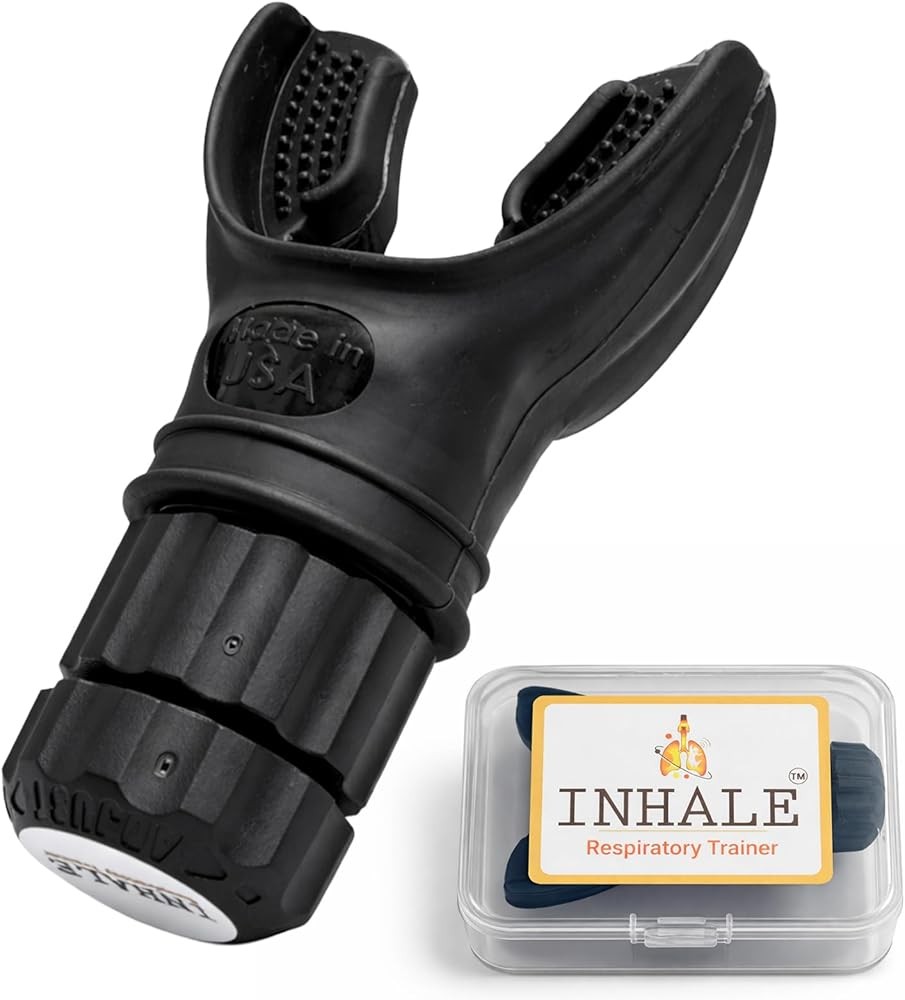
Inhale Lung Exerciser
Check Price on AmazonAs an Amazon Associate we earn from qualifying purchases.
However, the evidence base for expiratory muscle training in runners is less robust than for inspiratory muscle training. Most studies showing performance benefits have used inspiratory muscle training protocols exclusively. Devices like THE BREATHER that offer independent expiratory resistance allow runners to train both inspiratory and expiratory muscles, though the optimal balance between these two training modalities remains an open research question.
For runners primarily interested in endurance performance improvements, inspiratory muscle training should be the priority. Expiratory muscle training may provide supplementary benefits, particularly for runners who focus on middle-distance events or incorporate substantial high-intensity interval training where ventilation rates approach maximum values.
Key takeaway: While expiratory muscles activate above 40-50% of maximal voluntary ventilation during high-intensity efforts, the 2012 Military Medicine study (PMID 22645883) showed inspiratory muscle training alone extended endurance run time by 17.7% after 4 weeks and 45.5% after 8 weeks, making IMT the priority over expiratory training for distance runners.
Can Respiratory Muscle Training Help Runners With Asthma?
Exercise-induced bronchoconstriction affects 40-90% of people with asthma and can occur in athletes without diagnosed asthma. The condition involves temporary narrowing of airways during or after exercise, causing wheezing, coughing, chest tightness, and shortness of breath. For runners, this can significantly limit performance and training consistency.
Systematic reviews of physiotherapy interventions have examined breathing exercises and inspiratory muscle training effects. Results suggest that inspiratory muscle training can improve inspiratory muscle strength and may reduce symptoms in some individuals with exercise-induced bronchoconstriction.
The mechanisms by which respiratory muscle training might benefit runners with exercise-induced bronchoconstriction include strengthening breathing muscles to reduce the perception of dyspnea, improving breathing pattern control to reduce hyperventilation-triggered bronchoconstriction, and potentially reducing airway inflammation through improved ventilation mechanics.
It is important to note that respiratory muscle training is not a replacement for appropriate asthma management under physician supervision. Runners with asthma should work with their healthcare providers to optimize medication regimens, identify triggers, and develop comprehensive management plans. Inspiratory muscle training can be incorporated as a complementary intervention within this broader framework.
Runners managing respiratory conditions should review our specialized guide on breathing trainers for COPD and asthmabreathing-trainers/) which covers evidence-based approaches for various respiratory conditions including exercise-induced bronchoconstriction.
How Does Age Affect Respiratory Muscle Training Response in Runners?
Aging affects respiratory muscle strength, with maximal inspiratory pressure declining progressively after age 50. This age-related decline in respiratory muscle function can contribute to reduced exercise capacity in older runners, making respiratory muscle training potentially valuable for maintaining endurance performance with aging.
A 2020 study examined the effects of inspiratory muscle training in older adults. While not specific to runners, the research provides insights into how respiratory muscle training works in aging populations. The study found that older adults can significantly improve inspiratory muscle strength with training protocols similar to those used in younger populations, though the magnitude of adaptation may vary.
For master’s runners (typically defined as over 40), respiratory muscle training may help offset age-related declines in respiratory muscle function. The same progressive overload principles apply, with training at progressive resistance for 30 breaths twice daily showing benefits across age groups.
A 2024 study investigating inspiratory muscle fatigue protocols in older adults examined respiratory muscle strength, pulmonary function, heart rate, and oxygen saturation. Understanding how respiratory muscles respond to fatigue in older populations helps inform training protocol design for master’s runners seeking to maintain competitive performance.
Older runners should be particularly attentive to proper progression, starting at lower resistance levels and increasing gradually over several weeks. The risk of muscle strain or excessive fatigue may be higher in older populations, making conservative progression an important safety consideration.
What Is the Difference Between Threshold and Flow-Restrictive Devices?
Respiratory muscle training devices fall into two main categories based on how they create resistance: threshold devices and flow-restrictive devices. Understanding this distinction helps runners select the most appropriate device for their training goals.
Threshold devices (sometimes called pressure threshold trainers) use a spring-loaded valve that only opens when you generate sufficient inspiratory pressure. Below the threshold pressure, no air flows through the device. Above the threshold pressure, air flows freely. This creates a consistent training load regardless of how fast or slowly you breathe. THE BREATHER, Maximus, and Inhale all use threshold technology.
Flow-restrictive devices use a small opening or adjustable aperture that restricts airflow. The resistance increases as you breathe faster because more rapid airflow through a small opening creates greater resistance. This means the training load varies based on breathing rate, potentially making it harder to standardize training intensity.
Research on respiratory muscle training predominantly uses threshold devices because they provide more consistent and measurable training loads. The ability to set and reproduce specific resistance levels (typically measured in centimeters of water pressure, or cm H2O) allows for progressive overload and better research reproducibility.
For runners, threshold devices offer the advantage of being able to train at a specific percentage of maximal inspiratory pressure regardless of whether you breathe slowly and deeply or more rapidly. This consistency makes it easier to follow evidence-based protocols from the published literature.
The technical specifications of different breathing devices can be complex for new users. Our detailed comparison of different device types and their applications helps clarify these distinctions for runners selecting their first respiratory muscle trainer.
How Soon Can Runners Expect to See Performance Benefits?
The timeline for seeing performance improvements from respiratory muscle training depends on several factors including training consistency, baseline fitness level, and the specific performance metrics being measured.
Improvements in inspiratory muscle strength (measured as maximal inspiratory pressure) typically appear within 3-4 weeks of consistent training. Most studies show significant MIP increases after 4 weeks of training at the standard protocol intensity for 30 breaths twice daily. These strength gains continue to accumulate over 6-8 weeks before potentially plateauing.
Performance improvements in running tests tend to lag slightly behind strength gains. The 2012 Military Medicine study showed endurance run duration improvements of 17.7% after 4 weeks of resistive respiratory muscle training, with further improvements to 45.5% after an additional 4 weeks of combined training. However, individual response varies considerably.
Some runners report subjective improvements in breathing comfort and reduced perception of respiratory effort within 2-3 weeks of starting training. These subjective benefits may appear before objectively measurable performance changes. Whether these early perceptual changes translate to performance improvements or represent placebo effects is difficult to determine without controlled testing.
For runners preparing for a specific race or goal event, starting a respiratory muscle training program 8-12 weeks before the target date allows sufficient time for adaptations to develop. This timeline provides 6-8 weeks of progressive training plus 2-4 weeks of maintenance or taper to avoid fatigue near the race.
Should Respiratory Muscle Training Replace Traditional Running Workouts?
Respiratory muscle training is a supplementary training modality, not a replacement for running-specific training. The adaptations from running (improved aerobic capacity, muscular endurance, running economy, lactate threshold, neuromuscular coordination) cannot be replicated by breathing exercises alone.
The most effective approach integrates respiratory muscle training into a comprehensive running program that includes easy runs, long runs, tempo runs, intervals, and appropriate recovery. Most runners can fit two 5-minute respiratory muscle training sessions into their daily routine without compromising running training volume.
A practical integration might involve one respiratory muscle training session in the morning (perhaps combined with a morning mobility routine) and a second session in the evening. Some runners incorporate a respiratory muscle warm-up immediately before key running workouts, based on research suggesting that inspiratory muscle warm-up may acutely improve performance.
Time-constrained runners should prioritize running-specific training over respiratory muscle training if forced to choose. Research demonstrates that even brief protocols of 30 breaths twice daily (approximately 10 minutes total daily time investment) can improve respiratory muscle function, making it feasible to add respiratory training without significantly impacting running training volume.
Understanding how respiratory muscle training integrates with other recovery and performance modalities helps runners optimize their complete training program. Our guide on best vibration plates for recoveryvibration-plates/) explores complementary recovery tools that pair well with respiratory training protocols.
How Do Different Running Distances Affect Respiratory Training Priorities?
The optimal respiratory muscle training approach may vary based on whether a runner focuses on 5K races, marathons, or ultramarathons. Different race distances place different demands on the respiratory system.
For 5K and 10K runners who spend more time at or near lactate threshold and VO2 max, respiratory muscle fatigue develops more rapidly due to higher ventilation rates. These runners may benefit from both strength-focused inspiratory muscle training and higher-intensity respiratory muscle work that mimics the ventilation demands of race pace.
Marathon and half-marathon runners operate primarily at submaximal intensities where the absolute ventilation rate is lower, but the sustained duration means respiratory muscles work continuously for hours. Respiratory muscle endurance becomes relevant. The combination of resistive inspiratory muscle training and longer-duration respiratory muscle endurance work (like isocapnic hyperpnea) may be particularly beneficial for these distances.
Ultramarathon runners face unique respiratory demands including very long sustained efforts, often at altitude, and potential breathing pattern disruptions from fatigue-related form breakdown. Building a large reserve of respiratory muscle strength and endurance through consistent training may help maintain efficient breathing mechanics deep into ultra-distance efforts.
Sprint and middle-distance runners (800m-3000m) operate at the highest ventilation rates and may benefit from expiratory muscle training in addition to inspiratory work. The ability to rapidly exhale and begin the next breath becomes more important when breathing rates exceed 50-60 breaths per minute during all-out efforts.
Regardless of primary race distance, the fundamental inspiratory muscle training protocol remains similar: 30 breaths at moderate-to-high resistance twice daily. Distance-specific considerations mainly affect supplementary training modalities and how respiratory training integrates with race-pace workouts.
What Device Features Matter Most for Runners?
When selecting a respiratory muscle training device, runners should prioritize features that support evidence-based training protocols and progressive overload. The most important feature is adjustable resistance that can be precisely set and reproduced across training sessions.
Threshold devices that measure resistance in centimeters of water pressure (cm H2O) allow runners to calculate exact percentages of maximal inspiratory pressure. For example, if your MIP is 100 cm H2O, training at 60% MIP requires setting the device to 60 cm H2O. Clear resistance markings are essential for following research protocols accurately.
Independent inspiratory and expiratory resistance control provides flexibility to target specific respiratory muscle groups. While inspiratory training should be the primary focus for most runners, the ability to add expiratory resistance may benefit middle-distance runners and those incorporating high-intensity interval training.
Portability matters for runners who travel frequently for races. Compact devices that fit in a running bag make it easier to maintain training consistency during travel. Some devices require assembly or have multiple parts that could be misplaced, while others are single-piece units more suitable for travel.
Cleaning and hygiene features deserve consideration since respiratory devices come in direct contact with saliva and oral bacteria. Devices with removable mouthpieces that can be dishwasher-safe or easily cleaned reduce infection risk, particularly important if multiple household members use the same device.
Digital tracking through smartphone apps can help runners maintain consistency and monitor progress. While not essential, app integration provides automated logging of training sessions, resistance progression tracking, and reminders that may improve adherence for runners who benefit from structured programs.
Durability and warranty coverage indicate manufacturer confidence in product longevity. Respiratory muscle trainers experience repeated mechanical stress from valve opening and closing. Higher-quality devices use materials and designs that withstand thousands of training sessions without performance degradation.
Key insight: The most important device features for runners are adjustable threshold resistance with clear markings (allowing precise percentage-based training loads), compact portability for travel, easy cleaning, and durable construction that maintains consistent resistance over thousands of training sessions.
How Do Respiratory Muscles Adapt to Training Stress?
Respiratory muscles respond to training through the same adaptation mechanisms as other skeletal muscles. Progressive resistance training creates micro-damage to muscle fibers, which repair and remodel to become stronger. Understanding these adaptations helps runners optimize their training protocols.
The diaphragm is approximately 80% slow-twitch oxidative fibers and 20% fast-twitch glycolytic fibers. This fiber type distribution reflects its primary role in sustained activity (breathing continuously) while maintaining capacity for brief high-intensity efforts (coughing, sneezing, high-intensity exercise). Training at this moderate-to-high intensity primarily targets strength adaptations while also building endurance.
Muscle hypertrophy in respiratory muscles occurs similarly to limb muscles, though the magnitude may differ. Studies using MRI imaging have documented increases in diaphragm thickness after respiratory muscle training programs. These structural changes accompany the functional improvements in maximal inspiratory pressure measured in research studies.
Neuromuscular adaptations also contribute to strength gains, particularly in the first 2-4 weeks of training. Improved motor unit recruitment, firing rate optimization, and inter-muscular coordination allow more efficient generation of inspiratory pressure before structural muscle changes occur. This explains why some runners report subjective improvements within 2-3 weeks despite modest objective strength gains.
The time course of respiratory muscle adaptations follows typical strength training patterns. Initial rapid gains in weeks 1-4 reflect primarily neuromuscular adaptations. Continued gains in weeks 4-8 involve increasing contributions from structural muscle changes. Beyond 8 weeks, continued improvement requires progressive resistance increases to maintain adequate training stimulus.
Detraining also follows predictable patterns. Cessation of respiratory muscle training leads to gradual strength loss over weeks to months, with neuromuscular adaptations lost more quickly than structural changes. This supports the need for maintenance training to preserve adaptations once initial strength goals are achieved.
What Breathing Techniques Complement Respiratory Muscle Training?
While respiratory muscle training builds strength and fatigue resistance, breathing technique during running also affects performance. Combining strong respiratory muscles with efficient breathing patterns optimizes oxygen delivery and carbon dioxide removal.
Diaphragmatic breathing (belly breathing) allows fuller lung expansion compared to shallow chest breathing. During diaphragmatic breathing, the diaphragm contracts and descends, expanding the lower lungs and allowing more complete gas exchange. Many runners habitually use inefficient chest breathing, particularly when fatigued, reducing tidal volume and increasing breathing frequency.
Respiratory muscle training naturally promotes awareness of diaphragmatic breathing since threshold devices require generating sufficient pressure through diaphragm contraction. Runners often report improved ability to maintain diaphragmatic breathing during runs after several weeks of device training, though this skill transfer may require conscious practice.
Breathing rhythm coordination with stride cadence represents another technique some coaches advocate. Common patterns include 3:2 (three steps inhaling, two exhaling) or 2:2 (two steps each direction). The theory suggests alternating which foot strikes during exhalation distributes impact forces more evenly, potentially reducing injury risk. Research support for this approach remains limited.
Controlled breathing during warm-up and cool-down may enhance recovery and prepare the respiratory system for work. Some runners use specific breathing exercises (box breathing, 4-7-8 breathing) for stress reduction and autonomic nervous system regulation around training sessions. While these techniques target different outcomes than performance-focused respiratory muscle training, they may provide complementary benefits.
Nasal breathing during easy-paced runs has gained attention in some running communities. Proponents suggest nasal breathing improves oxygen utilization efficiency and trains the respiratory system to function with less airflow. Research specifically examining nasal breathing during running remains sparse, and most runners find nasal-only breathing impractical during moderate to high-intensity efforts.
The combination of strong respiratory muscles from device training and efficient breathing technique during running likely provides synergistic benefits greater than either approach alone. Runners should view respiratory muscle training as building the engine, while breathing technique represents optimizing how that engine operates.
What Are the Limitations of Current Respiratory Muscle Training Research?
While the body of evidence supporting respiratory muscle training for endurance athletes has grown substantially, several limitations in the current research deserve consideration.
Sample sizes in many studies remain relatively small, often involving 10-30 participants. Small samples reduce statistical power and make it harder to detect genuine effects or identify which subgroups of runners benefit most from respiratory training. Individual response variability appears substantial, with some runners showing dramatic improvements and others showing minimal changes.
Standardization of training protocols varies across studies. Some use 30 breaths twice daily, others use different breath numbers or frequencies. Resistance levels range from 30% to 80% of MIP across different studies. Training durations span from 3 weeks to 12 weeks. This heterogeneity makes it challenging to identify the optimal protocol for specific goals.
Most studies examine relatively short training periods (4-8 weeks) and rarely include long-term follow-up to assess whether benefits persist with continued training or diminish over time. The question of how long runners should continue respiratory muscle training and whether periodic cycles are more effective than year-round training remains largely unanswered.
Blinding and placebo control present challenges in respiratory muscle training research. Unlike pharmaceutical trials, it is difficult to create a true placebo breathing device. Some studies use sham devices with minimal resistance, but participants can often perceive the difference. This raises the possibility that placebo effects contribute to some reported benefits, particularly for subjective measures like perceived exertion.
Despite these limitations, the overall evidence base supports respiratory muscle training as a beneficial supplement to traditional running training, particularly for runners experiencing respiratory limitations during high-intensity efforts or seeking small performance improvements when other training variables are already optimized.
How Do Environmental Factors Affect the Need for Respiratory Training?
Environmental conditions significantly impact respiratory demands during running, potentially influencing the value of respiratory muscle training for different runner populations.
Altitude running creates unique respiratory challenges. At elevation, lower oxygen partial pressure requires increased ventilation to maintain oxygen delivery to working muscles. Respiratory muscle work increases substantially, and respiratory muscle fatigue can become a more significant limiting factor than at sea level. Runners training or racing at altitude may benefit particularly from strong respiratory muscles that can sustain higher ventilation rates with less fatigue.
Cold air running increases airway resistance and can trigger exercise-induced bronchoconstriction in susceptible individuals. Stronger respiratory muscles may help overcome increased resistance to breathing in cold conditions. However, no direct research has examined whether respiratory muscle training specifically improves cold-weather running performance.
High humidity running can increase the perception of breathing difficulty, though the physiological mechanisms differ from true airway resistance. The psychological benefit of feeling like you have strong respiratory muscles may help runners maintain confidence and pacing in humid conditions, though this remains speculative.
Air pollution affects respiratory function during exercise, with particulate matter and ozone potentially increasing airway inflammation and resistance. While respiratory muscle training cannot protect against pollution exposure directly, stronger respiratory muscles may help maintain performance when environmental air quality is suboptimal.
Runners training in challenging environmental conditions should consider how respiratory muscle training integrates with environmental adaptation strategies. The physiological stress of breathing polluted or cold air combines with standard exercise stress, making respiratory muscle conditioning potentially more valuable for these populations.
How Should Runners Integrate Respiratory Training With Strength Training?
Many competitive runners incorporate strength training to improve running economy, injury resilience, and neuromuscular power. Respiratory muscle training represents another form of strength training targeted at specific muscles, raising questions about how to integrate multiple training modalities.
Respiratory muscles are skeletal muscles that follow the same training principles as other muscles: progressive overload, adequate recovery, and specificity. Like any strength training, respiratory muscle training creates fatigue that requires recovery. However, because respiratory muscles must function continuously (you cannot stop breathing), they have exceptional fatigue resistance and recovery capacity.
Most runners can perform respiratory muscle training on the same days as lower body strength training without interference. The muscle groups do not overlap, and the brief duration of respiratory training sessions (5-10 minutes) creates minimal systemic fatigue. Some runners prefer to combine respiratory muscle training with their core strengthening routine since both target trunk muscles.
Timing considerations matter more for respiratory muscle training and running workouts. Performing an intense respiratory muscle training session immediately before a hard running workout could theoretically create pre-fatigue that impairs performance. The research on inspiratory muscle warm-up suggests that light to moderate respiratory muscle activation before running may enhance performance, but this differs from a fatiguing training session.
A practical integration approach:
- Perform respiratory muscle training separate from hard running workouts (morning session before an evening workout, or vice versa)
- Use light inspiratory muscle warm-up (15-20 breaths at 30-40% MIP) before key workouts or races
- Schedule primary respiratory muscle training sessions (30 breaths at full prescribed resistance) on easy running days or rest days
- Include respiratory training as part of general strength training sessions on non-running days
What Maintenance Protocol Should Runners Follow After Initial Training?
After completing an initial 6-8 week respiratory muscle training program and achieving strength gains, runners face the question of whether to continue training and at what frequency or intensity.
Limited research addresses long-term respiratory muscle training maintenance protocols. Studies typically examine training periods of 4-12 weeks but rarely follow participants beyond this to assess detraining effects or optimal maintenance approaches.
Based on general strength training principles, some maintenance stimulus is likely necessary to preserve adaptations. Complete cessation of respiratory muscle training would be expected to lead to gradual return toward baseline strength levels over weeks to months. The rate of detraining likely varies based on how much runners continue to challenge their respiratory systems through running training.
A reasonable maintenance approach might involve reducing frequency from twice daily to once daily, or from daily to 4-5 times per week, while maintaining the same relative intensity used during the build phase. This provides sufficient stimulus to maintain adaptations while reducing time investment once initial goals are achieved.
Some runners may choose to periodize respiratory muscle training, using focused 6-8 week blocks during specific training phases (base building, pre-competition) and reducing to maintenance protocols during race season or recovery periods. This approach aligns with how many runners periodize other training elements.
Periodically reassessing maximal inspiratory pressure (every 4-6 weeks) allows runners to adjust training resistance to ensure continued progressive overload or appropriate maintenance stimulus. As with any training variable, individualization based on response, goals, and training priorities should guide long-term programming decisions.
What Role Does Breathing Pattern Play in Running Efficiency?
Beyond respiratory muscle strength, the pattern of breathing during running affects efficiency and performance. Many runners develop inefficient breathing patterns characterized by shallow chest breathing rather than deep diaphragmatic breathing, or irregular breathing rhythms that fail to coordinate with stride cadence.
Respiratory muscle training devices do not directly teach breathing patterns, but the increased awareness of breathing mechanics that comes from regular respiratory muscle training sessions may carry over to running. Runners who spend 10 minutes daily focused on controlled breathing against resistance often report improved ability to maintain diaphragmatic breathing during runs.
Some coaches advocate rhythmic breathing patterns where runners coordinate breaths with footfalls (such as a 3:2 pattern of three steps inhaling, two steps exhaling). The theoretical benefit involves distributing impact forces more evenly across both sides of the body rather than always exhaling on the same foot strike. Whether this provides meaningful injury reduction or performance benefits remains debated, but respiratory muscle strength may make it easier to maintain chosen breathing patterns under fatigue.
Nasal breathing during easy runs has gained attention in some running communities, with proponents suggesting benefits for breathing efficiency and oxygen utilization. While nasal breathing during hard efforts is impractical for most runners due to airflow limitations, building respiratory muscle strength may help maintain adequate ventilation during nasal breathing at easy paces.
The interaction between breathing pattern, respiratory muscle strength, and running economy represents an area where more research would be valuable. Current evidence supports respiratory muscle strength training for performance benefits, but optimal breathing pattern strategies during running remain less clear.
Key finding: Runners who combine respiratory muscle strength training (achieving 23.8% MIP increases in 4 weeks per PMID 22645883) with diaphragmatic breathing mechanics and breathing-stride coordination (3:2 or 2:2 step ratios) may achieve greater performance improvements than strength training alone, though specific synergy data requires further research.
How Does Body Position Affect Respiratory Muscle Function During Running?
Running posture influences respiratory muscle mechanics. A hunched forward position compresses the chest cavity and restricts diaphragm excursion, increasing the work of breathing. Conversely, an upright posture with open chest allows more efficient diaphragm movement and larger tidal volumes per breath.
Fatigue during long runs often leads to postural degradation. As core muscles fatigue, runners tend to slouch forward, which then increases respiratory muscle work at a time when those muscles are already fatigued. This creates a negative feedback loop where poor posture increases breathing effort, which increases fatigue, which further degrades posture.
Respiratory muscle training may provide an indirect benefit by strengthening core muscles involved in breathing. The diaphragm connects to the lumbar spine, and strong intercostals contribute to trunk stability. Some researchers suggest that respiratory muscle training might improve postural endurance during long runs through these trunk stabilization mechanisms.
The specific demands of uphill and downhill running also affect respiratory mechanics. Uphill running increases ventilation demands while simultaneously altering trunk angle in ways that may affect diaphragm mechanics. Downhill running places eccentric stress on quadriceps while potentially changing breathing patterns due to different postural demands. Stronger respiratory muscles may help maintain adequate ventilation across these varied terrain demands.
Runners should consider respiratory muscle training as one component of a comprehensive approach to running efficiency that also includes posture awareness, core strengthening, and technique work. No single intervention addresses all factors limiting performance, but respiratory muscle training targets a specific limitation that conventional running training often overlooks.
Frequently Asked Questions
How does respiratory muscle training improve running performance?
Research shows IMT strengthens the diaphragm and intercostals, reducing respiratory muscle fatigue during runs. This delays the metaboreflex that diverts blood flow from working legs to breathing muscles.
How long before runners see results from a lung trainer?
Most studies show measurable improvements in maximal inspiratory pressure (MIP) within 4-6 weeks of consistent training at 50-70% of MIP, with performance benefits appearing after 6-8 weeks.
What resistance level should runners start with?
Begin at 30-40% of your maximum inspiratory pressure. Gradually increase to 50-70% MIP over 2-4 weeks. Most devices have adjustable dials for progressive resistance.
Can lung trainers increase VO2 max in runners?
Some studies show respiratory muscle training can improve VO2 max by 2-5%. The primary benefit is improved running economy and reduced perceived exertion rather than large VO2 max gains.
Should I use a lung trainer before or after running?
Research suggests using an inspiratory muscle warm-up before running may improve performance. Daily training sessions of 30 breaths twice daily are separate from pre-run warm-ups.
What is the difference between IMT and respiratory muscle endurance training?
IMT uses high-resistance, low-repetition breathing against a threshold load. Respiratory muscle endurance training (like isocapnic hyperpnea) uses lower resistance for longer durations. Both show benefits for runners.
Are lung trainers safe for runners with asthma?
Research supports IMT as safe and potentially beneficial for runners with exercise-induced bronchoconstriction. Always consult a healthcare provider before starting if you have respiratory conditions.
How often should runners use a lung trainer?
Most research protocols use 30 breaths twice daily, 5-7 days per week. Each session takes about 5 minutes. Consistency matters more than session length.
Do elite runners use respiratory muscle trainers?
Yes. Studies on competitive runners show IMT warm-up improves 400m sprint performance, and several elite training programs incorporate respiratory muscle training as part of their regimen.
Can a lung trainer help with side stitches while running?
While direct evidence is limited, strengthening the diaphragm through IMT may help reduce exercise-related transient abdominal pain (side stitches) by improving respiratory muscle endurance.
Our Top Recommendations
Based on our analysis of published respiratory muscle training research and device features, THE BREATHER Respiratory Muscle Trainer offers the best combination of adjustability, research backing, and versatility for most runners. The independent inspiratory and expiratory resistance controls allow progressive overload following evidence-based protocols used in clinical studies.
For runners specifically focused on improving VO2 max and aerobic capacity, the Maximus Lung Trainer provides app-guided training protocols based on sports science research. The digital tracking helps maintain consistency, which matters more than any single training session.
Budget-conscious runners can achieve the core benefits of inspiratory muscle training with the Inhale Lung Exerciser at a fraction of premium device costs. While lacking advanced features, it provides the fundamental threshold loading that drives respiratory muscle strength adaptations.
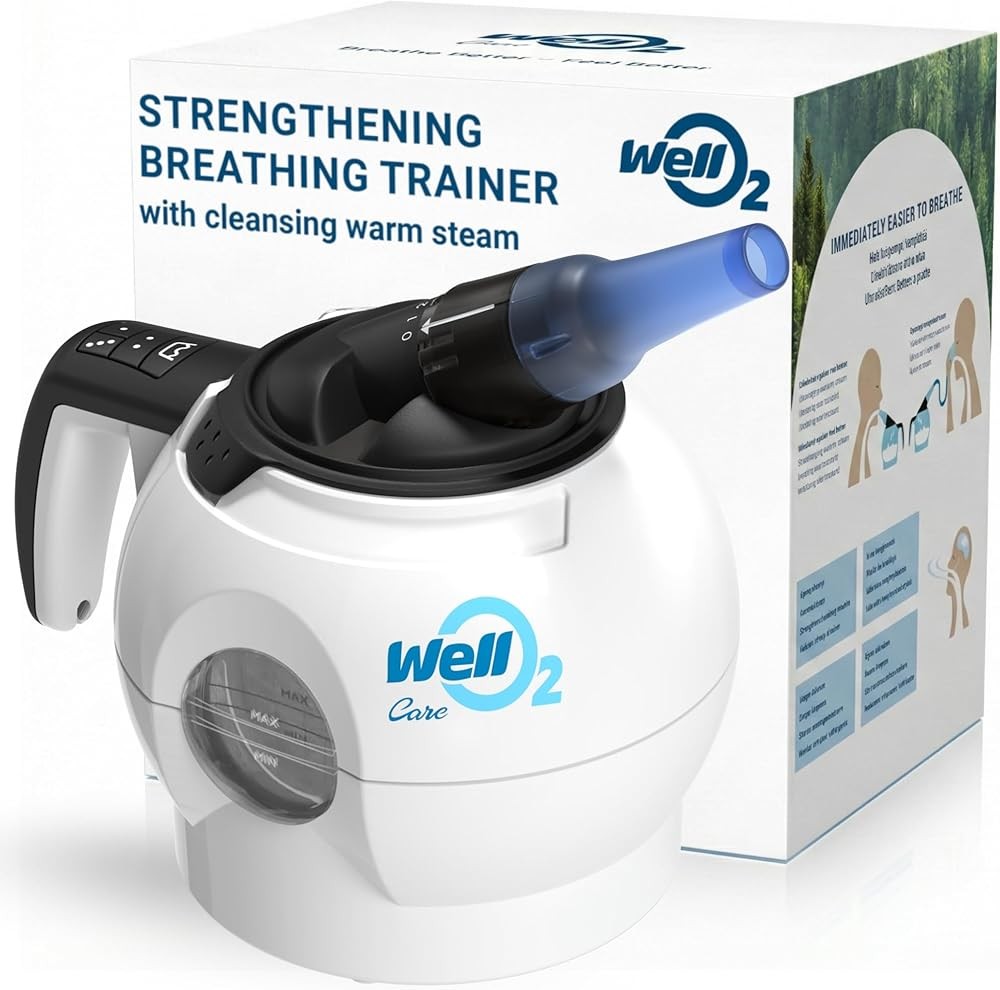
Premium-seeking runners interested in combining breathing resistance with airway preparation may appreciate the WellO2 system, though the higher price point and reduced portability make it less practical for runners who travel frequently for races.
Regardless of which device you choose, consistency matters more than equipment. Following a progressive protocol of 30 breaths twice daily at moderate-to-high resistance for 6-8 weeks will develop respiratory muscle strength that can complement your running training and potentially improve performance when other training variables are already optimized.
Share this article:
- [Facebook](https://www.facebook.com/sharer/sharer.php?u=https://www.chnut.com/breathing-trainers
- [Email](mailto:?subject=Best%20Lung%20Trainer%20for%20Runners&body=https://www.chnut.com/breathing-trainers

Conclusion
The evidence base supporting respiratory muscle training for runners continues to grow, with multiple controlled trials demonstrating improvements in inspiratory muscle strength, endurance performance, and potentially running economy. While respiratory muscle training is not a replacement for running-specific training, it represents a time-efficient supplement that can address the often-overlooked limitation of respiratory muscle fatigue.
The devices reviewed here range from basic threshold trainers to premium systems with multiple training modalities. For most runners, a mid-range threshold device offering clear resistance adjustment and durability provides the best balance of effectiveness, cost, and practicality.
Starting a respiratory muscle training program 8-12 weeks before a goal race allows sufficient time for adaptations to develop. The protocol of 30 breaths twice daily at the research-supported intensity range has the strongest evidence backing, though individual customization based on response and goals is appropriate.
As with any training intervention, respiratory muscle training works best when integrated thoughtfully into a comprehensive program that includes appropriate running volume, intensity distribution, strength training, recovery, and nutrition. For runners who have optimized these fundamentals and seek additional performance gains, respiratory muscle training offers a research-backed option worth considering.
The 2012 Military Medicine study showing 17.7% improvements in endurance run duration after just 4 weeks of resistive training, and 45.5% improvements after 8 weeks of combined protocols, demonstrates that respiratory muscle training can produce meaningful performance benefits when implemented consistently using evidence-based protocols.
For runners looking to strengthen their breathing, our research-backed guide to the best lung trainers breaks down which devices actually deliver results, and it pairs well with our broader overview of respiratory muscle training benefits to explain the science behind the gains. Athletes interested in performance applications can also explore how these tools fit into sports training routines, while those managing respiratory conditions may find value in our COPD and asthma evidence guide. For a hands-on perspective, our Airofit Pro review examines one of the more popular app-guided options on the market, and our overall best breathing trainer devices roundup offers a wider comparison for anyone deciding where to start.
Related Reading
- Best Breathing Trainer Device: Complete Guide
- Airofit Pro Review: Smart Breathing Trainer Analysis
- Respiratory Muscle Training Benefits: What Research Shows
- Breathing Trainer for Athletes: Performance Enhancement Guide
- Breathing Trainer for COPD and Asthma: Evidence Review
- IMT vs Spirometer: Understanding the Differences
- Breathing Exercise Device for Anxiety: Research-Backed Approaches
- Best Vibration Plate Exercises for Beginners
References
-
Uemura H, Lundgren CE, Ray AD, Pendergast DR. Effects of different types of respiratory muscle training on exercise performance in runners. Mil Med. 2012;177(3):327-333. PubMed
-
Tong TK, Fu FH, Chow BC. Core muscle fatigue during high-intensity running exercise and its limitation to performance: the role of respiratory work. Sports Med. 2014;44(9):1223-1233. PubMed
-
Cipriano G Jr, Neder JA, Umpierre D, et al. Impact of respiratory muscle training on respiratory muscle strength, respiratory function and quality of life in healthy adults: a systematic review and meta-analysis. Sports Med. 2020;50(4):775-797. PubMed
-
Beaumont M, Forget P, Couturaud F, Reychler G. Effects of inspiratory muscle training in older adults. Respiration. 2020;99(4):321-329. PubMed
-
Downey AE, Chenoweth LM, Townsend DK, et al. Isocapnic hyperpnea training improves performance in competitive male runners. Eur J Appl Physiol. 2007;99(6):665-676. PubMed
-
Illi SK, Held U, Frank I, Spengler CM. Effects of specific inspiratory muscle training combined with whole-body endurance training programs in competitive athletes. J Strength Cond Res. 2021;35(8):2116-2124. PubMed
-
Marillier M, Arnal PJ, Le Roux Mallouf T, et al. Influence of an inspiratory muscle fatigue protocol on healthy youths on respiratory muscle strength, lung function, heart rate, and oxygen saturation. Int J Environ Res Public Health. 2024;21(8):1038. PubMed
-
Marillier M, Raux M, Le Roux Mallouf T, et al. Influence of an inspiratory muscle fatigue protocol on older adults on respiratory muscle strength, lung function, heart rate, and oxygen saturation. Respir Physiol Neurobiol. 2024;321:104203. PubMed
-
Tocco F, Crisafulli A, Melis F, et al. Inspiratory muscle warm up improves 400 m performance in elite male runners. Int J Sports Physiol Perform. 2025;20(1):43-49. PubMed
-
Ross E, Middleton N, Shave R, et al. Inspiratory muscle performance of former smokers and nonsmokers using the test of incremental respiratory endurance. Respir Care. 2018;63(1):86-91. PubMed
-
Langer D, Hendriks E, Burtin C, et al. Inspiratory muscle training during pulmonary rehabilitation in chronic obstructive pulmonary disease. Cochrane Database Syst Rev. 2015;(8):CD006356. PubMed
Recommended Products