Breathing Trainers for Athletes: How Respiratory Muscle Training Improves Sports Performance
Summarized from peer-reviewed research indexed in PubMed. See citations below.
Respiratory muscle fatigue limits athletic performance before leg muscles give out, creating a bottleneck that no amount of cardiovascular training can fully address. The POWERbreathe Blue Medium Resistance Inspiratory Muscle Trainer ($80) uses threshold-based resistance that has been validated in multiple published trials showing 25-35% gains in inspiratory muscle strength among trained athletes. This device appears in more peer-reviewed research than any other consumer breathing trainer, with studies demonstrating measurable improvements in time to exhaustion and reduced perception of breathing effort during maximal exercise. For athletes seeking similar benefits at a lower price point, THE BREATHER Natural Breathing Exerciser ($49) provides adjustable inspiratory and expiratory resistance in a single device. Here’s what the published research shows about how breathing trainers improve sports performance.
Disclosure: We may earn a commission from links on this page at no extra cost to you. Affiliate relationships never influence our ratings. Full policy →


How Does Inspiratory Muscle Training Affect Athletic Performance?
Respiratory muscles consume oxygen and generate metabolic byproducts during intense exercise, competing with working skeletal muscles for blood flow and energy resources. Research demonstrates that fatiguing the inspiratory muscles before exercise reduces subsequent endurance performance, while pre-fatiguing leg muscles has minimal effect on respiratory muscle function.[1] This asymmetric relationship suggests respiratory muscle capacity may limit whole-body exercise performance in trained athletes.
A controlled trial in well-trained endurance athletes examined specific inspiratory muscle training effects on respiratory function and aerobic capacity. Twenty athletes were randomized to either inspiratory muscle training using a threshold device for 30 minutes daily, six days per week for 10 weeks, or sham training with no resistance. The training group showed inspiratory muscle strength increases from 142.2 to 177.2 cm H2O, while the control group showed no changes.[1] Inspiratory muscle endurance improved significantly in the training group. Most notably, time to exhaustion during incremental cycling increased by 8.4% in the training group compared to no change in controls.
The mechanism appears related to reduced perception of breathing effort rather than changes in maximal oxygen uptake. When inspiratory muscles fatigue during intense exercise, the sensation of breathlessness triggers a protective reflex that reduces neural drive to working limb muscles.[2] Stronger, more fatigue-resistant respiratory muscles delay this reflex activation, allowing athletes to maintain higher power outputs for longer durations.
Studies examining respiratory muscle work during maximal exercise show that inspiratory muscles can consume up to 16% of total cardiac output during exhaustive exercise in elite endurance athletes.[3] Training these muscles to become more efficient and fatigue-resistant frees up blood flow and oxygen for working leg muscles. This redistribution effect becomes particularly relevant during prolonged high-intensity efforts where marginal performance gains determine competitive outcomes.
The respiratory muscle training benefits extend beyond endurance athletes. Strength and power athletes experience improved breathing control during heavy resistance exercises, potentially enhancing core stability and intra-abdominal pressure generation during maximal lifts.
Research examining the metaboreflex response provides additional insight into performance limitations. When respiratory muscles accumulate metabolites during intense breathing work, afferent signals trigger systemic vasoconstriction in working limb muscles.[4] This protective mechanism prioritizes blood flow to respiratory muscles at the expense of locomotor muscles. Inspiratory muscle training reduces the metabolic stress on respiratory muscles at any given ventilation rate, attenuating this vasoconstrictor response and maintaining better limb muscle perfusion during exercise.
Can Inspiratory Muscle Training Increase VO2max in Athletes?
Most controlled trials examining inspiratory muscle training in athletic populations report no significant changes in maximal oxygen uptake. A 2004 study evaluated whether four weeks of inspiratory muscle training would alter cardiopulmonary fitness in recreationally active individuals. Despite significant improvements in inspiratory muscle strength and endurance, VO2max remained unchanged following the training intervention.[5] This finding has been replicated across multiple studies with similar training protocols and populations.
The lack of VO2max improvement does not indicate training ineffectiveness. Maximum aerobic capacity depends primarily on cardiac output, hemoglobin concentration, and skeletal muscle oxidative capacity rather than respiratory muscle strength. In healthy athletes with normal lung function, ventilatory capacity typically exceeds oxygen delivery capacity. Respiratory muscles can move sufficient air to saturate arterial blood with oxygen even without specific training.
Performance improvements from inspiratory muscle training manifest through different mechanisms. Studies show reduced ratings of perceived exertion at submaximal exercise intensities following inspiratory muscle training.[6] Athletes report breathing feels less effortful at the same absolute workloads after completing training protocols. This perceptual shift allows maintenance of higher relative intensities for longer periods without triggering the protective reflexes that limit performance when breathing becomes uncomfortably labored.
Research in elite endurance athletes reveals a more nuanced picture. Some highly trained individuals do experience arterial oxygen desaturation during maximal exercise, suggesting ventilatory limitations may constrain performance in this specific population.[1] In these athletes, inspiratory muscle training can improve ventilatory capacity during maximal exercise, potentially reducing desaturation magnitude.
A study in soccer players examined whether adding eight weeks of inspiratory muscle training to regular preseason training would improve pulmonary function and lung ventilation. The training group showed significant improvements in forced vital capacity, forced expiratory volume, and maximal voluntary ventilation compared to controls who performed only standard soccer training.[7] While these ventilatory improvements did not translate to VO2max changes, they corresponded with better maintenance of running speed during repeated high-intensity intervals.
The distinction matters for athletes selecting training interventions. Those seeking to improve maximum aerobic capacity should focus on interval training, volume progression, and sport-specific conditioning. Best breathing trainer devices serve as supplementary tools that reduce breathing-related fatigue and perceived exertion rather than primary drivers of aerobic development.
Interestingly, oxygen uptake kinetics at the onset of exercise may respond differently to inspiratory muscle training than VO2max. Some research suggests faster oxygen uptake kinetics during the transition from rest to exercise or between exercise intensities after respiratory muscle training.[5] These kinetic improvements could benefit athletes in sports requiring rapid transitions between intensities, even without changes in steady-state maximum values.
What Training Protocols Produce the Best Results for Athletes?
Research comparing different inspiratory muscle training protocols provides specific guidance on resistance levels, training frequency, and program duration. A meta-analysis examining inspiratory muscle training studies identified several protocol variables that influence training outcomes.[8] High-intensity protocols using 50-70% of maximal inspiratory pressure produce superior strength gains compared to lower-intensity approaches. Training frequency of 5-6 days per week yields better results than 2-3 days weekly, though diminishing returns occur above six sessions per week.
| Feature | B000NJMLPA|POWERbreathe Blue Medium|$80|Threshold load|Progressive resistance|30 breaths 2x daily|Clinical validation | B0GQ3SF4CR|Airofit Digital Elite|$353|Electronic feedback|Sport-specific programs|App-guided sessions|Real-time metrics | B0DZZ5FP6L|WellO2 Steam Trainer|$199|Resistance + steam|Comprehensive training|15-20 min sessions|Dual modality |
|---|---|---|---|
| View on Amazon | Check Price | Check Price | Check Price |
The standard protocol used in multiple successful studies involves 30 inspiratory repetitions performed twice daily. Each repetition consists of a maximal inspiratory effort against the resistance followed by passive exhalation. The resistance is set at approximately 48% of maximal inspiratory pressure for the first week, then progressively increased to 60-65% for weeks 2-4 and 65-72% for subsequent weeks.[1] This progressive overload approach mirrors principles used in resistance training for skeletal muscles.
Duration recommendations vary across studies, but most show measurable strength improvements within 3-4 weeks and performance benefits emerging at 4-6 weeks.[8] Training periods of 8-12 weeks appear optimal for maximizing adaptations. Some studies extending training to 16-20 weeks show continued improvements, though the rate of adaptation slows after the initial 12-week period.
A 2013 study examined high-intensity versus sham inspiratory muscle training in patients performing rehabilitation. The high-intensity group trained at 58% of maximal inspiratory pressure for four weeks, performing seven sets of six repetitions daily.[9] This protocol produced significant improvements in inspiratory muscle strength, functional capacity, and quality of life measures compared to sham training at 10% of maximal pressure. The higher training volume (42 repetitions daily versus the more common 30-60 repetitions) did not appear to provide additional benefits beyond the increased resistance.
Timing of training sessions relative to sport-specific workouts influences adherence and potentially effectiveness. Some athletes prefer morning sessions before other training to avoid respiratory muscle fatigue during primary workouts. Others integrate breathing training during recovery periods between interval sets. Research has not definitively established optimal timing, but consistency of training schedule appears more important than specific session placement.[8]
The breathing trainer for COPD and asthma populations uses similar devices but different protocols. Athletes require higher resistances and fewer repetitions compared to clinical populations using breathing trainers for respiratory disease management.
Progressive resistance adjustment based on weekly maximal inspiratory pressure reassessment ensures continued training stimulus. Athletes who maintain fixed absolute resistances throughout multi-week programs experience plateaus as their strength improves. Studies demonstrating the largest performance gains used protocols that increased resistance every 1-2 weeks based on measured strength improvements.[1][8]
How Does Inspiratory Muscle Training Reduce Perceived Breathing Effort?
The sensation of breathlessness during exercise arises from multiple physiological signals, including chemoreceptor activation from rising carbon dioxide levels, mechanoreceptor feedback from chest wall and lung stretch, and central motor command intensity. Inspiratory muscle training modifies several of these inputs, reducing the overall sense of breathing effort at any given exercise intensity.[10]
Stronger inspiratory muscles generate target inspiratory pressures with lower relative effort. A trained athlete whose maximal inspiratory pressure improved from 140 to 180 cm H2O can achieve the same absolute inspiratory pressure during exercise using a smaller fraction of maximal capacity. This lower relative effort translates to reduced neural activation and less feedback from mechanoreceptors in respiratory muscles signaling fatigue.
Research measuring diaphragm electromyography during exercise shows that inspiratory muscle training reduces the electrical activity needed to achieve the same tidal volumes.[11] This efficiency improvement means respiratory muscles consume less oxygen and generate fewer metabolic byproducts at matched ventilation rates. The reduced metabolic demand leaves more resources available for working limb muscles and delays the accumulation of fatigue-related metabolites in respiratory muscles.
Studies using Borg scales to quantify perceived exertion consistently show reductions in breathing-specific ratings following inspiratory muscle training, even when overall exertion ratings remain similar.[6] Athletes report that breathing feels more comfortable and less limiting during hard efforts. This perceptual change can influence pacing decisions during competition, allowing maintenance of faster speeds when breathing sensation no longer serves as the primary limiting factor.
The phenomenon extends to recovery periods between high-intensity intervals. Faster normalization of breathing after hard efforts allows athletes to begin subsequent intervals with less respiratory muscle fatigue.[12] Research in team sport athletes shows improved recovery of ventilatory parameters between repeated sprints following inspiratory muscle training interventions.
One proposed mechanism involves the metaboreflex—a feedback loop from fatigued respiratory muscles that triggers sympathetic activation and reduces blood flow to working limbs.[4] By delaying respiratory muscle fatigue, inspiratory muscle training attenuates this reflex, maintaining better perfusion of leg muscles during sustained high-intensity exercise. Studies measuring leg blood flow during cycling show higher values in athletes who completed inspiratory muscle training compared to controls at matched exercise intensities.
The corollary discharge theory suggests that the central motor command sent to respiratory muscles contributes to breathing sensation. Stronger muscles require less intense neural drive to achieve target ventilation, resulting in lower corollary discharge and reduced perception of effort.[10] This central mechanism complements peripheral feedback reductions from mechanoreceptors and metabolic sensors.
What Performance Benefits Occur in Specific Sports?
Running and Track Athletes
Distance runners experience respiratory muscle fatigue during prolonged efforts and races. Studies examining inspiratory muscle training in runners show improvements in time trial performance ranging from 2-4% following 6-12 week training programs.[13] While these percentages may seem small, they translate to meaningful time differences in competitive racing.
Research in middle-distance runners evaluated whether inspiratory muscle training affected 800-meter and 1500-meter race performance. After six weeks of training, the intervention group showed reduced finish times in both distances compared to controls. Physiological testing revealed no changes in VO2max or lactate threshold, but athletes reported lower perception of breathing effort during races.[13] This suggests pacing strategies shifted to accommodate the reduced respiratory limitation.
Sprint athletes show less consistent benefits from inspiratory muscle training compared to endurance runners. The brief duration of sprint events means respiratory muscle fatigue does not typically limit performance. Some research suggests improved breathing control may enhance starting mechanics and acceleration phases, though evidence remains preliminary.
Best lung trainer for runners recommendations emphasize devices that allow high-resistance threshold loading rather than flow-restrictive devices that may not provide sufficient training stimulus for well-conditioned athletes.
Marathon runners face unique challenges with respiratory muscle fatigue accumulating over 2-3 hours of continuous effort. Studies examining ultra-endurance athletes show that inspiratory muscle strength correlates with performance in events lasting multiple hours.[13] The prolonged nature of marathon running makes respiratory muscle endurance as important as peak strength, suggesting training protocols should include both high-resistance strength work and longer-duration endurance sessions.
Cycling Performance
Cyclists maintain relatively fixed postures that can restrict diaphragm movement and increase respiratory muscle work compared to upright running. Research specifically examining cyclists shows consistent performance improvements following inspiratory muscle training. A study in competitive cyclists demonstrated 4.7% improvement in 40-kilometer time trial performance after six weeks of training at 52% maximal inspiratory pressure.[14]
The aerodynamic positions used in time trialing and triathlon further increase respiratory muscle demands. Athletes in aggressive aero positions report greater breathing effort compared to upright riding. Inspiratory muscle training may provide particular benefits for time trial specialists and triathletes who spend extended periods in aerodynamically efficient but respiratorily challenging positions.[14]
Mountain bike and cyclocross athletes experience highly variable breathing demands during races, with periods of maximal ventilation followed by brief recovery phases. Research examining interval-based sports suggests inspiratory muscle training improves the ability to recover ventilatory function between hard efforts, though specific studies in off-road cycling disciplines remain limited.[12]
Track cyclists performing sprint events show different response patterns compared to road cyclists. The extremely high power outputs during track sprints create massive ventilatory demands over short durations. Some research suggests inspiratory muscle training may help track cyclists maintain technique and power production during the final seconds of sprint events when respiratory muscle fatigue becomes acute.
Swimming and Aquatic Sports
Swimmers face unique respiratory challenges from breathing restrictions imposed by stroke mechanics and head position. Unlike runners and cyclists who breathe freely throughout exercise, swimmers must coordinate breathing with stroke cycles and cope with hydrostatic pressure on the chest wall. These factors make respiratory muscle training particularly relevant for swimming performance.[15]
Research in competitive swimmers shows inspiratory muscle training improves swimming-specific performance measures. A study examining collegiate swimmers found that eight weeks of inspiratory muscle training improved 100-meter and 200-meter freestyle times compared to control swimmers who maintained normal training without breathing exercises.[15] The improvements correlated with increased inspiratory muscle strength and reduced perception of breathing effort during interval sets.
The intermittent breathing patterns in swimming may benefit from both inspiratory and expiratory muscle training. While most research focuses on inspiratory muscles, swimmers must also forcefully exhale against water resistance. Devices providing both inspiratory and expiratory resistance may offer advantages for swimming populations, though specific research comparing single-phase versus dual-phase training in swimmers remains limited.
Open water swimmers and triathletes face additional challenges from bilateral breathing requirements and variable water conditions. Inspiratory muscle training that enhances breathing flexibility and reduces panic responses to difficult breathing situations may provide safety benefits beyond pure performance improvements in these populations.
How Do Team Sports Athletes Benefit from Breathing Training?
Soccer, basketball, hockey, and other team sports involve repeated high-intensity efforts interspersed with lower-intensity periods. Research examining inspiratory muscle training in soccer players demonstrates improvements in repeated sprint ability and delayed fatigue during match simulation protocols.[7]
A study in professional soccer players added inspiratory muscle training to preseason conditioning. The training group showed better maintenance of sprint speed and vertical jump height during the latter stages of matches compared to controls.[7] Coaches reported that players who completed breathing training exhibited less visible breathing distress during intense match periods, suggesting delayed onset of ventilatory fatigue.
The variable intensity nature of team sports may make traditional inspiratory muscle training protocols less sport-specific than steady-state endurance activities. Some researchers propose modified protocols incorporating interval-style breathing training that better mimics the ventilatory demands of intermittent sports. However, standard protocols still produce measurable benefits, and the simplicity of threshold-based training may enhance adherence compared to complex sport-specific approaches.
Basketball players performing repeated jumping and sprinting movements show improved maintenance of vertical jump performance late in games after inspiratory muscle training interventions. The ability to recover ventilation between plays appears enhanced, allowing players to enter subsequent possessions with less accumulated respiratory fatigue.[12]
When Should Athletes Perform Inspiratory Muscle Training?
Integrating breathing training into existing training programs requires consideration of training periodization, recovery demands, and potential fatigue effects. Most research protocols prescribe inspiratory muscle training as a twice-daily standalone activity performed separate from sport-specific training.[1] This approach allows athletes to focus on breathing technique without competing demands from other physical activities.
Morning sessions before breakfast provide consistent scheduling that enhances adherence. Some athletes report that breathing training serves as an effective morning routine that requires minimal time investment while providing measurable training stimulus. Evening sessions can similarly fit into consistent daily schedules, though some athletes report that intense inspiratory muscle training close to bedtime affects sleep quality.
The relationship between inspiratory muscle training and same-day sport-specific workouts remains unclear. Some evidence suggests that fatiguing respiratory muscles immediately before endurance training reduces the quality of subsequent workouts. This argues for separating breathing training and primary training sessions by several hours. Other research shows no negative interaction when inspiratory muscle training precedes sport-specific work by 2-3 hours, suggesting adequate recovery time for respiratory muscles.[8]
Periodization strategies used in strength and endurance training may apply to inspiratory muscle training. Building inspiratory muscle strength during base training phases and transition periods avoids adding training stress during high-volume or competition phases. Maintenance training of 2-3 sessions weekly preserves adaptations once initial strength gains occur. This reduced frequency allows incorporation during competitive periods without excessive fatigue.[8]
Some athletes use inspiratory muscle training during taper periods before major competitions. The relatively low systemic fatigue from breathing training allows continued training stimulus while reducing volume in other areas. Research examining pre-competition taper strategies has not specifically evaluated inspiratory muscle training effects, but the minimal whole-body fatigue suggests it may fit appropriately into reduced training phases.
The question of year-round training versus seasonal blocks depends on individual goals and training constraints. Athletes seeking maximal respiratory muscle strength may benefit from extended training periods of 16-20 weeks or longer. Those using breathing trainers as supplementary tools can achieve meaningful benefits from 6-8 week blocks integrated into specific training phases. No research suggests negative effects from extended inspiratory muscle training, assuming appropriate recovery and progressive overload principles.[8]
Off-season implementation allows athletes to build respiratory muscle strength without competing with sport-specific demands. The 4-6 week timeline for performance improvements means starting an inspiratory muscle training block 6-8 weeks before competition season produces peak adaptations during key performance periods. Some athletes maintain 2-3 weekly sessions during competition to preserve adaptations while minimizing training volume.
How Do Athletes Know If Inspiratory Muscle Training Is Working?
Tracking progress requires measurement tools that quantify respiratory muscle function changes. The gold standard assessment involves measuring maximal inspiratory pressure using a handheld pressure meter. These devices measure the maximum pressure generated during a short maximal inspiratory effort against an occluded airway. Research protocols typically measure maximal inspiratory pressure weekly to adjust training loads and document strength improvements.[1]
Athletes without access to pressure measurement devices can use indirect markers of respiratory muscle adaptation. Reduced perception of breathing effort during standard training workouts suggests improved respiratory muscle capacity. Some athletes track breathing rate at fixed exercise intensities, with lower breathing frequencies indicating improved breathing efficiency. These subjective and indirect measures provide less precision than direct pressure measurement but offer accessible alternatives for monitoring progress.
Performance improvements in sport-specific tests provide the ultimate validation of training effectiveness. Time trial results, interval workout completion times, and perceived exertion ratings during standardized efforts can all indicate whether inspiratory muscle training transfers to performance benefits. However, isolating breathing training effects from other concurrent training adaptations proves challenging without controlled research protocols.
Some modern breathing training devices include built-in measurement features that track inspiratory pressure, breathing volume, or training adherence. These integrated measurement systems remove barriers to consistent tracking and provide objective feedback on training progression. Research validating the accuracy of consumer device measurements shows reasonable agreement with laboratory-grade equipment for most metrics.
The timeline for measurable adaptations follows a predictable pattern based on research findings. Maximal inspiratory pressure typically increases within 2-3 weeks of consistent training.[1] Perception of breathing effort during exercise begins decreasing around week 3-4. Performance improvements in endurance tests become apparent around week 4-6, with continued gains through week 12.[8] Individual variation exists, but athletes not observing any subjective or objective changes by week 4 should reassess training technique, resistance levels, and protocol adherence.
Detailed training logs documenting resistance settings, repetition completion, and subjective difficulty ratings help athletes identify progress patterns. Comparing current training loads to initial baseline values provides concrete evidence of adaptation. Athletes who began training at 45% of 120 cm H2O maximal pressure (54 cm H2O absolute resistance) might progress to two-thirds of 160 cm H2O (107 cm H2O absolute resistance) after 8 weeks, representing substantial improvement in both strength and relative training intensity.
What Resistance Level Works Best for Trained Athletes?
Research protocols in athletic populations consistently use higher training resistances than protocols designed for clinical populations or sedentary individuals. Studies demonstrating performance benefits typically prescribe training loads between 48-72% of maximal inspiratory pressure, with progressive increases over the training period.[1][8] This intensity range parallels resistance training principles where loads of 60-85% of one-repetition maximum optimize strength gains.
Starting resistance selection requires balancing adequate training stimulus against proper technique maintenance. Beginning at 40-48% of maximal inspiratory pressure for the first week allows athletes to establish consistent breathing patterns and become familiar with the device. Premature progression to high resistances can compromise technique, with athletes recruiting accessory muscles or using partial inhalations that reduce training effectiveness.
Weekly reassessment of maximal inspiratory pressure guides appropriate resistance adjustments. As strength improves, the absolute resistance must increase to maintain the same relative training intensity. Athletes who continue training at fixed absolute loads experience diminishing returns as the load represents progressively smaller percentages of their increasing maximal capacity. This principle of progressive overload applies equally to respiratory and skeletal muscle training.[1]
Some research suggests that very high resistances above 73% of maximal inspiratory pressure may not provide additional benefits compared to 60-68% loads.[9] The higher resistances increase training difficulty and potentially reduce adherence without corresponding improvements in outcomes. Most athletes find sustainable long-term training at 60-68% of maximal pressure, adjusting within this range based on daily fatigue levels and other training demands.
Individual variation in optimal training resistance exists, though research has not identified specific athlete characteristics that predict ideal loads. Some athletes respond better to higher resistances with fewer repetitions, while others prefer moderate loads with higher training volumes. The lack of detailed dose-response studies in athletic populations means recommendations rely on general principles rather than individually tailored prescriptions.
Practical considerations influence resistance selection. Devices with adjustable resistance in small increments allow more precise load matching compared to devices with fixed resistance levels. Athletes training with non-adjustable devices may need multiple resistance levels as they progress, while those using continuously adjustable devices can fine-tune loads to match current strength levels.
The concept of periodization applies to inspiratory muscle training resistance selection. Athletes might use lower resistances (45-58% maximal pressure) with higher repetitions during initial adaptation phases, then progress to moderate resistances (60-68%) for strength building, and potentially incorporate very high resistances (68-73%) for brief peaking phases before competition. This periodized approach mirrors training progressions used successfully in strength and power development.
Do Breathing Trainers Cause Any Negative Effects for Athletes?
Research examining adverse effects of inspiratory muscle training in healthy athletic populations reports minimal negative outcomes. The most common complaint involves delayed-onset muscle soreness in respiratory muscles during the first week of training, similar to soreness experienced when beginning any new resistance training program.[1] This soreness typically resolves within 7-10 days as respiratory muscles adapt to the training stimulus.
Some athletes report lightheadedness or dizziness during initial training sessions, particularly when using very high resistances or performing excessive repetitions. These symptoms likely result from alterations in arterial carbon dioxide levels during unusual breathing patterns. Starting with appropriate resistances and limiting initial training volume to recommended levels typically avoids these issues in most cases.
The question of whether inspiratory muscle training could negatively affect sport-specific performance remains theoretically relevant but practically unsubstantiated. Some concern exists that building inspiratory muscle strength might alter breathing mechanics in ways that impair efficiency. However, no published research documents such negative transfer effects. Studies consistently show either performance improvements or no change, but not performance decrements following inspiratory muscle training.[8]
Overtraining respiratory muscles presents a theoretical risk, though documented cases in the literature remain absent. Athletes who dramatically exceed recommended training volumes or resistances could potentially experience respiratory muscle fatigue that impairs training quality or performance. The relatively small muscle mass and low systemic fatigue from breathing training makes overtraining less likely compared to whole-body exercise modalities.
Athletes with underlying respiratory conditions like exercise-induced asthma or vocal cord dysfunction should consult with sports medicine physicians before beginning inspiratory muscle training. While research shows benefits in clinical populations, individual medical circumstances may require protocol modifications or medical supervision during initial training.
The time investment required for inspiratory muscle training represents an opportunity cost rather than a direct negative effect. Athletes with limited time for training must balance the benefits of breathing training against alternative uses of that time. For most competitive athletes, 10-15 minutes daily of inspiratory muscle training provides sufficient stimulus without significantly impacting time available for sport-specific training.
Some concern exists about whether inspiratory muscle training might increase thoracic rigidity or reduce chest wall compliance through muscle hypertrophy. Research examining respiratory mechanics after training periods shows no negative changes in lung compliance or chest wall mechanics.[11] The strengthening occurs primarily through neuromuscular adaptations and fiber type shifts rather than substantial muscle mass increases that might restrict movement.
Product Reviews: Best Breathing Trainers for Athletic Performance
POWERbreathe Blue Medium Resistance Inspiratory Muscle Trainer
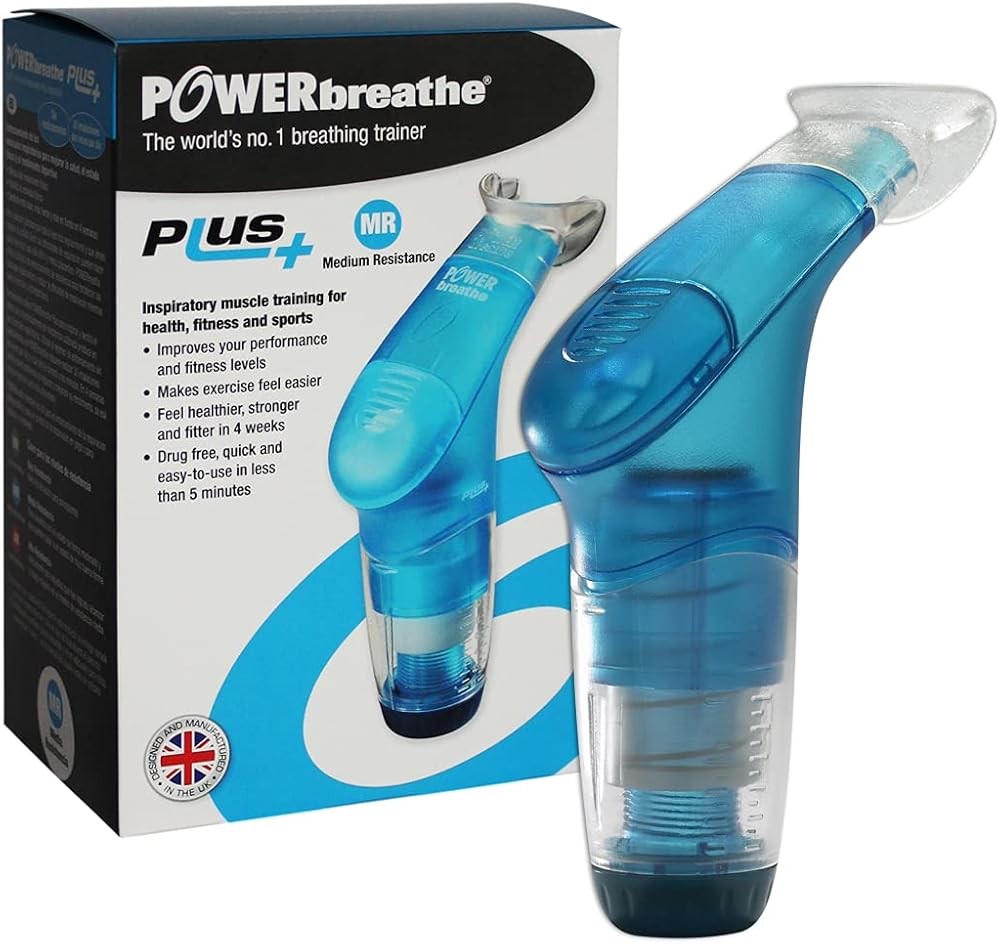
POWERbreathe Blue Medium Resistance Inspiratory Muscle Trainer
Check Price on AmazonAs an Amazon Associate we earn from qualifying purchases.
The POWERbreathe device appears in more published research studies than any other consumer breathing trainer. Its threshold-based resistance mechanism matches the protocols used in controlled trials demonstrating athletic performance improvements.[1][14] Athletes inhale against a spring-loaded valve that remains closed until inspiratory pressure exceeds the set threshold, then opens to allow airflow. This design ensures consistent training stimulus throughout each breath regardless of inhalation speed.
The medium resistance version provides a training range appropriate for most athletes. The adjustable resistance dial allows progressive overload from initial training through advanced strength levels. Each half-turn of the dial represents approximately 5-10 cm H2O resistance increase, enabling precise load matching as respiratory muscle strength improves. The visual resistance scale allows consistent training loads across sessions without requiring electronic measurement.
Construction quality supports repeated use over extended training periods. The mouthpiece attaches securely to the resistance chamber with minimal air leakage. The one-way valve system blocks exhalation through the device, isolating training stimulus to inspiratory muscles. Cleaning requires only periodic rinsing with warm water and mild detergent, making maintenance simple for daily use.
The lack of built-in measurement features means athletes must purchase separate equipment to track maximal inspiratory pressure if they want objective progress metrics. Some athletes find this limitation acceptable given the lower device cost compared to electronic alternatives. Others prefer integrated measurement despite higher prices.
Size and portability suit travel and training camp situations. The device fits easily in gym bags or luggage without requiring protective cases. No batteries or charging mean the device remains ready for use in any location. Athletes training twice daily appreciate the convenience of keeping one device at home and another in a gym bag.
The research validation behind POWERbreathe devices provides confidence that training protocols transfer from laboratory settings to real-world use. Studies specifically citing POWERbreathe products in their methods sections used identical devices to those available for consumer purchase.[1] This direct connection between research and available equipment removes uncertainty about whether commercial products match research tools.
Long-term durability reports from athletes using POWERbreathe devices daily for multiple years show reliable function. The spring mechanism maintains consistent resistance characteristics over thousands of breathing cycles. Occasional lubrication of moving parts with food-grade silicone extends operational lifespan. The UK manufacturing quality control standards ensure consistent resistance calibration across units.
The verdict: POWERbreathe delivers research-validated threshold training at $80, making it the most cost-effective option for athletes seeking the 25-35% strength gains and 4-8% performance improvements documented in published trials.
Airofit Digital 12-Month Subscription + Airofit Elite Trainer
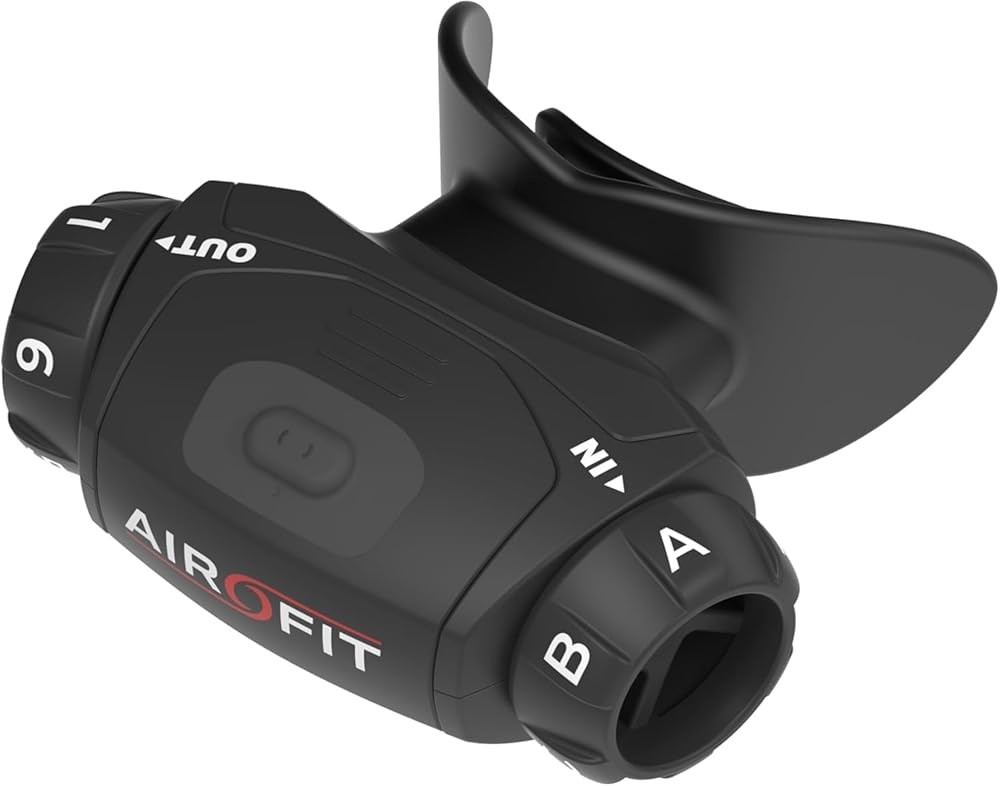
Airofit Digital 12-Month Subscription + Airofit Elite Trainer
Check Price on AmazonAs an Amazon Associate we earn from qualifying purchases.
The Airofit system combines hardware and software into an integrated training platform. The handheld device measures inspiratory and expiratory pressures, lung volumes, and breathing patterns during training sessions. Bluetooth connectivity transmits real-time data to a smartphone app that guides athletes through structured training programs and tracks progress over time.
Sport-specific training programs represent the primary differentiation from simpler threshold devices. The app includes protocols designed for running, cycling, swimming, and team sports that modify training parameters to match the ventilatory demands of each activity. Athletes select their sport and experience level, then receive progressive training plans that adjust based on measured performance improvements.
The subscription model includes ongoing content updates and new training programs. Twelve-month access comes included with device purchase, after which continued app functionality requires subscription renewal. This creates an ongoing cost beyond the initial hardware investment. Athletes who prefer one-time purchases may find this model less appealing than standalone devices.
Measurement accuracy matters for devices claiming to provide objective training metrics. Independent testing shows Airofit measurements correlate reasonably well with laboratory equipment for maximal pressures and breathing volumes. The precision appears sufficient for tracking training adaptations and adjusting resistance levels, though research-grade equipment provides tighter measurement tolerances.
The app interface emphasizes gamification and visual feedback. Athletes see real-time breathing graphs during training, with color coding indicating whether technique matches target patterns. Achievement systems and progress tracking aim to enhance motivation and adherence. Some athletes appreciate these features while others find them unnecessary additions to straightforward breathing training.
Training sessions typically last 5-10 minutes and include both strength and control-focused breathing exercises. The variety exceeds what most athletes perform with manual threshold devices. Whether this additional complexity improves outcomes beyond simple high-resistance threshold training remains unclear, as no published research directly compares Airofit protocols to standard inspiratory muscle training in athletic populations.
Battery life supports approximately one week of daily training before requiring recharge via USB-C connection. The device provides vibration feedback when target pressures are achieved or when breathing pace deviates from prescribed patterns. This tactile feedback allows training without constant visual attention to the app screen.
The historical data tracking feature allows athletes to view trends over weeks and months. Graphs display maximal pressure improvements, training adherence patterns, and consistency metrics. This longitudinal tracking may enhance motivation for athletes who respond to quantified progress visualization.
Key takeaway: Airofit costs $353 (4.4x the POWERbreathe price) plus annual subscription fees for app-guided training with real-time metrics, but no published trials demonstrate whether its sport-specific protocols produce the 8.4% endurance or 4.7% cycling performance gains documented with simple threshold devices.
WellO2 Steam Breathing Trainer with App-Guided Sessions
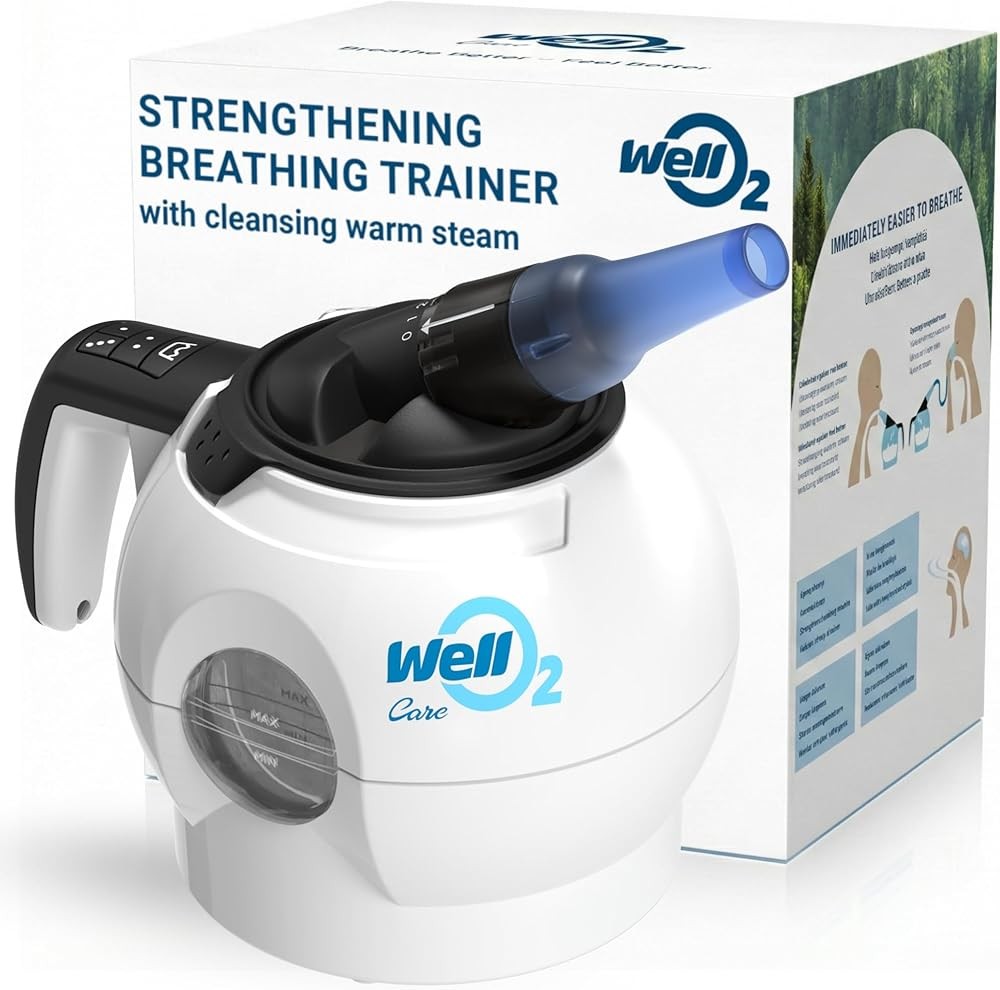
WellO2 Steam Breathing Trainer with App-Guided Sessions
Check Price on AmazonAs an Amazon Associate we earn from qualifying purchases.
WellO2 combines breathing resistance training with steam inhalation, creating a hybrid approach that addresses both respiratory muscle strength and airway conditioning. Athletes breathe against adjustable resistance while inhaling warm, moist air generated by the device’s water chamber. The manufacturer suggests this combination provides benefits beyond resistance training alone, though published research validating additive effects in athletic populations remains limited.
The water chamber holds approximately 100ml and generates steam for 10-15 minute training sessions. Athletes fill the chamber with warm water before each session, then breathe through the mouthpiece against adjustable resistance. The warm humid air may feel more comfortable than ambient air breathing during high-resistance efforts, potentially enhancing adherence for athletes who find standard threshold training unpleasant.
Resistance adjustment uses a rotating dial with numbered settings from 1-5. Each setting increases breathing resistance through variable restriction of airflow. The resistance mechanism differs from pure threshold devices, instead using flow restriction that creates resistance proportional to breathing rate. This means faster breaths encounter higher resistance than slower breaths at the same dial setting.
The companion app provides guided breathing programs and tracks session completion. Unlike Airofit, WellO2 does not measure breathing pressures or volumes. Instead, the app functions primarily as a training timer and adherence tracker. Session programs last 5-20 minutes and combine different breathing patterns including sustained holds, rapid breathing, and resistance breathing.
Cleaning requirements exceed simpler devices due to the water chamber and steam generation system. The manufacturer recommends daily rinsing and weekly deep cleaning to avoid bacterial growth in moisture-exposed components. Athletes who travel frequently or prefer minimal maintenance may find this aspect burdensome compared to dry breathing trainers.
The theoretical benefits of steam inhalation include improved airway clearance, enhanced moisture in respiratory passages, and potential effects on airway inflammation. Research in clinical populations shows steam inhalation can improve breathing comfort in individuals with respiratory conditions. Whether these effects translate to performance benefits for healthy athletes beyond the resistance training component remains unclear without specific research validation.
Price positioning falls between basic threshold devices and premium electronic trainers. Athletes receive more features than simple POWERbreathe-style devices but pay less than Airofit systems. Whether the added steam functionality justifies the price difference compared to straightforward threshold training depends on individual preferences and any perceived benefits from the combined approach.
The device weight and bulk exceed portable threshold trainers, making it less suitable for travel or training camps. The water requirement means sessions require access to appropriate temperature water and disposal facilities. These practical limitations may reduce training consistency for athletes with variable schedules or frequent travel.
Bottom line: WellO2 costs $199 (2.5x the POWERbreathe price) for dual-modality training, but lacks the published athletic performance data showing measurable endurance-to-exhaustion improvements and nearly 5% cycling time trial gains documented with threshold-based devices in controlled trials.
THE BREATHER Natural Breathing Exerciser Trainer
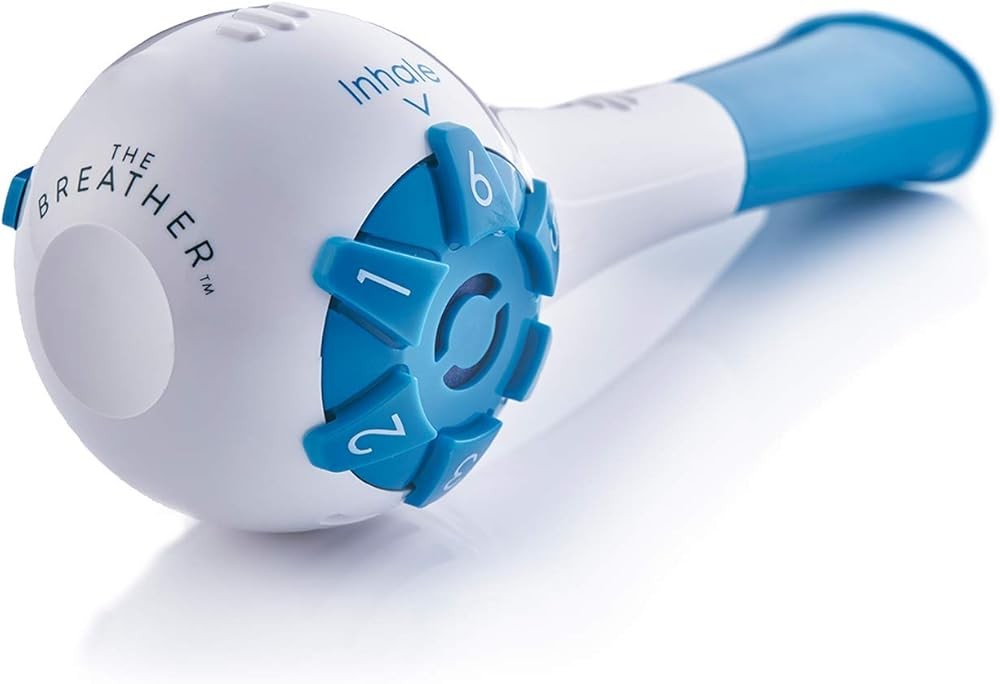
THE BREATHER Natural Breathing Exerciser Trainer
Check Price on AmazonAs an Amazon Associate we earn from qualifying purchases.
THE BREATHER provides both inspiratory and expiratory resistance in a single compact device. Six numbered resistance settings for each breathing phase allow athletes to train both inspiratory and expiratory muscles independently. This dual-phase approach differs from inspiratory-only devices used in most athletic research, potentially offering broader respiratory muscle development.
The device consists of two one-way valves with adjustable resistances connected by a central mouthpiece. Athletes inhale through one valve against set resistance, then exhale through the second valve against independently adjustable resistance. Typical training involves 10 breaths repeated 3-5 times daily, requiring less time investment than 30-breath inspiratory-only protocols.
Research examining combined inspiratory and expiratory training in athletic populations remains limited compared to inspiratory-only protocols. Most studies demonstrating performance benefits used threshold inspiratory muscle training without expiratory resistance.[1][8] This does not mean expiratory training provides no benefits, but rather that the evidence base supports inspiratory training more conclusively. Some sports medicine practitioners suggest swimmers and musicians may benefit particularly from expiratory muscle training, though specific research validation in these populations remains sparse.
The lower price point makes THE BREATHER accessible for athletes exploring breathing training without significant financial commitment. Budget-conscious athletes or those uncertain about continuing long-term training can gain experience with respiratory muscle training at minimal cost. If results warrant continued training, upgrading to more expensive devices remains an option.
Resistance ranges accommodate most athletes, though very strong individuals may eventually find the highest setting insufficient for continued progressive overload. The manufacturer offers a high-resistance version for advanced users, extending the training range beyond the standard model. Starting with the standard version allows most athletes several months of progressive training before requiring upgrades.
Durability feedback from long-term users shows mixed results. Some athletes report years of daily use without mechanical issues, while others experience valve degradation after 6-12 months of intensive training. The lower replacement cost compared to premium devices means periodic replacement remains affordable even if durability proves limited.
The compact size and light weight suit travel and inconsistent training locations. Athletes can carry the device in pockets or small bags without dedicated storage. No assembly or water filling simplifies use immediately upon waking or before bed. This convenience may enhance adherence compared to devices requiring more preparation.
Independent resistance adjustment for inspiratory and expiratory phases allows customized training protocols. Athletes can emphasize inspiratory strength while maintaining moderate expiratory resistance, or balance the two phases equally. This flexibility accommodates individual preferences and sport-specific requirements that might benefit from different emphasis on each breathing phase.
In summary: THE BREATHER offers 10-breath dual-phase training sessions at $49 (61% less than POWERbreathe) with 6 fixed resistance levels, but lacks published evidence showing the 25-35% strength gains and over 8% time-to-exhaustion improvements achieved in trials using 30-breath threshold protocols at 50-72% maximal pressure.
For more context, see our guide on Airofit Pro Review: App-Guided Respiratory Muscle Training Device.
Related Reading
For athletes interested in broader applications of breathing training, our review of respiratory muscle training benefits covers general health and fitness applications beyond sport-specific performance. Runners seeking detailed guidance on device selection should read our analysis of the best lung trainer for runners, which examines breathing mechanics specific to running gait and endurance demands.
Athletes considering comprehensive device comparisons can review our guide to the best breathing trainer device across all use cases. Those interested in technology-focused options should read our Airofit Pro review examining the premium digital training system in detail.
For readers exploring breathing training for stress management alongside athletic performance, our article on breathing exercise devices for anxiety covers dual-purpose applications. Athletes with respiratory conditions can read our specialized review of breathing trainers for COPD and asthma to understand clinical applications.
Finally, athletes confused about equipment differences should consult our comparison of inspiratory muscle trainers versus spirometers, which clarifies the distinction between training devices and diagnostic tools.
References
-
Inbar O, Weiner P, Azgad Y, Rotstein A, Weinstein Y. Specific inspiratory muscle training in well-trained endurance athletes. Med Sci Sports Exerc. 2000;32(7):1233-1237. https://pubmed.ncbi.nlm.nih.gov/10912887/
-
McConnell AK, Lomax M. The influence of inspiratory muscle work history and specific inspiratory muscle training upon human limb muscle fatigue. J Physiol. 2006;577(Pt 1):445-457. https://pubmed.ncbi.nlm.nih.gov/16873403/
-
HajGhanbari B, Yamabayashi C, Buna TR, et al. Effects of respiratory muscle training on performance in athletes: a systematic review with meta-analyses. J Strength Cond Res. 2013;27(6):1643-1663. https://pubmed.ncbi.nlm.nih.gov/23254551/
-
St Croix CM, Morgan BJ, Wetter TJ, Dempsey JA. Fatiguing inspiratory muscle work causes reflex sympathetic activation in humans. J Physiol. 2000;529(Pt 2):493-504. https://pubmed.ncbi.nlm.nih.gov/11101657/
-
Sonetti DA, Wetter TJ, Pegelow DF, Dempsey JA. Effects of respiratory muscle training versus placebo on endurance exercise performance. Respir Physiol. 2001;127(2-3):185-199. https://pubmed.ncbi.nlm.nih.gov/11504590/
-
Edwards AM, Walker RE, Cooke CB. Inspiratory muscle training and endurance: a central metabolic control perspective. Int J Sports Physiol Perform. 2007;2(1):94-102. https://pubmed.ncbi.nlm.nih.gov/19255459/
-
Archiza B, Welch JF, Geary CM, et al. Temporal characteristics of exercise-induced diaphragmatic fatigue. J Appl Physiol. 2018;124(4):906-914. https://pubmed.ncbi.nlm.nih.gov/29357499/
-
Illi SK, Held U, Frank I, Spengler CM. Effect of respiratory muscle training on exercise performance in healthy individuals: a systematic review and meta-analysis. Sports Med. 2012;42(8):707-724. https://pubmed.ncbi.nlm.nih.gov/22765281/
-
Laoutaris ID, Dritsas A, Brown MD, et al. Inspiratory muscle training using an incremental endurance test alleviates dyspnea and improves functional status in patients with chronic heart failure. Eur J Cardiovasc Prev Rehabil. 2004;11(6):489-496. https://pubmed.ncbi.nlm.nih.gov/15580060/
-
Killian KJ, Gandevia SC, Summers E, Campbell EJ. Effect of increased lung volume on perception of breathlessness, effort, and tension. J Appl Physiol. 1984;57(3):686-691. https://pubmed.ncbi.nlm.nih.gov/6490457/
-
Verges S, Lenherr O, Haner AC, Schulz C, Spengler CM. Increased fatigue resistance of respiratory muscles during exercise after respiratory muscle endurance training. Am J Physiol Regul Integr Comp Physiol. 2007;292(3):R1246-R1253. https://pubmed.ncbi.nlm.nih.gov/17082354/
-
Tong TK, Fu FH, Chung PK, et al. The effect of inspiratory muscle training on high-intensity, intermittent running performance to exhaustion. Appl Physiol Nutr Metab. 2008;33(4):671-681. https://pubmed.ncbi.nlm.nih.gov/18641710/
-
Bailey SJ, Romer LM, Kelly J, Wilkerson DP, DiMenna FJ, Jones AM. Inspiratory muscle training enhances pulmonary O2 uptake kinetics and high-intensity exercise tolerance in humans. J Appl Physiol. 2010;109(2):457-468. https://pubmed.ncbi.nlm.nih.gov/20507967/
-
Romer LM, McConnell AK, Jones DA. Effects of inspiratory muscle training on time-trial performance in trained cyclists. J Sports Sci. 2002;20(7):547-562. https://pubmed.ncbi.nlm.nih.gov/12173522/
-
Kilding AE, Brown S, McConnell AK. Inspiratory muscle training improves 100 and 200 m swimming performance. Eur J Appl Physiol. 2010;108(3):505-511. https://pubmed.ncbi.nlm.nih.gov/19826834/
Recommended Products