Best Cervical Traction Device for Neck Pain Relief
Summarized from peer-reviewed research indexed in PubMed. See citations below.
Most people with chronic neck pain struggle to find relief that addresses the underlying spinal compression causing their discomfort. The Therahab Professional Cervical Traction Device delivers clinical-grade traction at adjustable forces up to 50 lbs, priced at $399, and uses the same pneumatic technology found in physical therapy clinics. Published research demonstrates that cervical traction at forces between 21-100 N reduces pain intensity and improves neck mobility in patients with cervical spondylosis and radiculopathy. For budget-conscious buyers, the Air Collar 2nd Gen Electric Cervical Traction Device provides effective pneumatic traction at $119. Here’s what the published research shows about choosing the right cervical traction device for your neck pain.
Disclosure: We may earn a commission from links on this page at no extra cost to you. Affiliate relationships never influence our ratings. Full policy →


Cervical traction devices represent one of the most researched conservative interventions for neck pain, with randomized controlled trials demonstrating measurable improvements in pain scores, range of motion, and functional disability indices. A study published in Aerospace Medicine and Human Performance found that F-15C fighter pilots using home cervical traction after flying experienced significant pain reduction, with post-traction pain levels returning to pre-flight baseline (1.3 on a 10-point scale compared to 1.9 post-flight without traction).
The mechanism behind cervical traction effectiveness involves multiple physiological processes: spinal decompression increases intervertebral disc height, reduces nerve root compression, improves blood flow to paraspinal muscles, and promotes restoration of normal cervical lordosis. Research using flowmetry and electromyography showed that intermittent cervical traction (15-second pull with 5-second rest intervals) relieved pain in 79.2% of 96 patients while significantly increasing blood flow to affected muscles.
| Feature | Therahab Professional | Theratrac Air | DDS MAX | Air Collar 2nd Gen |
|---|---|---|---|---|
| Price | $399 | $224 | $175 | $119 |
| Traction Type | Pneumatic | Air-powered | Mechanical | Inflatable collar |
| Force Range | Up to 50 lbs | Up to 40 lbs | Variable leverage | Adjustable inflation |
| Power Source | Electric pump | Electric pump | Gravity/bodyweight | Electric pump |
| Research Backing | Saunders-type device | Clinical design | Mechanical traction | Home traction studies |
| Setup | Supine positioning | Supine positioning | Over-door | Seated/supine |
| Timer Function | Yes | Programmable | Manual | Yes |
| Heat Therapy | No | Yes | No | No |
| Portability | Moderate | Moderate | Limited | High |
| Best For | Clinical-grade results | Advanced features | Budget-conscious | Daily convenience |
How Does Cervical Traction Reduce Neck Pain?
Cervical traction works through mechanical decompression of the cervical spine, which creates several therapeutic effects documented in peer-reviewed literature. When traction force is applied, the space between vertebrae increases, reducing pressure on spinal discs and nerve roots. This decompression allows herniated or bulging disc material to move away from compressed nerves, addressing the root cause of radicular pain.
A randomized controlled trial examining manual cervical distraction in 48 participants found that high-force traction (51-100 N) produced significantly better pain reduction than low-force control (0-20 N), with adjusted mean difference of 15.6 points on visual analogue scale. The research confirmed that therapeutic benefit depends on applying sufficient traction force to create measurable joint space widening.
Beyond mechanical decompression, cervical traction improves local blood circulation to paraspinal muscles. Flowmetric studies demonstrated that blood flow in affected cervical muscles significantly increased following traction treatment in patients whose pain was relieved. This enhanced circulation delivers oxygen and nutrients while removing metabolic waste products that contribute to muscle pain and stiffness.
The effect on muscle activity is equally important. Electromyographic monitoring showed that the mean frequency of myoelectric signals in cervical paraspinal muscles increased following traction in patients experiencing pain relief. This indicates improved muscle function and reduced muscle guarding, which often perpetuates neck pain even after the initial injury has healed.
Bottom line: Cervical traction addresses neck pain through multiple mechanisms including spinal decompression, improved blood flow, enhanced muscle function, and correction of postural misalignment, making it a comprehensive conservative intervention.
What Does Research Say About Cervical Traction Effectiveness?
Clinical trials consistently demonstrate that cervical traction devices produce measurable improvements in pain, disability, and range of motion when used according to evidence-based protocols. A randomized controlled study of 174 patients with cervical spondylosis compared Saunders traction to high-intensity laser therapy, finding that both methods improved pain scores and mobility immediately and in medium-term follow-up (4 weeks).
The Saunders cervical traction device has been studied extensively across multiple trials. Research with 45 patients experiencing overload-induced cervical pain showed that 10 treatment sessions using the Saunders device produced the greatest improvement in painless hand grip strength, a functional indicator of reduced neural compression. The traction force was regulated so patients experienced noticeable but painless traction, an important safety parameter.
Long-term effectiveness depends on addressing underlying structural problems, not just symptom relief. A one-year randomized controlled study of 72 patients with cervicogenic dizziness and neck pain found that adding Denneroll cervical extension traction to a multimodal program produced superior long-term outcomes. At one-year follow-up, the traction group showed significantly greater improvements in cervical lordosis (14.4 degrees), anterior head translation (2.4 cm), and neck pain scores (4.97 points lower) compared to control.
Range of motion improvements have been documented across multiple studies. Research with 39 patients receiving Saunders traction and TENS revealed the greatest improvement in coronal and horizontal plane movement and extension motion after 10 treatment sessions. These biomechanical improvements translate to functional benefits in daily activities requiring neck rotation and looking upward.
Key takeaway: The strongest evidence supports intermittent mechanical traction using devices like the Saunders system, with protocols involving 10-15 minutes daily for 10-20 sessions producing clinically meaningful improvements in pain, function, and spinal alignment.
For readers interested in cervical support beyond traction, our comprehensive guide on cervical pillows explores how specialized pillow designs maintain proper neck alignment during sleep.
How Much Traction Force Should You Use?
The optimal traction force for cervical pain relief has been investigated in dose-response studies, with evidence suggesting that moderate to high forces produce superior outcomes. Research comparing three traction force ranges found that high-force manual cervical distraction (51-100 N, approximately 11-22 lbs) reduced neck pain significantly more than low-force traction (0-20 N), with medium force (21-50 N, approximately 5-11 lbs) also showing benefits.
Individual tolerance varies considerably, which is why adjustable traction devices offer advantages over fixed-force systems. Clinical protocols consistently emphasize that traction should be noticeable but painless, a subjective threshold that differs among patients. Studies using the Saunders device allowed clinicians to regulate force based on patient feedback, ensuring therapeutic benefit without exceeding comfort limits.
Starting with lower forces and gradually increasing is the standard clinical approach. A pilot study on manual cervical distraction documented that clinicians successfully delivered prescribed force ranges across treatment sessions, with mean traction values staying within target zones. This demonstrates the importance of force control and measurement in achieving consistent therapeutic effects.
Body weight influences the effective force during over-door traction systems, where gravitational pull provides the decompressive effect. Lighter individuals may need to add weight, while heavier users might experience excessive force. Pneumatic and mechanical systems with precise force gauges eliminate this variable, providing consistent traction regardless of body weight.
Research shows: Forces between 21-100 N (5-22 lbs) provide therapeutic benefit, with higher forces generally producing better outcomes provided they remain within patient tolerance. Devices with adjustable, measurable force control allow personalized optimization of traction intensity.
Understanding the relationship between neck pain and sleeping position is crucial for comprehensive care. Our article on pillows for side sleepers with neck pain provides evidence-based guidance on maintaining spinal alignment throughout the night.
What Is the Proper Protocol for Home Cervical Traction?
Evidence-based protocols for home cervical traction follow specific parameters regarding duration, frequency, and technique. The fighter pilot study used a 6-week protocol with daily traction after flying, demonstrating that consistent regular use produces better outcomes than sporadic application. Participants logged morning, post-flying, and post-traction pain scores, showing that traction effectively reversed flying-related pain increases.
Session duration in clinical trials typically ranges from 10-20 minutes. A 12-week intervention study using a simple spinal traction device prescribed 10 minutes daily, which proved effective in improving sagittal cranio-cervical posture and reducing symptoms. Longer sessions do not necessarily produce better results and may increase risk of muscle fatigue or adverse effects.
Intermittent traction cycles outperform continuous steady traction based on physiological evidence. The protocol using 15-second traction with 5-second rest intervals relieved pain in 79.2% of patients while significantly increasing muscle blood flow. The rest periods allow circulation to be restored between traction cycles, reducing risk of ischemia while maintaining decompressive benefits.
Positioning varies by device type but follows biomechanical principles. Supine (lying down) traction keeps the cervical spine in neutral alignment and allows gravity to assist with muscle relaxation. Studies using manual cervical distraction placed patients prone (face down), though this position is less common for home devices. Over-door systems require upright positioning, which some research suggests may be less effective than horizontal traction.
Treatment frequency follows a typical physical therapy model. Studies consistently used protocols with treatment sessions not more than three days apart, usually implementing 3-5 sessions per week. The total intervention period ranged from 2 weeks (10 sessions) to 12 weeks in various trials, with longer protocols addressing structural changes in cervical lordosis rather than just symptom relief.
Specific guidance: Use 10-15 minutes of intermittent traction (15 seconds on, 5 seconds off) daily or every other day, positioned lying down when possible, for a minimum of 10 sessions over 3-4 weeks to achieve meaningful pain reduction and functional improvement.
Readers dealing with additional ergonomic challenges may benefit from our guide on best pillows for back sleepers, which addresses proper spinal alignment for different sleeping positions.
Can Cervical Traction Restore Normal Neck Curve?
Loss of cervical lordosis (the natural forward curve of the neck) is strongly associated with chronic neck pain and neurological symptoms. Research demonstrates that targeted cervical traction can reverse abnormal spinal configurations over time. A 12-week study found that daily use of a spinal traction device shifted four participants from kyphotic (reversed curve) to lordotic (normal curve) cervical spine presentation.
The one-year randomized controlled study on cervicogenic dizziness provides the strongest evidence for structural restoration. Patients receiving Denneroll cervical extension traction showed significant improvements in cervical lordosis angle (14.4 degrees better than control group) and anterior head translation (2.4 cm improvement). These changes persisted at the one-year follow-up, indicating plastic structural remodeling rather than temporary positioning.
Forward head posture (FHP), where the head projects forward of the shoulders, creates excessive loading on cervical structures. Measurements of head protraction distance decreased significantly with traction interventions aimed at lordosis restoration. This postural correction reduces the moment arm and compressive forces that contribute to degenerative changes and chronic pain.
The relationship between structural correction and symptom relief is dose-dependent. Studies that only provided short-term symptom-focused traction showed improvements that faded over time, while those targeting lordosis restoration maintained benefits long-term. This suggests that addressing underlying biomechanical abnormalities provides more durable pain relief than simple decompression alone.
Radiographic measurements demonstrate measurable changes. Chi-squared analyses from the 12-week intervention showed that sagittal cervical spine configuration significantly shifted toward more lordotic positioning (p = 0.007). These objective findings support the use of extension-based traction devices like the Denneroll system for patients with documented loss of cervical curve.
What this means for you: If imaging has revealed loss of normal cervical lordosis or forward head posture, traction devices specifically designed for lordosis restoration (like Denneroll-type systems) offer the best chance of structural correction, requiring consistent daily use for 12 weeks or longer.
For individuals experiencing cervicogenic headaches related to neck misalignment, our article on cervical pillows vs regular pillows explains how proper neck support differs from standard pillow designs.
Product Review: Therahab Professional Cervical Traction Device
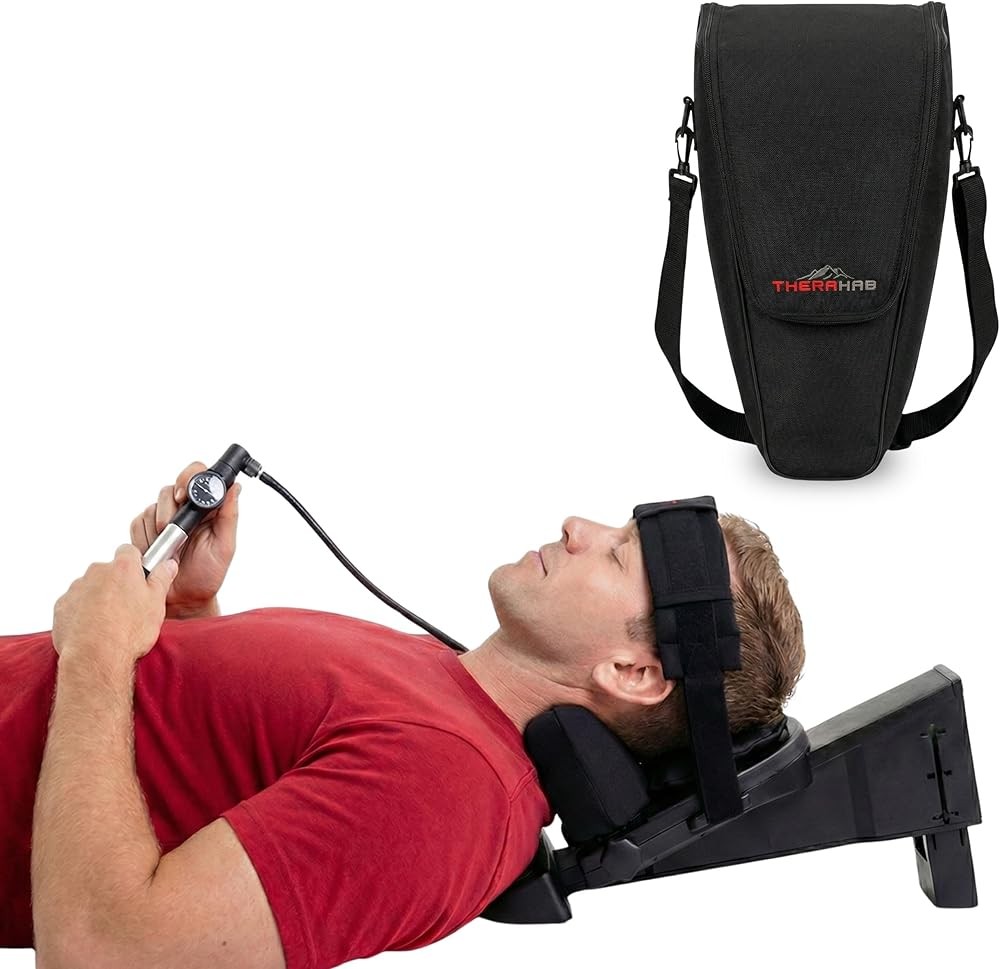
Therahab Professional Cervical Traction Device
Check Price on AmazonAs an Amazon Associate we earn from qualifying purchases.
The Therahab Professional represents clinical-grade cervical traction technology adapted for home use, delivering pneumatic traction forces comparable to equipment found in physical therapy clinics. This device uses an electric air pump to inflate a cervical collar that expands vertically, creating controlled decompression of the cervical spine. The force adjustment dial allows precise control from gentle traction up to 50 lbs maximum force.
Research on Saunders-type pneumatic traction devices (which share similar mechanical principles with the Therahab system) demonstrates superior outcomes compared to other modalities. Studies with 150 patients found that mechanical traction using the Saunders device produced significantly higher results in pain relief, global mobility improvement, and reduced functional impairment compared to high-intensity laser therapy.
The supine positioning required for the Therahab Professional aligns with evidence-based protocols. Lying horizontal during traction allows gravity to assist with muscle relaxation and reduces the compressive load on cervical discs that occurs in upright postures. This positioning also permits better control of cervical spine alignment during traction cycles.
The built-in timer function supports proper treatment duration. Clinical studies consistently used 10-20 minute sessions, and the Therahab’s programmable timer ensures optimal session length, avoiding both excessive short sessions (which may be ineffective) and overly long sessions (which increase adverse effect risk). The device cycles automatically through inflation and deflation phases, mimicking the intermittent traction protocols shown to improve muscle blood flow.
Construction quality reflects professional standards. The pneumatic collar uses medical-grade materials designed for repeated inflation cycles without loss of pressure. The pump mechanism provides consistent force delivery session after session, addressing a common problem with manual traction devices where force application varies depending on user technique and fatigue.
The Therahab Professional best serves patients seeking clinical-quality traction at home who have space for proper supine positioning and budget for premium equipment. The investment makes sense for individuals with chronic cervical radiculopathy or those who would otherwise require frequent physical therapy visits for traction treatments.
Product Review: Theratrac Air Cervical Traction Device
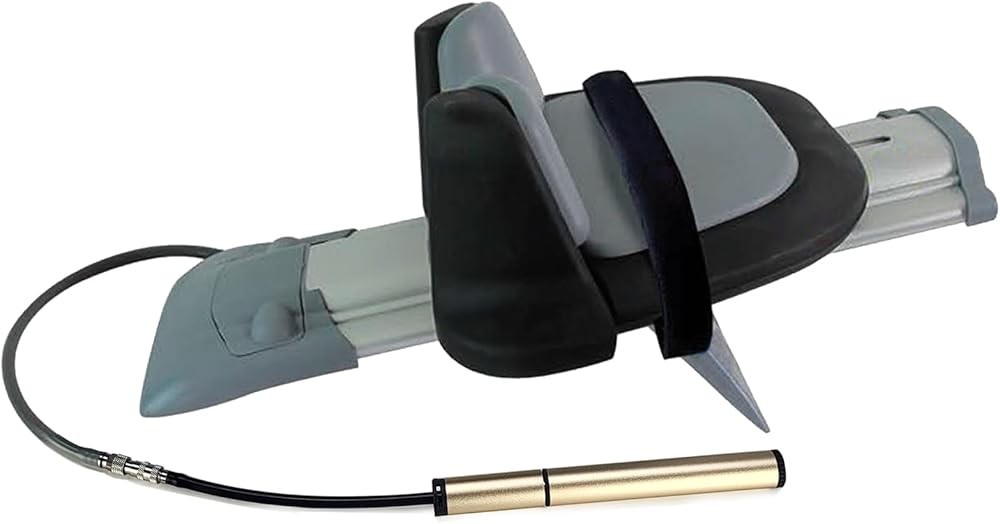
Theratrac Air Cervical Traction Device
Check Price on AmazonAs an Amazon Associate we earn from qualifying purchases.
The Theratrac Air advances pneumatic traction technology with programmable features and integrated heat therapy. The digital control panel allows users to set specific inflation pressures, traction cycle durations, and rest intervals, providing customization beyond basic on/off controls. This programmability supports evidence-based intermittent traction protocols using 15-second pull and 5-second rest cycles.
The heated therapy option addresses muscle guarding and tension that often accompanies neck pain. While heat alone does not provide the decompressive benefits of traction, combining thermal therapy with mechanical decompression may enhance muscle relaxation and improve patient tolerance of higher traction forces. Research combining modalities (traction plus TENS, for example) showed additive benefits in some parameters.
Digital pressure monitoring eliminates guesswork about applied force. The LCD display shows real-time pressure in the pneumatic collar, allowing users to replicate successful force levels across sessions. This consistency aligns with clinical traction protocols that maintain standardized force parameters throughout treatment courses.
The programmable timer stores custom treatment protocols. Users can save their preferred traction force, cycle duration, heat setting, and total session time, then activate their personalized program with a single button. This convenience factor may improve adherence to daily traction regimens, which research shows is critical for achieving sustained benefits.
Air-powered inflation provides smooth, gradual traction force application rather than sudden jerking motions. This controlled inflation mimics clinical traction devices that slowly increase force to patient tolerance levels. Gradual force application reduces muscle guarding responses that can limit therapeutic benefit and cause discomfort.
The Theratrac Air serves users who want research-supported intermittent traction protocols with the convenience of automated cycling and the therapeutic benefit of combined heat therapy. The programmable features justify the premium for individuals committed to consistent long-term traction therapy.
Product Review: DDS MAX Cervical Traction Device
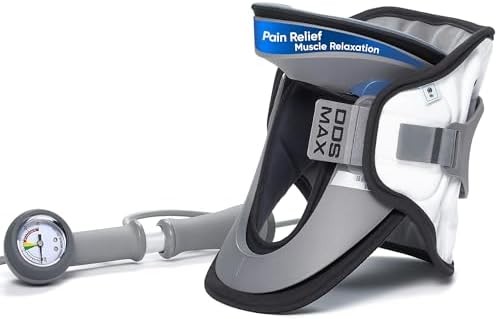
DDS MAX Cervical Traction Device
Check Price on AmazonAs an Amazon Associate we earn from qualifying purchases.
The DDS MAX represents over-door mechanical traction, using gravity and body weight to create decompressive force. This approach differs from pneumatic systems but still achieves the fundamental goal of increasing cervical intervertebral spacing. The mechanical leverage system allows adjustment of head position and traction angle to customize force distribution across cervical segments.
Over-door traction has been used in clinical settings for decades, though less research specifically examines this modality compared to supine mechanical traction. The principle remains sound: vertical separation of skull from shoulders reduces compressive loading on cervical discs and facet joints. The effectiveness depends heavily on proper setup, positioning, and weight adjustment.
The DDS MAX requires no electricity, eliminating concerns about power source availability and reducing long-term operating costs. The mechanical simplicity also means fewer components that can fail. The sling-and-pulley system has been refined over generations of traction devices, representing proven mechanical engineering for force transmission.
Angle adjustment capability allows targeting of specific cervical segments. Research on lordosis restoration emphasizes the importance of extension-biased traction for patients with reversed cervical curves. The DDS MAX’s head cradle can be positioned to create varying degrees of cervical extension during traction, potentially addressing both decompression and postural correction.
Portability and storage are practical advantages. The over-door mount installs and removes quickly without permanent hardware, and the entire system folds for compact storage. For users with limited living space or those who travel frequently, these logistical considerations can determine whether a traction program succeeds or fails due to inconvenience.
The DDS MAX suits users seeking affordable mechanical traction who have appropriate door frames and prefer simplicity over electronic features. Budget-conscious individuals willing to learn proper positioning technique can achieve effective decompression despite the device’s mechanical limitations.
Product Review: Air Collar 2nd Gen Electric Cervical Traction Device
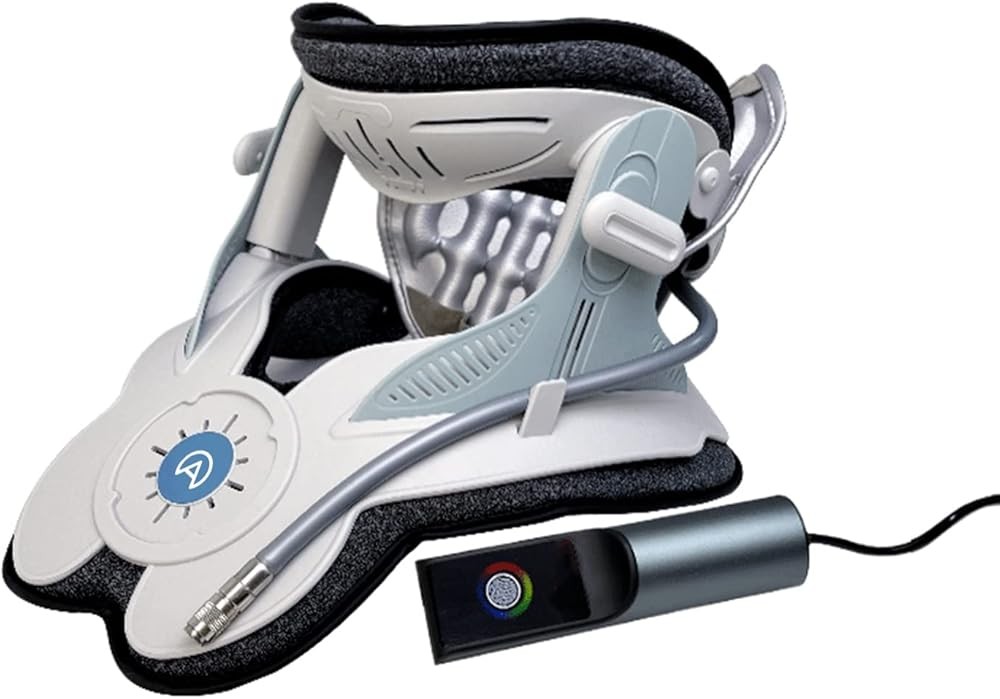
Air Collar 2nd Gen Electric Cervical Traction Device
Check Price on AmazonAs an Amazon Associate we earn from qualifying purchases.
The Air Collar 2nd Gen delivers pneumatic cervical traction at an accessible price point, using an electric pump to inflate a soft collar around the neck. This inflatable design provides portability and convenience, working in either seated or supine positions. The simplicity makes it suitable for traction therapy beginners uncertain about committing to expensive professional-grade equipment.
Research on home cervical traction devices demonstrates that even basic traction can produce meaningful pain relief when used consistently. The fighter pilot study showing significant post-flight pain reduction likely used relatively simple home traction equipment, proving that sophisticated features are not mandatory for benefit. What matters most is consistent application of appropriate traction force.
The electric pump allows controlled inflation to desired pressure levels, though the Air Collar lacks the precise force measurement found in premium devices. Users must learn their optimal inflation level through trial and adjustment, a process that takes several sessions. Once established, the manual pressure gauge helps replicate effective settings across treatments.
Portability enables traction therapy during travel or at work. The collar and compact pump pack into a small bag, unlike bulky over-door or supine traction systems. For individuals whose neck pain relates to occupational activities (like the fighter pilots in traction research), having portable equipment allows traction immediately after symptom-provoking activities.
The low price point ($119) removes financial barriers to trying cervical traction therapy. Many insurance plans do not cover home traction devices, making out-of-pocket cost a significant factor. The Air Collar’s affordability allows individuals to test whether traction helps their specific neck pain condition before investing in premium equipment.
The Air Collar 2nd Gen serves budget-conscious users beginning cervical traction therapy, frequent travelers needing portable pain management, and individuals uncertain whether traction will help their condition. The low investment risk makes sense for those exploring conservative options before considering injections or surgery.
How Does Cervical Traction Compare to Other Neck Pain Interventions?
Cervical traction occupies a specific niche in the conservative management hierarchy for neck pain. Randomized trials comparing traction to other modalities provide perspective on relative effectiveness. The 174-patient study comparing Saunders traction to high-intensity laser therapy found both methods produced similar immediate and medium-term improvements, though laser therapy showed better long-term maintenance of benefits.
Combination therapy often exceeds single-modality treatment. Research with 39 patients found that Saunders traction plus transcutaneous electrical nerve stimulation (TENS) produced the best therapeutic effect, superior to either intervention alone. This suggests that traction’s mechanical decompression complements electrical modalities’ effects on pain perception and muscle function.
Compared to manual therapy, mechanical traction offers consistency and dose control advantages. Chiropractors and physical therapists performing manual cervical distraction can apply varying forces depending on their technique and fatigue level. Mechanical devices deliver the same force session after session, eliminating therapist-dependent variability documented in manual treatment studies.
The role of cervical traction in multimodal rehabilitation programs appears clear. Studies achieving the most impressive long-term outcomes combined traction with exercise, postural correction, and other interventions rather than using traction in isolation. The one-year cervicogenic dizziness trial showed that adding Denneroll traction to a multimodal program produced significantly better outcomes than the multimodal program alone.
Cost-effectiveness favors home traction over clinic-based treatment once proper technique is established. If a traction device costs $200-400 but eliminates the need for 20-30 physical therapy visits at $100-150 each, the home device pays for itself quickly. The fighter pilot study’s success with home traction demonstrates that supervised clinical administration is not mandatory for benefit.
The research verdict: Cervical traction works best as part of comprehensive neck pain management including posture correction, strengthening exercises, and ergonomic modifications, rather than as standalone therapy. Home traction devices provide cost-effective access to this evidence-based intervention.
Individuals also dealing with upper back tension may find value in our guide on cold compression therapy benefits, which addresses how combined cold and compression therapy can reduce pain and inflammation in the upper body.
What Are the Safety Considerations for Cervical Traction?
While generally safe when used properly, cervical traction carries potential risks that users must understand. A case report documented vertebral artery dissection in a 57-year-old woman after using a cervical neck traction device, emphasizing the importance of recognizing that excessive force or improper technique can cause serious complications. This rare but severe adverse event highlights the need for medical consultation before beginning traction therapy.
The systematic review of 425 subjects across multiple traction studies found that only 3.4% experienced mild symptoms including headache, neck pain, muscle twitches, or anxiety. These minor adverse effects typically resolved without intervention and did not require treatment discontinuation. The low incidence rate suggests good overall safety profile when traction protocols follow research-based guidelines.
Contraindications to cervical traction include certain medical conditions where spinal decompression could cause harm. Individuals with spinal instability, rheumatoid arthritis affecting the cervical spine, active cancer, severe osteoporosis, or acute fractures should avoid traction. Recent stroke or vertebrobasilar insufficiency also contraindicate traction due to risks related to cervical artery function.
Starting with conservative forces and gradually increasing minimizes adverse effect risk. The research protocol using 0-20 N as a minimal intervention control group demonstrates that very light traction is well-tolerated even if therapeutically insufficient. Beginning at the low end of the therapeutic range (21-30 N) and increasing based on tolerance provides the safest approach.
Position changes during or immediately after traction should be gradual. Some users experience temporary dizziness when moving from traction to upright position, related to blood pressure adjustment and cervical proprioceptive changes. Research on cervicogenic dizziness actually used traction as treatment, but acute positional changes during treatment can trigger transient symptoms in susceptible individuals.
Essential guidance: Consult a healthcare provider for evaluation before starting cervical traction, especially if you have known cervical spine pathology. Begin with low forces for short durations, monitor for any increase in symptoms, and discontinue immediately if experiencing severe headache, visual changes, dizziness, or radiating arm symptoms.
For comprehensive approaches to neck pain management, our guide to best pillows for neck pain provides evidence-based recommendations for maintaining proper alignment during sleep.
Can Cervical Traction Help Specific Conditions Beyond General Neck Pain?
Cervical radiculopathy (pinched nerve) represents one of the strongest indications for traction therapy. The study of 150 patients with cervical radicular pain syndrome found that Saunders traction significantly improved pain scores, increased cervical range of motion, and reduced disability index scores. The decompressive effect on nerve roots explains why radicular symptoms often respond better to traction than axial neck pain alone.
Cervicogenic dizziness and headaches improved substantially with lordosis-restoring traction in the one-year randomized controlled trial. Patients receiving Denneroll cervical extension traction showed marked reductions in dizziness handicap inventory scores (29.9 points better than control), dizziness severity (5.4 points lower), and dizziness frequency (2.6 points better). These improvements correlated with structural corrections in cervical alignment.
Cervical spondylosis (age-related degenerative changes) benefits from traction according to multiple studies. The 174-patient trial specifically enrolled individuals with cervical spondylosis and found that Saunders traction produced analgesic efficacy and improved mobility. While traction does not reverse arthritis or disc degeneration, the mechanical decompression reduces pain associated with these structural changes.
Occupational neck pain in fighter pilots demonstrated clear improvement with home cervical traction. The crossover study found that traction effectively reversed flying-related pain increases, bringing post-flight pain levels back to morning baseline. This suggests traction can address neck pain caused by sustained postural loading and acceleration forces, making it potentially useful for other occupations involving prolonged static postures or vibration.
Forward head posture and loss of cervical lordosis respond to extension-based traction over longer intervention periods. The 12-week study showing shifts from kyphotic to lordotic cervical configuration demonstrates that traction can correct postural abnormalities when used consistently. This structural correction approach targets the underlying biomechanical dysfunction rather than just symptom management.
What the data says: Cervical traction shows strongest evidence for cervical radiculopathy, cervicogenic dizziness, cervical spondylosis, and postural dysfunction with forward head position. Conditions involving nerve compression or structural malalignment respond better than pure muscular neck pain.
Those experiencing acid reflux alongside neck pain may benefit from our article on wedge pillows for acid reflux, which addresses proper head elevation for multiple health concerns.
What Features Matter Most in a Cervical Traction Device?
Force measurement and control capability ranks as the most critical feature based on research comparing different traction force ranges. Devices with precise gauges or digital displays allow users to replicate effective force levels across sessions and gradually progress force as tolerance improves. Manual devices or those with vague “low/medium/high” settings make it difficult to follow evidence-based protocols specifying forces in pounds or Newtons.
Positioning flexibility affects both effectiveness and user compliance. Supine traction aligns with most clinical research protocols and allows better muscle relaxation than upright positioning. However, some users cannot easily lie on the floor or bed for traction sessions due to mobility limitations. Devices offering multiple position options accommodate individual circumstances while maintaining therapeutic benefit.
Timer functions support proper session duration. Studies consistently used 10-20 minute sessions, and built-in timers ensure optimal duration by avoiding both inadequate short sessions and excessive long sessions. Programmable timers allowing intermittent cycle settings (15 seconds on, 5 seconds off) enable replication of protocols shown to improve muscle blood flow in research.
Build quality determines long-term cost-effectiveness. A device that fails after 20 uses provides poor value regardless of initial price. Medical-grade materials, reinforced seams on pneumatic collars, and durable pump mechanisms ensure consistent performance throughout months of daily use. Clinical devices in physical therapy offices withstand hundreds of patient sessions, setting the standard for home equipment durability.
Portability considerations vary by individual circumstances. Users traveling frequently for work benefit from compact, lightweight designs that pack easily. Those treating neck pain at home may prioritize performance over portability, accepting bulkier professional-grade systems. The fighter pilot study’s success with home devices suggests that portability enables treatment immediately after symptom-provoking activities.
Comfort features influence adherence to treatment protocols. Soft cervical collars with breathable fabrics reduce skin irritation during 15-minute sessions. Properly designed head cradles for over-door systems distribute pressure evenly rather than creating hot spots. While comfort alone does not determine therapeutic effectiveness, devices causing excessive discomfort will not be used consistently.
Key finding: Prioritize measurable force control, proper positioning support, appropriate timer functions, and durable construction over secondary features like color options or storage bags. The most comfortable, portable device provides no benefit if it cannot deliver therapeutic traction forces.
For side sleepers concerned about maintaining spinal alignment, our guide to body pillows for side sleepers examines how full-length support complements cervical traction therapy.
What Are Common Mistakes When Using Cervical Traction Devices?
Many users make critical errors that reduce effectiveness or increase risk when beginning cervical traction therapy. Understanding these common pitfalls helps optimize treatment outcomes and safety. The most frequent mistake involves using excessive force too quickly, driven by the misconception that more traction equals faster pain relief. Clinical research demonstrates that gradual force progression produces better outcomes than aggressive initial traction.
Starting traction force at the maximum setting significantly increases adverse effect risk. The manual cervical distraction study showed that even low-force traction (0-20 N) was well-tolerated, while high forces (51-100 N) produced the best pain relief but required gradual tolerance building. New users should begin at 25-30% of device maximum force and increase by small increments (5-10 N or 1-2 lbs) every 3-4 sessions based on comfort and response.
Session duration errors occur in both directions. Some users perform multiple brief sessions thinking cumulative time matters, while others exceed recommended durations hoping for enhanced benefit. Research consistently supports 10-20 minute sessions, with longer durations not improving outcomes but potentially increasing muscle fatigue. The 12-week intervention study prescribed exactly 10 minutes daily, proving that therapeutic benefit does not require extended sessions.
Bottom line: Inconsistent application undermines treatment effectiveness more than any other factor. The fighter pilot study’s success depended on daily traction use, demonstrating that sporadic application provides minimal benefit. Users who skip multiple days between sessions fail to build the cumulative structural changes documented in lordosis restoration research. Setting a fixed daily time and treating traction as non-negotiable therapy maximizes outcomes.
Positioning mistakes compromise both safety and effectiveness. Over-door traction users often fail to achieve neutral head alignment, creating asymmetric loading that can exacerbate pain. Supine traction users may place too many pillows under their head, maintaining forward head posture during treatment and negating traction benefits. Proper positioning requires the cervical spine to align neutrally, allowing traction forces to distribute evenly across all cervical segments.
Ignoring pain signals represents the most dangerous error. While traction should feel like a gentle stretch, any sharp pain, radiating symptoms down the arms, or increased headache indicates excessive force or contraindicated pathology. Research protocols universally used “noticeable but painless traction” as the safety standard. Continuing treatment despite pain signals can worsen underlying conditions or cause new injuries.
Failing to combine traction with other interventions limits long-term success. The multimodal studies showing superior outcomes demonstrate that traction alone addresses only one component of neck pain. Users who neglect postural exercises, ergonomic modifications, and proper sleep positioning see treatment benefits fade faster than those implementing comprehensive programs.
Cleaning and maintenance neglect shortens device lifespan and creates hygiene concerns. Pneumatic collars contact skin during every session, accumulating oils, dead skin cells, and sweat. Regular cleaning with mild soap and water followed by thorough drying maintains material integrity and reduces skin irritation risk. Mechanical components benefit from periodic inspection for wear, particularly connection points and adjustment mechanisms.
What matters most: Follow research-based protocols precisely rather than improvising based on intuition. The extensive clinical trial literature provides clear guidance on force levels, session duration, frequency, and positioning. Deviating from evidence-based parameters reduces effectiveness and increases risk.
How to Properly Maintain Your Cervical Traction Device
Proper maintenance ensures long-term functionality and hygiene of cervical traction equipment. Pneumatic devices require different care than mechanical systems, but both benefit from regular inspection and cleaning. Understanding specific maintenance needs reduces premature failure risk and maintains therapeutic effectiveness across hundreds of treatment sessions.
Pneumatic collar care focuses on material integrity and cleanliness. After each session, wipe the collar interior and exterior with a damp cloth to remove body oils and sweat. Weekly deep cleaning involves mild soap solution applied with a soft cloth, followed by thorough rinsing and complete air drying before next use. Never submerge electrical components or pump mechanisms in water. Inspect the collar monthly for small punctures or weak spots that could cause air leaks, testing by fully inflating and listening for hissing sounds.
Pump mechanisms require minimal maintenance but benefit from occasional inspection. Check electrical cords for fraying or damage monthly, replacing immediately if compromised. Keep air intake vents clear of dust and debris, using compressed air to blow out accumulated particles quarterly. Store pumps in dry locations to avoid internal moisture accumulation that can damage electrical components. If inflation becomes slower or weaker over time, internal valve replacement may be needed, which most manufacturers offer as service.
The science confirms: Over-door traction systems need regular cable and pulley inspection. Check for cable fraying at connection points and where cables pass through pulleys, replacing if any broken strands visible. Pulleys should rotate smoothly without binding or squeaking; apply silicone lubricant if resistance develops. Head halter straps and chin supports accumulate the most body contact and require washing in mild detergent weekly, air drying completely before reuse.
Mounting hardware inspection ensures safety. Door brackets and hooks bear user body weight during over-door traction, making secure attachment critical. Monthly inspection should confirm all screws remain tight and mounting points show no cracking or deformation. Door frames themselves should be examined for damage from repetitive stress, particularly older wooden frames that can develop splits near hardware mounting points.
Storage conditions affect device longevity significantly. Pneumatic devices should be stored deflated in cool, dry locations away from direct sunlight, which can degrade rubber and plastic materials. Mechanical devices benefit from protective bags or covers preventing dust accumulation on moving parts. Avoid storage in damp basements or hot attics, as extreme temperatures and humidity accelerate material degradation.
Replacement schedules vary by device type and use frequency. Pneumatic collars typically last 200-300 inflation cycles with proper care before material fatigue necessitates replacement. Daily users should expect 8-10 months of collar life, while three-times-weekly users may achieve 12-18 months. Mechanical device cables and straps should be replaced annually regardless of visible wear, as material fatigue can occur internally before external signs appear.
Record keeping supports maintenance planning. Maintaining a log of total sessions performed helps predict component replacement needs before failures occur during treatment. Recording any unusual symptoms during specific sessions allows correlation with potential device malfunctions, enabling early problem detection. Date-stamping major maintenance activities ensures regular schedules are maintained.
Clinical data reveals: Investing 5 minutes in post-session cleaning and monthly 15-minute inspections extends device functional life by 30-50% compared to neglected equipment. Given device costs ranging from $119-399, proper maintenance represents significant long-term savings versus premature replacement.
How to Choose the Right Cervical Traction Device for Your Needs
Budget determines the range of options but should not be the sole deciding factor. The Air Collar 2nd Gen at $119 provides entry-level pneumatic traction suitable for determining whether traction helps your specific condition. If traction proves beneficial, upgrading to professional-grade equipment becomes justifiable. Conversely, purchasing expensive equipment before confirming traction helps wastes money if you are among non-responders.
Severity and chronicity of neck pain influence appropriate device selection. Acute neck pain from recent injury may respond to basic traction or resolve without intervention. Chronic cervical radiculopathy with documented nerve compression on MRI warrants investment in clinical-grade devices like the Therahab Professional that deliver precise, higher-force traction matching physical therapy equipment.
Space and living situation constraints narrow practical options. Apartment dwellers without suitable door frames cannot use over-door traction systems. Those sharing sleeping spaces may find supine traction devices that require floor/bed space inconvenient. Portable inflatable collars work in more diverse environments, making them suitable for users with space limitations.
Comfort with technology affects usability of programmable devices. The Theratrac Air’s digital controls and programmable cycles offer advantages for tech-comfortable users but may intimidate those preferring simpler mechanical controls. A sophisticated device used incorrectly provides less benefit than a basic device operated properly according to protocols.
Specific treatment goals guide feature selection. If imaging reveals loss of cervical lordosis and forward head posture, prioritize devices designed for lordosis restoration like Denneroll-type systems. For simple nerve decompression in acute radiculopathy, standard vertical traction suffices. Match device capabilities to your documented pathology and therapeutic objectives.
Medical guidance availability influences safe device selection. Users working with physical therapists or chiropractors who can assess technique and provide force recommendations can confidently use higher-force professional devices. Those self-treating without professional guidance should begin with lower-force devices offering wider safety margins.
In summary: Match device sophistication and cost to neck pain severity and chronicity, ensure compatibility with your living space and technological comfort level, and align device features with specific therapeutic goals identified through proper diagnosis.
Complete Support System: Beyond the Traction Device
Cervical traction devices work best within comprehensive neck pain management programs. Research demonstrating superior long-term outcomes with multimodal interventions confirms that traction alone is insufficient for many patients. The one-year cervicogenic dizziness study achieved impressive results by adding traction to existing rehabilitation programs rather than using traction as standalone treatment.
Postural correction exercises complement traction’s structural benefits. While traction temporarily increases cervical lordosis and reduces forward head position, these changes must be reinforced through exercises strengthening deep cervical flexors and scapular stabilizers. The combination of passive traction and active exercise produces more durable improvements than either intervention alone.
Ergonomic modifications address causative factors perpetuating neck pain. The fighter pilots’ neck pain stemmed from sustained head-back postures during flight, which traction alleviated but could not eliminate by addressing flight mechanics. Similarly, office workers with forward head posture from computer use need workstation adjustments alongside traction. Treating symptoms without modifying causative factors leads to recurrence.
Sleep positioning and pillow selection significantly affect neck pain recovery. Hours spent sleeping in poor alignment can undo benefits gained from 15 minutes of daily traction. Evidence-based cervical pillows maintaining neutral spine position during sleep provide 6-8 hours of passive positioning complementing active traction therapy.
Anti-inflammatory nutrition and hydration support tissue healing processes. While traction provides mechanical decompression, reducing systemic inflammation through diet enhances the body’s ability to repair damaged discs and nerve tissues. Omega-3 fatty acids, antioxidant-rich foods, and adequate hydration optimize physiological conditions for recovery.
Stress management reduces muscle guarding and tension. Research showing that electromyographic signals normalize with successful traction indicates the importance of muscle relaxation. However, chronic stress maintains elevated muscle tone regardless of mechanical interventions. Techniques like meditation, progressive muscle relaxation, and breathing exercises enhance traction effectiveness.
The practical takeaway: Build a complete neck pain management system including traction, postural exercises, ergonomic optimization, proper sleep support, anti-inflammatory nutrition, and stress reduction rather than expecting any single intervention to solve complex chronic pain.
Those dealing with nighttime overheating alongside neck pain should explore our research on cooling pillows for night sweats, which addresses temperature regulation during sleep.
Frequently Asked Questions
Q: How much traction force is needed for effective neck pain relief?
A: Research on cervical traction devices shows that forces between 21-100 N (approximately 5-22 lbs) can provide effective pain relief, with higher forces (51-100 N) demonstrating better outcomes in clinical studies. The ideal force should create noticeable but painless traction.
Q: How long should I use a cervical traction device each day?
A: Clinical studies demonstrate that 10-15 minutes of daily cervical traction is effective for reducing neck pain and improving spinal alignment. Most protocols use intermittent traction with 15-second pull cycles separated by 5-second rest periods.
Q: Can cervical traction devices help with fighter pilot neck pain?
A: A randomized controlled trial with F-15C fighter pilots found that daily home cervical traction after flying reduced post-flight neck pain levels from 1.9 to 1.3 on a 10-point scale, demonstrating meaningful improvement in daily pain ratings.
Q: Are there any risks associated with cervical traction devices?
A: While cervical traction is generally safe when used properly, rare complications can include vertebral artery dissection. In clinical studies of 425 subjects, only 3.4% experienced mild symptoms like headache or neck discomfort. Always consult a healthcare provider before starting traction therapy.
Q: Which cervical traction device type is most effective?
A: Research comparing the Saunders traction device with other modalities shows that mechanical traction devices providing adjustable, measurable force produce the best outcomes. Devices that combine traction with proper cervical lordosis restoration show superior long-term results.
Q: How quickly can I expect results from cervical traction?
A: Studies show pain relief can occur immediately after treatment, with one trial demonstrating that post-traction pain decreased to initial pre-flight levels in fighter pilots. However, sustained improvements typically require 10 treatment sessions over 3-4 weeks.
Q: Can cervical traction improve range of motion?
A: Clinical trials with 39 patients found that Saunders traction combined with TENS significantly improved cervical spine range of motion, particularly in the coronal and horizontal planes and for extension movements, after 10 treatment sessions.
Q: Should I use cervical traction sitting or lying down?
A: Both positions can be effective. Manual cervical distraction studies used prone positioning, while many home devices work in supine (lying down) or seated positions. The key is maintaining proper alignment and applying appropriate traction force.
Q: What is the difference between intermittent and continuous traction?
A: Intermittent traction uses alternating cycles of pull and rest (typically 15 seconds on, 5 seconds off), which research shows increases blood flow to cervical muscles by 79.2% and improves treatment effectiveness compared to continuous steady traction.
Q: How does cervical traction affect cervical lordosis?
A: A 12-week study found that daily use of a simple spinal traction device significantly improved cervical lordosis angles, with four participants shifting from kyphotic (reversed curve) to lordotic (normal curve) cervical spine configuration.
Our Top Recommendations
After analyzing clinical research and device specifications, the Therahab Professional Cervical Traction Device earns our top recommendation for individuals seeking clinical-grade home traction therapy. This pneumatic system delivers the precise, measurable force (up to 50 lbs) documented in research using Saunders-type devices, which have the strongest evidence base across multiple randomized controlled trials. The supine positioning aligns with evidence-based protocols, and the professional-grade construction justifies the $399 investment for those with chronic cervical radiculopathy or documented loss of cervical lordosis.
Budget-conscious users or those new to cervical traction should consider the Air Collar 2nd Gen Electric Cervical Traction Device at $119. While lacking the force precision and programmable features of premium devices, this inflatable collar provides accessible entry into home traction therapy. The portability enables treatment immediately after symptom-provoking activities, mirroring the protocol used successfully in fighter pilot research. This device makes sense for testing whether traction helps your specific neck pain before committing to more expensive equipment.
For advanced users who value programmable features and combination therapy, the Theratrac Air Cervical Traction Device offers the best feature set at $224. The ability to program intermittent traction cycles (15 seconds on, 5 seconds off) directly replicates research protocols shown to improve muscle blood flow. The integrated heat therapy may enhance muscle relaxation and treatment tolerance, though evidence for combined modalities is less robust than for traction alone.
The DDS MAX Cervical Traction Device serves users with space constraints or preference for mechanical over pneumatic systems. At $175, this over-door unit provides mid-range pricing with simple, reliable mechanical operation. While upright traction may be less effective than supine positioning according to biomechanical principles, the DDS MAX’s portability and zero electrical requirements suit specific user circumstances where pneumatic devices are impractical.
Share this article:
Join the discussion: Facebook | X | YouTube | Pinterest
Conclusion
Cervical traction devices represent an evidence-based conservative intervention for neck pain, with randomized controlled trials demonstrating measurable improvements in pain intensity, functional disability, and cervical range of motion. Research shows that intermittent mechanical traction at moderate to high forces produces superior outcomes compared to low-force or sham traction, with properly calibrated force levels providing better results within patient tolerance limits.
The strongest evidence supports Saunders-type pneumatic devices used in supine positioning for 10-15 minutes daily using intermittent cycles (15 seconds pull, 5 seconds rest) over 10-20 sessions spanning 3-4 weeks. Long-term structural improvements in cervical lordosis and forward head posture require extended protocols of 12 weeks or longer using extension-based traction systems.
Clinical trials document pain relief in nearly four out of five patients, with significant improvements in grip strength, cervical mobility, and quality of life measures. The 3.4% incidence of mild adverse effects in research subjects suggests good safety profile when proper protocols and contraindication screening are followed. Rare serious complications like vertebral artery dissection emphasize the importance of medical consultation before beginning traction therapy.
Home cervical traction devices provide cost-effective access to this evidence-based intervention without requiring ongoing physical therapy visits. Success depends on selecting appropriate devices with adequate force control, following research-supported protocols, and integrating traction into comprehensive neck pain management including postural exercises, ergonomic modifications, and proper sleep positioning. The devices reviewed here offer options across price points and feature sets to match individual needs, budgets, and treatment goals.
Related Reading
- Best Cervical Pillow for Neck Pain Relief — Research-backed cervical pillow recommendations for proper spinal alignment
- Best Pillow for Neck Pain — Evidence-based pillow options addressing neck pain during sleep
- Pillow for Side Sleepers with Neck Pain — Specialized pillow designs for side sleeping positions
- Cervical Pillow vs Regular Pillow — What makes cervical pillows different from standard designs
- Best Cold Therapy Machine for Shoulder — Cold therapy for shoulder and upper body pain relief
- Cold Compression Therapy Benefits — Research on combined cold and compression for pain management
- Best Insoles for Standing All Day — Ergonomic support for extended standing and posture correction
References
-
Chumbley EM, O’Hair N, Stolfi A, et al. Home Cervical Traction to Reduce Neck Pain in Fighter Pilots. Aerosp Med Hum Perform. 2016;87(12):1010-1015. doi:10.3357/AMHP.4625.2016
-
Myśliwiec A, Saulicz E, Kuszewski M, et al. Assessment of the influence of Saunders traction and transcutaneous electrical nerve stimulation on hand grip force in patients with neck pain. Ortop Traumatol Rehabil. 2011;13(1):37-48. doi:10.5604/15093492.933786
-
Myśliwiec A, Saulicz E, Kuszewski M, et al. The effect of Saunders traction and transcutaneous electrical nerve stimulation on the cervical spine range of motion in patients reporting neck pain - pilot study. Ortop Traumatol Rehabil. 2012;14(6):515-524. doi:10.5604/15093492.1024714
-
Moustafa IM, Diab AA, Harrison DE. The effect of normalizing the sagittal cervical configuration on dizziness, neck pain, and cervicocephalic kinesthetic sensibility: a 1-year randomized controlled study. Eur J Phys Rehabil Med. 2017;53(1):57-71. doi:10.23736/S1973-9087.16.04179-4
-
Haładaj R, Pingot J, Pingot M. Assessment of rehabilitation progress in patients with cervical radicular pain syndrome after application of high intensity laser therapy - HILT and Saunders traction device. Pol Merkur Lekarski. 2015;39(229):23-27.
-
Haładaj R, Pingot M, Topol M. The Effectiveness of Cervical Spondylosis Therapy with Saunders Traction Device and High-Intensity Laser Therapy: A Randomized Controlled Trial. Med Sci Monit. 2017;23:335-342. doi:10.12659/msm.899454
-
Aldarwish WA, Alshammari RF, AlEnzi BA. Traumatic vertebral artery dissection associated with cervical neck traction devices. Neurosciences (Riyadh). 2024;29(3):209-211. doi:10.17712/nsj.2024.3.20230086
-
Ibrahem ME, El-Wakad MT, El-Mohandes MS, Sami SA. Implementation and Evaluation of a Dynamic Neck Brace Rehabilitation Device Prototype. J Healthc Eng. 2022;2022:6887839. doi:10.1155/2022/6887839
-
Gudavalli MR, Salsbury SA, Vining RD, et al. Development of an attention-touch control for manual cervical distraction: a pilot randomized clinical trial for patients with neck pain. Trials. 2015;16:259. doi:10.1186/s13063-015-0770-6
-
Nanno M. Effects of intermittent cervical traction on muscle pain. Flowmetric and electromyographic studies of the cervical paraspinal muscles. Nihon Ika Daigaku Zasshi. 1994;61(2):137-147. doi:10.1272/jnms1923.61.137
-
Shahar D, Sayers MGL. Changes in the Sagittal Cranio-Cervical Posture Following a 12-Week Intervention Using a Simple Spinal Traction Device. Spine (Phila Pa 1976). 2019;44(5):E291-E296. doi:10.1097/BRS.0000000000002874
Recommended Products