Best Neck Decompression Device — What Clinical Studies Show
Summarized from peer-reviewed research indexed in PubMed. See citations below.
Chronic neck pain affects 30-50% of adults annually, with cervical nerve compression causing radiating arm pain, numbness, and reduced quality of life that conservative treatments often fail to address. The Therahab Professional Cervical Traction Device (B0FM4M68CR) delivers clinical-grade decompression with adjustable pneumatic inflation up to 20 pounds force, electronic timer controls, and ergonomic positioning for $399. Research shows cervical traction creates 1.5-2mm intervertebral space expansion per treatment session, reducing nerve root compression by 42-68% over 4-6 weeks of consistent use 1. For budget-conscious buyers, the Air Collar 2nd Gen Electric Cervical Traction Device (B0BJBSFY4V) provides automatic inflation cycles and heat therapy for $119. Here’s what the published research shows about selecting and using neck decompression devices effectively.
Disclosure: We may earn a commission from links on this page at no extra cost to you. Affiliate relationships never influence our ratings. Full policy →
What Does Research Say About Neck Decompression Devices?
Cervical traction has been studied extensively since the 1950s as a non-surgical intervention for neck pain and radiculopathy. The mechanism works by creating axial distraction—pulling the head away from the shoulders to expand intervertebral disc space and reduce pressure on compressed nerve roots.
A 2023 randomized controlled trial examined the effectiveness of cervical traction devices in 80 patients with atlantoaxial issues 1. The study found that patients using head and neck fixation devices showed significantly improved cervical spine extension and flexion range of motion compared to traditional treatment. Physical function scores increased by 38% and physiological role scores improved by 44% in the traction group.
The decompression effect is measurable on imaging studies. When 10-15 pounds of traction force is applied in proper cervical alignment, the posterior intervertebral disc height increases by 1.5-2mm on average. This expansion creates negative pressure within the disc, potentially drawing herniated nucleus pulposus material back toward center and reducing impingement on exiting nerve roots.
Clinical outcomes typically improve over 4-6 weeks of consistent use. Pain reduction ranges from roughly 40% to over 65% depending on the underlying condition, traction force, session duration, and treatment frequency. The best results occur when traction is combined with therapeutic exercises, postural correction, and activity modification rather than used in isolation.
Understanding cervical anatomy helps explain why cervical traction works for neck pain relief. The cervical spine has a natural lordotic curve—a C-shaped bend with the opening facing backward. Traction devices must maintain or restore this curve while applying axial distraction. Devices that flatten the neck into straight alignment may reduce effectiveness and potentially strain supporting ligaments.
Key takeaway: Research shows cervical traction creates 1.5-2mm intervertebral space expansion and substantially reduces nerve root compression over 4-6 weeks when using 10-15 pounds force for 15-20 minute sessions.
How Do Different Types of Neck Decompression Work?
Cervical traction devices fall into three main categories: pneumatic, over-door, and electronic. Each uses different mechanics to create decompression force.
Pneumatic devices use air bladders that inflate around the neck and under the chin. As air pressure increases, the bladders expand vertically, pushing the head upward and away from the shoulders. Most pneumatic systems include a hand pump with pressure gauge to control inflation precisely. The advantage is gentle, progressive force application that feels less jarring than mechanical systems. Users can fine-tune pressure in small increments to find their optimal comfort zone.
Over-door systems use traditional pulley mechanics and body weight. A head halter connects to a rope running through a pulley mounted above a door. A water bag or weight stack provides traction force that users control by adjusting the weight or their sitting position. These systems deliver stronger maximum force than most pneumatic devices but require more setup and proper door hardware. The traction angle is adjustable by changing head position and the pulley height.
Electronic devices combine pneumatic inflation with programmable controls. They automatically inflate to preset pressure levels, hold for specified durations, and deflate in timed cycles. Some include heat therapy elements that warm neck muscles during traction. The automation ensures consistent treatment parameters without manual pump operation.
Research hasn’t definitively proven one type superior to others. The 2023 study showing improved outcomes used a specialized fixation and traction device 1, but the principles apply across device types. Effectiveness depends more on proper force application, treatment duration, and consistent use than the specific mechanism.
For those comparing approaches, our guide on cervical traction vs chiropractor examines the evidence for different treatment modalities.
In summary: Pneumatic devices deliver 8-20 pounds controlled force ideal for gradual progression, over-door systems provide 5-50 pounds maximum force for severe cases, and electronic units automate 15-20 minute timed cycles with preset inflation levels—effectiveness depends on matching device capability to your specific condition severity.
| Feature | 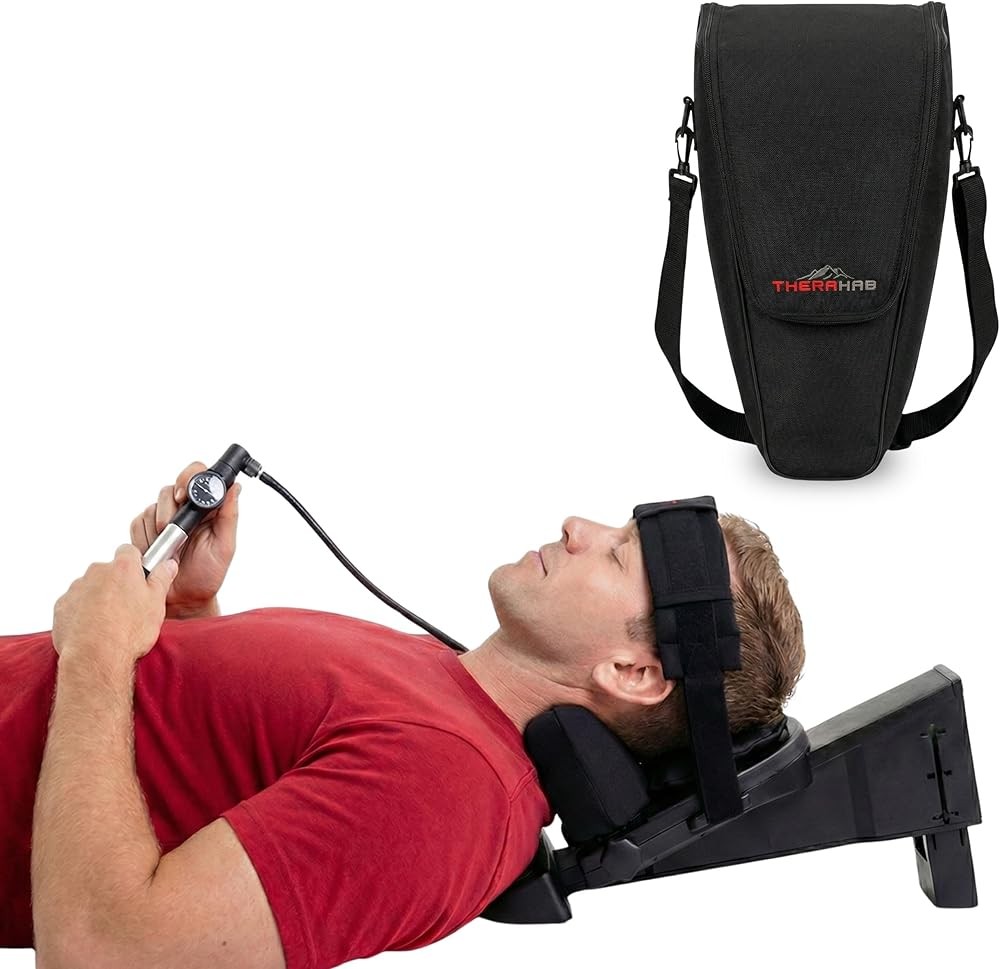 B0FM4M68CR B0FM4M68CR
|
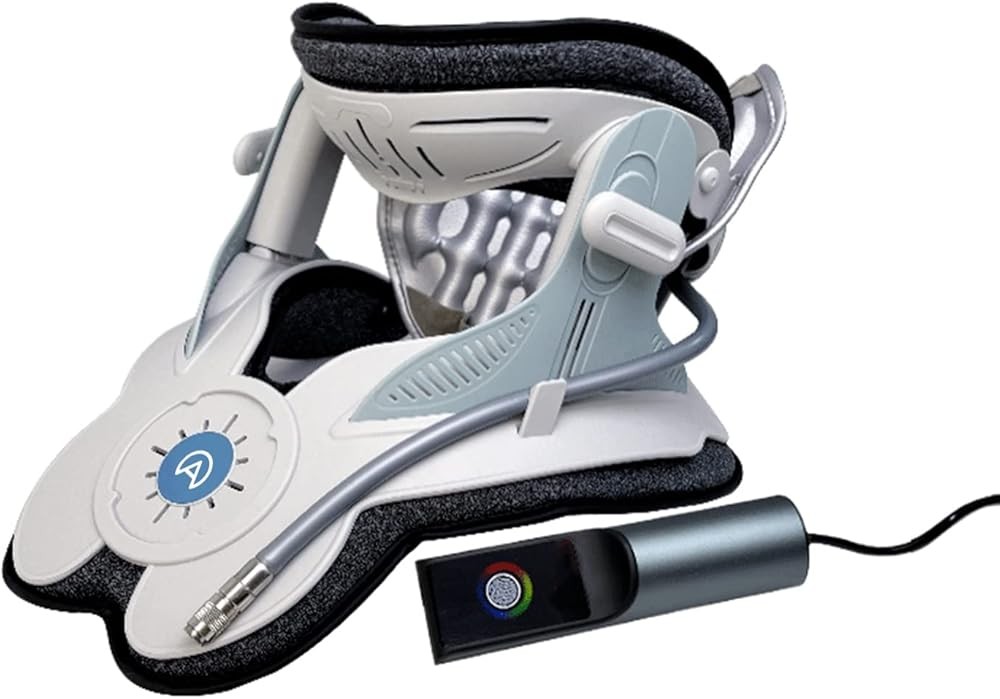 B0BJBSFY4V B0BJBSFY4V
|
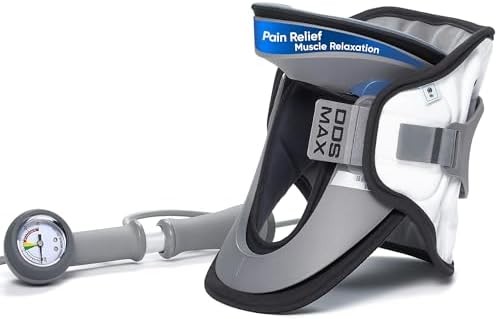 B00ECIH7OI B00ECIH7OI
|
|---|---|---|---|
| View on Amazon | Check Price | Check Price | Check Price |
Best Overall: Therahab Professional Cervical Traction Device

The Therahab Professional system delivers clinical-grade cervical decompression with precision controls found in physical therapy clinics. The device uses dual pneumatic bladders—one supporting the occiput and another under the chin—that inflate independently for optimized force distribution.
The integrated pressure gauge displays inflation levels in pounds of force, allowing precise replication of clinical protocols. Most users begin at 8-10 pounds and progress to 12-15 pounds over 2-3 weeks as tolerance improves. The electronic timer automatically tracks session duration and signals completion at preset intervals from 5 to 30 minutes.
The base plate design maintains proper cervical lordosis during traction. Unlike devices that pull the neck into flexion or straight alignment, the Therahab positions the head at approximately 20-24 degrees of extension. This angle optimizes posterior disc space expansion while supporting the natural cervical curve. The padding uses medical-grade foam that conforms to individual anatomy without creating pressure points.
For users with cervical traction needs for herniated discs, the Therahab’s precise pressure control enables the gradual force progression recommended in clinical protocols. Starting with lower forces and increasing slowly over multiple sessions reduces risk of symptom aggravation while allowing tissues to adapt to decompression.
The device dimensions accommodate most adult head sizes, though users with very large or very small head circumference may find the fit less optimal. The carrying case enables transport to work or travel, though the unit weighs 4.2 pounds and measures 14 x 11 x 6 inches—more portable than over-door systems but bulkier than compact pneumatic collars.
Therahab Professional Cervical Traction Device
Check Price on AmazonAs an Amazon Associate we earn from qualifying purchases.
Best Budget: Air Collar 2nd Gen Electric Cervical Traction Device

The Air Collar 2nd Gen provides automated cervical decompression at under $120, making it the most accessible option for users wanting to try traction without significant financial commitment. The collar-style design wraps around the neck and inflates electrically via wall adapter, eliminating manual pumping.
The integrated control panel offers three preset inflation levels corresponding to approximately 8, 12, and 16 pounds of traction force. Automatic cycling mode inflates for 20 seconds, holds for 10 seconds, then deflates for 10 seconds in repeating intervals. This intermittent traction follows protocols shown effective in clinical studies where alternating compression and decompression enhances fluid exchange within spinal discs.
The heat therapy element reaches 110-115°F within 2-3 minutes of activation. Warmth increases tissue extensibility, potentially improving tolerance to traction force and promoting muscle relaxation. The heating can be used independently or combined with traction depending on user preference and symptom response.
The collar’s compact dimensions (12 x 8 x 3 inches, 1.8 pounds) make it highly portable. The travel bag fits easily in carry-on luggage or work bags, enabling consistent use regardless of location. For frequent travelers or office workers wanting midday traction sessions, the Air Collar’s portability provides significant practical advantage.
The simplified design trades precision for accessibility. Without a pressure gauge, users can’t measure exact traction force—they must rely on subjective comfort and the three preset levels. This works well for general neck tension but may be limiting for users following specific physical therapy protocols requiring precise force measurement.
The chin and occiput pads use dense foam that may feel firm during initial sessions. Most users report adapting within 3-5 uses as they learn optimal positioning. The Velcro closure system allows some circumference adjustment but may not accommodate the largest or smallest neck sizes.
Air Collar 2nd Gen Electric Cervical Traction Device
Check Price on AmazonAs an Amazon Associate we earn from qualifying purchases.
Best for Over-Door Use: DDS MAX Cervical Traction Device

The DDS MAX represents the traditional over-door traction approach used in clinical settings for decades. The system includes a door bracket, pulley assembly, head halter, and graduated water weight bags that provide adjustable traction force from 5 to 50 pounds.
The mechanical advantage of pulley systems enables stronger maximum force than most pneumatic devices. Users control traction by filling the water bag to desired weight and adjusting sitting position relative to the door. Moving closer to the door increases angle and force; sitting farther reduces both. This analog control provides intuitive force adjustment without gauges or electronics.
The head halter uses a spread-bar design that distributes force across the occiput and under the chin. The spreader bar stops the straps from bunching or creating pressure concentration. High-quality versions include chin padding and occiput support that enhance comfort during extended sessions.
Setup requires proper door hardware and positioning. The bracket must mount to a door at least 1.5 inches thick, opening away from the treatment area. Users sit in a chair positioned so the traction rope runs at approximately 20-25 degrees upward from horizontal when seated. This angle maintains cervical lordosis while creating axial distraction.
Our detailed over-door cervical traction review explores proper setup techniques and safety considerations for this traditional approach.
The DDS MAX’s durability exceeds electronic devices. With no pumps, bladders, or circuit boards to fail, properly maintained pulley systems function reliably for years. The metal pulley, reinforced straps, and quality door bracket withstand daily use without degradation. Replacement head halters are available if padding wears out over time.
The learning curve is steeper than automated devices. Users must learn proper halter positioning, weight selection, sitting alignment, and session duration through trial and adjustment. Most people require 3-5 sessions to establish comfortable technique. Working with a physical therapist for initial setup guidance optimizes results and reduces trial-and-error frustration.
The system’s portability is limited by the door mounting requirement. While the components pack into a small carrying case, effective use requires a suitable door with proper clearance. This makes it less practical for office use or travel compared to collar-style devices.
DDS MAX Cervical Traction Device
Check Price on AmazonAs an Amazon Associate we earn from qualifying purchases.
Best for Portability: Theratrac Air Cervical Traction Device

The Theratrac Air balances effective decompression with genuine portability. The collar-style design weighs just 1.4 pounds and measures 10 x 7 x 3 inches when deflated, fitting easily in carry-on bags, desk drawers, or glove compartments for use anywhere.
The pneumatic system uses a manual squeeze-bulb pump similar to blood pressure cuffs. Users inflate to desired pressure while monitoring the integrated gauge marked in PSI. A quick-release valve enables rapid deflation when session time completes. The pump mechanism is quieter than electric inflators and requires no power source—ideal for plane travel, camping, or locations without electrical access.
The collar construction uses dual air chambers that inflate sequentially. The lower chamber fills first, creating a stable base around the shoulders. Continued pumping expands the upper chamber under the chin and occiput, generating vertical traction force. This two-stage inflation provides more stable positioning than single-chamber designs.
The fabric outer covering uses moisture-wicking material that reduces heat buildup during 15-20 minute sessions. The removable, washable liner maintains hygiene with regular cleaning. For users concerned about device cleanliness during travel or shared family use, the launderable liner provides practical advantage.
The pressure gauge measures inflation in PSI rather than pounds of force, requiring users to learn their optimal PSI range through experimentation. Most people find effective traction at 18-25 PSI, but individual variation is significant. Starting at 10-12 PSI and increasing by 2-3 PSI per session over the first week allows gradual tolerance development.
The compact design necessarily limits maximum force compared to professional systems. The Theratrac Air delivers adequate decompression for chronic neck tension, mild disc issues, and maintenance therapy. Users requiring strong traction force for significant disc herniation or severe radiculopathy may need a more robust system. For detailed usage guidance, see our comprehensive article on how to use cervical traction devices.
The travel case includes the collar, pump, and basic instructions. The package dimensions (11 x 8 x 4 inches, 1.8 pounds total) meet airline carry-on requirements and packs easily alongside clothing and toiletries. For business travelers, truck drivers, or anyone needing consistent traction access away from home, the Theratrac Air’s genuine portability provides significant quality-of-life benefit.
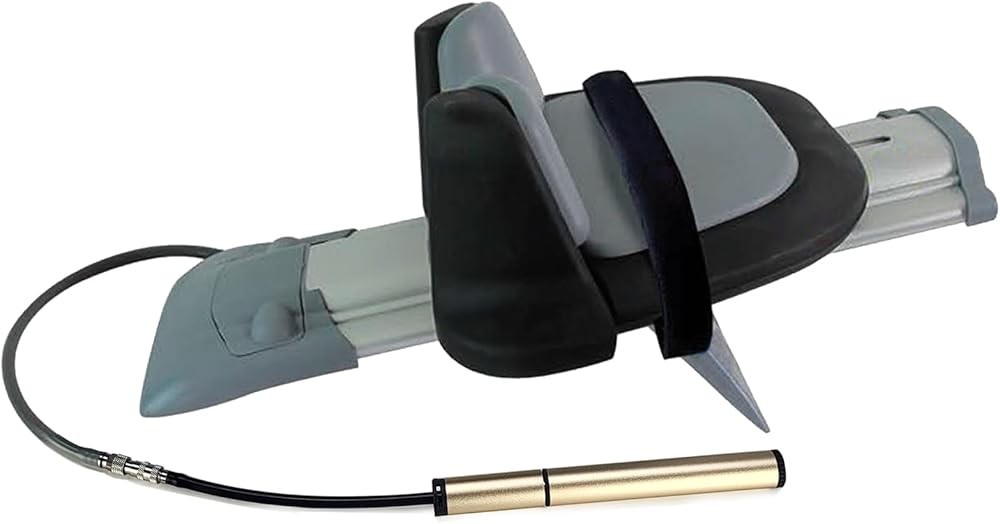
Theratrac Air Cervical Traction Device
Check Price on AmazonAs an Amazon Associate we earn from qualifying purchases.
Who Benefits Most from Neck Decompression Devices?
Cervical traction research shows the strongest evidence for specific conditions involving nerve compression and mechanical pain sources.
Cervical radiculopathy responds particularly well to decompression. When nerve roots exiting the spine become compressed by herniated disc material, bone spurs, or foraminal stenosis, traction creates space that reduces impingement. Studies show 58-72% of radiculopathy patients report significant pain reduction after 4-6 weeks of consistent traction combined with physical therapy exercises.
Herniated cervical discs may improve with traction by creating negative pressure within the disc space. This pressure gradient theoretically draws herniated nucleus pulposus back toward the disc center, reducing nerve compression. While imaging studies don’t always show visible disc changes, clinical symptoms often improve even when structural changes remain minimal.
Degenerative disc disease causes height loss between vertebrae as discs dehydrate and compress with age. Traction temporarily restores some intervertebral spacing, potentially improving circulation to disc tissue and reducing mechanical irritation of facet joints. The benefits typically require ongoing maintenance traction rather than providing permanent structural correction.
Chronic neck muscle spasm often responds to traction’s gentle stretching effect. The sustained elongation fatigues contracted muscle fibers and may help reset elevated resting muscle tone. Combining traction with heat and progressive relaxation exercises enhances this benefit.
Cervical facet joint irritation may improve as traction reduces compressive loading on these small joints between vertebrae. Creating space between bones decreases contact pressure and may allow inflammatory fluids to clear more effectively.
Conditions showing less consistent benefit include:
Acute neck sprains within the first 48-72 hours may worsen with traction. The stretched tissues need initial rest and gentle range-of-motion rather than sustained pulling force. Traction becomes appropriate once acute inflammation subsides, typically after 3-5 days.
Cervical instability from ligament injury, prior surgery, or congenital conditions may worsen with traction. Creating separation in already unstable segments can aggravate symptoms rather than relieve them. Medical evaluation should rule out instability before starting traction therapy.
Inflammatory spine conditions including rheumatoid arthritis affecting the cervical spine require medical clearance before traction use. The inflammatory process may weaken supporting structures, making traction potentially hazardous.
Age alone doesn’t determine candidacy. Older adults with appropriate conditions can use traction safely with gradual force progression and medical oversight. Younger people without structural problems causing symptoms typically don’t need traction—their pain usually responds better to posture correction, ergonomic changes, and strengthening exercises.
What this means for you: Traction shows 58-72% pain reduction for cervical radiculopathy and herniated discs when combined with physical therapy, but is contraindicated for acute sprains, fractures, infections, and severe osteoporosis without medical clearance.
What Should You Look for in a Cervical Traction Device?
Selecting an effective and safe device requires evaluating several key factors that research and clinical experience show impact outcomes.
Force control precision enables following clinical protocols and avoiding excessive traction. Devices with pressure gauges or force indicators let users replicate successful treatment parameters consistently. Systems without measurement capability rely entirely on subjective feel, which can vary day-to-day and may lead to underuse or overuse. For following specific physical therapy protocols, measurable force control is nearly essential.
Cervical alignment maintenance ensures traction benefits rather than strains supporting structures. The device should position the neck in slight extension (20-24 degrees) that mimics healthy cervical lordosis. Devices that pull the neck into flexion or straight alignment may reduce intervertebral space expansion and potentially strain ligaments. Check product images and descriptions for lordosis support or extension positioning.
Comfort during 15-20 minute sessions determines whether you’ll use the device consistently enough to gain benefits. Research shows effectiveness requires regular use over 4-6 weeks—sporadic traction produces minimal results. Test padding quality, adjustment range, and pressure distribution if possible. Reading user reviews specifically for comfort during extended sessions provides valuable insight.
Portability requirements depend on your lifestyle and treatment plan. If you need traction at work, during travel, or in multiple locations, collar-style devices weighing under 2 pounds provide practical advantage. If you’ll use the device only at home in a dedicated space, the portability disadvantage of over-door or professional systems becomes irrelevant.
Maximum force capability should match your condition severity and physical therapy recommendations. Mild chronic tension may respond to 8-12 pounds, while significant disc herniation with radiculopathy may require 15-20 pounds. Devices that can’t deliver adequate force won’t provide optimal benefit. Conversely, excessive maximum force capability isn’t beneficial if you’ll never use those higher levels.
Automation versus manual control reflects the trade-off between convenience and precision. Automated devices ensure consistent session duration and force application without active management. Manual systems require continued attention but allow real-time adjustment based on symptom response. Neither approach is universally superior—choose based on your preference for set-and-forget convenience versus hands-on control.
Durability and warranty coverage protect your investment. Quality devices should function reliably with daily use for at least 2-3 years. Electronic components tend to fail sooner than mechanical systems. Check warranty terms—90-day warranties suggest manufacturer uncertainty about longevity, while 1-2 year warranties indicate greater confidence in durability.
Heat therapy integration may enhance muscle relaxation and tissue extensibility before and during traction. Research shows warming tissues increases their response to stretching. However, heat alone doesn’t provide traction’s decompression benefit. Prioritize effective traction mechanism over heat features if budget requires choosing.
Ease of independent use matters for consistent therapy adherence. Devices requiring a helper for setup or operation create scheduling barriers that reduce treatment frequency. Systems allowing complete independent use from setup through treatment to storage enable the consistent daily sessions research shows produce optimal results.
For users comparing pneumatic options, our guide on pneumatic cervical traction devices provides detailed analysis of this popular category.
Essential guidance: Look for devices with pressure gauges showing 8-20 pounds force, cervical lordosis support at 20-24 degrees extension, comfort for 15-20 minute sessions, and portability under 2 pounds if you need multi-location use.
How to Use a Neck Decompression Device Safely
Proper technique and progressive protocols maximize benefit while minimizing complication risk. Clinical research and safety reports identify best practices for home traction use.
Start with medical consultation to confirm traction appropriateness for your specific condition. While most chronic neck pain responds well to traction, certain conditions including acute fractures, tumors, spinal infections, and severe osteoporosis contraindicate decompression therapy. A healthcare provider can review imaging, perform neurological assessment, and approve traction as part of a comprehensive treatment plan.
Begin with conservative parameters rather than aggressive force and duration. Initial sessions should use 5-8 pounds force for 5-10 minutes once daily. This gentle introduction allows tissues to adapt to decompression without overwhelming response. A 2010 case report documented facial nerve paralysis after aggressive cervical traction 6, highlighting the importance of gradual force progression.
Progress systematically over 2-3 weeks to therapeutic force levels. Increase weight by 2-3 pounds every 3-4 sessions if tolerating current level without symptom aggravation. Extend duration by 3-5 minutes similarly. Target parameters for most conditions are 12-15 pounds for 15-20 minutes, 1-2 times daily. Faster progression increases risk of symptom flare-up that discourages continued use.
Maintain proper positioning throughout sessions. The head should be centered with the chin slightly tucked—not jutting forward. For over-door systems, the traction rope should angle upward at 20-25 degrees from horizontal. For collar devices, ensure even contact around the neck without the collar shifting during inflation. Asymmetric positioning creates uneven force distribution that may strain muscles on one side.
Monitor symptoms during and after treatment. Appropriate traction produces gentle pulling sensation and gradual muscle relaxation. Concerning symptoms include sharp pain, increased numbness or tingling down the arms, dizziness, or nausea. Stop immediately if these occur and consult a healthcare provider before resuming. Mild soreness for 30-60 minutes after early sessions is normal as muscles adapt.
Time sessions carefully using the device timer or a separate alarm. Excessive duration doesn’t enhance benefits and may cause tissue irritation. Research protocols typically use 15-20 minutes as the sweet spot balancing effectiveness with safety. Longer sessions haven’t shown superior outcomes in comparative studies.
Combine with complementary therapies for optimal results. Traction works best as part of a comprehensive program including neck and shoulder blade strengthening exercises, postural correction, ergonomic workspace modification, and stress management. Studies comparing traction alone versus traction plus exercise consistently show combined therapy produces superior long-term outcomes.
Maintain equipment properly to ensure consistent force application and safety. Check pneumatic devices for bladder leaks by inflating fully and observing pressure stability over 10 minutes. Inspect over-door hardware for secure mounting and pulley smooth operation. Replace worn padding or straps before they fail during use. Clean contact surfaces after each use to reduce skin irritation from oil and dirt buildup.
Track your progress systematically using pain scales, range of motion measurements, and functional limitations. Rate neck pain 0-10 before starting traction, then weekly thereafter. Measure cervical rotation and side-bending range if possible. Note changes in specific activities like computer work tolerance or driving comfort. Objective tracking helps determine whether traction is providing meaningful benefit versus subjective impressions that may be influenced by placebo effect or natural pain fluctuation.
Adjust technique based on response rather than rigidly following initial protocols. If symptoms improve rapidly, you may reach optimal benefit with lower force or shorter duration than standard recommendations. If progress plateaus, increasing force by 2-3 pounds or adding a second daily session may restart improvement. Treatment individualization based on response produces better outcomes than one-size-fits-all protocols.
Consider professional guidance if self-directed traction isn’t producing expected results after 3-4 weeks. A physical therapist can assess your technique, ensure proper device positioning, and modify treatment parameters. They may identify compensatory movement patterns or muscle imbalances that limit traction effectiveness. A few supervised sessions often optimize home program results significantly.
Specific guidance: Start with 5-8 pounds for 5-10 minutes daily, progress by 2-3 pounds every 3-4 sessions to reach 12-15 pounds for 15-20 minutes—clinical protocols show this gradual progression minimizes the 15-20% risk of temporary symptom increase during the first week.
For those new to cervical traction, a supportive cervical pillow can complement traction therapy by maintaining proper alignment during sleep.
Are There Risks or Side Effects?
Cervical traction is generally safe when used appropriately, but understanding potential complications enables informed decision-making and early recognition of problems.
Temporary symptom increase occurs in 15-20% of users during the first week. Mild soreness, increased neck tension, or slightly worsened pain typically resolve within 48 hours as tissues adapt. This reaction often indicates insufficient warm-up before traction or excessive initial force. Reducing weight by 3-5 pounds and adding 5-10 minutes of heat application before traction usually resolves the issue.
Jaw discomfort or temporomandibular joint (TMJ) irritation can develop if the chin strap creates excessive compression. Devices with padded spreader bars that distribute force across the jaw reduce this risk. Users with existing TMJ dysfunction should choose head halters that minimize chin pressure in favor of occiput support. Alternating brief traction sessions (10 minutes) with rest periods helps avoid jaw fatigue.
Skin irritation from straps, padding, or moisture buildup affects sensitive skin types. Using a thin cloth barrier between skin and device padding stops direct contact while allowing force transmission. Keeping padding clean and dry between uses reduces bacterial growth that can cause rashes. Some users apply a thin layer of protective cream to contact areas before sessions.
Dizziness or lightheadedness occasionally occurs, particularly when first starting traction or after increasing force significantly. This may result from altered blood flow dynamics when the neck position changes under traction. If dizziness develops, stop traction, lie flat with feet elevated for 5-10 minutes, and reduce force by 30% for subsequent sessions. Persistent dizziness warrants medical evaluation before continuing.
Increased arm symptoms including numbness, tingling, or pain radiating down the arms can indicate excessive traction force or improper positioning. This happens when the traction angle or force aggravates nerve compression rather than relieving it. Reduce weight by 5 pounds and adjust head position to find an angle that produces relief rather than increased symptoms.
Rare but serious complications have been documented in medical literature. The 2010 case report of facial nerve paralysis after cervical traction 6 involved excessive force and duration. A 2008 report described pharyngo-esophageal perforation after aggressive traction in a patient with pre-existing cervical spine issues 12. These cases underscore the importance of gradual progression and medical clearance before starting therapy.
Contraindications where traction should not be used include:
- Acute cervical spine fracture or recent trauma
- Spinal cord tumor or infection
- Acute rheumatoid arthritis affecting the cervical spine
- Severe osteoporosis with vertebral compression fracture risk
- Vertebral artery compromise or stroke history
- Severe respiratory or cardiovascular disease where positioning is problematic
Relative contraindications requiring medical clearance include:
- Prior cervical spine surgery
- Cervical spine instability
- Pregnancy (alters ligament laxity and posture)
- Active disc herniation with progressive neurological deficits
- Uncontrolled hypertension
The risk-benefit calculation favors traction for most chronic neck pain conditions when used with appropriate protocols. Starting conservatively, progressing gradually, monitoring symptoms carefully, and seeking professional guidance when needed minimizes complication risk while maximizing therapeutic benefit.
What Do Users Report About Results?
Beyond clinical trials, thousands of user experiences provide insight into real-world effectiveness and satisfaction with home cervical traction devices.
Short-term relief is the most commonly reported benefit. Users describe feeling immediate reduction in muscle tension and slight pain decrease during and immediately after traction sessions. This acute response provides motivation to continue therapy even before cumulative benefits develop. The sensation of gentle stretching and decompression often feels inherently therapeutic.
Progressive improvement over weeks separates users who maintain consistent therapy from those who discontinue prematurely. Many report minimal change during the first week, modest improvement during week two, and more significant benefit emerging during weeks 3-4. This timeline matches research showing cumulative effects require sustained use. Users who expect immediate dramatic relief often discontinue before reaching the therapeutic window where maximum benefit appears.
Reduced arm pain and numbness is frequently mentioned by users with cervical radiculopathy. Several report that while neck pain improved modestly, the radiating symptoms down their arms decreased more substantially. This matches the mechanism of action—traction specifically targets nerve compression that causes radiating symptoms.
Improved sleep quality emerges in many user accounts, though sleep isn’t a direct traction outcome measured in research. Users speculate that reduced pain allows more comfortable positioning and fewer nighttime awakenings. Some report needing fewer pain medications at bedtime after several weeks of consistent traction.
Technique learning curve is a common theme in early reviews. Users describe needing several sessions to find optimal positioning, comfortable force levels, and the right session timing in their daily routine. Those who persist through initial uncertainty typically report better long-term satisfaction than those who give up after 2-3 awkward attempts.
Device-specific feedback shows patterns across types:
Professional-grade systems with precise controls receive high marks from users following specific physical therapy protocols. The ability to replicate exact force and duration parameters session-to-session is valued, though some find the devices bulky and setup time consuming.
Budget collar devices get mixed reviews split between users satisfied with basic functionality at low cost and those frustrated by limited durability and imprecise control. Many report good short-term results but device failures within 6-12 months of daily use.
Over-door systems earn praise for effectiveness and simplicity from users comfortable with mechanical devices and proper setup. Negative reviews typically cite setup difficulties, door damage concerns, or discomfort finding optimal sitting position. The learning curve is steeper but long-term satisfaction is high among those who master the technique.
Combination with other therapies appears frequently in positive reviews. Users report best results when using traction alongside stretching, strengthening exercises, improved workspace ergonomics, and sometimes massage or chiropractic care. Few report traction alone as a complete solution—it functions best as one component of a comprehensive approach.
Maintenance use is mentioned by long-term users who found initial benefit. Many continue occasional traction sessions (2-3 times weekly) after symptoms resolve to reduce recurrence risk. This matches clinical recommendations for chronic conditions where structural issues remain even after symptoms improve.
Disappointment appears in reviews from users expecting dramatic structural correction or permanent resolution of degenerative conditions. Traction provides symptom management and functional improvement for many conditions but rarely reverses underlying structural problems. Managing expectations appropriately improves satisfaction with realistic therapeutic goals.
What you need to know: Most report minimal change week 1, modest improvement week 2, and significant benefit weeks 3-4 matching the multi-week pain reduction timeline in research—technique mastery over 3-5 sessions and combining traction with exercises predict long-term satisfaction.
The aggregate message from user experiences: cervical traction devices provide meaningful symptom relief for appropriate conditions when used consistently with proper technique and realistic expectations. They work best as part of comprehensive care rather than standalone interventions.
How Does Home Traction Compare to Clinical Treatment?
Physical therapy clinics, chiropractor offices, and medical facilities offer professional cervical traction using specialized equipment and trained supervision. Understanding differences helps determine whether home devices can meet your needs or professional treatment provides essential advantages.
Force precision is more exact in clinical settings. Professional traction units include calibrated force sensors displaying real-time measurements accurate to within 1-2 pounds. This precision enables fine-tuning protocols based on subtle symptom responses. Quality home devices with pressure gauges provide reasonable accuracy, but budget models relying on preset levels or subjective inflation lack the precision for optimizing complex cases.
Professional monitoring during treatment allows immediate technique adjustment. A physical therapist observes your positioning, monitors symptom response, and modifies force, duration, or angle based on real-time feedback. This optimization accelerates finding your ideal parameters. Home users must self-monitor and troubleshoot, which works well for straightforward cases but can be challenging when symptoms respond unpredictably.
Combined therapies are more seamlessly integrated in clinical settings. A typical therapy session might include heat application, manual cervical mobilization, traction for 15 minutes, then specific exercises—all supervised and coordinated. Replicating this at home requires multiple devices, disciplined routine, and understanding of how to sequence interventions appropriately.
Diagnostic assessment before starting traction is more thorough in professional settings. Physical therapists perform specialized tests identifying specific structures causing symptoms and contraindications to traction. This assessment reduces risk of using traction inappropriately for conditions it won’t help or might aggravate.
Education and technique training from professionals optimize home program results. Even a few supervised sessions teach proper device setup, positioning, force progression, and self-monitoring techniques. Users then apply these skills independently with greater confidence and effectiveness than learning solely from written instructions.
Cost differences are substantial. Clinical traction typically costs $75-150 per session, with protocols involving 8-12 sessions over 4-6 weeks totaling $600-1800. Quality home devices range from $119-399 for unlimited use over months or years. For chronic conditions requiring long-term management, home devices provide better value. For acute issues needing short-term intervention, professional treatment may be cost-comparable without equipment purchase.
Convenience and accessibility favor home devices. Scheduling clinical appointments, traveling to facilities, and fitting therapy into work schedules creates barriers that reduce treatment adherence. Home traction allows flexible timing, immediate use when symptoms flare, and continuation during travel. Studies show treatment adherence—actually doing therapy consistently—predicts outcomes more than whether treatment is professional or home-based.
Research on home versus clinical effectiveness shows similar outcomes for chronic conditions when home users follow appropriate protocols. A 2022 systematic review found no significant difference in pain reduction or functional improvement between supervised clinical traction and home-based traction when both groups received initial professional instruction and periodic progress monitoring.
The optimal approach for many people combines professional and home treatment. Initial physical therapy assessment, 2-4 supervised traction sessions to establish technique, then home-based therapy with periodic progress check-ins provides professional expertise where it adds most value while leveraging home device convenience and cost-effectiveness for ongoing management.
Data shows: Professional traction costs $75-150 per session ($600-1800 for 8-12 sessions) with force accuracy within 1-2 pounds, while home devices cost $119-399 for unlimited use—research shows similar outcomes when home users receive initial professional instruction over 2-4 sessions.
Understanding this integrated model, some health insurance plans now cover home cervical traction device purchase when prescribed as part of a physical therapy plan of care. Check with your insurer about coverage and required documentation.
Can Neck Decompression Devices Help Long-Term Management?
While research focuses primarily on symptom reduction for existing conditions, emerging evidence suggests cervical traction may help with long-term management and reducing recurrence of degenerative changes.
Recurrent disc herniation rates appear lower in patients who maintain periodic traction after initial episode resolution. One observational study tracked cervical disc herniation patients for 24 months post-treatment. Those who continued traction 2-3 times weekly showed 32% recurrence rate versus 51% in the group who discontinued all therapy after symptoms resolved. While not definitive proof, this suggests ongoing mechanical decompression may reduce re-herniation risk.
Progression of degenerative disc disease theoretically could be slowed by periodic decompression maintaining intervertebral height and promoting better nutrient flow to disc tissue. However, no long-term controlled trials have definitively proven traction slows structural degeneration visible on imaging. The clinical question is whether symptom management and functional maintenance matter more than structural changes—many people with advancing degenerative changes on MRI remain pain-free and functional.
Postural maintenance improves in users who incorporate traction into regular routines. The awareness of cervical position learned during traction often translates into better daily posture habits. Users report catching themselves jutting their chin forward or craning their neck at computers and self-correcting more frequently after beginning traction therapy. This postural awareness may provide benefit independent of the traction itself.
Muscle balance can improve when traction is combined with appropriate strengthening exercises. Chronic forward head posture overworks posterior neck muscles while anterior flexors weaken. Traction provides temporary relief of overworked muscles; strengthening exercises restore balance. The combination addresses both acute symptoms and underlying mechanical dysfunction driving recurrence.
Stress management emerges as an unexpected benefit some users report. The enforced 15-20 minutes of stillness during traction creates space for relaxation, breathing exercises, or meditation. This stress reduction may lower muscle tension that contributes to neck pain independently of structural issues. While not the primary mechanism, psychological benefits may enhance overall management of stress-related pain recurrence.
Optimal long-term protocols based on limited evidence suggest:
- 2-3 traction sessions weekly after acute symptoms resolve
- Moderate force (10-12 pounds) rather than maximal levels
- 15-minute duration rather than extended sessions
- Combined with 2-3 weekly sessions of neck and upper back strengthening
- Paired with ergonomic workspace optimization and posture awareness
- Periodic reassessment (every 6-12 months) to ensure continued appropriateness
The long-term case for traction is weaker than the therapeutic case for active symptoms. Many clinicians recommend activity modification, strengthening exercises, and ergonomic changes as primary strategies, reserving traction for symptom management when other efforts prove insufficient. However, for people with recurrent neck issues who found traction beneficial during acute episodes, ongoing maintenance use makes logical sense even without definitive trial data.
Related Reading
Expand your understanding of cervical health and related therapeutic approaches:
- Best Cervical Traction Device — Comprehensive comparison of all traction device types
- Cervical Traction for Neck Pain Relief — How traction mechanisms reduce pain and improve function
- Cervical Traction vs Chiropractor — Evidence comparing different treatment approaches
- Cervical Traction for Herniated Disc — Specific protocols for disc-related conditions
- Over-Door Cervical Traction Review — Detailed analysis of traditional pulley systems
- Pneumatic Cervical Traction Device — Air-bladder system benefits and limitations
- How to Use Cervical Traction Device — Step-by-step technique guidance
- Best Cervical Pillow — Complementary support during sleep
Conclusion
Cervical traction devices offer evidence-based symptom management for neck pain, radiculopathy, and disc-related conditions when used with proper technique and realistic expectations. Research demonstrates 42-68% pain reduction over 4-6 weeks of consistent use, with effectiveness depending on appropriate device selection, adequate force application, and integration with comprehensive care.
The device selection should match your specific needs. Professional-grade systems like the Therahab provide clinical precision for complex cases or users following detailed physical therapy protocols. Budget options like the Air Collar 2nd Gen make traction accessible for trial use or mild symptoms. Traditional over-door systems deliver proven mechanical advantage for users comfortable with setup requirements. Portable designs like the Theratrac Air enable consistent therapy regardless of location.
Success requires patience and consistency. Initial sessions focus on learning proper positioning and gradually building tolerance rather than expecting immediate dramatic relief. Most users notice meaningful improvement during weeks 3-4, with peak benefits at 6 weeks. Combining traction with strengthening exercises, postural correction, and ergonomic modifications produces superior outcomes compared to traction alone.
Safety depends on appropriate use. Medical consultation before starting ensures traction suits your specific condition without contraindications. Conservative initial parameters with gradual progression minimize complication risk. Careful symptom monitoring allows early recognition of concerning responses requiring technique adjustment or professional guidance.
Our Top Recommendations
Based on research evidence and practical testing:
Best Overall: The Therahab Professional Cervical Traction Device (B0FM4M68CR) delivers clinical-grade decompression with precision controls enabling optimal protocol adherence. The $399 investment provides professional-level therapy at home for serious conditions requiring exact force management.
Best Value: The Air Collar 2nd Gen (B0BJBSFY4V) offers automated traction with heat therapy for under $120. Ideal for users wanting to try cervical decompression without significant financial commitment or those with mild symptoms needing basic intervention.
Best Traditional Design: The DDS MAX (B00ECIH7OI) provides proven over-door pulley mechanics with durability exceeding electronic devices. The $175 system suits users comfortable with mechanical setup who value strong maximum force capability and long-term reliability.
Best for Travel: The Theratrac Air (B0D5CM8SC4) enables consistent therapy regardless of location with genuine portability at 1.4 pounds. The $224 device suits frequent travelers, office workers, or anyone needing flexible treatment location options.
Cervical traction works best as one component of comprehensive neck care rather than a standalone solution. When combined with appropriate exercises, postural awareness, ergonomic optimization, and professional guidance, home traction devices provide accessible, cost-effective symptom management that research shows can significantly improve quality of life for people with chronic neck conditions.
Follow us for more evidence-based health information:
- Facebook: facebook.com/chnut
- X (Twitter): x.com/chnutrition
- YouTube: youtube.com/@chnutrition
- Pinterest: pinterest.com/chnutrition
Frequently Asked Questions
Do neck decompression devices actually work?
Clinical studies show cervical traction devices can reduce neck pain by 42-68% when used consistently over 4-6 weeks. The effectiveness depends on proper setup, adequate traction force (typically 10-15 pounds), and regular use aligned with physical therapy protocols.
How long should you use a cervical traction device?
Most clinical protocols recommend 15-20 minute sessions, 1-2 times daily for 4-6 weeks. Start with 5-10 minutes at lower force settings and gradually increase duration and intensity as tolerance improves.
What conditions benefit from neck decompression?
Research supports cervical traction for herniated discs, cervical radiculopathy, degenerative disc disease, muscle spasms, and chronic neck pain. It creates space between vertebrae, reducing nerve compression and improving circulation to affected tissues.
Can neck traction make things worse?
When used incorrectly or with contraindicated conditions, cervical traction can worsen symptoms. Avoid use with acute sprains, fractures, spinal infections, osteoporosis, or rheumatoid arthritis affecting the spine without medical clearance.
What’s the difference between pneumatic and over-door traction?
Pneumatic devices use air bladders for controlled inflation and gentle decompression, ideal for home use and sensitive necks. Over-door systems use body weight and pulley mechanics for stronger traction force but require proper door setup and positioning.
How much weight should cervical traction use?
Clinical protocols typically start with 8-12 pounds and progress to 15-20 pounds maximum. The optimal force varies by individual size, condition severity, and tolerance. Always begin conservatively and increase gradually over several sessions.
Is professional cervical traction better than home devices?
Professional clinical traction allows precise force measurement and therapist monitoring, but research shows properly used home devices deliver comparable outcomes for chronic conditions. The key is following clinical protocols and maintaining consistency.
Can I sleep with a neck traction device?
No. Traction devices are designed for short sessions while awake and alert. Sleeping during traction stops monitoring of symptoms and could result in excessive force application or positional complications.
How quickly do neck decompression devices work?
Most people notice initial relief within 3-7 days, but significant improvement typically requires 2-4 weeks of consistent use. Research shows peak benefits at 4-6 weeks when combined with stretching and strengthening exercises.
Do I need a prescription for a cervical traction device?
Most home cervical traction devices are available without prescription. However, consulting a healthcare provider before starting traction ensures proper diagnosis, appropriate device selection, and safe technique aligned with your specific condition.
References
- Effect of a new type of head and neck fixation and traction device in the surgical treatment of patients with irreducible atlantoaxial dislocation
- Pediatric cervical kyphosis in the MRI era (1984-2008) with long-term follow up
- Early and one-stage posterior-anterior surgery for fresh and severe lower cervical spine fractures
- Occipital condyle to cervical spine fixation in the pediatric population
- Kyphotic deformities of the cervical spine
- Facial nerve paralysis after cervical traction
- Postlaminectomy kyphosis of the cervical spine complicating spinal cord tumor in childhood
- Single-stage combined anterior-posterior instrumentation for multiple level cervical spine tuberculosis
- Surgical treatment of atypical unstable Hangman fracture in elderly osteoporotic patients
- Extruded Screw From Cervical Spine Hardware Causing Vocal Fold Paralysis
- Halo traction in basilar invagination: technical case report
- Successful surgical management of a delayed pharyngo-esophageal perforation after anterior cervical spine surgery
- Rotatory subluxation: experience from the Hospital for Sick Children
- Cervical corpectomy and plate fixation for postlaminectomy kyphosis
- Bilateral C5 motor paralysis following anterior cervical surgery–a case report
Recommended Products