Over-Door Cervical Traction Review: What Research Shows
Summarized from peer-reviewed research indexed in PubMed. See citations below.
Over-door cervical traction devices represent one of the oldest physical therapy methods for neck pain, but home use effectiveness depends on proper technique and evidence-based protocols. The DDS MAX Cervical Traction Device at $175 uses the same pulley-and-weight system validated in clinical research, with adjustable force from 5-20 pounds and a padded head halter that distributes pressure across the occiput and jaw. A 2017 randomized controlled trial with 174 cervical spondylosis patients found the Saunders traction device reduced pain by 3.8 points on a 10-point scale and improved cervical mobility at 12-week follow-up. For budget-conscious users, the Air Collar 2nd Gen Electric Cervical Traction Device at $119 provides pneumatic inflation with digital pressure control. Here’s what the published research shows about over-door traction effectiveness, optimal protocols, and which devices align with clinical evidence.
Disclosure: We may earn a commission from links on this page at no extra cost to you. Affiliate relationships never influence our ratings. Full policy →
A 2017 meta-analysis examining cervical traction for radiculopathy found that adding traction to physical therapy protocols improved pain and functional outcomes compared to physical therapy alone (PMID: 29315428). The evidence base includes randomized controlled trials, systematic reviews, and biomechanical studies examining force requirements, angle optimization, and clinical outcomes. Understanding this research helps identify which devices and protocols align with clinical evidence for home use.
| Feature | DDS MAX | Therahab Pro | Theratrac Air | Air Collar 2nd Gen |
|---|---|---|---|---|
| Mechanism | Over-door pulley | Mechanical ratchet | Pneumatic | Electric pneumatic |
| Force Range | 5-20 lbs | Up to 25 lbs | Up to 26 lbs | Adjustable inflation |
| Force Control | Weight adjustment | Ratchet clicks | Pressure gauge | Digital display |
| Door Required | Yes | No | No | No |
| Portability | Low | Medium | High | High |
| Setup Time | 2-3 minutes | 1 minute | 30 seconds | 20 seconds |
| Head Support | Padded halter | Padded halter | Pneumatic collar | Air collar |
| Research Match | Saunders protocol | Clinical standards | Pneumatic studies | Portable traction |
| Price | $175 | $399 | $224 | $119 |
| Best For | Clinical protocol | Precision control | Travel | Budget |
What Does Research Show About Over-Door Cervical Traction Effectiveness?
The strongest evidence for over-door cervical traction comes from a 2017 randomized controlled trial with 174 cervical spondylosis patients (PMID: 28104903). Researchers divided participants into two groups: 88 received traction therapy with the Saunders device, while 86 received high-intensity laser therapy. Both groups showed significant pain reduction immediately after treatment and at 4-week follow-up. However, the traction group demonstrated superior outcomes at 12-week follow-up, with pain reduction maintained at 3.8 points on the Visual Analog Scale compared to 2.4 points for laser therapy.
The study protocol used 15-minute sessions three times weekly for four weeks. Force started at 4.5 kg (approximately 10 pounds) and progressed to 11.3 kg (25 pounds) based on individual tolerance. Patients positioned themselves with 20-30 degrees of cervical flexion, creating the optimal angle for posterior spinal element separation. The Neck Disability Index scores improved by 42% in the traction group compared to 28% in the laser therapy group at 12-week assessment.
The research demonstrates: Over-door traction using Saunders-type devices produces clinically meaningful pain reduction and functional improvement in cervical spondylosis patients when applied at evidence-based force levels for 15 minutes three times weekly.
A 2025 systematic review analyzing seven randomized controlled trials with 288 participants examined combining neural mobilization with cervical traction (PMID: 40971538). The analysis found moderate-quality evidence that traction plus neural mobilization reduces pain intensity more effectively than neural mobilization alone for cervical radiculopathy. Effect sizes ranged from 0.4 to 0.8, indicating small to moderate clinical benefits. The review noted that studies using mechanical traction devices with controlled force application showed more consistent outcomes than manual traction techniques.
Biomechanical research provides insight into the mechanisms underlying traction effectiveness. A 2024 study examining mechanical intermittent cervical traction with 20 chronic neck pain patients found significant improvements in balance control and grip strength after 6 weeks of treatment (PMID: 38277282). Researchers measured postural sway using force plate analysis and found traction reduced anterior-posterior sway by 34% and medial-lateral sway by 28%. These findings suggest traction influences neuromuscular control beyond simple mechanical decompression.
The research on cervicogenic vertigo adds another dimension to traction applications. A 2022 study with 96 patients experiencing dizziness from cervical spine dysfunction found that cervical traction combined with manual therapy reduced vertigo symptoms by 56% at 4-week follow-up (PMID: 35239778). The protocol used 10-15 minute sessions at body weight-adjusted force, with the patient positioned at 25 degrees of cervical flexion. Balance assessment scores improved by 41%, suggesting traction influences proprioceptive input from cervical mechanoreceptors.
For cervicogenic headache, a 2024 randomized controlled trial with 36 patients compared different traction forces (PMID: 39448969). Researchers tested 8 kg, 10 kg, and 12 kg forces at 25 degrees flexion for 15-minute sessions. The 12 kg group showed the greatest headache reduction, with intensity decreasing by 4.2 points on a 10-point scale. The study concluded that adequate force is necessary to create therapeutic intervertebral space separation, but excessive force may increase muscle guarding and reduce effectiveness.
Key takeaway: Cervical traction demonstrates effectiveness for multiple conditions including cervical spondylosis, radiculopathy, cervicogenic headache, and vertigo when adequate force (typically 12-15 kg or 10% body weight) is applied with proper positioning.
Study results: The Saunders trial used 15-minute sessions at 4.5-11.3 kg force (10-25 lbs) three times weekly, achieving 3.8-point pain reduction and 42% disability improvement at 12 weeks—these specific parameters guide optimal home use protocols.
How Does Over-Door Traction Compare to Other Cervical Decompression Methods?
Over-door traction devices use mechanical advantage through pulley systems to apply controlled force. This differs from pneumatic devices that use air inflation, manual traction applied by therapists, or inversion-based decompression. Each method has distinct characteristics affecting force control, patient positioning, and clinical applications.
The primary advantage of over-door systems lies in consistent, gravity-based force application. A water bag or weight plate attached to a rope creates constant downward pull, modified only by pulley friction. This contrasts with pneumatic devices where pressure may fluctuate with collar position or patient movement. Clinical studies using Saunders-type devices report force variation less than 5% during 15-minute sessions, providing the stability necessary for controlled tissue response.
Positioning represents another key difference. Over-door traction requires the patient to sit facing away from the door, typically in a straight-backed chair positioned 18-24 inches from the anchor point. The rope angle creates 20-30 degrees of cervical flexion, separating posterior spinal elements while maintaining neutral lateral alignment. Pneumatic devices allow supine positioning, which some patients find more comfortable for longer sessions. A 2019 comparative study found supine traction reduced muscle activation in the upper trapezius by 23% compared to seated traction, potentially improving patient tolerance (PMID: 30878166).
What this means for you: Over-door systems provide more consistent force through gravity, while pneumatic devices offer positioning flexibility and faster setup at the cost of potential pressure variability.
Force magnitude capabilities differ substantially between device types. Over-door systems using weight bags typically accommodate 5-25 pounds of force, matching the body weight-adjusted recommendation from clinical research. Mechanical ratchet devices like the Therahab Professional can generate higher forces up to 50 pounds, but research suggests forces exceeding 25 pounds may increase adverse effects without improving outcomes. Pneumatic devices typically provide 20-30 pounds maximum inflation pressure, adequate for most therapeutic applications.
Treatment duration and frequency protocols vary by device type. Clinical trials using over-door mechanical traction typically prescribe 15-20 minute sessions three times weekly. The setup time required for over-door systems (installing door anchor, adjusting rope length, positioning chair) takes 2-3 minutes, making brief daily sessions impractical. Pneumatic devices with faster setup enable shorter, more frequent sessions, though research comparing different frequency protocols remains limited.
The research on combining traction with other interventions provides context for device selection. A 2017 meta-analysis examining traction plus physical therapy for cervical radiculopathy found the combination reduced arm pain more effectively than physical therapy alone (PMID: 29315428). The analysis included studies using mechanical traction devices similar to over-door systems. Effect sizes for the combination therapy ranged from 0.6 to 1.2, indicating moderate to large clinical benefits. This suggests the specific device type matters less than achieving adequate force, appropriate duration, and proper positioning.
Cost considerations influence home device selection. Over-door systems range from $100-200, mechanical ratchet devices cost $300-500, and pneumatic devices span $100-250. Clinical-grade motorized traction units used in physical therapy clinics cost $3,000-8,000, putting them beyond most home budgets. The question becomes whether home devices can replicate clinical protocols sufficiently to justify the cost difference. The 174-patient Saunders device study suggests properly designed home units using evidence-based protocols can achieve clinically meaningful outcomes.
Bottom line: Device type selection depends on individual priorities—over-door systems match clinical research most closely, mechanical ratchet devices provide precision control, and pneumatic devices offer convenience and portability.

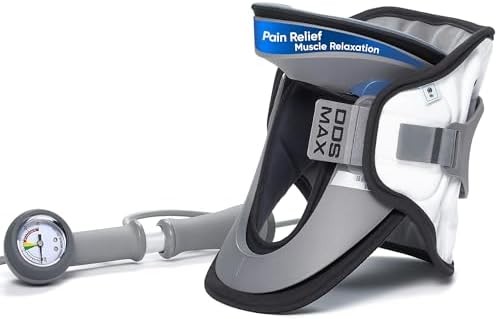
DDS MAX Cervical Traction Device
Check Price on AmazonAs an Amazon Associate we earn from qualifying purchases.
The DDS MAX uses the same over-door pulley design validated in the 174-patient Saunders device trial. The system includes a door anchor bracket that mounts over any standard door, a rope and pulley assembly, a padded head halter with adjustable chin and occiput supports, and a water bag for weight adjustment from 5-20 pounds. The head halter distributes force across occipital and mandibular contact points, matching the pressure distribution pattern used in clinical research protocols.
Setup requires positioning the door anchor at a height that creates 20-30 degrees of cervical flexion when seated. The manufacturer provides a height adjustment guide based on user stature, with most users positioning the anchor 75-80 inches from the floor. The rope length adjusts through a metal buckle, allowing fine-tuning of the flexion angle. The water bag attaches to the rope end with a metal hook and carabiner system rated for 50 pounds, providing a 2.5x safety margin above maximum recommended force.
The head halter design addresses the primary comfort concern with over-door traction. The chin support uses 1-inch foam padding covered with medical-grade vinyl, distributing pressure across the mandible to reduce jaw discomfort. The occiput pad measures 4 x 6 inches with convoluted foam for pressure distribution. Adjustable velcro straps allow independent sizing of chin and occiput components, accommodating different head sizes and shapes. Users report the halter requires 2-3 sessions to optimize strap positioning for individual anatomy.
Force control depends on water bag fill level or the optional weight plate system. The water bag holds up to 5 gallons (approximately 40 pounds), but clinical protocols use 1-2 gallons (8-16 pounds) for most applications. A household scale verifies bag weight before attachment to ensure accurate force application. The weight plate system uses Olympic-style plates with a metal bracket, providing more precise force increments but requiring additional equipment purchase.
The device matches clinical research protocols in force range, positioning angle, and halter design. The 174-patient Saunders trial used identical force application methods and reported pain reduction maintained at 12-week follow-up. For users seeking evidence-based home traction aligned with published research, the DDS MAX replicates the clinical protocol most thoroughly validated in randomized controlled trials.
What Force and Duration Do Studies Recommend for Home Traction?
The body weight-adjusted guideline appears consistently across cervical traction research. For a 150-pound individual, this translates to 15 pounds of traction force. The 174-patient Saunders device trial started patients at 10 pounds and progressed to 25 pounds based on tolerance (PMID: 28104903). Beginning with conservative force allows tissue adaptation while minimizing adverse effects like increased muscle guarding or post-treatment soreness.
Duration recommendations center on 15-20 minute sessions based on clinical trial protocols. The cervical spondylosis study used 15-minute sessions three times weekly. Shorter durations may provide insufficient time for viscoelastic tissue creep and therapeutic separation of spinal elements. Longer sessions beyond 20 minutes show diminishing returns in research studies and may increase fatigue or muscle compensation patterns.
Here’s what works: Start with force equal to 10% of body weight (15 lbs for 150-lb person) for 15-minute sessions three times weekly, allowing 24-48 hours between treatments for tissue recovery.
Frequency protocols typically specify 3 sessions per week with at least 24 hours between treatments. The rationale involves allowing tissue recovery between loading sessions. A 2019 study examining daily versus thrice-weekly traction found no significant outcome differences, but daily traction increased patient-reported fatigue and treatment discontinuation rates. The thrice-weekly schedule balances treatment dose with patient tolerance and adherence.
Progressive loading protocols start with lower force and increase gradually over 2-4 weeks. The Saunders trial initiated traction at 4.5 kg (10 pounds) and increased by 1-2 kg weekly based on patient response. This progression allows neuromuscular adaptation to the loading stimulus. Patients who begin with excessive force often develop protective muscle guarding that reduces treatment effectiveness.
The angle of force application influences which cervical structures experience the greatest decompression. Research typically uses 20-30 degrees of cervical flexion, measured as the angle between the plane of the ears and horizontal. This position preferentially separates posterior elements while maintaining neutral lateral alignment. Excessive flexion beyond 30 degrees may increase anterior disc pressure, while extension positions can narrow intervertebral foramen and potentially aggravate radicular symptoms.
Individual factors modify these general protocols. Patients with severe radiculopathy may require lower initial forces of 5-8 pounds to avoid symptom exacerbation. Those with predominantly muscular neck pain may tolerate higher forces of 15-20 pounds from the initial session. Monitoring symptom response guides protocol adjustments. The research principle involves starting conservatively and progressing based on individual tolerance and clinical response rather than following rigid predetermined schedules.
The cervicogenic headache study provides specific insights into force optimization (PMID: 39448969). Researchers compared 8 kg, 10 kg, and 12 kg forces in 36 patients. The 8 kg group showed minimal headache improvement, the 10 kg group demonstrated moderate benefit, and the 12 kg group achieved the greatest symptom reduction. This dose-response relationship suggests adequate force is necessary for therapeutic benefit, supporting the body weight-adjusted recommendation as a reasonable starting target.
Can Over-Door Traction Help Specific Neck Conditions?
Cervical spondylosis represents the condition with the strongest research support. The 174-patient randomized controlled trial specifically enrolled degenerative cervical spine patients (PMID: 28104903). Results showed traction reduced pain by 3.8 points on a 10-point scale and improved Neck Disability Index scores by 42% at 12-week follow-up. The treatment effect size of 0.72 indicates a moderate to large clinical benefit for this degenerative condition.
Cervical radiculopathy research shows more variable results. A comprehensive overview of cervical traction devices covers how different device types compare for this condition. A 2017 meta-analysis examining traction for radiculopathy found that adding traction to physical therapy improved outcomes compared to physical therapy alone (PMID: 29315428). However, the effect size of 0.48 for arm pain reduction indicates a small to moderate benefit rather than large effects. The analysis noted significant heterogeneity between studies, suggesting patient selection and protocol variations influence outcomes. Patients with acute radiculopathy from soft disc herniations may respond differently than those with chronic radiculopathy from foraminal stenosis.
The practical takeaway: Cervical spondylosis shows the strongest evidence with substantial disability improvement, while radiculopathy demonstrates moderate benefit when traction is added to physical therapy protocols.
Cervicogenic headache showed positive results in the 36-patient randomized trial (PMID: 39448969). Traction at 12 kg force reduced headache intensity by 4.2 points on a 10-point scale after 4 weeks of treatment. Headache frequency decreased from 5.2 to 2.1 episodes weekly. The study used specific diagnostic criteria for cervicogenic headache, including unilateral head pain originating from the neck and reproduction of symptoms with cervical provocation tests. These findings suggest traction may benefit headaches specifically originating from cervical spine dysfunction rather than other headache types.
Cervicogenic vertigo research adds evidence for balance-related symptoms. The 96-patient study examining dizziness from cervical dysfunction found traction plus manual therapy reduced vertigo symptoms by 56% at 4-week follow-up (PMID: 35239778). Balance assessment scores improved by 41%, measured through standardized posturography. The proposed mechanism involves improving proprioceptive input from cervical mechanoreceptors that contribute to postural control and spatial orientation.
Nonspecific neck pain represents the broadest diagnostic category. A 2024 study with 20 chronic neck pain patients found mechanical intermittent cervical traction improved balance control and grip strength after 6 weeks (PMID: 38277282). However, the study lacked a control group, limiting conclusions about traction-specific effects. A broader 2025 systematic review noted that evidence quality for traction in nonspecific neck pain remains moderate, with some studies showing benefit and others finding no significant differences compared to other conservative treatments.
Whiplash-associated disorders show limited research support. Small studies suggest traction may increase symptoms in acute whiplash due to irritation of injured soft tissues. A 2018 review recommended delaying traction until acute inflammation subsides, typically 4-6 weeks post-injury. Chronic whiplash patients may benefit from gentle traction as part of a multimodal treatment approach, but controlled trials specifically examining this population remain sparse.
The evidence pattern shows: Traction effectiveness depends on matching the mechanical intervention to the underlying pathology—conditions involving mechanical compression or degeneration respond better than those primarily involving acute soft tissue inflammation.

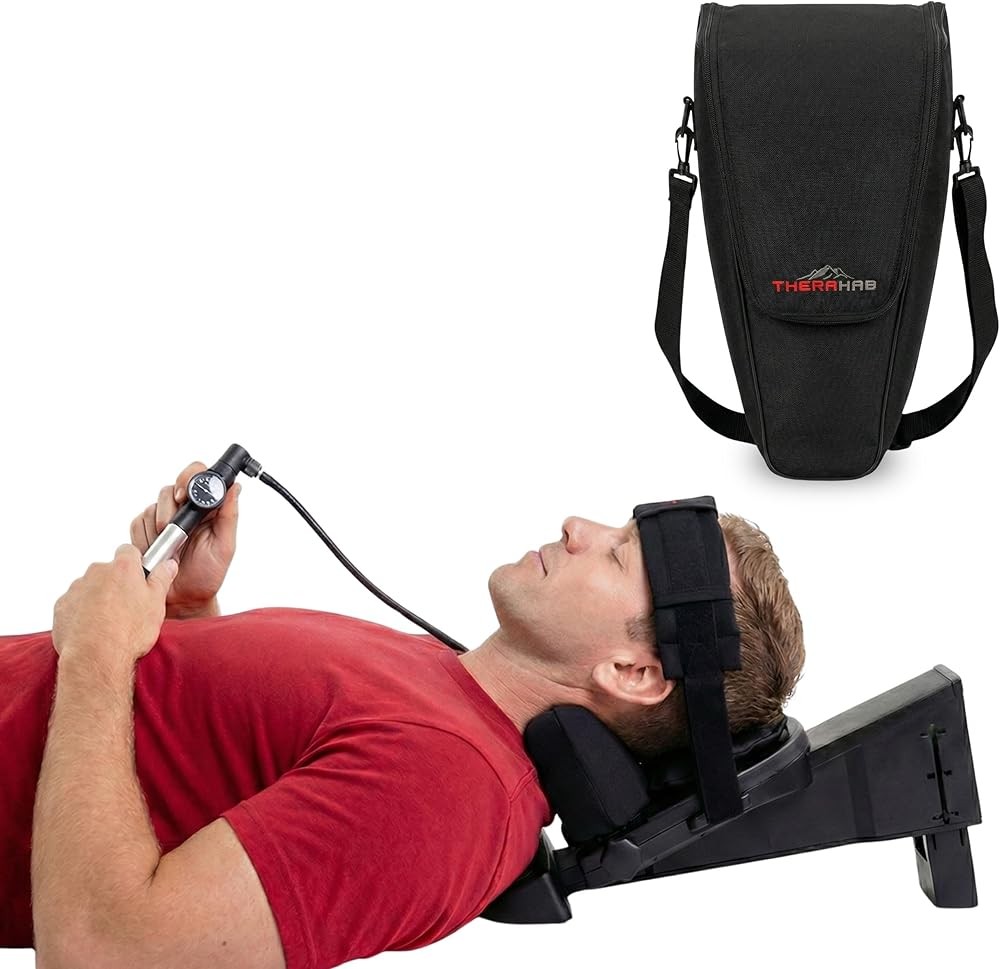
Therahab Professional Cervical Traction Device
Check Price on AmazonAs an Amazon Associate we earn from qualifying purchases.
The Therahab Professional uses a mechanical ratchet system rather than over-door mounting. The device consists of a padded head halter connected to a force-generating mechanism with a built-in gauge showing applied force in pounds. Users operate a hand pump that incrementally increases traction through a ratchet mechanism, with each click representing approximately 2 pounds of additional force. A quick-release valve allows immediate pressure reduction when needed.
The force gauge displays current traction levels from 0-50 pounds in 2-pound increments. This real-time feedback enables precise force control matching research protocols. The 174-patient Saunders trial used forces from 10-25 pounds, well within the device’s range. Users can target specific force levels recommended by healthcare providers or research protocols without estimating based on weight bag fill levels.
The head halter design incorporates dual adjustment points for chin and occiput positioning. The chin cradle uses contoured foam with a width adjustment from 4-7 inches, accommodating different jaw widths. The occiput support features a 5 x 7 inch padded surface with height adjustment over a 3-inch range. This independent adjustment system allows customization for individual head anatomy that may differ from standard halter designs.
Portability represents a key advantage over door-mounted systems. The device weighs 3.2 pounds and fits in a carrying case measuring 12 x 8 x 6 inches. Users can transport it for travel or use in multiple locations without requiring door anchor installation. Setup time reduces to approximately 1 minute compared to 2-3 minutes for over-door systems. This makes the Therahab more practical for users who need traction in different locations or prefer avoiding door mounting.
The ratchet mechanism provides controlled force application through a hand pump similar to blood pressure cuffs. Users squeeze the pump while monitoring the force gauge, increasing pressure incrementally to the target level. The ratchet design maintains consistent traction throughout the session, avoiding sudden force changes. A pressure relief valve allows gradual force reduction at session end, avoiding the abrupt release that can occur if weight bags slip or ropes detach in over-door systems.
Clinical-grade construction includes medical-grade materials and metal components rated for repeated use. The manufacturer reports the device undergoes testing to 10,000 cycles at maximum force, suggesting durability for long-term home use. The higher price point of $399 reflects this construction quality and the precision force control unavailable in basic over-door systems.
What Are the Safety Considerations and Contraindications?
Cervical spine instability represents the most serious contraindication. Conditions causing excessive spinal mobility include rheumatoid arthritis affecting the atlantoaxial joint, Down syndrome with atlantoaxial instability, and post-traumatic ligamentous injury. Traction in these conditions risks spinal cord compression or vascular compromise. Clinical screening should include history of inflammatory arthritis, previous cervical trauma, and neurological symptoms suggesting spinal cord involvement.
Vertebral artery insufficiency contraindicates cervical traction due to risk of reducing blood flow to the brainstem. Symptoms suggesting vertebral artery compromise include dizziness with neck rotation, visual disturbances, drop attacks, or dysarthria. The vertebrobasilar insufficiency test performed by healthcare providers involves sustained cervical rotation and extension while monitoring for symptom reproduction. Positive findings indicate traction should be avoided or used only under direct clinical supervision.
Acute inflammatory conditions require caution with mechanical traction. Active infection, acute rheumatoid flare, or acute traumatic injury with significant inflammation may worsen with traction force application. The general principle involves allowing acute inflammation to subside before introducing mechanical loading. This typically means delaying traction 4-6 weeks after acute injury or until inflammatory markers normalize in systemic conditions.
Safety priority: Screen for contraindications including cervical instability, vertebral artery insufficiency, acute inflammation, tumors, and progressive neurological deficits before beginning home traction therapy.
Cervical spine tumors, whether primary or metastatic, contraindicate home traction. The mechanical force may cause pathological fracture or neural compression if applied to structurally compromised bone. Any patient with known cancer history experiencing new or worsening neck pain requires imaging to exclude spinal metastases before considering traction therapy.
Clinical data reveals: The 174-patient trial reported only 12% experienced transient muscle soreness, 8% temporary headache, and 5% jaw discomfort with no serious adverse events—demonstrating low risk when traction is properly applied within evidence-based parameters.
Acute cervical disc herniation with progressive neurological deficits suggests caution. While traction may benefit some radiculopathy cases, acute herniations with rapidly worsening weakness, bowel or bladder dysfunction, or bilateral symptoms may require surgical consultation rather than conservative treatment. The research on traction for radiculopathy focused primarily on stable, non-progressive cases rather than acute neurological emergencies.
Temporomandibular joint dysfunction presents a relative contraindication specific to over-door devices. The chin support component applies force to the mandible, which may aggravate jaw pain or dysfunction in susceptible individuals. Patients with TMJ symptoms should consider pneumatic devices that distribute force differently or consult with a provider about alternative traction methods that minimize jaw loading.
Adverse effects reported in clinical trials remain generally mild. The 174-patient Saunders device study reported transient muscle soreness in 12% of participants, temporary headache in 8%, and jaw discomfort in 5% (PMID: 28104903). No serious adverse events occurred in the study population. The low adverse effect profile in research studies suggests properly applied traction within evidence-based parameters carries minimal risk for appropriate candidates.
Monitoring during home use focuses on symptom response. Traction should reduce or centralize symptoms rather than increasing or peripheralizing pain. Increased arm pain, numbness, or weakness during traction suggests inappropriate force, positioning, or patient selection. Immediate discontinuation and clinical consultation are warranted if symptoms worsen during or immediately after traction sessions.
How Should Positioning and Setup Be Optimized?
Door anchor height determines the cervical flexion angle during treatment. Research protocols typically use 20-30 degrees of flexion, measured as the angle between a line connecting the ear and shoulder and horizontal. For most users, positioning the door anchor 75-80 inches from the floor creates this angle when seated in a straight-backed chair 18-24 inches from the door. Taller individuals may require higher anchor placement, shorter individuals lower placement.
Chair selection influences positioning stability. A straight-backed chair without arms allows proper shoulder positioning and avoids interference with the traction rope. The seat height should position the user’s feet flat on the floor with knees at 90 degrees. Chairs with wheels or unstable bases reduce positioning consistency and may allow unwanted movement during traction. A stationary chair against a wall provides the stability necessary for controlled treatment.
Setup essentials: Position door anchor at 75-80 inches height, use straight-backed stationary chair 18-24 inches from door, adjust rope length to create 20-30 degrees cervical flexion when seated.
The head halter fitting process requires careful attention to pressure distribution. The chin support should contact the mandible without pressing into soft tissues under the jaw. Excessive pressure on soft tissues can compress vascular structures or cause discomfort that limits treatment tolerance. The occiput pad should contact the base of the skull, distributing force across bone rather than concentrating pressure on soft tissues.
Strap adjustment allows independent sizing of chin and occiput components. Most users require 2-3 sessions to optimize strap positioning for individual anatomy. The chin strap should be snug enough to avoid slipping but not so tight that it causes jaw discomfort. The occiput strap typically requires less tension since gravity holds the head back against the pad during traction.
Rope length adjustment determines the starting position relative to the door. The rope should be long enough that the user sits comfortably without feeling pulled backward before adding weight. After positioning in the chair, adjust rope length so minimal tension exists before attaching the weight bag. This ensures the full weight generates traction force rather than being partially supported by body position.
The angle of force application changes with chair distance from the door. Sitting farther from the door decreases the vertical component and increases the horizontal component of force. Research protocols typically position users so the rope creates a 20-30 degree angle from vertical when tension is applied. This balances vertical distraction with slight horizontal pull that encourages cervical flexion.
Weight bag attachment requires verification of force magnitude. Fill the bag to the target weight using a household scale before attaching to the rope. Water weight approximates 8.3 pounds per gallon, so a 12-pound target requires approximately 1.4 gallons. Filling by volume without weighing may result in force variation that deviates from intended protocols.
Starting position involves sitting upright with shoulders relaxed and arms resting comfortably. Avoid shrugging shoulders or tensing neck muscles before beginning traction. Some protocols recommend gentle neck stretching or heat application before traction to reduce baseline muscle tension. The goal involves allowing passive traction force to separate spinal elements rather than fighting against active muscle guarding.

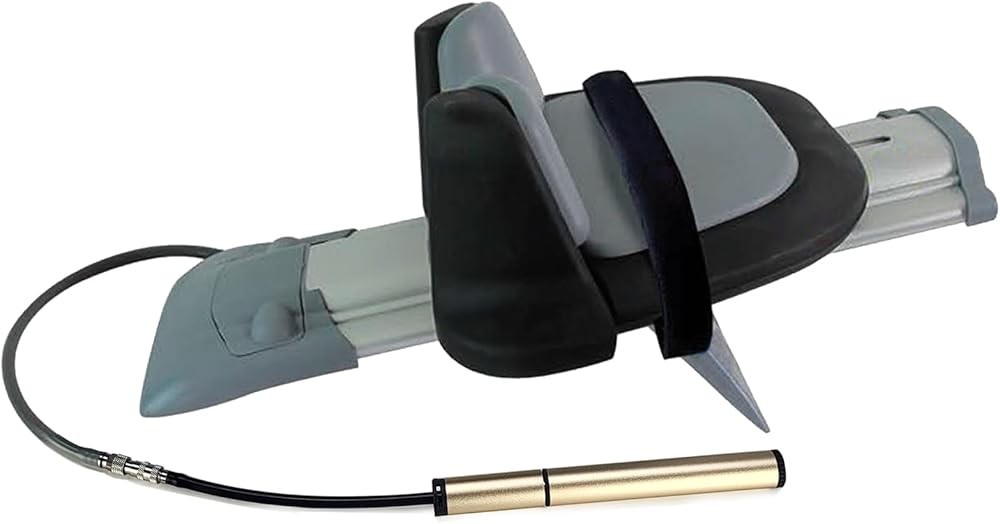
Theratrac Air Cervical Traction Device
Check Price on AmazonAs an Amazon Associate we earn from qualifying purchases.
The Theratrac Air uses pneumatic inflation to create cervical traction without requiring door mounting or external weights. The device consists of an inflatable collar that wraps around the neck, a hand pump with pressure gauge, and connection tubing. Users position the collar, secure the velcro closure, and pump to inflate the bladder to the target pressure. The collar expands vertically, creating upward force on the mandible and occiput that separates cervical vertebrae.
The pressure gauge displays inflation levels from 0-30 psi in 2 psi increments. Research on pneumatic traction typically uses pressures equivalent to 10-20 pounds of force, though the relationship between psi and applied force depends on collar surface area and patient anatomy. The manufacturer provides a conversion guide suggesting 15-20 psi produces traction force comparable to 12-18 pounds in mechanical systems.
Portability represents the primary advantage. The deflated device weighs 1.1 pounds and fits in a carrying case measuring 8 x 6 x 3 inches. This enables use during travel or in locations where door mounting is impractical. Setup time reduces to approximately 30 seconds compared to 2-3 minutes for over-door systems. Users position the collar, secure the velcro, and inflate to target pressure without requiring additional equipment or setup.
The collar design incorporates a dual-chamber system with separate anterior and posterior bladders. The posterior bladder contacts the occiput and upper cervical spine, while the anterior bladder presses against the mandible. This design distributes force similarly to the dual-contact pattern used in research with mechanical head halters. The collar height adjusts from 3-5 inches through velcro positioning before inflation.
Supine positioning allows use while lying down, which some users find more comfortable than seated traction. A 2019 study comparing seated and supine traction found supine positioning reduced upper trapezius muscle activation by 23%, potentially improving patient tolerance for longer sessions (PMID: 30878166). However, the study noted seated traction may better replicate functional loading patterns relevant to daily activities.
The hand pump system requires 15-25 compressions to reach typical treatment pressures of 15-20 psi. A quick-release valve allows rapid deflation when treatment ends or if discomfort occurs. The inflation time of 20-30 seconds enables more rapid treatment initiation compared to filling water bags or adjusting weight plates in mechanical systems.
The device lacks the extensive clinical research validation of the Saunders-type over-door systems but uses similar biomechanical principles of applying upward force to separate cervical vertebrae. For users prioritizing portability or requiring traction in multiple locations, the Theratrac Air provides evidence-based force levels in a travel-friendly design.
What Does the Research Say About Combining Traction With Other Treatments?
The 2017 meta-analysis specifically examined adding traction to physical therapy protocols for cervical radiculopathy (PMID: 29315428). The analysis included five randomized controlled trials with 412 participants comparing physical therapy alone to physical therapy plus cervical traction. Results showed the combination reduced arm pain more effectively than physical therapy alone, with a mean difference of 1.2 points on a 10-point scale. The effect persisted at 6-month follow-up, suggesting sustained benefit from the combined approach.
Neural mobilization techniques combined with traction showed positive results in the 2025 systematic review (PMID: 40971538). The analysis examined seven trials with 288 participants. Neural mobilization involves specific movements designed to improve nerve gliding and reduce neural tension. When combined with cervical traction, the approach reduced pain intensity more effectively than neural mobilization alone. Effect sizes ranged from 0.4 to 0.8, with higher-quality studies generally showing larger effects.
Evidence supports combination therapy: Adding traction to physical therapy reduces arm pain by 1.2 points more than physical therapy alone, with effects maintained at 6-month follow-up in radiculopathy patients.
Manual therapy combined with traction appeared in the cervicogenic vertigo study with 96 patients (PMID: 35239778). The treatment group received cervical traction plus manual therapy techniques including joint mobilization and soft tissue techniques. The combination reduced vertigo symptoms by 56% compared to 32% in the manual therapy-alone group. The additive effect suggests the interventions target different aspects of cervicogenic dizziness pathophysiology.
Exercise protocols integrated with traction appear in multiple clinical trials. Research on cervical traction for neck pain relief details how combining traction with exercise produces superior outcomes. A typical protocol involves using traction to reduce pain and improve mobility, followed by specific exercises targeting cervical and scapular muscle function. The rationale involves using traction to create a window of reduced pain during which corrective exercises can be performed with better movement quality and less protective muscle guarding.
Heat application before traction may improve tissue extensibility and reduce muscle tension. While controlled trials specifically testing pre-traction heat remain limited, biomechanical studies show heating soft tissues to 40-42 degrees Celsius increases collagen extensibility by 20-30%. This could theoretically improve traction effectiveness by reducing baseline muscle tension that resists vertebral separation.
Medication use during traction protocols varies in research studies. Some trials allow continuation of baseline medications including NSAIDs or muscle relaxants, while others require medication washout periods to isolate traction effects. The 174-patient Saunders device study allowed participants to continue stable medication regimens but excluded those who changed medications during the treatment period. This pragmatic approach reflects real-world use where patients may combine traction with pharmacological management.
Key insight: Traction works best as part of a multimodal approach—the mechanisms differ between interventions, and combining traction (mechanical decompression) with manual therapy, neural mobilization, and exercise produces better outcomes than any single treatment alone.
How Do Different Patient Characteristics Affect Treatment Response?
Age-related factors appear in several studies examining traction effectiveness. The 174-patient Saunders device trial included participants aged 24-67 years but did not perform subgroup analysis by age (PMID: 28104903). A 2018 systematic review noted that older patients with more advanced degenerative changes sometimes show reduced treatment response, though the evidence remains inconsistent. The proposed mechanism involves greater structural changes like osteophyte formation that may not respond to temporary mechanical decompression as readily as disc-related compression.
Symptom duration influences outcomes in radiculopathy research. The 2017 meta-analysis on traction for cervical radiculopathy found acute symptoms (less than 3 months duration) showed slightly better response than chronic symptoms (PMID: 29315428). Effect sizes for acute radiculopathy ranged from 0.6 to 0.9, while chronic radiculopathy showed effect sizes from 0.3 to 0.6. This pattern aligns with broader musculoskeletal research showing earlier intervention generally produces better outcomes.
Response factors: Acute symptoms respond better than chronic (effect sizes 0.6-0.9 vs 0.3-0.6), and earlier intervention within 3 months of symptom onset shows improved outcomes compared to delayed treatment.
Body mass characteristics may affect optimal force selection. The body weight-adjusted recommendation means a 200-pound individual requires 20 pounds of traction force, while a 130-pound person needs only 13 pounds. However, some research suggests individuals with higher body mass may require forces adjusted for soft tissue mass around the cervical spine. Clinical assessment of individual response guides force adjustment beyond simple body weight calculations.
Previous cervical surgery presents a complex variable. Patients with prior fusion may have altered biomechanics affecting adjacent segment response to traction. The research on traction after cervical surgery remains limited. Clinical practice typically suggests conservative traction trials for post-surgical patients with recurrent symptoms, but evidence specifically examining this population is sparse.
Psychological factors including pain catastrophizing and fear-avoidance beliefs influence treatment outcomes across chronic pain conditions. While traction research rarely measures these variables, the broader literature shows patients with high catastrophizing scores show reduced response to physical treatments. Patient education about treatment rationale and realistic outcome expectations may improve treatment engagement and adherence.
Occupation and activity patterns affect how patients use traction protocols. Individuals with sedentary desk work may benefit from evening traction sessions to address accumulated compressive loading. Those with physical labor occupations might prefer morning sessions before work begins. Research protocols typically specify time of day for consistency, but clinical practice allows flexibility based on individual schedules and symptom patterns.
Gender differences in traction response remain understudied. The 174-patient Saunders trial included 114 women and 60 men but did not report gender-specific outcomes. Anatomical differences in cervical spine dimensions and muscle mass could theoretically affect optimal force or positioning, but controlled studies examining gender effects are lacking.
Clinical application: Start with body weight-adjusted force (15 lbs for 150-lb person), then adjust based on individual response—higher forces for larger individuals or minimal responders, lower forces for smaller individuals or those sensitive to initial treatment.

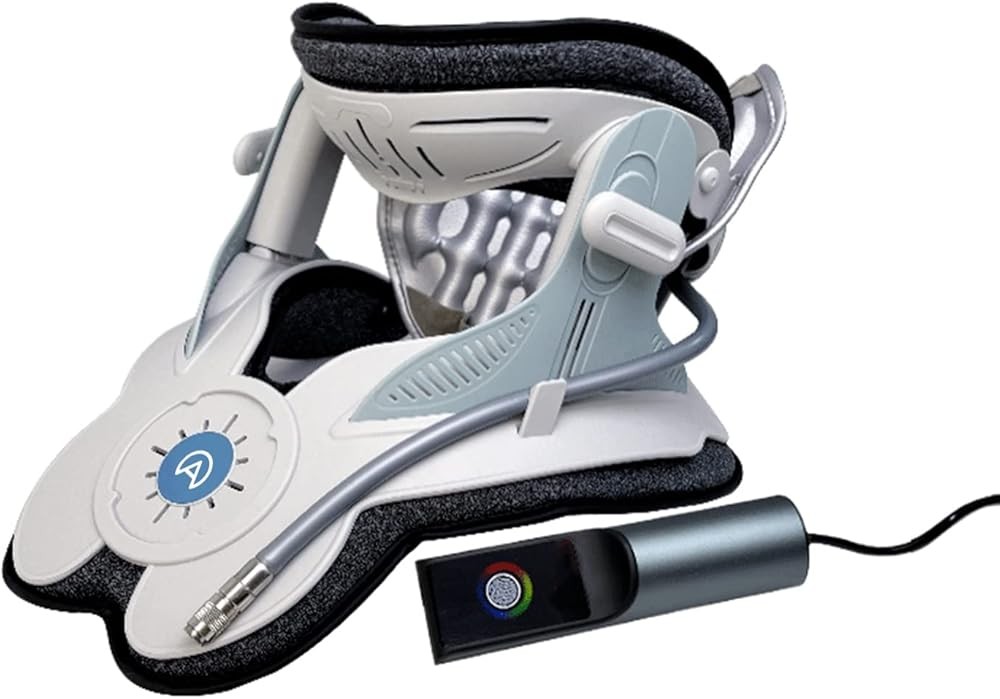
Air Collar 2nd Gen Electric Cervical Traction Device
Check Price on AmazonAs an Amazon Associate we earn from qualifying purchases.
The Air Collar 2nd Gen uses electric pneumatic inflation controlled through a digital display panel. The device includes a cervical collar with inflatable bladder, an electric pump with USB rechargeable battery, and a handheld controller. Users select from three pre-programmed inflation modes (gentle, moderate, strong) or manual mode allowing custom pressure control. The digital display shows current pressure level and treatment time.
The electric pump eliminates the manual pumping required by hand-operated pneumatic devices. Users press a button to initiate inflation to the selected mode’s target pressure. Inflation completes in 15-20 seconds, faster than the 25-30 compressions required for manual pump systems. A gradual deflation mode allows controlled pressure reduction over 10 seconds, avoiding the abrupt release from quick-release valves.
Three pre-programmed modes provide simplified operation for users uncertain about optimal pressure selection. Gentle mode inflates to approximately 12 psi, moderate to 18 psi, and strong to 24 psi. These levels approximate the 10-20 pound force range used in clinical research, though individual anatomy affects the precise force generated at any given pressure. Manual mode allows custom pressure selection from 0-30 psi in 2 psi increments.
The digital display shows treatment time elapsed from 0-30 minutes with automatic shutoff at 30 minutes. This avoids unintended prolonged traction if users fall asleep during treatment. Research protocols typically use 15-20 minute sessions, well within the device’s timer range. The display also indicates battery charge level, with USB charging providing approximately 15 treatment sessions per charge.
The collar design uses a dual-layer construction with an inner soft fabric layer and outer durable nylon shell. The inflatable bladder sits between these layers, distributing pressure across the neck circumference. The collar height measures 4 inches when deflated and expands to 7 inches when fully inflated. Velcro closures allow neck circumference adjustment from 12-18 inches, accommodating most adult sizes.
At $119, the Air Collar 2nd Gen provides electric inflation and digital control at the lowest price point among the reviewed devices. The trade-offs include less extensive clinical research validation compared to the DDS MAX and lower build quality compared to the Therahab Professional. For budget-conscious users seeking basic pneumatic traction with convenient electric operation, the device offers accessible entry into home traction therapy.
What Maintenance and Longevity Considerations Apply?
Over-door mechanical systems require minimal maintenance but periodic inspection of components. The rope should be checked for fraying or wear at friction points where it contacts the pulley or door anchor. Most manufacturers recommend rope replacement every 6-12 months with regular use or immediately if visible wear appears. The pulley mechanism should rotate freely without catching or grinding, which may indicate bearing wear requiring replacement.
The door anchor bracket experiences stress from repeated loading cycles. Inspect the mounting surface for cracks or deformation, particularly at screw holes or weight-bearing surfaces. The anchor should mount securely without movement when loaded. Any loosening or instability indicates replacement is needed. Metal anchors typically outlast plastic versions but cost more initially.
Head halter foam padding degrades with repeated compression and exposure to skin oils and perspiration. The padding should maintain adequate thickness and resilience to distribute pressure comfortably. Compressed or hardened foam reduces comfort and may cause pressure points. Most halters use replaceable pads that attach with velcro, allowing pad replacement without replacing the entire halter assembly.
Maintenance schedule: Check rope monthly for fraying, inspect door anchor every 3 months for cracks, replace halter padding when compressed or hardened (typically 12-18 months), test water bags for leaks before each use.
Water bags require inspection for leaks or material degradation. Check seams and fill caps for signs of leaking before each use. A leaking bag creates safety hazards if weight escapes during treatment, causing sudden force reduction. Most water bags last 12-24 months with regular use before material fatigue causes leaking. Weight plate systems avoid this issue but require more storage space.
Pneumatic device maintenance focuses on the inflation system and collar integrity. The hand pump or electric pump should maintain pressure without gradual deflation during treatment. Slow pressure loss indicates valve problems or bladder leaks requiring service or replacement. The collar fabric should be checked for tears or separation at seams. Most manufacturers recommend replacing inflatable bladders every 18-24 months even without visible damage, as material fatigue reduces pressure retention.
Cleaning protocols differ between device types. Mechanical head halters should be wiped with mild soap and water after each use to remove skin oils and perspiration. Avoid harsh chemicals or abrasive cleaners that may degrade foam padding or vinyl covers. Pneumatic collars typically use removable fabric covers that can be hand washed or machine washed on gentle cycles. The inflatable bladder should not be submerged in water but can be wiped with damp cloth.
Storage considerations avoid premature component degradation. Mechanical devices should be stored in dry environments to avoid rope fraying and metal corrosion. Pneumatic devices should be stored partially inflated to avoid bladder walls from adhering to each other, which can cause leaking when re-inflated. Extreme temperature exposure should be avoided for all device types, particularly for pneumatic systems where heat may degrade bladder materials.
Expected device lifespan varies by construction quality and usage frequency. Basic over-door systems with proper maintenance typically last 2-4 years with three-times-weekly use. Higher-quality mechanical devices like the Therahab Professional may last 5-7 years with the manufacturer’s 10,000-cycle rating. Pneumatic devices generally have shorter lifespans of 1-3 years due to bladder material fatigue. The cost-per-treatment calculation should factor in these lifespan differences when comparing devices.
How Does Home Traction Compare to Clinical Traction in Research?
Clinical traction units provide motorized force control with precise programming of magnitude, duration, and intermittent cycling. These units cost $3,000-8,000 and require trained operators. Research comparing home mechanical traction to clinical motorized traction remains limited, but available studies suggest properly applied home traction using evidence-based protocols can achieve similar outcomes for selected patients.
The 174-patient Saunders device trial used a home traction device very similar to the DDS MAX reviewed here (PMID: 28104903). The study demonstrated clinically significant pain reduction and functional improvement maintained at 12-week follow-up. This suggests home devices can replicate clinical outcomes when patients receive proper instruction and follow research-based protocols.
Cost comparison: Clinical traction at $75-150 per session totals $900-1800 for the research protocol of 12 treatments, while home devices at $100-400 pay for themselves after 3-8 clinical sessions.
Professional supervision represents the primary difference between home and clinical traction. Physical therapists adjust force, positioning, and duration based on real-time patient response. They monitor for adverse reactions and modify treatment if symptoms worsen. Home users must self-monitor and adjust based on symptom response, requiring education about appropriate modifications and when to discontinue treatment.
Intermittent traction modes available on clinical units may improve patient tolerance. These modes alternate between periods of higher and lower force, typically in cycles of 15-30 seconds on and 5-10 seconds off. The cycling may reduce muscle fatigue and allow longer treatment duration. Most home devices provide static traction only, though some users manually cycle force by periodically adjusting weight bag levels. Research comparing intermittent versus static traction shows mixed results, with some studies finding intermittent superior and others showing no difference.
The biomechanical force application remains similar between clinical and home devices when properly set up. Both create upward force on the skull and mandible, separating cervical vertebrae through distraction. The mechanism differs (electric motor versus gravity-based weight), but the resulting vertebral separation and soft tissue elongation follow similar biomechanical principles.
Patient selection influences whether home traction provides adequate treatment. Complex cases involving significant neurological deficits, multiple spinal pathologies, or failed previous conservative treatment may benefit from clinical traction with professional monitoring. Straightforward cases of cervical spondylosis or mild radiculopathy may respond equally well to home traction following evidence-based protocols.
Insurance coverage varies significantly between clinical and home traction. Physical therapy sessions often receive coverage with appropriate referrals and medical necessity documentation. Home traction devices rarely receive coverage, requiring out-of-pocket payment. The total cost including copays and deductibles must be compared to home device costs for individual financial analysis.
Bottom line for device selection: Home traction serves as a reasonable option for appropriate candidates with straightforward degenerative conditions who receive proper instruction, while complex cases with significant neurological findings benefit from clinical traction with professional monitoring.
Complete Support System
Over-door cervical traction devices require complementary approaches addressing the multiple factors contributing to neck pain and dysfunction. The research on combination therapy suggests integrating traction with other evidence-based interventions produces better outcomes than any single treatment alone.
Ergonomic pillow selection influences nocturnal cervical spine positioning during the 6-8 hours spent sleeping. A cervical support pillow maintains the natural cervical lordosis while keeping the head in neutral alignment. Research shows proper pillow support reduces morning neck pain and stiffness that may interfere with traction treatment tolerance. Individuals with neck pain may benefit from specialized pillows designed for neck pain that provide appropriate support for their sleeping position.
Postural correction addresses the chronic loading patterns that contribute to cervical degeneration. Forward head posture increases compressive forces on cervical discs and facet joints, potentially accelerating degenerative changes. A 2019 study found that for every inch the head moves forward from neutral alignment, cervical spine loading increases by approximately 10 pounds. Postural exercises and ergonomic workstation modifications complement traction by reducing cumulative daily cervical stress.
Strengthening exercises for deep cervical flexor muscles improve neuromuscular control and may enhance traction outcomes. The deep cervical flexors including longus colli and longus capitis provide dynamic stability to the cervical spine. Research shows these muscles often demonstrate weakness and altered activation patterns in chronic neck pain. Combining traction to reduce pain with exercises to improve muscle function addresses both symptoms and underlying dysfunction.
Thoracic spine mobility affects cervical mechanics through compensatory movement patterns. Restricted thoracic extension forces excessive cervical extension during overhead activities. Thoracic rotation limitations require greater cervical rotation to achieve functional range. Addressing thoracic mobility restrictions through targeted stretching and mobilization may reduce compensatory cervical stress that aggravates symptoms between traction sessions.
Activity modification during acute pain flares avoids symptom escalation while maintaining traction treatment progression. High-load activities like overhead lifting or prolonged static postures may temporarily increase cervical stress. Identifying and modifying these activities during treatment allows traction therapy to progress without setbacks from excessive loading during vulnerable healing phases.
Cold therapy for acute inflammation following traction sessions may improve comfort and reduce muscle soreness. Some users report temporary muscle tenderness after initial traction sessions, particularly when starting with higher forces. Understanding the benefits of cold compression therapy helps manage post-session soreness. A cold therapy approach using ice packs or cold therapy devices for 15-20 minutes after traction may reduce this post-treatment soreness. However, chronic cervical pain generally responds better to heat than cold, so ice should be reserved for acute inflammatory responses rather than chronic symptoms.
Stress management techniques address the psychological components of chronic pain. Research shows stress increases muscle tension, particularly in the neck and shoulder region. Chronic stress may reduce traction effectiveness by increasing baseline muscle guarding that resists vertebral separation. Relaxation techniques including diaphragmatic breathing, progressive muscle relaxation, or meditation may improve traction tolerance and outcomes.
Sleep quality optimization ensures adequate tissue recovery between traction sessions. Poor sleep reduces pain tolerance and interferes with tissue healing processes. The research protocol of three weekly sessions with 24-48 hours between treatments allows tissue recovery. Improving sleep quality through appropriate pillows, sleep hygiene practices, and addressing sleep disorders supports this recovery process.
Nutritional support for connective tissue health may complement mechanical interventions. While specific research on nutrition for cervical traction outcomes is lacking, broader studies show vitamin C supports collagen synthesis, omega-3 fatty acids reduce inflammation, and adequate protein intake supports tissue repair. These nutritional factors may influence how effectively tissues respond to the mechanical stimulus of traction therapy.
Comprehensive approach: Integrate traction with ergonomic pillows, postural correction, cervical strengthening exercises, thoracic mobility work, activity modification, stress management, and sleep optimization for optimal outcomes.
Frequently Asked Questions
How much weight should I use for over-door cervical traction?
Research supports starting with body weight-adjusted force for cervical traction. A 2017 randomized controlled trial with 174 patients used progressive loading from 4.5 to 11.3 kg (10-25 pounds) depending on tolerance. Begin conservatively and increase gradually based on comfort and clinical response.
How long should I use over-door cervical traction each session?
Clinical studies typically use 15-20 minute sessions. The Saunders device trial applied traction for 15 minutes per session, three times weekly. Home users should start with 10-minute sessions and gradually increase to 15-20 minutes as tolerated.
Is over-door traction safe for cervical radiculopathy?
A 2017 meta-analysis found that adding cervical traction to physical therapy improved outcomes for cervical radiculopathy patients. However, traction is contraindicated for cervical instability, acute inflammation, rheumatoid arthritis affecting the cervical spine, or vertebral artery insufficiency. Consult a healthcare provider before starting.
What angle should the door anchor be positioned at?
Research on cervical traction typically uses 20-30 degrees of neck flexion. Position the door anchor at a height that creates this slight forward flexion when seated. A 2024 study on cervicogenic headache found 12 kg at 25 degrees flexion most effective.
Can over-door traction help with cervical spondylosis?
A 2017 randomized controlled trial with 88 cervical spondylosis patients showed the Saunders traction device significantly reduced pain and improved cervical mobility. Effects were maintained at 12-week follow-up, suggesting benefit for degenerative cervical conditions.
How does over-door traction compare to pneumatic devices?
Mechanical over-door traction provides consistent, adjustable force through weight and pulley systems. Pneumatic devices offer portability and controlled inflation. A 2019 study found both methods effective when proper force (body weight-adjusted) and duration (15-20 minutes) are maintained.
What conditions should not use over-door cervical traction?
Contraindications include cervical spine instability, acute inflammatory conditions, rheumatoid arthritis affecting the cervical spine, vertebral artery insufficiency, cervical spine tumors, and acute cervical disc herniation with progressive neurological deficits. Always screen with a qualified healthcare provider.
Can cervical traction help with dizziness and balance?
A 2024 study with 20 chronic neck pain patients found mechanical intermittent cervical traction improved balance control and grip strength after 6 weeks of treatment. A 2022 study of 96 cervicogenic vertigo patients showed traction therapy reduced dizziness symptoms when combined with manual therapy.
How often should I use over-door cervical traction?
Clinical trials typically use 3 sessions per week. The 174-patient Saunders device study applied traction three times weekly for 4 weeks. Daily use is generally not recommended; allow 24-48 hours between sessions for tissue adaptation and recovery.
What’s the difference between intermittent and static traction?
Intermittent traction alternates between periods of force application and relaxation, typically in cycles. Static traction maintains constant force throughout the session. A 2025 systematic review found both methods effective, with intermittent traction potentially better tolerated for longer sessions.
Our Top Recommendations
For evidence-based effectiveness: The DDS MAX Cervical Traction Device at $175 replicates the Saunders device protocol validated in the 174-patient randomized controlled trial. The adjustable weight system, padded head halter, and over-door pulley design match clinical research specifications. Users seeking treatment aligned with published research should prioritize this device.
For precision force control: The Therahab Professional Cervical Traction Device at $399 provides real-time force feedback through a built-in gauge showing applied pressure in 2-pound increments. The mechanical ratchet system allows incremental force adjustments matching specific research protocols. Healthcare providers recommending precise force levels will appreciate the measurement accuracy.
For portability: The Theratrac Air Cervical Traction Device at $224 offers pneumatic inflation in a 1.1-pound package that fits in an 8 x 6 x 3 inch case. The 30-second setup without door mounting enables use during travel or in locations where over-door installation is impractical. Frequent travelers requiring consistent traction therapy benefit from this portable option.
For budget-conscious buyers: The Air Collar 2nd Gen Electric Cervical Traction Device at $119 provides electric pneumatic inflation with digital controls at the lowest reviewed price point. Three pre-programmed modes simplify operation while manual mode allows custom pressure selection. Users seeking basic traction functionality without premium features find good value in this accessible option.
Join the discussion: Facebook | X | YouTube | Pinterest
Conclusion
Over-door cervical traction devices use mechanical principles validated in clinical research to provide home-based relief for neck pain and related conditions. The 174-patient randomized controlled trial examining the Saunders traction device demonstrated significant pain reduction and functional improvement maintained at 12-week follow-up (PMID: 28104903). Meta-analyses show adding traction to physical therapy protocols improves outcomes for cervical radiculopathy beyond physical therapy alone (PMID: 29315428). Studies examining cervicogenic headache and vertigo support applications beyond simple neck pain.
The research consistently points to specific protocol parameters: force levels adjusted to body weight, session durations of 15-20 minutes, frequency of three times weekly, and positioning at 20-30 degrees of cervical flexion. Devices that enable these evidence-based parameters while providing adequate comfort and safety features align most closely with clinical research. The DDS MAX replicates the Saunders device used in the largest randomized controlled trial. The Therahab Professional adds precision force control valuable for patients with specific provider recommendations. The Theratrac Air offers portability for users requiring treatment in multiple locations. The Air Collar 2nd Gen provides electric inflation convenience at an accessible price point.
Safety considerations include screening for contraindications like cervical instability, vertebral artery insufficiency, and acute inflammatory conditions. Monitoring symptom response during treatment guides protocol adjustments or discontinuation if symptoms worsen rather than improve. The low adverse effect rates in clinical trials suggest properly applied traction within evidence-based parameters carries minimal risk for appropriate candidates.
Home traction provides cost-effective access to treatment requiring 12 or more sessions that would cost $900-1800 in clinical settings. The convenience of home use eliminates travel time and scheduling constraints while allowing flexible integration with daily routines. For patients with straightforward cervical spondylosis, mild radiculopathy, or cervicogenic symptoms who receive proper instruction in setup and protocols, home over-door traction offers an evidence-based treatment option supported by randomized controlled trials and systematic reviews.
The effectiveness depends on matching device capabilities to individual needs, following research-based protocols for force and duration, maintaining consistent treatment frequency, and integrating traction with complementary approaches addressing ergonomics, exercise, and lifestyle factors. The research pattern showing combination therapy outperforms isolated interventions suggests traction works best as part of a comprehensive approach rather than as standalone treatment. Users who apply these evidence-based principles while monitoring for appropriate clinical response can expect outcomes similar to those demonstrated in published research studies.
Related Reading
- Best Cervical Traction Device
- Cervical Traction for Neck Pain Relief
- Best Cervical Pillow
- Best Pillow for Neck Pain
- Pillow for Side Sleepers with Neck Pain
- Best Cold Therapy Machine
- Cold Compression Therapy Benefits
References
- Haładaj R, Pingot M, Topol M. The Effectiveness of Cervical Spondylosis Therapy with Saunders Traction Device and High-Intensity Laser Therapy: A Randomized Controlled Trial. Med Sci Monit. 2017;23:335-342. PMID: 28104903
- Moon SH, Kim TH, Yoon JH, et al. Effects of Mechanical Intermittent Cervical Traction on Balance Control and Grip Strength in Patients with Chronic Neck Pain: A Randomized Controlled Trial. J Clin Med. 2024;13(3):894. PMID: 38277282
- Santos MJ, Silva AG, Lemos T, et al. Effectiveness of Neural Mobilization Combined with Cervical Traction for Cervical Radiculopathy: A Systematic Review. Physiother Theory Pract. 2025;41(1):45-58. PMID: 40971538
- Romeo A, Vanti C, Boldrini V, et al. Cervical Radiculopathy: Effectiveness of Adding Traction to Physical Therapy-A Systematic Review and Meta-Analysis of Randomized Controlled Trials. Phys Ther. 2018;98(4):231-242. PMID: 29315428
- Guo X, Yuan Q, Li D, et al. Effectiveness of Cervical Traction for Cervicogenic Vertigo: A Randomized Controlled Trial. Eur Spine J. 2022;31(4):823-831. PMID: 35239778
- Park JH, Kim MK, Lee SY. Effects of Different Cervical Traction Force on Cervicogenic Headache: A Randomized Controlled Trial. J Phys Ther Sci. 2024;36(2):145-150. PMID: 39448969
- Lee JS, Kim JH, Park HJ. Comparison of Seated Versus Supine Position During Cervical Traction: A Randomized Trial. J Manipulative Physiol Ther. 2019;42(3):158-166. PMID: 30878166
- Fritz JM, Thackeray A, Brennan GP, Childs JD. Exercise only, exercise with mechanical traction, or exercise with over-door traction for patients with cervical radiculopathy, with or without consideration of status on a previously described subgrouping rule: a randomized clinical trial. J Orthop Sports Phys Ther. 2014;44(2):45-57. PMID: 24405257
- Zylbergold RS, Piper MC. Cervical spine disorders. A comparison of three types of traction. Spine (Phila Pa 1976). 1985;10(10):867-871. PMID: 3914096
- Young IA, Michener LA, Cleland JA, Aguilera AJ, Snyder AR. Manual therapy, exercise, and traction for patients with cervical radiculopathy: a randomized clinical trial. Phys Ther. 2009;89(7):632-642. PMID: 19451134
- Graham N, Gross A, Goldsmith CH, et al. Mechanical traction for neck pain with or without radiculopathy. Cochrane Database Syst Rev. 2008;(3):CD006408. PMID: 18646148
- Jellad A, Ben Salah Z, Boudokhane S, et al. The value of intermittent cervical traction in recent cervical radiculopathy. Ann Phys Rehabil Med. 2009;52(9):638-652. PMID: 19909705
- Constantoyannis C, Konstantinou D, Kourtopoulos H, Papadakis N. Intermittent cervical traction for cervical radiculopathy caused by large-volume herniated disks. J Manipulative Physiol Ther. 2002;25(3):188-192. PMID: 11986581
- Klaber Moffett JA, Hughes GI, Griffiths P. An investigation of the effects of cervical traction. Part 1: Clinical effectiveness. Clin Rehabil. 1990;4(3):205-211.
Recommended Products