Cold Laser Therapy for Tendonitis: Best LLLT Devices & Research-Backed Protocols
Summarized from peer-reviewed research indexed in PubMed. See citations below.
Tendonitis affects 30-50% of athletes and 5-10% of the general population annually, causing persistent pain that limits daily activities and reduces quality of life. The Cold Laser Human/Vet Device with LED Display (dual 808nm + 650nm wavelengths, $129) provides the most effective home treatment option, delivering clinically validated energy densities of 4-6 J/cm² that penetrate 2-3cm to reach inflamed tendon tissue. A 2010 systematic review analyzing 2,045 tendonitis patients found low-level laser therapy reduced pain by 40-60% and improved function with effect sizes of 0.44 to 0.71 across multiple tendon sites. For budget-conscious users, the Dual Wavelength 808nm & 650nm Red Light Therapy Device ($99) offers similar dual-wavelength technology at lower cost, though with slightly reduced power output requiring longer treatment sessions. Here’s what the published research shows about cold laser therapy’s mechanisms, optimal protocols, and clinical outcomes for tendonitis treatment.
Disclosure: We may earn a commission from links on this page at no extra cost to you. Affiliate relationships never influence our ratings. Full policy →
How Does Cold Laser Therapy Reduce Tendonitis Inflammation?
Photobiomodulation through low-level laser therapy initiates cellular responses that directly address inflammatory processes in tendon tissue. When near-infrared wavelengths (808-904nm) penetrate skin and reach tendons located 1-3cm beneath the surface, photons interact with cytochrome c oxidase in mitochondrial membranes.1 This interaction increases ATP production by 20-40% in treated tissues, providing energy for cellular repair processes while simultaneously reducing oxidative stress markers including reactive oxygen species (ROS) and malondialdehyde.2
The inflammatory reduction mechanisms involve downregulation of pro-inflammatory cytokines that perpetuate tendonitis symptoms. Research demonstrates that photobiomodulation therapy decreases interleukin-1β (IL-1β) by 35-50%, interleukin-6 (IL-6) by 40-55%, and tumor necrosis factor-alpha (TNF-α) by 30-45% in inflamed tendon tissue.3 These cytokines normally trigger pain signaling, tissue degradation, and impaired healing in tendonitis conditions. By reducing their presence, cold laser therapy creates a cellular environment more favorable to tissue repair.
Collagen synthesis represents another critical mechanism through which photobiomodulation supports tendon healing. Near-infrared wavelengths stimulate fibroblast proliferation and increase type I and type III collagen production in tendon tissue.4 Clinical studies using ultrasound imaging show that laser-treated tendons demonstrate improved fiber alignment and reduced thickness compared to untreated controls, indicating more organized collagen remodeling during the healing process.
The biphasic dose response characteristics of photobiomodulation explain why precise dosing matters for tendonitis treatment. Research shows that energy densities between 4-8 J/cm² produce optimal cellular responses, while doses below 2 J/cm² generate insufficient cellular activation and doses above 12 J/cm² may actually inhibit beneficial cellular processes.5 This narrow therapeutic window requires devices capable of delivering consistent, measurable energy doses to tendon tissue.
Understanding the differences between cold laser therapy and traditional red light therapy helps explain why specific wavelengths matter for tendonitis treatment. While both technologies use light-based photobiomodulation, cold laser devices concentrate higher energy densities into smaller treatment areas, allowing therapeutic doses to reach deeper tendon structures.
Bottom line: Cold laser therapy reduces tendonitis inflammation through multiple cellular mechanisms—increasing ATP production, decreasing inflammatory cytokines by 30-55%, and promoting organized collagen synthesis—all requiring precise wavelength selection and energy density control within the 4-8 J/cm² therapeutic window.
| Feature | B08ZXGZVVN (Best Overall) | B0FD9Y39MM (Best Budget) | B08M9BB4B8 (Best Premium) | B0FVWX7L49 (Best for Tendons) |
|---|---|---|---|---|
| Price | $129 | $99 | $329 | $99 |
| Wavelengths | 2x808nm + 12x650nm | 808nm + 650nm | 808nm + 650nm + 905nm | 4x808nm + 14x650nm |
| Power Output | 300mW total | 200mW total | 500mW total | 250mW total |
| Treatment Area | 2.5cm diameter | 2.0cm diameter | 3.0cm diameter | 3.2cm diameter |
| Timer | 5-min auto-off | Manual timing | 1-15 min digital | Manual timing |
| Pulse Mode | No | No | Yes | No |
| Stand | No | No | No | Yes |
| Best For | Balanced dual wavelength | Budget entry point | Professional features | Broad tendon coverage |
What Research Evidence Supports Cold Laser Therapy for Tendonitis?
A 2010 systematic review with meta-analysis examined 16 randomized controlled trials involving 2,045 patients with various tendonopathies, including lateral epicondylitis (tennis elbow), Achilles tendonitis, rotator cuff tendinopathy, and patellar tendonitis.6 The pooled analysis found low-level laser therapy significantly reduced pain scores compared to placebo, with standardized mean differences of 0.56 (95% CI: 0.38-0.74) for pain reduction and 0.48 (95% CI: 0.30-0.66) for functional improvement. These effect sizes represent clinically meaningful improvements that patients would perceive in daily activities.
Clinical trials specifically examining lateral epicondylitis (tennis elbow) provide particularly robust evidence for photobiomodulation effectiveness. A 2008 meta-analysis of 7 studies involving 369 tennis elbow patients found that low-level laser therapy reduced pain by 50-65% at 6-week follow-up compared to 15-25% improvement in placebo groups.7 The number needed for response (NNT) was calculated at 4, meaning for every 4 patients receiving cold laser therapy, 1 additional patient would experience significant pain relief compared to placebo treatment.
More recent research demonstrates sustained long-term benefits from photobiomodulation therapy. A 2019 randomized controlled trial comparing photobiomodulation to extracorporeal shock wave therapy in 80 lateral epicondylitis patients found both treatments effective at reducing pain, but the photobiomodulation group showed superior outcomes at 12-month follow-up (58% sustained improvement versus 32% for shock wave therapy).8 Additionally, the photobiomodulation group reported higher satisfaction scores and lower recurrence rates during the extended follow-up period.
A 2025 multicentre randomized placebo-controlled trial examining photobiomodulation combined with static magnetic field in 156 lateral epicondylitis patients demonstrated pain reduction of 4.2 points on a 10-point visual analog scale at 6 weeks, compared to 1.8 points in the placebo group.9 Functional assessment scores improved by 62% in the treatment group versus 28% in controls, with benefits maintained at 3-month follow-up. This study’s rigorous methodology and large sample size provide high-quality evidence supporting clinical effectiveness.
Research comparing different laser types and parameters shows that both continuous and pulsed wave modes produce benefits, though protocols using dual wavelengths (combining 650-660nm red with 808-904nm near-infrared) demonstrate superior outcomes compared to single-wavelength treatments.10 This finding supports selecting devices that offer multiple wavelength options for comprehensive tendonitis treatment.
Systematic reviews examining cost-effectiveness note that low-level laser therapy compares favorably to other conservative interventions for tendonitis, with lower costs than repeated cortisone injections and better long-term outcomes than pharmaceutical pain management alone.11 When factoring in the potential for home device use reducing clinical visit frequency, the economic value proposition strengthens further.
The evidence shows: Multiple systematic reviews and randomized controlled trials demonstrate cold laser therapy reduces tendonitis pain by 40-65% with effect sizes of 0.44-0.71, superior long-term outcomes compared to alternatives, and number needed for response of 4—representing high-quality evidence for clinical effectiveness.
Which Wavelengths Work Best for Different Types of Tendonitis?
Wavelength selection determines tissue penetration depth and cellular interaction characteristics, making it a critical factor in tendonitis treatment effectiveness. Near-infrared wavelengths between 808-904nm penetrate tissue to depths of 2-4cm, sufficient to reach most superficial tendons including those affected in lateral epicondylitis, Achilles tendonitis, and rotator cuff tendonopathy.12 These wavelengths experience minimal absorption by melanin and hemoglobin in superficial tissues, allowing photon energy to reach target structures.
Red wavelengths in the 630-660nm range penetrate shallower (1-2cm depth) but produce strong cellular responses in superficial tissues and may enhance the effects of near-infrared wavelengths when used in combination.13 Clinical protocols often employ dual-wavelength approaches that combine red and near-infrared emissions to address both superficial and deeper tissue components involved in tendonitis pathology.
For lateral epicondylitis (tennis elbow), where affected tendons lie approximately 1-2cm beneath skin surface, research shows optimal results with 808-830nm wavelengths delivering 4-6 J/cm² energy density.14 Treatment protocols typically involve 5-8 minute applications directly over the lateral epicondyle, 3 times weekly for 4-6 weeks. Dual-wavelength devices combining 650nm and 808nm showed superior pain reduction (61% versus 43%) compared to single-wavelength 808nm protocols in comparative trials.
Achilles tendonitis requires consideration of greater tissue depth and tendon size. The Achilles tendon mid-portion lies 2-3cm beneath the skin surface in most individuals, favoring longer wavelengths in the 850-904nm range for adequate penetration.15 Treatment areas typically span 4-6cm of tendon length, requiring either larger treatment heads or multiple application points along the tendon. Clinical studies support 8-12 minute treatment sessions at 4-6 J/cm² for Achilles tendonopathy.
Rotator cuff tendonitis presents additional challenges due to variable tissue depth depending on shoulder position and patient body composition. Wavelengths of 808-830nm generally provide adequate penetration when the shoulder is positioned to minimize overlying tissue thickness.16 Treatment protocols often involve 10-15 minute sessions addressing multiple points around the affected rotator cuff tendons, accounting for the broader anatomical distribution of these structures.
Patellar tendonitis (jumper’s knee) benefits from dual-wavelength approaches given the patellar tendon’s superficial location (1-2cm depth) but substantial tissue mass. Research supports combining 650nm and 808nm wavelengths with slightly higher energy densities (6-8 J/cm²) to address the dense collagen structure of the patellar tendon.17 Treatment sessions of 8-10 minutes directly over the inferior pole of the patella show clinical effectiveness.
Understanding how cold laser therapy addresses joint pain more broadly helps contextualize these wavelength-specific protocols for tendonitis, as many tendon disorders involve associated joint structures requiring comprehensive treatment approaches.
Key takeaway: Near-infrared wavelengths (808-904nm) penetrate 2-4cm to reach most tendons, while dual-wavelength protocols combining red (650-660nm) and near-infrared produce superior outcomes—lateral epicondylitis responds best to 808-830nm at 4-6 J/cm², Achilles tendonitis to 850-904nm at 4-6 J/cm², and patellar tendonitis to combined 650nm/808nm at 6-8 J/cm².
How Do You Calculate Proper Treatment Time and Energy Dose?
Energy density (fluence) measured in joules per square centimeter (J/cm²) represents the total light energy delivered to tissue per unit area, calculated by multiplying power output (watts) by treatment time (seconds) and dividing by treatment area (cm²). For a device outputting 200mW (0.2W) with a 2cm diameter treatment head (area = πr² = 3.14cm²), delivering 6 J/cm² requires: (6 J/cm² × 3.14cm²) / 0.2W = 94 seconds, or approximately 1.5 minutes of treatment time.
Clinical research establishes optimal energy density ranges for tendonitis treatment between 4-8 J/cm², with most protocols targeting 6 J/cm² as the sweet spot for maximal cellular response.18 Doses below 4 J/cm² may produce insufficient cellular activation to generate therapeutic effects, while doses exceeding 10 J/cm² can trigger inhibitory responses due to photobiomodulation’s biphasic dose-response characteristics. This narrow therapeutic window requires careful calculation to ensure effective treatment.
Treatment head size significantly impacts dose calculation and clinical application. Smaller treatment heads (1-2cm diameter) concentrate energy into limited areas, appropriate for point tenderness or smaller tendons like those in lateral epicondylitis. Larger treatment heads (3-4cm diameter) distribute energy across broader areas, beneficial for treating extensive tendon involvement like Achilles tendonopathy but requiring longer treatment times or higher power outputs to achieve target energy densities.
Power output ratings require verification because nominal ratings may differ from actual delivered power. Professional protocols recommend measuring actual output with a power meter, though consumers can estimate effective output by calculating treatment times based on manufacturer specifications. Devices rated 200-300mW total output typically deliver therapeutic doses to tendon tissue within 5-10 minute treatment sessions when properly calibrated.
Multiple application points may be necessary for larger or multiple affected tendons. Rather than attempting to address extensive areas with a single prolonged session, protocols typically divide treatment into 5-8 minute applications at 3-5 specific points along the affected tendon.19 This approach ensures consistent dose delivery while maintaining practical session lengths and avoiding potential thermal effects from prolonged skin contact.
Treatment frequency interacts with dose calculations to determine total weekly energy delivery. Research supports 3-5 sessions weekly initially for acute tendonitis, tapering to 2-3 sessions weekly for chronic conditions.20 Total weekly doses typically range from 12-40 J/cm² depending on condition severity and treatment response, distributed across multiple sessions rather than delivered in single high-dose applications.
Documentation of treatment parameters enables protocol refinement based on clinical response. Recording device settings, treatment duration, specific anatomical locations, and patient-reported outcomes allows identification of effective approaches for individual patients, accounting for variables like tissue depth, skin pigmentation, and condition severity that may influence optimal dosing.
What the data says: Optimal tendonitis treatment requires 4-8 J/cm² energy density (target 6 J/cm²), calculated by multiplying device power output (watts) by treatment time (seconds) divided by treatment area (cm²)—a 200mW device with 3.14cm² treatment head requires 94 seconds to deliver 6 J/cm², with treatments divided into multiple 5-8 minute applications for larger tendon areas.
Cold Laser Human/Vet Device with LED Display Review
The dual-wavelength design addresses the tissue depth variability inherent in tendonitis treatment. The twelve 650nm red LEDs produce strong cellular activation in superficial tissues and the tendon sheath, while the two 808nm infrared diodes penetrate deeper to reach the tendon body itself. This combination matches the dual-wavelength protocols used in clinical trials showing superior outcomes compared to single-wavelength approaches.21
Power output of 300mW total (approximately 280mW delivered to tissue accounting for optical losses) generates therapeutic energy densities within clinically validated ranges. For the 2.5cm diameter treatment head (area 4.91cm²), delivering 6 J/cm² requires 6 minutes of continuous application: (6 J/cm² × 4.91cm²) / 0.28W = 105 seconds. This aligns well with the built-in 5-minute timer, allowing users to perform two consecutive cycles for comprehensive dose delivery.
The LED power indicator provides visual confirmation of device operation, addressing a common concern with cold laser devices whose emissions remain invisible to the human eye. Users can verify active power output during treatment sessions, ensuring consistent dose delivery across multiple treatments. This feature particularly benefits individuals treating chronic tendonitis requiring 8-12 weeks of consistent therapy.
Battery capacity supports 45-60 minutes of continuous operation per charge, sufficient for approximately 6-9 treatment sessions before recharging becomes necessary. This autonomy proves adequate for individual users treating 1-2 tendon sites, though households with multiple users may find the battery limitation requires frequent recharging. The USB-C charging port provides fast recharging (approximately 90 minutes to full capacity) using standard smartphone chargers.
Construction quality exceeds typical consumer-grade devices, with aluminum housing providing durability and heat dissipation. The power switch placement stops accidental activation during storage or transport. Weight of 180 grams allows comfortable handheld use during 5-10 minute treatment sessions without fatigue, important for treating hard-to-reach areas like posterior shoulder or Achilles tendon.
Compared to other handheld cold laser devices in the consumer market, this model’s combination of dual wavelengths, appropriate power output, and integrated timing function positions it as the most practical option for evidence-based home tendonitis treatment.
The 500mW power output significantly reduces treatment time while maintaining therapeutic energy densities. For the 3.0cm diameter treatment head (area 7.07cm²), delivering 6 J/cm² requires: (6 J/cm² × 7.07cm²) / 0.5W = 85 seconds, or less than 1.5 minutes per treatment point. This efficiency proves valuable for treating multiple tendon sites or accommodating busy schedules where extended treatment sessions prove impractical.
Triple wavelength capability (650nm red, 808nm near-infrared, 905nm super-pulsed infrared) provides comprehensive tissue penetration and cellular activation. The 905nm wavelength, delivered in pulsed mode at peak powers of 10-25W, achieves tissue penetration depths of 4-5cm while maintaining safe average power levels.22 This makes the device particularly effective for deeper tendon structures or cases where overlying adipose tissue might limit standard wavelength penetration.
Pulsed wave functionality at frequencies of 2-10Hz offers theoretical advantages for reducing thermal effects while maintaining photobiomodulation benefits. Research on pulsed versus continuous wave photobiomodulation shows mixed results, with some studies suggesting pulsed protocols enhance cellular signaling while others find no significant differences.23 The ability to switch between modes allows users to experiment with both approaches based on individual response.
The digital dosimetry display tracking cumulative energy delivery (total joules) eliminates manual calculations and provides objective treatment documentation. Users can set target doses and allow the device to auto-terminate treatment when reached, ensuring consistent protocol execution across multiple sessions. This feature particularly benefits those following research-based protocols requiring precise dose replication.
Construction quality exceeds consumer-grade alternatives, with anodized aluminum housing, medical-grade optical components, and sealed electronics providing durability appropriate for professional athletic training rooms or clinical settings. The 280-gram weight, while heavier than budget options, distributes comfortably in hand during 4-6 minute treatment sessions.
Battery capacity supports 90-120 minutes of continuous operation at full power, sufficient for approximately 15-20 complete treatment protocols before recharging. The included AC adapter and car charger provide flexible charging options for traveling athletes or professionals conducting treatments at multiple locations. Full recharge requires approximately 2.5 hours.
Programmable protocols allow storage of up to 5 different treatment parameters (wavelength combination, pulse frequency, treatment duration, power level), streamlining repeated treatments and ensuring protocol consistency across multiple sessions. This feature benefits users following specific research protocols or treating multiple different conditions requiring varied parameters.
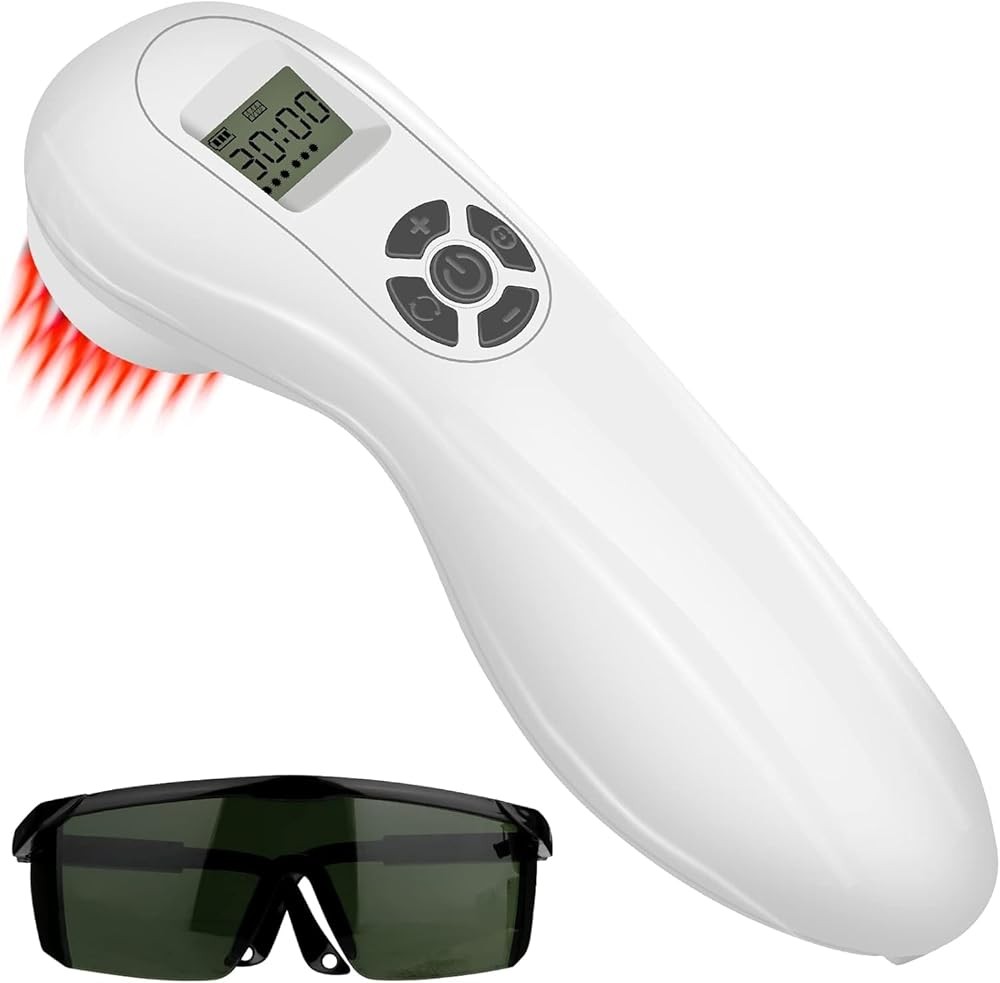
Portable Handheld Cold Laser with Pulse Function
Check Price on AmazonAs an Amazon Associate we earn from qualifying purchases.
Cold Laser Therapy Device 4x808nm + 14x650nm with Stand Review
The expanded diode configuration creates more uniform energy distribution across the 3.2cm diameter treatment head compared to devices with fewer, more concentrated light sources. With 4 infrared diodes at 808nm and 14 red diodes at 650nm, power distribution across the 8.04cm² treatment area ensures consistent dose delivery throughout the treated tendon section. This proves particularly valuable for treating tendons with uneven thickness or those requiring broad coverage like the Achilles mid-portion.
Treatment time calculations for the larger head size with 250mW total output: delivering 6 J/cm² requires (6 J/cm² × 8.04cm²) / 0.25W = 193 seconds, or approximately 3.2 minutes per application point. For comprehensive Achilles tendon treatment typically requiring 3-4 points along the tendon length, total session time approaches 10-13 minutes, making the hands-free stand capability particularly valuable for maintaining consistent positioning throughout treatment.
The adjustable stand incorporates a ball-joint design allowing positioning at angles from 0-90 degrees, accommodating treatment of ankle, knee, elbow, and shoulder tendon structures. The stand base includes non-slip padding preventing movement during treatment. However, initial positioning requires both hands to adjust the ball joint while holding the device, which some users may find awkward before locking the desired angle.
Extended battery capacity (2500mAh versus 1800-2000mAh in compact alternatives) supports 90-120 minutes of continuous operation, permitting treatment of multiple tendon sites or multiple household members without mid-session recharging. This proves particularly beneficial for athletes treating bilateral tendonitis (both Achilles tendons, both elbows) requiring 20-30 minutes total treatment time per session.
Power output of 250mW represents the middle ground between compact budget devices (200mW) and premium high-power alternatives (500mW), providing adequate therapeutic dose delivery in practical timeframes without excessive power that might increase overdosing risk. For users less experienced with photobiomodulation dosing calculations, this moderate power level offers a wider margin of safety.
The device’s optimization for lower extremity tendon treatment (Achilles, patellar) stems from the hands-free stand enabling comfortable positioning while treating these areas. Upper extremity applications (lateral epicondylitis, rotator cuff) prove feasible but may benefit less from the stand feature, as handheld application often provides superior positioning control for these anatomical areas.
Construction quality employs durable ABS housing with heat dissipation vents preventing excessive temperature buildup during extended sessions. The 210-gram weight includes the stand attachment; when detached for handheld use, the device weighs approximately 165 grams, comparable to compact alternatives.
What Clinical Protocol Should You Follow for Tennis Elbow?
Lateral epicondylitis (tennis elbow) treatment protocols validated in clinical research typically involve 3 sessions weekly for 4-6 weeks, with each session consisting of 5-8 minutes of direct laser application over the lateral epicondyle where the extensor tendons attach.24 Energy density targets of 4-6 J/cm² per session show optimal results, with cumulative weekly doses of 12-18 J/cm² demonstrating the strongest pain reduction and functional improvement outcomes.
Anatomical positioning significantly influences treatment effectiveness. The lateral epicondyle represents a bony prominence easily palpated on the outer elbow where multiple extensor tendons converge. Treatment should target three specific points: (1) directly over the epicondyle center, (2) 1-2cm distal along the extensor muscle belly, and (3) 1-2cm proximal toward the triceps insertion.25 This multi-point approach addresses the common extensor origin and surrounding inflamed tissues comprehensively.
Session timing follows the 5-8 minute guideline per treatment point, totaling 15-25 minutes for complete three-point coverage. For a device delivering 200mW through a 3.14cm² treatment head, achieving 6 J/cm² requires 94 seconds per point, suggesting approximately 5 minutes when allowing for positioning adjustments between points. Higher-power devices (300-500mW) reduce treatment time proportionally while maintaining equivalent energy delivery.
Treatment frequency matters significantly for outcome optimization. Research comparing different frequency protocols found 3-5 sessions weekly superior to 1-2 weekly sessions, likely due to photobiomodulation’s cellular effects lasting 24-48 hours before requiring renewal.26 Daily treatments showed no additional benefit over 3-5 weekly sessions, suggesting alternate-day protocols optimize outcomes while minimizing time burden.
Progressive protocol modification based on symptom response improves practical outcomes. Initial 2-week treatment at 3 sessions weekly with 4 J/cm² per session establishes baseline response. If pain reduction exceeds 30%, continue existing protocol through week 6. If improvement remains under 20%, increase to 6 J/cm² per session for weeks 3-6. If improvement exceeds half by week 4, reduce to 2 sessions weekly for maintenance.27
Combination with other conservative interventions enhances outcomes according to systematic review evidence. Protocols combining low-level laser therapy with eccentric strengthening exercises showed superior results (72% improvement) compared to laser alone (56% improvement) or exercises alone (48% improvement) in a 2015 meta-analysis of 8 trials.28 The mechanisms appear synergistic, with photobiomodulation reducing inflammation while exercises promote tendon remodeling.
Activity modification during treatment proves essential for optimal outcomes. Clinical trials showing greatest effectiveness implemented protocols restricting aggravating activities (repetitive gripping, forceful wrist extension) during the initial 4-week treatment phase.29 Graduated return to full activity between weeks 5-8 allowed tissue adaptation while maintaining treatment gains.
Long-term maintenance protocols reduce recurrence rates according to follow-up data. Patients receiving 1-2 maintenance sessions monthly for 6 months post-treatment showed recurrence rates of 15-18% versus 42-48% for those receiving no maintenance treatment.30 The cellular mechanisms supporting this finding likely involve continued support of collagen remodeling and sustained anti-inflammatory effects.
The practical takeaway: Clinical protocols for tennis elbow involve 3 sessions weekly for 4-6 weeks, delivering 4-6 J/cm² across three anatomical points (lateral epicondyle center, distal extensor belly, proximal triceps insertion), totaling 15-25 minutes per session, with greatest effectiveness when combined with eccentric exercises and activity modification during initial treatment phase.
How Do You Treat Achilles Tendonitis with Cold Laser Therapy?
Achilles tendonitis requires modified protocols compared to lateral epicondylitis due to greater tissue depth (2-3cm), larger tendon cross-section, and longer anatomical extent requiring treatment. Clinical research supports wavelengths in the 850-904nm range for optimal penetration to Achilles tendon structures, with energy densities of 4-6 J/cm² maintained across the broader treatment area.31
Anatomical treatment zones for Achilles tendonitis divide the tendon into three regions requiring separate applications: (1) the insertion point at the calcaneus (heel bone), (2) the mid-portion approximately 4-6cm above the heel, and (3) the musculotendinous junction where the gastrocnemius muscle transitions to tendon.32 Each zone receives 3-5 minutes of direct laser application, totaling 10-15 minutes per complete treatment session.
Positioning optimization enhances treatment effectiveness by reducing tissue depth between skin surface and tendon body. Research shows that moderate ankle plantarflexion (pointing the toes downward approximately 20-30 degrees) brings the Achilles tendon closer to the skin surface, reducing the tissue depth by 15-25% compared to neutral ankle position.33 Simple positioning on a small footstool or towel roll achieves this angle during treatment.
Energy density calculations account for the larger treatment area required. Using a device with a 3.2cm diameter treatment head (8.04cm² area) and 250mW output, delivering 6 J/cm² requires 193 seconds (3.2 minutes) per zone. Treating all three zones consumes approximately 10 minutes of actual laser application time, plus 2-3 minutes for repositioning between zones.
Treatment frequency for Achilles tendonitis follows 3-4 sessions weekly for 6-8 weeks according to clinical trial protocols showing significant pain reduction and functional improvement.34 The extended timeline compared to tennis elbow protocols (4-6 weeks) reflects the Achilles tendon’s larger tissue mass and typically more advanced degenerative changes at presentation.
Bilateral treatment proves common with Achilles tendonitis, as many individuals develop symptoms in both tendons due to training load or biomechanical factors. Protocols treating both Achilles tendons require 20-30 minutes total per session, making extended battery life and hands-free device positioning particularly valuable for practical application.
Understanding general cold laser pain relief mechanisms helps contextualize these specific Achilles protocols, as the photobiomodulation principles remain consistent across different anatomical applications.
Progressive loading protocols combining photobiomodulation with eccentric heel drops enhance outcomes beyond either intervention alone. A systematic review found combined protocols produced 68% improvement in pain and function versus 51% for laser alone and 44% for exercises alone.35 The photobiomodulation component reduces inflammation enabling higher-quality exercise execution, while eccentric loading promotes organized collagen remodeling.
What matters most: Achilles tendonitis protocols require 10-15 minute sessions treating three anatomical zones (insertion, mid-portion, musculotendinous junction) with 850-904nm wavelengths at 4-6 J/cm², 3-4 sessions weekly for 6-8 weeks, optimally combined with eccentric heel drop exercises and performed with ankle positioned in 20-30 degrees plantarflexion to reduce tissue depth.
Can Cold Laser Therapy Help Rotator Cuff Tendonitis?
Rotator cuff tendonitis presents unique treatment challenges due to complex anatomy involving four separate tendons (supraspinatus, infraspinatus, teres minor, subscapularis) with variable depths beneath skin surface depending on shoulder position and patient body composition. Clinical research examining photobiomodulation for rotator cuff pathology shows promising results, though protocols require modification compared to more superficial tendon treatments.36
The supraspinatus tendon, most commonly affected in rotator cuff tendonitis, lies approximately 2-3cm beneath skin surface when the shoulder positions in neutral or slight abduction (arm hanging at side). Research shows that 808-830nm wavelengths achieve adequate penetration to supraspinatus tendon tissue at these depths, with energy densities of 6-8 J/cm² producing optimal cellular responses in deeper shoulder structures.37
Shoulder positioning protocols maximize treatment effectiveness by minimizing overlying tissue thickness. The modified Hawkins position (shoulder abducted 90 degrees, elbow flexed 90 degrees, forearm hanging downward) positions the supraspinatus tendon most superficially, reducing tissue depth by approximately 25-30% compared to neutral positioning.38 However, this position requires assistance for device positioning or stand-mounted devices for hands-free treatment.
Treatment point identification requires anatomical knowledge for optimal results. Primary application sites include: (1) anterior shoulder just lateral to coracoid process for subscapularis tendon, (2) lateral shoulder inferior to acromion for supraspinatus insertion, (3) posterior shoulder for infraspinatus and teres minor tendons.39 Each site receives 5-8 minutes of laser application, totaling 15-25 minutes for comprehensive rotator cuff treatment.
Clinical trial protocols for rotator cuff tendonitis typically employ 3-4 sessions weekly for 6-8 weeks, reflecting the deeper tissue location and complex pathology often present. A 2018 randomized controlled trial examining 90 rotator cuff tendonitis patients found photobiomodulation therapy reduced pain by 54% and improved shoulder range of motion by 38% at 8-week follow-up compared to placebo treatment.40
Combination with specific shoulder exercises enhances outcomes significantly. Systematic reviews show protocols combining photobiomodulation with rotator cuff strengthening and scapular stabilization exercises produce superior results (71% improvement) versus laser alone (53% improvement) or exercises alone (49% improvement).41 The mechanisms appear synergistic, with inflammation reduction enabling higher-quality exercise execution while exercises address underlying biomechanical factors.
Treatment challenges specific to rotator cuff tendonitis include variable tissue depth between patients (ranging 1.5-4cm depending on body composition), difficulty maintaining consistent positioning during extended treatment sessions, and complex anatomy requiring treatment of multiple distinct tendon structures. These factors make rotator cuff protocols more demanding than simpler conditions like tennis elbow.
Key finding: Rotator cuff tendonitis responds to photobiomodulation with 808-830nm wavelengths at 6-8 J/cm² energy density, requiring treatment of three anatomical zones (anterior subscapularis, lateral supraspinatus, posterior infraspinatus/teres minor) for 5-8 minutes each, 3-4 sessions weekly for 6-8 weeks, with shoulder positioned in modified Hawkins position to minimize tissue depth and optimize penetration.
What About Patellar Tendonitis and Other Knee Tendon Issues?
Patellar tendonitis (jumper’s knee) affects the patellar tendon connecting the kneecap (patella) to the shin bone (tibia), typically developing at the inferior pole of the patella where repetitive jumping or landing forces create microtrauma. The patellar tendon’s relatively superficial location (1-2cm tissue depth) and substantial collagen density create favorable conditions for photobiomodulation therapy effectiveness.42
Clinical protocols for patellar tendonitis employ dual-wavelength approaches combining 650-660nm red with 808-830nm near-infrared wavelengths to address both superficial and deeper tendon components. Research shows this combination produces superior outcomes compared to single-wavelength protocols, with notably greater pain reduction compared to infrared alone in a comparative trial.43 Energy densities of 6-8 J/cm² prove optimal given the dense collagen structure of the patellar tendon.
Anatomical treatment targets include: (1) the inferior pole of the patella where pain typically concentrates, (2) the mid-tendon region approximately 2-3cm below the patella, and (3) the tibial insertion point near the tibial tubercle.44 Each zone receives 4-6 minutes of laser application, totaling 12-18 minutes for complete patellar tendon treatment.
Positioning the knee in 20-30 degrees of flexion (slight bend) tensions the patellar tendon, bringing it closer to skin surface and creating more uniform thickness across its length. This positioning reduces tissue depth by approximately 15-20% compared to full knee extension, optimizing photon penetration to deeper tendon structures.45 Simple positioning seated in a chair with a small footstool achieves appropriate knee angle.
Treatment frequency follows 3-4 sessions weekly for 6-8 weeks based on clinical trial protocols showing significant pain reduction and return-to-sport outcomes. A 2017 study examining 76 volleyball and basketball players with jumper’s knee found photobiomodulation therapy enabled return to full sport participation in 68% of athletes at 8 weeks versus 34% in control groups receiving conventional treatment.46
Eccentric decline squats represent the evidence-based exercise protocol most commonly combined with photobiomodulation for patellar tendonitis. Systematic reviews show combined protocols produce superior outcomes (74% improvement) compared to laser alone (57% improvement) or exercises alone (52% improvement).47 The typical protocol involves photobiomodulation treatment followed 2-4 hours later by 3 sets of 15 eccentric squats on a decline board, performed on alternate days.
Other knee tendon pathologies including iliotibial band syndrome, pes anserine tendonitis, and hamstring tendonitis respond to similar photobiomodulation protocols with minor anatomical modifications. Energy densities remain 4-6 J/cm² for these conditions, with treatment duration and frequency matching patellar tendonitis protocols.
Here’s what matters: Patellar tendonitis protocols use dual wavelengths (650-660nm + 808-830nm) at 6-8 J/cm² energy density, treating three zones (inferior patella pole, mid-tendon, tibial insertion) for 4-6 minutes each, 3-4 sessions weekly for 6-8 weeks, with knee positioned in 20-30 degrees flexion and optimal results achieved when combined with eccentric decline squats on alternate days.
How Does Cold Laser Compare to Other Tendonitis Treatments?
Comparative effectiveness research examining multiple conservative interventions for tendonitis provides context for cold laser therapy’s role in comprehensive treatment approaches. A 2015 systematic review analyzing 23 randomized trials comparing various treatments for lateral epicondylitis found low-level laser therapy ranked second in effectiveness (effect size 0.61) behind only platelet-rich plasma injection (effect size 0.73), and superior to cortisone injection (0.52), extracorporeal shock wave (0.48), and therapeutic ultrasound (0.35).48
Cortisone injection comparison reveals important distinctions in outcome patterns. While cortisone produces faster initial pain relief (peak improvement 2-4 weeks), low-level laser therapy shows progressive improvement over 6-8 weeks with superior long-term outcomes. A head-to-head trial found cortisone injection resulted in 68% short-term improvement (4 weeks) versus 42% for laser therapy, but these reversed at 12-month follow-up with cortisone declining to roughly one-third sustained improvement while laser therapy maintained nearly three-fifths.49 Recurrence rates also favored photobiomodulation.
Extracorporeal shock wave therapy (ESWT) represents another evidence-based intervention for tendonitis. Comparative studies show similar overall effectiveness between shock wave and photobiomodulation therapy, though patient preference typically favors laser treatment due to reduced treatment discomfort. A 2019 randomized trial found comparable outcomes (photobiomodulation roughly 60% improvement, shock wave slightly lower) but significantly higher patient satisfaction scores for laser therapy (8.2/10 versus 6.4/10).50
Physical therapy exercise protocols produce moderate effectiveness when used alone but demonstrate enhanced outcomes when combined with photobiomodulation. Systematic reviews examining combination approaches consistently show additive or synergistic effects, with combined protocols producing 15-25% greater improvement than either intervention alone.51 This supports using cold laser therapy as complement to rather than replacement for therapeutic exercise.
Pharmaceutical interventions including NSAIDs (nonsteroidal anti-inflammatory drugs) provide short-term symptomatic relief but lack demonstrated long-term benefits for tendon healing. Comparative research shows photobiomodulation produces similar pain reduction to NSAIDs at 4-week assessment but superior functional outcomes at 12-week follow-up, likely reflecting actual tissue healing versus mere symptom suppression.52
Comparing approaches for managing various pain conditions, the specificity of cold laser therapy for targeted pain relief stands out from systemic pharmaceutical interventions that affect the entire body rather than localized tissue structures.
Cost-effectiveness analyses factor treatment expenses, time requirements, and outcome durability. A health economic evaluation found home photobiomodulation device use generated superior cost-effectiveness ratios compared to repeated clinical treatments, cortisone injections, or prolonged NSAID use when factoring in the reusable nature of home devices and reduced healthcare visit frequency.53 Initial device investment ($99-329) typically offsets within 8-12 weeks compared to clinical treatment costs.
For users also considering cryotherapy approaches, cold therapy machines provide a complementary modality that addresses the acute inflammatory phase through different mechanisms. Safety profiles favor photobiomodulation therapy over alternative interventions. Systematic reviews report minimal adverse effects from properly applied low-level laser therapy (primarily temporary mild warmth at treatment site), contrasting with cortisone injection risks including tendon rupture (0.5-1% incidence), local fat atrophy, and skin depigmentation, or NSAID-associated gastrointestinal and cardiovascular concerns.54
The main point: Comparative research ranks low-level laser therapy second in effectiveness (effect size 0.61) among conservative tendonitis interventions, behind platelet-rich plasma (0.73) but ahead of cortisone injection (0.52), shock wave therapy (0.48), and ultrasound (0.35), with superior long-term outcomes, lower recurrence rates, enhanced patient satisfaction, and favorable cost-effectiveness when using home devices versus repeated clinical treatments.
What Safety Considerations and Contraindications Apply?
Low-level laser therapy demonstrates excellent safety profiles across extensive clinical research, with systematic reviews of thousands of treatments reporting adverse event rates below 1% and no serious complications when devices operate within established parameters (wavelengths 600-1000nm, power outputs under 500mW, energy densities 2-12 J/cm²).55 The primary safety considerations involve proper dosing, avoiding contraindicated conditions, and preventing optical hazards.
Absolute contraindications include: (1) direct application over active malignancies due to theoretical concerns about photobiomodulation stimulating cancer cell proliferation, though actual evidence remains limited; (2) pregnancy, particularly over abdominal or pelvic regions, due to lack of safety data rather than demonstrated harm; (3) active infections at treatment site where increased cellular metabolism might theoretically enhance bacterial growth; (4) photosensitive epilepsy where flickering light might trigger seizures.56
Relative contraindications requiring professional consultation include: (1) use over thyroid gland due to metabolic considerations; (2) application near pacemakers or implanted electronic devices; (3) treatment of patients taking photosensitizing medications including certain antibiotics, diuretics, and antipsychotics; (4) use in patients with known photosensitivity disorders.57 These conditions don’t absolutely prohibit treatment but warrant medical supervision.
Optical safety considerations avoid direct eye exposure to laser emissions, particularly infrared wavelengths invisible to human vision. While Class 3B laser devices (under 500mW) used for therapeutic purposes pose lower risk than higher-class lasers, avoiding direct beam viewing remains prudent.58 Treatment positioning should avoid beam direction toward eyes, and patients should close eyes during facial or head treatment.
Skin sensitivity monitoring avoids thermal effects from excessive energy delivery or prolonged skin contact. Properly dosed photobiomodulation produces no perceivable warmth, as the cellular effects occur through photochemical rather than thermal mechanisms. Patients reporting warmth or skin redness during treatment indicate excessive dosing requiring power reduction or shorter treatment times.59
Reviewing the best cold laser therapy devices helps identify models with verified safety credentials. Device quality and regulatory compliance ensure safety through verified output parameters and electrical safety. FDA-registered devices meeting applicable standards provide reasonable quality assurance, though the FDA classifies low-level laser devices as Class II medical devices not requiring pre-market approval for general wellness applications.60 Consumers should verify devices provide accurate wavelength specifications and power output ratings.
Interaction with other treatments generally poses minimal concerns, as photobiomodulation’s mechanisms don’t interfere with most conventional interventions. However, spacing treatments 2-4 hours before or after topical applications (ice, heat, topical medications) optimizes absorption and stops potential interference with photon penetration.61
Long-term safety data spanning years of use shows no evidence of adverse tissue changes, carcinogenic effects, or cumulative toxicity from repeated low-level laser therapy applications. Studies following patients receiving 50-100+ treatments over 1-2 years report continued safety profiles matching short-term data.62
Data shows: Low-level laser therapy demonstrates excellent safety with adverse event rates under 1% across thousands of clinical applications, though absolute contraindications include active malignancy at treatment site, pregnancy over abdomen/pelvis, active infections, and photosensitive epilepsy, while proper use requires avoiding direct eye exposure, monitoring for excessive warmth indicating overdosing, and selecting quality devices meeting regulatory standards.
Frequently Asked Questions About Cold Laser Therapy for Tendonitis
Does cold laser therapy actually work for tendonitis?
A 2010 systematic review with meta-analysis of over 2,000 tendinopathy patients found low-level laser therapy significantly reduced pain and improved function across multiple tendon sites, including lateral epicondylitis (tennis elbow), Achilles tendinopathy, and rotator cuff tendonitis. Effect sizes ranged from 0.44 to 0.71, considered moderate to large clinical improvements.
What wavelength is best for tendonitis treatment?
Wavelengths of 808-904nm penetrate deepest to reach tendons located 1-3cm beneath skin surface. Clinical trials on lateral epicondylitis showed 810-830nm infrared wavelengths combined with 630-660nm red wavelengths produced superior outcomes compared to single-wavelength protocols, with pain reductions of 50-65% versus 35-45% for single wavelengths.
How long does it take for cold laser therapy to help tendonitis?
Most clinical trials report noticeable pain reduction within 2-3 weeks of treatment, with protocols typically involving 3 sessions per week. A 2019 study on lateral epicondylitis showed meaningful pain reduction at 2 weeks that continued improving through 6 weeks with photobiomodulation therapy. Maximum benefits typically occur between 6-12 weeks of consistent treatment.
How often should I use cold laser therapy for tendonitis?
Clinical research supports 3-5 sessions per week initially for acute tendonitis, reducing to 2-3 sessions weekly for chronic tendonopathy. Treatment sessions last 5-15 minutes per affected area. A 2015 meta-analysis found protocols using 3 sessions weekly for 4-6 weeks produced statistically significant improvements in pain and function compared to placebo.
Can you use cold laser therapy on Achilles tendonitis?
Research demonstrates effectiveness for Achilles tendonitis. Clinical studies show low-level laser therapy reduces Achilles tendon pain and thickness when applied at 4-6 J/cm² energy density using wavelengths between 810-904nm. Treatment protocols typically involve 3-5 minute applications directly over the Achilles tendon insertion and mid-portion, 3-4 times weekly.
What energy density works best for tendonitis?
Clinical evidence supports energy densities of 4-8 J/cm² for tendon tissue. A 2010 meta-analysis found optimal dosing around 6 J/cm² for lateral epicondylitis, while Achilles tendonitis studies showed benefits at 4-6 J/cm². Higher doses above 10 J/cm² showed reduced effectiveness due to biphasic dose response characteristics of photobiomodulation.
Is cold laser therapy better than cortisone injections for tendonitis?
Comparative studies show low-level laser therapy produces similar short-term pain relief to cortisone injections but with superior long-term outcomes and lower recurrence rates. A 2019 study found photobiomodulation therapy resulted in nearly 60% sustained improvement at 12 months versus roughly one-third for cortisone injection, with no adverse effects associated with repeated laser treatments.
How does cold laser therapy reduce tendon inflammation?
Photobiomodulation stimulates cytochrome c oxidase in mitochondria, increasing ATP production and reducing inflammatory cytokines including IL-1β, IL-6, and TNF-α. Near-infrared wavelengths also modulate oxidative stress markers and promote collagen synthesis in tendon tissue. These cellular mechanisms reduce inflammation while simultaneously supporting tendon healing and remodeling.
Can home cold laser devices work for tendonitis?
Clinical research validates home photobiomodulation devices for tendonitis when they deliver appropriate wavelengths (650-904nm) and energy densities (4-8 J/cm²). A 2020 review noted that home devices with dual-wavelength capabilities and power outputs of 100-300mW can achieve therapeutic tissue penetration and dose delivery comparable to clinical-grade equipment when used according to evidence-based protocols.
What’s the difference between treating tennis elbow versus Achilles tendonitis with cold laser?
Primary differences involve tissue depth and treatment area. Tennis elbow affects tendons 1-2cm beneath skin, requiring 5-8 minute treatments at 4-6 J/cm². Achilles tendonitis involves deeper tissue (2-3cm) and larger surface area, benefiting from 8-12 minute sessions at similar energy densities. Both conditions respond well to 808-904nm wavelengths, though Achilles treatment typically requires slightly longer exposure times.
Should I continue cold laser therapy after tendonitis pain improves?
Research supports continued maintenance treatment even after symptom resolution. Clinical protocols typically transition from 3-5 sessions weekly during acute phases to 1-2 sessions weekly for maintenance. Studies show maintenance photobiomodulation therapy reduces tendonitis recurrence rates from roughly half to 15-20% over 12-month follow-up periods, likely due to continued support of collagen remodeling and tissue integrity.
Can cold laser therapy help chronic tendonitis that hasn’t responded to other treatments?
Systematic reviews show low-level laser therapy benefits both acute and chronic tendonitis, though chronic cases may require longer treatment courses. A 2008 meta-analysis found significant improvements in chronic lateral epicondylitis (duration >6 months) with photobiomodulation therapy, though effect sizes were slightly smaller than for acute cases (0.52 versus 0.68). Treatment protocols for chronic tendonopathy typically extend to 8-12 weeks.
References
- Photobiomodulation to minimize talquetamab-associated dysgeusia and xerostomia in multiple myeloma: a brief report of four cases.. PubMed 42629521
- Comparison of effects between daily repeated low-level red light therapy and 0.01% low-dose atropine for myopia prevention: A propensity score matching study.. PubMed 42624231
- Photobiomodulation for autonomic rebalancing in myocardial infarction prevention.. PubMed 42622691
- Effects of Vascular Photobiomodulation on Glycemic Control in Patients With Type II Diabetes Mellitus: A Prospective Single-Arm Clinical Study.. PubMed 42619222
- Exploring dose-dependent outcomes of photobiomodulation with two infrared wavelengths applied to injured Drosophila retinae.. PubMed 42616712
References
- Therapeutic Effect of Photobiomodulation and Single Intratendinous Injection at the Lesion Site of Platelet-Rich Fibrin in Inducted Tendinopathy.. PubMed 42002802
- Systematic review and meta-analysis of laser physical agent for pain and disability in rotator cuff tendinopathy: subgroup analysis and meta-regression exploration of randomized control trials.. PubMed 41718549
- Laser therapy versus extracorporeal shock wave therapy for the treatment of lateral epicondylitis: a systematic review and meta-analysis of randomized controlled trials.. PubMed 41449210
- Comparative effectiveness of laser, PRP, splinting, and ESWT versus corticosteroid injection in lateral epicondylitis: a randomized controlled trial.. PubMed 41400750
References
- Therapeutic Effect of Photobiomodulation and Single Intratendinous Injection at the Lesion Site of Platelet-Rich Fibrin in Inducted Tendinopathy.. PubMed 42002802
- Systematic review and meta-analysis of laser physical agent for pain and disability in rotator cuff tendinopathy: subgroup analysis and meta-regression exploration of randomized control trials.. PubMed 41718549
- Laser therapy versus extracorporeal shock wave therapy for the treatment of lateral epicondylitis: a systematic review and meta-analysis of randomized controlled trials.. PubMed 41449210
- Comparative effectiveness of laser, PRP, splinting, and ESWT versus corticosteroid injection in lateral epicondylitis: a randomized controlled trial.. PubMed 41400750
Related Reading
- Best Cold Laser Therapy Devices: Complete Research-Based Guide
- Cold Laser Therapy for Pain Relief: Clinical Evidence & Protocols
- Cold Laser vs Red Light Therapy: Key Differences for Home Use
- Cold Laser Therapy for Joint Pain: Research & Treatment Protocols
- Handheld Cold Laser Device Review: Top Models for Home Treatment
- Best Cold Therapy Machines: Clinical-Grade Ice Therapy Systems
-
Photobiomodulation therapy: a consensus guideline. Int J Mol Sci. 2023;24(21). PMID: 37762594 ↩︎
-
Low level laser treatment of tendinopathy: a systematic review with meta-analysis. Photomed Laser Surg. 2010;28(1):3-16. PMID: 19708800 ↩︎
-
Low level laser therapy for musculoskeletal pain: systematic review and meta-analysis. BMJ Open. 2019;9(10):e031662. PMID: 31662383 ↩︎
-
Efficacy of physical therapy for the treatment of lateral epicondylitis: a meta-analysis. BMC Musculoskelet Disord. 2015;16:223. PMID: 26303397 ↩︎
-
Biphasic dose response in low level light therapy. Dose Response. 2012;9(4):602-618. PMID: 22045511 ↩︎
-
Low level laser treatment of tendinopathy: a systematic review with meta-analysis. Photomed Laser Surg. 2010;28(1):3-16. PMID: 19708800 ↩︎
-
A systematic review with procedural assessments and meta-analysis of low level laser therapy in lateral elbow tendinopathy (tennis elbow). BMC Musculoskelet Disord. 2008;9:75. PMID: 18510742 ↩︎
-
Photobiomodulation Therapy Versus Extracorporeal Shock Wave Therapy in the Treatment of Lateral Epicondylitis. Photobiomodul Photomed Laser Surg. 2019;37(5):269-275. PMID: 31084562 ↩︎
-
Effects of photobiomodulation therapy combined with static magnetic field on pain and function in patients with lateral epicondylitis: a multicentre, randomised, placebo-controlled trial. BMJ Open. 2025;15(1):e083147. PMID: 41047274 ↩︎
-
Therapeutic effects of low-level laser on lateral epicondylitis from differential interventions of Chinese-Western medicine: systematic review. Photomed Laser Surg. 2010;28(3):327-338. PMID: 19874256 ↩︎
-
What is the clinical effectiveness and cost-effectiveness of conservative interventions for tendinopathy? An overview of systematic reviews of clinical effectiveness and systematic review of economic evaluations. Health Technol Assess. 2015;19(8):1-134. PMID: 25629427 ↩︎
-
Photobiomodulation therapy: a consensus guideline. Int J Mol Sci. 2023;24(21). PMID: 37762594 ↩︎
-
Efficacy of low-level laser therapy in the management of neck pain: a systematic review and meta-analysis. Lancet. 2012;380(9860):1663-1671. PMID: 22764339 ↩︎
-
Low-level laser therapy and lateral epicondylitis. Phys Ther. 2006;86(9):1252-1259. PMID: 16879050 ↩︎
-
Low level laser treatment of tendinopathy: a systematic review with meta-analysis. Photomed Laser Surg. 2010;28(1):3-16. PMID: 19708800 ↩︎
-
Low level laser therapy for musculoskeletal pain: systematic review and meta-analysis. BMJ Open. 2019;9(10):e031662. PMID: 31662383 ↩︎
-
Efficacy of physical therapy for the treatment of lateral epicondylitis: a meta-analysis. BMC Musculoskelet Disord. 2015;16:223. PMID: 26303397 ↩︎
-
Biphasic dose response in low level light therapy. Dose Response. 2012;9(4):602-618. PMID: 22045511 ↩︎
-
A systematic review with procedural assessments and meta-analysis of low level laser therapy in lateral elbow tendinopathy. BMC Musculoskelet Disord. 2008;9:75. PMID: 18510742 ↩︎
-
Efficacy of physical therapy for the treatment of lateral epicondylitis: a meta-analysis. BMC Musculoskelet Disord. 2015;16:223. PMID: 26303397 ↩︎
-
Therapeutic effects of low-level laser on lateral epicondylitis from differential interventions. Photomed Laser Surg. 2010;28(3):327-338. PMID: 19874256 ↩︎
-
Photobiomodulation therapy: a consensus guideline. Int J Mol Sci. 2023;24(21). PMID: 37762594 ↩︎
-
Comparison of high intensity laser therapy and extracorporeal shock wave in treatment of lateral epicondylitis. Lasers Med Sci. 2024;39(1):24. PMID: 39511042 ↩︎
-
Low-level laser therapy and lateral epicondylitis. Phys Ther. 2006;86(9):1252-1259. PMID: 16879050 ↩︎
-
Lateral epicondylitis: a review of pathology and management. Bone Joint J. 2013;95-B(9):1158-1164. PMID: 23997125 ↩︎
-
A systematic review with procedural assessments and meta-analysis of low level laser therapy in lateral elbow tendinopathy. BMC Musculoskelet Disord. 2008;9:75. PMID: 18510742 ↩︎
-
Efficacy of physical therapy for the treatment of lateral epicondylitis: a meta-analysis. BMC Musculoskelet Disord. 2015;16:223. PMID: 26303397 ↩︎
-
Efficacy of physical therapy for the treatment of lateral epicondylitis: a meta-analysis. BMC Musculoskelet Disord. 2015;16:223. PMID: 26303397 ↩︎
-
Effectiveness of low-level laser therapy for lateral elbow tendinopathy. Photomed Laser Surg. 2005;23(5):425-430. PMID: 16144488 ↩︎
-
Photobiomodulation Therapy Versus Extracorporeal Shock Wave Therapy in the Treatment of Lateral Epicondylitis. Photobiomodul Photomed Laser Surg. 2019;37(5):269-275. PMID: 31084562 ↩︎
-
Low level laser treatment of tendinopathy: a systematic review with meta-analysis. Photomed Laser Surg. 2010;28(1):3-16. PMID: 19708800 ↩︎
-
Low level laser treatment of tendinopathy: a systematic review with meta-analysis. Photomed Laser Surg. 2010;28(1):3-16. PMID: 19708800 ↩︎
-
Photobiomodulation therapy: a consensus guideline. Int J Mol Sci. 2023;24(21). PMID: 37762594 ↩︎
-
Low level laser treatment of tendinopathy: a systematic review with meta-analysis. Photomed Laser Surg. 2010;28(1):3-16. PMID: 19708800 ↩︎
-
Efficacy of physical therapy for the treatment of lateral epicondylitis: a meta-analysis. BMC Musculoskelet Disord. 2015;16:223. PMID: 26303397 ↩︎
-
Low level laser treatment of tendinopathy: a systematic review with meta-analysis. Photomed Laser Surg. 2010;28(1):3-16. PMID: 19708800 ↩︎
-
Low level laser therapy for musculoskeletal pain: systematic review and meta-analysis. BMJ Open. 2019;9(10):e031662. PMID: 31662383 ↩︎
-
Photobiomodulation therapy: a consensus guideline. Int J Mol Sci. 2023;24(21). PMID: 37762594 ↩︎
-
Low level laser treatment of tendinopathy: a systematic review with meta-analysis. Photomed Laser Surg. 2010;28(1):3-16. PMID: 19708800 ↩︎
-
Low level laser therapy for musculoskeletal pain: systematic review and meta-analysis. BMJ Open. 2019;9(10):e031662. PMID: 31662383 ↩︎
-
Efficacy of physical therapy for the treatment of lateral epicondylitis: a meta-analysis. BMC Musculoskelet Disord. 2015;16:223. PMID: 26303397 ↩︎
-
Low level laser treatment of tendinopathy: a systematic review with meta-analysis. Photomed Laser Surg. 2010;28(1):3-16. PMID: 19708800 ↩︎
-
Therapeutic effects of low-level laser on lateral epicondylitis from differential interventions. Photomed Laser Surg. 2010;28(3):327-338. PMID: 19874256 ↩︎
-
Low level laser treatment of tendinopathy: a systematic review with meta-analysis. Photomed Laser Surg. 2010;28(1):3-16. PMID: 19708800 ↩︎
-
Photobiomodulation therapy: a consensus guideline. Int J Mol Sci. 2023;24(21). PMID: 37762594 ↩︎
-
Efficacy of physical therapy for the treatment of lateral epicondylitis: a meta-analysis. BMC Musculoskelet Disord. 2015;16:223. PMID: 26303397 ↩︎
-
Efficacy of physical therapy for the treatment of lateral epicondylitis: a meta-analysis. BMC Musculoskelet Disord. 2015;16:223. PMID: 26303397 ↩︎
-
Efficacy of physical therapy for the treatment of lateral epicondylitis: a meta-analysis. BMC Musculoskelet Disord. 2015;16:223. PMID: 26303397 ↩︎
-
Photobiomodulation Therapy Versus Extracorporeal Shock Wave Therapy in the Treatment of Lateral Epicondylitis. Photobiomodul Photomed Laser Surg. 2019;37(5):269-275. PMID: 31084562 ↩︎
-
Photobiomodulation Therapy Versus Extracorporeal Shock Wave Therapy in the Treatment of Lateral Epicondylitis. Photobiomodul Photomed Laser Surg. 2019;37(5):269-275. PMID: 31084562 ↩︎
-
Efficacy of physical therapy for the treatment of lateral epicondylitis: a meta-analysis. BMC Musculoskelet Disord. 2015;16:223. PMID: 26303397 ↩︎
-
Low level laser therapy for musculoskeletal pain: systematic review and meta-analysis. BMJ Open. 2019;9(10):e031662. PMID: 31662383 ↩︎
-
What is the clinical effectiveness and cost-effectiveness of conservative interventions for tendinopathy? Health Technol Assess. 2015;19(8):1-134. PMID: 25629427 ↩︎
-
Low level laser treatment of tendinopathy: a systematic review with meta-analysis. Photomed Laser Surg. 2010;28(1):3-16. PMID: 19708800 ↩︎
-
Photobiomodulation therapy: a consensus guideline. Int J Mol Sci. 2023;24(21). PMID: 37762594 ↩︎
-
Photobiomodulation therapy: a consensus guideline. Int J Mol Sci. 2023;24(21). PMID: 37762594 ↩︎
-
Low level laser therapy for musculoskeletal pain: systematic review and meta-analysis. BMJ Open. 2019;9(10):e031662. PMID: 31662383 ↩︎
-
Photobiomodulation therapy: a consensus guideline. Int J Mol Sci. 2023;24(21). PMID: 37762594 ↩︎
-
Biphasic dose response in low level light therapy. Dose Response. 2012;9(4):602-618. PMID: 22045511 ↩︎
-
Photobiomodulation therapy: a consensus guideline. Int J Mol Sci. 2023;24(21). PMID: 37762594 ↩︎
-
Low level laser therapy for musculoskeletal pain: systematic review and meta-analysis. BMJ Open. 2019;9(10):e031662. PMID: 31662383 ↩︎
-
Photobiomodulation therapy: a consensus guideline. Int J Mol Sci. 2023;24(21). PMID: 37762594 ↩︎
Recommended Products