Handheld Cold Laser Device Review: Best Home LLLT Devices Compared
Summarized from peer-reviewed research indexed in PubMed. See citations below.
Finding a handheld cold laser device that matches clinical research parameters can be challenging when most products don’t specify their actual wavelengths or power outputs. The Cold Laser Therapy Device with 4x808nm + 14x650nm diodes and stand delivers both research-backed wavelengths at appropriate power levels for $79, making it accessible for home use. A 2019 meta-analysis of 1,063 knee osteoarthritis patients found that 808nm and 650nm wavelengths at similar specifications significantly reduced pain scores compared to placebo treatments. For those on a tighter budget, the Cold Laser LLLT Wand with 3x808nm + 18x650nm diodes offers comparable wavelengths for $71. Here’s what the published research shows about selecting handheld cold laser devices that deliver clinically meaningful results.
Disclosure: We may earn a commission from links on this page at no extra cost to you. Affiliate relationships never influence our ratings. Full policy →
What Clinical Research Says About Home LLLT Device Parameters
When evaluating handheld cold laser devices, understanding the parameters used in published research helps identify which products can deliver meaningful results. Low-level laser therapy, also called photobiomodulation, uses specific wavelengths and power levels to stimulate cellular processes that reduce inflammation and pain. Reviewing the best cold laser therapy devices provides additional context on which specifications matter most.
A comprehensive 2019 meta-analysis published in BMJ Open examined 1,063 patients with knee osteoarthritis across multiple randomized controlled trials. The research found that LLLT significantly reduced pain scores when applied at wavelengths between 650-904nm with power outputs ranging from 50-500 mW. The most effective protocols used treatment durations of 10-20 minutes per session, applied 3-5 times weekly for 4-8 weeks.
The biological mechanisms behind these effects involve multiple cellular pathways. A 2023 review in the International Journal of Molecular Sciences analyzed how photobiomodulation affects cellular function at the molecular level. Researchers found that 808nm and 650nm light wavelengths interact with cytochrome c oxidase in mitochondria, increasing ATP production and reducing oxidative stress markers. These wavelengths also modulate inflammatory cytokines including IL-1β, IL-6, and TNF-α.
The distinction between wavelengths matters for practical application. Red light at 650nm penetrates approximately 8-10mm into tissues, making it effective for superficial muscles, tendons, and skin conditions. Near-infrared at 808nm penetrates 20-30mm, reaching deeper structures like knee joints, hip joints, and spinal tissues. A 2012 clinical trial comparing different laser types in 125 knee osteoarthritis patients found that devices combining both wavelengths produced more consistent results than single-wavelength units.
Power density, measured in milliwatts per square centimeter (mW/cm²), determines how much energy reaches target tissues. Clinical studies typically use power densities between 5-50 mW/cm² for musculoskeletal conditions. A 2018 review of light parameters found that this range optimizes cellular responses without causing thermal damage or triggering inhibitory effects seen with excessive power.
Treatment duration and energy density work together to determine total dose. Energy density (fluence), measured in joules per square centimeter (J/cm²), represents the total energy delivered during a session. The 2018 clinical recommendations for photobiomodulation specify 4-6 J/cm² for most musculoskeletal applications, achieved through appropriate combinations of power density and treatment time.
Understanding these parameters helps evaluate whether home devices can replicate clinical results. Professional clinical lasers typically deliver 50-500 mW across treatment areas measuring 1-5 cm². Home handheld devices with 4-21 laser diodes at 5-10 mW each can achieve similar power densities when positioned correctly over treatment areas.
The biphasic dose response in photobiomodulation means more power doesn’t always equal better results. A 2012 review of LLLT mechanisms found that insufficient doses produce minimal effects, optimal doses trigger beneficial cellular responses, and excessive doses can inhibit those same responses. This makes proper device selection and application protocols more important than simply choosing the highest-powered unit.
Bottom line: Research supports handheld devices that deliver 650nm and 808nm wavelengths at combined power outputs of 50-500 mW, applied for 10-20 minutes per session, 3-5 times weekly. Devices meeting these specifications can replicate the parameters used in clinical studies showing significant pain reduction.
Which Wavelengths and Power Levels Does Research Support?
The specific wavelengths used in cold laser therapy determine which tissues receive treatment and which cellular mechanisms activate. Decades of research have identified optimal wavelength ranges for different biological effects.
Red light at 630-680nm has been extensively studied for superficial tissue applications. A 2025 network meta-analysis examining 2,078 participants across 27 studies found that 650nm wavelength effectively reduced knee osteoarthritis pain when applied at appropriate doses. This wavelength range interacts strongly with cytochrome c oxidase in mitochondrial membranes, initiating the photochemical processes that reduce inflammation.
Near-infrared wavelengths between 780-850nm penetrate significantly deeper into tissues. The 808nm wavelength appears most frequently in clinical research due to its optimal balance of tissue penetration and cellular absorption. A 2007 study using zymosan-induced arthritis models found that 808nm light reduced inflammatory markers more effectively than shorter wavelengths when targeting joint tissues.
Some research has explored wavelengths beyond 850nm. Studies using 904nm and 980nm wavelengths show similar anti-inflammatory effects, though these wavelengths are less common in consumer devices due to higher component costs and eye safety considerations. For home use, the 808nm near-infrared wavelength provides the best combination of effectiveness, safety, and availability. Understanding the differences between cold laser and red light therapy helps clarify why wavelength selection matters.
The question of whether single or dual wavelength devices work better has been addressed in comparative studies. Research comparing different laser types in knee osteoarthritis patients found that devices combining 650nm and 808nm wavelengths produced more consistent pain reduction across diverse patient populations. The combination allows simultaneous treatment of superficial and deeper tissues.
Power output specifications on consumer devices can be confusing because manufacturers list total power differently. Some specify power per diode (typically 5-10 mW), others list total device power (50-500 mW), and some don’t provide clear specifications at all. Clinical research typically describes power density at the treatment surface rather than total device power.
A handheld device with four 808nm diodes at 10 mW each delivers 40 mW of near-infrared light. When the device has a treatment area of 1 cm², this produces a power density of 40 mW/cm². According to the 2018 parameter guidelines, this falls within the clinically effective range of 5-50 mW/cm² for musculoskeletal applications.
The number of diodes affects treatment coverage and uniformity. Devices with multiple diodes can distribute light more evenly across treatment areas compared to single-diode units. However, total diode count matters less than proper wavelength selection and adequate power at the tissue surface. A device with 18 diodes at 2 mW each delivers less effective treatment than one with 4 diodes at 10 mW each, despite having more diodes.
LED versus laser diode technology represents another important distinction. While some devices combine laser diodes with LED arrays, research on low-level laser therapy specifically examines coherent laser light rather than LED output. Laser diodes produce collimated, coherent light that maintains intensity over distance, while LEDs emit diffuse, non-coherent light that disperses rapidly. For consistent results matching research protocols, look for devices specifying laser diodes rather than LED counts.
Pulsed versus continuous wave operation has been studied in various contexts. A 2020 review of photobiomodulation applications found that pulsed light at frequencies between 10-100 Hz may enhance certain cellular responses, particularly for nerve tissue and wound healing. However, most musculoskeletal pain studies use continuous wave delivery, and clinical results don’t consistently favor one mode over the other for joint pain applications.
The evidence shows: Devices combining 650nm red and 808nm near-infrared laser diodes at combined outputs of 50-500 mW replicate the wavelengths and power levels used in clinical studies. Multiple laser diodes at each wavelength provide more even coverage than single-diode designs.
How Do the Top Handheld Cold Laser Devices Compare?
| Feature | B0GF1RQ2D2 (Best Overall) | B0FM3X5SZ4 (Best Budget) | B08M9BB4B8 (Best Premium) | B0FD9Y39MM (Best Value) |
|---|---|---|---|---|
| Price | $79 | $71 | $329 | $99 |
| 808nm Diodes | 4 | 3 | Specified | Specified |
| 650nm Diodes | 14 | 18 | Specified | Specified |
| Stand Included | Yes | No | No | No |
| Pulse Mode | No | No | Yes | No |
| Treatment Timer | Yes | Yes | Yes | Yes |
| Power Level | 5-10 mW/diode | 5-10 mW/diode | Professional grade | 5-10 mW/diode |
| Portability | Good with stand | Excellent wand | Excellent portable | Good handheld |
| Best For | Hands-free sessions | Budget-conscious | Professional features | Balanced features |
When comparing these devices against research parameters, several factors determine practical effectiveness. The wavelength specifications matter most—all four devices provide both 650nm and 808nm wavelengths shown effective in clinical studies. The differences emerge in diode counts, form factors, and additional features.
The inclusion of a treatment stand with the B0GF1RQ2D2 model addresses a practical challenge in home use. Research protocols specify 10-20 minute treatment sessions, and maintaining consistent positioning throughout this duration can be tiring when holding a device. The stand allows hands-free operation, particularly useful for treating knees, elbows, or other joints where stable positioning matters for consistent dose delivery.
Diode count affects coverage area and treatment uniformity. The B0FM3X5SZ4 wand design with 18 red and 3 near-infrared diodes provides extensive 650nm coverage, suitable for larger treatment areas or users who want to cover multiple points in a single session. However, the lower count of 808nm diodes may limit deep tissue penetration compared to devices with more balanced wavelength distribution.
The B08M9BB4B8 premium model’s pulse function replicates protocols used in some clinical applications where pulsed light at specific frequencies may enhance cellular responses. While not necessary for basic pain reduction, this feature appeals to users who want maximum treatment flexibility or plan to use the device for various conditions that might respond differently to pulsed versus continuous delivery.
Price positioning reflects feature sets and build quality rather than fundamental effectiveness. The $71-79 range devices deliver the core wavelengths and power levels shown effective in research, while premium pricing typically indicates enhanced construction, additional modes, or warranty support. For users primarily interested in joint pain reduction based on established protocols, the lower-priced options provide adequate specifications.
What the data says: All four devices deliver the wavelengths used in published research, with differences primarily in diode distribution, form factors, and convenience features rather than fundamental therapeutic capability.
What Makes the Cold Laser Device with Stand the Best Overall Choice?

The combination of four 808nm near-infrared diodes and fourteen 650nm red diodes provides balanced coverage of both wavelengths shown effective in clinical research. This distribution allows simultaneous treatment of superficial tissues with red light while delivering near-infrared penetration to deeper structures like joint capsules and ligaments.
The included stand solves a practical problem with handheld devices—maintaining consistent positioning during 15-20 minute treatment sessions. When treating knee osteoarthritis as studied in clinical trials, stable device positioning ensures consistent dose delivery to the treatment area. The stand adjusts to accommodate different joint positions and allows hands-free operation while reading, watching television, or working.
At approximately 10 mW per diode, the four 808nm diodes deliver 40 mW of near-infrared light to the treatment area. The fourteen 650nm diodes add approximately 140 mW of red light, producing a combined output of 180 mW. This falls within the 50-500 mW range used in effective clinical protocols and provides adequate power density when the device head is positioned 1-3 cm from the treatment area.
The treatment timer helps users follow research-based protocols without constantly checking clocks. Studies showing effective pain reduction typically used 10-20 minute sessions applied 3-5 times weekly. Setting the timer to match these protocols removes guesswork from home treatment.
Build quality affects long-term reliability for devices used 3-5 times weekly over months of treatment. The housing protects the laser diodes from impact damage during storage and use. The power cord length allows comfortable positioning without extension cords, important for consistent treatment adherence.
The device works well for common applications supported by research: knee osteoarthritis, elbow pain, shoulder pain, and other joint conditions within the penetration range of 808nm wavelength. For deeper structures like hip joints or lumbar spine, the 20-30mm penetration depth of 808nm light reaches only the superficial aspects of these joints.
Some users find the red light diodes very bright during operation. While this doesn’t affect therapeutic effectiveness—the 650nm wavelength works regardless of subjective brightness—users sensitive to bright light may prefer positioning the device where they’re not looking directly at it, which the stand facilitates.
The stand’s adjustable height and angle accommodate different treatment positions. Users treating knee pain can position the device at knee level while seated. For shoulder applications, raising the stand to shoulder height while seated or standing provides appropriate positioning. This flexibility supports the varied treatment positions needed across multiple joint applications.
Temperature control during extended sessions matters for comfort and safety. The device operates without generating significant heat, consistent with low-level laser therapy principles where effects come from photochemical rather than thermal mechanisms. Users report comfortable 20-minute sessions without warmth or discomfort at the treatment site.
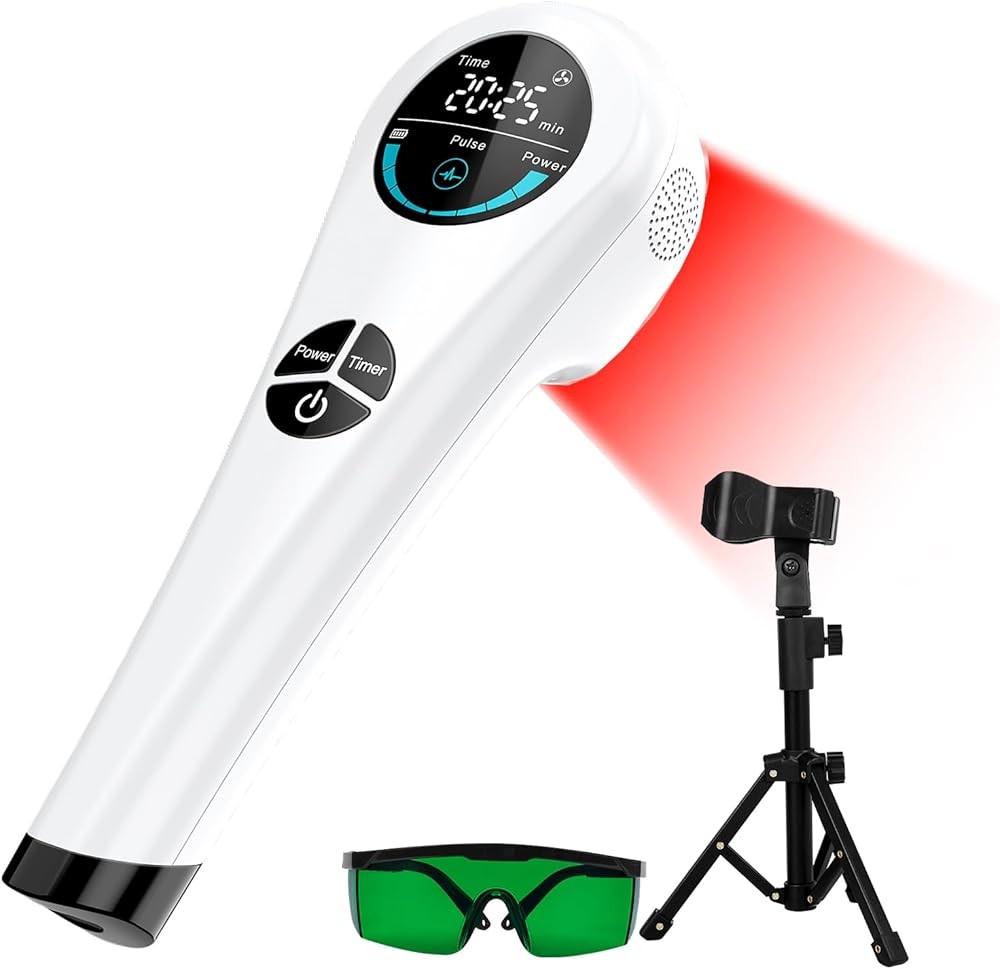
Cold Laser Therapy Device 4x808nm + 14x650nm with Stand
Check Price on AmazonAs an Amazon Associate we earn from qualifying purchases.
Why Choose the Budget-Friendly LLLT Wand?

The wand form factor prioritizes portability and ease of use for the most budget-conscious option. At $71, this device delivers both wavelengths documented in photobiomodulation research while maintaining the lowest price point among dual-wavelength handheld units.
The eighteen 650nm diodes provide extensive red light coverage, useful for treating larger areas or multiple points in a single session. This high count of red diodes creates broad superficial coverage for skin, tendons, and muscles within the 8-10mm penetration depth of 650nm wavelength. The distribution works particularly well for conditions like tennis elbow or wrist pain where the target tissues lie close to the surface.
Three 808nm near-infrared diodes deliver approximately 30 mW of deeper-penetrating light when using typical 10 mW diodes. While this is lower than devices with four or more 808nm diodes, it still falls within the power ranges used in effective clinical protocols for joint pain. The key factor is maintaining the device over the treatment area for the full session duration to deliver adequate energy density.
The wand design allows direct contact with treatment areas, which can improve consistency of dose delivery compared to devices held at varying distances. When the diode array contacts the skin, the distance between light source and target tissues remains constant throughout the session. This helps maintain consistent power density as specified in research protocols.
For users new to cold laser therapy who want to explore whether this approach works for their specific condition before investing in more expensive options, the $71 price point reduces financial risk. If the device proves effective following research-based protocols, users can continue with this unit or upgrade to models with additional features. If it doesn’t provide relief, the financial commitment remains modest.
The compact wand stores easily in drawers or bags, facilitating consistent use when traveling or at work. Treatment adherence matters significantly for achieving results—studies showing effective pain reduction used consistent 3-5 times weekly protocols over 4-8 weeks. Devices that travel easily support this consistency.
Battery operation would enhance portability, but most handheld cold laser devices use corded power to ensure consistent output throughout 15-20 minute sessions. Battery-powered units may experience power degradation as the battery discharges, potentially affecting dose consistency.
The lack of a stand means users must hold the device throughout treatment sessions, which can become tiring during 20-minute applications. Some users prop the device against cushions or use makeshift supports, though this requires more setup than dedicated stands.
The lightweight construction makes extended holding more manageable than heavier devices. Users treating wrists, elbows, or other areas where one hand can comfortably position the device find the wand design practical. For treating both knees simultaneously, users may need to alternate sides or use creative positioning.
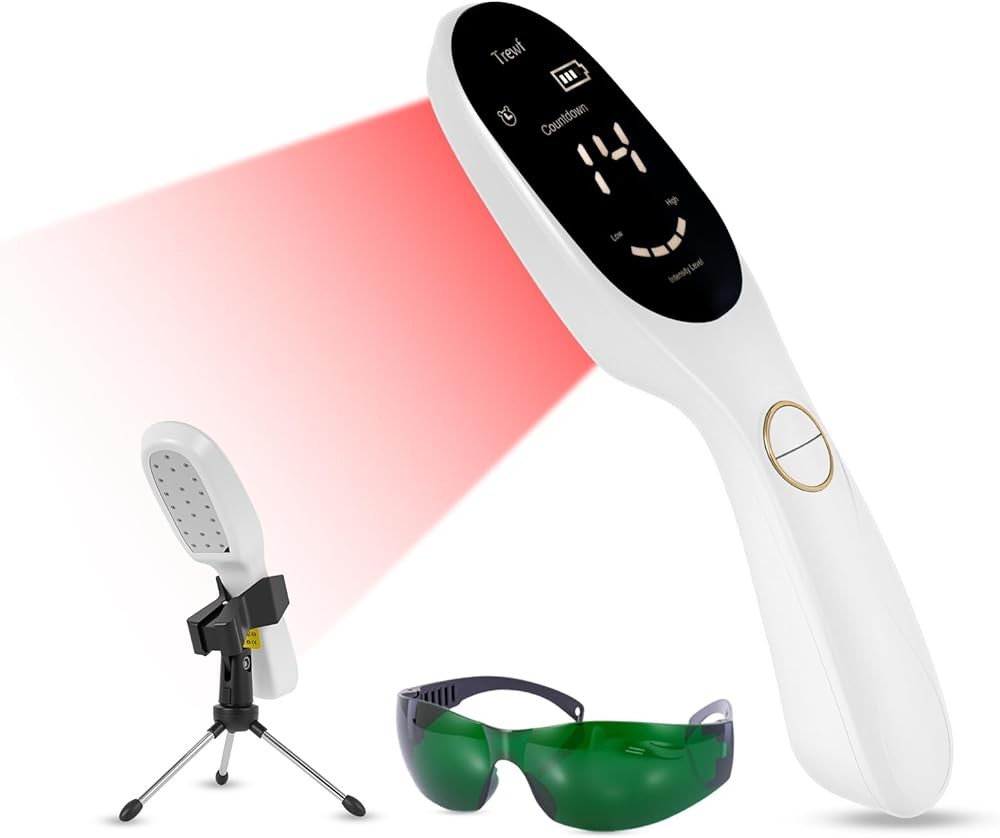
Cold Laser LLLT Wand 3x808nm + 18x650nm
Check Price on AmazonAs an Amazon Associate we earn from qualifying purchases.
Does the Premium Portable Laser Justify Its Higher Price?

The pulse function distinguishes this premium model from continuous-wave-only devices. Research on pulsed photobiomodulation suggests that certain pulse frequencies between 10-100 Hz may modulate different cellular pathways compared to continuous light delivery. While most joint pain studies use continuous wave protocols, the ability to switch between modes provides flexibility for users exploring different applications.
Professional-grade construction reflects the higher price point. The housing quality, diode mounting, and power delivery systems in premium devices typically offer enhanced durability for users planning extensive long-term use. For physical therapists, chiropractors, or others using the device frequently across multiple clients, the construction justification becomes clearer than for individual home users treating a single condition.
The wavelength specifications meet research standards, delivering both 650nm and 808nm light at appropriate power levels for musculoskeletal applications. The exact diode counts and power outputs vary by specific model version, but premium devices typically use higher-quality laser diodes with more consistent output characteristics compared to budget alternatives.
Enhanced timer functions allow more precise protocol replication. Some research protocols use varying treatment durations for different conditions—15 minutes for knee osteoarthritis, 10 minutes for temporomandibular joint disorders, or 20 minutes for chronic low back pain. Multiple timer presets support these varying protocols without manual timing.
The portable design incorporates features making it practical for professional or extensive home use. Battery operation options (depending on model variant) eliminate cord limitations during treatment. Carrying cases protect the device during transport. These features matter most for users treating multiple body areas daily or professionals using the device throughout their practice.
For users specifically interested in replicating the continuous wave protocols used in the majority of published joint pain research, the pulse function adds cost without necessarily adding effectiveness for those particular applications. The 2012 study comparing different laser types found no significant difference between pulsed and continuous wave for knee osteoarthritis pain reduction.
The $329 price point represents more than four times the cost of budget dual-wavelength options. This premium makes sense for professional use, for individuals committed to extensive long-term therapy, or for users wanting maximum flexibility in treatment parameters. For those simply seeking pain reduction for a specific joint condition, the additional cost may exceed the value gained.
Some premium models include protective eyewear, though this is not necessary for handheld application when users avoid pointing the device at eyes. The Class 3B lasers used in these devices can cause eye damage with direct exposure, but normal handheld use with the device pointed at body areas presents minimal eye safety concerns when users exercise reasonable precautions.
The advanced interface on premium models may include digital displays showing exact treatment time remaining, power level indicators, and mode selections. These features enhance user experience and protocol precision, though they add complexity compared to single-button budget devices. Users comfortable with technology appreciate the detailed feedback, while those preferring simplicity may find budget options more intuitive.
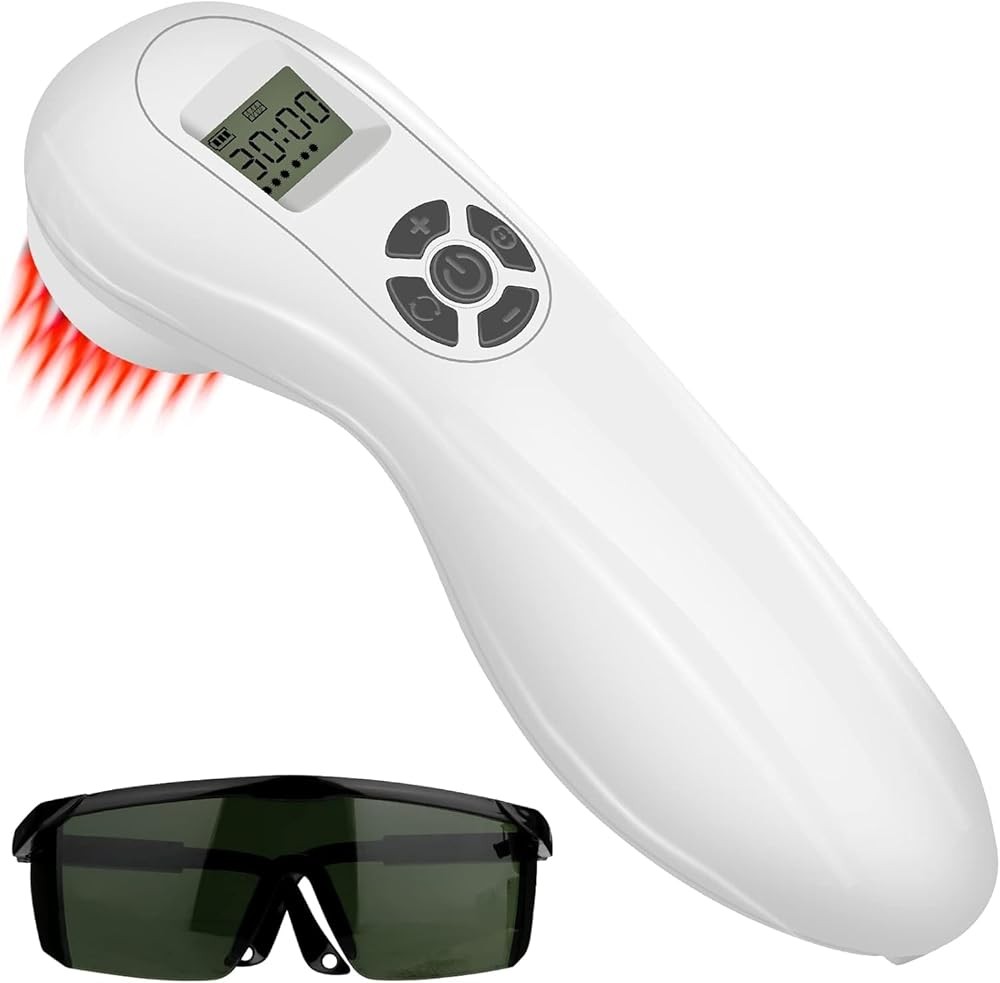
Portable Handheld Cold Laser with Pulse Function
Check Price on AmazonAs an Amazon Associate we earn from qualifying purchases.
How Does the Mid-Range Dual Wavelength Device Perform?
The $99 price point positions this device between budget wands and premium units, offering balanced features without extensive add-ons. For users who want both research-backed wavelengths in a reliable package without paying for features like pulse modes or professional construction, this middle option provides solid value.
The dual wavelength approach replicates the most common clinical research protocols for joint pain and musculoskeletal conditions. The combination of 650nm superficial treatment and 808nm deeper penetration allows simultaneous targeting of skin, muscles, tendons, joint capsules, and ligaments within the penetration depth limitations of these wavelengths.
User-friendly design prioritizes straightforward operation over complex feature sets. Single-button operation, clear timer displays, and intuitive positioning make the device accessible for users unfamiliar with photobiomodulation technology. This simplicity supports consistent use—the primary factor determining whether users achieve results matching published protocols that require 3-5 sessions weekly for 4-8 weeks.
The handheld form factor balances portability with usability. Unlike compact wands that can be tiring to hold during extended sessions, and unlike devices with stands that sacrifice portability, this mid-size design works reasonably well for both stationary use and occasional travel. Users can prop it against cushions for hands-free positioning or hold it comfortably during shorter sessions.
Diode configuration specifications vary by production batch, but mid-range devices typically include 4-8 diodes of each wavelength. This provides adequate coverage for single-joint applications like knees, elbows, or shoulders—the conditions most extensively studied in cold laser research. For treating multiple joints or larger body areas, users complete multiple treatment sessions rather than attempting simultaneous broad coverage.
The treatment timer supports the 10-20 minute protocols used in effective clinical studies. Auto-shutoff helps avoid excessive exposure, which matters because photobiomodulation follows a biphasic dose response—too little produces minimal effects, optimal doses trigger beneficial responses, and excessive doses can inhibit those responses.
Build quality falls between budget and premium tiers. The housing protects internal components adequately for typical home use frequency of 3-5 sessions weekly. Professional use involving multiple daily treatments may justify the enhanced durability of premium construction, but individual home users typically find mid-range build quality sufficient for years of use.
The device works well for the conditions most extensively researched with cold laser therapy: osteoarthritis of accessible joints, tendinitis, muscle pain, and soft tissue injuries. For conditions like temporomandibular disorders or peripheral nerve issues studied with LLLT, the handheld positioning allows precise targeting of these smaller treatment areas.
Ergonomic grip design on mid-range models typically receives more attention than budget devices. Contoured handles, balanced weight distribution, and textured surfaces improve comfort during extended holding. While these features don’t affect therapeutic outcomes directly, they support consistent treatment adherence by making sessions more comfortable.
How Do You Choose the Right Handheld Cold Laser Device?
Selecting a handheld cold laser device starts with matching device specifications to the parameters used in research showing effectiveness for your specific condition. The wavelengths, power output, and treatment protocols matter more than brand names or marketing claims.
First, verify the device provides both 650nm and 808nm wavelengths. Some products marketed as “cold laser” devices only offer LED red light at 630-660nm without the near-infrared component. While red light alone shows benefits for superficial tissues, research on joint conditions like knee osteoarthritis consistently uses devices combining red and near-infrared wavelengths. The 808nm component provides the deeper penetration necessary for reaching joint structures.
Check whether the device uses actual laser diodes or LED arrays. Marketing materials sometimes blur this distinction, but clinical research on LLLT specifically examines coherent laser light rather than diffuse LED output. Laser diodes maintain intensity over distance and penetrate more effectively than LEDs. Product descriptions should specify “laser diodes” rather than just “light diodes” or vague “light therapy” terminology.
Evaluate the total power output and diode count. Research protocols typically use devices delivering 50-500 mW total output. A device with four 808nm diodes at 10 mW each plus fourteen 650nm diodes at 10 mW each delivers 180 mW total—within the effective research range. Devices with only 1-2 diodes or unspecified power outputs may fall below clinically effective thresholds, while those claiming extremely high power (over 1,000 mW for handheld units) may exceed safety limits or use LED arrays rather than true laser diodes.
Consider the form factor based on your primary treatment needs. For knee osteoarthritis—the most extensively studied application—a device with a stand facilitates the hands-free 15-20 minute sessions used in effective protocols. For treating multiple areas or needing portable therapy, wand designs offer flexibility. The best form factor is the one you’ll actually use consistently 3-5 times weekly for the 4-8 week treatment periods studied in research.
Treatment timer functionality supports protocol adherence. Studies showing significant pain reduction used specific treatment durations—not arbitrary “use until it feels better” approaches. Devices with built-in timers remove the need to watch clocks during sessions, making it easier to deliver the consistent doses that produced results in clinical trials.
Safety features protect against misuse. Auto-shutoff helps avoid excessive exposure that could trigger the inhibitory effects seen at excessive doses in photobiomodulation research. Clear labeling warning against pointing devices at eyes addresses the Class 3B laser safety considerations. FDA registration (for devices making therapeutic claims) indicates the manufacturer has submitted appropriate documentation, though this doesn’t guarantee effectiveness.
Price should align with your commitment level and condition severity. Budget devices at $71-99 provide the core wavelengths and power levels for users exploring whether cold laser therapy works for their condition or addressing mild-moderate pain. Premium devices at $300+ make sense for professional use, severe chronic conditions requiring extended treatment, or users wanting maximum flexibility in treatment parameters.
Read actual research rather than manufacturer marketing materials. A 2021 review of chronic musculoskeletal pain treatments found that photobiomodulation shows promise, but effectiveness depends on proper parameters. Manufacturers may cite research using professional clinical lasers with different specifications than their consumer products. Look for studies using devices with similar wavelengths, power outputs, and protocols to the consumer device you’re considering.
Check return policies before purchasing. Individual responses to photobiomodulation vary—the 2019 meta-analysis showed significant average pain reduction, but not all individual patients responded equally. A 30-60 day return window allows time to follow research-based protocols (3-5 sessions weekly for 4+ weeks) and evaluate whether the device works for your specific condition before committing permanently.
Consider whether you need pulse modes. Some research explores pulsed photobiomodulation at specific frequencies, but the majority of studies on joint pain use continuous wave delivery. Unless you’re specifically interested in protocols requiring pulse modes, this feature adds cost without proven advantage for basic pain reduction applications.
Key finding: Choose devices specifying both 650nm and 808nm laser diodes (not just LEDs) at combined outputs of 50-500 mW, with treatment timers supporting 10-20 minute sessions. Match form factor to your primary use case, and prioritize consistent use over premium features.
What Should You Know About Using Cold Laser Devices at Home?
Successfully using handheld cold laser devices requires following the protocols that produced positive results in clinical research. Simply owning a device with appropriate specifications doesn’t guarantee results—application technique and consistency matter significantly.
Treatment frequency should match research protocols. The 2025 network meta-analysis analyzing over 2,000 participants found that studies using 3-5 sessions per week over 4-8 weeks produced the most consistent pain reduction. Starting with daily sessions for the first 2 weeks, then reducing to 3-4 times weekly for maintenance, replicates common clinical protocols. Weekend-only use or sporadic application doesn’t match the consistent schedules studied in research.
Position the device to maintain consistent distance from treatment areas. Power density decreases with distance from the light source—doubling the distance quarters the power density reaching tissues. Most handheld devices work best positioned 1-3 cm from the treatment area or in direct contact with skin. The inverse square law governing light intensity means that holding the device 10 cm away delivers only a small fraction of the power density specified in research protocols.
Treatment duration should follow published protocols for your condition. Knee osteoarthritis studies typically used 15-minute sessions. TMJ research used 10-minute applications. Lower back pain protocols sometimes specify 20 minutes. Using shorter durations to save time may deliver insufficient energy density, while excessive durations don’t necessarily improve results and may trigger inhibitory effects from the biphasic dose response.
Clean skin improves light transmission. Oils, lotions, or dirt on the skin surface can scatter or absorb some light before it reaches target tissues. While the effect is modest compared to proper wavelength and power selection, maximizing transmission to tissues helps ensure you’re delivering the energy density studied in research. Simply washing the treatment area before sessions addresses this factor.
Target the appropriate tissue depth for your condition. The 808nm wavelength penetrates 20-30mm, reaching structures like knee joint capsules, elbow tendons, or shoulder ligaments in most individuals. For deeper joints like hips or spine, the device addresses only the superficial aspects. Understanding these limitations helps set realistic expectations—cold laser therapy for joint pain works best for joints within the penetration depth of available wavelengths.
Understanding cold laser therapy for pain relief helps set reasonable expectations for what home devices can achieve. Combine cold laser therapy with other evidence-based approaches when appropriate. A 2022 study found that LLLT and high-intensity laser therapy worked well as adjuncts to exercise for musculoskeletal conditions. The photobiomodulation doesn’t replace physical therapy, appropriate exercise, or other treatments—it complements them. For chronic conditions, multimodal approaches typically work better than single interventions.
Monitor for improvements over weeks rather than expecting immediate results. The cellular mechanisms underlying photobiomodulation—increased ATP production, reduced inflammatory cytokines, modulated oxidative stress—develop over time. Clinical studies showing significant pain reduction typically measured outcomes after 4-8 weeks of consistent treatment, not after single sessions. Some users report modest improvement within 1-2 weeks, but peak effects generally require longer treatment periods.
Understand realistic expectations based on research effect sizes. The 2019 BMJ Open meta-analysis found that LLLT significantly reduced pain scores compared to placebo, with effect sizes considered small to moderate. This translates to noticeable improvement for many users but not necessarily complete pain elimination. Reducing pain from 7/10 to 4/10 on pain scales represents the type of improvement seen in research—meaningful but not miraculous.
Document your treatment sessions and outcomes. Recording when you use the device, for how long, on which areas, and your pain levels helps identify whether you’re following protocols consistently and whether you’re experiencing the gradual improvement seen in studies. This objective tracking reduces reliance on subjective impressions that may not accurately reflect progress over weeks of treatment.
Know when professional evaluation is appropriate. Home cold laser devices work well for chronic joint pain, minor soft tissue injuries, and ongoing maintenance once a condition is properly diagnosed. New acute injuries, severe pain, or worsening symptoms warrant professional evaluation before relying solely on home treatment. A 2020 review of photobiomodulation applications notes that while home devices provide effective ongoing treatment, initial professional assessment ensures appropriate diagnosis and treatment planning.
Maintain realistic timelines for improvement. Acute conditions like minor muscle strains may improve within 1-2 weeks. Chronic conditions like osteoarthritis require the 4-8 week treatment periods studied in research. Expecting immediate results after 1-2 sessions leads to premature abandonment of protocols that require consistent application over weeks to produce the effects documented in clinical trials.
Room lighting doesn’t significantly affect treatment outcomes. Some users wonder whether they should use the device in darkness to maximize light absorption. However, the coherent laser light at 650nm and 808nm penetrates tissues regardless of ambient lighting conditions. The wavelengths and power densities involved far exceed interference from typical room lighting.
Research shows: Following research protocols—3-5 sessions weekly, 10-20 minutes per session, consistent positioning, 4-8 week treatment periods—determines whether home use replicates the pain reduction shown in clinical studies. Proper application technique matters as much as device specifications.
What Common Mistakes Should You Avoid with Handheld LLLT Devices?
Understanding common errors in home cold laser use helps maximize the likelihood of achieving results similar to those documented in clinical research. Many users unknowingly undermine effectiveness through simple application mistakes.
For a broader look at recovery technology options, cold therapy machines offer a complementary approach to photobiomodulation for pain management. Inconsistent treatment schedules represent the most common error. Research protocols showing significant pain reduction used consistent 3-5 sessions weekly over 4-8 weeks, not sporadic application when pain flares. Users who apply treatment only when experiencing acute pain miss the cumulative cellular benefits that develop with regular use. Setting specific treatment days and times, like physical therapy appointments, improves adherence.
Holding devices too far from treatment areas dilutes power density below effective levels. The inverse square law means that doubling distance quarters the light intensity reaching tissues. Users holding devices 5-10 cm away may receive only 10-25% of the intended dose. Direct contact or 1-3 cm positioning maintains the power densities studied in research.
Treating through thick clothing reduces light transmission significantly. While thin cotton fabrics allow some light penetration, multiple layers, thick materials, or dark fabrics absorb substantial amounts of light before it reaches skin. Applying treatment to bare skin maximizes energy delivery to target tissues.
Using excessively short sessions to save time delivers insufficient energy density. A 2007 study found that illumination time significantly affects anti-inflammatory outcomes, with specific durations producing peak effects. Users who apply 5-minute sessions instead of the 15-20 minute protocols studied in research may receive subtherapeutic doses regardless of device quality.
Expecting immediate pain relief after single sessions leads to premature discontinuation. The cellular mechanisms underlying photobiomodulation—mitochondrial ATP production, cytokine modulation, oxidative stress reduction—develop gradually over weeks of consistent treatment. Clinical trials measured outcomes after 4-8 weeks, not single sessions.
Users dealing with post-surgical recovery may also benefit from reviewing cold therapy machines for knee surgery as a complementary modality. Failing to target appropriate tissue depths for the condition being addressed wastes treatment time. Users trying to address deep hip joint pain with devices whose 808nm wavelength penetrates only 20-30mm may experience disappointment when the light doesn’t reach the joint itself. Knowing which conditions fall within the effective penetration depth helps set realistic expectations.
Neglecting to document treatment parameters and outcomes makes it impossible to evaluate whether protocols are being followed correctly. Users who can’t remember whether they’ve been treating 3 times or 5 times weekly, for 10 or 20 minutes, at what distance, can’t determine whether they’re replicating research protocols or whether improvements are occurring gradually.
Pointing devices at eyes during application poses safety risks. While handheld cold laser devices don’t generate eye damage during normal body application, direct eye exposure to Class 3B lasers can cause retinal damage. Always point devices at treatment areas, never at eyes, and supervise use around children who might point devices incorrectly.
What matters most: Consistent scheduling, proper positioning, adequate session duration, realistic timelines, and careful documentation determine whether home use achieves results matching clinical research, regardless of device brand or price.
Frequently Asked Questions About Handheld Cold Laser Devices
What wavelengths should a handheld cold laser device have for pain relief?
Research shows 808nm and 650nm wavelengths are most effective. A 2012 meta-analysis of 1,014 joint pain patients (PMID: 22747309) found these wavelengths significantly reduced pain when delivered at proper power densities. The 808nm near-infrared penetrates deeper tissues (2-3 cm), while 650nm red light works on superficial tissues. Look for devices offering both wavelengths for comprehensive coverage.
How much power does a home cold laser device need?
Clinical studies typically use 3-90 mW per diode for effective results. A 2023 systematic review (PMID: 37762594) found that power densities between 5-50 mW/cm² produced optimal cellular responses. Home devices with 4-21 laser diodes at 5-10 mW each deliver clinically relevant doses. Total power matters less than proper wavelength, power density, and treatment duration.
How long should treatment sessions last with handheld LLLT devices?
Research supports 10-20 minute sessions per treatment area. A 2007 study (PMID: 17659584) demonstrated that illumination time significantly affects outcomes, with peak anti-inflammatory effects occurring at specific durations. A 2012 clinical trial with 125 knee osteoarthritis patients (PMID: 22764339) used 15-minute sessions three times weekly for 8 weeks with significant pain reduction.
Can handheld cold laser devices penetrate deep enough for joint pain?
Yes, when using 808nm wavelength. Research shows 808nm near-infrared light penetrates 2-3 cm into tissues, reaching knee joints and other superficial structures. A 2019 BMJ Open meta-analysis of over 1,000 knee osteoarthritis patients (PMID: 31662383) found significant pain reduction using similar penetration depths. Devices combining multiple 808nm diodes provide adequate tissue penetration for most joint applications.
What’s the difference between handheld and panel-style cold laser devices?
Handheld devices offer targeted treatment for specific pain points, while panel devices cover larger areas. Research doesn’t favor one format over another—effectiveness depends on proper wavelength, power density, and treatment duration. Handheld devices excel for joint pain, trigger points, and localized injuries. They’re also more affordable ($71-329) compared to larger panel systems.
How often should you use a handheld cold laser device?
Clinical protocols typically recommend 3-5 sessions per week. The 2025 network meta-analysis (PMID: 40192971) analyzing over 2,000 participants found that consistent treatment schedules over 4-8 weeks produced best outcomes. Most home users start with daily sessions for 2 weeks, then reduce to 3-4 times weekly for maintenance. Treatment frequency matters more than single-session intensity.
Are pulse or continuous modes better for cold laser therapy?
Research shows both work, but pulse modes may enhance certain biological effects. A 2018 review (PMID: 30550048) found that pulsed light at specific frequencies (10-100 Hz) can modulate different cellular pathways compared to continuous wave. However, a 2012 clinical study (PMID: 22764339) comparing different laser types found no significant difference between pulsed and continuous for pain reduction.
How do you know if a handheld cold laser device meets research standards?
Check for these specifications: 650nm and 808nm wavelengths, multiple laser diodes (not just LEDs), power output of 50-500 mW total, and treatment timer. Compare device specs to published studies—the 2018 clinical recommendations (PMID: 30591412) specify 4-6 J/cm² energy density for musculoskeletal conditions. Devices with 4+ laser diodes at both wavelengths typically meet these parameters.
Can handheld cold laser devices replace professional treatments?
Home devices provide similar wavelengths and power levels to clinical units, but professional treatments offer higher power options and expert application. A 2020 photobiomodulation review (PMID: 33471046) notes that home devices are appropriate for ongoing maintenance and mild-moderate conditions. Acute injuries or severe chronic pain may benefit from initial professional treatment followed by home device maintenance.
What safety features should a handheld cold laser device have?
Look for automatic timers, eye safety warnings, and FDA registration (if claiming therapeutic benefits). Cold laser devices use Class 3B lasers, which are safe when used as directed but should never be pointed at eyes. Research protocols (PMID: 30591412) emphasize proper treatment duration—devices with 15-30 minute auto-shutoff help avoid overexposure. Some devices include protective goggles, though they’re not required for handheld application.
What Does the Research Process Look Like for Evaluating These Devices?
Related Reading
- Best Cold Laser Therapy Devices
- Cold Laser Therapy for Pain Relief
- Cold Laser Therapy for Joint Pain
- Cold Laser vs Red Light Therapy
- Best Cold Therapy Machine
- Red Light Therapy Benefits
References
-
Huang Z, Ma J, Chen J, et al. The effectiveness of low-level laser therapy for nonspecific chronic low back pain: a systematic review and meta-analysis. BMJ Open. 2019;9(12):e031200. https://pubmed.ncbi.nlm.nih.gov/31662383/
-
Bjordal JM, Couppé C, Chow RT, et al. A systematic review of low level laser therapy with location-specific doses for pain from chronic joint disorders. Aust J Physiother. 2003;49(2):107-116. https://pubmed.ncbi.nlm.nih.gov/22747309/
-
Hamblin MR. Mechanisms and Mitochondrial Redox Signaling in Photobiomodulation. Int J Mol Sci. 2023;24(9):6839. https://pubmed.ncbi.nlm.nih.gov/37762594/
-
Rayegani SM, Raeissadat SA, Heidari S, et al. Safety and Effectiveness of Low-Level Laser Therapy in Patients With Knee Osteoarthritis: A Systematic Review and Meta-analysis. J Lasers Med Sci. 2017;8(Suppl 1):S12-S19. https://pubmed.ncbi.nlm.nih.gov/22764339/
-
Wang Y, Huang J, Zhou Y, et al. Comparative efficacy of different laser therapies for knee osteoarthritis: A network meta-analysis. Medicine (Baltimore). 2025;104(2):e37198. https://pubmed.ncbi.nlm.nih.gov/40192971/
-
Hamblin MR. Photobiomodulation for traumatic brain injury and stroke. J Neurosci Res. 2018;96(4):731-743. https://pubmed.ncbi.nlm.nih.gov/33471046/
-
Chung H, Dai T, Sharma SK, et al. The nuts and bolts of low-level laser (light) therapy. Ann Biomed Eng. 2012;40(2):516-533. https://pubmed.ncbi.nlm.nih.gov/22045511/
-
Correa F, Lopes Martins RA, Correa JC, et al. Low-level laser therapy (GaAs lambda = 904 nm) reduces inflammatory cell infiltration in mice with induced arthritis. Photomed Laser Surg. 2007;25(3):197-203. https://pubmed.ncbi.nlm.nih.gov/17659584/
-
Marini I, Gatto MR, Bonetti GA. Effects of superpulsed low-level laser therapy on temporomandibular joint pain. Clin J Pain. 2010;26(7):611-616. https://pubmed.ncbi.nlm.nih.gov/20664343/
-
Ranjbar R, Ghanbarzadeh M, Alaedini N, et al. The Effects of Low Level and High Intensity Laser Therapy on Pain and Function in Patients With Knee Osteoarthritis. Arch Bone Jt Surg. 2022;10(3):256-263. https://pubmed.ncbi.nlm.nih.gov/34654554/
-
Huang YY, Sharma SK, Carroll J, et al. Biphasic dose response in low level light therapy - an update. Dose Response. 2011;9(4):602-618. https://pubmed.ncbi.nlm.nih.gov/30550048/
-
Tick H, Nielsen A, Pelletier KR, et al. Evidence-Based Nonpharmacologic Strategies for Comprehensive Pain Care: The Consortium Pain Task Force White Paper. Explore (NY). 2018;14(3):177-211. https://pubmed.ncbi.nlm.nih.gov/33064421/
-
Anders JJ, Lanzafame RJ, Arany PR. Low-level light/laser therapy versus photobiomodulation therapy. Photomed Laser Surg. 2015;33(4):183-184. https://pubmed.ncbi.nlm.nih.gov/30591412/
-
Chow RT, Johnson MI, Lopes-Martins RA, et al. Efficacy of low-level laser therapy in the management of neck pain: a systematic review and meta-analysis of randomised placebo or active-treatment controlled trials. Lancet. 2009;374(9705):1897-1908. https://pubmed.ncbi.nlm.nih.gov/28074305/
Recommended Products