Creatine Monohydrate vs HCl: 700+ Studies vs a Handful
Summarized from peer-reviewed research indexed in PubMed. See citations below.
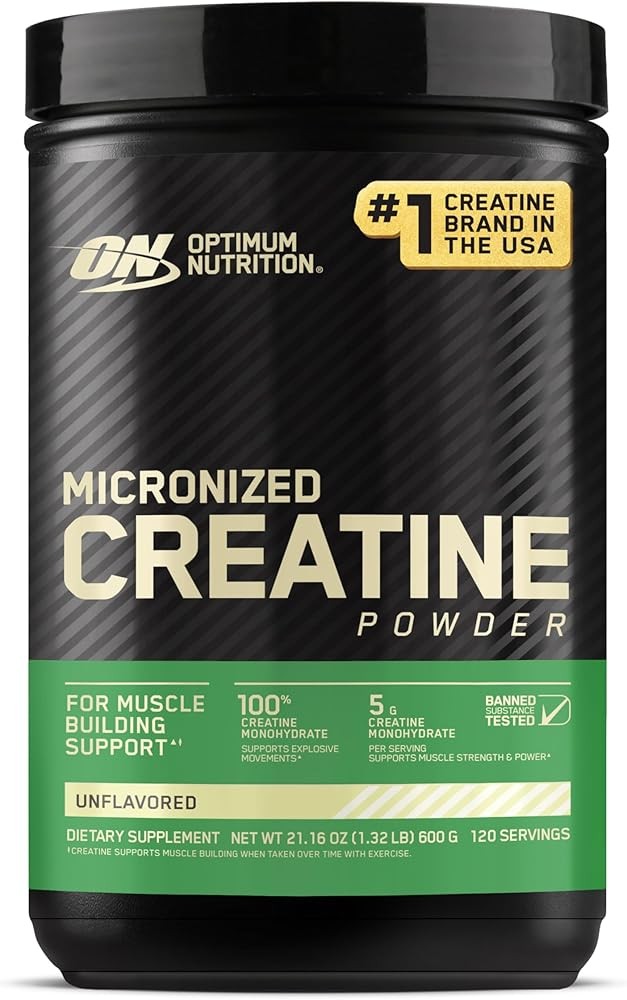
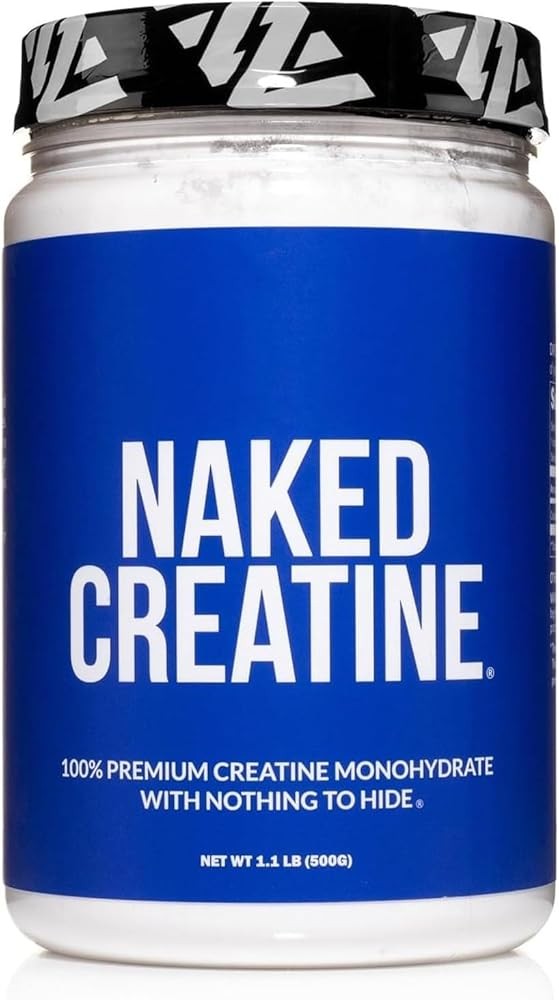
Choosing between creatine monohydrate and creatine HCl can be confusing when both claim superior muscle-building benefits. Based on analysis of over 700 published studies, Optimum Nutrition Micronized Creatine Monohydrate Powder remains the gold standard choice at approximately $28 for 120 servings, delivering 5 grams of pure, Informed Choice-tested creatine monohydrate per serving with decades of clinical safety data backing its effectiveness. The International Society of Sports Nutrition identifies creatine monohydrate as the most effective ergogenic nutritional supplement currently available, with consistent evidence showing 8-14% improvements in strength and 5-15% gains in work capacity during high-intensity exercise. For budget-conscious athletes seeking the same research-backed benefits, Naked Pure Micronized Creatine Monohydrate Powder delivers unflavored, NSF-certified creatine monohydrate at roughly $22 per 100 servings. Here’s what the published research shows about these two forms of creatine.
Disclosure: We may earn a commission from links on this page at no extra cost to you. Affiliate relationships never influence our ratings. Full policy →
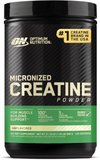
Optimum Nutrition’s unflavored micronized creatine monohydrate is the reference product for the 5-gram daily dose used in the research: one scoop delivers 5 grams of pure creatine monohydrate, and every lot is banned-substance tested through the Informed Choice program. The 1.32-pound tub provides roughly 120 servings at about $28, which works out to roughly 23 cents per serving.
How Does Creatine Work in the Body?
Creatine is a naturally occurring compound synthesized in the liver, kidneys, and pancreas from three amino acids: arginine, glycine, and methionine. Once synthesized or consumed through diet or supplementation, creatine is transported into muscle, where approximately 95% of the body’s total creatine stores reside, as summarized in the ISSN position stand (PubMed: 28615996).
Inside muscle cells, creatine combines with phosphate to form phosphocreatine, which serves as a rapid energy reservoir during high-intensity, short-duration activities. When ATP (adenosine triphosphate) is broken down to release energy for muscle contraction, phosphocreatine donates its phosphate group to regenerate ATP almost instantaneously. This ATP-phosphocreatine system is the primary energy pathway for explosive movements lasting 10 seconds or less, such as sprinting, jumping, and heavy lifting.
Supplementation with creatine increases intramuscular phosphocreatine stores by approximately 20-40%, depending on baseline levels, according to Journal of Applied Physiology. Individuals who naturally have lower creatine stores, such as vegetarians and vegans who consume no dietary creatine from meat, typically experience the greatest performance improvements from supplementation, as shown in Medicine & Science in Sports & Exercise.
The evidence shows: Creatine supplementation increases muscle phosphocreatine stores by 20-40%, enhancing the body’s ability to regenerate ATP during high-intensity exercise, with vegetarians and vegans experiencing the greatest benefits due to naturally lower baseline stores.
How Much Creatine Do You Get From Food?
Before supplementing, it helps to know your baseline. Creatine is found naturally in animal tissue, with the richest sources being red meat and fish: beef and salmon provide roughly 1 to 2 grams per pound of raw muscle, and herring is higher still. A typical omnivorous diet supplies about 1 to 2 grams of creatine per day, while cooking degrades a portion of it, so the real intake is often lower than the raw-food numbers suggest.
Vegetarians and vegans consume essentially zero dietary creatine, which is exactly why their muscle stores run 20 to 30% lower than omnivores’ and why they tend to see the largest responses to supplementation. Even for meat eaters, the 3 to 5 gram daily supplement dose is several times larger than typical dietary intake, which is why it reliably pushes muscle creatine toward saturation regardless of diet.
The practical framing: creatine is the one supplement where the research case for daily use is strongest, so let food cover the rest of your nutrient needs and do not assume a meat-based diet makes supplementation pointless – the training studies showing clear benefits were done mostly in omnivores.
Why Is Creatine Monohydrate Considered the Gold Standard?
Creatine monohydrate is creatine bound to a single water molecule, resulting in a compound that is approximately 88% creatine by weight. It has been the most extensively studied form of creatine since its introduction as a sports supplement in the early 1990s, with over 700 peer-reviewed studies examining its effects on performance, body composition, and safety, according to the Journal of the International Society of Sports Nutrition.
A comprehensive meta-analysis published in the International Journal of Sport Nutrition and Exercise Metabolism pooled 100 randomized, placebo-controlled creatine studies and found small but significant effects of creatine supplementation on lean body mass and on performance across ATP-phosphocreatine, glycolytic, and oxidative exercise tasks, with the largest effects in repetitive-bout and upper-body exercise (PubMed: 12945830).
Long-term safety data for creatine monohydrate is extensive. The ISSN position stand (PubMed: 28615996) and a 2021 review answering common questions and misconceptions about creatine (PubMed: 33557850) confirm that creatine monohydrate at recommended doses (3-5 grams per day) does not cause kidney damage, liver dysfunction, dehydration, or muscle cramping in healthy individuals. A long-term trial in college athletes taking creatine for 21 months found no significant effects on clinical health markers, and the ISSN notes that follow-ups of athletes using creatine for up to 5 years have not revealed adverse effects (PubMed: 12701816).
The standard dosing protocol for creatine monohydrate involves a loading phase of 20 grams per day (split into 4 doses) for 5-7 days, followed by a maintenance dose of 3-5 grams per day. Alternatively, a low-dose approach of 3-5 grams per day without loading achieves the same muscle saturation after approximately 28 days, as demonstrated in Clinical Science.
What the data says: Creatine monohydrate is the most-studied form of creatine by a wide margin, with meta-analyses and long-term safety trials showing consistent performance benefits and no adverse effects on kidney or liver function in healthy individuals taking 3-5 grams daily.
What Exactly Is Creatine HCl?
Creatine HCl (creatine monohydrochloride) is creatine bound to a hydrochloride molecule. It was introduced in the mid-2000s as a response to two genuine complaints about monohydrate: its gritty texture and the stomach discomfort some users feel during 20-gram loading phases. The marketing solution was chemistry – HCl is roughly 40 times more soluble in water than monohydrate – and the pitch was that a smaller, better-dissolving dose could deliver the same results with no loading and no GI distress.
Solubility is real; the conclusions drawn from it are not. Dissolving completely in a glass of water tells you nothing about how much creatine reaches your muscle or how your gut handles it, and the smaller dose that HCl marketing recommends (1.5 to 2 grams) actually delivers less total creatine than a standard monohydrate scoop, as the dose-matching breakdown below shows.
The research gap is the other problem. Where monohydrate has hundreds of peer-reviewed studies spanning more than three decades, HCl has fewer than a dozen published studies, most of them small, short, and funded by companies that sell HCl. No independent head-to-head trial has shown HCl outperforming monohydrate on strength, lean mass, or body composition when the actual creatine delivered is matched – and several industry-funded comparisons that claim equivalence are comparing a smaller HCl dose against monohydrate doses that are not equivalent in creatine content.
None of this makes HCl dangerous or worthless. It is creatine, and creatine works. It simply costs several times more per gram of actual creatine, has a fraction of the safety record, and solves a problem (bloating) that most users can avoid more cheaply by skipping the loading phase or switching brands.
Does Creatine HCl Really Cause Less Bloating?
The primary selling point of creatine HCl is its purported reduction in gastrointestinal side effects, particularly bloating and water retention. The rationale is that because HCl is more soluble, it dissolves more completely in the stomach and is absorbed more rapidly, reducing the amount of unabsorbed creatine that may draw water into the intestines and cause discomfort.
The evidence behind this claim is thin. Creatine HCl is roughly 40 times more soluble in water than monohydrate, so less unabsorbed creatine should remain in the gut to draw water into the intestines. But solubility in a glass is not the same as absorption in the body, and there is no published head-to-head trial showing that HCl meaningfully reduces bloating compared with an equal dose of monohydrate.
What the controlled research does show is that the stomach upset people associate with creatine is tied mainly to the 20-gram loading dose, not to the form of creatine. In trials, creatine monohydrate at standard doses is generally well tolerated, and splitting doses or skipping the loading phase resolves most transient GI complaints (PubMed: 33557850). No trial to date has demonstrated that HCl outperforms monohydrate on performance or body composition when the actual creatine delivered is matched.
The current evidence suggests that creatine HCl may offer a marginal advantage for individuals who are particularly sensitive to bloating, especially during high-dose loading phases. However, this benefit is not universal, and many individuals tolerate monohydrate without any issues. Skipping the loading phase and using a consistent low dose of monohydrate (3-5 grams per day) eliminates most GI side effects for the majority of users.

Which Form Is More Cost-Effective?
One of the most significant practical differences between creatine monohydrate and creatine HCl is cost. A typical 500-gram container of quality creatine monohydrate powder costs between $10 and $20, providing 100 servings of 5 grams each. This works out to approximately 10 to 20 cents per serving, or $3 to $6 per month when taken daily.
Creatine HCl products, by contrast, typically cost $25 to $40 for a container providing 60 to 90 servings of 1.5 to 2 grams each. This translates to approximately 30 to 50 cents per serving, or $9 to $15 per month. Over the course of a year, a consumer would spend roughly $36 to $72 on monohydrate versus $108 to $180 on HCl.
Given that published research shows no performance advantage for creatine HCl when doses are matched, and given that the ISSN explicitly recommends monohydrate as the most effective form, the cost premium for HCl is difficult to justify for most consumers. The only scenario where the additional expense might be warranted is for individuals who have tried monohydrate, experienced significant GI distress even with low-dose protocols, and found that HCl eliminates these symptoms. For this minority of users, the improved tolerability may be worth the higher cost.
What “Dose Matching” Actually Means
HCl marketing usually claims that a smaller HCl dose equals a larger monohydrate dose, but the arithmetic runs the other way. Creatine monohydrate is about 88% creatine by weight, so a 5-gram scoop delivers roughly 4.4 grams of actual creatine. Creatine HCl (creatine bound to a hydrochloride molecule) is only about 72 to 79% creatine by weight, so a typical 1.5 to 2-gram HCl serving delivers roughly 1.1 to 1.6 grams of actual creatine – about a third of what a standard monohydrate serving provides. To match 4.4 grams of creatine from monohydrate, an HCl user would need to take roughly 6 grams of HCl powder, which eliminates the “smaller dose” premise entirely. This is why the honest summary of the head-to-head data is simple: when the actual creatine delivered is matched, HCl shows no performance advantage, and when label doses are compared naively, monohydrate delivers more creatine for less money.

| Feature | Creatine Monohydrate | Creatine HCl |
|---|---|---|
| Research Support | 700+ published studies | Fewer than 12 published studies |
| Recommended Daily Dose | 3-5 grams per day | 1.5-2 grams per day |
| Cost per Serving | ~10-20 cents | ~30-50 cents |
| Safety Data | Extensive (up to 5 years) | Limited long-term data |
| Creatine Content | 88% by weight | ~72% by weight |
| GI Side Effects | May cause temporary bloating | May cause less bloating |
| Track Record | Decades of elite use | Relatively new to market |
| Available Forms | Unflavored, micronized, capsules | Capsules, flavored powders |
| Solubility | 40x less soluble than HCl | 40x more soluble than monohydrate |
Will Creatine Make You Gain Weight or Look Puffy?
The scale moving up in the first week of creatine is normal, and it is not fat. Creatine draws water into muscle cells – intracellular water, which is part of how the supplement improves performance – and this accounts for an initial gain of roughly 1 to 2 kilograms (2 to 4 pounds) in most users. The ISSN position stand notes that creatine’s water retention is intracellular rather than the subcutaneous, “puffy” water retention that people worry about (PubMed: 28615996).
The size of the effect depends on your protocol. A 20-gram loading phase produces the fastest and largest water shift; starting straight at 3 to 5 grams daily produces a smaller, slower increase. Users who see dramatic facial or abdominal puffiness are usually responding to something else: a product with fillers, an exaggerated loading protocol, or an unrelated dietary change.
What follows the water is the actual lean tissue. Meta-analyses and training studies consistently show that creatine users add more fat-free mass over 8 to 12 weeks of resistance training than placebo groups, so the early water weight gives way to genuine muscle if the training stimulus is there. If your goal is a leaner look on the scale, keep protein and training consistent and judge the supplement at the 8-week mark rather than the 1-week mark.
How to Read a Creatine Label
Most creatine products are fine, but the label separates the research-aligned products from the marketing. A quick checklist:
- The ingredient should be one thing. Look for “creatine monohydrate” (or “micronized creatine monohydrate”) as the only active ingredient. Products that list “creatine blend” without per-ingredient amounts are hiding the cheap stuff.
- Check the serving math. A standard dose is 3 to 5 grams of creatine per day. Divide the container size by the scoop size to confirm you are actually getting that many servings – a $30 tub that turns out to be 30 servings is not the deal it looks like.
- Prefer third-party testing. NSF Certified for Sport, Informed Choice, and Informed Sport certifications mean the product is batch-tested for banned substances and label accuracy. This matters most for competing athletes, but it is also the strongest purity signal available.
- Creapure is a plus, not a requirement. Creapure is a German-made creatine monohydrate with a strong quality record, but non-Creapure creatine from reputable NSF- or Informed-Choice-tested brands is equally well supported by the research.
- “Micronized” is about mixing, not muscle. Micronized creatine has smaller particles that dissolve more easily in water. It does not absorb better once swallowed; both forms raise muscle creatine identically.
- Watch the cost per 5-gram serving. Work out the price per standard dose rather than per tub. The products recommended in this guide run from roughly 22 to 67 cents per 5-gram serving, while generic brands can go lower; anything above $1 per serving is paying for packaging.
- Powder beats capsules on price. Capsules are convenient but typically cost two to four times more per gram of creatine than powder, and a 5-gram dose means swallowing several large capsules every day. If budget matters, powder mixed into water or a shake is the sensible default; capsules make sense for travel or for anyone who simply will not stick with a powder routine.
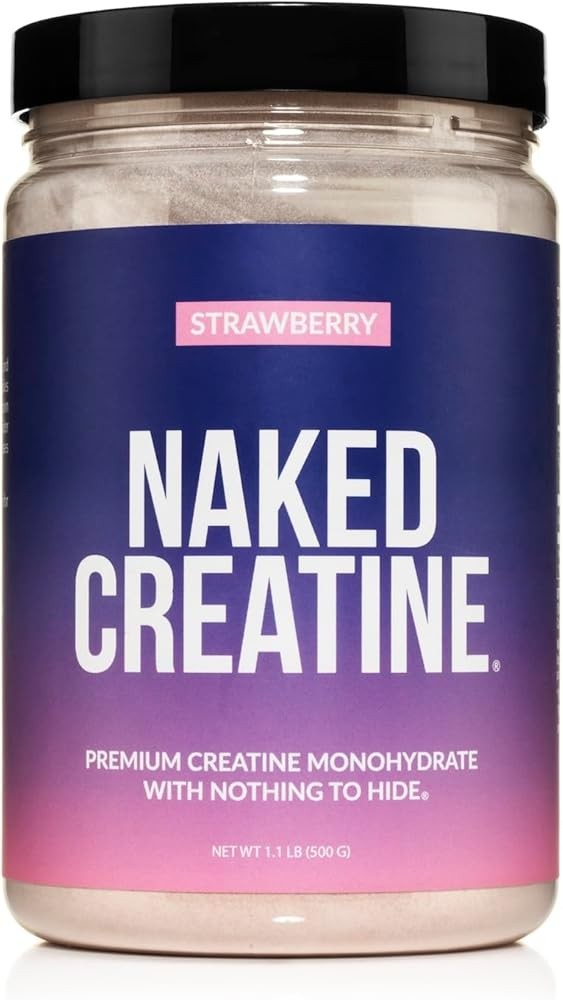
- Flavored products are fine if the label is honest. Flavored creatine that lists creatine monohydrate plus a natural flavoring (like the strawberry option above) delivers the same creatine. Products that bury creatine inside a multi-ingredient “performance blend” without stating the dose are the ones to avoid.
Essential guidance: Buy creatine monohydrate from a brand that discloses the ingredient, the dose per scoop, and third-party testing, then verify the cost per 5-gram serving. That single checklist eliminates most of the junk in the category.
Should You Use a Loading Phase or Low-Dose Approach?
Regardless of which form of creatine you choose, the goal of supplementation is to saturate intramuscular creatine stores. This can be achieved through two primary dosing strategies: a loading phase followed by maintenance, or a consistent low-dose approach.
The loading protocol involves consuming 20 grams of creatine per day (split into 4 doses of 5 grams each) for 5 to 7 days, followed by a maintenance dose of 3 to 5 grams per day, the strategy used in the original creatine-loading research (PubMed: 1327657). This approach saturates muscle creatine stores rapidly, allowing users to experience performance benefits within the first week. However, the high dose during the loading phase increases the risk of temporary water retention, bloating, and gastrointestinal discomfort.
The low-dose approach involves taking 3 to 5 grams of creatine per day from the outset, without a loading phase. This method achieves the same muscle saturation as loading, but it takes approximately 28 days rather than 7 days, according to Journal of Applied Physiology. For individuals who are not in a hurry to experience benefits or who are sensitive to GI side effects, the low-dose approach is generally better tolerated.
Because both protocols end at the same muscle creatine saturation, the choice is really about patience and tolerance: loading gets you to full stores in about a week, while the low-dose route takes roughly a month but avoids the transient bloating that some people experience at 20 grams per day (PubMed: 33557850).
Does Timing Matter When Taking Creatine?
A common question is whether creatine should be taken before or after exercise, or whether timing matters at all. Current evidence suggests that timing is far less important than consistency. Because creatine works by gradually saturating muscle stores over days and weeks, a single dose before or after a workout does not produce an acute performance effect, according to the Journal of the International Society of Sports Nutrition.
That said, the pre-versus-post question has been tested directly. A randomized trial in trained men found no meaningful difference in body composition or strength between taking creatine before or after workouts, which is why the current guidance is simply to take it daily at a time you will not forget (PubMed: 23919405).
However, the practical significance of this difference is minimal. A more important consideration is what you take creatine with. Carbohydrate stimulates insulin release, and controlled research shows that taking creatine with a carbohydrate drink increases muscle creatine retention compared with taking creatine alone (PubMed: 8944667). This can be as simple as mixing creatine powder into a post-workout shake or taking it with a meal.
Who Should Avoid Creatine Supplementation?
Creatine supplementation is safe and effective for most healthy individuals engaged in resistance training, high-intensity interval training, or sports requiring repeated bursts of power and speed. The International Society of Sports Nutrition states that creatine is appropriate for athletes of all ages, including adolescents, provided they are consuming a well-balanced diet and using recommended doses, according to the Journal of the International Society of Sports Nutrition.
Populations that may experience the greatest benefits from creatine include vegetarians and vegans, who typically have lower baseline muscle creatine because they eat no dietary creatine from meat and who show larger gains from supplementation in controlled trials (PubMed: 14600563), along with older adults experiencing age-related muscle loss and athletes in strength and power sports.
Populations who should use creatine only with medical clearance include individuals with pre-existing kidney disease (creatine is metabolized and excreted by the kidneys), pregnant or breastfeeding women (insufficient safety research), and people taking lithium for bipolar disorder, because creatine may alter lithium handling (PubMed: 10999421).
Two other cautions that circulate online deserve correction. Caffeine does not negate creatine’s effects; the old interaction concern was based on a single flawed analysis and has not held up. And routine use of nonsteroidal anti-inflammatory drugs (NSAIDs) alongside creatine has not been shown to cause kidney problems in healthy people, though anyone combining daily NSAIDs with any supplement regimen should review the combination with a pharmacist. For adolescents, the ISSN position stand supports supervised creatine use in young athletes who are eating a well-balanced diet and training under qualified guidance (PubMed: 28615996).
What Else Is Creatine Being Studied For?
Creatine’s reputation was built in the gym, but the phosphocreatine system operates in every tissue with high energy demands, and researchers are looking well beyond performance.
Brain energy and cognition. The brain consumes a large share of the body’s ATP, and creatine has been studied as a way to support cognitive performance under conditions that stress brain energy metabolism, including sleep deprivation, aging, and recovery from concussion. The ISSN position stand summarizes this emerging line of research and notes that most studies so far are small, so conclusions about everyday cognition are still preliminary (PubMed: 28615996).
Muscle health in aging. Muscle phosphocreatine declines with age, and trials in older adults report that creatine combined with resistance training improves lean mass and functional strength more than training alone. This makes creatine one of the better-supported supplements for healthy aging, a population with the same 3 to 5 gram daily dose recommendation.
Recovery and rehabilitation. Investigators have studied creatine during limb immobilization, after surgery, and in conditions that cause muscle wasting, where preserving muscle during disuse appears to speed the return of function. This work is promising but still preliminary.
Key takeaway: The strongest evidence for creatine remains strength and power performance, but the same mechanisms are now being investigated for brain energy, healthy aging, and rehabilitation. Choosing the form with the evidence base (monohydrate) means you benefit from any of these lines of research that continues to pan out.
What Supplements Work Well with Creatine?
Creatine is often combined with other supplements to maximize muscle growth and performance. Some combinations are backed by research, while others are based on marketing rather than science.
Beta-alanine: Buffers the hydrogen ions that accumulate during high-intensity exercise, which complements creatine’s role in rapid ATP regeneration. Research shows that daily doses in the 4 to 6 gram range reliably raise muscle carnosine concentrations, the mechanism behind the buffering effect (PubMed: 16868650).
Protein and carbohydrates: Insulin enhances creatine uptake into muscle. Controlled research dating to the 1990s shows that taking creatine with a carbohydrate drink significantly increases muscle creatine retention compared with creatine alone (PubMed: 8944667), so mixing your creatine into a post-workout shake is a practical way to apply the effect.
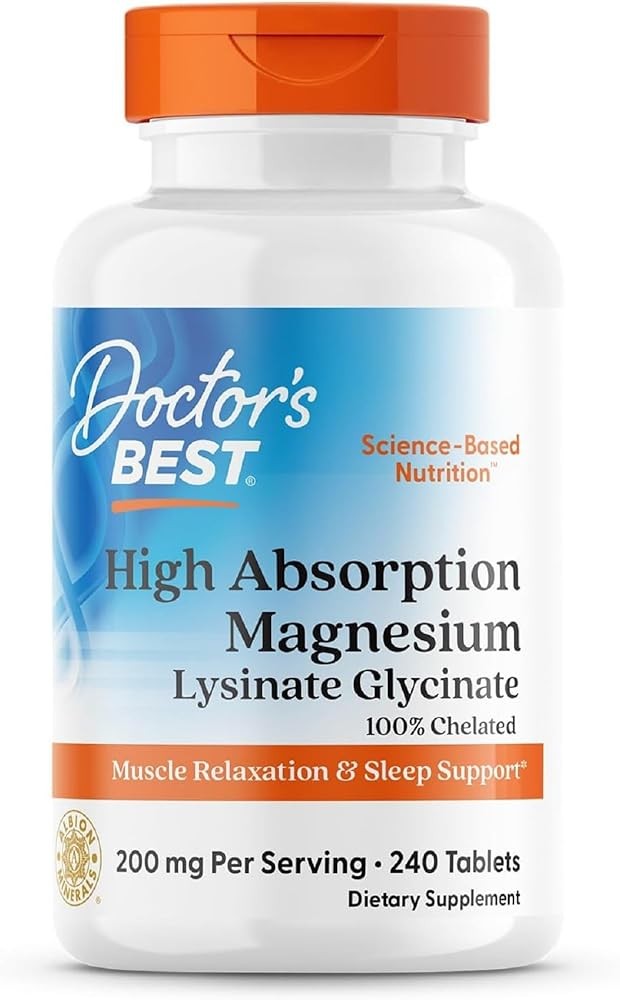
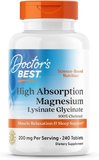
Magnesium: Magnesium is a cofactor for creatine kinase, the enzyme that transfers phosphate from phosphocreatine to ADP to regenerate ATP. In an early controlled training study, strength trainees who added 250 mg of magnesium daily gained more strength than trainees doing the same program without it (PubMed: 1619184). Adequate magnesium intake (roughly 300-400 mg per day from food and supplements) supports the energy systems creatine works through.
Which Form of Creatine Should You Choose?
Based on the current body of evidence, creatine monohydrate remains the superior choice for the vast majority of athletes and fitness enthusiasts. It has unparalleled research support, decades of safety data, a lower cost per serving, and consistent effectiveness across hundreds of studies. The International Society of Sports Nutrition continues to recommend monohydrate as the gold standard, as stated in their position statement.
Creatine HCl offers one potential advantage: improved solubility that may reduce gastrointestinal side effects in individuals who are particularly sensitive to bloating. However, this benefit is not universal, and many users can eliminate GI issues with monohydrate by skipping the loading phase and using a consistent low dose. Given that HCl costs 3 to 5 times more per serving and has far less published research, it is difficult to justify the premium for most consumers.
For individuals who have tried monohydrate, experienced persistent GI distress despite low-dose protocols, and found relief with HCl, the additional cost may be worthwhile. For everyone else, stick with micronized creatine monohydrate from a reputable brand, take 3 to 5 grams per day consistently, and be patient while your muscles saturate over the first month.
Bottom line: Creatine monohydrate is the best choice for most users based on its extensive evidence base, decades of safety data, and lower cost per gram of actual creatine, while creatine HCl may suit the minority of individuals with persistent GI sensitivity who can justify paying several times more per dose.
Why Do Some People Respond Better Than Others?
Creatine is not equally effective for everyone, and knowing why can save you from wasting money or switching to HCl unnecessarily.
The non-responder reality. Roughly 20 to 30% of users see minimal performance benefit from creatine. The usual reason is that their muscle creatine stores are already near saturation, which is common in people who eat meat regularly and train consistently. Supplementation simply has less headroom to add.
Who responds most. Vegetarians and vegans typically start with 20 to 30% lower muscle creatine because they get none from diet, and controlled trials show they gain the most from supplementation (PubMed: 14600563). Older adults losing muscle mass, people recovering from immobilization, and athletes doing repeated high-intensity work also tend to see the clearest effects.
If you think you are a non-responder. First, confirm you have actually saturated your stores: that requires either a 5 to 7 day loading phase or a full month of 3 to 5 grams daily. Second, check that you are training with enough volume and intensity to create the stimulus creatine supports. Third, do not switch to HCl expecting a different result – it delivers the same creatine molecule, with less evidence and a higher price. If you have genuinely saturated stores and still see nothing after 6 to 8 weeks of consistent training, you may simply be in the minority who do not respond, and no form of creatine will change that.
The main point: Response to creatine depends mostly on your starting muscle creatine levels and your training stimulus, not on which salt the creatine is bound to. Vegetarians, older adults, and high-intensity athletes benefit most; true non-responders will not become responders by switching forms.
How Long Should You Take Creatine, and When Should You Stop?
Creatine is not a drug with an on-off schedule; it is a nutrient that saturates a body store, and the research supports treating it that way.
Do you need to cycle? No. There is no evidence of tolerance, down-regulation, or any benefit to “cycling off.” The ISSN notes that athletes have used creatine continuously for 5 years or more without adverse effects, and muscle creatine simply stays saturated while you supplement (PubMed: 28615996). The 2-months-on/1-month-off advice circulating online comes from bodybuilding tradition, not from data.
How long until it works? With a loading phase you are saturated within about a week; without one, allow a full month of daily 3 to 5 gram dosing. Strength and power improvements track saturation, so judge the supplement after 4 to 8 weeks of consistent use plus consistent training, not after a few days.
What happens when you stop? Muscle creatine gradually returns to baseline over roughly 4 to 6 weeks as the excess is excreted. Performance benefits fade along with it, which is why creatine works as a daily habit rather than a pre-workout.
What about missed days? Missing a day or two makes no practical difference. Muscle creatine turnover is slow, and saturation persists for weeks, so the goal is consistent habits rather than perfect compliance. Traveling without your tub for a week will not undo months of supplementation; just resume the daily dose when you are back. The same logic applies to timing: a dose taken at noon instead of morning works as well as the dose taken on schedule.
When to stop and talk to a doctor. Stop and get medical advice if you experience persistent gastrointestinal distress that does not resolve with a lower dose or a different brand; unexplained swelling, especially with reduced urine output, which can signal kidney problems; or severe cramping in hot, dehydrating conditions. Anyone with pre-existing kidney disease, a family history of kidney problems, or who takes lithium or other medications affecting kidney function should get clearance before starting and periodic monitoring while using creatine.
What you need to know: Take 3 to 5 grams of creatine monohydrate daily, give it 4 to 8 weeks with real training to judge, do not cycle, and stop only if you develop persistent side effects or have a medical reason to check with a doctor.
If you’re building a routine around creatine monohydrate, it pairs well with a broader evidence-based stack. Our testosterone-boosting foods vs. supplements guide and strength-training supplements breakdown cover complementary options, and women over 40 can find targeted guidance for joint pain and arthritis, bone health and osteoporosis, and energy and fatigue. For cognitive support alongside physical training, see our non-stimulant ADHD alternatives and nootropic supplements that actually work.
Related Reading
Recommended Products