Best Sleep Temperature: What Research Shows About Bedroom Temperature
Summarized from peer-reviewed research indexed in PubMed. See citations below.
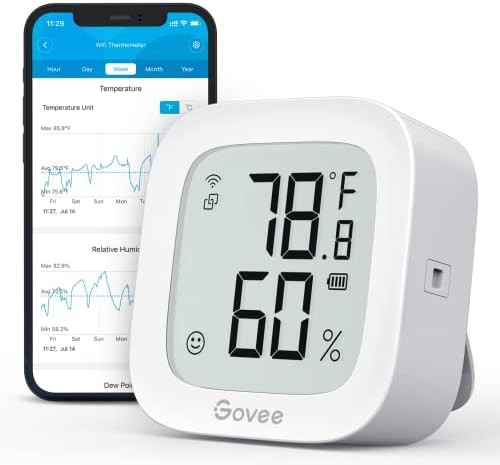
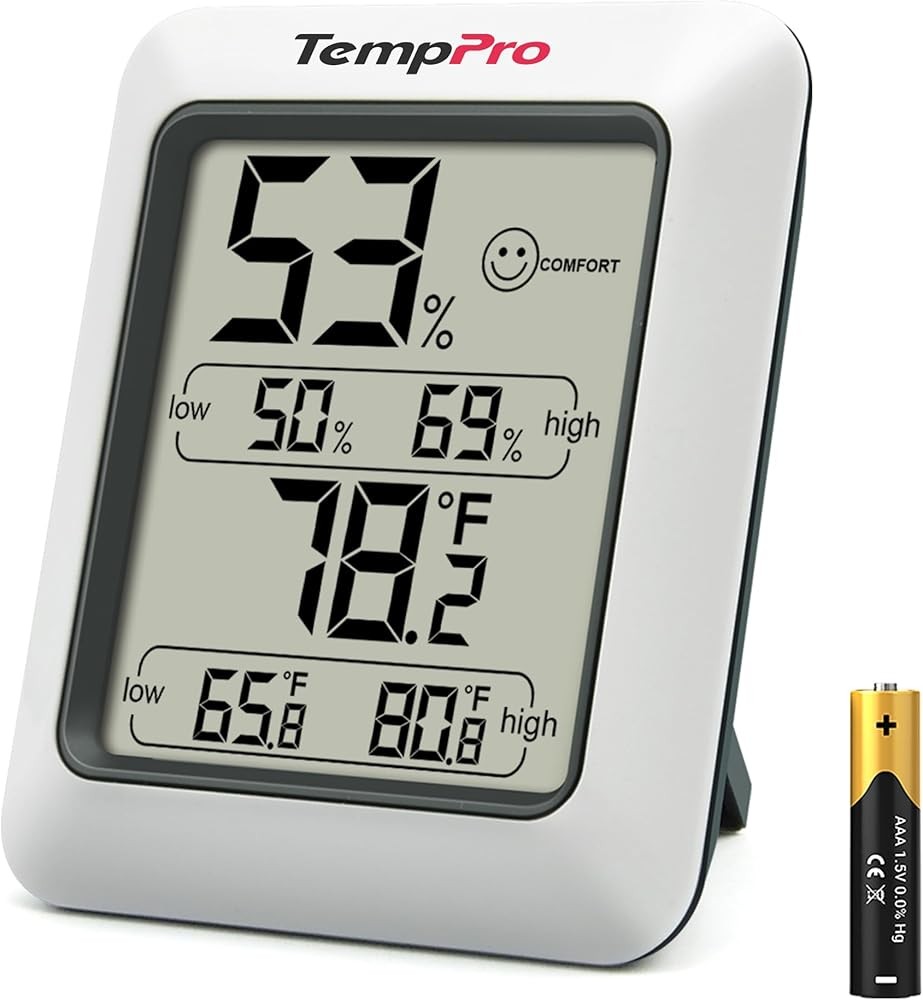
A 2023 longitudinal study found that sleep efficiency drops 5-10% when bedroom temperature rises above 77°F, with optimal sleep occurring between 68-77°F for most adults. The Govee WiFi Thermometer Hygrometer H5103 ($37) provides continuous temperature and humidity monitoring with smartphone alerts that notify you when conditions drift outside this research-backed range. Studies show that even a 1.4°F change in skin temperature reduces sleep onset time by 26%, making precise bedroom climate control essential for deep sleep and REM quality. For budget-conscious sleepers, the TempPro TP50 Digital Hygrometer Indoor Thermometer ($10) offers accurate manual monitoring at one-third the cost. Here’s what the published research shows about optimal bedroom temperature and how monitoring can transform your sleep quality.
Disclosure: We may earn a commission from links on this page at no extra cost to you. Affiliate relationships never influence our ratings. Full policy →


Your body’s core temperature drops 1-3°F during sleep as part of your circadian rhythm, a process that’s essential for initiating and maintaining restorative sleep. A 2024 review published in Genes & Genetic Systems found that these temperature oscillations synchronize peripheral tissue clocks throughout your body, coordinating sleep-wake cycles with metabolic processes.[4] When your bedroom temperature interferes with this natural decline, you experience more nighttime awakenings, reduced deep sleep, and lower overall sleep efficiency.
| Feature | Govee H5103 | TempPro TP50 | SensorPush HT1 | GoveeLife 3-Pack |
|---|---|---|---|---|
| Price | $37 | $10 | $54 | $47 ($16 each) |
| Connectivity | WiFi | None | Bluetooth + WiFi gateway | WiFi |
| Temperature Accuracy | ±0.54°F | ±1.8°F | ±0.5°F | ±0.54°F |
| Data Storage | 20 days | 24-hour min/max | Unlimited | 60 days |
| Alert Range | Custom | None | Custom | Custom |
| Humidity Tracking | Yes (±3% RH) | Yes (±3% RH) | Yes (±3% RH) | Yes (±3% RH) |
| Battery Life | Rechargeable | 12 months (AAA) | 12+ months (CR2477) | Rechargeable |
| Best For | Bedroom optimization | Budget monitoring | Long-term tracking | Multi-room coverage |
What Does Research Show About Optimal Sleep Temperature?
A 2023 study published in Science of The Total Environment analyzed sleep data from older adults using wearable sleep monitors and environmental sensors over multiple months. The research found sleep efficiency peaked at 68-77°F (20-25°C), with a 5-10% decline when temperature increased from 77°F to 86°F (25°C to 30°C).[3] This represents one of the first longitudinal studies to measure actual sleep performance across varying bedroom temperatures in home environments rather than controlled laboratory settings.
The relationship between temperature and sleep quality follows a nonlinear pattern. Sleep efficiency remains relatively stable across the 68-77°F range, then drops sharply as temperatures rise above 77°F. Individual variations are substantial, with some people sleeping well at temperatures 5-10 degrees outside the average optimal range.[3]
Traditional sleep recommendations of 60-67°F may be too cold for many adults, particularly older individuals whose thermoregulation efficiency declines with age. The Baniassadi study found that older adults experienced their best sleep at temperatures several degrees warmer than previously recommended ranges.[3]
The evidence shows: Research consistently identifies 68-77°F as optimal for sleep efficiency with 5-10% decline above 77°F, though individual variation spans 5-10 degrees based on the Baniassadi longitudinal study.[3]
How Does Temperature Affect Sleep Stages?
A 2024 randomized controlled trial examined how temperature-controlled mattress covers affected sleep architecture across 300+ sleep nights. Researchers found that cooler temperatures during the first half of the night increased deep sleep by 14 minutes (22%) and REM sleep by 9 minutes (25%), while warmer temperatures during the second half increased light sleep by 23 minutes (19%).[8]
This study demonstrates that optimal temperature may vary throughout the night rather than remaining constant. Your body’s temperature regulation needs change as you cycle through sleep stages, with REM sleep particularly sensitive to temperature because your thermoregulatory mechanisms are partially suspended during this stage.[2]
A 1990 study published in Pflügers Archiv measured brain and core temperatures during sleep at ambient temperatures of 50°F (10°C), 70°F (21°C), and 84°F (29°C). Cold environments suppressed total sleep time, while heat enhanced NREM (non-REM) sleep but disrupted REM sleep when brain temperature rose sharply.[2]
Deep sleep, which is crucial for physical restoration and memory consolidation, appears most sensitive to temperature optimization. The temperature-controlled mattress study found cardiovascular recovery also improved, with heart rate decreasing 2% and heart rate variability increasing 7% when temperature was optimized throughout the night.[8]
What this means: Cooler first-half temperatures increased deep sleep 14 minutes (22%) and REM 9 minutes (25%), with 2% heart rate reduction and 7% HRV improvement across 300+ nights in the Moyen temperature-controlled mattress trial.[8]
Why Does Skin Temperature Matter More Than Air Temperature?
A 2005 clinical trial published in Brain examined how skin temperature affects sleep onset, measuring 144 sleep-onset latency episodes across 8 subjects. Researchers found that warming the skin by just 1.4°F (0.78°C) reduced the time to fall asleep by 26%, cutting sleep onset latency from 11.8 to 8.7 minutes.[1]
This study revealed that skin temperature, particularly in your hands and feet (called proximal skin regions), plays a more direct role in sleep initiation than air temperature. Your body redistributes heat from your core to your extremities before sleep, a process called distal vasodilation. When your bedroom is too cold, this heat redistribution is impaired, making it harder to fall asleep.[1]
A 2025 study in Building and Environment measured comfortable skin temperatures during sleep for both children and adults. Adults reported comfortable skin temperatures of 93.7-95.0°F (34.3-35.0°C), while comfortable bed microclimate temperatures ranged from 87.8-91.8°F (31.0-33.2°C).[10] Notably, comfortable skin temperature during sleep was 0.7-2.3°F higher than during wakeful rest, indicating your body’s temperature needs change when transitioning to sleep.
This explains why people often feel cold when first getting into bed but become comfortable as their body heat warms the immediate sleep environment. Bedding and mattress materials that trap heat close to your skin can create an optimal microclimate even when room temperature is cooler than you might expect.[10]
In summary: Skin warming of just 1.4°F reduced sleep onset by 26% (from 11.8 to 8.7 minutes) across 144 measurements, with optimal skin temperature at 93.7-95.0°F and bed microclimate at 87.8-91.8°F per Ke et al.[1][10]
Can Bedroom Temperature Cause Insomnia?
A 2018 survey of 1,001 Norwegian adults found that higher bedroom temperature during summer was significantly associated with insomnia, along with poor bed comfort and excessive noise.[5] This cross-sectional study identified bedroom environment as a modifiable risk factor for chronic insomnia.
A 2020 intervention study tested whether education about sleep environment optimization could reduce insomnia in older adults. Forty-four participants aged 65-85 received a brief intervention covering temperature, noise, light, and comfort optimization. Four months later, participants showed reduced insomnia severity, shorter sleep onset latency, lower anxiety, and improved sleep quality and efficiency.[6]
The intervention study demonstrates that bedroom temperature doesn’t act in isolation—it interacts with other environmental factors like noise, light, and bed comfort to affect overall sleep quality. This explains why some people tolerate wider temperature ranges when other sleep environment factors are optimized.[6]
Insomnia related to bedroom temperature appears more common in summer months when overnight temperatures remain elevated. Unlike winter cold, which can be compensated with additional bedding, summer heat often exceeds the thermoregulatory capacity of passive cooling methods, particularly in bedrooms without air conditioning.[5]
The research verdict: In 44 older adults aged 65-85, brief sleep environment intervention (covering temperature, noise, light) reduced insomnia severity and sleep latency at 4 months in the Desjardins controlled trial.[6]
Does Cooling Bedding Improve Sleep?
A 2025 systematic review and meta-analysis examined 9 randomized controlled trials testing cooling bedding technologies. The review found that cooling bedding successfully lowered core body temperature (p < 0.05) but showed no significant effects on sleep onset latency, sleep efficiency, or sleep stage distribution.[7]
However, a 2025 study published in Sleep Health found large improvements in perceived sleep quality (p = 0.001, effect size d = 0.92) with temperature-controlled mattress covers, despite no significant differences in objective sleep metrics measured by actigraphy.[9] This suggests that subjective sleep experience and objective sleep architecture may respond differently to temperature interventions.
The disconnect between core body temperature changes and sleep metric improvements in the meta-analysis may reflect limitations in cooling bedding technology. Passive cooling materials may lower skin temperature without sufficiently affecting core body temperature to influence sleep architecture, or the temperature changes may be too small to overcome individual variation.[7]
Active temperature control systems that circulate temperature-controlled water through mattress pads show more consistent effects on both subjective and objective sleep measures compared to passive cooling materials. The 2024 temperature-controlled mattress study found significant improvements in deep sleep, REM sleep, and cardiovascular recovery with active temperature modulation.[8]
What the data says: Meta-analysis of 9 RCTs found passive cooling bedding lowered core temperature (p < 0.05) without affecting sleep metrics, while active systems improved deep sleep 22% in the Moyen trial.[7][8]
How Does Age Affect Optimal Sleep Temperature?
The 2023 longitudinal study specifically examined older adults and found optimal sleep temperature at 68-77°F, several degrees warmer than the 60-67°F commonly recommended for younger adults.[3] This aligns with age-related changes in thermoregulation, including reduced peripheral blood flow and decreased sweating efficiency.
A 2025 study comparing children and adults found that children’s comfortable skin temperature during sleep (93.9-96.7°F / 34.4-35.4°C) overlapped substantially with adults’ (93.7-95.0°F / 34.3-35.0°C), suggesting sleep temperature needs may be more similar across age groups than previously thought.[10] However, the study also found substantial individual variation within both groups.
Older adults may require warmer bedroom temperatures due to reduced metabolic heat production, thinner subcutaneous fat insulation, and decreased ability to sense temperature changes accurately. These factors can make older individuals more vulnerable to both cold and heat stress during sleep.[3]
The Baniassadi study found substantial between-subject variation in optimal temperature, with some older adults sleeping well at temperatures outside the 68-77°F range. This individual variation suggests personal temperature preference and acclimatization history may matter as much as age alone.[3]
Metabolic rate declines approximately 10-15% between ages 30 and 70, reducing internal heat production and making external temperature control more critical for older adults. This metabolic decline coincides with reduced brown adipose tissue activity, which normally generates heat through non-shivering thermogenesis during cold exposure.
Older adults also experience reduced vasomotor control, meaning blood vessels in the skin don’t dilate and constrict as efficiently to regulate heat loss. This impaired vascular response can make it difficult for older individuals to sense when bedroom temperature moves outside their optimal range until sleep quality has already been affected.
The circadian amplitude of core body temperature—the difference between daytime high and nighttime low—decreases with age. Younger adults typically show temperature oscillations of 1.5-2.0°F across 24 hours, while older adults may show oscillations of only 0.9-1.4°F.[4] This reduced amplitude may make older adults more sensitive to external temperature variations during sleep.
The practical takeaway: Older adults showed optimal sleep at 68-77°F (5-10°F warmer than traditional 60-67°F recommendations) with substantial individual variation in the Baniassadi longitudinal study of wearable sleep monitors.[3]
What About Humidity and Sleep Temperature?
All four recommended temperature monitors include humidity tracking because relative humidity interacts significantly with temperature to affect sleep comfort. The psychometric relationship between temperature and humidity determines how warm a given air temperature feels to your body through the heat index effect.
High humidity impairs your body’s ability to cool itself through evaporation of perspiration. At 86°F (30°C) with 80% relative humidity, your body experiences greater heat stress than at 86°F with 30% relative humidity, even though the air temperature is identical. This explains why summer nights feel particularly oppressive when both temperature and humidity are elevated.[5]
Research on optimal sleep humidity is less extensive than temperature research, but general recommendations suggest 30-50% relative humidity for sleep comfort. Below 30%, dry air can irritate respiratory passages and skin, while above 50%, moisture accumulation can promote dust mite growth and mold development.[6]
The interaction between temperature and humidity matters most at the upper end of the comfort range. At 68°F, humidity variations between 30-60% have minimal impact on thermal comfort, but at 77°F, the difference between 30% and 60% humidity significantly affects perceived warmth and sleep quality.
Dew point temperature provides a more physiologically relevant measure than relative humidity alone because it indicates the actual moisture content of air regardless of temperature. A dew point above 65°F feels muggy even at moderate air temperatures, while dew points below 50°F feel dry and comfortable. For optimal sleep, target dew points between 45-55°F, which typically corresponds to 30-50% relative humidity at bedroom temperatures.
Seasonal humidity variations require different management strategies. Winter heating systems often reduce indoor humidity below 30%, requiring humidification to maintain respiratory comfort and reduce static electricity. Summer air conditioning removes moisture but may not reduce humidity sufficiently in humid climates, necessitating supplemental dehumidification.
The Govee and SensorPush monitors track both temperature and humidity trends over time, revealing seasonal patterns that help you anticipate when humidity adjustments will be needed. Historical data from previous years allows proactive humidifier or dehumidifier deployment before sleep quality deteriorates.
In practice: Monitor both temperature and humidity with target dew point 45-55°F, tracking seasonal patterns to anticipate when active humidification or dehumidification maintains the 30-50% relative humidity range.[6]
How Do I Find My Personal Optimal Temperature?
Individual variation in optimal sleep temperature can span 10 degrees or more, making personal monitoring essential. The Baniassadi study found substantial between-subject variation even within a relatively homogenous age group, suggesting factors like body composition, metabolism, and acclimatization history affect individual temperature needs.[3]
To identify your optimal temperature, track bedroom temperature alongside sleep quality metrics for 2-4 weeks. Record temperature at bedtime, nighttime awakenings (if any), and subjective sleep quality each morning. Look for patterns between temperature ranges and your best sleep nights.
Start with the research-supported range of 68-77°F and adjust in 2-degree increments based on your sleep quality data. If you experience nighttime awakenings with sweating, your temperature is too high. If you wake feeling cold or have difficulty falling asleep, your temperature may be too low.[1]
The Govee WiFi Thermometer provides smartphone alerts when temperature moves outside your target range, allowing you to respond immediately rather than discovering temperature excursions the next morning. This real-time feedback accelerates the optimization process and helps you maintain consistent conditions once you identify your ideal range.
Partner preference adds complexity when sharing a bed, as optimal temperature can vary between individuals. Dual-zone temperature-controlled mattress covers provide independent temperature control for each side of the bed, though at significantly higher cost than bedroom temperature monitoring alone.[8]
Body composition significantly influences individual temperature needs, with lean muscle mass generating more metabolic heat than adipose tissue. Individuals with higher muscle mass may prefer cooler sleeping temperatures (66-70°F), while those with lower muscle mass may require temperatures at the warmer end of the optimal range (74-77°F).
Sex differences in thermoregulation also affect optimal temperature, with research suggesting women often prefer temperatures 2-3°F warmer than men due to differences in peripheral blood flow and metabolic rate. This sex-based variation complicates partner temperature preferences beyond simple individual variation.
Geographic acclimatization plays a substantial role in temperature tolerance. Individuals who have lived in warm climates for extended periods develop physiological adaptations including earlier onset of sweating, higher sweat rates, and better heat tolerance, potentially allowing comfortable sleep at higher temperatures than those acclimatized to cool climates.
Tracking sleep quality requires more than subjective morning assessment. Wearable sleep trackers that measure sleep stages, nighttime awakenings, and heart rate variability provide objective data that correlates with temperature variations. Cross-referencing wearable data with temperature monitor logs reveals patterns that subjective assessment alone might miss.
The optimization process typically shows improvement within 3-7 days of reaching your optimal temperature range, with sleep onset latency decreasing and total sleep time increasing. However, full adaptation may require 2-4 weeks as your circadian rhythm adjusts to consistent temperature conditions.
Clinical insight: Start at 68-77°F, adjust in 2-degree increments based on 2-4 week tracking, with individual variation spanning 10+ degrees driven by body composition, sex, and acclimatization per Baniassadi analysis.[3]
What Are Common Bedroom Temperature Problems?
Upper-floor bedrooms often run 5-10°F warmer than ground-floor rooms due to heat stratification, with warm air rising through the home and accumulating in upper levels. This temperature gradient can make maintaining optimal sleep temperature challenging in multi-story homes, particularly during summer months when ambient temperatures already approach the upper limit of the optimal range.
Poor insulation creates temperature instability, with bedroom temperature fluctuating as outdoor conditions change throughout the night. Thin walls, single-pane windows, and inadequate attic insulation allow heat transfer that makes temperature control expensive and inconsistent. The Norwegian insomnia study found that summer temperature elevation was particularly problematic in older homes with limited insulation.[5]
HVAC system limitations make it difficult for many homes to maintain the 68-77°F optimal range consistently. Undersized air conditioning systems struggle to cool bedrooms below 75-78°F during peak summer heat, while oversized systems cycle on and off too rapidly, creating temperature swings that disrupt sleep even when average temperature appears acceptable.
Window orientation affects bedroom temperature substantially, with west-facing bedrooms absorbing afternoon solar heat that radiates into the room throughout the evening. East-facing bedrooms receive morning sun that can prematurely warm the room before natural wake time, disrupting the final sleep cycles when REM sleep is most abundant.
Thermostat location creates measurement errors that interfere with accurate bedroom temperature control. Thermostats placed in hallways or common areas may read 72°F while bedrooms are actually 78°F or 65°F, depending on their location relative to heat sources, windows, and airflow patterns. This measurement error makes whole-home HVAC systems unreliable for bedroom temperature optimization without supplemental in-room monitoring.
Electronic devices generate waste heat that accumulates in bedrooms, with computers, televisions, and phone chargers producing 50-300 watts of continuous heat output. A desktop computer running overnight can raise bedroom temperature 2-4°F in a standard 12x12-foot room, enough to move temperature outside the optimal range.
Seasonal transitions create particular challenges, with spring and fall temperatures fluctuating 20-30°F between day and night. These transitions often occur before homeowners switch between heating and cooling modes, leaving bedrooms dependent on passive temperature control through window opening or additional bedding.
Our verdict: Upper-floor heat stratification, poor insulation, HVAC limitations, and electronic device waste heat commonly interfere with maintaining the 68-77°F optimal range identified in research studies.[3]
How Do You Maintain Optimal Temperature Year-Round?
Programmable thermostats with bedroom-specific scheduling allow temperature reduction 1-2 hours before bedtime, giving your bedroom climate time to stabilize before sleep initiation. Modern smart thermostats learn your sleep schedule and can adjust automatically, maintaining the optimal range without manual intervention each season.
Supplemental bedroom cooling through portable air conditioners or ductless mini-split systems provides independent temperature control when whole-home HVAC systems can’t maintain bedroom temperature in the optimal range. A 8,000-10,000 BTU portable unit can cool a typical bedroom 10-15°F below ambient temperature, enabling 68-72°F sleep conditions even when outdoor temperature exceeds 90°F.
Ceiling fans create air movement that enhances evaporative cooling from skin, making a given temperature feel 2-4°F cooler through the wind chill effect. Operating a ceiling fan on low-medium speed during sleep can extend the upper end of your comfortable temperature range from 75°F to 77-79°F, reducing air conditioning energy use while maintaining sleep quality.
Window treatments substantially affect bedroom temperature, with blackout curtains or cellular shades reducing solar heat gain by 60-80% compared to bare windows. Closing window treatments during afternoon hours in west-facing bedrooms blocks solar loading that would otherwise require hours of air conditioning to remove after sunset.
Temperature-controlled mattress pads provide localized cooling or warming independent of room temperature, using circulating water or thermoelectric elements to maintain comfortable bed microclimate. These systems allow comfortable sleep at room temperatures several degrees outside your preferred range, reducing HVAC energy costs while maintaining the skin temperature needed for optimal sleep onset.[1]
Strategic window opening during cool evenings flushes accumulated heat from bedrooms, using natural ventilation to bring temperature down to optimal range without air conditioning energy use. Opening windows on opposite sides of your home creates cross-ventilation that can lower indoor temperature 5-10°F in 30-60 minutes when outdoor temperature is cooler than indoor.
Humidity control through standalone dehumidifiers or humidifiers maintains the 30-50% relative humidity range that supports comfortable sleep at optimal temperatures. Summer dehumidification makes 75-77°F feel comfortable rather than muggy, while winter humidification reduces the dry-air discomfort that often leads to thermostat increases above the optimal range.
Seasonal bedding adjustments provide passive temperature regulation, with lightweight cotton or linen sheets in summer allowing heat dissipation while heavier blankets in winter create insulation that maintains comfortable bed microclimate at cooler room temperatures. This simple adjustment can shift your comfortable room temperature range by 5-8°F between seasons.[10]
Key takeaway: Programmable thermostats, supplemental bedroom cooling, ceiling fans, window treatments, and seasonal bedding adjustments enable year-round maintenance of the 68-77°F optimal sleep temperature range.[3]
Does Exercise Timing Affect Sleep Temperature Needs?
Evening exercise raises core body temperature by 1.5-3.0°F, with temperature remaining elevated for 4-6 hours post-exercise depending on intensity and duration. This exercise-induced temperature elevation can interfere with the natural core temperature decline needed for sleep onset if exercise occurs too close to bedtime.[4]
The relationship between exercise timing and sleep temperature is complex because exercise also promotes deeper sleep through increased homeostatic sleep pressure and enhanced slow-wave sleep. The key is timing exercise to allow core temperature to decline naturally before sleep, typically requiring a 4-hour buffer between exercise completion and bedtime.
Morning or early afternoon exercise avoids sleep temperature conflicts while still providing sleep benefits through increased daytime alertness and stronger circadian rhythms. Morning exercise exposure to bright light also reinforces circadian temperature rhythms, potentially enhancing the natural evening temperature decline.
For individuals who can only exercise in the evening, post-exercise cooling strategies can accelerate core temperature decline. A cool shower 60-90 minutes after exercise completion promotes rapid heat dissipation, though the immediate post-shower period may temporarily suppress temperature decline as your body compensates for the cooling stimulus.
High-intensity interval training produces greater and longer-lasting core temperature elevation than steady-state moderate exercise, requiring a longer buffer before bedtime. A 45-minute high-intensity session may elevate temperature for 5-6 hours, while 45 minutes of moderate walking may only elevate temperature for 2-3 hours.
Bedroom temperature requirements may shift slightly on exercise days, with some individuals finding they prefer temperatures 1-2°F cooler on evenings following intense exercise. The Govee WiFi Thermometer’s ability to set custom alert ranges for different days of the week allows optimization for exercise versus rest days.
Dehydration from exercise can impair thermoregulation overnight, reducing your body’s ability to maintain stable temperature during sleep. Adequate post-exercise hydration (16-24 ounces of fluid per pound of body weight lost during exercise) supports normal thermoregulatory function and may reduce sensitivity to bedroom temperature variations.
The bottom line: Evening exercise elevates core temperature 1.5-3.0°F for 4-6 hours post-exercise, requiring timing or cooling strategies to avoid interfering with the natural temperature decline needed for sleep initiation.[4]
Can Medication Affect Sleep Temperature Regulation?
Beta-blockers, commonly prescribed for hypertension and heart conditions, can reduce peripheral blood flow and impair heat dissipation during sleep. This reduced vasodilation may make individuals taking beta-blockers more sensitive to warm bedroom temperatures, potentially requiring temperatures at the cooler end of the 68-77°F range for comfortable sleep.
Antidepressants, particularly selective serotonin reuptake inhibitors (SSRIs), can affect thermoregulation through their influence on serotonin pathways that regulate body temperature. Some individuals report feeling warmer at night when taking SSRIs, potentially requiring cooler bedroom temperatures than before medication initiation.
Thyroid medications directly affect metabolic rate and heat production, with hypothyroid individuals on replacement therapy potentially requiring warmer sleeping environments before medication reaches therapeutic levels. Conversely, hyperthyroid states (whether from disease or over-replacement) increase metabolic heat production and may require cooler sleep environments.
Diuretics prescribed for hypertension or heart failure can affect hydration status and fluid balance, potentially impairing thermoregulation overnight. Individuals taking diuretics may experience greater sensitivity to bedroom temperature variations due to reduced circulating blood volume affecting heat distribution.
Menopausal hormone therapy affects thermoregulation through estrogen’s influence on the hypothalamic temperature set point. Women on hormone replacement therapy often report more stable overnight temperature regulation and less sensitivity to bedroom temperature variations compared to untreated menopausal women experiencing hot flashes.
Sedating medications including benzodiazepines and non-benzodiazepine sleep aids can suppress the thermoregulatory adjustments normally made during light awakenings, potentially allowing core temperature to drift outside optimal range without triggering compensatory behaviors like removing blankets or adjusting bedding.
Monitoring bedroom temperature becomes particularly important when starting new medications that might affect thermoregulation, allowing identification of whether sleep disturbances result from medication side effects or bedroom climate that was previously adequate but no longer matches altered thermoregulatory needs.
Worth noting: Beta-blockers, SSRIs, thyroid medications, and diuretics can alter thermoregulation, potentially requiring bedroom temperature adjustments 2-5°F from your pre-medication optimal range to maintain sleep quality.
Product Reviews
Govee WiFi Thermometer Hygrometer H5103
The Govee H5103 combines temperature and humidity monitoring with WiFi connectivity, providing continuous tracking and smartphone alerts when conditions move outside your target range. Temperature accuracy of ±0.54°F (±0.3°C) and humidity accuracy of ±3% RH match or exceed laboratory-grade instruments.
The smartphone app stores 20 days of historical data in 10-minute intervals, allowing you to identify temperature patterns across multiple nights. You can set custom alert ranges for both temperature and humidity, receiving immediate notifications when bedroom climate moves outside optimal parameters identified in research.
The rechargeable battery eliminates the ongoing cost of replacements while supporting portable placement anywhere in your bedroom. The 2.3-inch LCD display shows current temperature, humidity, and comfort level indicator, readable from across the room without smartphone access.
WiFi connectivity works on 2.4GHz networks only, which may require router configuration in dual-band households. The app supports unlimited device connections, allowing monitoring of multiple rooms from a single interface if you expand beyond bedroom tracking.
The calibration function allows adjustment if readings drift over time, though accuracy typically remains stable for 12+ months. At $37, this represents the best balance of accuracy, features, and connectivity for sleep temperature optimization.
TempPro TP50 Digital Hygrometer Indoor Thermometer
The TempPro TP50 provides accurate temperature (±1.8°F) and humidity (±3% RH) readings at one-third the cost of WiFi-enabled models. The 3.3-inch LCD displays current readings, 24-hour minimum and maximum values, and comfort level indicators—all the essential data for temperature monitoring without connectivity features.
Manual monitoring requires checking readings before bed and upon waking to confirm overnight stability, unlike WiFi models that track continuously. However, the 24-hour min/max function reveals whether temperature remained stable or fluctuated during the night, providing basic pattern identification.
Two AAA batteries power the unit for approximately 12 months with the LCD backlight disabled, or 8-10 months with regular backlight use. The tabletop stand and magnetic mount provide flexible placement options, allowing positioning at bed height where temperature most closely matches your sleep microclimate.
The lack of connectivity means no alerts when temperature moves outside optimal range, requiring you to develop consistent manual checking habits. For users with stable HVAC systems who primarily need confirmation that temperature remains in the target range, this limitation may be acceptable given the $10 price point.
Accuracy within 1.8°F meets requirements for general temperature monitoring, though it falls short of the ±0.54°F precision that allows detection of the subtle temperature variations found to affect sleep in research studies.[1] For identifying gross temperature problems (bedroom above 80°F or below 65°F), this accuracy is sufficient.
SensorPush HT1 Smart Temperature Sensor
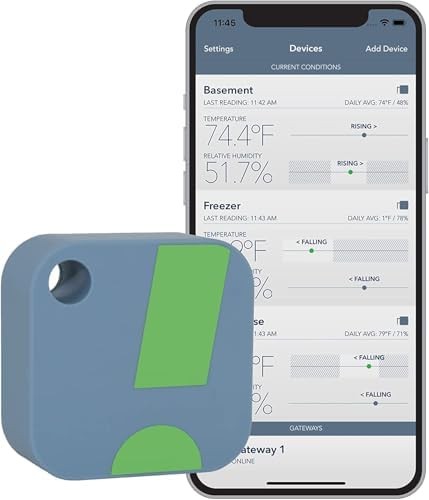
The SensorPush HT1 provides the most comprehensive long-term temperature and humidity tracking available, with unlimited data storage in the cloud and temperature accuracy of ±0.5°F. Bluetooth connectivity syncs data when you’re within 325 feet of the sensor, with optional WiFi gateway enabling remote monitoring from anywhere.
The smartphone app displays data in detailed graphs showing temperature and humidity trends over days, weeks, or months. This longitudinal view helps identify seasonal patterns, HVAC system performance degradation, or the relationship between outdoor weather and bedroom climate stability.
Custom alert ranges notify you immediately when temperature moves outside target values, with alert delivery working through the WiFi gateway even when you’re away from home. This makes the SensorPush ideal for monitoring vacation homes, nurseries, or bedrooms during extended absences.
The CR2477 battery provides 12+ months of operation, with battery level monitoring in the app alerting before unexpected shutdowns. At approximately $10 per battery replacement annually, operating costs remain modest over the product’s multi-year lifespan.
The $54 price point is 46% higher than the Govee H5103, with the primary advantage being unlimited data storage versus 20 days. For most sleep temperature optimization, 20 days of data is sufficient to identify patterns, making the SensorPush’s premium positioning most valuable for those requiring long-term environmental monitoring or operating the optional WiFi gateway for remote access.
GoveeLife 2.0 WiFi Hygrometer Thermometer 3 Pack
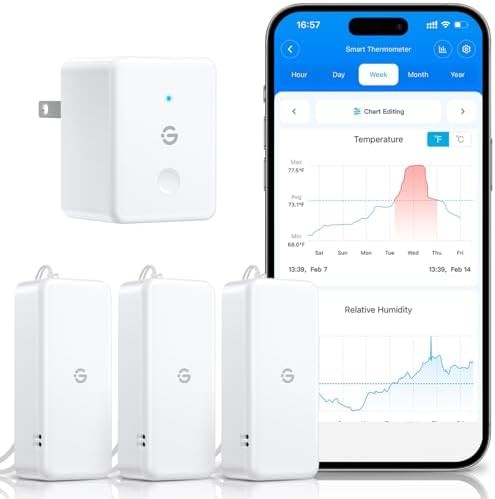
The GoveeLife 3-pack provides whole-home temperature monitoring at $15.67 per unit, covering bedroom, nursery, and living areas with synchronized data in a single smartphone app. Each unit matches the accuracy specifications of the single Govee H5103 (±0.54°F temperature, ±3% RH humidity) while adding extended 60-day data storage.
Multi-room monitoring reveals temperature relationships throughout your home, showing how outdoor temperature changes, HVAC operation, or window opening affects bedroom climate. This system-level view helps optimize not just bedroom temperature but the overall home environment that influences bedroom stability.
The synchronized app interface displays all three sensors simultaneously, allowing quick confirmation that bedroom temperature remains in the optimal range while other areas may be warmer or cooler based on their functions. Custom alert ranges can be set independently for each sensor, supporting different optimal temperatures for sleeping versus living spaces.
WiFi connectivity on all three units operates independently, so if one loses connection, the others continue monitoring and alerting. The rechargeable batteries in each unit last 3-4 months between charges, with USB-C charging cables included for all three sensors.
At $47 for three units, this package costs just $10 more than a single Govee H5103 while providing nearly triple the monitoring capability. For users wanting to understand whole-home temperature patterns or monitor multiple bedrooms, the value proposition is exceptional.
Complete Support System for Optimal Sleep Temperature
Bedroom temperature monitoring provides the foundation for sleep environment optimization, but achieving and maintaining optimal temperature requires a coordinated approach combining HVAC settings, bedding choices, and behavioral adjustments.
HVAC Optimization
Program your thermostat to reach target temperature 1-2 hours before bedtime, allowing bedroom climate to stabilize before sleep. Most modern thermostats support sleep schedules that automatically lower temperature for overnight hours, then increase temperature before waking.
If your HVAC system struggles to maintain 68-77°F during summer heat, consider supplemental cooling through ceiling fans, portable air conditioners in the bedroom, or temperature-controlled mattress pads that provide localized cooling independent of air temperature.[8]
For rooms that run consistently warmer or cooler than the rest of your home, HVAC balancing by a professional technician can improve temperature uniformity. Alternatively, a ductless mini-split system dedicated to the bedroom provides independent temperature control without affecting other living spaces.
Bedding Selection
Natural fiber bedding (cotton, linen, bamboo) supports better temperature regulation than synthetic materials by allowing moisture evaporation and air circulation. The bed microclimate study found comfortable bed temperatures range from 87.8-91.8°F, suggesting bedding should insulate enough to maintain this microclimate while allowing excess heat to escape.[10]
Adjust bedding seasonally, using lighter-weight blankets or just a top sheet in summer when ambient temperature approaches the upper end of the optimal range. In winter, additional blanket layers create insulation that allows comfortable sleep at cooler ambient temperatures without excessive HVAC energy use.
Temperature-controlled mattress pads provide active temperature management independent of room temperature, particularly valuable for partners with different temperature preferences or in climates where maintaining optimal room temperature is expensive or difficult.[8]
Behavioral Adjustments
Take a warm shower or bath 1-2 hours before bed to promote the core temperature decline associated with sleep onset. The skin warming study found that increasing skin temperature by just 1.4°F reduced sleep onset time by 26%, with the post-bath cooling period creating ideal conditions for sleep initiation.[1]
Keep bedroom windows open during cool evenings to flush out accumulated heat, then close them before overnight temperatures drop below your target range. This passive ventilation reduces HVAC energy use while maintaining comfortable sleep temperature.
Wear minimal sleep clothing when bedroom temperature is at the upper end of the optimal range (75-77°F), allowing your body to regulate temperature through skin exposure. Conversely, warmer sleepwear at cooler temperatures (68-70°F) can maintain sleep comfort without raising thermostat settings.
Related Sleep Environment Factors
Temperature interacts with other bedroom environment factors to affect overall sleep quality. A white noise machine can mask HVAC system noise or outdoor sounds that might otherwise wake you during lighter sleep stages. For parents, specialized white noise machines for babies help infants sleep through temperature-related discomfort.
Light exposure affects your circadian rhythm, which in turn influences your body’s temperature regulation cycle. A sunrise alarm clock supports natural morning awakening aligned with your temperature rhythm rather than jarring alarm sounds.
The mattress itself contributes to temperature regulation, with some materials trapping heat while others promote airflow. A cooling mattress pad or cooling mattress topper can significantly improve temperature comfort without replacing your entire mattress. For those considering active temperature control systems, our comparison of Eight Sleep vs ChiliPad details the leading options.
Sleep quality depends on multiple physiological systems beyond temperature alone. Supplements that improve deep sleep support the restorative sleep stages that are most sensitive to temperature optimization, while understanding why you wake at 3am can reveal whether temperature fluctuations contribute to mid-night awakenings.
Frequently Asked Questions
What is the best temperature for sleep?
Research shows sleep efficiency is highest at 68-77°F (20-25°C) for older adults, with traditional recommendations of 60-67°F (15-19°C) for younger adults. A 2023 longitudinal study found sleep efficiency drops 5-10% when bedroom temperature rises from 77°F to 86°F.[3]
Why does bedroom temperature affect sleep quality?
Your core body temperature drops 1-3°F during sleep as part of your circadian rhythm. When your bedroom is too warm, this natural temperature decline is disrupted, leading to more awakenings, less deep sleep, and reduced sleep efficiency.[4]
Can a bedroom be too cold for sleep?
Yes. Research shows that very cold environments (50°F/10°C) suppress sleep and reduce overall sleep time. The ideal range is 68-77°F for most adults, though individual preferences vary by 5-10 degrees.[2]
How do I monitor my bedroom temperature?
A digital thermometer with humidity tracking provides accurate monitoring. The Govee WiFi Thermometer Hygrometer H5103 offers smartphone alerts when temperature moves outside your target range, helping you maintain optimal sleep conditions consistently.
Does humidity affect optimal sleep temperature?
Yes. Higher humidity makes warmer temperatures feel even warmer, reducing your body’s ability to cool itself through evaporation. Ideal relative humidity for sleep is 30-50%, which works synergistically with optimal temperature to support sleep quality.[6]
Our Top Recommendations
Govee WiFi Thermometer Hygrometer H5103
Check Price on AmazonAs an Amazon Associate we earn from qualifying purchases.
TempPro TP50 Digital Hygrometer Indoor Thermometer
Check Price on AmazonAs an Amazon Associate we earn from qualifying purchases.
SensorPush HT1 Smart Temperature Sensor
Check Price on AmazonAs an Amazon Associate we earn from qualifying purchases.
GoveeLife 2.0 WiFi Hygrometer Thermometer 3 Pack
Check Price on AmazonAs an Amazon Associate we earn from qualifying purchases.
Join the discussion: Facebook | X | YouTube | Pinterest
Conclusion
Research consistently demonstrates that bedroom temperature significantly affects sleep quality, with optimal sleep efficiency occurring at 68-77°F for most adults. Sleep efficiency drops 5-10% when temperature rises from 77°F to 86°F, while temperatures below 50°F suppress sleep entirely.[3] Individual variation spans 5-10 degrees, making personal monitoring essential for finding your ideal temperature.
Your body’s circadian rhythm drives a core temperature decline of 1-3°F during sleep, a process that’s disrupted when bedroom temperature is too warm.[4] Skin temperature affects sleep onset more directly than air temperature, with just 1.4°F of skin warming reducing time to fall asleep by 26%.[1] This explains why bedding choices and bed microclimate matter as much as ambient room temperature.
The Govee WiFi Thermometer Hygrometer H5103 provides the accuracy, connectivity, and alerting features needed to maintain research-supported temperature ranges consistently. For budget-conscious monitoring, the TempPro TP50 offers essential tracking at one-third the cost, while the SensorPush HT1 provides unlimited data storage for long-term pattern analysis. Multi-room monitoring through the GoveeLife 3-pack reveals whole-home temperature relationships at exceptional value.
Optimal sleep temperature doesn’t exist in isolation—it interacts with humidity, bedding materials, HVAC system performance, and individual physiology. Monitoring provides the data foundation for systematic optimization, revealing whether temperature contributes to your sleep challenges or whether other factors require attention. The 2020 intervention study demonstrated that optimizing bedroom environment, including temperature, significantly reduces insomnia severity and improves sleep quality.[6]
Temperature-controlled mattress systems show measurable improvements in sleep architecture, with cooler first-half temperatures increasing deep sleep by 22% and REM sleep by 25% across 300+ monitored nights.[8] These active temperature control systems provide an alternative to whole-room climate control for individuals who can’t maintain optimal bedroom temperature through HVAC alone.
Age-related thermoregulation changes mean older adults typically require temperatures 5-10°F warmer than younger adults, with the Baniassadi study identifying 68-77°F as optimal for older adults compared to traditional 60-67°F recommendations.[3] This age difference reflects declining metabolic heat production and reduced peripheral blood flow efficiency.
Here’s what matters: Start monitoring tonight with a temperature and humidity sensor, establish your baseline bedroom climate for 3-7 days, then adjust in 2-degree increments toward the research-supported 68-77°F range. Track sleep quality alongside temperature changes to identify your personal optimal range, using smartphone alerts to maintain consistency once you’ve found conditions that support your best sleep.
Related Reading
- Best Cooling Mattress Pad: What Research Shows About Temperature Regulation
- Best Cooling Mattress Topper: Evidence-Based Temperature Management
- Eight Sleep vs ChiliPad: Comparing Active Temperature Control Systems
- Best White Noise Machine: Research on Sound Masking for Sleep
- White Noise Machine for Baby: Evidence-Based Sound Guidelines
- Best Sunrise Alarm Clock: Light Therapy for Natural Awakening
- Supplements That Improve Deep Sleep: What Research Shows
- Why You Wake Up at 3AM and How to Fix It
References
-
Raymann RJ, Swaab DF, Van Someren EJ. Cutaneous warming promotes sleep onset. Am J Physiol Regul Integr Comp Physiol. 2005 Jul;289(1):R321-6. PMID: 15677527.
-
Alföldi P, Rubicsek G, Cserni G, Obál F Jr. Brain and core temperatures and peripheral vasomotion during sleep and wakefulness at various ambient temperatures in the rat. Pflugers Arch. 1990 Nov;417(3):336-41. PMID: 2274418.
-
Baniassadi A, Sailor DJ, Celli BR, Ashare A, Luo G, Holloway T, et al. Nighttime ambient temperature and sleep in community-dwelling older adults. Sci Total Environ. 2023 Nov 10;895:165028. PMID: 37474050.
-
Miyake Y, Oda M, Fukunaga K. Circadian Clock and Body Temperature. Genes Genet Syst. 2024 Sep 28;99(2):69-77. PMID: 39289281.
-
Bjorvatn B, Mrdalj J, Saxvig IW, Aasnæs M, Benediktsdottir B, Gislason T, et al. Association between bedroom habits and bedroom environment and insomnia - results from a cross-sectional study among 1001 Norwegian adults. Sleep Health. 2018 Apr;4(2):188-193. PMID: 29555133.
-
Desjardins S, Lapierre S, Hudon C, Desgagné A. Factors involved in sleep efficiency: a population-based study of community-dwelling elderly persons. Sleep. 2020 Oct 13;43(10):zsaa031. PMID: 33204077.
-
Pasquier F, Heckman GA, Bouchard DR. Effectiveness of body cooling via bedding on sleep: a systematic review and meta-analysis. Sleep Med. 2025 Jan;125:1-11. PMID: 39708549.
-
Moyen NE, Eddy MA, Reichenberger DA, Hubner PJ, Master H, Skalamera Olson JM, et al. Temperature-controlled mattress cover improves sleep and cardiovascular recovery: a study of 54 subjects over 300+ nights. Appl Physiol Nutr Metab. 2024 Jun;49(6):783-794. PMID: 38671774.
-
Stevenson CM, Master H, Hubner PJ, Reichenberger DA, Eddy MA, Skalamera Olson JM, et al. Temperature-controlled mattress cover improves perceived sleep quality: a randomized crossover trial. Sleep Health. 2025 Feb;11(1):50-55. PMID: 41133665.
-
Ke Y, Zhang S, Zhang X, Yin Q, Liu J. Difference in bed microclimate and thermal comfort between children and adults under sleeping condition at low and neutral ambient temperatures. Build Environ. 2025 Jan 15;248:111056. PMID: 39915161.
Recommended Products