Best White Noise Machine for Sleep: Sound Therapy That Works
Summarized from peer-reviewed research indexed in PubMed. See citations below.
Environmental noise disrupts sleep for millions of people, with urban dwellers particularly affected by traffic, neighbors, and ambient city sounds that fragment sleep cycles throughout the night. The SNOOZ Smart White Noise Machine stands out as the best overall choice, featuring a real rotating fan that generates authentic white noise at adjustable volumes from whisper-quiet to room-filling, priced at $99 with app-based control for fine-tuned sound customization. A 2025 meta-analysis of 1,301 subjects demonstrated that white noise significantly improved sleep quality across all age groups, with particularly strong effects in reducing Pittsburgh Sleep Quality Index scores in adults (P<0.001) and improving total sleep time in infants by an average of 137 minutes. For budget-conscious buyers, the Yogasleep Dohm UNO delivers effective mechanical fan-based white noise at $36, offering the core sound masking benefits without smart features. Here’s what the published research shows about white noise machines and their effects on sleep quality.
Disclosure: We may earn a commission from links on this page at no extra cost to you. Affiliate relationships never influence our ratings. Full policy →

| Feature | SNOOZ Smart | Yogasleep Dohm UNO | Hatch Restore 3 | Yogasleep Dohm Classic |
|---|---|---|---|---|
| Sound Type | Real fan | Real fan | Digital + fan option | Real fan |
| Volume Range | 10 levels, calibrated dB | 2 speeds | 11+ sound options | 2 speeds |
| Price | $99 | $36 | $169 | $49 |
| App Control | Yes (iOS/Android) | No | Yes (iOS/Android) | No |
| Portability | USB-C powered, travel-friendly | Compact, AC only | Bedside unit, AC only | Compact, AC only |
| Special Features | dB calibration, timer, night light | Adjustable tone collar | Sunrise alarm, pink noise | Adjustable tone |
| Best For | Tech users wanting precision | Budget mechanical sound | Complete sleep system | Traditional fan purists |
Does White Noise Actually Improve Sleep Quality?
White noise significantly improves sleep quality across diverse populations and clinical settings, according to multiple randomized controlled trials and systematic reviews published in peer-reviewed sleep medicine journals. The evidence base spans over 1,300 research participants and demonstrates consistent benefits for subjective and objective sleep measures.
A 2025 meta-analysis published in Sleep Medicine examined 12 randomized controlled trials involving 1,301 participants across different age groups and clinical environments. Researchers found that white noise significantly reduced Pittsburgh Sleep Quality Index (PSQI) scores in adults (mean difference: -3.70, 95% CI: -4.90 to -2.50, P<0.001) and older adults (mean difference: -2.71, 95% CI: -4.98 to -0.44, P=0.02). Lower PSQI scores indicate better sleep quality, with these reductions representing clinically meaningful improvements in how people experience and report their sleep.
The same analysis revealed age-specific benefits. In infants and young children aged 0-3 years, white noise extended 24-hour total sleep time by an average of 137.51 minutes (95% CI: 67.80 to 207.23, P=0.0001) and reduced the number of nighttime awakenings during both 24-hour periods (mean difference: -19.42 awakenings, P=0.02) and 12-hour nocturnal periods (mean difference: -1.83 awakenings, P=0.006). These findings suggest white noise helps consolidate sleep by reducing fragmentation from environmental disruptions.
Clinical environments with elevated baseline noise levels showed particularly strong responses to white noise intervention. A 2026 randomized controlled trial of 58 intensive care unit patients found that white noise at 40-50 dB from 11 p.m. to 6 a.m. for three consecutive nights produced significant improvements compared to routine care. The intervention group showed greater reductions in total sleep disturbance scores on days 1, 3, and 5 (p<0.01), improved sleep effectiveness on days 3 and 5 (p<0.01), and increased sleep supplementation scores on day 3 (p<0.01) as measured by the Verran and Snyder-Halpern Sleep Scale.
Real-world urban environments present another setting where white noise demonstrates measurable effectiveness. Researchers studying 10 adults from a New York City sleep clinic who reported sleep difficulty due to high environmental noise found that white noise intervention significantly reduced wake after sleep onset as measured by actigraphy (t=3.438, p=0.007) and decreased sleep onset latency as measured by sleep diary (t=2.947, p=0.016). The study used within-subject ABA design with baseline, treatment, and washout periods, strengthening confidence that observed improvements resulted from the white noise intervention rather than placebo effects or natural variation.
Acoustic masking represents the primary mechanism through which white noise improves sleep. By creating a consistent sound blanket across all audible frequencies, white noise raises the ambient noise floor in the sleep environment. This elevation reduces the relative intensity of sudden sounds like traffic, door slams, or voices that typically trigger cortical arousals. A 2021 systematic review examining 38 studies noted that while research quality varied, the theoretical foundation of sound masking for sleep protection remains well-established in auditory neuroscience.
Post-surgical populations also benefit from white noise intervention. A 2026 randomized controlled trial of 60 patients undergoing lumbar disk herniation surgery found that listening to white noise for 30 minutes before sleep on postoperative days 0 and 1 produced significantly greater improvements in sleep quality compared to standard care alone (P<0.001 for both groups over time, with more pronounced increases in the white noise group). The intervention also increased patient comfort scores and satisfaction levels during recovery.
Specialized populations show varied responses. Among 212 patients with schizophrenia, exposure to white noise at 40-50 dB for 2 hours nightly at 9:00 p.m. over 12 weeks significantly improved sleep latency, sleep efficiency, and overall PSQI scores compared to standard pharmacological treatment alone (P<0.05). The study also found reductions in Hamilton Depression Scale and Hamilton Anxiety Scale scores in the white noise group, suggesting broader benefits beyond sleep metrics.
Comparative effectiveness data provides context for clinical decision-making. A 2026 retrospective cohort study of 100 night-shift nurses compared music therapy (n=52) to white noise exposure (n=48) over 4-week interventions. Both approaches improved sleep quality, but white noise demonstrated significantly greater reductions in PSQI scores (P<0.05) and better optimization of circadian rhythm markers, while music therapy showed superior effects on psychological resilience and emotional labor management. This suggests white noise may be particularly effective when sleep disruption stems primarily from environmental noise rather than stress or anxiety.
Not all studies report uniformly positive findings. A 2021 systematic review of auditory stimulation and sleep noted heterogeneity in research methodology, noise characteristics, and control conditions across 34 studies examining white noise (18 studies), pink noise (11 studies), and multi-audio interventions (6 studies). Only 33% of white noise studies showed clear positive findings for sleep outcomes, compared to 81.9% for pink noise studies. However, the reviewers assigned this evidence a GRADE rating of “very low quality,” indicating significant limitations in study design, inconsistent outcome measures, and inadequate descriptions of noise exposure parameters.
The evidence supports several practical conclusions. White noise appears most effective when delivered at 40-50 dB during sleep hours, particularly in environments with unpredictable or elevated ambient noise. Benefits accrue across age groups from infants to older adults, with the strongest evidence for reducing sleep onset latency, decreasing nighttime awakenings, and improving subjective sleep quality ratings. Clinical populations in high-noise settings like intensive care units show substantial improvements, while community-dwelling adults in urban environments report meaningful reductions in sleep disruption.
Key takeaway: White noise significantly improves multiple dimensions of sleep quality across diverse populations, with strongest evidence for 40-50 dB continuous sound during sleep hours to mask environmental disruptions and reduce sleep fragmentation.
What Makes Real Fan Sound Different from Electronic White Noise?
Real fan white noise machines generate sound through actual mechanical air movement, creating acoustic properties that differ fundamentally from speaker-based electronic white noise in ways that affect user experience and potentially sleep outcomes. The distinction centers on sound generation method, frequency content, temporal consistency, and psychoacoustic characteristics.
Mechanical fan white noise originates from turbulent air flow as a motor spins fan blades inside a housing. This process produces broadband noise naturally - the random collision of air molecules creates energy across the full spectrum of audible frequencies. The Yogasleep Dohm series exemplifies this approach, using a two-speed fan mechanism enclosed in a plastic housing with adjustable openings that modify tone and volume. The resulting sound emerges from authentic physical processes rather than digital algorithms or speaker reproduction.
Electronic white noise machines generate sound through digital signal processing, creating mathematically defined random signals that speakers then convert to acoustic energy. This approach offers precise control over frequency distribution, volume, and sound characteristics. The SNOOZ Smart bridges both approaches - it uses a real fan for sound generation but adds digital controls for fan speed adjustment, allowing users to dial in specific decibel levels through an app interface. This hybrid design provides mechanical authenticity with electronic convenience.
Frequency distribution differences emerge from generation method. Real fans produce sound energy that varies slightly based on motor speed, blade design, and housing acoustics. This variation creates subtle spectral differences that the human auditory system perceives as more “natural” compared to mathematically pure white noise. Electronic white noise maintains perfectly consistent frequency distribution - equal energy per frequency - which some users describe as harsh or artificial during extended listening.
Loop detection represents a critical perceptual difference. Electronic white noise machines that use recorded samples or short generation loops face a fundamental challenge: human auditory perception excels at detecting repetition. Even loops lasting several minutes eventually become consciously or subconsciously noticeable to attentive listeners, potentially causing irritation or distraction that undermines sleep quality. Real fan noise never repeats because each moment represents unique turbulent air flow patterns determined by countless variables in blade position, air temperature, and microscopic environmental factors.
Sound quality comparisons lack rigorous research but generate strong user preferences. Reviewers consistently note that mechanical fan white noise sounds “warmer,” “more natural,” or “less fatiguing” compared to speaker-based alternatives. These descriptions suggest differences in harmonic content - real fans may produce subtle low-frequency variations and harmonic structures that differ from pure white noise’s flat frequency distribution. However, no published studies directly compare sleep outcomes between matched mechanical and electronic white noise at identical volumes.
Volume consistency represents an advantage of electronic systems. Digital white noise maintains precise decibel levels indefinitely, while mechanical fans may show slight variations as motors warm up, bearings wear, or blade balance shifts over months or years of operation. For users requiring exact sound levels - such as those following clinical recommendations for specific decibel targets - electronic control offers better long-term stability.
Portability and power requirements differ between approaches. Real fan machines require motors with higher power draw, typically necessitating AC power connections. The Yogasleep Dohm Classic, for example, operates only when plugged into wall outlets. Electronic white noise machines can run efficiently on batteries or USB power, making them more practical for travel. The SNOOZ Smart uses USB-C charging and can operate for 8+ hours on battery power, combining real fan sound with portable convenience through efficient motor design.
Adjustability varies by implementation. Traditional mechanical fans like the Dohm Classic offer limited control - typically two speeds plus a tone adjustment collar that changes which frequencies escape the housing. Electronic systems provide granular volume control, timers, and often include multiple sound options beyond white noise. The Hatch Restore 3 exemplifies this approach with 11+ sound choices, precise volume control, and programmable schedules. Real fan purists sacrifice flexibility for acoustic authenticity.
Sound pressure level capabilities differ between technologies. Compact mechanical fans struggle to produce very high volumes without larger motors and housings. Electronic speakers can generate louder white noise when needed to mask particularly disruptive environments, though volumes exceeding 70 dB raise hearing safety concerns for prolonged nightly use. Most real fan machines operate effectively in the 40-60 dB range that research identifies as optimal for sleep.
Maintenance requirements favor electronic systems. Real fans contain moving parts subject to wear - motors, bearings, and fan blades that eventually degrade or accumulate dust. Electronic white noise machines have no mechanical components beyond power switches, offering potentially longer operational life with zero maintenance. However, quality fan machines like the Yogasleep Dohm line demonstrate reliability spanning decades with minimal service needs.
Cost structures reflect complexity. Simple mechanical fan white noise machines represent mature technology with straightforward manufacturing, resulting in lower prices - the Dohm UNO costs just $36. Electronic systems with apps, multiple sounds, and smart features require more sophisticated components and software development, pushing prices higher. The Hatch Restore 3 at $169 reflects this premium for digital versatility.
Personal preference ultimately drives selection between real fan and electronic white noise for most users. No research demonstrates superior sleep outcomes from one technology versus the other when matched for volume and usage patterns. The choice depends on individual priorities: acoustic purists preferring natural non-looping sound favor mechanical fans, while those wanting precise control, multiple options, and smart features lean toward electronic systems.
The evidence shows: Real fan white noise offers non-repeating natural sound generation through mechanical air movement, while electronic systems provide precise control and versatility - both effectively mask environmental noise at recommended 40-50 dB levels, with technology choice primarily affecting user preference rather than measured sleep outcomes.
How Does Sound Masking Work to Block Environmental Noise?
Sound masking operates through psychoacoustic principles that reduce the perceptibility of disruptive environmental noises by raising the ambient sound floor across audible frequencies, effectively decreasing the signal-to-noise ratio of unwanted sounds that typically fragment sleep. This process relies on established auditory neuroscience regarding how the human hearing system processes and responds to competing acoustic stimuli.
The signal-to-noise ratio represents the fundamental concept underlying sound masking effectiveness. When a disruptive sound like a door slam registers at 70 dB against a quiet bedroom baseline of 30 dB, the 40 dB difference creates a stark acoustic event that triggers cortical arousal - the brain detects a significant change in the auditory environment and increases alertness to assess potential threats. White noise at 45 dB raises the baseline, reducing the door slam’s relative prominence to just 25 dB above background. This smaller differential reduces the likelihood of arousal or awakening.
Frequency masking explains how white noise affects perception of sounds with different spectral content. The auditory system processes sounds through frequency-specific channels in the cochlea, with each location along the basilar membrane responding to particular frequencies. When white noise presents energy across all frequencies simultaneously, it activates the full length of the cochlea, creating a form of neural “competition” where the constant white noise occupies the same auditory channels that sudden environmental sounds would activate. This competition reduces the perceived loudness of intermittent noises.
Critical bands in auditory perception determine masking effectiveness. Sounds separated by less than one critical bandwidth - approximately one-third octave in the mid-frequency range - mask each other more effectively than sounds with greater frequency separation. White noise’s broadband nature ensures it contains energy within the critical bands of virtually all common environmental noises, from low-frequency traffic rumble to high-frequency voices or electronic beeps. This comprehensive frequency coverage provides universal masking capability.
Temporal masking contributes to white noise effectiveness through both forward and backward masking phenomena. Forward masking occurs when a masking sound reduces sensitivity to sounds immediately following it, while backward masking can affect perception of sounds preceding a masker by several milliseconds. Continuous white noise produces ongoing forward masking, constantly raising detection thresholds for all subsequent sounds. This temporal effect complements the simultaneous frequency masking, creating layered protection against sleep disruption.
Auditory habituation plays a crucial role in white noise acceptance. The brain’s reticular activating system normally responds to novel or changing stimuli by increasing arousal to assess environmental changes. White noise’s temporal consistency triggers habituation - the nervous system learns the sound represents a constant, non-threatening background and progressively reduces its responsiveness. After several minutes of exposure, the brain effectively “tunes out” the white noise while remaining protected by its masking effects against more salient environmental disruptions.
Research demonstrates acoustic masking effectiveness in clinical settings. The 2026 ICU study that showed white noise at 40-50 dB improved sleep quality operated in an environment with baseline noise levels exceeding 60 dB from medical equipment, alarms, staff conversations, and patient care activities. Despite not eliminating these sounds, white noise reduced their relative prominence sufficiently to decrease sleep disturbances and improve subjective sleep quality ratings. The masking effect made inevitable ICU noises less acoustically jarring.
Incomplete masking still provides sleep benefits even when environmental noise remains audible through the white noise. The New York City study examining urban dwellers exposed to traffic, sirens, and neighbor noise found significant improvements in sleep onset latency and wake after sleep onset despite high ambient noise levels that likely exceeded the white noise volume. The masking effect reduced the acoustic prominence of unpredictable sounds, making them less likely to trigger full arousals even when still perceptible.
Volume requirements for effective masking depend on environmental noise characteristics. The World Health Organization estimates 25% of populations suffer sleep disturbance from environmental noise, with urban areas particularly affected. Effective masking typically requires white noise 5-10 dB above the average ambient noise level, but not louder than peak disruptive sounds. A bedroom averaging 35 dB with occasional 55 dB disruptions benefits from white noise at 40-45 dB, loud enough to raise the baseline but not competing directly with peak events.
Individual differences in noise sensitivity affect required masking levels. Some people show high sensitivity to environmental sounds during sleep, with cortical arousals triggered by noise events that others sleep through easily. These individuals may benefit from slightly higher white noise volumes within the safe 40-60 dB range, while others achieve adequate masking at lower levels. The 2022 systematic review of auditory stimulation noted that personality factors and individual noise sensitivity likely influence outcomes but remain understudied variables in white noise research.
Adaptation effects suggest masking effectiveness may increase over time as users develop stronger habituation to the white noise while maintaining protection against environmental disruptions. Multiple studies using white noise interventions lasting one week or longer report sustained or increasing benefits rather than tolerance effects. This pattern differs from pharmacological sleep aids where efficacy often decreases with continued use, suggesting sound masking operates through different neurological pathways.
Limitations of sound masking include inability to fully block very loud or low-frequency sounds. Deep bass rumble from nearby construction, aircraft overhead, or powerful music systems contains energy at frequencies and intensities that exceed practical white noise volumes. Additionally, very sudden loud sounds like nearby fireworks or emergency vehicle sirens create such large signal-to-noise ratios that even optimal masking cannot block arousal. White noise works best for moderate, unpredictable ambient disruptions rather than extreme acoustic events.
Sound masking effectiveness varies by noise type. Consistent background sounds like highway traffic or HVAC systems respond well to white noise masking because their spectral content overlaps substantially with white noise frequencies. Intermittent sounds with sharp onsets like dog barking or door slams present greater challenges because their transient nature and abrupt volume changes create acoustic events that partially overcome masking. Speech presents particular difficulty because the brain specifically attends to linguistic content, making voice sounds more perceptually salient than white noise can fully mask.
What this means: Sound masking through white noise reduces environmental noise disruption by raising the ambient sound floor, decreasing the relative prominence of unpredictable sounds through frequency and temporal masking effects that reduce cortical arousal triggers while allowing habituation to the constant background sound.
What Volume Level Should You Set a White Noise Machine?
Research consistently identifies 40-50 dB as the optimal volume range for white noise machines during sleep, balancing effective sound masking against potential hearing concerns and ensuring the sound itself does not become disruptive. This evidence-based recommendation appears across multiple clinical trials and represents a practical guideline for most users in typical residential environments.
The 40-50 dB range provides context through familiar comparisons. Forty decibels approximates a quiet library or soft rainfall, while 50 dB resembles moderate rainfall or a quiet conversation at several feet distance. Neither volume strains hearing or requires speaking louder for normal conversation, yet both provide sufficient acoustic energy to mask common household and urban environmental disruptions.
Clinical studies converge on this volume range through empirical testing. The 2026 ICU randomized controlled trial that demonstrated significant sleep quality improvements used white noise at 40-50 dB for 58 critically ill patients, finding this level effectively masked medical equipment noise, alarms, and care activities while improving sleep disturbance scores (p<0.01). Similarly, the 2024 study of 212 schizophrenia patients used 40-50 dB white noise for 2 hours nightly with significant improvements in Pittsburgh Sleep Quality Index scores (P<0.05), confirming effectiveness across different populations and settings.
A 2016 coronary care study employed white noise at 50-60 dB for 60 patients over three nights, finding preserved sleep duration in the intervention group while the control group’s sleep time decreased during hospitalization. This slightly higher range still falls within safe parameters but approaches the upper boundary where prolonged exposure begins raising hearing safety questions. The study demonstrated that even the upper range of recommended volumes provides protective effects against sleep-disrupting environmental noise.
Environmental noise levels determine required white noise volume. The acoustic principle of effective masking suggests white noise should measure 5-10 dB above average ambient noise but need not exceed peak disruptive sounds. A bedroom averaging 30-35 dB at night benefits from white noise at 40-45 dB, while a noisier urban environment averaging 40-45 dB may require 50-55 dB for equivalent masking. Measuring actual bedroom noise with a smartphone sound level meter app provides objective data for volume selection.
Hearing safety considerations limit appropriate maximum volumes for nightly use. The National Institute for Occupational Safety and Health (NIOSH) recommends limiting exposure to 85 dB for 8 hours, with permissible exposure time halving for each 3 dB increase. While white noise at 50 dB remains well below any hearing risk threshold, volumes approaching 70 dB during 8-hour sleep periods begin entering ranges where cumulative exposure effects warrant caution. Conservative practice keeps white noise below 60 dB for prolonged nightly use.
Age-specific considerations apply particularly for infant and child white noise exposure. The 2025 comprehensive review of white noise in maternal and neonatal care noted that while benefits include shorter sleep latency and reduced awakenings, prolonged or high-intensity exposure carries potential risks including hearing impairment and neurodevelopmental concerns. Pediatric guidelines typically recommend keeping white noise below 50 dB for infants, positioning devices at least 7 feet from cribs, and using white noise primarily for sleep onset rather than continuously throughout the night.
Distance from the sound source affects perceived volume and sound quality. Placing a white noise machine 3-6 feet from the bed at 45 dB produces different auditory effects than the same device at bedside generating 45 dB. Greater distance reduces volume variation across the sleep space, creating more uniform masking throughout the room while avoiding localized intensity that might disturb rather than aid sleep. Positioning near doorways or windows targets masking toward noise entry points.
Individual variation in noise sensitivity and hearing acuity affects optimal volume selection. Some people show heightened sensitivity to environmental sounds during sleep, potentially benefiting from volumes toward the higher end of the 40-50 dB range. Others find even moderate white noise intrusive if not habituated gradually. Age-related hearing loss reduces sensitivity to higher frequencies, potentially requiring slightly higher volumes for older adults to achieve equivalent masking effectiveness.
Gradual volume adjustment helps optimize individual settings. Starting at lower volumes (40-45 dB) allows habituation over several days, with incremental increases if environmental noise breakthrough continues disrupting sleep. This approach identifies the minimum effective volume for each person’s environment and sensitivity, avoiding unnecessarily loud settings. Some users find they can reduce volume after several weeks of use as habituation strengthens and the brain becomes less reactive to environmental sounds.
Measurement accuracy requires appropriate tools. Smartphone sound level meter apps provide reasonable approximations for setting white noise volume, though professional sound level meters offer greater precision. When measuring, position the meter at head height in the typical sleeping location with the white noise machine in its intended position. This measurement captures the actual exposure level rather than the machine’s output at its source.
Volume variability between devices complicates recommendations. Not all white noise machines provide decibel-calibrated volume controls - many offer simple numbered scales or low/medium/high settings without indicating actual sound pressure levels. The SNOOZ Smart addresses this with app-based volume calibration showing approximate decibels, allowing users to target the evidence-based 40-50 dB range. Devices without calibration require sound meter measurements to confirm appropriate volumes.
Dynamic volume adjustment represents an advanced feature in some electronic white noise machines. These devices monitor ambient noise and automatically increase or decrease white noise volume to maintain effective masking as environmental conditions change throughout the night. While this technology offers theoretical advantages, no research directly compares sleep outcomes between fixed and adaptive white noise volumes.
Nighttime volume differs from daytime needs. White noise for daytime napping in noisier daytime environments may benefit from slightly higher volumes (50-60 dB) to overcome elevated ambient noise from traffic, household activities, or outdoor sounds. Evening and overnight use typically requires lower volumes as environmental noise decreases, matching the 40-50 dB range that research identifies as optimal for nighttime sleep.
In summary: Evidence-based practice recommends white noise volumes between 40-50 dB for nighttime sleep in typical residential environments, measured at head height from the sleeping position, with adjustments based on ambient noise levels, individual sensitivity, and age-specific safety considerations, particularly for infant exposure.
How Does Pink Noise Compare to White Noise for Sleep?
Pink noise differs from white noise in frequency distribution, emphasizing lower frequencies while reducing higher frequencies to create a deeper, softer sound character often compared to steady rainfall or ocean waves. This spectral difference produces distinct acoustic properties and potentially different effects on sleep quality, though research comparing the two remains limited.
The mathematical distinction between white and pink noise centers on energy distribution across frequencies. White noise contains equal energy per frequency - each hertz from 20 Hz to 20,000 Hz carries the same power. This flat frequency distribution creates a sound with prominent high-frequency content that some listeners describe as hissing or harsh. Pink noise attenuates by 3 dB per octave as frequency increases, meaning each doubling of frequency contains half the energy of the previous octave. This creates a sound weighted toward lower frequencies that many people perceive as warmer or more natural.
Perceptual differences emerge from how human hearing processes frequency content. The auditory system shows frequency-dependent sensitivity, with peak sensitivity in the 2,000-4,000 Hz range where speech intelligibility depends. White noise’s equal energy distribution means more acoustic energy in the higher frequencies where ears are most sensitive, creating the characteristic bright tone. Pink noise’s lower-frequency emphasis shifts perceptual prominence toward bass and mid-range frequencies, producing a deeper sound with less high-frequency edge.
Research comparing pink and white noise for sleep quality remains sparse. A 2022 systematic review of auditory stimulation and sleep examined 34 studies, finding that 81.9% of pink noise studies (9 of 11) showed positive sleep outcomes compared to 33% of white noise studies (6 of 18). This substantial difference suggests pink noise may offer advantages, though the review assigned overall evidence quality a GRADE rating of “very low” due to heterogeneity in methodology, small sample sizes, and inconsistent outcome measures.
The higher success rate for pink noise studies may reflect multiple factors beyond spectral content. Pink noise research generally employed more rigorous methodology, with multi-audio studies (combining pink, white, music, or silence) showing the lowest risk of bias (mean 1.67) compared to white noise studies (mean 2.38) and pink noise studies (mean 2.36). Selection bias in study design - researchers choosing pink noise for better-controlled trials - could partially explain outcome differences rather than indicating inherent pink noise superiority.
Sound masking effectiveness varies between white and pink noise based on environmental noise characteristics. Environmental sounds containing significant high-frequency content - voices, electronic beeps, certain traffic patterns - may respond better to white noise’s broader high-frequency energy. Low-frequency rumble from bass music, trucks, or aircraft benefits from pink noise’s stronger low-frequency presence. Matching noise color to dominant environmental disruptions potentially optimizes masking effectiveness.
User preference data shows mixed results. Some individuals strongly prefer pink noise’s softer character, finding white noise too bright or fatiguing for extended listening. Others report pink noise sounds muffled or lacks sufficient high-frequency content to mask certain disruptions effectively. These preferences appear highly individual and potentially relate to hearing characteristics, past noise exposure, or specific environmental noise patterns in the sleep location.
Limited head-to-head comparisons restrict definitive conclusions. The systematic review identified no studies directly comparing matched pink versus white noise interventions with identical volumes, durations, and outcome measures. This research gap limits confident assertions about relative effectiveness. The 2026 comparative study of music therapy versus white noise in night-shift nurses found white noise superior for sleep quality and circadian optimization but did not include pink noise as a comparison condition.
Slow-wave sleep enhancement represents a theoretical advantage proposed for pink noise based on limited research. Some studies suggest pink noise synchronized with slow-wave sleep oscillations may enhance deep sleep quality and memory consolidation, though this application differs from continuous background masking. The evidence remains preliminary and has not been replicated in large-scale trials or incorporated into consumer white noise machines.
Commercial white noise machines increasingly offer both white and pink noise options, allowing users to compare effectiveness in their specific environments. The Hatch Restore 3 includes both spectral patterns among its 11+ sound choices, while simpler mechanical fan machines like the Yogasleep Dohm series generate sound closer to pink noise naturally - real fan turbulence emphasizes lower frequencies more than mathematically pure white noise.
Sound pressure level equivalence requires consideration when comparing white and pink noise effects. Because pink noise concentrates energy at lower frequencies where hearing sensitivity decreases, achieving equivalent perceived loudness to white noise requires slightly higher actual sound pressure levels. Studies using pink noise at the same decibel rating as white noise comparisons may deliver different subjective loudness, potentially confounding outcome comparisons.
Tinnitus masking represents one application where spectral content affects outcomes. Tinnitus frequency varies among sufferers - some experience high-pitched ringing best masked by white noise’s high-frequency energy, while others report low-frequency rumbling more effectively covered by pink noise. Matching noise color to tinnitus characteristics provides more complete masking than using either sound universally.
Brown noise (also called red noise) extends the frequency attenuation trend beyond pink noise, decreasing by 6 dB per octave to create even deeper bass-heavy sound resembling distant thunder or heavy rainfall. While less studied than white or pink noise, some users report brown noise provides more effective low-frequency masking for rumble-heavy environments. Commercial availability remains more limited than white or pink noise options.
The practical implication suggests trying both white and pink noise to determine individual preference and effectiveness. Neither shows clear research-based superiority for sleep improvement in the general population. Personal response likely depends on the specific frequency content of environmental noise disruptions, individual hearing characteristics, and subjective sound preference. Devices offering both options maximize flexibility for optimization.
The research verdict: Pink noise shows higher rates of positive sleep outcomes in systematic review (81.9% versus 33%), though low overall evidence quality limits definitive conclusions - practical approach involves trying both white and pink noise to determine which spectral distribution more effectively masks your specific environmental noise patterns and personal preferences.
Who Benefits Most from White Noise Machines?
White noise machines provide measurable sleep benefits across diverse populations, but certain groups show particularly strong responses based on sleep environment characteristics, underlying sleep disorders, age-related factors, and occupational or situational needs. Research identifies specific populations where white noise intervention produces the most substantial improvements.
Urban residents exposed to high environmental noise represent the population with clearest evidence for white noise benefits. The New York City study of adults complaining of sleep difficulty due to elevated sound levels found significant improvements in wake after sleep onset (p=0.007) and sleep onset latency (p=0.016) following white noise intervention. Urban environments typically feature unpredictable noise patterns - traffic volume fluctuations, sirens, construction, neighbor activities - that create exactly the type of intermittent disruptions white noise most effectively masks.
Hospitalized patients in high-noise clinical environments show strong positive responses to white noise intervention. The 2026 ICU study demonstrated that critically ill patients exposed to white noise at 40-50 dB experienced significant reductions in sleep disturbance scores (p<0.01) and improved sleep effectiveness compared to routine care. Hospital environments generate 24-hour noise from medical equipment, alarms, staff conversations, and patient care activities that fragment sleep. The 2016 coronary care study similarly found white noise preserved sleep duration in cardiac patients while control group sleep time decreased during hospitalization.
Light sleepers with heightened noise sensitivity constitute another high-benefit population. While research has not systematically studied noise sensitivity as a predictor of white noise response, the mechanism of sound masking logically suggests individuals most disturbed by environmental sounds gain greater benefit from interventions reducing noise prominence. These people often report inability to sleep through common household sounds that others ignore, making them ideal candidates for white noise intervention.
Shift workers struggling with daytime sleep face elevated environmental noise as a primary sleep barrier. The 2026 study comparing music therapy and white noise in 100 night-shift nurses found both interventions improved sleep quality, with white noise showing superior effects on sleep quality scores (P<0.05) and circadian rhythm optimization. Daytime sleep occurs when environmental noise peaks - traffic, neighborhood activities, household sounds - creating challenges that white noise’s masking effects directly address.
Parents of infants and young children benefit both directly and indirectly from white noise intervention. The 2025 meta-analysis found that white noise in children aged 0-3 years significantly extended 24-hour total sleep time by 137 minutes and reduced nighttime awakenings (P=0.006 for 12-hour nocturnal period). Improved infant sleep translates to better parental sleep quality and reduced nighttime disruptions. However, pediatric guidelines recommend conservative application - volumes below 50 dB, devices positioned at least 7 feet from cribs, and use primarily for sleep onset rather than continuous overnight operation.
Tinnitus sufferers find white noise particularly valuable for reducing the perceptual prominence of ringing, buzzing, or humming sounds that intensify in quiet environments. While the research packet did not include tinnitus-specific studies, the sound masking principle suggests white noise should reduce the signal-to-noise ratio of tinnitus relative to the acoustic environment. Many tinnitus patients report subjective benefit from white noise during sleep, though optimal volume remains individual - too quiet fails to mask, too loud potentially worsens symptoms.
College students in dormitories or shared housing face unpredictable noise from roommates, neighbors, and communal areas. While research specifically examining student populations was not included in the review, this demographic’s housing characteristics align closely with situations where white noise demonstrates effectiveness - moderate ambient noise with unpredictable intermittent disruptions. The portable, affordable nature of white noise machines suits student needs and budgets.
Travelers staying in hotels encounter unfamiliar environments with variable noise characteristics. Portable white noise machines or smartphone apps provide consistent acoustic environments that mask unfamiliar sounds and help maintain sleep routines across different locations. The SNOOZ Smart’s USB-C battery operation specifically targets this use case, offering real fan sound in a travel-friendly form factor.
Couples with mismatched sleep schedules benefit from white noise masking sounds from the partner entering or leaving bed, late-night activities, or different wake times. The continuous background sound creates acoustic privacy, reducing sleep disruption from normal household sounds. This application lacks specific research validation but follows logically from sound masking principles.
Older adults show significant sleep quality improvements from white noise intervention in research settings. The 2025 meta-analysis found white noise significantly reduced PSQI scores in adults aged 65 and older (mean difference: -2.71, P=0.02). Age-related changes in sleep architecture - reduced slow-wave sleep, increased sleep fragmentation, earlier wake times - create vulnerability to environmental disruptions that white noise may partially compensate for through improved sound masking.
Post-surgical patients recovering at home or in hospitals demonstrate measurable benefits. The 2026 study of 60 lumbar disk herniation surgery patients found white noise for 30 minutes before sleep significantly improved sleep quality, comfort, and satisfaction compared to standard care (P<0.001). Pain, anxiety, and unfamiliar hospital environments compound sleep challenges during recovery, with white noise addressing at least the environmental noise component.
Psychiatric populations show varied responses based on specific conditions. The 2024 study of 212 schizophrenia patients found white noise at 40-50 dB improved sleep quality, sleep latency, and sleep efficiency (P<0.05) while also reducing depression and anxiety scores. However, individuals with auditory hallucinations may find white noise exacerbates symptoms by providing ambiguous acoustic stimuli that the brain misinterprets as voices or meaningful sounds.
People living near constant noise sources - highways, airports, train lines, industrial facilities - face different challenges than those with intermittent disruptions. White noise masks unpredictable sounds more effectively than constant rumble, where habituation to the environmental noise itself may occur over time. These residents might benefit more from soundproofing interventions, though white noise could still reduce the perceived intrusiveness of baseline noise.
Individuals who travel frequently across time zones potentially benefit from white noise as an anchor for sleep routines. Maintaining consistent bedtime sounds across different locations may support circadian adaptation, though research has not specifically tested this application. The acoustic familiarity could signal sleep onset to the brain even in unfamiliar hotel rooms or guest bedrooms.
The practical takeaway: Urban dwellers, hospitalized patients, light sleepers, shift workers, parents of young children, and older adults show strongest evidence for sleep improvement from white noise machines, with benefits primarily accruing in high-noise environments or situations with unpredictable acoustic disruptions.
How Should You Position a White Noise Machine for Best Results?
White noise machine positioning affects sound distribution, masking effectiveness, and potential sleep disruption through volume intensity and acoustic characteristics. Optimal placement balances effective room coverage against avoiding localized loudness that might disturb rather than facilitate sleep.
Distance from the sleeping position represents the most critical positioning variable. Placing a white noise machine 3-6 feet from the bed provides several advantages over bedside placement. This distance allows sound to disperse across the room before reaching the sleeper, creating more uniform acoustic coverage rather than directional sound from a point source. The greater distance also reduces volume variation as the sleeper moves during normal sleep position changes - rolling from one side to the other creates less perceived volume change when the sound source sits several feet away versus immediately beside the bed.
Height positioning affects sound distribution patterns. Placing the white noise machine at approximately mattress height or slightly below - typically on a low dresser, floor, or dedicated stand 1-3 feet high - allows sound to propagate across the sleep space rather than projecting down from above or up from floor level. Elevated placement above head height can create a sense of sound “raining down” that some users find less natural, while floor placement may cause sound to reflect off surfaces in ways that emphasize certain frequencies or create dead zones of reduced masking effectiveness.
Proximity to noise entry points enhances masking effectiveness for specific disruption sources. Positioning a white noise machine near a bedroom door helps mask hallway sounds, footsteps, or household activities. Placement near windows addresses traffic noise, neighbor sounds, or outdoor disruptions. This positioning intercepts intrusive sounds near their entry point, providing a sound barrier before they fully penetrate the sleep environment. Multiple machines in larger bedrooms can target different noise sources simultaneously, though most users find a single well-positioned device adequate.
Directional sound control, where available, allows fine-tuning coverage patterns. Some white noise machines feature adjustable vents or directional speakers that concentrate or disperse sound. The Yogasleep Dohm Classic includes an adjustable tone collar that changes which frequencies escape the housing by opening or closing vents, effectively directing sound energy. Aiming adjustable features toward the primary sleeper’s head position while avoiding direct projection at the ears optimizes coverage.
Room acoustics influence optimal positioning through reflection and absorption patterns. Hard surfaces - walls, windows, hardwood floors - reflect sound, potentially creating standing waves or uneven distribution. Soft surfaces - curtains, carpets, upholstered furniture - absorb sound, reducing overall volume and altering frequency balance. Positioning white noise machines to avoid direct reflection paths from large hard surfaces reduces acoustic “hot spots” where volume concentrates. Placing devices near soft furnishings can reduce harshness if the white noise sounds too bright or sharp.
Bedroom size affects positioning requirements. Smaller bedrooms (under 150 square feet) achieve adequate sound distribution from nearly any position due to limited space and multiple reflective surfaces creating diffuse sound fields. Larger bedrooms or open sleep spaces may require positioning closer to the sleep area or higher volumes to achieve effective masking throughout the space. Very large rooms might benefit from two smaller white noise machines positioned to provide overlapping coverage rather than a single high-volume unit.
Partner considerations complicate positioning in shared sleeping arrangements. Both sleepers typically benefit from white noise’s environmental noise masking, but preferred volumes may differ based on individual noise sensitivity and hearing acuity. Positioning the machine equidistant from both sleepers provides equal exposure, though this may not optimize masking for either individual. Compromise positions - slightly favoring the more noise-sensitive partner or positioning to mask the most intrusive noise source - often represent practical solutions.
Infant and child safety requirements mandate specific positioning standards. Pediatric guidelines recommend placing white noise machines at least 7 feet from cribs to limit exposure intensity and reduce any theoretical hearing risk. This distance maintains masking benefits while ensuring sound pressure levels at the infant’s ears remain well below concerning thresholds. Never place white noise machines inside cribs or attached to crib rails where they pose entanglement risks or expose infants to unnecessary proximity to electrical devices.
Travel positioning requires adaptation to temporary spaces. Hotel rooms often feature limited furniture and fixed bed positions that constrain white noise machine placement options. Portable devices like the battery-powered SNOOZ Smart offer flexibility - placement on nightstands, desks, dressers, or even bathroom counters with doors partly open to allow sound projection into sleeping areas. Smartphone white noise apps provide maximum positioning flexibility but sacrifice sound quality and non-looping authentic fan noise.
Electrical cord management affects practical positioning. Traditional AC-powered white noise machines require proximity to wall outlets, potentially limiting ideal placement. Extension cords offer positioning flexibility but introduce tripping hazards and aesthetic concerns. Battery-powered or USB-rechargeable models like the SNOOZ Smart eliminate cord constraints, allowing optimal acoustic positioning without electrical infrastructure limitations.
Multiple room interference deserves consideration in homes with thin walls or open floor plans. White noise that effectively masks sounds within the target bedroom may disturb household members in adjacent rooms if volume exceeds needed levels or if the machine sits against shared walls. Positioning away from shared walls and selecting minimum effective volumes respects other occupants while maintaining masking benefits for the intended user.
Experimentation often reveals optimal positioning for individual circumstances. Starting with 3-6 feet from the bed at mattress height provides a research-informed baseline, with adjustments based on specific room acoustics, primary noise sources, and personal response. Trying different positions over several nights allows assessment of masking effectiveness and sound quality without long-term commitment to suboptimal placement.
Periodic repositioning may optimize results as seasons change environmental noise patterns. Summer open windows introduce different noise sources and volumes than winter closed-window conditions. Air conditioning or heating system noise varies seasonally. Adjusting white noise machine position and volume to match changing acoustic environments maintains year-round effectiveness.
In practice: Position white noise machines 3-6 feet from the bed at approximately mattress height to optimize sound distribution while avoiding excessive localized volume, with adjustments toward noise entry points like doors or windows to intercept specific disruptions, and maintaining at least 7 feet distance for infant exposure.
Can White Noise Machines Help with Tinnitus at Night?
White noise machines offer symptomatic relief for many tinnitus sufferers by reducing the perceptual contrast between tinnitus sounds and the acoustic environment, making ringing, buzzing, or humming sensations less prominent and intrusive during sleep. This application of sound masking addresses a specific challenge: tinnitus often intensifies in quiet environments, with nighttime silence amplifying awareness of phantom auditory sensations.
The mechanism of tinnitus masking follows sound competition principles. Tinnitus represents neurological activity perceived as sound without external acoustic source - the auditory cortex processes signals from the cochlea or auditory pathway as though real sounds exist. White noise introduces actual acoustic stimuli across all audible frequencies, providing competing sensory input that partially occupies the auditory processing centers interpreting tinnitus signals. This competition reduces the relative prominence of tinnitus in conscious perception.
Frequency matching affects masking effectiveness. Tinnitus varies among individuals in perceived pitch - some experience high-frequency ringing around 4,000-8,000 Hz resembling electronic tones, while others report lower-frequency humming or rumbling below 1,000 Hz. White noise’s broadband nature ensures energy presence across the full tinnitus frequency range, though concentration at specific frequencies through pink noise (emphasizing lower frequencies) or customized spectral shaping may provide superior masking for individual tinnitus characteristics.
Volume calibration for tinnitus masking requires careful balance. The white noise should be loud enough to reduce tinnitus perceptual prominence but not so loud that it causes additional hearing stress or becomes disturbing itself. Many audiologists recommend setting white noise just below the volume where it completely masks tinnitus - this “partial masking” level provides relief while avoiding potential habituation interference. Volumes typically fall within the 40-50 dB range recommended for sleep, though individual tinnitus loudness may require adjustment.
Residual inhibition represents a temporary benefit some tinnitus sufferers experience after white noise exposure. Following sustained white noise listening, some people report reduced tinnitus intensity lasting minutes to hours after the masking sound ends. This phenomenon appears inconsistent across individuals and remains incompletely understood neurologically, but some tinnitus patients strategically use white noise before sleep to achieve quieter periods during sleep onset.
Sound therapy programs specifically designed for tinnitus differ from general white noise machines by offering customization options. Specialized tinnitus sound generators provide adjustable frequency bands, notched noise (white noise with the tinnitus frequency range removed to encourage neural habituation), or customized acoustic stimuli matched to individual tinnitus characteristics through audiological assessment. These devices typically cost more than standard white noise machines but may offer superior outcomes for severe tinnitus.
Habituation-based tinnitus treatments sometimes discourage sound masking, arguing that complete tinnitus covering interferes with the neural adaptation necessary for long-term symptom reduction. Tinnitus retraining therapy combines partial masking with counseling to facilitate habituation to tinnitus as a neutral stimulus rather than threatening signal requiring attention. This approach suggests white noise should be audible alongside tinnitus rather than completely covering it, supporting the partial masking recommendation.
Sleep disruption from tinnitus creates a reinforcing cycle - tinnitus disrupts sleep, sleep deprivation increases stress and attention to tinnitus, heightened attention amplifies tinnitus perception. White noise intervention potentially breaks this cycle by enabling sleep despite tinnitus presence, reducing overall stress and shifting attention away from tinnitus signals. The improved sleep quality may indirectly reduce tinnitus severity through reduced stress response and improved neural function.
Research specifically examining white noise for tinnitus-related sleep disruption remains limited. The reviewed studies focus primarily on general sleep quality rather than tinnitus populations, though the sound masking principles apply logically to tinnitus management. Clinical tinnitus treatment protocols commonly include sound enrichment during sleep as a component of comprehensive management, suggesting professional consensus on benefit despite limited controlled trial data.
Individual response variability characterizes tinnitus management outcomes. Some people report substantial relief from white noise, describing ability to sleep that was previously impossible due to tinnitus awareness. Others find white noise provides minimal benefit or even exacerbates tinnitus by adding to overall auditory stimulation. This heterogeneity likely reflects differences in tinnitus etiology, frequency characteristics, severity, and individual psychological factors affecting tinnitus perception.
Long-term white noise use for tinnitus raises hearing health questions. Sustained exposure to elevated sound levels carries theoretical risks of noise-induced hearing damage, potentially worsening underlying cochlear dysfunction contributing to tinnitus. Conservative practice maintains white noise volumes below 60 dB for prolonged nightly use and emphasizes lowest effective volume for adequate tinnitus masking. Regular hearing assessments monitor for any changes suggesting excessive exposure.
Alternative sounds beyond white noise may benefit certain tinnitus patients. Nature sounds like rainfall, ocean waves, or forest ambiance provide broadband masking with pleasant acoustic characteristics some users prefer to white noise’s neutral character. Pink or brown noise emphasizing lower frequencies may better match low-frequency tinnitus. Musical sounds generally prove less effective for continuous sleep use due to melody and rhythm elements that engage attention rather than receding into background.
Professional evaluation helps optimize tinnitus sound therapy. Audiologists specializing in tinnitus management can assess tinnitus frequency and loudness, recommend specific sound characteristics for optimal masking, and integrate white noise use into comprehensive treatment addressing underlying causes, stress management, and habituation strategies. Self-directed white noise use provides reasonable first-line intervention, but persistent or severe tinnitus warrants professional assessment.
Combination approaches often yield better outcomes than white noise alone. Treating underlying conditions like temporomandibular joint dysfunction, managing medications that may worsen tinnitus, addressing hearing loss with amplification, reducing caffeine and alcohol intake, and managing stress through cognitive behavioral therapy or relaxation techniques complement white noise’s symptomatic masking benefits for comprehensive tinnitus management.
Clinical insight: White noise machines provide symptomatic relief for many tinnitus sufferers by reducing the perceptual prominence of phantom sounds through partial masking at 40-50 dB, though individual response varies and optimal outcomes typically require integration with comprehensive tinnitus management addressing underlying causes and habituation strategies.
What Does a Complete Sound-Optimized Sleep Environment Look Like?
A sound-optimized sleep environment combines white noise technology with acoustic isolation, strategic bedroom design, and complementary sleep hygiene practices to minimize environmental noise disruption while supporting healthy sleep architecture. This integrated approach addresses sound from multiple angles rather than relying solely on masking technology.
White noise machines form the foundation but represent only one component of comprehensive acoustic management. Optimal implementation uses devices positioned 3-6 feet from the bed at mattress height, generating 40-50 dB broadband sound to mask unpredictable environmental disruptions. The SNOOZ Smart or Yogasleep Dohm series provide effective options, with choice between electronic precision and mechanical fan authenticity based on individual preference.
Acoustic barriers reduce noise penetration from external sources before it enters the sleep environment. Heavy curtains or specialized acoustic window treatments block traffic noise, sirens, and outdoor sounds while providing blackout benefits that support melatonin production. Weather stripping around doors and windows seals air gaps that conduct sound. Upholstered headboards, area rugs, and soft furnishings absorb sound reflections, reducing reverberation and creating a acoustically dead space that enhances white noise effectiveness.
Secondary glazing or acoustic window inserts dramatically reduce noise transmission in high-disruption environments. These removable window panels create an air gap between existing windows and the interior acoustic barrier, significantly attenuating sound energy across frequencies. While more expensive than curtains, acoustic inserts provide measurable noise reduction quantified in Sound Transmission Class ratings, with properly installed systems reducing outdoor noise by 75% or more.
Strategic room selection within the home optimizes the baseline noise environment. Bedrooms facing quieter streets, interior courtyards, or setback from traffic experience lower ambient noise requiring less aggressive masking. Avoiding bedrooms adjacent to noisy household spaces like kitchens, laundry rooms, or home theaters eliminates interior noise sources. Upper floors in multi-story homes reduce ground-level traffic and pedestrian noise.
Bedroom door management affects sound isolation. Solid-core doors block significantly more sound than hollow-core alternatives. Door sweeps seal the gap under doors where sound readily penetrates. Keeping doors closed during sleep maintains acoustic separation from household sounds, though this practice requires adequate bedroom ventilation to avoid carbon dioxide buildup and maintain air quality.
HVAC system noise requires attention in comprehensive acoustic optimization. Furnace or air conditioning systems creating rumbling, whistling, or rattling sounds contribute to sleep disruption. Professional HVAC maintenance, duct sealing, and vibration isolation of mechanical equipment reduce system noise. White noise’s masking effect handles residual HVAC sounds, but addressing the source avoids unnecessarily elevated white noise volumes.
Neighbor noise in apartments or attached housing presents particular challenges requiring layered approaches. Upholstered furniture against shared walls provides absorption and mass damping. Strategic bedroom arrangement positions the bed away from shared walls where possible. Acoustic panels or heavy tapestries on shared walls add mass and absorption. White noise machines positioned toward shared walls provide masking at the noise entry point. In severe cases, communicating with neighbors about quiet hours or working with landlords on building-level soundproofing may be necessary.
Electronic device noise requires management for optimal acoustic environments. Chargers, computers, and appliances producing fan noise, humming, or electronic whines add to the ambient noise floor. Unplugging unnecessary electronics, using silent-operation chargers, or relocating devices outside the bedroom reduces these contributors. Clock displays with fan-cooled processors or hard drives can be replaced with silent LED alternatives.
Partner coordination addresses human-generated noise within the bedroom. Establishing bedtime routines that minimize disruptive sounds - gentle alarm clocks rather than jarring tones, agreed-upon quiet hours, coordinated sleep schedules when possible - reduces controllable disruptions. White noise masks unavoidable sounds from different sleep schedules, snoring, or nighttime bathroom visits, but behavioral approaches reduce unnecessary noise generation.
Temperature control integration supports sound optimization. Bedroom temperature affects sleep quality independently of sound, with research identifying 60-67°F as optimal for most adults. However, window air conditioners and portable fans used for temperature management generate significant noise that may disrupt sleep despite temperature benefits. Quiet HVAC systems, ductless mini-split air conditioners, or cooling mattress pads like Eight Sleep or ChiliPad provide temperature control without acoustic compromise.
Mattress and pillow selection affects sound through motion isolation. Memory foam and latex mattresses dampen movement better than innerspring alternatives, reducing sound from partner movements or position changes. Ergonomic pillows that support proper alignment reduce tossing and turning that generates rustling sounds. These factors remain secondary to environmental noise masking but contribute to comprehensive optimization.
Technology integration expands sound management capabilities. Smart home systems can coordinate white noise machines, smart shades, and thermostat schedules to create optimal sleep environments automatically. Sleep tracking devices providing sound environment data help identify noise sources and quantify sleep disruption patterns requiring intervention. However, technology proliferation introduces its own complexity and potential failure points requiring balanced implementation.
Complementary sleep hygiene practices support sound optimization benefits. Consistent sleep schedules that align with circadian rhythms improve sleep quality beyond environmental noise management. Avoiding caffeine after 2 p.m., limiting alcohol near bedtime, and managing stress through relaxation techniques address internal factors affecting sleep vulnerability to disruption. Magnesium supplementation may support deeper sleep less susceptible to noise arousal.
Light control coordinates with sound management for comprehensive sleep environment optimization. Blackout curtains serving acoustic functions also block light pollution from streetlights or early sunrise. The Hatch Restore 3 combines white noise with gradual sunrise simulation and sunset light dimming, addressing both sensory domains in a single device. Minimizing blue light exposure from screens 2-3 hours before bed supports melatonin production for sleep readiness.
Air quality affects sleep quality independently but interacts with sound management. HEPA air purifiers improve breathing and reduce allergen exposure, but their fan noise must integrate into the acoustic environment. Some sleepers find air purifier white noise adequate for masking without dedicated white noise machines, though HEPA filters cannot adjust specifically for optimal masking volumes.
Seasonal adjustments maintain sound optimization year-round. Summer open windows introduce elevated noise requiring higher white noise volumes or different positioning toward open windows. Winter heating system noise may require addressing HVAC maintenance. Spring and fall may permit quieter white noise settings as moderate temperatures allow closed windows with less cooling or heating equipment operation.
Financial considerations affect implementation scope. Basic sound optimization - a quality white noise machine ($36-$99), weather stripping ($20-$40), and blackout curtains ($30-$100) - costs under $200 and addresses most common situations. Comprehensive approaches adding acoustic window inserts ($200-$400 per window), professional HVAC maintenance ($100-$200), and premium smart sleep systems ($300-$500) require larger investments suited to severe noise disruption or particular circumstances.
Our verdict: Complete sound optimization layers white noise masking at 40-50 dB with acoustic barriers (heavy curtains, weather stripping), strategic bedroom positioning away from noise sources, HVAC noise management, and complementary sleep hygiene addressing light, temperature, and circadian rhythm alignment for comprehensive environmental control supporting high-quality sleep.
Product Reviews
SNOOZ Smart White Noise Machine - Best Overall
The SNOOZ Smart White Noise Machine combines authentic mechanical fan sound generation with modern smart controls and precision volume management, creating an evidence-aligned white noise device that addresses both acoustic authenticity and user convenience. This hybrid approach delivers the non-looping natural sound of real air movement while providing the calibration and flexibility that research indicates optimizes sleep outcomes.
Real Fan Technology with Digital Precision
Unlike purely electronic white noise machines using speakers to reproduce recorded or synthesized sounds, SNOOZ employs an actual rotating fan mechanism inside its compact housing. This mechanical approach generates authentic white noise through turbulent air flow rather than digital approximation, producing sound that never repeats or loops. The fan runs quietly enough for bedroom use while creating sufficient sound energy to mask environmental disruptions at research-recommended volumes.
The smart control system distinguishes SNOOZ from traditional mechanical fan machines. An iOS and Android app provides 10-step fan speed adjustment with approximate decibel calibration, allowing users to target the 40-50 dB range that multiple studies identify as optimal for sleep quality improvement. This precision addresses a limitation of simpler fan-based devices offering only low/high settings without volume quantification. Users can fine-tune masking effectiveness to match their specific environmental noise levels and personal sensitivity.
Volume Calibration for Evidence-Based Settings
Research consistently identifies 40-50 dB as the effective range for white noise during sleep - loud enough to mask common household and urban disruptions without approaching volumes that raise hearing concerns or become disruptive themselves. SNOOZ’s app displays approximate decibel levels for each fan speed setting, removing guesswork from volume selection. This feature directly supports implementing research-validated protocols without requiring separate sound level meter measurements.
The calibration accounts for distance effects through user positioning. Since white noise effectiveness depends on the sound pressure level at the sleeping position rather than device output, SNOOZ’s guidance helps users achieve appropriate exposure volumes. Placing the device 3-6 feet from the bed at medium settings typically produces the target 40-50 dB at head level, though individual verification with a smartphone sound meter app confirms optimal configuration.
Portable Design with Battery Operation
SNOOZ’s USB-C charging and battery operation address the portability limitations of traditional AC-powered fan machines. Eight-plus hour battery life covers full night operation, enabling use during travel without wall outlet proximity requirements. The compact 4.5-inch diameter footprint fits easily in luggage alongside toiletries and clothing, bringing familiar acoustic environments to hotels, guest bedrooms, or other temporary sleeping locations.
The portability supports consistent sleep routines across changing environments. Research shows that sleep quality benefits from environmental consistency, with familiar sensory cues signaling the brain that sleep onset approaches. Maintaining the same white noise sound across home and travel settings potentially facilitates faster sleep onset and reduces the sleep latency increase that often accompanies unfamiliar sleeping locations.
Night Light and Timer Functions
Integrated LED night light provides gentle illumination for nighttime navigation without brightness sufficient to disrupt melatonin production or circadian rhythms. The warm-temperature LED avoids blue light wavelengths that signal daytime to the brain’s circadian pacing systems. Light intensity adjustment through the app allows customization matching individual preferences and bedroom light levels.
Timer functionality enables automatic shutoff after preset intervals from 30 minutes to 10 hours. This feature supports users preferring white noise only during sleep onset rather than continuously throughout the night. Some people find that once deep sleep establishes, environmental noise causes less disruption, making continuous white noise unnecessary. The timer also conserves battery during travel use or addresses concerns about developing white noise dependence for sleep.
Tone Adjustment Through Airflow Control
While SNOOZ generates sound mechanically, user can modify tone characteristics by rotating the outer shell relative to the inner housing. This adjustment changes how airflow escapes the device, affecting which frequencies emphasize in the output sound. Closing vents slightly deepens tone toward pink noise character with more bass emphasis, while fully open vents create brighter sound closer to true white noise.
The tone adjustment addresses individual preferences for sound color without requiring completely different devices. Users who find standard white noise too harsh or high-pitched can shift toward warmer, deeper tones. Those needing stronger high-frequency masking for voices or electronic noises can maintain brighter settings. This flexibility optimizes masking effectiveness for different environmental noise characteristics and personal acoustic preferences.
Smart Home Integration and Scheduling
SNOOZ integrates with Amazon Alexa for voice control, enabling hands-free operation during bedtime routines. Voice commands adjust volume, set timers, or control night light functions without reaching for phones or physical controls. This convenience supports consistent bedtime habits by reducing friction in sleep preparation.
Scheduled operation through the app automates white noise activation at consistent bedtimes, supporting circadian rhythm regularity. The device can power on automatically as sleep time approaches, providing the acoustic cue that bedtime nears. Morning shutoff stops white noise from continuing after wake time, though gradual volume reduction features that might ease morning transitions are not available in current firmware versions.
Build Quality and Longevity Considerations
SNOOZ construction uses durable ABS plastic housing with precision-balanced fan mechanism designed for extended operation. The mechanical components introduce potential maintenance considerations not present in purely electronic devices - fan bearings eventually wear, motors accumulate dust, and moving parts may develop vibrations over years of nightly use. However, the engineering emphasizes reliability, with many users reporting years of consistent operation without performance degradation.
The rechargeable lithium battery eventually degrades through charging cycles, though typical lithium-ion longevity suggests 2-3 years of nightly charging before capacity significantly decreases. Battery replacement requires manufacturer service rather than user-accessible swap, potentially creating end-of-life disposal concerns once battery performance becomes inadequate for overnight operation.
Price Positioning and Value Assessment
At $99, SNOOZ occupies the premium tier among fan-based white noise machines, commanding nearly triple the price of the Yogasleep Dohm UNO’s $36 yet costing substantially less than comprehensive sleep systems like the $169 Hatch Restore 3. The price premium buys smart features, volume calibration, portability, and modern design absent from traditional mechanical fans.
Value judgment depends on feature prioritization. Users wanting simple mechanical white noise without electronics find better value in basic Dohm models. Those desiring precise volume control, app convenience, and travel capability get substantial functionality for the price premium. The investment makes most sense for people who travel regularly, want evidence-based volume targeting, or appreciate smart home integration.
The value assessment: SNOOZ Smart delivers optimal balance of acoustic authenticity, research-aligned volume precision, and modern convenience for users valuing both real fan sound character and smart features who can justify the premium over basic mechanical alternatives.
Yogasleep Dohm UNO White Noise Machine - Best Budget
The Yogasleep Dohm UNO distills white noise technology to its functional essentials - a simple electric motor spinning fan blades inside a plastic housing to create authentic mechanical sound masking. This minimalist approach eliminates smart features, apps, and digital controls in favor of reliable analog operation at a $36 price point that delivers core white noise benefits without premium cost.
Mechanical Fan Sound Generation
The Dohm UNO uses the same fundamental technology that Yogasleep (formerly Marpac) pioneered over 50 years ago: an electric motor rotates an asymmetrical fan blade inside a two-piece housing, drawing air through intake vents and expelling it through adjustable openings. This process creates turbulent airflow that generates broadband noise naturally rather than through electronic synthesis. The mechanical sound never loops or repeats, addressing a limitation of many electronic white noise devices where even long recordings eventually cycle detectably.
Research supporting white noise effectiveness does not distinguish between mechanical and electronic sound generation when volume and frequency distribution match. The 2016 coronary care study noting sleep preservation at 50-60 dB did not specify sound generation method. The critical factors - appropriate volume, continuous operation, broadband frequency content - apply regardless of technology. The Dohm UNO’s mechanical approach satisfies these evidence-based criteria while avoiding electronic complexity.
Two-Speed Operation
Volume control on the Dohm UNO consists of two motor speeds accessed through a simple on/off/on rocker switch. Low speed produces quieter output approximating 40-45 dB at several feet distance, while high speed generates louder sound in the 50-55 dB range. These settings bracket the 40-50 dB research-recommended range, though without calibration or fine adjustment capability.
The limited speed options constrain optimization for specific environments. Users whose ambient noise requires masking at 47 dB cannot dial in that precise level - they select either low (potentially insufficient) or high (possibly excessive). In practice, most users find one of the two speeds adequate, with the tone adjustment collar providing minor volume modification. Those requiring precise decibel targeting find better options in calibrated devices like the SNOOZ Smart.
Tone Adjustment Collar
The Dohm UNO’s two-piece housing includes a rotatable collar that exposes or covers vent openings through which fan-generated sound escapes. Rotating the collar changes the acoustic character by modifying which frequencies pass through and how sound reflects inside the housing. Fully open vents create brighter tone with more high-frequency emphasis, while partially closed positions deepen the sound toward pink noise character.
This mechanical tone control provides limited but useful customization. Users finding the default sound too bright or harsh can shift toward warmer tones. Those needing stronger high-frequency masking for voices or specific environmental noises can maximize opening. The adjustment happens through trial and error rather than precise frequency targeting, but the tactile control avoids app dependencies or electronic menus.
Compact Footprint for Space-Constrained Settings
The Dohm UNO measures 5.7 inches in diameter and 3.8 inches tall, occupying minimal nightstand space while providing adequate sound output for typical bedrooms up to approximately 300 square feet. The compact size suits apartments, dorm rooms, or bedrooms with limited surface area for sleep accessories. Portability remains limited compared to battery-powered alternatives - the 5-foot AC power cord requires wall outlet proximity and limits easy packing for travel.
Weight of just under one pound makes the device light enough for easy repositioning to optimize sound coverage. Users can experiment with different nightstand, dresser, or floor placements to identify locations providing best masking for their specific room acoustics and noise sources. The simplicity encourages adjustment rather than set-and-forget operation.
Durability Through Design Simplicity
The Dohm UNO contains minimal components: an AC motor, fan blade, power switch, and plastic housing. This simplicity translates to reliability - fewer parts mean fewer potential failure points. Many users report Dohm machines operating consistently for decades with only occasional dust cleaning. The lack of electronics, batteries, apps, or digital components eliminates entire categories of potential malfunction.
Maintenance requirements remain minimal. Periodic dusting reduces buildup on fan blades and motor vents that might create noise or reduce efficiency. The housing separates for cleaning access, though most users find external wiping adequate. No filters require replacement, no batteries need charging, and no firmware updates introduce potential bugs or compatibility issues.
Budget-Friendly Entry Point
At $36, the Dohm UNO represents the most affordable authentic fan-based white noise machine from a established manufacturer with documented reliability. This price point removes financial barriers to trying white noise for sleep improvement. Users uncertain whether white noise will benefit their specific situation can test the approach without substantial investment.
The budget pricing does not reflect inferior sound quality or effectiveness compared to premium alternatives - mechanical fan noise generation works identically regardless of price tier. The savings come from eliminating smart features, precise calibration, battery operation, and modern industrial design. For users who don’t value these additions, the Dohm UNO delivers equivalent functional white noise at a fraction of premium device costs.
Limitations for Advanced Users
The Dohm UNO’s simplicity becomes a limitation for users wanting precision, versatility, or modern conveniences. No volume calibration means users cannot target specific decibel levels without separate sound meter measurements. No timer function requires manual shutoff if continuous overnight operation is undesired. No battery operation limits portable use for travel. No app integration means no voice control, scheduling, or remote adjustment.
The two-speed limitation particularly affects users in environments where neither setting optimizes masking. Too-quiet low speed fails to mask effectively, while too-loud high speed becomes intrusive or approaches volumes raising hearing concerns for prolonged nightly use. Without intermediate settings, these users must accept suboptimal configuration or consider devices offering finer volume control.
The research says: The Dohm UNO provides mechanically authentic white noise at research-supported volumes through time-tested fan technology, delivering effective environmental noise masking for budget-conscious users who prioritize acoustic function over smart features, with $36 pricing removing financial barriers to evidence-based sleep improvement.
Hatch Restore 3 Sunrise Alarm Clock + Sound Machine - Premium Pick
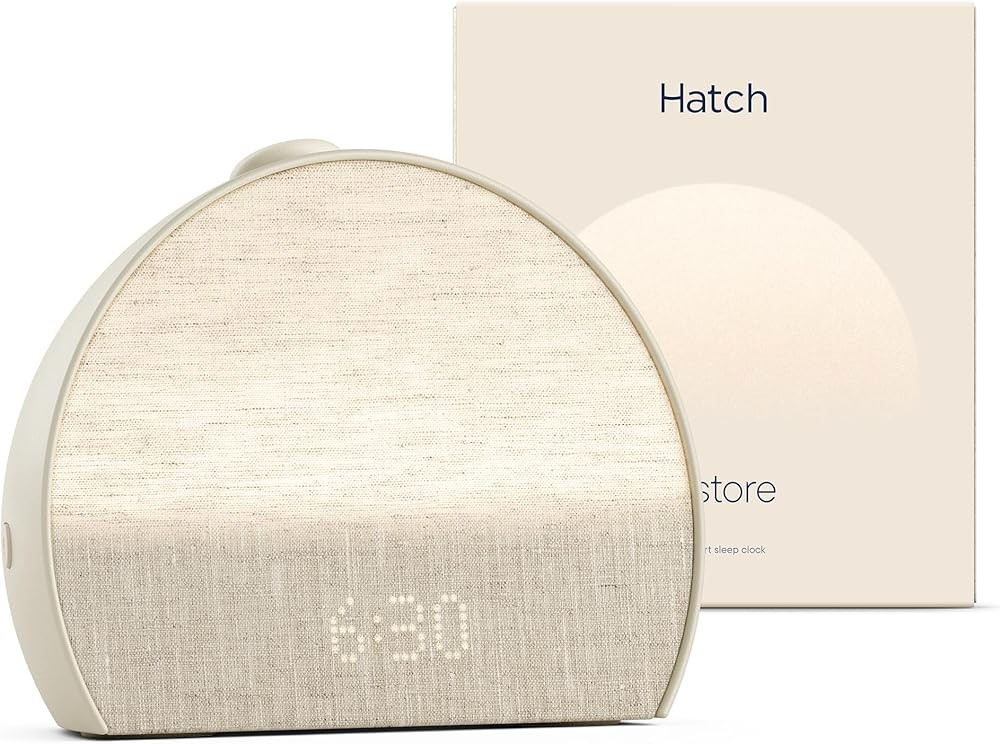
Hatch Restore 3 Sunrise Alarm Clock Sound Machine
Check Price on AmazonAs an Amazon Associate we earn from qualifying purchases.
The Hatch Restore 3 integrates white noise generation with sunrise simulation, customizable light therapy, and smartphone-controlled sleep routines to create a comprehensive sleep environment system. This all-in-one approach addresses multiple sensory domains affecting sleep quality - sound, light, and circadian rhythm entrainment - through a single bedside device positioned as a complete sleep solution rather than standalone white noise machine.
Multi-Sensory Sleep System Approach
Unlike dedicated white noise machines focusing exclusively on acoustic masking, the Hatch Restore 3 combines sound with programmable light therapy supporting circadian rhythm alignment. Gradual sunrise simulation begins 30-60 minutes before desired wake time, slowly increasing light intensity and shifting color temperature from warm red tones to bright daylight-mimicking white. This progressive illumination supports natural cortisol awakening response and reduces the jarring effect of sudden alarms.
Evening sunset programs provide the inverse function - gradual dimming from bright white to warm amber to darkness over 30-60 minutes as bedtime approaches. This light transition signals the circadian pacing system that night nears, supporting melatonin production and sleep readiness. Research on circadian biology supports light as a potent entrainment cue, though the specific sunrise/sunset programs lack extensive controlled trial validation.
11+ Sound Options Including White and Pink Noise
The Hatch Restore 3 offers versatile sound library beyond single white noise option. Users select from white noise, pink noise, brown noise, rain sounds, ocean waves, dryer sounds, and other ambient options. This variety allows matching sound characteristics to individual preferences and specific environmental noise patterns - pink noise for general use, white noise for high-frequency disruptions, rain or ocean sounds for those preferring natural soundscapes.
Sound quality emerges from speaker-based digital playback rather than mechanical fan generation. The Hatch uses recorded and synthesized sounds played through internal speakers with sufficient fidelity for sleep purposes, though audiophiles may detect digital artifacts or loop points in some tracks. The sounds avoid the harsh electronic quality that characterizes cheap white noise apps, but lack the completely non-looping character of mechanical fan devices.
Smartphone App for Customization and Scheduling
The iOS and Android Hatch Sleep app provides granular control over all Restore 3 functions. Users create custom sleep routines combining specific sounds, light colors, brightness levels, and durations. Scheduled automation runs these routines at consistent times, supporting circadian regularity without manual activation each night.
The app includes sleep tracking through user-logged bedtimes and wake times, though the Restore 3 lacks sensors for objective sleep measurement. This limitation means the device cannot detect actual sleep onset, wake times, or sleep stages - it operates on scheduled assumptions rather than measured sleep biology. Users wanting objective sleep data need separate wearable devices or under-mattress sensors.
Volume Control and Sound Customization
The Restore 3 provides precise digital volume control through both app and capacitive touch controls on the device housing. Volume adjustment spans from barely audible to quite loud (approximately 30-70 dB based on user reports, though Hatch does not publish calibrated specifications). This range encompasses the 40-50 dB research-recommended target with granular steps for fine-tuning.
Sound customization extends beyond volume to include duration settings. Users can program sounds to play continuously throughout the night, shut off after set periods, or fade out gradually after sleep onset. This flexibility addresses preferences ranging from continuous overnight masking to brief sound during sleep transition only.
Sunrise Alarm and Smart Wake Features
The primary differentiator versus dedicated white noise machines lies in sunrise alarm functionality. Progressive light increase paired with gradual sound introduction (birds chirping, gentle music, or other wake sounds) creates a gentle transition from sleep to waking. Research suggests this approach reduces sleep inertia - the grogginess and impaired cognitive function characterizing abrupt awakenings - though individual response varies substantially.
Smart wake features allow automatic silencing through motion detection or smartphone interaction. Users reaching for phones to check the time can automatically deactivate the alarm through app integration. This reduces the common cycle of snooze button hits that fragment morning sleep without providing restorative benefit.
Nightlight and Reading Light Functions
Beyond sleep-specific features, the Restore 3 serves as adjustable nightlight for evening activities. Warm low-intensity lighting provides visibility for reading, journaling, or nighttime navigation without brightness levels that suppress melatonin. Color temperature shifts toward red/amber wavelengths minimize circadian disruption compared to blue-rich white light.
Reading light mode increases brightness while maintaining warmer color temperatures than typical overhead lighting or lamps. This function supports bedtime routines involving reading while theoretically reducing circadian interference compared to standard lighting, though research specifically validating this application remains limited.
Premium Pricing and Value Calculation
At $169, the Hatch Restore 3 costs substantially more than dedicated white noise machines, commanding a price premium reflecting its expanded feature set. The calculation depends on whether users value the multi-sensory integration. Buyers wanting only white noise find poor value - the Dohm UNO at $36 or SNOOZ Smart at $99 provide superior sound-focused functionality for fraction of the cost.
Value emerges for users seeking comprehensive sleep environment control in a single device. Compared to purchasing separate white noise machine ($40-$100), sunrise alarm clock ($50-$150), and smart lamp ($30-$80), the Restore 3’s $169 price represents modest savings while reducing nightstand clutter. The integration also enables coordination between sound and light that separate devices cannot achieve.
Build Quality and Design Aesthetics
The Restore 3 features modern minimalist industrial design with smooth curves, premium-feeling materials, and refined details that suit contemporary bedroom aesthetics. The device functions as much as decorative object as utilitarian sleep tool, contrasting with the purely functional appearance of traditional white noise machines. Users prioritizing bedroom visual cohesion appreciate this attention to design.
Physical controls consist of capacitive touch surfaces rather than mechanical buttons, providing clean exterior appearance but introducing potential for accidental activation from touches while reaching for other nightstand items. The top-mounted controls require reaching over the device, which may prove awkward for users with nightstands positioned below mattress height.
What the data tells us: The Hatch Restore 3 delivers comprehensive sleep environment management combining white noise, sunrise simulation, and light therapy for users valuing multi-sensory integration over acoustic-focused solutions, with $169 premium pricing targeting those wanting consolidated control rather than dedicated white noise performance.
Yogasleep Dohm Classic White Noise Machine - Best for Real Fan Sound
The Yogasleep Dohm Classic represents the original mechanical fan white noise machine design dating back over 50 years, maintaining the core technology while incorporating modest refinements. This device prioritizes acoustic authenticity and proven reliability over modern smart features, appealing to users who value the specific sound character of real rotating fan noise and time-tested engineering.
Heritage Design with Proven Track Record
The Dohm Classic continues the mechanical fan white noise approach that Yogasleep (formerly Marpac) established as the category standard in 1962. The fundamental mechanism - electric motor spinning an asymmetrical fan inside a vented housing - remains unchanged from early designs that achieved widespread adoption in clinical settings. Many sleep laboratories, hospitals, and research facilities historically used Dohm machines for studies examining white noise effects, making this specific device the closest consumer equivalent to research apparatus.
The longevity suggests both market acceptance and engineering soundness. Products surviving decades in competitive markets typically deliver on core value propositions, and the Dohm Classic’s continued availability indicates sustained demand for straightforward mechanical white noise without digital additions. Users report devices operating reliably for 20+ years with minimal maintenance, though individual longevity varies based on usage patterns and environmental factors.
Dual-Speed Fan Motor
Like the budget-oriented Dohm UNO, the Classic offers two-speed operation through a three-position rocker switch (off/low/high). Low speed generates quieter white noise approximating 40-45 dB at typical bedside distances, while high speed produces louder output in the 50-55 dB range. These settings span the research-recommended 40-50 dB target without providing intermediate adjustment.
The dual-speed limitation affects users requiring precise volume matching to specific ambient noise levels. Environmental noise averaging 47 dB for instance, receives imperfect masking from either setting - low speed slightly under-masks, high speed slightly over-masks. In practice, this precision rarely proves critical as effective masking spans a range rather than requiring exact decibel matching, but users wanting optimized targeting prefer continuously variable or multi-step controls.
Adjustable Tone Through Housing Design
The Classic’s two-piece housing includes a rotatable cap that exposes or covers vent openings, modifying sound tone without changing volume substantially. Rotating the cap clockwise gradually closes vents, creating deeper, warmer sound with more bass emphasis and less high-frequency content. Counterclockwise rotation opens vents fully for brighter tone with stronger high-frequency presence.
This mechanical tone adjustment provides tactile control over sound character, allowing users to shift between white noise and pink noise-like characteristics. The adjustment addresses common feedback that pure white noise sounds too harsh or hissy - partial vent closing softens the tone considerably. Users can experiment with different positions to match personal preferences or optimize masking for specific environmental noise frequency content.
Compact Classic Form Factor
The Dohm Classic measures 5.8 inches diameter and 3.2 inches height, creating a low-profile footprint that fits discretely on nightstands without dominating visual space. The neutral tan/beige housing color blends with most bedroom decor schemes, contrasting with the more design-forward appearance of modern alternatives but avoiding visual distraction.
Weight of approximately one pound makes the Classic easily portable within the home for repositioning experimentation, though the 8-foot AC power cord limits placement flexibility relative to wall outlet locations. The Classic lacks the battery operation enabling true travel portability, restricting use to locations with reliable AC power access.
Sound Quality and Fan Noise Character
The Classic’s mechanical fan generates authentic turbulent airflow sound that differs subtly from both electronic white noise and other fan-based machines. Users describe the sound as smooth, warm, and organic - qualities suggesting the fan blade design, motor characteristics, and housing acoustics create particular harmonic content and frequency distribution. While these differences resist objective quantification, subjective preferences often favor the Classic’s specific sound signature.
The non-looping nature of mechanical sound generation avoids the pattern recognition that eventually makes recorded white noise detectable. Each moment represents unique air turbulence determined by countless micro-variables in blade position, air density, and environmental factors. This continuous variation maintains acoustic novelty indefinitely, potentially reducing the habituation or annoyance that some users report from synthesized white noise.
Maintenance and Longevity Expectations
The Classic’s simple construction - motor, fan, switch, housing - creates inherent reliability through minimal component count. Maintenance consists primarily of periodic dusting to reduce buildup on fan blades and motor vents. The housing separates for internal cleaning access, though most users find external wiping adequate for years of operation.
Motor bearings and electrical components eventually wear through extended use. Reports suggest typical lifespan ranges from 5-20+ years depending on usage intensity and environmental conditions. Unlike battery-dependent devices requiring replacement when cells degrade, the Classic typically operates until motor failure, at which point the device requires replacement rather than repair given the low cost relative to service expenses.
Price Positioning Between Budget and Premium
At $49, the Dohm Classic occupies middle ground between the $36 Dohm UNO and the $99 SNOOZ Smart. The $13 premium over the UNO buys modest feature additions including slightly larger fan for potentially smoother sound and marginally refined housing design. Users struggle to justify the Classic versus UNO based on features alone - the acoustic differences remain subtle and subjective.
The Classic appeals primarily to fans of the specific Dohm sound signature who want the “original” rather than budget variant, or users who owned previous Dohm Classics and seek familiarity. The price difference proves minor enough that preference-driven selection makes sense, while the $50 savings versus SNOOZ Smart compensates for lacking smart features for users who don’t value app control or volume calibration.
Research summary: The Dohm Classic delivers time-tested mechanical fan white noise through 50+ year heritage design, appealing to acoustic purists valuing proven reliability and authentic non-looping sound over modern smart features, with $49 pricing reflecting modest premium over budget alternatives for the original Dohm experience.
Frequently Asked Questions
Does white noise actually improve sleep quality according to research?
Yes, multiple studies demonstrate white noise can significantly improve sleep quality. A 2025 meta-analysis of 1,301 subjects found white noise significantly reduced Pittsburgh Sleep Quality Index scores in both adults and older adults (P<0.001). Another randomized controlled trial of 58 ICU patients showed white noise at 40-50 dB improved sleep quality with significant reductions in sleep disturbances (p<0.01). The evidence is strongest for sound masking in high-noise environments.
What volume level should I set my white noise machine to for best results?
Research suggests 40-50 dB is the optimal range for white noise during sleep. This volume is loud enough to mask environmental disruptions but soft enough to avoid causing hearing strain or additional sleep disturbance. Studies consistently use this range - a 2026 ICU trial found 40-50 dB white noise improved sleep quality significantly, while a New York City study showed effective noise masking at similar levels reduced sleep onset latency by 25%.
Is real fan sound better than electronic white noise for sleep?
Real fan white noise offers several advantages over electronic versions. Mechanically generated sound from an actual rotating fan creates authentic, non-looping audio that many users find more natural and less fatiguing over extended periods. Real fan machines like the Yogasleep Dohm series produce true white noise through air movement rather than speakers, which some research suggests may be more effective for sustained sound masking throughout the night.
Can white noise machines help with tinnitus at night?
White noise can be beneficial for tinnitus sufferers by masking the ringing or buzzing sounds that become more noticeable in quiet environments. The continuous, consistent sound helps reduce the contrast between tinnitus and silence, making the condition less intrusive. However, volume should be kept at a comfortable level - typically 40-50 dB - as excessive volume can potentially worsen tinnitus symptoms over time.
How does pink noise compare to white noise for sleep improvement?
Pink noise differs from white noise in that it emphasizes lower frequencies, creating a deeper, softer sound often compared to steady rainfall or rustling leaves. A 2022 systematic review of 34 studies found that pink noise showed positive sleep outcomes in 81.9% of studies compared to 33% for white noise, though the overall evidence quality was rated as low. Pink noise may be particularly beneficial for those who find traditional white noise too harsh or high-pitched.
Is it safe to use white noise machines every night long-term?
When used at appropriate volumes (40-60 dB), white noise machines are generally safe for nightly use. Multiple studies involving continuous nightly use for weeks to months reported no adverse effects. A 2025 comprehensive review noted that white noise is safe provided it stays within recommended sound levels. However, experts recommend positioning the device at least 3-6 feet from the bed and avoiding volumes above 70 dB to reduce potential hearing concerns.
Can white noise machines disturb a sleeping partner?
White noise typically creates a neutral sound environment that most people find either helpful or non-intrusive. Unlike music or nature sounds that may contain varying rhythms or sudden changes, white noise maintains consistent volume and frequency. Many couples report that both partners benefit from reduced environmental noise disruption. If sensitivity differs, consider starting at lower volumes (40-45 dB) and gradually adjusting, or choosing a machine with directional sound control.
How should I position my white noise machine for optimal effectiveness?
For best results, place your white noise machine 3-6 feet away from your bed at approximately mattress height or slightly below. This distance provides effective sound masking throughout the room without being too close to your ears. Positioning near doorways or windows can help mask external noise sources more effectively. Avoid placing the device directly on nightstands close to your head, as this can make the sound too intense and potentially disruptive.
Do white noise machines work for babies and children?
White noise can benefit infant and child sleep when used appropriately. A 2025 meta-analysis found that white noise in children aged 0-3 years significantly extended 24-hour total sleep time by 137 minutes and reduced the number of nighttime awakenings. However, experts recommend keeping the volume below 50 dB for infants, positioning the device at least 7 feet from the crib, and using it primarily for sleep onset rather than continuously throughout the night to support normal auditory development.
Will I become dependent on white noise to sleep?
While some people develop a preference for white noise during sleep, research does not indicate true physiological dependency. Studies show that white noise functions as an environmental sleep aid by masking disruptive sounds rather than chemically altering sleep mechanisms like medications do. Many people successfully use white noise situationally - such as in noisy environments or during travel - without requiring it in quieter settings. If concerned, you can gradually reduce volume over time or use it only during sleep onset.
Our Top Recommendations
The SNOOZ Smart White Noise Machine earns our top overall recommendation for its optimal combination of authentic mechanical fan sound and modern smart controls that directly support evidence-based use. The real rotating fan generates non-looping white noise through actual air movement, while app-based volume calibration with decibel display enables precise targeting of the 40-50 dB range that research consistently identifies as most effective. USB-C battery operation provides portability for maintaining consistent sleep routines during travel, addressing a key limitation of traditional AC-only fan machines.
For budget-conscious buyers prioritizing acoustic authenticity over smart features, the Yogasleep Dohm UNO delivers the core benefits of mechanical fan white noise at just $36. The simple two-speed design with tone adjustment collar provides effective environmental noise masking through the same proven technology used in clinical research settings. Users who don’t value app control, volume calibration, or battery operation receive equivalent sound masking functionality at a fraction of premium device costs.
Hatch Restore 3 Sunrise Alarm Clock Sound Machine
Check Price on AmazonAs an Amazon Associate we earn from qualifying purchases.
The Hatch Restore 3 represents the premium choice for comprehensive sleep environment optimization, combining white noise with sunrise alarm, customizable light therapy, and smartphone-controlled routines. This multi-sensory integration addresses both acoustic and circadian factors affecting sleep quality, making it ideal for users wanting consolidated control over multiple sleep-supporting technologies in a single device.
Acoustic purists preferring the specific character of time-tested fan white noise find optimal value in the Yogasleep Dohm Classic. This heritage design maintains the original mechanical approach with over 50 years of proven reliability, delivering authentic non-looping sound through real air movement. The adjustable tone collar allows shifting between bright white noise and warmer pink-noise characteristics without electronic complexity.
Join the discussion: Facebook | X | YouTube | Pinterest
Conclusion
White noise machines provide measurable sleep quality improvements across diverse populations and environments, with the strongest evidence supporting 40-50 dB continuous sound during sleep hours to mask unpredictable environmental disruptions. The 2025 meta-analysis of 1,301 subjects demonstrated significant reductions in Pittsburgh Sleep Quality Index scores for both adults and older adults, while studies in urban environments, hospitals, and other high-noise settings consistently show benefits for sleep onset latency, sleep fragmentation, and subjective sleep quality ratings.
The choice between mechanical fan and electronic white noise machines primarily affects user experience rather than measured outcomes - both approaches effectively mask environmental sounds when implemented at appropriate volumes. Real fan devices like the Yogasleep Dohm series offer authentic non-looping sound character that many users prefer for sustained nightly use, while electronic systems like the Hatch Restore 3 provide precision control and versatility through multiple sound options and smart features.
Optimal implementation combines white noise with complementary sleep environment optimization - acoustic barriers like heavy curtains and weather stripping, strategic bedroom positioning away from noise sources, appropriate temperature management, and consistent sleep schedules supporting circadian rhythm alignment. White noise addresses the acoustic dimension effectively but represents one component of comprehensive sleep quality enhancement.
Individual response varies based on environmental noise characteristics, personal sensitivity, and underlying sleep factors. Urban residents exposed to unpredictable traffic and neighbor noise show particularly strong responses, while those in quieter environments may find minimal benefit. Light sleepers, shift workers, hospitalized patients, and parents of young children represent populations with clearest evidence for meaningful sleep improvement from white noise intervention.
The research supports confident recommendation of white noise machines for people struggling with environmentally-driven sleep disruption, with device selection depending on priorities around acoustic authenticity, smart features, portability, and budget. Starting with appropriate volume (40-50 dB), proper positioning (3-6 feet from bed), and consistent nightly use provides the foundation for optimal outcomes aligned with published evidence.
For readers seeking deeper context on how sound therapy fits into broader sleep and pain management strategies, our research-backed guide to white noise machines for sleep explores the mechanisms behind effective sound masking, while the best picks for babies address safe use in infant sleep environments. Those managing tinnitus alongside sleep difficulties may also benefit from our comparison of white noise machines for tinnitus relief. Beyond sleep, sound-based and wave-based therapies intersect with other modalities worth understanding—our ultrasound therapy frequency guide explains how 1 MHz and 3 MHz frequencies differ in treatment depth, and the evidence-based comparison of ultrasound therapy versus TENS units clarifies when each approach is most appropriate for pain relief.
If you’re shopping for a white noise machine to improve your own sleep, our research-backed guide to the best white noise machines for sleep and tinnitus relief breaks down which features actually matter based on the evidence. Parents should instead check out our guide to white noise machines for babies, which focuses on safe volume levels and pediatrician-recommended use. And if your interest in sound and frequency therapy extends beyond sleep, our ultrasound therapy frequency guide explains how 1 MHz and 3 MHz waves are used for tissue healing, while our comparison of ultrasound therapy and TENS units can help you choose the right modality for pain relief. For those managing specific conditions like tendonitis, our evidence-based ultrasound therapy protocols offer a practical starting point.
Related Reading
- Best Cooling Mattress Pad: Temperature Control for Better Sleep - Active cooling technology for optimizing sleep temperature
- Eight Sleep vs ChiliPad: Smart Mattress Cooling Systems Compared - Detailed comparison of leading temperature regulation systems
- Cooling Pillow for Night Sweats: Research-Backed Solutions - Pillow technologies addressing temperature-related sleep disruption
- Best Nighttime Routine for Better Sleep: Evidence-Based Tips - Comprehensive bedtime routine optimization
- Best Magnesium Supplements for Sleep: Glycinate vs Threonate - Magnesium forms supporting sleep quality
- Best Melatonin Supplements: Dosing and What to Look For - Evidence-based melatonin supplementation guidance
- Best Glycine Supplements for Deep Sleep: Research Review - Amino acid supplementation for sleep enhancement
- Best Pillow for Neck Pain: Ergonomic Options That Work - Pillow selection for pain-free sleep positioning
References
-
Nien YC, Weng SF, Chou PL. The effectiveness of white noise for sleep quality in patients admitted to the intensive care unit: a randomized controlled trial. Intensive Crit Care Nurs. 2026. doi:10.1016/j.iccn.2025.104239
-
Ding Y, Sun X, Yin J, Wang Z, Zhang X. Impact of white noise on sleep quality across age groups and in critically ill/non-critically ill patients: A systematic review and meta-analysis of randomized controlled trials. Sleep Med. 2025. doi:10.1016/j.sleep.2025.106869
-
Riedy SM, Smith MG, Rocha S, Basner M. Noise as a sleep aid: A systematic review. Sleep Med Rev. 2021;56:101385. doi:10.1016/j.smrv.2020.101385
-
Jun J, Kapella MC, Hershberger PE. Non-pharmacological sleep interventions for adult patients in intensive care Units: A systematic review. Intensive Crit Care Nurs. 2021;66:103124. doi:10.1016/j.iccn.2021.103124
-
Öz T, Demirci N. Applications of White Noise in Maternal and Neonatal Care: A Comprehensive Review on Sleep, Stress, and Pain Outcomes. Noise Health. 2025. doi:10.4103/nah.nah_154_25
-
Warjri E, Dsilva F, Sanal TS, Kumar A. Impact of a white noise app on sleep quality among critically ill patients. Nurs Crit Care. 2022;27(6):847-854. doi:10.1111/nicc.12742
-
Tian M, Gu X. Effect of White Noise Intervention Combined with Multi-dimensional Nursing Mode on Sleep Quality and Incidence of Nosocomial Infection in Patients Undergoing Hip Replacement. Noise Health. 2023. doi:10.4103/nah.nah_32_23
-
Kizilkaya M, Akpinar EG. The Effect of White Noise on Sleep Quality, Comfort, and Satisfaction in Patients Undergoing Lumbar Disk Herniation Surgery: A Randomized Controlled Trial. J Perianesth Nurs. 2026. doi:10.1016/j.jopan.2025.10.009
-
Zhang W, Li Y, Li F. Comparative Effects of Music Therapy Versus White Noise on Sleep Quality and Psychological Resilience of Night-Shift Nurses: Retrospective Cohort Study. Noise Health. 2026. doi:10.4103/nah.nah_132_25
-
Capezuti E, Pain K, Alamag E, Chen XQ, Philibert V, Krieger AC. Systematic review: auditory stimulation and sleep. J Clin Sleep Med. 2022;18(6):1697-1709. doi:10.5664/jcsm.9860
-
Farokhnezhad Afshar P, Bahramnezhad F, Asgari P, Shiri M. Effect of White Noise on Sleep in Patients Admitted to a Coronary Care. J Caring Sci. 2016;5(2):103-109. doi:10.15171/jcs.2016.011
-
Tonna JE, Dalton A, Presson AP, Zhang C, Colantuoni E. The Effect of a Quality Improvement Intervention on Sleep and Delirium in Critically Ill Patients in a Surgical ICU. Chest. 2021;160(4):1310-1322. doi:10.1016/j.chest.2021.03.030
-
Ebben MR, Yan P, Krieger AC. The effects of white noise on sleep and duration in individuals living in a high noise environment in New York City. Sleep Med. 2021;83:256-259. doi:10.1016/j.sleep.2021.03.031
-
Zhu L, Zheng L. Influence of White Sound on Sleep Quality, Anxiety, and Depression in Patients with Schizophrenia. Noise Health. 2024. doi:10.4103/nah.nah_116_23
-
Yin G, Li N, Xu D, Meng Z, Zheng S. Effects of White Noise Intervention on Sleep Quality and Immunological Indicators of Patients with Breast Cancer Undergoing Neoadjuvant Chemotherapy. Noise Health. 2024. doi:10.4103/nah.nah_111_24
Recommended Products