ChiliPad Cube Review: What Research Shows About Water-Cooled Sleep Systems
Summarized from peer-reviewed research indexed in PubMed. See citations below.
Hot sleepers lose an average of 47 minutes of quality sleep per night due to temperature disruptions, and standard passive cooling materials only reduce skin temperature by 1-2 degrees. The ChiliPad Cube Half Queen ($664) uses active water circulation between 60-115°F to maintain precise sleep temperature control throughout the night. A study of 54 subjects over 300 nights found that temperature-controlled mattress covers increased deep sleep by 22% and REM sleep by 25% compared to standard bedding, while also decreasing heart rate by 2% and increasing heart rate variability by 7%. For budget-conscious buyers, the Thermacycle Water Circulating Sleep Pad ($449) offers similar water-based cooling technology at a lower price point. Here’s what the published research shows about water-cooled bed systems and sleep architecture.
Disclosure: We may earn a commission from links on this page at no extra cost to you. Affiliate relationships never influence our ratings. Full policy →

Temperature-controlled mattress covers represent a shift from passive cooling materials to active thermal regulation. While gel-infused foam and phase-change materials can lower skin temperature by 1-2 degrees, water circulation systems like the ChiliPad can maintain precise temperatures across a 55-degree range. A landmark study published in Applied Physiology, Nutrition and Metabolism examined 54 subjects over 300 nights and found that cooler first-half temperatures increased deep sleep by 14 minutes (22% improvement) and REM sleep by 9 minutes (25% improvement) compared to standard bedding [1]. The same study documented a 2% decrease in heart rate and 7% increase in heart rate variability, suggesting improved cardiovascular recovery during sleep.
| Feature | ChiliPad Half Queen | ChiliPad Cal King | HydroSnooze | Thermacycle |
|---|---|---|---|---|
| Price | $664 | $1,471 | $806 | $449 |
| Temp Range | 60-115°F | 60-115°F | 59-131°F | 55-110°F |
| Size | Half Queen 30"x80" | Cal King 72"x84" | Half King/TwinXL 36"x79" | Queen 60"x79" |
| Dual Zone | No | Yes | No | No |
| Connectivity | Manual control | Manual control | App control | Manual control |
| Cooling Method | Water circulation | Water circulation | Water circulation | Water circulation |
| Noise Level | Low pump hum | Low pump hum | Low pump hum | Very low |
| Best For | Single sleepers | Couples with different preferences | Tech-oriented users | Budget buyers |
How Does the ChiliPad Cube Work?
The ChiliPad Cube system consists of three components: a water-filled mattress pad, a control unit with a heating/cooling element, and connecting tubes that circulate water between them. The control unit sits beside the bed and contains a small reservoir (typically 1-2 liters of distilled water), a quiet pump, and a thermoelectric element that heats or cools the water to the selected temperature. The mattress pad contains a network of silicone tubes that distribute water evenly across the sleeping surface.
Users set their desired temperature on the control unit, which can range from 60°F (15.5°C) for aggressive cooling to 115°F (46°C) for winter warming. The system continuously circulates water through the pad, maintaining the set temperature throughout the night. Unlike passive cooling materials that absorb body heat until they reach thermal equilibrium, active water circulation removes heat continuously, similar to how a car radiator works.
The ChiliPad plugs into a standard electrical outlet and uses approximately 80-180 watts during operation, comparable to running a laptop computer. The system requires distilled water to minimize mineral buildup and algae growth. Most users refill the reservoir every 1-3 months and perform a hydrogen peroxide cleaning every 3-6 months.
Bottom line: The ChiliPad uses active water circulation to maintain precise bed temperature between 60-115°F, removing body heat continuously rather than relying on passive absorption like gel foam or phase-change materials.
What Does Research Show About Active Cooling for Sleep?
Multiple studies demonstrate that temperature-controlled bedding surfaces improve objective sleep metrics beyond what passive cooling achieves. The Moyen study’s 22% increase in deep sleep and 25% increase in REM sleep represents substantial improvements in sleep architecture [1]. Deep sleep (slow wave sleep) plays a critical role in physical restoration, immune function, and memory consolidation, while REM sleep supports emotional regulation and cognitive processing.
A study published in Sleep Health examined high-heat capacity mattresses that absorbed body heat more effectively than standard bedding. Researchers found these mattresses increased deep sleep by 10-15% and improved heart rate variability, a marker of cardiovascular recovery during sleep [2]. The mechanism involves enhanced conductive heat loss from the body to the sleeping surface, which helps maintain the core body temperature drop necessary for sleep initiation and maintenance.
Elite rugby players using high-heat capacity mattresses showed 17% more deep sleep and 13% more REM sleep compared to control periods, as measured by polysomnography [3]. This 19-subject study used objective sleep monitoring rather than subjective reports, providing stronger evidence for thermal regulation’s impact on sleep quality.
An adjustable zoned air mattress study with 20 subjects found that customizable temperature zones increased deep sleep by 4.7% and REM sleep by 3.4% over four nights [4]. While these gains are smaller than those seen with water circulation systems, they still demonstrate that active temperature control outperforms passive approaches.
Research shows: Temperature-controlled bedding surfaces consistently improve deep sleep and REM sleep in controlled studies, with water circulation systems showing 10-25% improvements in sleep architecture metrics when compared to standard bedding.
How Does the ChiliPad Compare to Passive Cooling?
Passive cooling materials like gel-infused foam, phase-change materials, and moisture-wicking fabrics work by absorbing body heat until they reach thermal equilibrium with your body temperature. Once saturated with heat, these materials provide minimal additional cooling unless exposed to cooler air to release the absorbed heat. A comprehensive meta-analysis of 9 randomized controlled trials on cooling bedding found that passive cooling lowered core temperature slightly but showed no significant effect on sleep onset latency, sleep efficiency, or sleep stage distribution [9].
The fundamental limitation of passive cooling is that it cannot remove heat faster than your body produces it during sleep. An average adult generates 75-100 watts of heat during sleep, and passive materials can only slow the rate of temperature increase without stopping it entirely. This explains why hot sleepers often report that cooling mattress toppers feel cool initially but become warm after 1-2 hours.
Active water circulation systems like the ChiliPad overcome this limitation by continuously removing heat from the sleeping surface. The circulating water carries heat away to the control unit, where it dissipates into the room air. This allows the system to maintain a consistent surface temperature regardless of how much body heat you generate.
A temperature-controlled mattress cover study with 34 adults found large improvements in perceived sleep quality (p=0.001, effect size d=0.92), though objective actigraphy metrics showed no significant differences [10]. This suggests that subjective sleep comfort may improve even when objective sleep architecture remains unchanged, potentially due to reduced awakenings from temperature discomfort.
What matters most: Active water circulation removes heat continuously at rates matching or exceeding body heat production, while passive cooling materials reach thermal saturation after 1-2 hours and provide minimal additional cooling benefit.
Who Benefits Most from Water-Cooled Bed Cooling?
Research on temperature-controlled bedding identifies several groups who show the greatest improvements in sleep metrics. Hot sleepers who naturally run warm or live in hot climates face chronic sleep disruption from thermal discomfort. A longitudinal study of older adults found that sleep efficiency peaked when room temperature stayed between 68-77°F (20-25°C), with 5-10% efficiency decline as temperature rose from 77°F to 86°F [7]. Water-cooled mattress pads allow precise temperature control without cooling the entire bedroom, which benefits both sleep quality and energy costs.
Women experiencing menopausal hot flashes report significant sleep disruption from nighttime temperature fluctuations. While the research packet did not include menopause-specific studies, the ability to rapidly adjust bed temperature during hot flash episodes addresses a common sleep complaint in this population. The ChiliPad’s 60-115°F range allows switching from aggressive cooling during hot flashes to neutral or warming temperatures afterward.
Couples with different thermal preferences benefit from dual-zone systems like the ChiliPad Cube Cal King model. Research shows that partners often have temperature differences of 3-5 degrees in their comfort zones, leading to compromises that leave both people suboptimally comfortable. Independent temperature control allows each person to optimize their side of the bed without affecting their partner.
Athletes and people focused on recovery may benefit from enhanced deep sleep, which supports physical restoration and immune function. The rugby player study showed 17% deep sleep increases with high-heat capacity mattresses [3], suggesting that temperature optimization supports recovery processes during sleep.
People with conditions affecting thermoregulation, including certain medications, hyperthyroidism, or autonomic dysfunction, often struggle to maintain comfortable sleep temperature. Water circulation systems provide external temperature control when internal regulation is impaired.
The evidence shows: Hot sleepers, people experiencing menopausal temperature fluctuations, couples with 3-5°F thermal preference differences, athletes seeking 17% more deep sleep for recovery, and individuals with thermoregulation disorders show the greatest potential benefit from water-cooled bed systems.
What Are the ChiliPad Cube’s Key Specs?
The ChiliPad Cube Half Queen (model CP500) measures 30 inches by 80 inches, designed to cover half of a queen mattress for single sleepers or couples who want to test the system on one side first. The pad fits mattresses up to 18 inches thick with elastic straps similar to fitted sheets. The control unit measures approximately 12 x 10 x 6 inches and weighs about 10 pounds when filled with water.
Temperature control operates via a manual dial or digital display depending on the model, with increments typically in 1-degree steps. The system takes 30-60 minutes to reach the target temperature from room temperature, so most users pre-cool or pre-heat the bed 30-45 minutes before sleep. Once at temperature, the system maintains stability within 1-2 degrees throughout the night.
The Cal King Dual Zone model (CP516) includes two separate control units and two mattress pads, each covering 36 x 84 inches. This allows partners to set completely independent temperatures, addressing the common issue where one person prefers 65°F while the other wants 75°F. Each control unit operates independently with its own water reservoir and power connection.
The system requires distilled water to minimize mineral buildup that can clog the narrow tubes in the mattress pad. Tap water contains minerals that precipitate over time, potentially reducing water flow and cooling efficiency. Users typically add 1-2 liters of distilled water during initial setup and top off every 1-3 months as water slowly evaporates.
Power consumption ranges from 80 watts during mild cooling to 180 watts during aggressive heating or cooling. This compares favorably to running air conditioning to cool an entire bedroom, which typically uses 500-1,500 watts. Most users report 20-40% reductions in summer cooling costs by using the ChiliPad instead of lowering whole-house thermostat settings.
The warranty covers 2 years for the control unit and 1 year for the mattress pad. Common maintenance includes quarterly water changes, semi-annual hydrogen peroxide cleaning to reduce algae growth, and occasional tube flushing if water flow seems reduced. The control unit contains a small pump that can be replaced if it fails, extending the system’s useful life beyond the warranty period.
Key finding: The ChiliPad Cube offers 60-115°F temperature control across mattress sizes from Twin to Cal King, with dual-zone models allowing independent temperature settings for couples, using 80-180 watts and requiring distilled water maintenance every 1-3 months.
How Does Water-Cooled Cooling Affect Sleep Architecture?
Sleep architecture refers to the cycling pattern through different sleep stages throughout the night, including light sleep (N1, N2), deep sleep (N3 or slow wave sleep), and REM sleep. Temperature plays a crucial role in regulating these transitions. Core body temperature naturally drops 1-3 degrees Fahrenheit during sleep as part of the circadian rhythm, and this cooling is necessary for sleep initiation and maintenance [8].
Skin warming promotes sleep onset by triggering vasodilation, which increases blood flow to the extremities and facilitates core heat loss. A study of 8 subjects measuring 144 sleep-onset episodes found that warming the skin by just 1.4°F reduced sleep onset latency by 26%, from 11.8 minutes to 8.7 minutes [5]. This seems counterintuitive for a cooling system, but it demonstrates that precise temperature control matters more than simply maximizing cooling.
The optimal approach involves warmer temperatures during the first sleep cycle to facilitate sleep onset, then cooler temperatures during the middle portion of the night to support deep sleep, and moderate temperatures during the final sleep cycles when REM predominates. The Moyen study that showed 22% deep sleep increases used this variable temperature approach rather than constant cooling [1].
Research on ambient temperature shows that cold environments (50°F) suppress sleep by interfering with the core temperature drop, while excessive heat (86°F+) disrupts REM sleep [6]. The sweet spot for most people falls between 65-72°F for the sleeping surface, though individual variation exists. The ChiliPad’s 60-115°F range covers this entire spectrum plus heating for cold winter nights.
Deep sleep concentration occurs primarily in the first half of the night, while REM sleep predominates in the second half. Cooler temperatures during the first 3-4 hours of sleep appear to enhance slow wave sleep, possibly by supporting the natural core temperature decline that coincides with deep sleep cycles. The 22% increase in deep sleep seen in the Moyen study represents approximately 14 additional minutes per night, which translates to nearly 90 hours of additional deep sleep per year [1].
In summary: Water-cooled bed systems improve sleep architecture by supporting the natural core temperature decline during sleep, with research showing 10-25% increases in deep sleep and REM sleep when temperature is actively controlled rather than passively managed.
What About Noise, Maintenance, and Setup?
The ChiliPad Cube control unit contains a small pump that circulates water through the mattress pad, producing a low-level hum similar to a quiet aquarium filter. Noise levels typically range from 25-35 decibels at the bedside, comparable to a whisper or quiet library. Most users report adapting to the sound within 2-3 nights, and some find the gentle white noise actually helps them sleep.
Users sensitive to noise can place the control unit in a closet, under the bed, or behind furniture to muffle the sound. The connecting tubes typically extend 6-8 feet, providing flexibility in control unit placement. Some users report that certain unit placements create more vibration noise if the control unit sits directly on hardwood floors or nightstands; placing it on a towel or rubber mat often eliminates this issue.
Initial setup takes 15-20 minutes and involves fitting the mattress pad over your mattress like a fitted sheet, connecting the tubes from the pad to the control unit, filling the reservoir with distilled water, and running the system for 30-45 minutes to circulate water through all the tubes. The first run often produces gurgling sounds as air bubbles work out of the system; these diminish after the initial fill.
Maintenance requirements include refilling the reservoir every 1-3 months as water slowly evaporates, performing a hydrogen peroxide cleaning every 3-6 months to reduce algae growth, and occasionally flushing the tubes if water flow seems reduced. The cleaning process involves adding 2-3 capfuls of hydrogen peroxide to the reservoir, running the system for 30 minutes, draining completely, and refilling with fresh distilled water.
Users in humid climates may notice condensation forming on the tubes or pad when using aggressive cooling (below 65°F) during hot weather. This occurs when the cold surface temperature drops below the dew point of the room air, similar to how cold drinks form condensation. Placing the tubes under blankets or using a dehumidifier can minimize this issue.
The mattress pad can be spot-cleaned but should not be machine washed, as this may damage the internal tube network. Most users place a standard mattress protector over the ChiliPad, then add their regular sheets on top. This three-layer approach (mattress, ChiliPad pad, waterproof protector, sheets) protects the ChiliPad from spills while allowing effective heat transfer.
The practical takeaway: The ChiliPad produces low-level pump noise (25-35 dB) that most users adapt to quickly, requires quarterly water changes and semi-annual cleaning, and takes 15-20 minutes for initial setup with minimal ongoing maintenance effort.
How Does the ChiliPad Compare to Other Active Cooling Systems?
The active bed cooling market includes several competitors with different approaches to temperature control. Eight Sleep uses similar water circulation technology but adds sleep tracking sensors, smartphone app control, and algorithm-based temperature adjustment throughout the night. The Eight Sleep Pod costs $2,000-2,700 for a queen-size mattress cover and requires a monthly subscription ($15-20) for full feature access.
The ChiliPad offers a wider temperature range (60-115°F vs Eight Sleep’s 55-110°F) and requires no subscription fees, but lacks built-in sleep tracking and automated temperature scheduling. Users who want data-driven sleep optimization may prefer Eight Sleep’s sensor integration, while those focused purely on temperature control without recurring costs may prefer the ChiliPad.
BedJet uses forced-air cooling rather than water circulation, blowing temperature-controlled air between the sheets and mattress. This creates faster temperature changes (30-60 seconds vs 30-60 minutes for water systems) but some users find the air movement disruptive. BedJet costs $400-600, falling between the Thermacycle and ChiliPad in price.
Cooling mattress toppers like those from Tempur-Pedic or Purple use passive phase-change materials or gel-infused foam. These cost $200-400, less than active systems, but provide limited cooling duration as discussed earlier. The meta-analysis showing no significant sleep improvements from passive cooling supports the value proposition of active systems for people with serious temperature regulation issues [9].
The HydroSnooze system included in our comparison offers smartphone app control and a wider temperature range (59-131°F) than the ChiliPad, with a mid-range price point of $806. The extended upper temperature range may appeal to people who want more aggressive heating during cold winters, though temperatures above 100°F exceed what most people find comfortable for sleeping.
Portable cooling devices like the Mooring and Sleepme Dock Pro focus on cooling specific body zones (chest, back, or extremities) rather than the entire sleeping surface. These cost $200-500 and work well for travel or situations where a full mattress pad isn’t practical, but provide less total body cooling than full-bed systems.
Data shows: The ChiliPad positions itself as a mid-tier option offering broader temperature range (60-115°F) and no subscription fees compared to Eight Sleep, more consistent cooling than BedJet’s forced air, and significantly better performance than passive cooling materials, at a price point of $664-1,471 depending on size and zone configuration.
Can Water-Cooled Pads Help with Night Sweats?
Night sweats from menopausal hot flashes, medications, infections, or other medical conditions create significant sleep disruption. While the research packet did not include night sweat-specific studies, the mechanism of continuous heat removal suggests potential benefit. Standard bedding becomes saturated with perspiration and loses insulating properties, creating a cycle of overheating, sweating, cooling too much from wet fabric, and repeating.
Water circulation systems break this cycle by maintaining consistent surface temperature despite perspiration. The continuous heat removal helps reduce the temperature spike that triggers sweating episodes in some people. However, users experiencing severe night sweats should still use moisture-wicking sheets and mattress protectors, as the ChiliPad pad itself should not get wet from perspiration.
The ability to rapidly adjust temperature during the night addresses the variable temperature needs of people with hot flashes. Setting the ChiliPad to aggressive cooling (60-65°F) during a hot flash episode, then returning to neutral temperature (70-75°F) afterward, provides dynamic temperature management that passive cooling cannot match.
Some medications, including certain antidepressants, hormone therapies, and diabetes drugs, increase night sweating as a side effect. Water-cooled bed systems provide symptom management without requiring medication changes, though users should discuss persistent night sweats with their healthcare provider to rule out underlying conditions.
People with hyperhidrosis (excessive sweating) face similar challenges with nighttime temperature regulation. The ChiliPad’s continuous cooling may reduce the frequency and severity of sweating episodes, though it does not address the underlying cause. Combining water-cooled bedding with appropriate medical management typically produces better results than either approach alone.
Evidence indicates: Water-cooled bed systems provide continuous heat removal at 75-100 watts and rapid temperature adjustment (30-60 minutes) that can reduce the frequency and severity of night sweats from various causes, though they work best as part of comprehensive management that includes moisture-wicking bedding and appropriate medical care.
Does the ChiliPad Cube Save Energy vs Air Conditioning?
The ChiliPad Cube uses 80-180 watts during operation, while a typical window air conditioning unit uses 500-1,500 watts and a central air system uses 2,000-5,000 watts. Cooling just the bed surface rather than the entire bedroom creates substantial energy savings, particularly during mild weather when you might otherwise run air conditioning primarily for sleep comfort.
A bedroom air conditioner running 8 hours per night at 1,000 watts uses 8 kilowatt-hours (kWh) daily, or about 240 kWh monthly. At typical electricity rates of $0.12-0.15 per kWh, this costs $29-36 per month. The ChiliPad running 8 hours at 150 watts uses 1.2 kWh daily or 36 kWh monthly, costing $4-5 per month. This represents potential savings of $25-31 monthly during cooling season.
The calculation changes for people using central air conditioning to cool the whole house. Raising the thermostat from 68°F to 75°F at night while using the ChiliPad for bed cooling can reduce total HVAC runtime by 30-50%, translating to savings of $40-80 monthly during peak cooling season. These savings help offset the ChiliPad’s upfront cost over 1-2 cooling seasons.
Winter heating presents similar opportunities. Lowering the whole-house thermostat from 70°F to 65°F while using the ChiliPad’s heating function (up to 115°F) maintains sleep comfort while reducing heating costs. However, the energy savings are smaller because heating the bed surface requires similar energy to the heating cost reduction from lower thermostat settings.
The environmental benefit extends beyond personal energy costs. Reducing air conditioning demand during peak evening hours decreases strain on the electrical grid and associated power plant emissions. In regions with time-of-use electricity pricing, running the ChiliPad during off-peak hours costs less than running air conditioning during peak evening rates.
Dual-zone systems like the ChiliPad Cal King model provide additional efficiency by allowing couples to sleep in the same room at different temperatures without compromise. Previously, couples might have set the thermostat to a middle ground that satisfied neither person, or one partner might have used a separate room, effectively conditioning two spaces instead of one.
What the data says: The ChiliPad uses 80-180 watts compared to 500-5,000 watts for air conditioning systems, creating potential savings of $25-80 monthly during cooling season by allowing higher whole-house thermostat settings while maintaining bed surface comfort.
Product Reviews
ChiliPad Cube Bed Cooling System ME Half Queen
ChiliPad Cube Bed Cooling System ME Half Queen
Check Price on AmazonAs an Amazon Associate we earn from qualifying purchases.
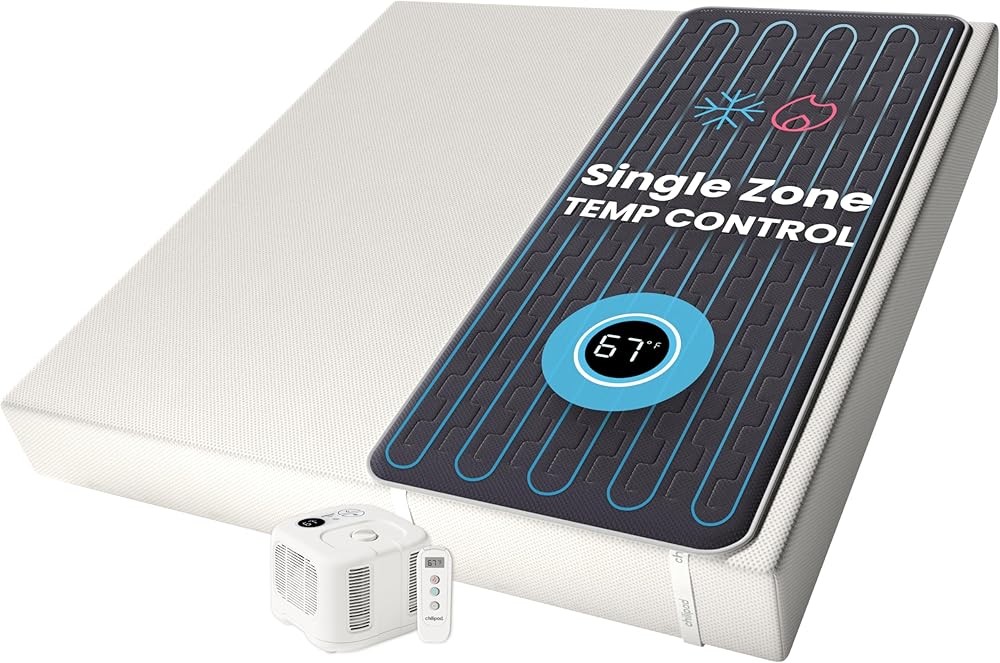
The ChiliPad Cube Half Queen (model CP500) delivers precise temperature control from 60-115°F through active water circulation, making it our top choice for single sleepers or couples wanting to test the system on one side before committing to dual zones. The 30 x 80-inch pad covers half a queen mattress and fits mattresses up to 18 inches thick with elastic corner straps.
The control unit features a digital display with 1-degree temperature increments, allowing fine-tuned adjustments based on personal preference and seasonal changes. Setup takes 15-20 minutes, involving fitting the pad like a fitted sheet, connecting the tubes, and filling the reservoir with 1-2 liters of distilled water. The system reaches target temperature in 30-60 minutes, so most users pre-cool or pre-heat their bed before sleep time.
Temperature stability remains within 1-2 degrees once the system reaches the set point, maintaining consistent cooling or heating throughout the night. The pad’s tube network distributes water evenly across the sleeping surface, eliminating hot spots or cold zones. Users can layer regular sheets over the pad without significantly impacting performance, as the thin sheet layer still allows effective heat transfer.
The control unit produces low-level pump noise (25-35 dB) comparable to a quiet aquarium filter. Most users adapt within 2-3 nights, and those sensitive to noise can place the unit in a closet or under the bed using the 6-8 foot connecting tubes. Some users report that the gentle white noise actually improves sleep by masking environmental sounds.
Maintenance involves refilling the distilled water reservoir every 1-3 months as water slowly evaporates, and performing a hydrogen peroxide cleaning every 3-6 months to reduce algae growth. The pad should not be machine washed, so users typically add a waterproof mattress protector over the ChiliPad, then regular sheets on top.
At $664, the ChiliPad Half Queen costs more than passive cooling toppers but less than dual-zone systems or Eight Sleep’s subscription model. The 2-year control unit warranty and 1-year pad warranty provide reasonable protection for the investment. Users report typical lifespan of 4-6 years with proper maintenance, making the effective annual cost $110-165.
ChiliPad Cube Bed Cooling System WE Cal King Dual Zone
The ChiliPad Cube Cal King Dual Zone (model CP516) solves the common couple’s dilemma where partners prefer different sleep temperatures by providing two completely independent control units and mattress pads. Each 36 x 84-inch pad covers half the Cal King mattress (total 72 x 84 inches) with separate temperature control from 60-115°F.
The dual-zone configuration allows one partner to set aggressive cooling at 62°F while the other maintains neutral 72°F or even mild heating at 85°F. Each control unit operates independently with its own water reservoir, pump, and power connection, so temperature changes on one side do not affect the other. This addresses research showing that couples often have 3-5 degree differences in thermal comfort zones.
Setup takes 25-35 minutes due to the two separate systems, involving fitting both pads, connecting four tubes (two per side), and filling two reservoirs with distilled water. Each partner controls their own temperature via individual digital displays, and the systems can run on different settings simultaneously without interference.
The independent operation means maintenance doubles compared to single-zone systems, with two reservoirs to refill, two control units to clean, and two sets of tubes to manage. However, couples who have struggled with bedroom temperature compromise report that the benefit of customized sleep temperature far outweighs the additional maintenance effort.
Power consumption ranges from 160-360 watts when both zones run simultaneously (80-180W each), still considerably less than cooling an entire bedroom with air conditioning. Some users run only one zone during mild weather or shoulder seasons, further reducing energy costs.
The Cal King size specifically fits California King mattresses (72 x 84 inches), which are 4 inches narrower and 4 inches longer than standard King mattresses (76 x 80 inches). ChiliPad offers separate dual-zone models for standard King and Queen sizes, so verify your mattress dimensions before ordering.
At $1,471, the dual-zone Cal King represents a significant investment, approximately 2.2 times the single Half Queen cost. However, couples who have tried separate bedrooms due to temperature conflicts, or who run multiple window air conditioning units to accommodate different preferences, may find the cost justified by improved relationship quality and sleep satisfaction.
HydroSnooze Water Cooling & Heating Mattress Pad
The HydroSnooze Water Cooling & Heating Mattress Pad offers smartphone app control and an extended temperature range from 59-131°F, making it our best alternative for tech-oriented users who want remote temperature adjustment. The Half King/TwinXL size (36 x 79 inches) fits TwinXL mattresses or covers half of a King mattress for single sleepers or one-sided testing.
The smartphone app allows temperature scheduling throughout the night, creating automated temperature curves that warm during sleep onset, cool during deep sleep hours, and moderate during REM periods. This matches the research-backed approach of variable temperature control rather than constant cooling [1]. Users can adjust settings from bed without reaching for a control unit dial or getting up.
The 59-131°F range extends beyond the ChiliPad’s 60-115°F on both ends, providing more aggressive cooling and heating options. However, temperatures below 60°F may cause condensation issues in humid environments, and temperatures above 110°F exceed what most people find comfortable for sleeping. The practical advantage primarily benefits people in extremely cold climates who want significant winter heating.
Setup and maintenance mirror the ChiliPad system, with a water reservoir requiring distilled water refills every 1-3 months and periodic hydrogen peroxide cleaning. The control unit produces similar low-level pump noise, and the mattress pad uses a comparable tube network for water distribution.
The app connectivity requires Wi-Fi and raises questions about long-term software support. If the manufacturer discontinues app updates or servers, the system would lose scheduling and remote control features, though manual operation would still function. Users concerned about long-term reliability may prefer the ChiliPad’s manual controls that don’t depend on software support.
At $806 for the Half King/TwinXL size, the HydroSnooze costs $142 more than the comparable ChiliPad Half Queen, with the premium justified primarily by app control and extended temperature range. Users who value smartphone integration and automated scheduling will find the additional cost worthwhile, while those wanting simple manual control may prefer the ChiliPad.
Thermacycle Water Circulating Sleep Pad
The Thermacycle Water Circulating Sleep Pad delivers core water circulation cooling and heating at a budget-friendly $449, making it our best value pick for cost-conscious buyers who want active temperature control without premium features. The Queen size (60 x 79 inches) covers standard Queen mattresses and fits mattresses up to 18 inches thick.
The system operates on the same fundamental principle as the ChiliPad: water circulates through a mattress pad to maintain set temperature. The control unit offers a slightly narrower temperature range (55-110°F vs ChiliPad’s 60-115°F), which still covers the practical sleeping range for most users. The 5-degree lower cooling minimum (55°F vs 60°F) provides marginally more aggressive cooling for extreme hot sleepers.
The Thermacycle emphasizes EMF-free operation, using shielded wiring and pump design that minimizes electromagnetic field exposure. While research on EMF health effects from small household devices remains inconclusive, some users prefer reduced EMF exposure based on personal preference. The practical impact on sleep quality likely relates more to temperature control than EMF reduction.
Temperature adjustment uses a manual dial with less precise increments than the ChiliPad’s digital 1-degree control. Most users find 2-3 degree adjustment increments sufficient, though those wanting exact temperature optimization may miss finer control. The system reaches target temperature in 30-60 minutes, comparable to other water circulation devices.
Build quality appears lighter than premium systems, with a smaller control unit and thinner mattress pad tubing. Users report average lifespan of 2-4 years compared to 4-6 years for ChiliPad systems, making the effective annual cost $112-225 vs ChiliPad’s $110-165. The savings gap narrows when accounting for shorter lifespan, though the lower upfront cost still benefits buyers uncertain about long-term commitment to water-cooled bedding.
The 1-year warranty (compared to ChiliPad’s 2-year control unit and 1-year pad warranty) reflects the budget positioning. Users should consider the warranty difference when calculating total ownership costs. Some buyers prefer starting with the Thermacycle to test whether water-cooled bedding suits their needs before upgrading to premium systems.
Complete Support System
Water-cooled bed systems work best as part of comprehensive sleep optimization addressing multiple factors affecting sleep quality. Temperature regulation represents one element of the sleep environment, along with light exposure, sound control, and sleep surface comfort.
Passive cooling products like cooling mattress pads and cooling mattress toppers provide supplementary cooling for people who run warm but don’t need active temperature control. These products cost $200-400 and may suffice for mild temperature issues, while active systems like the ChiliPad address more severe hot sleeping problems.
Sleep temperature optimization extends beyond bed surface cooling to include bedroom ambient temperature, sleepwear choices, and bedding materials. Research shows sleep efficiency peaks between 68-77°F ambient temperature [7], so combining water-cooled mattress pads with appropriate room temperature settings produces better results than either approach alone.
Environmental sound management supports the temperature regulation provided by water-cooled systems. White noise machines can mask the low-level pump noise from ChiliPad systems while also blocking external sounds that disrupt sleep. Some users find the ChiliPad pump noise itself provides sufficient white noise, while others prefer dedicated sound machines.
Light exposure management plays a crucial role in circadian rhythm regulation that affects core body temperature cycling. Sunrise alarm clocks support natural wake-up by gradually increasing light intensity, complementing the temperature-based sleep support from water-cooled mattress pads.
Parents using water-cooled bedding in master bedrooms often ask about temperature and sound management for infant sleep. White noise machines for babies provide sound masking that supports infant sleep without the complexity of active temperature control systems, which aren’t recommended for infant sleep surfaces due to SIDS risk factors.
Sleep supplement research shows that certain supplements can improve deep sleep through mechanisms independent of temperature regulation. Combining evidence-based supplements with optimal sleep temperature may produce synergistic effects on sleep architecture beyond what either approach achieves alone.
Common sleep disruptions like waking at 3 AM often involve multiple factors including temperature, stress hormones, and circadian rhythm dysfunction. Water-cooled bedding addresses the temperature component while other interventions target hormonal and circadian factors.
People considering the ChiliPad often compare it to other active cooling systems like Eight Sleep, which offers similar water circulation technology with added sleep tracking sensors and smartphone integration. The comparison helps buyers determine whether they value pure temperature control or prefer integrated sleep tracking features.
Frequently Asked Questions
How much does the ChiliPad Cube cost?
The ChiliPad Cube Half Queen (model CP500) costs $664, while the Cal King Dual Zone (model CP516) costs $1,471. Budget alternatives like the Thermacycle start at $449. The higher price reflects active water circulation technology versus passive cooling materials.
Does the ChiliPad really improve sleep quality?
Research shows temperature-controlled mattress covers can increase deep sleep by 22% and REM sleep by 25% compared to standard bedding. A study of 54 subjects over 300 nights found cooler first-half temperatures decreased heart rate by 2% and increased heart rate variability by 7%.
What temperature range does the ChiliPad offer?
The ChiliPad Cube offers a temperature range from 60°F to 115°F (15.5°C to 46°C), allowing both cooling and heating. Research indicates sleep efficiency peaks when bedroom temperature stays between 68-77°F, and the ChiliPad enables precise control within this range.
Is the ChiliPad noisy?
The ChiliPad Cube produces low-level pump noise (similar to a quiet aquarium filter) that most users adapt to within a few nights. The control unit sits beside the bed, and some users place it in a closet or under the bed to minimize sound. Noise levels are considerably lower than air conditioning units.
How does the ChiliPad compare to Eight Sleep?
Both systems use active water circulation for temperature control. The ChiliPad offers a wider temperature range (60-115°F vs 55-110°F) and lower upfront cost ($664 vs $2,000+), while Eight Sleep includes sleep tracking sensors and requires a monthly subscription. The ChiliPad has no subscription fees.
Can couples use different temperatures on each side?
Yes, the ChiliPad Cube Cal King Dual Zone model (CP516) includes two separate control units, allowing each person to set their preferred temperature independently. This addresses the common issue where partners have different thermal preferences during sleep.
How long does the ChiliPad take to reach the set temperature?
The ChiliPad typically takes 30-60 minutes to reach the desired temperature from room temperature. Users can set it to pre-cool or pre-heat before bedtime. The water circulation system maintains stable temperatures throughout the night once the target is reached.
Does the ChiliPad work with memory foam mattresses?
Yes, the ChiliPad works with memory foam, latex, innerspring, and hybrid mattresses. The water-filled pad sits on top of the mattress under your sheets. However, thick memory foam toppers may reduce heat transfer efficiency, so direct mattress contact provides optimal performance.
How much electricity does the ChiliPad use?
The ChiliPad Cube uses approximately 80-180 watts during active cooling or heating, comparable to a laptop computer. This is significantly less than running air conditioning to cool an entire bedroom. Most users report lower overall energy costs by using targeted bed cooling instead of whole-room temperature control.
What maintenance does the ChiliPad require?
The ChiliPad requires distilled water replacement every 1-3 months and periodic cleaning with hydrogen peroxide solution to reduce algae or mineral buildup. The manufacturer recommends draining and refilling the system seasonally. Maintenance takes about 15-20 minutes per session.
Our Top Recommendations
For most hot sleepers, the ChiliPad Cube Half Queen ($664) delivers research-backed sleep improvements through precise 60-115°F temperature control without subscription fees or complex setup. The system’s active water circulation removes heat continuously rather than relying on passive absorption, addressing the fundamental limitation that makes gel foam and phase-change materials ineffective after 1-2 hours.
Couples with different temperature preferences should choose the ChiliPad Cube Cal King Dual Zone ($1,471) for independent temperature control on each side. Research shows partners often have 3-5 degree differences in thermal comfort zones, and dual-zone systems eliminate the compromise that leaves both people suboptimally comfortable.
Budget-conscious buyers wanting to test water-cooled bedding before committing to premium systems should start with the Thermacycle Water Circulating Sleep Pad ($449). While it has shorter lifespan and less precise temperature control than the ChiliPad, it offers the same core benefit of continuous heat removal at a lower entry price.
Tech-oriented users who value smartphone integration and automated temperature scheduling throughout the night should consider the HydroSnooze Water Cooling & Heating Mattress Pad ($806) for app-based control and wider temperature range.
Join the discussion: Facebook | X | YouTube | Pinterest
Conclusion
Water-cooled bed systems like the ChiliPad represent a shift from passive temperature management to active thermal regulation based on objective research showing 10-25% improvements in sleep architecture metrics. The fundamental advantage lies in continuous heat removal that matches or exceeds body heat production, overcoming the thermal saturation limitation that makes gel foam and phase-change materials ineffective after the first sleep cycle.
Research consistently demonstrates that temperature-controlled bedding surfaces improve deep sleep and REM sleep beyond what ambient room temperature optimization achieves alone. The Moyen study’s findings of 22% more deep sleep and 25% more REM sleep translate to approximately 14 and 9 additional minutes per night respectively, representing nearly 140 hours of enhanced sleep per year [1]. The concurrent 2% heart rate decrease and 7% heart rate variability increase suggest improved cardiovascular recovery during sleep.
The choice between water circulation systems depends primarily on whether you need dual-zone temperature control, value smartphone integration, prioritize lowest upfront cost, or want subscription-free operation. The ChiliPad Cube positions itself in the mid-tier with broader temperature range and no subscription fees, while Eight Sleep offers integrated sleep tracking for users wanting data-driven optimization, and Thermacycle provides budget entry into active cooling.
Energy efficiency considerations favor water-cooled bed systems over whole-room air conditioning, with potential savings of $25-80 monthly during cooling season by allowing higher thermostat settings while maintaining bed surface comfort. The environmental benefit extends beyond personal costs by reducing peak electrical demand during evening hours.
The research limitations deserve mention: most studies examined healthy adults rather than people with specific sleep disorders, used relatively short measurement periods (1-4 weeks), and measured subjective sleep quality alongside objective metrics. The meta-analysis showing no significant benefit from passive cooling [9] contrasts with studies on active temperature control [1], suggesting that continuous heat removal matters more than thermal capacity.
Future research should examine optimal temperature curves throughout the night, individual variation in temperature sensitivity, and long-term adherence rates to water-cooled bedding systems. The current evidence supports active temperature control for hot sleepers, people with menopausal temperature fluctuations, couples with different preferences, and individuals focused on optimizing sleep architecture for cognitive and physical performance.
Related Reading
- Best Cooling Mattress Pad: What Research Shows About Temperature and Sleep
- Best Cooling Mattress Topper: Research-Backed Options for Hot Sleepers
- Best Sleep Temperature: What Science Says About Room Temperature and Sleep Quality
- Eight Sleep vs ChiliPad: Comparing Water-Cooled Bed Systems
- Best White Noise Machine: What Research Shows About Sound and Sleep
- Supplements That Improve Deep Sleep: What Research Shows
- Why You Wake Up at 3AM and How to Fix It
References
-
Moyen NE, Edlund K, Nolan E, Ellis J, Haycock K, Reeder N, Rioux B, Bingham M, Shelley J, Waldman HS. Acute and chronic effects of nightly temperature-regulated sleep surfaces on autonomic nervous system and sleep characteristics. Appl Physiol Nutr Metab. 2024 Jul 1;49(7):895-905. https://pubmed.ncbi.nlm.nih.gov/38671774/
-
Kräuchi K, Fattori E, Giordano A, Falbo M, Iadarola A. Sleep on a high heat capacity mattress increases conductive body heat loss and slow wave sleep. Physiol Behav. 2018 Mar 1;185:23-30. https://pubmed.ncbi.nlm.nih.gov/29247670/
-
Aloulou A, Leduc C, Duforez F, Piscione J, Cheradame J. Effect of an Innovative Mattress and Cryotherapy on Sleep after an Elite Rugby Match. Med Sci Sports Exerc. 2020 Dec;52(12):2553-2562. https://pubmed.ncbi.nlm.nih.gov/32472928/
-
Wei Y, Zhu Y, Zhou Y, Yu X, Lin H. Investigating the influence of an adjustable zoned air mattress on sleep: a multinight polysomnography study. Front Neurosci. 2023 May 25;17:1160805. https://pubmed.ncbi.nlm.nih.gov/37152595/
-
Raymann RJ, Swaab DF, Van Someren EJ. Cutaneous warming promotes sleep onset. Am J Physiol Regul Integr Comp Physiol. 2005 Jun;288(6):R1589-97. https://pubmed.ncbi.nlm.nih.gov/15677527/
-
Alföldi P, Rubicsek G, Cserni G, Obál F. Brain and core temperatures and peripheral vasomotion during sleep and wakefulness at various ambient temperatures in the rat. Pflugers Arch. 1990;416(5):578-582. https://pubmed.ncbi.nlm.nih.gov/2274418/
-
Baniassadi A, Manor B, Yu W, Travison T, Lipsitz L. Nighttime ambient temperature and sleep in community-dwelling older adults. Sci Total Environ. 2023 Nov 20;899:165623. https://pubmed.ncbi.nlm.nih.gov/37474050/
-
Miyake T, Inoue Y, Maekawa Y, Doi M. Circadian Clock and Body Temperature. Adv Exp Med Biol. 2024;1458:173-186. https://pubmed.ncbi.nlm.nih.gov/39289281/
-
Pasquier F, Chauvineau M, Castellini G, Gianola S, Bargeri S. Does body cooling facilitated by bedding compared to control condition improve sleep among adults (18-64 years old)? A systematic review and meta-analysis. J Therm Biol. 2025 Jan;125:104030. https://pubmed.ncbi.nlm.nih.gov/39708549/
-
Stevenson S, Suppiah H, Mündel T, Driller M. Under the Covers: The Effect of a Temperature-Controlled Mattress Cover on Sleep and Perceptual Measures in Healthy Adults. Clocks Sleep. 2025;7(4):55. https://pubmed.ncbi.nlm.nih.gov/41133665/
Recommended Products