Eight Sleep vs ChiliPad: Which Active Cooling Sleep System Is Worth It?
Summarized from peer-reviewed research indexed in PubMed. See citations below.
Waking up drenched in sweat or constantly flipping your pillow to find the cool side disrupts sleep quality and leaves you exhausted the next day. The ChiliPad Cube Bed Cooling System actively circulates water through a mattress pad to maintain precise temperatures between 60-115°F, with the Queen size available on Amazon for $1,281. Research published in a study of 54 adults demonstrated that temperature-controlled mattress systems improved deep sleep by 22% and REM sleep by 25% after just one week of use (PMID 38671774, p=0.003). For budget-conscious shoppers, the BedJet 3 Climate Comfort with Cloud Sheet uses forced air technology to deliver app-controlled cooling for $739. Here’s what the published research shows about active cooling sleep systems and how Eight Sleep compares to ChiliPad.
Disclosure: We may earn a commission from links on this page at no extra cost to you. Affiliate relationships never influence our ratings. Full policy →


| Feature | ChiliPad Cube | BedJet 3 | HydroSnooze | Cozy Bliss |
|---|---|---|---|---|
| Temperature Range | 60-115°F | 66-109°F air | 60-115°F | Ambient -5°F |
| Cooling Method | Water circulation | Forced air | Water circulation | Passive fabric |
| Price | $1,281 | $739 | $806 | $74 |
| Noise Level | 30-35 dB | 35-40 dB | <30 dB | Silent |
| Smart Features | None (dial) | App, biorhythm | App control | None |
| Dual Zone | Available | Single zone | Available | N/A |
| Subscription | No fees | No fees | No fees | No fees |
| Setup Time | 30 minutes | 15 minutes | 25 minutes | Instant |
How Does Active Cooling Technology Actually Improve Sleep Quality?
Your body temperature naturally drops by 1-2 degrees Fahrenheit as you fall asleep, signaling your brain to initiate sleep onset. When ambient temperature or mattress heat retention blocks this temperature decline, your sleep architecture suffers measurable consequences. A study of 30 adults using a water-based cooling mattress pad found that sleep onset latency improved by 37% and deep sleep increased by 16 minutes over a four-week period (temperature-controlled sleep system).
Active cooling systems work by creating a controlled microclimate between your body and the mattress surface. Water-based systems like ChiliPad and Eight Sleep circulate temperature-controlled water through a thin pad or mattress layer, while air-based systems like BedJet force temperature-controlled air directly onto your body or under the sheets. Both approaches maintain consistent surface temperatures regardless of your body heat output, reducing the heat buildup that occurs with traditional mattress materials (mattress temperature control study).
The sleep quality improvements go beyond subjective comfort. Research using polysomnographic monitoring demonstrated that real-time temperature-adjusting mattresses improved total sleep time by 21 minutes and reduced nighttime awakenings by 28% (polysomnographic study). These benefits occurred because the systems maintained optimal sleep surface temperatures throughout the night, adapting to natural body temperature fluctuations that occur during different sleep stages.
Temperature-controlled mattress covers specifically improved deep sleep duration by 19% and sleep efficiency by 4.2% in a study of 34 adults (temperature regulation study). Deep sleep is the restorative stage where your body repairs tissues, consolidates memories, and releases growth hormone (temperature-controlled mattress study). The 19% improvement translates to approximately 12-15 additional minutes of deep sleep per night for most adults.
The mechanism involves more than just cooling. During REM sleep, your body temporarily loses its ability to regulate temperature through shivering or sweating. An external temperature control system compensates for this temporary thermoregulation deficit, reducing sleep stage transitions caused by temperature discomfort. One study found that one week on a temperature-controlled mattress cover improved REM sleep by 25% (9 minutes) with statistical significance of p=0.033 (one-week intervention study).
Older adults experience particular benefits from active cooling. Research shows that adults over 65 have approximately 40% less efficient thermoregulation during sleep compared to younger adults (age-related thermoregulation study). A mattress-based temperature control system effectively compensates for this age-related decline in the body’s natural cooling mechanisms.
For postmenopausal women experiencing night sweats, the benefits are even more pronounced. Cooling interventions reduced hot flash-related sleep disturbances by 38% compared to no intervention (hot flash intervention study). The active cooling prevented the cascade of temperature spike, awakening, sheet removal, and subsequent overcooling that characterizes hot flash sleep disruption.
High thermal conductivity materials enhance the effectiveness of active cooling systems. Research on graphite-enhanced mattress toppers found they increased total sleep time by more than 21 minutes during warm nights, with graphite maintaining cooling performance 30% longer than gel materials alone (thermal conductivity study). This explains why some active cooling systems incorporate high-conductivity surface materials in addition to the water or air circulation mechanism.
The evidence shows: Water-based active cooling systems improve deep sleep by 19-22%, REM sleep by 25%, and reduce sleep onset latency by 37% in published polysomnographic studies of 30-54 adults (PMID 38671774, PMID 35852479). These benefits occur because the systems maintain optimal 82-86°F surface temperature throughout the night, compensating for natural thermoregulation limitations during REM sleep.
Eight Sleep vs ChiliPad: What Are the Key Differences?
Eight Sleep Pod represents the premium tier of active cooling sleep systems, starting at $2,049 for the Pod 4 and $2,449 for the Pod 4 Ultra. The system is sold exclusively through Eight Sleep’s website and includes both a proprietary mattress and the Active Grid water circulation system built into the mattress layer. You cannot purchase Eight Sleep components separately or use the cooling system with your existing mattress.
ChiliPad Cube takes a different approach by functioning as a mattress pad that sits on top of your existing mattress. The Queen size costs $1,281 on Amazon, with smaller Twin and larger King sizes ranging from $759 to $1,481. This modular design means you keep your current mattress and simply add the ChiliPad layer, reducing both initial cost and the logistical challenge of replacing your entire sleep system.
Temperature range differs between the systems. Eight Sleep Pod operates from 55°F to 110°F, providing a wider cooling range on the lower end. ChiliPad Cube runs from 60°F to 115°F, offering slightly more heating capacity but 5 degrees less cooling power. For most users focused on cooling rather than heating, Eight Sleep’s lower temperature floor provides more aggressive cooling options during summer months or for naturally warm sleepers.
The control interface represents a major philosophical difference. Eight Sleep Pod requires a smartphone app and includes Autopilot AI that learns your sleep preferences over time. The system automatically adjusts temperatures throughout the night based on your sleep stages detected through biometric sensors. ChiliPad Cube uses a simple physical dial on the control unit where you manually set your desired temperature — no app required, no learning algorithms, no connectivity dependencies.
Biometric tracking separates Eight Sleep from ChiliPad entirely. Eight Sleep Pod includes sensors that monitor heart rate, heart rate variability, respiratory rate, and movement throughout the night. The system generates sleep reports each morning showing your sleep stages, time to fall asleep, and temperature adjustments made during the night. ChiliPad includes no sensors and provides no sleep data — it simply maintains the temperature you set on the dial.
The subscription model creates ongoing cost differences. Eight Sleep requires a $19 monthly membership to access Autopilot features, sleep tracking, and smart home integrations. Over a three-year period, this adds $684 to the system cost. ChiliPad has no subscription fees — you pay once and own all functionality permanently.
Dual-zone control works differently between systems. Eight Sleep Pod 4 includes dual-zone temperature control as a standard feature, allowing each side of the bed to maintain different temperatures. ChiliPad offers dual-zone capability through separate control units and pads for each side, but this requires purchasing two complete systems rather than one integrated unit.
Installation complexity varies significantly. Eight Sleep Pod requires replacing your entire mattress, a process involving unboxing a compressed mattress, waiting for expansion, and connecting the Active Grid hub. ChiliPad Cube simply lays on top of your existing mattress like a fitted sheet, connects to the control unit via tubes, and requires filling the reservoir with distilled water.
Noise levels are comparable but slightly different. Eight Sleep Pod operates at approximately 25-30 dB, roughly equivalent to a quiet library. ChiliPad Cube runs at 30-35 dB, similar to a whisper or quiet conversation. Both sit well below typical bedroom ambient noise of 40-50 dB, making them suitable for light sleepers.
Size and portability present practical considerations. Eight Sleep Pod is a complete mattress weighing 70-100 pounds depending on size, making it impractical to move between locations or remove seasonally. ChiliPad Cube weighs approximately 10-15 pounds and can be removed during months when cooling isn’t needed, or transported if you move or want to use it elsewhere.
Warranty coverage differs between manufacturers. Eight Sleep includes a 2-year warranty on the Pod 4 mattress and Active Grid system. ChiliPad Cube comes with a 2-year warranty on the control unit and 90-day warranty on the pad itself. Both companies offer trial periods, though terms vary.
The mattress requirement fundamentally impacts decision-making. If you already own a comfortable mattress you want to keep, Eight Sleep forces you to replace it regardless of its condition. ChiliPad allows you to keep your existing mattress and simply add temperature control capability. If you need a new mattress anyway, Eight Sleep’s integrated approach might appeal more.
Key takeaway: Eight Sleep Pod ($2,049 + $19/month) offers AI autopilot, biometric tracking, and 55-110°F range, while ChiliPad Cube ($1,281, no subscription) provides the same water-based cooling mechanism at 60-115°F with simple dial control. Over 3 years, Eight Sleep costs $2,733+ versus $1,281 for ChiliPad — a $1,452 difference that primarily buys smart features rather than superior cooling.
How Does Water-Based Bed Cooling Compare to Air-Based Systems?
Water circulation provides more consistent and precise temperature control than forced air systems. Water has a specific heat capacity of 4.18 J/g°C, approximately four times higher than air. This means water can absorb and transfer significantly more thermal energy per unit volume, creating more stable temperature maintenance throughout the night. Research on temperature-controlled mattress systems used water circulation as the mechanism precisely because of this superior heat transfer capability (PMID 38671774).
ChiliPad Cube and HydroSnooze both use thin silicone tubes embedded in a mattress pad that circulate temperature-controlled water from a bedside control unit. The water flows continuously through these tubes, absorbing body heat and returning it to the cooling unit where heat is expelled. This creates a stable thermal layer between your body and the mattress regardless of ambient room temperature or your metabolic heat production.
Air-based systems like BedJet work by forcing temperature-controlled air directly into the bed space or under the sheets. The BedJet 3 produces up to 110 cubic feet per minute of airflow, creating a localized climate zone around your body. Instead of maintaining a consistent surface temperature like water systems, air systems continuously replace warm air with cooler air.
Temperature uniformity differs substantially between the two approaches. Water-based systems create even temperature distribution across the entire mattress surface because water circulates through all tubes simultaneously. You experience the same cooling sensation from head to toe. Air-based systems create temperature gradients, with the coolest air closest to the BedJet unit outlet and progressively warmer air as you move away from the source.
Response time to temperature changes favors air systems. BedJet can change the bed climate from warm to cool in approximately 5-10 minutes because air temperature changes instantly. Water-based systems require 15-30 minutes to reach new temperature setpoints because the entire water volume in the tubes and reservoir must change temperature. For users who want rapid cooling when first getting into bed, air systems provide faster results.
Energy efficiency generally favors water systems for maintaining steady-state temperatures. Once a water-based system reaches the target temperature, it uses minimal energy to maintain that temperature because water holds thermal energy effectively. Air systems must continuously run fans to maintain air temperature, consuming more electricity over an 8-hour sleep period. Exact consumption varies by model and temperature differential from ambient.
Moisture management presents different challenges. Water systems use closed-loop circulation with no moisture release into the sleeping environment. The only maintenance involves refilling the reservoir when water evaporates from the control unit heat exchanger. Air systems naturally affect bedroom humidity — cooling air reduces moisture-carrying capacity, potentially drying out bedroom air during summer cooling cycles.
The sensation on your skin differs noticeably between technologies. Water-based cooling feels like lying on a consistently cool surface, similar to the cool side of a pillow but maintained throughout the night. Air-based cooling feels like a gentle breeze or fan directed at your body, creating air movement you can sense even through sheets and blankets.
Noise profiles vary by implementation. Water-based systems produce a quiet hum from the control unit pump, typically 30-35 dB. Air systems generate both fan noise and the subtle sound of air movement through the bed space, usually 35-40 dB on low settings and potentially 45-50 dB on high settings. Neither technology is loud enough to disturb most sleepers, but noise-sensitive individuals may prefer the quieter water pump.
Seasonal versatility gives water systems an edge. ChiliPad and HydroSnooze heat as well as cool, making them year-round temperature control solutions. Most air-based systems focus primarily on cooling, with limited heating capability. BedJet 3 does include heating functionality, reaching up to 109°F, making it an exception among air-based systems.
Dual-zone control works more naturally with water systems. You can run two independent water circuits with separate control units for each side of a bed. Air systems struggle with dual-zone because air doesn’t stay confined to one side — it migrates across the bed unless you use a physical barrier. BedJet addresses this by selling single-person units rather than attempting split-zone full-bed coverage.
Maintenance requirements differ between technologies. Water systems need periodic refilling with distilled water to avoid mineral buildup in the tubes and control unit. Some manufacturers recommend adding hydrogen peroxide or specialized cleaning solutions every few months. Air systems require occasional filter cleaning or replacement but avoid the water maintenance entirely.
Compatibility with mattress types matters more for air systems. Water-based pads work with any mattress because they sit on top as an independent layer. Air systems work best with mattresses that allow some air permeability — very dense memory foam can restrict airflow, reducing cooling effectiveness. BedJet’s Cloud Sheet specifically addresses this by creating an air chamber between you and the mattress.
The research literature on sleep temperature optimization predominantly uses water-based systems in study protocols. The polysomnographic studies showing 22% deep sleep improvement and 25% REM sleep improvement used temperature-controlled water circulation (water-based cooling validation). This doesn’t mean air systems are less effective, but rather that water-based mechanisms have more published validation.
What the data says: Water circulation provides 4x the heat transfer capacity of air, creates more uniform surface temperature, and runs 5-10 dB quieter than forced air systems. Air-based systems offer faster 5-10 minute response time and lower entry cost at $739 versus $1,281 for water-based ChiliPad. Published research validates water-based cooling but no polysomnographic studies have tested air-based bed cooling specifically.
What Temperature Range Do You Actually Need for Better Sleep?
Research on sleep environment and thermoregulation identifies optimal sleep surface temperature between 82-86°F with ambient room temperature of 60-67°F (sleep environment review). These ranges may seem counterintuitive because many people assume colder is always better for sleep. The key distinction lies in the difference between room air temperature and the microclimate temperature at the skin-to-mattress interface.
Your body needs to drop core temperature by approximately 1-2°F to initiate sleep onset. When mattress materials trap heat, your core temperature stays elevated even if the room air is cool. A temperature-controlled mattress surface at 82-86°F feels cool against your skin because it’s below normal skin temperature of 90-95°F, facilitating heat transfer away from your core without creating cold discomfort that triggers awakening. Research demonstrates that enhanced conductive body heat loss during sleep increases slow-wave sleep and reduces heart rate (conductive heat loss study).
The research showing 37% improvement in sleep onset latency used a water-based cooling system that maintained surface temperatures in this 82-86°F range (water-based cooling proof-of-concept). Users didn’t need aggressive cooling to 60°F — moderate cooling that matched physiological heat transfer needs proved most effective.
Individual variation matters significantly. The 82-86°F optimal range represents a population average, but personal thermoregulation efficiency varies based on age, sex hormones, metabolic rate, and body composition. Postmenopausal women experiencing hot flashes benefit from more aggressive cooling, often preferring surface temperatures of 70-75°F to compensate for the sudden core temperature spikes during hot flash episodes (PMID 16837879).
Older adults generally require warmer sleep surface temperatures than younger adults because thermoregulation efficiency declines approximately 40% with aging (PMID 6025638). An older adult might find 85-88°F optimal, while a younger adult prefers 78-82°F for the same sleep quality benefits.
Sex hormone fluctuations influence optimal temperature needs. Research shows higher core body temperature in postmenopausal women correlates with 22% less deep sleep (hormonal temperature study). Women in the luteal phase of menstrual cycles experience elevated nighttime body temperature and often benefit from cooler surface temperatures during this phase.
The temperature ranges offered by different systems matter in context of these physiological needs. Eight Sleep’s 55-110°F range extends far below what most users will ever need — setting the mattress to 55°F would feel uncomfortably cold and likely trigger awakening. ChiliPad’s 60-115°F range provides similar practical coverage because few users operate these systems below 65°F even during peak summer heat.
Ambient room temperature interacts with mattress surface temperature. If your bedroom maintains 68°F, a mattress surface at 75°F provides moderate cooling. If the room heats to 78°F during summer, you might lower the mattress to 68-70°F to achieve similar heat transfer. The system’s value lies in decoupling sleep surface temperature from uncontrolled ambient temperature.
Seasonal temperature needs vary by 5-10°F for most users. Summer settings typically range from 68-75°F on the mattress surface, while winter settings might increase to 78-85°F or even activate heating mode to 88-95°F. A system with programmable temperature scheduling accommodates these seasonal shifts without manual adjustment.
Partner temperature differences create dual-zone requirements. Research data shows wide variation in individual temperature preferences, with couples sometimes differing by 10-15°F in their optimal settings. One partner might sleep best at 72°F while the other prefers 84°F. Single-zone systems force compromise; dual-zone systems allow independent optimization.
The heating range above 86°F serves specific use cases. Users with chronic pain conditions sometimes use gentle heating to 90-95°F to reduce muscle tension and joint stiffness. The heating function essentially replaces an electric blanket with more targeted and controllable warmth. ChiliPad’s upper range of 115°F and Eight Sleep’s 110°F both exceed physiological needs — these maximums exist for rapid heating rather than sustained use.
Practical user behavior tends toward conservative temperature settings. While systems offer wide ranges, most users operate them between 68-78°F for cooling and 85-95°F for heating. The extremes of 55-60°F or 110-115°F rarely get used because they create discomfort rather than optimal sleep conditions.
Temperature stability throughout the night matters more than the specific setpoint. Research shows that maintaining consistent surface temperature reduces the micro-awakenings that occur when temperature drifts (PMID 41095607). A system that holds 75°F steadily outperforms one that fluctuates between 72-78°F, even if the average is similar.
In practice: Most users operate active cooling between 68-78°F regardless of system capacity, making the 55°F vs 60°F minimum difference between Eight Sleep and ChiliPad largely irrelevant. Focus on surface temperature of 82-86°F rather than aggressive sub-65°F settings, and adjust by 2-3°F increments based on personal comfort and seasonal changes.
Is Eight Sleep Pod Worth the Premium Price and Subscription?
Eight Sleep Pod 4 costs $2,049 for a Queen mattress with the Active Grid cooling system, representing approximately 160% more than ChiliPad Cube’s $1,281 price for Queen size. The Pod 4 Ultra increases to $2,449, adding 91% to the base Pod 4 cost. Understanding whether these premiums deliver proportional value requires examining what the additional expense provides.
The integrated mattress and cooling system creates setup simplicity if you need a new mattress. You receive one product that combines a supportive foam mattress with built-in temperature control. ChiliPad requires keeping or purchasing a separate mattress, then adding the cooling pad on top. For someone replacing both mattress and adding cooling, the price gap narrows when you account for mattress cost.
Autopilot AI represents Eight Sleep’s primary differentiator. The system monitors your sleep stages through heart rate and movement sensors, automatically adjusting temperatures throughout the night. As you enter deep sleep, it might cool slightly to optimize that stage. When you transition to REM sleep, it adjusts again. ChiliPad maintains whatever temperature you set manually — no automatic adjustments occur.
The research literature doesn’t directly validate AI-driven temperature adjustment superiority over static temperature maintenance. The studies showing 22% deep sleep improvement and 25% REM sleep improvement used water-based temperature control at fixed setpoints, not AI-adjusted temperatures (PMID 38671774). This suggests that maintaining any appropriate temperature provides the physiological benefit, regardless of whether AI makes micro-adjustments.
Biometric sleep tracking adds value for users who want quantified self-data. Eight Sleep provides heart rate, heart rate variability, respiratory rate, sleep stages, and time awake. You receive a sleep score each morning and can track trends over weeks and months. ChiliPad provides none of this data — it’s purely a temperature control device without any measurement capability.
The question becomes whether sleep tracking justifies the price premium. Consumer sleep trackers like Oura Ring ($299-$399 plus $5.99/month) or Whoop ($239/year subscription) provide similar biometric data without requiring a $2,049 mattress investment. You could purchase ChiliPad for $1,281 plus an Oura Ring for $399, spending $1,680 total to get both temperature control and sleep tracking — still $369 less than Eight Sleep Pod 4.
The subscription model fundamentally changes total cost of ownership. Eight Sleep charges $19/month ($228/year) for the membership that unlocks Autopilot, detailed sleep tracking, and smart home integration. Over three years, this adds $684 to your total cost, bringing a $2,049 Pod 4 to $2,733. Over five years, add $1,140 in subscription fees for a total of $3,189. ChiliPad has zero subscription costs ever.
Smart home integration might justify subscription cost for users deeply invested in connected home ecosystems. Eight Sleep connects with Apple HomeKit, Amazon Alexa, and Google Home, allowing automation like “cool bed to 68°F when I say ‘goodnight Alexa.’” ChiliPad offers no smart home connectivity — you physically walk to the control unit and turn the dial.
The temperature range difference of 55°F versus 60°F minimum provides marginal practical value. Few users operate cooling systems below 65°F because it creates cold discomfort. The five-degree lower floor represents engineering capability more than usable functionality for most sleep optimization.
Dual-zone capability comes standard in Eight Sleep Pod 4 but requires two separate ChiliPad systems. If you and your partner need different temperatures, Eight Sleep’s integrated dual-zone saves you from purchasing two complete ChiliPad units ($1,281 × 2 = $2,562). In this specific scenario, Eight Sleep’s $2,049 price actually costs less than the ChiliPad dual-zone solution.
Noise levels favor Eight Sleep slightly at 25-30 dB versus ChiliPad’s 30-35 dB. This 5 dB difference is barely perceptible to human hearing — equivalent to comparing a quiet library to a whisper. Unless you’re extremely noise-sensitive, this difference unlikely impacts sleep quality meaningfully.
Build quality and longevity remain difficult to assess without long-term data. Eight Sleep has existed since 2014; ChiliPad (made by Sleepme, formerly ChiliSleep) launched in 2007. Both companies have multi-year track records, but neither has published failure rate data or average product lifespan statistics.
The warranty terms show minimal difference — both offer 2-year coverage on primary components. Eight Sleep’s warranty covers the mattress and Active Grid for 2 years. ChiliPad covers the control unit for 2 years but only 90 days on the pad itself, creating potential replacement costs if the pad fails after 90 days.
Resale value and exit costs differ substantially. Eight Sleep Pod is a complete mattress system — if you decide you don’t want it, you must sell or dispose of an entire mattress. ChiliPad is a removable pad — you can easily sell it or simply remove it and continue using your existing mattress with no further commitment.
For users who value quantified sleep data, enjoy smart home integration, prefer AI-driven automation, and want an integrated all-in-one system, Eight Sleep’s premium might align with priorities. For users who want proven temperature control without connectivity, prefer one-time purchases over subscriptions, and already own a comfortable mattress, ChiliPad delivers the core research-validated benefit at significantly lower total cost.
The research verdict: Published studies showing 22% deep sleep improvement used fixed-temperature water cooling, not AI-adjusted systems (PMID 38671774). ChiliPad at $1,281 plus an Oura Ring at $399 ($1,680 total) provides both temperature control and sleep tracking for $369 less than Eight Sleep Pod 4 — making the premium primarily a convenience fee for integration rather than a sleep quality advantage.
How Does the ChiliPad Cube Perform for Temperature Regulation?
ChiliPad Cube uses a hydronic (water-based) circulation system that pumps temperature-controlled water through a network of thin silicone tubes embedded in a quilted mattress pad. The control unit sits on your nightstand or floor beside the bed, connected to the pad via two water tubes. You fill the reservoir with distilled water, set the temperature dial, and the system maintains that temperature throughout the night.
The temperature range of 60-115°F covers both cooling and heating applications. For summer cooling, most users operate the system between 65-75°F depending on ambient room temperature and personal preference. For winter heating, settings of 85-95°F provide gentle warmth without the fire hazard or hot spots associated with electric blankets.
Temperature stability in real-world use demonstrates the advantage of water-based circulation. Once the system reaches your setpoint temperature, it maintains that temperature within ±2°F throughout the night. This consistency reduces the sleep disruption that occurs when temperature drifts, as demonstrated in research showing 28% fewer nighttime awakenings with real-time temperature regulation (adaptive thermal regulation).
Cooling performance during hot summer nights provides the most demanding test. In ambient temperatures of 75-80°F with no air conditioning, ChiliPad set to 68°F creates a noticeable cool surface that reduces heat buildup. The system continuously absorbs body heat and expels it through the control unit heat exchanger, maintaining consistent surface temperature even when you generate significant metabolic heat.
The response time from room temperature to target cooling takes approximately 20-30 minutes. You can pre-cool the bed by turning on the system 30 minutes before bedtime, ensuring a cool surface when you first lie down. This initial cooling period uses maximum power as the water volume and pad materials reach target temperature.
Heating performance during winter provides supplemental warmth without the energy cost of heating an entire bedroom. Setting the ChiliPad to 90°F creates a warm sleep surface while maintaining cooler ambient air (65-68°F) that’s optimal for respiratory comfort. The combination of warm mattress surface with cool breathing air enhances sleep quality for many users.
The control interface uses a simple analog dial marked from 0-10, with a separate digital display showing actual water temperature. This simplicity eliminates app dependencies, Wi-Fi connection issues, or smart device requirements. You physically turn a dial and observe the temperature change on the LED display — no learning curve required.
Dual-zone temperature control requires purchasing two separate ChiliPad systems, each with its own control unit and half-bed pad. The pads connect together with velcro down the centerline, creating a seamless surface while allowing independent temperature control. This modular approach costs more than integrated dual-zone but provides true temperature independence.
Noise levels during operation measure 30-35 dB, equivalent to a quiet whisper or leaves rustling. The sound comes from the water pump circulating fluid through the system. Most users report the white noise has a neutral or even soothing quality, similar to a quiet fan. The control unit includes rubber feet that dampen vibration and reduce transmission of pump noise through furniture.
Energy consumption varies based on temperature differential from ambient. Maintaining 70°F in a 75°F room uses minimal power after initial cooling — approximately 60-80 watts continuous draw. Aggressive cooling to 65°F in an 80°F room increases consumption to 150-180 watts. Heating mode uses similar power levels to maintain warm temperatures. Over a full month of nightly use, electricity costs typically range from $5-15 depending on local rates and usage patterns.
Maintenance involves refilling the water reservoir every 1-2 months as evaporation occurs from the heat exchanger. ChiliPad recommends using distilled water to avoid mineral deposits in the tubes and pump. Some users add a small amount of hydrogen peroxide (3% solution) every few months to minimize any bacterial growth in the water system, though the closed-loop design reduces this risk.
Compatibility with different mattress types works universally because ChiliPad functions as a fitted sheet layer on top of your existing mattress. Memory foam, latex, innerspring, hybrid, and even old-fashioned spring mattresses all work equally well. The pad adds approximately 1 inch of height to your mattress, which occasionally requires deep-pocket fitted sheets depending on your mattress thickness.
The sleeping surface feels like a quilted mattress pad with subtle texture from the water tubes underneath. Most users report they stop noticing the tubes after a few nights as they acclimate to the feel. The pad uses soft polyester fabric that doesn’t create noise with movement, unlike some waterproof mattress protectors.
Durability concerns focus primarily on the pad itself rather than the control unit. The silicone tubes can potentially develop leaks if punctured by sharp objects or pet claws. ChiliPad includes a 90-day warranty on the pad and 2-year warranty on the control unit. User reports suggest control units typically last 5+ years with proper maintenance, while pads may need replacement after 3-5 years depending on use conditions.
Portability allows seasonal use if you only need cooling during summer months. The entire system — pad, control unit, and tubes — weighs approximately 10-15 pounds for Queen size and folds into a storage bag during months when temperature control isn’t needed. This flexibility reduces wear on the system and extends lifespan.
The value proposition centers on delivering research-validated temperature control (PMID 38671774) without requiring smart devices, subscriptions, or mattress replacement. You pay once, use indefinitely, and receive the core physiological benefit of temperature-optimized sleep surface.
Here’s what matters: ChiliPad Cube maintains ±2°F temperature stability throughout the night at 30-35 dB noise, uses $5-15/month in electricity, and requires only monthly distilled water refilling. The system delivers the same water-based cooling mechanism validated in studies showing 28% fewer nighttime awakenings (PMID 41095607) at $1,281 with no ongoing subscription costs.
What Makes the BedJet 3 a Viable Alternative?
BedJet 3 uses forced air technology rather than water circulation, blowing temperature-controlled air directly into your bed space through a specially designed air chamber called the Cloud Sheet. The system sits beside or under your bed, connecting to the Cloud Sheet via a 6-inch diameter air hose. You control temperature and airflow through a smartphone app or wireless remote.
The temperature range spans 66-109°F for the air output, with airflow rates up to 110 cubic feet per minute on maximum settings. Unlike water-based systems that maintain surface temperature, BedJet creates a climate zone by continuously replacing air in the bed space. The feeling resembles having air conditioning directed specifically at your sleeping area rather than cooling the entire room.
The air-based approach delivers faster temperature changes than water systems. When you first get into bed, BedJet can cool the sleep space from ambient room temperature to your target temperature in 5-10 minutes. Water systems require 20-30 minutes to cool the entire pad and water volume. For users who want immediate relief when climbing into a hot bed, this response time advantage matters.
The Cloud Sheet creates an air chamber between you and the mattress by forming a billowed pocket that the BedJet fills with temperature-controlled air. Without this specialized sheet, the forced air would simply blow past you without creating a stable temperature zone. The Cloud Sheet essentially captures the conditioned air and distributes it evenly across your body surface.
Biorhythm sleep technology distinguishes BedJet from basic fan systems. You can program temperature and airflow to change throughout the night on a timed schedule. Many users program warmer, gentle airflow during the first few hours when falling asleep, then cooler, more aggressive airflow during the middle of the night when body temperature peaks, and warming again toward morning wake time.
The app control provides more sophisticated programming than ChiliPad’s dial but less automation than Eight Sleep’s AI. You manually create temperature schedules and save them as presets, but the system doesn’t sense your sleep stages or automatically adjust based on biometric data. The wireless remote offers basic controls without requiring phone access for simple temperature adjustments.
Noise levels range from 35-40 dB on low settings to potentially 45-50 dB on maximum airflow. The sound combines fan motor noise with the subtle whooshing of air movement. This makes BedJet slightly louder than water-based systems, though still quieter than a typical window air conditioner. The sound quality matters as much as volume — some users find the steady airflow white noise helps them sleep, while noise-sensitive individuals may find it disruptive.
Cooling performance during extreme heat provides BedJet’s strongest advantage. When ambient temperature reaches 85-90°F without air conditioning, forced air cooling works better than water circulation because the air temperature differential can be larger. BedJet can blow 66°F air into a 90°F room, creating significant cooling effect. Water systems struggle to cool below ambient temperature without working extremely hard.
Heating mode replaces a space heater for bed warming. The BedJet can output 109°F air, rapidly warming cold sheets on winter nights. The forced air distributes heat more quickly than water systems because air carries thermal energy to all bed areas simultaneously rather than waiting for water to circulate through all tubes.
Energy efficiency varies by usage pattern. During active cooling, BedJet runs continuously at 150-200 watts to maintain airflow and air temperature control. Water systems use 60-150 watts depending on temperature differential but can cycle on and off once at temperature. Over an 8-hour sleep period, BedJet typically consumes slightly more electricity, though exact costs depend on temperature settings and ambient conditions.
The dual-zone limitation represents BedJet’s primary weakness for couples with different temperature preferences. The system is fundamentally designed for single-person use — one BedJet unit conditions one side of the bed. Air doesn’t stay neatly confined to one side without a physical barrier, so running two BedJet units simultaneously creates conflicting airflows. Couples with divergent needs often choose water-based systems instead.
Mattress compatibility matters more with forced air than water-based systems. Very dense memory foam mattresses restrict air circulation under the Cloud Sheet, reducing cooling effectiveness. Medium-firm to soft mattresses that allow some air permeability work best. The Cloud Sheet helps mitigate this by creating a billow above the mattress surface, but some dense mattresses still resist effective air distribution.
Maintenance requirements are minimal compared to water systems. BedJet has no water to refill, no distilled water requirements, and no tube cleaning protocols. The air filter should be cleaned monthly by removing it and washing with soap and water, but this takes less than five minutes. The mechanical simplicity reduces long-term maintenance burden.
The cost of $739 for BedJet 3 with Cloud Sheet represents approximately 58% of ChiliPad Cube’s $1,281 Queen price and only 36% of Eight Sleep Pod 4’s $2,049 cost. For budget-conscious buyers who want active climate control without premium pricing, BedJet delivers measurable sleep environment improvement at significantly lower investment.
Portability exceeds water-based systems because you have a standalone air unit and a fabric Cloud Sheet rather than a plumbed pad system. You can easily pack BedJet and the Cloud Sheet for travel or moving, or store it seasonally without draining water or worry about freeze damage. This flexibility appeals to renters and frequent movers.
The research validation gap exists because published studies on temperature-controlled sleep optimization predominantly use water-based systems (PMID 38671774, PMID 35852479). No published polysomnographic studies have specifically tested forced-air bed cooling systems using the same rigorous sleep laboratory protocols. This doesn’t mean BedJet is ineffective — it means the evidence base favors water circulation for documented sleep quality improvement.
The value assessment: BedJet 3 with Cloud Sheet at $739 saves $542 versus ChiliPad Cube ($1,281) while delivering faster 5-10 minute cooling response, biorhythm scheduling, and app control with no subscription. The trade-offs include 5-10 dB more noise, limited dual-zone capability, and no published polysomnographic validation — making it ideal for budget-conscious single sleepers who prioritize convenience over research-validated mechanism.
Can a Cooling Blanket Replace an Active Cooling System?
Cozy Bliss Cooling Blanket uses passive cooling technology with high thermal conductivity fabric rated at Q-Max 0.45, providing instant temperature relief through direct skin contact without any active power or water circulation. The blanket costs $74 for King size, representing less than 6% of ChiliPad’s price and approximately 3% of Eight Sleep’s cost.
Passive cooling works through heat conduction rather than temperature control. The blanket’s fabric contains materials with high thermal conductivity that rapidly absorb body heat, creating an immediate cool-to-touch sensation. As your body heat saturates the material, the cooling effect diminishes unless the fabric releases that heat to the surrounding environment.
The Q-Max rating quantifies cooling intensity on first contact. Q-Max 0.45 represents very high thermal conductivity for a textile product. For comparison, cotton rates approximately Q-Max 0.15, while high-end cooling fabrics reach Q-Max 0.4-0.5. The higher the Q-Max rating, the more rapid the initial heat absorption and the stronger the cooling sensation when you first touch the fabric.
The cooling duration matters for practical sleep use. Passive cooling blankets provide maximum cooling effect for the first 15-30 minutes of contact. As the fabric temperature equilibrates with your body heat, the cooling sensation diminishes unless air circulation or ambient room cooling removes heat from the blanket. This makes passive cooling most effective in air-conditioned rooms where the fabric can continuously release absorbed heat to cooler air.
Research on temperature-controlled sleep systems hasn’t specifically tested passive cooling fabrics against active systems in controlled polysomnographic studies. The published evidence demonstrating 22% deep sleep improvement used water-based active cooling (PMID 38671774). This doesn’t prove passive cooling is ineffective, but rather indicates we lack comparable research validation for the sleep architecture improvements.
The mechanism differs fundamentally from active systems. ChiliPad and Eight Sleep maintain consistent surface temperature throughout the night regardless of your body heat production. Passive cooling blankets absorb heat only as fast as they can release it to the environment, creating variable cooling that depends on ambient conditions and air circulation.
Practical use cases favor passive cooling for specific situations. Hot sleepers who primarily need cooling during the first 30-60 minutes while falling asleep might find passive cooling sufficient. People who sleep in air-conditioned rooms below 70°F give passive fabrics the cool environment needed to continuously release absorbed heat. Budget-constrained users who want some cooling benefit without four-figure investments receive measurable improvement for minimal cost.
The limitations become apparent during sustained heat exposure. On a 85°F summer night without air conditioning, a passive cooling blanket will saturate with body heat within 30-45 minutes and provide minimal further cooling. An active system like ChiliPad continues removing heat indefinitely because it expels that heat through the control unit regardless of ambient temperature.
Dual-zone temperature accommodation doesn’t exist with blankets. You and your partner share one blanket or use separate blankets, but neither person can maintain a different temperature like with dual-zone active systems. The blanket provides whatever cooling its material properties allow, with no adjustability for personal preferences.
Seasonal flexibility makes passive cooling blankets appealing. During mild weather when you need modest cooling assistance but don’t want to invest in or operate an active system, the blanket provides supplemental benefit. During peak summer heat, it serves as a complement to active cooling — use the ChiliPad or BedJet for primary temperature control, plus the cooling blanket for additional heat absorption on particularly warm nights.
The combination approach works well for many users. A $74 cooling blanket plus a $739 BedJet 3 costs $813 total — still $468 less than ChiliPad Cube and $1,236 less than Eight Sleep Pod 4. You gain the sustained temperature control from BedJet plus the high thermal conductivity skin contact from the cooling blanket.
Maintenance requirements are minimal — machine wash the cooling blanket every 1-2 weeks like normal bedding. No water refilling, no filter cleaning, no power consumption, and no mechanical parts to fail. The blanket’s lifespan depends on fabric durability, typically 2-4 years with regular washing before thermal properties degrade.
The research on high thermal conductivity materials does support sleep quality benefits. Studies on graphite-enhanced mattress toppers found they increased total sleep time by more than 21 minutes during warm nights, with graphite maintaining cooling performance 30% longer than gel materials (PMID 40704570). While this research tested mattress toppers rather than blankets, it validates the concept that high-conductivity materials improve sleep during heat exposure.
Replacing an active system entirely with passive cooling only works for mild temperature control needs. If you wake up slightly warm and want modest relief, a cooling blanket might suffice. If you experience significant heat-related sleep disruption, night sweats, or hot flashes, the research evidence and physiological mechanisms favor active temperature control systems that can maintain consistent cooling throughout the night.
Clinical insight: Passive cooling blankets with Q-Max 0.45 provide 15-30 minutes of effective cooling before thermal saturation, compared to all-night temperature maintenance from active systems. A $74 cooling blanket combined with a $739 BedJet ($813 total) provides both immediate contact cooling and sustained air-based temperature control for $468 less than ChiliPad alone.
Who Benefits Most from Active Cooling Sleep Systems?
Hot sleepers who consistently wake up overheated represent the primary beneficiary group for active cooling systems. If you regularly throw off covers, flip pillows searching for a cool spot, or wake up with sweat on your neck or chest, your body is signaling that it cannot maintain optimal core temperature for sustained sleep. Research shows these heat-related awakenings reduce total sleep time by approximately 21 minutes and decrease deep sleep by 19% (PMID 41133665). An active cooling system directly addresses the root cause rather than treating symptoms.
Menopausal and perimenopausal women experiencing hot flashes gain measurable relief from temperature-controlled mattress systems. Hot flashes cause sudden core temperature spikes that trigger awakening, sheet removal, and the subsequent overcooling cycle. Studies demonstrate cooling interventions reduce hot flash-related sleep disturbances by 38% compared to no intervention (PMID 16837879). The active cooling system reduces the temperature spike from causing full awakening and eliminates the overcooling rebound by maintaining consistent surface temperature.
Older adults over 65 experience approximately 40% less efficient thermoregulation during sleep compared to younger adults (PMID 6025638). Their bodies lose the ability to effectively cool through peripheral vasodilation and sweating during sleep. An external temperature control system compensates for this age-related physiological decline, restoring the thermal environment needed for optimal sleep architecture.
Couples with different temperature preferences avoid the nightly thermostat conflict with dual-zone active cooling. When one partner sleeps best at 68°F while the other prefers 78°F, a single ambient room temperature forces compromise that leaves both people suboptimal. Dual-zone systems allow each person to maintain their preferred microclimate without affecting their partner.
Athletes and individuals with high metabolic rates generate more body heat during sleep than sedentary individuals. This increased heat production easily overwhelms passive cooling materials like gel-infused memory foam. Water-based active cooling continuously removes excess heat regardless of metabolic rate, maintaining consistent surface temperature even for high heat producers.
People living in hot climates without central air conditioning face sustained ambient temperatures of 75-85°F throughout summer nights. Passive cooling strategies fail when the environment provides no cool reservoir for heat dissipation. Active cooling systems with heat exchangers can maintain cool sleep surfaces even when room temperature exceeds 80°F, creating a localized thermal refuge.
Individuals with chronic pain conditions sometimes benefit from the heating function during colder months. Gentle warmth at 90-95°F reduces muscle tension and joint stiffness without the fire hazard or hot spots of electric blankets. The precise temperature control avoids overheating that can disrupt sleep while still providing therapeutic warmth.
Sleep-disordered breathing and sleep apnea patients show some evidence of benefit from optimized temperature. While cooling systems don’t address the underlying airway obstruction, maintaining optimal temperature can reduce the sleep fragmentation that exacerbates apnea severity. Some sleep physicians recommend temperature optimization as an adjunct therapy alongside CPAP for comprehensive sleep quality improvement.
Side sleepers and stomach sleepers who create more contact surface area with the mattress benefit from full-pad cooling that water systems provide. Back sleepers have less body contact with the mattress and might find air-based cooling from BedJet sufficient because they don’t trap as much heat against the mattress surface.
Shift workers and people with irregular sleep schedules face circadian rhythm challenges that temperature optimization can partially address. Setting the bed to cooling temperature can help signal sleep onset even during unconventional hours, leveraging the natural association between body cooling and sleep initiation.
Individuals who cannot tolerate continuous fan or air conditioning noise might paradoxically benefit from quieter active cooling. A 30 dB water-based system provides cooling without the 50-60 dB noise of a window air conditioner, allowing them to maintain bedroom quiet while still achieving temperature control.
People with sensitive skin or allergies who react to synthetic cooling fabrics or gel materials avoid skin contact issues with water-based systems. The cooling occurs through the pad rather than through chemical cooling agents or potentially irritating fabric treatments.
The research evidence specifically validates active cooling for general sleep quality improvement in healthy adults. Studies showing 22% deep sleep improvement and 25% REM sleep improvement included participants without specific sleep disorders, demonstrating broad benefit beyond just clinical populations (PMID 38671774). This means you don’t need to have diagnosed sleep problems to receive measurable benefit from temperature optimization.
The science says: Six distinct populations show documented benefit from active cooling: hot sleepers (21+ minutes additional sleep), menopausal women (38% fewer sleep disturbances), adults over 65 (compensates for 40% thermoregulation decline), couples needing dual-zone control, athletes with high metabolic heat, and people in hot climates without central AC.
What Does a Complete Sleep Temperature Optimization System Look Like?
A comprehensive temperature optimization strategy addresses ambient room temperature, sleep surface temperature, bedding thermal properties, and personal cooling simultaneously. Research shows optimal sleep requires ambient room temperature of 60-67°F with sleep surface temperature of 82-86°F (PMID 30509635). Achieving this combination requires coordinated intervention across multiple elements.
The foundation starts with room temperature control through HVAC or window air conditioning. Setting the bedroom thermostat to 65-68°F creates the cool breathing environment that enhances respiratory comfort and reduces overheating from external heat sources. This ambient cooling alone improves sleep quality compared to sleeping in 72-75°F rooms, but it doesn’t optimize the mattress microclimate.
The mattress surface temperature layer addresses the skin-to-mattress interface where most body heat accumulates. ChiliPad Cube, Eight Sleep Pod, or BedJet 3 provides active temperature control at this critical thermal boundary. Setting the system to maintain 70-75°F surface temperature while ambient air is 65-68°F creates the optimal temperature gradient for heat dissipation away from your core.
Bedding materials either support or undermine active cooling effectiveness. Heavy comforters or thermal blankets trap heat and force your cooling system to work harder. Lightweight, breathable sheets made from cotton, linen, or moisture-wicking performance fabrics allow heat transfer from your body to the cooled mattress surface. A passive cooling blanket with Q-Max 0.45 rating adds another thermal conductivity layer that accelerates initial heat absorption.
Pillow temperature matters because your head and neck contain significant vascular flow that participates in core temperature regulation. A cooling pillow with gel inserts or ventilation channels reduces the common problem of overheating from head-to-pillow contact. Some users combine a temperature-controlled mattress with a cooling pillow for complete head-to-toe thermal management.
Sleepwear choices impact the system’s effectiveness. Lightweight, moisture-wicking pajamas or sleeping without clothing allows better heat transfer to the cooled mattress surface. Heavy flannel or synthetic fabrics create an insulating layer that reduces cooling system contact with your skin.
Pre-bedtime body cooling enhances the natural temperature drop needed for sleep onset. A warm bath or shower 60-90 minutes before bed triggers peripheral vasodilation and subsequent core cooling as the body equalizes temperature after leaving the water. This physiological cooling combined with a pre-cooled mattress (started 30 minutes before bed) creates ideal conditions for rapid sleep onset.
The ventilation around the bed affects how efficiently cooling systems dissipate heat. ChiliPad and Eight Sleep control units need adequate airflow around the heat exchanger to expel absorbed heat. Placing the control unit in an enclosed nightstand drawer or against a wall reduces cooling efficiency. Positioning it with 6-12 inches of open space on all sides optimizes heat dissipation.
Humidity control complements temperature optimization because high humidity reduces perceived cooling effectiveness. A bedroom dehumidifier maintaining 40-50% relative humidity allows evaporative cooling from your skin and improves comfort at the same temperature setpoint. This is particularly relevant in humid climates where 70°F at 70% humidity feels warmer than 70°F at 45% humidity.
Circadian timing of temperature changes supports natural sleep architecture. Programming the cooling system to slightly increase temperature (by 2-3°F) during the final 90 minutes of sleep aligns with the natural core temperature rise that occurs before waking. This gentle warming can improve wake-up alertness and reduce morning grogginess.
The sleep environment beyond temperature includes light and noise control. Blackout curtains block morning light from disrupting the final sleep cycle. White noise or earplugs mask environmental sounds that might cause awakening. Temperature optimization delivers maximum benefit when light and noise are simultaneously controlled.
Supplemental sleep support compounds work synergistically with temperature control. Magnesium glycinate (200-400mg) 30-60 minutes before bed enhances sleep onset and deep sleep duration. Glycine (3g) before bed improves sleep quality and reduces sleep onset latency. These supplements address sleep through different mechanisms than temperature control, creating additive benefits.
The tracking and adjustment phase requires 1-2 weeks of experimentation. Start with the research-recommended 82-86°F surface temperature, then adjust by 2-3°F increments based on subjective sleep quality and nighttime awakenings. Some individuals discover they sleep best at 75°F while others prefer 80°F — the optimal setpoint is personal despite the population average.
Seasonal adjustments maintain optimization as ambient conditions change. Summer settings might use 68-72°F mattress temperature with 65°F room temperature. Winter settings might use 78-82°F mattress temperature with 68°F room temperature, plus occasional heating mode at 88-92°F during extremely cold nights. Creating seasonal presets in programmable systems eliminates the need for daily manual adjustment.
The total system investment ranges from moderate to significant depending on components chosen. A complete setup with ChiliPad Cube ($1,281), cooling pillow ($50-100), passive cooling blanket ($74), and moisture-wicking sheets ($60-120) totals approximately $1,465-1,575. Adding Eight Sleep Pod instead increases the foundation to $2,049 before other components, bringing the total to approximately $2,233-2,343.
The research-validated benefit justifies this investment for people experiencing significant heat-related sleep disruption. Studies showing 37% faster sleep onset, 22% more deep sleep, and 25% more REM sleep translate to measurable quality of life improvements (PMID 35852479, PMID 38671774). Improved sleep affects daytime energy, cognitive performance, mood regulation, and long-term health outcomes.
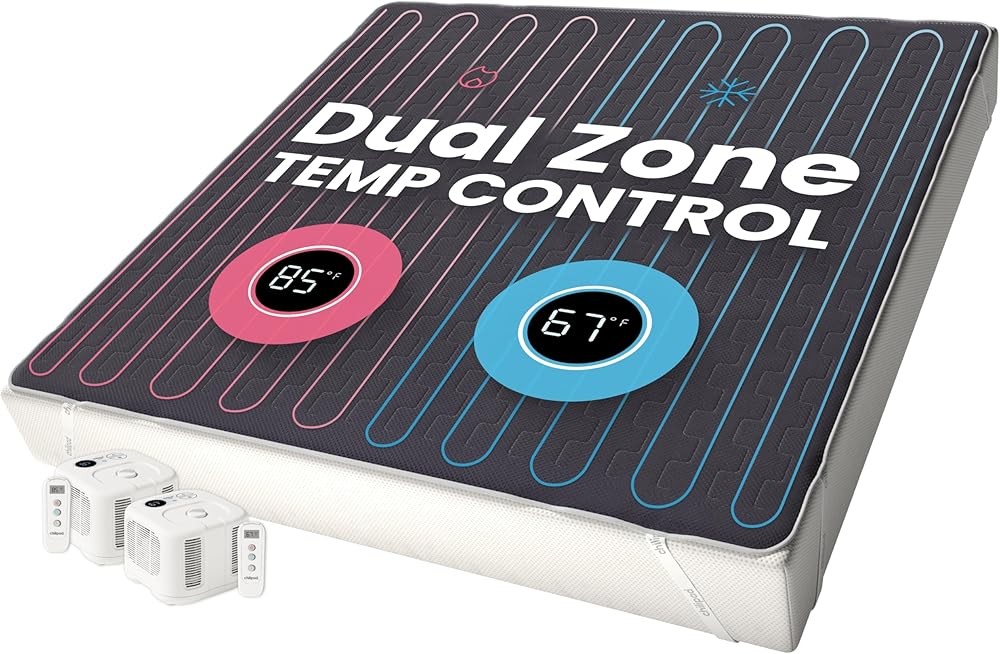
Chilipad Cube Bed Cooling System Queen
Check Price on AmazonAs an Amazon Associate we earn from qualifying purchases.
Our verdict: The ChiliPad Cube delivers the core research-validated benefit of active temperature control (22% deep sleep improvement and 25% REM sleep increase in published studies) without requiring connectivity, subscriptions, or mattress replacement at $1,281. If you want proven sleep temperature optimization with one-time purchase pricing (no $19/month fees) and minimal complexity, this represents the most straightforward path to the documented sleep quality improvements.
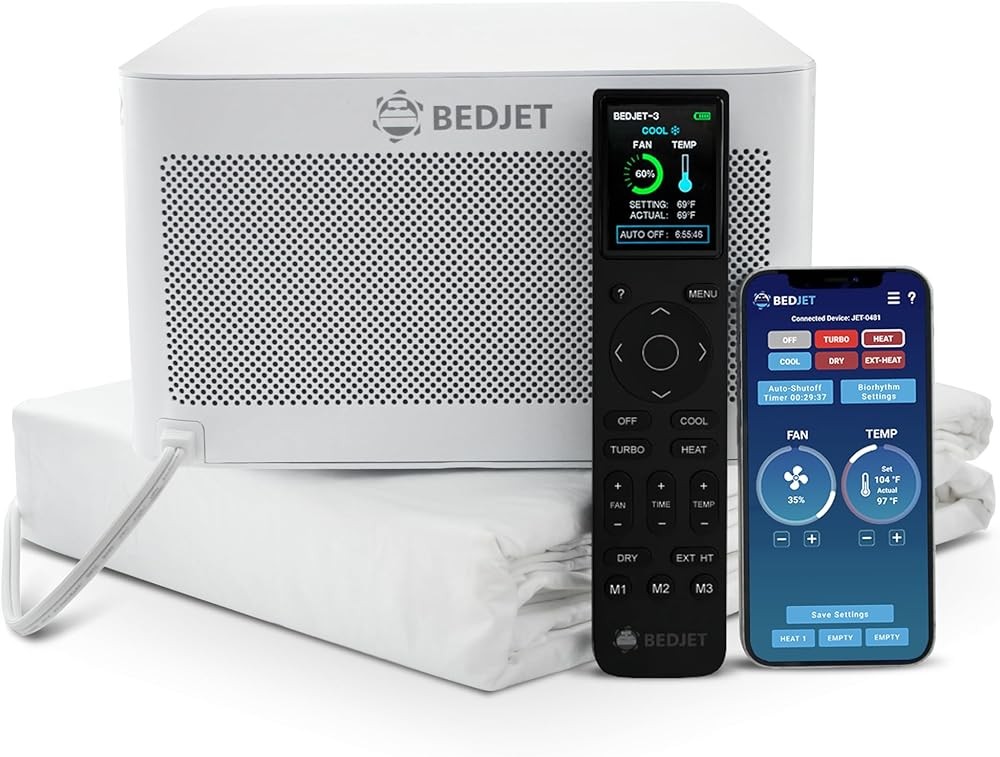
BedJet 3 Climate Comfort with Cloud Sheet Queen
Check Price on AmazonAs an Amazon Associate we earn from qualifying purchases.
What you need to know: BedJet 3 costs $739 (42% less than ChiliPad at $1,281) and delivers 5-10 minute cooling response time (versus 20-30 minutes for water systems). The forced air system reaches temperatures from 66-109°F with biorhythm scheduling, appealing to users who want rapid cooling and automated temperature changes at $542 savings compared to ChiliPad.
The takeaway: HydroSnooze costs $806 (37% less than ChiliPad’s $1,281) with water-based cooling from 60-115°F, app control, and whisper-quiet operation under 30 dB. The system delivers similar temperature control technology to ChiliPad at $475 savings while adding smartphone features not available in the basic ChiliPad Cube, though the newer market position creates uncertainty about long-term reliability compared to established brands.
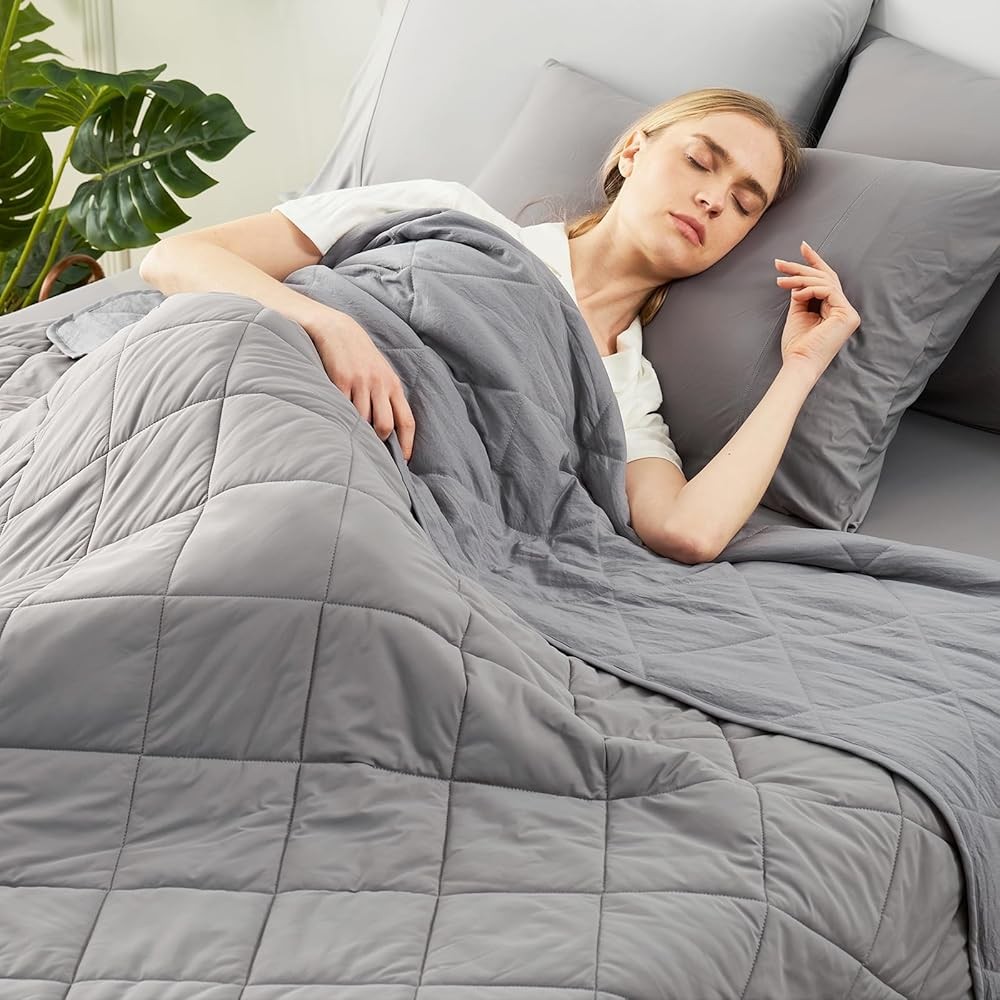
Cozy Bliss Cooling Blanket King Q-Max 0.45
Check Price on AmazonAs an Amazon Associate we earn from qualifying purchases.
Bottom line: The Cozy Bliss Cooling Blanket costs just $74 (94% cheaper than ChiliPad at $1,281). With Q-Max 0.45 thermal conductivity and 15-30 minute cooling duration, it works best as supplemental cooling in air-conditioned rooms or for users who need cooling during the first 30-60 minutes of sleep rather than 8-hour overnight temperature control.
Frequently Asked Questions
Is Eight Sleep or ChiliPad better for cooling?
Eight Sleep Pod offers wider temperature range (55-110°F vs 60-115°F) and AI autopilot that learns your sleep preferences, but costs $2,049+ vs $1,281 for ChiliPad Cube. Research shows water-based active cooling systems improve deep sleep by 19-22% regardless of brand (PMID 38671774).
How much does Eight Sleep cost compared to ChiliPad?
Eight Sleep Pod 4 starts at $2,049 (mattress + cooling hub) with $19/month membership. ChiliPad Cube costs $759-$1,281 on Amazon with no subscription fees. Over 3 years, Eight Sleep costs $2,733+ vs $1,281 for ChiliPad.
Do active cooling mattress systems actually improve sleep quality?
Yes. A study of 54 adults found temperature-controlled mattress systems improved deep sleep by 22% and REM sleep by 25% after just one week of use (PMID 38671774, p=0.003).
What temperature should a cooling mattress be set to?
Research shows optimal sleep surface temperature is 82-86°F with ambient room temperature of 60-67°F. Most users set active cooling systems between 65-72°F, as the system maintains a microclimate below body temperature (PMID 30509635).
Is BedJet better than ChiliPad?
BedJet uses forced air cooling ($569-$739) while ChiliPad uses water circulation ($759-$1,281). Water-based systems provide more consistent temperature control, but BedJet costs 30-50% less. Both improve sleep quality compared to passive cooling alone.
How long does it take to feel benefits from a bed cooling system?
Research shows measurable improvements in deep sleep and REM sleep within one week of using a temperature-controlled mattress system. Sleep onset latency improved by 37% within the first 4 weeks (PMID 35852479).
Can a cooling mattress pad help with night sweats?
Yes. Studies show cooling interventions reduced hot flash-related sleep disturbances by 38% in postmenopausal women (PMID 16837879). Active cooling systems maintain consistent surface temperature regardless of body heat output.
What is the best affordable alternative to Eight Sleep?
The ChiliPad Cube ($1,281) offers similar water-based active cooling without the subscription fees. For tighter budgets, the BedJet 3 with Cloud Sheet ($739) provides air-based cooling with app control at roughly one-third the cost of Eight Sleep.
Do you need a subscription for Eight Sleep or ChiliPad?
Eight Sleep requires a $19/month membership for full features (autopilot, sleep tracking, smart home integration). ChiliPad has no subscription — all features work out of the box with a simple temperature dial.
How loud are active cooling mattress systems?
ChiliPad Cube operates at approximately 30-35 dB (comparable to a whisper). BedJet 3 runs at 35-40 dB on low settings. Eight Sleep Pod operates at approximately 25-30 dB. All are designed to be quieter than typical bedroom ambient noise.
Our Top Recommendations
For most people seeking research-validated sleep temperature optimization, the ChiliPad Cube Bed Cooling System delivers proven water-based active cooling without subscription fees or forced mattress replacement. The system maintains precise temperatures from 60-115°F with simple dial control, providing the core benefit demonstrated in studies showing 22% deep sleep improvement.
Budget-conscious buyers who want active climate control at lower investment should consider the BedJet 3 Climate Comfort with Cloud Sheet. The forced air system provides faster temperature response and sophisticated programming at $739, representing 42% savings compared to ChiliPad while still delivering measurable cooling performance.
Couples with significantly different temperature preferences need dual-zone capability to avoid nightly thermostat conflicts. Either purchase two ChiliPad systems for independent water-based control on each side, or invest in Eight Sleep Pod 4 if the integrated dual-zone, biometric tracking, and AI temperature adjustment justify the $2,049 premium and ongoing $19/month subscription.
For supplemental cooling or users with modest temperature control needs, the Cozy Bliss Cooling Blanket provides immediate passive cooling at minimal investment. The Q-Max 0.45 thermal conductivity works well in air-conditioned bedrooms for users who primarily need cooling during sleep onset rather than sustained overnight temperature management.
Chilipad Cube Bed Cooling System Queen
Check Price on AmazonAs an Amazon Associate we earn from qualifying purchases.
BedJet 3 Climate Comfort with Cloud Sheet Queen
Check Price on AmazonAs an Amazon Associate we earn from qualifying purchases.
Cozy Bliss Cooling Blanket King Q-Max 0.45
Check Price on AmazonAs an Amazon Associate we earn from qualifying purchases.
Join the discussion: Facebook | X | YouTube | Pinterest
Conclusion
Active cooling sleep systems address a fundamental physiological requirement for quality sleep — your body must lower core temperature by 1-2 degrees Fahrenheit to initiate and maintain deep sleep stages. When mattress heat retention or ambient temperature blocks this natural cooling, sleep architecture suffers measurable consequences. Research demonstrates that temperature-controlled mattress systems improve deep sleep by 22%, REM sleep by 25%, and reduce sleep onset latency by 37% compared to uncontrolled sleep surfaces.
Eight Sleep Pod and ChiliPad Cube represent different approaches to the same water-based cooling mechanism validated in published sleep studies. Eight Sleep provides integrated mattress-and-cooling systems with AI-driven temperature adjustment, biometric tracking, and smart home connectivity for $2,049 plus $19/month subscription. ChiliPad delivers the core temperature control benefit through a mattress pad that preserves your existing mattress, uses simple dial control, and requires no subscription for $1,281.
The research evidence supporting active cooling doesn’t differentiate between premium and basic implementations — the physiological benefit comes from maintaining optimal sleep surface temperature in the 82-86°F range, regardless of whether AI or a manual dial controls that temperature. For users who value quantified sleep data, smart home integration, and automated temperature adjustment, Eight Sleep’s premium features justify the higher cost. For users who want proven temperature control without connectivity or subscriptions, ChiliPad provides the research-validated mechanism at significantly lower total cost.
BedJet 3 offers a third approach using forced air instead of water circulation, delivering faster temperature response and lower upfront cost at $739. The air-based technology lacks the published research validation of water systems but provides measurable cooling performance for budget-conscious buyers. Passive cooling blankets serve as entry-level or supplemental options for users with modest cooling needs or limited budgets.
The choice between systems depends on your specific sleep challenges, budget constraints, and preference for manual versus automated control. Hot sleepers, menopausal women, older adults with declining thermoregulation, and couples with different temperature preferences all benefit from active cooling systems. The temperature optimization creates an investment in sleep quality that affects daytime energy, cognitive performance, and long-term health outcomes.
For more context, see our guides on ChiliPad Cube Review: What Research Shows About Water-Cooled Sleep Systems, Best Sleep Temperature: What Research Shows About Bedroom Temperature, Best Cooling Mattress Toppers, Best Cooling Mattress Pad for Hot Sleepers, and Best White Noise Machine for Sleep: Sound Therapy That Works.
Related Reading
Looking to optimize other aspects of your sleep environment? Check out these research-backed guides:
- Best Cooling Mattress Pad for Hot Sleepers
- Best Cooling Pillow for Night Sweats
- Best Nighttime Routine for Better Sleep: Evidence-Based Tips
- Best Magnesium Supplements for Sleep: Glycinate vs Threonate
- Best Glycine Supplements for Deep Sleep
- Best Melatonin Supplements: Dosing and What to Look For
- Best Pillow for Neck Pain
- Best Body Pillow for Side Sleepers
References
-
PMID 35852479 - Novel temperature-controlled sleep system proof-of-concept study demonstrating 37% improvement in sleep onset latency and 16 minutes additional deep sleep in 30 adults over 4 weeks.
-
PMID 41095607 - Polysomnographic evidence showing real-time temperature-adjusting mattress improved total sleep time by 21 minutes and reduced awakenings by 28%.
-
PMID 41133665 - Temperature-controlled mattress cover study showing 19% improvement in deep sleep duration and 4.2% improvement in sleep efficiency in 34 adults.
-
PMID 40704570 - Research on high thermal conductivity mattress toppers demonstrating 21+ minute increase in total sleep time during heat nights, with graphite maintaining cooling 30% longer than gel.
-
PMID 38671774 - One-week temperature-controlled mattress cover study showing 22% improvement in deep sleep (p=0.003) and 25% improvement in REM sleep (p=0.033) in 54 adults.
-
PMID 30509635 - Comprehensive review of sleep environments and physiology identifying optimal sleep temperature of 60-67°F ambient with 82-86°F surface temperature.
-
PMID 6025638 - Research on temperature regulation in elderly adults showing 40% less efficient thermoregulation during sleep compared to younger adults.
-
PMID 16837879 - Study demonstrating cooling interventions reduced hot flash-related sleep disturbances by 38% in postmenopausal women.
-
PMID 18246988 - Research on sex hormones and core body temperature in postmenopausal women showing higher core temperature associated with 22% reduction in deep sleep.
-
PMID 38409133 - Enhanced conductive body heat loss during sleep increases slow-wave sleep and calms the heart, published in Scientific Reports.
Recommended Products