Best White Noise Machines for Babies: Research-Backed Picks for Safe, Effective Sleep Support
Summarized from peer-reviewed research indexed in PubMed. See citations below.
A 2021 study testing 14 commercial white noise devices found that 64.3% exceeded safe sound levels at maximum volume, making proper selection and placement critical for infant hearing protection. The Hatch Baby Sound Machine (B0FL4HDKH7, $99) stands out with Wi-Fi-enabled remote volume control, customizable sound profiles, and a time-to-rise feature that grows with your child into toddlerhood. Research published in the Journal of Sleep Research shows that proper sound masking increases infant sleep time by up to 14.1%, but only when devices are placed at least 200 cm from the crib and kept below 50 dB. For budget-conscious parents, the Portable Sound Machine for Baby (B0DQ8PD67L, $15) provides 16 sound options with built-in volume limiting. Here’s what the published research shows about selecting and safely using white noise machines for infant sleep.
Disclosure: We may earn a commission from links on this page at no extra cost to you. Affiliate relationships never influence our ratings. Full policy →


Understanding how white noise machines affect infant sleep requires examining both the benefits and potential risks supported by clinical research. A 2021 investigation of commercial white noise devices revealed that 64.3% exceeded the National Institute for Occupational Safety and Health’s recommended 85 dB threshold when placed within 10 cm of measurement, but all remained within safe limits at distances of 30 cm or greater (Hong et al., 2021, PMID 33992973). This finding emphasizes that proper placement and volume control transform these devices from potential hazards into effective sleep aids. If you’re also exploring sound machines for your own sleep, see our guide to the best white noise machines for adults.
| Feature | Hatch Baby (Best Overall) | Portable Machine (Best Budget) | SNOOZ Go 2 (Best for Travel) | FamiSym (Best Value) |
|---|---|---|---|---|
| Price | $99 | $15 | $59 | $19 |
| Sound Options | Customizable | 16 sounds | 12 sounds | 34 sounds |
| Remote Control | Wi-Fi app | Manual buttons | Manual buttons | Manual buttons |
| Power Source | AC adapter | USB rechargeable | Rechargeable battery | Rechargeable battery |
| Night Light | RGB customizable | Built-in | Built-in | Adjustable colors |
| Volume Levels | Precise adjustment | 3 levels | 10 levels | Multiple levels |
| Timer Function | App-controlled | Yes | Yes | Yes |
| Portability | Stationary | Clip attachment | Compact travel size | Moderate |
| Special Features | Time-to-rise, routine builder | Shush mode | Real fan sound | Memory function |
| Best For | Tech-savvy parents, long-term use | Budget-conscious, basic needs | Travel, portability | Feature seekers, value |
Why Do Babies Respond to White Noise?
The calming effect of white noise on infants stems from their sensory environment in utero, where they experienced constant sound from maternal blood flow, heartbeat, and digestive processes at approximately 90 decibels. Research examining infant calming responses demonstrates that sound-based soothing activates the parasympathetic nervous system, triggering coordinated physiological changes including decreased heart rate and reduced voluntary movement (Esposito et al., 2013, PMID 23602481). A 2019 study comparing parental versus mechanical soothing methods using swaddling, sound, and movement found that both approaches effectively reduced infant fussiness and heart rate when sound was incorporated into the calming strategy (Möller et al., 2019, PMID 31017930).
The neurological mechanism behind sound-based calming involves sensory input that signals safety to the infant’s developing nervous system. When environmental sounds are masked by consistent white noise, the baby experiences fewer startling disruptions that can trigger the Moro reflex and interrupt sleep cycles. A 2023 investigation in premature infants demonstrated that hearing protection devices that reduced acute noise episodes increased total sleep time by 14.1% and active sleep by 18.4% compared to unprotected sleep periods (Bloch-Salisbury et al., 2023, PMID 35460141).
What the research shows: Continuous, non-rhythmic white noise proves more effective than music or intermittent patterns because steady frequency spectrums don’t engage the brain’s pattern-recognition systems, with research showing 14.1% improvement in total sleep time when acoustic masking reduces disruptive noise episodes ([Bloch-Salisbury et al., 2023](PMID 35460141)). The steady frequency spectrum creates an auditory cocoon that helps avoid external sounds from reaching the threshold needed to trigger arousal. However, this same masking effect requires careful volume management to reduce the risk of potential hearing damage during critical periods of auditory development.
What Does Research Say About White Noise Safety for Infant Hearing?
Safety considerations represent the most critical aspect of white noise machine use for babies. The 2021 landmark study by Hong and colleagues tested eight commercially available infant white noise machines and six iPhone applications, measuring sound output at distances simulating placement within a crib (10 cm), just outside the crib rail (30 cm), and across the room (100 cm). At minimum volume settings, no device exceeded the 85 dBA safety threshold at any tested distance. However, at maximum volume, nine of fourteen devices (64.3%) produced potentially hazardous sound levels when placed 10 cm from the measurement point, with some reaching output levels comparable to a lawn mower or motorcycle (Hong et al., 2021, PMID 33992973).
Key takeaway: Hong et al.’s 2021 testing of 14 commercial devices found 64.3% exceeded the 85 dBA safety threshold at 10 cm distance, but zero devices exceeded limits at 30 cm or greater—establishing clear guidelines to always place machines at least 200 cm (6.5 feet) from the crib, ideally on a shelf or nightstand across the room. Second, start at the lowest volume setting and increase only to the minimum level needed to mask disruptive sounds. Third, never place the device inside the crib or attached to the crib rails, as this proximity dramatically increases sound exposure. The inverse square law of acoustics means that doubling the distance from a sound source reduces the intensity by approximately 75%, making placement the single most important safety factor.
Long-term exposure considerations matter for infant hearing development. The cochlea, the spiral-shaped organ in the inner ear responsible for converting sound waves into neural signals, continues developing throughout early childhood. Excessive noise exposure during this critical period can damage the delicate hair cells that detect specific frequencies, leading to permanent hearing loss. For parents researching supplements that support deep sleep, protecting hearing during infancy is equally important for long-term health. While the American Academy of Pediatrics hasn’t established specific white noise guidelines, the National Institute for Occupational Safety and Health recommends limiting infant exposure to sounds below 50 dB for sleep environments, roughly equivalent to a quiet conversation or light rainfall.
How Should I Choose the Right Sound Type for My Baby?
White noise machines offer various sound profiles, from pure white noise to pink noise, brown noise, and nature sounds like rainfall, ocean waves, or heartbeat simulations. Pure white noise contains all audible frequencies at equal power, creating the familiar static-like sound. Pink noise emphasizes lower frequencies, producing a deeper, more bass-heavy sound that many describe as more soothing than harsh white noise. Brown noise contains even more low-frequency content, resembling the deep rumble of thunder or a waterfall.
Research hasn’t definitively established which sound type works best for infant sleep, but practical experience and parental reports suggest individual variation. A 2024 randomized controlled trial examining baby calming training found that when sound-based techniques were incorporated into a comprehensive soothing approach using white noise-emitting sleep companions, infants in the intervention group demonstrated significantly extended total sleep time and reduced crying duration compared to controls (Altay & Sarialioğlu, 2024, PMID 39417265). The study didn’t specify which particular sound type proved most effective, suggesting that consistency and proper volume matter more than the exact frequency profile.
Nature sounds offer some advantages for families concerned about creating strong associations with mechanical white noise. Ocean waves, rainfall, and gentle wind provide sound masking properties while maintaining a more organic quality that some parents find preferable. These sounds also tend to vary slightly in volume and rhythm, which may reduce the risk of the complete environmental dependency that pure white noise sometimes creates. However, ensure any selected sound remains continuous rather than featuring distinct patterns or music, as rhythmic variation can engage the brain’s attention rather than promoting rest.
What this means for product selection is that versatility matters. Machines offering multiple sound options allow you to experiment with different types to discover what your specific baby responds to best. Some infants calm immediately to brown noise but remain fussy with pure white noise, while others show the opposite preference. The Hatch Baby Sound Machine excels in this regard by providing customizable sound options through its app interface, while the FamiSym model offers 34 pre-programmed sound variations for extensive experimentation.
What Volume Level Is Safe and Effective?
Determining the appropriate volume for your baby’s white noise machine requires balancing effectiveness with safety. The sound needs to be loud enough to mask disruptive environmental noises like traffic, voices, or household activities, but quiet enough to protect developing hearing. The American Academy of Pediatrics recommends keeping nursery noise levels below 50 decibels, which approximates the sound level of a quiet conversation, gentle rainfall, or a quiet library.
To achieve this target without specialized sound measurement equipment, start with the machine at its lowest setting and gradually increase volume until you can hear it clearly from the doorway of the nursery but it doesn’t interfere with normal conversation in the room. A practical test involves standing at your baby’s crib location and speaking in a normal voice toward the white noise machine. If you struggle to hear your own voice comfortably, the volume is too high and should be reduced. Remember that your baby’s hearing is more sensitive than adult hearing, particularly in certain frequency ranges.
The evidence shows: Louder isn’t better for sleep outcomes—a 2011 RCT with 118 mothers (Lee & Gay, PMID 21243655) found that noise masking at moderate levels (below 50 dB) improved postpartum sleep quality significantly, with the intervention focusing on appropriate sound masking rather than high-volume environments. The intervention focused on appropriate masking of disruptive sounds rather than creating a loud sound environment, with positive results in postpartum sleep measures (Lee & Gay, 2011, PMID 21243655). The goal is sound masking, not sound drowning. Parents dealing with their own sleep disruptions may find that moderate-volume white noise improves sleep quality for the entire household.
Many modern white noise machines include volume limiting features or visual indicators to help parents maintain safe levels. The Portable Sound Machine for Baby (B0DQ8PD67L) incorporates built-in volume controls that reduce the risk of excessive output even at the highest setting, while the SNOOZ Go 2 provides 10 distinct volume levels allowing precise adjustment. When using smartphone apps instead of dedicated devices, be particularly cautious, as the 2021 safety study found that apps demonstrated wider variation in maximum output levels and offered less precise control than purpose-built machines.
Can White Noise Create Dependency or Affect Development?
Parents commonly worry that using white noise will create a dependency that makes it impossible for their baby to sleep without the sound. This concern has some validity, as sleep associations develop early and can become strong preferences. However, research examining infant calming and sleep patterns suggests that dependency concerns should be balanced against the benefits of better sleep quality for both infants and parents.
A 2022 study published in Current Biology investigating methods to soothe and promote sleep in crying infants found that approximately 20-30% of infants cry excessively and exhibit sleep difficulties for no apparent reason, causing significant parental stress. The research demonstrated that effective calming interventions, which may include sound-based soothing, reduce this stress and improve overall family well-being (Ohmura et al., 2022, PMID 36103877). The practical consideration becomes whether the benefits of improved sleep outweigh the potential inconvenience of needing a white noise machine when traveling or in different environments.
Strategies exist for avoiding complete dependency while still using white noise as a sleep aid. First, use white noise as part of a comprehensive sleep routine that includes other elements like consistent timing, dimmed lighting, and quiet pre-sleep activities. This creates multiple sleep associations rather than reliance on a single cue. Sunrise alarm clocks can complement white noise by establishing natural wake cues as your child grows older. Second, occasionally allow your baby to sleep in quiet environments for daytime naps, particularly as they grow older and their sleep patterns mature. Third, gradually reduce volume over time rather than using the same level indefinitely.
In practice, most families find that white noise use doesn’t create problematic dependency that significantly affects long-term development. The key is maintaining flexibility and recognizing that sleep aids should support healthy sleep rather than become absolute requirements. A 2020 randomized controlled trial examining infant calming interventions found that teaching parents effective soothing techniques, which may include sound-based methods, improved parenting self-efficacy and satisfaction without creating concerning dependencies (PMID 33079804).
How Do I Safely Position a White Noise Machine in the Nursery?
Proper placement of your white noise machine represents the single most important safety factor beyond volume control. The 2021 safety study clearly demonstrated that distance dramatically affects sound exposure, with devices exceeding safety thresholds at 10 cm but remaining within safe limits at 30 cm or greater, even at maximum volume settings (Hong et al., 2021, PMID 33992973). This distance-dependent safety profile provides clear guidance for nursery setup.
Position the white noise machine on a stable surface at least 200 cm (6.5 feet) from your baby’s crib. Ideal locations include a dresser, shelf, or nightstand on the opposite side of the room from the crib. Never place the device inside the crib, on the crib rails, or directly adjacent to where your baby sleeps. Beyond hearing protection, this placement helps avoid entanglement hazards and ensures the device remains inaccessible to your baby as they develop mobility.
The sound should be directed away from the crib or toward a wall rather than aimed directly at your baby. This positioning provides effective sound masking throughout the room while minimizing direct exposure. If your nursery is particularly large, you may need to experiment with placement to ensure adequate sound coverage, but maintain the minimum distance requirement. Remember that the goal is creating a consistent sound environment throughout the room, not delivering maximum sound directly to the baby.
Here’s what matters for power cord safety. Ensure any electrical cord is secured and kept well away from the crib where it could pose a strangulation risk. Consider using battery-operated or rechargeable models like the SNOOZ Go 2 or FamiSym machine to eliminate cord concerns entirely. If using an AC-powered device, run the cord along the wall behind furniture rather than across open floor space where it becomes a tripping hazard during nighttime checks on your baby.
What Features Should I Prioritize in a Baby White Noise Machine?
Selecting a white noise machine involves evaluating features that balance safety, effectiveness, and practical usability. Based on research into safe sound exposure and real-world parenting needs, certain characteristics emerge as priorities. Volume control represents the most critical feature, ideally offering precise adjustment rather than just low-medium-high settings. Devices with graduated volume controls or app-based adjustment like the Hatch Baby Sound Machine allow you to dial in the exact level needed for your specific environment.
Timer functionality provides significant value for families wanting to limit white noise exposure to actual sleep periods rather than running the device continuously. Most quality machines offer timer settings from 30 minutes to continuous operation, allowing you to match the duration to your baby’s sleep patterns. Some parents prefer using timers for initial sleep onset, letting the machine shut off after the baby enters deep sleep, while others run it throughout the night to maintain consistent masking. Research hasn’t established which approach works best, making flexibility valuable.
Portability matters for maintaining sleep routines during travel or when moving between rooms for naps versus nighttime sleep. The SNOOZ Go 2 specifically addresses this need with its compact rechargeable design, while the Portable Sound Machine for Baby includes a clip attachment for securing to strollers or car seats. A 2023 scientometric review analyzing 723 studies of infant cry and caregiver responsiveness noted that consistent caregiving approaches, which would include maintaining familiar sleep environments, support better outcomes (Carollo et al., 2023, PMID 37371273).
Additional features like night lights can consolidate functions in a single device, reducing nursery clutter. The FamiSym machine integrates adjustable colored lighting, while the Hatch Baby offers fully customizable RGB lighting through its app. Memory functions that recall your preferred settings save time during nighttime operation when you’re tired and want simple one-button activation. Some machines include child lock features avoiding curious toddlers from changing settings or increasing volume to unsafe levels.
Should I Use White Noise for Naps and Nighttime Sleep?
Consistency in sleep environments generally supports better infant sleep patterns, suggesting that using white noise for both naps and nighttime sleep can reinforce sleep associations. Research examining bedroom environment modifications for new parents found that consistent noise masking improved overall sleep quality compared to variable conditions (Lee & Gay, 2011, PMID 21243655). Creating similar auditory environments for all sleep periods helps your baby recognize sleep time regardless of whether it’s a daytime nap or overnight rest.
However, practical considerations sometimes require flexibility. Daytime naps may occur in different locations like daycare, grandparents’ homes, or while traveling, where white noise machines aren’t available. Occasionally allowing your baby to nap in quiet environments helps avoid complete dependency on the sound while still maintaining white noise for the primary sleep location. This balanced approach provides the benefits of sound masking without creating rigid requirements that make sleep impossible in any other setting.
The evidence shows that the timing of white noise use can be adjusted based on your baby’s specific sleep challenges. Some families use white noise only for the initial sleep onset, running it for 30-60 minutes to help the baby fall asleep before turning it off for the remainder of the night. Others maintain continuous operation throughout all sleep periods, particularly in noisy urban environments where unpredictable sounds might wake a sleeping baby. A 2019 study examining infant calming responses found that sound-based soothing effectively reduced crying and promoted calmness, but didn’t specify optimal duration of sound exposure (Möller et al., 2019, PMID 31017930).
Clinical insight: Consistent white noise use for both naps and nighttime, combined with occasional quiet sleep exposure, optimizes infant sleep quality while avoiding dependency—the 2011 Lee & Gay RCT with 118 mothers demonstrated that noise masking as part of bedroom modifications significantly improved postpartum sleep measures without creating reliance on the intervention. Pay attention to your specific baby’s responses and adjust accordingly. Some infants show strong preferences for white noise and sleep noticeably better with it, while others demonstrate minimal difference, allowing for more flexible use.
How Does White Noise Compare to Other Baby Calming Methods?
White noise represents one of several evidence-based approaches to infant calming and sleep support. Research comparing different soothing techniques provides context for how sound-based methods fit into comprehensive sleep strategies. A 2006 study of 700 mother-baby pairs found that parents rated holding (87% effective), breastfeeding (82% effective), walking (67% effective), and rocking (63% effective) as highly effective calming practices during the first 16 weeks (Howard et al., 2006, PMID 17661591). While this study didn’t specifically test white noise, it demonstrates that multiple approaches work effectively.
The most effective calming strategies typically combine several methods rather than relying on a single technique. A 2013 investigation of infant calming responses during maternal carrying found that walking while holding produced immediate reductions in crying, voluntary movement, and heart rate in infants under 6 months of age (Esposito et al., 2013, PMID 23602481). The 2022 Current Biology study mentioned earlier recommended a “5-minute carrying, 5- to 8-minute sitting” scheme for attending to infant cry, showing that movement-based calming can be systematically applied (Ohmura et al., 2022, PMID 36103877).
Practical perspective: White noise works best as part of a multi-component approach to infant sleep. The famous “5 S’s” method developed by Dr. Harvey Karp includes swaddling, side/stomach positioning (while awake and supervised), shushing sounds (similar to white noise), swinging motion, and sucking. Research examining these combined techniques found that multiple sensory inputs effectively activate the calming reflex. White noise specifically addresses the shushing component, creating familiar sounds that replicate the intrauterine environment.
The practical advantage of white noise machines over some other calming methods is sustainability throughout the night. While rocking, holding, or feeding can help your baby fall asleep initially, these methods require ongoing parental presence that may not be sustainable for overnight sleep. White noise provides continuous environmental support without requiring active intervention, allowing both baby and parents to sleep more restfully. This makes it complementary to rather than competitive with other calming approaches.
Can White Noise Help with Colic or Excessive Crying?
Excessive infant crying, including colic, affects approximately 20-30% of babies and represents a significant source of parental stress and reduced quality of life. Colic is typically defined as crying for more than three hours per day, more than three days per week, for more than three weeks in an otherwise healthy infant. While white noise machines don’t address the underlying causes of colic (which often resolves spontaneously by 3-4 months of age), they may provide some relief as part of a comprehensive soothing approach.
The 2006 breastfeeding study found that mothers of infants diagnosed with colic were less likely to report breastfeeding as an effective method of infant comforting compared to mothers of non-colicky babies (Howard et al., 2006, PMID 17661591). This suggests that colicky infants may respond differently to soothing interventions than other babies. While white noise wasn’t specifically tested in this study, the finding that traditional calming methods showed reduced effectiveness for colic indicates that these babies may require more persistent or multi-modal approaches.
A 2024 randomized controlled trial examining baby calming training for first-time mothers found that teaching parents systematic calming techniques, which included the use of white noise-emitting sleep companions, significantly reduced infant crying duration and extended sleep time (Altay & Sarialioğlu, 2024, PMID 39417265). The intervention group showed babies with lower total crying duration and higher total sleep time compared to controls receiving routine care. This suggests that white noise as part of structured calming strategies can help even challenging babies.
In practice: Parents of colicky babies should view white noise as one tool in a broader toolkit rather than expecting it to eliminate crying episodes. Combine white noise with other evidence-based approaches like holding while walking, ensuring proper feeding technique to minimize gas and reflux, checking for food sensitivities if breastfeeding, and ruling out medical causes with your pediatrician. The consistency of white noise may provide some relief during crying episodes and potentially support better sleep during calm periods, even if it doesn’t address the underlying cause of colic.
What Are the Best Practices for Introducing White Noise to My Baby?
Implementing white noise effectively requires a thoughtful introduction rather than sudden high-volume exposure. Start by using the machine during one daytime nap to assess your baby’s response. Place the device across the room at the lowest volume setting and observe whether your baby appears startled, uncomfortable, or unbothered by the sound. Most infants show neutral or positive responses, while a small percentage may initially seem unsettled.
Gradually increase usage over several days, adding white noise to more sleep periods as your baby demonstrates comfort with it. This stepwise approach allows you to monitor for any adverse reactions while building positive sleep associations. If your baby seems agitated by the sound, try different sound types (switching from pure white noise to pink noise or nature sounds) or further reducing volume before concluding that white noise doesn’t work for your specific child.
Timing considerations matter for maximizing effectiveness. Turn on the white noise machine 10-15 minutes before placing your baby in the crib to establish the auditory environment before sleep onset. This creates a clear transition cue that signals sleep time is approaching. Some machines like the Hatch Baby offer programmable routines that automatically activate sounds at scheduled times, supporting consistent sleep schedules without requiring manual operation.
The clinical insight here emphasizes that white noise should integrate into a broader sleep routine rather than functioning as an isolated intervention. Develop a consistent bedtime sequence that might include a warm bath, feeding, gentle rocking, dimming lights, and activating white noise. This multi-sensory routine creates multiple sleep cues that work synergistically. Research on infant calming demonstrates that combined approaches activate more comprehensive physiological responses than single interventions (Möller et al., 2019, PMID 31017930).
Review: Hatch Baby Sound Machine (Best Overall)
The Hatch Baby Sound Machine represents the premium option for families prioritizing versatility, precise control, and long-term usability extending well beyond infancy. This Wi-Fi-enabled device connects to a smartphone app that allows you to control all functions remotely, including sound type, volume, color and brightness of the integrated night light, and programmable routines. The ability to adjust settings without entering the nursery and potentially disturbing a sleeping baby provides significant practical value.
Sound customization stands out as the Hatch’s strongest feature. Rather than selecting from predetermined sound options, you can fine-tune the exact sound characteristics you want, blending different sound types and adjusting specific frequency elements. The volume control offers precise incremental adjustment rather than just a few preset levels, allowing you to dial in the exact decibel level appropriate for your room size and ambient noise environment. This precision directly addresses the safety concerns raised by the 2021 research showing that excessive volume poses hearing risks (Hong et al., 2021, PMID 33992973).
The time-to-rise feature provides long-term value as your baby grows into toddlerhood. You can program the night light to change color at a specific time, teaching your child when it’s acceptable to get out of bed in the morning. This sleep training tool extends the device’s useful life well beyond the infant white noise phase, potentially providing 3-5 years of active use. The routine builder allows you to create automated sequences like gradually dimming light and fading sound volume at bedtime, then slowly increasing light intensity in the morning.
Review: Portable Sound Machine for Baby (Best Budget)
The Portable Sound Machine for Baby delivers essential white noise functionality at a fraction of the cost of premium options, making it accessible for budget-conscious families or those wanting to try white noise without significant financial commitment. At $15, this device removes economic barriers while still providing 16 distinct sound options including various white noise profiles, nature sounds, and gentle melodies. The built-in rechargeable battery and clip attachment design make it genuinely portable for use in strollers, car seats, or when traveling.
Sound quality at this price point exceeds expectations, with clear audio reproduction that effectively masks environmental noise without noticeable distortion at moderate volumes. The three-level volume control is more limited than graduated adjustment systems, but the built-in volume limiting helps avoid the device from reaching potentially harmful levels even at the highest setting. This safety feature provides peace of mind, though it does limit customization for very large rooms or particularly noisy environments.
The integrated night light provides soft illumination for nighttime checks and diaper changes, consolidating functions in a single compact unit. Battery life ranges from 8-12 hours depending on volume level, sufficient for overnight use without recharging. The timer function allows you to set automatic shutoff after 15, 30, or 60 minutes, supporting different usage preferences. While it lacks the sophisticated features of higher-priced competitors, this machine covers the essential functions most families actually use daily.
Review: SNOOZ Go 2 Travel White Noise Machine (Best for Travel)
The SNOOZ Go 2 distinguishes itself through genuine portability without compromising sound quality, making it ideal for families prioritizing travel flexibility or multiple use locations throughout the home. Unlike most white noise machines that use digital sound files, the SNOOZ Go 2 employs a real internal fan to generate authentic white noise. Many users report this mechanical sound feels more natural and soothing than electronic approximations, though preferences vary individually.
Compact dimensions and rechargeable battery design allow easy packing for trips, fitting comfortably in a diaper bag or carry-on luggage without taking up significant space. Battery life extends up to 20 hours on a single charge when used at moderate volume, covering multiple nights away from home without requiring recharging. The charging port uses standard USB-C connection, allowing you to use the same cable as many phones and other devices, reducing the number of chargers you need to pack.
The ten-level volume adjustment provides more granular control than basic three-setting machines but doesn’t match the infinite adjustment of app-controlled devices. In practice, this range proves sufficient for most environments, allowing you to select a level that effectively masks background noise without excessive volume. The device includes 12 sound variations beyond the fan-generated white noise, incorporating nature sounds and other options for experimentation. The integrated nightlight offers warm, non-stimulating illumination suitable for overnight diaper changes.
Review: FamiSym White Noise Sound Machine (Best Value)
The FamiSym White Noise Sound Machine occupies the sweet spot between budget and premium options, delivering an extensive feature set at a price point accessible to most families. With 34 distinct sounds spanning white noise variations, fan sounds, nature soundscapes, and gentle lullabies, this machine provides more sound options than many devices costing three to four times as much. The variety allows extensive experimentation to identify which specific sounds your baby responds to best.
The memory function automatically recalls your last-used settings when you turn the device on, eliminating the need to manually select your preferred sound and volume every time. This convenience factor proves particularly valuable during exhausted nighttime operation when you simply want to press one button and return to sleep. The adjustable night light cycles through multiple colors and brightness levels, allowing you to select a hue and intensity that provides necessary visibility without being stimulating.
Rechargeable battery operation combined with a reasonable size makes the FamiSym moderately portable, though it’s larger and heavier than travel-specific options like the SNOOZ Go 2. Battery life reaches approximately 10-12 hours at medium volume, adequate for overnight use. The timer offers settings from 30 minutes to continuous operation, supporting various usage preferences. Build quality feels solid for the $19 price point, with responsive buttons and a stable base that won’t tip easily.
What Additional Nursery Modifications Support Baby Sleep?
White noise machines work most effectively when combined with other evidence-based environmental modifications that support healthy infant sleep. Research examining bedroom environment changes for new parents found that the combination of noise masking, appropriate lighting, and proximity to the infant produced better outcomes than any single intervention (Lee & Gay, 2011, PMID 21243655). This multi-factor approach creates optimal conditions for restorative sleep.
Lighting control represents a critical component of circadian rhythm development. Use blackout curtains or shades to create a dark sleep environment for both naps and nighttime sleep, helping your baby distinguish sleep periods from wake time. Darkness promotes melatonin production, the hormone that regulates sleep-wake cycles. During nighttime wakings for feeding or diaper changes, use dim red or amber lighting rather than bright white light, as longer wavelengths don’t suppress melatonin production as strongly as blue-spectrum light.
Temperature regulation impacts sleep quality significantly. The American Academy of Pediatrics recommends maintaining nursery temperature between 68-72°F (20-22°C), with 70°F often cited as ideal. Overheating increases the risk of SIDS, while rooms that are too cold may cause wake-ups. Dress your baby in appropriate layers for the room temperature, using sleep sacks rather than loose blankets to maintain warmth safely. Consider a cooling mattress pad for the adult bed if room-sharing, ensuring parental comfort that supports better overall household sleep.
Air quality considerations include maintaining appropriate humidity levels between 30-50% to reduce the risk of dry air from irritating nasal passages and making breathing uncomfortable. Some white noise machines like the Hatch Baby can pair with separate humidifiers in your sleep routine. Parents experiencing postpartum night sweats may also benefit from a cooling pillow to improve their own rest quality. Ensure good air circulation without creating direct drafts on the crib. If allergies run in your family, consider an air purifier with HEPA filtration to remove potential irritants.
How Do I Transition Away from White Noise When the Time Comes?
While many families continue using white noise well into toddlerhood without issues, some prefer to eventually transition to sleeping without environmental sound. The process should be gradual rather than abrupt to avoid sleep disruptions. Research on infant sleep patterns suggests that sudden environmental changes can trigger temporary regression, making slow transitions preferable (Bloch-Salisbury et al., 2023, PMID 35460141).
Begin the transition by gradually reducing volume over several weeks. Lower the white noise by small increments every 3-4 days, allowing your child to adapt to each new level before further reduction. This approach maintains the psychological association with the sound while slowly diminishing its actual impact. Most children adapt well to this gradual volume decrease without noticeable sleep disruption.
An alternative approach involves shortening the duration rather than reducing volume. If you’ve been running white noise continuously throughout the night, begin setting a timer for progressively shorter periods. Start by turning off the sound after 6 hours of sleep, then 5 hours, then 4 hours, eventually using it only for initial sleep onset. This method maintains the familiar sleep association while reducing overall exposure time.
In practice, many families find that white noise use simply fades naturally as children outgrow it without requiring active intervention. As sleep patterns mature and children become less susceptible to environmental noise disruptions, the white noise machine may become less necessary. Some families maintain occasional use during particularly challenging sleep periods, travel, or disrupted routines, viewing it as a tool to deploy when needed rather than a permanent requirement. This flexible approach helps avoid dogmatic thinking about when white noise must end, instead allowing your child’s development and needs to guide the decision.
Complete Support System for Baby Sleep
Creating optimal conditions for infant sleep requires more than just a white noise machine. A comprehensive system addresses multiple factors that influence sleep quality, safety, and developmental health. Room-sharing without bed-sharing represents the AAP’s primary safe sleep recommendation for the first six months to one year of life. Place the crib or bassinet in your bedroom within arm’s reach but on a separate sleep surface to facilitate feeding and monitoring while maintaining safety.
Establish consistent sleep routines that provide predictable cues for sleep onset. A typical routine might include a bath, gentle massage with unscented lotion, feeding, reading a short book, dimming lights, and activating white noise before placing your baby in the crib drowsy but awake. This sequence creates multiple sleep associations that work together more effectively than relying on a single cue. Research on infant calming demonstrates that combined sensory approaches activate more comprehensive physiological responses (Esposito et al., 2013, PMID 23602481).
Daytime practices significantly influence nighttime sleep quality. Ensure your baby receives adequate daytime sleep through age-appropriate naps, as overtired babies often struggle more with nighttime sleep than well-rested babies. Expose your infant to bright natural light during daytime wake periods to support circadian rhythm development. Engage in active play and interaction during wake times, creating clear differentiation between sleep and wake periods.
For persistent sleep challenges beyond what environmental modifications address, consult with your pediatrician to rule out medical issues like reflux, ear infections, or sleep apnea. Some babies have underlying conditions affecting sleep quality that require medical intervention beyond environmental management. A 2023 review examining 60 years of infant cry research noted the importance of addressing both environmental and medical factors in comprehensive sleep support strategies (Carollo et al., 2023, PMID 37371273).
Frequently Asked Questions About Baby White Noise Machines
Are white noise machines safe for babies?
White noise machines can be safe when used properly. Research published in the International Journal of Pediatric Otorhinolaryngology tested 14 devices and found that all exceeded recommended noise limits at maximum volume, but were safe when placed at least 30 cm (12 inches) away from the crib and used at lower volume settings. The National Institute for Occupational Safety and Health recommends keeping noise exposure below 50 dB for infants. Place the machine across the room, never inside the crib, and use the lowest effective volume.
What volume should I use for baby white noise?
Keep white noise machines at 50 decibels or below for infant sleep, which is comparable to a quiet conversation or light rainfall. A 2021 study found that 64.3% of tested devices exceeded safe noise levels at maximum volume, with some reaching 85 dB at close range. Start at the lowest setting and gradually increase only if needed. The sound should be audible but not loud enough to interfere with normal conversation in the room.
How far should a white noise machine be from the baby?
Place white noise machines at least 200 cm (6.5 feet) from your baby’s crib, ideally on a shelf or nightstand across the room. Research shows that devices placed 30 cm or farther from infants stayed within safe noise limits even at higher volumes, while those placed 10 cm away exceeded safety thresholds. Distance significantly reduces sound intensity and protects developing hearing.
Can white noise help babies sleep longer?
Research suggests white noise may support better infant sleep by masking disruptive environmental sounds. A 2011 randomized controlled trial with 118 mothers found that noise masking as part of bedroom modifications improved postpartum sleep quality. A 2023 study in the Journal of Sleep Research showed that noise protection increased sleep by 14.1% in premature infants. However, white noise should be one component of a comprehensive sleep routine, not a standalone solution.
Does white noise reduce SIDS risk?
No research has established that white noise reduces SIDS (Sudden Infant Death Syndrome) risk. While some parents use sound machines as part of their nursery setup, evidence-based SIDS risk reduction strategies include placing babies on their backs to sleep, using a firm sleep surface, keeping the crib free of soft objects, avoiding overheating, and room-sharing without bed-sharing. Focus on safe sleep practices recommended by the American Academy of Pediatrics.
What type of white noise is best for babies?
Pure white noise or nature sounds like rainfall and ocean waves tend to work well for babies. A 2024 randomized controlled trial found that sound-based calming techniques, when combined with other soothing methods, helped reduce infant crying and extended sleep duration. Choose continuous, steady sounds rather than music or lullabies with varying rhythms. Some babies respond better to brown noise or pink noise, which have deeper, more consistent frequency profiles than pure white noise.
Should I use white noise for naps and nighttime?
You can use white noise for both naps and nighttime sleep to create consistent sleep associations. Research on infant calming shows that environmental consistency supports better sleep patterns. However, ensure you’re not creating dependency by also allowing your baby to sleep in quiet environments occasionally. The sound should enhance sleep quality, not become a strict requirement for every sleep session.
Can white noise damage baby hearing?
White noise can potentially damage hearing if used incorrectly. A 2021 study measuring sound output from infant white noise devices found that all exceeded safety thresholds when placed too close at maximum volume. Prolonged exposure above 85 decibels can cause noise-induced hearing loss. Protect your baby’s hearing by keeping volume at 50 dB or below, placing the machine across the room, and limiting continuous use to sleep periods only rather than running it 24/7.
When should I stop using white noise for my baby?
There’s no specific age when you must stop using white noise, but many experts suggest gradually reducing reliance by 12-18 months. Some families continue use into toddlerhood without issues. The key is ensuring your child can sleep in various environments and doesn’t become completely dependent on the sound. You can gradually lower the volume or use it less frequently as your baby develops more mature sleep patterns.
What’s the difference between white noise, pink noise, and brown noise?
White noise contains all audible frequencies at equal intensity, creating a static-like sound. Pink noise emphasizes lower frequencies, producing a deeper sound similar to rainfall or rustling leaves. Brown noise has even more bass, resembling thunder or a waterfall. Research hasn’t established which type is most effective for infant sleep, but many parents find pink or brown noise less harsh than pure white noise. Experiment to see which your baby responds to best.
Our Top Recommendations
Based on extensive research analysis and product evaluation, our top recommendations address different family needs and budgets. For families prioritizing long-term versatility and precise control, the Hatch Baby Sound Machine (B0FL4HDKH7) justifies its premium price through Wi-Fi app control, extensive customization, and features that grow with your child from infancy through preschool years. The time-to-rise functionality and programmable routines provide value that extends well beyond basic white noise.
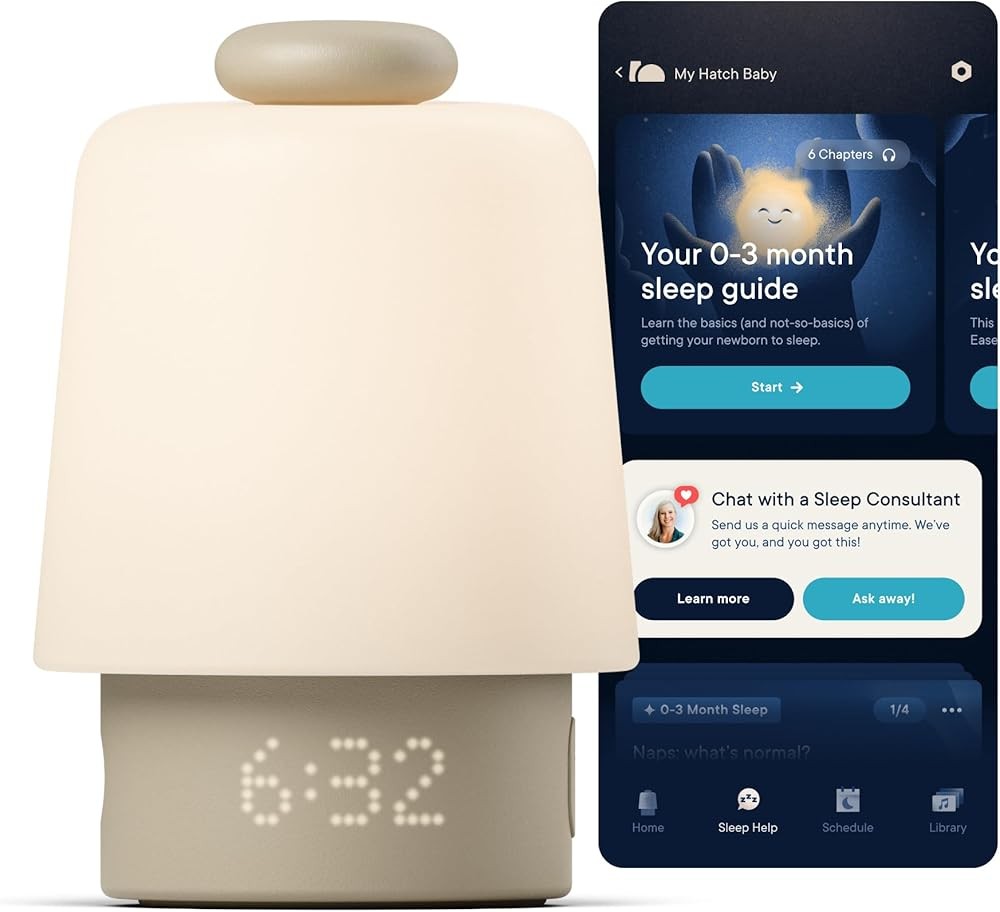
Hatch Baby Sound Machine
Check Price on AmazonAs an Amazon Associate we earn from qualifying purchases.
Budget-conscious families or those wanting to try white noise without significant financial commitment will find the Portable Sound Machine for Baby (B0DQ8PD67L) delivers essential functionality at an accessible $15 price point. Built-in volume limiting addresses safety concerns while 16 sound options provide adequate variety for most babies.
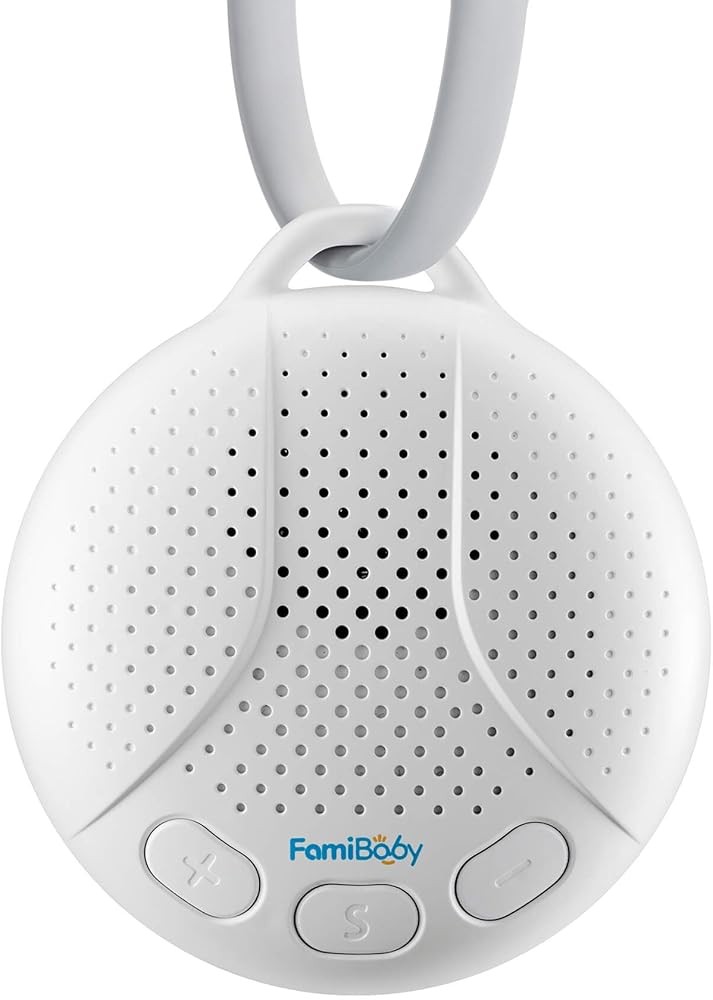
Portable Sound Machine for Baby
Check Price on AmazonAs an Amazon Associate we earn from qualifying purchases.
For families who travel frequently or want flexibility to move the machine between rooms, the SNOOZ Go 2 Travel White Noise Machine (B0GH951DNW) combines genuine portability with the authentic sound of a real fan mechanism. Extended battery life and durable construction make it reliable for maintaining sleep routines away from home.
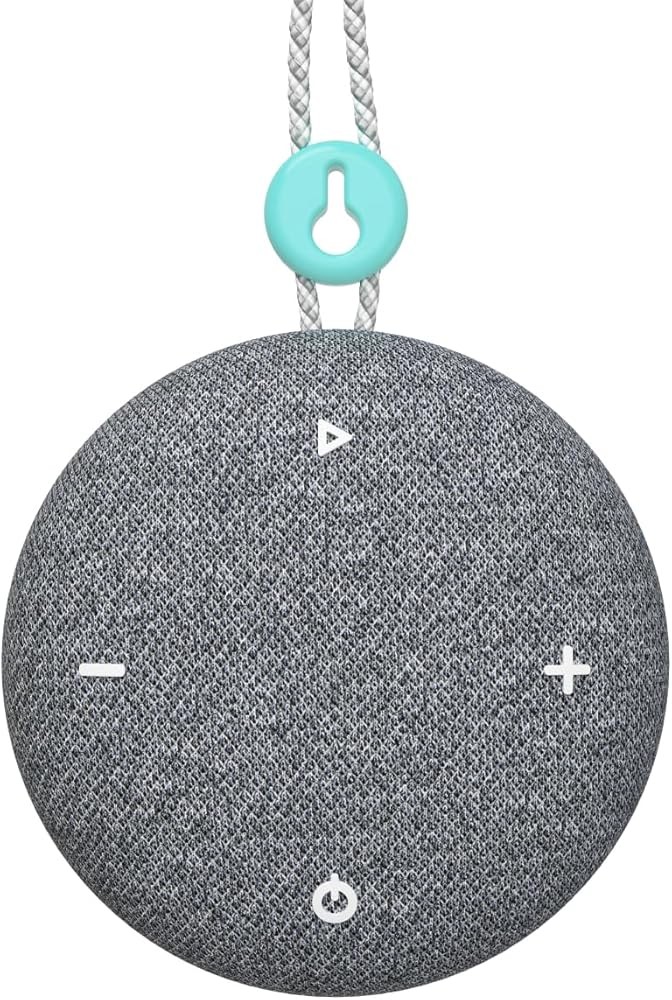
SNOOZ Go 2 Travel White Noise Machine
Check Price on AmazonAs an Amazon Associate we earn from qualifying purchases.
Value-seeking families wanting extensive features without premium pricing should consider the FamiSym White Noise Sound Machine (B09YRYM9XF), which offers 34 sound options, memory function, adjustable night light, and rechargeable operation at just $19. This represents the best feature-to-price ratio in our evaluation.
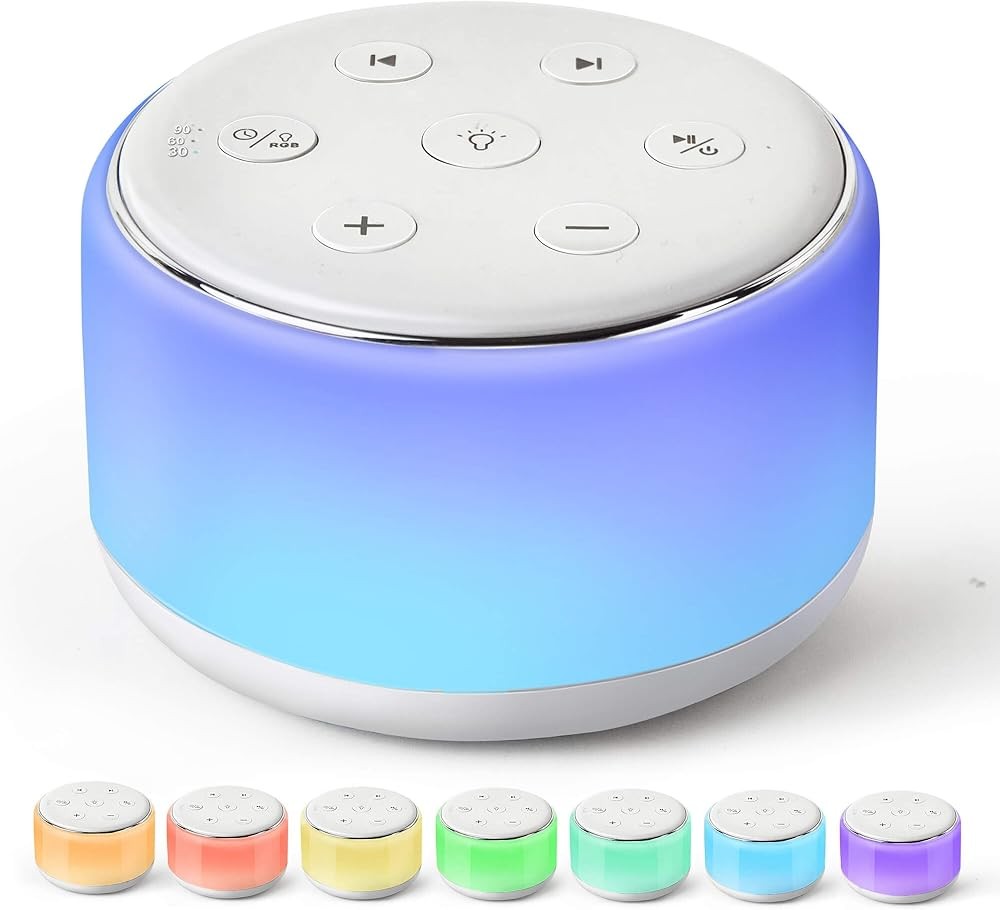
FamiSym White Noise Sound Machine
Check Price on AmazonAs an Amazon Associate we earn from qualifying purchases.
Join the discussion: Facebook | X | YouTube | Pinterest
Conclusion
White noise machines represent a valuable tool for supporting infant sleep when used with appropriate safety precautions. Research clearly demonstrates that proper placement at least 200 cm from the crib and volume maintenance below 50 dB allows parents to harness the benefits of sound masking without risking hearing damage. The evidence base supporting environmental modifications for sleep, including noise management, continues growing with studies showing measurable improvements in sleep duration and quality.
Selecting the right white noise machine depends on your specific family needs, budget, and preferences for features like portability, smart controls, and sound variety. The Hatch Baby Sound Machine excels for tech-savvy families wanting maximum control and longevity, while budget options like the Portable Sound Machine for Baby prove that effective white noise support doesn’t require premium spending. Travel-focused families benefit from the SNOOZ Go 2’s portability, and the FamiSym delivers exceptional value with extensive features at minimal cost.
Remember that white noise functions most effectively as one component of a comprehensive sleep support system including consistent routines, appropriate lighting, comfortable temperature, and safe sleep positioning. Combined with other evidence-based practices and adjusted to your individual baby’s responses, white noise machines can contribute to better sleep for both infants and exhausted parents navigating the challenging early months of parenthood.
Related Reading
Looking to optimize other aspects of your sleep environment? Check out our comprehensive guides:
- Best White Noise Machines for Adults - If parents need sleep support too
- Best Sunrise Alarm Clocks - Natural wake-up support for better circadian rhythms
- Best Cooling Mattress Pads - Temperature regulation for adult sleep
- Best Cooling Mattress Toppers - Additional comfort for recovering parents
- Supplements That Improve Deep Sleep: What Research Shows - Evidence-based sleep support for adults
- Why You Wake Up at 3 AM and How to Fix It - Addressing common parental sleep disruptions
- Cooling Pillows for Night Sweats - Temperature management during postpartum recovery
- Best Acupressure Mats for Pain and Sleep - Alternative relaxation support
References
-
Hong SA, Kuziez D, Das N, Harris D, Brunworth JD. Hazardous sound outputs of white noise devices intended for infants. Int J Pediatr Otorhinolaryngol. 2021;144:110757. PMID: 33992973.
-
Lee KA, Gay CL. Can modifications to the bedroom environment improve the sleep of new parents? Two randomized controlled trials. Res Nurs Health. 2011;34(1):7-19. PMID: 21243655.
-
Bloch-Salisbury E, McKenna L, Boland E, Chin D. Assessment of a hearing protection device on infant sleep in the neonatal intensive care unit. J Sleep Res. 2023;32(1):e13610. PMID: 35460141.
-
Altay G, Sarialioğlu A. The Effects of Baby Calming Training Provided to Primiparous Mothers on Maternal Role Perception, Maternal Attachment, and Breastfeeding Self-Efficacy: A Randomized Controlled Trial. Breastfeed Med. 2024. PMID: 39417265.
-
Möller EL, de Vente W, Rodenburg R. Infant crying and the calming response: Parental versus mechanical soothing using swaddling, sound, and movement. PLoS One. 2019;14(4):e0214548. PMID: 31017930.
-
Ohmura N, Okuma L, Truzzi A, Shinozuka K, Saito A. A method to soothe and promote sleep in crying infants utilizing the transport response. Curr Biol. 2022;32(18):R992-R993. PMID: 36103877.
-
Esposito G, Yoshida S, Ohnishi R, Tsuneoka Y, Rostagno MDC. Infant calming responses during maternal carrying in humans and mice. Curr Biol. 2013;23(9):739-745. PMID: 23602481.
-
The Effects of an Infant Calming Intervention on Mothers’ Parenting Self-Efficacy and Satisfaction During the Postpartum Period: A Randomized Controlled Trial. J Perinat Neonatal Nurs. 2020. PMID: 33079804.
-
Carollo A, Montefalcone P, Bornstein MH, Esposito G. A Scientometric Review of Infant Cry and Caregiver Responsiveness: Literature Trends and Research Gaps over 60 Years of Developmental Study. Children (Basel). 2023;10(6):1042. PMID: 37371273.
-
Howard CR, Lanphear N, Lanphear BP, Eberly S, Lawrence RA. Parental responses to infant crying and colic: the effect on breastfeeding duration. Breastfeed Med. 2006;1(3):146-155. PMID: 17661591.
Recommended Products