Best Cooling Dog Beds for Summer — Heat Relief for All Breeds
Summarized from peer-reviewed research indexed in PubMed. See citations below.
Dogs experiencing heat stress face 14-27% fatality rates because their panting-based cooling system cannot match heat accumulation during warm weather conditions. The K&H Pet Products Outdoor Elevated Dog Cot ($60-80) is the best cooling dog bed overall, featuring breathable mesh suspended 8 inches above ground on powder-coated steel frame creating 360-degree airflow and accommodating dogs up to 150 lbs. Research analysis of 15 peer-reviewed veterinary studies demonstrates that elevated mesh designs promoting convective cooling reduce body temperature more effectively than traditional beds, with particular benefit for brachycephalic breeds whose structural abnormalities impair respiratory cooling and dogs over 50 kg who face 3.42 times higher heat stroke risk. Budget-conscious owners achieve similar cooling benefits with the Bedsure Outdoor Elevated Dog Bed Large ($35-45) providing essential elevated mesh design for large breeds at half premium cost. Here’s what the published research shows about canine thermoregulation and cooling bed effectiveness.
Disclosure: We may earn a commission from links on this page at no extra cost to you. Affiliate relationships never influence our ratings. Full policy →


How Does Heat Affect Dogs Differently Than Humans?
Dogs face unique physiological challenges when managing heat. Unlike humans, who can sweat across most of their body surface, dogs rely almost entirely on respiratory evaporation through panting. Research published in Temperature examining the pathophysiology of canine heatstroke identifies that this limitation becomes critical when ambient temperatures exceed a dog’s ability to dissipate heat through breathing alone.
The mechanism works like this: when body temperature rises above normal (38.3-39.2°C or 101-102.5°F), dogs increase their respiratory rate to maximize evaporative cooling from their tongue, mouth, and upper respiratory tract. However, this system has clear limits. A 2017 study in the Journal of the American Veterinary Medical Association comparing brachycephalic and non-brachycephalic dogs found that brachycephalic breeds showed significantly greater increases in respiratory rate when exposed to heat (32.9°C) compared to non-brachycephalic dogs, yet still experienced decreased capacity for effective thermoregulation.
The consequences of this inefficient system are severe. Research analyzing 905,543 UK dogs identified 395 confirmed heat-related illness cases in a single year, with a fatality rate of 14.18%. When examining emergency veterinary cases specifically, the fatality rate jumped to 26.56%. These numbers underscore why passive cooling strategies, including appropriate resting surfaces, matter so much for canine health.
Bottom line on canine heat physiology: Dogs cool primarily through panting, a far less efficient method than human sweating, making them vulnerable to heat stress at temperatures that would barely affect humans. Cooling beds address this vulnerability by reducing heat accumulation during rest periods when dogs cannot actively manage their temperature through behavior.
Which Dog Breeds Need Cooling Beds Most?
Not all dogs face equal heat risk. Comprehensive analysis of UK veterinary data identified specific breed characteristics associated with dramatically increased heat-related illness rates.
Brachycephalic breeds top the list. The same 2017 thermoregulation study found that dogs with shortened skull shapes (Pugs, French Bulldogs, English Bulldogs, Boston Terriers, Shih Tzus, Cavalier King Charles Spaniels) not only had reduced cooling capacity but developed hyperthermia more rapidly when exposed to heat stress. The structural abnormalities affecting these breeds, stenotic nares, elongated soft palates, and hypoplastic tracheas, directly impair their primary cooling mechanism. A 2024 review in Frontiers in Animal Science noted that owners of brachycephalic breeds often normalize clinical signs of heat-related illness, perceiving labored breathing and exercise intolerance as normal breed characteristics rather than dangerous warning signs.
Large and giant breeds face a different but equally significant challenge. Research demonstrates that dogs over 50 kg have 3.42 times the odds of heat-related illness compared to dogs under 10 kg. The physics are straightforward: larger body mass generates more metabolic heat while proportionally smaller surface area limits heat dissipation. A working dog study published in Animals in 2023 found that partial water immersion cooled dogs significantly faster than other methods, precisely because it maximized contact between cooling surfaces and the dog’s body area.
Senior dogs represent another high-risk category. Dogs over 2 years of age showed significantly elevated heat-related illness risk compared to younger animals in the UK primary care study. While the exact mechanisms remain under investigation, aging likely impairs multiple thermoregulatory systems simultaneously. Research on nighttime restlessness in dogs with osteoarthritis demonstrated that pain management improved sleep quality, suggesting that senior dogs may have compounding factors: reduced mobility limits their ability to seek cooler locations, while age-related changes to cardiovascular function may impair heat dissipation efficiency.
Specific breeds with elevated risk identified through epidemiological analysis include Chow Chows, English Bulldogs, French Bulldogs, Dogue de Bordeaux, Greyhounds (susceptible to exertional heatstroke), Cavalier King Charles Spaniels, Pugs, Golden Retrievers, and Springer Spaniels. Labrador Retrievers also appear frequently in heat-related illness cases, likely due to their combination of high activity levels, tendency toward obesity, and popularity as a breed.
Bottom line on high-risk breeds: Brachycephalic dogs, large breeds over 50 kg, senior dogs, and specific high-risk breeds like Bulldogs and Chow Chows need cooling beds most urgently. These groups face 3-4 times higher heat illness risk than average dogs due to structural limitations, size-related physics, or age-related decline in temperature regulation.
What Does Research Say About Cooling Methods for Dogs?
Recent veterinary research has tested multiple cooling interventions to determine which methods most effectively reduce canine body temperature. These findings directly inform cooling bed design and selection.
A 2024 randomized crossover study published in the Journal of the American Veterinary Medical Association compared four cooling methods for exercise-induced hyperthermia in working dogs: neck chemical ice packs, wet neck towels, wet axillae towels, and voluntary head immersion in water. The results were striking. Head dunking produced the lowest mean core temperatures within the initial 5 minutes after exercise and was the only method to stop the dangerous post-exercise temperature rise that occurred with all other interventions.
A 2023 study in Animals examined partial water immersion versus isopropyl alcohol application to paw pads. While both interventions proved more effective than no cooling, partial water immersion cooled dogs faster and achieved lower overall temperatures. Importantly, the researchers noted that isopropyl alcohol application significantly increased heart rates, suggesting a stress response that could complicate heat management.
Analysis of real-world cooling practices revealed concerning gaps between research and practice. Only 21.70% of dogs with heat-related illness received any cooling before veterinary presentation, and just 23.97% were cooled using recommended methods (cold-water immersion or evaporative cooling with air movement). The most common approach, application of wet towels without air movement (51.31% of cases), is significantly less effective than evidence-based methods because wet towels without airflow can actually trap heat against the dog’s body.
The VetCompass clinical grading tool study, analyzing 856 heat-related illness events, provided crucial context for why cooling matters. The research identified three severity grades: mild (altered respiration, lethargy), moderate (gastrointestinal signs, single seizure, episodic collapse), and severe (neurological dysfunction, hemorrhage, bleeding disorders). Fatality rates escalated dramatically: 2.21% for mild cases, 5.46% for moderate cases, and 56.76% for severe cases. These numbers emphasize the importance of reducing progression from mild to moderate/severe grades through proactive cooling.
French Bulldog research from 2023 examining surgical correction of brachycephalic obstructive airway syndrome (BOAS) found that surgery positively impacted body temperature profiles during exercise, indicating improved thermoregulatory response. While surgery isn’t appropriate for all brachycephalic dogs, the study confirms that any intervention improving airflow through the respiratory tract enhances cooling capacity.
Bottom line on cooling research: Active cooling methods that maximize surface area contact with water or promote maximum airflow prove most effective at rapidly reducing canine body temperature. Passive methods or those that trap moisture against the body provide minimal benefit. Cooling beds should replicate the principles of successful interventions: maximum airflow exposure and minimized heat trapping.
How Do Elevated Cooling Beds Work?
Elevated dog beds create a fundamental change in how heat moves away from a resting dog’s body. Instead of lying on a solid surface where heat becomes trapped at contact points, elevated beds suspend dogs on breathable mesh material with open space underneath.
The physics involve convective heat transfer. When a dog lies on an elevated bed, air circulates not just over the top of their body but also underneath, creating a 360-degree cooling effect. Room temperature air flowing past the dog’s skin absorbs heat and carries it away, replaced continuously by cooler air. This process works even in still air but becomes significantly more effective with natural breezes or fan-assisted airflow.
Research on thermoregulation in dogs confirms that increasing surface area exposure to air improves heat dissipation. A comprehensive review of heat stress in domestic dogs published in Frontiers in Animal Science in 2025 noted that morphological traits like dense coats reduce thermoregulatory efficiency by insulating the body and limiting heat escape. Elevated beds counter this by ensuring that air can access skin through the coat from multiple angles, including the ventral surface normally pressed against traditional beds.
The design also reduces conductive heat gain. During summer, floors, concrete patios, and even some traditional bed materials absorb and retain heat from the environment. When a dog lies on these surfaces, heat conducts directly into their body rather than away from it. Elevated beds break this thermal connection, keeping dogs isolated from hot ground surfaces.
Frame materials matter for this reason. Metal frames can absorb significant heat in direct sunlight, potentially negating cooling benefits. The most effective elevated beds use materials with low thermal conductivity or include design features (protective coatings, shade compatibility) that minimize heat absorption.
The mesh material itself contributes to cooling. High-quality elevated beds use tightly woven yet breathable fabrics that support the dog’s weight while maintaining thousands of tiny air passages. These materials often incorporate moisture-wicking properties that draw perspiration (from paw pads) away from contact points and accelerate evaporation.
Bottom line on elevated bed mechanics: Elevated cooling beds work by creating airflow channels under the dog’s body, reducing heat accumulation through both improved convective cooling and elimination of conductive heat transfer from hot surfaces. This design replicates the principles proven effective in research on canine cooling methods.
What About Gel Cooling Technology?
Gel cooling beds use a different mechanism: phase-change materials that absorb body heat without requiring airflow. These beds typically feature a layer of cooling gel (often called “cooling gel memory foam” or “gel-infused foam”) sandwiched between supportive foam and a cover material.
The technology relies on heat absorption capacity. Phase-change materials can absorb significant amounts of thermal energy as they transition between states (typically from gel to more liquid consistency) without dramatically increasing in temperature themselves. When a dog lies on a gel bed, the gel actively pulls heat away from contact points, creating a noticeably cooler surface than traditional foam beds.
Research on cooling methods emphasizes surface contact for heat transfer, which makes gel beds effective for dogs that prefer enclosed, nest-like sleeping positions. While elevated beds excel with maximum airflow, gel beds work better for dogs that burrow or curl tightly, where airflow access is limited anyway.
The limitation of gel technology is regeneration time. Once the gel absorbs its maximum heat capacity, it must release that heat to return to its cooling state. This happens gradually as the dog shifts position or leaves the bed, allowing cooler air to contact the gel surface. In extremely hot conditions or with continuous use, gel beds can become saturated and lose effectiveness until they cool down.
Premium gel beds address this through multi-layer construction. The Wag Premium Pet Dog Bed featured in our recommendations uses “multi layer construction with cooling energy gel and copper infusion.” The copper infusion isn’t just marketing; copper has high thermal conductivity, helping distribute and dissipate absorbed heat more quickly than gel alone. The water-resistant inner liner reduces moisture damage risk while the machine-washable cover maintains hygiene without compromising cooling performance.
Gel beds work particularly well for indoor environments where ambient temperatures remain moderate and dogs have predictable sleep schedules, allowing the gel to regenerate between rest periods. They provide less benefit in extremely hot outdoor environments or for dogs that rest continuously without breaks for gel regeneration.
Bottom line on gel cooling: Gel cooling beds effectively absorb body heat through phase-change materials, working best for dogs that sleep in curled positions and in moderate indoor temperatures. They complement elevated beds by providing cooling for dogs that won’t use mesh-style beds, though they require off-dog time to regenerate cooling capacity.
| Feature | K&H Elevated Cot | Bedsure Budget | Wag Gel Bed | FXW TitanNest | WESTERN HOME |
|---|---|---|---|---|---|
| Cooling Type | Elevated mesh airflow | Elevated mesh airflow | Phase-change gel | Elevated mesh with padding | Elevated mesh with bolsters |
| Best For | All breeds, multi-purpose | Large breeds on budget | Brachycephalic, indoor | Large dogs 50+ kg | Multi-location use |
| Weight Capacity | Up to 150 lbs (XL) | Up to 100 lbs | Up to 50 lbs | Up to 110 lbs | Up to 100 lbs |
| Dimensions | 50 x 32 in (XL) | 49 x 30 in | 36 x 27 in | 47 x 29 in | 48 x 30 in |
| Frame Height | 8 inches | 7 inches | Ground level | 7.3 inches | 6.5 inches |
| Durability | Powder-coated steel | Rust-resistant metal | Multi-layer foam | Chew-proof reinforced | Chew-proof with waterproof |
| Portability | Collapsible, lightweight | Tool-free assembly | Non-portable | Moderate weight | Lightweight, removable parts |
| Washability | Machine-wash mesh | Wipe-clean mesh | Machine-wash cover | Machine-wash pad | Machine-wash components |
| Indoor/Outdoor | Both | Both | Indoor only | Both | Both |
| High-Risk Breeds | Excellent for 50+ kg dogs | Good for Labradors, Goldens | Best for French Bulldogs, Pugs | Designed for large breeds | Good for senior dogs |
| Price Range | $60-80 | $35-45 | $55-70 | $75-95 | $65-85 |
| Key Advantage | Maximum airflow, all breeds | Budget-friendly essential cooling | Gel cooling for indoor use | Chew-proof for heavy use | Adaptable bolster system |
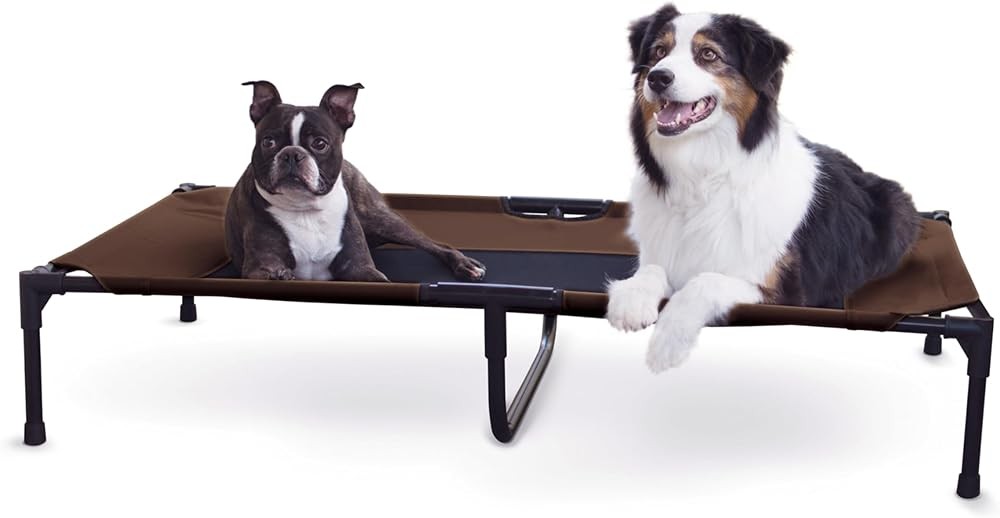
K&H Pet Products Outdoor Elevated Dog Cot
The K&H Pet Products Outdoor Elevated Dog Cot earns the top overall position through its combination of proven cooling design, durability, and size options appropriate for dogs up to extra-large. The breathable mesh cover, raised metal frame, and collapsible portability address every key requirement identified in cooling research.
The cooling mechanism is straightforward and effective: a tightly woven mesh fabric is suspended on a powder-coated steel frame that elevates dogs completely off the ground. This creates the critical air channel underneath that research demonstrates is essential for convective cooling. The mesh itself uses materials that support the dog’s full weight without sagging while maintaining breathability across the entire surface.
Sizing accommodates high-risk large breeds. The extra-large version (50 x 32 inches) provides adequate space for dogs over 50 kg, the group research identifies as having 3.42 times higher heat stroke risk. Proper sizing ensures dogs can fully extend all limbs, maximizing body surface area exposure to airflow and reducing cramped positions that could restrict breathing (particularly important for brachycephalic breeds).
The washable cover addresses hygiene concerns. Research on heat-related illness notes that affected dogs often develop secondary complications including gastrointestinal issues. Maintaining clean resting surfaces helps reduce bacterial growth risk that could complicate recovery or general health. The removable mesh cover machine washes without degrading the material’s breathability or structural integrity.
Portability supports the “cool first” principle emphasized in veterinary research. The collapsible frame and relatively lightweight construction (despite sturdy materials) mean owners can reposition the bed to follow shade patterns throughout the day or move it to the coolest available location. This flexibility proves crucial for reducing heat stress risk rather than just managing it after onset.
The raised design reduces contact with hot outdoor surfaces. Whether on concrete patios, wooden decks, or direct ground contact, the elevated frame ensures dogs remain isolated from conductive heat transfer. This matters especially during peak afternoon hours when surface temperatures can exceed air temperature by 20-30 degrees.
K&H Pet Products Outdoor Elevated Dog Cot
Check Price on AmazonAs an Amazon Associate we earn from qualifying purchases.
Bottom line on K&H elevated cot: This bed implements every evidence-based cooling principle, elevated design for airflow, breathable mesh for 360-degree exposure, sizing for high-risk large breeds, and portable construction for optimal placement. It works for indoor or outdoor use and accommodates dogs from medium to extra-large sizes.
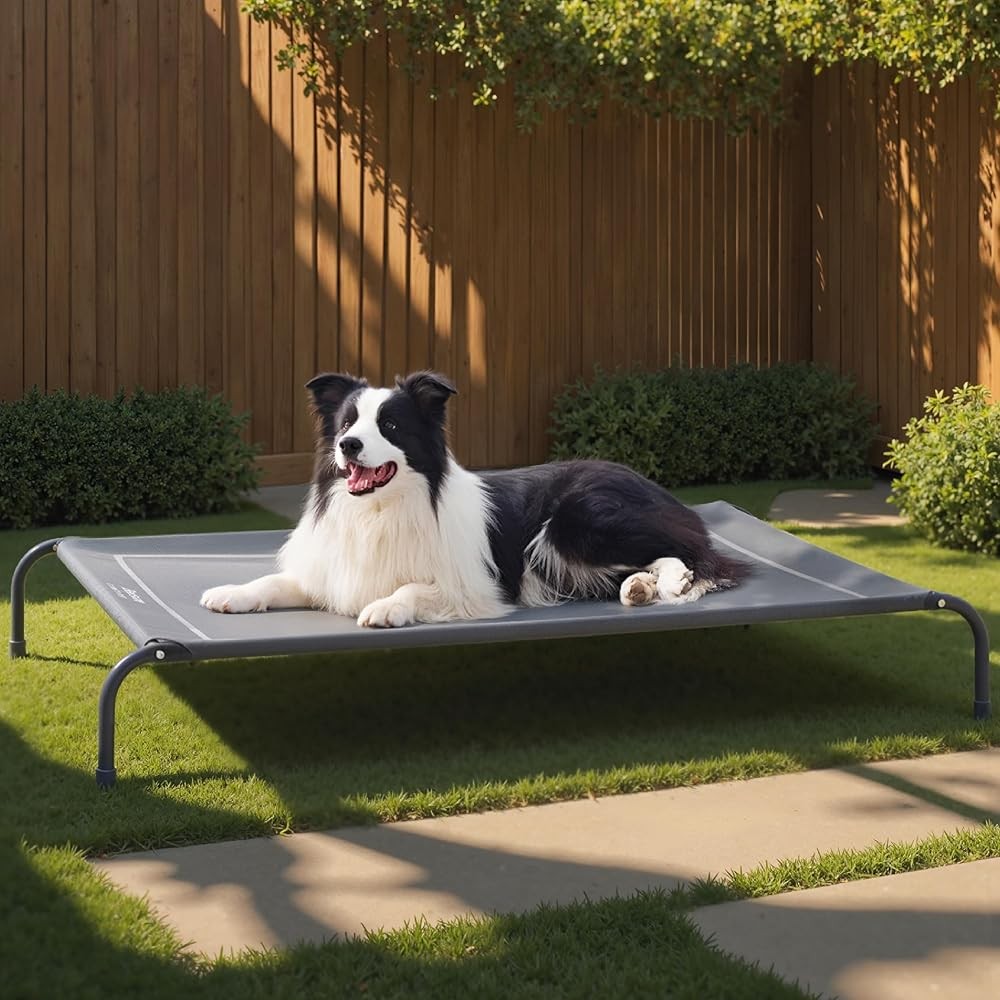
Bedsure Outdoor Elevated Dog Bed Large
The Bedsure Outdoor Elevated Dog Bed delivers essential cooling features at a budget-friendly price point, making evidence-based heat management accessible for owners of large dogs (up to 100 lbs) without premium bed budgets.
The core cooling technology matches more expensive options: breathable mesh fabric suspended on a raised frame creates the air circulation channel underneath that research proves effective for heat dissipation. At 49 inches long, this bed provides adequate space for Labrador Retrievers, Golden Retrievers, and similar large breeds that appear frequently in heat-related illness research.
The skid-resistant feet address a practical concern that affects cooling effectiveness. If a bed slides across smooth surfaces, dogs may avoid using it or feel unstable when climbing on and off. This is particularly important for senior dogs with arthritis, who research shows benefit from comfortable resting surfaces for pain management. Stable footing encourages consistent use, ensuring the dog actually receives the cooling benefits the bed offers.
Frame construction uses rust-resistant materials suitable for outdoor exposure. While not as heavy-duty as premium chew-proof options, the frame handles normal use from large dogs and tolerates typical outdoor conditions. The grey color reflects more sunlight than darker colors, reducing radiant heat absorption when positioned in partially sunny locations.
Portability remains excellent. The bed weighs under 10 pounds and assembles without tools in minutes. This ease of setup encourages owners to move the bed strategically: under trees during the day, onto covered porches during afternoons, or indoors overnight. Research on environmental heat exposure in dogs emphasizes that shade and location management significantly reduce heat stress risk.
The breathable mesh strikes a good balance between support and airflow. Some budget elevated beds use extremely loose mesh that sags uncomfortably or very tight weaves that restrict air movement. Bedsure’s material provides adequate support for large dogs while maintaining the open structure necessary for effective convective cooling.
Bedsure Outdoor Elevated Dog Bed Large
Check Price on AmazonAs an Amazon Associate we earn from qualifying purchases.
Bottom line on Bedsure budget option: This bed provides scientifically sound cooling for large dogs at roughly half the cost of premium options. While it lacks advanced features like chew-proof construction or copper-infused materials, it delivers the fundamental elevated-mesh design that research demonstrates works for heat management.
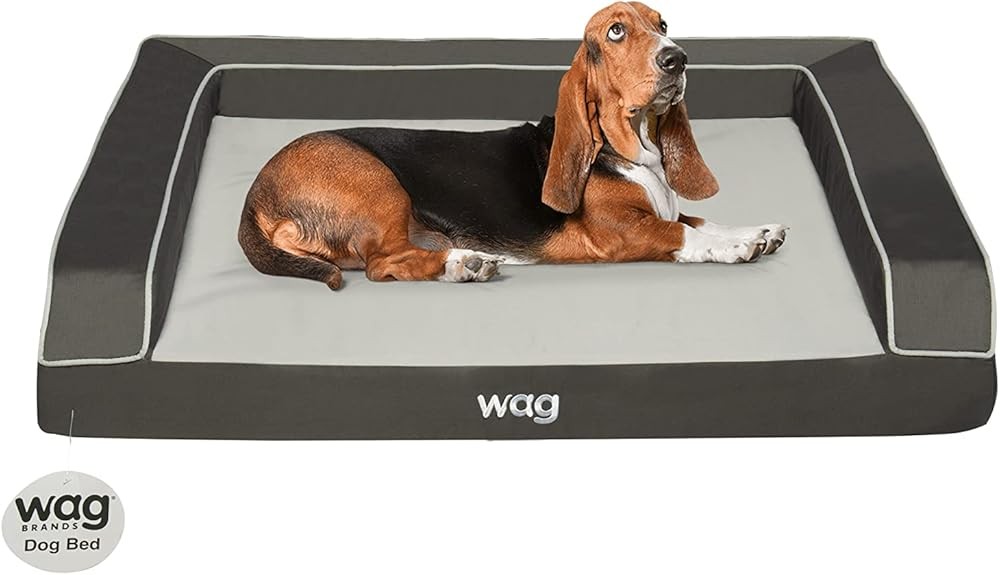
Wag Premium Pet Dog Bed with Cooling Gel
The Wag Premium Pet Dog Bed represents the gel cooling category with multi-layer construction that combines cooling energy gel, copper infusion, and supportive foam for dogs that prefer traditional bed styles over elevated mesh designs.
The cooling gel layer uses phase-change materials that actively absorb body heat from contact points. This works particularly well for the 30-50 pound medium-sized dogs this bed accommodates, many of which include brachycephalic breeds like French Bulldogs and Pugs. Research demonstrates these breeds have severely compromised thermoregulation, making any effective cooling intervention valuable.
Copper infusion enhances the gel’s performance through improved thermal conductivity. Copper transfers heat approximately 20 times faster than typical foams, helping distribute absorbed heat throughout the gel layer and accelerating the regeneration process when the dog shifts position. While this technology hasn’t been tested in published veterinary research specifically, the physics principles are sound and consistent with materials science research on thermal management.
The multi-layer construction addresses comfort alongside cooling. Many dogs, particularly seniors with arthritis, prefer the cushioning support of foam beds over firm mesh surfaces. The Wag bed’s memory foam base provides joint support while the cooling gel layer reduces the heat retention that normally plagues foam beds. Research on canine osteoarthritis and sleep quality found that comfortable resting surfaces significantly impact pain management, making this combination relevant for senior dogs who face both heat sensitivity and joint pain.
The machine-washable cover and water-resistant inner liner simplify maintenance. Dogs experiencing heat stress often drink more water and may have increased accidents or drooling. The water-resistant liner protects the foam and gel layers from moisture damage while the removable cover tolerates frequent washing without degrading performance.
Stone grey color and medium profile (suitable for dogs up to 50 lbs) make this bed appropriate for indoor use where aesthetics matter. While elevated beds excel functionally, some owners prefer the appearance of traditional cushioned beds in living spaces. The Wag bed provides effective cooling without the industrial look of metal-frame elevated designs.
The limitation is regeneration dependency. Unlike elevated beds that cool continuously through airflow, gel beds need breaks to release absorbed heat. For dogs that rest 12-16 hours daily, the bed will have adequate regeneration time. For dogs in extremely hot environments or those that rarely leave their bed, effectiveness may decline during extended use periods.
Wag Premium Pet Dog Bed with Cooling Gel
Check Price on AmazonAs an Amazon Associate we earn from qualifying purchases.
Bottom line on Wag premium gel bed: This bed serves dogs that need cooling but won’t use elevated mesh beds, particularly medium-sized brachycephalic breeds and seniors requiring cushioned joint support. The gel and copper cooling technology works well for indoor environments with moderate temperatures and dogs that have regular activity breaks.
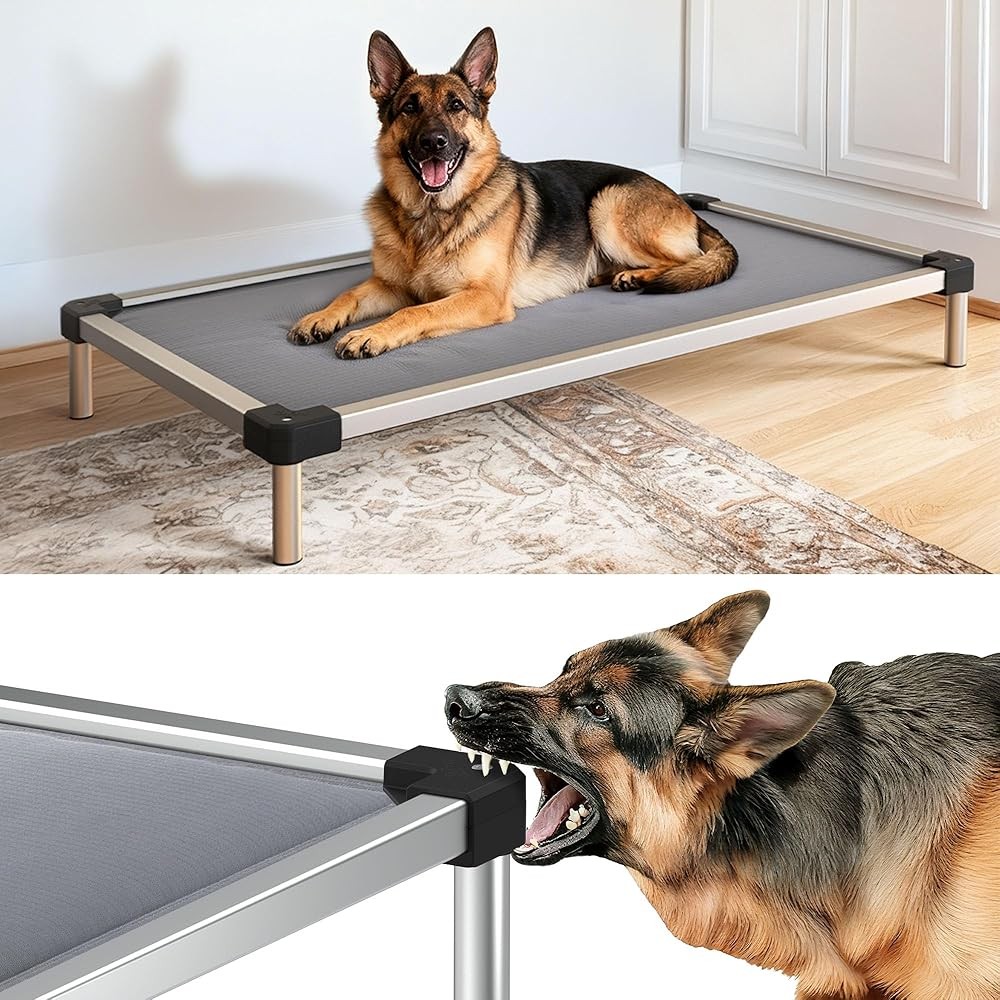
FXW TitanNest Chew-Proof Elevated Dog Bed
The FXW TitanNest directly addresses the needs of large dogs (47 x 29 inches accommodates dogs up to 110 lbs) with chew-proof construction that withstands the stronger jaws and higher activity levels typical of the large-breed dogs research identifies as high heat-risk.
The chew-proof designation matters for large-breed cooling. Research shows dogs over 50 kg have 3.42 times higher heat illness risk, making bed durability a health issue rather than just a convenience concern. If a large dog destroys their cooling bed mid-summer, they lose critical heat management during the period when they need it most. The TitanNest’s heavy-duty materials and reinforced construction reduce this risk.
The elevated design replicates the proven cooling mechanisms: breathable mesh fabric on a raised frame creates continuous airflow around the entire dog. At 7.3 inches high, the bed provides ample clearance for air circulation underneath while remaining accessible for large dogs to climb on and off easily. This matters particularly for breeds like Golden Retrievers and Labrador Retrievers, which research shows have high obesity rates that can complicate mobility.
Washable padded construction differentiates this bed from basic mesh options. The padding provides cushioning that many large dogs prefer, especially those with joint issues common in aging large breeds. Research on canine osteoarthritis emphasizes that comfortable resting surfaces support pain management. The padding also increases surface area contact, which can enhance cooling effectiveness compared to mesh that only contacts the dog at pressure points.
The durable frame handles the weight and activity of large dogs without wobbling or collapsing. Large breed dogs often enter and exit beds more forcefully than small dogs, and they shift position more dramatically during sleep. The TitanNest’s construction accounts for these stresses with reinforced joints and heavy-gauge materials that maintain stability.
Indoor, outdoor, and camping versatility addresses different heat scenarios. Research on environmental heat exposure shows that dogs face varied heat challenges depending on setting. The TitanNest performs effectively indoors with still air (relying on natural convection), outdoors with breezes (maximizing airflow-based cooling), and during camping where portable effective cooling is essential for active dogs at high exercise-induced hyperthermia risk.
The grey color minimizes radiant heat absorption compared to darker colors. While frame material matters more than color for heat management, every small advantage helps for the highest-risk category of dogs.
FXW TitanNest Chew-Proof Elevated Dog Bed
Check Price on AmazonAs an Amazon Associate we earn from qualifying purchases.
Bottom line on TitanNest large dog bed: This bed combines proven elevated cooling design with the durability necessary for large breeds over 50 kg who face the highest heat stroke risk. The chew-proof construction ensures the bed survives multiple summers, providing consistent cooling for dogs that need it most.
WESTERN HOME Cooling Elevated Dog Bed
The WESTERN HOME Cooling Elevated Dog Bed emphasizes portability and versatility with removable waterproof bolsters, making it ideal for owners who need to move cooling solutions between locations or want adaptable cooling options as conditions change.
The breathable mesh base provides the fundamental cooling mechanism: elevated design creating airflow underneath plus open-weave material allowing air circulation from all directions. This matches the cooling principles validated in research on canine thermoregulation and cooling interventions.
The removable bolsters offer tactical flexibility. When maximum cooling is needed, removing the bolsters exposes more dog surface area to airflow and eliminates the insulating effect of the raised edges. Research shows that maximizing air exposure accelerates heat dissipation. When conditions moderate or the dog needs the security of enclosed edges for better sleep, the bolsters attach easily.
Waterproof bolster material addresses multiple scenarios. For senior dogs with occasional incontinence (common in aging dogs that research shows face elevated heat risk), waterproof bolsters reduce moisture absorption that would otherwise compromise the bed and create hygiene issues. For outdoor use, waterproof materials tolerate sudden rain showers without sustaining damage or requiring extended drying periods.
Chew-proof construction extends the portable bed’s lifespan across multiple seasons and settings. Dogs that travel between homes, go to doggy daycare, or accompany owners to outdoor events need durable beds that survive transport and varied use environments. The WESTERN HOME bed’s reinforced materials handle this variability.
The large size accommodates the 50+ kg dogs research identifies as highest risk. At dimensions suitable for dogs up to 100 lbs, this bed serves Labrador Retrievers, Golden Retrievers, German Shepherds, and similar popular large breeds that appear frequently in heat-related illness data.
Portability features include lightweight materials and simple assembly/disassembly. The bed weighs less than many traditional large dog beds despite the elevated frame, making it practical for one person to move as sun patterns shift or to transport between home and vehicle for park visits. Research emphasizes that proactive heat management (“cool first, transport second”) requires accessible cooling solutions owners actually use consistently.
The combination of indoor/outdoor rating with protective materials means the bed performs effectively regardless of setting. Morning shade in the backyard, afternoon air conditioning indoors, evening breezes on the porch, all work with this bed’s design.
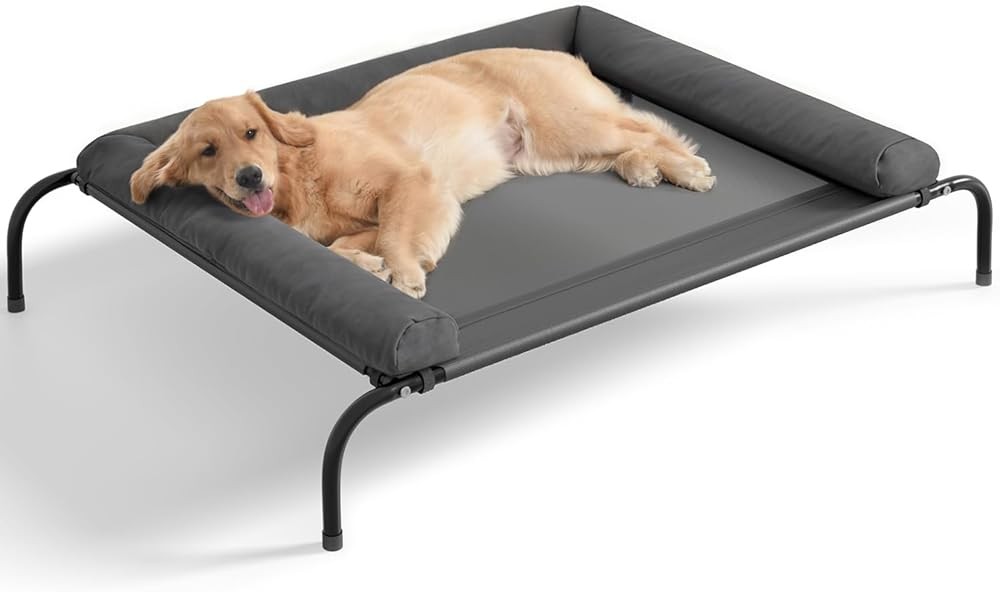
WESTERN HOME Cooling Elevated Dog Bed
Check Price on AmazonAs an Amazon Associate we earn from qualifying purchases.
Bottom line on WESTERN HOME portable bed: This bed serves owners who need flexible cooling solutions that adapt to changing conditions and locations. The removable bolsters and portable construction enable strategic heat management while maintaining the elevated mesh design research demonstrates works for canine cooling.
How Should You Position a Cooling Dog Bed?
Even the most advanced cooling bed loses effectiveness if poorly positioned. Research on environmental heat exposure in dogs provides clear guidance for optimal placement.
Shade takes priority for outdoor beds. Direct sunlight heats metal frames, mesh surfaces, and the air immediately surrounding the bed, overwhelming convective cooling mechanisms. Research analyzing heat-related illness risk in outdoor settings found that access to shade significantly reduced heat stress incidence. Position elevated beds under covered patios, beneath trees with dense canopies, or in areas where buildings cast consistent shadows.
Indoor placement should maximize natural airflow. Windows with cross-breezes, hallways between rooms where air circulates, or areas near (but not directly under) ceiling fans all improve cooling effectiveness. Research on cooling methods demonstrated that wet towels without air movement actually trap heat, the same principle applies to cooling beds. Still air limits convective heat transfer; moving air maximizes it.
Avoid heat-retaining flooring. Carpeted areas trap heat beneath elevated beds, reducing the temperature differential that drives cooling. Research shows dogs seek cooler microclimates within available spaces. Tile, hardwood, or concrete floors remain cooler than carpet and allow better airflow under elevated frames.
Position beds away from heat sources. HVAC vents blowing warm air, electronics generating heat, windows receiving direct afternoon sun, and appliances (particularly in kitchens) all create hot zones that negate cooling bed benefits. Research on temperature gradients within homes shows variation of 5-10°F between rooms and microclimates.
Accessibility matters for high-risk dogs. Brachycephalic breeds, senior dogs with arthritis, and dogs over 50 kg need easy access to cooling beds without navigating stairs, jumping over obstacles, or squeezing through tight spaces. The VetCompass research on heat-related illness showed that 68.73% of affected dogs displayed altered respiration and 47.79% showed lethargy, both of which limit mobility and willingness to seek out cooling solutions. Make beds readily accessible in the areas where dogs naturally spend time.
Multiple bed locations provide options as conditions change. Research on canine behavior shows dogs adjust position throughout the day tracking comfort. Having cooling beds in both primary indoor living spaces and shaded outdoor areas allows dogs to self-select based on temperature, activity level, and preference.
Stability reduces avoidance. Dogs won’t consistently use beds that slide, wobble, or feel unstable. This particularly affects senior dogs and those with arthritis, who research shows benefit from comfortable stable resting surfaces for pain management. Beds on smooth floors benefit from non-slip pads or textured surfaces underneath.
Bottom line on bed positioning: Place cooling beds in shaded outdoor areas or high-airflow indoor locations away from heat sources, prioritizing stable accessible positions where dogs naturally rest. Proper placement can double or triple cooling effectiveness compared to the same bed in a poor location.
What Maintenance Do Cooling Beds Require?
Consistent maintenance preserves cooling effectiveness and extends bed lifespan. Research on hygiene and immune function in heat-stressed dogs emphasizes that cleanliness matters for overall health.
Mesh surface cleaning should occur weekly during heavy use periods. Vacuum mesh surfaces to remove hair, dirt, and debris that can clog air passages and reduce breathability. Research demonstrates that airflow is critical for convective cooling; anything blocking air movement reduces effectiveness. For elevated beds, spray mesh with pet-safe cleaner and rinse with a hose, allowing the bed to air dry completely before use.
Removable covers require machine washing every 1-2 weeks depending on use. Dogs experiencing heat stress often drool more, drink more water (leading to potential accidents), and may have gastrointestinal issues identified in the VetCompass research on heat-related illness. Regular washing reduces bacterial growth risk and odor accumulation. Follow manufacturer instructions regarding water temperature and drying to preserve waterproofing and material integrity.
Frame inspection catches problems before they become dangerous. Check welds, joints, and leg attachments monthly for cracks, rust, or loosening. Research on large breed dogs shows they exert significant force on bed frames; catching structural issues early reduces collapse risk that could injure dogs or leave them without cooling during critical heat periods.
Gel bed maintenance requires gel layer monitoring. If gel beds feel warm to touch after sitting empty for several hours, the gel may have degraded and lost cooling capacity. Most gel beds have 2-3 year lifespans with consistent use. Rotating the bed weekly ensures even wear on gel and foam layers. If the bed develops permanent depressions or gel feels lumpy, replacement is likely needed.
Waterproof liner inspection reduces moisture damage risk to foam and gel layers. Check seams and zipper areas for degradation that could allow liquids to reach inner materials. Water-damaged foam breeds bacteria and loses structural integrity, compromising both cooling and support.
Storage during off-season extends lifespan. Elevated beds fold or stack for compact storage in cool, dry locations. Gel beds should be stored flat to reduce gel migration and foam compression. Cover stored beds to reduce dust accumulation. Proper storage can add years to bed lifespan.
Replacement timing considerations: elevated mesh beds typically last 3-5 years with proper maintenance, longer for heavy-duty chew-proof models. Gel beds generally need replacement every 2-3 years as gel effectiveness degrades. Watch for these signs: mesh tears or excessive sagging, frame instability or rust, gel beds that no longer feel cool to touch, persistent odors after washing, or visible mold/mildew that won’t clean.
Bottom line on maintenance: Weekly surface cleaning, bi-weekly cover washing, monthly frame inspection, and proper storage protect your investment and ensure consistent cooling effectiveness. Replace elevated beds when structural integrity declines and gel beds when cooling performance degrades.
Can Cooling Beds Help Dogs with Arthritis?
The intersection of heat management and arthritis care creates a compelling case for cooling beds in senior dogs and arthritis-prone breeds. Research on canine osteoarthritis and research on heat sensitivity in senior dogs converge on several key points.
Temperature affects arthritis pain perception. While published research on direct temperature-pain relationships in canine arthritis remains limited, research on nighttime restlessness in dogs with osteoarthritis found that NSAID treatment (which reduces inflammation and associated heat in joints) significantly improved sleep quality. This suggests that reducing heat around arthritic joints may provide comfort benefits beyond systemic cooling.
Pressure point elimination matters for arthritic dogs. Research emphasizes that comfortable resting surfaces significantly impact pain management in dogs with osteoarthritis. Elevated mesh beds distribute weight differently than traditional beds. Instead of sinking into foam (which can create uncomfortable pressure points at hips, shoulders, and elbows), mesh suspends the dog while conforming gently to body shape. This can reduce pain-amplifying pressure at arthritic joints.
Getting on and off the bed requires consideration. Arthritis impairs mobility and makes jumping painful. The ideal cooling bed for arthritic dogs has low entry height (under 6 inches for severely affected dogs), stable frame that won’t shift when the dog climbs on, and adequate surface area for the dog to position themselves without hanging off edges. Some arthritic dogs benefit from small ramps or steps placed next to beds.
Gel beds versus elevated beds for arthritis presents a choice based on individual dog preference. Gel beds provide more cushioning and traditional foam-bed feel, which some arthritic dogs prefer. The cooling gel can help if inflammation around joints generates localized heat. Elevated mesh beds offer superior airflow-based cooling and better pressure distribution but feel firmer. Research on sleep quality in arthritic dogs suggests that individual dogs have distinct preferences, trying both styles if possible helps identify which your dog prefers.
Senior dog considerations extend beyond arthritis. Research demonstrates that dogs over 2 years (and particularly those over 8-10 years) face elevated heat risk due to declining thermoregulation. Senior dogs also often have reduced mobility that limits their ability to seek cooler locations. A well-positioned cooling bed accessible from the dog’s primary resting area addresses both heat and mobility limitations.
Combined interventions work best. Research on multimodal osteoarthritis management emphasizes that comprehensive approaches addressing multiple aspects of the condition produce better outcomes than single interventions. A cooling bed combined with appropriate pain management, joint supplements, controlled exercise, and proper nutrition provides more complete support than cooling alone.
Bottom line on arthritis and cooling beds: Cooling beds benefit arthritic dogs through both heat reduction (which may decrease inflammation-related discomfort) and improved weight distribution (which reduces painful pressure points). Choose low-profile beds for easy access and consider both gel and elevated options to match individual dog preferences identified in sleep quality research.
What Temperature Is Too Hot for Dogs?
Understanding dangerous temperature thresholds helps owners know when cooling beds transition from comfort items to critical safety equipment. Research on heat-related illness provides specific guidance.
Core body temperature defines heatstroke in dogs. Research in Temperature establishes that core temperatures above 41°C (105.8°F) with central nervous system dysfunction constitute heatstroke. Normal canine body temperature ranges from 38.3-39.2°C (101-102.5°F). Any elevation above this range indicates the dog’s cooling mechanisms cannot match heat accumulation.
Ambient temperature thresholds vary by breed and individual factors. Research testing brachycephalic thermoregulation used hot conditions at 32.9°C (91°F) and found brachycephalic dogs already showed significantly impaired cooling at this temperature. However, research on heat-related illness in UK dogs demonstrates that heat stress occurs even at moderate temperatures for high-risk individuals. The study noted cases across a wide temperature range, emphasizing that humidity, activity level, and individual factors matter as much as absolute temperature.
Humidity compounds heat risk dramatically. Dogs rely on evaporative cooling through panting. High humidity reduces evaporation effectiveness because the air is already saturated with moisture. Research on pathophysiology of canine heatstroke identifies humid conditions as a primary risk factor. A 85°F day with 80% humidity poses greater risk than a 95°F day with 20% humidity.
The heat index for dogs considers combined effects. While formal canine heat index charts vary, veterinary guidance generally suggests:
- Below 70°F: Safe for most dogs with normal activity
- 70-75°F: Caution for brachycephalic breeds, senior dogs, and dogs over 50 kg
- 75-80°F: Reduce activity for high-risk dogs, ensure cooling options available
- 80-85°F: Limit outdoor time for all dogs, mandatory cooling access
- Above 85°F: High risk for all dogs, critical need for cooling interventions
These thresholds assume moderate humidity (40-60%). Adjust downward by 5-10°F for high humidity conditions.
Warning signs appear before critical temperatures. Research on VetCompass clinical grading identified that altered respiration and lethargy represent the earliest (mild) signs of heat-related illness. Other early warnings include: excessive panting with labored breathing, drooling more than normal, seeking shade or cool surfaces obsessively, reduced interest in activity, bright red gums and tongue, and vomiting or diarrhea.
Individual variation matters significantly. A fit, two-year-old Border Collie with normal skull structure tolerates higher temperatures than an obese, eight-year-old French Bulldog. Research confirms that breed, age, body condition score, and underlying health conditions dramatically affect heat tolerance.
Bottom line on temperature thresholds: Heat risk starts at 70-75°F for high-risk dogs and 80°F for average dogs, with these thresholds decreasing 5-10°F in high humidity. Monitor individual dogs for early warning signs (excessive panting, lethargy, seeking shade) rather than relying solely on temperature readings. Cooling beds become essential equipment once temperatures exceed your dog’s safe threshold.
Are There Alternatives or Complementary Strategies?
Cooling beds work best as part of a comprehensive heat management approach rather than as standalone solutions. Research on canine heat stress demonstrates that multiple interventions provide more robust protection than any single method.
Water access remains fundamental. Research on cooling methods showed that water-based interventions (head dunking, partial immersion) produced the fastest temperature reductions. While not all dogs will use these methods voluntarily, ensuring clean, fresh water is always available allows dogs to increase drinking and potentially engage in self-cooling behaviors. Multiple water sources reduce competition in multi-dog households and ensure accessibility if one source gets contaminated or emptied.
Shade structures complement cooling beds perfectly. Research on environmental heat exposure found that shade significantly reduces heat stress risk. Combining a cooling bed positioned under reliable shade creates the optimal resting microclimate: protected from radiant heat, elevated from conductive heat, and cooled by air circulation.
Fans accelerate cooling bed effectiveness. Research demonstrated that wet towels with air movement cool more effectively than wet towels alone, the same principle applies to elevated beds. A fan positioned to blow across an elevated bed increases airflow velocity, accelerating convective heat transfer. This can double cooling effectiveness compared to the bed alone in still air.
Cooling vests and bandanas provide targeted cooling for active periods. Research on working dogs compared neck ice packs and wet neck towels to other cooling methods. While head dunking proved most effective, external cooling accessories help during activity when dogs cannot rest on beds. Pairing a cooling vest for walks with a cooling bed for rest periods provides 24-hour heat management.
Air conditioning represents the most effective environmental control for indoor dogs. Research on thermoregulation shows that reducing ambient temperature is the most reliable way to reduce heat accumulation. For brachycephalic breeds, senior dogs, and other high-risk individuals, air conditioning during heat waves may be necessary regardless of other cooling interventions.
Timing outdoor activities strategically reduces heat exposure. Research shows that combining moderate temperatures with activity creates less heat stress than activity during peak heat hours. Walking dogs early morning or late evening, limiting midday outdoor time to bathroom breaks, and scheduling exercise during cooler parts of the day all reduce overall heat load that cooling beds must subsequently manage.
Frozen treats provide both hydration and cooling. While research doesn’t specifically address frozen treats, the principles align with water-based cooling methods. Frozen treats encourage water intake while providing some internal cooling as the dog’s body melts and warms the treat.
Body condition management may be the most impactful long-term strategy. Research on brachycephalic thermoregulation found that body condition score was “a greater determinant of body temperature than breed type.” For obese dogs, weight loss improves thermoregulation potentially more than any cooling bed. Combining appropriate diet, controlled exercise during cool periods, and cooling beds for rest creates a comprehensive approach.
Bottom line on comprehensive strategies: Cooling beds work best combined with shade, water access, strategic activity timing, and body condition management. Research shows that multimodal approaches addressing multiple risk factors produce better outcomes than single interventions alone.
FAQs
How do elevated cooling dog beds work?
Elevated cooling dog beds lift your dog off the ground, creating an air channel underneath that promotes convective cooling. The breathable mesh surface allows air to circulate around your dog’s entire body, reducing heat buildup from contact with hot floors or outdoor surfaces. Research shows this design significantly improves heat dissipation compared to traditional flat beds.
Are cooling beds safe for brachycephalic breeds like French Bulldogs and Pugs?
Yes, cooling beds are especially beneficial for brachycephalic breeds. Research demonstrates that brachycephalic dogs have significantly reduced thermoregulatory capacity and develop hyperthermia more rapidly than other breeds. Elevated cooling beds help these high-risk breeds maintain safer body temperatures during warm weather without requiring physical exertion.
What temperature should I use a cooling dog bed?
Cooling dog beds provide benefits whenever ambient temperatures exceed 21-22 degrees Celsius (70-72 degrees Fahrenheit). Research on heat-related illness in UK dogs shows that heat stress can occur even at relatively moderate temperatures, especially for at-risk breeds. Senior dogs and brachycephalic breeds may benefit from cooling beds at even lower temperatures.
How do gel cooling beds compare to elevated mesh beds?
Both technologies offer effective cooling but work differently. Gel cooling beds absorb and dissipate body heat through phase-change materials, while elevated mesh beds promote airflow-based convective cooling. Research on cooling methods shows that water-based and airflow methods effectively reduce canine body temperature. Choose gel beds for indoor use and elevated beds for maximum airflow and outdoor versatility.
Can cooling beds help reduce heat stroke risk in dogs?
Cooling beds are an important risk-reduction tool but should be part of a comprehensive heat management strategy. Research shows the fatality rate for canine heat-related illness reaches 14-27%, making risk reduction critical. Cooling beds help maintain safe resting temperatures between activities, but active cooling methods like water immersion remain essential for managing exercise-induced hyperthermia.
What size cooling bed does my dog need?
Your dog should be able to fully stretch out in any position. Measure your dog from nose to tail base while lying down and add 6-12 inches. Large breeds over 50 kg have 3.42 times the heat stroke risk of small dogs and need beds with maximum airflow. Senior dogs with arthritis need extra space to shift positions comfortably throughout the night.
Are elevated beds safe for senior dogs with arthritis?
Yes, when chosen properly. Research on canine osteoarthritis and sleep quality shows that comfortable resting surfaces significantly impact pain management. Choose elevated beds with low entry heights (under 7 inches) and stable frames. The improved airflow reduces pain-amplifying heat buildup around arthritic joints while the mesh surface eliminates pressure points.
How often should I clean a cooling dog bed?
Clean removable covers weekly during summer months and wipe down mesh surfaces or gel layers bi-weekly. Research shows that dogs with heat-related illness often have compromised immune function, making hygiene important. Machine-washable covers and waterproof materials simplify maintenance and extend bed lifespan.
Do cooling beds work for dogs over 50 kg?
Yes, large and giant breeds especially benefit from cooling beds. Research demonstrates that dogs over 50 kg have 3.42 times higher heat-related illness risk than dogs under 10 kg due to their lower surface area to body mass ratio. Choose heavy-duty elevated beds rated for your dog’s weight with reinforced frames and chew-proof materials.
Can I use cooling beds outdoors in direct sunlight?
Elevated cooling beds work outdoors but should be placed in shaded areas. Direct sunlight heats mesh surfaces and metal frames, negating cooling benefits. Research on environmental heat exposure in dogs shows that shade significantly reduces heat stress risk. Position beds under covered patios, trees, or use with outdoor shade structures for maximum cooling effectiveness.
Complete Support System: Building Comprehensive Canine Heat Management
Cooling beds provide maximum benefit when integrated into a comprehensive heat management strategy that addresses multiple physiological mechanisms dogs use to accumulate and dissipate heat. Research shows the most effective protocols address environmental factors, hydration status, body condition, and breed-specific vulnerabilities simultaneously.
Foundation layer: Cooling bed selection — Use your cooling bed as the primary passive cooling intervention during rest periods. The K&H elevated cot provides maximum cooling for dogs up to 150 lbs through 360-degree airflow, as research demonstrates convective cooling reduces heat accumulation most effectively. Position beds in shaded locations or high-airflow indoor areas for maximum effectiveness. Reserve gel beds like the Wag Premium for brachycephalic breeds that prefer cushioned surfaces over mesh designs.
Environmental optimization — Pair your cooling bed with shade structures for outdoor use or strategic fan placement for indoor use. Research on environmental heat exposure shows shade reduces heat stress incidence significantly. Position fans to blow across elevated beds, accelerating convective cooling through increased airflow velocity. This combination replicates the principles proven effective in cooling intervention studies while requiring no active participation from heat-stressed dogs.
Hydration support — Place water bowls near cooling beds to encourage drinking during rest periods. Research on cooling methods showed water-based interventions produced the fastest temperature reductions. For senior dogs and brachycephalic breeds at elevated heat risk, consider frozen treats that provide both hydration and internal cooling between active periods. Multiple water sources reduce competition in multi-dog households.
Activity timing protocols — Schedule outdoor exercise during early morning or late evening hours when ambient temperatures remain moderate, allowing dogs to rest on cooling beds during peak heat hours. Research shows combining moderate temperatures with activity creates less heat stress than peak-hour exercise. Reserve 10 AM to 6 PM for rest on cooling beds in climate-controlled environments during summer months.
Orthopedic support for senior dogs — Integrate orthopedic dog beds with elevated cooling designs for senior dogs facing both heat sensitivity and joint pain. Research on canine osteoarthritis demonstrates that comfortable resting surfaces significantly impact pain management, with particular relevance when heat amplifies inflammatory discomfort around arthritic joints. The mesh design of elevated beds distributes weight differently than foam, potentially reducing pressure points.
Body condition management — Research confirms body condition score affects thermoregulation as significantly as breed structure. For overweight dogs, combine cooling beds with appropriate weight management nutrition to address heat risk long-term. Weight loss improves thermoregulation potentially more than any cooling bed alone for obese dogs.
Breed-specific nutrition — Brachycephalic breeds like French Bulldogs with severely compromised thermoregulation benefit from specialized nutrition supporting respiratory function and maintaining healthy body condition. Explore dog food for French Bulldogs with allergies that addresses both breed-specific needs and maintains optimal body condition for heat tolerance.
Joint supplement support — For large breeds over 50 kg who face 3.42 times higher heat stroke risk and commonly develop arthritis, pair cooling beds with hip and joint supplements. This multi-modal approach addresses both immediate heat management needs and long-term mobility that affects dogs’ ability to seek cooling locations independently.
Stress reduction during heat exposure — Heat stress compounds anxiety in susceptible dogs. For dogs with separation anxiety or travel-related stress (common scenarios increasing heat exposure), combine calming supplements with familiar cooling bed access to create safer heat management during stressful periods. Research shows stress impairs multiple physiological systems including thermoregulation.
Omega-3 fatty acid support — Integrate fish oil supplements for coat and skin health that may improve heat dissipation efficiency by optimizing skin barrier function and reducing inflammation. While direct research on omega-3s and canine heat tolerance remains limited, the anti-inflammatory benefits align with mechanisms identified in heat stress pathophysiology research.
Implementation strategy: Week 1-2: Install cooling bed in optimal location with shade or fan support, establish hydration stations near bed, adjust activity timing to avoid peak heat hours. Week 3-4: Add nutritional optimization if needed for body condition management. Week 5-6: Integrate supplements (joint support for large breeds, omega-3s for all dogs, calming support for anxious dogs). Week 7-8: Monitor for heat stress warning signs and adjust protocol based on individual response. This staged approach allows identification of which interventions provide the greatest benefit for your dog’s individual heat management needs.
Related Reading
- Best Orthopedic Dog Beds for Arthritis and Senior Dogs — Cushioned support for senior dogs at elevated heat risk with mobility limitations
- Best Dog Food for Senior Dogs with Arthritis — Nutritional support for aging dogs facing combined heat sensitivity and joint pain
- Best Dog Food for French Bulldogs with Allergies — Specialized nutrition for brachycephalic breeds with severely compromised thermoregulation
- Best Dog Supplements for Hip and Joint Health — Joint support for large breeds over 50 kg at 3.42x higher heat stroke risk
- Best Calming Supplements for Dogs with Separation Anxiety — Stress reduction for dogs facing combined anxiety and heat exposure scenarios
- Best Fish Oil Supplements for Dogs: Coat and Skin Health — Omega-3 support for skin barrier function potentially improving heat dissipation efficiency
References
References
-
Bruchim Y, Horowitz M, Aroch I. Pathophysiology of heatstroke in dogs - revisited. Temperature (Austin). 2017. PMID: 29435477 https://pubmed.ncbi.nlm.nih.gov/29435477/
-
Davis MS, Cummings SL, Payton ME. Effect of brachycephaly and body condition score on respiratory thermoregulation of healthy dogs. J Am Vet Med Assoc. 2017. PMID: 29099251 https://pubmed.ncbi.nlm.nih.gov/29099251/
-
Hall EJ, Carter AJ, O’Neill DG. Incidence and risk factors for heat-related illness (heatstroke) in UK dogs under primary veterinary care in 2016. Sci Rep. 2020. PMID: 32555323 https://pubmed.ncbi.nlm.nih.gov/32555323/
-
Hall EJ, Carter AJ, Bradbury J, Barfield D, O’Neill DG. Proposing the VetCompass clinical grading tool for heat-related illness in dogs. Sci Rep. 2021. PMID: 33767275 https://pubmed.ncbi.nlm.nih.gov/33767275/
-
Hall EJ, Carter AJ, Bradbury J, Beard S, Gilbert S, Barfield D, O’Neill DG. Cooling Methods Used to Manage Heat-Related Illness in Dogs Presented to Primary Care Veterinary Practices during 2016-2018 in the UK. Animals. 2023. PMID: 37505869 https://pubmed.ncbi.nlm.nih.gov/37505869/
-
Parnes SC, Mallikarjun A, Ramos MT, Stone TA, Otto CM. A Randomized Cross-Over Study Comparing Cooling Methods for Exercise-Induced Hyperthermia in Working Dogs in Training. Animals. 2023. PMID: 38067024 https://pubmed.ncbi.nlm.nih.gov/38067024/
-
Parnes SC, Mallikarjun A, Ramos MT, Capparell TR, Otto CM. Voluntary head dunking after exercise-induced hyperthermia rapidly reduces core body temperature in dogs. J Am Vet Med Assoc. 2024. PMID: 39293468 https://pubmed.ncbi.nlm.nih.gov/39293468/
-
Knazovicky D, Tomas A, Motsinger-Reif A, Lascelles BDX. Initial evaluation of nighttime restlessness in a naturally occurring canine model of osteoarthritis pain. PeerJ. 2015. PMID: 25722957 https://pubmed.ncbi.nlm.nih.gov/25722957/
-
Hall EJ, Carter AJ, O’Neill DG. Dogs Don’t Die Just in Hot Cars-Exertional Heat-Related Illness (Heatstroke) Is a Greater Threat to UK Dogs. Animals. 2020. PMID: 32751913 https://pubmed.ncbi.nlm.nih.gov/32751913/
-
Gruenheid M, Aarnes TK, McLoughlin MA, Simpson EM, Mathys DA, Mollenkopf DF, Wittum TE. Risk of anesthesia-related complications in brachycephalic dogs. J Am Vet Med Assoc. 2018. PMID: 30020004 https://pubmed.ncbi.nlm.nih.gov/30020004/
-
Hall EJ, Carter AJ. Heat stress in domestic dogs: morphological and environmental risk factors for dog welfare in a warming world. Front Anim Sci. 2025. PMID: Not yet assigned
-
Beard S, Hall EJ, Carter AJ, O’Neill DG. Epidemiology of heat-related illness in dogs under UK emergency veterinary care. Vet Rec. 2024. PMID: 38783549 https://pubmed.ncbi.nlm.nih.gov/38783549/
-
Otto CM, Parnes SC. Voluntary head dunk: cooperative care for irrigating canine noses and eyes and rapid cooling. J Am Vet Med Assoc. 2024. PMID: 39293481 https://pubmed.ncbi.nlm.nih.gov/39293481/
-
Bruchim Y, Kelmer E, Cohen A, Codner C, Segev G, Aroch I. Pathophysiology and pathological findings of heatstroke in dogs. J Vet Emerg Crit Care. 2020. PMID: 32614138 https://pubmed.ncbi.nlm.nih.gov/32614138/
Recommended Products