Best Dog Ramps for Senior Dogs With Arthritis
Summarized from peer-reviewed research indexed in PubMed. See citations below.
Jumping on and off furniture, beds, and vehicles puts significant stress on arthritic dog joints, worsening pain and mobility issues that affect up to 57% of senior dogs in certain joints. The Dog Ramp for Car 71" X-Long with 250 lb weight capacity, extra-wide non-slip surface, and gentle incline angle reduces joint loading forces during daily activities for $109. Veterinary studies demonstrate that peak vertical landing forces from jumping can reach 4.5 times a dog’s body weight, while ramps eliminate this impact by allowing dogs to walk at ground level forces. For budget-conscious owners, the EHEYCIGA Dog Stairs 4-Step provides stable access to beds and low furniture for $35. Here’s what the published research shows about protecting arthritic joints and choosing the right mobility aid for your senior dog.
Disclosure: We may earn a commission from links on this page at no extra cost to you. Affiliate relationships never influence our ratings. Full policy →
What Research Says About Joint Impact in Dogs
Osteoarthritis affects a substantial portion of the senior dog population, with veterinary studies documenting prevalence rates of 39.2% in the shoulder, 57.4% in the elbow, 35.9% in the hip, and 36.4% in the stifle among dogs older than 8 years. Even in the broader population, research suggests up to 20% of dogs over 1 year of age show signs of osteoarthritis, making this one of the most common chronic conditions affecting canine quality of life.
The mechanical forces involved in jumping create significant stress on already compromised joints. Biomechanical research on working dogs has measured peak vertical landing forces reaching 4.5 times body weight when dogs land from elevated jumps. For a 60-pound dog with arthritis, this translates to 270 pounds of force concentrated through inflamed joints with each landing from furniture or vehicle heights.
Joint loading forces during normal walking, by contrast, remain close to body weight levels. This fundamental difference explains why veterinary rehabilitation specialists emphasize activity modification as a cornerstone of osteoarthritis management. By replacing high-impact jumping with low-impact ramp walking, dogs with arthritis can maintain mobility while reducing the mechanical stress that accelerates cartilage breakdown and increases pain.
For breeds predisposed to intervertebral disc disease, particularly Dachshunds, Beagles, and other chondrodystrophic breeds, the stakes are even higher. Type I IVDD occurs when the disc’s jelly-like center hardens and can rupture with forceful impact. Veterinary guidelines for these breeds specifically recommend avoiding jumping activities and using ramps for accessing vehicles and elevated surfaces.
Physiotherapeutic approaches to canine osteoarthritis emphasize regular, low-impact, controlled exercise rather than the outdated recommendation to restrict activity. Environmental modifications, including ramps and stairs, allow arthritic dogs to maintain daily movement patterns essential for joint health while eliminating the repetitive high-impact forces that worsen inflammation and pain.
The distinction between beneficial movement and harmful impact becomes especially important for senior dogs managing multiple age-related conditions. A dog with both hip dysplasia and elbow arthritis experiences compounded stress with each jump, while ramp access preserves independence without the joint loading penalty.
| Product | Type | Height Range | Weight Capacity | Surface | Portability | Price |
|---|---|---|---|---|---|---|
| Dog Ramp 71" X-Long | Folding Ramp | Variable (car/SUV) | 250 lbs | Non-slip rug | Folds in half | $109 |
| EHEYCIGA 4-Step | Stairs | 18" | 150 lbs | Non-slip balanced | Lightweight | $35 |
| Foldable Adjustable | Ramp | 13"-21" (4 settings) | 165 lbs | Non-slip pad | Folds flat | $65 |
| EHEYCIGA Curved 4-Step | Stairs | 19.7" | 150 lbs | Non-slip surface | Space-saving curve | $39 |
| EHEYCIGA 3-Step Small | Stairs | 13.5" | 110 lbs | Non-slip surface | Lightweight | $29 |
Best Dog Ramps for Senior Dogs With Arthritis
Dog Ramp for Car 71" X-Long - Best Overall
The 71-inch extended length of this ramp creates the gentlest incline angle for accessing cars, SUVs, and trucks, reducing the muscular effort required from dogs with hip or elbow arthritis. The extra-wide 17.2-inch platform provides stable footing for large breeds who may have balance issues or rear limb weakness, while the 250-pound weight capacity safely accommodates Golden Retrievers, German Shepherds, and similar-sized dogs.
The non-slip rug surface covering the entire ramp stops paw slippage even in wet conditions, addressing a common concern for senior dogs with proprioceptive deficits who may not adjust foot placement as quickly as younger dogs. Raised side rails add security for dogs nervous about elevated walkways, though these rails remain low enough not to interfere with natural gait patterns.
When folded in half, this ramp stores in most vehicle cargo areas or garage corners without requiring dedicated storage space. The folding mechanism includes a safety latch to secure against accidental collapse during use. For families with multiple vehicles of different heights, the adjustable placement angle accommodates sedan trunks, SUV cargo areas, and truck beds with a single ramp.
This ramp works particularly well for dogs managing hip dysplasia alongside arthritis who need the longest, most gradual incline to minimize hip extension range of motion during climbing.
Four evenly-spaced steps reaching 18 inches make this stair unit ideal for standard bed heights while keeping individual step rise below 5 inches, a threshold that minimizes joint flexion requirements for dogs with stifle or hip arthritis. The balanced, non-slip surface covers each tread completely, providing secure footing during both ascent and descent when proprioception may be reduced in senior dogs.
The 150-pound weight capacity handles most medium to large breed dogs, though breeds exceeding this weight should use higher-capacity options. Lightweight construction allows easy repositioning throughout the day as dogs move between sleeping areas, and the compact footprint fits beside beds without creating a tripping hazard for human household members.
Assembly requires no tools, with steps fitting together through slot-and-lock connections. The neutral beige color blends with most bedroom decor, a practical consideration for equipment that remains visible in living spaces throughout the day.
For dogs transitioning from jumping to using mobility aids, the lower price point makes this an accessible first option while determining whether stairs or ramps better suit individual dogs’ needs and preferences.
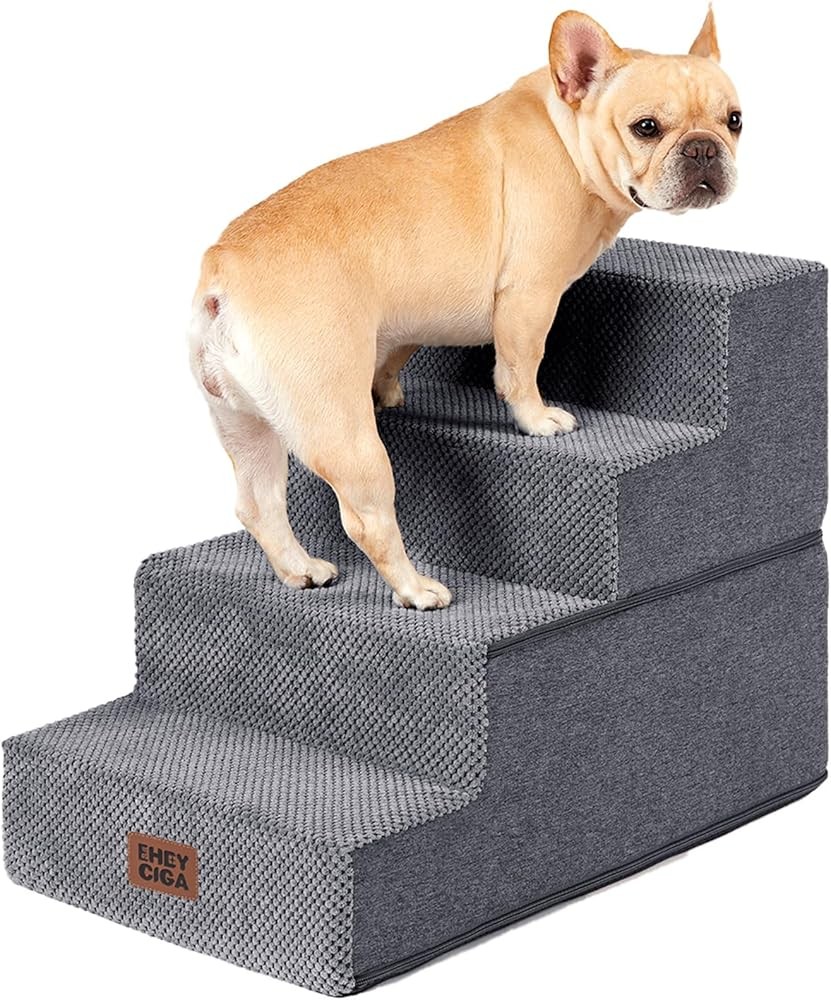
EHEYCIGA Dog Stairs 4-Step for Bed
Check Price on AmazonAs an Amazon Associate we earn from qualifying purchases.
Foldable Dog Ramp for Couch - Best for Couch
Four distinct height settings spanning 13 to 21 inches accommodate the range of couch heights from low-profile modern designs to traditional taller sofas with thick cushions. This adjustability proves valuable as furniture changes or when using the same ramp for multiple elevations throughout the home. Each height setting locks securely to guard against mid-use adjustment that could startle or injure dogs with slower reaction times.
The non-slip pad surface provides traction without the loose fibers of carpet-style coverings that can catch in arthritic joints or become matted with regular use. This surface material also cleans easily when dogs track in outdoor moisture, maintaining consistent grip characteristics over time.
When not in use, the ramp folds completely flat to slide under couches, against walls, or into narrow storage spaces. The folding mechanism operates smoothly enough for daily deployment and storage without requiring significant hand strength, accommodating owners who may themselves have arthritis or grip limitations.
The 165-pound weight capacity falls between budget options and heavy-duty ramps, suitable for most dogs who benefit from orthopedic support alongside ramp access.
EHEYCIGA Curved Dog Stairs for High Beds - Best for High Beds
The curved design positions steps in an arc rather than a straight line, reducing the floor space footprint by roughly 30% compared to equivalent straight stairs while reaching the same 19.7-inch height. This space efficiency matters in bedrooms where floor space near beds is already constrained by nightstands, dressers, and walking paths.
Four steps distributed across the curved path create gradual rise increments similar to straight stairs but with a turning motion that some dogs navigate more naturally than steep, direct climbs. The curve geometry also positions the top step closer to bed edges, minimizing the final transfer distance dogs must span between the stairs and sleeping surface.
Non-slip covering on each tread extends to the tread edges where dogs place paws during turns, addressing the edge-slippage issue that can occur with stairs where traction only covers tread centers. The 150-pound weight capacity matches other EHEYCIGA products, providing consistent specifications across their line.
The higher 19.7-inch reach accommodates platform beds, beds with thick mattress toppers, and beds on frames, making this suitable for dogs who also benefit from elevated orthopedic sleeping surfaces designed to reduce pressure points during rest.
EHEYCIGA Dog Stairs 3-Step for Small Dogs - Best for Small Dogs
Three steps reaching 13.5 inches total height create an ideal configuration for small breeds accessing low couches, chairs, and pet-specific furniture. The reduced step count compared to 4-step units means each individual step rise remains under 5 inches while minimizing the total climbing distance for dogs with limited stamina or exercise tolerance.
The 110-pound weight capacity exceeds the needs of Beagles, Cocker Spaniels, and smaller breeds who commonly develop arthritis in stifle and elbow joints. Lightweight construction allows even small-statured owners to move the stairs between rooms as dogs relocate throughout the day, and the compact size fits in spaces too small for larger mobility aids.
Non-slip surface treatment covers each step completely, providing secure footing for small paws that have less surface area contact than large breed paws. The neutral design works in living rooms, bedrooms, and home offices where small dogs may spend time with owners during work hours.
For small dogs managing both arthritis and cognitive changes, maintaining access to preferred elevated resting spots supports emotional wellbeing alongside physical joint protection.
How to Choose the Right Dog Ramp
Ramp vs Stairs: Mechanical Differences
True ramps with continuous inclines eliminate the step-impact forces that occur even with shallow stairs, making ramps the biomechanically optimal choice for dogs with severe arthritis or those recovering from orthopedic surgery. However, ramps require longer distances to achieve the same height as stairs while maintaining safe incline angles, creating space constraints in some homes.
Stairs with wide, shallow treads offer a middle ground, reducing impact compared to jumping while requiring less floor space than ramps. For dogs with mild to moderate arthritis who retain good coordination and proprioception, well-designed stairs often provide sufficient joint protection while fitting more easily into existing furniture arrangements.
The decision often depends on the specific joints affected. Dogs with shoulder or elbow arthritis may handle stairs well since these joints primarily move during forward motion rather than supporting impact forces. Dogs with hip, stifle, or hock arthritis benefit more from ramps that eliminate the flexion-extension cycles required to climb distinct steps.
Incline Angle and Joint Mechanics
Veterinary rehabilitation guidelines suggest ramp angles between 18 and 25 degrees for most dogs, creating a balance between manageable incline steepness and practical ramp length. Steeper angles require greater muscular effort from hip extensors and stifle stabilizers, potentially increasing pain in dogs with coxofemoral or femorotibial arthritis.
For a 24-inch vehicle cargo height, an 18-degree ramp requires approximately 74 inches of length, while a 25-degree ramp needs 57 inches. This 17-inch difference significantly impacts whether a ramp fits in available garage or vehicle storage space, sometimes forcing owners to choose steeper angles despite the increased joint effort required.
Adjustable ramps and multi-height stairs provide flexibility to optimize angles for different access points, using gentler inclines for daily furniture access while accepting steeper angles for occasional vehicle entry where space constraints matter more.
Weight Capacity and Safety Factors
Manufacturers typically list maximum weight capacities, but veterinary rehabilitation specialists recommend using equipment rated for at least 1.5 times the dog’s actual weight. This safety factor accounts for dynamic loading during movement, where forces exceed static weight, and provides a buffer for dogs who may gain weight during reduced activity periods common with progressive arthritis.
For a 60-pound Labrador, this guideline suggests minimum 90-pound capacity, though 150-pound rated equipment provides additional margin. Large breeds like German Shepherds, Golden Retrievers, and Rottweilers weighing 75-95 pounds need equipment rated for 150-200 pounds minimum, with 200-250 pound capacity preferred.
Weight capacity specifications should account for both current body condition and potential weight changes. Dogs starting anti-inflammatory dietary protocols may lose excess weight over time, while dogs with limited mobility sometimes gain weight despite caloric restriction.
Surface Traction Characteristics
Non-slip surfaces fall into several categories with different performance characteristics. Rug-style coverings provide excellent traction in dry conditions but can become slick when wet and may catch in overgrown nails common in senior dogs with reduced activity. Rubber or rubberized surfaces maintain more consistent traction across wet and dry conditions while cleaning easily.
Textured plastic surfaces with raised nubs or patterns offer good traction while weighing less than rubber-covered options, an advantage for ramps that require frequent repositioning. However, the harder plastic surface provides less cushioning than rubber or carpet during paw contact, potentially increasing impact forces slightly compared to softer surfaces.
For dogs with both arthritis and anxiety, surface material can affect willingness to use ramps. Some dogs prefer the familiar feel of carpet-like textures similar to household flooring, while others adapt more quickly to rubber surfaces that provide obvious grip feedback.
Portability and Storage Considerations
Ramps needed for multiple locations require lightweight construction and convenient folding mechanisms to encourage consistent use. A ramp kept in a garage because it’s too heavy or awkward to move won’t protect joints when dogs jump onto bedroom furniture throughout the week.
Folding ramps that reduce to half their extended length fit in most vehicle cargo areas and store against walls in 3-4 inch wide spaces. Some designs fold into thirds or quarters for even more compact storage, though additional hinges create potential failure points and may reduce weight capacity ratings.
Stairs generally weigh less than ramps of equivalent height capacity but often don’t fold, requiring dedicated storage space or permanent placement. For dogs who need access to only one or two specific locations, permanent stair placement works well and eliminates the daily deployment and storage effort that can lead to inconsistent use.
Special Considerations for Vehicle Access
Vehicle ramps must accommodate variable trunk heights from different parking surface angles and load different cargo weights. Ramps with rubberized or hooked top edges that grip vehicle bumpers or cargo lips guard against slippage during use, a critical safety feature for dogs who may freeze or panic if equipment shifts mid-climb.
The vehicle bumper-to-ground angle changes significantly when parked on inclines or when cargo weight changes, requiring ramps with length adjustability or very long fixed lengths to maintain safe incline angles across conditions. A ramp that provides a 20-degree angle on level ground may create a 30-degree angle when parked nose-downhill, potentially too steep for dogs with hip arthritis.
For dogs who use vehicles frequently for trips to physical therapy appointments or outdoor activities, investing in longer vehicle-specific ramps reduces the joint stress that might otherwise limit the mobility-preserving benefits of those activities.
Complete Mobility Support System
Environmental modifications like ramps address only one component of comprehensive osteoarthritis management in senior dogs. Research demonstrates that multimodal approaches combining multiple interventions provide better outcomes than any single strategy alone.
Joint Support Supplements
Glucosamine, chondroitin, and methylsulfonylmethane provide substrate building blocks for cartilage repair, while omega-3 fatty acids from fish oil reduce inflammatory mediator production. Green-lipped mussel supplements combine multiple bioactive compounds with demonstrated effects on joint comfort and mobility in published canine trials.
Anti-Inflammatory Nutrition
Specialized diets formulated to reduce systemic inflammation support joint health through multiple mechanisms beyond basic caloric restriction for weight management. Anti-inflammatory dog foods incorporate ingredients like turmeric, ginger, and antioxidant-rich vegetables that modulate inflammatory pathways.
Orthopedic Sleep Surfaces
Dogs spend 12-16 hours daily lying down, creating sustained pressure on arthritic joints unless sleeping surfaces distribute weight appropriately. Orthopedic dog beds with memory foam or gel layers reduce pressure points while maintaining spinal alignment critical for dogs with concurrent intervertebral disc changes.
Mobility Assistance Devices
Rear-support harnesses and slings allow owners to provide lift assistance during particularly painful episodes without risking back injury to either dog or owner. Rehabilitation harnesses with adjustable support points accommodate changing needs as arthritis progresses or responds to treatment.
Specific Nutrient Supplementation
Beyond joint-specific supplements, senior dogs with arthritis may benefit from fish oil for coat and skin health and omega-3 fatty acids that provide anti-inflammatory effects systemically. Turmeric supplementation requires careful attention to curcumin bioavailability and dosing to achieve therapeutic effects.
Activity Monitoring
GPS-enabled activity collars track movement patterns and rest periods, helping owners identify activity-pain relationships and optimize exercise timing and duration. Health monitoring collars provide objective data to supplement subjective observations of lameness or reluctance to move.
Lifestyle Adaptations
Simple changes like raising food and water bowls to reduce neck flexion during eating, using rugs on slippery floors to reduce slip risk, and maintaining predictable daily routines that reduce stress all contribute to overall comfort for dogs managing chronic pain conditions. Longevity-focused lifestyle habits benefit both dogs and their owners when implemented consistently over years.
For dogs showing signs of limping or altered gait, veterinary evaluation should precede major lifestyle or dietary changes to rule out acute injuries or conditions requiring medical intervention beyond supportive care.
Related Reading
- Best Orthopedic Dog Beds for Arthritis and Senior Dogs
- Best Dog Rehab Harness for Mobility Support
- Best Dog Supplements for Hip and Joint Health
- Best Dog Food for Senior Dogs With Arthritis
- Best Dog Treadmills for Exercise and Rehab
- Turmeric for Dogs: Benefits, Risks, and Proper Dosing
- How to Reduce Inflammation in Dogs Naturally Through Diet
- Best Anti-Inflammatory Dog Food for Joint Pain and Allergies
- Senior Dog Supplements: Joint Health and Cognitive Support
- Canine Cognitive Decline and Dementia in Dogs
References
-
Roitner M, Klever J, Reese S, Meyer-Lindenberg A. Prevalence of osteoarthritis in the shoulder, elbow, hip and stifle joints of dogs older than 8 years. Vet J. 2024;305:106132. PMID: 38761958
-
Anderson KL, O’Neill DG, Brodbelt DC, et al. Prevalence, duration and risk factors for appendicular osteoarthritis in a UK dog population under primary veterinary care. Sci Rep. 2018;8(1):5641. PMID: 29618832
-
Williams E, Carter A, Boyd J. Kinetics and Kinematics of Working Trials Dogs: The Impact of Long Jump Length on Peak Vertical Landing Force and Joint Angulation. Animals (Basel). 2021;11(10):2804. PMID: 34679825
-
Mille MA, McClement J, Lauer S. Physiotherapeutic Strategies and Their Current Evidence for Canine Osteoarthritis. Vet Sci. 2022;10(1):2. PMID: 36669003
-
Marshall WG, Hazewinkel HA, Mullen D, et al. The effect of weight loss on lameness in obese dogs with osteoarthritis. Vet Res Commun. 2010;34(3):241-253. PMID: 20237844
-
Moreau M, Dupuis J, Bonneau NH, Desnoyers M. Clinical evaluation of a nutraceutical, carprofen and meloxicam for the treatment of dogs with osteoarthritis. Vet Rec. 2003;152(11):323-329. PMID: 12665145
-
Breur GJ, Lust G. Concepts of the pathogenesis of canine hip dysplasia and osteoarthritis. Front Biosci. 1997;2:d252-d260. PMID: 9206972
-
Johnston SA. Osteoarthritis: joint anatomy, physiology, and pathobiology. Vet Clin North Am Small Anim Pract. 1997;27(4):699-723. PMID: 9243777
-
Rychel JK. Diagnosis and treatment of osteoarthritis. Top Companion Anim Med. 2010;25(1):20-25. PMID: 20188335
-
Belshaw Z, Asher L, Dean RS. Systematic review of outcome measures reported in clinical canine osteoarthritis research. Vet Surg. 2016;45(4):480-487. PMID: 26940187
-
Innes JF, Clegg P. Comparative rheumatology: what can be learnt from naturally occurring musculoskeletal disorders in domestic animals? Rheumatology (Oxford). 2010;49(6):1030-1039. PMID: 20181670
-
Pettitt RA, German AJ. Investigation and management of canine osteoarthritis. In Practice. 2015;37(1):1-8. DOI: 10.1136/inp.g6861
Recommended Products