Best Dog Slow Feeders and Puzzle Toys for Bloat Prevention and Mental Enrichment
Summarized from peer-reviewed research indexed in PubMed. See citations below.
Dogs that eat rapidly face serious health risks, with research showing dogs finishing meals in under 5 minutes have 2.54 times higher risk of gastric dilatation-volvulus (GDV), a life-threatening condition. The Outward Hound Fun Feeder Slo Bowl is our top recommendation, using a ridge maze pattern to extend eating time while maintaining food-grade, BPA-free construction for around $16. Published studies demonstrate that slow feeders can reduce eating speed by up to 38%, addressing the aerophagia and rapid gastric expansion that contribute to GDV in large and giant breeds. For budget-conscious owners, the HIPPIH Duck Food Dispenser Toy at $16 combines wobble-based feeding with cognitive stimulation. Here’s what the published research shows about protecting your dog from bloat while enhancing their mental wellbeing.
Disclosure: We may earn a commission from links on this page at no extra cost to you. Affiliate relationships never influence our ratings. Full policy →


Gastric dilatation-volvulus remains one of the most urgent veterinary emergencies affecting dogs, particularly large and giant breeds with deep chest conformations. A comprehensive analysis of 130 GDV cases documented a mortality rate of 25.38%, underscoring the critical need for preventive strategies. Multiple peer-reviewed studies have identified eating speed as a modifiable risk factor, with dogs consuming meals in under 2 minutes showing significantly elevated GDV risk. Slow feeder bowls and puzzle toys address this risk while simultaneously providing cognitive enrichment that research links to enhanced brain plasticity and delayed cognitive decline in aging dogs.
The intersection of GDV prevention and cognitive enrichment creates a compelling case for incorporating these feeding tools into daily routines. Food puzzles and slow feeders extend meal duration, reduce aerophagia (air swallowing), and transform feeding from a rushed activity into an engaging mental exercise. Studies on environmental enrichment demonstrate that as little as 30 minutes of cognitive stimulation per day produces measurable benefits in problem-solving capacity and overall welfare indicators. For breeds at elevated GDV risk, these tools serve dual purposes: reducing a potentially fatal complication while supporting long-term cognitive health.
| Product | Type | Difficulty | Price | Best For |
|---|---|---|---|---|
| Outward Hound Fun Feeder | Slow Feeder Bowl | Beginner | $16 | Daily meal slowing, all breeds |
| HIPPIH Duck Dispenser | Wobble Toy | Beginner | $16 | Treat dispensing, small to medium dogs |
| Potaroma Puzzle Toy | Interactive Puzzle | Intermediate | $23 | Medium dogs, multiple challenges |
| KADTC 2-Level Puzzle | Multi-Level Puzzle | Advanced | $24 | Experienced puzzle dogs |
| KADTC 3-Level Puzzle | Multi-Level Puzzle | Expert | $39 | Advanced problem solvers |
What Is Gastric Dilatation-Volvulus and Why Does Eating Speed Matter?
Gastric dilatation-volvulus is a two-stage emergency condition where the stomach first dilates with gas, fluid, or food (dilatation), then rotates on its axis (volvulus), trapping contents and cutting off blood supply. The condition progresses rapidly, with mortality rates ranging from 15% to 24% even with emergency surgical intervention. Large and giant breed dogs face the highest risk, particularly Great Danes, German Shepherds, Standard Poodles, Weimaraners, and Boxers, though any deep-chested dog can develop GDV.
Research published in Topics in Companion Animal Medicine identified eating speed as one of the most significant modifiable risk factors for GDV. Dogs that consumed meals in less than 5 minutes showed 2.54 times higher risk of developing GDV compared to slower eaters. Another study documented that dogs finishing meals in under 2 minutes faced substantially elevated risk, with the rapid ingestion contributing to aerophagia and rapid gastric expansion.
The mechanism behind this association involves several factors. Rapid eating increases air swallowing, which contributes to gastric dilatation. The enlarged, gas-filled stomach becomes more mobile within the abdominal cavity, increasing the likelihood of rotation. Additionally, large meal volumes consumed quickly may overwhelm normal gastric motility patterns, creating conditions favorable for volvulus. Research on gastrointestinal motility and GDV confirms that abnormal gastric motility patterns are linked to increased GDV risk, suggesting that any intervention that moderates eating pace and promotes more physiologic digestion may offer protective effects.
Slow feeder bowls address these mechanisms by physically obstructing rapid food consumption. Ridge patterns, maze designs, and elevated obstacles force dogs to eat around barriers, automatically extending meal duration. Studies measuring the impact of food puzzles documented eating speed reductions of up to 38%, with dogs spending approximately four times longer consuming meals compared to standard bowls. This extended feeding time reduces aerophagia, allows for more gradual gastric filling, and maintains more normal digestive physiology.
For at-risk breeds, the evidence supporting slow feeders as part of a comprehensive GDV prevention strategy is substantial. While no single intervention eliminates GDV risk entirely, addressing modifiable factors like eating speed, meal frequency, and feeding practices can meaningfully reduce incidence. The combination of slower eating with other recommended practices such as multiple smaller meals per day, avoiding exercise immediately after feeding, and using elevated feeders appropriately creates a multi-faceted prevention approach backed by veterinary research.
Bottom line: Dogs eating in under 5 minutes face 2.54 times higher GDV risk, with slow feeders demonstrating eating speed reduction in controlled studies—a modifiable risk factor for this high-mortality condition.
How Do Slow Feeders and Puzzle Toys Provide Cognitive Enrichment?
Beyond physical health benefits, slow feeders and puzzle toys deliver measurable cognitive enrichment that research links to enhanced brain function across species. Environmental enrichment studies demonstrate that cognitive challenges stimulate neuroplasticity, strengthen neural connections, and build cognitive reserves that may help delay age-related cognitive decline. A comprehensive review of environmental enrichment published in Brain Research Reviews found that enriched environments enhance cognitive performance through multiple cellular mechanisms including increased synaptic density, dendritic branching, and neurogenesis.
Food-based cognitive enrichment specifically engages dogs in species-appropriate foraging behaviors. Wild canids spend significant time searching for, acquiring, and consuming food—activities largely absent in typical domestic feeding routines where meals appear in bowls twice daily. Puzzle feeders recreate elements of foraging by requiring dogs to manipulate objects, solve problems, and work for food rewards. Research on cognitive foraging enrichment in dolphins found that cognitive enrichment produced superior long-term welfare outcomes compared to non-cognitive enrichment, with benefits persisting beyond the immediate enrichment session.
The cognitive demands vary across different puzzle toy designs. Simple slow feeder bowls primarily challenge dogs to navigate physical obstacles, engaging spatial reasoning and motor planning. Multi-level puzzle toys require more complex problem-solving, including learning that sliding covers reveal food compartments, or that rotating pieces provide access to hidden food. A study on food maze enrichment found that subjects showed increased problem-solving behavior and reduced inactivity over a 2.5-month observation period, demonstrating that cognitive challenges maintain engagement and stimulate active behavior patterns.
Research on the dose-response relationship for enrichment suggests that even modest daily enrichment produces benefits. One study examining cognitive enhancement through environmental enrichment found that 30 minutes of enrichment per day generated measurable cognitive improvements and may contribute to delayed disease onset in conditions affecting the brain. For dogs, using puzzle feeders for one or two daily meals naturally incorporates this enrichment duration into existing routines without requiring additional time commitments from owners.
The benefits extend beyond cognitive stimulation to include behavioral and emotional welfare improvements. Puzzle feeding provides mental engagement that may reduce boredom-related behaviors, redirect anxiety, and offer appropriate outlets for dogs with high energy or working backgrounds. Cognitive enrichment reduces stereotypic behaviors and promotes time-budgets more similar to natural behavior patterns. For dogs with separation anxiety, food puzzles can provide focused activity during departures, helping dogs associate alone time with rewarding challenges rather than distress.
The combination of GDV risk reduction and cognitive enrichment makes slow feeders and puzzle toys valuable additions to canine care across life stages. Starting enrichment early establishes patterns that support lifelong cognitive health, while introducing puzzles to older dogs may help maintain cognitive function as they age. The evidence base supporting both physical and cognitive benefits positions these tools as evidence-based interventions rather than optional accessories.
Bottom line: Even 30 minutes of daily cognitive enrichment produces measurable brain benefits across species, with puzzle feeding naturally incorporating this duration into existing meal routines while simultaneously addressing eating speed concerns.
What Should You Look for When Choosing a Slow Feeder or Puzzle Toy?
Selecting the right slow feeder or puzzle toy requires matching product features to your dog’s size, eating style, experience level, and health needs. Material safety stands as the first priority, particularly for products that contact food daily. Look for BPA-free, phthalate-free, food-grade materials that withstand repeated cleaning. The Outward Hound Fun Feeder specifically markets its BPA, PVC, and phthalate-free construction, addressing concerns about chemical leaching from plastics used in food contact applications.
Durability varies significantly across products. Dogs that chew vigorously or become frustrated easily may damage plastic puzzle toys, creating ingestion hazards from broken pieces. For aggressive chewers, stainless steel slow feeders or heavily reinforced plastic designs offer better longevity. Always supervise initial uses of any new feeding tool to assess whether your dog uses it appropriately as a feeder rather than a chew toy. Remove and replace any product showing cracks, sharp edges, or pieces that could detach and pose choking hazards.
Difficulty level dramatically affects whether dogs find puzzles engaging or frustrating. Beginner-level slow feeders like ridge-pattern bowls require minimal learning—dogs simply navigate around obstacles to access food. Intermediate puzzles might involve sliding covers or flipping compartments, requiring dogs to learn that specific actions reveal food rewards. Advanced multi-level puzzles combine multiple challenge types, demanding sustained problem-solving and memory of which techniques worked previously.
Introducing puzzles too difficult for a dog’s current skill level risks frustration and disengagement. Start with simple designs, allow dogs to succeed easily, then gradually increase difficulty as they master each level. Many puzzle toy manufacturers provide difficulty ratings, though individual dogs vary considerably in their puzzle-solving aptitude. Some dogs solve expert-level puzzles within minutes, while others prefer the straightforward challenge of a basic slow feeder throughout their lives.
Size matching ensures safety and functionality. Bowl-style slow feeders come in multiple sizes designed for different breed sizes and snout lengths. A Great Dane needs a large, deep bowl with widely-spaced ridges, while a Chihuahua requires a small, shallow design with close-set obstacles. Puzzle toys similarly vary—compartments must be large enough for your dog’s paws or nose to access, but not so large that food falls out too easily.
Cleaning ease impacts long-term hygiene and owner compliance. Dishwasher-safe products simplify cleaning, though some multi-piece puzzles require hand washing to reach crevices where food particles accumulate. Puzzles with many small parts or complex geometries demand more cleaning time but may offer more engaging challenges. Balance the cognitive benefits of complex designs against the practical reality of thorough daily cleaning to avoid bacterial growth.
For dogs with specific health concerns, additional considerations apply. Dogs with sensitive stomachs may need gradual transitions to puzzle feeding to avoid stress-related digestive upset. Senior dogs with cognitive decline benefit from puzzles that provide challenge without excessive frustration—familiar puzzle types at moderate difficulty often work better than constantly introducing new designs. Dogs recovering from gastroenteritis should return to puzzle feeding gradually once digestive symptoms resolve.
The evidence supporting slow feeders for GDV prevention is strongest for dogs with identified risk factors: large or giant breeds, deep-chested conformation, history of GDV in related dogs, or observed rapid eating behavior. For these dogs, slow feeders function as a medical intervention supported by research demonstrating that eating speed reduction addresses a modifiable risk factor for a high-mortality condition. The 2.54-fold risk increase for fast eaters documented in peer-reviewed research provides clear justification for incorporating these tools into daily feeding routines.
Bottom line: BPA-free materials, size-appropriate design, dishwasher-safe construction, and difficulty level matching your dog’s current puzzle experience determine long-term success, safety, and owner compliance with daily use.
Outward Hound Fun Feeder Slo Bowl — Best Overall
The Outward Hound Fun Feeder Slo Bowl earns our top recommendation through its combination of effective eating speed reduction, safe material construction, and practical features that support daily use. The bowl’s ridge maze pattern creates physical barriers that force dogs to navigate around obstacles to access kibble, automatically extending meal duration without requiring learning or problem-solving beyond basic spatial navigation. This straightforward design works immediately for most dogs, eliminating the adaptation period sometimes needed for more complex puzzle feeders.
The bowl’s material composition addresses safety concerns common with plastic food contact products. The manufacturer specifies BPA-free, PVC-free, and phthalate-free construction, avoiding chemicals linked to endocrine disruption and other health effects. The food-grade plastic withstands repeated use and dishwasher cleaning, maintaining structural integrity through typical product lifespan. The non-slip base stops bowl sliding during use, particularly important when dogs push against ridges while eating, reducing spills and maintaining feeding area cleanliness.
Multiple size options accommodate breeds from small to giant, with ridge spacing and bowl depth varying to match typical snout dimensions. The large/regular size works for medium to large breeds at elevated GDV risk, while the mini size serves small dogs who also benefit from slower eating to reduce gulping and improve digestion. The variety of colors and pattern designs allows owners to select options matching their preferences, though functional performance remains consistent across aesthetic variations.
The Fun Feeder’s effectiveness at extending meal times directly addresses the eating speed risk factor identified in GDV research. While the manufacturer doesn’t provide specific timing data, the ridge design substantially increases the time dogs require to consume meals compared to flat bowls. This extended duration reduces aerophagia, promotes more thorough chewing, and allows for gradual gastric filling—all factors potentially protective against GDV development based on published research mechanisms.
For owners seeking a straightforward solution to rapid eating without complex puzzle elements, the Fun Feeder delivers reliable performance. Dogs require no training to use the bowl effectively—the physical barriers automatically slow eating from the first use. This simplicity makes the product suitable for dogs across cognitive abilities, including seniors with cognitive decline who might struggle with puzzles requiring learning and memory. The bowl works with both dry kibble and wet food, though cleaning wet food from ridge crevices requires more effort than smooth bowl surfaces.
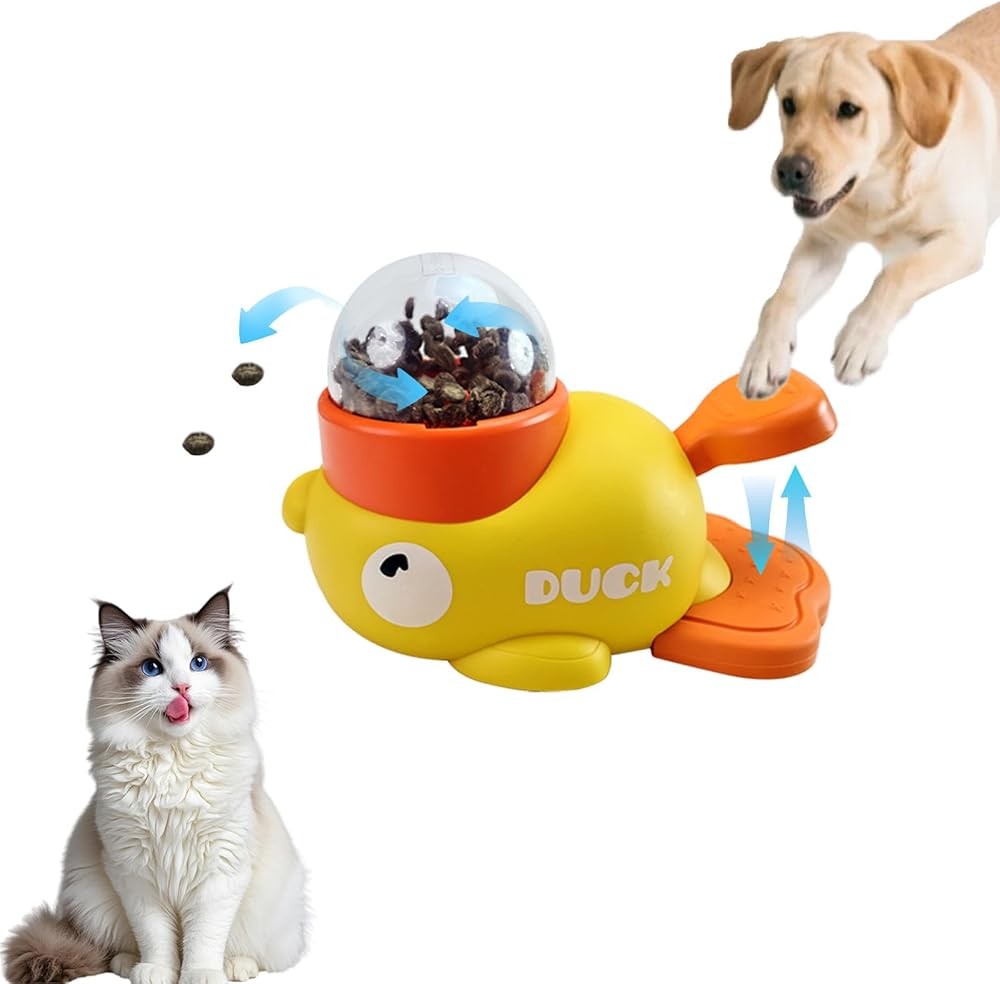
HIPPIH Duck Food Dispenser Toy — Best Budget
The HIPPIH Duck Food Dispenser Toy delivers both eating speed reduction and cognitive enrichment at an accessible price point, making it our top budget recommendation. The duck-shaped wobble design combines visual appeal with functional engineering—the weighted base returns the toy to upright position after dogs knock it over, creating an interactive feeding experience that maintains engagement over time. This self-righting action keeps food accessible while requiring dogs to work for rewards, extending feeding duration and providing mental stimulation beyond simple slow feeder bowls.
The food dispenser functions differently than ridge-pattern slow feeders, dispensing food gradually as dogs manipulate the toy rather than simply creating barriers around food in a bowl. This active feeding approach engages dogs in problem-solving as they learn which actions cause food to dispense, how hard to push for optimal food flow, and how to position the toy for easiest access. These cognitive demands provide the enrichment benefits documented in research on food puzzles, transforming feeding from passive consumption into active foraging behavior.
The wobble-based dispensing mechanism naturally paces food delivery, preventing the rapid consumption that increases GDV risk in susceptible breeds. Dogs must repeatedly interact with the toy to access food, creating multiple brief feeding episodes rather than continuous gorging. This intermittent access pattern may promote more thorough chewing and reduce aerophagia compared to bowls where all food remains continuously accessible. For owners using the dispenser for complete meals rather than food rewards, this paced delivery addresses the same eating speed concerns that motivate slow feeder bowl use.
The duck design appeals particularly to dogs with prey drive or natural interest in novel objects. The bright colors, shape variation from standard bowls, and movement during use create sensory interest that maintains engagement across repeated uses. Some dogs show sustained interest in wobble toys for months or years, while others lose interest once they master the mechanics. Individual variation in sustained engagement makes these toys excellent budget-conscious first purchases for owners unsure whether their dog will enjoy puzzle feeding.
Durability considerations apply as with all plastic feeding toys. The wobble toy withstands typical pushing and pawing behaviors during normal use, but aggressive chewing damages the plastic and creates ingestion hazards. Supervise initial uses to assess whether your dog uses the toy appropriately. For dogs that mouth or chew the dispenser rather than push it for food, remove the toy and consider more robust alternatives. The toy works best for small to medium dogs—larger breeds may find the food dispensing opening too small or the overall size insufficiently challenging.
The budget price point makes the HIPPIH Duck Dispenser accessible for owners wanting to trial puzzle feeding without significant investment. If your dog loves the wobble toy, you can expand to more complex puzzle designs knowing your dog enjoys food-based enrichment. If your dog shows limited interest, the modest cost minimizes financial risk. This trial-friendly pricing supports adoption of enrichment practices by removing cost barriers that might otherwise stop owners from exploring cognitive feeding tools.
HIPPIH Duck Food Dispenser Toy
Check Price on AmazonAs an Amazon Associate we earn from qualifying purchases.
Potaroma Dog Puzzle Toy — Best for Medium Dogs
The Potaroma Dog Puzzle Toy advances beyond simple slow feeders into true interactive puzzle territory, offering multiple challenge types that engage problem-solving abilities while extending feeding duration. The toy features hidden compartments behind sliding covers, a squeaker element for sensory interest, and food-hiding spots at varying difficulty levels. This multi-element design creates a more engaging feeding experience than single-mechanism feeders, supporting the sustained cognitive enrichment that research links to neuroplasticity and cognitive reserve building.
The puzzle’s sizing and complexity level match particularly well with medium-sized dogs—breeds like Border Collies, Cocker Spaniels, Beagles, and Australian Shepherds that often combine high intelligence with strong food motivation. The compartment sizes accommodate typical medium-dog paw and nose dimensions, allowing comfortable manipulation without frustration. The difficulty level challenges without overwhelming, hitting the engagement sweet spot where dogs must think and work but achieve regular success that maintains motivation.
Multiple hiding spots at varying difficulty levels allow progressive challenge within a single toy. Dogs typically discover the easiest compartments first, then gradually work out how to access more difficult sections through trial and error learning. This built-in progression keeps the toy engaging longer than single-difficulty puzzles where dogs either master the challenge quickly and lose interest or never succeed and abandon the toy in frustration. The variety also accommodates dogs at different skill levels within a household—a puzzle-naive dog works on basic compartments while an experienced puzzle solver tackles advanced sections.
The squeaker element adds sensory enrichment beyond food rewards alone. For dogs motivated by sound as well as food, the squeaker provides additional feedback during manipulation, reinforcing interaction even before food rewards are obtained. Some dogs find squeakers highly motivating, increasing engagement time and problem-solving persistence. Other dogs ignore squeakers entirely or find them distracting. Individual variation means this feature significantly enhances the experience for some dogs while adding little value for others.
The cognitive demands of the Potaroma puzzle align with research demonstrating benefits from food-based enrichment. Dogs must remember which techniques successfully revealed food in previous sessions, apply learned strategies to new compartments, and persist through brief failures to achieve food access. These cognitive processes—working memory, strategy application, and persistence—mirror the types of mental challenge that studies link to enhanced cognitive function and potentially delayed cognitive decline in aging dogs. Using the puzzle for one meal daily naturally incorporates recommended enrichment duration into routine feeding.
Material durability and cleaning access require consideration. The multi-piece construction creates more crevices where food particles accumulate compared to simple bowl designs. Thorough cleaning after each use reduces bacterial growth and food residue buildup. The puzzle requires hand washing to reach all compartments, making cleaning more time-intensive than dishwasher-safe slow feeders. Balance this maintenance requirement against the superior cognitive enrichment for dogs who engage enthusiastically with puzzles.
KADTC 2-Level Dog Puzzle Toy — Best for Advanced Dogs
The KADTC 2-Level Dog Puzzle Toy escalates cognitive challenge through its multi-level design incorporating sliding covers, rotating pieces, and compartments requiring sequential problem-solving. This advanced puzzle suits dogs with puzzle experience who have mastered simpler designs and show sustained interest in food-based cognitive challenges. The two-level structure demands that dogs learn multiple manipulation techniques—some compartments respond to sliding, others to rotation, others to lifting—creating varied cognitive demands that maintain engagement longer than single-mechanism puzzles.
The sequential problem-solving requirement distinguishes this puzzle from simpler designs. Some compartments cannot be accessed until dogs solve previous puzzles, requiring dogs to work through challenges in sequence rather than randomly accessing any compartment. This structure engages planning and working memory as dogs must remember successful strategies while exploring new approaches for different compartments. Research on cognitive enrichment demonstrates that varied, complex challenges produce superior cognitive benefits compared to repetitive simple tasks, positioning multi-level puzzles as higher-value enrichment tools for capable dogs.
The difficulty level makes this puzzle inappropriate for puzzle beginners. Dogs without experience manipulating objects for food rewards typically show frustration with the KADTC 2-Level puzzle’s complexity, leading to disengagement rather than productive problem-solving. Successful use requires a progression through simpler puzzles first—starting with basic slow feeders, advancing to single-mechanism puzzles, then introducing multi-level designs. For dogs following this progression, the KADTC puzzle provides the advanced challenge needed to maintain cognitive engagement once easier puzzles become routine.
The rotating and sliding mechanisms require fine motor control and deliberate manipulation rather than random pawing. Dogs must learn that specific directional forces produce specific results—rotating clockwise opens one compartment, sliding left reveals another. This cause-and-effect learning engages cognitive processes beyond those required for simpler “push and food falls out” designs. The precision demands may frustrate dogs preferring straightforward food access but deeply engage dogs who enjoy the challenge itself beyond the food reward.
Supervision during initial uses helps assess whether the difficulty level matches your dog’s abilities and interest. Watch for signs of productive problem-solving—trying different approaches, returning to compartments after failures, showing focused attention on the puzzle. These behaviors indicate appropriate challenge level. Signs of frustration—abandoning the puzzle quickly, aggressive treatment like chewing or throwing, or distress vocalizations—suggest the puzzle exceeds current ability level. For frustrated dogs, step back to easier puzzles and reintroduce multi-level designs after more skill building.
The cognitive enrichment provided by advanced puzzles like the KADTC 2-Level design delivers the benefits documented in environmental enrichment research. Studies show that complex, varied cognitive challenges produce measurable brain changes including enhanced synaptic density and improved cognitive performance. For dogs capable of solving these puzzles, the mental engagement supports cognitive health across the lifespan, potentially contributing to the cognitive reserve that research links to delayed onset of age-related cognitive decline.
KADTC 3-Level Dog Puzzle Toy — Premium Pick
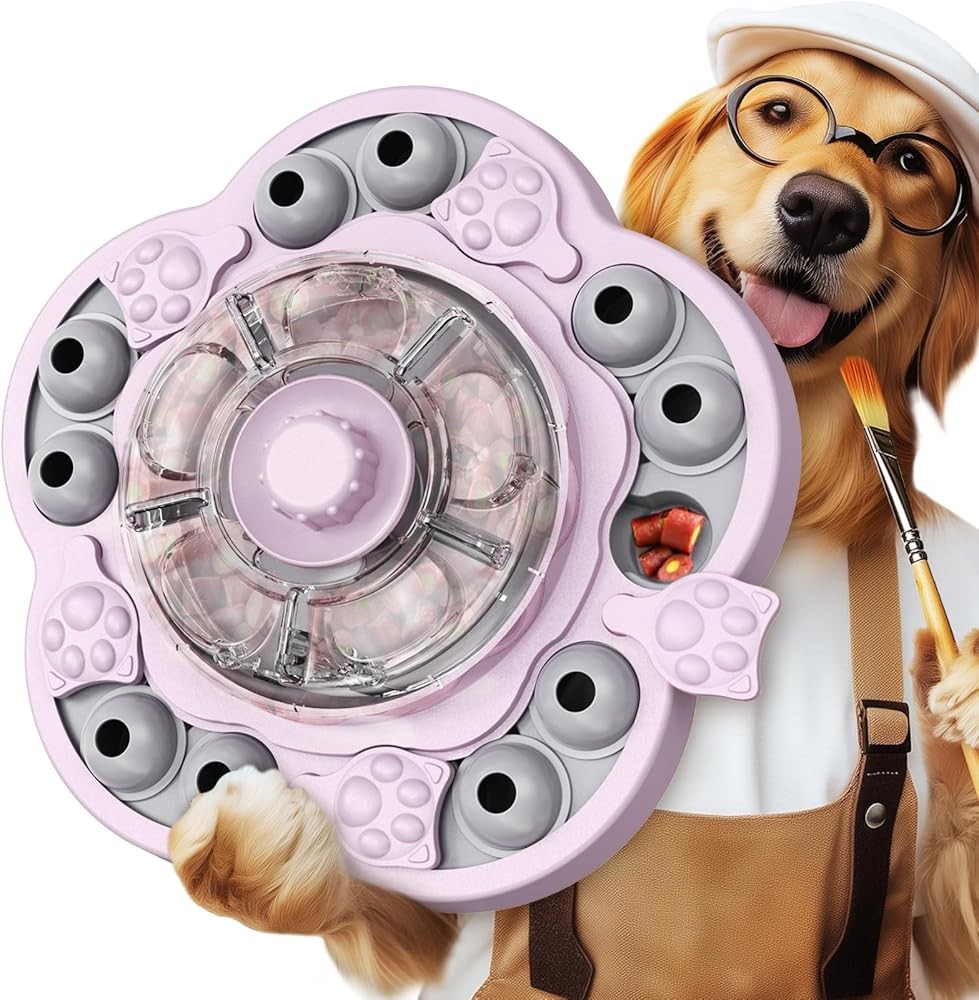
The KADTC 3-Level Dog Puzzle Toy represents the pinnacle of commercially available food puzzle complexity, incorporating three levels of challenge with varied mechanisms requiring sustained problem-solving across extended sessions. This premium puzzle suits the small population of dogs who master advanced puzzles quickly and need maximum complexity to maintain engagement. The three-level structure incorporates sliding compartments, rotating elements, flip covers, and hidden sections requiring dogs to remember and apply multiple learned strategies within a single feeding session.
The cognitive demands of the 3-level puzzle align with research demonstrating dose-dependent benefits of cognitive enrichment. More complex, longer-duration cognitive challenges produce superior outcomes compared to brief, simple enrichment. For dogs capable of working through all three levels, a single meal consumed via this puzzle provides substantial cognitive engagement—potentially 20-30 minutes of focused problem-solving that delivers the enrichment benefits documented in studies showing cognitive enhancement from daily enrichment protocols.
The sequential nature of the puzzle’s design requires dogs to solve lower levels before accessing upper levels, creating natural progression that maintains challenge throughout the feeding session. Early compartments use simpler mechanisms that most experienced puzzle dogs solve quickly, providing initial food rewards that maintain motivation. Middle-level compartments introduce more complex manipulations, requiring strategy application and persistence. Upper-level compartments present the most difficult challenges, accessed only after dogs work through easier sections, ensuring sustained engagement rather than quick success followed by boredom.
The premium price reflects the complexity of the design, multi-piece construction, and target market of dedicated puzzle users rather than casual enrichment seekers. For owners whose dogs show exceptional puzzle aptitude and enthusiasm, the investment delivers ongoing enrichment value. For dogs with moderate puzzle interest or those still developing skills, simpler puzzles provide better value. Accurately assessing your dog’s puzzle ability and interest level helps determine whether the premium investment matches your situation.
Material durability becomes especially critical at this complexity level. The multiple moving pieces, sliding mechanisms, and compartment covers all represent potential failure points where repeated use might cause wear, cracks, or breakage. Inspect the puzzle regularly for damage, particularly after any sessions where your dog showed frustration or aggressive handling. Replace the puzzle if pieces crack, break, or develop sharp edges that could injure your dog or create ingestion hazards.
Cleaning challenges multiply with the three-level design. Food particles can accumulate in multiple compartments, sliding tracks, and rotating mechanism gaps. Thorough cleaning after every use requires disassembling components, washing all pieces, drying completely, and reassembling correctly. This maintenance burden demands significant time investment beyond simpler puzzle designs. For owners willing to invest cleaning time, the cognitive benefits justify the effort. For time-constrained owners, simpler puzzles might see more consistent use and therefore deliver more reliable enrichment benefits.
The 3-level puzzle particularly suits dogs from working and herding breeds with exceptional intelligence and problem-solving drive. Border Collies, Australian Shepherds, Poodles, German Shepherds, and Belgian Malinois often show the sustained puzzle interest and cognitive ability to benefit from maximum-complexity designs. These breeds historically performed complex tasks requiring problem-solving, decision-making, and persistence—traits that translate to exceptional puzzle-solving ability in contemporary pet contexts.
For senior dogs with cognitive support needs, the appropriateness of advanced puzzles depends on individual cognitive status. Dogs with early cognitive changes may benefit from maintaining familiar advanced puzzles they mastered in younger years, as research suggests continued cognitive challenge supports cognitive reserve. However, dogs showing moderate to severe cognitive decline may find complex puzzles frustrating as working memory and problem-solving abilities decline. Individual assessment and willingness to adjust puzzle difficulty as cognitive abilities change ensures enrichment remains beneficial rather than stressful.
KADTC 3-Level Dog Puzzle Toy
Check Price on AmazonAs an Amazon Associate we earn from qualifying purchases.
How Should You Introduce Slow Feeders and Puzzle Toys to Your Dog?
Successful puzzle feeding requires gradual introduction that builds positive associations and avoids frustration-based abandonment. Most dogs show initial confusion or caution when encountering food presented in unfamiliar formats, making the introduction process critical for long-term success. Research on learning and environmental enrichment emphasizes that enrichment tools must be introduced appropriately to provide benefits—poorly introduced enrichment can create stress rather than welfare improvements.
Start with the simplest version of whichever puzzle type you’ve chosen. For slow feeder bowls, use designs with widely-spaced, shallow ridges rather than dense, deep maze patterns. For puzzle toys, begin with single-mechanism designs where one action produces clear results. The goal during introduction is building confidence and positive associations, not immediately challenging your dog’s maximum cognitive abilities.
Place high-value kibble around and on top of the puzzle before adding regular food inside compartments. This allows your dog to experience immediate success and food rewards while investigating the novel object. Let your dog eat these easily accessible kibble while becoming comfortable with the puzzle’s presence, appearance, and smell. Some dogs require only minutes of this introduction phase, while cautious dogs may need several sessions of food-scatter before accepting food from inside the puzzle.
Gradually increase the challenge level by placing more food inside compartments and fewer pieces on top. Monitor your dog’s engagement during this transition. Productive engagement includes focused attention on the puzzle, trying different manipulation approaches, and persistence after brief failures. Signs that challenge level matches ability include sustained interest for 10-20 minutes, regular small successes that maintain motivation, and relaxed body language during problem-solving.
Watch for signs of excessive frustration that indicate the puzzle difficulty exceeds current abilities. Red flags include abandoning the puzzle quickly, aggressive behaviors like chewing or throwing the puzzle, distress vocalizations, or redirected frustration toward nearby objects or people. If you observe frustration signals, immediately simplify the puzzle—scatter food on top again, remove some compartment covers, or switch to an easier puzzle design. Forcing dogs to persist through excessive frustration creates negative associations that undermine long-term puzzle use.
The adaptation timeline varies significantly among individual dogs. Food-motivated dogs with natural curiosity often master new puzzles within one to three sessions. Cautious dogs or those with limited prior enrichment exposure may need one to two weeks of gradual introduction. Dogs showing minimal food motivation might never engage enthusiastically with puzzle feeding, making these tools a poor match despite potential benefits. Assess your dog’s individual response rather than forcing extended adjustment periods if early indicators suggest puzzle feeding doesn’t match your dog’s preferences.
Supervision during initial uses serves multiple purposes beyond monitoring frustration levels. You can assess whether your dog uses the puzzle appropriately as a feeding tool rather than a chew toy, allowing intervention before damage occurs. You observe which compartments or mechanisms your dog finds easy versus difficult, informing future puzzle selection. You ensure your dog doesn’t develop inappropriate strategies like flipping puzzles over to dump contents, which defeats the slow-feeding purpose.
Some dogs develop clever shortcuts that bypass intended puzzle mechanics. Common examples include flipping puzzles upside down to dump contents, using excessive force to break puzzle pieces, or giving up on puzzles and waiting for owners to reveal food. Address shortcuts immediately by stabilizing puzzles against flipping, removing puzzles if dogs use destructive force, or completely ignoring dogs who abandon puzzles to solicit owner help. Consistent boundaries around appropriate puzzle interaction establish expectations for self-directed problem-solving.
Maintain variety in puzzle types and difficulty levels to sustain long-term interest. Research on cognitive enrichment demonstrates that novel challenges provide superior benefits compared to repetitive familiar tasks. Rotate between two to four different puzzle designs, vary food types and values hidden in puzzles, or adjust difficulty by removing/adding compartment covers. This variation maintains the novelty element that engages cognitive systems while allowing dogs to build on familiar puzzle-solving strategies.
Bottom line: Successful puzzle introduction requires starting simple, providing immediate success through scattered kibble, gradually increasing difficulty over 3-5 days, and supervising to identify frustration requiring difficulty adjustment.
What Does Research Say About Breed-Specific GDV Risk?
Breed-specific GDV risk varies dramatically based primarily on chest conformation, body size, and genetic factors. Large and giant breeds with deep, narrow chest cavities face exponentially higher risk compared to small breeds or dogs with broad, shallow chest structures. Understanding breed-specific risk helps owners prioritize preventive measures like slow feeders for dogs facing greatest danger.
Great Danes show the highest documented GDV incidence of any breed, with lifetime risk estimates ranging from 37% to 42% in some studies. The breed’s massive size combined with deep chest conformation creates optimal conditions for stomach rotation. Great Dane owners should consider GDV prevention as essential rather than optional, implementing multiple protective strategies including slow feeders, multiple small meals, avoiding exercise around feeding times, and maintaining awareness of early GDV symptoms.
German Shepherds, Standard Poodles, and Doberman Pinschers also show substantially elevated risk compared to canine population baselines. These breeds combine large size with deep chest conformation, creating the anatomical predisposition for gastric mobility and rotation. A review of GDV cases in the veterinary literature consistently identifies these breeds among the most frequently affected populations.
Weimaraners, Boxers, Irish Setters, and Gordon Setters face intermediate but still significant risk. The combination of large size, deep chest, and breed-specific factors places these dogs in elevated risk categories justifying preventive measures. Some individual dogs within these breeds show family histories of GDV, suggesting genetic components beyond general breed predisposition. Dogs with first-degree relatives who experienced GDV face higher personal risk, warranting especially vigilant prevention efforts.
Mixed-breed dogs with large size and deep chest conformation face risk levels comparable to purebred dogs with similar physical characteristics. Size and chest depth matter more than breed purity for GDV risk assessment. A large mixed-breed dog with Great Dane ancestry and deep chest structure requires the same preventive attention as a purebred Great Dane.
Small and toy breeds show very low GDV incidence, though not absolute immunity. The smaller gastric volume, less mobile stomach within the abdominal cavity, and typically broader chest proportions all reduce GDV likelihood. While slow feeders offer benefits for small dogs including reduced gulping, improved digestion, and cognitive enrichment, the urgent GDV prevention motivation applies primarily to large and giant breeds.
Age interacts with breed risk, as GDV incidence increases with advancing age. Dogs over seven years old show higher risk than younger adults, likely reflecting cumulative effects of gastric ligament laxity, changes in gastrointestinal motility, and age-related alterations in autonomic nervous system function. Senior large-breed dogs face compounded risk from both age and breed factors, making prevention efforts especially important in this population.
Sex differences appear in some studies, with males showing slightly higher GDV incidence than females in several large breed populations. The mechanisms underlying this sex difference remain unclear, though hormonal influences on gastric motility or anatomical differences might contribute. The effect size is modest compared to breed and size effects, making breed and chest conformation more critical risk factors for prevention planning.
Body condition affects risk, with underweight dogs showing higher GDV incidence in multiple studies. The mechanism might involve increased gastric mobility in dogs with less abdominal fat, or correlation with other health conditions affecting both body condition and GDV risk. Maintaining optimal body weight for your dog’s breed and frame provides general health benefits while potentially reducing GDV susceptibility.
The research consistently identifying breed-specific risk factors validates the use of slow feeders as evidence-based prevention tools for susceptible populations. For Great Danes and other highest-risk breeds, slow feeders function as medical interventions supported by data showing eating speed as a modifiable risk factor in a potentially fatal condition. The combination of breed-specific risk assessment with individual dog factors like eating speed, family history, and age allows targeted prevention efforts focused on dogs facing greatest danger.
Critical risk factors: Deep chest conformation + large size + rapid eating = highest GDV risk, with Great Danes showing 37-42% lifetime incidence in some studies.
Can Slow Feeders and Puzzle Toys Help With Other Health Conditions?
Beyond GDV prevention and cognitive enrichment, slow feeders and puzzle toys offer potential benefits for multiple canine health conditions, though evidence strength varies across applications. Understanding these additional applications helps owners recognize situations where puzzle feeding might provide targeted health benefits.
Dogs prone to vomiting after rapid eating often benefit from slowed feeding pace. Rapid consumption can overwhelm digestive capacity, triggering regurgitation or vomiting within minutes to hours of meals. By extending eating time, slow feeders allow more gradual gastric filling and more thorough chewing, potentially reducing post-meal vomiting in susceptible dogs. Owners should note that slow feeders address eating-pace-related vomiting but do not resolve vomiting from other causes like gastritis, foreign bodies, or systemic illness.
Overweight dogs may benefit from the extended meal duration puzzle feeders provide. Satiety signals require time to develop after eating begins, with dogs eating rapidly potentially consuming more food before satiety mechanisms activate. Extended meal times allow satiety hormones like cholecystokinin and leptin to reach effective levels during rather than after meals, potentially enhancing fullness sensation from given food quantities. While puzzle feeders alone won’t produce weight loss, they complement comprehensive weight management programs including calorie-controlled feeding and appropriate exercise.
Dogs with dental issues may show improved chewing patterns when slow feeders or puzzle toys extend feeding times. Rapid eaters often swallow kibble whole without chewing, missing the mechanical dental cleaning that chewing provides. Slower eating encourages more thorough chewing, potentially reducing plaque accumulation and supporting better dental health. However, puzzle feeding doesn’t replace dedicated dental care including regular cleaning and appropriate dental products.
Diabetic dogs requiring multiple small meals benefit from puzzle feeders that extend individual meal duration. Spreading food intake across time helps moderate post-meal glucose spikes while maintaining more stable blood sugar levels between meals. The cognitive enrichment element also provides valued quality of life enhancement for diabetic dogs requiring dietary restrictions and regimented feeding schedules that eliminate food variety.
Dogs recovering from gastrointestinal surgery or experiencing gastrointestinal disease may benefit from very gradual food introduction using puzzle feeders once medically cleared to resume eating. The slow, paced food delivery allows assessment of GI tolerance without the rapid consumption that might trigger vomiting or diarrhea in compromised systems. However, always consult your veterinarian about appropriate refeeding strategies for dogs with GI medical conditions before implementing puzzle feeding.
Dogs with anxiety disorders sometimes show reduced anxiety behaviors when provided with engaging cognitive tasks like puzzle feeding. The mental engagement required for puzzle solving may provide distraction from anxiety triggers while offering appropriate outlet for nervous energy. Food puzzles can be especially helpful for dogs with separation anxiety when used during departures, helping dogs associate alone time with rewarding activities rather than distress. Puzzle feeding complements but doesn’t replace comprehensive anxiety treatment including behavior modification and appropriate medications or supplements when indicated.
Senior dogs with early cognitive decline may benefit from continued cognitive enrichment through puzzle feeding. Research on environmental enrichment suggests that ongoing cognitive challenge helps maintain cognitive function in aging individuals across species. The key is adjusting puzzle difficulty to match current cognitive abilities—maintaining familiar puzzle types mastered in younger years rather than constantly introducing new designs that might overwhelm declining working memory capacity. Puzzle feeding offers practical daily cognitive enrichment more easily implemented than many other enrichment protocols.
Dogs from working or herding backgrounds often show reduced problematic behaviors when provided adequate cognitive stimulation. Breeds developed for complex work like herding, hunting, or guarding often exhibit boredom-related behaviors like excessive barking, destructive chewing, or hyperactivity when cognitive needs go unmet. Puzzle feeding transforms routine meals into working sessions that engage the problem-solving drives these breeds were developed to express, potentially reducing unwanted behaviors stemming from understimulation.
The evidence base for these additional applications varies. GDV prevention has robust research support. Cognitive enrichment benefits are well-documented across species. Applications for weight management, dental health, diabetes support, and anxiety reduction have theoretical rationale and observational support but less rigorous controlled research in canine populations specifically. Owners should view puzzle feeders as potentially helpful adjuncts for these conditions rather than primary treatments.
Research application: Cognitive enrichment benefits are well-established, GDV prevention has strong evidence, while applications for weight management and anxiety have theoretical support but less rigorous canine research.
What Are the Common Mistakes People Make With Slow Feeders and Puzzle Toys?
Despite straightforward concepts, several common mistakes undermine the effectiveness and safety of slow feeders and puzzle toys. Recognizing these pitfalls helps owners maximize benefits while avoiding problems.
Introducing puzzles that are too difficult for a dog’s current skill level ranks among the most common and damaging errors. Owners excited about advanced puzzle toys sometimes skip the skill-building progression, presenting complex multi-level puzzles to puzzle-naive dogs. This approach typically produces frustration and abandonment rather than engagement. Dogs who experience repeated failure with puzzle feeding may develop negative associations that persist even when simpler puzzles are later introduced. Always start with the simplest puzzle design available and progress gradually based on your dog’s demonstrated mastery.
Failing to supervise initial uses creates both safety and behavioral risks. Unsupervised dogs may chew puzzle toys inappropriately, creating ingestion hazards from broken pieces. They may develop ineffective or counterproductive strategies like flipping puzzles to dump contents. They may experience frustration without owner intervention to adjust difficulty level. Supervision during at least the first five to ten puzzle uses allows owners to identify and address problems before they become established patterns.
Inadequate cleaning after puzzle use promotes bacterial growth and food residue accumulation. The crevices, compartments, and complex geometries of puzzle toys collect food particles more readily than smooth bowls. Daily thorough cleaning reduces bacterial growth that could cause gastrointestinal illness or food safety issues. Pay special attention to sliding tracks, rotating mechanisms, and compartment corners where food particles hide. Using puzzle toys with wet food requires especially thorough cleaning to reduce bacterial proliferation in organic material.
Continuing to use damaged puzzles creates serious safety hazards. Cracks in plastic pieces create sharp edges that can cut mouths or tongues. Broken components pose choking or intestinal obstruction risks if swallowed. Damaged sliding mechanisms or covers may pinch paws or tongues. Inspect puzzles regularly and immediately discard any showing cracks, chips, broken pieces, or structural damage.
Using puzzles during high-arousal times sets dogs up for frustration. Dogs experiencing anxiety, excitement about departing owners, or arousal from external stimuli lack the calm focus required for productive puzzle solving. Puzzle feeding works best during calm, relaxed periods when dogs can engage methodically with problem-solving tasks. For separation anxiety applications, introduce puzzle feeding during mock departures first, ensuring dogs master the puzzle mechanics before associating them with actual separations.
Maintaining only one puzzle type eliminates the novelty element that enhances cognitive enrichment. Dogs quickly habituate to familiar puzzles, reducing cognitive engagement as problem-solving becomes automatic. Research on environmental enrichment demonstrates that novelty and variation enhance cognitive benefits. Rotate between multiple puzzle types or regularly introduce new designs to maintain the cognitive challenge element.
Forcing dogs to work for all food via puzzles can transform feeding from enrichment to stress. Some dogs find puzzle feeding mentally taxing, requiring calm recovery periods between puzzle sessions. Using puzzles for one or two meals daily typically provides enrichment benefits while allowing dogs normal feeding experiences during other meals. Assess your individual dog’s response—some enthusiastically engage with multiple daily puzzle sessions while others show stress indicators when puzzles become the exclusive feeding method.
Ignoring signs that puzzle difficulty no longer matches abilities wastes enrichment potential. Dogs who solve puzzles within seconds need increased challenge to maintain cognitive benefits. Conversely, senior dogs with declining cognitive abilities may need simplified puzzles they previously mastered easily. Ongoing assessment and willingness to adjust puzzle difficulty ensures continued appropriate challenge level as dogs’ abilities change across their lifespan.
Neglecting to account for calorie intake from puzzle toys leads to overfeeding. Food used in puzzle toys count toward daily caloric intake and should be subtracted from meal portions to maintain appropriate total daily calories. Particularly for small dogs or those prone to weight gain, the cumulative calories from puzzle feeding can meaningfully contribute to excess intake if not accounted for in overall feeding plans.
Common critical error: Starting with puzzles too difficult for current skill level creates frustration and negative associations that undermine long-term puzzle use and enrichment benefits.
How Do You Clean and Maintain Slow Feeders and Puzzle Toys?
Proper cleaning and maintenance ensures slow feeders and puzzle toys remain safe, hygienic, and functional across their useful lifespan. Different puzzle types require different cleaning approaches, though all benefit from daily cleaning after use.
Dishwasher-safe slow feeder bowls like the Outward Hound Fun Feeder offer the simplest maintenance. Place the bowl on the top rack of your dishwasher and run a normal cycle with standard detergent. The high-temperature water and detergent effectively remove food particles and kill bacteria. Inspect the bowl after dishwashing to ensure all food residue cleared from ridge crevices. If particles remain, hand scrub with a bottle brush before the next use.
Hand-washing puzzle toys requires more thorough attention to reach all compartments and mechanisms. Disassemble multi-piece puzzles completely to access all surfaces. Use hot water, dish soap, and a bottle brush or old toothbrush to scrub compartments, sliding tracks, and rotating mechanisms where food particles accumulate. Pay special attention to corners, crevices, and areas where parts connect. Rinse thoroughly to remove all soap residue, which could cause gastrointestinal upset if consumed during the next puzzle session.
Dry all puzzle components completely before reassembling and storing. Moisture trapped in compartments or between pieces promotes bacterial and mold growth. Air drying works well for most plastic puzzles—arrange pieces on a drying rack or towel with adequate airflow to all surfaces. For puzzles with deep compartments or complex geometries, consider using a clean cloth to dry interior surfaces thoroughly.
Inspect puzzles during cleaning for signs of wear or damage requiring replacement. Look for cracks in plastic, sharp edges from chips or breaks, pieces that no longer fit together properly, or mechanisms that stick or function poorly. Small cracks can propagate into complete breaks during use, potentially creating ingestion hazards. Replace damaged puzzles immediately rather than continuing use until complete failure occurs.
Avoid abrasive cleaning tools that scratch plastic surfaces. Scratches create roughened surfaces where bacteria colonize more easily and become harder to remove with standard cleaning. Use soft-bristle brushes, sponges, or cloths rather than steel wool or abrasive scrubbers. The goal is removing food particles and bacteria without damaging puzzle surfaces.
For puzzles used with wet food, immediate cleaning after use reduces dried food adhesion that becomes much harder to remove later. Dried wet food bonds tenaciously to plastic surfaces and requires extensive soaking and scrubbing to dislodge. Rinsing puzzles with warm water within minutes of use reduces most dried food adhesion, making subsequent thorough cleaning much easier.
Sanitizing puzzles periodically beyond routine cleaning provides additional bacterial control. After standard cleaning, soak puzzle pieces in a dilute bleach solution following toy sanitization guidelines. Rinse thoroughly after bleach soaking to remove all chemical residue. This periodic sanitization supplements daily cleaning for toys used with wet food or by multiple dogs where bacterial transmission risks are higher.
Store cleaned, dried puzzles in clean, dry locations protected from contamination. Avoid storing puzzle toys where they contact dusty surfaces, pet hair accumulation, or other contamination sources. Cabinet storage maintains cleanliness better than open shelf storage in high-traffic areas. Ensure storage location allows complete drying between uses to avoid moisture accumulation supporting bacterial growth.
Rotate puzzles through cleaning cycles to ensure all pieces receive thorough attention regularly. For households using multiple puzzles, establish a rotation where each puzzle gets deep cleaning including disassembly, thorough scrubbing, inspection, and sanitization every few weeks in addition to daily rinses. This rotation reduces gradual accumulation of bacteria or food particles that routine quick cleaning might miss.
Replace puzzles periodically based on wear, frequency of use, and changes in your dog’s needs. Heavy daily use degrades plastic puzzles within months to a year depending on dog size and play style. Puzzles showing discoloration, persistent odors despite cleaning, or diminished mechanical function should be replaced. Budget for puzzle replacement as an ongoing expense of puzzle feeding rather than treating puzzles as one-time purchases lasting indefinitely.
Critical cleaning rule: Disassemble multi-piece puzzles completely for thorough cleaning of all compartments and mechanisms where food particles accumulate and bacteria colonize.
What Does the Future Hold for Cognitive Enrichment Research in Dogs?
Emerging research directions in canine cognitive enrichment promise to deepen understanding of how environmental interventions support cognitive health, potentially validating and refining the use of puzzle feeders and other enrichment tools. Current research trends suggest several promising areas for future investigation.
Longitudinal studies tracking cognitive enrichment interventions from puppyhood through senior years could establish whether early consistent enrichment measurably delays or delays canine cognitive dysfunction syndrome. While cross-sectional research demonstrates cognitive benefits of enrichment, longer-term prospective studies would clarify whether these benefits translate to clinically meaningful outcomes like preserved cognitive function in old age. Such research would help establish evidence-based enrichment recommendations with the same rigor as nutritional or medical interventions.
Neuroimaging studies using MRI technology could visualize structural brain changes associated with cognitive enrichment in dogs. Research in humans and laboratory animals shows that environmental enrichment produces measurable changes in brain volume, cortical thickness, and white matter integrity. Similar studies in dogs could demonstrate whether puzzle feeding and other enrichment activities produce comparable neuroplastic changes, providing mechanistic evidence for cognitive benefits beyond behavioral performance measures.
Genetic studies might identify individual differences in enrichment responsiveness, helping explain why some dogs engage enthusiastically with puzzles while others show limited interest. Understanding genetic factors influencing enrichment responsiveness could inform breed-specific enrichment recommendations and help owners set realistic expectations for their individual dogs. Genetic variation in cognitive abilities, temperament traits, and reward system function likely influences how different dogs experience and benefit from enrichment activities.
Research specifically examining dose-response relationships for different enrichment types would clarify optimal enrichment protocols. Current recommendations suggesting 30 minutes daily of cognitive enrichment come from general enrichment research rather than studies specifically examining puzzle feeding in dogs. Research systematically varying enrichment duration, frequency, and complexity could establish evidence-based guidelines for maximizing cognitive benefits while avoiding potential negative effects of excessive or inappropriate enrichment.
Studies comparing different enrichment modalities could identify which types of cognitive challenge provide superior benefits. Puzzle feeders represent one enrichment category, but training, novel object exploration, social enrichment, and physical exercise also provide cognitive stimulation. Comparative research could establish whether certain enrichment types preferentially support specific cognitive domains or whether varied enrichment combining multiple modalities produces superior outcomes to any single approach.
Research examining cognitive enrichment effects across the canine lifespan could identify optimal enrichment strategies for different life stages. Puppies, adults, and senior dogs have different cognitive capabilities and enrichment needs. Age-specific enrichment protocols could maximize benefits while avoiding inappropriate challenge levels that create frustration rather than engagement.
Biomarker research could identify objective measures of enrichment adequacy beyond behavioral observation. Blood or salivary biomarkers reflecting stress, cognitive function, or neuroplasticity could provide quantitative assessment of whether dogs receive adequate enrichment. Such biomarkers would help owners and veterinarians objectively evaluate enrichment programs rather than relying solely on subjective behavioral assessments.
Research specifically examining enrichment effects in dogs with existing cognitive dysfunction could establish whether interventions benefit dogs with established disease or primarily provide preventive benefits in cognitively normal dogs. If enrichment provides therapeutic benefits for dogs already showing cognitive decline, this would expand the application of puzzle feeding and other enrichment tools beyond prevention to include treatment of existing cognitive disease.
Studies examining the interaction between nutrition and cognitive enrichment could identify synergistic effects. Research in humans and laboratory animals suggests that cognitive enrichment combined with specific nutritional interventions produces superior outcomes compared to either approach alone. Similar research in dogs could inform comprehensive cognitive health programs combining nutritional support with behavioral enrichment.
The growing recognition of cognitive enrichment importance in canine welfare likely drives increased research funding and attention to these questions. As evidence accumulates, recommendations for puzzle feeding and other enrichment activities will transition from general guidance based on extrapolation from other species to species-specific, evidence-based protocols supported by rigorous canine research.
Future research direction: Longitudinal studies tracking enrichment from puppyhood through senior years could establish whether consistent cognitive challenge measurably delays canine cognitive dysfunction syndrome.
Complete Support System for Dog Digestive and Cognitive Health
Creating comprehensive support for dogs at risk for GDV while promoting cognitive health requires combining slow feeders and puzzle toys with complementary interventions addressing multiple risk factors simultaneously. Evidence-based comprehensive programs provide superior protection compared to single-intervention approaches.
For large and giant breed dogs at elevated GDV risk, slow feeder bowls address the eating speed risk factor while other interventions target additional modifiable risks. Feeding multiple smaller meals per day rather than one or two large meals reduces gastric distension magnitude, potentially lowering rotation risk. Research on GDV risk factors consistently identifies meal frequency as a modifiable variable, with multiple small meals showing protective effects compared to once-daily feeding. Automatic feeders can facilitate multiple-meal schedules for owners unable to be home for midday feedings.
Avoiding exercise during the hour before and two to three hours after meals reduces GDV risk based on observational studies linking exercise timing to GDV incidence. The mechanism likely involves increased gastric mobility during activity, potentially facilitating stomach rotation in already distended organs. While eliminating exercise around meals requires scheduling adjustments, the risk reduction for susceptible breeds justifies the inconvenience.
Monitoring for early GDV symptoms enables earlier intervention, which significantly improves survival rates. Owners of at-risk breeds should learn to recognize unproductive retching, abdominal distension, restlessness, excessive salivation, and signs of pain or distress. Having an emergency action plan including 24-hour veterinary facility location and contact information reduces delay between symptom onset and treatment initiation. Every minute counts with GDV—dogs receiving surgical intervention within hours of onset show substantially better survival than those experiencing treatment delays.
For cognitive support beyond puzzle feeding, comprehensive programs might include regular training sessions that engage working memory and problem-solving, supplements supporting cognitive function in senior dogs, appropriate physical exercise providing varied sensory experiences, and social enrichment with other dogs or people. Research demonstrates that multi-modal enrichment combining cognitive, physical, and social elements produces superior outcomes compared to any single enrichment type.
Dogs with concurrent sensitive stomachs require careful diet selection in addition to slow feeding strategies. High-quality, easily digestible ingredients reduce gastrointestinal stress while meeting nutritional needs. Novel protein sources benefit dogs with food sensitivities, while prebiotics and probiotics support healthy gut microbiome composition. Slow feeders used with appropriate diet formulations provide both GDV risk reduction and optimized digestive function.
Dental health maintenance complements puzzle feeding for comprehensive oral care. While slowed eating encourages more chewing compared to rapid consumption, dedicated dental products including enzymatic chews, water additives, and regular professional cleanings maintain optimal oral health. The combination addresses the periodontal disease that affects both local oral health and systemic health through bacterial translocation.
For dogs with anxiety that might contribute to rapid eating, addressing underlying anxiety improves both welfare and eating behavior. Behavior modification protocols, environmental management, appropriate calming supplements or medications when indicated, and puzzle feeding used strategically during anxiety-triggering situations create comprehensive anxiety management programs.
Senior dogs benefit from comprehensive programs addressing multiple age-related changes simultaneously. Puzzle feeding supports cognitive health, appropriate exercise maintains physical function, joint supplements reduce arthritis discomfort, and age-appropriate diet formulations meet changing nutritional needs. The multifaceted approach addresses the complexity of aging, supporting quality of life across multiple domains.
Regular veterinary monitoring allows early detection of emerging health issues and adjustment of intervention strategies as dogs age or health status changes. Annual wellness examinations for adult dogs and semi-annual examinations for seniors provide opportunities to reassess GDV risk factors, cognitive function, and overall health status, informing modifications to enrichment and prevention programs.
The evidence base supporting comprehensive, multi-intervention approaches comes from research across veterinary medicine demonstrating that addressing multiple contributing factors simultaneously produces superior outcomes compared to single-intervention strategies. For complex, multifactorial conditions like GDV and cognitive decline, comprehensive programs targeting multiple modifiable risk factors provide optimal protection and support.
Frequently Asked Questions
Do slow feeders actually help with bloat in dogs?
Research shows rapid eating is a significant risk factor for gastric dilatation-volvulus (GDV). Dogs eating meals in under 5 minutes had 2.54 times higher GDV risk in published studies. Slow feeders extend meal times by creating physical barriers to rapid consumption, addressing this modifiable risk factor. While no intervention eliminates GDV risk completely, slow feeders target a well-documented contributing factor supported by peer-reviewed veterinary research.
How much slower do dogs eat with a slow feeder?
Studies measuring food puzzle impact documented eating speed reductions of up to 38%, with dogs spending approximately 4 times longer consuming meals compared to standard bowls. The exact reduction depends on slow feeder design complexity, individual dog determination, and food type. Ridge-pattern bowls typically produce moderate slowing, while complex multi-level puzzles create the most substantial meal duration extension.
What breeds are most at risk for bloat?
Large and giant breeds with deep chest conformation face highest GDV risk. Great Danes show 37-42% lifetime GDV incidence in some studies. German Shepherds, Standard Poodles, Doberman Pinschers, Weimaraners, and Boxers also show substantially elevated risk. A 130-dog GDV study documented 25.38% mortality rate, emphasizing the severity of this condition in susceptible breeds.
Are puzzle toys good for senior dogs?
Research on environmental enrichment demonstrates that cognitive stimulation builds brain reserves and may help delay cognitive decline. Starting enrichment early and maintaining it regularly supports long-term cognitive health in aging dogs. For seniors with existing cognitive changes, maintaining familiar puzzle types they previously mastered often works better than constantly introducing new designs that might overwhelm declining working memory.
How long should a dog use a puzzle toy each day?
Research suggests as little as 30 minutes of enrichment per day provides cognitive benefits across species. Many owners use puzzle feeders for one or two daily meals, naturally incorporating this enrichment duration into feeding routines. Individual dogs vary in how much puzzle time they find engaging versus stressful, so observe your dog’s response and adjust accordingly.
Can puzzle toys help with dog anxiety?
Studies show cognitive enrichment reduces inactivity and provides mental stimulation that may help redirect anxious energy. Food-dispensing toys give dogs a focused task, which can be especially helpful for dogs with separation anxiety when used strategically during departures. However, puzzle feeding complements but doesn’t replace comprehensive anxiety treatment including behavior modification and appropriate medications or supplements when indicated.
What is the difference between a slow feeder and a puzzle toy?
Slow feeders use ridges and mazes to physically slow eating pace, primarily targeting bloat risk reduction through extended meal duration. Puzzle toys require dogs to solve problems to access food, providing both slower eating and cognitive stimulation through active problem-solving. Some products combine both functions, while others emphasize either eating speed reduction or cognitive challenge.
How do I introduce a slow feeder to my dog?
Start with a simple design and place high-value kibble around and on top of the puzzle so your dog associates it with rewards and experiences immediate success. Gradually increase the proportion of food inside compartments as your dog becomes comfortable. Most dogs adapt within 3-5 days. Supervise initial sessions to ensure your dog doesn’t become frustrated, and immediately simplify if you observe stress signals.
Are plastic slow feeders safe?
Look for BPA-free, PVC-free, phthalate-free food-grade materials. The Outward Hound Fun Feeder specifically markets its chemical-free construction. For dogs who chew aggressively, plastic puzzles pose ingestion hazards from broken pieces. Consider stainless steel alternatives for aggressive chewers, or supervise mealtimes and remove puzzles immediately after eating to stop chewing behavior.
Can I put wet food in a slow feeder?
Most ridge-style slow feeders work with both dry kibble and wet food. Puzzle toys with compartments work best with dry kibble or larger food pieces that don’t create excessive mess. Wet food requires more thorough cleaning to avoid bacterial growth in food particles trapped in crevices. Clean puzzles immediately after wet food use rather than allowing food to dry, which makes removal much more difficult.
Our Top Recommendations
Based on comprehensive analysis of GDV research and cognitive enrichment studies, the evidence supports the following approach for incorporating slow feeders and puzzle toys into canine care:
For large and giant breed dogs at elevated GDV risk, prioritize slow feeder bowls like the Outward Hound Fun Feeder Slo Bowl that address the eating speed risk factor documented in peer-reviewed research. Use slow feeders for all meals, combine with multiple smaller daily feedings rather than one or two large meals, and avoid exercise during the hour before and two to three hours after meals. Learn to recognize early GDV symptoms and have an emergency action plan including 24-hour veterinary facility information.
For dogs of all sizes seeking cognitive enrichment benefits, incorporate puzzle toys at appropriate difficulty levels into daily feeding routines. Start with simple designs like the HIPPIH Duck Food Dispenser Toy for puzzle beginners, then progress to intermediate complexity like the Potaroma Dog Puzzle Toy as dogs master easier puzzles. Reserve advanced multi-level puzzles like the KADTC 2-Level and KADTC 3-Level designs for experienced puzzle dogs showing sustained interest and exceptional problem-solving ability.
Introduce puzzles gradually using high-value kibble to build positive associations before challenging dogs with problem-solving demands. Supervise initial uses to assess appropriate difficulty level, avoid frustration, and ensure safe puzzle interaction. Rotate between multiple puzzle types to maintain novelty and cognitive challenge as dogs habituate to familiar designs.
Clean puzzles thoroughly after every use, with special attention to crevices and compartments where food particles accumulate. Inspect puzzles regularly for damage requiring replacement. Store cleaned, dried puzzles in clean locations protected from contamination.
For senior dogs with cognitive support needs, maintain consistent puzzle feeding using familiar designs mastered in younger years rather than constantly introducing new challenges that might overwhelm declining cognitive abilities. Combine puzzle feeding with other enrichment modalities including training, appropriate exercise, and cognitive support supplements for comprehensive brain health support.
Monitor your individual dog’s response to puzzle feeding and adjust difficulty, frequency, and duration based on observed engagement and stress indicators. Some dogs thrive on multiple daily puzzle sessions while others find one puzzle meal per day optimal. Individual variation requires personalized approaches rather than one-size-fits-all protocols.
Integrate slow feeders and puzzle toys into comprehensive health programs addressing multiple aspects of canine wellbeing. For GDV prevention, combine slow feeding with appropriate meal frequency, exercise timing, and vigilance for early symptoms. For cognitive health, combine puzzle feeding with varied enrichment types, social interaction, and appropriate nutrition. Multi-modal approaches produce superior outcomes compared to single interventions.
The evidence supporting slow feeders for GDV risk reduction and puzzle toys for cognitive enrichment positions these tools as evidence-based interventions rather than optional accessories. For dogs with identified risk factors or enrichment needs, implementing puzzle feeding represents application of veterinary research to preventive care and welfare enhancement.
Share This Article
Help other dog owners protect their pets from bloat while supporting cognitive health. Share this article on social media, bookmark for future reference, or email to friends with large breed dogs at GDV risk.
Follow CHNut on social media for more research-backed canine health information, product reviews, and evidence-based care recommendations. Subscribe to our newsletter for weekly updates delivered directly to your inbox.
Have questions about slow feeders or puzzle toys for your specific dog? Join the discussion in our community forum where owners and veterinary professionals share experiences and advice based on published research and clinical practice.
Conclusion
The convergence of GDV prevention research and cognitive enrichment studies creates a compelling evidence base for incorporating slow feeders and puzzle toys into canine care routines. For large and giant breed dogs facing elevated bloat risk, slow feeders address the well-documented eating speed risk factor, potentially reducing incidence of a condition carrying 15-25% mortality even with emergency treatment. For dogs across all breeds and sizes, puzzle feeding provides the cognitive enrichment that research links to enhanced brain plasticity, improved problem-solving, and potentially delayed cognitive decline in aging.
The products reviewed here represent different positions on the spectrum from simple eating speed reduction to complex cognitive challenge. The Outward Hound Fun Feeder Slo Bowl delivers reliable, straightforward meal slowing without requiring learning or problem-solving. The HIPPIH Duck Food Dispenser Toy adds wobble-based interaction at a budget-friendly price. The Potaroma and KADTC puzzles provide progressive levels of cognitive challenge for dogs ready to advance beyond basic slow feeding.
Successful implementation requires matching product difficulty to individual dog abilities, introducing puzzles gradually to build positive associations, maintaining thorough cleaning protocols, and monitoring for signs that difficulty level requires adjustment. The research suggests that even modest daily enrichment produces measurable cognitive benefits, making puzzle feeding an accessible, evidence-based intervention for supporting long-term brain health.
For owners of at-risk breeds, slow feeders function as preventive medical devices supported by research identifying eating speed as a modifiable risk factor in a potentially fatal condition. For all dog owners, puzzle feeding represents an evidence-based enrichment strategy that transforms routine meals into engaging cognitive challenges supporting brain health across the lifespan.
Related Reading
- Dog Bloated Stomach Hard: GDV Causes and Emergency Response
- Best Automatic Dog Feeders for Weight Control and Scheduled Feeding
- Canine Cognitive Decline: Understanding Dementia in Dogs
- Best Dog Dental Chews and Water Additives for Oral Health
- Best Dog Food for Sensitive Stomachs and Food Intolerances
- Dog Gastroenteritis: Vomiting and Diarrhea Treatment Protocols
- Best Calming Supplements for Dogs with Separation Anxiety
- Senior Dog Supplements: Joint Health and Cognitive Support
References
- Fossum TW, et al. Gastric dilatation-volvulus in dogs. NZ Vet J. 2003. https://pubmed.ncbi.nlm.nih.gov/16032341/
- Donner A, et al. Updated Information on Gastric Dilatation and Volvulus in Dogs. Vet Clin North Am Small Anim Pract. 2022. https://pubmed.ncbi.nlm.nih.gov/35082096/
- Buber T, et al. Prehospital and Emergency Care for Gastric Dilatation and Volvulus in Tactical Dogs. J Spec Oper Med. 2018. https://pubmed.ncbi.nlm.nih.gov/29533441/
- Glickman LT, et al. Cardiovascular and systemic effects of gastric dilatation-volvulus in dogs. Top Companion Anim Med. 2014. https://pubmed.ncbi.nlm.nih.gov/25496923/
- Stroe AA, et al. Gastric Dilatation-Volvulus in Dogs: A Retrospective Study of 130 Cases. Animals (Basel). 2025. https://pubmed.ncbi.nlm.nih.gov/40003061/
- Fossum TW. Gastric dilatation-volvulus syndrome. Vet Clin North Am Small Anim Pract. 2003. https://pubmed.ncbi.nlm.nih.gov/14552158/
- Millis DL, et al. Postoperative management of the canine gastric dilatation-volvulus patient. Top Companion Anim Med. 2014. https://pubmed.ncbi.nlm.nih.gov/25496926/
- Hall EJ. Relationship between gastrointestinal motility and gastric dilatation-volvulus. Top Companion Anim Med. 2014. https://pubmed.ncbi.nlm.nih.gov/25496922/
- Yamagiwa D, et al. Effects of cognitive enrichment on behavioral patterns in captive Japanese macaques. Primates. 2022. https://pubmed.ncbi.nlm.nih.gov/35849205/
- Nithianantharajah J, et al. Enriched environments, experience-dependent plasticity and disorders of the nervous system. Nat Rev Neurosci. 2006. https://pubmed.ncbi.nlm.nih.gov/16371949/
- Williamson LL, et al. Got inflammation? “Gutsy” links between obesity and neuroinflammation. Neuropharmacology. 2013. https://pubmed.ncbi.nlm.nih.gov/22766390/
- Clark FE. Cognitive enrichment and welfare: Current approaches and future directions. Anim Welf. 2023. https://pubmed.ncbi.nlm.nih.gov/36670781/
- Theofilou P. Environmental enrichment in nursing: A concept analysis. Nurs Forum. 2021. https://pubmed.ncbi.nlm.nih.gov/33665836/
- Nithianantharajah J, et al. The neurobiology of brain and cognitive reserve: Mental and physical activity as modulators of brain disorders. Brain Res Rev. 2009. https://pubmed.ncbi.nlm.nih.gov/19631687/
- Bekoff M. Canine Confidential: Why Dogs Do What They Do. University of Chicago Press. 2018.
Recommended Products