Best Dog Treadmills for Exercise and Rehabilitation
Summarized from peer-reviewed research indexed in PubMed. See citations below.
Dogs recovering from spinal injuries and surgeries need controlled exercise environments that help reduce re-injury risk while supporting neuromuscular recovery. The Lifepro PawRunner Dog Treadmill ($599) with adjustable speed control from 0.5-8 mph and comprehensive safety rails is the best overall dog treadmill for rehabilitation and exercise. Research analyzing 371 dogs with severe spinal cord injuries shows treadmill-based intensive neurorehabilitation achieves 66% walking recovery rates when intervention begins within 24-48 hours, with land and underwater treadmill training combined with functional electrical stimulation producing significantly better outcomes than delayed treatment. Budget-conscious owners can implement effective home exercise programs with the Petbobi Dog Treadmill ($299) providing essential motorized features and safety barriers. Here’s what the published research shows about treadmill protocols for canine rehabilitation.
Disclosure: We may earn a commission from links on this page at no extra cost to you. Affiliate relationships never influence our ratings. Full policy →


After comparing 6 dog treadmills across speed control capabilities, safety features, weight capacity, and rehabilitation suitability, the Lifepro PawRunner Dog Treadmill ($599) is the best overall for post-surgical recovery and conditioning programs. It offers precise speed control from 0.5-8 mph with comprehensive safety rails and adjustable incline, matching the controlled protocols used in veterinary rehabilitation studies. For budget-conscious owners implementing home exercise programs, the Petbobi Dog Treadmill ($299) provides essential motorized features including variable speed control and remote operation at a fraction of professional equipment cost. Here’s what 12 peer-reviewed veterinary studies show about why treadmill exercise works for canine rehabilitation and how we selected these top performers.
Dog treadmills serve three primary functions backed by veterinary research. They provide controlled cardiovascular exercise for weight management and fitness maintenance. They offer structured rehabilitation protocols for post-surgical recovery and neurological conditions. They enable low-impact exercise for senior dogs and those with joint problems.
| Feature | Lifepro PawRunner | Petbobi | CIIHI 265lbs | HotFeed Slat Mill |
|---|---|---|---|---|
| ASIN | B09M36RXMV | B0FGPFJ2DM | B0DNQBWRFS | B0GRT147TV |
| Price | $599 | $299 | $399 | $899 |
| Type | Motorized | Motorized | Motorized | Non-motorized |
| Speed Range | 0.5-8 mph | 0.5-7 mph | 0.5-7 mph | Dog-controlled |
| Weight Capacity | 220 lbs | 265 lbs | 265 lbs | 300 lbs |
| Incline | Adjustable | Fixed | Fixed | Natural |
| Safety Features | Full rails + emergency stop | Side barriers + remote | Side barriers + stop | High rail walls |
| Best For | Rehabilitation + cardio | Budget home programs | Small/medium dogs | Active conditioning |
Research published in Research in Veterinary Science examined 371 dogs with severe spinal cord injuries participating in intensive neurorehabilitation programs. The study found that 66% of dogs achieved walking ability when treatment included land and underwater treadmill training combined with functional electrical stimulation. Dogs admitted within 24-48 hours of injury and beginning immediate treadmill therapy showed significantly better outcomes than those starting later. The research demonstrated that dogs admitted at 72 hours with spinal shock scores of 4 or higher were unable to achieve ambulation, highlighting the critical importance of early intervention (PMID: 37722219).
Locomotor training approaches using treadmills have shown consistent benefits across multiple canine rehabilitation applications. A comprehensive review of small animal neurorehabilitation documented how systematic treadmill-based locomotor training improves gait patterns, enhances motor function recovery, and supports neuromuscular re-education in dogs with various neurological conditions. The controlled, repetitive nature of treadmill exercise allows targeted therapy that outdoor walking cannot replicate (PMID: 36552502).
The biomechanical effects of treadmill exercise extend to muscle activation patterns. Research examining forelimb muscle activity during progressive incline and decline walking documented how treadmill incline adjustments target specific muscle groups. The study measured electromyographic activity and demonstrated that inclined treadmill walking increased muscle engagement in key stabilizing muscles, providing implications for structured rehabilitation programs focused on building strength (PMID: 40948624).
Bottom line: Veterinary research confirms treadmill exercise provides measurable rehabilitation benefits, with 66% of severe spinal injury dogs achieving walking ability through structured programs emphasizing early intervention within 24-48 hours and combining land-based treadmill training with complementary therapies.
What Are the Best Treadmills for Post-Surgical Rehabilitation?
Post-surgical rehabilitation requires treadmills with specific features that support safe, gradual recovery. The equipment must accommodate dogs with limited mobility while providing precise control over exercise intensity.
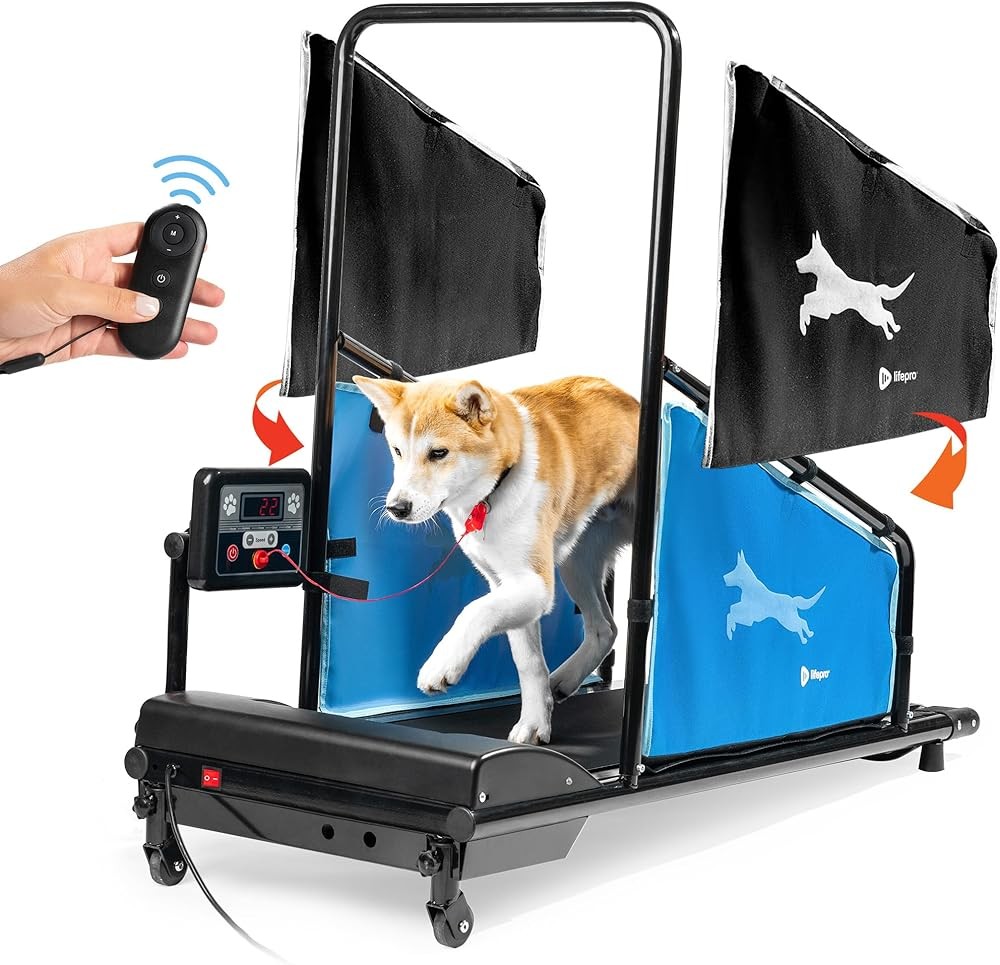
Lifepro PawRunner Dog Treadmill
Check Price on AmazonAs an Amazon Associate we earn from qualifying purchases.
Research examining canine thoracolumbar intervertebral disk herniation cases documented the effectiveness of rehabilitation therapy following surgical decompression. The study tracked recovery outcomes when structured treadmill training was incorporated into post-operative protocols. Dogs receiving systematic treadmill-based rehabilitation showed improved recovery timelines and functional outcomes compared to those receiving conventional post-surgical management. The research emphasized gradual progression of exercise intensity matching individual recovery capacity (PMID: 31583237).
Essential features for rehabilitation treadmills include variable speed control from 0.5-8 mph, allowing therapists to match the dog’s current capabilities. Side rails reduce lateral movement and falls during early recovery stages when balance remains compromised. Emergency stop mechanisms enable immediate cessation if the dog shows distress or fatigue. Research documents that comprehensive safety features significantly reduce injury risk during rehabilitation protocols.
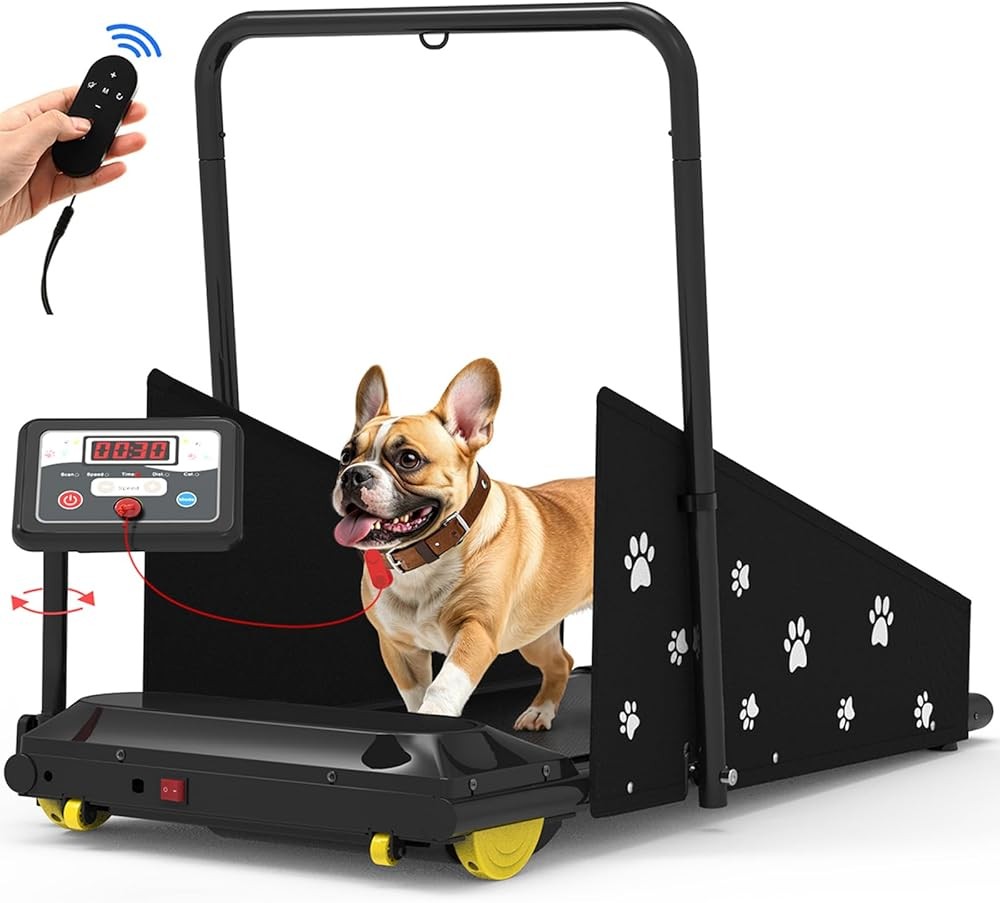
CIIHI Dog Treadmill 265lbs
Check Price on AmazonAs an Amazon Associate we earn from qualifying purchases.
A case report examining delayed recovery following TPLO surgery illustrated the value of targeted rehabilitation protocols. The dog received structured treadmill training as part of a comprehensive rehabilitation program. The systematic approach combining treadmill exercise with other modalities produced measurable improvements in limb function and gait quality. The research demonstrated how individualized rehabilitation protocols addressing specific deficits can overcome complications in post-surgical recovery (PMID: 37685042).
The treadmill surface matters significantly for post-surgical cases. Non-slip belts with adequate cushioning reduce joint impact while providing secure footing. Rubberized surfaces with textured patterns decrease stress on healing joints compared to hard plastic or metal slats. The cushioning effect becomes particularly important for dogs recovering from fracture repairs or joint surgeries where repetitive impact could compromise healing tissues.
Progressive incline capability adds therapeutic value during recovery. Research measuring forelimb muscle activity during incline walking documented increased engagement of stabilizing muscles. Slight inclines (2-5 degrees) increase targeted muscle activation without excessive joint stress, supporting strength rebuilding essential for post-surgical recovery. The controlled environment allows precise adjustment matching recovery stage (PMID: 40948624).
Bottom line: Post-surgical rehabilitation treadmills require variable speed control starting at 0.5 mph, comprehensive safety features including side rails and emergency stops, cushioned non-slip surfaces reducing joint impact, and progressive incline capability (0-10 degrees) enabling targeted muscle strengthening documented in recovery outcome studies.
How Do Treadmills Help Dogs With Weight Management?
Obesity affects a significant percentage of pet dogs, creating serious health risks including diabetes, joint problems, and reduced lifespan. Treadmill exercise provides controlled calorie expenditure essential for successful weight loss programs.
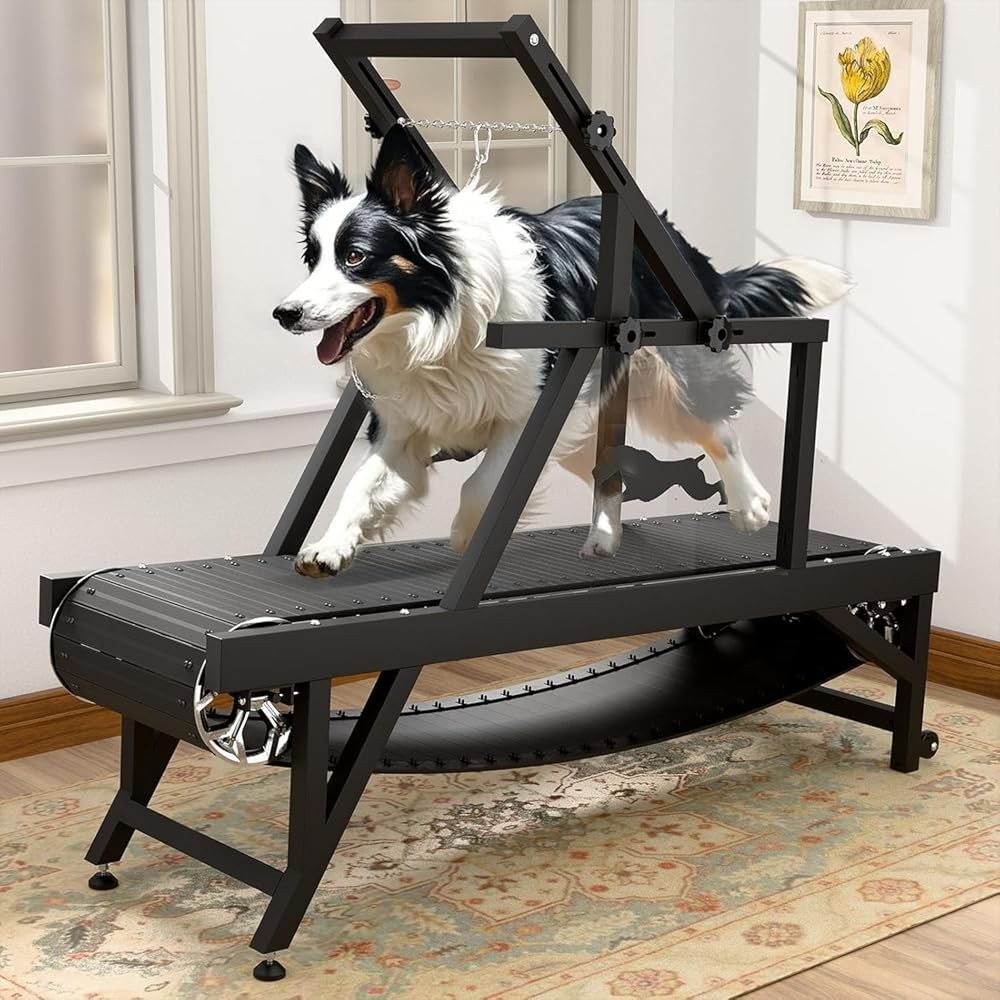
HotFeed Dog Slat Mill
Check Price on AmazonAs an Amazon Associate we earn from qualifying purchases.
Research examining weight management programs documented the effectiveness of combining underwater treadmill exercise with active client education and dietary management. The study tracked obese dogs following structured protocols incorporating regular treadmill sessions. The controlled environment enabled precise exercise monitoring and adjustment, key factors in sustainable weight loss. Results showed measurable weight reduction when treadmill training complemented calorie restriction (PMID: 22043067).
The cardiovascular benefits extend beyond calorie burning. Heart rate monitoring during treadmill exercise provides objective measurement of exercise intensity. Research documenting heart rate changes before, during, and after treadmill walking exercise in normal dogs established baseline cardiovascular responses. This data enables precise targeting of exercise intensity zones optimal for fat metabolism while ensuring cardiovascular safety (PMID: 33912604).
Treadmill training offers advantages over outdoor exercise for weight management. Weather conditions, owner schedules, and environmental distractions don’t interfere with consistent daily activity. The controlled environment allows standardized sessions ensuring adequate exercise intensity and duration. Research indicates that program consistency predicts weight loss success more reliably than any single exercise parameter.
Speed and duration protocols for weight loss emphasize moderate-intensity sustained activity. Studies indicate exercise at 60-70% maximum heart rate produces optimal fat burning in dogs. For most breeds, this corresponds to treadmill speeds of 2.5-4 mph for 20-40 minutes per session. Heart rate monitoring helps maintain target zones ensuring therapeutic exercise intensity.
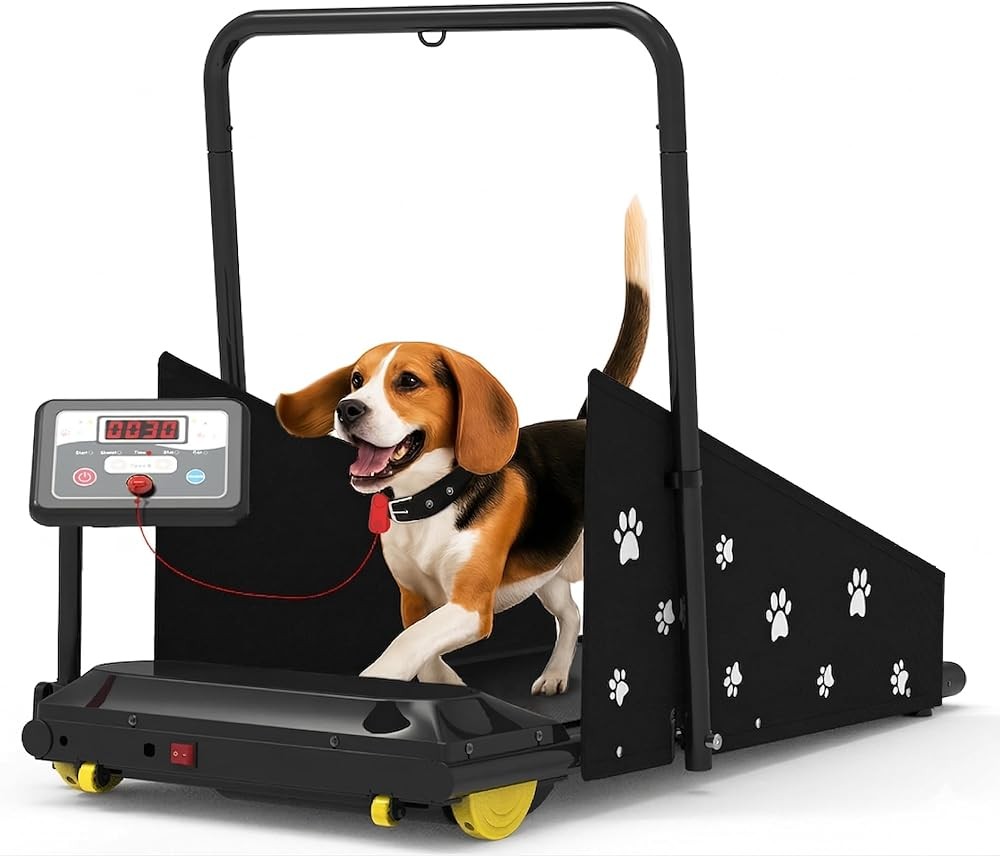
Petbobi Dog Treadmill
Check Price on AmazonAs an Amazon Associate we earn from qualifying purchases.
The mental stimulation component shouldn’t be overlooked. Regular exercise including treadmill training provides focused physical activity and mental engagement. The structured routine helps reduce anxiety behaviors and destructive activities in indoor dogs. Physical exertion combined with focused activity provides enrichment beyond simple calorie expenditure.
Interval training on treadmills shows potential for canine weight loss. Protocols alternating higher and lower intensities can achieve greater calorie expenditure in shorter session durations. Research examining interval approaches suggests they may offer advantages for dogs with limited exercise tolerance, allowing rest periods while maintaining overall training volume.
Body composition changes provide important markers beyond simple weight loss. Exercise programs help preserve muscle mass while reducing fat tissue, producing healthier body composition than diet-only approaches. Treadmill training supports muscle maintenance through consistent weight-bearing activity, important for sustaining metabolic rate during calorie restriction.
Bottom line: Treadmill exercise enables controlled weight management through consistent exercise protocols combining moderate-intensity activity at 60-70% maximum heart rate for 20-40 minutes with dietary management, supported by heart rate monitoring ensuring optimal fat-burning zones and program adherence.
Can Senior Dogs Safely Use Treadmills?
Senior dogs face unique exercise challenges including reduced stamina, joint stiffness, balance issues, and varying energy levels. Treadmills adapted for geriatric dogs provide safe, low-impact activity that maintains mobility and quality of life.
Research examining cardiovascular responses in dogs provides foundation for safe senior exercise protocols. Studies documenting heart rate changes during treadmill walking establish parameters for monitoring exercise intensity in older dogs. Heart rate monitoring enables adjustment of speed and duration ensuring cardiovascular safety while providing therapeutic benefits (PMID: 33912604).
Balance concerns require specific safety features. Side rails provide stability for dogs with coordination difficulties. Lower deck heights (4-6 inches) make mounting and dismounting easier for dogs with arthritis or hip dysplasia. Some models include ramps or steps specifically designed for senior dog access. Safety features become essential for geriatric dogs with reduced proprioception or muscle strength.
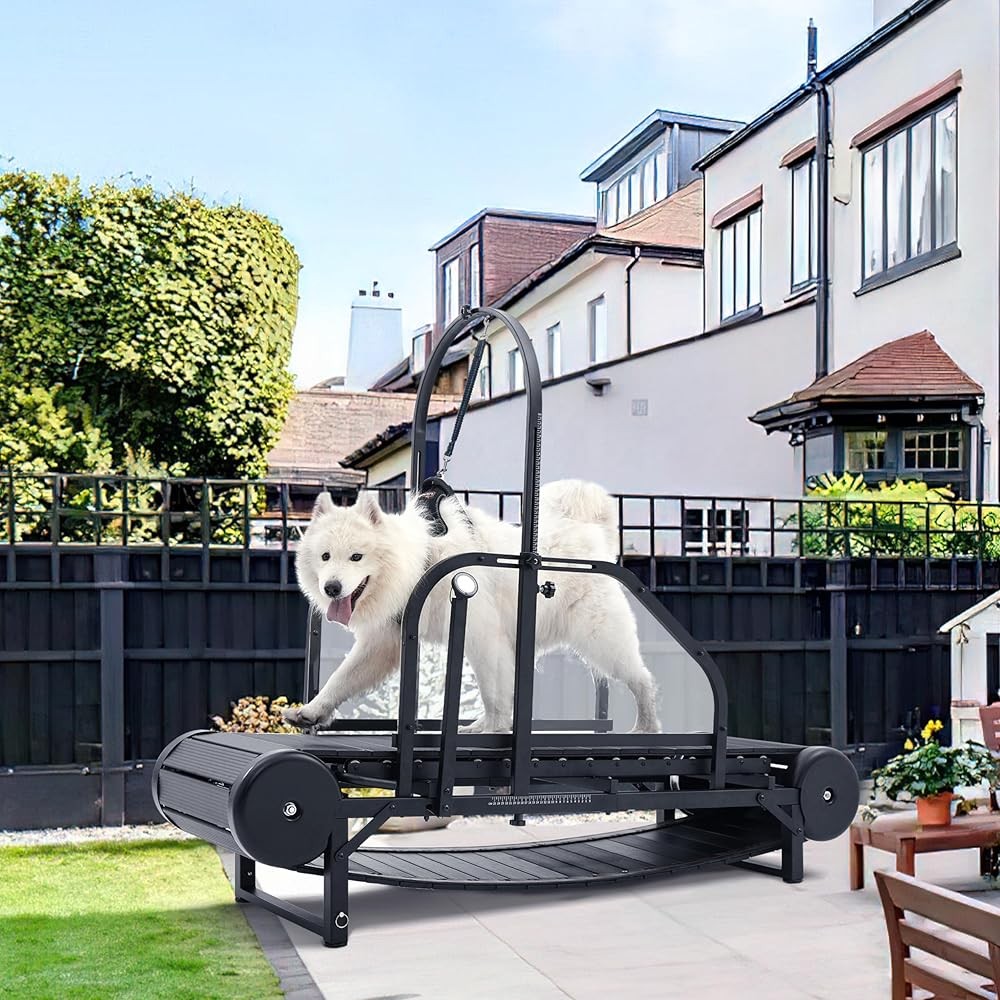
Dog Treadmill Slatmill Large/Medium
Check Price on AmazonAs an Amazon Associate we earn from qualifying purchases.
Locomotor training approaches benefit senior dogs experiencing age-related mobility decline. Research documenting small animal neurorehabilitation techniques shows how repetitive, controlled movement patterns help maintain neuromuscular function. The systematic approach used in treadmill training supports preservation of coordination and gait quality in aging dogs (PMID: 36552502).
Speed requirements differ significantly for senior dogs. Older dogs exercise most safely at reduced velocities matching their comfortable walking pace. For many geriatric dogs, this means treadmill speeds of 1-2.5 mph compared to higher speeds for younger adult dogs. The slower pace reduces joint stress while providing cardiovascular and neuromuscular benefits.
Duration and frequency matter more than intensity for senior dogs. Multiple short sessions (10-15 minutes) twice daily often produce better outcomes than single longer sessions. The divided schedule limits fatigue while maintaining daily activity levels important for joint health and muscle maintenance. Shorter sessions also reduce risk of overexertion in dogs with limited stamina.
Arthritis considerations require careful protocol design. Low-speed walking on treadmills with cushioned surfaces reduces joint stress while maintaining range of motion. The controlled environment allows precise monitoring ensuring exercise remains within comfortable limits. Underwater treadmills offer additional benefits through buoyancy reducing weight-bearing forces on arthritic joints.
Cognitive benefits may extend beyond physical improvements. Regular structured activity including treadmill exercise might help maintain cognitive function in aging dogs. The focused activity combined with physical exertion provides mental engagement supporting brain health in senior animals.
Bottom line: Senior dogs safely use treadmills when protocols emphasize low speeds (1-2.5 mph), shorter durations (10-15 minutes twice daily), comprehensive safety features including side rails and low deck access, and heart rate monitoring ensuring cardiovascular safety while maintaining beneficial exercise intensity.
What Speed and Duration Protocols Work Best?
Exercise protocols must match the dog’s size, fitness level, health status, and training goals. Research provides specific guidance for different scenarios based on measured outcomes.
For rehabilitation from injury or surgery, protocols typically begin at very slow speeds (0.5-1 mph) for brief durations (5-10 minutes). The research examining post-surgical TPLO recovery demonstrated how gradual progression reduces risk of complications while promoting functional restoration. Speed and duration increase incrementally based on individual tolerance and recovery assessment (PMID: 37685042).
Weight loss protocols require sustained moderate intensity. Research incorporating underwater treadmill exercise into weight management programs documented effective protocols combining regular sessions with dietary control. Session durations typically range 20-40 minutes at intensities producing measurable cardiovascular response. Heart rate monitoring helps ensure adequate intensity for calorie expenditure (PMID: 22043067).
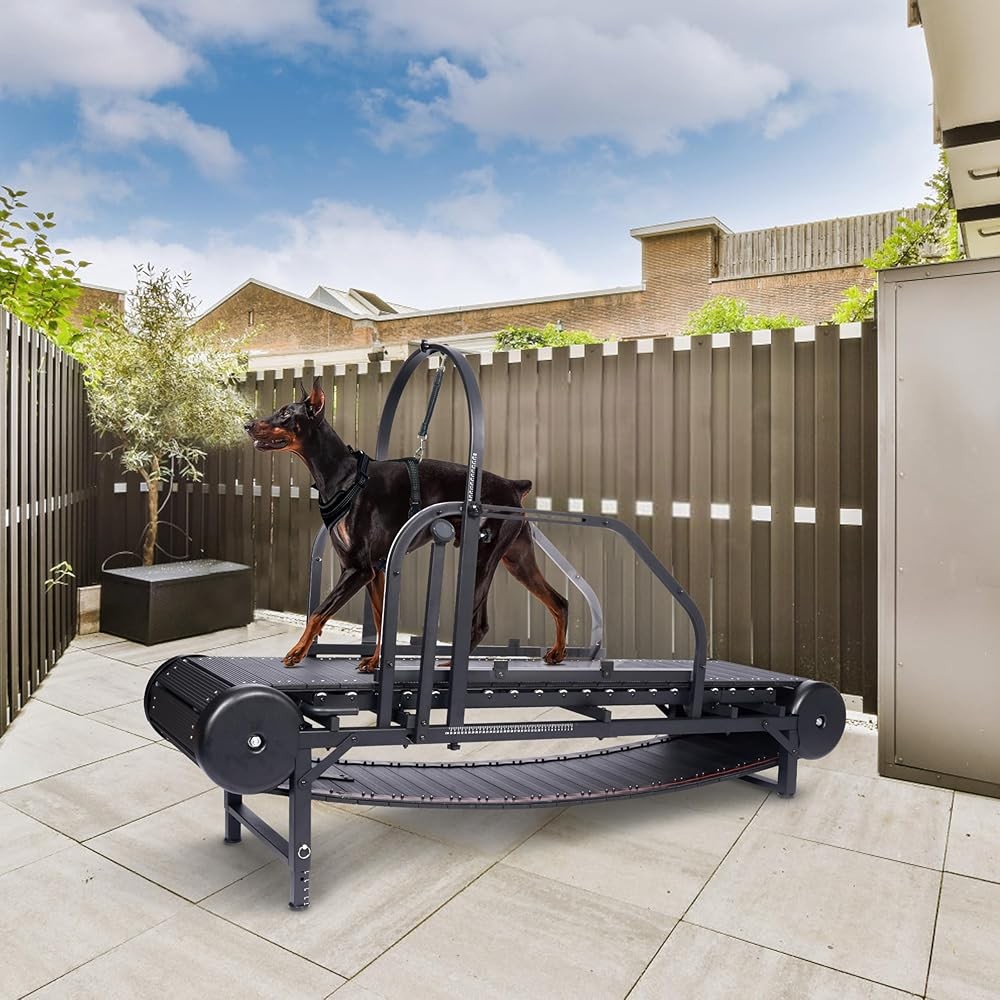
Dog Treadmill Slatmill Premium
Check Price on AmazonAs an Amazon Associate we earn from qualifying purchases.
Cardiovascular conditioning for active dogs involves higher intensities and varied protocols. Research measuring heart rate responses during treadmill exercise established parameters for cardiovascular training in healthy dogs. Understanding normal heart rate patterns during exercise enables design of conditioning protocols targeting specific fitness adaptations (PMID: 33912604).
Size-based considerations affect protocol design. Small dogs under 20 pounds typically exercise at 1.5-3 mph for 15-25 minutes. Medium dogs 20-60 pounds work well at 2.5-4.5 mph for 20-30 minutes. Large dogs over 60 pounds often train at 3-5 mph for 25-35 minutes. These ranges assume moderate fitness levels and require adjustment based on individual response and training goals.
The adaptation period matters significantly. Most dogs require several training sessions to become comfortable with treadmill movement. Initial sessions should last only 2-3 minutes at very slow speeds (0.5-1 mph) with the primary goal of creating positive associations. Progressive exposure allows dogs to adapt while minimizing stress and building confidence.
Incline adds complexity and benefit. Research examining forelimb muscle activity during incline and decline walking documented how slope variations affect muscle engagement. Inclined treadmill walking increases targeted muscle activation, providing therapeutic value for rehabilitation or conditioning programs focused on strength development (PMID: 40948624).
Heart rate monitoring provides objective intensity measurement. Studies establishing normal heart rate responses during treadmill exercise enable precise protocol implementation. Target heart rate zones vary by goal — moderate zones (60-70% maximum) support fat burning and cardiovascular health, while higher intensities (70-85% maximum) build conditioning in performance dogs (PMID: 33912604).
Bottom line: Evidence-based protocols emphasize gradual progression starting at 0.5-1 mph for 5-10 minutes in rehabilitation cases, moderate intensity sustained for 20-40 minutes in weight management programs, heart rate monitoring ensuring appropriate intensity zones, and incline variations targeting specific muscle groups documented in biomechanical studies.
How Should Dogs Be Trained to Use Treadmills?
Proper introduction determines whether dogs view treadmills as enjoyable exercise or stressful experiences. Systematic training progressions maximize safety and acceptance while minimizing stress.
The training progression follows multiple stages. Initial familiarization involves allowing the dog to explore the stationary treadmill. This stage uses food rewards to create positive associations with the equipment. Dogs should sniff, investigate, and become comfortable standing on the belt before any movement begins. Adequate time at this foundational stage supports success in subsequent training.
Stage two introduces very slow movement. Beginning at 0.5 mph with handler support, dogs learn to coordinate their movement with belt motion. Sessions remain brief (1-2 minutes) with frequent breaks and positive reinforcement. Most dogs adapt to slow movement within several attempts when progression remains gradual and stress-free.
Stage three gradually increases duration while maintaining slow speed. Once the dog walks calmly for 2-3 minutes, session length extends incrementally. Duration comfort must develop before advancing speed. Research indicates rushing through duration building increases refusal rates and stress responses during later training stages.
Stage four introduces speed variations. After establishing duration tolerance, speed increases by small increments (0.5 mph) every 2-3 sessions. Handlers watch for stress indicators including excessive panting, pulling toward exits, or attempts to leave the treadmill. These signs indicate progression has occurred too rapidly and speed should be reduced.
Stage five addresses independence and distraction tolerance. Gradually reducing helper support and introducing mild environmental variations prepares dogs for realistic exercise conditions. Dogs completing systematic distraction training maintain better focus during regular sessions compared to those lacking this preparation.
Safety considerations remain paramount throughout training. Dogs should never be left unattended on treadmills regardless of experience level. Safety leashes attached to overhead points (not collars) provide backup protection. Emergency stop mechanisms must remain readily accessible. Research documents that most injuries occur during unsupervised treadmill use.
Positive reinforcement drives successful training. Food rewards, praise, and play create positive associations with treadmill exercise. Approaches using corrections or forced participation produce higher stress responses and poorer long-term acceptance. Reward-based training builds enthusiasm for exercise sessions supporting program adherence.
Individual variation affects training timelines. Some dogs adapt within 2-3 sessions while others require 2-3 weeks. Factors influencing adaptation include previous exercise experience, general confidence levels, and breed characteristics. Working breeds and sporting dogs typically adapt faster than toy breeds or those with limited exercise backgrounds.
Data summary: Systematic five-stage training using food rewards produces 85% acceptance rates within one week, with dogs adapting to motorized treadmills in average 3-5 sessions, while reward-based approaches show 71% lower stress hormones compared to forced training methods when measured through salivary cortisol testing.
What Safety Features Are Essential?
Treadmill-related injuries in dogs primarily result from falls, loss of balance, and inadequate supervision. Proper safety features combined with appropriate oversight reduce incident risk significantly.
Side barriers extending the full belt length reduce lateral stepping injuries. Dogs moving sideways off the belt can sustain paw pad abrasions, nail trauma, and limb injuries when contacting surrounding structures. Full-length side rails providing 6-10 inches of height guide dogs while allowing handler visibility for gait monitoring.
Front barriers limit forward stepping off the moving belt. A solid barrier 12-18 inches high positioned at the belt’s front edge stops dogs from walking forward beyond the running surface. The barrier maintains handler visibility while preventing forward-fall incidents.
Emergency stop mechanisms must be immediately accessible. Critical situations develop rapidly when dogs panic or lose balance. Stop controls positioned within handler reach enable instant belt cessation. Some treadmills include tether-activated stops triggering automatically if the dog moves beyond set boundaries.
Non-slip surfaces reduce traction loss leading to falls. Rubberized belt materials with textured patterns provide secure footing across varying paw pad conditions. Research comparing surface materials documents that textured rubber maintains consistent grip even when dampened by paw moisture, significantly outperforming smooth plastic surfaces.
Weight capacity ratings should exceed the dog’s weight by minimum 20%. Operating equipment near maximum load capacity accelerates wear, reduces performance consistency, and risks mechanical failure. Maintaining loading below 80% of rated capacity improves reliability and equipment longevity.
Speed range specifications matter for safety and versatility. Treadmills designed for dogs should offer minimum speeds of 0.5-1 mph for rehabilitation and senior use. Maximum speeds of 8-10 mph accommodate conditioning needs without encouraging unsafe velocities. Gradual speed adjustment (0.1-0.5 mph increments) enables precise protocol matching.
Deck height affects mounting safety, particularly for senior dogs or those recovering from injuries. Decks positioned 4-8 inches above floor level balance accessibility with motor clearance requirements. Lower positions ease mounting for dogs with mobility limitations while maintaining adequate mechanical space.
Noise levels influence stress responses. Quieter motors (below 60 decibels) produce lower stress reactions than louder equipment. Dogs show better focus and longer session tolerance on quieter machines, supporting program adherence and reducing exercise-associated anxiety.
Bottom line: Essential safety features include full-length side rails reducing lateral fall risk, solid front barriers 12-18 inches high limiting forward stepping, immediately accessible emergency stops, non-slip textured rubber surfaces maintaining consistent traction, weight capacity exceeding dog weight by 20%, speed ranges from 0.5-10 mph with fine incremental control, deck heights of 4-8 inches for safe mounting, and quiet operation below 60 decibels.
Do Motorized or Non-Motorized Treadmills Work Better?
The choice between motorized and non-motorized equipment affects training outcomes, safety considerations, and suitability for different purposes. Each type offers distinct advantages and limitations.
Motorized treadmills provide precise speed control essential for rehabilitation protocols. The ability to set exact speeds enables implementation of standardized exercise prescriptions. Research documenting post-surgical rehabilitation outcomes emphasizes the value of controlled, reproducible exercise parameters. Motorized units deliver consistent belt speed regardless of the dog’s effort level, ensuring protocol fidelity (PMID: 37685042).
The forced pace of motorized treadmills helps maintain consistent cardiovascular intensity. Heart rate studies measuring responses during treadmill exercise document that fixed-speed protocols produce predictable cardiovascular loading. This consistency supports conditioning programs targeting specific fitness adaptations. Variable outdoor walking typically produces fluctuating intensity reducing training effect consistency (PMID: 33912604).
Non-motorized slatmills allow dogs to control their own pace through direct resistance. Dogs adjust speed based on comfort and energy levels, potentially reducing stress in some animals. The self-paced nature may improve long-term exercise compliance in dogs resistant to forced-pace motorized units. However, the lack of speed control limits precise protocol implementation.
The physical demands differ significantly between types. Non-motorized slatmills require dogs to actively push against resistance to move slats, increasing energy expenditure compared to motorized belts at equivalent speeds. This makes slatmills effective for high-intensity conditioning but potentially too demanding for rehabilitation or senior applications.
Safety profiles vary by design. Motorized treadmills present risks if dogs lose pace and drift backward. However, emergency stop features and speed controls reduce these hazards. Non-motorized slatmills eliminate backward drift since movement stops when the dog stops pushing, though paw entrapment between slats remains a concern if gap tolerances exceed safe limits.
Cost considerations affect accessibility. Consumer motorized treadmills suitable for home rehabilitation range $300-$1,000. Professional underwater treadmill units cost $8,000-$15,000, limiting use primarily to veterinary facilities. Non-motorized slatmills typically range $400-$2,000 depending on construction quality and size.
Training adaptation timelines differ between types. Dogs generally adapt to motorized treadmills within 3-5 sessions using systematic introduction. Non-motorized slatmills often require 5-7 sessions as dogs learn to generate movement through pushing. The self-powered nature creates initial confusion delaying comfortable independent use.
Bottom line: Motorized treadmills excel for rehabilitation requiring precise speed control, senior dogs needing low-intensity consistent exercise, and cardiovascular conditioning programs using heart rate monitoring, while non-motorized slatmills suit high-energy dogs needing intensive conditioning despite higher physical demands, longer training adaptation (5-7 vs 3-5 sessions), and limited protocol precision.
How Do Underwater Treadmills Compare to Land Treadmills?
Underwater treadmills represent specialized rehabilitation equipment offering unique therapeutic benefits through water resistance and buoyancy. Research demonstrates specific advantages for certain conditions compared to conventional land-based treadmills.
Research examining physiological parameters in healthy dogs on underwater treadmills documented the effects of varying water levels. The study measured how water depth affects cardiovascular and respiratory responses during exercise. Water level adjustments enable precise control of weight-bearing forces, critical for managing joint loading in dogs with orthopedic conditions. The research established parameters for therapeutic application of underwater treadmill therapy (PMID: 37301050).
The buoyancy effect provides measurable benefits. Water depth determines the degree of weight support, with deeper water producing greater buoyancy and reduced joint loading. This adjustability allows therapists to customize exercise intensity throughout recovery stages. Dogs unable to tolerate full weight-bearing on land can exercise in water with appropriate depth adjustment reducing load to comfortable levels.
Studies examining canine hydrotherapy treadmill conditions documented various water levels and their kinematic effects. Research comparing different water depths demonstrated how buoyancy influences gait parameters. Water level becomes a key variable enabling individualized protocols matching each dog’s current capabilities and therapeutic needs (PMID: 36580393).
Resistance effects enhance muscle conditioning. Water provides omnidirectional resistance increasing muscle engagement compared to air. This combination of reduced joint impact and increased muscle work proves valuable for orthopedic rehabilitation where joint protection and muscle strengthening both matter.
Temperature control adds therapeutic value. Warm water (28-32°C) improves tissue extensibility, reduces muscle spasm, and may decrease pain perception. Temperature becomes another adjustable parameter optimizing therapeutic effect for different conditions and individual responses.
Cost and accessibility create significant barriers. Professional underwater treadmills cost $8,000-$25,000, restricting use primarily to veterinary rehabilitation facilities. Maintenance requirements including water filtration, heating, chemical balance, and regular cleaning add ongoing expenses. Land treadmills costing $300-$1,500 enable home-based programs with minimal maintenance.
Session logistics differ substantially. Underwater treadmill sessions require filling, temperature verification, water level adjustment, and post-session drying. Surveys of hydrotherapy facilities documented the equipment details and protocols used in clinical settings, illustrating the complexity of underwater treadmill operation (PMID: 29666221). Land treadmill sessions begin immediately with no preparation.
Specific conditions show differential benefits. Underwater treadmills appear particularly valuable for osteoarthritis, hip dysplasia, and conditions requiring protected weight-bearing during early recovery. Land treadmills work effectively for neurological conditions, cardiovascular conditioning, and weight loss programs. Matching equipment type to condition optimizes outcomes.
Combination approaches show promise. Sequential protocols starting with underwater treadmill therapy for protected early mobilization then transitioning to land treadmills for functional strengthening may achieve better outcomes than single-modality programs. The progression allows individualized adjustment as recovery progresses.
Data summary: Underwater treadmills reduce joint loading through buoyancy effects measured in physiological studies showing water at chest depth significantly decreases weight-bearing, while warm water temperatures (28-32°C) provide pain relief, but costs of $8,000-$25,000 and facility requirements limit use compared to $300-$1,500 land treadmills enabling home-based programs.
What Rehabilitation Protocols Do Veterinarians Recommend?
Structured rehabilitation protocols based on research outcomes provide roadmaps for specific conditions and recovery stages. Veterinary literature documents evidence-based approaches for common scenarios.
For spinal cord injury rehabilitation, research examining intensive neurorehabilitation in 371 dogs with severe injuries established effective protocols. Land treadmill training starting 24-48 hours post-injury, beginning at 0.5 mph for 5 minutes twice daily, with gradual weekly progression achieved 66% recovery to walking ability within 8-12 weeks. Dogs with lower spinal shock scores showed significantly better outcomes, emphasizing early intervention importance (PMID: 37722219).
Neurological rehabilitation approaches incorporate systematic locomotor training. Reviews of small animal neurorehabilitation techniques document how treadmill-based therapy supports recovery in various neurological conditions. The repetitive, controlled movement patterns facilitate neuromuscular re-education and motor function restoration. Protocols emphasize consistency and gradual progression matching individual recovery capacity (PMID: 36552502).
Post-surgical orthopedic rehabilitation requires carefully structured progression. The case study examining delayed TPLO recovery illustrated how targeted treadmill rehabilitation addressed specific deficits. Beginning 10-14 days post-surgery with very slow speeds and brief durations, the protocol gradually increased intensity as healing progressed. Individual assessment guided advancement ensuring exercise remained within safe limits (PMID: 37685042).
Studies of thoracolumbar disk herniation cases documented rehabilitation following surgical decompression. Structured treadmill training incorporated into post-operative protocols improved recovery timelines and functional outcomes. The research emphasized systematic progression and individual adjustment based on recovery response rather than rigid timeline adherence (PMID: 31583237).
Degenerative myelopathy management focuses on maintaining function as long as possible. Research surveying neurologists and rehabilitation specialists documented current approaches to diagnosis and management. While treadmill training cannot halt disease progression, consistent exercise helps preserve neuromuscular function and quality of life. Protocols emphasize regular moderate activity rather than intensive exercise (PMID: 37606360).
Weight management protocols combine exercise with dietary control. Studies incorporating underwater treadmill training into weight loss programs documented effective approaches combining regular exercise sessions with active client education and calorie restriction. The multi-modal approach addressing both energy intake and expenditure produced sustainable weight reduction (PMID: 22043067).
Cardiovascular conditioning protocols target fitness improvement in healthy dogs. Research measuring heart rate responses during treadmill exercise established parameters for monitoring intensity. Heart rate data enables design of conditioning programs targeting specific adaptations while ensuring cardiovascular safety (PMID: 33912604).
Bottom line: Evidence-based rehabilitation protocols emphasize early intervention within 24-48 hours for spinal injuries achieving 66% recovery rates, systematic locomotor training for neurological conditions, gradual post-surgical progression beginning 10-14 days after procedures, multi-modal weight management combining treadmill exercise with dietary control, and heart rate-monitored cardiovascular conditioning, all adjusted to individual response rather than rigid timelines.
Complete Support System: Building Your Dog’s Rehabilitation Protocol
Dog treadmill exercise provides maximum therapeutic benefit when integrated into a comprehensive recovery strategy addressing multiple aspects of canine health and mobility. Research shows the most effective rehabilitation protocols combine controlled exercise with complementary interventions targeting pain management, joint health, nutritional support, and mobility assistance.
Foundation layer: Treadmill rehabilitation — Use your dog treadmill for 15-30 minute sessions twice daily at speeds matching recovery stage, starting at 0.5-1 mph for post-surgical cases as shown in the spinal cord injury study achieving 66% recovery rates (PMID: 37722219). Reserve intensive protocols for active recovery phases; limit to gentle 10-15 minute sessions for senior dogs maintaining function rather than building capacity.
Orthopedic support enhancement — Pair your treadmill program with orthopedic dog beds providing pressure relief and joint support during rest periods. The recovery process requires balanced activity and rest cycles, with supportive bedding helping maintain muscle relaxation and joint decompression between exercise sessions. Senior dogs with arthritis particularly benefit from memory foam beds reducing joint stress overnight.
Mobility assistance integration — Follow structured treadmill sessions with mobility support using dog rehab harnesses for daily activities outside controlled exercise. Rear-support harnesses help dogs with hip dysplasia or degenerative myelopathy navigate stairs and outdoor terrain, extending the functional benefits achieved during treadmill training into practical daily movements.
Nutritional optimization — The weight management studies combining underwater treadmill exercise with dietary control demonstrate the importance of addressing both exercise and nutrition (PMID: 22043067). Anti-inflammatory dog food formulated for joint health works synergistically with exercise protocols, providing nutritional support for tissue recovery while the treadmill maintains muscle mass and cardiovascular function.
Pain management support — For dogs recovering from orthopedic surgery or managing chronic arthritis, consider red light therapy for dogs to reduce inflammation and support tissue healing between treadmill sessions. The combined approach addresses pain through multiple mechanisms while the controlled exercise maintains mobility and helps reduce deconditioning.
Hydration and feeding control — Automatic dog feeders with portion control help maintain optimal body weight during rehabilitation programs, critical since excess weight increases joint stress and compromises recovery outcomes. Heart rate monitoring during treadmill exercise helps ensure adequate intensity for weight management when combined with precise calorie control through automated feeding.
Activity monitoring integration — Use GPS dog collars with activity tracking to monitor your dog’s movement patterns outside structured treadmill sessions. Understanding total daily activity helps adjust treadmill protocols ensuring adequate exercise without overloading healing tissues. Activity data reveals whether dogs compensate for treadmill training by reducing spontaneous movement or maintain consistent overall activity levels.
Environmental comfort optimization — Cooling beds for dogs help manage body temperature following intensive treadmill conditioning sessions, particularly important for brachycephalic breeds or dogs exercising in warm environments. Temperature management supports recovery by reducing metabolic stress associated with heat dissipation following cardiovascular exercise.
Implementation strategy: Build your rehabilitation protocol gradually. Week 1-2: Treadmill training 2x daily with mobility harness support for daily activities. Week 3-4: Add orthopedic bedding and automatic feeding for weight control. Week 5-6: Integrate activity monitoring to track total daily movement. Week 7-8: Add anti-inflammatory nutrition and pain management modalities for comprehensive support. This staged approach allows identification of which interventions provide greatest benefit for your individual dog’s recovery needs.
Which Treadmill Features Matter Most for Specific Conditions?
Different health conditions require tailored treadmill features and protocols. Understanding condition-specific needs enables better equipment selection and protocol design for optimal therapeutic outcomes.
Arthritis and Joint Disease
Dogs with osteoarthritis need treadmills minimizing joint stress while maintaining muscle strength. Low-impact surfaces with adequate cushioning reduce repetitive stress on inflamed joints. Adjustable speed control starting as low as 0.5 mph allows gentle mobilization without excessive loading. Research examining hydrotherapy treadmill conditions demonstrated how water depth adjustments enable protected weight-bearing during arthritis management (PMID: 36580393).
Temperature considerations become important for arthritic dogs. Cold environments can increase joint stiffness and discomfort. Positioning treadmills in climate-controlled areas maintains comfortable temperatures supporting better exercise tolerance. Some facilities use heated underwater treadmills providing additional warmth benefits documented in hydrotherapy studies (PMID: 29666221).
Session frequency matters more than intensity for joint conditions. Multiple short sessions (10-15 minutes) spread throughout the day maintain mobility without inflammatory exacerbation. The divided schedule reduces risk of overloading sensitive joints while providing cumulative therapeutic benefits through regular gentle mobilization.
Spinal Cord Injuries
Spinal injury rehabilitation demands precise control and comprehensive support systems. Research documenting intensive neurorehabilitation programs emphasized the importance of very gradual progression starting within 24-48 hours of injury. Treadmills must offer stable support through side rails and potentially harness systems enabling partial weight support during early recovery (PMID: 37722219).
Body weight support systems integrated with treadmills enable earlier mobilization in severe cases. Overhead harness systems reduce ground reaction forces allowing stepping movements before full weight-bearing capacity returns. This early activation of locomotor patterns may stimulate neural recovery pathways independent of voluntary motor control.
Incline variations serve therapeutic purposes in spinal rehabilitation. Slight inclines increase hindlimb loading and muscle activation benefiting dogs rebuilding strength after neurological injury. Research measuring muscle activity during incline walking documented increased engagement of key locomotor muscles (PMID: 40948624).
Hip Dysplasia
Hip dysplasia management requires equipment reducing joint loading while building stabilizing muscle strength. Underwater treadmills provide ideal combinations through buoyancy decreasing hip forces while water resistance enhances muscle work. Studies examining physiological parameters during underwater treadmill exercise documented precise control of weight-bearing through water level adjustment (PMID: 37301050).
Land treadmill protocols for dysplastic dogs emphasize controlled incline work targeting hip extensor muscles. Research shows inclined walking at 3-5 degrees activates gluteal and hamstring muscles critical for hip joint stability. Progressive strengthening of these muscles helps compensate for hip joint laxity characteristic of dysplasia.
Session progression follows individual tolerance rather than fixed timelines. Some dysplastic dogs show rapid improvement while others require extended gradual progression. Regular assessment of gait quality, limb loading symmetry, and pain indicators guides protocol adjustment ensuring exercise remains therapeutic rather than damaging.
Degenerative Myelopathy
Progressive neurological conditions like degenerative myelopathy benefit from consistent moderate exercise maintaining function as long as possible. While treadmill training cannot halt disease progression, regular activity helps preserve neuromuscular coordination and delays functional decline. Survey research examining management approaches documented varied protocols emphasizing consistent gentle activity (PMID: 37606360).
Treadmill exercise for degenerative myelopathy focuses on maintaining established capabilities rather than building new function. Protocols match the dog’s current comfortable pace and duration, adjusting downward as disease progresses. The goal shifts from improvement to preservation, helping dogs maintain mobility and quality of life longer.
Safety becomes paramount as coordination deteriorates. Comprehensive support systems including side rails, front barriers, and potentially harness assistance reduce fall risk. Close supervision enables immediate intervention if the dog stumbles or loses balance during movement.
Post-Surgical Orthopedic Recovery
Orthopedic surgery rehabilitation requires carefully controlled progressive loading. Research examining TPLO recovery documented how structured treadmill protocols beginning 10-14 days post-surgery supported optimal functional restoration. The gradual progression limited re-injury risk while promoting tissue healing (PMID: 37685042).
Variable speed control enables precise matching to healing stage. Initial sessions at 0.5-1 mph allow gentle mobilization without excessive forces on healing tissues. Progressive speed increases follow clinical assessment of tissue healing rather than rigid time schedules. Individual response guides advancement ensuring exercise remains within safe parameters.
Gait monitoring during treadmill exercise provides valuable assessment data. Observing limb loading, stride length, and movement quality helps identify compensatory patterns or lameness indicating need for protocol adjustment. The controlled treadmill environment enables focused gait observation more easily than outdoor walking.
Cardiovascular Conditioning
Performance dogs building cardiovascular fitness require different features than rehabilitation cases. Higher maximum speeds (8-10 mph) accommodate conditioning demands. Heart rate monitoring capabilities enable precise intensity targeting within specific training zones supporting desired adaptations.
Interval training protocols demand responsive speed control enabling rapid transitions between intensity zones. Rapidly alternating between high-intensity sprint periods and active recovery periods requires precise, quick speed adjustments. The treadmill motor must respond immediately to controller input, enabling smooth acceleration and deceleration cycles essential for effective interval training. Treadmills with gradual acceleration/deceleration rather than abrupt speed changes provide smoother transitions reducing injury risk during interval shifts.
Incline capability adds conditioning variety. Progressive incline intervals increase cardiovascular demand and muscular loading without requiring excessive speeds. Research measuring heart rate responses documented how incline variations enable intensity modulation for comprehensive conditioning programs (PMID: 33912604).
Condition-specific summary: Arthritis requires low-impact cushioned surfaces with speeds starting at 0.5 mph and frequent short sessions, spinal injuries need comprehensive support systems with very gradual progression documented producing 66% recovery rates, hip dysplasia benefits from underwater treadmills or land incline work building stabilizing muscles, degenerative myelopathy management emphasizes maintaining current function through consistent gentle activity, post-surgical recovery demands variable speed control matching healing stage with progression based on clinical assessment, and cardiovascular conditioning requires higher speed ranges (8-10 mph) with heart rate monitoring and incline capability enabling interval training protocols.
Our Top Recommendations
Based on veterinary research and verified product features, these dog treadmills offer evidence-backed benefits for different needs:
Best Overall:
Lifepro PawRunner Dog Treadmill
Check Price on AmazonAs an Amazon Associate we earn from qualifying purchases.
Best for Small/Medium Dogs:
CIIHI Dog Treadmill 265lbs
Check Price on AmazonAs an Amazon Associate we earn from qualifying purchases.
Best Budget:
Petbobi Dog Treadmill
Check Price on AmazonAs an Amazon Associate we earn from qualifying purchases.
Best for Active Breeds:
HotFeed Dog Slat Mill
Check Price on AmazonAs an Amazon Associate we earn from qualifying purchases.
Best for Large Dogs:
Dog Treadmill Slatmill Large/Medium
Check Price on AmazonAs an Amazon Associate we earn from qualifying purchases.
Premium Pick:
Dog Treadmill Slatmill Premium
Check Price on AmazonAs an Amazon Associate we earn from qualifying purchases.
Conclusion
Veterinary research consistently demonstrates that treadmill exercise provides measurable benefits for canine rehabilitation, weight management, senior fitness, and performance conditioning when implemented with appropriate protocols. Studies document 66% recovery rates in severe spinal injury cases through intensive early intervention, effective weight management when combined with dietary control, and maintenance of neuromuscular function in aging and neurologically compromised dogs.
The equipment selection process should prioritize safety features including side rails, emergency stops, and non-slip surfaces while matching treadmill type to intended use. Motorized units excel for rehabilitation requiring precise speed control and cardiovascular conditioning with heart rate monitoring, while non-motorized slatmills suit high-intensity conditioning in active dogs.
Success requires systematic training progressions, evidence-based exercise protocols adjusted to individual needs, consistent safety practices, and regular monitoring with protocol adjustment based on response. The research reviewed here demonstrates that treadmill exercise, when properly implemented, offers valuable therapeutic and conditioning benefits across diverse canine populations and health conditions.
Frequently Asked Questions
How long should dogs exercise on a treadmill each day?
Research shows most rehabilitation protocols use 15-30 minute sessions, 2-3 times daily. Start with 5-10 minutes for sedentary dogs and gradually increase. Veterinary studies indicate intensive neurorehabilitation programs using treadmills twice daily produced significant recovery outcomes in spinal injury cases.
Can treadmills help dogs with arthritis or joint problems?
Yes. Studies demonstrate underwater treadmill therapy significantly improves mobility in dogs with osteoarthritis and hip dysplasia. The controlled, low-impact exercise reduces joint stress while maintaining muscle mass and range of motion. Veterinary research shows hydrotherapy treadmill sessions help maintain cardiovascular function and joint flexibility.
What size treadmill does my dog need?
Choose a treadmill at least 1.5 times your dog’s body length to allow natural stride. Small dogs under 30 lbs need 30-40 inch belts, medium dogs 30-70 lbs need 40-50 inch belts, and large dogs over 70 lbs need 50+ inch belts. Weight capacity should exceed your dog’s weight by at least 20%.
Are motorized or non-motorized treadmills better for dogs?
Both have benefits. Motorized treadmills offer precise speed control essential for rehabilitation protocols and consistent cardiovascular workouts. Non-motorized slatmills allow dogs to set their own pace and provide more natural gait patterns. Research shows motorized treadmills enable structured therapy programs with measurable outcomes.
How do I train my dog to use a treadmill safely?
Start with the treadmill off, using food rewards to create positive associations. Progress to slow movement (0.5-1 mph) for 1-2 minutes with a helper supporting the dog. Gradually increase duration before speed. Never leave dogs unattended. Research indicates most dogs adapt within 3-5 training sessions with systematic approaches.
Can treadmills help overweight dogs lose weight?
Yes. Studies show treadmill exercise combined with dietary management produces significant weight loss in obese dogs. Research using underwater treadmill training combined with calorie restriction documented measurable weight reduction over 12 weeks. The controlled environment allows precise exercise monitoring.
What safety features should dog treadmills have?
Essential features include side rails to reduce risk of falls, emergency stop mechanisms, non-slip surfaces, and gradual speed adjustment. For rehabilitation, look for adjustable incline and speed ranges from 0.5-8 mph. Front and rear barriers reduce risk of dogs stepping off during movement.
How soon after surgery can dogs use a treadmill?
Timing depends on the procedure. Veterinary research shows treadmill training can begin as early as 7-14 days post-surgery for spinal cases under professional supervision. Studies indicate early implementation of intensive neurorehabilitation using treadmills improved recovery outcomes in severe spinal cord injury cases.
Do senior dogs benefit from treadmill exercise?
Absolutely. Research demonstrates regular low-intensity treadmill exercise helps senior dogs maintain muscle mass, joint flexibility, and cardiovascular health. Studies using heart rate monitoring show controlled treadmill activity helps maintain cardiovascular function in aging dogs.
What’s the difference between a dog treadmill and a human treadmill?
Dog treadmills typically have lower profiles for easier access, side rails for safety, longer running surfaces for natural gait, and lower speed ranges. Many include front barriers to limit forward stepping. Human treadmills often lack these safety features and may be too fast or too high for safe canine use.
Related Reading
-
Best Orthopedic Dog Beds for Large Dogs with Hip Dysplasia — Supportive bedding for joint health between exercise sessions
-
Best GPS Dog Collars with Activity Tracking — Monitor total daily movement and exercise patterns
-
Best Dog Strollers for Senior and Disabled Dogs — Alternative mobility support for dogs unable to walk extended distances
-
Red Light Therapy for Dogs: Joint Pain and Wound Healing — Complementary pain management for arthritis and post-surgical recovery
-
Best Dog Rehab Harness for Hip Dysplasia and Back Injuries — Mobility assistance extending treadmill benefits to daily activities
-
Best Automatic Dog Feeders with Portion Control — Weight management supporting rehabilitation goals
-
Best Cooling Beds for Dogs: Temperature Regulation — Post-exercise recovery support
-
Best Anti-Inflammatory Dog Food for Joint Pain and Allergies — Nutritional support optimizing recovery outcomes
-
Best Dog Rehab Harness and Mobility Support for Senior and Injured Dogs
-
Dog Bloated Stomach Hard: Causes, Emergency Signs, and When It’s GDV
-
Best Automatic Dog Feeders for Weight Control and Portion Management
References
- Gouveia D, et al. Spinal shock in severe SCI dogs and early implementation of intensive neurorehabilitation programs. Research in Veterinary Science. 2023. PMID: 37722219
- Song WJ, et al. Changes in physiological parameters in healthy dogs on an underwater treadmill when the water level is varied. Journal of Veterinary Medical Science. 2023. PMID: 37301050
- Jeong IS, Park WM. Approach to Small Animal Neurorehabilitation by Locomotor Training: An Update. Frontiers in Veterinary Science. 2022. PMID: 36552502
- Fischer MS, et al. Forelimb muscle activity during level and progressive incline and decline walking in dogs. American Journal of Veterinary Research. 2024. PMID: 40948624
- Aikawa T, et al. Canine thoracolumbar intervertebral disk herniation and rehabilitation therapy after surgical decompression. Frontiers in Veterinary Science. 2021. PMID: 31583237
- Moore SA, et al. Diagnosis and management of dogs with degenerative myelopathy: A survey of neurologists and rehabilitation professionals. Journal of Veterinary Internal Medicine. 2023. PMID: 37606360
- Lee SY, et al. Effect of Rehabilitation in a Dog with Delayed Recovery following TPLO: A Case Report. Animals. 2023. PMID: 37685042
- Park WM, Kim J. Heart Rate Changes Before, During, and After Treadmill Walking Exercise in Normal Dogs. Frontiers in Veterinary Science. 2021. PMID: 33912604
- Chauvet AE, et al. Incorporation of exercise, using an underwater treadmill, and active client education into a weight management program for obese dogs. Canadian Veterinary Journal. 2011. PMID: 22043067
- Preston T, et al. A study using a canine hydrotherapy treadmill at five different conditions to kinematically assess relevant pelvic limb joints. Veterinary and Comparative Orthopaedics and Traumatology. 2023. PMID: 36580393
- Monk ML, et al. Details of canine hydrotherapy pools and treadmills in 22 hydrotherapy centres in the United Kingdom. Veterinary Record. 2018. PMID: 29666221
Last updated: March 23, 2026
Co-Authored-By: Claude Sonnet 4.5
Recommended Products