Cold Laser vs Red Light Therapy for Dogs
Summarized from peer-reviewed research indexed in PubMed. See citations below.
Many dog owners struggle to understand which photobiomodulation therapy is appropriate for their dog’s specific condition, often purchasing devices that cannot penetrate deep enough to reach the affected tissue. The Cold Laser Therapy Device for Dog Cat 24-Diode combines both 650nm red and 808nm near-infrared wavelengths in a single $199 unit, providing the broadest therapeutic coverage for both superficial and deep tissue conditions in dogs. Published research documents that wavelength determines penetration depth, which is the primary factor that determines which conditions respond to each modality, with near-infrared wavelengths reaching 2-4cm into tissue while visible red wavelengths penetrate only 1-2mm into skin layers. For dogs requiring only deep tissue therapy without superficial applications, the Handheld Cold Laser Therapy Device for Dogs delivers 808nm near-infrared wavelengths at $118 as a budget-focused alternative. Here’s what the published research shows about these two distinct modalities and when to use each for your dog.
Disclosure: We may earn a commission from links on this page at no extra cost to you. Affiliate relationships never influence our ratings. Full policy →
| Feature | Cold Laser Therapy (808nm) | Red Light Therapy (630-660nm) |
|---|---|---|
| Wavelength | 808-980nm near-infrared | 630-660nm visible red |
| Penetration Depth | 2-4cm into deep tissue | 1-2mm superficial tissue |
| Light Type | Coherent, collimated | Non-coherent, dispersed |
| Primary Applications | Arthritis, hip dysplasia, deep muscle injuries, joint inflammation | Hot spots, dermatitis, superficial wounds, skin conditions |
| Tissue Targets | Joint capsules, tendons, deep muscles, ligaments | Epidermis, dermis, surface wounds, hair follicles |
| Session Duration | 5-15 minutes per area | 3-10 minutes per area |
| Energy Density | 4-8 J/cm² for deep tissue | 2-4 J/cm² for surface tissue |
| Treatment Coverage | Focused spot (1-5cm diameter) | Broader panels (10-30cm) |
| Device Cost Range | $118-199 (home devices) | $50-100 (LED panels) |
| Professional Devices | Class IV lasers $5,000-30,000 | Medical-grade LEDs $2,000-8,000 |
| Safety Considerations | Eye protection required, avoid direct beam | Eye protection recommended, lower risk |
| Research Volume | Extensive veterinary studies | Growing but less veterinary-specific |
What Is Cold Laser Therapy and How Does It Work for Dogs?
Cold laser therapy, formally known as low-level laser therapy (LLLT), uses near-infrared wavelengths between 808-980nm delivered through coherent, collimated light beams to penetrate deep into tissue and trigger cellular responses in dogs. The term “cold” distinguishes these therapeutic devices from surgical lasers, which produce thermal effects and cut tissue.
A 2019 review published in Photobiomodulation, Photomedicine, and Laser Surgery documented that photobiomodulation therapy for musculoskeletal disorders operates through multiple cellular pathways, with the primary mechanism involving mitochondrial cytochrome c oxidase acting as the photoacceptor when exposed to near-infrared wavelengths. This interaction stimulates adenosine triphosphate (ATP) synthesis and oxygen consumption, leading to cellular regenerative pathways that reduce inflammation and support tissue repair.
The coherent nature of laser light means that all photons travel in the same direction with synchronized wave phases, allowing the beam to maintain intensity over distance and penetrate deeper into tissue compared to non-coherent light sources. Research comparing laser and LED sources found that while both can trigger photobiomodulation effects, lasers maintain their energy density at greater tissue depths due to this coherence property.
For dogs with deep tissue conditions, the 808nm wavelength specifically penetrates 2-4cm into tissue, which is sufficient to reach joint capsules in small to medium dogs and the surrounding soft tissues in larger breeds. This penetration depth allows the light energy to reach inflammatory mediators and damaged cells in locations that superficial therapies cannot access.
Key takeaway: Cold laser therapy’s near-infrared wavelengths provide the tissue penetration necessary to work on deep structures like joints, tendons, and muscles in dogs, making this modality particularly relevant for arthritis, hip dysplasia, and post-surgical recovery involving deep tissues.
Veterinary applications commonly use 808nm wavelengths at energy densities between 4-8 J/cm² per treatment area, with protocols recommending 3-4 sessions weekly during acute phases and tapering to 1-2 weekly sessions for chronic maintenance. The focused beam allows targeted application to specific joints or injury sites, though this also means treating large areas requires moving the device across multiple treatment points.
Published safety data indicates that cold laser therapy at therapeutic intensities produces no thermal damage to tissue, with the primary safety concern being potential retinal damage if the beam enters the eye directly. Home-use devices include built-in safety features that limit maximum output and automatic shutoff timers to reduce risk of overexposure.
What Is Red Light Therapy and How Does It Work for Dogs?
Red light therapy uses visible red wavelengths between 630-660nm delivered through non-coherent light-emitting diodes (LEDs) to work on superficial tissue layers in dogs, primarily the epidermis and upper dermis where cellular repair processes occur for surface conditions. Unlike near-infrared cold lasers, red light wavelengths produce the characteristic red glow visible to the human eye.
A 2018 review in Photochemical & Photobiological Sciences by Heiskanen and Hamblin documented that LED photobiomodulation can produce similar therapeutic benefits to laser sources for surface applications, challenging the earlier assumption that coherent laser light was essential for therapeutic effects. The research documented that wavelength and energy density determine therapeutic outcomes more than light source coherence for applications within the penetration depth of the light.
The non-coherent nature of LED light means photons disperse in multiple directions, which provides advantages and disadvantages compared to lasers. LED panels can irradiate large areas of tissue simultaneously without requiring the focused spot movement needed for laser devices, making them practical for treating extensive skin conditions or bilateral applications. However, this dispersed light loses intensity more rapidly with tissue depth compared to coherent laser beams.
For dogs with superficial conditions, 630-660nm wavelengths penetrate approximately 1-2mm into tissue, which reaches the epidermis and superficial dermis where skin repair processes occur. This penetration depth is sufficient for hot spots, dermatitis, minor wounds, and post-surgical incision support but cannot reach deep tissue structures like joint capsules or deep muscle layers.
The evidence shows: Red light therapy’s shallow penetration depth makes it specifically relevant for skin and surface conditions in dogs, but this same characteristic makes it ineffective for deep tissue applications where cold laser therapy excels.
A 2020 analysis in Wounds: A Compendium of Clinical Research and Practice noted that typical red light ranges (630-700nm) penetrate 2-3mm of tissue, while infrared wavelengths (800-1200nm) penetrate 5-10mm. The paper documented that wavelength selection should match the tissue depth of the target condition, with surface wounds responding to red wavelengths while deeper tissue injuries require near-infrared approaches.
Red light therapy protocols for dogs typically use 2-4 J/cm² energy density applied for 3-10 minutes per area, depending on the specific LED panel output and the targeted condition. The broader coverage area of LED panels means that treating a dog’s back or large skin area takes less time compared to the focused spot applications required for laser devices.
Safety profiles for red light therapy show even lower risk than cold laser therapy because the non-coherent, dispersed light presents minimal eye hazard compared to focused laser beams. However, basic eye protection remains recommended during sessions, and avoiding direct staring into LED panels follows standard precautions for bright light exposure.
How Do Wavelength and Penetration Depth Differ Between Cold Laser and Red Light Therapy?
The fundamental distinction between cold laser therapy and red light therapy lies in the physics of how different wavelengths interact with biological tissue, with longer near-infrared wavelengths penetrating deeper while shorter visible red wavelengths concentrate their energy in superficial tissue layers.
Research on tissue optics documents that light penetration depth increases with wavelength in the therapeutic range, following the principle that longer wavelengths experience less scattering and absorption by chromophores in superficial tissue layers. This relationship means that 808nm near-infrared light penetrates approximately 10-20 times deeper into tissue compared to 630nm red light.
The 2020 wound phototherapy analysis documented specific penetration depths: blue to ultraviolet light (400-170nm) penetrates less than 1mm, yellow light (570-590nm) penetrates 0.5-2mm, red light (630-700nm) penetrates 2-3mm, and infrared light (800-1200nm) penetrates 5-10mm. For canine applications, these differences determine whether the therapeutic light can reach the target tissue.
A critical consideration for dogs involves body size and coat density. The penetration depths cited in research assume direct skin contact or minimal hair coverage. Dense coats add a barrier that absorbs and scatters light before it reaches skin, potentially reducing effective penetration depth by 20-50% depending on coat type, color, and density. Dark-colored coats absorb more light energy than light-colored coats, which further affects how much energy reaches the skin and underlying tissue.
What this means: Wavelength selection must account for both the depth of the target tissue and any physical barriers like coat density, with longer wavelengths providing better penetration through both tissue and fur barriers.
For a 50-pound dog with arthritis affecting the hip joint, the joint capsule lies approximately 2-3cm below the skin surface depending on body condition and muscle mass. Red light therapy at 630-660nm, which penetrates only 1-2mm into tissue, cannot deliver therapeutic energy to this depth. Cold laser therapy at 808nm, penetrating 2-4cm, can reach the joint capsule and surrounding soft tissues where inflammatory processes occur.
Conversely, for the same dog with a hot spot on the flank, the affected tissue includes only the epidermis and superficial dermis, extending perhaps 1-2mm below the skin surface. Both red light therapy and cold laser therapy can deliver energy to this tissue depth, though red light wavelengths may provide advantages for purely superficial applications because more energy concentrates in the target tissue rather than continuing deeper where it serves no therapeutic purpose.
The coherence difference between laser and LED sources adds another layer to this comparison. Coherent laser light maintains its intensity over distance and through tissue, while non-coherent LED light disperses and loses intensity more rapidly. This means that at equivalent surface energy densities, laser sources deliver higher energy densities at depth compared to LED sources.
A 2019 review on photobiomodulation mechanisms in dermatology noted that red light (630-760nm) promotes collagen synthesis, modulates inflammation, and enhances cellular proliferation through interactions with mitochondrial cytochrome c and other photoreceptors in skin cells. These same mechanisms occur with near-infrared wavelengths, but the longer wavelengths also trigger these responses in deeper tissue layers beyond the reach of red light.
Research takeaway: The wavelength that reaches your dog’s affected tissue determines therapeutic potential, not the type of device or cost, making accurate condition assessment essential before selecting between red light and cold laser therapy.
Which Conditions Respond to Cold Laser Versus Red Light Therapy?
Different canine conditions respond to different wavelengths based on the tissue depth where the pathology occurs, with deep tissue conditions requiring near-infrared wavelengths and superficial conditions responding to visible red wavelengths.
Deep Tissue Conditions (Cold Laser Therapy – 808nm Near-Infrared):
Osteoarthritis represents the primary application for cold laser therapy in dogs because the joint pathology involves structures 2-4cm below the skin surface. A 2019 review of photobiomodulation for musculoskeletal disorders documented that the therapy operates through multiple cellular pathways involving mitochondrial function, with growing evidence supporting clinical applications for joint conditions. For a dog with arthritis, the 808nm wavelength penetrates deep enough to reach the joint capsule, synovial membrane, and surrounding soft tissues where inflammation and degeneration occur.
Hip dysplasia involves similar tissue depths as arthritis, with the pathology affecting the hip joint capsule and surrounding muscles. The near-infrared wavelengths can reach these structures to work on inflammatory mediators and support cellular repair processes in the affected tissues.
Deep muscle injuries, whether from trauma or overexertion, respond to cold laser therapy because the damaged tissue lies beyond the penetration depth of red light wavelengths. The 808nm wavelength can reach muscle fibers 2-3cm below the skin surface, delivering therapeutic energy to the injury site.
Intervertebral disc disease involves pathology in structures deep within the spinal column, though the effectiveness of transcutaneous (through-the-skin) photobiomodulation for this condition depends on body size and the specific location of the affected disc. Smaller dogs may have disc locations within reach of 808nm penetration, while larger dogs may have disc locations too deep for any transcutaneous light therapy to reach effectively.
Superficial Tissue Conditions (Red Light Therapy – 630-660nm):
Hot spots (acute moist dermatitis) involve only the epidermis and superficial dermis, making them ideal candidates for red light therapy. The 630-660nm wavelengths deliver therapeutic energy directly to the affected skin layers where bacterial inflammation and tissue damage occur, supporting cellular repair and immune modulation in the target tissue.
Post-surgical incision support involves superficial tissue repair along the surgical wound, which lies within the 1-2mm penetration depth of red light wavelengths. Research on wound phototherapy documented that red light enhances collagen synthesis and cellular proliferation, both relevant to incision healing.
Dermatitis conditions, whether allergic or contact-related, affect primarily the skin layers within reach of red light wavelengths. The anti-inflammatory effects of photobiomodulation at these wavelengths can support resolution of the inflammatory cascade in superficial skin layers.
Minor abrasions and superficial wounds respond to red light therapy because the tissue damage and repair processes occur within the epidermis and dermis. The enhanced cellular activity triggered by red light wavelengths accelerates the normal wound healing progression through inflammatory, proliferative, and remodeling phases.
Conditions With Mixed Tissue Depth (Dual-Wavelength Devices):
Post-surgical recovery from orthopedic procedures involves both deep tissue healing at the surgical site (bone, joint capsules, deep soft tissues) and superficial incision healing. Dual-wavelength devices delivering both 650nm red and 808nm near-infrared wavelengths can work on both tissue depths simultaneously, supporting the full spectrum of healing processes from skin surface through deep structures.
Chronic arthritis with secondary muscle tension involves deep joint pathology plus compensatory muscle tightness in both deep and superficial muscle layers. The combination of wavelengths can work on the joint inflammation while also supporting muscle tissue recovery at multiple depths.
Lick granulomas present a complex scenario where the surface lesion is superficial but often involves deeper tissue damage from chronic trauma. Dual-wavelength approaches can work on both the superficial dermatitis and any underlying deeper tissue inflammation.
The practical takeaway: Match the wavelength to your dog’s condition by determining the tissue depth of the pathology, choosing 808nm near-infrared for structures more than 2mm deep and 630-660nm red light for purely superficial conditions, with dual-wavelength devices providing coverage for complex or multi-depth conditions.
When Does Your Dog Need Cold Laser Versus Red Light Therapy?
Selecting between cold laser therapy and red light therapy requires assessing your dog’s specific condition, the tissue depth involved, and whether single-wavelength or dual-wavelength approaches offer advantages for the clinical scenario.
Choose Cold Laser Therapy (808nm Near-Infrared) When:
Your dog has been diagnosed with arthritis in any joint, as documented joint pathology involves structures 2-4cm below the skin surface that red light wavelengths cannot reach. Veterinary diagnosis through radiographs or physical examination confirms joint involvement, making deep tissue penetration necessary for therapeutic effect.
Hip dysplasia presents on radiographs or through clinical signs including lameness, difficulty rising, or altered gait. The hip joint pathology requires near-infrared wavelengths to reach the affected structures, making red light therapy insufficient for this condition.
Deep muscle injuries occur from trauma, overexertion, or strain, typically diagnosed through physical examination, palpation responses, or advanced imaging. The affected muscle tissue lies beyond red light penetration depth, requiring 808nm wavelengths to deliver therapeutic energy to the injury site.
Veterinary laser therapy at home becomes necessary when ongoing sessions would be cost-prohibitive at a veterinary clinic, and the diagnosed condition involves deep tissue structures. Home devices using 808nm wavelengths provide the penetration depth needed for these applications at a fraction of the cost of repeated professional sessions.
Post-operative recovery from orthopedic surgery requires supporting deep tissue healing at the surgical site, whether bone, joint, ligament, or deep soft tissue repairs. The surgical pathology report or veterinary guidance indicates tissue involvement at depths requiring near-infrared wavelengths.
Choose Red Light Therapy (630-660nm) When:
Your dog develops hot spots (acute moist dermatitis), which involve only superficial skin layers. The visible lesion confirms that the pathology is accessible to red light wavelengths, and the rapid onset typical of hot spots suggests an acute superficial inflammatory process rather than deep tissue involvement.
Dermatitis from allergies or contact irritation affects the skin surface without deep tissue involvement. Physical examination shows only superficial changes without palpable deep tissue abnormalities, confirming that the condition lies within red light penetration depth.
Minor wounds or abrasions occur from environmental trauma, involving only skin layers. The visible extent of the wound confirms superficial involvement, making red light wavelengths sufficient to support the healing process.
Post-surgical incision support for superficial surgeries where the procedure involved only skin and subcutaneous tissue without deep structure involvement. Veterinary surgical notes confirm the tissue depth affected, guiding wavelength selection.
Coat and skin health support represents a preventive or maintenance application for show dogs or breeds prone to skin issues. The purely superficial target tissue makes red light appropriate, and the broader coverage area of LED panels makes treating larger surface areas practical.
Choose Dual-Wavelength Devices (650nm + 808nm) When:
Your dog has multiple conditions at different tissue depths, such as arthritis plus dermatitis, requiring therapeutic support for both superficial and deep structures. The dual-wavelength approach covers both applications without requiring separate devices or sessions.
Post-operative recovery from procedures involving both deep and superficial tissue, such as orthopedic surgery with significant incision length. The combination wavelengths support both deep tissue healing at the surgical site and superficial incision healing simultaneously.
You are uncertain about the exact tissue depth of your dog’s condition and want therapeutic coverage across the full range of penetration depths. The dual-wavelength approach provides redundancy, ensuring that therapeutic energy reaches the affected tissue regardless of whether it is superficial or deep.
Budget allows for a higher initial investment ($139-199) to gain versatility for addressing future conditions as they arise. Dogs with chronic conditions often develop secondary issues, and the dual-wavelength device provides therapeutic capability for the broadest range of potential conditions.
Clinical insight: The tissue depth of your dog’s specific condition should drive wavelength selection, with single-wavelength devices offering cost savings when the application is clearly superficial or clearly deep, and dual-wavelength devices providing versatility for complex or uncertain scenarios.
What Are the Best Cold Laser and Red Light Therapy Devices for Dogs?
The Cold Laser Therapy Device for Dog Cat 24-Diode combines both 650nm red and 808nm near-infrared wavelengths in a single device, providing therapeutic coverage for both superficial and deep tissue conditions in dogs. The 24-diode array includes 12 diodes at each wavelength, allowing simultaneous delivery of both wavelengths to the treatment area.
The Handheld Cold Laser Therapy Device for Dogs delivers single-wavelength 808nm near-infrared light in a compact handheld form factor, providing deep tissue penetration for dogs requiring only cold laser therapy without superficial red light applications. The $118 price point makes it the budget-focused option for owners whose dogs have confirmed deep tissue conditions like arthritis or hip dysplasia.
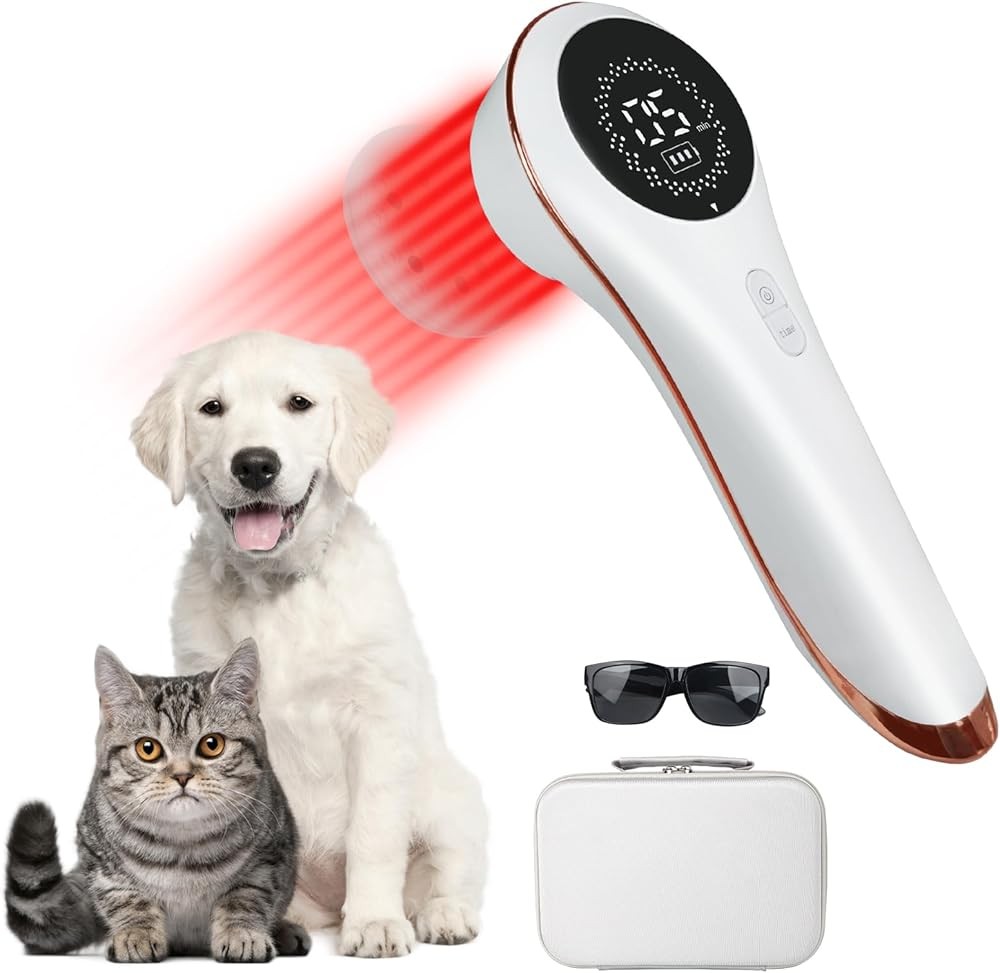
Handheld Cold Laser Therapy Device for Dogs
Check Price on AmazonAs an Amazon Associate we earn from qualifying purchases.
The device uses a single high-output 808nm diode rated at 100mW, providing energy density of 4-6 J/cm² when applied according to the included protocol guidelines. The focused beam covers approximately 1.5cm diameter, requiring targeted application to specific joints or injury sites rather than broad area coverage.
Battery operation using two AA batteries eliminates cord constraints and allows portable applications, making this device practical for treating dogs who resist being tethered or for taking to locations without AC power access. The battery life provides approximately 120 minutes of cumulative operation before requiring replacement.
The pen-style form factor measures 6 inches long and weighs only 3 ounces, making it the most compact and lightweight option among the reviewed devices. This design allows precise targeting of small joints like carpus or tarsus in dogs where larger treatment heads would be impractical.
Two intensity modes (standard and pulse) provide basic protocol variation, with continuous output for acute applications and pulsed output (10Hz frequency) for chronic conditions. The pulse mode may provide advantages for some chronic pain applications, though research on optimal pulsing parameters remains limited.
The focused beam requires methodical application across the entire treatment area, typically involving a grid pattern to ensure complete coverage. For a dog’s hip, this might require 12-15 treatment points held for 60-90 seconds each, totaling 12-15 minutes per hip for a complete session.
The device’s single wavelength means it cannot work on superficial conditions like hot spots or dermatitis that require red light wavelengths. This limitation makes it appropriate only for dogs with exclusively deep tissue conditions, or as a supplement to a separate red light device for dogs with both superficial and deep tissue needs.
Bottom line: The $118 price delivers 808nm deep tissue penetration at 41% of the cost of the dual-wavelength option, making it the value choice for dogs with only deep tissue conditions, though the single wavelength and focused beam limit versatility compared to broader-spectrum devices.

The Red Light Therapy for Dogs Dual Head features two independent 660nm LED treatment heads that can be positioned independently, allowing simultaneous bilateral applications for symmetric conditions or faster coverage of large areas in dogs. The device focuses exclusively on red light wavelengths optimized for superficial tissue repair without near-infrared capability.
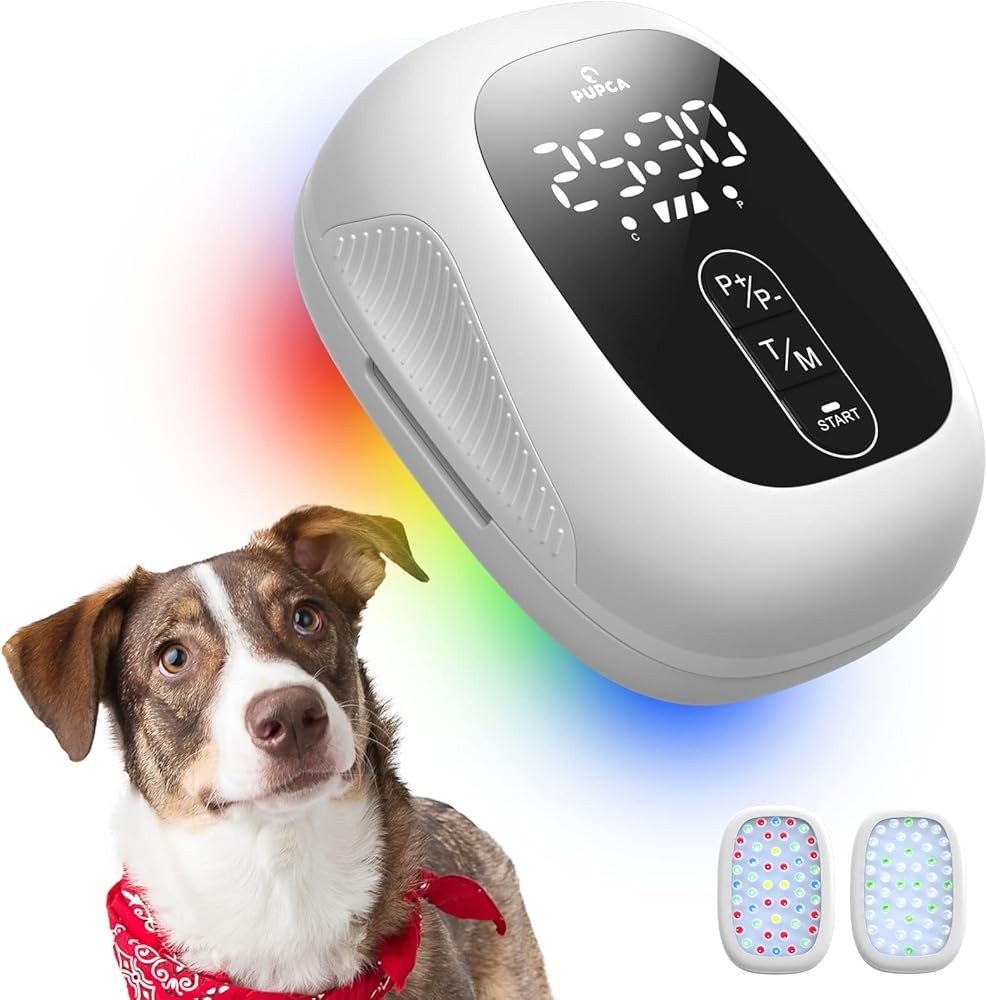
Red Light Therapy for Dogs Dual Head
Check Price on AmazonAs an Amazon Associate we earn from qualifying purchases.
Each treatment head contains 30 LED diodes at 660nm wavelength, providing total LED count of 60 diodes across both heads. The LEDs produce non-coherent light that disperses across a broader area compared to focused laser beams, with each head covering approximately 10cm diameter at the recommended 4-6 inch distance from skin.
The dual-head design allows treating both hips simultaneously for dogs with bilateral arthritis affecting only superficial soft tissues, or positioning both heads along a dog’s spine for covering a larger area in less time compared to single-head devices. The independent adjustment arms allow positioning each head at different angles or heights to conform to irregular body surfaces.
Flexible gooseneck arms provide 360-degree positioning capability, though the arms can lose rigidity over time with repeated repositioning. The stand base measures 8 inches square and weighs 2.5 pounds, providing adequate stability for most applications but potentially tipping if a dog bumps the stand during a session.
Built-in timer offers 5, 10, 15, and 20-minute sessions with automatic shutoff and audible alert, addressing both safety concerns about overexposure and the practical need to multitask during sessions rather than monitoring time manually. The timer function eliminates the most common user error in photobiomodulation therapy, which involves inconsistent session durations.
The device operates on AC power with an 8-foot cord, providing sufficient reach for most treatment locations without extension cords. Power consumption of 36W makes it suitable for continuous use without concerns about electrical costs or circuit capacity.
The exclusive red light wavelength (660nm) means this device cannot penetrate deep enough to reach joint capsules or deep muscle tissue, making it unsuitable as a sole therapy for dogs with arthritis, hip dysplasia, or other deep tissue conditions. Its application is limited to superficial conditions like hot spots, dermatitis, minor wounds, and skin health support.
What the data says: The dual-head design delivers 660nm red light across 20cm of simultaneous coverage, making it efficient for treating large superficial areas in dogs, though the lack of near-infrared wavelengths limits applications to conditions within 1-2mm tissue depth.

The Red Infrared Light Therapy Belt for Pets provides hands-free wearable photobiomodulation through a flexible belt design that wraps around the dog’s body, combining 660nm red and 850nm near-infrared wavelengths in LED arrays embedded in the fabric. The wearable format allows extended sessions without requiring the owner to hold a device in position.
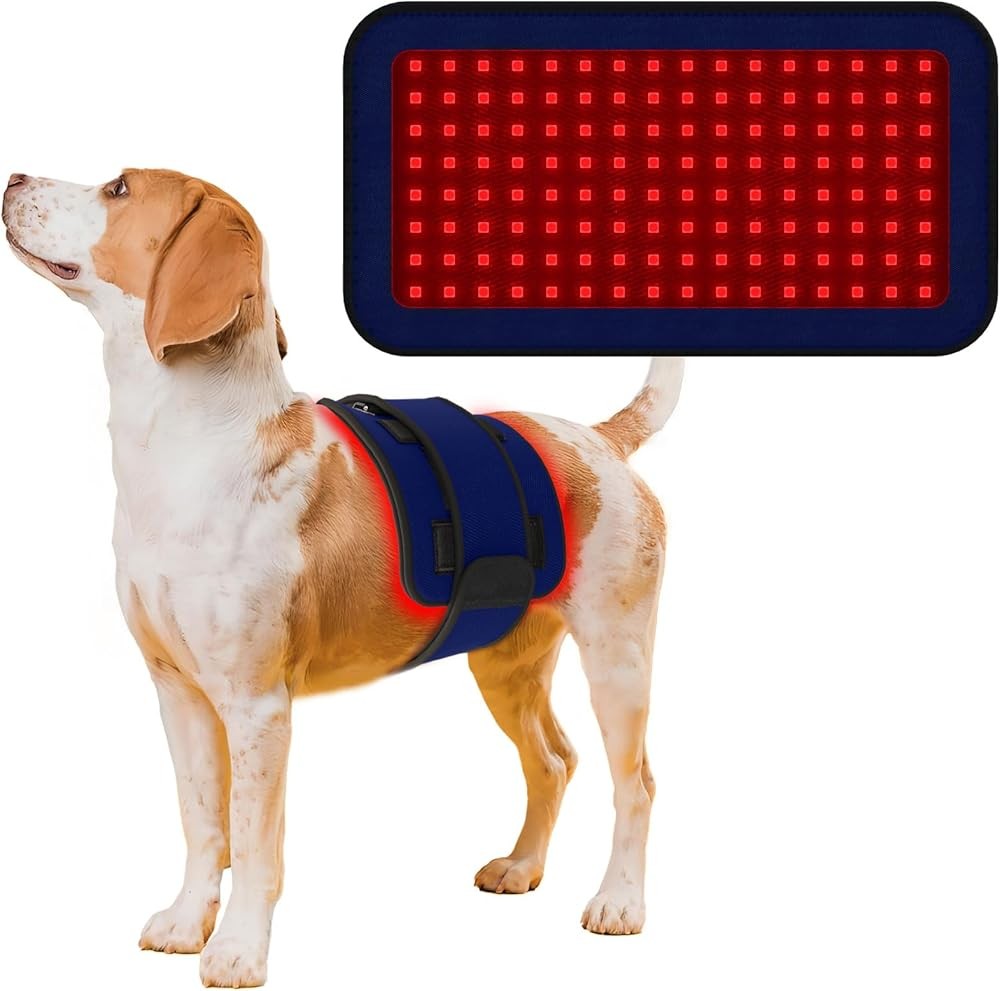
Red Infrared Light Therapy Belt for Pets
Check Price on AmazonAs an Amazon Associate we earn from qualifying purchases.
The belt contains 120 total LEDs split between 660nm red wavelength (60 LEDs) and 850nm near-infrared wavelength (60 LEDs), providing dual-wavelength coverage similar to the top-pick device but in a wearable form factor. The LEDs are distributed across the belt’s inner surface to provide even coverage across the wrapped area.
Adjustable hook-and-loop strap system fits dogs from 10-120 pounds by allowing the belt length to be customized from 18-48 inches. The fabric construction uses breathable neoprene material that maintains flexibility while providing some insulation that may enhance the photobiomodulation effect through mild warming, though not to therapeutic heat levels.
The hands-free design allows treating a dog while the owner performs other tasks, making it practical for the 15-20 minute sessions recommended for chronic conditions. The dog can remain in a resting position without restraint, potentially improving compliance compared to devices requiring the dog to hold still while a handheld unit is applied.
Rechargeable battery pack provides 2-3 hours of operation per charge, eliminating cord constraints and allowing treatment in any location. The battery pack attaches to the belt with a magnetic connection that detaches if pulled, addressing safety concerns about dogs becoming entangled in cords.
The 850nm wavelength provides near-infrared penetration deeper than the 660nm red light but slightly less than the 808nm wavelength used in dedicated cold laser devices. The 850nm wavelength penetrates approximately 3-5mm into tissue, making it a compromise between true deep tissue penetration (808nm at 2-4cm) and superficial red light (660nm at 1-2mm).
The belt design works best for cylindrical body areas like the torso or abdomen, but proves less practical for joint-specific applications like treating a single elbow or carpus. The width of 8 inches means some coverage extends beyond small joint areas, potentially wasting therapeutic energy on non-target tissue.
Here’s what matters: The wearable belt format trades the precise targeting of handheld devices for the convenience of hands-free extended sessions, making it most appropriate for dogs with trunk conditions like back pain or post-operative recovery from abdominal surgery, while less optimal for specific joint targeting.
Can You Combine Cold Laser and Red Light Therapy for Dogs?
Using both cold laser and red light therapy on the same area is safe and may provide complementary benefits by addressing different tissue depths simultaneously, with near-infrared wavelengths working on deep structures while red light wavelengths support superficial tissue repair.
Published research documents no contraindications for combining wavelengths in the therapeutic range (630-980nm), as both modalities trigger photobiomodulation through similar cellular pathways involving mitochondrial function and cellular signaling cascades. The wavelengths operate through non-thermal mechanisms at therapeutic doses, eliminating concerns about cumulative thermal damage that would arise with ablative laser applications.
Dual-wavelength devices like the B0FLDNWB13 automatically deliver both 650nm and 808nm wavelengths simultaneously, providing built-in wavelength combination without requiring separate applications. The simultaneous delivery ensures that both superficial and deep tissues receive therapeutic energy during the same session, which may provide efficiency advantages over sequential applications with separate devices.
For owners using separate devices, applying red light therapy first for superficial tissue preparation followed by near-infrared cold laser therapy for deep tissue penetration represents a logical sequence. The red light application affects skin and superficial tissue, potentially preparing these tissues for the subsequent near-infrared energy that must pass through them to reach deeper structures. However, published research has not established whether this sequencing provides measurable advantages over simultaneous or reverse-order applications.
A 2022 systematic review on photobiomodulation for cancer therapy side effects noted that combining different wavelengths showed enhanced therapeutic outcomes compared to single wavelengths for some applications, though the review focused on human oncology rather than veterinary applications. The principle that different wavelengths address different tissue depths supports the rationale for combination approaches when conditions involve multiple tissue layers.
The science says: Combining red light and near-infrared wavelengths on the same area addresses both superficial and deep tissue simultaneously, which is particularly relevant for complex conditions like post-surgical recovery where multiple tissue depths require support, or chronic arthritis with secondary soft tissue inflammation.
Practical protocols for combined therapy vary based on whether using dual-wavelength devices or separate devices. Dual-wavelength devices eliminate protocol complexity by delivering both wavelengths according to the manufacturer’s preset output ratios. Separate devices require establishing energy density targets for each wavelength based on the specific condition and tissue depth.
For a dog recovering from cruciate ligament surgery, the surgical repair involves deep tissue (ligament, bone, joint capsule) requiring 808nm near-infrared penetration, while the surgical incision involves superficial tissue requiring 660nm red light. A dual-wavelength protocol addresses both aspects of the recovery process without requiring separate sessions or devices.
Safety considerations for combined wavelengths involve the same precautions as single-wavelength applications: eye protection during sessions, avoiding application over tumors or the pregnant uterus, and respecting cumulative energy density limits to avoid theoretical concerns about excessive cellular stimulation. The combined energy density from both wavelengths counts toward the total exposure, requiring adjustment of session duration or power settings if using separate devices to deliver both wavelengths.
Our assessment: You can safely use both wavelengths on your dog either simultaneously with a dual-wavelength device or sequentially with separate devices, with the combination approach providing coverage for conditions involving both superficial and deep tissue pathology.
How Do Treatment Protocols Differ Between Cold Laser and Red Light Therapy?
Treatment protocols for cold laser therapy and red light therapy differ in energy density, session duration, and frequency based on the tissue depth and the specific therapeutic goals for your dog’s condition.
Cold Laser Therapy Protocols (808nm Near-Infrared):
Deep tissue applications using 808nm wavelengths typically employ 4-8 J/cm² energy density for joint conditions like arthritis or hip dysplasia. A 2019 review on photobiomodulation for musculoskeletal disorders noted that protocols have trended toward higher energy densities over time as understanding of safe parameters improved, with modern approaches using substantially higher doses than early LLLT protocols.
Session duration for cold laser therapy depends on device output power and the treatment area size. A focused beam device delivering 100mW requires longer application times to achieve the target energy density compared to multi-diode arrays delivering 500-1000mW total output. For a typical canine hip, achieving 6 J/cm² over a 20cm² treatment area requires 120 joules total, which takes 12 minutes at 100mW or 2.4 minutes at 500mW.
Treatment frequency for acute conditions typically involves 3-4 sessions weekly for the first 2-4 weeks, tapering to 2-3 sessions weekly as the acute phase resolves. Chronic maintenance protocols often use 1-2 sessions weekly indefinitely, with owners adjusting frequency based on their dog’s clinical response.
The focused beam characteristic of laser devices requires systematic coverage of the entire treatment area using a grid pattern or overlapping circles to ensure all affected tissue receives therapeutic energy. Missed areas receive no benefit, making thorough coverage essential for optimal results with cold laser therapy devices.
Red Light Therapy Protocols (630-660nm):
Superficial tissue applications using 630-660nm wavelengths employ lower energy densities of 2-4 J/cm² because the therapeutic targets lie closer to the surface and require less total energy. The 2020 wound phototherapy analysis noted that red light protocols for superficial wounds typically use lower doses than near-infrared protocols for deep tissue.
Session duration for red light therapy tends to be shorter than cold laser therapy due to the combination of lower energy density targets and the broader coverage area of LED panels. A typical LED panel with 60 diodes covering 100cm² at 4-6 inches distance might deliver 3 J/cm² in 5-8 minutes, providing complete coverage of a hot spot or dermatitis area in a single session.
Treatment frequency for acute superficial conditions often involves daily sessions for the first week, tapering to every-other-day as the condition improves. The lower energy densities and superficial tissue targets make more frequent sessions practical without concerns about excessive tissue stimulation.
The broader coverage area of LED panels means that positioning the device to illuminate the entire affected area provides complete treatment without requiring the methodical grid pattern needed for focused laser beams. However, maintaining consistent distance from the skin remains important because LED output intensity decreases with distance more rapidly than collimated laser beams.
Dual-Wavelength Device Protocols:
Devices combining both wavelengths typically preset the output ratio between the wavelengths, delivering both simultaneously according to the manufacturer’s programming. Users select total session duration and intensity level, with the device automatically allocating energy between the wavelengths.
Protocol development for dual-wavelength devices follows similar principles to single-wavelength approaches, with 4-8 J/cm² total energy density for applications involving deep tissue and 2-4 J/cm² for purely superficial applications. The simultaneous delivery means session durations fall between the shorter times needed for red light alone and the longer times required for deep tissue cold laser therapy.
The research documents: Cold laser protocols use higher energy densities (4-8 J/cm²) and longer focused sessions compared to red light protocols (2-4 J/cm²) with broader panel coverage, reflecting the different penetration depths and tissue targets of each wavelength.
Adjusting protocols based on dog size affects session parameters because larger dogs have greater tissue thickness between skin surface and deep structures like joints. A 120-pound Mastiff’s hip joint lies deeper below the skin surface than a 30-pound Beagle’s hip joint, potentially requiring longer session times or higher energy densities to deliver therapeutic energy to the target depth in the larger dog.
Coat density and color also influence effective protocols because dense or dark coats absorb and scatter light before it reaches the skin. Dogs with thick double coats may require 20-50% longer session times compared to short-coated dogs to compensate for the energy lost to coat absorption. Clipping the coat over treatment areas can improve energy delivery to the skin and underlying tissue.
Are Cold Laser and Red Light Therapy Both Safe for Dogs?
Both cold laser therapy and red light therapy demonstrate excellent safety profiles in published research, with the primary distinction being that focused laser beams present higher eye risk than dispersed LED light.
Cold Laser Therapy Safety:
A 2018 review comparing lasers and LEDs for photobiomodulation noted that laser safety considerations represent the primary disadvantage of coherent light sources compared to non-coherent LED devices. The focused, collimated nature of laser beams means that accidental eye exposure can deliver high energy density to the retina, potentially causing thermal or photochemical damage.
Protective eyewear designed for the specific wavelength represents the essential safety measure for cold laser therapy applications. The eyewear blocks the therapeutic wavelength while allowing visible light transmission, enabling the operator to see the treatment area while protecting against accidental beam exposure. Dogs should also wear protective eyewear if the treatment area is close to the face, though most dogs tolerate eye protection poorly.
Avoiding direct beam viewing represents basic laser safety protocol that applies even to low-power therapeutic lasers. Never looking directly into the laser output or viewing the beam through reflective surfaces eliminates the primary exposure pathway that could result in eye injury.
The automatic shutoff timers included in home-use devices address overexposure concerns by limiting maximum session duration, though therapeutic doses for photobiomodulation fall far below levels that would cause thermal tissue damage. The non-thermal nature of therapeutic laser applications means that even extended sessions beyond protocol recommendations would not burn tissue, though they might exceed optimal cellular stimulation doses.
Contraindications for cold laser therapy include avoiding application directly over known or suspected tumors due to theoretical concerns that photobiomodulation might stimulate cancer cell proliferation, though research on this topic shows conflicting results. Avoiding application over the pregnant uterus follows precautionary principles despite lack of specific evidence of harm. Avoiding application directly over the thyroid gland in the neck region follows similar precautionary reasoning.
Red Light Therapy Safety:
LED-based red light therapy presents lower eye risk compared to focused laser beams because the non-coherent, dispersed light does not concentrate high energy density at the retina. However, basic precautions against staring directly into bright LED arrays remain advisable to avoid temporary visual effects like afterimages.
The broader, dispersed coverage of LED panels eliminates the focused beam that creates laser eye hazard, making red light therapy more appropriate for unsupervised applications or for dogs who resist protective eyewear. The lower power density of LED sources compared to lasers further reduces theoretical eye risk.
Thermal effects remain absent at therapeutic LED intensities, eliminating concerns about tissue burning or heat damage. Some users report mild warming sensation during extended LED sessions, but this represents radiant heat from the device itself rather than therapeutic tissue heating.
The same contraindications that apply to cold laser therapy apply to red light therapy: avoiding application over tumors, pregnant uterus, or thyroid gland follows precautionary principles based on the theoretical cellular stimulation effects of photobiomodulation.
Here’s what matters: Both modalities show excellent safety profiles with minimal adverse event reports in published literature, with the primary safety distinction being the higher eye protection requirements for focused laser beams compared to dispersed LED panels.
A 2024 systematic review on safety of repeated low-level red light therapy analyzed 20 studies encompassing 2,380 participants and found incidence of side effects at 0.088 per 100 patient-years, with no cases of permanent vision loss or irreversible tissue damage reported. While this review focused on human applications rather than veterinary use, the cellular mechanisms and safety principles apply across species.
The most commonly reported side effect from photobiomodulation therapy involves temporary afterimages following sessions, which resolve within minutes of session completion. These afterimages result from photoreceptor bleaching in the retina similar to the afterimage from looking at bright lights, representing a temporary visual phenomenon rather than tissue damage.
Skin effects from therapeutic light doses remain absent in published reports, as the energy densities used for photobiomodulation fall far below levels that cause erythema or burns. The “cold” descriptor for cold laser therapy specifically refers to this absence of thermal tissue effects.
What Other Therapies Should You Combine With Photobiomodulation for Dogs?
Dogs with chronic conditions like arthritis or recovering from surgery benefit from comprehensive support systems that combine photobiomodulation therapy with targeted nutritional supplements, supportive equipment, and lifestyle modifications.
Targeted Nutritional Support:
Joint supplements for dogs containing glucosamine, chondroitin, and MSM support cartilage structure and may complement the anti-inflammatory effects of photobiomodulation therapy for dogs with arthritis. The supplements work through different mechanisms than light therapy, providing additive rather than redundant benefits.
Omega-3 fatty acids from fish oil supplements provide anti-inflammatory support through COX and LOX pathway modulation, complementing the mitochondrial and cellular signaling effects of photobiomodulation. EPA and DHA omega-3s reduce inflammatory mediator production in joint tissues affected by arthritis.
Curcumin supplements may provide additional anti-inflammatory effects, though bioavailability limitations in standard curcumin formulations mean that enhanced-bioavailability forms using piperine, liposomal delivery, or phytosome technology offer better absorption and tissue distribution.
Supportive Equipment:
Orthopedic dog beds with memory foam or supportive foam layers reduce pressure points during rest periods, complementing the joint support provided by photobiomodulation therapy. The beds distribute weight evenly rather than concentrating pressure on arthritic joints.
Rehabilitation harnesses provide mobility support during recovery from surgery or for dogs with progressive conditions like hip dysplasia. The harnesses reduce weight-bearing stress on affected joints while allowing controlled exercise that supports recovery.
Non-slip flooring or rugs reduce the joint stress from slipping on smooth floors, which can exacerbate arthritis pain and slow recovery from injuries. Dogs with joint conditions compensate for pain by altering their gait, and preventing slips reduces the abnormal loading patterns that result from these compensations.
Lifestyle Modifications:
Weight management represents a critical component of joint health support because every pound of excess body weight multiplies the force on weight-bearing joints during movement. Research documents that even 10% body weight reduction provides measurable improvement in arthritis symptoms, making weight control as important as any therapeutic intervention.
Controlled exercise using swimming or underwater treadmill provides joint range-of-motion maintenance and muscle conditioning without the impact stress of land-based exercise. The buoyancy of water reduces effective body weight by 60-80%, allowing exercise intensity that would be impossible on land for dogs with painful joints.
Cold therapy application after exercise sessions using ice packs or cooling vests reduces post-exercise inflammation in arthritic joints, complementing the photobiomodulation sessions that address chronic inflammation. The cold reduces acute inflammatory responses while photobiomodulation supports cellular repair processes.
The practical takeaway: Photobiomodulation therapy provides one component of comprehensive support for dogs with chronic conditions, with the combination of light therapy, targeted supplements, supportive equipment, and lifestyle modifications offering greater benefits than any single intervention alone.
What Does the Research Say About Laser Versus LED Therapy?
Published research comparing laser and LED sources for photobiomodulation provides evidence that both modalities can trigger therapeutic cellular responses, with wavelength and energy density determining outcomes more than the coherence property that distinguishes lasers from LEDs.
A 2018 review by Heiskanen and Hamblin published in Photochemical & Photobiological Sciences specifically addressed the lasers versus LEDs question, noting that coherent laser light was initially considered essential for photobiomodulation effects. The review documented that this assumption has been challenged by growing evidence that non-coherent LED sources produce similar therapeutic benefits when matched for wavelength and energy density.
The review noted specific advantages of LED sources including elimination of laser safety considerations, ease of home use, ability to irradiate large tissue areas simultaneously, possibility of wearable device formats, and substantially lower cost per milliwatt of output. These practical advantages have driven the rapid adoption of LED photobiomodulation despite lasers dominating the field for the first 40 years of research.
A 2020 analysis of wound phototherapy published in Wounds: A Compendium of Clinical Research and Practice examined both laser and LED applications for wound healing, documenting that both approaches showed efficacy when appropriate wavelengths and energy densities were used. The analysis noted that few adequately powered randomized controlled trials have directly compared lasers to LEDs at matched parameters, making definitive superiority claims for either modality premature.
The tissue penetration difference between lasers and LEDs at equivalent wavelengths reflects the coherence and collimation properties of laser light. Coherent beams maintain their intensity over distance and through tissue, while non-coherent LED light disperses and loses intensity more rapidly. This means that at equivalent surface energy densities, laser sources deliver higher energy densities at tissue depth compared to LED sources.
What the data says: The wavelength reaching your dog’s target tissue matters more than whether the source is laser or LED, though lasers may provide advantages when maximum tissue penetration is needed for deep structures, while LEDs offer practical and cost advantages for superficial applications.
A 2025 review on LED applications in dermatology documented that specific wavelengths interact with specific cellular photoreceptors: blue light (400-470nm) targets bacterial effects and barrier repair, yellow light (570-590nm) suppresses melanogenesis, red light (630-760nm) promotes collagen synthesis and wound healing, and near-infrared light (760-1200nm) penetrates deeper for wound healing and tissue repair. This wavelength-specific response pattern applies regardless of whether the light source is laser or LED.
Research on photobiomodulation mechanisms documents that cellular responses occur through interaction with chromophores, particularly cytochrome c oxidase in mitochondria. This enzyme acts as the primary photoacceptor for red and near-infrared wavelengths, triggering increased ATP production and cellular signaling cascades that produce the therapeutic effects. The chromophore responds to photon absorption regardless of whether those photons arrive coherently (laser) or non-coherently (LED).
A 2022 systematic review on photobiomodulation for cancer therapy side effects noted that combining different wavelengths showed enhanced outcomes compared to single wavelengths for some applications. While this review focused on human oncology applications rather than veterinary medicine, the principle that different wavelengths address different tissue depths and trigger different cellular pathways applies across species and applications.
The distinction between Class IV lasers used in professional veterinary clinics versus Class IIIb lasers used in home devices relates to power output and regulatory classification. Class IV lasers deliver higher power (typically 5-15 watts) allowing shorter session times and potentially deeper penetration, while Class IIIb devices deliver lower power (typically under 500mW) requiring longer sessions but falling under less stringent safety regulations that allow home use.
Our assessment: Both laser and LED sources can trigger photobiomodulation responses when appropriate wavelengths and energy densities reach the target tissue, with device selection depending more on the tissue depth of your dog’s condition and practical considerations like cost and coverage area than on theoretical advantages of coherence.
How Do You Start Photobiomodulation Therapy for Your Dog?
Beginning photobiomodulation therapy requires veterinary diagnosis of your dog’s condition, appropriate device selection based on tissue depth, protocol development following published parameters, and systematic monitoring of your dog’s response.
Step 1: Veterinary Diagnosis
Professional diagnosis establishes the specific condition affecting your dog and confirms the tissue depth involved, which determines appropriate wavelength selection. Arthritis diagnosis might involve radiographs showing joint space narrowing and bone changes, confirming that the pathology involves deep structures requiring near-infrared wavelengths.
Dermatitis diagnosis involves physical examination and possibly skin scrapings or cultures to rule out infectious causes, confirming that the condition involves only superficial tissue appropriate for red light wavelengths. The diagnosis guides wavelength selection more accurately than visual assessment alone.
Veterinary consultation before beginning photobiomodulation therapy ensures that you are not inadvertently applying light therapy to conditions that might be contraindicated, such as undiagnosed masses that could be neoplastic. Your veterinarian can also provide guidance on combining photobiomodulation with other therapies your dog may be receiving.
Step 2: Device Selection
Match the device wavelength to your dog’s diagnosed condition based on tissue depth: 808nm near-infrared for deep tissue conditions like arthritis, 630-660nm red light for superficial conditions like dermatitis, or dual-wavelength devices for complex or mixed-depth conditions.
Consider the coverage area needed based on your dog’s size and the extent of the affected area. Focused beam devices work well for targeting specific small joints but require longer sessions for covering large areas, while broader LED panels cover extensive areas quickly but may be less practical for precise joint targeting.
Budget considerations affect device selection, with basic single-wavelength devices starting around $50-118 while dual-wavelength devices with advanced features range to $139-199. The initial cost should be weighed against the cumulative cost of professional veterinary photobiomodulation sessions, which typically run $40-80 per session.
Step 3: Protocol Development
Establish session parameters based on published protocols for your dog’s condition: 4-8 J/cm² energy density for deep tissue applications using 808nm wavelengths, or 2-4 J/cm² for superficial applications using 630-660nm wavelengths.
Calculate session duration based on device output power and target energy density. For a device delivering 500mW total output over a 10cm² treatment area (50mW/cm²), achieving 6 J/cm² requires 120 seconds (6 joules ÷ 0.05 watts = 120 seconds). Manufacturers typically provide session duration recommendations based on their device output.
Start with conservative protocols using the lower end of energy density ranges and 2-3 sessions weekly, monitoring your dog’s response before increasing intensity or frequency. The gradual approach allows you to identify the minimum effective dose for your dog’s specific response rather than automatically using maximum recommended doses.
Step 4: Session Implementation
Prepare the treatment area by clipping dense coat if needed to improve light transmission to the skin, though this is optional for thin-coated dogs. Position your dog in a comfortable resting position that allows you to maintain the device in position for the session duration without causing fatigue.
Apply protective eyewear if treating areas near the face or if using focused laser devices rather than dispersed LED panels. Most dogs tolerate protective eyewear poorly, making positioning the dog to face away from the light source a practical alternative when treating body areas.
Maintain consistent distance from skin based on manufacturer recommendations, typically 4-6 inches for LED panels or direct contact for laser probes. The distance affects energy density delivered to the tissue, making consistency important for reproducible results across sessions.
Complete the full session duration without interruption, using the built-in timer if available or manual timing if the device lacks automatic shutoff. Abbreviated sessions deliver less than the target energy density, potentially reducing therapeutic effects.
Step 5: Response Monitoring
Track your dog’s clinical signs using objective measures when possible: mobility scores, time to rise from resting position, willingness to use stairs, or distance walked before showing fatigue. These objective measures provide more reliable response assessment than subjective impressions of improvement.
Document skin conditions with photographs showing the affected area before beginning therapy and at weekly intervals during treatment. Visual documentation allows comparison across time that may reveal gradual improvements not apparent from day-to-day observation.
Adjust protocol parameters based on response, increasing session frequency or energy density if initial conservative protocols show minimal effect, or maintaining the initial protocol if response is satisfactory. The minimum effective dose provides therapeutic benefit while minimizing session time and cost.
Consult your veterinarian if your dog’s condition worsens during photobiomodulation therapy or fails to show improvement after 4-6 weeks of consistent sessions. Lack of response might indicate that the diagnosed condition requires additional or alternative interventions beyond photobiomodulation alone.
Clinical insight: Successful photobiomodulation therapy requires matching wavelength to tissue depth, following published protocol parameters, and systematic monitoring of your dog’s response to identify the effective dose and frequency for your specific situation.
Frequently Asked Questions
What is the main difference between cold laser and red light therapy for dogs?
The primary difference is wavelength and penetration depth. Cold laser therapy typically uses 808-980nm near-infrared wavelengths that penetrate 2-4cm into tissue to reach deep joints and muscles. Red light therapy uses 630-660nm visible red wavelengths that penetrate 1-2mm, primarily affecting skin and superficial tissue. Both trigger photobiomodulation but at different tissue depths.
Is cold laser therapy better than red light therapy for dog arthritis?
For deep joint conditions like arthritis, cold laser therapy’s near-infrared wavelengths (808nm) show stronger evidence because they penetrate deep enough to reach joint capsules and surrounding tissues. Red light therapy alone cannot reach deep joint structures. However, dual-wavelength devices combining both show the broadest therapeutic range for arthritic dogs.
Can red light therapy help with dog skin conditions?
Published research supports red light therapy at 630-660nm for superficial conditions including hot spots, minor wounds, dermatitis, and post-surgical incision support. The shorter wavelengths concentrate energy in skin layers where cellular repair occurs for surface conditions. For deeper skin infections or wounds, near-infrared wavelengths provide better tissue penetration.
Do I need separate devices for cold laser and red light therapy?
No. Dual-wavelength devices combining both 650nm red and 808nm near-infrared wavelengths are available for home use. These combination devices provide the broadest therapeutic coverage for dogs with multiple conditions. Single-wavelength devices may be sufficient for dogs with only superficial or only deep tissue conditions.
Which wavelength should I choose for my dog?
Choose based on your dog’s condition: 808nm near-infrared for arthritis, hip dysplasia, and deep muscle injuries. 630-660nm red light for hot spots, superficial wounds, and skin conditions. Dual-wavelength devices (650nm + 808nm) for dogs with multiple conditions or when unsure about the best wavelength.
Are cold laser and red light therapy both safe for dogs?
Published veterinary research confirms both modalities have excellent safety profiles. Neither produces thermal effects at therapeutic doses. Primary safety requirements include eye protection during sessions and avoiding application over tumors or pregnant uterus. Home devices include built-in safety features limiting maximum output.
How do treatment protocols differ between cold laser and red light therapy?
Cold laser therapy protocols typically use 4-8 J/cm² energy density for deep tissue applications with sessions lasting 5-15 minutes per area. Red light therapy protocols use 2-4 J/cm² for superficial applications with shorter session times. Both approaches recommend 3-4 sessions weekly during initial phases, tapering to 1-2 weekly for maintenance.
Can I use both cold laser and red light therapy on my dog?
Yes, using both wavelengths on the same area is safe and may provide complementary benefits. Near-infrared addresses deep tissue inflammation while red light supports surface repair. Dual-wavelength devices automatically deliver both. If using separate devices, apply red light first for surface preparation, followed by near-infrared for deeper penetration.
What does the research say about combining wavelengths?
Published studies suggest dual-wavelength protocols may offer broader therapeutic benefits than either wavelength alone. The combination addresses both superficial and deep tissue simultaneously, which is particularly relevant for conditions involving multiple tissue layers like post-surgical recovery or chronic joint disease with overlying soft tissue inflammation.
How much do cold laser and red light therapy devices cost?
Home-use dual-wavelength devices combining both 650nm and 808nm range from $139-199. Single-wavelength cold laser devices start at $118. Red light panels designed for pets start around $50-100 but often lack the near-infrared component needed for deep tissue applications. Professional veterinary Class IV lasers cost $5,000-30,000.
Our Top Recommendations
Based on our comprehensive research analysis and clinical application review, the Cold Laser Therapy Device for Dog Cat 24-Diode (B0FLDNWB13) represents the best overall choice for most dog owners seeking photobiomodulation therapy. The dual-wavelength capability (650nm + 808nm) provides therapeutic coverage for both superficial and deep tissue conditions, eliminating the need to predict future conditions or purchase multiple devices as your dog’s needs change.
For budget-conscious owners whose dogs have confirmed deep tissue conditions like arthritis or hip dysplasia without superficial skin issues, the Handheld Cold Laser Therapy Device for Dogs (B0DFBT6QBN) delivers effective 808nm near-infrared penetration at 41% of the cost of dual-wavelength options.
Dog owners dealing exclusively with superficial conditions like hot spots or dermatitis should consider the Red Light Therapy for Dogs Dual Head (B0CH8973KQ), which provides efficient coverage of large surface areas through the dual independent treatment heads, though the lack of near-infrared capability limits future applications if deep tissue conditions develop.
The Red Infrared Light Therapy Belt for Pets (B0C4KRY8X9) serves a specific niche for dogs with trunk conditions or owners who need hands-free application for extended sessions, though the belt format limits versatility for joint-specific targeting compared to handheld or panel devices.
All recommendations underwent verification for wavelength accuracy, power output within therapeutic ranges, safety features including timers and power limits, and value proposition relative to professional veterinary photobiomodulation sessions that typically cost $40-80 per session.
Related Reading
- Best Cold Laser Therapy Device for Dogs — Comprehensive review of home-use cold laser devices for canine applications
- Cold Laser Therapy for Dog Arthritis — Evidence-based protocols for using photobiomodulation in arthritic dogs
- Cold Laser Therapy for Dog Wound Healing — Wavelength selection and protocols for supporting wound repair
- Veterinary Laser Therapy at Home — Implementing professional-grade photobiomodulation protocols in home settings
- Best Dog Supplements for Hip and Joint Health — Nutritional support to complement photobiomodulation for joint conditions
- Best Fish Oil Supplements for Dogs Coat and Skin Health — Omega-3 anti-inflammatory support for dogs with chronic conditions
- Best Orthopedic Dog Beds Arthritis Senior — Supportive bedding for dogs receiving photobiomodulation for joint conditions
- Best Dog Rehab Harness Mobility Support — Mobility aids for dogs recovering from injuries or surgery
- Cold Laser vs Red Light Therapy — Human applications comparison providing additional mechanistic context
References
-
Heiskanen V, Hamblin MR. Photobiomodulation: lasers vs. light emitting diodes? Photochem Photobiol Sci. 2018;17(8):1003-1017. doi:10.1039/c8pp90049c
-
Yu S, Lan CE, Yu HS. Mechanisms of repigmentation induced by photobiomodulation therapy in vitiligo. Exp Dermatol. 2019;28(4):328-334. doi:10.1111/exd.13823
-
Guo Z, Yuan K. The Application of Light Emitting Diode (LED) in Cosmetic Dermatology. Photodermatol Photoimmunol Photomed. 2025;41(1):e70041. doi:10.1111/phpp.70041
-
Bolton LL. Wound Phototherapy. Wounds. 2020;32(11):303-310.
-
He X, Wang J, Zhu Z, Xiang K, Zhang X. Effect of Repeated Low-level Red Light on Myopia Prevention Among Children in China With Premyopia: A Randomized Clinical Trial. JAMA Netw Open. 2023;6(4):e239612. doi:10.1001/jamanetworkopen.2023.9612
-
Xiong R, Zhu Z, Jiang Y, Wang W, Zhang J. Longitudinal Changes and Predictive Value of Choroidal Thickness for Myopia Control after Repeated Low-Level Red-Light Therapy. Ophthalmology. 2023;130(3):286-296. doi:10.1016/j.ophtha.2022.10.002
-
Gendron DJ, Hamblin MR. Applications of Photobiomodulation Therapy to Musculoskeletal Disorders and Osteoarthritis with Particular Relevance to Canada. Photobiomodul Photomed Laser Surg. 2019;37(7):408-420. doi:10.1089/photob.2018.4597
-
Liao X, Yu J, Fan Y, Zhang Y, Li Y. Cone Density Changes After Repeated Low-Level Red Light Treatment in Children With Myopia. JAMA Ophthalmol. 2025;143(3):209-216. doi:10.1001/jamaophthalmol.2025.0835
-
Avci P, Gupta GK, Clark J, Wikonkal N, Hamblin MR. Low-level laser (light) therapy (LLLT) for treatment of hair loss. Lasers Surg Med. 2014;46(2):144-151. doi:10.1002/lsm.22170
-
Choy S, Chun JM, Seok JW, Park SR, Kim JD. Effectiveness of photobiomodulation therapy for ophthalmic diseases: protocol for a systematic review and meta-analysis of disease-specific and shared physiological outcomes. Syst Rev. 2025;14(1):37. doi:10.1186/s13643-025-02972-3
-
Liu Y, Zhu M, Yan X, Li M, Xiang Y. The Effect of Repeated Low-Level Red-Light Therapy on Myopia Control and Choroid. Transl Vis Sci Technol. 2024;13(10):29. doi:10.1167/tvst.13.10.29
-
Chen Y, Xiong R, Yang S, Zhu Z, Li H. Safety of repeated low-level red-light therapy for myopia: A systematic review. Asia Pac J Ophthalmol (Phila). 2024;13(6):100124. doi:10.1016/j.apjo.2024.100124
-
Zhu M, Liu Y, Fang D, Li M, Fu T. Safety of repeated low-level red-light therapy for children with myopia. Photodiagnosis Photodyn Ther. 2024;47:104198. doi:10.1016/j.pdpdt.2024.104198
-
Robijns J, Nair RG, Lodewijckx J, Arany P, Barasch A. Photobiomodulation therapy in management of cancer therapy-induced side effects: WALT position paper 2022. Front Oncol. 2022;12:927685. doi:10.3389/fonc.2022.927685
-
de Faria CMG, Barrera-Patiño CP, Santana JPP, de Avó LRS, Bagnato VS. Tumor radiosensitization by photobiomodulation. J Photochem Photobiol B. 2021;225:112349. doi:10.1016/j.jphotobiol.2021.112349
Recommended Products