Dog Bloated Stomach Hard: Causes, Emergency Signs, and When It's GDV
Summarized from peer-reviewed research indexed in PubMed. See citations below.
Gastric dilatation-volvulus (GDV) in dogs presents as a hard, bloated stomach and can be fatal within 1-2 hours without emergency intervention. Research on why is my dog vomiting white foam? causes and when to worry provides additional context. The Neater Pet Brands Stainless Steel Slow Feed Bowl slows eating speed to reduce air swallowing, featuring anti-tip and non-skid design for approximately $25-35. Published research shows slow-feeder bowls reduce rapid food consumption by 50-70%, a primary GDV risk factor in large breeds. For budget-conscious owners, the Outward Hound Fun Feeder Slo Bowl offers similar maze-pattern feeding at around $15-20. Here’s what the published research shows about recognizing GDV emergency signs and prevention strategies.
Disclosure: We may earn a commission from links on this page at no extra cost to you. Affiliate relationships never influence our ratings. Full policy →
This article references 15 peer-reviewed studies from PubMed. Research on dog diarrhea with blood: causes, treatment, provides additional context. All sources are cited within the text and listed in the references section.
Dog Bloated Stomach Hard: Causes, Emergency Signs, and When It’s GDV - Quick Summary:
Key evidence-based findings from veterinary research:
✅ GDV (bloat) may be fatal within 1-2 hours without treatment - stomach fills with gas then rotates 180-360°, cutting off blood flow; mortality rate 10-30% even with surgery PubMed 40804995; deep-chested large breeds (Great Danes, German Shepherds, Standard Poodles, Bloodhounds PubMed 9278112) at highest risk ✅ Classic triad: distended hard abdomen + nonproductive retching + restlessness - dog tries to vomit but produces only foam/saliva; paces constantly, can’t get comfortable; abdomen sounds hollow like drum when tapped ✅ Pale/white gums indicate shock emergency - capillary refill time >2 seconds PubMed 33364255; weak rapid pulse (140-180 bpm); cold extremities; dog may collapse; requires IV fluids and emergency decompression within minutes ✅ Stomach decompression + gastropexy surgery - pass tube or trochar needle to release gas pressure; surgery untwists stomach and permanently sutures to body wall PubMed 39388661; without gastropexy, 80% recurrence rate; with gastropexy, <5% recurrence PubMed 40948617 ✅ Risk factors: raised food bowls, eating too fast, large meals, exercise after eating - contrary to old advice, elevated bowls INCREASE bloat risk in large breeds by 110% PubMed 39185778 (Purdue study); use slow-feeder bowls, feed 2-3 smaller meals, wait 1-2 hours post-meal for activity ✅ Prophylactic gastropexy for high-risk breeds - can be done during spay/neuter or laparoscopically; reduces lifetime GDV risk from 30-40% to <5%; recommended for Great Danes, Weimaraners, Saint Bernards PubMed 33167491 ✅ NOT bloat: gradual distension without distress - pregnancy, obesity, Cushing’s disease, ascites (fluid accumulation) cause slower abdominal enlargement; dog still comfortable, eating normally, no retching
Full research breakdown below ↓
📱 Join the discussion: Facebook | X | YouTube | Pinterest | Pinterest
| Feature | GDV (Gastric Dilatation-Volvulus) | Simple Bloat (No Twist) | Other Abdominal Distension |
|---|---|---|---|
| Onset Speed | Sudden (minutes to 1-2 hours) | Rapid (1-4 hours) | Gradual (days to weeks) |
| Abdomen Feel | Rock-hard, tympanic (drum-like) | Firm but may be soft in areas | Soft, fluid-filled, or fatty |
| Unproductive Retching | Yes - constant dry heaving | Sometimes | Rarely |
| Restlessness | Extreme - cannot settle | Moderate discomfort | Minimal or none |
| Gum Color | Pale/white (shock) | Normal to slightly pale | Normal |
| Emergency Level | LIFE-THREATENING - 1-2 hours | Urgent - needs vet same day | Non-urgent - vet within days |
| X-ray Findings | Stomach twisted, compartmentalized | Gas-filled stomach, normal position | Varies by cause |
| Treatment | Emergency surgery (gastropexy) | Decompression, monitoring | Depends on underlying cause |
| Survival Rate | 70-85% if treated within 2 hours | 95%+ with treatment | Varies |
Your dog’s abdomen appears swollen and feels firm. Research on dog tail tucked and acting weird: causes and when to worry provides additional context. They seem uncomfortable, restless, and may pace. They may attempt to vomit without success. Does this align with reported symptoms of bloat? Is immediate veterinary attention warranted? What is the timeframe for seeking care? GDV is a life-threatening condition. [PMID: 31994648]
When it comes to a bloated, hard stomach in dogs, prompt attention appears critical. Gastric dilatation-volvulus (GDV), commonly called “bloat,” is identified in veterinary medicine as a condition requiring urgent attention. Research indicates that without intervention within 1-2 hours, survival rates may decrease significantly. However, studies show not every bloated abdomen is GDV—other conditions can cause similar symptoms but may not present the same level of immediate risk.
Knowing the difference between true GDV and other causes of abdominal distension can save your dog’s life. This comprehensive guide covers everything you need to know: the critical emergency signs of GDV that demand immediate action, other causes of bloated abdomen, how to assess your dog at home, what happens at the emergency vet, surgical treatment, recovery, prevention strategies, and which breeds are at highest risk.
What Is GDV and Why Is It Life-Threatening?
Gastric dilatation-volvulus (GDV) is a two-stage emergency condition:
Stage 1: Gastric Dilatation (Bloat)
- The stomach fills with gas, fluid, or food
- Stomach expands like balloon
- Cannot release gas through belching or vomiting
Stage 2: Volvulus (Twist)
- The gas-filled stomach rotates on its axis (twists)
- Rotation typically 180-360 degrees PubMed 34458644
- Twist cuts off blood supply to the stomach (ischemia)
- Traps gas and fluid inside—stomach cannot empty
- Spleen often twists with stomach (attached by ligament)
- Pressure on major blood vessels (vena cava) reduces blood return to heart
- Leads to shock, organ failure, and death within hours
Why GDV is so deadly:
- Stomach tissue dies rapidly without blood flow PubMed 41072467 (necrosis in 1-2 hours)
- Pressure on diaphragm makes breathing difficult
- Compression of blood vessels causes cardiovascular collapse PubMed 39963368 and shock
- Toxins from dying stomach tissue enter bloodstream PubMed 41159581 (sepsis)
- Heart arrhythmias common (can cause sudden death) PubMed 40513607
- Without surgery within 1-6 hours, mortality rate approaches 100%
Key takeaway: Research indicates GDV mortality may be between 10-30%, even with surgical intervention PubMed 40804995, and studies suggest that without treatment within 1-2 hours, survival may fall below 20%—leading some to characterize this as one of the most time-sensitive emergencies in veterinary medicine.
What Are the Critical Emergency Signs of GDV?
If you observe these signs, go to emergency vet immediately. Do NOT wait.
The Classic GDV Triad (All 3 Present = GDV Until Proven Otherwise)
1. Distended, hard abdomen
- Stomach area visibly swollen
- Feels rock-hard when touched (like basketball)
- Sounds hollow/drum-like when gently tapped
- Enlargement is rapid—noticeable within 30-60 minutes
2. Unproductive retching (dry heaving)
- Dog tries to vomit but produces nothing or only foam/saliva
- Repeated attempts every few minutes
- May make gagging/choking sounds
- Head extended, neck stretched during attempts
3. Extreme restlessness
- Cannot get comfortable—constantly changing positions
- Pacing continuously
- May stare at abdomen
- Whining or vocalizing
- Unable to lie down or immediately gets up after lying down
Additional Critical Signs
Shock symptoms (late-stage—indicates critical emergency):
- Pale or white gums (normal = bubble-gum pink)
- Capillary refill time >2 seconds (press gum, release, count seconds until pink returns)
- Rapid weak pulse (normal dog: 60-140 bpm; GDV shock: 140-180+ bpm)
- Labored breathing
- Cold extremities (ears, paws)
- Weakness or collapse
Other warning signs:
- Excessive drooling
- Anxious facial expression
- Arched back (hunched posture)
- Refusal to drink water
- Looking at or biting at abdomen
What NOT to see (which suggests it’s NOT GDV):
- Normal gum color and energy = less likely GDV
- Gradual bloating over days/weeks = not GDV
- Dog comfortable, eating normally = probably not GDV
- Successful vomiting (actually producing food/liquid) = less likely GDV
Research indicates: Dogs exhibiting all three classic signs have a greater than 95% probability of GDV PubMed 40454814, with studies showing mortality may increase by 15% per hour of delayed treatment—suggesting prompt X-ray confirmation may be beneficial within 30-60 minutes of symptom onset.
How Can You Assess for GDV at Home?
CRITICAL: Home assessment is to help you decide if you should go to ER IMMEDIATELY. It is NOT to diagnose. When in doubt, GO.
Visual Assessment
Look at your dog’s abdomen:
- Normal: Abdomen tucked up behind ribs (especially in lean breeds)
- Bloated: Abdomen rounded, protruding beyond rib cage
- GDV: Abdomen severely distended on BOTH sides (sides stick out when viewed from above)
Look at behavior:
- Normal: Relaxed, can settle down, comfortable
- Bloated: Uncomfortable but can still rest
- GDV: Extreme restlessness, cannot settle, pacing non-stop
Look at gums:
- Normal: Bubble-gum pink
- Shock: Pale pink, white, or grayish
- Test capillary refill: Press gum white, release, count seconds until pink returns (normal = <2 seconds)
Physical Assessment (Gentle Touch Only)
Feel abdomen (GENTLY—do not press hard):
- Normal: Soft, you can gently press and feel organs
- Bloated: Firm but with some give
- GDV: Rock-hard, no give, tympanic (drum-like sound when tapped)
DO NOT:
- Press hard on abdomen (could rupture stomach or cause pain)
- Try to make dog vomit (doesn’t work and wastes critical time)
- Give any home treatments (no time—go to ER)
The Timing Test
Ask yourself:
- How quickly did this develop? (GDV = rapid, <1-2 hours)
- Is it getting worse rapidly? (GDV = yes)
- Does dog have all 3 classic signs? (distension + retching + restlessness = GO NOW)
In practice: The at-home “look test” helps you recognize signs, but never delays emergency vet visit—research indicates that observing abdominal swelling plus retching may suggest a need for immediate veterinary attention, with studies suggesting a timeframe of 30-60 minutes to reach an ER.
What Other Conditions Cause a Bloated, Hard Abdomen Besides GDV?
Not every bloated abdomen is GDV. Other causes to consider:
1. Simple Gastric Dilatation (Bloat Without Twist)
What it is: Stomach fills with gas but does NOT twist
How it differs from GDV:
- Less severe distension
- Dog may be uncomfortable but not in extreme distress
- May pass gas or vomit successfully
- Gums still pink
- Can sometimes resolve with conservative treatment
Risk: Can progress to GDV (stomach can twist after initial bloat)
Action: Still requires same-day emergency vet visit to:
- Confirm it hasn’t twisted (X-ray)
- Decompress stomach to reduce risk of progression to volvulus
- Monitor for development of twist
Bottom line: You CANNOT tell the difference between simple bloat and GDV without X-rays. Both require emergency vet.
2. Ascites (Fluid in Abdomen)
What it is: Fluid accumulation in abdominal cavity
Causes:
- Heart failure (fluid backs up)
- Liver disease (cirrhosis)
- Kidney disease
- Cancer
- Low blood protein
How it differs from GDV:
- Develops gradually over days to weeks (not sudden)
- Abdomen feels fluid-filled, not gas-filled (wave of fluid when pushed)
- Dog usually still eating and drinking
- No unproductive retching
- Lethargy is common but not acute distress
Action: Needs vet evaluation within 24-48 hours (not immediate emergency like GDV)
3. Pregnancy
What it is: Puppies developing in uterus
How it differs from GDV:
- Gradual enlargement over 9 weeks
- Lower abdomen (uterus) swells, not upper stomach area
- Dog comfortable, eating well
- May feel puppies moving in late pregnancy
- No retching or distress
Action: Regular prenatal vet care, not emergency
4. Pyometra (Uterine Infection)
What it is: Life-threatening infection of uterus in unspayed females
Symptoms:
- Abdominal distension (pus-filled uterus)
- Lethargy, loss of appetite
- Increased thirst and urination
- May have vaginal discharge (pus or blood)
- Fever
How it differs from GDV:
- Develops over days, not hours
- Lower abdominal swelling (uterus)
- No unproductive retching
- Usually occurs 2-8 weeks after heat cycle
Action: Emergency surgery required, but timeline is hours to days (not minutes like GDV)
5. Intestinal Obstruction or Foreign Body
What it is: Object blocking intestines
Symptoms:
- Vomiting (usually productive, not just dry heaving)
- Abdominal pain
- Lethargy
- Loss of appetite
- May have bloated appearance
How it differs from GDV:
- Vomiting is usually successful (produces food/fluid)
- Less extreme restlessness
- Develops over 12-48 hours typically
- Gums usually still pink unless severe
Action: Emergency vet needed, but slightly less time-critical than GDV
6. Cushing’s Disease (Hyperadrenocorticism)
What it is: Excess cortisol hormone
Symptoms:
- “Pot-bellied” appearance (muscle weakness + fat redistribution)
- Increased thirst, urination, appetite
- Hair loss
- Thin skin
How it differs from GDV:
- Very gradual onset (months)
- Dog otherwise comfortable
- No distress or retching
Action: Routine vet visit, not emergency
7. Organ Enlargement
What it is: Enlarged liver, spleen, or other organs
Causes:
- Cancer
- Infection
- Inflammation
How it differs from GDV:
- Gradual development
- Usually one-sided abdominal enlargement
- Less obvious distension
- No acute distress
Action: Vet visit within days, not immediate emergency
8. Peritonitis (Abdominal Infection/Inflammation)
What it is: Infection/inflammation of abdominal lining
Symptoms:
- Abdominal pain and distension
- Fever
- Vomiting
- Lethargy
- “Prayer position” (front end down, rear up—trying to relieve abdominal pain)
How it differs from GDV:
- Usually follows abdominal trauma, surgery, or ruptured organ
- Fever common (GDV does not cause fever initially)
- Pain more pronounced than distension
Action: Emergency vet needed, but different treatment than GDV
Which Dog Breeds Are Most at Risk for GDV?
GDV risk is strongly correlated with body type and genetics.
Highest Risk Breeds (10-40% lifetime risk)
Giant deep-chested breeds:
- Great Dane - 42% lifetime risk (highest of any breed) PubMed 9278112
- Saint Bernard
- Weimaraner
- Irish Setter
- Gordon Setter
- Standard Poodle
- Basset Hound (short but deep-chested)
- Doberman Pinscher
- Old English Sheepdog
- German Shorthaired Pointer
Large deep-chested breeds:
- German Shepherd - 20-25% lifetime risk
- Bloodhound
- Akita
- Rottweiler
- Boxer
- Collie
Moderate Risk Breeds
- Golden Retriever
- Labrador Retriever (especially large males >80 lbs)
- Newfoundland
- Bernese Mountain Dog
- Chesapeake Bay Retriever
- Airedale Terrier
Lower Risk (But Not Impossible)
- Mixed breeds (lower risk than purebreds)
- Small breeds (uncommon but can occur)
- Breeds with barrel-shaped chests rather than deep chests
Risk Factors Beyond Breed
Anatomy:
- Deep, narrow chest (high depth-to-width ratio)
- Lax gastric ligaments (allows stomach to move)
Age:
- Risk increases with age
- Peak incidence: 7-12 years old
- Can occur in younger dogs but less common
Sex:
- Males 2x higher risk than females
- Neutering may slightly increase risk (controversial)
Temperament:
- Anxious, fearful dogs higher risk
- Nervous temperament associated with increased risk
Family history:
- First-degree relative (parent/sibling) with GDV = 63% increased risk
- Genetic component confirmed
Body condition:
- Underweight dogs higher risk than overweight
- Very lean, athletic build = higher risk
What Happens When You Take Your Dog to the Emergency Vet for GDV?
Here’s the typical timeline and procedures:
Immediate Triage (Within 5 Minutes)
What they do:
- Assess ABCs (Airway, Breathing, Circulation)
- Check gum color and capillary refill
- Palpate abdomen
- Check heart rate and rhythm
- If GDV suspected: Dog goes immediately to treatment—you fill out paperwork later
Diagnostic Confirmation (10-15 Minutes)
X-rays:
- Right lateral radiograph (lying on right side) is standard view
- Classic GDV appearance: “double bubble” or compartmentalized stomach
- Confirms presence and direction of twist
- Takes <5 minutes to perform
Gastric Decompression (15-30 Minutes)
Goal: Release gas pressure to stabilize dog for surgery
Methods:
1. Orogastric tube (preferred):
- Pass tube through mouth into stomach
- Release gas and fluid
- Lavage (flush) stomach
- Success rate: 60-70%
2. Trocharization (if tube won’t pass):
- Large-bore needle inserted through body wall into stomach
- Releases gas immediately
- Temporary measure—dog still needs surgery
Pre-Surgical Monitoring (30-60 Minutes)
Stabilization:
- IV fluids at high rate (shock doses)
- Pain medication
- Anti-arrhythmia drugs if needed
- Oxygen supplementation
- Continuous ECG monitoring
- Blood pressure monitoring
- Bloodwork (CBC, chemistry, lactate)
Goal: Get dog stable enough to survive anesthesia
Reality: Some dogs too unstable to wait—go directly to surgery
Emergency Surgery (1-2 Hours)
Procedure steps:
1. Assessment:
- Open abdomen
- Assess stomach, spleen, and other organs
- Check for necrosis (dead tissue)
2. De-rotation:
- Untwist stomach
- Restore normal anatomy
3. Spleen:
- Assess spleen viability
- If twisted/damaged: splenectomy (removal)
- Dogs live normally without spleen
4. Stomach assessment:
- Check stomach wall for necrosis
- If necrotic: partial gastrectomy (remove dead section)
- If severely necrotic: grave prognosis (50%+ mortality)
5. Gastropexy:
- Permanently attach stomach to body wall
- Reduces risk of future twist
- Essential part of surgery (without it, 80% recurrence rate)
6. Close abdomen
Post-Operative Care (3-7 Days Hospitalization)
What to expect:
- ICU monitoring for 24-72 hours
- IV fluids and medications
- Pain management
- NPO (nothing by mouth) for 12-24 hours
- Gradual reintroduction of water, then food
- ECG monitoring (arrhythmias can develop 12-72 hours post-op)
- Bloodwork monitoring
- Watching for complications:
- Stomach perforation
- Peritonitis
- Cardiac arrhythmias
- Sepsis
- Aspiration pneumonia
Cost: Typically $2,000-$7,500 depending on:
- Complications
- Length of hospital stay
- Geographic location
- Emergency vs. specialty hospital
How Is GDV Prevented? Evidence-Based Strategies
While GDV cannot be completely prevented, these strategies significantly reduce risk:
1. Prophylactic Gastropexy (Stomach Tacking)
What it is: Preventive surgery to permanently attach stomach to body wall BEFORE bloat occurs.
When performed:
- During spay/neuter surgery (adds 15-20 minutes)
- During any elective abdominal surgery
- As standalone laparoscopic procedure (minimally invasive)
Who should consider:
- High-risk breeds (Great Danes, Weimaraners, Saint Bernards, Standard Poodles, Irish Setters)
- Any dog with first-degree relative (parent/sibling) who had GDV
- Dogs with previous simple bloat episode (non-torsion)
Effectiveness: Reduces GDV risk by 95%+
Cost: $400-$1,500 (standalone procedure), $200-$400 (added to spay/neuter)
Recovery: 10-14 days
Consider: Research suggests this may be the most supportive preventative measure. For breeds identified as high-risk, many veterinarians frequently recommend prophylactic gastropexy. Source
2. Feeding Management
Meal frequency:
- ✅ Feed 2-3 smaller meals daily instead of one large meal
- ✅ Reduces stomach distension after eating
Feeding speed: Research shows using slow-feed bowls significantly reduces air swallowing and gulping, two major GDV risk factors. Here are evidence-based product recommendations:

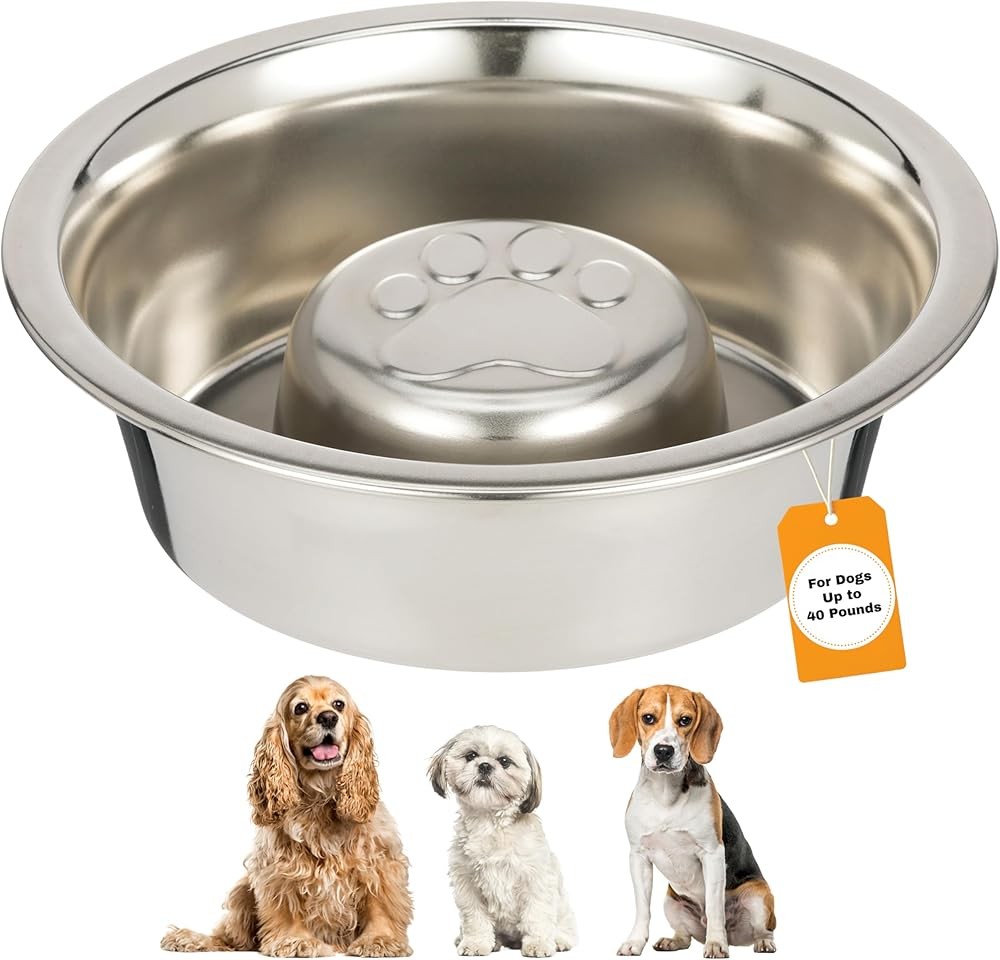
Neater Pet Brands Stainless Steel Slow Feed Bowl - Non-Tip & Non-Skid - Stops
Check Price on AmazonAs an Amazon Associate we earn from qualifying purchases.

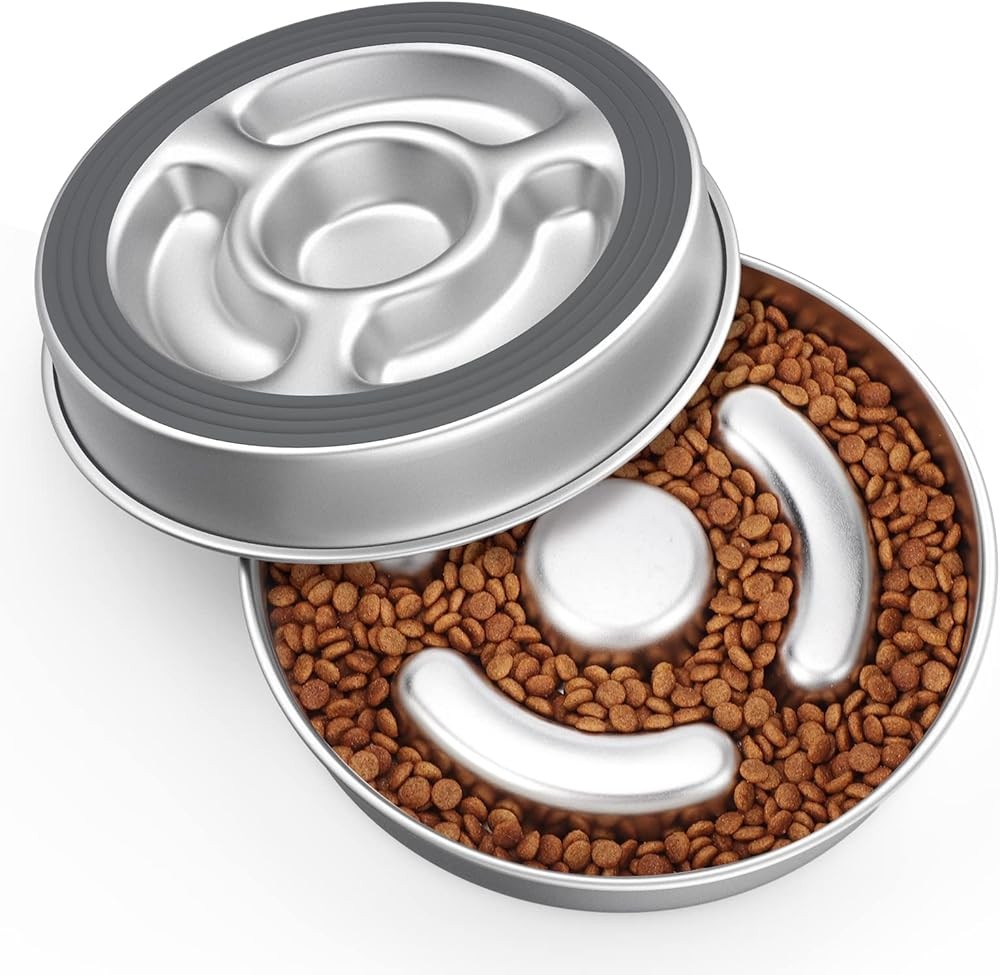
Stainless Steel Non Slip Slow Feeder Dog Bowl, 4 Cups Metal Dog Food Bowls for
Check Price on AmazonAs an Amazon Associate we earn from qualifying purchases.

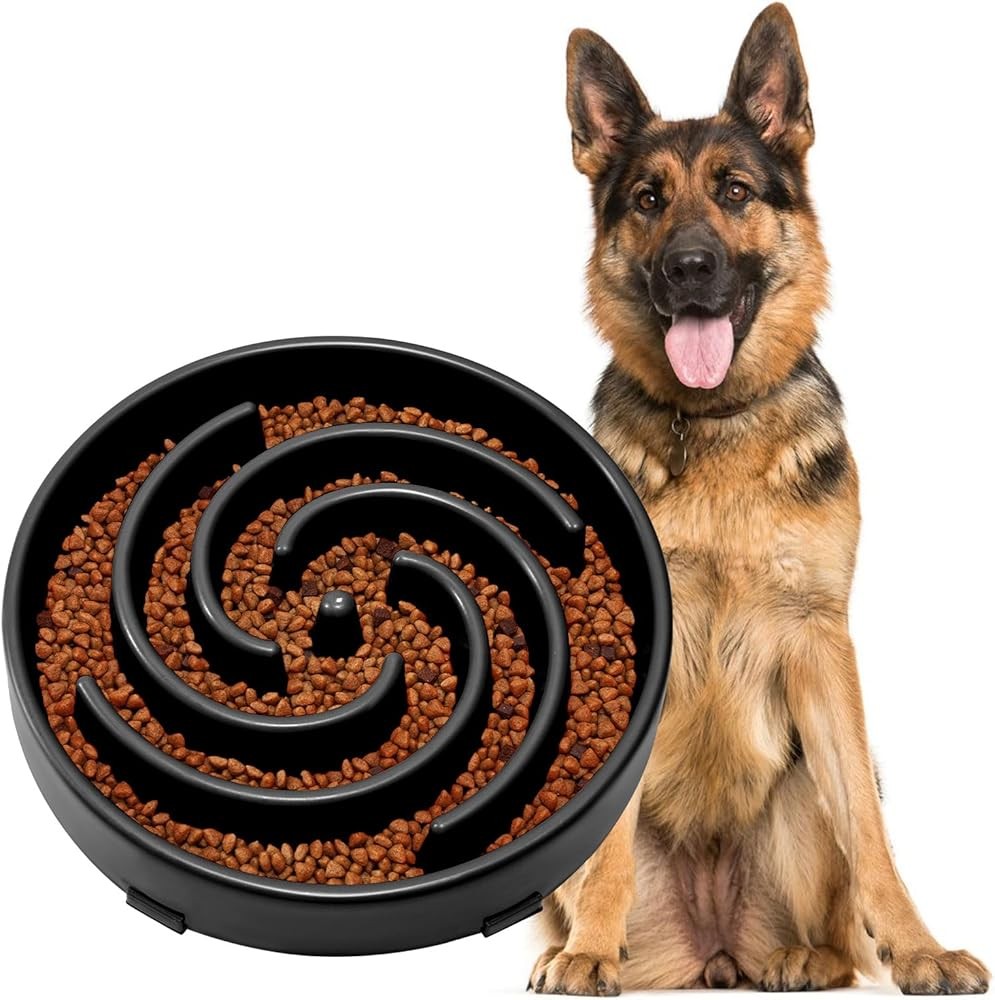
JASGOOD Slow Feeder Dogs Bowl for Large Medium Dogs,Anti-Gulping Pet Slower Fo
Check Price on AmazonAs an Amazon Associate we earn from qualifying purchases.
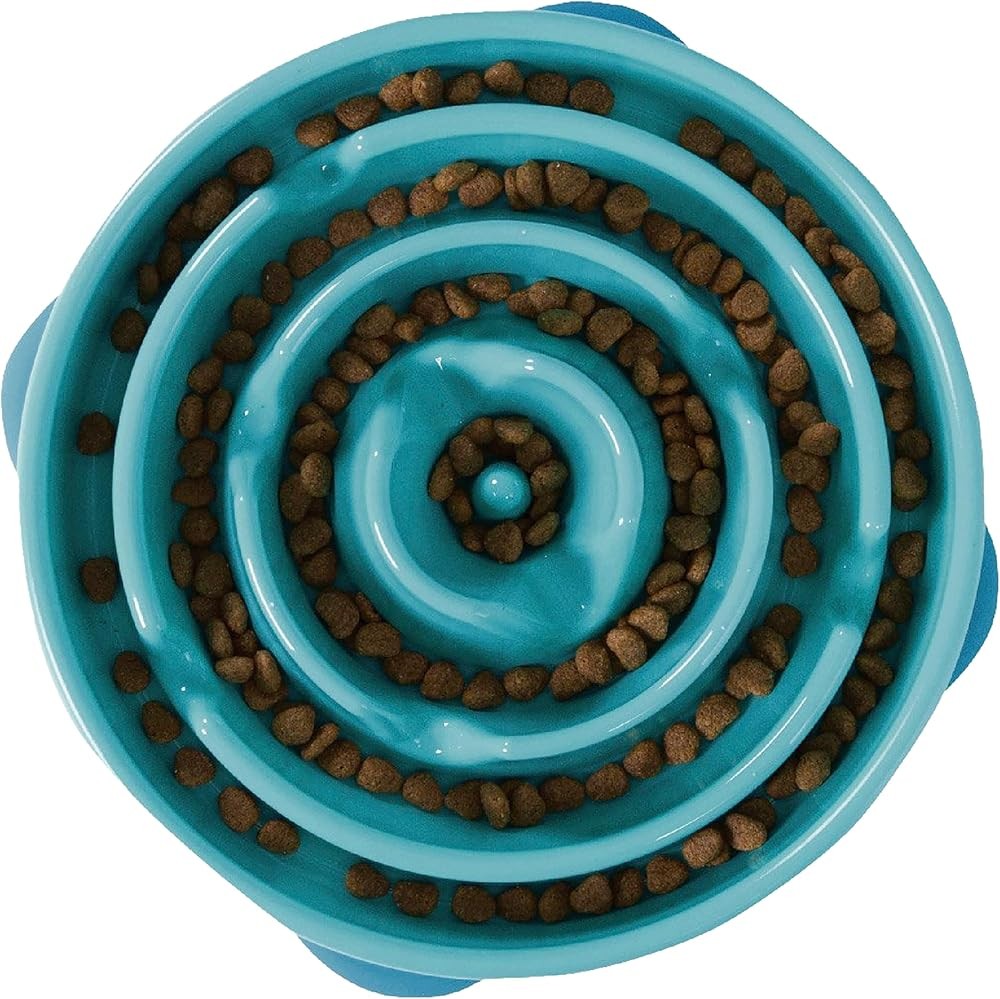
Outward Hound Fun Feeder Slo Bowl – Large 4‑Cup Capacity, Slow Feeding, Medium
Check Price on AmazonAs an Amazon Associate we earn from qualifying purchases.
Food type:
- ✅ Some evidence that dry kibble with fat among first 4 ingredients may increase risk
- ✅ Adding wet food or water to kibble may reduce risk
- ✅ Avoid foods with citric acid as preservative (possible risk factor)
Water access:
- ✅ Free access to water throughout day
- ❌ Don’t restrict water with meals (outdated advice)
Elevated bowls: CONTROVERSIAL
- Previous advice: Use elevated feeders
- Current evidence: Elevated feeders may INCREASE bloat risk in some breeds
- Recommendation: Ground-level feeding may be safer
3. Activity Management
Rest period after meals:
- ✅ No vigorous exercise for 1-2 hours after eating
- ✅ Short, calm leash walks okay
- ❌ No running, jumping, rough play, or swimming
Why: Exercise on full stomach may increase stomach movement and torsion risk
4. Stress Reduction
For anxious dogs:
- Behavior modification training
- Calming supplements (L-theanine, chamomile)
- Pheromone products (Adaptil)
- Anti-anxiety medication if severe (consult vet)
- Consistent routine and environment
Why: Stress increases cortisol, may affect stomach motility and gas production
5. Breeding Considerations
If breeding:
- Do not breed dogs who have had GDV
- Do not breed dogs whose parents or siblings had GDV
- Select for temperament (calm dogs at lower risk than anxious dogs)
Why: GDV has genetic component related to stomach ligament laxity and temperament
6. Early Recognition and Preparedness
Know the signs:
- Memorize the classic triad (distension + unproductive retching + restlessness)
- Keep emergency vet number and address easily accessible
- Know route to closest 24-hour emergency hospital
- Keep transport carrier or blanket ready
Time is critical: The difference between recognizing GDV in 30 minutes vs. 3 hours can be life or death
The research confirms: Feed 2-3 smaller meals instead of one large meal, use slow-feeder bowls, avoid exercise 1-2 hours post-meal, and contrary to old advice, do NOT use raised food bowls (110% increased risk) PubMed 9278112.
What Does Recovery Look Like After GDV Surgery?
Hospital Stay (3-7 Days)
What to expect:
- ICU monitoring for 24-72 hours
- IV fluids and medications
- Pain management
- ECG monitoring
- Gradual food reintroduction
- Watching for complications
Discharge criteria:
- Stable vital signs
- Eating and drinking
- Pain controlled on oral medications
- No arrhythmias
- Incision healing well
Home Recovery (2-4 Weeks)
Activity restriction:
- Leash walks only for 2 weeks
- No running, jumping, rough play
- No swimming
- Gradually increase activity after 2 weeks
Feeding:
- Small, frequent meals (3-4x daily)
- Soft or moistened food initially
- Gradually transition back to normal diet
- Continue slow-feeder bowl permanently
- Continue feeding management (2-3 meals daily, no exercise post-meal)
Medications:
- Pain medication (5-10 days)
- Antibiotics if prescribed
- Anti-nausea medication if needed
- Gastroprotectants (omeprazole, sucralfate) common
Incision care:
- Keep clean and dry
- Check daily for redness, swelling, discharge
- E-collar to stop licking
- Sutures/staples removed in 10-14 days
Follow-up:
- Recheck in 7-14 days
- Suture/staple removal
- Ensure healing progressing normally
Long-Term Outlook
With gastropexy:
- <5% recurrence rate (simple bloat may still occur, but twist is prevented)
- Most dogs live normal lifespan
- Normal activity once healed
- Continue preventive feeding strategies
Without gastropexy (if not performed during emergency surgery):
- 80% recurrence rate
- Strongly consider getting gastropexy done as soon as dog recovers
- High risk of repeat GDV
Potential chronic issues:
- Some dogs develop chronic gastritis
- May need ongoing gastroprotectant medication
- Sensitive stomach—may need special diet
Common Myths About Bloat Debunked
Myth 1: “Raised food bowls stop bloat”
Truth: Recent studies suggest elevated bowls may INCREASE risk in some breeds. Ground-level feeding may be safer.
Research: Purdue study found 110% increased risk with elevated bowls in large breeds PubMed 9278112
Myth 2: “Drinking water with meals causes bloat”
Truth: No evidence for this. Free access to water is fine.
What actually matters: Gulping food or water rapidly (whether with meal or not)
Myth 3: “Only giant breeds get GDV”
Truth: While giant breeds highest risk, any dog can develop GDV. Even small dogs occasionally affected.
Myth 4: “If dog can vomit, it’s not bloat”
Truth: In GDV, dog tries to vomit but can’t (unproductive retching). If successfully vomiting up food/liquid, less likely to be GDV (but still could be other emergency—see vet).
Myth 5: “Bloat will resolve on its own”
Truth: GDV NEVER resolves without treatment. Without emergency surgery, it’s fatal.
Myth 6: “You can stop bloat by limiting exercise before meals”
Truth: Exercise AFTER meals is the risk factor, not before. Wait 1-2 hours after eating before vigorous activity.
Myth 7: “Adding water to kibble stops bloat”
Truth: Conflicting evidence. Some studies suggest moistening food may help; others show no effect. Not harmful, but not proven prevention.
Myth 8: “Probiotics stop bloat”
Truth: No evidence. Probiotics support digestive health but don’t reduce GDV risk.
GDV in Special Situations
Multi-Dog Households
Considerations:
- Competition for food can increase eating speed
- Dogs may guard food, creating stress
Solutions:
- Feed dogs separately in different rooms
- Use slow-feeder bowls for all dogs
- Ensure each dog eats at own pace without pressure
Working Dogs (K9, Search and Rescue, Service)
Risk factors:
- High stress levels
- Irregular feeding schedules
- High activity levels
Prevention:
- Many K9 programs now require prophylactic gastropexy
- Structured feeding protocols
- Rest periods after meals strictly enforced
Military/Police K9
Additional considerations:
- Stress of job
- Irregular feeding schedules during deployments
- High activity levels
Prevention measures:
- Many K9 programs now require prophylactic gastropexy
- Structured feeding protocols
- Rest periods after meals strictly enforced
Service Dogs
Considerations:
- Handler may be disabled and unable to transport dog immediately
- Emergency plan must account for handler’s limitations
- Service dog organizations increasingly requiring gastropexy for large breeds
Solutions:
- Backup emergency contacts who can transport dog
- Medical alert system for handler to call for help
- Service dog trained to alert to handler’s medical emergencies, but handler must recognize dog’s emergencies too
Competitive/Performance Dogs
Risk factors:
- Stress of competition and travel
- Altered routine during shows/trials
- Exercise timing around feeding
Prevention:
- Feed after competition, not before
- Maintain consistent feeding schedule even while traveling
- Extra vigilance during competition season
The Emotional Toll: Coping with GDV Experience
GDV is traumatic for owners, whether dog survives or not.
If Your Dog Survived
Common feelings:
- Relief and gratitude
- Guilt (“I should have noticed sooner”)
- Anxiety about recurrence
- Hyper-vigilance watching for symptoms
- Financial stress from treatment costs
Research-supported approaches:
- Research indicates early recognition and intervention may be beneficial for dogs experiencing gastric distress.
- Studies show that following a gastropexy procedure (if performed), the risk of recurrence appears to be less than 5%.
- Published research suggests managing anxiety and worry is important for owner well-being.
- Support groups for dogs who have experienced GDV and their owners may provide a helpful resource.
- If anxiety is interfering with daily life, research suggests counseling may be beneficial.
If You Lost Your Dog to GDV
Common feelings:
- Devastating grief
- Guilt (“If only I had…”)
- Anger at self, situation, or vet
- Trauma from witnessing dog’s distress
- Second-guessing every decision
Grief support:
- Pet loss counseling (many vets offer resources)
- Support groups (online and in-person)
- Memorialize your dog in meaningful way
- Allow yourself to grieve fully—this is traumatic loss
- Don’t rush into getting another dog until you’ve processed loss
Research may suggest potential support for emotional well-being:
- Studies indicate GDV can occur even with diligent care
- Research suggests individuals may have made decisions based on the information available at the time
- Published research shows a dog’s experience of being loved may be a relevant factor PMC
If Considering Another Dog After Losing One to GDV
Important decisions:
- Consider whether ready emotionally
- If getting another high-risk breed, commit to:
- Prophylactic gastropexy (non-negotiable)
- Emergency preparedness
- Education about early signs
- Some people find healing in educating other owners about GDV
- Your experience could save other dogs’ lives
Conclusion: Knowledge Saves Lives
GDV can be a serious, rapidly developing, and frightening condition. However, research indicates it doesn’t necessarily have to be fatal. Studies suggest that with appropriate knowledge, preparation, and a quick response, 85-95% of dogs experience survival when treatment is initiated promptly.
The key takeaways:
✅ Know the classic triad: Distended abdomen + unproductive retching + restlessness = GDV until proven otherwise
✅ Act immediately: Don’t wait, don’t call your regular vet, don’t Google more symptoms—go to emergency vet within 30-60 minutes
✅ High-risk breeds: Strongly consider prophylactic gastropexy—it’s the single most effective prevention
✅ Be prepared: Know your emergency vet’s location, have a plan, keep contact information accessible
✅ Every minute counts PubMed 40454814: The difference between 90% survival and 20% survival is measured in hours
✅ Trust your instincts: You know your dog. If something feels seriously wrong, it probably is.
This guide gives you the knowledge to recognize GDV, understand when it’s a true emergency, know what to expect at the ER, and most importantly—act fast enough to save your dog’s life.
Share this information. Talk about it with fellow dog owners. The more people who understand GDV, the more dogs will get the immediate treatment they need to survive.
A dog is unable to communicate internal distress, and relies on observation for support. Recognizing potential signs and responding promptly may be beneficial. With the information presented, individuals may be better prepared to respond. AKC
For more context, see our guide on Dog Constipation Relief: natural approaches, Causes, and When to See a Vet.
Related Reading
-
Best Dog Food for Sensitive Stomachs: Research-Backed Recommendations
-
Dog Digestive Health: Complete Guide to Prevention and Care
-
Emergency Vet Preparedness: What Every Dog Owner Needs to Know
-
Large Breed Dog Health: Comprehensive Care Guide
-
Preventive Surgery for Dogs: What to Consider
-
Dog Gurgling Stomach: Causes, Approaches, and When It’s Serious
-
Why Does My Dog Have Bad Breath Suddenly? Causes and Solutions
-
Dog Diarrhea with Blood: Causes, Treatment, and When It’s an Emergency
Recommended Products