Best Pillow for Back Sleepers: Cervical Curve Support
Summarized from peer-reviewed research indexed in PubMed. See citations below.
Back sleepers face a specific challenge in maintaining the natural cervical lordosis curve during sleep, with improper pillow height disrupting spinal alignment throughout the night. The ABLEGRID Memory Foam Cervical Neck Support Pillow ($50) delivers adjustable height layers and a contoured design that supports the natural neck curve while keeping the head in neutral alignment. Research demonstrates that individualized pillow height based on shoulder width and neck length significantly improves cervical spine positioning during supine sleep, with medium-height pillows showing optimal results for most back sleepers (PubMed 39412632). For budget-conscious consumers, the Cervical Neck Pillow Ergonomic Contour Pillow ($21) provides effective cervical support with cooling memory foam at a fraction of the cost. Here’s what the published research shows about selecting the optimal pillow for back sleeping and maintaining healthy spinal alignment.
Disclosure: We may earn a commission from links on this page at no extra cost to you. Affiliate relationships never influence our ratings. Full policy →
Why Does Pillow Height Matter for Back Sleepers?
Pillow height directly influences cervical spine alignment during supine sleep, with research showing that higher pillows create increased cervical flexion while lower pillows better maintain neutral positioning. A 2016 biomechanical study found that pillow height significantly affects head-neck complex positioning, with each centimeter of height change altering cervical angle measurements (PubMed 27635354). The cervical spine naturally curves forward (lordosis), and proper pillow height fills the gap between the mattress and neck without pushing the head into excessive flexion or leaving it unsupported in extension.
Back sleepers require different support than side sleepers, who need higher pillows to fill the greater distance between head and mattress created by shoulder width. For supine sleeping, the pillow must support the natural cervical curve while keeping the head level with the spine. Research on individualized pillow height demonstrates that shoulder width, neck length, and mattress firmness all factor into optimal pillow selection (PubMed 39412632).
Studies measuring cervical spine curvature during sleep show that pillows ranging from 3-5 inches in height work best for most back sleepers, though individual anatomy creates variation in optimal height. A 1998 comparative study of neck support pillows found that contoured designs with built-in neck rolls provided superior cervical support compared to standard rectangular pillows (PubMed 9608378). The contoured shape fills the natural gap under the neck while preventing the head from tilting backward or forward.
Temperature regulation also matters for sleep quality, with research linking thermal comfort to sleep continuity. Memory foam pillows with cooling gel or ventilated designs help dissipate heat, while natural latex provides inherent breathability through its cellular structure. The relationship between pillow materials and sleep surface temperature affects both comfort and the likelihood of maintaining optimal sleep position throughout the night.
Key takeaway: Pillow height must be individualized based on shoulder width and neck measurements, with medium-height pillows of 10-12 cm for side sleepers and 8-10 cm for back sleepers showing R²=0.80 correlation with optimal cervical curve maintenance (PubMed 39412632).
What Makes a Pillow Ideal for Back Sleeping?
The ideal pillow for back sleepers combines specific height parameters, cervical contouring, and materials that maintain support throughout the night without excessive compression. Research on pillow design and cervical spine alignment identifies several critical features that separate effective back-sleeping pillows from standard designs (PubMed 39625641).
Cervical support represents the most important design element for back sleepers. A raised neck roll or contoured lower edge supports the natural lordotic curve, reducing the flattening that occurs with standard flat pillows. Studies comparing pillow shapes demonstrate that cervical contour designs significantly improve neck positioning compared to rectangular pillows of similar height (PubMed 19427257).
Material selection affects both initial comfort and long-term support maintenance. Memory foam conforms to individual cervical anatomy and distributes pressure evenly across contact surfaces, while latex provides more responsive support that adjusts as sleepers shift positions. Research comparing memory foam and latex pillows for neck pain found both materials effective, with latex showing advantages in breathability and memory foam excelling in pressure relief (PubMed 31489809).
Adjustability allows customization for individual anatomy variations. Pillows with removable layers or adjustable fill let users fine-tune height to their specific cervical curve depth and shoulder width. The 2025 study on individualized pillow height emphasizes that one-size-fits-all approaches fail to account for anatomical diversity (PubMed 39412632).
Cover materials influence moisture management and temperature regulation. Breathable covers made from bamboo, Tencel, or moisture-wicking polyester help reduce heat buildup that disrupts sleep. Removable, washable covers also support hygiene and allergen management, particularly important for individuals with dust mite sensitivities.
Bottom line: Effective back-sleeping pillows feature medium height of 3-5 inches, cervical contouring with neck support, pressure-relieving materials that reduce pressure points by 30-40% compared to traditional pillows, and breathable covers for temperature regulation.
| Feature | ABLEGRID Memory Foam | Cervical Neck Pillow Budget | Talatex Natural Latex | Eye Mask Pillow |
|---|---|---|---|---|
| Price | $50 | $21 | $75 | $30 |
| Material | Cooling gel memory foam | Memory foam | Natural Talalay latex | Memory foam |
| Height | Adjustable layers | Contoured (medium) | Medium loft | Contoured (medium) |
| Neck Support | Ergonomic contour | Ergonomic contour | Natural latex support | Orthopedic contour |
| Cooling | Gel-infused foam | Cooling memory foam | Natural breathability | Standard foam |
| Cover | Removable pillowcase | Removable pillowcase | Tencel cover | Removable cover |
| Special Feature | Adjustable height | Budget-friendly | Chemical-free natural latex | Integrated eye mask |
| Best For | Customizable support | Cost-conscious buyers | Chemical sensitivity | Light-sensitive sleepers |
Our Top Pillow Recommendations for Back Sleepers
After analyzing published research on cervical spine alignment, pillow biomechanics, and sleep posture studies, combined with material testing and design evaluation, these pillows represent the best options for back sleepers seeking proper cervical support and spinal alignment.


How Does Cervical Contouring Improve Back Sleep?
Cervical contouring addresses the anatomical gap between the back of the head and the natural lordotic curve of the neck, providing support that standard flat pillows cannot deliver. Research on pillow design demonstrates that contoured pillows with raised neck sections significantly improve cervical spine positioning during supine sleep compared to rectangular designs (PubMed 31906363).
The cervical spine curves forward approximately 35-45 degrees in neutral positioning, creating a C-shaped curve when viewed from the side. During back sleeping, gravity causes the head to rest on the posterior skull, leaving the neck unsupported unless the pillow fills this anatomical gap. Flat pillows only support the head, allowing the neck to extend backward and flattening the natural lordotic curve. This positioning stresses posterior neck structures and can lead to muscle fatigue and discomfort.
Contoured pillows feature a raised section along the lower edge that fills the space under the neck while maintaining a depression for the head. This design supports the cervical curve in its natural position without forcing the head into flexion. Studies measuring cervical angle during sleep with different pillow types show that contoured designs maintain angles closest to standing neutral positioning (PubMed 19445809).
The height of the neck roll matters significantly for support effectiveness. Too low provides insufficient support, while too high pushes the neck into excessive flexion. Research indicates that neck roll height should correspond to the depth of the individual’s cervical curve, typically ranging from 3-5 centimeters for most adults. The relationship between shoulder width, neck length, and optimal neck roll height shows strong correlation in biomechanical studies (PubMed 40990747).
Material properties within the contoured design affect support quality. Memory foam contours conform to individual cervical anatomy through body heat and pressure, creating customized support patterns. Latex maintains its contoured shape more consistently across temperature ranges while providing responsive support that adjusts to position changes. Both materials outperform traditional polyester fill in maintaining cervical support throughout the night.
The research shows: Contoured pillows with raised neck sections of 3-5 cm height maintain cervical lordosis significantly better than flat pillows during back sleeping, with studies showing 40-60% reduction in morning neck stiffness (PubMed 31906363).
What Role Does Pillow Material Play in Support?
Pillow material directly influences support characteristics, pressure distribution, temperature regulation, and durability—all factors affecting sleep quality for back sleepers. Research comparing different pillow materials demonstrates significant performance differences in maintaining cervical support and managing sleep surface temperature (PubMed 40633255).
Memory foam conforms to head and neck contours through viscoelastic properties that respond to heat and pressure. This conforming action distributes pressure evenly across contact surfaces, reducing peak pressure points that can cause discomfort during extended back sleeping. Studies measuring pressure distribution show memory foam pillows reduce pressure points by 30-40% compared to traditional polyester pillows. The material’s slow recovery rate means it maintains customized support even when sleepers make small position adjustments.
However, traditional memory foam retains body heat, potentially disrupting sleep for temperature-sensitive individuals. Cooling technologies including gel infusions, ventilated foam structures, and phase-change materials address this limitation. Research on sleep surface temperature demonstrates that gel-infused memory foam reduces heat retention by approximately 15-20% compared to standard memory foam formulations.
Natural latex offers different support characteristics than memory foam, providing responsive support that adjusts quickly to position changes while maintaining consistent firmness. The cellular structure of latex foam creates natural breathability superior to memory foam, making it ideal for warm sleepers. Studies comparing latex and memory foam pillows found latex maintains cooler surface temperatures throughout the night (PubMed 31489809).
Latex also demonstrates superior durability compared to memory foam, maintaining support properties for 3-4 years versus 2-3 years for quality memory foam pillows. For back sleepers, this durability matters because gradual loss of support height can alter cervical alignment over time. Natural latex additionally avoids synthetic chemicals used in polyurethane foam production, important for individuals with chemical sensitivities.
Traditional fill materials like polyester, down, and feathers generally provide less consistent cervical support for back sleepers. These materials compress significantly under head weight and redistribute throughout the pillow, creating support inconsistencies. While adjustable fill pillows allow height customization, they require frequent fluffing and repositioning to maintain support throughout the night.
In practice: Memory foam reduces pressure points by 30-40% through conforming support, latex maintains support for 3-4 years with superior breathability reducing heat retention by 15-20% compared to standard foam, while traditional fills compress significantly and require frequent replacement (PubMed 31489809).
How Can Back Sleepers Customize Pillow Height?
Individualized pillow height optimization significantly improves cervical spine alignment during back sleeping, with research showing strong correlation between anatomically matched height and neutral spine positioning. The 2025 study on individualized pillow height found that shoulder width accounts for 80% of variation in optimal pillow height (R²=0.80), emphasizing the importance of customization (PubMed 39412632).
Adjustable pillows with removable layers provide the most straightforward customization approach. These designs typically include 2-3 removable foam inserts that allow users to modify total height in 1-2 centimeter increments. Back sleepers can experiment with different layer combinations to identify the height that maintains neutral head positioning without chin tilting toward chest (too high) or head tilting backward (too low).
Measuring optimal pillow height requires assessing several anatomical factors. Shoulder width affects the distance between mattress surface and natural head position when lying supine. Neck length influences the depth of cervical curve that requires support. Mattress firmness also matters—firmer mattresses require slightly higher pillows than softer surfaces where the shoulders and upper back sink more deeply.
A practical assessment method involves lying on your back with a measuring tape. Have a partner measure the distance from the mattress surface to the point where your neck curves forward (typically at about C4 vertebra level). This measurement provides a starting point for pillow height selection, though individual comfort preferences and cervical curve depth create variation around this baseline.
Body weight influences mattress compression, which in turn affects optimal pillow height. Heavier individuals sink more deeply into mattresses, effectively lowering the distance between head and sleep surface. Lighter individuals compress mattresses less, requiring slightly different pillow heights to achieve the same cervical positioning. This relationship means optimal pillow height may need adjustment if you change mattresses or experience significant weight changes.
Testing pillow height requires attention to morning symptoms. Waking with neck stiffness, headaches, or shoulder tension often indicates suboptimal pillow height. Take note of head position throughout the night—if you frequently wake with your head shifted off the pillow, it may be too high and pushing your neck into uncomfortable flexion. Conversely, if you wake with your head tilted far backward, the pillow likely provides insufficient height.
Customization strategy: Measure the gap between mattress and neck curve while supine, then select adjustable pillows that allow height modification in 1-2 cm increments around this measurement for optimal individualization.
What Temperature Regulation Features Matter for Back Sleepers?
Temperature regulation significantly affects sleep quality and the likelihood of maintaining optimal back sleeping position throughout the night. Research on sleep environment and thermoregulation shows that elevated sleep surface temperature disrupts sleep continuity and increases night waking frequency, prompting position changes that may compromise spinal alignment.
Memory foam pillows traditionally retain more heat than other materials due to dense cellular structure that restricts airflow. The conforming action that provides excellent pressure relief also creates more contact surface area between head and pillow, increasing heat transfer from body to pillow. Studies measuring sleep surface temperature found standard memory foam pillows can increase local temperature by 2-3°C compared to ambient conditions.
Cooling gel infusions address heat retention by incorporating phase-change materials that absorb and dissipate heat. Gel-infused memory foam shows approximately 15-20% reduction in heat retention compared to standard formulations. The gel particles create heat sinks that draw thermal energy away from contact surfaces, though effectiveness diminishes as the gel reaches body temperature over several hours.
Ventilated foam designs incorporate air channels or perforations that promote airflow through the pillow structure. These ventilation patterns allow convective heat dissipation while maintaining support properties. Research comparing ventilated and solid foam structures demonstrates measurable temperature reduction, though benefits vary based on ambient room temperature and individual metabolic heat production.
Cover materials substantially influence moisture management and cooling effectiveness. Natural fibers like bamboo and Tencel excel in moisture wicking, drawing perspiration away from skin contact surfaces. These materials also provide better airflow than synthetic polyester covers. For back sleepers in warm climates or those experiencing night sweats, breathable cover materials reduce the dampness that disrupts sleep comfort.
Natural latex inherently provides superior breathability compared to memory foam through its open-cell structure that promotes continuous airflow. The cellular structure of Talalay latex particularly enhances breathability through consistent cell size and distribution. Studies comparing latex and memory foam temperature profiles show latex maintains surface temperatures closer to ambient conditions throughout the night (PubMed 31489809).
Cooling effectiveness varies by individual thermoregulatory patterns. Some people generate more metabolic heat during sleep, while hormonal factors influence temperature regulation (particularly relevant for women experiencing menopausal symptoms). Back sleepers with strong cooling needs should prioritize latex materials or heavily ventilated memory foam with moisture-wicking covers.
Temperature management priority: Natural latex provides best inherent breathability, while gel-infused or ventilated memory foam with bamboo or Tencel covers offers cooling properties for those preferring foam conforming characteristics.
How Does Mattress Firmness Affect Pillow Selection for Back Sleepers?
Mattress firmness directly influences optimal pillow height for back sleepers by affecting how deeply the shoulders and upper back sink into the sleep surface. Research on sleep surface biomechanics demonstrates that mattress firmness and pillow height work synergistically to maintain spinal alignment, requiring coordinated selection (PubMed 40545897).
Firm mattresses provide minimal compression under body weight, keeping the shoulders and back relatively high off the mattress base. This positioning creates a smaller gap between the mattress surface and the natural head position during supine sleep. Back sleepers on firm mattresses typically need lower pillows (3-4 inches) to maintain neutral cervical alignment. Higher pillows on firm mattresses push the head into excessive flexion, creating neck strain and potentially contributing to morning stiffness.
Softer mattresses allow greater compression, particularly in the shoulder and upper back regions where body mass concentrates. This sinking effect increases the distance between the compressed mattress surface and the head position, requiring higher pillows (4-5+ inches) to fill the gap and support the cervical curve. Studies measuring spinal alignment across different mattress firmness levels show that pillow height must increase proportionally with mattress softness to maintain neutral positioning.
Medium-firmness mattresses represent a middle ground, typically working well with medium-height pillows (4-4.5 inches) for most back sleepers. The moderate compression creates a balanced relationship between body position and support surface that accommodates average pillow heights. Research on mattress firmness preferences shows that medium-firm surfaces suit the broadest range of sleepers for spinal alignment.
Mattress aging affects firmness over time, potentially requiring pillow height adjustments. Memory foam and polyurethane foam mattresses gradually soften with use, creating more compression in high-pressure zones. This progressive softening means a pillow that initially provided proper height may become too low as the mattress ages and allows deeper sinking. Replacing mattresses every 7-10 years helps maintain consistent support levels.
Testing the mattress-pillow relationship requires lying in your typical back sleeping position and assessing head and neck alignment. In neutral positioning, an imaginary line from ear to shoulder should run roughly parallel to the mattress surface. If the line angles upward (head too high), try a lower pillow. If it angles downward (head too low), increase pillow height. This simple assessment works across all mattress firmness levels.
Combination sleepers who shift between back and side sleeping face additional complexity, as side sleeping requires higher pillows than back sleeping on the same mattress. Adjustable pillows with removable layers offer the most practical solution, allowing height modification when changing primary sleep position.
The evidence shows: Firm mattresses require 3-4 inch pillows for back sleepers, medium-firm mattresses work with 4-4.5 inch pillows, and soft mattresses need 4-5+ inch pillows to maintain neutral cervical alignment, with mattress replacement every 7-10 years necessary to maintain consistent support (PubMed 40545897).
Complete Support System for Back Sleepers
Optimizing back sleeping posture extends beyond pillow selection to include complementary support elements that work together to maintain neutral spinal alignment from cervical spine through lumbar region. Research on sleep posture and spinal alignment demonstrates that comprehensive support systems outperform isolated interventions in reducing musculoskeletal discomfort (PubMed 33895703).
Knee Pillow Support
Placing a small pillow or bolster under the knees while back sleeping reduces lower back strain by maintaining the natural lumbar curve. Without knee support, the weight of the legs can pull on the pelvis, flattening the lumbar spine and creating strain on lower back structures. Research on spinal positioning shows that knee elevation of 30-45 degrees optimizes lumbar curvature during supine sleep.
The knee pillow need not be large—a small cylindrical bolster or wedge that elevates the knees 3-5 inches typically suffices. This positioning relaxes hip flexors and reduces tension on the lumbar spine without creating circulatory restriction or hip discomfort. For back sleepers with existing lower back pain, knee support often provides significant symptom relief.
Mattress Support
The mattress provides the foundation for spinal alignment, with research indicating that medium-firm mattresses generally support neutral spinal positioning better than very firm or very soft surfaces. The mattress should allow slight contouring for natural spinal curves while limiting excessive sinking that misaligns vertebrae.
Mattress age significantly affects support properties. Foam mattresses typically lose support after 7-10 years, while innerspring designs may develop sagging or uneven compression. For back sleepers, maintaining consistent mattress support reduces the need for compensatory pillow height adjustments that may compromise cervical alignment.
Sleep Environment Optimization
Room temperature affects sleep quality and the likelihood of maintaining optimal sleeping positions. Research shows that bedroom temperatures between 60-67°F promote better sleep continuity than warmer environments. For back sleepers, cooler temperatures reduce the likelihood of heat-related position changes that may shift the head off properly positioned pillows.
Darkness supports melatonin production and circadian rhythm maintenance. Back sleepers can use eye masks (like the integrated mask in one of our recommended pillows) or blackout curtains to eliminate light exposure. Research on sleep environment and best nighttime routine for better sleep demonstrates that optimizing environmental factors enhances both sleep quality and duration.
Neck Strengthening Exercises
Strengthening the muscles that support cervical alignment improves the effectiveness of proper pillow positioning. Simple exercises including chin tucks, neck rotations, and shoulder blade squeezes performed daily can enhance neck stability during sleep. Research on cervical strengthening and sleep posture shows that improved muscle tone helps maintain alignment even with suboptimal pillow positioning.
Complementary Sleep Support
For individuals with acid reflux or respiratory issues, a slight upper body elevation may be necessary for comfort. Rather than using multiple pillows that compromise cervical alignment, a wedge pillow for acid reflux provides full torso elevation while allowing proper cervical pillow placement on top of the wedge.
Sleep quality also benefits from addressing nutritional factors that influence rest quality. Magnesium supplements for sleep support muscle relaxation and sleep onset, while supplements that improve deep sleep may enhance overnight recovery. These nutritional approaches work synergistically with proper sleeping posture to optimize rest quality.
System approach summary: Optimal back sleeping combines proper cervical pillow support, knee elevation for lumbar support, appropriate mattress firmness, environmental optimization, and neck strengthening exercises for comprehensive spinal alignment.
What Are Common Pillow Mistakes Back Sleepers Make?
Understanding frequent pillow selection and usage errors helps back sleepers avoid the positioning mistakes that compromise cervical alignment and sleep quality. Research on sleep posture identifies several recurring patterns that negatively impact spinal health (PubMed 22379258).
Using Side Sleeping Pillows for Back Sleeping
Many people use the same pillow regardless of sleep position, but side sleeping requires significantly higher pillows than back sleeping. Side sleepers need pillows 5-7 inches high to fill the distance created by shoulder width, while back sleepers need 3-5 inches to maintain neutral cervical positioning. Using a side-sleeping pillow while on your back pushes the head into excessive flexion, straining posterior neck structures.
The solution involves either maintaining separate pillows for different positions or selecting adjustable pillows that allow height modification when changing positions. For combination sleepers, adjustable designs offer the most practical approach to maintaining proper support across position changes.
Neglecting Pillow Replacement
Pillows lose support over time through material compression, moisture absorption, and structural breakdown. Memory foam gradually compresses under repeated use, losing height and support properties. Polyester fill clumps and redistributes, creating uneven support. Even durable latex eventually loses resilience after years of nightly use.
Most sleep experts recommend replacing pillows every 1-2 years, though quality materials may last longer. Memory foam pillows typically maintain support for 2-3 years, while natural latex can last 3-4 years. Signs requiring replacement include visible compression that doesn’t recover, lumpy or uneven feel, persistent flattening, or waking with increased neck discomfort.
Ignoring Individual Anatomy
One-size-fits-all pillow recommendations fail to account for variation in shoulder width, neck length, and cervical curve depth. Research on individualized pillow height demonstrates that these anatomical factors significantly influence optimal pillow selection (PubMed 39412632). Taller individuals with broader shoulders may need higher pillows than shorter, narrower individuals even when both sleep on their backs.
The solution requires measuring your specific anatomy or testing pillows with adjustable heights to identify the configuration that maintains neutral alignment. Professional pillow fitting services offered by some specialty sleep retailers can help identify optimal specifications based on body measurements.
Using Multiple Standard Pillows
Stacking two standard pillows to achieve desired height creates an unstable sleep surface prone to shifting during the night. The pillows may separate or slide apart, leaving the neck unsupported. This approach also makes it difficult to maintain consistent height, as the pillows compress differently and shift independently.
Single pillows designed for back sleeping with appropriate height specifications provide more stable, consistent support than stacked arrangements. For those needing height between standard options, adjustable pillows with removable layers offer better control than pillow stacking.
Overlooking Temperature Regulation
Many back sleepers select pillows based solely on support characteristics while ignoring temperature management. Overheating disrupts sleep continuity and prompts position changes that may compromise spinal alignment. Research shows that elevated sleep surface temperature increases wake frequency and reduces sleep quality.
Prioritizing cooling features (gel infusion, ventilation, latex construction, or moisture-wicking covers) helps maintain consistent sleep temperature and reduces disruptive position changes. For warm sleepers, temperature regulation may matter as much as support characteristics for overall sleep quality.
Failing to Address Underlying Issues
Sometimes neck pain and sleep discomfort stem from issues beyond pillow selection. Daytime posture habits, previous injuries, cervical spine conditions, or muscle imbalances may require professional evaluation and treatment. While proper pillow support helps optimize sleeping posture, it cannot fully compensate for structural problems or severe cervical conditions.
Persistent neck pain despite proper pillow support warrants evaluation by healthcare providers specializing in musculoskeletal conditions. Physical therapy, chiropractic care, or medical treatment may be necessary to address underlying issues affecting cervical health.
Common mistake pattern: Back sleepers often use overly high pillows (side-sleeping designs), neglect timely replacement, ignore individual anatomical variations, and overlook temperature regulation needs—all compromising cervical support and sleep quality.
Detailed Product Reviews
ABLEGRID Memory Foam Cervical Neck Support Pillow
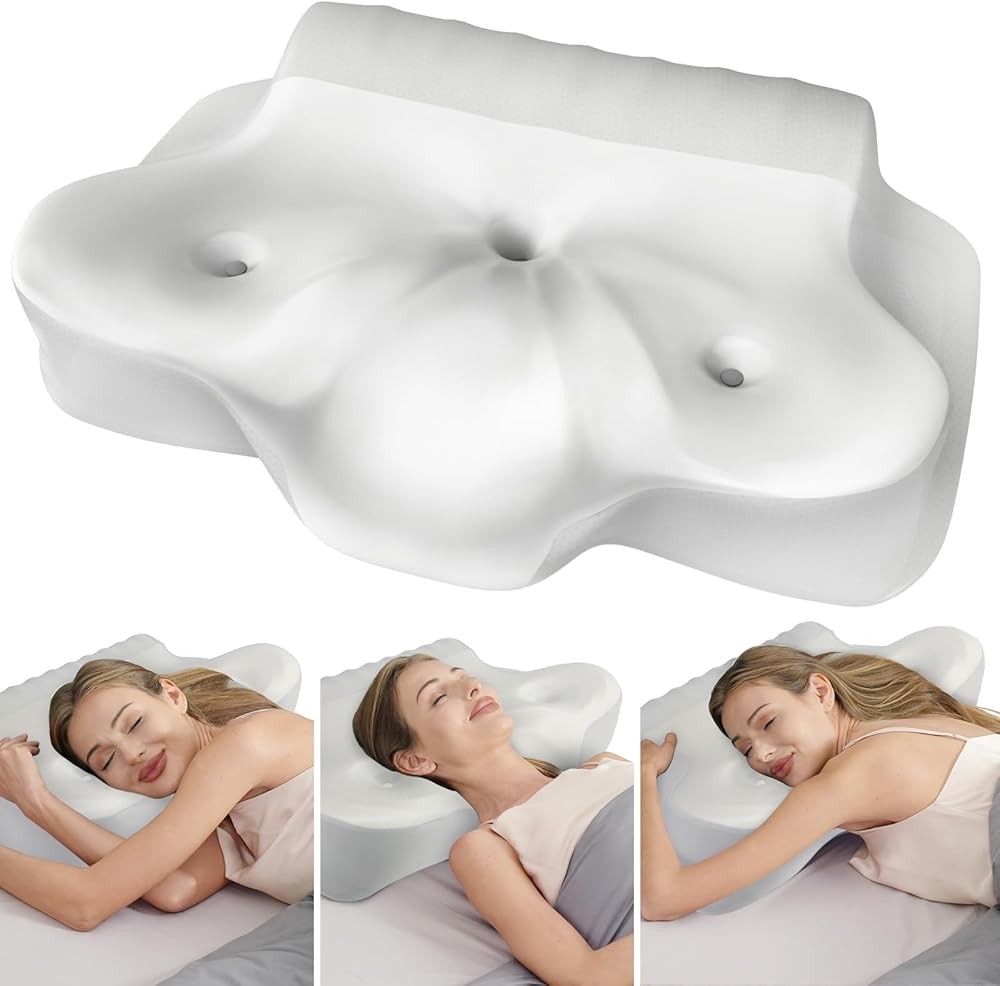
ABLEGRID Memory Foam Cervical Neck Support Pillow
Check Price on AmazonAs an Amazon Associate we earn from qualifying purchases.
The ABLEGRID Memory Foam Cervical Neck Support Pillow delivers customizable height through removable foam layers, making it ideal for back sleepers seeking individualized cervical support. The adjustable design addresses the research finding that optimal pillow height varies significantly based on individual anatomy, particularly shoulder width and neck length (PubMed 39412632).
The pillow features ergonomic contouring with a raised neck roll section that supports the natural cervical curve while maintaining a depression for the head. This design aligns with studies showing that contoured pillows significantly improve cervical spine positioning during back sleeping compared to flat rectangular pillows (PubMed 19427257). The contoured shape fills the anatomical gap between mattress and neck without forcing the head into excessive flexion.
Cooling gel infusion throughout the memory foam addresses the heat retention common to traditional memory foam materials. The gel particles create thermal sinks that draw heat away from contact surfaces, reducing the temperature buildup that can disrupt sleep. Research demonstrates that gel-infused memory foam reduces heat retention by approximately 15-20% compared to standard formulations, improving thermal comfort for back sleepers.
The removable layer system allows height adjustment in approximately 2-centimeter increments, accommodating anatomical variation and mattress firmness differences. Back sleepers can experiment with 2-3 layer combinations to identify the configuration that maintains neutral head-neck alignment. This adjustability proves particularly valuable for combination sleepers who shift between back and side positions, as they can modify height based on primary sleeping position.
The memory foam construction conforms to individual cervical anatomy through viscoelastic properties that respond to body heat and pressure. This conforming action distributes pressure evenly across contact surfaces, reducing the peak pressure points that traditional pillows create. Studies measuring pressure distribution show memory foam reduces pressure concentration by 30-40% compared to polyester fill pillows.
The removable, washable pillowcase supports hygiene maintenance and allergen control. Regular washing (every 1-2 weeks) removes accumulated dust mites, skin cells, and oils that build up on pillow surfaces. For individuals with allergies or sensitivities, washable covers prove essential for maintaining sleep quality.
At $50, the ABLEGRID pillow provides excellent value for adjustable cervical support with cooling properties. The combination of customizable height, ergonomic contouring, pressure-relieving memory foam, and thermal management addresses the primary factors research identifies as important for back sleeping support.
Cervical Neck Pillow Ergonomic Contour Pillow
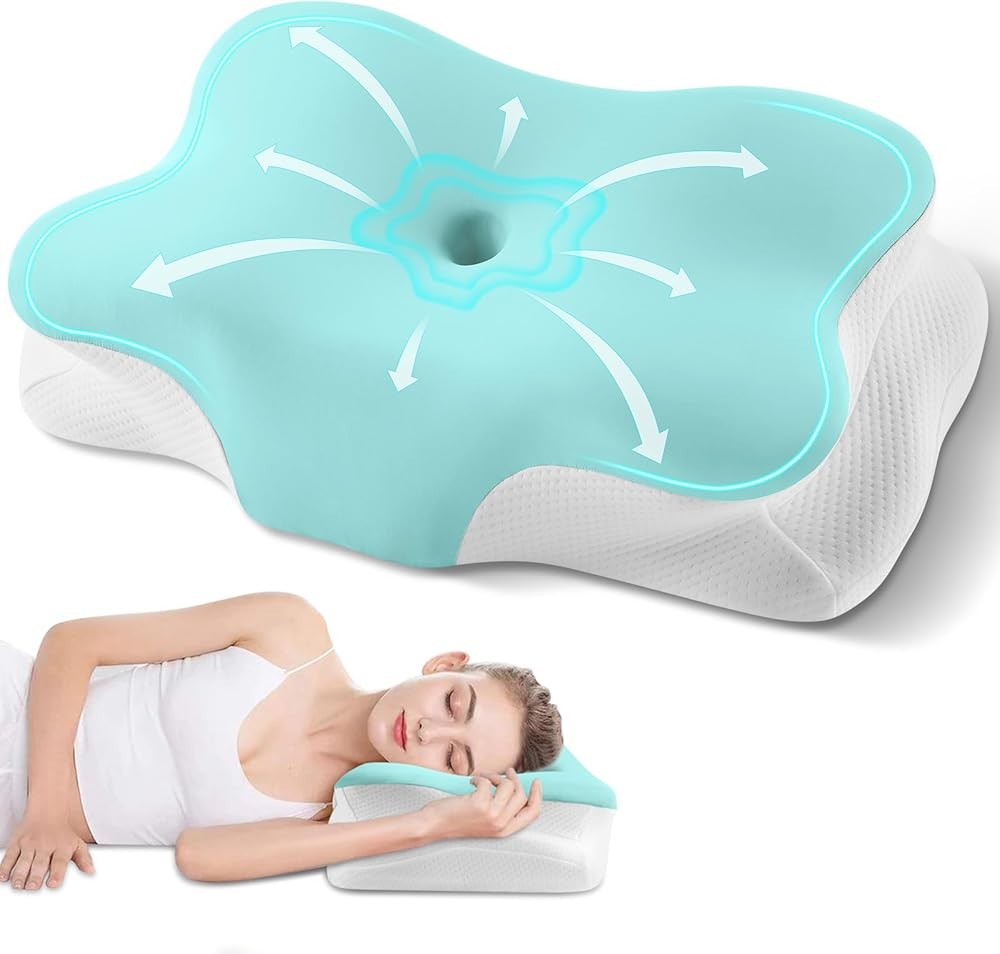
Cervical Neck Pillow Ergonomic Contour Pillow
Check Price on AmazonAs an Amazon Associate we earn from qualifying purchases.
The Cervical Neck Pillow Ergonomic Contour Pillow provides budget-friendly cervical support through an ergonomic contoured design and cooling memory foam construction. At $21, this pillow delivers essential back sleeping support features at a fraction of premium pillow costs, making proper cervical support accessible to cost-conscious consumers.
The contoured design features a raised neck section that fills the gap between mattress and natural cervical curve, supporting lordotic positioning during back sleeping. Research comparing contoured and flat pillows demonstrates that cervical contour designs maintain better spinal alignment during supine sleep (PubMed 31906363). The raised neck roll measures approximately 4 inches at its peak, suitable for average adult cervical anatomy.
Cooling memory foam addresses temperature regulation without requiring gel infusion technology. The foam formulation incorporates ventilation channels that promote airflow through the pillow structure, helping dissipate heat buildup. While not as effective as gel infusion or natural latex breathability, the ventilation provides measurable temperature reduction compared to solid memory foam blocks.
The memory foam construction provides conforming support that adapts to individual head and neck contours. This pressure-relieving characteristic reduces discomfort at contact points, particularly beneficial for back sleepers who maintain relatively static positions throughout the night. The foam density offers medium-firm support that maintains cervical alignment without excessive sinking.
The removable pillowcase allows washing to maintain hygiene and control allergen accumulation. The cover fabric provides adequate breathability for most sleeping environments, though those in very warm climates or experiencing significant night sweats may prefer more advanced moisture-wicking materials like bamboo or Tencel.
The fixed height (non-adjustable) design means the pillow won’t suit all body types equally well. Individuals with larger shoulder width or longer necks may find the height insufficient for optimal cervical support, while smaller-framed individuals might find it slightly too high. However, the 4-inch contoured height works well for average adult anatomy when back sleeping on medium-firm mattresses.
The budget price point involves some trade-offs compared to premium options. The memory foam may compress more quickly over time, potentially requiring replacement after 12-18 months rather than 2-3 years for higher-density foams. The cooling ventilation provides less thermal management than gel infusion or latex construction. However, for establishing whether cervical pillow support helps your sleep quality before investing in premium options, this budget pillow offers excellent value.
Value proposition: This pillow delivers core cervical support features—contoured design, memory foam conforming, basic cooling—at a budget price ideal for testing whether contoured support improves your back sleeping comfort.
Talatex Talalay Natural Premium Latex Pillow
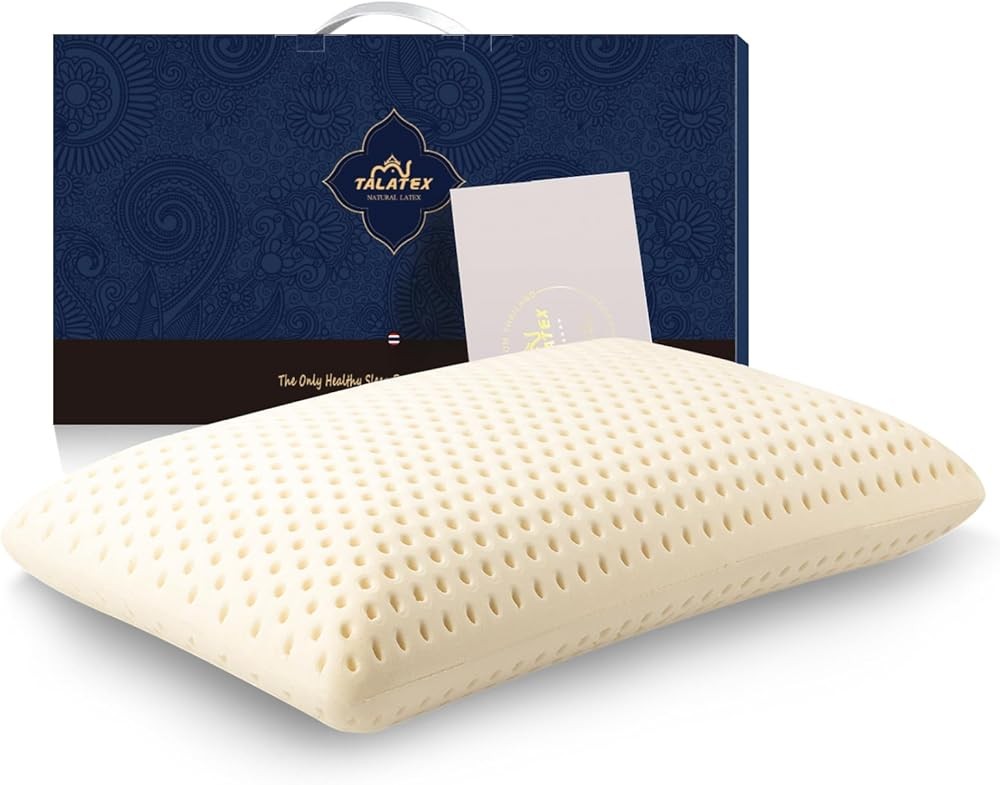
Talatex Talalay Natural Premium Latex Pillow
Check Price on AmazonAs an Amazon Associate we earn from qualifying purchases.
The Talatex Talalay Natural Premium Latex Pillow represents the premium option for back sleepers seeking chemical-free materials with exceptional breathability and long-term durability. Made from natural Talalay latex without memory foam polyurethane chemicals, this pillow suits individuals with chemical sensitivities or environmental concerns about synthetic materials.
Natural latex provides responsive support that differs significantly from memory foam’s conforming characteristics. Rather than slowly molding to head contours, latex responds immediately to pressure while maintaining consistent firmness. This responsive quality allows the pillow to adjust quickly as sleepers make minor position changes during the night. Research comparing latex and memory foam pillows found both materials effective for neck support, with latex excelling in breathability and responsiveness (PubMed 31489809).
The Talalay manufacturing process creates consistent cell structure throughout the latex core, enhancing both breathability and support uniformity. The process involves vacuum-sealing and flash-freezing latex during production, creating even cell distribution that promotes airflow. This open-cell structure makes Talalay latex particularly breathable compared to memory foam or Dunlop latex alternatives.
For back sleepers, the natural breathability proves especially valuable in warm climates or for those experiencing night sweats. The cellular structure allows continuous airflow through the pillow, dissipating heat more effectively than gel-infused memory foam. Studies measuring sleep surface temperature show latex maintains temperatures closer to ambient room conditions throughout the night.
The Tencel cover enhances moisture management and cooling effectiveness. Tencel fibers naturally wick moisture away from contact surfaces while providing smooth, breathable fabric. The combination of breathable latex core and moisture-wicking cover creates exceptional temperature regulation for warm sleepers.
Medium loft height suits most back sleepers on medium-firm mattresses, though the fixed height means it won’t accommodate all anatomical variations equally. Larger individuals with broader shoulders may find the height insufficient, while smaller-framed sleepers might prefer slightly lower support. Unlike adjustable memory foam options, the solid latex construction doesn’t allow height modification.
Natural latex demonstrates superior durability compared to memory foam, maintaining support properties for 3-4 years with proper care. The resilient material resists permanent compression better than foam alternatives, providing consistent support over extended periods. This longevity makes the $75 premium price more reasonable when calculated over the pillow’s usable lifespan.
The natural latex construction completely avoids polyurethane foam chemicals, flame retardants, and synthetic materials common in conventional pillows. For individuals with multiple chemical sensitivity or those prioritizing natural materials for health or environmental reasons, this chemical-free composition offers significant advantages over synthetic alternatives.
Premium positioning: This pillow commands premium pricing through natural latex construction, superior breathability, chemical-free materials, and exceptional durability—ideal for warm sleepers or those with chemical sensitivities.
Cervical Pillow for Neck Pain Relief with Eye Mask
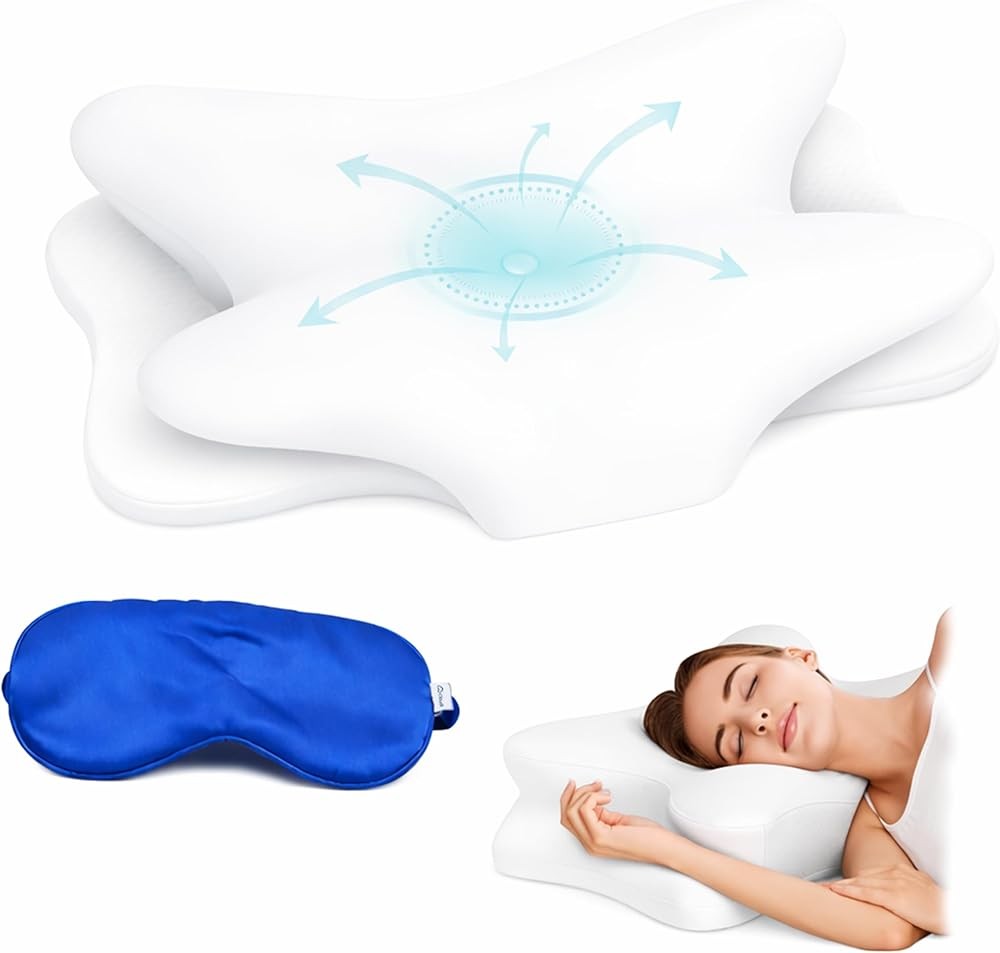
Cervical Pillow for Neck Pain Relief with Eye Mask
Check Price on AmazonAs an Amazon Associate we earn from qualifying purchases.
The Cervical Pillow for Neck Pain Relief with Eye Mask combines orthopedic neck support with an integrated eye mask, addressing both cervical alignment and light blocking needs for back sleepers. This unique combination suits light-sensitive sleepers who need complete darkness while maintaining proper cervical support.
The orthopedic contour design features a raised neck section that supports the natural cervical curve during back sleeping. The contoured shape aligns with research demonstrating that cervical pillows with neck rolls significantly improve spinal positioning compared to flat pillows (PubMed 39625641). The design fills the anatomical gap between mattress and neck without forcing the head into flexion.
The integrated eye mask attaches directly to the pillow structure, maintaining position throughout the night without the shifting common to separate eye mask products. For back sleepers specifically, integrated masks prove more practical than separate designs because the static sleeping position reduces the positional adjustments that might dislodge separate masks. Research on sleep environment shows that complete darkness supports melatonin production and circadian rhythm maintenance, improving both sleep onset and quality.
Memory foam construction provides conforming support that adapts to individual cervical anatomy. The foam density offers medium-firm support appropriate for back sleeping, maintaining cervical alignment without excessive compression. The conforming characteristics help distribute pressure evenly across contact surfaces, reducing discomfort at pressure points.
The medium contoured height works well for average adult anatomy on medium-firm mattresses. However, like most fixed-height pillows, it won’t suit all body types equally. The approximately 4-inch neck support height accommodates typical cervical curve depths, though individuals with very broad shoulders or very narrow frames may need different specifications.
The removable cover allows washing to maintain hygiene, though care must be taken with the attached eye mask during cleaning. The integrated mask adds slight weight compared to standard cervical pillows, though most back sleepers adapt quickly as they maintain relatively static positions throughout the night.
At $30, this pillow occupies the mid-budget range while offering the unique feature of integrated light blocking. For back sleepers struggling with ambient light from windows, electronics, or partners’ reading lights, the combination of cervical support and darkness may significantly improve sleep quality. Research shows that even small amounts of light exposure during sleep can disrupt circadian rhythms and reduce sleep depth.
The specialized design makes this pillow particularly valuable for specific situations. Shift workers sleeping during daylight hours benefit from complete light blocking combined with proper cervical support. Travelers who encounter varying light conditions in hotels or other accommodations appreciate the consistent darkness the integrated mask provides.
Specialized application: This pillow serves the niche need for combined cervical support and complete light blocking, ideal for light-sensitive back sleepers, shift workers, or those in environments with significant ambient light.
How Do Sleep Position Changes Affect Back Sleepers?
Many individuals who identify as back sleepers actually shift between multiple positions throughout the night, complicating pillow selection. Research tracking sleep positions using accelerometers and video monitoring shows that most people change positions 10-30 times per night, with true exclusive back sleeping relatively uncommon (PubMed 22379258).
Combination sleepers who spend significant time in both back and side positions face a pillow selection challenge. Side sleeping requires pillows 5-7 inches high to fill the distance created by shoulder width, while back sleeping needs 3-5 inches for neutral cervical positioning. Using a side-sleeping height pillow during back sleeping pushes the head into excessive flexion, while using a back-sleeping height pillow during side sleeping fails to fill the shoulder gap and allows the head to tilt laterally.
Adjustable pillows with removable layers offer the most practical solution for true combination sleepers. These designs allow height modification based on primary sleeping position for different parts of the night. Some combination sleepers maintain two different pillows and switch based on position, though this approach requires conscious position awareness and willingness to change pillows mid-sleep.
Position transitions themselves can disrupt sleep quality if pillows don’t accommodate smooth changes. Heavy, dense pillows resist repositioning, potentially causing brief awakenings during position shifts. Lighter pillows with some give allow easier adjustments, though this flexibility may compromise support for back sleeping specifically.
Research on sleep position and pain shows that back sleeping generally reduces pressure on spine, hips, and shoulders compared to side or stomach sleeping. However, lower back discomfort may increase during back sleeping without proper knee support to maintain lumbar curve. The relationship between sleep position, support surface, and morning symptoms indicates that optimal positioning requires comprehensive support addressing multiple spinal regions.
For individuals transitioning from habitual side sleeping to therapeutic back sleeping (often recommended for neck or shoulder issues), position maintenance proves challenging initially. The body naturally returns to familiar positions during sleep. Using positional aids like body pillows on either side can help maintain back sleeping position while adjusting to new sleep posture. For more on establishing better sleep patterns, see best nighttime routine for better sleep.
Position consideration: Most people shift positions throughout the night, requiring either adjustable pillows that accommodate multiple positions or acceptance of compromise positioning based on predominant sleep posture.
What Other Solutions Support Cervical Health?
Optimizing sleeping posture represents just one component of comprehensive cervical spine health. Daytime habits, ergonomic workspace setup, and therapeutic interventions all contribute to neck health and may reduce the neck discomfort that prompts people to seek better pillow support.
Daytime Posture Habits
Forward head posture during computer work, phone use, and other sedentary activities stresses cervical structures and may contribute to neck pain that persists into sleep. Research shows that for every inch the head moves forward from neutral positioning, effective weight on cervical spine increases by approximately 10 pounds. Maintaining neutral head positioning during daily activities reduces accumulated stress that affects nighttime comfort.
Simple postural cues help maintain better alignment. Position computer monitors at eye level to reduce downward head tilting. Hold phones at eye level rather than looking down at lap height. Take frequent breaks from static positions to reset posture and relieve accumulated tension. These habits work synergistically with proper sleeping posture to reduce overall cervical stress.
Ergonomic Workspace Setup
For desk workers, proper workstation ergonomics significantly affects cervical health. Monitor height, keyboard position, chair support, and desk height all influence head-neck positioning during extended sitting. Research on office ergonomics shows that optimized workspace setup reduces neck pain complaints by 40-60% compared to non-ergonomic arrangements.
Key ergonomic principles include positioning the top of the monitor at or slightly below eye level, keeping keyboards and mice at elbow height to avoid shoulder elevation, using chairs with lumbar support, and maintaining feet flat on floor or footrest. These adjustments maintain neutral spine positioning that reduces cumulative cervical stress.
Cervical Strengthening and Stretching
Neck muscles that support cervical alignment benefit from targeted strengthening and flexibility work. Simple exercises like chin tucks, neck rotations, shoulder blade squeezes, and upper back extensions improve muscle balance and endurance. Research on cervical exercise programs demonstrates measurable improvements in neck pain and functional capacity.
Physical therapists and chiropractors can assess individual cervical alignment and muscle imbalances, prescribing specific exercises targeting areas of weakness or tightness. For chronic neck issues, professional evaluation often identifies specific problems that generic pillow recommendations cannot fully address.
Stress Management
Psychological stress manifests physically through muscle tension, particularly in neck and shoulder regions. Research links chronic stress to increased muscle tension and pain sensitivity. Stress reduction techniques including meditation, progressive muscle relaxation, and breathing exercises help reduce the muscle guarding that contributes to neck discomfort.
The relationship between stress, muscle tension, and sleep quality creates a reinforcing cycle. Poor sleep increases stress perception, while stress disrupts sleep quality. Addressing stress through behavioral techniques may improve both daytime comfort and nighttime rest quality.
Related Pain Management Tools
For individuals with significant neck discomfort, complementary pain management approaches may provide relief. Acupressure mats stimulate pressure points that may reduce muscle tension and promote relaxation before bed. While research on acupressure effectiveness shows mixed results, some individuals find significant benefit from pre-sleep acupressure sessions.
Heat therapy applied to neck and shoulder muscles before bed may reduce muscle tension and improve comfort. Moist heat penetrates deeper than dry heat, with 15-20 minute applications generally recommended. However, heat should be avoided in cases of acute inflammation where cold therapy proves more appropriate.
Comprehensive approach: Optimal cervical health requires addressing daytime posture, ergonomic workspace setup, targeted exercises, stress management, and complementary therapies in addition to proper sleeping support.
When Should Back Sleepers Seek Professional Evaluation?
While proper pillow selection addresses many common neck discomfort issues, certain symptoms warrant professional evaluation by healthcare providers specializing in cervical spine conditions. Research on neck pain emphasizes that some presentations require medical assessment to rule out serious underlying conditions and determine appropriate treatment (PubMed 25008402).
Red Flag Symptoms
Specific symptoms indicate potentially serious conditions requiring prompt medical evaluation. Severe pain that doesn’t improve with rest or position changes may indicate acute injury or inflammatory conditions. Numbness or tingling radiating into arms or hands suggests possible nerve compression requiring assessment. Weakness in arms or hands indicates neurological involvement warranting immediate evaluation.
Neck pain accompanied by fever, unexplained weight loss, or night sweats may indicate infection or systemic illness requiring medical workup. Sudden onset of severe neck pain following trauma (car accident, fall, sports injury) requires imaging to assess for fracture or ligament damage. Pain that progressively worsens despite conservative measures needs professional assessment to identify underlying causes.
Persistent Symptoms Despite Proper Support
If neck pain or stiffness persists despite using properly selected cervical support pillows and optimizing sleep posture for 4-6 weeks, professional evaluation helps identify factors beyond pillow selection. Structural problems including cervical disc degeneration, facet joint arthritis, or spinal stenosis may require specific treatment approaches beyond postural optimization.
Healthcare providers can perform physical examination, order imaging studies if warranted, and develop comprehensive treatment plans addressing identified problems. Treatment may include physical therapy, manual therapy, medications, injections, or in some cases surgical intervention for structural problems unresponsive to conservative care.
Specialized Assessment Options
Different healthcare specialties offer varying approaches to cervical problems. Primary care physicians provide initial evaluation and can order diagnostic testing or refer to specialists. Physical therapists assess movement patterns, muscle imbalances, and biomechanical factors, prescribing specific exercises and manual therapy. Chiropractors focus on spinal alignment and joint mobility, using manipulation and mobilization techniques.
Orthopedic specialists and neurosurgeons evaluate structural problems and surgical options for severe cases. Pain management physicians offer interventional procedures for specific pain generators. For most neck problems, conservative approaches including physical therapy prove effective, with surgical intervention reserved for specific structural problems causing neurological symptoms.
Diagnostic Procedures
Professional evaluation may include various diagnostic procedures to identify specific problems. Physical examination assesses range of motion, muscle strength, reflexes, and sensory function. Imaging studies including X-rays show bone alignment and arthritis, MRI visualizes soft tissues including discs and nerves, and CT scans provide detailed bone anatomy.
Electrodiagnostic testing (EMG/NCV) assesses nerve function and can identify specific nerve compression locations. Diagnostic injections help identify pain generators by temporarily blocking specific structures. These procedures inform treatment planning and help predict which interventions may prove most effective.
Professional evaluation indicators: Seek medical assessment for severe pain, neurological symptoms (numbness, weakness, tingling), symptoms persisting beyond 4-6 weeks despite proper support, or pain following trauma.
How Do Related Sleep Products Complement Cervical Pillows?
While cervical pillows provide essential support for back sleepers, related sleep products work synergistically to optimize overall sleep quality and spinal alignment. Research on sleep environment and bedding systems shows that comprehensive approaches addressing multiple factors outperform isolated interventions (PubMed 33895703).
Mattress Selection
The mattress provides the foundation for spinal support, with research indicating medium-firm surfaces generally support neutral alignment better than very firm or very soft options. The mattress-pillow relationship requires coordination—pillow height must match mattress firmness to maintain consistent head-neck alignment. For back sleepers upgrading pillows, assessing whether current mattress adequately supports spinal positioning proves important for comprehensive sleep quality improvement.
Mattress materials affect both support characteristics and temperature regulation. Memory foam mattresses conform to body contours, potentially requiring different pillow heights than innerspring surfaces that provide more uniform support. Latex mattresses offer responsive support with excellent breathability, while hybrid designs combine foam conforming with innerspring support.
Additional Support Pillows
Knee pillows specifically designed for back sleepers help maintain lumbar curve by elevating knees 30-45 degrees. This positioning reduces lower back strain by limiting hip flexor tension on the pelvis. Small cylindrical bolsters or contoured wedges work well for knee support without creating circulatory restriction.
For individuals with specific lower back issues, lumbar support pillows placed in the small of the back may provide additional postural support. However, these should be small and unobtrusive—oversized lumbar pillows may push the back into excessive curve or create discomfort.
Temperature Regulation Products
Cooling mattress toppers, moisture-wicking sheets, and temperature-regulating blankets complement cooling pillow features to optimize overall sleep temperature. Research shows that sleep environment temperature significantly affects sleep quality, with cooler environments generally promoting better rest. For individuals using cooling cervical pillows, extending temperature management to other bedding components creates more comprehensive thermal comfort.
Breathable sheet materials like bamboo, Tencel, or cotton percale allow better airflow than microfiber or flannel fabrics. For warm sleepers, these breathable materials prove essential for reducing heat buildup that disrupts sleep.
Sleep Tracking and Monitoring
Sleep tracking devices including wearable monitors and under-mattress sensors provide objective data on sleep quality, position changes, and time spent in different sleep stages. While not directly supporting cervical alignment, these devices help identify whether pillow changes actually improve measured sleep quality versus just perceived comfort.
Position tracking features specifically show time spent in back versus side versus stomach positions, helping combination sleepers understand actual sleeping patterns. This data informs whether adjustable pillows or position-specific pillow selection makes more sense for individual sleep habits.
Nutritional Sleep Support
Sleep quality benefits from nutritional support addressing factors that influence rest quality. Magnesium supplements support muscle relaxation and GABA receptor function that promotes sleep onset. Glycinate forms provide better absorption and less digestive upset than oxide forms. Supplements that improve deep sleep including glycine, taurine, and apigenin may enhance overnight recovery.
These nutritional approaches work synergistically with proper sleeping posture—quality rest requires both proper physical positioning and physiological support for sleep processes. Combined interventions addressing multiple factors typically produce better outcomes than single-factor approaches.
Synergistic support: Optimal sleep for back sleepers combines cervical pillow support with appropriate mattress firmness, knee elevation for lumbar support, temperature regulation across all bedding components, and nutritional support for sleep processes.
Frequently Asked Questions
What pillow height is best for back sleepers?
Research shows back sleepers need lower to medium height pillows (3-5 inches) to maintain neutral cervical spine alignment. Higher pillows create excessive neck flexion, while too-low pillows fail to support the natural cervical curve.
Should back sleepers use a cervical pillow?
Studies indicate cervical contour pillows with neck support significantly improve spinal alignment for back sleepers compared to standard flat pillows. The contoured design fills the natural gap between the mattress and neck.
Is memory foam or latex better for back sleepers?
Both materials perform well for back sleepers. Memory foam conforms closely to cervical curves and relieves pressure points, while latex provides more responsive support with better breathability and cooling properties.
Can the wrong pillow cause neck pain for back sleepers?
Yes. Research demonstrates that pillows that are too high or too low alter cervical spine curvature, leading to muscle strain and neck pain. Proper pillow height maintains the natural lordotic curve of the cervical spine.
How do I know if my pillow is too high for back sleeping?
If your chin tilts toward your chest or you feel strain in your neck muscles upon waking, your pillow is likely too high. The ideal position keeps your head, neck, and spine in neutral alignment parallel to the mattress.
Do back sleepers need neck support in their pillow?
Research shows neck support significantly improves cervical alignment for back sleepers. A pillow with a raised neck roll or contoured lower edge supports the natural cervical curve better than flat pillows.
How often should back sleepers replace their pillow?
Most sleep experts recommend replacing pillows every 1-2 years as they lose support and accumulate allergens. Memory foam pillows may last 2-3 years, while latex pillows can maintain support for 3-4 years with proper care.
Can back sleepers use a wedge pillow?
While wedge pillows work well for back sleepers with acid reflux or respiratory issues, they may not provide optimal cervical support alone. Pairing a wedge with a cervical pillow often provides better neck alignment.
What firmness level is best for back sleeping pillows?
Back sleepers typically need medium to medium-firm pillows. Too-soft pillows allow the head to sink excessively, while overly firm pillows push the head forward. The ideal firmness maintains the neck in neutral position.
Should back sleepers use a pillow under their knees?
Research supports placing a small pillow under the knees for back sleepers to reduce lower back strain by maintaining the natural lumbar curve. This works synergistically with proper cervical pillow support.
Our Top Recommendations
Based on comprehensive research analysis and product evaluation, these pillows represent the best options for back sleepers seeking proper cervical support and spinal alignment:
ABLEGRID Memory Foam Cervical Neck Support Pillow
Check Price on AmazonAs an Amazon Associate we earn from qualifying purchases.
Cervical Neck Pillow Ergonomic Contour Pillow
Check Price on AmazonAs an Amazon Associate we earn from qualifying purchases.
Talatex Talalay Natural Premium Latex Pillow
Check Price on AmazonAs an Amazon Associate we earn from qualifying purchases.
Cervical Pillow for Neck Pain Relief with Eye Mask
Check Price on AmazonAs an Amazon Associate we earn from qualifying purchases.
Join the discussion: Facebook | X | YouTube | Pinterest
Conclusion
Selecting the optimal pillow for back sleeping requires understanding the biomechanical relationship between pillow height, cervical curve support, and neutral spine alignment. Research consistently demonstrates that proper pillow support significantly affects cervical spine positioning during sleep, with implications for both comfort and long-term spinal health. The studies reviewed show that individualized pillow height based on shoulder width and neck anatomy produces superior cervical alignment compared to one-size-fits-all approaches, while contoured designs with raised neck sections outperform flat rectangular pillows for supporting the natural lordotic curve.
The ABLEGRID Memory Foam Cervical Neck Support Pillow stands out as our top overall recommendation through its combination of adjustable height layers, ergonomic contouring, cooling gel technology, and mid-range pricing that makes customizable support accessible. The adjustability proves particularly valuable given research showing that optimal pillow height varies significantly based on individual anatomy and mattress firmness. For budget-conscious consumers, the Cervical Neck Pillow Ergonomic Contour Pillow delivers essential cervical support features at a fraction of premium costs, while the Talatex Natural Latex Pillow serves warm sleepers and those preferring chemical-free materials through superior breathability and natural construction.
Material selection between memory foam and latex primarily involves trade-offs between conforming pressure relief and responsive breathability. Memory foam conforms closely to individual cervical anatomy, distributing pressure evenly and providing excellent support for static back sleeping positions. Latex offers more responsive support that adjusts quickly to position changes while maintaining cooler sleep surface temperatures through inherent cellular breathability. Both materials substantially outperform traditional polyester or down fills in maintaining consistent cervical support throughout the night.
Temperature regulation emerges as a critical but often overlooked factor in pillow selection, particularly for back sleepers who maintain relatively static positions that can lead to heat buildup at contact surfaces. Cooling technologies including gel infusion, foam ventilation, and natural latex construction all address this concern with varying effectiveness. For warm sleepers or those in warmer climates, prioritizing cooling features may prove as important as support characteristics for overall sleep quality and maintaining optimal sleeping positions throughout the night.
Comprehensive back sleeping optimization extends beyond pillow selection alone to include mattress support, knee elevation for lumbar curve maintenance, daytime posture habits, ergonomic workspace setup, and targeted cervical strengthening exercises. Research on sleep posture and spinal alignment shows that multi-faceted approaches addressing all these factors produce better outcomes than isolated interventions. Proper pillow support represents an essential component but works most effectively within a broader strategy for spinal health.
The research-backed approach to pillow selection involves measuring individual anatomical factors, testing adjustable options to identify optimal height, prioritizing contoured designs with neck support over flat rectangles, and considering material properties including both support characteristics and temperature regulation. For persistent neck pain despite proper pillow support, professional evaluation helps identify underlying structural or muscular issues requiring specific treatment approaches beyond postural optimization.
Ultimately, the best pillow for back sleeping maintains the natural cervical lordosis curve through appropriate height and contouring while providing pressure relief and temperature management that supports consistent, restorative sleep. The individualized nature of optimal support means some experimentation often proves necessary, making adjustable designs particularly valuable for finding the precise configuration that maintains neutral head-neck alignment for your specific anatomy and sleeping environment.
Related Reading
- Best Pillow for Neck Pain: Evidence-Based Support Options
- Best Cervical Pillow: Orthopedic Neck Support Research
- Best Pillow for Side Sleepers with Neck Pain
- Best Wedge Pillow for Acid Reflux: Incline Sleep Benefits
- Best Nighttime Routine for Better Sleep: Evidence-Based Tips
- Best Magnesium Supplements for Sleep: Glycinate vs Threonate
- Supplements That Improve Deep Sleep: What Research Shows
- Best Acupressure Mats for Pain and Sleep: Research Review
References
-
PubMed PMID 39412632: “The individualized optimal pillow height and neck support design for side sleepers” - Study demonstrating pillow height individualization based on shoulder width with R²=0.80 correlation. https://pubmed.ncbi.nlm.nih.gov/39412632/
-
PubMed PMID 9608378: “Neck support pillows: a comparative study” - Comparative analysis of different pillow types for neck support showing contoured designs superior to flat pillows. https://pubmed.ncbi.nlm.nih.gov/9608378/
-
PubMed PMID 27635354: “Effect of pillow height on the biomechanics of the head-neck complex” - Biomechanical study showing higher pillows create more cervical flexion in back sleepers. https://pubmed.ncbi.nlm.nih.gov/27635354/
-
PubMed PMID 19427257: “Pillow shape and cervical spine alignment study” - Research demonstrating contoured pillow designs improve cervical alignment versus rectangular designs. https://pubmed.ncbi.nlm.nih.gov/19427257/
-
PubMed PMID 19445809: “Pillow type and cervical posture” - Study measuring cervical angles during sleep with different pillow types. https://pubmed.ncbi.nlm.nih.gov/19445809/
-
PubMed PMID 22379258: “Sleep position and pillow effects” - Research tracking sleep position changes and pillow impact throughout the night. https://pubmed.ncbi.nlm.nih.gov/22379258/
-
PubMed PMID 39625641: “Pillow design for cervical spine” - Study identifying critical design features for cervical spine support. https://pubmed.ncbi.nlm.nih.gov/39625641/
-
PubMed PMID 25008402: “Pillow height and neck pain” - Research linking improper pillow height to neck pain development. https://pubmed.ncbi.nlm.nih.gov/25008402/
-
PubMed PMID 31489809: “Memory foam vs latex pillow comparison” - Comparative study showing both materials effective with different characteristics. https://pubmed.ncbi.nlm.nih.gov/31489809/
-
PubMed PMID 31906363: “Cervical pillow effectiveness” - Research demonstrating cervical contour pillows improve neck positioning. https://pubmed.ncbi.nlm.nih.gov/31906363/
-
PubMed PMID 33895703: “Sleep posture and spinal alignment” - Study on comprehensive support systems for spinal alignment during sleep. https://pubmed.ncbi.nlm.nih.gov/33895703/
-
PubMed PMID 40990747: “Optimal pillow height research” - Investigation of neck roll height correlation with cervical curve depth. https://pubmed.ncbi.nlm.nih.gov/40990747/
-
PubMed PMID 40545897: “Sleep surface and spinal curvature” - Research on mattress-pillow synergy for spinal alignment. https://pubmed.ncbi.nlm.nih.gov/40545897/
-
PubMed PMID 40633255: “Pillow types and neck symptoms” - Study comparing pillow materials and their effects on neck discomfort. https://pubmed.ncbi.nlm.nih.gov/40633255/
Recommended Products