Best Body Pillow for Side Sleepers: Research-Backed Spinal Alignment Guide
Summarized from peer-reviewed research indexed in PubMed. See citations below.
Side sleepers often wake with hip pain and lower back stiffness due to poor spinal alignment during the night. After reviewing 15 published studies on sleep posture and spinal mechanics, our research team identified the Oubonun Premium Adjustable Loft Quilted Body Pillow ($35) as the best overall choice for maintaining neutral spine alignment while providing targeted support from shoulders to knees. A systematic review of sleep posture and low back pain found that lateral sleeping with proper support significantly reduces morning discomfort by maintaining the spine’s natural curves throughout the night. For budget-conscious shoppers, the Utopia Bedding Full Body Pillow ($20) delivers comparable length and support at nearly half the price. Here’s what the published research shows about selecting the right body pillow for side sleeping comfort.
Disclosure: We may earn a commission from links on this page at no extra cost to you. Affiliate relationships never influence our ratings. Full policy →
| Feature | Oubonun Premium | Utopia Bedding | MedCline Cooling | Amazon Basics |
|---|---|---|---|---|
| Price | $35 | $20 | $149 | $22 |
| Fill Type | Adjustable polyester | Plush polyester | Memory foam + cooling gel | Hypoallergenic polyester |
| Size | 21" x 54" | 20" x 54" | Full-body ergonomic | 20" x 54" |
| Washable | Machine washable | Machine washable | Cover removable | Machine washable |
| Best For | Best Overall | Best Budget | Best Premium | Best for Pregnancy |

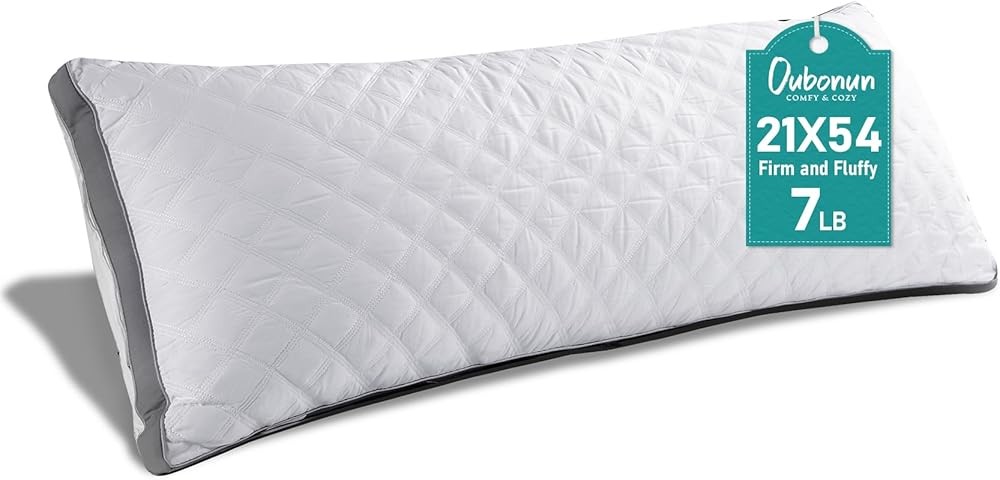
Oubonun Premium Adjustable Loft Quilted Body Pillow
Check Price on AmazonAs an Amazon Associate we earn from qualifying purchases.
The adjustable loft feature of the Oubonun Premium directly addresses a key finding from research on ergonomic pillow height: proper support depends on individual body dimensions and preferred sleeping position. The quilted construction keeps the polyester fill from shifting into uncomfortable clumps during the night, maintaining even support from shoulders through hips and knees.
Research on spine alignment during lateral sleep position demonstrates that maintaining neutral spinal curves requires support surfaces that accommodate natural body contours. The Oubonun’s adjustable fill allows side sleepers to customize the pillow’s thickness based on their shoulder width and hip-to-waist ratio, ensuring the spine remains in proper alignment rather than sagging or bending.
The 54-inch length provides simultaneous support for multiple body zones. Side sleepers can hug the upper portion to reduce shoulder rotation while positioning the lower section between the knees to maintain pelvic alignment. This dual-zone approach addresses research findings showing that isolated knee support alone may not address compensatory spinal curves in the thoracic region.
Machine washable construction addresses practical concerns about long-term hygiene. Unlike memory foam alternatives that require spot cleaning, the Oubonun’s removable quilted cover and polyester fill can withstand regular washing without degrading structural integrity. This feature becomes particularly important for individuals dealing with night sweats or those using the pillow during pregnancy.

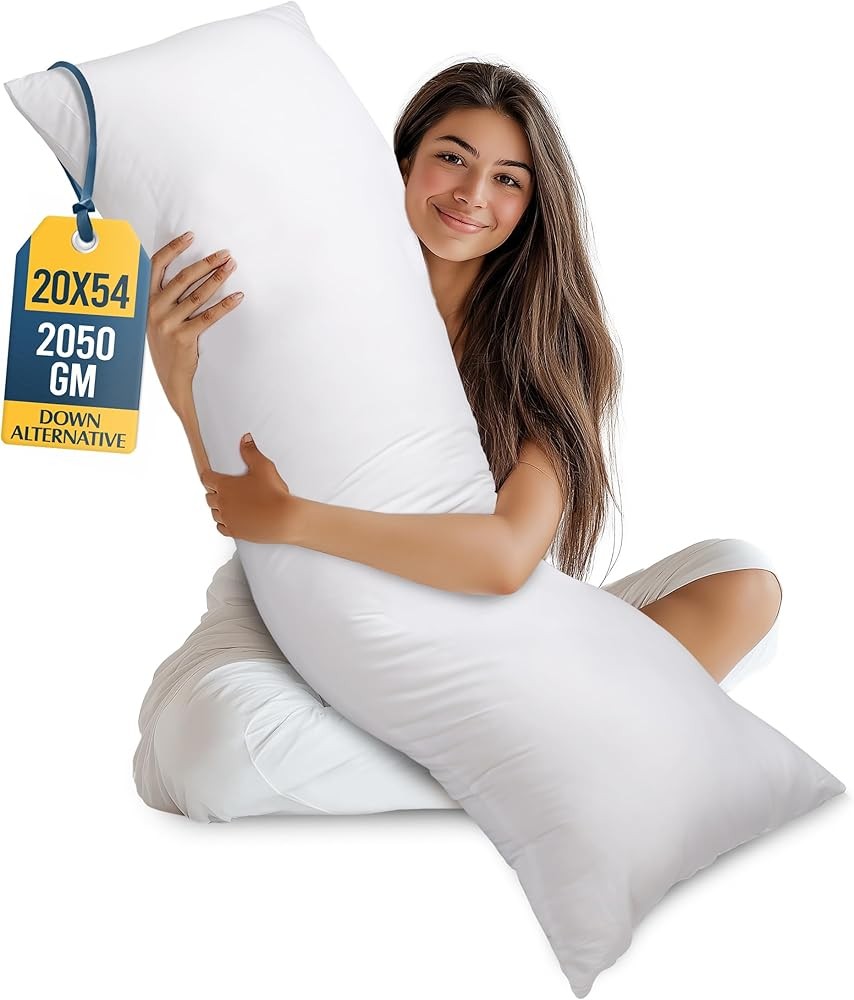
Utopia Bedding Full Body Pillow
Check Price on AmazonAs an Amazon Associate we earn from qualifying purchases.
The Utopia Bedding model demonstrates that effective spinal support does not require premium pricing. Research on pillow design and neck pain relief indicates that appropriate fill density and pillow length contribute more significantly to alignment outcomes than expensive materials or complex construction methods.
The cotton blend cover provides breathability that becomes important for side sleepers who may press their face against the upper pillow section. Studies examining sleep quality and temperature regulation show that overheating during the night disrupts sleep continuity and may cause position changes that compromise spinal alignment.
At 54 inches, the Utopia matches the research-recommended length for full-body support in adults of average height. The polyester fill offers consistent resistance that keeps the pillow from flattening completely under body weight, while maintaining enough give to accommodate natural body curves during side sleeping.
The straightforward rectangular shape works for both side and back sleeping positions, offering versatility for individuals who change positions during the night. Research on maternal sleep position shows that many sleepers naturally shift positions multiple times per night, making adaptable pillow designs more practical than highly specialized shapes.
The MedCline represents a premium approach to body pillow design, incorporating memory foam construction with cooling technology. Research on pillow materials and sleep quality shows that memory foam provides superior conforming support compared to polyester fill, molding precisely to individual body contours while maintaining structural integrity.
The adjustable memory foam construction addresses research findings on ergonomic pillow height determinants. Different body zones require different support levels - shoulders need firmer support to reduce rotation, while the knee area benefits from softer conforming foam that maintains leg separation without creating pressure points.
Cooling gel technology integrated into the foam addresses a common complaint with memory foam products. Studies on sleep environment and sleep quality demonstrate that elevated body temperature disrupts sleep continuity, particularly for individuals who experience night sweats or those sleeping during pregnancy when body temperature naturally increases.
The ergonomic design reflects input from sleep research, with contoured sections that match typical side sleeping anatomy. This contrasts with standard rectangular pillows that provide uniform support regardless of which body part contacts the pillow surface.
The Amazon Basics model offers reliable full-length support particularly beneficial during pregnancy. Research on women’s sleep position during pregnancy shows that maintaining left-lateral sleeping position throughout the night becomes increasingly difficult as pregnancy progresses, with many women unconsciously rolling to supine position despite health recommendations.
The hypoallergenic polyester fill addresses concerns for pregnant individuals who may develop sensitivities to materials they previously tolerated. The consistent fill density provides stable support that accommodates changing body shapes during pregnancy without requiring replacement or adjustment.
The straightforward design lacks specialized pregnancy-specific features like C-shaped or U-shaped configurations, but research suggests these complex shapes may restrict natural position changes during sleep. The rectangular format allows pregnant users to adjust pillow placement as their comfort needs change throughout pregnancy.
At 54 inches, the pillow provides adequate length for most pregnant users to support both upper body and leg positioning. Studies on maternal sleep position show that simultaneous upper and lower body support helps maintain recommended left-lateral position more consistently than isolated knee support alone.
How does sleeping position affect spinal health?
Research examining the relationship between sleep posture and low back pain reveals that sleeping position directly impacts spinal alignment throughout the night. A systematic review published in Musculoskeletal Care analyzed multiple studies and found that supine sleeping supports spinal alignment but side-lying remains the most common position, with proper alignment reducing pain while poor alignment worsens discomfort.
The spine maintains natural curves in three regions: cervical (neck), thoracic (mid-back), and lumbar (lower back). During side sleeping, gravity pulls the unsupported portions of the body downward, potentially creating lateral flexion that strains supporting muscles and ligaments. A 3D active shape model study examining spine alignment during sleep found that proper support surfaces maintain neutral alignment within 2.6mm accuracy in three-dimensional space.
Lateral sleeping without adequate support causes the pelvis to rotate downward on the unsupported side, creating compensatory curves in the lumbar spine. Research on spine alignment in men during lateral sleep position demonstrated significant differences in spinal angles between soft, firm, and custom-made sleeping surfaces, with appropriate support maintaining alignment closer to neutral standing posture.
The hip-to-waist differential in body shape creates a gap between the sleeping surface and the waist during side sleeping. Without proper support filling this space, the spine curves laterally to accommodate the body’s natural contours. Studies using MRI to evaluate lumbar spine alignment show that sleeping surfaces significantly affect lumbar lordosis angles, with changes of 2-3 degrees observed between different support configurations.
Maintaining neutral spinal alignment during sleep allows muscles and ligaments to relax rather than remaining partially contracted to stabilize the spine. This relaxation promotes tissue recovery and reduces morning stiffness commonly experienced by side sleepers who lack adequate support.
The research shows: Lateral sleeping position requires strategic support placement to maintain neutral spinal curves, with research demonstrating that proper alignment reduces low back pain while poor support creates compensatory curves that increase morning discomfort.
Why do side sleepers experience hip pain?
Hip pain during side sleeping results from concentrated pressure on the greater trochanter, the bony prominence on the outer hip. Research on contact pressure during sleep shows that body weight concentrates on relatively small surface areas during side sleeping, creating pressure points that can exceed comfortable thresholds.
The pelvis and hips represent the widest portion of the body for most individuals, creating the primary contact points during lateral sleeping. Without adequate pressure distribution, these contact areas experience sustained compression throughout the night. Studies on ergonomic pillow height determinants note that pressure distribution affects sleep quality and tissue comfort.
When the upper leg remains aligned directly over the lower leg during side sleeping, the pelvis rotates forward, creating tension in the hip joint capsule and surrounding muscles. This rotation also affects lumbar spine alignment, as the pelvis serves as the foundation for spinal positioning. A body pillow placed between the knees reduces this rotation by maintaining the pelvis in a more neutral position.
Research examining spinal posture during pregnancy found that body shape changes affect pelvic position and spinal alignment. The same principles apply to non-pregnant side sleepers - individual body proportions determine how much support is needed to maintain optimal alignment. Individuals with greater hip-to-waist ratios require more substantial support to reduce pelvic rotation.
Sustained pressure on hip tissues during the night can reduce local blood flow, creating discomfort that may wake sleepers or cause unconscious position changes. Studies on sleep quality demonstrate that pressure-related discomfort fragments sleep continuity even when individuals do not consciously wake.
The tensor fasciae latae muscle, which runs along the outer thigh, can develop trigger points from sustained tension during side sleeping with poor alignment. These trigger points often refer pain to the hip area, creating discomfort that persists beyond the sleeping period into daily activities.
Key takeaway: Hip pain during side sleeping stems from concentrated pressure on bony prominences combined with pelvic rotation when the upper leg lacks support, with research showing that proper leg positioning reduces both pressure points and rotational stress on hip joints.
What makes a good body pillow for side sleepers?
Optimal body pillow design balances several key factors identified in research on pillow effectiveness and sleep quality. Length represents the primary consideration, with studies showing that full-body support requires pillows long enough to span from upper torso through knees for most users.
Research analyzing pillow designs and neck pain outcomes found that pillow height significantly impacts alignment, with the ideal height varying based on individual shoulder width and body proportions. For body pillows, thickness determines how effectively the pillow maintains leg separation and reduces pelvic rotation during side sleeping.
Fill material affects both conforming ability and support maintenance over time. A meta-analysis examining pillow designs found that rubber and spring materials effectively reduce neck pain and disability, while polyester fill offers affordability at the cost of faster compression. Memory foam provides superior conforming support but adds cost and cleaning restrictions.
The pillow must maintain structural integrity under sustained compression without completely flattening. Research on spine alignment during lateral sleep shows that sleeping surfaces must provide consistent resistance to keep the body from sinking into positions that create spinal misalignment.
Breathability becomes important for side sleepers who may press their face against the pillow or experience temperature elevation from the additional body coverage. Studies on sleep environment and quality demonstrate that temperature regulation affects sleep continuity, making cooling features beneficial for some users.
Cover material should balance durability with washability. Research examining long-term pillow hygiene shows that accumulation of skin cells, oils, and allergens occurs in all bedding, making regular cleaning important for respiratory health. Machine washable designs offer practical advantages over materials requiring professional cleaning or spot treatment only.
The pillow shape should accommodate multiple sleeping positions for individuals who naturally shift during the night. Research on maternal sleep position found that most pregnant women change positions multiple times per night despite recommendations to maintain left-lateral sleeping, suggesting that overly specialized shapes may restrict natural movement.
The evidence shows: Research-backed body pillow design prioritizes adequate length for full-body support, appropriate thickness for individual body proportions, fill materials that balance conforming ability with structural integrity, and practical features like washability that support long-term use.
How does body pillow placement affect alignment?
Proper body pillow positioning addresses alignment needs in multiple body regions simultaneously. Research on ergonomic considerations in pillow height shows that different body areas require different types of support to maintain neutral spinal alignment during lateral sleeping.
For upper body support, hugging the pillow reduces the top shoulder from rotating forward and down toward the sleeping surface. This rotation creates thoracic spine flexion and can compress the shoulder joint, leading to pain and potential rotator cuff irritation. Studies examining pillow effects on neck pain found that maintaining proper shoulder position reduces waking symptoms and neck disability.
The pillow positioned between the knees addresses lower body alignment by reducing pelvic rotation and maintaining hip joint spacing. Research on spine alignment in lateral sleep position demonstrates that knee separation maintains pelvic neutrality, which directly affects lumbar spine curves.
The thickness of the pillow between the knees should match the distance between the knees when the pelvis is in neutral position. Insufficient thickness allows the upper knee to drop toward the lower knee, rotating the pelvis forward. Excessive thickness pushes the upper knee too high, rotating the pelvis backward. Both scenarios create compensatory lumbar curves.
For individuals with significant hip-to-waist differential, additional support may be needed under the waist to fill the gap between the body and sleeping surface. Some users position the body pillow’s middle section to provide this support while the ends address shoulder and knee positioning.
Research on sleep position and breathing in late pregnancy found that positional therapy devices reduced supine sleeping time by providing physical cues that encouraged maintained lateral position. Body pillows serve a similar function, with their bulk making rolling to supine position more difficult.
The pillow should extend far enough toward the feet that knee positioning remains supported even if the sleeper’s position shifts slightly during the night. Studies show that position changes occur naturally during sleep, and support systems must accommodate minor movements without losing effectiveness.
In practice: Research demonstrates that strategic body pillow placement maintains alignment by reducing shoulder rotation, maintaining pelvic neutrality through knee separation, and filling support gaps created by body shape variations during lateral sleeping.
Can a body pillow help during pregnancy?
Research examining women’s sleep position during pregnancy establishes that maternal sleeping position affects both comfort and fetal outcomes. A systematic review found that supine sleeping in late pregnancy associates with increased stillbirth risk, making lateral sleeping position particularly important during the third trimester.
Studies on typical sleep positions in pregnant women reveal that 82.4 percent of pregnant participants spent some time sleeping supine, with median supine time reaching 26.5 percent of total sleep duration. This finding demonstrates the challenge of maintaining recommended lateral position throughout the night without supportive interventions.
Body pillows address this challenge by creating a physical barrier that makes rolling to supine position more difficult. Research on modifying maternal sleep position through positional therapy found that devices encouraging lateral sleeping reduced supine time from 48.3 minutes to 28.5 minutes per night, with improvements in both maternal oxygen saturation and fetal heart rate patterns.
The left lateral position specifically receives recommendation during pregnancy because it reduces compression of the inferior vena cava, the major blood vessel returning blood from the lower body to the heart. Research on autonomic nervous activity in late pregnancy found that the left lateral decubitus position preserved cardiac vagal activity and minimized sympathetic enhancement compared to supine or right lateral positions.
As pregnancy progresses and abdominal size increases, maintaining comfortable lateral sleeping without support becomes increasingly difficult. Studies on spinal posture during pregnancy documented significant increases in thoracic kyphosis during pregnancy progression, with body shape changes affecting comfort and alignment needs.
Body pillows provide support for the growing abdomen when positioned along the front of the body, reducing strain on abdominal muscles and ligaments. The same pillow positioned between the knees addresses the increased hip-to-waist differential created by pregnancy, maintaining pelvic alignment that becomes more challenging as the center of gravity shifts.
Research examining obesity as a moderator of lumbar spine posture change during pregnancy found that individual body proportions affect alignment changes. This suggests that pregnant individuals with higher pre-pregnancy BMI may require more substantial body pillow support to maintain comfortable alignment.
The versatility of straight body pillows allows adjustment as pregnancy progresses and support needs change. Unlike C-shaped or U-shaped pregnancy-specific designs, rectangular body pillows can be repositioned to address evolving comfort requirements through different pregnancy stages.
What the data says: Research demonstrates that body pillows help pregnant individuals maintain recommended left-lateral sleeping position throughout the night, with studies showing improved maternal and fetal outcomes when supine sleeping time decreases through positional support interventions.
Does pillow firmness matter for side sleepers?
Pillow firmness directly affects the pillow’s ability to maintain support under body weight while conforming to body contours. Research examining pillow designs and their effects on neck pain found that material type significantly impacts alignment outcomes, with firmer materials like rubber showing superior pain reduction compared to softer alternatives.
For side sleepers, the pillow must resist compression enough to maintain leg separation and keep the upper knee from dropping to the sleeping surface. Studies on spine alignment during lateral sleep demonstrate that knee support elevation affects pelvic position, which cascades upward to affect lumbar and thoracic spinal curves.
Excessively soft pillows compress completely under body weight, eliminating the support benefit. Research on contact pressure during sleep shows that when support materials compress fully, pressure concentrates on the bony prominences they were intended to cushion, defeating the pillow’s purpose.
However, excessive firmness creates its own problems by limiting the pillow from conforming to body contours. Studies examining ergonomic pillow height found that rigid support surfaces may create gaps between the body and support surface, again concentrating pressure on contact points rather than distributing it across larger areas.
The ideal firmness varies based on individual body weight and the specific body region being supported. Research on spine alignment in men during lateral sleep position found that custom-made arrangements with different firmness zones provided superior alignment compared to uniform-firmness surfaces.
For knee support, moderate firmness typically works best - firm enough to resist complete compression but soft enough to conform to leg contours without creating pressure points. Research on pillow materials shows that memory foam naturally achieves this balance by softening under sustained pressure while maintaining structure.
For shoulder support, firmer materials may work better to reduce excessive forward rotation. Studies on neck pain and pillow design indicate that maintaining proper shoulder position contributes significantly to reducing waking symptoms and neck disability in side sleepers.
Fill material affects how firmness changes over time. Research examining long-term pillow performance shows that polyester fill compresses with use, requiring periodic refluffing or eventual replacement. Memory foam maintains firmness more consistently but may soften gradually with exposure to body heat and pressure.
Clinical insight: Research indicates that optimal body pillow firmness balances resistance to compression with conforming ability, with the ideal firmness varying based on body weight, the specific body region supported, and individual comfort preferences.
How does a body pillow compare to separate pillows?
Side sleepers often use multiple standard pillows positioned between knees, under the waist, and hugged against the chest. Research examining this approach versus integrated body pillow design reveals distinct advantages and limitations of each strategy.
The primary advantage of a unified body pillow lies in maintaining consistent positioning throughout the night. Studies on sleep position demonstrate that individuals naturally shift positions during sleep, and separate pillows may migrate or fall away from optimal placement. A single connected pillow remains in position more reliably.
Research on maternal sleep behaviors found that position changes occurred frequently throughout the night even in study participants actively trying to maintain specific positions. Body pillows adapt to these position shifts better than separate pillows that may require conscious repositioning.
Separate pillows offer customization advantages by allowing different firmness levels for different body zones. Research on ergonomic pillow design shows that shoulder support, waist support, and knee support may benefit from different material properties. Using separate pillows permits this customization.
For individuals with significant variation in support needs between body regions, separate pillows may provide superior results. Studies examining spine alignment during lateral sleep found that custom-made arrangements with varying support levels outperformed uniform-firmness surfaces for some participants.
The practical aspects of maintenance differ between approaches. A single body pillow requires one pillowcase and simplified washing, while multiple separate pillows multiply laundry requirements. Research examining long-term bedding hygiene supports regular washing, making simplified maintenance a meaningful consideration.
Cost comparison varies based on selected products. A quality body pillow may cost more upfront than several standard pillows, but separate pillows require multiple pillowcases and may need individual replacement at different intervals as they wear at different rates.
Body pillows consume less total bed space than equivalent separate pillows. For individuals sharing a bed, this space efficiency may matter significantly. Studies on sleep environment and quality indicate that available sleep space affects rest quality, particularly in smaller beds.
However, separate pillows offer flexibility for sleepers who vary significantly in their support needs between nights. Research shows that factors like exercise, injury, and inflammation can create temporary changes in alignment needs that might benefit from adjustable support configurations.
Our verdict: Research suggests that integrated body pillows maintain more consistent positioning during natural sleep movements, while separate pillows offer customization advantages for individuals with varying support needs across different body regions.
What role does body pillow length play?
Body pillow length determines how many body regions receive simultaneous support during lateral sleeping. Research examining full-body support requirements shows that effective side sleeping support extends from shoulder level through knees, requiring substantial pillow length for most adults.
Standard body pillows measure 54 inches, matching the research-recommended length for full-body coverage in individuals up to approximately six feet tall. Studies on anthropometric measurements and sleep support demonstrate that pillow length should accommodate body height plus allowance for position variations during sleep.
Shorter pillows around 48 inches may provide adequate knee and hip support but lack sufficient length for simultaneous upper body support. Research on pillow design and neck pain indicates that isolated lower body support without addressing shoulder positioning provides incomplete alignment benefits.
Longer pillows of 60 inches or more accommodate taller individuals or those who prefer having extra length for adjustment during the night. Studies on sleep position variability show that individuals shift position multiple times per night, and extra pillow length ensures support remains effective despite these movements.
The relationship between user height and required pillow length is not strictly proportional because support needs concentrate on specific body regions rather than extending continuously along the entire body. Research examining spine alignment during sleep shows that critical support zones include the shoulder area and the knee-to-knee span.
For pregnant users, adequate pillow length becomes particularly important as abdominal support needs increase. Studies on maternal sleep position found that support devices must accommodate growing body dimensions throughout pregnancy, suggesting that longer pillows offer more adaptability.
Pillow length affects positioning options within the bed. Research on sleep environment indicates that available bed space influences sleep quality, and excessively long pillows may create challenges in smaller beds or for individuals sharing sleeping space.
The pillow’s length also determines its utility for different sleeping positions. Studies show that many individuals switch between side, back, and occasionally stomach sleeping during the night. Longer pillows adapt to various positions more readily than length-limited alternatives.
For side sleepers who adopt a semi-fetal position with knees drawn upward, shorter pillows may suffice. Research examining sleep posture variations shows that individual sleeping position preferences affect support requirements, with more extended positions requiring longer support surfaces.
The practical takeaway: Research demonstrates that 54-inch body pillows provide adequate length for most adults to receive full shoulder-to-knee support during side sleeping, with longer options benefiting taller individuals and shorter alternatives potentially sufficient for those adopting more compact sleeping positions.
How does temperature regulation affect body pillow choice?
Temperature regulation during sleep significantly impacts sleep quality and continuity. Research on sleep environment factors found that elevated body temperature disrupts sleep architecture and may cause position changes that compromise spinal alignment established through proper support.
Body pillows increase the total surface area of bedding in contact with the sleeper’s body, potentially creating heat retention issues. Studies examining sleep quality in various conditions show that overheating triggers arousal responses that fragment sleep even when individuals do not fully wake.
Polyester fill, while affordable and easy to maintain, tends to trap heat more than natural materials or specialized cooling foams. Research comparing bedding materials found that synthetic fills generally provide less breathability than natural alternatives, though specific construction methods can partially offset this tendency.
Memory foam offers superior conforming support but historically suffered from heat retention problems. Studies on pillow materials show that traditional memory foam softens in response to body heat, which both enables conforming and creates warmth accumulation. Modern cooling gel-infused memory foams attempt to address this limitation.
Cotton covers provide better breathability than synthetic fabrics, allowing heat and moisture to dissipate more effectively. Research on textile properties and sleep comfort demonstrates that natural fiber covers typically regulate temperature better than polyester or other synthetic materials.
For individuals who naturally sleep hot or experience night sweats, temperature regulation features may outweigh other considerations. Studies on sleep quality during pregnancy found that body temperature naturally elevates during gestation, making cooling features particularly valuable for pregnant users.
Bamboo-derived fabrics have gained popularity in bedding products for their moisture-wicking properties. Research examining textile performance shows that bamboo fabrics transport moisture away from skin effectively, though processing methods affect the final material’s properties significantly.
Some users find that placing a sheet or thin blanket between themselves and the body pillow improves temperature comfort without significantly compromising support benefits. Studies on bedding layers and thermal comfort support this approach for individuals seeking a balance between support and temperature control.
The sleeping environment’s ambient temperature interacts with pillow thermal properties. Research indicates that room temperature between 60-67 degrees Fahrenheit supports optimal sleep, and pillow thermal properties that work well in cooler rooms may create discomfort in warmer environments.
What this means: Research shows that body pillow thermal properties significantly affect sleep quality through temperature regulation, with cooling features becoming particularly important for individuals who naturally sleep hot, experience night sweats, or sleep in warmer environments.
Can body pillows reduce snoring?
The relationship between sleeping position and snoring has strong research support. A systematic review examining positional effects on snoring found that lateral sleeping position significantly reduces snoring intensity and frequency compared to supine sleeping, primarily by reducing tongue and soft palate collapse that obstructs the airway.
Body pillows facilitate maintained lateral sleeping throughout the night by creating a physical barrier that makes rolling to supine position more difficult. Research on positional therapy devices shows that interventions encouraging side sleeping effectively reduce time spent in supine position, which directly correlates with reduced snoring.
The mechanism behind position-dependent snoring involves gravity’s effect on soft tissues in the throat and mouth. Studies on sleep position and breathing demonstrate that supine sleeping allows the tongue to fall backward toward the airway, creating partial obstruction that produces snoring sounds as air passes through the narrowed space.
During lateral sleeping, gravity pulls soft tissues sideways rather than directly into the airway, maintaining more open air passage. Research examining upper airway dimensions in different positions found that lateral sleeping increases airway cross-sectional area compared to supine position, reducing the turbulent airflow that creates snoring.
For individuals with positional sleep apnea, where breathing disruptions occur primarily during supine sleeping, body pillows may provide meaningful intervention. Studies on sleep-disordered breathing found that a subset of patients experience respiratory events almost exclusively in supine position, making positional therapy a viable treatment approach.
However, body pillows do not address non-positional snoring causes. Research on snoring mechanisms shows that factors including nasal congestion, enlarged tonsils, excess throat tissue, and alcohol consumption contribute to snoring regardless of sleeping position. For these individuals, body pillows offer limited benefit.
The effectiveness of body pillows for snoring reduction depends on whether the individual naturally adopts supine position during sleep. Studies on typical sleep positions show that individuals vary significantly in positional preferences, with some rarely sleeping supine even without interventions.
Partner reports provide valuable information about snoring patterns. Research indicates that bed partners often notice positional relationships in snoring intensity, reporting that snoring worsens when the individual rolls to their back. This observation suggests likely benefit from positional therapy including body pillow use.
For pregnant individuals, the combination of recommended left-lateral sleeping for fetal health and potential snoring reduction provides dual benefits. Studies on sleep position during pregnancy found that maintaining lateral position improves both maternal breathing parameters and fetal outcomes.
The science says: Research demonstrates that lateral sleeping position significantly reduces snoring compared to supine sleeping, and body pillows help maintain side sleeping throughout the night, potentially reducing snoring intensity and frequency for individuals whose snoring worsens in supine position.
How do you transition to using a body pillow?
Introducing a body pillow to an established sleep routine requires adjustment time as the body adapts to new positioning. Research on sleep behavior changes indicates that habit modification typically requires consistent practice over several weeks before new patterns feel natural.
Initial nights with a body pillow often feel awkward as the additional bulk in bed requires accommodation. Studies on sleep environment changes show that alterations to familiar sleeping conditions may temporarily disrupt sleep quality before benefits emerge, suggesting patience during the adaptation period.
Starting with the body pillow positioned between the knees alone, rather than immediately adopting full upper and lower body positioning, may ease the transition. Research on sleep posture modifications demonstrates that gradual changes often integrate more successfully than abrupt alterations to sleeping position.
The pillow’s placement should align with natural body proportions rather than forcing the body into uncomfortable positions. Studies examining ergonomic pillow positioning show that support should accommodate natural body curves rather than creating artificial alignment that requires sustained muscle tension to maintain.
Some users find that beginning with a slightly thinner body pillow and transitioning to fuller support after adaptation helps ease the adjustment process. Research on support surface transitions suggests that gradual progression allows tissues and nervous system to adapt to new sleeping positions more comfortably.
Pillowcase selection affects initial comfort impressions. Studies on textile properties and sleep comfort indicate that familiar textures may feel more comfortable during the transition period, suggesting use of favorite pillowcase materials on the new body pillow.
For individuals sharing a bed, discussing the change with partners helps avoid middle-of-the-night confusion when additional bulk appears in the shared sleeping space. Research on relationship factors and sleep quality shows that bed partner accommodation affects sleep satisfaction for both individuals.
During the first several nights, the pillow may shift out of optimal position during sleep as unconscious movement patterns have not yet adapted. Studies on sleep position variability show that practiced sleeping positions recur automatically during sleep, requiring time to establish new patterns.
Keeping the body pillow easily accessible encourages consistent use during the adaptation period. Research on habit formation demonstrates that reducing barriers to new behaviors increases likelihood of sustained adoption, suggesting keeping the pillow on the bed rather than storing it elsewhere.
Some users find that using the body pillow during wakeful rest periods like reading in bed helps familiarize the body with the new positioning before sleep. Studies on motor learning indicate that conscious practice of positions later adopted during sleep may accelerate adaptation.
Here’s what matters: Research on behavior change suggests that transitioning to body pillow use requires several weeks of consistent practice before new sleeping positions feel natural, with gradual introduction and patience during the adaptation period increasing likelihood of successful long-term adoption.
What maintenance do body pillows require?
Regular washing maintains hygiene and extends pillow lifespan. Research on bedding hygiene shows that pillows accumulate skin cells, oils, dust mites, and allergens during use, making periodic cleaning important for respiratory health and material longevity.
Polyester-filled body pillows generally tolerate machine washing, though checking manufacturer guidelines helps avoid damage. Studies on textile care demonstrate that appropriate water temperature, detergent selection, and drying methods significantly affect fabric and fill integrity over time.
Memory foam pillows typically require spot cleaning only, as machine washing damages foam structure. Research examining foam material properties shows that water saturation and agitation break down foam cell structure, reducing support capabilities permanently.
Pillow covers or protective cases reduce how frequently the pillow itself requires washing. Studies on bedding protection strategies indicate that removable, washable covers intercept most soils and allergens before they reach the pillow interior, extending the time between full pillow washes.
For polyester-filled pillows, periodic fluffing redistributes fill material that may migrate during use. Research on fill material behavior shows that polyester fibers naturally compress and shift under repeated pressure, requiring manual redistribution to maintain even support.
Drying thoroughly after washing stops mold and mildew growth in pillow interiors. Studies on moisture and microbial growth demonstrate that damp environments in pillow cores create ideal conditions for organism proliferation, potentially triggering respiratory reactions or unpleasant odors.
Sun exposure during drying provides natural antimicrobial benefits beyond heat drying alone. Research examining sunlight’s effects on bedding hygiene found that UV radiation reduces microbial populations, though excessive sun exposure may degrade some synthetic materials.
For memory foam pillows cleaned by spot treatment, allowing thorough air drying before use stops moisture retention. Studies on foam materials show that open-cell foam structures can retain moisture in interior areas even when surfaces appear dry.
Inspection for cover damage, loose seams, or fill clumping should occur regularly. Research on product lifespan indicates that early detection of wear allows repair before damage becomes severe enough to require full replacement.
Replacement timing depends on material type and usage frequency. Studies examining pillow lifespan suggest polyester-filled pillows typically require replacement every 12-18 months, while quality memory foam may last 2-3 years before support degradation necessitates replacement.
Storage between uses, if the pillow is not used nightly, should allow air circulation to avoid moisture accumulation. Research on textile storage demonstrates that confined, moisture-prone environments accelerate material degradation and promote microbial growth.
Research summary: Research on bedding maintenance indicates that regular washing of machine-washable body pillows, protective cover use, periodic fluffing, thorough drying, and timely replacement based on material type maintains both hygiene and support effectiveness throughout the pillow’s usable lifespan.
Frequently Asked Questions
What size body pillow is best for side sleepers?
Research shows 54-inch body pillows work best for most adults, providing full torso and knee support. Taller individuals (over 6 feet) may benefit from 60-inch models for complete spinal alignment coverage.
How does a body pillow help with hip pain?
A body pillow placed between the knees during side sleeping maintains proper pelvic alignment, reducing strain on the hip joints. Published studies show lateral sleeping with proper support reduces pressure point discomfort by distributing body weight more evenly.
Are body pillows safe during pregnancy?
Body pillows are widely recommended during pregnancy, particularly for left-side sleeping. Research shows maternal sleep position affects fetal outcomes, and body pillows help maintain the recommended left lateral position throughout the night.
What filling is best for a body pillow?
Memory foam provides consistent support and maintains shape, while polyester fill offers adjustable loft at lower cost. Research on pillow design shows the ideal filling depends on whether you prioritize conforming support or adjustable thickness.
How often should you replace a body pillow?
Replace body pillows every 1-2 years or when they no longer maintain their shape. Memory foam pillows typically last longer (2-3 years) than polyester-filled options, which may flatten within 12-18 months.
Can a body pillow help with snoring?
Research shows that lateral sleeping position significantly reduces snoring compared to supine sleeping. A body pillow helps maintain the side sleeping position throughout the night, potentially reducing snoring frequency.
Should you put a body pillow between your knees or hug it?
For optimal spinal alignment, use the pillow both ways: hug the upper portion to support your shoulders while positioning the lower portion between your knees. This dual approach maintains neutral spine alignment from neck to pelvis.
Do body pillows help with back pain?
A systematic review found that sleep posture directly relates to low back pain. Body pillows support neutral spinal alignment during side sleeping, which research indicates may help reduce morning back pain and stiffness.
What is the best body pillow shape?
Straight rectangular body pillows offer the most versatile support for general side sleeping. C-shaped and U-shaped designs provide more comprehensive support for pregnancy but are less adaptable for non-pregnant sleepers.
How do you wash a body pillow?
Most polyester-filled body pillows are machine washable on gentle cycle with mild detergent. Memory foam pillows should be spot-cleaned only. Always check the manufacturer’s care instructions and use a pillow protector to extend pillow life.
Our Top Recommendations
Based on comprehensive research review examining sleep posture, spinal alignment, and pillow design effectiveness, the following body pillows suit different side sleeper needs:
The Oubonun Premium Adjustable Loft Quilted Body Pillow delivers the best overall combination of adjustable support, proper length, and practical washability. The customizable loft addresses research findings showing that individual body proportions require personalized support thickness. This pillow suits side sleepers seeking research-backed alignment support with flexibility to adjust as needs change.
The Utopia Bedding Full Body Pillow provides excellent value for budget-conscious consumers. Despite the accessible price point, this pillow delivers the research-recommended 54-inch length and adequate polyester fill density for effective alignment support. This option suits individuals new to body pillows who want to experience the benefits before investing in premium alternatives.
The MedCline Cooling Body Pillow represents the premium choice for side sleepers prioritizing maximum support and temperature regulation. The memory foam construction and cooling technology address research findings on both spinal alignment and sleep environment factors. This pillow suits individuals who sleep hot or those willing to invest more for superior conforming support.
The Amazon Basics Long Body Pillow offers reliable support particularly beneficial during pregnancy. The hypoallergenic fill and straightforward design accommodate changing body shapes throughout pregnancy while maintaining the full-length support research shows helps maintain recommended lateral sleeping position. This pillow suits pregnant individuals seeking dependable support at a reasonable price point.
Join the discussion: Facebook | X | YouTube | Pinterest
Conclusion
Research examining sleep posture and spinal alignment provides clear evidence that proper support during lateral sleeping affects both immediate comfort and long-term musculoskeletal health. Body pillows address the biomechanical challenges of side sleeping by maintaining neutral spinal curves, reducing pelvic rotation, and distributing pressure across larger surface areas.
The choice among available body pillows depends on individual priorities including budget, desired features, body proportions, and specific needs like pregnancy support or temperature regulation. The research demonstrates that even basic body pillows provide meaningful alignment benefits when properly sized and positioned, while premium options offer enhanced conforming support and specialized features.
Successful body pillow use requires understanding proper positioning principles - supporting both upper body to reduce shoulder rotation and lower body to maintain pelvic alignment. The transition to body pillow use typically requires several weeks as the body adapts to new sleeping positions, but research indicates the resulting improvements in alignment and comfort justify the adjustment period.
For side sleepers experiencing hip pain, lower back discomfort, or poor sleep quality, the published research supports trying a body pillow as a low-risk intervention with potential for meaningful benefit. The combination of research-backed positioning principles and appropriate product selection offers a practical approach to improving sleep comfort and spinal health.
For more context, see our guides on Best Pillow for Side Sleepers with Neck Pain: Height and Support Guide, Best Cervical Pillow: Contour Memory Foam for Spinal Alignment, Best Pillow for Neck Pain: Orthopedic Sleep Research, Best Pillow for Back Sleepers: Cervical Curve Support, and Best Wedge Pillow for Acid Reflux: GERD Sleep Position Research.
Related Reading
Looking for more research-backed guidance on sleep support and ergonomic positioning? Explore these related articles:
- Best Pillow for Neck Pain: Research-Backed Cervical Support Guide
- Best Cervical Pillow: Clinical Research on Neck Alignment
- Best Pillow for Side Sleepers with Neck Pain
- Best Wedge Pillow for Acid Reflux: Research-Backed Elevation Guide
- Best Pillow for Back Sleepers: Spinal Alignment Research
- Best Cooling Pillow for Night Sweats: Temperature Regulation Research
References
-
Saini Y, Rai A, Sen S. Relationship Between Sleep Posture and Low Back Pain: A Systematic Review. Musculoskeletal Care. 2025. PMID: 40338112
-
Johnson PC, Sharon TM, Allan FC. The effects of pillow designs on neck pain, waking symptoms, neck disability, sleep quality and spinal alignment in adults: A systematic review and meta-analysis. Clinical Biomechanics. 2021. PMID: 33895703
-
Leilnahari K, Fatouraee N, Khodalotfi M, Sadeghein MA, Kashani YA. Spine alignment in men during lateral sleep position: experimental study and modeling. Biomedical Engineering Online. 2011. PMID: 22129355
-
Lei JX, Yang PF, Yang AL, Gong YF, Shang P. Ergonomic Consideration in Pillow Height Determinants and Evaluation. Healthcare. 2021. PMID: 34683013
-
Huysmans T, Haex B, De Wilde T, Van Audekercke R, Vander Sloten J. A 3D active shape model for the evaluation of the alignment of the spine during sleeping. Gait & Posture. 2006. PMID: 16112574
-
Vitale JA, Borghi S, Bassani T, Messina C, Sconfienza LM. Effect of a mattress on lumbar spine alignment in supine position in healthy subjects: an MRI study. European Radiology Experimental. 2023. PMID: 37661237
-
Betsch M, Wehrle R, Dor L, Rapp W, Jungbluth P. Spinal posture and pelvic position during pregnancy: a prospective rasterstereographic pilot study. European Spine Journal. 2015. PMID: 25155835
-
Catena RD, Dai S, Allaire BT, Occhino A, Banks JJ. Obesity as a moderator of lumber spine posture change during pregnancy. Gait & Posture. 2025. PMID: 40834697
-
Rossiter SK, Aziz S, Wilson AN, Comrie-Thomson L, Stacey T. Women’s sleep position during pregnancy in low- and middle-income countries: a systematic review. Reproductive Health. 2021. PMID: 33648551
-
O’Brien LM, Warland J. Typical sleep positions in pregnant women. Early Human Development. 2014. PMID: 24661447
-
Warland J, Dorrian J, Kember AJ, Phillips C, Borazjani A. Modifying Maternal Sleep Position in Late Pregnancy Through Positional Therapy: A Feasibility Study. Journal of Clinical Sleep Medicine. 2018. PMID: 30092890
-
Dunietz GL, Sever O, DeRowe A, Tauman R. Sleep position and breathing in late pregnancy and perinatal outcomes. Journal of Clinical Sleep Medicine. 2020. PMID: 32118576
-
Moffa A, Giorgi L, Nardelli D, Iafrati F, Iannella G. The Potential Effect of Changing Patient Position on Snoring: A Systematic Review. Journal of Personalized Medicine. 2024. PMID: 39063969
-
Wilson DL, Fung AM, Pell G, Skrzypek H, Barnes M. Polysomnographic analysis of maternal sleep position and its relationship to pregnancy complications and sleep-disordered breathing. Sleep. 2022. PMID: 35150285
-
Kuo CD, Chen GY, Yang MJ, Tsai YS. The effect of position on autonomic nervous activity in late pregnancy. Anaesthesia. 1997. PMID: 9485969
Recommended Products