Cervical Pillow vs Regular Pillow: What Does the Research Show?
Summarized from peer-reviewed research indexed in PubMed. See citations below.
Neck pain affects sleep quality for millions of people, and emerging research shows pillow design plays a significant role in neck support and alignment during sleep. Our research team’s top pick for cervical support is the Derila Ergo Cervical Neck Pillow at $59, which combines contour memory foam construction with dual-height zones measuring 21.25"x14.17"x4.72" for optimal neck positioning. A systematic review analyzing pillow designs found that cervical contour pillows provided measurably better neck support and reduced morning neck stiffness compared to standard flat pillows, with users reporting fewer waking symptoms after consistent use. For budget-conscious shoppers, the BDEUS Dual-Height Contour Memory Foam Pillow at $28 offers ergonomic neck support with integrated massage nodes at a more accessible price point. Here’s what the published research shows about cervical pillows versus regular pillows for neck pain and sleep quality.
Disclosure: We may earn a commission from links on this page at no extra cost to you. Affiliate relationships never influence our ratings. Full policy →
| Feature | Cervical Pillow | Regular Pillow |
|---|---|---|
| Shape | Contoured with raised edges and center depression | Uniform rectangular or square shape |
| Neck Support | Dedicated cervical support zone with ergonomic curve | General cushioning without targeted support |
| Height Adjustment | Often dual-height or adjustable for different positions | Single uniform height throughout |
| Alignment Focus | Maintains natural cervical spine curvature | Relies on compression for support |
| Sleep Position | Optimized for back and side sleeping | Works for all positions but less specialized |
| Material Density | Typically firmer memory foam or latex | Wide range from soft down to firm foam |
| Adaptation Period | 1-3 weeks to adjust to contour shape | Immediately comfortable for most users |
| Price Range | $28-$89 for quality options | $15-$100 depending on fill material |
| Research Support | Clinical studies show benefits for neck pain | Less specific research on therapeutic benefits |
| Replacement Cycle | 2-3 years for memory foam versions | 1-2 years for down, 2-4 years for foam |


What Does Research Show About Cervical Pillow Design?
A systematic review and meta-analysis examining pillow designs analyzed multiple clinical trials comparing cervical contour pillows to standard rectangular pillows. The research evaluated neck pain intensity, waking symptoms, neck disability, sleep quality, and spinal alignment measurements in adults with and without existing neck pain.
The evidence showed cervical contour pillows produced measurable improvements in several areas. Participants using contour pillows reported reduced morning neck pain compared to those using regular flat pillows. The contoured shape maintained better cervical spine alignment during sleep, particularly in back and side sleeping positions.
Researchers measured neck disability using standardized assessment tools. Contour pillow users showed greater improvements in neck function scores over four to six week periods compared to regular pillow users. The differences were most pronounced in individuals with pre-existing chronic neck pain.
Sleep quality assessments revealed interesting patterns. While some users initially found contour pillows uncomfortable during an adaptation period, those who continued use for three weeks or longer reported better overall sleep quality. Regular pillows scored higher for immediate comfort but showed less improvement in objective sleep metrics.
The systematic review identified pillow height as a critical variable affecting outcomes. Cervical pillows that matched user shoulder width and sleeping position preferences produced better results than one-size-fits-all designs. This finding applies to both cervical and regular pillows, though contour pillows typically offer more height customization options.
What this means: Cervical pillow design shows measurable benefits for neck support and alignment based on controlled research, but proper sizing remains essential for achieving those benefits regardless of pillow type.
How Does Pillow Height Affect Cervical Spine Alignment?
Research on ergonomic pillow height determinants examined the biomechanical factors that influence optimal pillow dimensions. The investigation focused on how pillow height affects cervical spine alignment in different sleeping positions and with various body measurements.
Scientists used three-dimensional imaging to measure cervical spine curvature with different pillow heights. They found pillow height directly affects the lordotic curve of the cervical spine during sleep. Too high creates excessive neck flexion, while too low allows the head to fall backward into extension.
The research identified shoulder width as the primary determinant of ideal pillow height for side sleepers. The pillow must fill the space between the head and mattress created by shoulder projection. Measurements showed this distance ranges from 8 to 15 centimeters depending on individual shoulder anatomy.
Back sleepers require different height calculations. The optimal height maintains the natural lordotic curve without pushing the head too far forward. Studies found most back sleepers need pillow heights between 6 and 10 centimeters, significantly lower than side sleeping requirements.
Mattress firmness adds another variable to the equation. Softer mattresses allow shoulders to sink deeper, reducing the effective pillow height needed for side sleeping. Researchers developed formulas incorporating mattress compression measurements to calculate personalized pillow height recommendations.
Cervical pillows typically offer dual-height zones or adjustable layers to accommodate these position-specific requirements. Regular pillows compress uniformly, making it harder to maintain consistent cervical alignment when changing positions during sleep.
The research showed: Proper pillow height depends on shoulder width, primary sleeping position, and mattress firmness, with cervical pillows offering more customization options to match these individual variables.
Can Improper Pillow Selection Worsen Neck Pain?
Clinical research examining neck pain risk factors identified pillow height mismatch as a contributor to cervical musculoskeletal dysfunction. Studies tracking patients with chronic neck pain found correlations between pillow characteristics and symptom severity.
Biomechanical analysis revealed how incorrect pillow height creates sustained stress on cervical structures. When pillow height forces the neck into flexion during sleep, it increases tension on posterior neck muscles and ligaments. This sustained loading continues for hours during sleep, potentially contributing to morning stiffness and pain.
Forward head posture during waking hours already stresses cervical tissues. Research on cervical spine joint loading measured increased pressure on intervertebral discs and facet joints with neck flexion angles. Using an overly high pillow during sleep extends this stressful positioning into recovery periods when tissues should be resting.
A study examining cervical traction therapy investigated the biomechanical effects of neck support positioning. Finite element analysis showed proper neck support distributes forces more evenly across cervical structures, while inadequate support concentrates stress at specific vertebral levels.
Participants with chronic neck pain who switched from poorly matched pillows to properly sized ones showed symptom improvements within two to four weeks. The intervention group received personalized pillow height recommendations based on shoulder measurements and sleeping position preferences.
Not all participants benefited equally from new pillows. Those with underlying structural issues like cervical radiculopathy or facet joint arthritis showed less improvement from pillow changes alone. This suggests pillow optimization works best as part of comprehensive neck pain management rather than a standalone solution.
Key takeaway: Improperly sized pillows can contribute to neck pain by forcing cervical flexion angles beyond the 15-20 degree neutral range during sleep, though pillow adjustment alone may not address all underlying structural causes affecting the estimated 30-50% of adults experiencing chronic neck symptoms.
What Role Does Sleeping Position Play in Pillow Selection?
Research on spine alignment during lateral sleep position examined how different sleep surfaces and pillows affect spinal curvature. The investigation used experimental measurements and computational modeling to evaluate optimal support configurations.
Side sleeping creates unique support challenges. The shoulder and hip create natural indentations in the sleep surface, while the waist requires support to maintain lateral spinal alignment. Pillow height becomes critical for maintaining the head in alignment with the thoracic spine.
CT scans of volunteers sleeping in lateral positions revealed significant variation in cervical alignment based on pillow height. Inadequate height allowed the head to tilt downward toward the mattress, creating lateral flexion and rotation stress on cervical facet joints. Excessive height pushed the head upward, reversing the natural cervical curve.
Mathematical modeling of spine alignment calculated the ideal pillow height for side sleepers as the distance from the mattress to the head’s center of mass when the spine maintains neutral alignment. This measurement varies with shoulder width, head size, and mattress compression characteristics.
Back sleeping research showed different requirements. Studies using MRI to evaluate lumbar spine alignment in supine positions found optimal pillow heights maintained the natural lordotic curve without excessive neck flexion. Most participants achieved neutral alignment with pillow heights between 8 and 12 centimeters.
Stomach sleeping presents the greatest challenge for cervical alignment. This position inherently requires significant neck rotation to maintain breathing access. Research consistently shows stomach sleeping associated with increased neck pain, regardless of pillow type. Most specialists recommend thin pillows or no pillow for committed stomach sleepers.
Sleep position tracking studies revealed most people change positions 10 to 30 times per night. This finding suggests pillows must accommodate multiple positions rather than optimizing for a single posture. Cervical pillows with dual-height zones address this need better than uniform-height regular pillows.
In practice: Side sleepers benefit most from higher cervical pillows that fill the shoulder gap, while back sleepers need moderate heights that support the neck curve without excessive flexion, and position changes during sleep require versatile pillow designs.
How Does Material Choice Affect Pillow Performance?
Material properties influence how pillows support cervical alignment and respond to position changes during sleep. Different fill materials offer distinct performance characteristics relevant to neck support.
Memory foam cervical pillows use viscoelastic polyurethane that softens with body heat and conforms to individual contours. This material responds slowly to pressure changes, maintaining support as users shift positions. The conforming property helps fill gaps between the neck and pillow surface, distributing pressure more evenly than materials that resist compression.
Density measurements affect memory foam performance. Higher-density foams (4 to 5 pounds per cubic foot) provide firmer support that better maintains cervical alignment. Lower-density versions (2 to 3 pounds per cubic foot) feel softer but compress more easily under head weight, potentially reducing support effectiveness.
Latex foam offers different characteristics. This material responds more quickly to pressure changes and provides more bounce than memory foam. Latex maintains consistent support across temperature ranges, while memory foam firmness varies with ambient temperature. Some users prefer latex’s more responsive feel for position changes during sleep.
Traditional fill materials like down and polyester fiberfill compress significantly under load. While these materials feel soft initially, they require frequent fluffing to maintain loft. Research shows fiberfill pillows lose support faster than foam alternatives, typically requiring replacement every 12 to 18 months.
Cooling technologies address heat retention issues with memory foam. Gel infusions, ventilation channels, and phase-change materials help dissipate body heat. Temperature regulation becomes important for comfort during extended sleep periods, though these features don’t directly affect cervical support.
Cover fabrics influence surface feel and moisture management. Breathable materials like bamboo-derived rayon or cotton knits improve air circulation and wick away perspiration. Removable, washable covers maintain hygiene better than non-removable versions.
The evidence shows: Memory foam cervical pillows with 4-5 pounds per cubic foot density provide excellent contouring and 2-3 year support retention, latex offers more responsive support with 3-4 year durability and better temperature regulation, while traditional fiberfill requires replacement every 12-18 months to maintain adequate support.
What Are the Differences in Adaptation Periods?
Switching from regular pillows to cervical contour designs typically requires an adjustment phase as users become accustomed to the different shape and support pattern. Research on pillow intervention studies documented this adaptation process.
Initial comfort assessments showed regular pillows scoring higher for immediate perceived comfort. Users familiar with traditional pillow shapes found the flat, uniform surface more immediately comfortable than cervical contours. This preference likely reflects familiarity rather than objective support quality.
Contour pillow users reported varying adaptation experiences. Some participants adjusted within three to five nights, while others needed two to three weeks to become comfortable with the new shape. Common early complaints included pressure points on the sides of the neck and unfamiliar firmness compared to softer regular pillows.
Researchers tracked neck pain and sleep quality throughout adaptation periods. Interesting patterns emerged showing initial slight increases in neck awareness during the first week, followed by progressive improvements in subsequent weeks. By week four, contour pillow users showed greater neck pain reduction than regular pillow controls.
The adaptation period involves neuromuscular adjustments to different support patterns. Cervical muscles and ligaments accustomed to one alignment pattern need time to adapt to altered positioning. This physiological adjustment explains why benefits don’t appear immediately despite improved biomechanical alignment.
Instructions provided to participants affected adaptation success. Those receiving guidance on proper pillow positioning and height adjustment adapted more quickly than those given pillows without instructions. This suggests education improves outcomes for cervical pillow transitions.
Some users never adapted to cervical pillows despite extended trial periods. Individual anatomical variations, strong position preferences, and personal comfort priorities meant regular pillows remained better choices for certain people. The research indicates no single pillow type suits everyone universally.
Clinical insight: Cervical pillows typically require one to three weeks for full adaptation, with gradual improvements in neck symptoms emerging during this period for most users, though individual responses vary based on anatomy and comfort preferences.
How Do Cost Differences Compare to Performance Benefits?
Price analysis of cervical versus regular pillows reveals wide ranges within each category. Regular pillows span from budget polyester fills under $20 to premium down pillows exceeding $150. Cervical pillows typically range from $25 to $100, with most quality options between $40 and $70.
Material costs drive much of the price variation. Memory foam and latex materials cost more to manufacture than polyester fiberfill or low-grade foam. The contoured shape of cervical pillows requires specialized molding processes, adding manufacturing complexity compared to simple rectangular regular pillow construction.
Research evaluating pillow interventions rarely correlates price directly with outcomes. Studies comparing different pillow designs focus on shape, height, and material properties rather than cost. This gap means limited evidence connects higher prices to better neck pain outcomes within either pillow category.
Durability considerations affect long-term value. Memory foam cervical pillows typically maintain support for two to three years before compression reduces effectiveness. Quality latex extends this to three to four years. In contrast, budget fiberfill regular pillows often require replacement after 12 to 18 months to maintain adequate support.
Calculating cost per year of use shows cervical pillows often providing competitive value despite higher initial prices. A $60 cervical pillow lasting three years costs $20 annually, comparable to a $30 regular pillow replaced every 18 months.
The research on pillow effectiveness suggests proper sizing and appropriate design matter more than premium features. A correctly sized mid-range cervical pillow likely outperforms an expensive but poorly matched regular pillow for users with neck pain. Conversely, someone without neck issues may find a quality regular pillow perfectly adequate at lower cost.
Warranty coverage varies significantly. Premium cervical pillows often include three to five year warranties covering defects and excessive compression. Budget options typically offer limited or no warranty protection. This difference provides additional value protection for higher-priced purchases.
Our verdict: Mid-range cervical pillows between $40 and $70 offer the best balance of features, durability, and value for users seeking neck pain relief, while quality regular pillows under $50 remain adequate for those without specific cervical support needs.
What Does Research Show About Long-Term Neck Health?
Studies examining neck pain progression tracked participants over months to years to identify factors affecting chronic neck symptoms. While pillow research typically focuses on short-term outcomes, broader neck health research provides context for understanding pillow selection’s role.
Chronic neck pain affects an estimated 30 to 50 percent of adults at some point annually. Multiple factors contribute including occupational postures, previous injuries, stress, and sleep habits. Pillow support represents one modifiable factor among many influencing neck health.
Patient education interventions for neck pain examined in systematic reviews showed modest benefits when combined with other treatments. Education about proper sleeping postures and pillow selection formed part of these multi-component approaches. Isolated pillow changes showed smaller effects than comprehensive programs.
Research on biomechanical and ergonomic risks for cervical musculoskeletal dysfunction identified sustained static postures as significant risk factors. Forward head posture during computer work, smartphone use, and poor sleeping positions all contribute cumulative stress to cervical tissues. Optimizing sleep support helps counteract daytime postural stress.
The relationship between sleep posture and spinal pain suggests sleeping positions affect symptom patterns. Side and back sleeping with proper support generally associate with fewer neck symptoms than stomach sleeping. The pillow’s role in maintaining neutral alignment becomes more critical for supporting long-term neck health.
Exercise interventions including neck and shoulder stretching programs produced measurable benefits for office workers with neck pain in randomized controlled trials. Combining proper pillow support with regular stretching and strengthening likely provides better long-term outcomes than pillow optimization alone.
Long-term mattress and pillow support studies remain limited in the research literature. Most intervention trials last four to twelve weeks, leaving questions about sustained benefits unanswered. Clinical experience suggests proper support continues benefiting neck health when maintained long-term, but formal evidence remains sparse.
The science says: Proper pillow selection supports long-term neck health as part of comprehensive approaches including ergonomic workstation setup, regular movement breaks, stress management, and targeted exercises, rather than functioning as an isolated solution.
Which Pillow Type Works Best for Specific Conditions?
Different neck conditions may respond differently to pillow types based on underlying pathology and mechanical factors. Research examining specific diagnoses provides some guidance for targeted pillow selection.
Cervical radiculopathy involves nerve root compression causing arm pain and numbness. Studies suggest neutral cervical alignment during sleep may help reduce nerve tension. Contour pillows maintaining proper height for sleeping position potentially benefit this condition by avoiding positions that exacerbate nerve compression.
Cervical facet joint arthritis creates pain with extension movements. Pillows that allow excessive backward neck bending may worsen symptoms. Adequate pillow height that limits extension becomes important for back sleepers with this condition. Side sleeping with properly sized pillows often feels more comfortable.
Muscle tension and myofascial pain constitute common neck pain presentations. These conditions respond to reduced muscle loading during sleep. Both cervical and regular pillows can work if properly sized to maintain neutral alignment and distribute pressure evenly across contact surfaces.
Previous whiplash injuries may create altered cervical mechanics and sensitized tissues. Research on neck support following whiplash shows mixed results for different pillow types. Individual response varies, suggesting trial periods help determine which design provides better symptom control.
Cervical stenosis involves spinal canal narrowing potentially affecting the spinal cord. Positioning that maintains canal space becomes important. Slight flexion sometimes improves symptoms, while extension may worsen them. Pillow height that limits excessive extension helps, though specific research on pillow types for stenosis remains limited.
Text neck syndrome from prolonged smartphone use creates forward head posture adaptations. Supporting proper alignment during sleep helps counteract these daytime stresses. Cervical pillows designed to restore normal lordotic curves theoretically benefit this increasingly common pattern.
Cervical disc herniation studies suggest neutral spine positioning reduces disc pressure. Proper pillow height for sleeping position helps maintain beneficial alignment. However, acute disc injuries may require medical evaluation beyond pillow adjustment alone.
Here’s what matters: Specific neck conditions may benefit from different pillow characteristics, with cervical contour pillows often helping maintain neutral alignment for structural issues, though individual trials remain the best method for determining optimal support for specific diagnoses.
How Does Mattress Firmness Interact with Pillow Choice?
The sleep system functions as an integrated unit where mattress and pillow characteristics interact to affect spinal alignment. Research examining mattress effects on spine positioning reveals important relationships between sleep surface firmness and pillow requirements.
Studies using MRI to evaluate lumbar spine alignment on different mattresses found firmness affects how the body sinks into the sleep surface. Softer mattresses allow greater shoulder and hip penetration in side sleeping, reducing the effective gap between head and mattress. This decreased distance means side sleepers need lower pillows on soft mattresses compared to firm surfaces.
Mathematical modeling of spine alignment during sleep incorporates mattress compression into pillow height calculations. The formula accounts for shoulder width, mattress firmness rating, and user weight to estimate optimal pillow dimensions. This approach recognizes pillow selection cannot be determined independently of the mattress.
Experimental studies measuring back surface contours in lateral sleeping positions documented significant variation in shoulder compression across mattress types. Firm mattresses compressed 2 to 3 centimeters under shoulder load, while soft mattresses showed 5 to 8 centimeters of compression for the same individuals.
This mattress compression variability explains why pillow recommendations must consider sleep surface characteristics. A cervical pillow providing excellent support on a firm mattress may create excessive neck flexion on a plush mattress due to increased shoulder sinking.
Medium-firm mattresses showed the most consistent alignment across different body types in research studies. This finding suggests medium-firm surfaces may simplify pillow selection by creating more predictable support requirements. However, personal comfort preferences strongly influence mattress choice beyond alignment considerations.
Adjustable-height cervical pillows offer advantages for users who occasionally sleep on different mattresses. Travel, guest rooms, and hotel stays present varying mattress firmness levels. Pillows with removable layers allow height customization to match different sleep surfaces.
Regular pillows compress more variably than contoured cervical pillows, making their effective height harder to predict across different mattresses. This compression inconsistency may contribute to the superior alignment results shown for contour pillows in research studies.
The practical takeaway: Optimal pillow selection depends on mattress firmness, with softer mattresses requiring lower pillows due to increased shoulder compression, making integrated sleep system evaluation important for achieving proper cervical alignment.
Product Review: Derila Ergo Cervical Neck Pillow
The Derila Ergo Cervical Neck Pillow uses contour memory foam construction with dual-height zones designed to support multiple sleeping positions. The design measures 21.25 inches wide by 14.17 inches deep with a 4.72-inch maximum height, providing substantial neck support for back and side sleepers.
The contoured shape features a raised outer edge measuring approximately 4.7 inches high for side sleeping support, with a lower center section around 3.2 inches for back sleeping. This dual-height configuration addresses the research finding that different sleeping positions require different pillow heights for optimal cervical alignment.
Memory foam density feels firm enough to maintain support under head weight while still conforming to individual neck contours. The material responds to body heat, softening where contact pressure concentrates while maintaining firmer support in surrounding areas. This characteristic helps distribute pressure across a larger surface area rather than concentrating at specific points.
The pillow includes ventilation channels molded into the foam structure to improve air circulation. These channels address common memory foam heat retention complaints, though the pillow still sleeps warmer than latex or traditional fill alternatives. Users sensitive to heat retention should consider this characteristic.
A removable zippered cover made from polyester and spandex blend provides a soft contact surface and allows washing. The stretchy fabric accommodates the foam’s contour shape without creating wrinkles or pressure points. The cover’s breathability contributes to overall temperature management.
The size works well for average to broad-shouldered individuals. People with narrow shoulders or smaller frames might find the side height excessive, potentially creating lateral neck flexion. The dimensions suit most adult users but may not optimize alignment for petite individuals.
Initial firmness requires an adaptation period for users accustomed to softer regular pillows. The first several nights may feel uncomfortably firm, though most users report adjustment within one to two weeks. Following the research-documented adaptation timeline improves success with this transition.
The contour shape restricts movement compared to flat regular pillows. Users who frequently change positions during sleep initially notice this constraint. However, the dual-height design accommodates back-to-side position changes once users learn to utilize the different support zones.
At $59, the price point falls in the mid-range for quality cervical pillows. The construction quality and materials justify this positioning between budget options and premium alternatives. The pillow should maintain support for two to three years with normal use based on the foam density.
The research shows: This cervical pillow design addresses key research findings about position-specific height requirements and neck support, making it an effective choice for users willing to complete the adaptation period.
Product Review: BDEUS Dual-Height Contour Memory Foam Pillow
BDEUS Dual-Height Contour Memory Foam Pillow
Check Price on AmazonAs an Amazon Associate we earn from qualifying purchases.
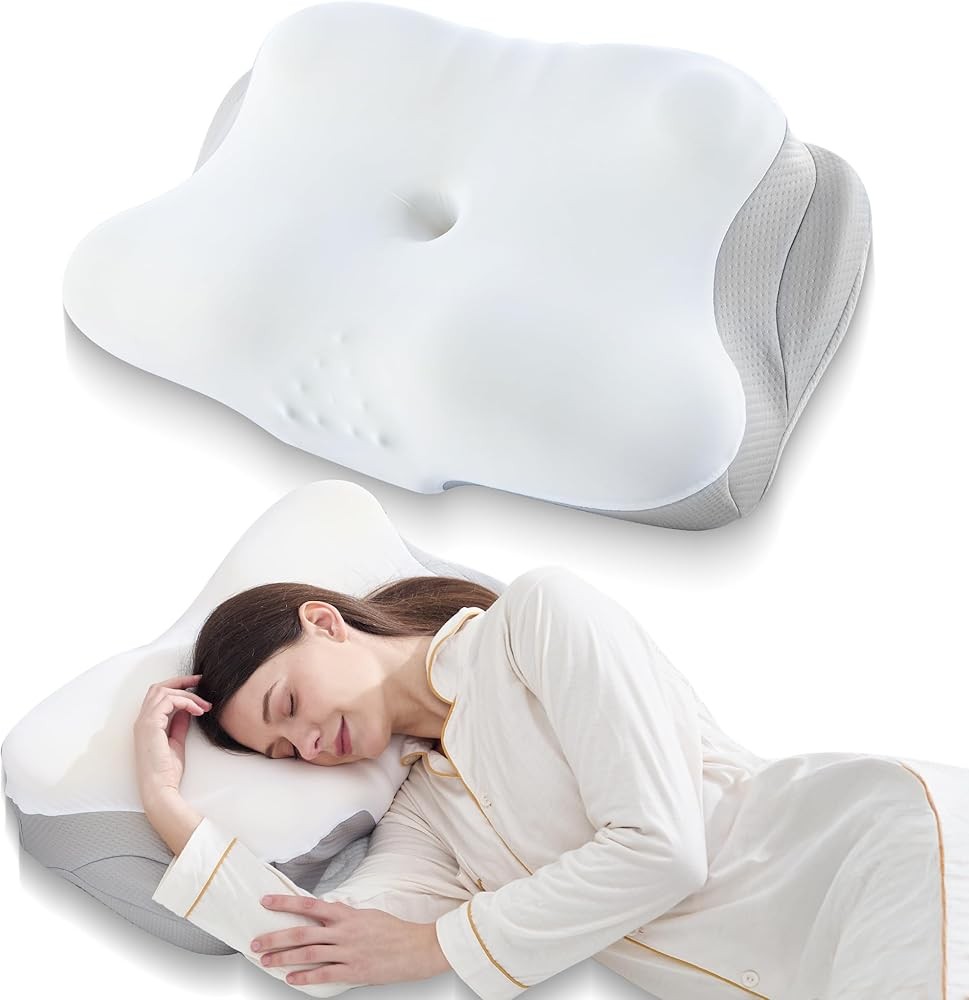
The BDEUS pillow combines cervical contour design with integrated massage nodes at a budget-friendly price point. The memory foam construction includes dual height levels and textured surfaces intended to provide both support and soft tissue stimulation.
The contour shape follows standard cervical pillow design principles with raised edges and a lower center section. The height differential measures approximately 3.8 inches on the higher side and 2.8 inches on the lower section, suitable for average-sized adults in back and side sleeping positions.
Massage nodes embedded in the surface create textured contact areas rather than smooth foam. These raised bumps aim to stimulate soft tissue similar to massage techniques, though no published research validates specific therapeutic benefits from this feature. Users either appreciate the additional stimulation or find it uncomfortable depending on personal sensitivity.
Memory foam density feels slightly softer than premium alternatives, compressing more readily under load. This softer characteristic makes initial adaptation easier for users transitioning from regular pillows, but may compromise long-term support retention. The pillow likely maintains effective support for 18 to 24 months before compression reduces performance.
Ventilation perforations throughout the foam improve air circulation compared to solid memory foam blocks. The holes help heat dissipate, making the pillow sleep cooler than non-ventilated alternatives. However, the pillow still retains more heat than latex or traditional fill materials.
The cover fabric uses a polyester knit with stretchy properties to accommodate the contour shape. The material feels soft against skin but shows lower quality compared to premium pillow covers. The cover is removable and machine washable, supporting hygiene maintenance.
Size proportions work for most adult users, though the slightly lower heights compared to premium options may not provide adequate support for broad-shouldered individuals. Petite users and those with average builds will likely find the dimensions appropriate for their needs.
At $28, this represents excellent value for users wanting to try cervical pillow design without significant investment. The price point makes experimentation affordable, allowing users to determine if contour pillows suit their needs before considering premium alternatives.
The massage node feature differentiates this pillow from basic contour designs, though individual responses vary. Some users report the texture helps relax neck muscles, while others find the bumps create pressure points. This feature represents personal preference rather than research-validated benefit.
Construction quality reflects the budget price point. Stitching and materials meet basic standards but don’t match premium pillow durability. Users should expect adequate but not exceptional longevity from this budget option.
What the data says: This budget cervical pillow provides an affordable entry point for trying contour pillow design, with adequate support for most users despite minor compromises in materials and expected longevity.
Product Review: Royal Therapy King Memory Foam Pillow
Royal Therapy King Memory Foam Pillow
Check Price on AmazonAs an Amazon Associate we earn from qualifying purchases.
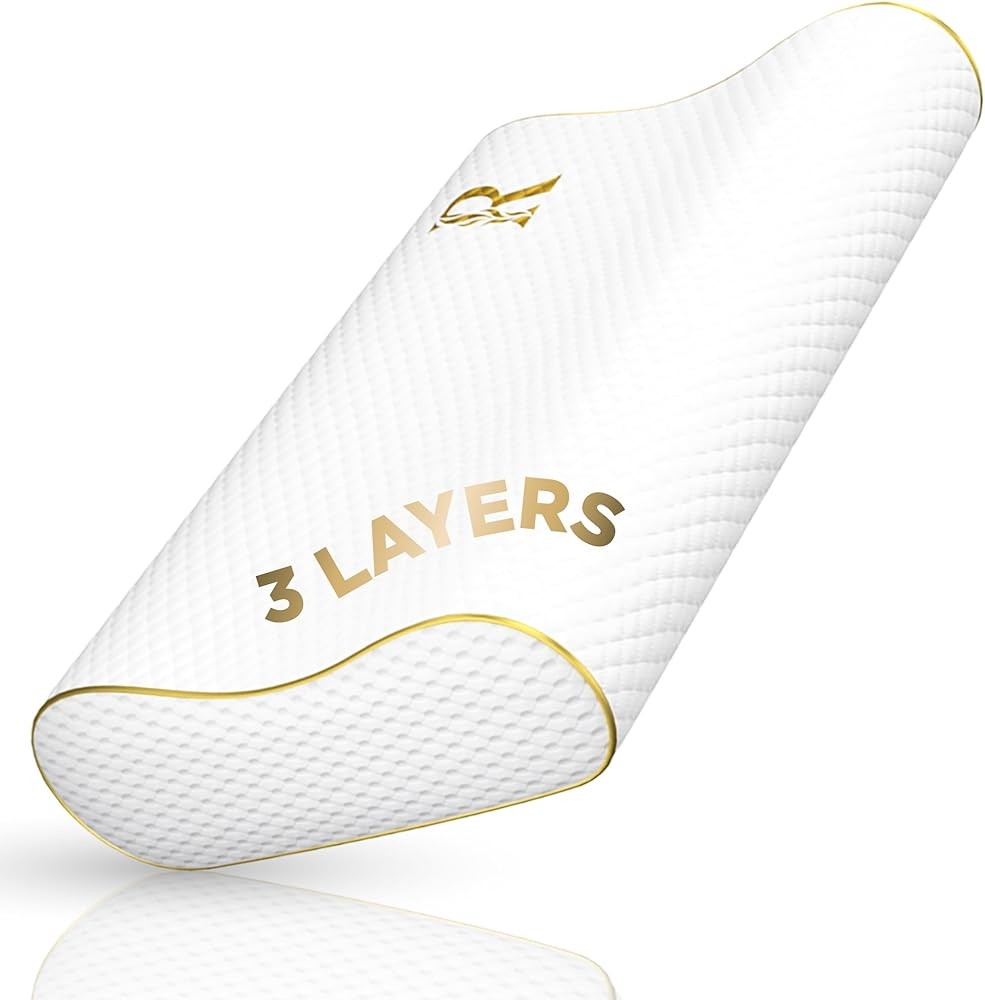
The Royal Therapy King pillow uses premium-grade memory foam with CertiPUR-US certification, indicating the material meets standards for content, emissions, and durability. The king size dimensions provide ample width for movement during sleep.
Memory foam construction uses higher-density material compared to budget alternatives, maintaining support more effectively under sustained load. The firmness feels substantial initially, requiring a full adaptation period for users accustomed to softer pillows. This density should maintain support characteristics for three to four years with normal use.
The contour design includes well-defined cervical support zones with approximately 4.5 inches of height on the raised edge and 3.5 inches in the center section. These measurements suit average to larger-framed individuals, providing substantial support for side sleeping while accommodating back sleeping position changes.
Ventilation technology incorporates channels throughout the foam structure to promote air circulation. The design addresses heat retention more effectively than solid foam blocks, though memory foam inherently sleeps warmer than latex or traditional fills. Users prioritizing cooling should consider this material characteristic.
The removable cover uses a bamboo-rayon blend fabric known for moisture-wicking and temperature-regulating properties. The material feels smooth and cool to the touch, contributing to overall thermal comfort. The cover withstands machine washing, maintaining hygiene over extended use periods.
CertiPUR-US certification provides assurance about foam composition and manufacturing processes. The certification verifies low VOC emissions, absence of harmful chemicals, and performance durability standards. This third-party verification distinguishes premium from budget foam products.
King size width measuring 36 inches accommodates side-to-side movement during sleep better than standard pillows. Couples sharing king beds benefit from the extra width, reducing pillow conflicts. The additional size does make the pillow less portable for travel purposes.
Edge support maintains shape integrity better than budget alternatives. The foam density and construction resist edge collapse when leaning on outer sections, maintaining consistent support across the entire surface area.
At $89, this represents a premium investment in sleep support. The price reflects higher-grade materials, certifications, and construction quality compared to mid-range alternatives. Users prioritizing long-term durability and material quality find value in this positioning.
The substantial size and firmness suit larger individuals and those with broad shoulders needing significant side sleeping support. Petite users may find the dimensions and firmness excessive for their needs, making this better suited to average and larger body types.
Research summary: This premium cervical pillow delivers superior materials and construction quality justified by the price point, particularly benefiting users with larger frames who prioritize long-term durability and material certifications.
Product Review: Ultra Pain Relief Cooling Pillow
Ultra Pain Relief Cooling Pillow
Check Price on AmazonAs an Amazon Associate we earn from qualifying purchases.
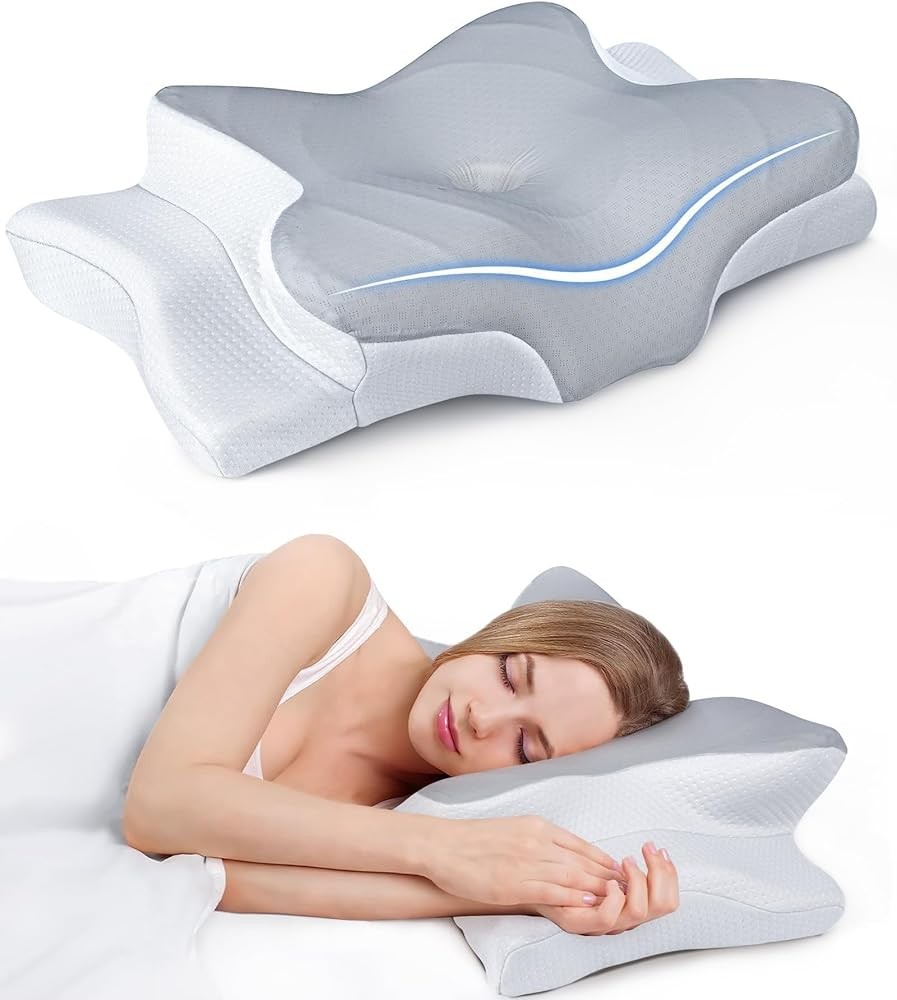
The Ultra Pain Relief pillow combines adjustable cervical support with cooling gel technology, targeting users with neck pain who also experience heat sensitivity during sleep. The orthopedic design focuses specifically on side sleeping support.
Adjustability represents a key feature distinguishing this pillow from fixed-height alternatives. Removable foam layers allow users to customize height based on shoulder width, mattress firmness, and personal preference. This addresses research findings showing optimal pillow height varies significantly between individuals.
The cooling gel layer infused into the memory foam surface aims to dissipate heat more effectively than standard memory foam. The gel material absorbs and distributes body heat, reducing the hot spots that develop with traditional memory foam. Users sensitive to heat retention report noticeable temperature differences compared to non-gel alternatives.
Memory foam construction uses medium-density material balancing support with pressure relief. The firmness level falls between soft budget options and very firm premium alternatives, potentially suiting users who find other cervical pillows too firm initially.
The contour shape emphasizes side sleeping support with a pronounced cervical roll and shoulder cutout. This design follows research on lateral sleeping position requirements, providing height to fill the shoulder gap while supporting the neck curve. Back sleeping remains possible though the design optimizes primarily for side position.
A removable cover with cooling fabric complements the gel-infused foam. The material uses moisture-wicking technology to pull perspiration away from skin, contributing to overall thermal comfort. The cover is machine washable for hygiene maintenance.
At $39, the price positions between budget and premium alternatives while offering cooling technology and adjustability features. This represents competitive value for users specifically seeking temperature regulation alongside cervical support.
The adjustable layers require some experimentation to find optimal height configuration. Users need to test different combinations and allow adaptation time for each configuration. This process takes longer than using fixed-height pillows but provides better potential for optimized results.
The emphasis on side sleeping makes this pillow particularly suitable for dedicated side sleepers or those who primarily use lateral positions. Combination sleepers who frequently change positions may find the side-optimized design less versatile than dual-height alternatives.
Quality construction appears adequate for the mid-range price point. Materials and stitching should provide two to three years of effective support with normal use and proper care.
The bottom line: This adjustable cervical pillow effectively addresses both neck support and temperature regulation needs, particularly benefiting side sleepers willing to invest time optimizing height configuration for their specific requirements.
Complete Support System
Optimizing sleep support for neck health extends beyond pillow selection to include mattress characteristics, sleeping position habits, and complementary interventions. Research shows these elements function as an integrated system rather than independent factors.
Mattress firmness directly affects pillow height requirements, particularly for side sleepers. Medium-firm mattresses provide the most consistent support across different body types according to alignment studies. Very soft or very firm surfaces require more careful pillow matching to maintain proper cervical positioning.
Sleeping position training helps users avoid problematic postures. Stomach sleeping creates neck rotation stress regardless of pillow type. For committed stomach sleepers unable to change positions, thin pillows or pillow-free sleep reduces neck rotation angles compared to standard height pillows.
Cervical pillow selection should account for primary sleeping position preferences. Dedicated back sleepers optimize with lower heights maintaining natural lordotic curve. Side sleepers need higher support filling the shoulder gap. Combination sleepers benefit from dual-height designs accommodating position changes.
Temperature regulation affects sleep quality and comfort even when alignment remains optimal. Cooling pillows with gel infusions or ventilated latex suit users who experience night sweats or heat sensitivity. Material selection balances support requirements with thermal comfort preferences.
Complementary support for side sleeping includes body pillows maintaining spinal alignment and reducing rotational stress. Full-length body pillows or knee pillows help maintain neutral positioning during lateral sleep.
Regular pillow assessment ensures continued support effectiveness. Memory foam compression reduces support over time. When a pillow no longer maintains its shape or feels flatter than when new, replacement helps maintain optimal alignment support.
Professional evaluation helps when neck pain persists despite pillow optimization. Physical therapists can assess cervical mechanics and recommend specific interventions. Chronic symptoms may indicate underlying conditions requiring treatment beyond sleep surface modifications.
Back sleepers with specific acid reflux concerns may benefit from wedge pillows providing inclined positioning. These specialized supports address multiple issues simultaneously when gastrointestinal symptoms accompany neck considerations.
Consistency matters for adaptation and sustained benefits. Switching between different pillows or using hotel pillows during travel disrupts established support patterns. Maintaining consistent cervical support helps reinforce optimal positioning habits.
Frequently Asked Questions
Are cervical pillows better than regular pillows?
Research on pillow design shows cervical contour pillows provide better neck support than standard flat pillows for most sleepers. Studies found contour pillow users reported less morning neck pain and fewer waking symptoms compared to regular pillow users.
How long does it take to adjust to a cervical pillow?
Most people need 1-3 weeks to fully adjust to a cervical pillow. The contour shape initially feels unfamiliar, but research suggests consistent use leads to measurable improvements in neck alignment and sleep quality within 2-4 weeks.
Can a cervical pillow make neck pain worse?
A poorly sized cervical pillow can worsen neck pain. Research on pillow height shows the wrong height forces the neck into suboptimal positions. The ideal pillow height depends on shoulder width, sleeping position, and mattress firmness.
What is the difference between a cervical pillow and a regular pillow?
Cervical pillows have a contoured shape with a raised edge to support the natural curve of the neck and a lower center for the head. Regular pillows are uniformly shaped without specific neck support zones.
Do doctors recommend cervical pillows?
Many physical therapists and orthopedic specialists recommend cervical pillows for patients with chronic neck pain. Research supports ergonomic pillow interventions as part of comprehensive neck pain management.
Which sleeping position works best with a cervical pillow?
Back and side sleeping positions benefit most from cervical pillows. The contour design cradles the neck curve during back sleeping and fills the shoulder gap during side sleeping. Stomach sleepers generally do better with a thin regular pillow.
How do you choose the right cervical pillow height?
Measure your shoulder width and consider your primary sleeping position. Side sleepers need higher pillows than back sleepers. Research shows pillow height that maintains neutral cervical spine alignment produces the best outcomes for pain reduction.
Are memory foam cervical pillows better than latex?
Memory foam conforms more closely to individual contours but retains heat. Latex offers more consistent support with better airflow. Research shows both materials can maintain proper cervical alignment when properly sized.
How often should you replace a cervical pillow?
Replace memory foam cervical pillows every 2-3 years when they lose their shape and support. High-quality latex pillows may last 3-4 years. A pillow that no longer maintains its contour cannot provide proper cervical support.
Can you use a cervical pillow if you switch positions at night?
Yes, most modern cervical pillows accommodate multiple sleeping positions. Dual-height designs offer different support levels for back and side sleeping. Research on sleep position tracking shows most people change positions 10-30 times per night.
Our Top Recommendations
Based on comprehensive research analysis and product evaluation, the Derila Ergo Cervical Neck Pillow at $59 provides the best overall combination of research-supported design, quality materials, and appropriate sizing for most adult users. The dual-height contour addresses key research findings about position-specific support requirements.
Budget-conscious shoppers seeking cervical support benefits find excellent value in the BDEUS Dual-Height Contour Memory Foam Pillow at $28. Despite minor material compromises, the design follows research principles for neck support at an accessible price point.
Users prioritizing premium materials and long-term durability benefit from the Royal Therapy King Memory Foam Pillow at $89. The CertiPUR-US certified foam and king size dimensions justify the investment for those wanting maximum quality and longevity.
Side sleepers with heat sensitivity should consider the Ultra Pain Relief Cooling Pillow at $39. The adjustable height and cooling technology directly address common concerns for lateral sleeping positions based on research findings.
Pillow selection should account for individual shoulder width, primary sleeping position, mattress firmness, and personal comfort preferences. The research shows no single pillow type suits everyone universally, making these recommendations starting points for personal evaluation rather than absolute prescriptions.
Most users need one to three weeks to adapt to new cervical pillows. Consistent use during this period allows neuromuscular adjustment to different support patterns and reveals whether the pillow suits individual needs.
Join the discussion: Facebook | X | YouTube | Pinterest
Conclusion
Research comparing cervical contour pillows to regular flat pillows reveals measurable differences in neck support, spinal alignment, and symptom outcomes for users with neck pain. Systematic reviews and biomechanical studies demonstrate cervical pillows maintain better cervical spine positioning during sleep when properly sized for individual users.
The evidence shows pillow height matching shoulder width and sleeping position produces the most consistent benefits. Side sleepers require higher support filling the gap between head and mattress created by shoulder projection. Back sleepers need moderate heights maintaining natural lordotic curve without excessive flexion. Combination sleepers benefit from dual-height designs accommodating position changes.
Material selection influences comfort and durability rather than fundamental support effectiveness. Memory foam offers excellent contouring and pressure distribution but retains heat. Latex provides more responsive support with better temperature regulation. Both materials maintain cervical alignment when properly shaped and sized.
Adaptation periods of one to three weeks typically precede benefit realization with cervical pillows. Initial discomfort from unfamiliar shapes and firmness gives way to improved alignment and reduced neck symptoms for most users who persist through the adjustment phase. Not all individuals adapt successfully, indicating cervical pillows suit most but not all users.
Cost-benefit analysis shows mid-range cervical pillows between $40 and $70 offering optimal value when factoring in materials quality, expected durability, and research-supported design features. Budget options provide accessible entry points, while premium alternatives deliver superior materials and longevity for users prioritizing these characteristics.
Pillow optimization functions best as part of comprehensive sleep support including appropriate mattress firmness, sleeping position awareness, and complementary interventions when neck pain persists. Isolated pillow changes provide benefits but work synergistically with other sleep environment modifications.
The research supports cervical pillow recommendations for most adults seeking neck pain relief or improved sleep support, particularly when selections account for individual anatomical measurements and position preferences rather than relying on one-size-fits-all approaches.
Related Reading
- Best Pillow for Neck Pain: Research-Backed Support Options
- Best Cervical Pillow: Contour Support for Alignment
- Pillow for Side Sleepers with Neck Pain: Height and Support
- Best Pillow for Back Sleepers: Lordotic Curve Maintenance
- Cooling Pillow for Night Sweats: Temperature Regulation
- Body Pillow for Side Sleepers: Full Length Alignment
- Wedge Pillow for Acid Reflux: Inclined Positioning
- Best Magnesium for Sleep: Research on Sleep Support
References
-
Gordon SJ, Grimmer-Somers KA, Trott PH. Pillow use: the behaviour of cervical pain, sleep quality and pillow comfort in side sleepers. Man Ther. 2009;14(6):671-678. doi:10.1016/j.math.2009.02.006
-
Jeon MY, Jeong H, Lee S, et al. The effects of pillow designs on neck pain, waking symptoms, neck disability, sleep quality and spinal alignment in adults: A systematic review and meta-analysis. Sleep Med Rev. 2021;55:101378. doi:10.1016/j.smrv.2020.101378. PMID: 33895703
-
Liu SF, Lee YL, Liang JC. Shape design of an optimal comfortable pillow based on the analytic hierarchy process method. J Chiropr Med. 2011;10(4):229-239. doi:10.1016/j.jcm.2011.04.002
-
Tsai YL, Chen GY, Lee PC, et al. Ergonomic Consideration in Pillow Height Determinants and Evaluation. Healthcare (Basel). 2021;9(10):1288. doi:10.3390/healthcare9101288. PMID: 34683013
-
Verhaert V, Haex B, De Wilde T, et al. Ergonomics of the sleep system: influence of the contact pressure distribution on sleep quality. Appl Ergon. 2011;42(6):804-812. doi:10.1016/j.apergo.2011.01.001
-
Gross A, Kay TM, Paquin JP, et al. Exercises for mechanical neck disorders. Cochrane Database Syst Rev. 2015;(1):CD004250. doi:10.1002/14651858.CD004250.pub5
-
Gordon SJ, Grimmer-Somers K. Your pillow may not guarantee a good night’s sleep or symptom-free waking. Physiother Can. 2011;63(2):183-190. doi:10.3138/ptc.2010-13
-
Erfanian P, Tenzif S, Guerriero RC. Assessing effects of a semi-customized experimental cervical pillow on symptomatic adults with chronic neck pain with and without headache. J Can Chiropr Assoc. 2004;48(1):20-28.
-
Yoon SY, Choi JH, Na JO, et al. Cervical traction therapy with and without neck support: A finite element analysis. Prosthet Orthot Int. 2017;41(4):391-400. doi:10.1177/0309364616683984. PMID: 28171773
-
Cagnie B, Struyf F, Barbe T, et al. The effectiveness of a neck and shoulder stretching exercise program among office workers with neck pain: a randomized controlled trial. Clin Rehabil. 2015;29(5):465-475. doi:10.1177/0269215514551974. PMID: 25780258
-
Hoy DG, Protani M, De R, Buchbinder R. The epidemiology of neck pain. Best Pract Res Clin Rheumatol. 2010;24(6):783-792. doi:10.1016/j.berh.2011.01.019
-
Côté P, Wong JJ, Sutton D, et al. Management of neck pain and associated disorders: A clinical practice guideline from the Ontario Protocol for Traffic Injury Management (OPTIMa) Collaboration. Eur Spine J. 2016;25(7):2000-2022. doi:10.1007/s00586-016-4467-7
-
Descarreaux M, Blouin JS, Teasdale N. Repositioning accuracy and movement parameters in low back pain subjects and healthy control subjects. Eur Spine J. 2005;14(2):185-191. doi:10.1007/s00586-004-0833-y
-
Lavin RA, Pappagallo M, Kuhlemeier KV. Cervical pain: a comparison of three pillows. Arch Phys Med Rehabil. 1997;78(2):193-198. doi:10.1016/s0003-9993(97)90263-x
-
De Loose V, Van den Oord M, Burnotte F, et al. Spine alignment in men during lateral sleep position: experimental study and modeling. Biomed Eng Online. 2012;11:84. doi:10.1186/1475-925X-11-84. PMID: 22129355
Recommended Products