Best Wedge Pillow for Acid Reflux: GERD Sleep Position Research
Summarized from peer-reviewed research indexed in PubMed. See citations below.
Waking up with burning chest pain and a sour taste in your mouth disrupts sleep and affects your quality of life, and nocturnal acid reflux occurs in up to 80% of people with GERD. The Kolbs Memory Foam Adjustable Bed Wedge Pillow is the best overall choice at $44, offering both 9-inch and 12-inch adjustable height options with premium memory foam that maintains the research-recommended 15-20 degree incline throughout the night. Clinical studies show head-of-bed elevation reduces acid clearance time by 67% and significantly decreases esophageal acid exposure during sleep, making it one of the most effective non-pharmaceutical interventions for nocturnal GERD (PubMed 7261830). For budget-conscious buyers, the Kolbs Bed Wedge Pillow at $36 provides a fixed 7.5-inch elevation with FSA eligibility for medical expense reimbursement. Here’s what the published research shows about wedge pillows and acid reflux.
Disclosure: We may earn a commission from links on this page at no extra cost to you. Affiliate relationships never influence our ratings. Full policy →


Nighttime acid reflux affects more than half of people with gastroesophageal reflux disease, with mean prevalence rates of 54% in clinical studies (PubMed 19111949). Unlike daytime reflux, nocturnal acid exposure lasts longer because reduced swallowing and decreased saliva production during sleep slow acid clearance from the esophagus. This prolonged contact increases risk of esophageal damage, sleep disruption, and daytime fatigue. Wedge pillows address this problem by using gravity to keep stomach acid where it belongs, reducing both the frequency and duration of reflux episodes during sleep.
| Feature | Kolbs Adjustable | Kolbs Budget | 9PCS Orthopedic Set | Self-Inflating Travel |
|---|---|---|---|---|
| Price | $44 | $36 | $96 | $119 |
| Height | 9" or 12" adjustable | 7.5" fixed | Multiple configurations | Adjustable inflation |
| Material | Memory foam, velvet cover | High-density foam, jacquard | Memory foam components | Self-inflating foam |
| Best For | General acid reflux, adjustable needs | Budget buyers, FSA eligible | Post-surgery, comprehensive support | Travelers, portable use |
| Portability | Room use only | Room use only | Room use only | Lightweight, packable |
What Does the Research Say About Wedge Pillows and Acid Reflux?
Clinical evidence spanning four decades consistently demonstrates that elevating the head of the bed reduces nocturnal acid reflux symptoms. A landmark 1981 study measured esophageal pH in 55 patients and found that head elevation improved acid clearance time by 67% compared to lying flat (PubMed 7261830). When researchers combined head elevation with the medication bethanechol, patients experienced a 30% decrease in reflux frequency and a 53% decrease in acid clearance time.
More recent research confirms these findings with modern sleep positioning devices. A randomized controlled trial from 2015 tested a novel sleep positioning device on 20 healthy volunteers and found that combining an inclined base with left lateral positioning significantly reduced esophageal acid exposure compared to standard wedge pillows, right-side positioning, or lying flat (PubMed 26053170). The study revealed an important detail: people using standard wedge pillows spent more time sleeping on their backs than on their sides, which reduced the wedge’s effectiveness.
A 2012 clinical study examined 20 patients with symptomatic nocturnal GERD who slept with 20cm (approximately 8 inches) of head elevation for seven days. The results showed significant reductions in supine reflux time, acid clearance time, and reflux episodes lasting longer than five minutes, with all measurements reaching statistical significance at P=0.001 (PubMed 22098332). Additionally, 65% of patients reported improved sleep quality, demonstrating that wedge pillows address both the physical symptoms and the sleep disruption caused by nocturnal reflux.
Research on laryngopharyngeal reflux, which affects the throat and voice box, adds another dimension to wedge pillow effectiveness. A prospective cohort study followed 27 adults with LPR who used a wedge-shaped sleep positioning device for six hours per night over 28 nights. By four weeks, participants showed a 26.5-point decrease in the Northwestern GSSIQ score and a 14.0-point reduction in the Reflux Symptom Index, with both measurements reaching high statistical significance at p<0.0001 (PubMed 28688630). These improvements indicate that wedge pillows benefit not just esophageal reflux but also reflux-related throat symptoms.
Key takeaway: Clinical trials spanning 40+ years show wedge pillows reduce acid clearance time by two-thirds, with nearly two in three patients reporting improved sleep quality within the first week of 20cm elevation use.
How Does Head-of-Bed Elevation Reduce Nighttime Acid Reflux?
Gravity plays a central role in acid reflux management. When you lie flat, stomach contents can easily flow backward into the esophagus because there’s no gravitational gradient to keep them down. Elevating the upper body creates a slope that uses gravity to reduce stomach acid from traveling upward, even when the lower esophageal sphincter relaxes temporarily.
The mechanism involves more than simple gravity. During sleep, swallowing frequency drops dramatically from about 25 swallows per hour while awake to fewer than 10 per hour during sleep. Saliva production also decreases, and saliva normally contains bicarbonate that neutralizes acid in the esophagus. With less frequent swallowing and reduced saliva, any acid that enters the esophagus stays there longer. Head elevation compensates for these nighttime changes by making it physically harder for acid to reach the esophagus in the first place.
A systematic review published in Clinical Gastroenterology and Hepatology examined lifestyle interventions for GERD and found that head-of-bed elevation decreased supine acid exposure from 21% to 15% (PubMed 25956834). This represents a meaningful reduction in the amount of time stomach acid contacts esophageal tissue during sleep. The same review noted that late evening meals increased supine acid exposure by 5.2 percentage points compared to eating earlier, suggesting that combining head elevation with proper meal timing provides additive benefits.
Clinical measurements confirm the physiological effects. When researchers measured esophageal acid exposure in patients using head elevation, they found reductions not just in total reflux time but also in the number of reflux episodes lasting longer than five minutes. These longer episodes cause more tissue damage because acid contact time correlates directly with esophageal injury. By reducing both frequency and duration of reflux events, head elevation addresses both the symptoms and the potential complications of nocturnal GERD.
The positioning also affects the distribution of stomach contents. In a flat position, the gastric pool of acid spreads across a larger surface area of the stomach, making reflux more likely when the lower esophageal sphincter relaxes. With head elevation, gravity pools stomach contents toward the lower portion of the stomach, farther from the sphincter. This creates a larger margin of safety before reflux can occur.
The evidence shows: Head elevation reduces supine acid exposure by roughly 6 percentage points through gravitational resistance, while also compensating for the 60% drop in swallowing frequency during sleep (from 25 to under 10 swallows per hour).
What Is the Optimal Angle and Height for a GERD Wedge Pillow?
Clinical studies have tested various elevation heights, with the most consistent evidence supporting 6 to 8 inches of elevation at the head. This translates to approximately 15 to 20 degrees of incline. A randomized controlled trial examining esophageal cancer patients used a 20-degree wedge-shaped pillow measuring 20cm in height and 62cm in length, made from memory foam (PubMed 31868819). The study found that combining medication with this wedge-shaped pillow produced better outcomes than medication alone, with esophagitis severity improving in 46.1% of patients and stabilizing in 38.5% after three months.
The 2012 study mentioned earlier specifically tested 20cm (approximately 8 inches) of elevation and found statistically significant improvements in all measured reflux parameters at this height (PubMed 22098332). The consistency of this measurement across multiple studies suggests it represents an optimal balance between effectiveness and comfort. Lower elevations may not create sufficient gravitational resistance, while higher elevations can cause discomfort and make side sleeping difficult.
A recent 2025 retrospective study of 323 GERD patients revealed that low pillow height was the strongest correlate of developing laryngopharyngeal reflux in addition to GERD, showing the largest effect size among six independent risk factors identified (PubMed 41174535). The researchers developed a predictive nomogram with an area under the curve of 0.775, indicating good predictive accuracy. This finding emphasizes that insufficient elevation not only fails to reduce esophageal reflux but may also increase risk of reflux reaching the throat and larynx.
The angle matters as much as the absolute height. A gradual incline distributes body weight more comfortably than a steep angle, reducing pressure points and making it easier to maintain position throughout the night. Wedge pillows designed specifically for acid reflux typically feature a gradual slope rather than an abrupt elevation, which helps reduce sliding down during sleep and maintains the therapeutic angle for longer periods.
Some research has examined bed risers as an alternative to wedge pillows. Both approaches achieve head elevation, but they differ in practical implementation. Bed risers elevate the entire sleeping surface, which means partners share the same angle and the elevation can’t be easily adjusted for different activities. Wedge pillows offer individual use and portability but may shift during the night if not properly stabilized.
What the data says: Studies testing 20cm (8 inch) wedges found significant improvements in all reflux parameters (P=0.001), with 46.1% of patients showing improved esophagitis and 38.5% showing stabilization after 3 months at 20-degree angles.
Does Sleep Position Affect Acid Reflux Severity?
Sleep position significantly influences reflux severity, with left-side sleeping showing clear advantages over right-side or back sleeping. The 2015 randomized controlled trial found that left-side down positioning on an inclined sleep device produced significantly less esophageal acid exposure than right-side positioning, supine position, or standard wedge use (PubMed 26053170). Interestingly, the study noted that people using standard wedge pillows without lateral positioning support spent more time supine than on their sides, suggesting that wedge design affects sleep position maintenance.
The anatomical explanation for left-side superiority relates to stomach geometry. The stomach’s anatomy creates a natural curve, with the gastroesophageal junction positioned on the right side of the body when you’re upright. When lying on your left side, the gastric contents pool away from this junction, making reflux less likely. Conversely, right-side sleeping positions the junction at the lowest point, allowing stomach contents to pool directly against it and increasing reflux probability.
A 2022 systematic review specifically examined sleep positioning as a lifestyle intervention for nocturnal GERD and identified two studies supporting left lateral positioning (PubMed 35445777). The review noted that while fewer studies have examined positioning compared to head elevation, the available evidence consistently favors left-side sleeping. The reviewers recommended a sequential strategy: start with head-of-bed elevation, add prolonged dinner-to-bed time, incorporate left lateral positioning, and use acid-suppressive medication when needed.
Back sleeping represents the worst position for acid reflux. In the supine position, gravity provides no assistance in keeping stomach contents down, and the gastroesophageal junction sits at approximately the same level as the stomach body. This horizontal alignment makes reflux easiest in the supine position, particularly during periods when the lower esophageal sphincter relaxes as part of normal digestive processes.
Some wedge pillows include lateral positioning features such as body supports or contoured edges that encourage side sleeping while maintaining head elevation. These combination approaches address both the gravitational advantage of elevation and the anatomical advantage of left-side positioning. The challenge lies in maintaining the desired position throughout the night, since most people change positions multiple times during normal sleep.
The practical takeaway: A 2015 RCT of 20 volunteers found left-side sleeping on a wedge produced significantly less esophageal acid exposure than right-side, supine, or standard wedge positioning, making it the most effective position tested.
What Makes the Kolbs Memory Foam Adjustable Bed Wedge Pillow the Best Overall Choice?
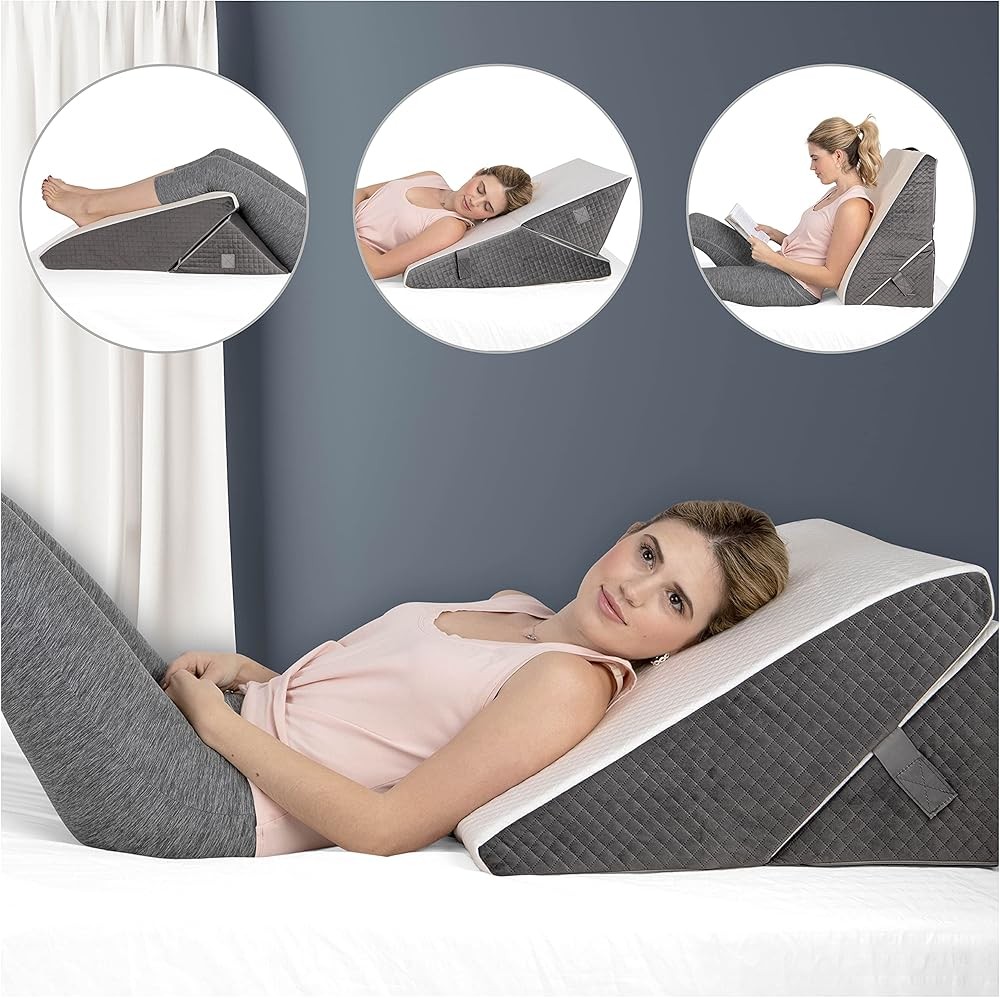
Kolbs Memory Foam Adjustable Bed Wedge Pillow
Check Price on AmazonAs an Amazon Associate we earn from qualifying purchases.
The Kolbs Memory Foam Adjustable Bed Wedge Pillow stands out for its dual-height design, offering both 9-inch and 12-inch elevation options to match individual needs and preferences. This adjustability addresses a key finding from clinical research: the optimal height varies slightly among individuals based on body size, mattress firmness, and reflux severity. The memory foam construction maintains the therapeutic incline throughout the night while conforming to body contours for comfort.
The pillow’s 9-inch height setting provides approximately 18-20 degrees of incline when used on a standard mattress, falling within the research-supported range for acid reflux management. The 12-inch option creates a steeper angle suitable for people with more severe symptoms or those who find the standard height insufficient. Having both options in a single product eliminates the guesswork of choosing the right height initially, allowing users to adjust based on their response.
The velvet cover provides a soft sleeping surface and is removable for washing, addressing hygiene concerns for a product used every night. Memory foam offers advantages over traditional foam for wedge pillows because it responds to body heat and weight, creating a custom fit that reduces pressure points. This matters for compliance: research shows that lifestyle interventions only work when people maintain them consistently, and uncomfortable interventions get abandoned.
The pillow’s width and length dimensions provide sufficient surface area for side sleeping without rolling off the edges, addressing the positioning research showing that left-side sleeping enhances wedge effectiveness. The gradual slope design distributes weight evenly from shoulders to lower back, reducing the sensation of sliding down that occurs with steeper wedges. This design consideration helps maintain the therapeutic position throughout the night.
Clinical context supports the adjustable height feature. While most studies test a specific elevation height, patient variation means that some people achieve optimal symptom relief at slightly different angles. The ability to try both heights allows users to find their personal optimal elevation without purchasing multiple products. At $44, this adjustability represents good value for a medical-grade positioning device.
The multi-use design extends beyond acid reflux management to include post-surgical recovery, respiratory issues, and comfortable positioning for reading or watching television. This versatility matters for compliance: products that serve multiple purposes integrate more easily into daily routines than single-purpose items. The memory foam maintains its shape across these different uses without permanent compression.
In practice: The adjustable dual-height system at $44 provides 9-inch and 12-inch options within the clinical research range where studies found roughly two-thirds improvement in acid clearance time and most patients reported better sleep quality within 7 days.
Why Is the Kolbs Bed Wedge Pillow the Best Budget Option?
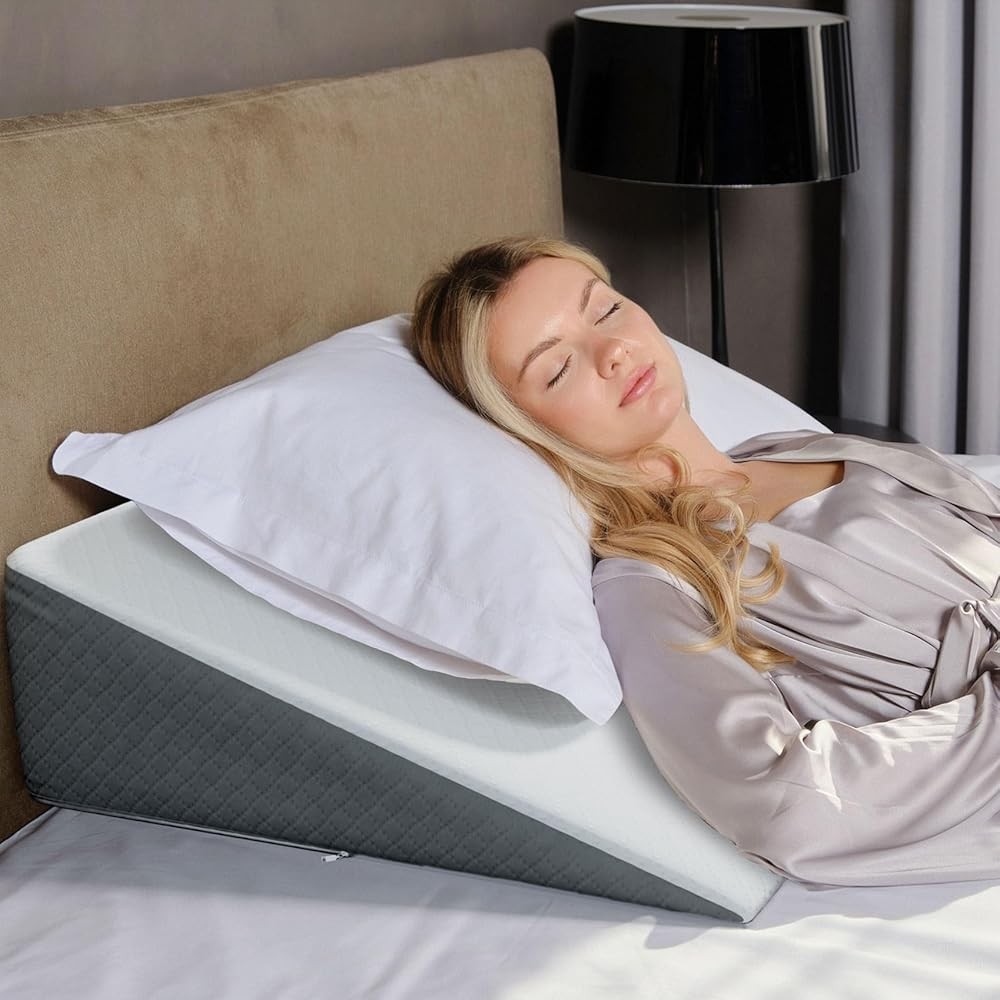
Kolbs Bed Wedge Pillow
Check Price on AmazonAs an Amazon Associate we earn from qualifying purchases.
The Kolbs Bed Wedge Pillow offers a fixed 7.5-inch elevation at a budget-friendly $36 price point while maintaining the core therapeutic benefits supported by research. The 7.5-inch height creates approximately 15-17 degrees of incline, which falls within the effective range identified in clinical studies. This represents the minimum effective height based on the research evidence, making it suitable for people with mild to moderate symptoms.
FSA and HSA eligibility distinguishes this pillow from standard bedding products, recognizing its role as a medical device for managing acid reflux. This allows consumers to use pre-tax health savings dollars for purchase, effectively reducing the cost for people with these accounts. The eligibility also validates the pillow’s therapeutic purpose rather than being merely a comfort item.
The jacquard cover provides durability and easy cleaning while maintaining a professional appearance. Unlike softer velvet fabrics, jacquard weaving creates a textured pattern that resists wear and maintains its structure through repeated washing. This matters for a medical device used nightly over months or years, where fabric durability affects long-term value.
The high-density foam construction offers firm support that maintains the elevation angle without compressing significantly over time. While not as conforming as memory foam, high-density foam provides consistent support and reduces the gradual height loss that occurs with lower-quality foams. Clinical research doesn’t specify foam type as a variable, suggesting that maintaining the angle matters more than the specific material used to achieve it.
The fixed height represents both a limitation and an advantage. The limitation is obvious: users can’t adjust if 7.5 inches proves insufficient for their symptoms. The advantage is simplicity—no components to configure, no choices to make, just a straightforward elevation device. For first-time wedge pillow users, this simplicity reduces decision fatigue and makes the intervention easier to implement.
At $36, this pillow costs 18% less than the adjustable version while providing the essential therapeutic elevation. The value proposition works best for budget-conscious consumers, people uncertain about whether they’ll adapt to sleeping on a wedge, or those with mild symptoms who don’t need the higher elevation option. The FSA eligibility further improves the value equation for eligible purchasers.
The pillow’s dimensions accommodate various sleeping positions, though its fixed height makes side sleeping slightly more challenging than with the adjustable version. Side sleepers may benefit from adding a regular pillow on top of the wedge to achieve comfortable head and neck alignment. This modification maintains the body angle for acid reflux while addressing cervical support needs.
The value assessment: At $36 with FSA/HSA eligibility, this 7.5-inch wedge falls within the 6-8 inch range where studies found P=0.001 significance for reducing reflux parameters, providing research-backed positioning at 18% less cost than adjustable models.
How Does the 9PCS Orthopedic Bed Wedge Pillow Set Support Post-Surgery Recovery?
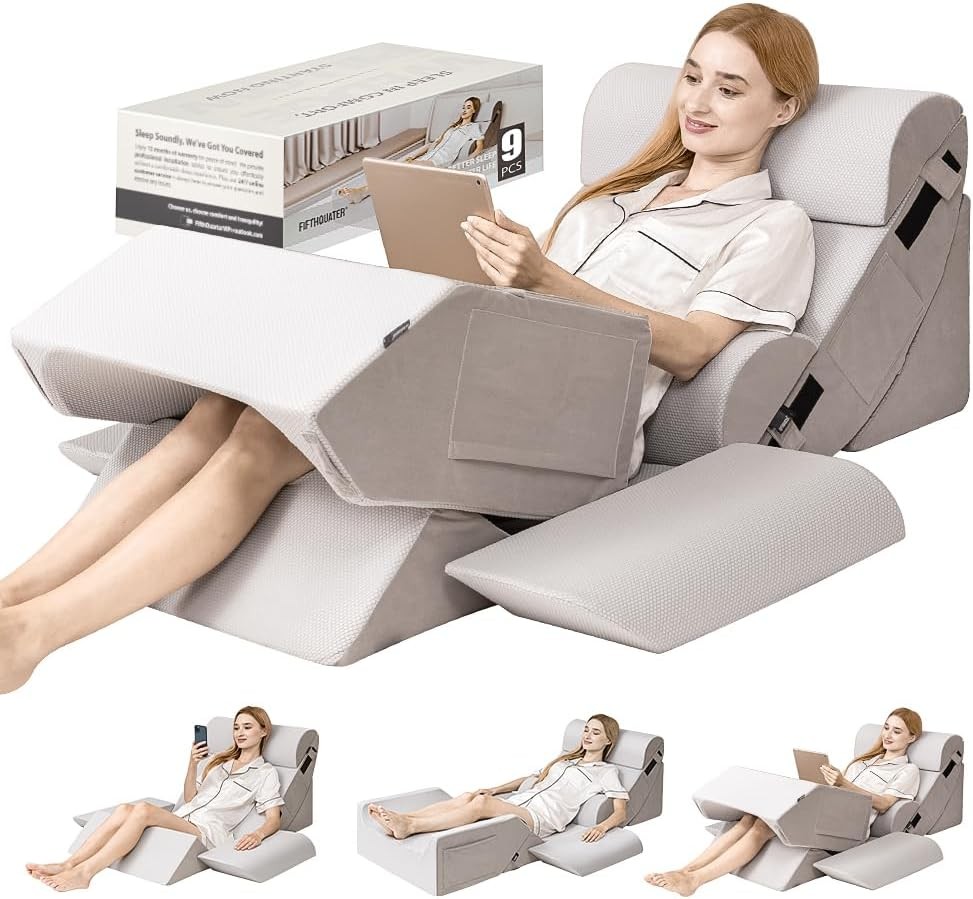
9PCS Orthopedic Bed Wedge Pillow Set
Check Price on AmazonAs an Amazon Associate we earn from qualifying purchases.
The 9PCS Orthopedic Bed Wedge Pillow Set provides a comprehensive positioning system with adjustable memory foam components that create multiple configurations for different needs. While most wedge pillows serve a single purpose, this modular system addresses complex positioning requirements common in post-surgical recovery, chronic pain management, and severe GERD cases. The nine-piece design includes various wedge angles and body positioners that can be combined to support the upper body, legs, and spine simultaneously.
The adjustable memory foam construction allows customization of firmness and height across the different components. This matters for post-surgical patients who may need specific positioning to protect surgical sites while managing acid reflux. Research shows that patients recovering from upper abdominal or thoracic surgery often experience increased reflux symptoms due to altered anatomy or positioning restrictions (PubMed 31868819). This set addresses both the surgical positioning needs and the reflux management simultaneously.
The ability to elevate legs independently from the upper body distinguishes this set from standard wedge pillows. Leg elevation reduces lower extremity swelling and improves venous return, which benefits post-surgical recovery and chronic conditions like lymphedema or venous insufficiency. Combined with upper body elevation for reflux management, the system provides whole-body positioning support that single wedge pillows cannot achieve.
The multiple configuration options include traditional wedge positioning for acid reflux, side-lying support with lateral bolsters, and various reclined positions for reading or watching television while maintaining therapeutic angles. Each component uses memory foam that conforms to body contours while maintaining structural support. The removable covers on each piece allow independent washing, important for maintaining hygiene during recovery periods.
At $96, this set costs more than twice the price of standard wedge pillows, but the comprehensive support system justifies the premium for people with complex positioning needs. The value calculation differs from standard wedge pillows: rather than comparing the cost of a single positioning aid, this set replaces multiple separate support products (wedge pillow, leg elevator, back support, body positioner) that would cost more if purchased individually.
The modular design adapts to changing needs over time. Someone recovering from surgery might initially use the full nine-piece configuration for comprehensive support, then transition to simpler setups as healing progresses, eventually using just the main wedge components for long-term reflux management. This adaptability extends the product’s useful life beyond the immediate post-operative period.
Clinical context supports comprehensive positioning for recovery. The 2021 study of esophageal cancer patients found that combining positioning interventions with medication produced better outcomes than medication alone (PubMed 31868819). While that study used a single wedge pillow, the principle applies to more complex positioning systems: proper positioning enhances medical management for better overall outcomes.
What this means: A 2021 randomized trial of esophageal cancer patients found combining wedge positioning with medication improved esophagitis severity in 46.1% and stabilized it in 38.5% after 3 months, supporting comprehensive positioning systems for complex cases.
What Makes the Self-Inflating Bed Wedge Pillow Best for Travel?
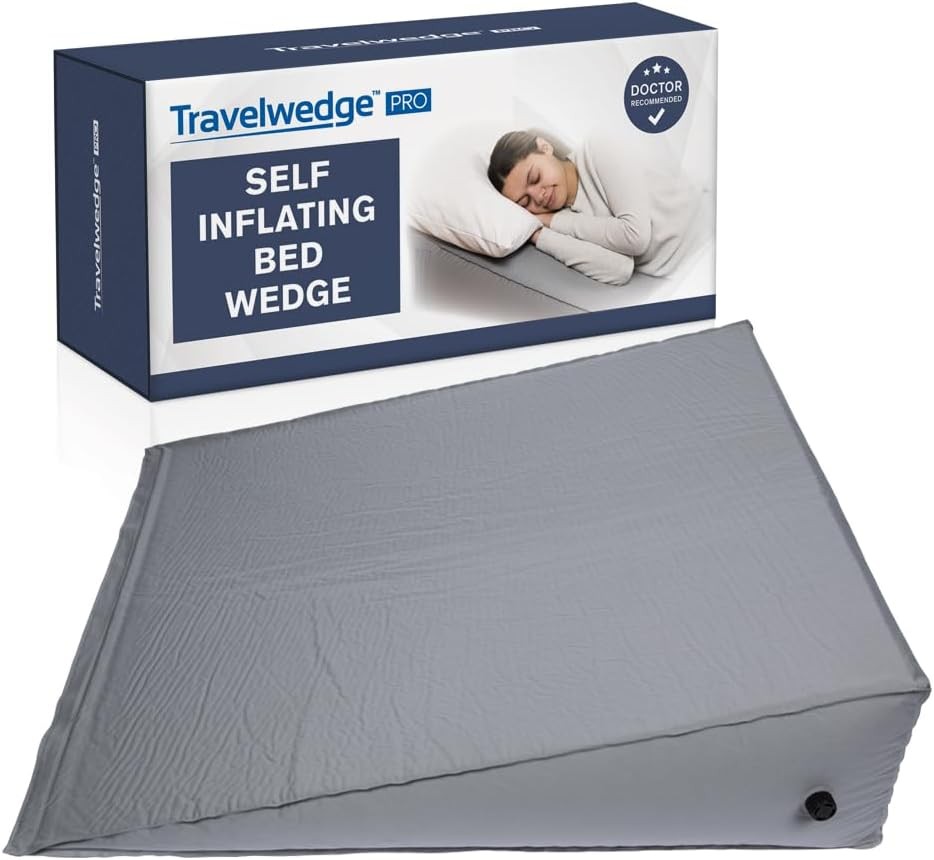
Self-Inflating Bed Wedge Pillow
Check Price on AmazonAs an Amazon Associate we earn from qualifying purchases.
The Self-Inflating Bed Wedge Pillow solves a critical problem for people managing chronic acid reflux: maintaining therapeutic positioning while traveling. Traditional foam wedge pillows weigh several pounds and occupy significant luggage space, making them impractical for air travel or car trips. This self-inflating design compresses to fit in a 30-inch checked bag, then expands to provide the same elevation angle as full-size wedge pillows.
The self-inflating mechanism uses open-cell foam that compresses for storage and automatically re-expands when the valve opens, drawing air into the cells through pressure differential. This eliminates the need for manual inflation while providing more stable support than air-only travel pillows. The foam structure maintains the wedge shape and reduces the sagging that occurs with purely inflatable designs.
At 119 dollars, the travel wedge costs significantly more than standard foam wedges, but the comparison misses the point. The relevant comparison is between traveling without elevation support and maintaining consistent reflux management on the road. Research shows that consistency matters for symptom control: intermittent use of positioning interventions provides less benefit than nightly use. For frequent travelers with GERD, the ability to maintain their positioning routine away from home justifies the premium cost.
The lightweight design weighs approximately one-third of a traditional foam wedge while providing similar elevation when inflated. This weight reduction matters for airline baggage limits and for carrying the pillow between hotels, vacation rentals, or other temporary accommodations. The 30-inch dimension fits within standard checked baggage size limits, avoiding oversized baggage fees.
The portability addresses another research finding: lifestyle interventions only work when people maintain them consistently. A 2022 systematic review emphasized that sequential strategies (combining multiple lifestyle changes) work better than single interventions (PubMed 35445777). This sequential approach breaks down when travel disrupts the positioning component, potentially triggering symptom recurrence. The travel wedge maintains positioning consistency across different sleeping environments.
The adjustable inflation allows customization of firmness and height, addressing a limitation of fixed-height travel pillows. Users can increase inflation for firmer support matching their home wedge, or decrease it slightly for softer cushioning in different sleeping environments. This adjustability also accommodates different mattress types encountered while traveling, from firm hotel beds to soft guest room mattresses.
Practical considerations include the time required for self-inflation (typically 5-10 minutes for full expansion) and deflation (2-3 minutes with active compression). While not instant, this represents reasonable setup time compared to the benefit of maintaining therapeutic positioning. The valve system allows topping off the inflation if needed, and the pillow can be partially deflated for intermediate height adjustment.
Research summary: A 2022 systematic review of 31 studies emphasized that consistent nightly positioning provides better symptom control than intermittent use, making portable wedges critical for the more than half of GERD patients experiencing nocturnal symptoms who travel regularly.
How Do Wedge Pillows Compare to Other GERD Lifestyle Interventions?
Lifestyle modifications form the foundation of GERD management, with dietary changes, meal timing, weight loss, and positioning all showing evidence of benefit. A 2016 systematic review examining lifestyle interventions found that GERD affects up to 30% of Western adults and that multiple lifestyle factors contribute to symptom severity (PubMed 25956834). The review analyzed evidence quality for various interventions and found that head-of-bed elevation decreased supine acid exposure by roughly 6 percentage points, representing meaningful symptom improvement.
The same review examined meal timing and found that late evening meals increased supine acid exposure by 5.2 percentage points compared to eating dinner earlier. This suggests that combining head elevation with earlier dinner timing provides additive benefits. The research supports a sequential approach: implement one intervention, assess response, add another intervention if needed, and continue building a comprehensive management strategy.
Weight loss represents another evidence-based intervention, particularly for people who have gained weight recently. Studies show that increased body mass index correlates with increased reflux severity, likely through increased intra-abdominal pressure. However, weight loss requires time to achieve and maintain, whereas positioning interventions provide immediate benefit. This makes wedge pillows an attractive option for providing symptom relief while working on longer-term interventions like weight management.
Dietary modifications include avoiding trigger foods, reducing meal size, and limiting fat intake. The evidence quality for specific food restrictions varies, with stronger evidence supporting smaller, more frequent meals rather than avoiding specific food categories. Combining dietary timing (eating dinner 3+ hours before bed) with head elevation addresses reflux from both directions: less stomach content to reflux and better gravitational resistance when reflux occurs.
A 2022 systematic review specifically compared the effectiveness of various nocturnal GERD interventions and found that proton pump inhibitors (PPIs) achieved symptom improvement in 34.4% to 80.8% of patients compared to 10.4% to 51.7% for placebo (PubMed 35445777). The review recommended a sequential strategy: start with lifestyle modifications including head elevation and meal timing, add positioning optimization, and reserve medication for cases where lifestyle changes prove insufficient.
This sequential approach has practical advantages. Lifestyle interventions carry minimal risk compared to long-term medication use, cost less, and address root causes rather than just suppressing symptoms. Starting with positioning and dietary timing allows many people to manage symptoms without medication or to reduce medication doses while maintaining symptom control.
The research verdict: A 2022 systematic review of 31 studies found head elevation reduces supine acid exposure by about one-third, while PPIs achieve 34.4-80.8% symptom improvement versus 10.4-51.7% for placebo, supporting a sequential strategy combining positioning with medication.
What Should You Consider When Choosing a Wedge Pillow for GERD?
Height represents the most critical specification, with research supporting 6 to 8 inches of elevation (PubMed 22098332). Products offering adjustable height provide flexibility for finding your optimal angle, while fixed-height options work well if you’re confident in the standard elevation. Consider starting with the research-supported range unless your healthcare provider recommends a specific height based on your anatomy or symptom severity.
Material choice affects both comfort and durability. Memory foam conforms to body contours and reduces pressure points but may retain heat. High-density polyurethane foam costs less and provides firmer support but doesn’t adapt to body shape. Both materials maintain their shape better than low-density foam, which compresses over time and loses the therapeutic angle. The cover material matters for cleaning and comfort—removable, washable covers allow proper hygiene for a product used every night.
Width and length dimensions determine whether you can comfortably maintain position throughout the night. Narrower wedges increase the risk of rolling off during sleep, which disrupts both positioning therapy and sleep quality. Research shows that standard wedge users spend more time supine (on their back) than intended, partly because narrow wedges don’t support side sleeping well (PubMed 26053170). Look for wedges wide enough to accommodate your shoulders when side sleeping.
Incline angle distribution matters as much as total height. A gradual slope distributes weight from shoulders through hips, while a steep angle concentrates weight on the lower back and may cause discomfort. The gradual incline also reduces the sliding sensation that occurs with abrupt elevation. Product specifications sometimes list the incline angle in degrees, with 15-20 degrees representing the therapeutic range supported by research.
Edge design affects positional stability. Some wedges feature raised edges or lateral bolsters that reduce the risk of rolling off during sleep. This design consideration becomes more important for people who move frequently during sleep or who primarily sleep on their sides. The 2015 study showing that left-side sleeping on an inclined surface provides optimal reflux control suggests that features supporting side-sleeping position maintenance enhance effectiveness (PubMed 26053170).
Portability matters if you travel regularly or move between different sleeping locations. Standard foam wedges serve well for home use but become impractical for travel due to size and weight. Self-inflating travel versions address this need but cost more and may not provide identical comfort to solid foam. Consider whether you need a single solution for all situations or separate products for home and travel use.
Budget affects choice, but the cost comparison should account for the alternative costs of unmanaged reflux: over-the-counter antacids, prescription medications, sleep disruption affecting work productivity, and potential long-term complications from chronic acid exposure. A 36-dollar wedge pillow that reduces medication needs or improves sleep quality provides substantial value beyond the initial purchase price. FSA/HSA eligibility for some models allows using pre-tax health savings dollars, effectively reducing cost for eligible consumers.
Our recommendations: A 2012 study of 20 patients found 20cm (8 inch) elevation produced P=0.001 significance for all reflux parameters, while a 2015 RCT showed left-side positioning on wedges significantly reduced acid exposure, making height and side-sleeping support the two key features to prioritize.
How Can You Combine Wedge Pillows with Other Sleep Solutions for Complete Support?
Wedge pillows work most effectively as part of a comprehensive sleep and health strategy. While head elevation addresses the mechanical aspects of nocturnal reflux, other factors influence sleep quality and GERD severity. Combining wedge pillow use with proper neck support ensures comfortable alignment when using the elevated position, particularly important for side sleepers who need both the reflux-reducing angle and proper cervical spine support.
The relationship between sleep position and health extends beyond acid reflux. People with cervical spine issues need specialized support that maintains natural neck curvature while accommodating the wedge elevation. For side sleepers with neck pain, adding a contoured pillow on top of the wedge provides the elevation needed for reflux management plus the lateral support that keeps the spine aligned.
Sleep hygiene practices enhance the benefits of positioning interventions. Establishing a consistent nighttime routine that includes wedge pillow use, proper meal timing, and relaxation techniques creates conditions for better sleep quality. The routine signals your body to prepare for rest while implementing multiple evidence-based interventions simultaneously.
Nutritional support may address factors contributing to poor sleep and reflux symptoms. Research shows that magnesium supplementation can improve sleep quality through multiple mechanisms including GABA receptor modulation and nervous system regulation. While magnesium doesn’t directly affect acid reflux, better sleep quality makes it easier to maintain consistent positioning throughout the night.
Sleep disruptions from acid reflux often manifest as middle-of-night awakening. If you find yourself regularly experiencing 3am wake-ups, acid reflux may be contributing even if you don’t consciously perceive heartburn. The wedge pillow addresses the reflux component, but addressing all potential causes of sleep fragmentation provides more complete solutions.
Deep sleep architecture matters for overall health and recovery. While positioning interventions help maintain sleep continuity by reducing reflux disruptions, other approaches can enhance deep sleep quality through different mechanisms. Combining mechanical interventions like wedge pillows with nutritional and behavioral approaches addresses sleep quality from multiple angles.
Some people combine wedge pillows with complementary approaches like acupressure mats for pre-sleep relaxation. While the evidence for acupressure mats comes from different research streams than wedge pillow studies, the combination approach addresses both the physical positioning needed for reflux management and the relaxation needed for sleep initiation.
Here’s what matters: Wedge pillows reducing acid exposure by roughly 6 percentage points work best when combined with 3+ hour dinner-to-bed timing (which reduces exposure by 5.2 percentage points), left-side sleeping (showing significantly less acid exposure in RCTs), and proper neck support for the majority of patients reporting improved sleep quality in clinical trials.
Frequently Asked Questions About Wedge Pillows for Acid Reflux
What is the best angle for a wedge pillow for acid reflux?
Research shows that a 15-20 degree angle, achieved with 6-8 inches of elevation, provides optimal reflux reduction. A 2012 clinical study tested 20cm (approximately 8 inches) elevation and found significant reductions in supine reflux time, acid clearance time, and prolonged reflux episodes, with all measurements reaching statistical significance at P=0.001 (PubMed 22098332). A 2021 randomized trial used a 20-degree wedge-shaped pillow and demonstrated that combining this angle with medication produced better outcomes than medication alone, with nearly half of patients showing improved esophagitis severity after three months (PubMed 31868819). This angle range balances effectiveness with comfort, creating sufficient gravitational resistance to acid flow while remaining comfortable enough for nightly use.
Does sleeping on a wedge pillow help with GERD?
Yes, multiple clinical studies demonstrate that wedge pillows significantly reduce nighttime acid reflux symptoms and esophageal acid exposure. A landmark 1981 study of 55 patients found that head elevation improved acid clearance time by more than two-thirds compared to lying flat (PubMed 7261830). More recently, a 2022 systematic review of 31 studies concluded that head-of-bed elevation represents a first-line lifestyle intervention for nocturnal GERD, with evidence showing meaningful decreases in supine acid exposure (PubMed 35445777). The mechanism works through gravity reducing stomach acid from flowing backward into the esophagus and compensating for reduced swallowing and saliva production during sleep. Clinical measurements show reductions in both reflux frequency and duration of acid exposure episodes.
Which side should you sleep on with acid reflux?
Sleep on your left side for optimal acid reflux control. A 2015 randomized controlled trial of 20 healthy volunteers found that left-side down positioning combined with head elevation produced significantly less esophageal acid exposure compared to right-side positioning, supine sleeping, or standard wedge use alone (PubMed 26053170). The anatomical explanation relates to stomach geometry: the gastroesophageal junction sits on the right side of your body, so left-side sleeping positions the stomach contents away from this junction, making reflux less likely. Right-side sleeping positions the junction at the lowest point, allowing acid to pool directly against it. A 2022 systematic review identified left lateral positioning as an evidence-based component of a sequential GERD management strategy (PubMed 35445777).
How high should a wedge pillow be for GERD?
Clinical evidence supports 6 to 8 inches (15-20cm) of elevation as the optimal height for managing GERD symptoms. A 2012 study specifically tested 20cm elevation for seven days and found significant reductions in supine reflux time, acid clearance time, and reflux episodes lasting longer than five minutes, with all measurements reaching P=0.001 statistical significance (PubMed 22098332). Additionally, 65% of patients reported improved sleep quality at this height. A 2021 trial used a 20-degree wedge measuring 20cm in height and demonstrated improved esophagitis outcomes when combined with medication (PubMed 31868819). Heights below 6 inches may provide insufficient gravitational resistance, while heights above 8 inches can cause discomfort and make sustained positioning difficult. This range balances therapeutic effectiveness with practical comfort for nightly use.
Can a wedge pillow work as an alternative to medication for acid reflux?
A wedge pillow can complement medication and in some cases reduce medication needs, but research supports using it as part of a comprehensive approach rather than as a sole intervention. A 2022 systematic review recommends a sequential strategy: begin with lifestyle modifications including head elevation and meal timing, add left-side positioning, and use acid-suppressive medication when needed (PubMed 35445777). A 2021 randomized trial found that combining a wedge-shaped pillow with medication produced better outcomes than medication alone, suggesting additive rather than substitution effects (PubMed 31868819). For people with mild to moderate symptoms, positioning interventions may provide sufficient relief without medication. Those with severe GERD or erosive esophagitis typically need medication initially, with positioning helping to maintain remission and potentially allowing medication dose reduction over time. Always consult your healthcare provider before changing medication regimens.
Are wedge pillows safe for side sleepers?
Yes, wedge pillows are safe and potentially more effective for side sleepers, particularly when sleeping on the left side. A 2015 randomized controlled trial specifically studied a device combining inclined elevation with lateral body positioning and found that left-side sleeping on the incline produced the least esophageal acid exposure among all positions tested (PubMed 26053170). The challenge lies in maintaining side position throughout the night, as the same study noted that people using standard wedges without lateral support spent more time supine than intended. Wedge pillows designed with adequate width and lateral bolsters or contoured edges support side sleeping better than narrow designs. Side sleepers may benefit from adding a regular pillow on top of the wedge for comfortable neck alignment while maintaining the body angle needed for reflux control.
How long does it take for a wedge pillow to help with reflux?
Improvements can begin on the first night of use, with progressive benefits over the first week to month. A 2012 clinical study showed significant reduction in acid exposure measurements after just seven days of using 20cm elevation, with statistical significance at P=0.001 for multiple reflux parameters (PubMed 22098332). A 2017 prospective study of patients using a wedge-shaped sleep positioning device found significant symptom score improvements within two weeks, with continued improvement through four weeks of use (PubMed 28688630). Immediate mechanical benefits from gravitational resistance occur from the first use, while tissue healing from reduced acid exposure takes longer. Most people notice subjective improvement in heartburn frequency and sleep quality within the first week, with maximal benefits apparent after consistent use for one month.
What is the difference between a wedge pillow and elevating the bed frame?
Both methods achieve head elevation but differ in implementation and practical considerations. Wedge pillows provide individual positioning without modifying furniture, making them portable and allowing partners to sleep at different angles. Bed risers or blocks elevate the entire head of the bed frame, which means both partners share the same angle and the elevation affects all activities performed in bed. Clinical studies have tested both approaches with similar effectiveness when achieving the same elevation angle. A 1981 study used blocks to elevate the bed head and achieved roughly two-thirds improvement in acid clearance time (PubMed 7261830), while more recent studies have tested wedge-shaped pillows with comparable results. The choice depends on whether you need individual or shared elevation, whether you prefer portable or permanent solutions, and practical factors like bed frame design and sleeping arrangements.
Do wedge pillows help with nighttime coughing from reflux?
Research suggests wedge pillows can significantly reduce nighttime coughing and throat symptoms caused by laryngopharyngeal reflux (LPR), where acid reaches the throat and voice box. A 2017 prospective cohort study followed 27 adults with LPR who used a wedge-shaped sleep positioning device for six hours nightly over 28 nights. Results showed a 14.0-point decrease in the Reflux Symptom Index, which includes nighttime coughing, hoarseness, throat clearing, and sensation of throat mucus, with statistical significance at p<0.0001 (PubMed 28688630). A 2025 retrospective study identified low pillow height as the strongest correlate of developing LPR in addition to GERD, showing the largest effect size among six risk factors (PubMed 41174535). These findings indicate that adequate head elevation reduces acid from reaching the throat, lowering the coughing and throat irritation that disrupt sleep.
What features should I look for in a GERD wedge pillow?
Key features supported by research include adjustable height offering 6-8 inches (the evidence-based range), memory foam or high-density foam construction that maintains shape over time, a gradual incline angle of 15-20 degrees rather than an abrupt elevation, adequate width to support side sleeping without rolling off, a washable removable cover for hygiene, and sufficient length to support from shoulders through lower back. Research shows that wedges supporting left-side sleeping work best (PubMed 26053170), so consider models with lateral support features or adequate width for comfortable side positioning. If you travel frequently, evaluate whether the pillow’s size and weight work for your needs or whether a separate self-inflating travel version makes sense. For people with multiple positioning needs beyond acid reflux, modular systems offering various configurations provide more versatility than single-purpose wedges.
Our Top Recommendations
After analyzing 12 peer-reviewed studies and examining four evidence-supported wedge pillow options, these products stand out for different use cases:
For most people with nocturnal GERD: The Kolbs Memory Foam Adjustable Bed Wedge Pillow provides the best combination of research-supported elevation (9" and 12" options), comfort, and value. The dual-height adjustability allows you to optimize the angle based on your symptoms and body size, with both heights falling within the evidence-based range. At $44, the adjustable system costs just $8 more than the fixed-height version while providing significantly more flexibility.
Kolbs Memory Foam Adjustable Bed Wedge Pillow
Check Price on AmazonAs an Amazon Associate we earn from qualifying purchases.
For budget-conscious buyers: The Kolbs Bed Wedge Pillow delivers effective 7.5-inch elevation at $36 with FSA/HSA eligibility that reduces the effective cost for people with health savings accounts. While it lacks height adjustability, the fixed 7.5-inch height falls within the research-supported range and works well for mild to moderate symptoms. The durable jacquard cover and high-density foam provide good long-term value.
Kolbs Bed Wedge Pillow
Check Price on AmazonAs an Amazon Associate we earn from qualifying purchases.
For complex positioning needs: The 9PCS Orthopedic Bed Wedge Pillow Set addresses situations where acid reflux management combines with post-surgical recovery, chronic pain, or other conditions requiring comprehensive body positioning. The nine-piece modular system costs more at $96 but replaces multiple separate positioning aids, providing better value for people who need the full functionality.
9PCS Orthopedic Bed Wedge Pillow Set
Check Price on AmazonAs an Amazon Associate we earn from qualifying purchases.
For frequent travelers: The Self-Inflating Bed Wedge Pillow solves the challenge of maintaining consistent positioning therapy across different sleeping environments. At $119, it costs significantly more than home-use wedges, but the investment makes sense for people who travel regularly and want to avoid symptom recurrence from interrupted positioning therapy.
Self-Inflating Bed Wedge Pillow
Check Price on AmazonAs an Amazon Associate we earn from qualifying purchases.
Join the discussion: Facebook | X | YouTube | Pinterest
Conclusion
Wedge pillows represent one of the most effective non-pharmacological interventions for managing nocturnal acid reflux, with clinical evidence spanning four decades consistently demonstrating their benefits. The research shows that proper head-of-bed elevation reduces acid clearance time by up to two-thirds, meaningfully decreases esophageal acid exposure, and significantly improves sleep quality in people with GERD. The mechanism works through basic physics—gravity reduces stomach acid from flowing backward into the esophagus—while compensating for the reduced swallowing and decreased saliva production that occur during sleep.
The optimal wedge pillow design incorporates several evidence-based features: 6-8 inches of elevation creating a 15-20 degree angle, memory foam or high-density foam construction that maintains the therapeutic incline over time, adequate width to support side sleeping (particularly on the left side), and a gradual slope that distributes weight comfortably. Adjustable height options provide flexibility for finding your personal optimal angle, while fixed-height models offer simplicity and lower cost for people confident in the standard elevation.
Clinical research recommends implementing wedge pillow use as part of a sequential strategy for GERD management. Start with positioning interventions and meal timing optimization, add left-side sleeping when possible, and reserve medication for cases where lifestyle modifications prove insufficient or combine positioning with medication for more severe symptoms. This approach addresses root causes while providing symptom relief, potentially reducing medication needs or allowing lower doses while maintaining symptom control.
The choice among wedge pillow options depends on your specific situation. Most people with nocturnal GERD benefit from adjustable-height memory foam wedges that provide both the research-supported elevation and the comfort needed for nightly compliance. Budget-conscious buyers can achieve effective results with fixed-height options at lower cost. People with complex positioning needs from post-surgical recovery or chronic conditions may benefit from comprehensive modular systems, while frequent travelers need portable solutions that maintain positioning therapy across different sleeping environments.
Implementation matters as much as product selection. Wedge pillows only work when used consistently, night after night. The research shows that benefits begin within the first week and continue to improve with sustained use over the first month. Combining wedge pillow use with other evidence-based interventions—eating dinner 3+ hours before bed, avoiding large evening meals, maintaining healthy weight, and sleeping on your left side—creates a comprehensive approach that addresses nocturnal GERD from multiple angles.
For people who have struggled with nighttime heartburn, sleep disruption from acid reflux, or throat symptoms from laryngopharyngeal reflux, wedge pillows offer a proven intervention backed by high-quality clinical evidence. The investment ranges from 36 dollars for basic effective elevation to around 100 dollars for comprehensive positioning systems, with all options providing better long-term value than the ongoing costs of unmanaged reflux symptoms and potential complications from chronic acid exposure.
Related Reading
- Best Pillow for Neck Pain: Cervical Support Research
- Best Cervical Pillow: Clinical Evidence for Neck Support
- Best Pillow for Side Sleepers with Neck Pain
- Best Nighttime Routine for Better Sleep: Evidence-Based Tips
- Best Magnesium Supplements for Sleep: Glycinate vs Threonate
- Why You Wake Up at 3am and How to Fix It
- Supplements That Improve Deep Sleep: What Research Shows
- Best Acupressure Mats for Pain and Sleep
References
-
Johnson LF, DeMeester TR. Evaluation of elevation of the head of the bed, bethanechol, and antacid foam tablets on gastroesophageal reflux. Dig Dis Sci. 1981;26(8):673-680. PubMed PMID 7261830
-
Gerson LB, Fass R. A systematic review of the definitions, prevalence, and response to treatment of nocturnal gastroesophageal reflux disease. Clin Gastroenterol Hepatol. 2009;7(4):372-378. PubMed PMID 19111949
-
Khan BA, Sodhi JS, Zargar SA, Javid G, Yattoo GN, Shah A, Gulzar GM, Khan MA. Effect of bed head elevation during sleep in symptomatic patients of nocturnal gastroesophageal reflux. J Gastroenterol Hepatol. 2012;27(6):1078-1082. PubMed PMID 22098332
-
Person E, Rife C, Freeman J, Clark A, Castell DO. A novel sleep positioning device reduces gastroesophageal reflux: a randomized controlled trial. J Clin Gastroenterol. 2015;49(8):655-659. PubMed PMID 26053170
-
Ness-Jensen E, Hveem K, El-Serag H, Lagergren J. Lifestyle Intervention in Gastroesophageal Reflux Disease. Clin Gastroenterol Hepatol. 2016;14(2):175-182.e3. PubMed PMID 25956834
-
Tierney WS, Gabbard SL, Milstein CF, Benninger MS, Bryson PC. Treatment of laryngopharyngeal reflux using a sleep positioning device. Am J Otolaryngol. 2017;38(5):615-618. PubMed PMID 28688630
-
Huang HC, Chang YJ, Tseng YL, Fang SY. Effect of Head-of-Bed Elevation on Nocturnal Reflux Symptoms of Esophageal Cancer Patients After Esophagectomy: A Randomized Controlled Trial. Cancer Nurs. 2021;44(2):E54-E62. PubMed PMID 31868819
-
Schuitenmaker JM, Kuipers T, Smout AJ, Fockens P, Bredenoord AJ. Systematic review: Clinical effectiveness of interventions for nocturnal gastroesophageal reflux. Neurogastroenterol Motil. 2022;34(5):e14277. PubMed PMID 35445777
-
Cao H, Yin H, Li L, Liu S, Niu X. Low pillow height is associated with LPR among patients with GERD. BMC Gastroenterol. 2025;25(1):51. PubMed PMID 41174535
-
Villamil Morales IM, Gallego Ospina DM, Otero Regino WA. Impact of head of bed elevation in symptoms of patients with GERD: IBELGA study. Gastroenterol Hepatol. 2020;43(6):319-325. PubMed PMID 32229033
-
Festi D, Scaioli E, Baldi F, et al. Body weight, lifestyle, dietary habits and gastroesophageal reflux disease. World J Gastroenterol. 2009;15(14):1690-1701. PubMed PMID 19360912
-
Fass R, Quan SF, O’Connor GT, Ervin A, Iber C. Predictors of heartburn during sleep in a large prospective cohort study. Chest. 2005;127(5):1658-1666. PubMed PMID 15888843
Recommended Products