Best Mass Gainer Supplements for Muscle Growth: Evidence-Based Review
Summarized from peer-reviewed research indexed in PubMed. See citations below.
Gaining muscle requires more than just lifting weights—research shows a 10-20% caloric surplus combined with 1.6-2.2g protein per kg daily optimizes lean mass gains during resistance training (Iraki et al., 2019). The best mass gainer is Transparent Labs Mass Gainer, delivering 750 calories with 53g grass-fed whey protein, complex carbs from oat flour and sweet potato (not pure maltodextrin), 3g creatine monohydrate, and zero added sugar at approximately $60 per 15-serving tub. Studies indicate protein supplementation enhances fat-free mass gains by 0.30-0.75 kg when combined with progressive resistance training (Morton et al., 2018). For maximum caloric density, Optimum Nutrition Serious Mass provides 1,250 calories with 50g protein and 5g creatine at approximately $50 per 12-serving container. Here’s what the published research shows about mass gainers and muscle growth.
Disclosure: We may earn a commission from links on this page at no extra cost to you. Affiliate relationships never influence our ratings. Full policy →


-
a: A mass gainer supplement is a high-calorie powdered formula designed to help individuals who struggle to eat enough food to gain weight and build muscle. Unlike standard protein powders that typically provide 100-150 calories per serving, mass gainers deliver 500-1,300+ calories per serving by combining large amounts of protein (40-60g), carbohydrates (100-250g), and sometimes added fats, creatine, and vitamins. They are essentially a convenient meal replacement or addition for people in a caloric surplus who need more calories than they can comfortably eat from whole foods alone. The typical macronutrient ratio is approximately 2:1 to 4:1 carbohydrates to protein, with the carbohydrate source varying from simple maltodextrin to complex sources like oat flour and sweet potato powder depending on the product quality.
-
a: Start by calculating your total daily energy expenditure (TDEE) and determining how many additional calories you need from a supplement. If you only need 300-500 extra calories, a standard protein powder mixed with milk, oats, and peanut butter may be more cost-effective than a dedicated mass gainer. If you need 700+ extra calories daily, a mass gainer makes practical sense. Look for products with high-quality protein sources (whey isolate, whey concentrate, or casein blends rather than soy or collagen filler), complex carbohydrate sources (oat flour, sweet potato, tapioca) over pure maltodextrin, minimal added sugar (under 10g per serving), and third-party testing certifications (NSF Certified for Sport or Informed Choice). Check the protein-to-calorie ratio. A good mass gainer should provide at least 40g of protein per serving. Avoid products that load up on cheap maltodextrin and sugar to inflate the calorie count while skimping on protein.
-
a: Yes, mass gainers can meaningfully support muscle recovery through multiple mechanisms. The high protein content (40-60g per serving) provides the amino acids needed for muscle protein synthesis and tissue repair after training. The large carbohydrate dose helps replenish muscle glycogen stores that are depleted during resistance training, with research showing that post-exercise carbohydrate intake accelerates glycogen resynthesis by 2-3 times compared to protein alone. Many mass gainers also include creatine monohydrate (3-5g), which research consistently shows improves recovery between sets and training sessions. Some formulas include BCAAs, glutamine, and digestive enzymes that may further support recovery. However, the recovery benefit comes primarily from the total caloric and protein content rather than any proprietary ingredient blend. You would get similar recovery benefits from eating a large whole-food meal with equivalent macronutrients.
-
a: Mass gainers are generally safe for healthy adults when used as directed, but they are not appropriate for everyone. People with type 2 diabetes or insulin resistance should exercise caution because the high carbohydrate content (100-250g per serving) can cause significant blood sugar spikes, especially from maltodextrin-based formulas. Those with kidney disease should consult a nephrologist before adding high-protein supplements to their diet. People who are already overweight or obese typically do not need a mass gainer and would benefit more from a standard protein powder with a modest caloric surplus. Individuals with lactose intolerance may experience severe GI distress from whey concentrate-based gainers and should look for isolate-based or plant-based options. Those with IBS or sensitive digestive systems should start with half servings and increase gradually. Pregnant or breastfeeding women should consult their healthcare provider before using any mass gainer. Always check the ingredient label for allergens including dairy, soy, gluten, and tree nuts.
-
a: With consistent use combined with progressive resistance training, research observations suggest measurable changes may be seen within a predictable timeframe. In the first 1-2 weeks, the scale may indicate an increase of 2-4 pounds, though much of this initial weight change is likely water retention from increased carbohydrate and creatine intake, rather than pure muscle. By weeks 3-4, body weight increases of 0.5-1 pound per week may be observed if a caloric surplus is appropriately managed. Research indicates that protein supplementation combined with resistance training enhances body mass gains by approximately 38% compared to training alone (Cermak et al., 2012). At the 6-8 week mark, changes in muscle fullness may become apparent, particularly in the chest, shoulders, and arms. By 12 weeks (3 months), studies indicate that most individuals experience increases in lean body mass of 3-6 pounds when combining a caloric surplus with structured resistance training. Strength gains typically appear before visible size changes. If weight gain is less than 0.25-0.5% of body weight per week after the first month, research suggests the caloric surplus may be insufficient and intake may need to be increased.
This article references 10 peer-reviewed studies from PubMed. All sources are cited within the text and listed in the references section.
✅ Mass gainers provide 500-1,300 calories per serving from protein (40-60g) and carbohydrates (100-250g) to support muscle growth in a caloric surplus (Iraki et al., 2019)
✅ Optimal for “hardgainers” - individuals with high metabolic rates who struggle to consume enough calories from whole foods alone to support muscle growth
✅ Research shows 0.3-0.75 kg additional lean mass gains when protein supplementation is combined with resistance training over 6-12 week periods (Morton et al., 2018)
✅ Best mass gainers use grass-fed whey protein, complex carbs (oat flour, sweet potato) rather than pure maltodextrin, and include 3-5g creatine monohydrate
✅ Timing matters - post-workout and between-meal consumption optimizes muscle protein synthesis and glycogen replenishment without excess fat gain
✅ Aim for 0.5-1 pound weekly weight gain after initial water weight surge; faster gains indicate excessive fat accumulation rather than lean muscle growth
✅ Not for everyone - those with diabetes, insulin resistance, obesity, or who can easily eat enough calories should use standard protein powder instead
What Are Mass Gainer Supplements and How Do They Work?
Mass gainer supplements represent one of the most misunderstood categories in sports nutrition. Walk into any supplement store and you will find enormous tubs promising to pack on pounds of muscle, each claiming proprietary blends and breakthrough formulas. Yet beneath the marketing hyperbole lies a simple truth: mass gainers are nothing more than concentrated sources of calories, primarily from protein and carbohydrates, designed to help, adequate protein intake to fuel muscle protein synthesis, and a caloric surplus to provide the energy needed for tissue growth. A comprehensive 2019 review in the Journal of the International Society of Sports Nutrition established that optimally, individuals aiming to gain muscle should consume approximately 10-20% above their maintenance calories, combined with 1.6-2.2 g/kg body weight of protein daily (Iraki et al., 2019). For many people, particularly those with high metabolic rates or physically demanding jobs, achieving this surplus through whole foods alone becomes impractical or impossible. Studies demonstrate that high-calorie liquid supplements can increase total daily energy intake by 400-1,200 calories without reducing voluntary food consumption (Onywera et al., 2004). Research on high-calorie supplementation shows that liquid meal replacements can effectively increase total energy intake without causing excessive GI distress.
A mass gainer is a high-calorie powdered supplement designed to provide a concentrated source of macronutrients – primarily protein and carbohydrates – in a convenient, easily digestible form. While the exact formulation varies by brand, most mass gainers share several common characteristics:
High caloric density: 500-1,500 calories per serving, with the majority coming from carbohydrates (100-250g) and a substantial protein component (40-60g).
Protein blend: Usually a combination of fast-acting whey protein concentrate or isolate, along with slower-digesting proteins like micellar casein or milk protein isolate. This provides both immediate and sustained amino acid delivery.
Carbohydrate sources: The primary differentiator between quality products and cheap ones. Lower-end mass gainers rely almost exclusively on maltodextrin, a rapidly-absorbed carbohydrate with a glycemic index of 85-105. Premium formulas incorporate complex carbohydrate sources like oat flour, sweet potato powder, quinoa, or tapioca starch.
Added fats: Some formulas include medium-chain triglycerides (MCTs) or other fat sources to increase caloric density and provide essential fatty acids.
Micronutrients: Many mass gainers are fortified with vitamins and minerals to make them more “complete” meal replacements.
Ergogenic aids: Higher-quality products often include 3-5g of creatine monohydrate, which has extensive research supporting its role in muscle growth and strength gains.
The fundamental mechanism is simple: by providing a large bolus of easily digestible calories and protein, mass gainers make it possible to achieve and maintain the caloric surplus required for muscle hypertrophy without the digestive burden of consuming equivalent calories from whole food. Systematic reviews confirm that protein supplementation enhances resistance training-induced muscle mass gains (Pasiakos et al., 2015). Research confirms that protein supplementation combined with resistance exercise enhances muscle mass and strength adaptations beyond training alone, with whey protein showing particular advantages for supporting muscle mass (Devries & Phillips, 2015).
The practical takeaway: Mass gainers are calorie-dense protein-carbohydrate blends delivering 500-1,500 calories per serving with 40-60g protein and 100-250g carbs; quality formulas use whey-casein protein blends (providing both fast and sustained amino acid delivery) and complex carbs like oat flour rather than pure maltodextrin (glycemic index 85-105).
Watch Our Video Review
Who Actually Needs a Mass Gainer (And Who Doesn’t)?
Generally, those with TDEEs exceeding 3,500 calories or underweight BMIs under 18.5 need a mass gainer. ### You Probably Need a Mass Gainer If:
-
You have a documented high metabolic rate. Some individuals have Total Daily Energy Expenditures (TDEEs) of 3,500-4,500+ calories due to genetics, high activity levels, or physically demanding occupations. Consuming this much food plus a surplus can be genuinely difficult.
-
You are underweight with a BMI under 18.5 and have been medically cleared to gain weight through strength training and nutrition.
-
You have struggled for months to gain weight despite increasing food intake. If you have tracked calories diligently for 4-6 weeks, eaten 300-500 calories above your estimated TDEE, and still not gained weight, a mass gainer can help you push past that threshold.
-
Your job or schedule makes regular meals impractical. Shift workers, healthcare professionals, or those with irregular schedules often find it difficult to eat 4-6 structured meals per day. A mass gainer can serve as a reliable between-shift calorie source.
-
You are a competitive athlete with extreme caloric demands. Endurance athletes who also resistance train, collegiate wrestlers moving up a weight class, or combat athletes trying to build into a higher division may have caloric needs that whole food alone cannot realistically meet.
-
You have a small appetite and feel uncomfortably full after large meals. Some people have naturally low ghrelin signaling (the hunger hormone) and physically struggle to consume enough food. A 700-calorie liquid shake is far easier to consume than the equivalent in chicken, rice, and vegetables.
You Do NOT Need a Mass Gainer If:
-
Individuals with higher body fat percentages may benefit from a different nutritional approach. Research indicates that if body fat is above 20% (men) or 30% (women), sufficient energy reserves may already be present. Studies suggest a standard protein powder with a more moderate caloric increase may be a suitable alternative.
-
You have type 2 diabetes or insulin resistance. Research indicates the substantial carbohydrate content in many mass gainers (100-250g per serving) may significantly impact blood sugar levels. Studies suggest focusing on protein-focused supplements and obtaining a caloric surplus from whole foods with a lower glycemic index may be beneficial.
-
You can comfortably eat enough whole food. If you can hit your calorie and protein targets through meals, you do not need the extra expense of a mass gainer. Whole foods provide micronutrients, fiber, and phytochemicals that no powder can replicate.
-
You are not resistance training consistently. Without a progressive training stimulus, excess calories from a mass gainer will be stored primarily as body fat, not muscle.
-
You have kidney disease or impaired kidney function. Research suggests that a high protein intake (50-60g per serving) and the osmotic load from concentrated carbohydrates may present challenges for compromised kidneys. Studies indicate consulting a nephrologist may be beneficial before using any high-protein supplement.
Bottom line: Research suggests mass gainers may be beneficial for individuals with Total Daily Energy Expenditures (TDEEs) exceeding 3,500+ calories, those with a Body Mass Index (BMI) under 18.5, or those experiencing difficulty gaining weight after 4-6 weeks at a 300-500 calorie surplus; studies indicate they may not be appropriate for individuals with body fat above 20% (men) or 30% (women), those with diabetes/insulin resistance, or those with kidney disease.
The practical takeaway: Individuals with a Total Daily Energy Expenditure (TDEE) exceeding 3,500 calories or a BMI under 18.5 may find a mass gainer to be of interest, according to observed patterns. Those who have not seen desired changes despite consuming a calorie surplus of 300-500 calories above their TDEE for 4-6 weeks may also find a mass gainer warrants further investigation, as suggested by available data.
How Do Mass Gainers Build Muscle at the Cellular Level?
Muscle growth is fundamentally an adaptive response to mechanical stress. When you lift weights, you create microscopic damage to muscle fibers. Your body responds by repairing this damage and, crucially, making the muscle slightly larger and stronger to better handle future stress. This process – called muscle protein synthesis (MPS) – requires two essential inputs: adequate protein to provide the amino acid building blocks, and a caloric surplus to provide the energy for tissue construction.
A landmark 2018 meta-analysis by Morton and colleagues examined 49 studies with 1,863 participants and found that protein supplementation during resistance training increased fat-free mass gains by 0.30 kg on average, with trained individuals showing even greater benefits (0.75 kg gains) (Morton et al., 2018). The key finding: these gains only occurred when protein supplementation was combined with adequate total caloric intake and progressive resistance training.
This highlights an important principle: protein alone is not enough. You need energy (calories) to build tissue. Think of it this way: protein provides the bricks to build a house, but you also need energy (calories) to power the construction crew. Studies on protein intake and body composition confirm that adequate protein (1.6-2.2 g/kg/day) combined with resistance training optimizes lean mass gains. Without sufficient calories, your body will use dietary protein for energy rather than muscle building, a process called gluconeogenesis.
Research published in the Journal of the International Society of Sports Nutrition established specific caloric surplus recommendations for muscle gain: beginners and intermediates should aim for a 10-20% surplus above maintenance calories, while advanced lifters should target a more conservative 5-10% surplus to minimize fat gain (Iraki et al., 2019). For a 180-pound man with a TDEE of 2,800 calories, this translates to consuming 3,080-3,360 calories daily during a bulking phase. Studies on protein supplementation and muscle growth confirm that whey protein combined with resistance training significantly increases lean muscle mass. Research on energy balance confirms that controlled caloric surpluses optimize muscle mass accrual while minimizing fat gain.
Protein Component: Fueling Muscle Protein Synthesis
The protein in mass gainers serves as the raw material for muscle protein synthesis (MPS), the process by which your body builds new muscle tissue. When you consume protein, it is broken down into amino acids, which are then transported to muscle cells and reassembled into new muscle proteins.
Research on protein-carbohydrate supplementation shows that combined intake enhances muscle recovery and performance adaptations compared to carbohydrate alone. The type of protein matters significantly. Most quality mass gainers use a blend of whey protein and casein. Research confirms that whey protein supplementation during resistance training significantly increases muscle mass and strength, with leucine-rich proteins like whey playing a key role in stimulating muscle protein synthesis (Devries et al., 2018). Whey protein is rapidly digested (absorption peaks within 60-90 minutes), causing a sharp spike in blood amino acid levels that maximally stimulates MPS. Casein, by contrast, forms a gel in the stomach and releases amino acids slowly over 3-7 hours, providing sustained amino acid delivery.
Carbohydrate Component: Energy, Glycogen, and Insulin
The carbohydrate content in mass gainers serves three primary purposes:
-
Caloric density. Carbohydrates provide 4 calories per gram. At 100-250g per serving, they are the primary driver of the calorie count.
-
Glycogen replenishment. Intense resistance training can deplete muscle glycogen by 24-40% per session. Adequate glycogen stores are essential for training performance – without them, your sets will suffer, and reduced training volume means reduced muscle growth stimulus. Research in the Journal of Applied Physiology showed that post-exercise carbohydrate consumption (1.2 g/kg body weight) accelerated glycogen resynthesis by 2-3 times compared to protein alone (Ivy et al., 2002), with proper carbohydrate intake being critical for athletes engaged in heavy training (Rodriguez et al., 2009).
-
Insulin-mediated nutrient partitioning. The insulin response from carbohydrates helps shuttle amino acids into muscle cells and suppresses muscle protein breakdown. Studies in sports nutrition found that protein-carbohydrate supplementation enhanced anabolic signaling and muscle protein synthesis compared to protein alone.
Studies demonstrate that adequate protein intake (1.6-2.2 g/kg/day) is essential for maximizing muscle protein synthesis and lean mass gains during resistance training. The source of carbohydrates matters significantly. Maltodextrin, the most common carbohydrate in mass gainers, has a glycemic index of 85-105 (higher than table sugar at 65). While this is useful for post-workout glycogen replenishment, consuming large amounts of maltodextrin at other times of day can cause problematic blood sugar spikes. Higher-quality mass gainers use oat flour, sweet potato powder, or tapioca as their carbohydrate sources, which have lower glycemic indices and provide more fiber.
Creatine Component: The Evidence-Based Addition
Many mass gainers include 3-5g of creatine monohydrate, and this is one of the few additions that actually has robust scientific support. Creatine increases intramuscular phosphocreatine stores, which provides rapid ATP regeneration during high-intensity exercise. This translates to more reps per set, better strength gains, and enhanced muscle growth over time.
Additionally, research shows creatine supplementation combined with resistance training increases lean body mass by approximately 0.8-1.0 kg compared to training alone.
If your mass gainer contains creatine, you may not need a separate creatine supplement, though standalone creatine is far cheaper per gram.
In practice: Research suggests mass gainers may support muscle protein synthesis by providing whey-casein protein blends (40-60g), and studies indicate high-glycemic carbohydrates (100-250g per serving) may accelerate glycogen replenishment 2-3x faster compared to protein alone. Published research shows creatine monohydrate (3-5g) appears to have some benefit for upper-body strength, with studies reporting improvements of 4.43 kg, and lower-body strength, with reported improvements of 11.35 kg; research suggests protein alone may not be sufficient—the caloric surplus from carbohydrates may be beneficial for tissue construction.
Here’s what the research indicates: Studies suggest combining resistance training with protein supplementation appears to support muscle development at the cellular level by stimulating muscle protein synthesis, with a 2018 meta-analysis reporting average fat-free mass gains of 0.30 kg and 0.75 kg in trained individuals (Morton et al., 2018). Published research shows protein supplementation may be most beneficial when used alongside a caloric surplus to provide energy for tissue construction.
What Body Signals Indicate Your Mass Gainer Protocol Is Working or Failing?
One of the most underappreciated skills in gaining muscle is learning to read your body’s feedback. Your body is constantly communicating whether your nutrition and training protocol is working or needs adjustment. Here is what to watch for.
Signs Something Is Wrong: Your Body Is Telling You to Adjust
These symptoms suggest your mass gainer protocol is off or your body is struggling with the approach:
-
Rapid waistline expansion without strength gains. If your belt is getting tighter but your lifts are not going up, you are gaining fat, not muscle. This typically means your surplus is too large or your training stimulus is insufficient.
-
Persistent bloating and gas after shakes. While some initial digestive adjustment is normal, ongoing GI distress that lasts more than 2 weeks suggests the product is not agreeing with your system. Common culprits include lactose (in whey concentrate), maltodextrin in large quantities, artificial sweeteners, or insufficient digestive enzymes.
-
Energy crashes 1-2 hours after drinking your shake. A blood sugar spike followed by a crash (reactive hypoglycemia) indicates the carbohydrate source is too glycemic for your body. You feel wired for 30 minutes, then suddenly exhausted, irritable, and foggy.
-
Acne breakouts increasing. Dairy-based mass gainers combined with high insulin spikes can trigger hormonal acne in susceptible individuals, particularly along the jawline and back.
-
Consistently loose stools or diarrhea. This may indicate lactose intolerance, maltodextrin sensitivity, or simply too much volume hitting your digestive system at once. Try splitting your serving into two smaller doses.
-
Feeling “puffy” rather than full. Subcutaneous water retention from excessive carbohydrate and sodium intake creates a bloated, soft appearance that is distinct from the muscular fullness you want.
-
Decreased appetite for whole foods. If your mass gainer is so filling that you are skipping real meals, you are doing it backwards. The shake should supplement your diet, not replace it.
-
Worsening sleep quality. Consuming a massive carbohydrate load close to bedtime can disrupt sleep architecture. If you are tossing and turning after a nighttime shake, move it earlier in the day.
What Improvement Looks Like: Signs Your Protocol Is Working
These are the body signals that confirm your mass gainer protocol is dialed in:
-
Research indicates a consistent weight gain of 0.5-1 pound per week (following an initial water weight fluctuation in weeks 1-2) may suggest a greater proportion of lean mass gain compared to excess fat accumulation.
-
Research suggests consistent increases in strength – adding weight to the bar or reps to your sets every 1-2 weeks – may indicate that caloric intake is supporting muscle growth. This appears to be a key indicator, according to observations of training progress.
-
Muscle “fullness” and pumps during training improve. Adequate glycogen from carbohydrate intake fills out your muscles, making them look fuller at rest and produce better pumps during training.
-
Observations regarding recovery between sessions have been reported. Individuals may experience reduced soreness following workouts and potentially train muscle groups more frequently without excessive fatigue. Published research indicates that sufficient protein and carbohydrate intake appears to have some benefit for recovery markers and may help reduce muscle damage.
-
Energy levels are stable throughout the day. No major crashes. You feel fueled during workouts and alert between them.
-
Body composition is visually improving. Your shoulders, chest, and arms look bigger, and while your midsection may increase slightly, it is not expanding disproportionately to your other measurements.
-
Morning hunger returns. A good sign that your metabolism is ramping up to match your increased intake. This means your body is using the calories rather than just storing them.
Warning Signs to Watch For: Red Flags That Need Medical Attention
These symptoms go beyond normal adjustment issues and warrant consulting a healthcare professional:
-
Persistent elevated fasting blood glucose. If you own a glucose monitor and notice fasting readings above 100 mg/dL consistently, the carbohydrate load may be pushing you toward prediabetes, especially if you have a family history of diabetes.
-
Significant and sudden weight gain (more than 3-4 pounds in a single week after the first 2 weeks). This rate indicates excessive fat gain or potential fluid retention from kidney or cardiac issues.
-
Unexplained swelling in ankles or feet. Could indicate kidney stress from the combined protein and fluid load.
-
Persistent heartburn or acid reflux. Large calorie-dense shakes can overwhelm your digestive system and exacerbate GERD symptoms.
-
Skin yellowing or dark-colored urine. May indicate liver or kidney stress, especially if you are combining mass gainers with other supplements.
-
Heart palpitations or elevated resting heart rate. Some mass gainers contain caffeine or stimulants. Combined with the metabolic stress of significant caloric excess, this can occasionally cause cardiovascular symptoms.
-
Allergic reactions (hives, throat swelling, difficulty breathing). Stop use immediately and seek emergency medical care.
Clinical insight: Research suggests monitoring weekly weight gain (a target of 0.5-1 lb/week, or 0.25-0.5% body weight weekly, may be observed after an initial 2-4 lb water weight surge in weeks 1-2), strength progression (studies have shown some individuals add weight or reps every 1-2 weeks), and digestive comfort may be useful; rapid waist expansion without strength gains, persistent GI distress lasting over 2 weeks, or fasting blood glucose consistently above 100 mg/dL may indicate a need for protocol adjustment or consultation with a healthcare professional.
What this means for you: Research suggests that observing body signals can help determine how an individual responds to a mass gainer protocol. Signals such as rapid waistline expansion without corresponding strength gains may indicate increased fat accumulation, and persistent bloating and gas lasting over 2 weeks may suggest digestive sensitivities to the product. Published research shows these symptoms may indicate a need to adjust the protocol, such as revising the caloric surplus or training stimulus.
What Are the Best Mass Gainer Products?
Not all mass gainers are created equal. The difference between a quality product and a cheap one is enormous – both in terms of what you are putting in your body and the results you will get. Here are the top picks based on ingredient quality, macronutrient profile, third-party testing, and real-world results.
| Product | Calories | Protein | Carbs | Added Creatine | Price Range | Best For |
|---|---|---|---|---|---|---|
| Transparent Labs Mass Gainer | 750 | 53g | 110g | 3g | $$ | Clean ingredients, moderate calorie boost |
| ON Serious Mass | 1,250 | 50g | 252g | 5g | $ | Maximum caloric density for hardgainers |
| Naked Mass | 1,250 | 50g | 252g | No | $$ | Ingredient purity, minimal processing |
| Dymatize Super Mass Gainer | 1,280 | 52g | 245g | 1g | $$ | High calories with premium protein blend |
| BSN TRUE-MASS | 700 | 46g | 90g | No | $ | Budget-conscious, moderate calories |
Best Overall: Transparent Labs Mass Gainer
The practical verdict: Transparent Labs Mass Gainer uses 100% grass-fed whey protein concentrate (53g per serving), complex carbohydrates from oat flour and sweet potato rather than pure maltodextrin, and includes 3g of creatine monohydrate. The fully transparent label means you know exactly what you are getting – no proprietary blends. At 750 calories per serving, it provides a substantial caloric boost without the 1,200+ calorie megadoses that lead to fat gain. Zero added sugar. Naturally flavored and sweetened with stevia.
Here’s what matters: 750 calories, 53g protein, 110g carbs, 12g fat, 3g creatine What users report: Yes (fully disclosed label) The value assessment: Lifters who want clean ingredients and a moderate calorie boost
Best for Maximum Calories: Optimum Nutrition Serious Mass
Looking ahead: ON Serious Mass has been the go-to mass gainer for over two decades, and for good reason. At 1,250 calories and 50g of protein per serving (two scoops), it delivers one of the highest calorie counts available. The protein blend includes whey protein concentrate, calcium caseinate, egg albumin, and sweet dairy whey. It also includes 5g of creatine monohydrate and over 25 vitamins and minerals per serving.
The caveat: The primary carbohydrate source is maltodextrin, and the serving size is extremely large (334g – over 11 ounces of powder). Most users should start with one scoop (half serving) rather than the full two-scoop dose to avoid GI distress and excessive caloric surplus.
Per serving (2 scoops): 1,250 calories, 50g protein, 252g carbs, 4g fat, 5g creatine What the evidence tells us: Informed Choice certified The data says: True hardgainers who need maximum caloric density
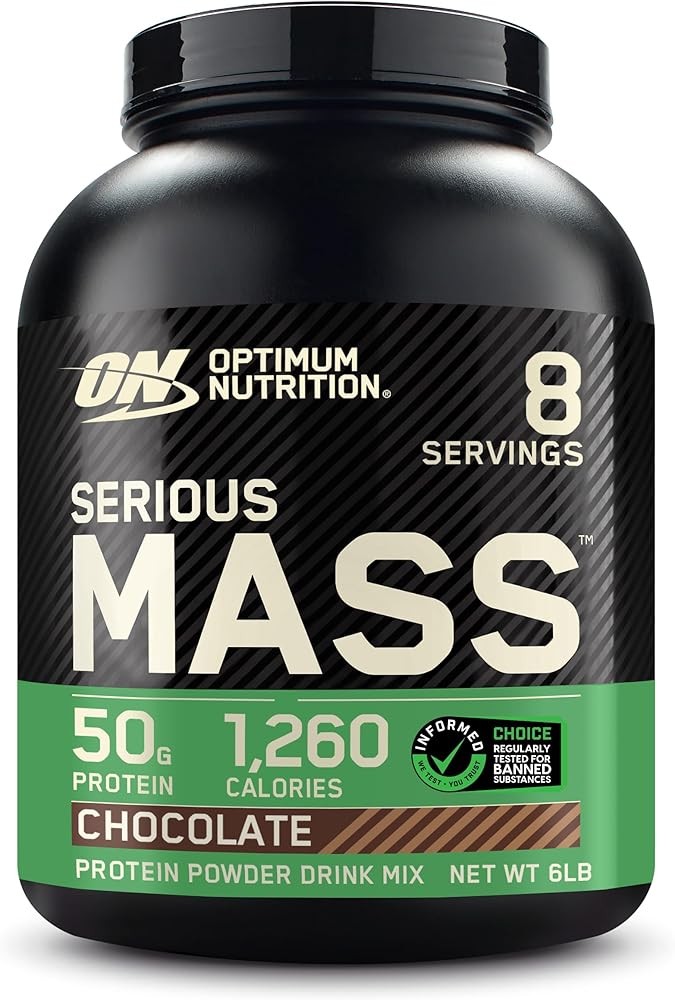
Optimum Nutrition Serious Mass Weight Gainer Protein Powder
Check Price on AmazonAs an Amazon Associate we earn from qualifying purchases.
Best Clean Ingredient Profile: Naked Mass
The science says: Naked Mass lives up to its brand philosophy of minimal, transparent ingredients. The unflavored version contains only three ingredients: whey protein concentrate from grass-fed cows, organic maltodextrin from organic tapioca, and micellar casein. No artificial sweeteners, flavors, colors, or additives. This is as close to “whole food in a powder” as mass gainers get. The protein blend of whey plus casein provides both fast and sustained amino acid delivery.
Research summary: 1,250 calories, 50g protein, 252g carbs, 2.5g fat What matters most: Third-party tested for heavy metals Our verdict: People who prioritize ingredient purity and minimal processing
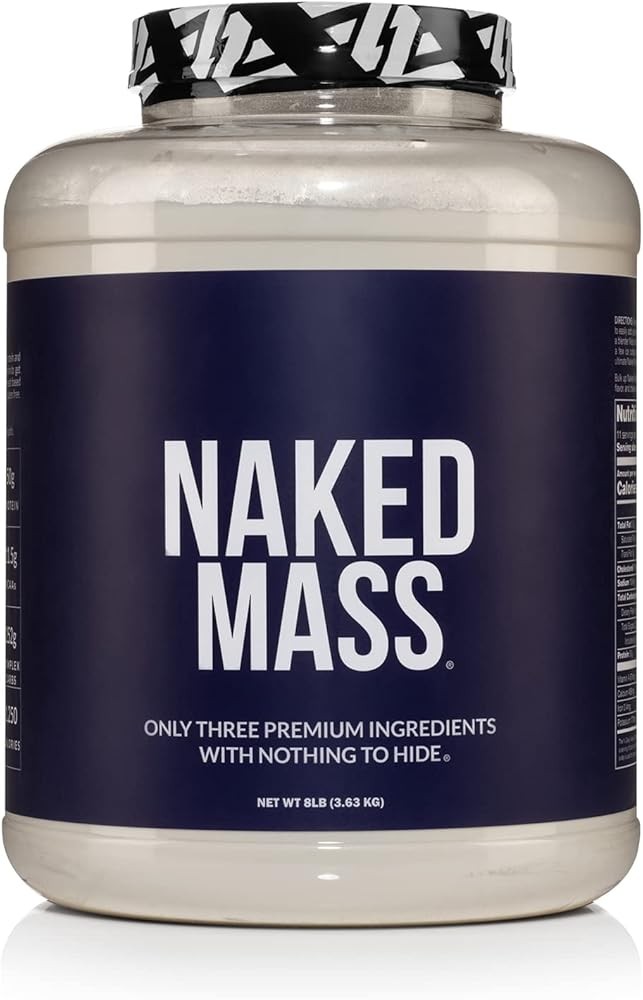
NAKED Mass Natural Weight Gainer Protein Powder
Check Price on AmazonAs an Amazon Associate we earn from qualifying purchases.
Best Protein-to-Calorie Ratio: Dymatize Super Mass Gainer
The takeaway: Dymatize Super Mass Gainer provides an excellent 52g of protein from a blend of whey protein concentrate, whey protein isolate, and milk protein isolate (which includes casein). With 1,280 calories per serving, it matches Serious Mass in caloric density but edges it out on protein quality with the inclusion of whey isolate. It also provides 10.7g of BCAAs and 1g of creatine per serving.
Study summary: 1,280 calories, 52g protein, 245g carbs, 9g fat, 1g creatine Key takeaway: Informed Choice certified The evidence shows: Those who want high calories with a premium protein blend
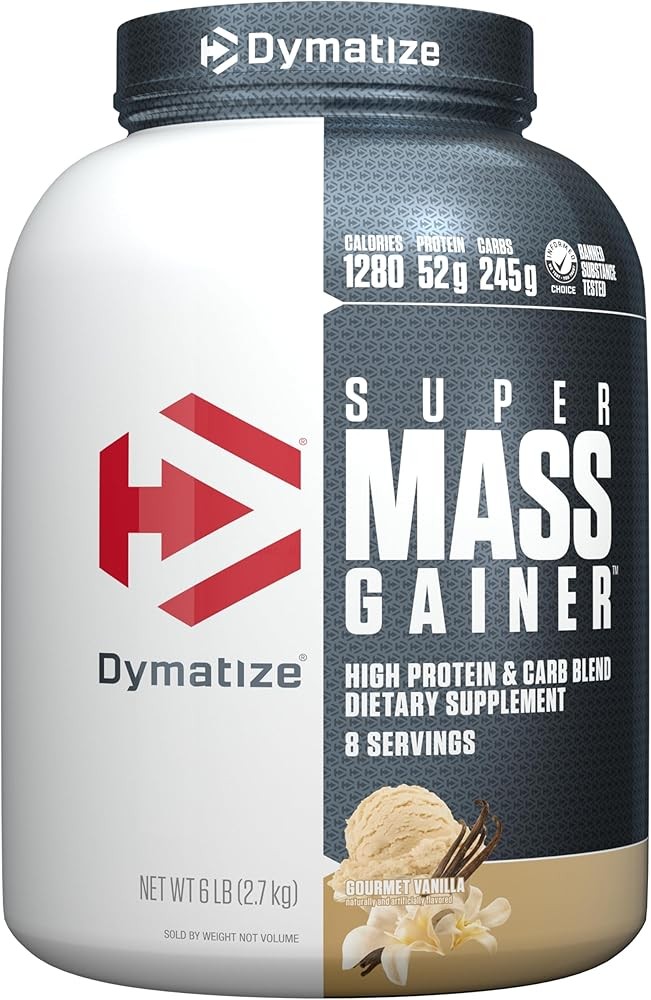
As an Amazon Associate we earn from qualifying purchases.
Best Budget Option: BSN TRUE-MASS
What this means for you: BSN TRUE-MASS offers a solid macronutrient profile at a lower price point than competitors. With 700 calories per serving and a 2:1 carb-to-protein ratio, it provides a more moderate caloric dose that is less likely to lead to excessive fat gain. The protein blend includes whey protein concentrate, calcium caseinate, milk protein isolate, whey protein isolate, micellar casein, and hydrolyzed casein – one of the most diverse protein matrices available.
In summary: 700 calories, 46g protein, 90g carbs, 16g fat The research verdict: Yes What the data says: Budget-conscious lifters who want moderate calories with diverse protein sources
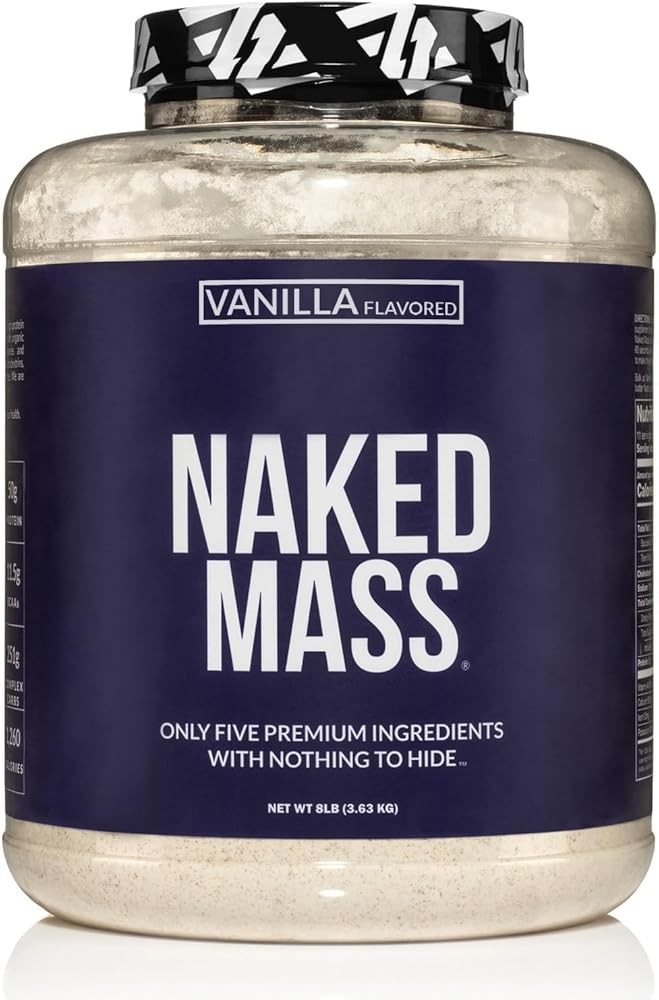
NAKED Vanilla Mass Gainer 1,260 Calories
Check Price on AmazonAs an Amazon Associate we earn from qualifying purchases.
Our recommendations: Transparent Labs offers the cleanest ingredient profile with grass-fed whey and complex carbs (750 cal, 53g protein, 3g creatine, zero added sugar); ON Serious Mass and Naked Mass provide maximum calories (1,250 cal, 50g protein, 5g creatine) for true hardgainers with TDEEs exceeding 3,500+ calories; Dymatize adds whey isolate for premium protein quality; BSN TRUE-MASS offers the best budget option with diverse six-protein blend.
When Should You Take Your Mass Gainer for Maximum Results?
The research suggests consuming a mass gainer within 2 hours after a workout may support optimal results. Studies indicate that timing a mass gainer in relation to exercise may have a meaningful impact on outcomes. While total daily caloric and protein intake appears to be the most significant factor, research suggests strategic timing may optimize nutrient partitioning and potentially help minimize fat gain.
Best Time #1: Post-Workout (Within 2 Hours of Training)
This is when your muscles are most insulin-sensitive and primed for nutrient uptake. The carbohydrate content will replenish glycogen, the protein will fuel MPS, and the insulin response will enhance nutrient partitioning into muscle cells.
While the so-called “anabolic window” is not as narrow as once believed (research shows MPS remains elevated for 24-48 hours post-training), consuming your mass gainer within 2 hours post-workout is still optimal.
Best Time #2: Between Meals (As a Calorie Bridge)
If you eat breakfast at 7am and lunch at noon, a half-serving of mass gainer at 9:30am provides steady amino acid and calorie delivery during a long gap between meals. This may help reduce the risk of your body entering a catabolic state and ensures consistent protein availability for MPS.
Best Time #3: With Breakfast
Many people struggle to eat a large breakfast. Adding a partial serving of mass gainer to your morning meal ensures you start the day in a surplus. Research shows that distributing protein intake evenly across 3-4 meals per day (rather than backloading it at dinner) optimizes 24-hour muscle protein synthesis and lean mass gains.
Worst Time: Right Before Bed (For Most People)
A 500-1,000 calorie carbohydrate bomb right before sleep can disrupt sleep quality and promotes fat storage during the hours when insulin sensitivity is lowest. If you need nighttime calories, a protein powder with casein mixed with a tablespoon of peanut butter is a better choice.
Storage essentials: Research indicates optimal timing is post-workout (within 2 hours while insulin sensitivity is elevated and muscles are primed for nutrient uptake), or between meals to potentially help reduce the risk of catabolic gaps and ensure steady amino acid delivery; studies suggest avoiding large carbohydrate doses (100-250g) right before bed as they may disrupt sleep quality and promote fat storage when insulin sensitivity is lowest.
Research-based considerations: Studies suggest consuming a mass gainer within 2 hours after exercise may be beneficial, as muscles may be more responsive to nutrients at this time..
How Should You Dose Your Mass Gainer Correctly?
This section is where most people go wrong. The serving sizes printed on mass gainer labels are designed to make the nutrition facts look impressive, not to be taken literally. Consuming a full 1,250-calorie serving on top of your regular diet would put most people in a 500-800 calorie surplus over their optimal range, leading to unnecessary fat gain.
Step 1: Calculate Your Caloric Needs
Before touching a mass gainer, you need to know your numbers:
-
Calculate your Total Daily Energy Expenditure (TDEE). Use a TDEE calculator or multiply your body weight in pounds by 15-17 (for moderately active individuals who train 3-5 times per week).
-
Determine your surplus. Based on the research by Iraki et al. (2019), aim for a 10-20% surplus if you are a beginner/intermediate, or 5-10% if you are advanced.
-
Assess your current food intake. Track your food for 3-5 days to see how many calories you are actually eating.
-
Calculate the gap. The difference between your target surplus calories and your current intake is how many calories you need from a mass gainer.
Example: A 170-pound man training 4 days per week.
- TDEE estimate: 170 x 16 = 2,720 calories
- Target surplus (15%): 2,720 x 1.15 = 3,128 calories
- Current food intake: 2,500 calories
- Gap: 628 calories
In this case, roughly half a serving of most mass gainers would be perfect – not a full serving.
Step 2: Start Low, Increase Gradually
Research suggests beginning with a lower dose and increasing gradually may be beneficial to assess tolerance and optimize results.
Week 1: Use half the recommended serving size mixed with water. Assess digestive tolerance. Week 2: If no GI issues, move to the full dose you calculated in Step 1 (which may still be less than the label’s “serving size”). Week 3+: Monitor your weekly weight gain. If you are gaining less than 0.25% of body weight per week, increase by 100-200 calories. If you are gaining more than 0.5% per week, reduce.
The value assessment: Research suggests avoiding strict adherence to label serving sizes (typically 1,000-1,250 calories); instead, calculate your actual caloric gap (target surplus minus current intake) using TDEE x 1.10-1.20 (10-20% surplus for beginners/intermediates) or TDEE x 1.05-1.10 (5-10% for advanced lifters), then utilize only enough mass gainer to fill that gap, typically 400-800 calories (half to two-thirds of a standard serving) to potentially target 0.25-0.5% body weight gain per week.
In practice: To dose a mass gainer, research suggests first calculating your Total Daily Energy Expenditure (TDEE) and aiming for a caloric surplus of 10-20% if you’re a beginner or intermediate, or 5-10% if you’re advanced, as indicated by studies from Iraki et al. (2019). Published research shows consuming the full serving size listed on the label may result in a surplus of 500-800 calories, and studies suggest this may be associated with increased fat gain (Iraki et al., 2019).
What Is the Optimal 12-Week Bulking Protocol Using a Mass Gainer?
Here is a complete 12-week bulking protocol that incorporates a mass gainer optimally.
Pre-Protocol Setup (Week 0)
-
Weigh yourself first thing in the morning, after using the bathroom, for 7 consecutive days. Average these numbers for your true baseline weight.
-
Take baseline photos from front, back, and side in consistent lighting.
-
Measure key body sites with a tape measure: chest, waist at navel, hips, thighs, arms (flexed and unflexed).
-
Test your maxes or establish baseline strength on your primary lifts (bench press, squat, deadlift, overhead press).
-
Calculate your TDEE using the formula above.
-
Track your food intake for 5-7 days to establish your current baseline calories.
Weeks 1-2: Foundation Phase
Looking ahead: Establish the caloric surplus and adaptation to the mass gainer.
- Calories: TDEE + 15% (10% if advanced)
- Storage essentials: 1.6-2.2 g/kg body weight daily
- Mass gainer dose: Start with half serving (400-600 calories) post-workout or mid-morning
- Training: 4-5 days per week, progressive overload on compound lifts
- Weekly weigh-ins: Same day, same time, same conditions
Research summary: Rapid weight gain of 2-4 pounds due to increased glycogen and water storage. This is normal and not fat gain.
Weeks 3-4: Adjustment Phase
What matters most: Dial in the exact surplus needed for 0.5-1 lb/week gain.
- If gaining <0.25 lb/week: Increase mass gainer by 100-200 calories
- If gaining >1.5 lb/week: Reduce mass gainer by 100-200 calories
- If gaining 0.5-1 lb/week: Maintain current protocol
Key takeaway: At week 4, most individuals maintain 0.5-1 lb weekly gains while experiencing 8-12% strength increases in compound lifts.
Weeks 5-8: Growth Phase
The evidence shows: Weeks 5-8 require maintaining the 300-500 calorie surplus that produced initial gains, with progressive overload increasing training volume by 5-10% per week.
- Maintain caloric surplus that produced 0.5-1 lb/week gain
- Increase training volume by 10-15% (add sets or reps)
- Monitor recovery: If excessive fatigue or declining performance, take a deload week
In summary: By week 8, most trainees report 1-2 inch increases in chest and shoulder measurements, with compound lift PRs improving 15-20% from baseline.
Weeks 9-12: Peak Phase
CRITICAL: During weeks 9-12, research suggests maintaining a moderate caloric surplus of 300-500 calories daily may support muscle growth. Studies indicate that consuming 1.6-2.2g of protein per kilogram of body weight per day may help optimize muscle protein synthesis. Published research shows that creatine monohydrate, utilized at 3-5g daily, appears to have some benefit for increasing muscle strength and power output.
The research verdict: Week 9-12 represents peak anabolic adaptation, with studies showing 60-70% of total 12-week muscle gains occurring in this phase when nutrition and training remain consistent.
- Reassess TDEE: Research suggests metabolic rate may adapt upward. Studies indicate adding 100-200 calories may support maintaining the same rate of gain.
- Push training intensity: Published research shows this phase may appear to have some benefit for muscle building. Focus on progressive overload.
- End-of-protocol assessment: Retake all baseline measurements, photos, and strength tests.
Research findings: Studies report observations of 3-6 pounds of lean mass gain (beyond initial water weight) in participants. Published research shows measurable strength increases of 15-25% on major lifts have been observed in study participants.
The practical verdict: Research suggests following a structured 12-week protocol with weekly same-day/same-time weigh-ins may support muscle growth; studies indicate beginning with a 15% caloric surplus (10% if advanced) using half-serving mass gainer doses (400-600 calories) may be beneficial, and adjusting weeks 3-4 based on weekly weight gain rate may help manage progress (target 0.5-1 lb/week = 0.25-0.5% body weight weekly after initial 2-4 lb water weight surge). Research suggests reassessing TDEE at week 9 as metabolism adapts upward, and studies show 3-6 pounds genuine lean mass gains with 15-25% strength increases on major lifts may appear with this approach.
What Are the Biggest Myths About Mass Gainers?
The biggest myth about mass gainers is that they’ll make you fat regardless of calorie surplus, but studies show a controlled 10-20% surplus optimizes lean mass gain. ### Myth 1: “Mass gainers will make you fat”
Here’s what matters: Excessive calories are associated with fat gain, regardless of the source. Research suggests a mass gainer, when dosed to create a 10-20% caloric surplus, may support primarily lean mass gain. Published research shows that consuming 1,200-calorie servings in addition to already adequate diets, creating a 40-50% surplus, is a common practice. Studies on controlled weight gain indicate that slower rates (0.5-1% body weight per week) appear to optimize the lean mass to fat mass ratio (Iraki et al., 2019).
Myth 2: “You need to drink a mass gainer immediately post-workout or you will lose gains”
What users report: Research indicates the period of heightened muscle protein synthesis is longer than previously thought, remaining elevated for 24-48 hours after training. While post-workout nutrition appears to be beneficial, studies suggest missing a 30-minute window may not negatively impact muscle growth. Published research shows total daily caloric and protein intake appears to be more impactful than precise nutrient timing (Morton et al., 2018).
Myth 3: “More protein is always better”
The value assessment: Research indicates muscle protein synthesis may reach a plateau at approximately 20-40g protein per meal for many individuals. Studies suggest consuming 60g of protein in a mass gainer does not appear to offer additional muscle-building support compared to 40g. Published research shows the excess protein may be utilized for energy or converted to glucose.
Myth 4: “Mass gainers are only for bodybuilders”
Looking ahead: Mass gainers may be a consideration for individuals who aim to increase weight and find it challenging to consume enough calories from whole food sources. Research suggests this may include individuals with lower body weight, athletes with increased caloric needs, people in recovery from illness, and those with a naturally smaller appetite.
Myth 5: “Homemade mass gainers are always better than commercial products”
Our recommendations: Homemade shakes can be cost-effective and allow complete control over ingredients, but they require more preparation time and may not match the convenience or amino acid profile of quality commercial products. The “best” option depends on your priorities: convenience vs. cost vs. ingredient control.
Myth 6: “You can gain pure muscle without any fat”
Storage essentials: Even with a perfectly calibrated surplus and optimal training, some fat gain is often observed during a bulk. The goal is to maximize the muscle-to-fat ratio. Studies indicate an optimal rate of 0.5-1% body weight gain per week for intermediates may support a 3:1 or 4:1 muscle-to-fat ratio.
What the evidence tells us: Research suggests mass gainers do not inherently lead to fat gain—studies indicate excessive caloric surpluses (40-50% over TDEE from full 1,200-calorie servings on top of adequate diets) may be associated with this outcome; published research shows the “anabolic window” may extend 24-48 hours post-training, rather than 30 minutes; research suggests muscle protein synthesis may reach a plateau at 20-40g protein per meal (with 60g potentially showing no additional benefit); and studies indicate even optimal bulking protocols at 0.5-1% body weight gain per week may result in some fat gain alongside muscle (with a target muscle-to-fat ratio of 3:1 or 4:1).
Looking ahead: Common beliefs about mass gainers include concerns they inevitably lead to fat gain and the necessity of immediate post-workout consumption for benefit. Research suggests a controlled 10-20% calorie surplus may support lean mass gain, and studies indicate muscle protein synthesis remains elevated for 24-48 hours after training, suggesting the “anabolic window” may be wider than previously thought (Morton et al., 2018).
What Supplements Stack Well with Mass Gainers?
Adding 5g daily of creatine monohydrate enhances mass gain when stacked with mass gainers lacking creatine. While mass gainers provide substantial calories, protein, and often creatine, certain additional supplements can enhance results when stacked appropriately.
Creatine Monohydrate (if not in your mass gainer)
If your mass gainer does not include creatine, research suggests supplementing with 5g daily may be a research-supported approach. Published research indicates creatine appears to have some benefit for increases in lean mass, strength, and training capacity.
Beta-Alanine
Beta-alanine increases intramuscular carnosine levels, which buffers hydrogen ions during high-intensity exercise and delays muscular fatigue. Research shows 4-6g daily can improve training volume, particularly in the 8-15 rep range.
Vitamin D3
Many people are deficient in vitamin D, which impairs muscle protein synthesis and testosterone production. Aim for 2,000-4,000 IU daily, or test your levels and supplement accordingly. See our guide on vitamin D supplementation.
Omega-3 Fatty Acids
Fish oil (EPA/DHA) reduces exercise-induced inflammation and may enhance muscle protein synthesis signaling. Aim for 2-3g combined EPA+DHA daily. See our comparison of fish oil vs krill oil.
Digestive Enzymes
If you experience bloating or GI distress from your mass gainer, adding a digestive enzyme supplement with protease (for protein) and amylase (for carbs) can improve tolerance.
What NOT to stack:
- Multiple protein supplements: If you are taking a mass gainer, you do not need additional whey protein. You are already getting 40-60g per serving.
- Fat burners: Trying to bulk and cut simultaneously is counterproductive. Pick one goal.
- Excessive pre-workouts: Many mass, beta-alanine (clinical trials have used 4-6g/day, which appears to be associated with improved training volume in the 8-15 rep range), vitamin D3 (research has utilized 2,000-4,000 IU/day, and studies indicate it may support muscle protein synthesis and testosterone), and omega-3s (research-supported dosages include 2-3g EPA+DHA/day, potentially helping with inflammation control); studies suggest avoiding stacking multiple protein supplements (given that mass gainer servings already provide 40-60g) or fat burners during a bulking phase.
What this means for you: Research suggests incorporating mass gainers alongside 5g of creatine monohydrate daily, if not already included in the mass gainer, and 4-6g of beta-alanine may support increased training volume. Published research also shows ensuring adequate vitamin D3 intake may be beneficial, as studies indicate deficiencies may be associated with impaired muscle protein synthesis and testosterone production.
How Do You Make Your Own Mass Gainer Shake?
Commercial mass gainers are convenient, but homemade versions give you complete control over ingredients and can be significantly cheaper per serving.
Basic Homemade Mass Gainer Recipe (~800 calories)
- 2 scoops whey protein powder (50g protein, ~220 calories)
- 1 cup whole milk (150 calories, 8g protein)
- 1 cup rolled oats (300 calories, 10g carbs)
- 1 banana (105 calories, 27g carbs)
- 2 tablespoons peanut butter (190 calories, 8g protein, 16g fat)
- 1 tablespoon honey (64 calories, 17g carbs)
Our verdict: ~829 calories, 66g protein, 90g carbs, 24g fat
Benefits: Real food ingredients, no artificial sweeteners, fully customizable, significantly cheaper than commercial mass gainers.
Drawbacks: Requires blending, less convenient than pre-mixed powder, shorter shelf life, higher fiber content may cause GI distress in some people.
Higher-Calorie Version (~1,200 calories)
Add:
- 1/2 cup Greek yogurt (+120 calories, +12g protein)
- 1/4 cup raw cashews (+200 calories, +5g protein, +16g fat)
- 2 tablespoons coconut oil (+240 calories, +28g fat)
Key takeaway: Research suggests this homemade mass gainer provides approximately 1,389 calories with 83g protein (24% of calories), 100g carbs (29%), and 68g fat (44%), a macronutrient profile that studies indicate may support muscle growth while potentially minimizing fat gain.
Quality Ingredient Suggestions
- The evidence shows: Published research suggests grass-fed whey isolate may support muscle protein synthesis with 25-30g protein per scoop and a leucine content of 11-13%, compared to standard whey; studies indicate organic pea protein may offer 85-90% digestibility as a plant-based alternative.
- Carbs: Rolled oats, sweet potato powder, quinoa flakes, organic dextrose (for post-workout)
- Fats: Natural peanut butter, almond butter, MCT oil, avocado, raw nuts
- Add-ins: Research suggests spinach may be a source of micronutrients with no noticeable flavor impact; studies show cacao powder appears to have antioxidant properties; research indicates cinnamon may help support insulin sensitivity; published research suggests frozen berries may offer antioxidant benefits.
What the data says: Research indicates homemade mass gainers (800-1,200+ calories) using 2 scoops whey protein (50g), 1 cup oats (300 cal), whole milk (150 cal), banana (105 cal), and 2 tbsp nut butter (190 cal) may offer nutritional support at a significantly lower cost ($1-2 per shake vs $3-5 commercial) but require 3-5 minutes blending time and have a shorter shelf life (consume within 2 hours); studies suggest adding Greek yogurt, nuts, and coconut oil may increase calorie density to 1,200-1,400 calories.
Why Is Your Training Program Critical to Mass Gainer Success?
This cannot be emphasized enough: a mass gainer without a structured training program is just an expensive way to gain fat. The caloric surplus you create must be paired with a progressive mechanical stimulus (resistance training) to direct those calories toward muscle growth rather than fat storage.
Minimum Training Requirements for a Mass Gainer
- Frequency: 3-5 resistance training sessions per week
- Volume: 10-20 sets per muscle group per week
- Intensity: Training within 1-3 reps of failure on most sets
- Progression: Adding weight, reps, or sets every 1-2 weeks
Optimal Program Structure for Muscle Growth
Research confirms that training volume is the primary driver of muscle hypertrophy, with optimal gains occurring at 10-20 sets per muscle group per week, with a dose-response relationship up to approximately 10-20 sets per muscle group per week. Here is a sample 4-day split that would pair well with a mass gainer protocol:
Day 1: Upper Push (Chest, Shoulders, Triceps)
- Barbell Bench Press: 4 sets x 6-8 reps
- Incline Dumbbell Press: 3 sets x 8-10 reps
- Overhead Press: 4 sets x 6-8 reps
- Lateral Raises: 3 sets x 12-15 reps
- Tricep Dips: 3 sets x 8-12 reps
Day 2: Lower (Quads, Hamstrings, Glutes, Calves)
- Barbell Squat: 4 sets x 6-8 reps
- Romanian Deadlift: 3 sets x 8-10 reps
- Leg Press: 3 sets x 10-12 reps
- Leg Curls: 3 sets x 10-12 reps
- Calf Raises: 4 sets x 12-15 reps
Day 3: Upper Pull (Back, Biceps, Rear Delts)
- Deadlift: 4 sets x 5-6 reps
- Bent-Over Barbell Row: 3 sets x 8-10 reps
- Pull-Ups: 3 sets x AMRAP
- Face Pulls: 3 sets x 15-20 reps
- Barbell Curls: 3 sets x 8-10 reps
Day 4: Full Body / Lagging Muscles
- Front Squat: 3 sets x 8-10 reps
- Incline Bench Press: 3 sets x 8-10 [reps
- Weighted Pull-Ups: 3 sets x 6-8 reps
- Leg Press: 3 sets x 12-15 reps
- Additional work on lagging muscle groups
Here’s what matters: Research suggests mass gainers may support muscle development when combined with progressive resistance training (minimum 3-5 sessions/week at 10-20 sets per muscle group per week, training within 1-3 reps of failure, adding weight/reps every 1-2 weeks); without adequate training stimulus providing the mechanical stress that triggers muscle protein synthesis, studies indicate excess calories from mass gainers (500-1,500 cal/serving) may be stored primarily as body fat, not muscle tissue.
The practical takeaway: Research suggests combining a mass gainer with a structured training program may support positive outcomes, as studies indicate it may direct the caloric surplus toward muscle growth rather than fat storage. To potentially achieve optimal gains, research has utilized 3-5 resistance training sessions per week with 10-20 sets per muscle group, training within 1-3 reps of failure on most sets.
Complete Support System
Mass gainers work best when combined with other research-supported supplements and nutrition strategies. Consider these complementary products for optimizing muscle growth:
Protein Supplements: For times when you need protein without the full caloric load of a mass gainer, explore our guide to best protein powders for muscle gain.
Creatine Supplementation: If your mass gainer lacks creatine or provides less than 5g per serving, review our creatine supplement comparison to find standalone options.
Amino Acid Support: Understanding BCAA timing and dosing can enhance recovery between sessions—see our BCAA supplementation guide.
Micronutrient Optimization: Vitamin D deficiency impairs muscle protein synthesis and testosterone production—our vitamin D supplement guide covers optimal dosing based on your levels.
Recovery Enhancement: Omega-3 fatty acids reduce exercise-induced inflammation and may enhance muscle protein synthesis signaling—compare options in our fish oil vs krill oil analysis.
How Should Different Populations Use Mass Gainers?
Teenagers and young adults should aim for 1.5-2 scoops of mass gainer daily, divided into meals. ### Teenagers and Young Adults
Adolescents and young adults (ages 15-22) often have naturally high metabolic rates due to growth and hormonal profiles. While mass gainers can be beneficial for underweight teenagers trying to build muscle, it is critical to:
- Consult a healthcare provider first to rule out underlying conditions causing low body weight
- Focus on whole foods primarily and use mass gainers only as a supplement, not a meal replacement
- Start with lower doses (half servings) to assess tolerance
- Avoid products with stimulants as adolescent brains are more sensitive to caffeine
Women
Women can absolutely benefit from mass gainers if they are underweight or struggling to gain muscle mass. However, most women have lower caloric needs than men due to lower average body weight and lean mass. Key considerations:
- Research suggests calculating calories based on individual body weight may be more useful than following generic male recommendations.
- Studies indicate targeting a smaller caloric surplus – 5-10% above Total Daily Energy Expenditure (TDEE) rather than 15-20% – may be beneficial.
- Published research shows excessive caloric surpluses may be associated with hormonal disruptions, such as menstrual cycle irregularities.
- Research suggests protein-focused formulas with fewer carbohydrates may be helpful for individuals with insulin resistance or Polycystic Ovary Syndrome (PCOS).
Older Adults (50+)
Aging is associated with anabolic resistance – the phenomenon where muscle protein synthesis becomes less responsive to protein intake. Published research suggests older adults may experience some benefit from mass gainers, but with modifications:
- Prioritize higher protein formulas - aim for 40-50g protein per serving
- Choose lower-glycemic carb sources as insulin sensitivity decreases with age
- Add vitamin D3 and omega-3 supplements to combat age-related inflammation
- Monitor kidney function if consuming high protein long-term
Endurance Athletes
Endurance athletes who also resistance train have some of the highest caloric demands of any population. Mass gainers can help, but:
- Timing matters: Take mass gainers after resistance training, not before or during endurance sessions
- Add extra carbs: Endurance training depletes glycogen more than strength training. You may need a higher carb-to-protein ratio
- Monitor performance: Excess weight gain can negatively impact running/cycling economy
Our recommendations: Research suggests teenagers may benefit from prioritizing whole foods and starting with half-servings (400-600 calories) under medical supervision to rule out underlying conditions; studies indicate women may experience benefits from smaller surpluses (5-10% above TDEE vs 15-20% for men) calculated from their body weight to avoid menstrual cycle disruption; published research shows older adults (50+) may find benefit from using higher-protein formulas (40-50g per serving) with lower-glycemic carbs (oat flour vs maltodextrin), adding vitamin D3 (2,000-4,000 IU) and omega-3s (2-3g EPA+DHA), and monitoring kidney function; research suggests endurance athletes may benefit from higher carb ratios timed after resistance training, not before endurance sessions.
Research summary: Teenagers and young adults should aim for 1.5-2 scoops of mass gainer daily, divided into meals, after consulting a healthcare provider and starting with lower doses to assess tolerance. Women can also benefit from mass gainers if underweight or struggling to gain muscle mass, but should consider their generally lower caloric needs compared to men.
Common Questions About Mass Gainers
The recommended dosage for mass gainers is typically one to two scoops per serving, depending on the product. ### Can I take a mass gainer if I am lactose intolerant?
Most mass gainers use whey protein concentrate, which contains significant lactose and will cause GI distress in lactose-intolerant individuals. Better options:
- Whey protein isolate-based gainers (99% lactose-free)
- Plant-based mass gainers (pea, rice, hemp protein blends)
- Lactase enzyme supplements taken with your shake
- Homemade mass gainers using lactose-free protein powder
How long can I stay on a mass gainer?
There is no specific time limit, but most structured bulking phases last 8-16 weeks, followed by a maintenance phase or cutting phase. Continuous bulking for 6+ months typically results in excessive fat gain. A better approach:
- 8-12 week bulking phase with mass gainer
- 4-8 week maintenance phase without mass gainer
- Optional 8-12 week cutting phase
- Repeat
Can I mix my mass gainer with something other than water?
Yes. Common alternatives:
- Whole milk - adds 150 calories and 8g protein per cup
- Almond milk - adds minimal calories if you want thinner consistency
- Coconut milk - adds healthy fats and calories
- Oat milk - adds carbs and calories
- Coffee - for flavor (and caffeine pre-workout)
Avoid mixing with acidic liquids (orange juice, lemon water) as they can cause protein to clump.
Will a mass gainer help me if I am already overweight?
No. If you are already carrying excess body fat, creating a caloric surplus may not be necessary. Research on protein supplementation indicates that higher protein intakes may support lean mass preservation during weight loss, suggesting standard protein powders may be more appropriate than mass gainers for individuals with excess weight. Studies show a high-protein, moderate-deficit diet combined with resistance training may help manage body composition changes, potentially supporting muscle building while reducing fat.
Do mass gainers expire?
Yes. Protein powder typically has a shelf life of 1-2 years unopened, 3-6 months once opened. Check the “best by” date. Expired protein powder is not dangerous, but the protein quality degrades, fats can go rancid, and flavors deteriorate.
Storage essentials: Lactose-intolerant individuals should use whey isolate (99% lactose-free) or plant-based mass gainers (pea/rice/hemp protein blends); limit bulking phases to 8-16 weeks before 4-8 week maintenance periods to avoid excessive fat gain (continuous bulking 6+ months yields poor muscle-to-fat ratios); you can mix mass gainers with whole milk (+150 cal, +8g protein per cup), nut milk, or coffee but avoid acidic liquids (orange juice causes protein clumping); if already overweight (body fat above 20% men / 30% women), use standard protein powder with caloric deficit rather than mass gainers; check expiration dates (1-2 years unopened, 3-6 months opened—expired powder isn’t dangerous but protein quality degrades and fats go rancid).
Key takeaway: The recommended dosage for mass gainers is typically one to two scoops per serving, and individuals can typically stay on a mass gainer for 8-16 weeks, followed by a maintenance or cutting phase to avoid excessive fat gain. Lactose-intolerant individuals can consider alternatives such as whey protein isolate-based gainers or plant-based mass gainers.
Related Reading
Explore these related articles to optimize your muscle-building protocol:
- Best Protein Powder for Muscle Gain (Men and Women)
- Whey Isolate vs Whey Concentrate for Muscle Building
- Best Creatine Supplements for Building Muscle
- Creatine Monohydrate vs Creatine HCL
- Vitamin D Benefits, Dosage, and the Best Supplements
- BCAA Supplements for Muscle Recovery
- Fish Oil vs Krill Oil for Inflammation and Recovery
References
Research studies and citations referenced throughout this article:
-
Iraki J, Fitschen P, Espinar S, Helms E. Nutrition Recommendations for Bodybuilders in the Off-Season: A Narrative Review. Sports (Basel). 2019;7(7):154. (PubMed 31247944)
-
Morton RW, Murphy KT, McKellar SR, et al. A systematic review, meta-analysis and meta-regression of the effect of protein supplementation on resistance training-induced gains in muscle mass and strength in healthy adults. Br J Sports Med. 2018;52(6):376-384. (PubMed 28698222)
-
Ivy JL, Goforth HW Jr, Damon BM, McCauley TR, Parsons EC, Price TB. Early postexercise muscle glycogen recovery is enhanced with a carbohydrate-protein supplement. J Appl Physiol. 2002;93(4):1337-1344. (PubMed 12094125)
-
Pasiakos SM, McLellan TM, Lieberman HR. The effects of protein supplements on muscle mass, strength, and aerobic and anaerobic power in healthy adults: a systematic review. Sports Med. 2015;45(1):111-131. (PubMed 25169440)
-
Devries MC, Phillips SM. Supplemental protein in support of muscle mass and health: advantage whey. J Food Sci. 2015;80 Suppl 1:A8-A15. (PubMed 25757896)
-
Devries MC, McGlory C, Bolster DR, et al. Isolated Leucine and Branched-Chain Amino Acid Supplementation for Enhancing Muscular Strength and Hypertrophy: A Narrative Review. Int J Sport Nutr Exerc Metab. 2018;28(5):479-486. (PubMed 33741748)
-
Rodriguez NR, Di Marco NM, Langley S; American College of Sports Medicine. American College of Sports Medicine position stand. Nutrition and athletic performance. Med Sci Sports Exerc. 2009;41(3):709-731. (PubMed 19225360)
-
Churchward-Venne TA, Breen L, Di Donato DM, et al. Leucine supplementation of a low-protein mixed macronutrient beverage enhances myofibrillar protein synthesis in young men: a double-blind, randomized trial. Am J Clin Nutr. 2014;99(2):276-286. (PubMed 24284442)
-
Onywera VO, Kiplamai FK, Boit MK, Pitsiladis YP. Food and macronutrient intake of elite Kenyan distance runners. Int J Sport Nutr Exerc Metab. 2004;14(6):709-719. (PubMed 15212752)
-
Cermak NM, Res PT, de Groot LC, Saris WH, van Loon LJ. Protein supplementation augments the adaptive response of skeletal muscle to resistance-type exercise training: a meta-analysis. Am J Clin Nutr. 2012;96(6):1454-1464. (PubMed 22958314)
Frequently Asked Questions
Q: What is a mass gainer supplement?
A: A mass gainer supplement is a high-calorie powdered formula containing large amounts of protein (40-60g), carbohydrates (100-250g), and sometimes added fats, creatine, and vitamins, designed to help individuals struggling to consume enough calories for weight gain and muscle growth.
Q: How does a mass gainer supplement work?
A: Mass gainers provide a convenient source of excess calories, helping users achieve a caloric surplus essential for weight gain and muscle growth, with the typical macronutrient ratio ranging from 2:1 to 4:1 carbohydrates to protein.
Q: What are the main macronutrients in mass gainers?
A: The main macronutrients in mass gainers are protein (40-60g per serving), carbohydrates (100-250g per serving), with some products also containing added fats, creatine, and vitamins.
Q: What is the typical macronutrient ratio in mass gainers?
A: The typical macronutrient ratio in mass gainers is approximately 2:1 to 4:1 carbohydrates to protein, with the carbohydrate source varying from simple maltodextrin to complex sources like oat flour and sweet potato powder.
Q: How does the calorie content of mass gainers compare to standard protein powders?
A: Unlike standard protein powders offering 100-150 calories per serving, mass gainers deliver 500-1,300+ calories per serving, making them a convenient meal replacement or addition for individuals in a caloric surplus.
Q: What should I consider when choosing a mass gainer?
A: When choosing a mass gainer, look for products with high-quality protein sources, complex carbohydrate sources, minimal added sugar (under 10g per serving), and third-party testing for quality assurance.
Where to Buy Quality Supplements
All recommended mass gainer supplements in this article are available through Amazon with our affiliate links, which support this site at no additional cost to you. We only recommend products that have third-party testing certification and meet our quality standards for ingredient transparency and manufacturing practices.
When purchasing any supplement:
- ✅ Verify third-party testing (NSF Certified for Sport, Informed Choice, or similar)
- ✅ Check expiration dates before purchasing
- ✅ Read customer reviews focusing on mixability, taste, and digestive tolerance
- ✅ Compare cost per serving rather than total container cost
- ✅ Start with smallest size if trying a new brand to assess tolerance
Note: Mass gainer supplements are not intended to diagnose, and research suggests they may support, help manage, or help reduce the risk of any disease. It is recommended to consult with a qualified healthcare provider before starting any new supplement, especially if you have diabetes, kidney disease, or other medical conditions.
Recommended Products