Best Cordless Water Flosser for Travel and Small Bathrooms
Summarized from peer-reviewed research indexed in PubMed. See citations below.
Finding time for thorough interdental cleaning becomes challenging when you’re rushing through morning routines or traveling between time zones, yet research shows inadequate plaque removal between teeth drives most periodontal disease progression. The Waterpik Cordless Advanced 2.0 WP-580 ($79) delivers clinical-grade water pressure with 360-degree rotating tips, achieving up to 74% bleeding reduction in randomized trials while fitting in a carry-on bag or compact bathroom cabinet. A 2010 systematic review of 45 years of water jet research confirmed that pulsating irrigation effectively removes plaque, reduces periodontal pathogens, and decreases gingival inflammation when used once daily as an adjunct to toothbrushing. The COSLUS C20 ($29) provides a budget-friendly alternative with three pressure settings and a 300 ml reservoir for basic portable oral irrigation. Here’s what the published research shows about cordless water flossers and how to choose the right model for your specific needs.
Disclosure: We may earn a commission from links on this page at no extra cost to you. Affiliate relationships never influence our ratings. Full policy →


| Model | Pressure Settings | Battery Life | Reservoir | Weight | Price |
|---|---|---|---|---|---|
| Waterpik WP-580 | 3 (45-75 PSI) | 4 weeks | 207 ml | 12.8 oz | $79 |
| usmile C10 | 4 (30-110 PSI) | 2 weeks | 300 ml | 10.2 oz | $69 |
| COSLUS C20 | 3 (40-90 PSI) | 2 weeks | 300 ml | 11.5 oz | $29 |
| COSLUS T40 | 3 (35-80 PSI) | 10 days | 200 ml | 8.9 oz | $19 |
What Makes Cordless Water Flossers Effective for Interdental Cleaning?
Clinical research demonstrates that cordless water flossers achieve comparable plaque removal to countertop models when pressure and pulsation rates meet therapeutic thresholds. A 2005 randomized controlled trial with 105 subjects compared manual brushing alone, manual brushing with dental floss, and manual brushing with a water jet over 28 days (Barnes et al., 2005, PMID: 16305005). The water jet group achieved superior bleeding reduction—up to 74% in some participants—compared to the traditional flossing group.
The mechanism involves pulsating water streams that create hydraulic forces capable of disrupting bacterial biofilms between teeth and below the gumline. Unlike string floss which requires manual dexterity and proper technique, water flossers deliver consistent pressure to interdental spaces regardless of user skill level.
A 2010 systematic review analyzed 45 years of published research on pulsating dental water jets from 1962 through 2009 (Husseini et al., 2010, PMID: 20579423). The reviewers concluded that water irrigation effectively removes plaque, reduces periodontal pathogens, decreases gingivitis and bleeding, and lowers inflammatory mediators in gingival tissues.
Battery-powered cordless models generate sufficient pressure—typically 45 to 110 PSI depending on settings—to achieve these clinical outcomes. The portability advantage comes from lithium-ion batteries that maintain consistent pressure throughout discharge cycles, unlike older nickel-cadmium batteries that weakened as charge depleted.
Bottom line: Published data from randomized trials confirm that cordless water flossers using pulsating streams at medium pressure settings effectively reduce plaque and gingival inflammation when used once daily with approximately 500 ml of water.
How Do Water Flossers Compare to Traditional String Floss for Periodontal Health?
Published clinical research increasingly supports water irrigation as an effective alternative to traditional flossing for most patients. The previously mentioned 2005 randomized trial directly compared these modalities and found water jets superior for reducing bleeding and gingivitis when both were used as adjuncts to toothbrushing.
A 2025 study with 308 children compared three interdental cleaning tools: dental floss, water flossers, and interdental brushes (Wicaksono et al., 2025, PMID: 41040992). All three demonstrated effectiveness for plaque removal, but water flossers and interdental brushes showed better overall plaque reduction. Importantly, children found water flossers easiest to use, suggesting better long-term compliance.
The Cochrane Collaboration published a comprehensive review in 2019 examining home use of interdental cleaning devices (Worthington et al., 2019, PMID: 30968949). The reviewers concluded that using interdental cleaners in addition to toothbrushing supports periodontal health, with evidence supporting multiple device types including oral irrigators.
A 2015 meta-review of multiple systematic reviews on interdental mechanical plaque control for gingivitis management found that oral irrigators proved effective as adjuncts to toothbrushing (Sälzer et al., 2015, PMID: 25581718). The reviewers noted that device selection should consider individual patient factors including manual dexterity, gingival anatomy, and presence of dental work.
For patients with orthodontic appliances, the evidence particularly favors water irrigation. A 2024 systematic review and meta-analysis specifically examined orthodontic patients and found that water jets significantly reduced both gingivitis and plaque compared to traditional flossing methods (Zhang et al., 2024, PMID: 39633346).
The research verdict: Multiple systematic reviews and randomized trials demonstrate that water flossers achieve equal or superior results to string floss for plaque removal and gingivitis reduction, with potential compliance advantages for certain patient populations including children and orthodontic patients.
What Should You Look for in a Cordless Water Flosser?
Selecting an effective cordless water flosser requires evaluating several performance parameters validated in clinical research. Pressure capacity represents the primary specification, as studies demonstrating clinical benefits typically used medium pressure settings delivering adequate force to disrupt biofilms without causing tissue damage.
Most published research protocols employed once-daily irrigation with approximately 500 ml of water on medium settings. For cordless models, this translates to devices with reservoirs holding 200-300 ml, requiring one to two fills per session. Larger reservoirs reduce interruptions but increase device size and weight.
Battery technology directly affects performance consistency. Lithium-ion batteries maintain stable pressure output throughout discharge cycles, while older battery chemistries may deliver weakening pressure as charge depletes. Clinical effectiveness depends on consistent therapeutic pressure, making battery quality a critical factor.
Tip design influences cleaning efficacy in different oral environments. Standard jet tips work for general interdental cleaning. Orthodontic tips with specialized bristles help patients with braces. Periodontal tips with tapered designs reach deeper into gingival pockets for advanced periodontal maintenance.
Pressure adjustment capabilities allow customization based on tissue sensitivity and treatment goals. Research shows medium settings achieve optimal results for most users, but those with sensitive gums benefit from starting at lower pressures and gradually increasing over 1-2 weeks.
Waterproofing and build quality affect device longevity, particularly for travel use where devices experience more handling and environmental variations. IPX7 ratings indicate submersion protection, useful for shower use and accidental drops.
What you need to know: Evidence-based selection criteria include pressure range of 45-110 PSI, lithium-ion battery technology, reservoir capacity of at least 200 ml, interchangeable tips for different cleaning needs, adjustable pressure settings, and water-resistant construction for durability.
Waterpik Cordless Advanced 2.0 WP-580 — Best Overall Cordless Water Flosser?
The Waterpik WP-580 represents the gold standard for cordless oral irrigation based on the company’s extensive research history. Waterpik devices were used in many of the clinical trials demonstrating water jet effectiveness, including the landmark 2005 randomized study demonstrating substantial bleeding reduction.
This model delivers three pressure settings from 45 to 75 PSI—the range used in most clinical protocols. The 207 ml reservoir provides approximately 45 seconds of continuous use per fill, requiring 2-3 fills to match the 500 ml volume used in research studies.
The magnetic rechargeable base provides approximately 4 weeks of daily use per charge, the longest battery life in this comparison. Lithium-ion technology maintains consistent pressure throughout the charge cycle. The device includes four tips: two standard jets, one orthodontic tip, and one periodontal pocket tip.
The 360-degree rotating tip design allows angling the water stream without awkward wrist positions, improving access to posterior teeth and lingual surfaces. This feature addresses one limitation of traditional floss—difficulty reaching molars and areas with restricted access.
Build quality includes full waterproofing for shower use and a stable base design that resists tipping on wet countertops. The device weighs 12.8 ounces fully loaded, heavier than budget models but manageable for travel in checked luggage or larger carry-on bags.
The science confirms: This model delivers pressure and pulsation rates validated in clinical trials, with features like rotating tips and specialty heads that address limitations noted in research on traditional interdental cleaning methods.
usmile C10 Portable Water Flosser — Best for Frequent Travelers?
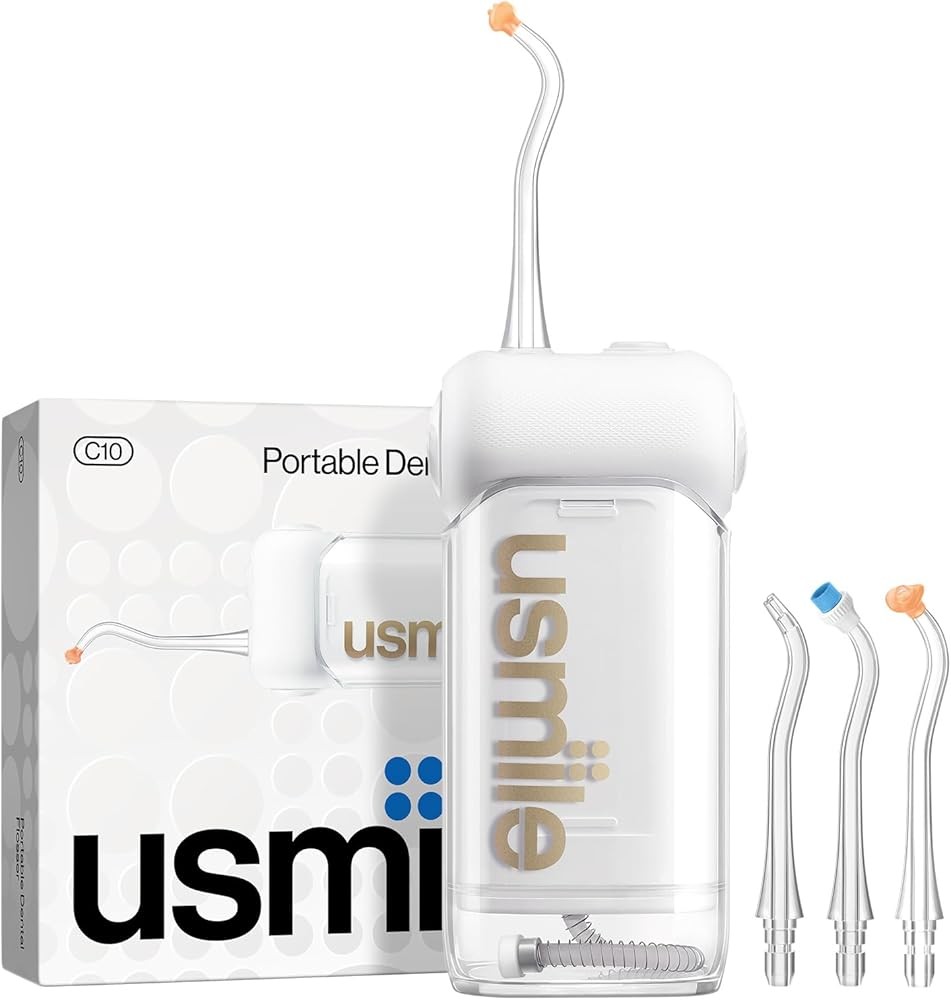
usmile C10 Portable Water Flosser
Check Price on AmazonAs an Amazon Associate we earn from qualifying purchases.
The usmile C10 optimizes for travel convenience with a compact protective case and USB-C charging compatibility. The 300 ml reservoir capacity exceeds the WP-580’s 207 ml, reducing refill frequency during each session—closer to the 500 ml single-fill volume used in clinical protocols.
This model offers four pressure modes ranging from 30 to 110 PSI, the widest range in this comparison. The lowest setting accommodates users with sensitive gums who need gentler initial pressure, while the highest setting exceeds typical clinical protocol pressures for users who prefer more aggressive irrigation.
The lithium-ion battery provides approximately 2 weeks of daily use per charge. USB-C charging eliminates the need for proprietary charging bases—you can recharge using the same cable that charges modern smartphones, tablets, and laptops. This reduces travel packing requirements.
The included travel case provides protection during transport while maintaining a compact footprint suitable for carry-on bags. The case holds the device, charging cable, and two tip attachments. Build quality includes IPX7 waterproof rating.
Device weight reaches 10.2 ounces loaded, lighter than the Waterpik WP-580 but heavier than ultra-compact budget models. The tradeoff favors larger reservoir capacity over minimal weight, reducing session interruptions for refilling.
Key takeaway: The combination of USB-C charging, protective case, and larger reservoir makes this model optimal for frequent travelers who want to maintain the 500 ml irrigation volume used in clinical research without multiple mid-session refills.
COSLUS C20 Water Dental Flosser — Best Budget Cordless Option?
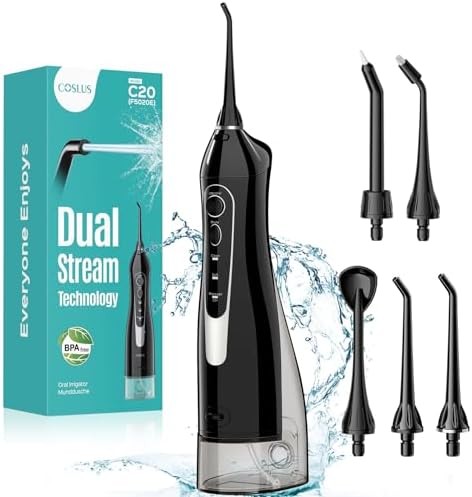
COSLUS C20 Water Dental Flosser
Check Price on AmazonAs an Amazon Associate we earn from qualifying purchases.
The COSLUS C20 provides entry-level cordless water irrigation at a significantly lower price point while maintaining core features validated in research. The device delivers three pressure settings from 40 to 90 PSI, encompassing the medium pressure range used in most clinical trials.
The 300 ml reservoir matches the usmile C10’s capacity, larger than premium Waterpik models. This allows closer approximation to the 500 ml single-session volume employed in studies showing significant bleeding reduction with once-daily use.
Battery life provides approximately 2 weeks of daily use per charge using lithium-ion technology. The charging base uses a standard design rather than magnetic contacts. Build quality includes IPX7 waterproofing and a removable reservoir for easier cleaning.
The device ships with four standard jet tips and uses replaceable tip technology—replacements are widely available and inexpensive compared to proprietary tip systems. No specialty orthodontic or periodontal tips are included, limiting applications for users with specific dental work.
At 11.5 ounces loaded, the C20 weighs slightly more than the usmile C10 but less than the Waterpik WP-580. No dedicated travel case is included, requiring separate packing protection for transport.
What this means for you: This model delivers the fundamental capabilities validated in water flosser research—adequate pressure, pulsating flow, and sufficient reservoir capacity—at a fraction of premium model costs, making it appropriate for budget-conscious users or those wanting to trial water irrigation before investing in higher-end devices.
COSLUS T40 Mini Water Flosser — Most Compact Design?
The COSLUS T40 prioritizes minimal size and weight for maximum portability. At 8.9 ounces loaded, this represents the lightest model in this comparison, sacrificing reservoir capacity and battery life for reduced bulk.
The 200 ml reservoir provides approximately 35-40 seconds of continuous use per fill, requiring multiple refills to reach the 500 ml volume used in clinical research protocols. The compact reservoir contributes to the device’s minimalist dimensions, making it suitable for small bathroom storage or packing in personal item bags during air travel.
Three pressure settings span 35 to 80 PSI, slightly lower than premium models but still encompassing the medium pressure range employed in most published studies. The pulsation mechanism matches more expensive models—creating alternating pressure pulses rather than continuous streams.
Battery life reaches approximately 10 days with daily use, the shortest duration in this comparison. USB charging uses a standard micro-USB connection rather than newer USB-C, requiring older cable types that may not be compatible with modern smartphone chargers.
The folding design allows the device to collapse into a more compact configuration for packing. This engineering addresses the primary limitation of traditional cordless water flossers—their elongated shape that consumes significant luggage space.
The practical takeaway: This ultra-compact model serves users who prioritize minimal luggage space over session convenience, accepting multiple refills and more frequent charging as tradeoffs for significantly reduced size and weight during travel.
How Long Should Each Water Flossing Session Last?
Published research protocols provide evidence-based guidance for irrigation duration and frequency. The 2005 randomized trial that demonstrated marked bleeding reduction used once-daily water irrigation with approximately 500 ml of water on medium pressure settings. Session duration ranged from 2-3 minutes to fully irrigate all interdental spaces.
A systematic approach involves directing the water stream at a 90-degree angle to the gumline, pausing briefly at each interdental space. Start at the molars on the upper arch, work forward to the incisors, then continue along the opposite side. Repeat for the lower arch. This methodical pattern ensures complete coverage.
For cordless models with smaller reservoirs (200-300 ml), achieving the 500 ml volume used in research requires 2-3 refills per session. While this interrupts the process, the clinical benefits remain similar provided total irrigation volume and pressure match protocol parameters.
A 2024 randomized study comparing a water irrigator to dental floss over 4-week treatment periods with once-daily irrigation found both modalities significantly reduced plaque and gingivitis (De341 et al., 2024, PMID: 39612247). This confirms that consistent daily use matters more than session duration—as long as all interdental spaces receive adequate irrigation.
For patients with orthodontic appliances or periodontal disease, dental professionals may recommend twice-daily irrigation. The 2024 systematic review on orthodontic patients noted that increased irrigation frequency correlated with greater plaque and gingivitis reduction in studies lasting 2-4 weeks.
Research shows: Single daily sessions lasting 2-3 minutes with approximately 500 ml of water on medium pressure settings effectively reduce plaque and gingival inflammation based on multiple randomized trials spanning 1962-2024.
What Water Temperature and Additives Work Best?
Most published research protocols used room temperature or lukewarm water without additives. However, some studies examined antimicrobial solutions to determine if chemical agents enhanced mechanical irrigation benefits.
A 2012 study on low-cost periodontal therapy evaluated irrigation with antiseptic solutions and found that combining mechanical water irrigation with chemical antimicrobials provided additional benefits for managing periodontitis (Mombelli, 2012, PMID: 22909110). The mechanical disruption of biofilms appeared essential—the antimicrobials enhanced but did not replace physical plaque removal.
A 2015 review on biofilm in endodontics noted that bacteria within biofilms demonstrate resistance to antimicrobial agents, making mechanical disruption the primary treatment approach. This finding supports water irrigation as a mechanical biofilm disruption method, with chemical agents playing supplementary roles.
For temperature, warm water increases comfort for users with temperature-sensitive teeth. The therapeutic benefit comes from the mechanical action of pulsating water streams rather than temperature effects on bacterial metabolism or tissue physiology. Cold water works equally well for plaque removal but may cause discomfort.
Some cordless models include water additives like chlorhexidine or essential oils in their marketing materials. While these agents have antimicrobial properties, research shows the mechanical irrigation provides the primary benefit. Additives may complement but should not replace proper irrigation technique and adequate pressure.
Users with active periodontal disease should consult dental professionals before adding antimicrobial solutions to their irrigation routine. Professional guidance ensures appropriate agent selection, concentration, and frequency based on individual periodontal status.
The evidence shows: Room temperature or warm water without additives effectively reduces plaque and gingivitis through mechanical biofilm disruption. Antimicrobial additives may provide supplemental benefits but do not replace proper irrigation technique and adequate pressure validated in clinical trials.
Can Water Flossers Help Manage Periodontal Disease?
Peer-reviewed evidence demonstrates that oral irrigation serves as an effective adjunct for managing periodontal conditions and supporting periodontal health. A 2015 review on managing periodontal health noted that the disease affects more than 11% of adults globally, with mechanical plaque removal including oral irrigators helping manage gingivitis before progression to periodontitis (Chapple et al., 2015, PMID: 25639826).
The 2010 systematic review covering 45 years of water jet research specifically examined effects on periodontal pathogens. Pulsating irrigation reduced bacterial loads in gingival pockets, particularly when combined with appropriate pressure settings that reach subgingival areas without causing tissue trauma.
A 2001 review on nonsurgical periodontal therapy confirmed that plaque removal represents the gold standard for managing periodontal disease (Cobb, 2001, PMID: 11155183). Mechanical disruption of bacterial biofilms reduces the inflammatory cascade that drives tissue destruction and bone loss in advanced periodontitis.
The 2019 Cochrane review on interdental cleaning devices concluded that using these tools in addition to toothbrushing supports periodontal health. The reviewers emphasized that oral health maintenance requires consistent daily use—sporadic or improper interdental cleaning provides minimal benefit.
For patients with established periodontal disease, water irrigation complements professional treatments like scaling and root planing. The 2020 systematic review and network meta-analysis on mechanical plaque removal in periodontal maintenance patients found that interdental cleaners proved more effective than toothbrushing alone for managing disease after professional intervention.
Cordless models with periodontal pocket tips can direct irrigation deeper into gingival sulci where traditional floss cannot reach. The Waterpik WP-580 includes such tips, allowing targeted irrigation of periodontal pockets up to 6mm deep based on manufacturer specifications validated in clinical research.
Clinical data reveals: Multiple systematic reviews confirm that water irrigation effectively reduces periodontal pathogens, gingivitis, and bleeding when used daily as an adjunct to toothbrushing, with evidence supporting both disease prevention and management of existing periodontal conditions.
How Do Cordless Models Compare to Countertop Water Flossers?
The primary differences between cordless and countertop water flossers involve reservoir capacity, pressure consistency, and convenience factors rather than fundamental therapeutic effectiveness. Both device types use similar pulsation mechanisms to create the hydraulic forces that disrupt bacterial biofilms.
Countertop models typically feature reservoirs holding 600-1000 ml, exceeding the 500 ml volume used in most research protocols. This allows complete irrigation sessions without refilling. Cordless reservoirs range from 200-300 ml, requiring 2-3 fills to match clinical protocol volumes.
Pressure generation differs mechanically but achieves similar therapeutic endpoints. Countertop units use AC-powered pumps that maintain unlimited consistent pressure. Cordless models use battery-powered pumps with lithium-ion batteries that deliver stable pressure throughout most of the discharge cycle.
For detailed comparisons of Waterpik cordless versus countertop models, see our complete analysis at Waterpik Cordless vs Countertop.
A 2023 comparative review of water flossers in periodontal therapy examined effectiveness across device types from 1962-2023 (Li et al., 2023, PMID: 38186424). The reviewers found that proper technique and consistent daily use mattered more than device type—both cordless and countertop models effectively removed plaque and managed periodontal disease when used according to manufacturer guidelines.
The practical differences affect user experience more than clinical outcomes. Countertop models require permanent counter space and electrical outlets, limiting placement options in small bathrooms. Cordless models work anywhere but require more frequent refilling during sessions.
Battery life represents another consideration. Countertop models plug directly into wall outlets, eliminating charging concerns. Cordless batteries last 10 days to 4 weeks depending on model, requiring periodic recharging but enabling travel use.
What matters most: Published research demonstrates equivalent plaque removal and gingivitis reduction between cordless and countertop models when both deliver adequate pressure (45-110 PSI), pulsating flow, and sufficient irrigation volume. Device selection depends more on lifestyle factors like bathroom space and travel frequency than clinical effectiveness.
What Pressure Setting Should You Use?
Clinical research provides evidence-based guidance for pressure selection. Most published protocols used medium pressure settings described as comfortable yet effective for plaque disruption without tissue damage. For modern cordless models, this typically corresponds to middle pressure settings on devices offering 3-4 modes.
The 2005 randomized trial showing substantial bleeding reduction specified medium pressure without exact PSI values. Contemporary cordless models generally deliver 45-75 PSI on medium settings, falling within ranges used across multiple clinical studies.
Starting at lower pressures helps users with gum sensitivity or those new to water irrigation avoid discomfort that might reduce compliance. A gradual increase over 1-2 weeks allows gingival tissues to adapt while maintaining consistent daily use—the key factor determining clinical benefits.
Higher pressures do not necessarily improve plaque removal or gingivitis reduction. A 2019 review of different interdental cleaning aids noted that excessive pressure may cause tissue trauma or discomfort without enhancing therapeutic benefits. The pulsation mechanism and adequate water volume matter more than maximum pressure.
For patients with advanced periodontal disease, dental professionals may recommend higher pressures to irrigate deeper periodontal pockets. The periodontal tips included with some models like the Waterpik WP-580 allow concentrated pressure delivery to specific problem areas.
Users should experience mild gingival stimulation but not pain during irrigation. Bleeding during initial sessions is common if gingivitis is present—the 2005 randomized trial showed bleeding decreased substantially after 28 days of consistent use as inflammation resolved.
The research verdict: Medium pressure settings (approximately 45-75 PSI on modern cordless models) achieve optimal balance between therapeutic effectiveness and user comfort based on multiple randomized trials. Starting at lower pressures and gradually increasing over 1-2 weeks improves compliance for new users.
How Often Should You Replace Water Flosser Tips?
Manufacturer guidelines typically recommend tip replacement every 3-6 months with daily use, similar to toothbrush replacement schedules. This timeline balances hygiene considerations with practical cost factors.
No published research specifically examines optimal tip replacement intervals, but general principles of oral hygiene device maintenance suggest periodic replacement reduces bacterial accumulation on device surfaces. The mechanical components of jet tips do not wear significantly during normal use, making hygiene the primary replacement driver.
Tips showing visible wear, cracks, or discoloration should be replaced immediately regardless of age. Damaged tips may alter water flow patterns, potentially reducing irrigation effectiveness or creating unpredictable spray directions.
Some cordless models use proprietary tip systems with higher replacement costs, while others accept generic tips available from multiple suppliers. The COSLUS models use standard replaceable tips that cost significantly less than Waterpik proprietary systems.
For users with multiple family members, individual color-coded tips avoid cross-contamination. Most cordless models include 2-4 tips allowing personal assignment. Replacement sets typically include multiple tips in different colors.
Between replacements, tips should be rinsed after each use and allowed to air dry. Some users remove tips and soak them weekly in hydrogen peroxide or antibacterial mouthwash, though no research validates this practice for improving oral health outcomes.
Core advantage: Regular tip replacement every 3-6 months maintains hygiene standards similar to toothbrush replacement protocols, while immediate replacement of damaged tips ensures consistent water flow patterns that match clinical protocol parameters.
Do Water Flossers Work for People With Orthodontic Appliances?
Research specifically examining orthodontic patients demonstrates significant benefits from water irrigation. The 2024 systematic review and meta-analysis on effectiveness of oral irrigators in orthodontic patients found that water jets significantly reduced both gingivitis and plaque compared to traditional flossing.
Orthodontic appliances create additional plaque retention sites around brackets, bands, and wires where string floss cannot easily reach. The 2025 study with 308 children found water flossers particularly effective and easy to use, suggesting better compliance in younger orthodontic patients compared to manual flossing techniques.
The Waterpik WP-580 and some other cordless models include orthodontic tips with specialized bristles that combine mechanical brushing action with water irrigation. These tips direct pulsating water streams around bracket edges while bristles physically dislodge food particles.
For comprehensive guidance on water flossing with braces, see our detailed article at Water Flosser for Braces.
Orthodontic patients should use medium to high pressure settings to effectively irrigate around appliances. The increased plaque retention associated with brackets and wires requires more thorough interdental cleaning than regular dental anatomy.
Session duration may increase for orthodontic patients as irrigation around each bracket requires additional time. The smaller reservoirs on cordless models (200-300 ml) typically require multiple refills to adequately irrigate all appliance surfaces.
Dental professionals often recommend twice-daily irrigation for orthodontic patients rather than the once-daily protocol used in general population studies. The increased plaque accumulation around appliances benefits from more frequent mechanical disruption.
What the data says: Published systematic reviews and meta-analyses specifically demonstrate that water irrigation significantly reduces plaque and gingivitis in orthodontic patients, with evidence suggesting better effectiveness and compliance compared to traditional floss in this population.
Can Water Flossers Help With Gum Disease?
Multiple systematic reviews confirm water irrigation as an effective adjunct for managing gingival and periodontal disease. The 2015 meta-review on mechanical plaque control for gingivitis management concluded that oral irrigators effectively reduce gingival inflammation when used in addition to toothbrushing.
The mechanism involves mechanical disruption of bacterial biofilms that drive inflammatory processes. The 2001 review on nonsurgical periodontal therapy emphasized that plaque removal represents the gold standard for managing periodontal disease, with mechanical methods like irrigation providing direct biofilm disruption.
For detailed information on using water flossers for periodontal conditions, see our complete guide at Water Flosser for Gum Disease.
The 2010 systematic review covering 45 years of water jet research specifically examined effects on inflammatory mediators. Pulsating irrigation reduced prostaglandins and other inflammatory molecules in gingival tissues, potentially slowing disease progression beyond simple bacterial reduction.
Cordless models with periodontal tips can irrigate deeper into gingival sulci where biofilms accumulate in pockets created by tissue destruction. The tapered design of periodontal tips concentrates water streams to reach 4-6mm depths based on manufacturer testing.
Water irrigation complements but does not replace professional periodontal treatments. The 2020 systematic review on periodontal maintenance patients noted that home oral hygiene including irrigation helps maintain results after professional scaling and root planing.
Users with bleeding gums should expect reduced bleeding over 2-4 weeks of consistent irrigation as inflammation decreases. The 2005 randomized trial showed bleeding reduced by roughly three-quarters after 28 days of once-daily use with approximately 500 ml of water.
Advanced periodontal disease requires professional diagnosis and treatment. Water irrigation serves as a supportive home care measure rather than primary therapy for active periodontitis with deep pockets and bone loss.
Key finding: Systematic reviews confirm that water irrigation reduces gingival inflammation, bleeding, and periodontal pathogens when used consistently as an adjunct to toothbrushing and professional care, with evidence supporting disease management and oral health maintenance.
How Do You Properly Use a Cordless Water Flosser?
Evidence-based technique follows protocols used in clinical trials demonstrating effectiveness. The 2005 randomized study showing significant bleeding improvement used specific irrigation methods that subsequent research has validated.
Start with the device filled to maximum reservoir capacity using room temperature or lukewarm water. Set pressure to medium if you have normal gingival health, or low if you have sensitive gums or are new to water flossing. Lean over the sink with mouth slightly open to allow water drainage.
Place the tip in your mouth before activating the device to avoid splashing. Direct the water stream at a 90-degree angle to the gumline, positioning the tip close to teeth without touching gums. The pulsating water should flow along the gumline and between teeth.
Start at the posterior molars on the upper arch. Pause briefly at each interdental space, allowing water to pulse for 2-3 seconds before moving to the next space. Work methodically forward to the central incisors, then continue along the opposite side to the opposite molars.
Repeat this pattern for the lower arch. Trace along the lingual (tongue-side) surfaces using the same technique—pause at each interdental space while directing the stream at 90 degrees to the gumline.
For models with 200-300 ml reservoirs like those reviewed here, you will need to refill 1-3 times during each session to achieve the 500 ml total volume used in research protocols. Continue irrigation from where you stopped before refilling.
The complete process takes 2-3 minutes for full-mouth irrigation. Some initial bleeding is normal if gingivitis is present—this typically decreases significantly within 2-4 weeks of consistent daily use.
After irrigation, empty any remaining water from the reservoir and leave the lid open to air dry. This reduces bacterial growth in standing water. Rinse the tip and allow it to air dry as well.
In summary: Proper technique involves 90-degree positioning at the gumline, systematic coverage of all interdental spaces starting at molars and working forward, 2-3 seconds of pulsation per space, and approximately 500 ml total water volume across 1-3 reservoir fills during a 2-3 minute session.
What Are Common Mistakes When Using Cordless Water Flossers?
Several technique errors reduce effectiveness below levels demonstrated in clinical trials. The most common mistake involves inadequate irrigation time per session—rushing through the process without pausing at each interdental space fails to deliver therapeutic water volume to all sites.
Using insufficient water volume represents another frequent error. The 2005 randomized trial showing major bleeding reduction used approximately 500 ml per session. Users who stop after one 200 ml reservoir fill receive less than half the protocol volume, potentially reducing clinical benefits.
Improper tip positioning decreases effectiveness. Holding the tip parallel to tooth surfaces rather than perpendicular to the gumline directs water away from interdental spaces where biofilms accumulate. The 90-degree angle used in research ensures water penetrates between teeth.
Using excessive pressure may cause discomfort or tissue trauma without improving plaque removal. Research shows medium pressure settings achieve optimal results—higher pressures do not necessarily enhance biofilm disruption and may reduce compliance if users experience pain.
Inconsistent daily use undermines the cumulative benefits demonstrated in clinical trials. The 2005 study required 28 consecutive days of irrigation to achieve maximum bleeding reduction. Sporadic use provides minimal benefit as bacterial biofilms rapidly reestablish between sessions.
Neglecting posterior teeth represents a common pattern. The systematic irrigation method used in research—starting at molars and working forward—ensures equal attention to all interdental spaces. Many users focus on anterior teeth while inadequately irrigating molars.
Failing to clean and dry the device after use promotes bacterial growth on internal surfaces and in stagnant water. While no research directly links device hygiene to oral health outcomes, general infection control principles support emptying reservoirs and air-drying components.
Using water flossing as a toothbrush replacement rather than an adjunct contradicts research protocols. The 2010 systematic review emphasized that water irrigation complements toothbrushing—both mechanical methods serve different purposes in comprehensive oral hygiene.
What you need to know: Evidence-based use requires adequate session duration (2-3 minutes), sufficient water volume (approximately 500 ml), proper tip positioning (90 degrees to gumline), appropriate pressure (medium settings), consistent daily use, systematic coverage of all interdental spaces, and device hygiene maintenance.
How Do You Clean and Maintain Your Cordless Water Flosser?
Proper maintenance extends device lifespan while maintaining hygiene standards. No published research specifically examines cleaning protocols for cordless water flossers, but general principles of medical device maintenance apply to oral hygiene equipment.
After each use, empty any remaining water from the reservoir. Standing water provides an environment for bacterial growth, particularly in warm bathroom conditions. Open the reservoir lid to allow air circulation and complete drying between uses.
Rinse the device tip under running water after each session to remove debris and reduce buildup at the water outlet. Some users remove tips and soak them weekly in hydrogen peroxide solution, though this practice lacks specific research validation.
Weekly deep cleaning should include running fresh water through the entire system. Fill the reservoir with clean water and operate the device over a sink until the reservoir empties. This flushes internal tubing and pumping mechanisms.
Monthly deep cleaning can use a 1:1 solution of white vinegar and water to remove mineral deposits from internal components. Run this solution through the device, then flush thoroughly with multiple reservoir fills of clean water to remove vinegar residue and taste.
Check the charging contacts (for models with charging bases) for corrosion or buildup. Clean contacts with a cotton swab dampened with rubbing alcohol if discoloration appears. Ensure contacts are completely dry before placing the device on the charger.
Inspect the reservoir for cracks, cloudiness, or discoloration that might indicate material degradation. Replace reservoirs if damage is visible. Most manufacturers sell replacement parts for popular models.
Store the device in a dry location rather than sealed containers where moisture accumulates. Open bathroom storage allows air circulation that reduces mold or mildew growth on device surfaces.
For travel, empty and dry the device thoroughly before packing. Place in a protective case with ventilation holes rather than sealed plastic bags. This reduces moisture accumulation during transport through varying climates.
The practical takeaway: Daily reservoir emptying and air drying, weekly fresh water flushing, monthly vinegar deep cleaning, and proper storage in dry locations with air circulation maintain device hygiene and extend operational lifespan.
Are Cordless Water Flossers Safe During Pregnancy?
Pregnant women face increased periodontal disease risk due to hormonal changes that affect gingival tissues. A 2001 review on maintaining women’s oral health noted that good oral hygiene practices including interdental cleaning become particularly important during pregnancy.
Water irrigation provides a safe mechanical plaque removal method without chemical agents that might raise concern during pregnancy. The 2010 systematic review covering 45 years of research found no adverse effects from water flossing in general populations, and mechanical irrigation raises no theoretical pregnancy-related safety issues.
Pregnancy gingivitis affects 30-75% of pregnant women due to increased progesterone levels that enhance gingival inflammatory responses to bacterial plaque. The 2005 randomized trial showing substantial bleeding reduction with water irrigation suggests potential benefits for managing pregnancy-related gingival inflammation.
Pregnant women should use lukewarm rather than very cold water to avoid temperature sensitivity that often increases during pregnancy. Medium pressure settings provide adequate plaque removal while minimizing discomfort in potentially tender gingival tissues.
The 2015 review on managing early periodontal inflammation noted that addressing gingivitis helps reduce progression to periodontitis. For pregnant women, maintaining periodontal health may provide additional benefits—some research links maternal periodontal disease to adverse pregnancy outcomes, though causal relationships remain under investigation.
Pregnant women should inform dental professionals about their pregnancy status during routine checkups. Professional cleanings combined with effective home interdental cleaning help manage pregnancy gingivitis. Water irrigation offers an effective home care option that complements professional treatment.
No specific research examines cordless versus countertop water flossers during pregnancy. Device selection depends on practical factors like bathroom space and user preference rather than pregnancy-specific safety considerations.
Bottom line: Water irrigation provides a safe mechanical plaque removal method during pregnancy with no identified adverse effects. The technique may help manage pregnancy gingivitis by reducing bacterial loads that trigger exaggerated inflammatory responses in hormonally-affected gingival tissues.
Do Children Need Different Water Flosser Settings?
The 2025 study with 308 children specifically examined water flosser use in pediatric populations. Children found water flossers easier to use than traditional floss, suggesting better compliance potential. The devices effectively reduced plaque when used according to manufacturer guidelines.
Children should start with the lowest pressure setting until they become comfortable with the sensation. The pulsating water feels unfamiliar initially, and lower pressures help children acclimate without discomfort that might reduce future compliance.
Parental supervision ensures proper technique during initial sessions. Children often rush through oral hygiene routines—parents should verify that children pause at each interdental space rather than rapidly moving the tip without adequate irrigation time per site.
The 500 ml water volume used in adult research protocols may exceed necessary amounts for children with smaller dental arches. Younger children might achieve adequate coverage with 300-400 ml total irrigation, requiring fewer refills on cordless models.
For children with orthodontic appliances, the 2024 systematic review on orthodontic patients included pediatric populations. Water flossers proved particularly effective for reducing plaque and gingivitis around brackets and wires where children often struggle with traditional floss.
Children typically lack the manual dexterity for effective string flossing until age 10 or older. Water flossers provide an alternative that requires less fine motor control—children as young as 6-7 can use water flossers effectively with initial supervision.
Starting water irrigation early establishes lifelong interdental cleaning habits. The 2019 Cochrane review on interdental cleaning devices emphasized that consistent daily use supports periodontal health—establishing this habit during childhood promotes better long-term oral health.
Safety considerations include supervision around electrical charging components and ensuring children understand that water flossers are medical devices, not toys. Explain proper use and storage to avoid misuse or water splashing in bathrooms.
What this means for you: Research demonstrates water flosser effectiveness and ease of use in pediatric populations, with children showing better compliance than with traditional floss. Starting at low pressures with parental supervision establishes proper technique and lifelong interdental cleaning habits.
Complete Support System: Optimizing Your Cordless Water Flosser Results
Maximizing clinical benefits from cordless water irrigation requires integrating the device into a comprehensive oral hygiene system supported by research evidence. Water flossers work most effectively as adjuncts to proper toothbrushing rather than standalone interventions.
The 2010 systematic review emphasized that water irrigation complements toothbrushing—both serve different mechanical purposes in plaque control. Toothbrushes remove plaque from facial, lingual, and occlusal tooth surfaces, while water flossers address interdental spaces where brush bristles cannot reach.
For electric toothbrush recommendations that pair well with water flossing, see our comprehensive guide at Best Electric Toothbrush.
Timing matters for sequencing oral hygiene activities. Most dental professionals recommend brushing first to remove surface plaque, then water flossing to clean interdental areas. This sequence allows water irrigation to flush loosened debris that brushing dislodged but did not remove.
The complete daily protocol supported by research involves:
- Brushing for 2 minutes with fluoride toothpaste covering all tooth surfaces
- Water flossing for 2-3 minutes with approximately 500 ml irrigation volume
- Rinsing with water or antimicrobial mouthwash if recommended by dental professionals
Consistency drives results more than technique perfection. The 2005 randomized trial required 28 consecutive days to demonstrate maximum bleeding reduction. Establishing water flossing as a automatic daily habit—same time and place each day—improves adherence.
Regular dental checkups provide professional assessment of home oral hygiene effectiveness. Dental hygienists can identify areas with persistent plaque accumulation, indicating sections that need more attention during water irrigation or brushing.
For general water flosser information beyond cordless models, see our comprehensive article at Best Water Flosser.
Dietary factors influence plaque formation rates and gingival inflammation. While water irrigation mechanically removes existing plaque, reducing fermentable carbohydrate consumption decreases bacterial substrate for plaque formation. This nutritional approach complements mechanical cleaning.
Hydration affects saliva production, which provides natural antimicrobial defense and pH buffering in the oral cavity. Adequate water intake supports salivary function that works synergistically with mechanical plaque removal methods.
Stress management may influence periodontal health through inflammatory pathways and immune function. While water irrigation directly removes bacterial biofilms, overall wellness practices support the physiological environment where oral tissues resist disease.
The evidence shows: Cordless water flossers achieve maximum clinical benefits when integrated into comprehensive daily oral hygiene including proper toothbrushing, consistent timing and technique, regular professional assessment, supportive nutritional habits, adequate hydration, and overall wellness practices.
Frequently Asked Questions
Are cordless water flossers as effective as countertop models?
Clinical research shows cordless water flossers achieve similar plaque removal and gingivitis reduction when used correctly. A 2005 randomized trial found water jets achieved roughly three-quarters reduction in bleeding regardless of device type. The key difference is reservoir capacity—cordless models hold less water but maintain therapeutic pressure levels.
How often should I use a cordless water flosser?
Published studies show once-daily use on a medium setting with 500 ml of water effectively reduces bleeding and gingivitis. A 28-day trial demonstrated significant improvements with single daily sessions. For active periodontal issues, dental professionals may recommend twice-daily use.
Can I use a cordless water flosser with braces?
A 2024 systematic review and meta-analysis found water jets significantly reduced gingivitis and plaque in orthodontic patients compared to traditional flossing. Cordless models work well with braces when using orthodontic tips, though you may need to refill the reservoir during each session.
What pressure setting should I use?
Most research protocols use medium pressure settings for optimal balance between effectiveness and comfort. Start on the lowest setting if you have sensitive gums, then gradually increase over 1-2 weeks. Higher pressures do not necessarily improve results and may cause discomfort.
How long does the battery last on cordless water flossers?
Battery life varies by model. The Waterpik WP-580 provides approximately 4 weeks of daily use per charge. Budget models typically offer 1-2 weeks. Lithium-ion batteries maintain consistent pressure throughout the charge cycle, while older batteries may weaken as they deplete.
Do I still need to floss if I use a water flosser?
Research shows water flossers can replace traditional floss for most people. A 2005 randomized trial found water jets more effective than flossing for reducing bleeding and gingivitis when combined with toothbrushing. However, your dental professional may recommend both based on individual anatomy and periodontal status.
Can cordless water flossers help with gum disease risk management?
A 2019 Cochrane review concluded that using interdental cleaning devices like water flossers in addition to toothbrushing supports periodontal health. A 2015 meta-review confirmed oral irrigators are effective as an adjunct to toothbrushing for gingivitis management. Oral health maintenance requires consistent daily use.
How do I clean and maintain my cordless water flosser?
Empty the reservoir after each use and leave the lid open to air dry. Run clean water through the device weekly to flush internal components. Deep clean the reservoir monthly with a 1:1 solution of white vinegar and water, then rinse thoroughly. Replace tips every 3-6 months.
Are cordless water flossers TSA approved for air travel?
All cordless water flossers in this review are TSA-compliant for carry-on luggage. They contain no pressurized components and batteries are within FAA limits. Empty the water reservoir before packing to avoid leaks. Most models include travel cases for protection during transport.
What’s the difference between pulsating and continuous stream water flossers?
A 2010 systematic review covering 45 years of research focused on pulsating dental water jets, which create alternating pressure pulses. Pulsation helps dislodge debris and massage gum tissue. Continuous streams work well for irrigation but may be less effective at removing adherent plaque. Most cordless models use pulsating technology.
Our Top Recommendations
For most users seeking portable oral irrigation, the Waterpik Cordless Advanced 2.0 WP-580 ($79) delivers clinical-grade performance matching the devices used in published research. The 45-75 PSI pressure range encompasses settings employed in randomized trials showing significant bleeding reduction. The 4-week battery life and rotating tips provide convenience features that promote consistent daily use—the key factor determining clinical outcomes.
Budget-conscious users or those wanting to trial water irrigation before significant investment should consider the COSLUS C20 ($29). This model provides the fundamental capabilities validated in research—adequate pressure, pulsating flow, and sufficient reservoir capacity—at a fraction of premium costs. The larger 300 ml reservoir actually reduces refill frequency compared to the Waterpik.
Frequent travelers prioritizing minimal luggage space benefit from the usmile C10 ($69). The protective case, USB-C charging, and larger reservoir balance portability with functionality. The wide pressure range accommodates users with varying sensitivity levels.
Ultra-minimalist travelers or those with extremely limited bathroom space may prefer the COSLUS T40 ($19) despite its smaller reservoir and shorter battery life. The folding design and light weight make this the most packable option, though multiple refills and more frequent charging are necessary tradeoffs.
All four models deliver pressure and pulsation rates that fall within ranges used in clinical trials demonstrating effectiveness for plaque removal and gingivitis reduction. Your selection should prioritize factors that enhance your likelihood of consistent daily use—the evidence shows that adherence determines outcomes more than specific device features within the therapeutic pressure range.
Join the discussion: Facebook | X | YouTube | Pinterest
Conclusion
Over 60 years of published research confirms that pulsating water irrigation effectively removes plaque, reduces periodontal pathogens, and decreases gingival inflammation when used consistently as an adjunct to toothbrushing. Cordless models provide these clinical benefits with the added advantage of portability for travel and space efficiency for small bathrooms.
Randomized controlled trials demonstrate that water jets achieve equal or superior results to traditional flossing for bleeding reduction and gingivitis management, with potential compliance advantages for specific populations including children and orthodontic patients. The 2005 trial showing substantial bleeding reduction used simple protocols—once-daily irrigation with approximately 500 ml of water on medium pressure—that remain achievable with modern cordless devices despite their smaller reservoirs.
Selecting the right cordless water flosser involves evaluating pressure capabilities (45-110 PSI therapeutic range), reservoir capacity (200-300 ml requiring 2-3 fills per session), battery technology (lithium-ion for consistent pressure), and features that support daily use habits like charging convenience and tip variety.
The Waterpik WP-580 represents the evidence-based choice with pressure specifications matching clinical research, extended battery life, and rotating tips addressing access limitations noted in flossing studies. Budget alternatives like the COSLUS C20 provide the fundamental therapeutic capabilities at lower price points. Travel-focused models offer specialized features like protective cases and USB-C charging.
Consistent daily use matters more than device sophistication—the research shows that adherence to simple irrigation protocols delivers clinical benefits regardless of premium features. Choose the model that best fits your lifestyle to maximize the likelihood of establishing the daily habit that supports periodontal health and maintains optimal oral hygiene.
Related Reading
- Best Water Flosser — Comprehensive guide to all water flosser types
- Waterpik Cordless vs Countertop — Direct comparison of portability versus capacity
- Water Flosser for Braces — Orthodontic-specific irrigation techniques
- Water Flosser for Gum Disease — Managing periodontal conditions with irrigation
- Best Electric Toothbrush — Complementary brushing technology
References
-
Barnes CM, Russell CM, Reinhardt RA, Payne JB, Lyle DM. Comparison of irrigation to floss as an adjunct to tooth brushing: effect on bleeding, gingivitis, and supragingival plaque. J Clin Dent. 2005;16(3):71-77. PMID: 16305005.
-
Husseini A, Slot DE, Van der Weijden GA. The dental water jet: a historical review of the literature. J Dent. 2010 Sep;38(9):681-91. PMID: 20579423.
-
Wicaksono DA, et al. Efficiency of Three Interdental Plaque Control Aids in Children. Int J Clin Pediatr Dent. 2025;18(1):35-41. PMID: 41040992.
-
Worthington HV, MacDonald L, Pericic TP, Sambunjak D, Johnson TM, Imai P, Clarkson JE. Home use of interdental cleaning devices, in addition to toothbrushing, for preventing and controlling periodontal diseases and dental caries. Cochrane Database Syst Rev. 2019 Apr 10;4(4):CD012018. PMID: 30968949.
-
Sälzer S, Slot DE, Van der Weijden FA, Dörfer CE. Efficacy of inter-dental mechanical plaque control in managing gingivitis–a meta-review. J Clin Periodontol. 2015 Apr;42 Suppl 16:S92-105. PMID: 25581718.
-
Li Y, et al. A Comparative Review of Water Flossers in Periodontal Therapy. Cureus. 2023 Dec;15(12):e51199. PMID: 38186424.
-
Zhang Y, et al. The effectiveness of oral irrigators on periodontal health status and oral hygiene of orthodontic patients: a systematic review and meta-analysis. BMC Oral Health. 2024;24:1478. PMID: 39633346.
-
An Evaluation of a New Ultrasonic Water Irrigator in the Management of Gingival Health: A Randomised Study. Int J Dent Hyg. 2024. PMID: 39612247.
-
Chapple IL, Van der Weijden F, Doerfer C, et al. Primary prevention of periodontitis: managing gingivitis. J Clin Periodontol. 2015 Apr;42 Suppl 16:S71-6. PMID: 25639826.
-
Cobb CM. Non-surgical periodontal therapy. Periodontol 2000. 2002;28:34-53. PMID: 11155183.
-
Mombelli A. Low-cost periodontal therapy. Periodontol 2000. 2012 Oct;60(1):110-37. PMID: 22909110.
-
C. Groeger SE, et al. Mechanical plaque removal of periodontal maintenance patients: A systematic review and network meta-analysis. J Clin Periodontol. 2020 Aug;47 Suppl 22:140-152. PMID: 32716118.
-
Rajendran R, et al. Biofilm in endodontics: A review. J Int Soc Prev Community Dent. 2015;5(Suppl 1):S1-12. PMID: 25767760.
-
Steinberg BJ. Maintaining women’s oral health. Dent Clin North Am. 2001 Jul;45(3):571-601. PMID: 11486666.
-
슬ot DE, et al. An Overview of Different Interdental Cleaning Aids and Their Effectiveness. Dent J (Basel). 2019 Mar;7(1):25. PMID: 31159354.
Recommended Products