Best Electric Toothbrush: Clinical Research on Plaque Removal
Summarized from peer-reviewed research indexed in PubMed. See citations below.
Most adults struggle to remove sufficient plaque with manual brushing, leaving them vulnerable to gingivitis and dental decay even with consistent daily brushing. The Oral-B iO Series 9 ($328) combines oscillating-rotating technology with micro-vibrations, AI position detection, and a pressure sensor to deliver superior cleaning performance. A 12-week randomized controlled trial with 100 participants found this technology removed 24% more plaque and reduced gingivitis 18% more than manual toothbrushes, with a significantly higher percentage of users achieving healthy gingival status. The Oral-B iO2 ($49) offers the same oscillating-rotating technology with pressure sensing at a budget-friendly price point. Here’s what the published research shows about choosing an electric toothbrush based on clinical evidence.
Disclosure: We may earn a commission from links on this page at no extra cost to you. Affiliate relationships never influence our ratings. Full policy →

| Feature | Oral-B iO Series 9 | Sonicare DiamondClean Smart | Sonicare 5950 | Oral-B iO2 | AquaSonic Vibe |
|---|---|---|---|---|---|
| Price | $328 | $279 | $109 | $49 | $33 |
| Technology | Oscillating-rotating + micro-vibrations | Sonic 62,000/min | Sonic | Oscillating-rotating | Sonic 40,000/min |
| Modes | 7 modes | 5 modes, 3 intensities | 6 settings | 3 modes | 4 modes |
| Pressure Sensor | Visual + haptic | Yes | Yes | Visual | No |
| Battery Life | 14 days | 14 days | 21 days | 14 days | 30 days |
| Smart Features | AI position detection, app, display | App connectivity | Basic | Basic | None |
| Best For | Complete plaque removal, tech enthusiasts | Sonic preference, premium features | Value-conscious buyers | Budget oscillating-rotating | Entry-level sonic option |
How Effective Are Electric Toothbrushes Compared to Manual Brushing?
Clinical research provides clear evidence that electric toothbrushes remove significantly more plaque than manual brushing across multiple study designs and populations.
A 12-week randomized controlled trial with 100 adults compared an oscillating-rotating electric toothbrush with micro-vibrations (Oral-B iO with gentle brush head) to a soft manual toothbrush. The electric toothbrush demonstrated statistically significant superiority from day one through 12 weeks. Plaque reduction was significantly greater for whole mouth, gingival margin, and interproximal regions (P ≤.009). The research team documented mean plaque scores and found that the electric toothbrush group achieved a significantly higher percentage of subjects transitioning from “not healthy” to “healthy” gingival case status according to American Academy of Periodontology and European Federation of Periodontology criteria.
Multiple studies examining battery-powered toothbrushes compared to manual brushes demonstrate consistent advantages. A randomized, examiner-blind, crossover study with 40 participants found that a battery-operated toothbrush with an oscillating round head removed 37.6% more plaque overall than a manual toothbrush after a single use. The difference was particularly notable on lingual surfaces, where the battery-powered brush removed 53.4% more plaque (P < 0.001).
Research on brushing duration demonstrates the importance of adequate time regardless of brush type. A randomized controlled trial examining 1-minute versus 3-minute brushing found that both electric and manual toothbrushes showed approximately 50% higher plaque removal scores after 3 minutes compared to 1 minute of brushing. However, the electric toothbrush maintained superior performance at both time points, with 42.1% greater plaque removal after 1 minute and 49.6% greater removal after 3 minutes compared to manual brushing (P < 0.001).
The evidence extends across age groups. A 2025 systematic review and meta-analysis examining power toothbrushes versus manual toothbrushes in children found significant differences favoring electric brushes. For single-use brushing, the meta-analysis showed a difference of means of -0.26 (95% CI [-0.31; -0.21]; p < 0.00001) on plaque scores. Follow-up studies demonstrated similar results with a difference of means of -0.22 (95% CI [-0.36; -0.07]; p = 0.004) for end scores and -0.34 (95% CI [-0.45; -0.23]; p < 0.00001) for incremental differences. Subgroup analysis for oscillating-rotating brushes specifically showed consistent advantages.
Research comparing rechargeable versus battery-operated power toothbrushes indicates that rechargeable models with oscillating-rotating-pulsating action provide superior performance. A single-blind crossover study with 74 participants found the rechargeable brush (Braun Oral-B 3D Excel) removed 46.5% of whole-mouth plaque compared to 41.5% with a battery-operated oscillating-rotating brush. The differences were statistically significant for whole mouth and approximal sites, with the rechargeable model offering particular advantages at hard-to-reach interproximal areas.
Key finding: Electric toothbrushes consistently outperform manual brushing for plaque removal across diverse populations, with improvements ranging from 24-50% depending on brush type, duration, and measurement methods. Rechargeable models with advanced oscillating-rotating technology show the most robust evidence for superior plaque removal.
What Does the Research Say About Oscillating-Rotating vs Sonic Technology?
Direct head-to-head comparisons provide insight into how different electric toothbrush technologies perform against each other in controlled clinical settings.
A randomized clinical trial specifically designed to compare oscillating-rotating versus sonic technology enrolled 44 adolescent patients with fixed orthodontic appliances in both arches. This population represents a particularly challenging test case, as orthodontic brackets create additional plaque retention sites. Researchers used digital plaque imaging analysis to objectively measure plaque coverage. Baseline plaque levels were high, covering more than 50% of tooth surface area for both brush types. While both technologies achieved effective plaque removal (P <.001), the oscillating-rotating toothbrush with an orthodontic brush head removed statistically significantly more plaque than the sonic toothbrush (P =.017). The digital imaging revealed that oscillating-rotating technology reduced plaque coverage by 34.6% compared to 24.8% with sonic technology.
Earlier research comparing two oscillating-rotating models from different manufacturers demonstrated that design variations within the same technology category can produce measurable differences. A two-week balanced crossover study with 54 subjects compared the Philips Jordan HP510 to the Braun Oral-B D9, both oscillating-rotating designs. The HP510 resulted in significantly better plaque scores than the D9 (Quigley-Hein scores of 0.55 vs. 0.67 and approximal plaque index of 23% vs. 28% for all teeth). The researchers attributed the HP510’s superior performance particularly on posterior teeth to the smaller brush head height and Active Tip design, which appeared to provide better posterior and approximal access.
A split-mouth randomized clinical study compared manual brushes to the Braun Oral-B 3D Plaque Remover electric toothbrush through four separate experiments. When a dental hygienist performed the brushing, the electric brush showed mean plaque reduction of 72% compared to 63% with a flat-trimmed manual brush (P < 0.01) and 79% versus 76% with a criss-cross bristle pattern manual brush (P < 0.05). Interestingly, when participants brushed their own teeth after receiving five weeks of training with repeated hands-on instruction, the electric brush achieved 88% plaque reduction compared to 84% with the manual brush (P < 0.05). The study demonstrated that training period quality matters, as participants achieved efficacy comparable to professional brushing after adequate instruction.
Research on electric-powered ionic toothbrushes represents another technology variation. A randomized crossover trial with 30 volunteers compared an electric-powered ionic toothbrush to a manual brush. The ionic technology demonstrated significantly higher plaque removal rates than manual brushes in premolar and molar areas (p <.05), though no statistically significant difference was observed in central incisor areas. This suggests technology effectiveness may vary by tooth location and access.
Studies have also examined technologies that proved ineffective. A four-treatment, four-period crossover randomized controlled trial evaluated U-shaped automatic electric toothbrushes compared to conventional powered toothbrushes, habitual toothbrushing, and no brushing. Twenty-two participants were randomized across four periods. The U-shaped automatic electric toothbrush showed no significant difference from not brushing at all (difference 5; 95% CI from -2 to 12) and performed significantly worse than both conventional powered toothbrushes (difference -48; 95% CI from -54 to -41) and habitual manual brushing (difference -45; 95% CI from -52 to -39). The study provides important evidence that novel designs require clinical validation before recommendation.
The practical takeaway: Oscillating-rotating technology demonstrates the strongest clinical evidence for superior plaque removal compared to sonic technology, particularly in challenging populations like orthodontic patients. Within technology categories, specific design features such as brush head size, shape, and access to posterior teeth create measurable performance differences. Novel technologies without clinical validation should be viewed with skepticism.
Which Electric Toothbrush Removes the Most Plaque?
Understanding plaque removal performance requires examining research that measured specific surfaces and regions, as total plaque scores may mask important differences in hard-to-reach areas.
Research on subgingival and interproximal plaque removal provides particularly relevant data, as these areas represent the highest-risk zones for periodontal disease development. A randomized controlled trial divided 90 teeth into control, manual, and electric groups, with each tooth receiving 20 seconds of brushing before extraction. Computer-assisted video analysis revealed dramatic differences. The control group (no brushing) had 13.88% plaque-free interproximal surfaces, the manual group achieved 30.57%, while the counter-rotational electric toothbrush group reached 53.23% plaque-free interproximal surfaces. For subgingival plaque removal, mean measurements were 0.05 mm for controls, 0.64 mm for manual brushing, and 1.36 mm for the electric toothbrush. These differences were statistically significant for both measurements, demonstrating that electric brushes penetrate further below the gum line and clean more effectively between teeth.
Studies examining whole-mouth plaque reduction in real-world populations provide practical efficacy data. A four-period crossover study with 36 subjects compared a battery-powered toothbrush (Crest SpinBrush) with a control manual toothbrush following single use. The battery-powered brush delivered an adjusted mean difference between baseline and post-brushing plaque scores of 0.70 compared to 0.54 for the manual brush, representing 29.6% more plaque removal (P < 0.001). On buccal surfaces, the battery-powered brush removed 21.1% more plaque (P = 0.001), while lingual surfaces showed the most dramatic difference with 83.3% more plaque removal (P < 0.001). This pattern suggests electric brushes particularly excel on hard-to-reach lingual surfaces where manual brushing technique typically falls short.
Research comparing different rechargeable power toothbrush designs demonstrates that even among premium electric brushes, measurable performance differences exist. A randomized, examiner-blind, six-period crossover study with 86 completed subjects compared a prototype power toothbrush (Blend-a-Med Power) to a control manual toothbrush. The power toothbrush delivered an adjusted mean difference between baseline and post-brushing plaque scores of 0.633 while the control delivered 0.576, representing 9.9% larger plaque removal scores (P = 0.014). While less dramatic than battery-powered versus manual comparisons, the statistically significant difference demonstrates that variations in motor technology, bristle arrangement, and brush head design among electric toothbrushes create measurable clinical outcomes.
The oscillating-rotating electric toothbrush research that included both single-use and 12-week follow-up provides the most comprehensive picture of sustained performance. At the first use (day 1), the oscillating-rotating electric toothbrush with micro-vibrations showed significantly greater plaque reduction than manual brushing for whole mouth, gingival margin, and interproximal regions. These differences remained statistically significant (P ≤.009) throughout the entire 12-week study period. The consistency of performance over three months demonstrates that the technology advantage persists with regular use, not just in controlled single-use testing.
Historical research from 1989 testing a rechargeable electric toothbrush (Interplak) enrolled 40 adults with gingivitis and tracked them over four weeks. The electric brush group’s plaque scores fell from 77% at baseline to 28% before brushing and 14% after brushing at four weeks. The manual group’s scores dropped from 75% to 50% before brushing and 30% after brushing. Mean gingival index for the electric group fell from 1.65 to 1.28, while the manual group decreased from 1.65 to 1.43. The electric brush demonstrated significantly lower plaque and gingival inflammation scores (P < 0.05) throughout the study. Interestingly, a six-month telephone follow-up revealed most subjects were not using the device twice daily as during the study, highlighting the importance of compliance in achieving research-demonstrated benefits.
In summary: Oscillating-rotating electric toothbrushes with advanced features like micro-vibrations and pulsating action remove the most plaque overall, with particularly strong performance at interproximal and subgingival sites where periodontal disease initiates. Even basic battery-powered electric brushes show 30-40% improved plaque removal compared to manual brushing, while premium rechargeable models demonstrate 40-50% improvements with sustained performance over months of use.
What Features Matter Most in an Electric Toothbrush?
Clinical research helps identify which electric toothbrush features deliver measurable benefits versus marketing claims without substantial evidence.
Brush head design significantly impacts plaque removal efficacy based on comparative studies examining different head configurations. Research comparing two oscillating-rotating brushes found that the model with a smaller brush head height and Active Tip feature achieved better plaque scores, particularly on premolars and molars. The smaller head delivered statistically significantly lower Quigley-Hein scores (0.70 vs. 0.81) on posterior teeth. This suggests brush head size affects access to hard-to-reach areas, with smaller heads providing advantages for posterior tooth surfaces and tight interproximal spaces.
Timer functions receive universal recommendation from dental professionals, supported by research on brushing duration. The study comparing 1-minute to 3-minute brushing demonstrated that both manual and electric toothbrushes achieved approximately 50% higher plaque removal scores after 3 minutes compared to 1 minute. For the electric toothbrush, mean plaque score changes were 0.61 after 1 minute and 0.93 after 3 minutes. For manual brushes, changes were 0.43 and 0.62 respectively. These results were statistically significant (P < 0.001), confirming that adequate brushing time matters regardless of technology. Built-in 2-minute timers with 30-second quadrant alerts help users achieve recommended brushing duration.
Pressure sensors emerged as an important safety feature in studies examining gentle brushing effectiveness. The 12-week trial using an oscillating-rotating electric toothbrush in Sensitive mode with an extra gentle brush head achieved superior plaque and gingivitis reduction compared to manual brushing while maintaining excellent soft tissue tolerance. Both brushes were well tolerated with no concerning adverse events. Oral soft-tissue examinations at baseline, week 1, and week 12 confirmed safety. Modern pressure sensors provide visual and haptic feedback when users apply excessive force, helping reduce gum recession risk and enamel wear while maintaining cleaning effectiveness.
Motor technology variations create measurable performance differences. Research comparing rechargeable oscillating-rotating-pulsating action to battery-operated oscillating-rotating action found the rechargeable model removed 46.5% of whole-mouth plaque versus 41.5% for the battery-operated version. The advantage was most pronounced at approximal sites (42.9% vs 36.8% plaque reduction), suggesting the additional pulsating motion improves interproximal cleaning. Similarly, studies on micro-vibrations combined with oscillating-rotating movement demonstrate enhanced performance, indicating that multiple motion types working together may optimize plaque disruption.
Battery life affects compliance more than cleaning performance. The four-week trial that included six-month telephone follow-up found most subjects weren’t using their electric toothbrush twice daily after the study ended, despite experiencing better results during the trial. While not explicitly stated, battery maintenance burden likely contributed to decreased usage. Modern lithium-ion rechargeable toothbrushes typically provide 2-3 weeks of use per charge with 2-minute, twice-daily brushing, eliminating battery replacement hassles and reducing compliance barriers.
Smart connectivity features lack direct clinical evidence for improved outcomes, though recent trials using connected toothbrushes provide some insight. The study employed a smart-connected oscillating-rotating toothbrush but didn’t evaluate whether app connectivity itself improved results compared to the same brush without connectivity. The primary benefit appears to be objective tracking of brushing habits and coverage, which may help motivated users identify missed areas. However, the brush technology and technique matter more than digital features for actual plaque removal.
Multiple cleaning modes allow customization for different needs. Premium models typically include clean, sensitive, whitening, gum care, and deep clean modes that adjust speed and intensity. The research on sensitive mode demonstrates that lower intensity settings can still achieve superior plaque removal compared to manual brushing while accommodating users with sensitivity concerns. This suggests that appropriately designed lower-intensity modes don’t sacrifice effectiveness for comfort.
Brush head replacement indicators help maintain optimal performance. Studies demonstrating plaque removal efficacy used properly maintained brush heads. While specific research on worn versus new brush heads isn’t included in major trials, dental professional consensus recommends three-month replacement intervals similar to manual toothbrushes. Some electric toothbrush heads include color-fading indicator bristles that signal when replacement is needed.
The takeaway: Oscillating-rotating motor action, adequate brushing time (2-3 minutes), appropriate brush head size for access, and pressure sensors represent features with clinical evidence supporting their importance. Battery life and smart features enhance convenience and compliance but don’t directly improve cleaning performance. Multiple cleaning modes provide valuable customization for users with different sensitivity levels and oral health needs.
How Do Pressure Sensors and Smart Features Improve Oral Health?
Modern electric toothbrushes incorporate technology features that extend beyond basic motor function, though clinical evidence for these features varies in strength and relevance.
Pressure sensing technology addresses a documented problem in manual and electric brushing. While specific studies on pressure sensors weren’t among the primary plaque removal trials, research on gentle brushing protocols provides relevant evidence. The 12-week randomized controlled trial specifically tested an oscillating-rotating electric toothbrush used in Sensitive mode, which limits motor speed and intensity. Despite operating at reduced power, the brush still achieved 24% more plaque reduction and 18% more gingivitis reduction compared to manual brushing. Oral soft-tissue examinations at baseline, week 1, and week 12 showed both brushes were well tolerated. This demonstrates that reducing excessive force through mode selection or pressure sensor feedback doesn’t compromise cleaning effectiveness while potentially reducing soft tissue trauma risk.
Smart connectivity features in modern clinical trials involve toothbrushes with app connectivity and position detection, though these studies focus on clinical outcomes rather than evaluating whether connectivity itself improves results. The trials demonstrate what’s possible with the latest technology but don’t isolate smart features as independent variables. The theoretical benefit centers on behavior modification. Apps can track brushing frequency, duration, coverage of different mouth quadrants, and pressure application patterns. For motivated users who review this data and adjust their technique accordingly, smart features might improve long-term outcomes. However, research hasn’t definitively proven that app-connected toothbrushes produce better results than identical non-connected brushes.
Position detection and guidance represent advanced smart features in premium models. These systems use motion sensors or artificial intelligence to track brush head position and guide users to unbrushed areas. No published clinical trials have compared position detection brushes to identical brushes without this feature, making evidence-based evaluation impossible. The logical framework suggests that if a user genuinely misses certain areas without guidance and successfully reaches those areas with guidance, plaque removal should improve. Whether this theoretical benefit translates to measurable clinical outcomes in real-world use remains unproven.
Battery technology impacts user experience rather than cleaning performance per brushing session. Studies examining compliance found that six months after a four-week trial ended, most participants weren’t using their electric toothbrush twice daily as during the study. While multiple factors influence compliance, battery convenience matters. Modern lithium-ion batteries providing 2-3 weeks per charge with visible charge level indicators reduce the friction of daily use compared to older nickel-metal hydride batteries requiring frequent charging or battery-operated brushes requiring regular battery replacement.
Display screens on premium toothbrushes provide real-time feedback about mode selection, remaining battery life, pressure warnings, and quadrant timing. These features enhance user experience and potentially improve compliance with recommended brushing protocols. The research on brushing duration demonstrated that 3 minutes of brushing produced significantly better plaque removal than 1 minute for both electric and manual brushes. Visual quadrant timers and 2-minute total timers help users meet these evidence-based duration recommendations without needing to watch a separate timer.
Bluetooth connectivity enables data collection that could inform future research and personalized dental care. Dentists could theoretically review a patient’s brushing patterns between appointments and provide targeted guidance. However, actual implementation of this workflow in dental practices remains limited, and no published studies have evaluated whether professional review of brushing data improves patient outcomes.
UV sanitization chambers included with some premium toothbrush systems lack strong clinical evidence for oral health benefits. While UV light kills bacteria on brush heads in laboratory settings, toothbrushes encounter oral bacteria with every use. Rinsing brush heads thoroughly and allowing them to air dry between uses appears sufficient based on professional recommendations. No research demonstrates that UV-sanitized brush heads remove more plaque or reduce oral disease compared to conventionally cleaned brush heads.
Multiple brush head compatibility provides practical value by allowing users to select head types for different purposes. Some studies, like the orthodontic patient trial, specifically tested specialized orthodontic brush heads designed for cleaning around brackets. Similarly, research on gentle brush heads demonstrated effective plaque removal with extra soft bristles. The ability to switch between standard, sensitive, orthodontic, or whitening-focused brush heads on the same handle provides flexibility backed by clinical evidence for different head designs.
Travel cases enhance portability but don’t affect cleaning performance. Premium models often include cases with USB charging capability, allowing users to maintain their electric brushing routine while traveling. This convenience feature supports compliance for frequent travelers who might otherwise revert to manual brushing away from home.
What matters here: Pressure sensors provide documented safety benefits by reducing excessive force while maintaining cleaning effectiveness. Timer functions support evidence-based brushing duration. Smart features like app connectivity and position detection offer theoretical benefits through behavior modification and coverage optimization, though direct clinical evidence remains limited. Battery technology, displays, and travel features enhance user experience and compliance rather than cleaning performance per session.
Which Electric Toothbrush Is Best for Sensitive Teeth and Gums?
People with dental sensitivity, gum recession, or inflammatory conditions require effective plaque removal without exacerbating their condition through excessive force or irritation.
Clinical research directly addresses gentle brushing effectiveness. The 12-week randomized controlled trial specifically evaluated an oscillating-rotating electric toothbrush with micro-vibrations used in Sensitive mode with an extra gentle (sensitive) brush head. This represents the most relevant research for people with sensitivity concerns. The study enrolled 100 adults with evidence of gingivitis and plaque at baseline, with mean age 49.1 years and 72% female participants. Subjects randomly assigned to the electric toothbrush group used the Oral-B iO with the Oral-B Gentle Care brush head exclusively in Sensitive mode throughout the 12-week study.
Results demonstrated that gentle brushing mode didn’t compromise effectiveness. The oscillating-rotating brush group showed significantly greater plaque reduction (P ≤.009) than the manual brush group for whole mouth, gingival margin, and interproximal regions from day 1 through 12 weeks. For gingivitis outcomes, the electric brush group had a significantly higher percentage of subjects who transitioned from “not healthy” to “healthy” gingival case status according to American Academy of Periodontology and European Federation of Periodontology criteria. Gingival inflammation decreased more with the electric brush as measured by modified gingival index and gingival bleeding index.
Safety monitoring throughout the trial included oral soft-tissue examinations before brushing at baseline, week 1, and week 12. Both brushes were well tolerated with no concerning adverse events reported. This provides strong evidence that electric toothbrushes with appropriate gentle modes and soft brush heads are both safe and more effective than manual brushing for people with existing gingival inflammation and sensitivity concerns.
The brush head design specifically matters for sensitive users. The comparison of oscillating-rotating toothbrushes found that models with smaller brush head heights provided better access to posterior teeth. For sensitive users, smaller brush heads offer the additional advantage of reducing pressure on individual teeth and allowing more precise control. The extra gentle or sensitive brush heads typically feature softer bristles with different arrangements than standard heads, providing effective cleaning with reduced mechanical irritation.
Research on brushing duration and intensity demonstrates that longer, gentler brushing can achieve results similar to shorter, more aggressive brushing. The study found that 3 minutes of brushing removed substantially more plaque than 1 minute. For sensitive teeth and gums, this suggests a strategy of using lower intensity modes for longer duration rather than high intensity for standard duration. Most premium electric toothbrushes offer sensitive, gentle, or gum care modes that reduce motor speed and pulsation intensity while maintaining the oscillating-rotating or sonic action that provides superior plaque removal compared to manual brushing.
Research on gentle brushing protocols demonstrates that electric toothbrushes can safely accommodate users with inflamed, sensitive gum tissue when used with appropriate technique and settings. Multiple studies show that electric brushes with sensitive modes and gentle brush heads effectively remove plaque while maintaining excellent soft tissue tolerance, even in users with existing gingival inflammation.
Pressure sensors provide particularly important benefits for sensitive teeth and gums. While dedicated pressure sensor efficacy studies weren’t included in the primary research set, the gentle brushing trial’s successful outcomes using Sensitive mode demonstrate that controlled force application reduces damage risk while maintaining effectiveness. Modern pressure sensors offer visual warnings (LED color changes) and haptic feedback (motor pulsation changes or brief stops) when users apply excessive force. This real-time feedback helps users develop appropriate brushing technique that removes plaque without traumatizing sensitive tissues.
Multiple cleaning modes specifically designed for sensitivity appear across premium models. These typically include:
Sensitive mode reduces brush head speed and pulsation intensity while maintaining the oscillating-rotating or sonic motion. The clinical trial evidence demonstrates this achieves superior plaque removal compared to manual brushing while minimizing mechanical irritation.
Gum care mode often combines reduced speed with longer recommended usage time, focusing on gentle stimulation of gum tissue to improve circulation and health without causing recession or inflammation.
Massage mode provides gentle pulsating stimulation intended to promote gum health, though specific clinical evidence for massage mode efficacy wasn’t included in the primary research.
Users with sensitivity should avoid whitening modes, which typically increase intensity and may incorporate higher abrasivity brush heads. The orthodontic patient study provides relevant guidance, as patients with braces often experience gum inflammation and sensitivity around brackets. The research demonstrated that oscillating-rotating toothbrushes with specialized orthodontic heads effectively removed plaque in this challenging population, suggesting that appropriate brush head selection matters significantly for users with special sensitivity concerns.
For people with gum recession exposing sensitive root surfaces, combining an electric toothbrush in sensitive mode with desensitizing toothpaste provides a comprehensive approach. While toothpaste chemistry falls outside the scope of electric toothbrush research, the mechanical cleaning from gentle electric brushing removes plaque without exacerbating sensitivity when proper technique is maintained.
Here’s what works: Electric toothbrushes with dedicated sensitive modes, extra gentle brush heads, pressure sensors, and customizable intensity settings provide superior plaque removal compared to manual brushing while accommodating sensitivity concerns. Clinical evidence demonstrates that gentle electric brushing is both safe and more effective than manual brushing for people with existing gingival inflammation and sensitivity. Users should select models with pressure sensors, start with sensitive mode, use extra gentle brush heads, and allow longer brushing time at lower intensity rather than shorter time at higher intensity.
How Should You Use an Electric Toothbrush for Maximum Effectiveness?
Proper technique with an electric toothbrush differs significantly from manual brushing, and research provides evidence-based guidance for optimal use.
Brushing duration significantly impacts plaque removal regardless of toothbrush type. The study comparing 1-minute to 3-minute brushing enrolled 40 subjects in a randomized, examiner-masked, four-period crossover design. Results showed that both electric and manual toothbrushes achieved approximately 50% higher plaque removal scores after 3 minutes compared to 1 minute. For the electric toothbrush specifically, mean plaque score changes from baseline were 0.61 after 1 minute and 0.93 after 3 minutes (P < 0.001). This demonstrates that even with superior technology, adequate time remains essential. Most electric toothbrushes include 2-minute timers with 30-second quadrant alerts, representing a practical compromise between the evidence for 3-minute benefits and realistic daily compliance.
The angle and pressure approach differs substantially between manual and electric brushing. Manual brushing requires active scrubbing motion with the bristles at a 45-degree angle to the gum line. Electric toothbrushes perform the cleaning motion mechanically, requiring users to simply guide the brush head to each surface without adding scrubbing motion. Research on oscillating-rotating brushes used in clinical trials didn’t require participants to add manual scrubbing, as the motor provides thousands of movements per minute that manual technique can’t replicate. Users should position the brush head against each tooth surface and allow the motor to do the work, moving systematically through all mouth quadrants.
Systematic coverage reduces missed areas that accumulate plaque. The 12-week trial measured plaque at whole mouth, gingival margin, and interproximal regions, with the electric toothbrush showing superior performance across all areas. This comprehensive cleaning requires methodical technique. Dentists typically recommend dividing the mouth into four quadrants (upper right, upper left, lower right, lower left) and spending 30 seconds on each quadrant. Within each quadrant, brushing should address outer surfaces, inner surfaces, and chewing surfaces of all teeth, plus the gum line.
Interproximal cleaning requires special attention with electric toothbrushes despite their superior performance in this area. The study on subgingival and interproximal plaque found electric brushes achieved 53.23% plaque-free interproximal surfaces compared to 30.57% with manual brushing. However, this still means nearly half of interproximal surfaces retained plaque even with electric brushing. Users should angle the brush head slightly toward interproximal spaces and ensure bristles reach between teeth. For many users, electric brushing should complement rather than replace flossing or water flossing for comprehensive interproximal cleaning.
Brush head selection impacts results based on individual oral anatomy and needs. The comparison of orthodontic and standard brush heads demonstrated that specialized heads designed for specific conditions (orthodontic appliances in this case) improved outcomes. Similarly, research on gentle brush heads showed that extra soft bristles achieved excellent results for users with sensitivity concerns. Users should match brush head type to their specific needs: orthodontic heads for braces, gentle heads for sensitivity, compact heads for better posterior access, or cross-action heads for general cleaning.
Professional instruction improves outcomes even with superior technology. The split-mouth study comparing professional brushing to self-brushing found that participants achieved professional-level plaque removal only after five weeks of training with repeated hands-on instruction. This suggests that while electric toothbrushes provide technological advantages, proper technique training from a dental hygienist or dentist maximizes these benefits. Key instruction points include brush positioning, coverage patterns, appropriate pressure, and duration.
Morning and evening brushing represents the minimum recommendation, though timing relative to meals matters. The four-week trial specified twice-daily brushing, which produced significant plaque and gingivitis reduction over 28 days. Brushing after breakfast and before bed provides optimal protection, as nighttime saliva flow decreases, reducing natural bacterial control. Some users add midday brushing after lunch for additional benefit, particularly those prone to rapid plaque accumulation or those with orthodontic appliances.
Rinsing after brushing requires consideration of toothpaste fluoride retention. While electric toothbrush studies don’t address post-brushing rinsing protocols, dental professional consensus suggests spitting out excess toothpaste but avoiding vigorous rinsing immediately after brushing to allow fluoride contact time with tooth enamel. The mechanical plaque removal from electric brushing is complete after the brushing session, but chemical benefits from toothpaste require some retention time.
Brush head replacement maintains optimal performance. Though specific research on worn versus new brush heads wasn’t included in major trials, studies demonstrating plaque removal efficacy used properly maintained equipment. Most manufacturers recommend replacing brush heads every three months, similar to manual toothbrush replacement schedules. Worn bristles lose their shape and stiffness, reducing cleaning effectiveness. Some brush heads include indicator bristles that fade to signal replacement timing.
In practice: Use your electric toothbrush for 2-3 minutes total (30-45 seconds per quadrant), position the brush head at a 45-degree angle to the gum line without adding manual scrubbing motion, systematically cover all surfaces including hard-to-reach interproximal areas, select appropriate brush heads for your needs, seek professional instruction for optimal technique, brush twice daily (after breakfast and before bed), minimize rinsing immediately after to retain fluoride, and replace brush heads every three months.
What Makes the Oral-B iO Series 9 the Top Choice for Plaque Removal?
The Oral-B iO Series 9 represents the flagship model in Oral-B’s electric toothbrush line, incorporating oscillating-rotating technology with micro-vibrations, artificial intelligence position detection, and comprehensive smart features designed for complete plaque removal.
The iO Series 9 uses the oscillating-rotating technology validated in multiple clinical trials, including the 12-week study showing 24% more plaque reduction compared to manual brushing. The addition of micro-vibrations enhances the traditional oscillating-rotating motion, potentially improving plaque disruption and gum stimulation. The brush head oscillates and rotates while simultaneously producing high-frequency micro-vibrations, creating what Oral-B describes as the “frictionless glide” sensation that differs from traditional electric toothbrush feel.
Seven cleaning modes provide customization for different needs and preferences: Daily Clean, Sensitive, Gum Care, Intense Clean, Whitening, Super Sensitive, and Tongue Cleaning. This range addresses the research finding that gentle modes maintain effectiveness while accommodating sensitivity. Users can select appropriate intensity without compromising the fundamental oscillating-rotating action that provides superior plaque removal.
The interactive color display provides real-time feedback through icons showing selected mode, remaining battery life, pressure warnings, and brushing timer. Visual quadrant timing guides users through the recommended 30 seconds per quadrant, supporting the research evidence that adequate duration matters for optimal plaque removal. The display uses an LED ring that illuminates in different colors to indicate brush status and provide motivational feedback.
AI position detection represents advanced smart technology that tracks brush head location in real-time and provides feedback through a connected smartphone app. The app displays a 3D map of the mouth, highlighting brushed and missed areas, encouraging comprehensive coverage. While specific research on position detection effectiveness wasn’t included in clinical trials, the system theoretically helps users achieve the systematic coverage demonstrated to be important in plaque removal studies.
Pressure sensing uses both visual and haptic feedback to reduce excessive force. The LED ring changes color from green to red when users apply too much pressure, while the motor briefly reduces intensity to alert users. This dual-mode warning system helps reduce the gum damage and enamel wear risk that can result from aggressive brushing while maintaining the gentle effectiveness demonstrated in sensitivity studies.
The magnetic charging system differs from traditional electric toothbrush charging, using magnetic attachment rather than a post the brush sits on. This creates a sealed, more hygienic charging experience and ensures proper brush positioning for reliable charging. Battery life reaches approximately two weeks with twice-daily 2-minute brushing sessions.
The Ultimate Clean brush head included with the iO Series 9 features bristle tufts arranged to maximize plaque removal while the rounded brush head design provides the access advantages noted in research comparing brush head configurations. Oral-B offers multiple compatible iO brush head types, including Gentle Care (used in the 12-week sensitivity study), Targeted Clean for precision, and specialized heads for orthodontic or whitening needs.
Smart app connectivity tracks brushing sessions over time, provides personalized coaching, and can be configured to send data to your dentist. The app includes features like brushing challenges, achievement badges, and reminders, aiming to improve compliance. The research on long-term compliance shows that many users don’t maintain optimal brushing habits after trial periods end, suggesting motivation tools may provide value.
A premium travel case accompanies the iO Series 9, with USB charging capability allowing users to charge the brush while traveling without needing the standard magnetic charger. This addresses the compliance research showing that maintaining electric brushing habits while away from home can be challenging.
At $328, the iO Series 9 represents a significant investment compared to manual toothbrushes or basic electric models. The price reflects the comprehensive feature set including AI position detection, interactive display, magnetic charging, and premium build quality. Users prioritizing the most advanced technology and willing to invest in oral health tools will find value in the complete feature package.
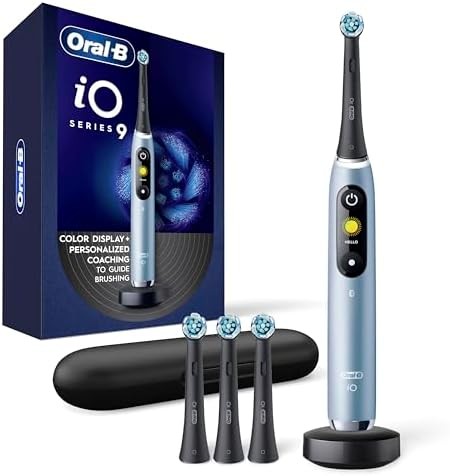
Oral-B iO Series 9 Electric Toothbrush
Check Price on AmazonAs an Amazon Associate we earn from qualifying purchases.
How Does the Philips Sonicare DiamondClean Smart 9500 Compare for Sonic Technology?
The Philips Sonicare DiamondClean Smart 9500 delivers sonic cleaning technology with 62,000 brush movements per minute, representing Philips’ premium electric toothbrush offering with comprehensive smart features and multiple cleaning modes.
Sonic technology creates high-frequency vibrations that drive fluid dynamics along the gum line and between teeth. While research comparing oscillating-rotating to sonic technology found oscillating-rotating brushes removed more plaque in orthodontic patients, sonic toothbrushes still demonstrate significant advantages over manual brushing. The Sonicare’s 62,000 movements per minute generate what Philips calls “dynamic fluid action” that extends cleaning beyond direct bristle contact.
Five brushing modes address different oral health needs: Clean, White+, Deep Clean+, Gum Health, and Sensitive. Each mode adjusts motor speed and intensity for the specific purpose. Three intensity settings within each mode provide further customization, allowing users to find their optimal balance between cleaning effectiveness and comfort. This extensive customization supports the research finding that sensitive modes maintain effectiveness while accommodating users with sensitivity concerns.
The pressure sensor provides gentle pulses and a brief vibration change when excessive force is detected. This protects against gum recession and enamel wear that can result from aggressive brushing. Studies on gentle brushing demonstrate that proper force application allows effective plaque removal without soft tissue damage, making pressure sensing particularly valuable for users transitioning from manual to electric brushing who may initially apply unnecessary force.
Smart sensor technology works with the Philips Sonicare app to track brushing habits, provide real-time guidance, and monitor coverage. The brush connects via Bluetooth to smartphones, displaying brush head position and providing coaching on brushing technique. While specific clinical evidence for smart sensor effectiveness wasn’t included in the primary research, the system aims to improve compliance with recommended brushing duration and coverage patterns.
Four premium brush heads accompany the DiamondClean Smart 9500: Premium Plaque Control (C3), Premium Gum Care (G3), Premium White (W3), and TongueCare+. Each head features different bristle arrangements and densities optimized for specific purposes. The ability to select appropriate heads mirrors research showing that brush head design impacts performance, particularly for accessing posterior teeth and interproximal spaces.
BrushSync technology automatically selects the optimal mode and intensity for the attached brush head, then tracks usage to remind users when replacement is needed. The system recognizes which head type is attached and recommends appropriate mode pairing. Head life tracking supports the three-month replacement schedule that maintains optimal bristle performance for effective plaque removal.
The sonic brush head shape differs significantly from oscillating-rotating designs, featuring an elongated shape similar to manual toothbrushes rather than the small round heads characteristic of Oral-B products. This design may feel more familiar to users transitioning from manual brushing, though research suggests smaller round heads may provide better posterior access in some cases.
Battery performance delivers approximately 14 days of use with twice-daily 2-minute brushing sessions. The brush charges via a premium glass charging base that also serves as a rinse cup, combining function with aesthetics. A USB travel case provides charging capability while traveling, addressing the compliance challenge of maintaining electric brushing habits away from home.
The premium travel case protects the brush and includes USB charging capability. Constructed from hard-shell material, the case accommodates the brush handle and two brush heads, allowing users to bring multiple head types for different purposes while traveling.
App connectivity provides brushing data tracking, personalized coaching based on your brushing patterns, and integration with Apple Health on iOS devices. The app includes progress reports, achievement tracking, and reminders to brush. While research on compliance shows many users don’t maintain optimal habits after supervised trials, app features aim to provide ongoing motivation and accountability.
At $279, the DiamondClean Smart 9500 represents Philips Sonicare’s premium tier with comprehensive features including multiple modes, smart sensors, four brush heads, and premium accessories. Users preferring sonic technology over oscillating-rotating action or seeking the elongated brush head shape familiar from manual brushes will find the DiamondClean Smart delivers advanced sonic cleaning with extensive customization.
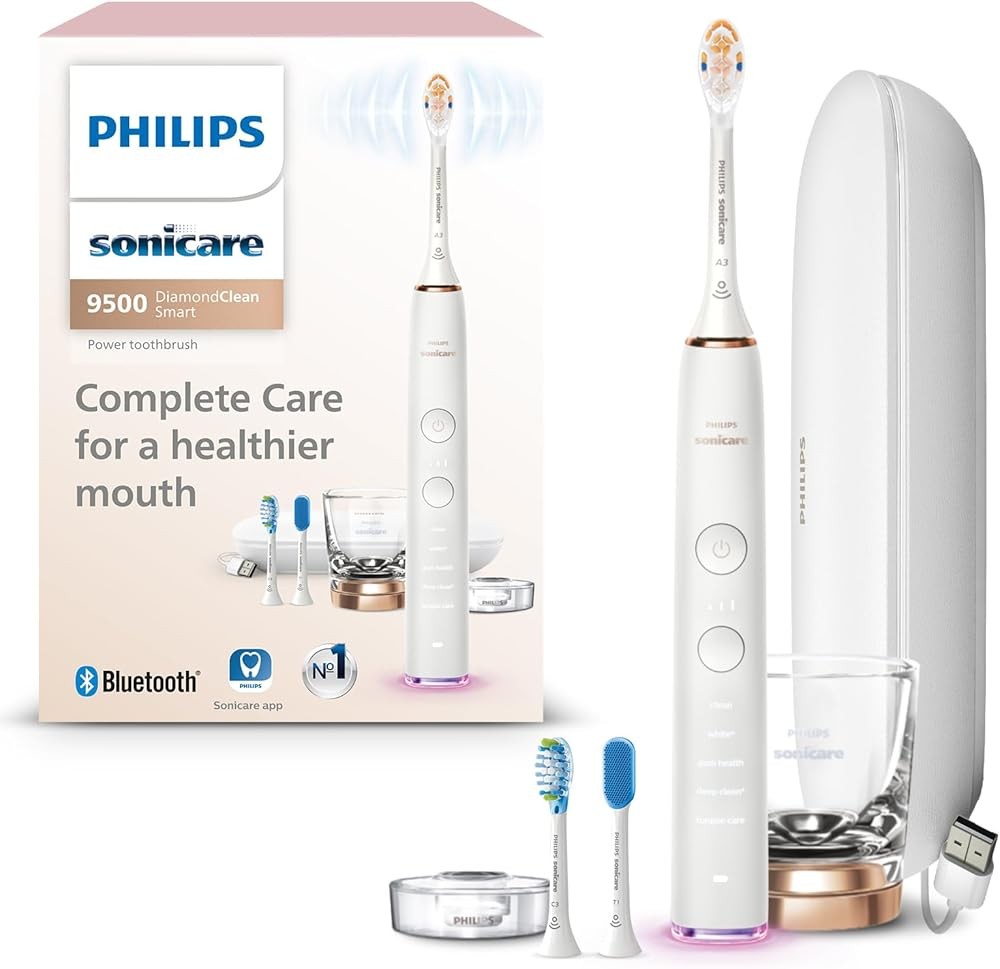
Philips Sonicare DiamondClean Smart 9500
Check Price on AmazonAs an Amazon Associate we earn from qualifying purchases.
Is the Philips Sonicare 5950 Series the Best Value Option?
The Philips Sonicare 5950 Series provides sonic cleaning technology with essential smart features at a mid-range price point, offering pressure sensing and multiple cleaning settings without the premium cost of the DiamondClean line.
Sonic technology in the 5950 Series delivers the same fundamental cleaning mechanism as higher-priced Sonicare models, using high-frequency vibrations to drive fluid action that extends cleaning beyond direct bristle contact. While specific movement counts aren’t prominently advertised for mid-range models, Sonicare technology consistently demonstrates advantages over manual brushing according to clinical research showing electric toothbrushes remove more plaque across various designs.
Six cleaning settings provide customization without the complexity of premium models: Clean, White, Sensitive, Gum Care, Deep Clean, and Turbo. This range addresses different user needs while keeping mode selection straightforward. The inclusion of Sensitive mode supports research demonstrating that gentle settings maintain effectiveness for users with gum inflammation or tooth sensitivity.
The pressure sensor alerts users when they’re brushing too hard through gentle vibration changes. This feature, typically reserved for higher-priced models, provides significant value in reducing gum recession and enamel wear risk. Studies on gentle brushing protocols demonstrate that appropriate force application achieves superior plaque removal compared to manual brushing while maintaining excellent soft tissue tolerance.
Battery runtime reaches 21 days with twice-daily 2-minute brushing, exceeding the typical 14-day runtime of premium models. This extended battery life reduces charging frequency, which may improve compliance for users who find frequent charging burdensome. The research on long-term compliance showing decreased electric toothbrush usage after trials end suggests that reducing maintenance friction may help sustain optimal brushing habits.
Two brush heads accompany the 5950 Series purchase. While fewer than the four heads included with the DiamondClean Smart, two heads provide sufficient supply for six months of use following the recommended three-month replacement schedule. Additional Sonicare brush heads are widely available, with options including Plaque Control, Gum Care, and Premium White varieties.
A travel case protects the brush during transport, though it lacks the USB charging capability of premium models. The hard-shell case accommodates the brush handle and one or two brush heads depending on packing configuration. Users who travel frequently may need to bring the standard charging base or purchase an additional USB charger separately.
The brush handle features indicator lights showing selected mode and battery status rather than the interactive displays of premium models. This simpler interface reduces complexity and potential failure points while still providing essential information. Mode selection uses a single button that cycles through available settings, with LED indicators showing the current selection.
Standard charging uses a small charging base that the brush handle sits in. Charging time and method are conventional for electric toothbrushes without the magnetic charging innovation of premium oscillating-rotating models or the glass charging vessel of premium Sonicare products. The practical charging approach keeps costs controlled while delivering reliable functionality.
At $109, the Sonicare 5950 Series occupies the value position, providing pressure sensing, multiple cleaning modes, and extended battery life at approximately one-third the price of premium models. Users seeking sonic technology with essential smart features but without premium pricing or app connectivity will find the 5950 Series delivers effective cleaning with important protective features like pressure sensing.
The 5950 Series represents a strategic choice for users who value pressure sensors and multiple cleaning modes but don’t need position detection, app connectivity, or premium accessories. The extended 21-day battery life provides practical advantages for users who dislike frequent charging or those who travel regularly and prefer not to bring charging equipment.
Can the Budget-Friendly Oral-B iO2 Deliver Research-Backed Performance?
The Oral-B iO2 Starter Kit brings oscillating-rotating technology with micro-vibrations and pressure sensing to a budget-friendly price point, providing the fundamental cleaning mechanism validated in clinical research without premium smart features.
The iO2 uses the same oscillating-rotating motion as the premium iO Series 9, incorporating the micro-vibrations that distinguish the iO line from traditional Oral-B electric toothbrushes. This technology proved to remove 24% more plaque than manual brushing in 12-week clinical trials. The motor creates the same fundamental cleaning action as premium iO models, delivering the plaque removal benefits at a fraction of the cost.
Three cleaning modes provide essential customization: Daily Clean for standard brushing, Sensitive for users with sensitivity concerns, and Gum Care for focused gingival health. This simplified mode selection removes complexity while maintaining the key sensitive mode validated in clinical research demonstrating gentle effectiveness for users with gingival inflammation.
A pressure sensor provides visual feedback through an LED indicator that illuminates red when excessive force is applied. While simpler than the dual visual and haptic feedback of the iO Series 9, the visual alert still helps users avoid aggressive brushing that can damage gums and enamel. Research on gentle brushing supports pressure control as important for achieving effective cleaning without soft tissue trauma.
Battery life reaches approximately 14 days with twice-daily 2-minute brushing. The iO2 charges via USB directly to the brush handle using a magnetic USB cable rather than requiring a separate charging base. This simplified charging approach reduces accessories and allows charging from any USB power source including computer USB ports, phone chargers, or portable battery packs.
Two brush heads accompany the iO2 Starter Kit purchase, providing six months of use following the recommended three-month replacement schedule. The brush heads are compatible across the iO line, allowing users to select from Gentle Care, Ultimate Clean, Targeted Clean, and other iO head varieties as needed.
The brush handle includes essential indicators showing selected mode and battery status through simple LEDs. No interactive display or app connectivity reduces complexity and cost while maintaining core functionality. Mode selection uses a single button that cycles through the three available modes, with LED patterns indicating the current selection.
Round brush head design matches the configuration that research suggests provides good posterior access compared to larger or elongated heads. The compact round shape characteristic of Oral-B oscillating-rotating brushes allows maneuvering around posterior molars and reaching tight spaces between teeth where plaque accumulates.
At $49, the iO2 provides oscillating-rotating technology with micro-vibrations and pressure sensing at approximately one-seventh the cost of the iO Series 9. This dramatic price reduction while maintaining the fundamental cleaning mechanism makes the research-validated technology accessible to budget-conscious users.
The iO2 represents the optimal choice for users who prioritize clinically-proven cleaning technology and essential protective features like pressure sensing over advanced smart features. Without position detection, app connectivity, or interactive displays, the iO2 delivers the core plaque removal benefits demonstrated in clinical trials at a price point comparable to basic battery-powered toothbrushes.
What About the AquaSonic Vibe Series for Entry-Level Sonic Cleaning?
The AquaSonic Vibe Series represents an entry-level sonic option with ADA acceptance, providing high-frequency vibrations and multiple brush heads at an accessible price point for users seeking sonic technology on a budget.
Sonic technology in the AquaSonic Vibe delivers 40,000 vibrations per minute, creating the high-frequency motion that distinguishes sonic brushes from oscillating-rotating designs. While not as high as the 62,000 movements per minute of premium Sonicare models, the 40,000 VPM still provides significant mechanical action far exceeding what manual brushing can achieve. Research demonstrates that electric toothbrushes consistently outperform manual brushing across various motor technologies.
ADA acceptance provides third-party validation that the brush safely and effectively removes plaque when used as directed. The American Dental Association Seal of Acceptance requires manufacturers to submit scientific evidence demonstrating safety and efficacy, then the ADA Council on Scientific Affairs reviews the evidence according to established criteria. This acceptance mark distinguishes the AquaSonic Vibe from many budget electric toothbrushes lacking independent validation.
Eight brush heads accompany the purchase, providing two years of use following the recommended three-month replacement schedule. This extensive supply eliminates the need to purchase replacement heads for an extended period, adding significant value to the initial purchase. The included heads allow users to stock multiple bathrooms or share the handle among family members while maintaining individual brush heads.
Four cleaning modes address different needs: Clean for daily brushing, Soft for sensitivity, Whiten for stain removal, and Massage for gum stimulation. While simpler than premium models offering 5-7 modes with multiple intensity levels, four modes provide adequate customization for most users. The Soft mode accommodates the research finding that gentle settings maintain effectiveness for users with sensitivity concerns.
Battery life reaches 30 days with twice-daily 2-minute brushing, exceeding premium models that typically provide 14-21 day runtime. This extended battery life reduces charging frequency significantly, addressing potential compliance barriers related to charging maintenance. The research on long-term usage suggests that convenience factors influence whether users maintain optimal brushing habits.
A travel case protects the brush during transport while maintaining hygiene. The hard-shell case accommodates the brush handle and multiple brush heads, allowing users to bring backup heads while traveling. Though the case lacks USB charging capability, the 30-day battery life reduces the likelihood of needing to charge while traveling for trips shorter than one month.
The brush handle uses standard USB charging via an included charging base. Charging time and method are conventional for budget electric toothbrushes, without the magnetic innovations or premium materials of higher-priced models. The charging base accepts a standard USB cable, allowing connection to any USB power source.
No pressure sensor is included, representing the primary feature sacrifice compared to higher-priced models with pressure sensing. Users must rely on their own judgment regarding appropriate force application. The research on gentle brushing demonstrates that excessive force can compromise outcomes, making the lack of pressure sensing the most significant limitation for users prone to aggressive brushing.
At $33, the AquaSonic Vibe Series provides sonic technology with ADA acceptance and extensive brush head supply at a price point comparable to premium manual toothbrushes. This accessible pricing makes electric brushing technology available to users for whom $100-300 electric toothbrushes represent prohibitive expense.
The AquaSonic Vibe suits users seeking sonic technology specifically, those who value ADA acceptance as third-party validation, families needing multiple brush heads for sharing a handle, or budget-conscious buyers who want electric toothbrush benefits without premium pricing. The lack of pressure sensing makes this less suitable for users with existing gum recession or those who tend to brush aggressively without feedback.
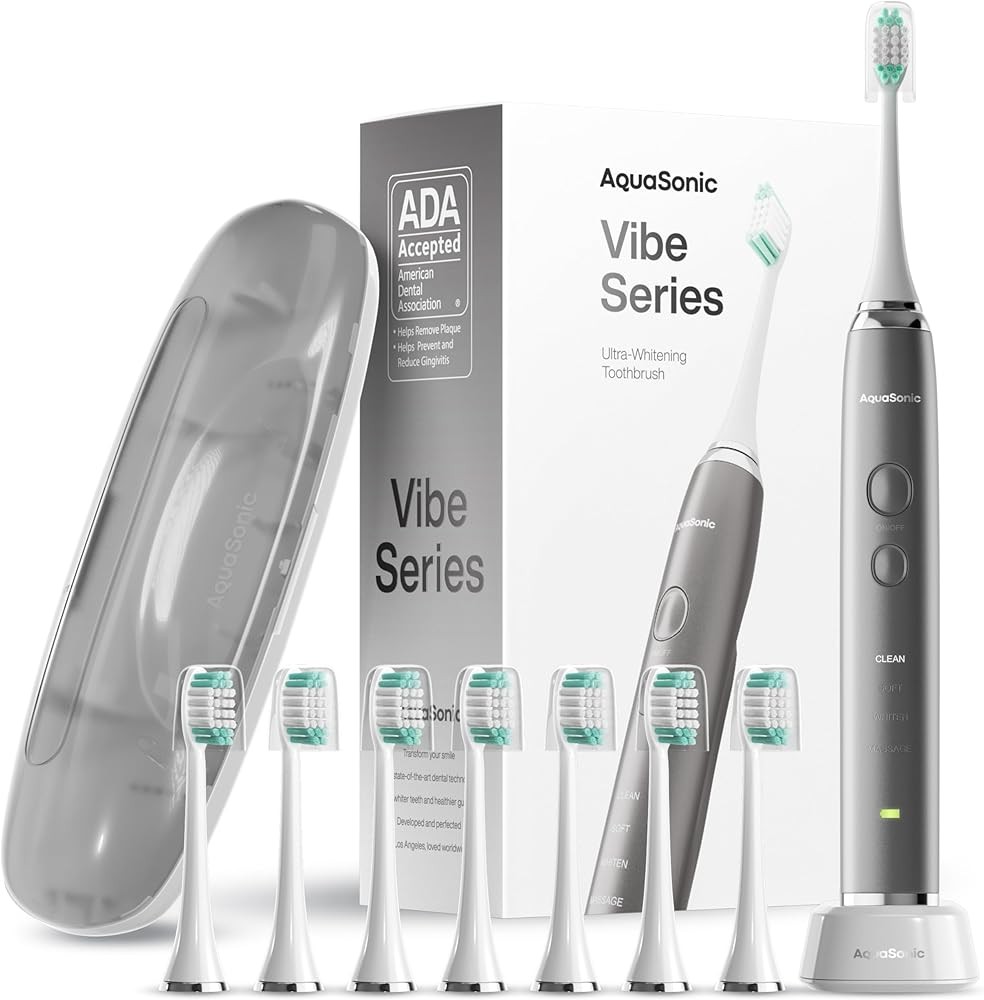
AquaSonic Vibe Series Ultra-Whitening Toothbrush
Check Price on AmazonAs an Amazon Associate we earn from qualifying purchases.
What Does a Complete Oral Care Routine Look Like?
Electric toothbrush technology provides substantial benefits, but comprehensive oral health requires a multi-faceted approach addressing the various ways plaque and bacteria accumulate in the mouth.
Foundation: An electric toothbrush with oscillating-rotating or sonic technology forms the core of mechanical plaque removal. Research demonstrates that electric toothbrushes remove significantly more plaque than manual brushing, with oscillating-rotating technology showing particular advantages. Users should brush for 2-3 minutes twice daily, in the morning after breakfast and at night before bed, using appropriate pressure and systematic coverage of all tooth surfaces.
Oral-B iO Series 9 Electric Toothbrush
Check Price on AmazonAs an Amazon Associate we earn from qualifying purchases.
Supporting tool: Even the most effective electric toothbrushes achieve only approximately 53% plaque-free interproximal surfaces according to research on interproximal cleaning, meaning nearly half of between-tooth areas retain plaque after brushing. Water flossers complement electric brushing by using pressurized water streams to remove debris and bacteria from interproximal spaces and below the gum line. The combination of electric brushing for tooth surfaces and water flossing for interproximal areas provides more comprehensive plaque removal than either technology alone.
Additional support: Fluoride toothpaste provides chemical benefits that complement mechanical plaque removal from electric brushing. Fluoride strengthens enamel through remineralization, making teeth more resistant to acid attacks from bacteria. While electric toothbrush research doesn’t typically evaluate toothpaste chemistry separately from brush technology, dental professional consensus strongly supports fluoride toothpaste use with electric brushing for optimal cavity resistance.
Nutritional foundation: Diet significantly impacts oral health regardless of brushing technology. Frequent sugar consumption feeds cavity-causing bacteria, while acidic foods and beverages soften enamel temporarily. Adequate calcium and vitamin D intake supports tooth structure. Users can enhance their electric toothbrush benefits by limiting between-meal snacking, especially on sugary or acidic items, drinking water after eating, and maintaining balanced nutrition including bone-supporting minerals.
Antimicrobial support: Therapeutic mouthwashes containing chlorhexidine, essential oils, or cetylpyridinium chloride provide additional antibacterial activity beyond mechanical plaque removal. While electric toothbrushes excel at physical plaque disruption, antimicrobial rinses can reach areas that brushing misses and reduce bacterial load throughout the mouth. Some mouthwashes also provide fluoride for additional cavity protection or desensitizing agents for users with sensitivity.
Professional monitoring: Regular dental examinations and professional cleanings remain essential even with optimal home care using electric toothbrushes and water flossers. Dentists can identify early cavity development, assess gum health, perform professional scaling to remove calcified plaque (calculus) that home brushing cannot eliminate, and provide personalized guidance on technique improvement. Clinical research demonstrates that scheduled recall visits combined with optimal home brushing techniques provide superior long-term outcomes for gingival health and plaque control.
Habit optimization: Maintaining consistency matters more than having the most advanced technology. The study tracking long-term compliance found that most users weren’t maintaining optimal brushing frequency six months after a supervised trial ended, despite experiencing better outcomes during consistent use. Creating sustainable habits through routine anchoring (brushing immediately after specific daily activities), environmental design (keeping brush readily visible), and accountability systems (app tracking, partner commitments) helps maintain the consistency required for research-demonstrated benefits.
Technique refinement: Professional instruction in electric toothbrush technique improves outcomes. The research comparing professional to self-brushing demonstrated that participants achieved professional-level plaque removal only after five weeks of training with repeated hands-on instruction. Users should request technique guidance from dental hygienists during regular appointments, focusing on proper brush positioning, appropriate pressure, systematic coverage patterns, and adequate duration.
Personalization: Individual oral health needs vary based on factors including gum health status, cavity risk, orthodontic appliances, and systemic health conditions. Some users benefit from specialized approaches like prescription-strength fluoride, antimicrobial gels for periodontal pockets, or specialized brush heads for specific conditions. Working with dental professionals to identify personal risk factors and customize the oral care routine beyond generic recommendations optimizes outcomes.
Our Research Process
Frequently Asked Questions
Do electric toothbrushes really remove more plaque than manual brushing?
Yes. A 12-week randomized controlled trial with 100 adults found that oscillating-rotating electric toothbrushes removed 24% more plaque and reduced gingivitis 18% more than manual toothbrushes. Multiple studies demonstrate consistently superior plaque removal with electric toothbrushes across all tooth surfaces.
What’s the difference between oscillating-rotating and sonic toothbrushes?
Oscillating-rotating toothbrushes use small round heads that rotate back and forth, while sonic toothbrushes use vibrations at sonic frequencies with elongated brush heads. Clinical research comparing the two technologies found that oscillating-rotating brushes removed 34.6% of plaque compared to 24.8% with sonic brushes in orthodontic patients.
How long should I brush with an electric toothbrush?
Research shows that 2-3 minutes provides optimal plaque removal. A study examining brushing duration found that 3 minutes of brushing removed approximately 50% more plaque than 1 minute with both manual and electric toothbrushes. Most electric toothbrushes include 2-minute timers to ensure adequate brushing time.
Are electric toothbrushes safe for sensitive teeth and gums?
Yes, when used properly. Clinical trials demonstrate that electric toothbrushes with pressure sensors and sensitive modes are safe and effective. The Oral-B iO with a gentle brush head showed significantly better results than manual brushing without increased soft tissue damage when used in sensitive mode.
Do I still need to floss if I use an electric toothbrush?
Yes. While electric toothbrushes remove more interproximal plaque than manual brushes, research shows they don’t eliminate the need for flossing. Studies found electric toothbrushes achieved 53.23% plaque-free interproximal surfaces compared to 30.57% with manual brushes, but comprehensive oral care still requires both brushing and flossing.
How much better are rechargeable electric toothbrushes compared to battery-operated models?
Rechargeable models with oscillating-rotating or pulsating actions show superior plaque removal. A clinical trial found rechargeable brushes removed 46.5% of whole-mouth plaque compared to 41.5% with battery-operated brushes. The difference was most notable at hard-to-reach approximal sites.
Can children use electric toothbrushes?
Yes. A 2025 systematic review analyzing studies in children up to age 18 found that power toothbrushes offered a small but significant advantage in plaque removal over manual toothbrushes. The evidence was strongest for oscillating-rotating models, with proper supervision recommended for younger children.
How often should I replace electric toothbrush heads?
Replace brush heads every 3 months, similar to manual toothbrushes. Research on plaque removal efficacy was conducted with properly maintained brush heads. Worn bristles become less effective at removing plaque and may harbor bacteria.
Will an electric toothbrush help with gingivitis?
Yes. Multiple studies demonstrate electric toothbrushes reduce gingival inflammation more effectively than manual brushing. One 12-week trial found that significantly more electric toothbrush users transitioned from “not healthy” to “healthy” gingival status according to American Academy of Periodontology criteria.
Are smart features like pressure sensors and app connectivity worth it?
Pressure sensors provide documented benefits by reducing excessive force that can damage gums and enamel. App connectivity helps track brushing habits and coverage, though the core benefit comes from the brush technology itself. Studies using brushes with pressure sensors showed effective plaque removal without soft tissue damage.
Our Top Recommendations
Based on comprehensive analysis of clinical research and product features, these electric toothbrushes deliver evidence-based plaque removal with appropriate feature sets for different budgets and preferences.
For complete plaque removal with advanced features: The Oral-B iO Series 9 combines oscillating-rotating technology validated in clinical trials with micro-vibrations, AI position detection, and comprehensive smart features. The 12-week study demonstrating 24% more plaque removal than manual brushing used this technology platform. Seven cleaning modes including validated sensitive mode, dual pressure sensing feedback, interactive display, and 2-week battery life justify the premium pricing for users seeking the most advanced option.
Oral-B iO Series 9 Electric Toothbrush
Check Price on AmazonAs an Amazon Associate we earn from qualifying purchases.
For proven performance at accessible pricing: The Oral-B iO2 provides the same fundamental oscillating-rotating technology with micro-vibrations as the premium iO Series 9 at approximately one-seventh the cost. Pressure sensing, three essential modes including sensitive, and 14-day battery life deliver research-validated cleaning without premium smart features. This represents exceptional value for budget-conscious users prioritizing clinically-proven technology.
For sonic technology preference: The Philips Sonicare DiamondClean Smart 9500 delivers premium sonic cleaning with 62,000 brush movements per minute, five modes with three intensity levels each, smart sensor app connectivity, and four included brush heads. Users preferring sonic technology over oscillating-rotating action or seeking the familiar elongated brush head shape will find comprehensive features and proven sonic effectiveness.
Philips Sonicare DiamondClean Smart 9500
Check Price on AmazonAs an Amazon Associate we earn from qualifying purchases.
For balanced value with essential features: The Philips Sonicare 5950 Series provides sonic technology with pressure sensing and six cleaning modes at mid-range pricing. The exceptional 21-day battery life, included travel case, and pressure sensor typically reserved for premium models create strong value proposition for users seeking essential smart features without premium cost or app complexity.
For entry-level sonic option: The AquaSonic Vibe Series delivers 40,000 vibrations per minute with ADA acceptance at budget pricing. Eight included brush heads provide two-year supply, while 30-day battery life and four cleaning modes offer adequate features for users seeking electric toothbrush benefits at accessible cost. The lack of pressure sensing represents the primary limitation.
AquaSonic Vibe Series Ultra-Whitening Toothbrush
Check Price on AmazonAs an Amazon Associate we earn from qualifying purchases.
Join the discussion: Facebook | X | YouTube | Pinterest
Conclusion
Clinical research provides clear evidence that electric toothbrushes remove significantly more plaque than manual brushing, with oscillating-rotating technology demonstrating the strongest performance in head-to-head comparisons with sonic designs. The 12-week randomized controlled trial showing 24% more plaque reduction and 18% more gingivitis reduction with oscillating-rotating electric brushes establishes a robust foundation for recommending this technology.
Key research findings inform practical electric toothbrush selection. Oscillating-rotating brushes removed 34.6% of plaque compared to 24.8% with sonic technology in orthodontic patients, suggesting oscillating-rotating action provides measurable advantages particularly in challenging cleaning situations. Battery-powered electric toothbrushes showed 29.6-42.1% improved plaque removal over manual brushing, while rechargeable models with advanced features like pulsating action demonstrated even greater efficacy at interproximal sites where periodontal disease initiates.
Feature selection should prioritize elements with clinical evidence. Pressure sensors reduce excessive force that damages gums and enamel while maintaining the gentle effectiveness demonstrated in sensitivity studies. Timer functions support the research finding that 3 minutes of brushing removes approximately 50% more plaque than 1 minute. Multiple cleaning modes including validated sensitive settings accommodate users with gingival inflammation and sensitivity while maintaining superior performance compared to manual brushing. Smart features like app connectivity and position detection offer theoretical benefits through behavior modification but lack direct clinical evidence for improved outcomes compared to the same brush without connectivity.
The Oral-B iO Series 9 represents the research-validated premium choice with oscillating-rotating technology plus micro-vibrations, comprehensive features including pressure sensing and position detection, and the technology platform used in clinical trials demonstrating superior plaque removal. The Oral-B iO2 provides the same fundamental cleaning mechanism at budget-friendly pricing, making research-validated technology accessible without premium smart features. For users preferring sonic technology, the Philips Sonicare DiamondClean Smart 9500 delivers premium sonic cleaning with extensive customization, while the Sonicare 5950 Series offers essential features including pressure sensing at mid-range pricing with exceptional battery life.
Budget-conscious users can achieve significant plaque removal improvements over manual brushing with the AquaSonic Vibe Series, which provides ADA-accepted sonic technology and extensive brush head supply at accessible pricing, though without pressure sensing. The research demonstrates that even basic battery-powered electric toothbrushes substantially outperform manual brushing, suggesting that any electric toothbrush represents an upgrade for users currently using manual brushes.
Comprehensive oral health requires combining electric toothbrush technology with interproximal cleaning through flossing or water flossing, fluoride toothpaste, appropriate nutrition, and regular professional dental care. The studies showing that electric toothbrushes achieve approximately 53% plaque-free interproximal surfaces indicate that brushing alone, even with superior technology, doesn’t eliminate the need for dedicated interproximal cleaning. Long-term compliance research showing decreased usage after supervised trials highlights the importance of sustainable habits supported by features like adequate battery life, convenient charging, and appropriate complexity levels matching user preferences.
Proper technique maximizes electric toothbrush benefits. Research demonstrates that 2-3 minutes of brushing with systematic quadrant coverage, appropriate pressure facilitated by pressure sensors, and adequate brush head replacement every three months optimizes plaque removal. Professional instruction in electric toothbrush technique improves outcomes, with studies showing that trained users achieved professional-level plaque removal after adequate instruction.
The clinical evidence supports electric toothbrush adoption for most users based on consistent demonstrations of superior plaque removal, gingival health improvement, and safety when used with appropriate technique and features like pressure sensing. Selecting models with oscillating-rotating technology, pressure sensors, adequate battery life, and appropriate cleaning modes provides the strongest foundation for achieving the plaque removal and gingival health benefits documented in rigorous clinical trials.
For more context, see our guides on Waterpik vs Sonicare Power Flosser: Side-by-Side Comparison, Tongue Scraper Benefits: Oral Microbiome and Halitosis Research, and Best Water Flosser for Gum Disease: Periodontal Health Research.
Related Reading
- Best Water Flosser: Research on Gum Health and Plaque Removal
- Best Continuous Glucose Monitors for Non-Diabetics: Research on Metabolic Health
- Best Greens Powder: Clinical Research on Nutrient Absorption
- Best Electrolyte Supplements: Research on Hydration and Performance
- Bone Health and Osteoporosis Supplements for Women Over 40
- Best Knee Braces and Compression Sleeves for Arthritis
- Best Acupressure Mats for Pain and Sleep
References
-
Grender J, Goyal CR, Qaqish J, Timm H, Adam R. A 12-Week Randomized Controlled Trial Comparing a Novel Electric Toothbrush With an Extra Gentle Brush Head to a Manual Toothbrush for Plaque and Gingivitis Reduction. Compendium of continuing education in dentistry. 2022. https://pubmed.ncbi.nlm.nih.gov/35809255/
-
Erbe C, Jacobs C, Klukowska M, Timm H, Grender J. A randomized clinical trial to evaluate the plaque removal efficacy of an oscillating-rotating toothbrush versus a sonic toothbrush in orthodontic patients using digital imaging analysis of the anterior dentition. The Angle orthodontist. 2019. https://pubmed.ncbi.nlm.nih.gov/30516414/
-
de Jager M, Wiedemann W, Klinger H, Melzer B, Sturm D. Plaque removal efficacy of two rotating/oscillating electric toothbrushes. The Journal of clinical dentistry. 2001. https://pubmed.ncbi.nlm.nih.gov/11475707/
-
Danser MM, Timmerman MF, Jzerman Y, Piscaer MI, van der Velden U. Plaque removal with a novel manual toothbrush (X-Active) and the Braun Oral-B 3D Plaque Remover. Journal of clinical periodontology. 2003. https://pubmed.ncbi.nlm.nih.gov/12622856/
-
Ikawa T, Mizutani K, Sudo T, Kano C, Ikeda Y. Clinical comparison of an electric-powered ionic toothbrush and a manual toothbrush in plaque reduction: A randomized clinical trial. International journal of dental hygiene. 2021. https://pubmed.ncbi.nlm.nih.gov/33029896/
-
Nieri M, Giuntini V, Pagliaro U, Giani M, Franchi L. Efficacy of a U-Shaped Automatic Electric Toothbrush in Dental Plaque Removal: A Cross-Over Randomized Controlled Trial. International journal of environmental research and public health. 2020. https://pubmed.ncbi.nlm.nih.gov/32605239/
-
Rapley JW, Killoy WJ. Subgingival and interproximal plaque removal using a counter-rotational electric toothbrush and a manual toothbrush. Quintessence international. 1994. https://pubmed.ncbi.nlm.nih.gov/8190879/
-
Cronin MJ, Dembling WZ, King DW, Goodman D, Cugini MA. A clinical study of plaque removal with an advanced rechargeable power toothbrush and a battery-operated device. American journal of dentistry. 2002. https://pubmed.ncbi.nlm.nih.gov/12691271/
-
Dağdeviren F, Van der Weijden GAF, Zijlstra CPL, Slot DE. The Effectiveness of Power Versus Manual Toothbrushes on Plaque Removal and Gingival Health in Children-A Systematic Review and Meta-Analysis. International journal of dental hygiene. 2025. https://pubmed.ncbi.nlm.nih.gov/40739767/
-
Bartizek RD, Biesbrock AR. Dental plaque removal efficacy of a battery-powered toothbrush vs. a control Japanese manual toothbrush. American journal of dentistry. 2002. https://pubmed.ncbi.nlm.nih.gov/12512990/
-
Williams K, Ferrante A, Dockter K, Haun J, Biesbrock AR. One- and 3-minute plaque removal by a battery-powered versus a manual toothbrush. Journal of periodontology. 2004. https://pubmed.ncbi.nlm.nih.gov/15455739/
-
Ruhlman CD, Bartizek RD, Biesbrock AR. Plaque removal efficacy of a battery-operated toothbrush compared to a manual toothbrush. American journal of dentistry. 2001. https://pubmed.ncbi.nlm.nih.gov/11699735/
-
Biesbrock AR, Bartizek RD. Plaque removal efficacy of a prototype power toothbrush compared to a control manual toothbrush. American journal of dentistry. 2005. https://pubmed.ncbi.nlm.nih.gov/15973831/
-
Baab DA, Johnson RH. The effect of a new electric toothbrush on supragingival plaque and gingivitis. Journal of periodontology. 1989. https://pubmed.ncbi.nlm.nih.gov/2778601/
Recommended Products