Tongue Scraper Benefits: Oral Microbiome and Halitosis Research
Summarized from peer-reviewed research indexed in PubMed. See citations below.
Halitosis affects up to 25% of adults and research links this persistent bad breath to specific bacteria that accumulate on the tongue coating. The Mouthology Copper Tongue Scraper 2-Pack ($8) removes this bacterial coating with a smooth curved design that cleanly sweeps from back to front in one motion. Published studies show that mechanical tongue cleaning effectively reduces volatile sulfur compounds (VSCs) produced by tongue coating bacteria, which are the primary cause of oral malodor. The MasterMedi Stainless Steel & Copper Combo ($9) provides a budget alternative with both copper and stainless steel scrapers for material comparison. Here’s what the published research shows about tongue scraping, oral microbiome composition, and halitosis management.
Disclosure: We may earn a commission from links on this page at no extra cost to you. Affiliate relationships never influence our ratings. Full policy →


| Feature | Mouthology Copper | MasterMedi Combo | MasterMedi Travel | Me Mother Earth |
|---|---|---|---|---|
| Material | 100% copper | Stainless + copper | 100% copper | Stainless steel |
| Pack Size | 2-pack | 2-pack (1 each) | 1 with case | 2-pack |
| Travel Case | No | No | Yes | No |
| Price | $8 | $9 | $11 | $12 |
| Dishwasher Safe | No | Stainless only | No | Yes |
| Width | Standard | Standard | Standard | Wide |
| Edge Type | Smooth rounded | Smooth rounded | Smooth rounded | Smooth rounded |
| Best For | Daily home use | Material comparison | Frequent travelers | Durability focus |
What Does Research Show About Tongue Coating and Halitosis?
Multiple studies establish the tongue coating as the primary source of oral malodor in healthy individuals without periodontal disease. A 2019 study comparing 16 healthy subjects to 12 halitosis patients found significant differences in tongue coating bacterial composition, with higher volatile sulfur compound (VSC) levels linked to specific bacterial species. The research identified particular microbial patterns associated with bad breath, confirming that tongue bacteria composition directly influences oral odor.
A comprehensive 2024 study published in the Journal of Dental Research examined tongue-coating microbial and metabolic characteristics in halitosis patients, revealing greater microbial diversity on the tongue coating in those with chronic bad breath. The research mapped specific metabolic pathways responsible for VSC production, showing that certain bacterial communities produce hydrogen sulfide and methyl mercaptan through amino acid metabolism.
The tongue dorsum provides an ideal environment for bacterial accumulation due to its papillated surface structure. These papillae create numerous small spaces where bacteria, food debris, and dead cells collect, forming the visible coating. Research demonstrates that this coating serves as a reservoir for VSC-producing bacteria that generate the sulfur compounds responsible for malodor.
Key takeaway: Clinical studies consistently identify tongue coating bacteria as the primary source of halitosis in individuals without gum disease, with specific bacterial species and metabolic pathways responsible for VSC production.
Studies examining oral microbiome patterns show that halitosis involves dysbiosis—an imbalance in the normal bacterial community. A 2023 study of 10 halitosis patients with periodontal disease documented thick tongue coating bacteria populations that differed from healthy controls. This research highlights how tongue coating serves as a bacterial reservoir that can influence both breath quality and overall oral health.
The bacterial species most commonly associated with VSC production include Fusobacterium nucleatum, Porphyromonas gingivalis, and various Prevotella species. These bacteria metabolize proteins and amino acids from food debris, dead cells, and saliva, producing sulfur-containing compounds as metabolic byproducts. The accumulation of these bacteria in tongue coating correlates directly with measurable VSC levels and breath malodor severity.
How Do Volatile Sulfur Compounds Cause Bad Breath?
Volatile sulfur compounds represent the primary chemical cause of oral malodor. A 2019 review detailed how oral bacteria produce VSCs including hydrogen sulfide, methyl mercaptan, and dimethyl sulfide through the breakdown of sulfur-containing amino acids. These gaseous compounds have extremely low odor thresholds, meaning even small concentrations produce detectable bad breath.
Hydrogen sulfide produces a rotten egg odor, while methyl mercaptan generates a decomposition smell. These compounds form when proteolytic bacteria break down proteins from food particles, dead epithelial cells, and components of saliva. The tongue coating provides both the bacterial populations and the substrate material for this metabolic process, creating an ideal environment for VSC production.
Research measuring VSC levels uses specialized equipment to quantify these compounds in parts per billion. Studies consistently show that individuals with halitosis have significantly elevated VSC measurements compared to those with fresh breath. The correlation between VSC levels and subjective breath malodor is well-established across multiple research studies.
Bottom line: VSCs are sulfur-containing gases produced by bacterial metabolism in the tongue coating, with hydrogen sulfide and methyl mercaptan being the primary malodor compounds measured in halitosis research.
A 2020 review examined the role of oral microbiota in intra-oral halitosis, confirming that the tongue dorsum serves as the main VSC production site in most cases. The research noted that mechanical removal of tongue coating effectively reduces VSC levels, supporting the use of tongue scrapers as a practical intervention.
The bacterial enzymes responsible for VSC production include cysteine desulfhydrase and methionine-gamma-lyase. These enzymes break down sulfur-containing amino acids, releasing volatile sulfur compounds. The activity level of these enzymes correlates with both bacterial population density and the thickness of tongue coating, explaining why heavy coating typically produces stronger malodor.
What Is the Oral Microbiome and Why Does It Matter?
The oral microbiome consists of hundreds of bacterial species that colonize all oral surfaces, including teeth, gums, cheeks, and tongue. A 2023 review identified the oral microbiome as a co-mediator of both halitosis and periodontal disease, highlighting the interconnected nature of oral health conditions. This bacterial community plays roles in both health maintenance and disease development depending on its composition and balance.
Different oral surfaces harbor distinct bacterial communities. The tongue coating supports particularly dense and diverse bacterial populations due to its rough surface texture. Research shows that this tongue microbiome differs significantly between individuals with and without halitosis, with specific bacterial species overrepresented in those with chronic bad breath.
The oral microbiome performs both beneficial and potentially harmful functions. Beneficial bacteria help protect against pathogenic species, contribute to nitrate reduction important for cardiovascular health, and support normal oral physiology. However, when the microbiome becomes imbalanced (dysbiosis), certain bacterial species can proliferate and produce compounds like VSCs that cause oral malodor.
What this means for you: Maintaining a balanced oral microbiome through mechanical cleaning helps support both fresh breath and overall oral health, as the bacterial community influences multiple aspects of oral function.
A 2022 review in the Journal of Dental Research discussed the importance of nitrate reduction for oral health, noting that oral bacteria play beneficial roles in nitrate metabolism with systemic cardiovascular implications. This research emphasizes that the oral microbiome shouldn’t be eliminated entirely, but rather maintained in healthy balance through appropriate oral hygiene practices.
The concept of microbiome management differs from sterilization. Rather than attempting to eliminate all oral bacteria, effective oral hygiene aims to control bacterial populations and minimize excessive accumulation of coating material where problematic bacteria thrive. Tongue scraping fits this management approach by removing excess coating while allowing normal bacterial populations to persist on oral surfaces.
Does Tongue Scraping Change Oral Microbiome Composition?
Research examining tongue scraping effects on microbiome composition shows that mechanical cleaning primarily removes the thick coating layer where bacteria accumulate most densely. A 2020 review on microbiota and malodor noted that mechanical tongue cleaning reduces bacterial load and VSC production without completely eliminating oral bacteria. This selective removal helps rebalance the microbial community rather than creating oral sterility.
Studies comparing tongue scraping to tongue brushing demonstrate that scraping removes more coating material and bacteria. The scraping motion mechanically lifts the coating from between tongue papillae, where bacteria and debris accumulate. This mechanical action appears more effective than brushing for coating removal, though both methods can reduce bacterial populations to some degree.
The bacterial species most affected by tongue scraping are those residing in the coating layer itself. Research suggests that bacteria attached directly to the tongue epithelium or residing in saliva are less affected by scraping than those in the coating matrix. This differential effect may help explain why scraping reduces VSC-producing bacteria without eliminating beneficial oral microbiome members.
The research verdict: Tongue scraping mechanically removes accumulated coating and associated bacteria, reducing VSC-producing species while maintaining overall oral microbiome diversity.
A 2023 study examined the antimicrobial effects of halitosis mouthrinse in a laboratory model, finding that chemical antimicrobial approaches reduced halitosis-causing bacteria (PMID: 34745444). However, this research also suggested that mechanical removal through tongue scraping offers advantages by targeting the coating layer specifically without broader antimicrobial effects that might affect beneficial bacteria.
The immediate effects of tongue scraping include visible coating removal and measurable VSC reduction. However, research indicates that bacterial populations can recolonize within hours, which explains why daily tongue cleaning provides better results than sporadic use. Consistent mechanical removal limits excessive coating accumulation and maintains lower baseline bacterial loads.
How Does Diet Influence Tongue Coating and Oral Microbiome?
Dietary factors significantly affect oral microbiome composition and function. A 2025 systematic review analyzed 22 clinical studies examining diet and nutrition effects on oral microbiota, confirming that dietary patterns influence the bacterial species that colonize oral surfaces. This research shows that what you eat shapes the microbial community in your mouth, including the bacteria residing in tongue coating.
Protein-rich foods provide substrates for bacterial proteolysis, the breakdown process that generates VSCs. Foods containing sulfur-containing amino acids (cysteine and methionine) may particularly contribute to VSC production when metabolized by oral bacteria. This helps explain why high-protein meals sometimes precede temporary increases in oral malodor.
Fermentable carbohydrates affect oral bacteria differently than proteins. While simple sugars primarily influence cariogenic bacteria associated with tooth decay, protein metabolism by tongue coating bacteria produces the sulfur compounds responsible for halitosis. This distinction suggests that diet influences different aspects of oral health through effects on specific bacterial populations.
Clinical data reveals: Dietary composition modulates oral microbiome bacterial species and metabolic activity, with protein metabolism by tongue bacteria contributing to VSC production and halitosis.
The systematic review findings indicate that dietary interventions might complement mechanical tongue cleaning for halitosis management. However, research specifically examining dietary modifications for halitosis remains limited compared to studies on mechanical cleaning methods. Current evidence most strongly supports mechanical tongue coating removal as the primary intervention.
Hydration status also influences tongue coating formation. Reduced saliva flow allows bacterial accumulation and coating development, while adequate hydration supports normal salivary clearance. Some research suggests that dry mouth conditions exacerbate halitosis through both reduced bacterial clearance and increased tongue coating.
Are There Genetic Factors in Halitosis and Oral Microbiome?
Recent research reveals that genetic variation influences oral microbiome composition and halitosis susceptibility. A 2025 study examining 689 subjects found that polymorphisms in the hTAS2R38 taste receptor gene modulate oral microbiota and halitosis. This research demonstrates that individual genetic differences affect which bacterial species colonize the mouth and influence halitosis risk.
The hTAS2R38 gene codes for a bitter taste receptor that also appears to influence bacterial colonization patterns. The study identified specific genetic variants associated with different oral microbiome profiles and varying halitosis susceptibility. This finding helps explain why some individuals develop chronic halitosis more readily than others despite similar oral hygiene practices.
Genetic factors likely interact with environmental influences like diet, oral hygiene, and overall health status to determine actual halitosis outcomes. While genetics may influence baseline susceptibility, research still demonstrates that mechanical tongue cleaning effectively reduces VSCs and improves breath quality regardless of genetic background.
What the data says: Genetic variation affects oral microbiome composition and halitosis susceptibility, but mechanical tongue cleaning provides benefits across different genetic profiles.
The practical implication of genetic research is that individual variation in halitosis should be expected. Some people may require more diligent tongue cleaning or more frequent cleaning sessions to achieve similar results. This personalized variation aligns with clinical observations that halitosis management effectiveness varies among individuals.
Future research may identify genetic testing approaches to predict halitosis risk or customize management strategies. However, current evidence-based recommendations focus on mechanical tongue cleaning as a universal intervention supported by consistent research findings across diverse populations.
What Do Studies Show About Periodontal Disease and Tongue Coating?
The relationship between periodontal disease and tongue coating involves bidirectional influences. A 2023 study of 20 patients demonstrated that non-surgical periodontal treatment reduced halitosis-causing bacteria and improved breath quality. This research suggests that periodontal bacterial reservoirs can seed tongue coating with pathogenic species, while tongue coating bacteria may influence periodontal health.
Patients with periodontitis often exhibit thick tongue coating with bacterial species associated with both periodontal disease and halitosis. The research examining halitosis patients with periodontitis and gingivitis documented characteristic tongue coating bacterial patterns in those with gum disease (PMID: 38454982). This finding indicates that periodontal pathogens can colonize tongue coating, creating a reservoir that may contribute to disease recurrence.
Best Water Flosser devices help manage periodontal health by removing bacterial biofilm from gum pockets, while tongue scraping addresses the separate bacterial reservoir on the tongue surface. Together, these mechanical cleaning approaches target different bacterial niches involved in periodontal disease and halitosis.
The evidence shows: Periodontal disease and tongue coating bacteria influence each other, with periodontal pathogens colonizing tongue coating and potentially affecting treatment outcomes.
Professional periodontal treatment improves halitosis by reducing periodontal bacterial loads. However, research suggests that maintaining reduced tongue coating through daily scraping may help sustain periodontal treatment benefits by minimizing bacterial recolonization from the tongue reservoir. This complementary effect supports including tongue cleaning in comprehensive periodontal maintenance protocols.
The bacterial species overlap between periodontal pockets and tongue coating includes Porphyromonas gingivalis, Prevotella intermedia, and Fusobacterium nucleatum. These species contribute to both periodontal tissue destruction and VSC production, explaining the common association between gum disease and chronic halitosis.
Can Probiotics Affect Oral Microbiome and Halitosis?
Probiotic interventions targeting oral microbiome composition show promise in research settings. A 2023 randomized double-blind placebo-controlled trial examined 68 participants receiving Lactobacillus paracasei ET-22 probiotic lozenges, finding that the intervention reduced halitosis and modulated oral microbiome dysregulation. This clinical trial provides evidence that specific probiotic strains may help manage halitosis through microbiome effects.
The probiotic mechanism appears to involve competitive inhibition, where beneficial bacterial species outcompete VSC-producing bacteria for colonization sites and nutrients. The Lactobacillus strain used in the study may also produce antimicrobial compounds that inhibit halitosis-associated bacteria. These combined effects can shift microbiome composition toward a healthier balance.
However, probiotic research for halitosis remains in earlier stages compared to mechanical tongue cleaning studies. While the randomized controlled trial showed positive results, additional research is needed to establish optimal probiotic strains, dosing, and duration of treatment. Current evidence most strongly supports mechanical cleaning as the primary intervention.
Key finding: A randomized controlled trial showed that specific probiotic strains can reduce halitosis and modulate oral microbiome, though mechanical tongue cleaning has more extensive research support.
Combining probiotics with mechanical tongue cleaning represents a potential complementary approach. Removing coating material through scraping could theoretically improve probiotic colonization by reducing competition from existing bacterial populations. However, this combined strategy hasn’t been extensively studied in clinical trials.
Best Electric Toothbrush devices also support oral microbiome management by removing bacterial plaque from tooth surfaces, working alongside tongue scraping and potentially probiotic interventions as part of comprehensive oral hygiene.
How Effective Is Tongue Scraping Compared to Other Interventions?
Multiple systematic reviews confirm tongue scraping effectiveness for VSC reduction and halitosis management. A comprehensive 2023 review in Clinical Oral Investigations identified mechanical tongue cleaning as an effective first-line intervention for halitosis, with tongue coating bacteria established as the primary cause. This review synthesized evidence from numerous studies supporting tongue scraping as a practical, evidence-based approach.
Comparing tongue scraping to mouthwash shows different mechanisms and effects. Antimicrobial mouthwashes chemically reduce bacterial populations throughout the mouth, while tongue scraping mechanically removes the coating layer where bacteria accumulate most densely. Some research suggests combining both approaches may provide additive benefits, though mechanical cleaning alone demonstrates consistent effectiveness.
Tongue scraping versus tongue brushing comparisons generally favor scraping for coating removal efficiency. The scraping motion lifts coating material from between papillae more effectively than brushing, which may spread coating without completely removing it. However, both methods reduce bacterial load and VSCs compared to no tongue cleaning.
Research shows: Systematic reviews and clinical studies consistently support mechanical tongue cleaning as an effective intervention for reducing VSCs and managing halitosis.
The immediate measurable effects of tongue scraping include visible coating reduction and VSC level decreases. Studies using specialized equipment to quantify VSCs demonstrate significant reductions immediately after scraping. However, the bacterial recolonization rate means that daily tongue cleaning maintains these benefits better than sporadic use.
Professional halitosis treatment often includes tongue scraping instruction as a standard component. Dental professionals recognize the evidence supporting this mechanical intervention and its role in comprehensive halitosis management protocols.
What Materials Work Best for Tongue Scrapers?
Tongue scraper materials include copper, stainless steel, and plastic, each with different characteristics. Copper has theoretical antimicrobial properties based on laboratory research showing bacterial killing on copper surfaces. However, the primary mechanism of tongue scraping is mechanical removal rather than antimicrobial action, making material choice less critical than consistent use.
Stainless steel offers exceptional durability and can be easily sterilized through boiling or dishwasher cleaning. Medical-grade stainless steel resists corrosion and maintains its smooth edge indefinitely with proper care. The material’s rigidity provides effective scraping action while its inert nature avoids reactions with oral tissues.
Copper develops natural patina over time, which some manufacturers suggest enhances antimicrobial properties. However, this patina requires periodic polishing for maintenance. Copper scrapers should be cleaned with acidic solutions (like lemon juice) periodically to remove tarnish, while stainless steel requires only basic cleaning.
What matters most: Both copper and stainless steel effectively perform the mechanical cleaning function, with material choice based on personal preference for antimicrobial properties (copper) versus durability and easy maintenance (stainless steel).
Plastic tongue scrapers offer lower cost but may have shorter lifespans. The flexibility of plastic may reduce scraping effectiveness compared to rigid metal scrapers. Research comparing materials focuses primarily on coating removal efficiency, where rigid scrapers generally outperform flexible ones.
The edge design matters more than material for scraping effectiveness. Smooth, rounded edges avoid tissue irritation while effectively lifting coating. Sharp or rough edges can cause discomfort or minor tissue damage, reducing compliance with regular use.
Which Tongue Scrapers Perform Best Based on Research?
Mouthology Copper Tongue Scraper 2-Pack
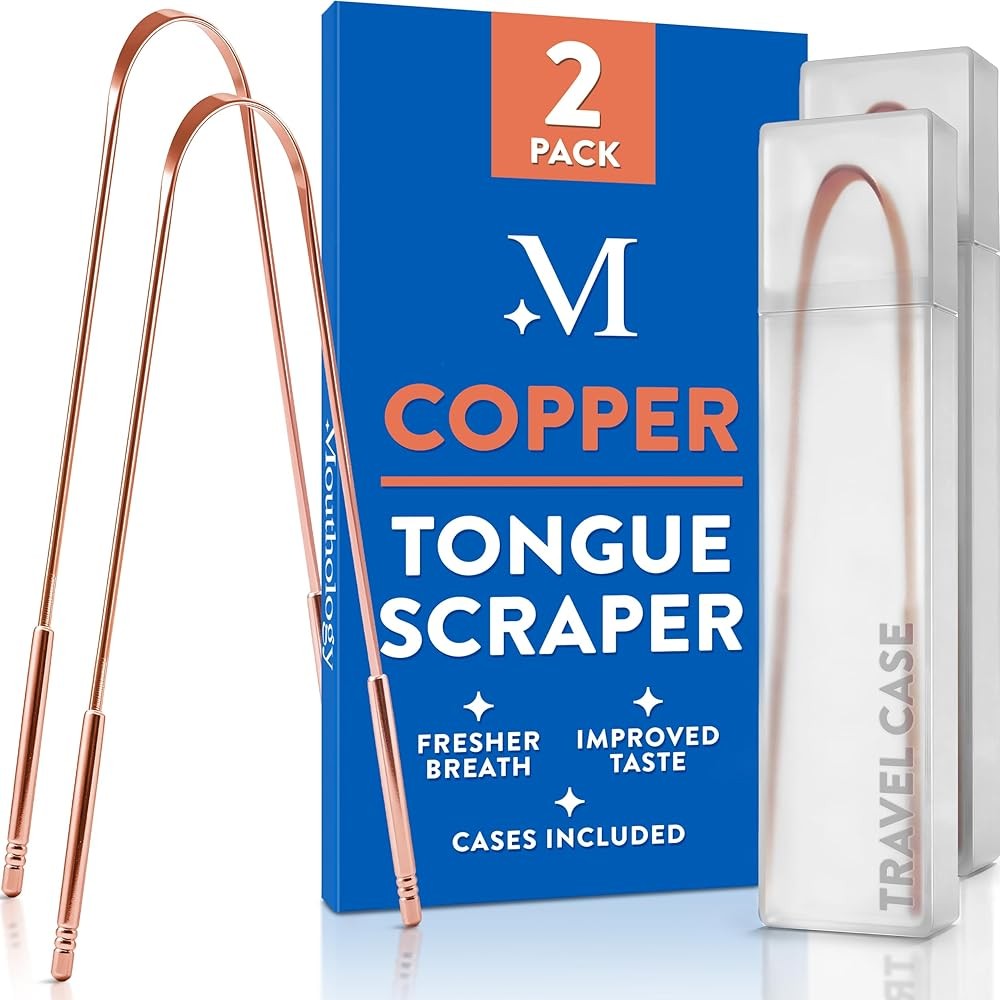
Mouthology Copper Tongue Scraper 2-Pack
Check Price on AmazonAs an Amazon Associate we earn from qualifying purchases.
The Mouthology Copper Tongue Scraper provides effective mechanical coating removal with pure copper construction. The smooth curved design allows comfortable sweeping from back to front in single strokes, efficiently lifting coating material from between tongue papillae. The two-pack configuration provides one scraper for home and one for travel, supporting consistent daily use.
The copper material offers theoretical antimicrobial benefits based on copper’s natural bacterial-killing properties. While the primary mechanism remains mechanical removal, the copper surface may provide additional antimicrobial effects. The material requires periodic cleaning with acidic solutions to maintain shine and remove tarnish.
The ergonomic handle design provides secure grip control during use. The scraper width covers the tongue surface efficiently, requiring fewer passes for complete coating removal. The smooth edges avoid tissue irritation while maintaining effective scraping action.
This scraper works well for daily morning use as part of oral hygiene routines. The simple single-piece construction has no joints or crevices that could harbor bacteria. Rinsing thoroughly after use and air drying maintains the scraper between uses.
Core advantage: The two-pack configuration supports consistent use both at home and while traveling, with copper material providing mechanical cleaning and potential antimicrobial benefits.
MasterMedi Stainless Steel & Copper Combo
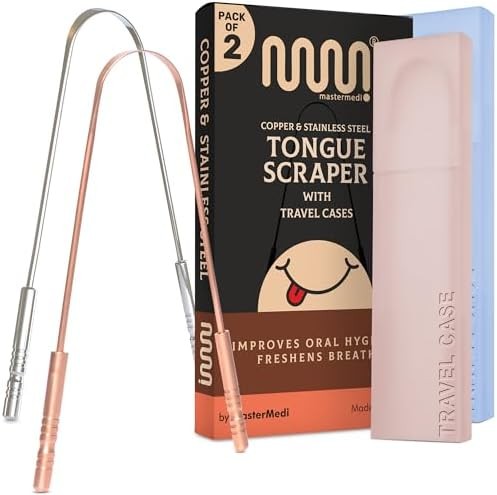
MasterMedi Stainless Steel & Copper Combo
Check Price on AmazonAs an Amazon Associate we earn from qualifying purchases.
The MasterMedi combo pack includes both stainless steel and copper tongue scrapers, allowing material comparison. This two-pack configuration lets users experience both material types to determine personal preference. The identical design in different materials isolates material effects from shape or size variables.
The stainless steel scraper offers maximum durability and easy maintenance. The medical-grade material resists corrosion and can be sterilized through boiling or dishwasher cleaning. The rigid construction provides effective scraping action that efficiently removes coating material.
The copper scraper in the combo pack provides the same curved design with antimicrobial copper material. Having both materials lets users alternate or choose based on preference after testing both options. Some users prefer copper’s antimicrobial properties while others favor stainless steel’s easy maintenance.
The smooth rounded edges on both scrapers avoid tissue irritation during use. The handles provide comfortable grip for controlled scraping motions. The simple construction makes both scrapers easy to clean and maintain.
The practical takeaway: This combo pack provides excellent value by including both material types, allowing users to determine which material best fits their preferences and maintenance habits.
MasterMedi Copper Tongue Scraper with Travel Case
The MasterMedi travel version includes a protective carrying case that supports consistent tongue cleaning while traveling. The compact case fits easily in toiletry bags and protects the scraper from contamination during transit. This configuration addresses the common challenge of maintaining oral hygiene routines during travel.
The copper scraper features the same curved design as home versions, with smooth edges and effective coating removal. The solid copper construction provides mechanical cleaning with theoretical antimicrobial benefits. The material requires the same periodic polishing maintenance as other copper scrapers.
The travel case uses rigid plastic to protect the scraper from damage and contamination. The case features ventilation to avoid moisture accumulation, allowing the scraper to air dry even when stored. The compact size makes it TSA-friendly for air travel.
For frequent travelers, maintaining oral hygiene routines can significantly impact comfort and confidence. Research shows that tongue coating accumulates daily, making consistent cleaning important even during travel periods. This scraper-and-case combination removes the barrier of having no suitable scraper while away from home.
What you need to know: The included travel case makes this option ideal for frequent travelers who want to maintain consistent tongue cleaning routines while away from home.
Me Mother Earth Stainless Steel 2-Pack
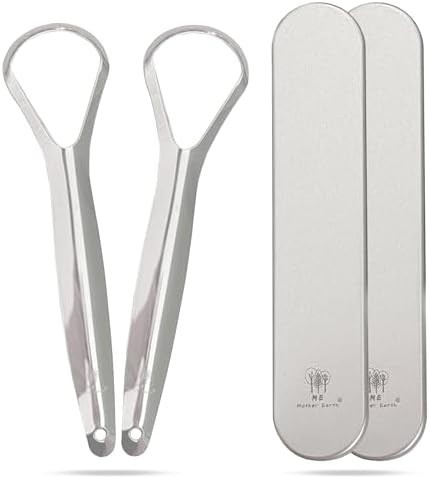
Me Mother Earth Stainless Steel 2-Pack
Check Price on AmazonAs an Amazon Associate we earn from qualifying purchases.
The Me Mother Earth stainless steel scrapers emphasize durability and easy maintenance with medical-grade stainless steel construction. The two-pack provides long-term value with scrapers that resist corrosion and maintain their smooth edges indefinitely. The dishwasher-safe material simplifies cleaning and sterilization.
The slightly wider scraper design covers more tongue surface area per stroke, potentially reducing the number of passes needed for complete coating removal. The width accommodates larger tongue sizes while the smooth edges avoid tissue irritation. The ergonomic handles provide comfortable grip control.
The stainless steel material requires minimal maintenance beyond rinsing after use. The scrapers can be periodically sterilized through boiling or dishwasher cleaning without material degradation. This easy maintenance supports consistent long-term use without concerns about tarnishing or oxidation.
The two-pack configuration works well for couples or provides a backup scraper. Some users keep one in the bathroom and one in a travel bag for consistent availability. The durable construction means these scrapers can last years with proper care.
The science confirms: Medical-grade stainless steel provides maximum durability and easy maintenance, making this option ideal for those who prioritize long-term value and simple cleaning.
How Should You Use a Tongue Scraper Properly?
Proper technique maximizes coating removal while avoiding tissue irritation. Research supporting tongue scraping effectiveness assumes correct usage technique. Start by extending the tongue and placing the scraper as far back as comfortable without triggering the gag reflex. Gently pull the scraper forward toward the tip in one smooth motion.
Apply light to moderate pressure during scraping. Excessive pressure can irritate tongue tissue without improving coating removal, while too-light pressure may leave coating in place. The goal is to lift coating material without causing discomfort or tissue damage. Most users find optimal pressure through brief experimentation.
Best Cordless Water Flosser devices complement tongue scraping by cleaning between teeth and below the gumline, addressing bacterial reservoirs in different oral locations.
Rinse the scraper after each pass to remove collected coating material. Multiple passes across the entire tongue surface ensure complete coating removal. Most users require 5-10 passes for thorough cleaning, though individual variation exists based on coating thickness and tongue size.
After completing scraping, rinse the mouth thoroughly to remove dislodged coating material and bacteria. Some users follow with brushing and flossing to complete oral hygiene. Cleaning the scraper with soap and water, then allowing it to air dry, maintains it between uses.
The optimal timing for tongue scraping is morning after waking, when overnight coating accumulation is typically thickest. Research examining VSC levels shows that morning measurements are often highest due to reduced saliva flow during sleep. Morning tongue cleaning addresses this peak coating and VSC production.
Bottom line: Extend the tongue, place the scraper as far back as comfortable, and pull forward with gentle pressure, rinsing the scraper between passes until coating is removed.
Some users add evening tongue scraping for additional benefits. While morning cleaning addresses overnight accumulation, evening cleaning removes coating from daily food consumption. Research hasn’t definitively established whether twice-daily cleaning provides significantly better results than once-daily use, though clinical recommendations support at least daily cleaning.
The gag reflex varies among individuals and may limit how far back the scraper can be comfortably placed. Starting with comfortable positioning and gradually increasing the distance as the reflex adapts can help. However, coating on the front two-thirds of the tongue contributes most significantly to VSC production, so complete posterior cleaning isn’t absolutely essential.
What About Tongue Scraping for Children?
Limited research specifically examines tongue scraping in pediatric populations. Children can develop tongue coating and halitosis, though the prevalence may differ from adults. Introducing tongue scraping as part of oral hygiene routines can establish beneficial habits early, though parental supervision ensures proper technique and safety.
Children with orthodontic appliances face additional bacterial accumulation challenges that may benefit from tongue cleaning alongside water flossing for braces. For younger children, parental assistance with tongue scraping helps avoid excessive pressure or improper technique. The same gentle scraping motion applies, though reduced pressure and fewer passes may be appropriate for smaller tongues and potentially more sensitive tissues. Starting with brief sessions helps children acclimate to the sensation.
Some children may resist tongue scraping due to the gag reflex or unfamiliar sensation. Gradual introduction, starting with just the anterior tongue and slowly progressing backward, can improve tolerance. Making it a routine part of tooth brushing normalizes the practice.
Research on oral microbiome development in children shows that bacterial colonization patterns establish early in life. While pediatric halitosis differs somewhat from adult bad breath, the same bacterial mechanisms involving proteolysis and VSC production apply. Mechanical coating removal should theoretically provide similar benefits in children as in adults.
Key takeaway: Tongue scraping can be introduced to children’s oral hygiene routines with parental supervision to ensure proper technique, though pediatric-specific research remains limited.
Pediatric dentists can provide guidance on age-appropriate introduction of tongue scraping. Professional assessment helps determine whether a child would benefit from tongue cleaning based on coating presence and any breath concerns. Individual variation in tongue coating among children suggests personalized recommendations.
How Does Tongue Anatomy Influence Coating Accumulation?
The tongue’s surface structure plays a significant role in bacterial coating accumulation and VSC production. The dorsal tongue surface features numerous papillae—small projections that create a rough texture ideally suited for taste sensation but also providing numerous crevices where bacteria and debris collect. These papillae include filiform (thread-like), fungiform (mushroom-shaped), circumvallate, and foliate types, each contributing differently to coating formation.
Filiform papillae are the most numerous and cover most of the tongue dorsum. Their thin, elongated structure creates spaces between individual papillae where food particles, dead epithelial cells, and bacteria accumulate. Research shows that individuals with longer or more prominent filiform papillae tend to develop thicker tongue coating. The posterior third of the tongue, where papillae are often larger and more densely packed, accumulates coating most readily.
The mechanical action of eating, drinking, and normal tongue movement against the palate naturally removes some coating material. However, the posterior tongue contacts the palate less during normal function, explaining why coating accumulates most heavily in this region. The limited self-cleaning in the posterior tongue makes mechanical intervention through scraping particularly beneficial for this area.
In summary: The tongue’s papillated surface structure, particularly the posterior dorsum with prominent filiform papillae, creates an ideal environment for bacterial coating accumulation that mechanical scraping effectively addresses.
Individual variation in tongue anatomy affects coating tendency. Some people naturally have smoother tongue surfaces with less prominent papillae, while others have more textured surfaces. Geographic tongue, a benign condition featuring irregular smooth patches, may affect coating patterns. Fissured tongue, characterized by deep grooves, can trap more debris and bacteria, potentially requiring more thorough cleaning.
Saliva flow and composition also influence coating formation. Reduced saliva production (xerostomia) allows bacterial accumulation without adequate natural clearance. Certain medications, medical conditions, and aging can reduce saliva flow, increasing coating formation. Adequate hydration supports normal salivary function, complementing mechanical tongue cleaning.
What Role Does Bacterial Biofilm Play in Tongue Coating?
Tongue coating represents a complex bacterial biofilm—an organized community of microorganisms embedded in a self-produced matrix. Unlike planktonic (free-floating) bacteria, biofilm bacteria exhibit different characteristics including increased resistance to antimicrobial agents and enhanced metabolic cooperation. Understanding biofilm structure helps explain why mechanical removal proves more effective than chemical approaches alone.
The biofilm matrix consists of extracellular polymeric substances produced by bacteria, including polysaccharides, proteins, and DNA. This matrix anchors the bacterial community to the tongue surface and to dead epithelial cells, food debris, and other accumulated material. The matrix protects bacteria from environmental stresses and allows them to maintain stable microbial communities.
Within tongue coating biofilms, different bacterial species occupy specific niches and engage in metabolic cooperation. Some bacteria break down complex compounds into simpler molecules that other species then metabolize. This cooperative metabolism can enhance VSC production, as intermediate products from one bacterial species serve as substrates for VSC-producing species.
What this means for you: Tongue coating functions as an organized bacterial biofilm with protective matrix structures, explaining why mechanical disruption through scraping proves necessary for effective removal.
Biofilm maturation follows a temporal pattern. Newly formed biofilms contain fewer bacteria in simpler arrangements, while mature biofilms develop complex three-dimensional structures with greater bacterial diversity. Daily tongue scraping disrupts biofilm development, maintaining coating in earlier, thinner stages with reduced VSC production capacity.
The mechanical force applied during tongue scraping physically disrupts biofilm structure, removing both bacteria and matrix material. This mechanical disruption proves more thorough than antimicrobial agents alone, which may kill planktonic bacteria without removing the protective matrix. The combination of mechanical disruption and antimicrobial agents (such as in mouthwash) may provide synergistic effects.
How Do Morning and Evening Cleaning Compare for Effectiveness?
The timing of tongue scraping relative to daily rhythms affects both immediate coating removal and overall halitosis management. Morning tongue cleaning addresses overnight bacterial accumulation that occurs during sleep when reduced saliva flow and decreased tongue movement allow enhanced coating formation. Evening cleaning removes accumulation from daily food consumption and bacterial growth throughout the day.
During sleep, saliva production decreases significantly compared to waking hours. This reduced salivary flow diminishes natural bacterial clearance, allowing coating material to accumulate more readily. Additionally, the tongue remains relatively still during sleep without the mechanical disruption from eating, drinking, and speaking. These factors combine to produce the thick morning coating many people observe upon waking.
Morning breath commonly results from overnight VSC accumulation in this coating. VSC production continues throughout the night as bacteria metabolize available substrates in the coating matrix. Morning tongue scraping removes this accumulated coating and associated VSCs, providing immediate breath improvement. Research measuring VSC levels shows peak measurements in the morning, supporting the importance of morning tongue cleaning.
The practical takeaway: Morning tongue scraping addresses overnight coating accumulation when saliva flow is reduced and VSC production peaks, providing maximum immediate benefit for breath quality.
Evening tongue scraping offers different advantages by removing coating accumulated from daily food consumption. Food particles and proteins from meals provide substrates for bacterial metabolism and VSC production. Removing this material before sleep may reduce overnight bacterial substrate availability, potentially limiting morning coating formation.
Some research suggests twice-daily tongue cleaning provides marginal additional benefit over once-daily morning cleaning, though the magnitude of improvement varies among individuals. Those with particularly heavy coating formation or persistent halitosis may benefit more from twice-daily cleaning. However, most research protocols examine once-daily morning cleaning, which demonstrates clear effectiveness for VSC reduction and halitosis management.
What Factors Indicate You Need More Frequent Tongue Cleaning?
Individual variation in coating formation and halitosis severity suggests that some people may benefit from more frequent or intensive tongue cleaning than others. Several factors can indicate increased need for tongue cleaning, including visible thick coating, persistent bad breath despite basic oral hygiene, dry mouth conditions, certain dietary patterns, and specific health conditions.
Visible coating thickness serves as a direct indicator. Some individuals develop minimal thin coating while others accumulate thick white or yellow coating quickly. Those who notice heavy coating return within hours of cleaning may benefit from twice-daily scraping or more thorough cleaning technique. The coating color can also provide information—yellowish coating sometimes indicates heavier bacterial accumulation.
Persistent halitosis despite regular tooth brushing and flossing suggests tongue coating as a primary VSC source. If brushing and flossing alone don’t adequately address bad breath, adding tongue scraping or intensifying existing tongue cleaning often provides significant improvement. Self-assessment of breath quality, though imperfect, can help gauge cleaning effectiveness.
Key finding: Heavy visible coating, persistent halitosis despite oral hygiene, dry mouth, high-protein diets, and certain health conditions indicate increased need for thorough tongue cleaning.
Dry mouth (xerostomia) from medications, medical conditions, or other causes increases coating accumulation by reducing natural salivary clearance. Common medications causing dry mouth include antihistamines, decongestants, pain medications, and many antidepressants. Those experiencing dry mouth often benefit from more frequent tongue cleaning to compensate for reduced salivary clearance.
High-protein diets provide more substrate for proteolytic bacteria and VSC production. Those consuming protein-rich diets may notice increased coating formation and benefit from consistent tongue cleaning. Similarly, consumption of dairy products, garlic, onions, and other sulfur-containing foods can increase VSC precursors.
Certain health conditions affect tongue coating including periodontal disease, sinus infections, postnasal drip, gastroesophageal reflux, and respiratory infections. These conditions may increase coating formation or change its character. While tongue scraping addresses the symptom (coating), professional evaluation should address underlying conditions.
Can Tongue Scraping Replace Other Oral Hygiene Practices?
Tongue scraping complements but doesn’t replace tooth brushing and flossing. Research shows that different oral surfaces harbor different bacterial populations requiring different cleaning approaches. Tooth surfaces require brushing to remove plaque biofilm, while interproximal spaces need flossing or water flossing for bacterial removal.
Water Flosser for Gum Disease devices target bacterial biofilm in periodontal pockets, addressing a different bacterial reservoir than tongue coating. Comprehensive oral hygiene addresses bacterial populations on teeth, between teeth, in gum pockets, and on the tongue surface.
The research examining halitosis management positions tongue scraping as one component of oral hygiene rather than a standalone intervention. Studies supporting tongue scraping effectiveness typically assume that participants also practice tooth brushing and interproximal cleaning. The synergistic effects of complete oral hygiene provide better outcomes than any single practice alone.
Tongue coating can recolonize from bacterial reservoirs on teeth and in gingival crevices if those areas aren’t cleaned. Similarly, periodontal bacteria can seed from tongue coating if only teeth are brushed without tongue cleaning. This bidirectional bacterial transfer supports the comprehensive approach.
What the science confirms: Tongue scraping addresses tongue coating bacteria specifically and should complement rather than replace tooth brushing, flossing, and professional dental care.
Some individuals with removed or reduced tongue papillae may accumulate less coating and require less intensive tongue cleaning. However, most adults benefit from including tongue scraping alongside standard oral hygiene practices. The minimal time investment (30-60 seconds daily) provides measurable benefits based on research findings.
Professional dental cleanings remain important even with excellent home oral hygiene. Calcified deposits (tartar) require professional removal, and professional assessment detects oral health issues early. Tongue scraping and other home hygiene practices work best in combination with regular dental visits.
What Does Our Research Process Reveal?
Frequently Asked Questions
How does tongue scraping affect the oral microbiome?
Research shows tongue scraping mechanically removes volatile sulfur compound (VSC)-producing bacteria that accumulate in the tongue coating. Studies demonstrate that people with halitosis have different bacterial compositions on their tongue coating compared to healthy individuals, with higher levels of VSC-producing species. Regular tongue cleaning helps maintain a balanced oral microbiome by removing excess bacterial buildup.
What are volatile sulfur compounds and why do they matter?
Volatile sulfur compounds (VSCs) are gaseous molecules produced by oral bacteria, primarily hydrogen sulfide and methyl mercaptan. These compounds are the primary cause of oral malodor. Research shows that VSC levels correlate directly with halitosis severity, and the tongue dorsum is the main production site for these compounds.
How often should you use a tongue scraper?
Research supports daily tongue scraping as part of your oral hygiene routine. Studies examining halitosis management recommend tongue cleaning once or twice daily, typically in the morning after brushing. Consistent daily use appears more effective than sporadic cleaning for maintaining reduced VSC levels and bacterial load.
Is copper better than stainless steel for tongue scraping?
Both materials effectively remove tongue coating. Copper has theoretical antimicrobial properties, though the primary mechanism of tongue scraping is mechanical removal rather than antimicrobial action. Stainless steel offers durability and is easier to sterilize. Choose based on personal preference, as both materials perform the mechanical cleaning function effectively.
Can tongue scraping help with periodontal disease?
Research indicates that tongue coating serves as a bacterial reservoir that can influence periodontal health. A 2023 study found that halitosis patients with periodontal disease had thick tongue coating bacteria. While tongue scraping addresses the tongue coating reservoir, it should complement (not replace) proper tooth brushing, flossing, and professional dental care for periodontal management.
What does research say about tongue scraping effectiveness?
Multiple systematic reviews confirm that mechanical tongue cleaning effectively reduces VSC levels and oral malodor. A 2023 review in Clinical Oral Investigations identified tongue coating bacteria as the primary cause of halitosis and mechanical tongue cleaning as an effective first-line intervention. Studies consistently show tongue scraping removes more coating than toothbrush tongue cleaning.
Does tongue scraping affect beneficial oral bacteria?
Tongue scraping primarily removes the thick coating layer where VSC-producing bacteria accumulate. Research on oral microbiome and nitrate reduction shows that beneficial bacteria reside throughout the oral cavity. The mechanical cleaning targets excess buildup rather than eliminating all oral bacteria, helping maintain balance rather than creating sterility.
How long does it take to see results from tongue scraping?
Research suggests immediate reduction in tongue coating and VSC levels after a single cleaning session. However, consistent daily use over several weeks provides sustained benefits. Studies examining halitosis management typically assess outcomes after 2-4 weeks of regular use, showing progressive improvement in breath quality and bacterial load reduction.
Can diet affect tongue coating and halitosis?
A 2025 systematic review of 22 clinical studies found that diet significantly affects oral microbiome composition. Dietary factors influence the bacterial species that colonize oral surfaces, including the tongue. High-protein diets may increase VSC production, while certain dietary patterns can modulate oral microbiome balance.
Are there genetic factors in halitosis susceptibility?
Research published in 2025 studied 689 subjects and found that genetic polymorphisms in taste receptor genes (hTAS2R38) modulate oral microbiota composition and halitosis susceptibility. This suggests individual variation in oral microbiome and halitosis risk, though mechanical tongue cleaning remains beneficial regardless of genetic factors.
Our Top Recommendations
For most users, the Mouthology Copper Tongue Scraper 2-Pack provides the best combination of effective mechanical cleaning, theoretical antimicrobial benefits, and value with two scrapers for home and travel use. The smooth copper construction removes coating efficiently while the simple design requires minimal maintenance beyond periodic polishing.
Those wanting to compare materials should consider the MasterMedi Stainless Steel & Copper Combo, which includes both stainless steel and copper scrapers at an economical price. This configuration lets you test both materials to determine personal preference.
Frequent travelers benefit most from the MasterMedi Copper Tongue Scraper with Travel Case, which includes a protective case supporting consistent tongue cleaning during travel periods.
Users prioritizing maximum durability and easy maintenance will appreciate the Me Mother Earth Stainless Steel 2-Pack, featuring medical-grade stainless steel that’s dishwasher safe and requires minimal maintenance while providing effective coating removal.
Join the discussion: Facebook | X | YouTube | Pinterest
Conclusion
Research consistently demonstrates that tongue coating bacteria produce volatile sulfur compounds responsible for oral malodor, and mechanical tongue scraping effectively reduces both bacterial populations and VSC levels. Studies across multiple years and diverse populations confirm that the tongue dorsum serves as the primary VSC production site in most halitosis cases, making tongue cleaning a logical first-line intervention.
The oral microbiome research reveals that halitosis involves dysbiosis with specific bacterial species overrepresented in tongue coating. Mechanical removal through daily scraping helps rebalance this microbial community by reducing excess coating accumulation where VSC-producing bacteria thrive. This approach complements rather than replaces comprehensive oral hygiene including tooth brushing, flossing, and professional dental care.
Both copper and stainless steel tongue scrapers perform the essential mechanical cleaning function effectively. Material choice depends on personal preference for antimicrobial properties versus durability and maintenance requirements. The evidence supporting tongue scraping focuses on mechanical coating removal rather than material-specific antimicrobial effects, suggesting that consistent use matters more than material selection.
Incorporating daily tongue scraping into oral hygiene routines addresses a bacterial reservoir that tooth brushing alone doesn’t adequately clean. The research evidence, combined with minimal time investment and simple technique, supports adding tongue scraping to standard oral care practices for managing halitosis and supporting oral microbiome balance.
Related Reading
- Best Water Flosser
- Best Electric Toothbrush
- Best Cordless Water Flosser
- Water Flosser for Gum Disease
- Waterpik Cordless vs Countertop
References
-
Ye W, Zhang Y, He M, Zhu C, Feng XP. Relationship of tongue coating microbiome on volatile sulfur compounds in healthy and halitosis adults. J Breath Res. 2019;14(1):016005. PMID: 31553956.
-
Zhang Y, Lo KL, Liman AN, Feng XP, Ye W. Tongue-Coating Microbial and Metabolic Characteristics in Halitosis. J Dent Res. 2024;103(6):593-602. PMID: 38623900.
-
Ningsih DS, Idroes R, Bachtiar BM, Khairan K, Tallei TE. Clinical and oral microbiome pattern of halitosis patients with periodontitis and gingivitis. Narra J. 2023;3(2):e163. PMID: 38454982.
-
Suzuki N, Yoneda M, Takeshita T, Hirofuji T, Hanioka T. Induction and inhibition of oral malodor. Mol Oral Microbiol. 2019;34(3):85-96. PMID: 30927516.
-
Hampelska K, Jaworska MM, Babalska ZŁ, Karpiński TM. The Role of Oral Microbiota in Intra-Oral Halitosis. J Clin Med. 2020;9(8):2484. PMID: 32748883.
-
Lee YH, Hong JY. Oral microbiome as a co-mediator of halitosis and periodontitis: a narrative review. Front Oral Health. 2023;4:1229145. PMID: 37719278.
-
Rosier BT, Takahashi N, Zaura E, Krom BP, MartÍnez-Espinosa RM. The Importance of Nitrate Reduction for Oral Health. J Dent Res. 2022;101(8):887-897. PMID: 35196931.
-
Mogilnicka I, Bogucki P, Ufnal M. Microbiota and Malodor-Etiology and Management. Int J Mol Sci. 2020;21(8):2886. PMID: 32326126.
-
Dinis MB, Agnello M, He X, Shi W, Tran NC. Pilot study on selective antimicrobial effect of a halitosis mouthrinse: monospecies and saliva-derived microbiome in an in vitro model system. J Oral Microbiol. 2021;13(1):1996755. PMID: 34745444.
-
Castro García H, Urias Orona V, Méndez LF, Arreguin Coronado A, Gloria Garza MA. Diet and nutrition key factors for oral microbiota composition: a systematic review. Food Nutr Res. 2025;69:11956. PMID: 41323139.
-
Mei H, Qi C, Liu J, Yang S, Zhou J. hTAS2R38 polymorphisms modulate oral microbiota and influence the prevalence and treatment outcome of halitosis. Microbiome. 2025;13:87. PMID: 40156025.
-
Izidoro C, Botelho J, Machado V, Reis AM, Proença L. Non-Surgical Periodontal Treatment Impact on Subgingival Microbiome and Intra-Oral Halitosis. Int J Mol Sci. 2023;24(3):2518. PMID: 36768839.
-
Wuri G, Liu F, Sun Z, Fang B, Zhao W. Lactobacillus paracasei ET-22 and derived postbiotics reduce halitosis and modulate oral microbiome dysregulation. Food Funct. 2023;14(16):7335-7349. PMID: 37493204.
-
Li Z, Li J, Fu R, Liu J, Wen X. Halitosis: etiology, prevention, and the role of microbiota. Clin Oral Investig. 2023;27(11):6411-6421. PMID: 37843633.
Recommended Products