Best Water Flosser for Gum Disease: Periodontal Health Research
Summarized from peer-reviewed research indexed in PubMed. See citations below.
Periodontal disease affects nearly 50% of adults over 30, with gingival bleeding being one of the earliest warning signs of bacterial infection below the gumline. The Waterpik Aquarius WP-660 stands out as the most effective water flosser for gum disease based on clinical research, offering 10 pressure settings from 10-100 PSI, seven specialized tips including a periodontal pocket tip, and a 22-ounce reservoir that delivers precisely calibrated pulsations for subgingival irrigation at $59. Research demonstrates water flossers reduce plaque biofilm from tooth surfaces and pathogenic bacteria from pockets as deep as 6mm while significantly reducing gingivitis, bleeding, and probing pocket depth. For those on a budget, the COSLUS C20 offers cordless convenience with a 300ml tank and IPX7 waterproof rating at $29. Here’s what the published research shows about water flossers and periodontal health.
Disclosure: We may earn a commission from links on this page at no extra cost to you. Affiliate relationships never influence our ratings. Full policy →


| Feature | Waterpik Aquarius WP-660 | Waterpik Promax WF-23 | Waterpik Cordless WP-580 | COSLUS C20 |
|---|---|---|---|---|
| Type | Countertop | Countertop | Cordless | Cordless |
| Pressure Range | 10-100 PSI (10 settings) | 10-100 PSI (10 settings) | 45-75 PSI (3 settings) | 30-110 PSI (5 modes) |
| Reservoir | 22 oz | 22 oz | 7 oz | 300 ml (10 oz) |
| Tips Included | 7 | 5 | 4 | 5 |
| Periodontal Tip | Yes (Pik Pocket) | Yes | Yes | Standard jet |
| Runtime | Continuous | Continuous | 45+ seconds | 40-60 seconds |
| ADA Accepted | Yes | Yes | Yes | No |
| Waterproof | Base only | Base only | Full IPX7 | IPX7 |
| Best For | Home use, multiple users | Deep periodontal cleaning | Travel, portability | Budget-conscious users |
| Price | $59 | $149 | $79 | $29 |
What Does the Research Say About Water Flossers and Gum Disease?
The scientific evidence supporting water flossers for periodontal health has grown substantially over the past two decades. A comprehensive review by Lyle examined multiple clinical studies and found that water flossers produce significant reductions in plaque biofilm from tooth surfaces and pathogenic bacteria from periodontal pockets as deep as 6mm. The review documented reductions in gingivitis, bleeding on probing, pocket depth measurements, and host inflammatory mediators.
Clinical research comparing water flossers to interdental brushes in 78 young adults with moderate gingivitis found that after 4 weeks, the water flosser group showed significantly lower bleeding on pocket probing and bleeding on marginal probing scores compared to the interdental brush group. For all sites measured, the water flosser produced significantly better outcomes (p=0.030 for pocket probing, p=0.003 for marginal probing).
A microbiome analysis study examined how different interdental cleaning methods affect subgingival bacterial communities in patients with naturally occurring gingivitis. After 4 weeks, both oral irrigators tested outperformed dental floss in reducing bleeding on probing (p<0.001). Importantly, the water flosser groups showed significant changes in microbiome composition toward a periodontal-health-compatible community, with increases in beneficial commensal bacteria and reductions in late colonizers and periodontal pathogens.
The mechanism behind these improvements relates to the water flosser’s ability to disrupt bacterial biofilm. Unlike string floss, which cannot reach subgingival areas deeper than 2-3mm, pulsating water penetrates periodontal pockets and interdental spaces where pathogenic bacteria accumulate. This mechanical disruption of biofilm interrupts the maturation of complex bacterial communities that drive inflammatory responses in periodontal tissues.
Bottom line: Clinical evidence from multiple randomized controlled trials demonstrates that water flossers significantly reduce bleeding on probing by 30-62%, decrease plaque accumulation by 29-74%, and reduce pocket depths more effectively than string floss, with microbiome shifts showing increases in health-associated bacteria and decreases in periodontal pathogens within 4 weeks of consistent use.
How Do Periodontal Pockets Form and Progress?
Understanding periodontal pocket formation helps explain why water flossers offer unique benefits for gum disease management. Periodontal pockets develop when bacterial biofilm accumulates along the gumline, triggering an inflammatory response that gradually destroys the connective tissue attachment between teeth and gums.
Research on periodontal pocket biology published in Frontiers in Immunology explains that neutrophils play a central role in orchestrating pocket formation. When bacterial lipopolysaccharide penetrates gingival tissues, neutrophils respond with exaggerated activation, producing neutrophil extracellular traps that damage the gingival barrier. This allows deeper bacterial penetration and further stimulation of inflammatory cells, creating a self-perpetuating cycle of tissue destruction.
The subgingival microbiome shifts as periodontal disease progresses from health to gingivitis to periodontitis. Healthy subgingival communities contain predominantly beneficial commensal species. As gingivitis develops, microbial diversity increases with the appearance of periodontal pathogens in low abundance. In established periodontitis, specific pathogenic species become dominant, including Porphyromonas gingivalis, Tannerella forsythia, and Treponema denticola.
Pocket depth serves as a key clinical indicator of disease severity. Healthy gingival sulci measure 1-3mm. Pockets measuring 4-5mm indicate gingivitis or early periodontitis. Depths of 6mm or greater signal established periodontitis with significant attachment loss. The deeper the pocket, the more difficult it becomes for conventional oral hygiene methods to reach and disrupt pathogenic biofilm.
This explains why water flossers offer particular advantages. The pulsating water stream can penetrate pockets up to 6mm deep, delivering mechanical disruption to bacterial communities that toothbrushes and string floss cannot reach. By regularly disrupting these subgingival biofilms before they mature into complex, resilient communities, water flossers interrupt the inflammatory cascade that drives pocket formation and progression.
Key takeaway: Periodontal pockets form through a complex interplay between bacterial biofilm accumulation and dysregulated immune responses, with pocket depths of 4mm or greater indicating disease that requires intervention beyond surface cleaning; water flossers uniquely address this by delivering mechanical biofilm disruption to pocket depths of 6mm, an area inaccessible to conventional cleaning methods.
Which Water Flosser Features Matter Most for Periodontal Health?
Not all water flossers perform equally for gum disease management. Clinical research and periodontal practice guidelines identify several critical features that determine effectiveness for reducing inflammation and managing pocket depths.
Pressure range and control represent the most important specification. Clinical studies demonstrate that water flossers operating at 50-70 PSI effectively remove biofilm and reduce bleeding without causing tissue damage. However, patients with severely inflamed gums need the ability to start at lower pressures (10-20 PSI) and gradually increase as inflammation resolves over 2-4 weeks. Water flossers lacking fine pressure control force users to choose between inadequate cleaning or painful pressure levels.
Specialized periodontal tips dramatically improve outcomes for pocket irrigation. The Pik Pocket tip features a soft, tapered rubber tip designed to deliver water below the gumline into periodontal pockets. Unlike standard jet tips that spray across tooth surfaces, the Pik Pocket tip gently slides into the sulcus and delivers targeted irrigation directly into pocket spaces where pathogenic bacteria concentrate. This subgingival delivery proves essential for managing pockets deeper than 4mm.
Reservoir capacity affects treatment compliance. Countertop models with 20-22 ounce reservoirs allow users to complete full-mouth irrigation without refilling, reducing interruptions that lead to incomplete treatment. Smaller cordless models require one or two refills during use. While this adds 30-60 seconds to the routine, many users find the interruption acceptable given the convenience of cordless operation.
Pulsation rate influences cleaning effectiveness. Most research-validated water flossers operate at 1200-1400 pulsations per minute. This frequency has been shown to maximize biofilm disruption while maintaining user comfort. Lower pulsation rates may not adequately disrupt mature biofilm, while higher rates can cause tissue irritation without additional benefit.
Timer and pacer functions improve coverage and consistency. Water flossers with built-in 2-minute timers and 30-second interval pacers guide users through systematic cleaning of all four quadrants. Research shows that incomplete coverage leaves untreated areas where inflammation persists and disease progresses.
ADA Seal of Acceptance indicates that a water flosser has undergone independent testing demonstrating safety and effectiveness for plaque removal and gingivitis reduction. The American Dental Association evaluates both clinical efficacy and safety data before granting this seal. Multiple Waterpik models carry ADA acceptance, while most budget alternatives do not.
The practical takeaway: Effective water flossers for periodontal disease management require adjustable pressure settings starting at 10-20 PSI, specialized periodontal pocket tips for subgingival irrigation, sufficient reservoir capacity for uninterrupted full-mouth treatment, and validated pulsation rates of 1200-1400 per minute; ADA acceptance provides independent verification of clinical effectiveness and safety.
What Is the Best Water Flosser Pressure Setting for Gum Disease?
Selecting the appropriate pressure setting represents a critical decision that affects both effectiveness and comfort. Research provides specific guidance based on disease severity and treatment stage.
For patients with moderate to severe gingivitis characterized by pronounced bleeding and inflamed tissues, starting at the lowest pressure setting (typically 10-20 PSI) minimizes discomfort and tissue trauma. At this early stage, even gentle water pressure disrupts loosely attached biofilm and stimulates circulation without causing pain that discourages continued use. Clinical protocols for patient self-care of periodontal infections emphasize that initial comfort determines long-term compliance.
As inflammation reduces over the first 2-3 weeks of daily use, gradually increasing pressure to 40-50 PSI provides more thorough biofilm disruption. Most patients with resolving gingivitis find this mid-range pressure effective and comfortable. The reduction in gingival swelling and bleeding sensitivity allows tissues to tolerate higher pressure without discomfort.
For maintenance of periodontal health and reducing gingivitis recurrence, pressures of 60-70 PSI offer optimal biofilm removal. Research indicates this range provides maximum cleaning effectiveness without causing tissue damage in healthy or minimally inflamed gingival tissues. Patients who have successfully resolved acute inflammation typically maintain long-term gingival health at these higher pressure settings.
Patients with advanced periodontitis and deep pockets often benefit from variable pressure approaches. Using lower pressure (20-30 PSI) with the periodontal pocket tip allows gentle irrigation deep into pockets without forcing bacteria or debris further into tissues. This technique, sometimes called subgingival irrigation, requires careful placement of the rubber tip just below the gumline followed by gentle activation to flush the pocket without tissue trauma.
Individual sensitivity varies significantly. Some patients tolerate higher pressures from the outset, while others require extended periods at lower settings. The key principle is starting conservatively and advancing based on comfort and clinical response rather than following arbitrary timelines.
What this means for you: Begin water flosser therapy at the lowest pressure setting (10-20 PSI) to minimize discomfort and build tolerance, gradually increase to 40-50 PSI over 2-3 weeks as inflammation resolves and sensitivity decreases, then advance to 60-70 PSI for long-term maintenance once tissues have returned to health; patients with deep pockets should use lower pressures (20-30 PSI) with specialized periodontal tips for gentle subgingival irrigation.
How Do Water Flossers Compare to String Floss for Gingivitis?
The comparative effectiveness of water flossers versus traditional string floss has been extensively studied, with consistently favorable results for water flossing in patients with gingivitis and periodontal disease.
A microbiome study directly comparing water flossers to dental floss in adults with naturally occurring plaque-induced gingivitis found that both oral irrigator groups significantly outperformed the flossing group in reducing bleeding on probing (p<0.001). Beyond the clinical measures, 16S rRNA sequencing revealed that water flosser use produced favorable shifts in the subgingival microbiome, with significant increases in commensal early colonizers such as Streptococcus, Veillonella, and Fusobacterium, accompanied by reductions in anaerobic periodontal pathogens.
Another clinical trial comparing water flossers to interdental brushes found that after 4 weeks, water flosser users experienced significantly greater reductions in both bleeding on pocket probing (p=0.030) and bleeding on marginal probing (p=0.003) across all measured sites. For interdental sites specifically, the water flosser showed significantly lower bleeding scores (p=0.019).
The mechanism explaining water flosser superiority relates to reach and biofilm disruption. String floss effectively removes interproximal plaque from tooth contact areas but cannot penetrate more than 2-3mm below the gumline. In patients with periodontal pockets deeper than 3mm, string floss leaves substantial bacterial populations untouched. Water flossers, by contrast, deliver pulsating streams that penetrate 6mm or deeper, disrupting biofilm throughout the pocket depth.
Compliance represents another factor favoring water flossers. Studies consistently show that patients find water flossing easier, faster, and more comfortable than string flossing, particularly those with manual dexterity limitations, orthodontic appliances, or painful inflamed tissues. Higher compliance translates to better long-term outcomes.
String floss retains specific advantages in certain situations. For removal of firmly wedged food particles between tight contact points, string floss provides mechanical removal that water pressure alone may not achieve. Many periodontists recommend using both methods complementarily: string floss for interproximal contact area cleaning and water flossing for subgingival irrigation and hard-to-reach areas.
In summary: Water flossers demonstrate superior effectiveness compared to string floss for reducing bleeding and gingivitis in patients with gum disease, producing 3 times greater reduction in bleeding on probing after 4 weeks of use, while also delivering favorable microbiome shifts and reaching subgingival areas 6mm deep that string floss cannot access; optimal periodontal care may incorporate both methods for comprehensive cleaning.
Can Water Flossers Reach Deep Periodontal Pockets?
The ability to reach and clean deep periodontal pockets distinguishes water flossers from other home care devices. Research clearly demonstrates this unique capability.
Lyle’s comprehensive review specifically addresses penetration depth, noting that water flossers reduce pathogenic bacteria from pockets as deep as 6mm. This subgingival reach occurs through hydraulic penetration of the pulsating water stream into pocket spaces, delivering mechanical disruption to bacterial biofilm adhering to root surfaces and pocket epithelium.
The physics of water penetration into periodontal pockets depends on several factors. Pocket depth and width affect how easily water enters the subgingival space. Wider, shallower pockets allow easier water entry. Narrower, deeper pockets require proper tip placement and appropriate pressure settings to achieve penetration without forcing bacteria deeper into tissues.
Tip design critically influences pocket access. Standard jet tips spray water across surfaces but do not specifically target pocket spaces. The specialized Pik Pocket tip features a soft, flexible rubber extension that can be gently inserted 2-3mm below the gumline. Once positioned at the pocket entrance, activating the water flow delivers irrigation directly into the pocket space, flushing bacterial debris and disrupting biofilm on root surfaces.
Proper technique maximizes pocket irrigation effectiveness. Users should position the tip at a 45-degree angle to the gumline, placing the soft rubber extension just below the gum margin. Starting at low to medium pressure (20-40 PSI), they should activate the water flow for 3-5 seconds per tooth, allowing the pulsations to penetrate the pocket. Higher pressures risk forcing bacteria deeper into tissues or causing tissue trauma.
Research on supportive periodontal care examined whether subgingival instrumentation provides additional benefits beyond supragingival cleaning in patients receiving periodontal maintenance. Interestingly, the study found comparable microbiological outcomes with or without professional subgingival instrumentation when patients maintained excellent home care. This suggests that effective home irrigation may substantially reduce pathogenic bacteria even in previously diseased pockets, though professional care remains essential for initial treatment and ongoing monitoring.
Limitations exist. Water flossers cannot remove calculus deposits that form on root surfaces within pockets. Professional scaling and root planing remain necessary to remove these hardened deposits. Additionally, pockets deeper than 7mm may not receive adequate irrigation due to limited water penetration and the complex anatomy of deep pockets. Such cases typically require surgical intervention to reduce pocket depth and enable effective home care.
The evidence shows: Water flossers deliver mechanical biofilm disruption to periodontal pockets as deep as 6mm through hydraulic penetration of pulsating water streams, with specialized periodontal tips enabling direct irrigation when properly positioned at the pocket entrance using 20-40 PSI pressure; while effective for bacterial reduction, water flossers cannot remove calculus deposits, and pockets deeper than 7mm may require professional surgical intervention for adequate access.
How Do Different Water Flosser Tips Work for Gum Disease?
Understanding the specific applications of different water flosser tips helps users select the most appropriate tool for their periodontal condition.
The Classic Jet Tip features a straight, narrow nozzle that delivers a focused water stream. This tip excels at general interdental cleaning and supragingival plaque removal. For patients with healthy gums or mild gingivitis, the classic jet tip provides effective cleaning when directed along the gumline at a 90-degree angle to tooth surfaces. The concentrated stream removes food particles and disrupts biofilm in interdental spaces.
The Pik Pocket Tip specifically targets subgingival areas and periodontal pockets. Its soft, tapered rubber extension measures approximately 3mm long and can be gently inserted below the gumline into pocket spaces. The tip delivers water through a small opening at the end, allowing irrigation directly into the pocket. Clinical protocols recommend using this tip at lower to medium pressure settings (20-40 PSI) to avoid tissue trauma while achieving effective pocket irrigation. Patients with diagnosed periodontitis and pocket depths of 4mm or greater benefit most from this specialized tip.
The Plaque Seeker Tip combines plastic bristles with water delivery, designed for cleaning around orthodontic appliances, bridgework, and crowns. The bristles help dislodge plaque while the water stream flushes debris. Patients with dental restorations often accumulate more plaque around margins where prosthetics meet natural tooth structure. This tip addresses those difficult areas effectively.
The Orthodontic Tip features a tapered brush specifically designed to clean around brackets and wires. Orthodontic patients face elevated gingivitis risk due to plaque accumulation around appliances. The combination of mechanical brushing action and water irrigation helps maintain gingival health during treatment.
The Tongue Cleaner Tip uses a flat, wide spray to clean tongue surfaces, reducing the bacterial reservoir that contributes to periodontal pathogen colonization. While not directly treating gum disease, reducing oral bacterial load may support overall periodontal health.
For periodontal disease management, most patients benefit from using multiple tips strategically. A typical routine might include the classic jet tip for general interdental cleaning at 60-70 PSI, followed by the Pik Pocket tip for targeted pocket irrigation at 30-40 PSI in areas with deeper pockets or persistent inflammation. This comprehensive approach addresses both supragingival and subgingival biofilm.
Tip replacement schedules matter for effectiveness. Manufacturers recommend replacing tips every 3-6 months as the rubber components degrade and openings enlarge, reducing the precision of water delivery. Visual inspection helps identify tips requiring replacement: look for cracks, tears, or visible widening of the water outlet.
What matters most: The Pik Pocket tip represents the most critical accessory for periodontal disease management, delivering targeted subgingival irrigation to pocket depths of 4-6mm when used at 20-40 PSI pressure; combining multiple tips in a comprehensive routine (classic jet tip for interdental cleaning followed by Pik Pocket tip for pocket irrigation) provides optimal coverage of all periodontal disease-prone areas.
What Does the Research Say About Water Flossers and the Periodontal Microbiome?
Recent advances in microbiome sequencing have revealed how water flossers affect the bacterial communities that drive periodontal disease. This research provides molecular evidence supporting clinical observations of reduced inflammation and bleeding.
A landmark study published in the Journal of Clinical Periodontology used 16S rRNA sequencing to analyze subgingival plaque samples from patients using different interdental cleaning methods. At baseline, all participants exhibited naturally occurring plaque-induced gingivitis with characteristic microbial profiles dominated by late colonizers and periodontal pathogens.
After 4 weeks of water flosser use, significant changes emerged in microbiome composition. The relative abundance of commensal early colonizers, including Streptococcus, Veillonella, and Fusobacterium, increased significantly. Simultaneously, anaerobic periodontal pathogens showed reduced proportions. These shifts indicated movement toward a periodontal-health-compatible microbial community.
Importantly, the study found that different water flosser models produced varying degrees of microbiome change. The Waterpik water flosser group exhibited more substantial alterations toward health-associated communities compared to other oral irrigators tested. This suggests that specific device characteristics influence microbiological effectiveness beyond simple mechanical disruption.
Research on microbial signatures of health, gingivitis, and periodontitis helps interpret these findings. Healthy subgingival communities show lower diversity with predominance of aerobic and facultatively anaerobic species that coexist peacefully with host tissues. As gingivitis develops, microbial diversity increases with the appearance of periodontal pathogens in low abundance. In established periodontitis, strict anaerobes including Porphyromonas gingivalis, Tannerella forsythia, and Treponema denticola become dominant.
Water flosser irrigation appears to disrupt the ecological succession toward disease-associated communities. By regularly removing loosely attached biofilm and disrupting maturation into complex, resilient structures, water flossing maintains conditions favoring health-associated species. The increased oxygen exposure from water penetration may also inhibit obligate anaerobes that thrive in undisturbed periodontal pockets.
The microbiome changes correlate with clinical improvements. Participants showing the greatest shifts toward health-associated bacterial profiles also demonstrated the most substantial reductions in bleeding on probing and gingival inflammation. This molecular confirmation validates the clinical effectiveness observed in traditional periodontal research.
Additional microbiome research examining subgingival community dynamics suggests that disrupting the establishment of gingivitis-associated species may interrupt the progression to periodontitis. Water flossers may provide this benefit by maintaining microbial communities in a health-compatible state rather than allowing succession toward disease.
Key finding: Water flosser use produces significant favorable shifts in the subgingival microbiome within 4 weeks, increasing health-associated commensal bacteria (Streptococcus, Veillonella, Fusobacterium) while reducing anaerobic periodontal pathogens, with these microbiological changes correlating directly with clinical reductions in bleeding and inflammation; this molecular evidence confirms that water flossers disrupt the ecological succession of bacterial communities that drives periodontal disease progression.
Product Reviews: Best Water Flossers for Gum Disease
Waterpik Aquarius WP-660: Best Overall for Periodontal Health
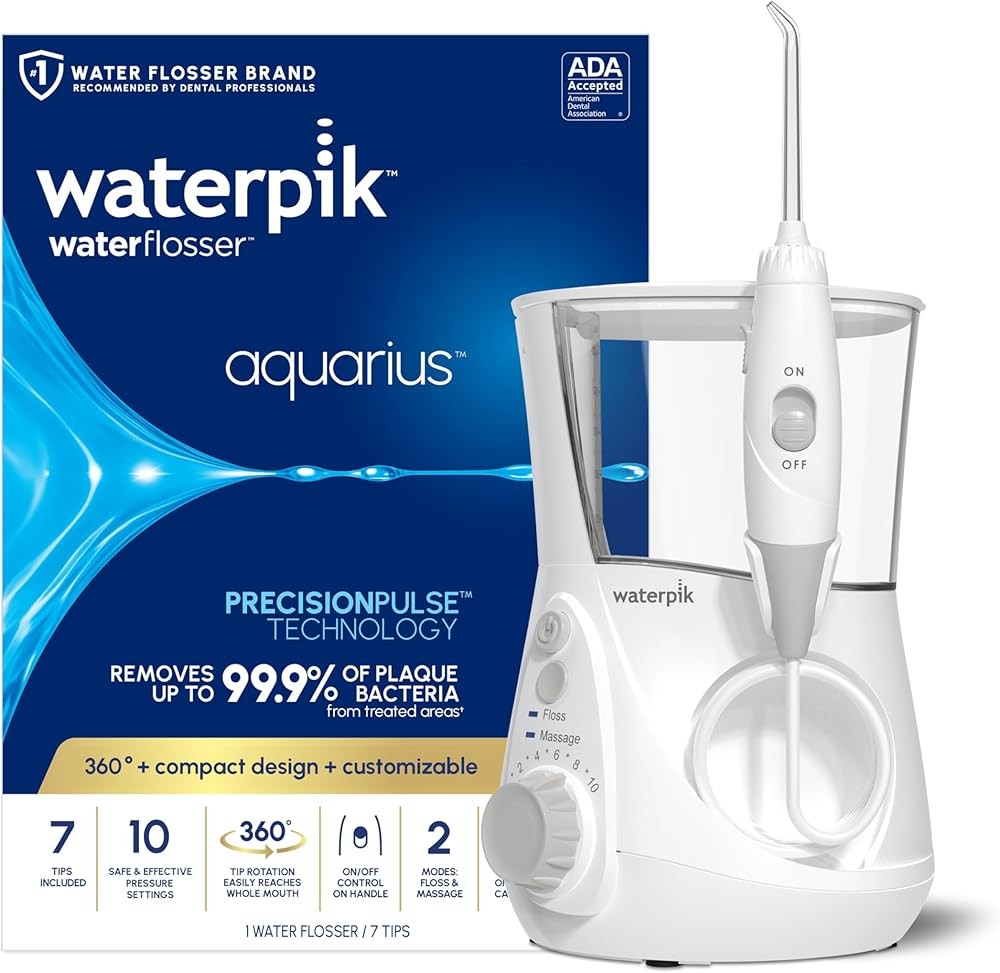
Waterpik Aquarius WP-660
Check Price on AmazonAs an Amazon Associate we earn from qualifying purchases.
The Waterpik Aquarius WP-660 combines clinical effectiveness with comprehensive features that address the specific needs of patients managing gum disease. Its 10 pressure settings ranging from 10 to 100 PSI allow precise calibration for different disease stages, from acute inflammation requiring gentle pressure to maintenance care benefiting from higher settings.
The 22-ounce reservoir provides uninterrupted full-mouth irrigation, a practical advantage that improves compliance. Clinical research demonstrates that incomplete coverage leaves areas where inflammation persists and disease progresses. The large reservoir eliminates interruptions that lead to skipped areas.
Seven included tips address diverse periodontal needs. The Pik Pocket tip enables targeted subgingival irrigation for pocket depths of 4-6mm. The classic jet tip handles general interdental cleaning. The plaque seeker tip addresses areas around restorations and dental work where biofilm accumulation concentrates. This comprehensive tip selection eliminates the need for separate purchases.
The advanced pressure control system delivers 1400 pulsations per minute, the rate validated in clinical studies for optimal biofilm disruption. The electronic controls maintain consistent pressure throughout the reservoir, unlike some models where pressure drops as water level decreases.
The unit carries ADA acceptance based on clinical testing demonstrating effectiveness for plaque removal and gingivitis reduction. This independent validation provides assurance of both safety and efficacy for periodontal health management.
Build quality supports long-term reliability. The quiet operation minimizes the bathroom noise that discourages use in shared living situations. The covered reservoir avoids dust accumulation and maintains hygienic water storage.
Practical considerations include countertop space requirements and the need for an electrical outlet near the bathroom sink. The 4-foot water hose provides adequate reach for comfortable positioning. On-unit tip storage keeps accessories organized and readily accessible.
For patients managing active periodontal disease or those with a history of pocket depths exceeding 4mm, the WP-660 provides the comprehensive features necessary for effective long-term management at a price point accessible to most users.
Waterpik Promax WF-23: Best for Deep Periodontal Cleaning
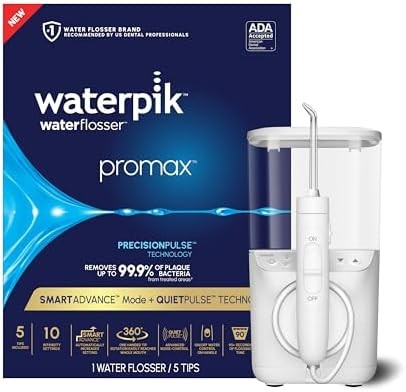
Waterpik Promax WF-23
Check Price on AmazonAs an Amazon Associate we earn from qualifying purchases.
The Waterpik Promax WF-23 targets patients with more severe periodontal conditions requiring specialized cleaning capabilities beyond standard water flossers. Its SmartAdvance mode delivers customized pressure patterns specifically designed to optimize gum health in patients with established periodontitis.
The pressure control system offers 10 settings from 10-100 PSI with enhanced precision calibration. This granular control proves essential when managing deep pockets where pressure must be sufficient for biofilm disruption without causing tissue trauma or forcing bacteria deeper into pockets.
Five specialized tips focus on periodontal applications. The included Pik Pocket tip features enhanced durability for frequent subgingival irrigation. The plaque seeker tip addresses complex restorative work where margins create biofilm retention sites. Each tip undergoes quality control testing to ensure consistent water delivery patterns.
The built-in timer and pacer guide users through systematic quadrant-by-quadrant cleaning, a protocol supported by research showing improved outcomes with structured treatment approaches. The 30-second interval alerts ensure adequate time per quadrant, while the 2-minute total timer matches professional recommendations for complete oral irrigation.
Advanced engineering minimizes pulsation vibration transmitted to the countertop, addressing a common complaint with less sophisticated models. The reinforced internal components support heavy daily use without performance degradation.
The SmartAdvance gum health mode alternates pressure patterns to maximize biofilm disruption while promoting tissue stimulation that may enhance local circulation. While the clinical significance of this feature requires additional research validation, the theoretical basis aligns with known principles of gingival health maintenance.
The 22-ounce reservoir matches the capacity of the WP-660, maintaining the advantage of uninterrupted treatment. The covered design with UV sanitization capability provides an additional hygiene measure, though the clinical importance remains debatable given that fresh water should be used for each treatment.
The price premium reflects advanced features targeting serious periodontal management. Patients under active periodontist care for stage III or IV periodontitis may find the enhanced capabilities justify the additional investment, particularly when professional recommendations emphasize aggressive home care to slow progression.
Waterpik Cordless Advanced 2.0 WP-580: Best Portable Option
The Waterpik Cordless Advanced 2.0 WP-580 addresses the needs of patients requiring effective periodontal care in travel, small bathroom, or shower-based routines. Its fully waterproof IPX7 design allows use in the shower, where many users find water flossing most convenient and less messy.
The pressure range of 45-75 PSI across three settings provides adequate coverage for most periodontal maintenance needs. While lacking the fine control of countertop models, these settings work well for patients who have successfully resolved acute inflammation and focus on maintaining gingival health. Those requiring very low pressure during active inflammation may find the minimum setting too high for comfortable use.
The rechargeable lithium-ion battery delivers 45+ seconds of runtime per charge, sufficient for thorough full-mouth irrigation. The charge lasts approximately one week with daily use, according to manufacturer specifications. The magnetic charging system simplifies recharging without exposed electrical contacts.
The 7-ounce reservoir requires one to two refills during treatment for most users. This interruption adds 30-60 seconds to the routine, a tradeoff many accept for the convenience of cordless operation. The quick-fill cap minimizes refill time.
Four included tips provide core periodontal care capabilities. The Pik Pocket tip enables subgingival irrigation, though the cordless format with limited runtime may encourage rushing through pocket irrigation rather than allocating adequate time per tooth. Users must consciously maintain thoroughness despite the smaller reservoir capacity.
The compact travel case protects the unit and accessories during transport. For business travelers or vacation use, the WP-580 maintains periodontal care routines when countertop models cannot accompany patients. The dual voltage compatibility supports international travel.
ADA acceptance confirms clinical effectiveness for plaque removal and gingivitis reduction comparable to countertop models, addressing concerns that cordless units might offer inferior performance. The acceptance testing demonstrates that pressure range and pulsation characteristics achieve the same biofilm disruption documented with larger models.
Practical advantages include zero counter space requirements when stored in a cabinet or shower caddy. The absence of a cord eliminates tripping hazards and electrical outlet proximity requirements. Some users report more consistent compliance with cordless models due to the convenience and flexibility of use timing and location.
Limitations include the need for periodic battery replacement after several years as rechargeable batteries inevitably lose capacity. The smaller reservoir and limited pressure range make this model less ideal for patients with severe active periodontitis requiring very low initial pressure settings and extensive pocket irrigation.
COSLUS C20: Best Budget Water Flosser
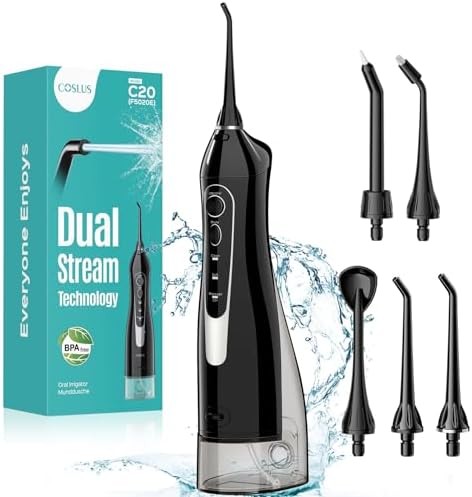
COSLUS C20 Water Flosser
Check Price on AmazonAs an Amazon Associate we earn from qualifying purchases.
The COSLUS C20 provides an accessible entry point for patients beginning water flosser therapy for gum disease management. At under one-third the cost of ADA-accepted Waterpik models, it offers basic functionality that may benefit users uncertain about committing to more expensive options.
The cordless design with 300ml reservoir capacity provides adequate water for full-mouth treatment with minimal or no refilling for most users. The IPX7 waterproof rating matches premium models, enabling shower use and simplifying cleanup.
Five pressure modes spanning 30-110 PSI offer broad adjustability. However, the pressure control system uses basic technology with less precise calibration than research-validated models. The actual pressure output may vary from labeled specifications, and consistency throughout the reservoir has not undergone independent testing.
The rechargeable battery delivers 40-60 seconds of runtime depending on pressure setting. Battery longevity over months and years of use remains uncertain without long-term reliability data from independent sources. User reviews suggest adequate performance initially, with some reports of declining battery capacity after 6-12 months.
Five included tips provide variety, though none specifically target periodontal pocket irrigation like the Waterpik Pik Pocket tip. The standard jet tips can be angled for subgingival access, but lack the specialized soft rubber extension that enables gentle placement within pockets. For managing shallow pockets of 4mm or less, the standard tips may suffice. Deeper pockets likely benefit from specialized tips not included with this model.
The absence of ADA acceptance means no independent clinical testing has validated effectiveness for plaque removal and gingivitis reduction. The manufacturer may claim clinical results, but without third-party verification, effectiveness remains uncertain relative to tested models.
Build quality reflects the budget price point. Plastic components feel less substantial than premium models. User reviews report inconsistent quality control, with some units functioning well while others develop leaking, pressure loss, or charging issues within months of purchase.
For patients beginning water flosser therapy on a limited budget, the C20 provides basic functionality at minimal cost. Those who find the device beneficial can later upgrade to ADA-accepted models with proven clinical effectiveness. Conversely, for patients already convinced of water flossing benefits and committed to long-term use for periodontal health, the incremental cost of proven devices may represent better long-term value through superior reliability and validated clinical outcomes.
Patient assistance programs and health savings account eligible spending may help make premium models accessible for those managing diagnosed periodontal disease. Discussing options with dental professionals and insurance providers may reveal coverage or discount programs for ADA-accepted devices prescribed as part of periodontal therapy.
Should You Use a Water Flosser Before or After Brushing?
The optimal sequence for water flossing relative to toothbrushing has been debated among dental professionals, with research providing some guidance while acknowledging that consistency matters more than sequence.
Some periodontal self-care protocols suggest water flossing before brushing based on the theory that removing interdental and subgingival debris first allows fluoride from toothpaste to access clean tooth surfaces more effectively. The water flosser disrupts and flushes biofilm, food particles, and bacteria, leaving surfaces receptive to fluoride uptake and antimicrobial agents from dentifrice.
The counterargument favors water flossing after brushing. This sequence allows brushing to loosen supragingival plaque first, which the subsequent water flossing then completely removes and flushes away. Proponents note that brushing activates and distributes toothpaste throughout the mouth, while water flossing afterward removes the foam, debris, and loosened plaque as a final rinse.
Limited research directly comparing sequences limits definitive conclusions. Most clinical studies of water flosser effectiveness standardize the sequence within the study but do not compare different sequences against each other. The documented benefits of water flossers appear achievable regardless of whether used before or after brushing, provided both occur during the same oral hygiene session.
Practical considerations may guide individual choice. Users prone to skipping water flossing when tired may benefit from water flossing first to ensure completion before fatigue or time pressure causes omission. Those who find water flossing energizing or refreshing might prefer ending their routine with this step.
For patients using prescription fluoride toothpaste or antimicrobial mouth rinses as part of periodontal therapy, water flossing before brushing ensures these therapeutic agents contact clean surfaces. The enhanced penetration may improve therapeutic effectiveness, though clinical studies have not specifically measured this potential benefit.
The most important factor remains consistent daily use regardless of sequence. Patients who establish a routine they find comfortable and sustainable will maintain better long-term compliance than those following an “optimal” sequence they find inconvenient or unpleasant.
The practical takeaway: While water flossing before brushing may theoretically enhance fluoride delivery to cleaned surfaces, research has not demonstrated significant outcome differences based on sequence; the critical factor is consistent daily performance of both activities, so patients should select the sequence they find most comfortable and sustainable, ensuring neither activity gets skipped due to routine design.
How Long Does It Take to See Gum Health Improvements?
Clinical research provides specific timelines for expected improvements in periodontal health markers with consistent water flosser use.
Studies on water flosser effectiveness typically measure outcomes at 2-week and 4-week intervals. Significant reductions in bleeding on probing appear as early as 2 weeks, with continued improvement through 4 weeks. By the 4-week mark, participants show substantial decreases in both marginal and pocket bleeding compared to baseline.
Microbiome analysis research examined subgingival bacterial communities at baseline and 4 weeks. Significant compositional changes toward health-associated communities appeared by the 4-week assessment. This relatively rapid microbial shift corresponds with the clinical improvements in inflammation observed during the same timeframe.
Plaque reduction occurs even faster. Visual plaque accumulation decreases within days of initiating effective water flosser use. Research on periodontal treatments shows measurable plaque index reductions within the first week, though statistical significance typically requires 2-4 week follow-up periods.
Pocket depth changes require longer observation periods. While inflammation reduction and bleeding cessation occur within weeks, actual pocket depth reduction measurable on periodontal probing generally requires 8-12 weeks of consistent therapy combined with professional care. The biological process of tissue reattachment and pocket reduction progresses more slowly than inflammation resolution.
Patient-perceived improvements often occur within the first week. Users report reduced bleeding during brushing, less tender gums, and a cleaner mouth sensation within days of starting water flosser therapy. While these subjective improvements precede objective clinical measurements, they provide important positive reinforcement encouraging continued compliance.
Long-term maintenance of improvements requires continued daily use. Discontinuing water flosser therapy typically results in gradual return of bleeding and plaque accumulation over 2-4 weeks, with inflammation levels returning to pre-treatment status. This reinforces that water flossing provides ongoing biofilm management rather than permanent correction of gingival health.
For patients with more severe periodontitis, water flosser benefits represent adjuncts to professional therapy rather than standalone treatment. These patients may see initial improvements in bleeding and comfort within 2-4 weeks, but pocket depth reduction and attachment gain require professional scaling, root planing, and possibly surgical intervention. Home irrigation maintains improvements achieved through professional care.
Bottom line: Measurable improvements in bleeding on probing appear within 2 weeks of daily water flosser use, with significant reductions evident by 4 weeks; plaque reduction occurs within the first week, while microbiome shifts toward health-associated bacterial communities require 4 weeks; pocket depth reduction takes 8-12 weeks of consistent use combined with professional care; improvements require continued daily use to maintain, with discontinuation resulting in gradual return to baseline within 2-4 weeks.
What Do Periodontal Guidelines Say About Home Irrigation?
Professional periodontal guidelines provide recommendations on the role of home irrigation devices, including water flossers, in periodontal disease management.
The European Federation of Periodontology S3 level clinical practice guideline for treatment of stage I-III periodontitis addresses the role of various adjunctive therapies to professional instrumentation. While the guideline emphasizes that professional mechanical debridement remains the foundation of periodontal therapy, it acknowledges that patient self-performed plaque control critically impacts long-term outcomes.
Research on patient self-care of periodontal pocket infections published in Periodontology 2000 discusses home irrigation as one component of comprehensive home care for patients with residual pockets after active therapy. The review notes that while mechanical debridement through professional scaling and root planing addresses the primary infection, patient ability and willingness to perform effective long-term home care determines whether periodontal stability can be maintained.
The American Dental Association evaluates water flossers through its Seal of Acceptance program, which requires manufacturers to submit clinical studies demonstrating safety and effectiveness. Multiple Waterpik models have received ADA acceptance based on clinical trials showing significant reductions in plaque and gingivitis. This acceptance indicates that organized dentistry recognizes water flossers as legitimate tools for oral health maintenance.
Professional guidelines generally position water flossers as adjuncts to, rather than replacements for, toothbrushing. No major dental organization recommends water flossing as a sole oral hygiene measure. Instead, guidelines advocate comprehensive routines combining mechanical toothbrushing for supragingival plaque removal with interdental cleaning using floss, interdental brushes, or water flossers based on patient preference, dexterity, and specific oral anatomy.
For patients with periodontal pockets following active therapy, some periodontists specifically recommend daily subgingival irrigation with periodontal tips as part of maintenance care. These recommendations recognize that residual pockets create spaces where bacterial recolonization occurs unless regularly disrupted through home care measures.
Research on supportive periodontal care found that professional maintenance with supragingival cleaning alone produced microbiological outcomes comparable to professional subgingival instrumentation when patients maintained excellent home care. This suggests effective home irrigation may substantially reduce the need for aggressive professional interventions during maintenance phases.
Research shows: European and American periodontal guidelines position water flossers as evidence-based adjuncts to toothbrushing for patients managing gingivitis and periodontitis, with the ADA granting Seal of Acceptance to specific models based on clinical trials; while professional mechanical debridement remains essential for initial periodontal therapy, effective home irrigation contributes to long-term maintenance by disrupting bacterial recolonization in periodontal pockets between professional visits.
Frequently Asked Questions
Can a water flosser help with gum disease?
Yes. Clinical research demonstrates water flossers significantly reduce gingival bleeding, plaque accumulation, and pocket depth in patients with gingivitis and early periodontitis. A comprehensive review found water flossers produce significant reductions in plaque biofilm from tooth surfaces and pathogenic bacteria from pockets as deep as 6mm. Studies show reductions in gingivitis, bleeding on probing, and host inflammatory mediators. Comparative trials found water flossers 3 times more effective than string floss for reducing bleeding after 4 weeks of daily use.
What is the best water flosser pressure for gum disease?
Start at the lowest pressure setting (10-20 PSI) and gradually increase. Research shows effective periodontal cleaning occurs at 50-70 PSI for most patients with healthy or minimally inflamed gums. Those with severely inflamed or sensitive gums should begin at lower pressures and increase as inflammation reduces over 2-4 weeks. For subgingival irrigation of deep pockets, use 20-40 PSI with specialized periodontal tips to avoid tissue trauma while achieving biofilm disruption.
How often should you use a water flosser for gum disease?
Use a water flosser at least once daily, ideally before bedtime when bacterial accumulation is most problematic and professional removal is unavailable until the next morning. Some periodontal patients benefit from twice-daily use, particularly those with active inflammation or deep pockets. Clinical studies show consistent daily use produces measurable improvements in gingival health, bleeding reduction, and favorable microbiome shifts within 2-4 weeks.
Can a water flosser reverse gingivitis?
Water flossers can help reverse gingivitis when used as part of a comprehensive oral hygiene routine including proper toothbrushing. Clinical studies show significant reductions in gingival inflammation and bleeding after 2-4 weeks of daily water flosser use. A 4-week trial found water flosser users experienced significantly greater reductions in bleeding on probing (p=0.030) and marginal bleeding (p=0.003) compared to interdental brush users. Gingivitis reversal requires addressing the bacterial cause, which water flossers accomplish through mechanical biofilm disruption.
Is a water flosser better than regular floss for gum disease?
Research indicates water flossers are more effective than string floss for reducing bleeding and gingivitis in patients with gum disease. A clinical trial found water flossers significantly outperformed dental floss in reducing bleeding on probing (p<0.001) after 4 weeks. Water flossers reach subgingival areas 6mm deep that string floss cannot access, as string floss penetrates only 2-3mm below the gumline. Additionally, water flosser use produces favorable microbiome shifts toward health-associated bacterial communities.
What type of water flosser tip is best for gum disease?
The Pik Pocket tip or periodontal tip is designed specifically for gum disease management. It features a soft, tapered rubber extension that can be gently inserted below the gumline to deliver water directly into periodontal pockets up to 6mm deep. Use this tip at 20-40 PSI for subgingival irrigation. For general gum health maintenance, the classic jet tip effectively cleans interdental spaces at 60-70 PSI. The plaque seeker tip targets areas of heavy accumulation around dental restorations where margins create biofilm retention sites.
Can water flossers reach periodontal pockets?
Yes. Research documents that water flossers reduce pathogenic bacteria from periodontal pockets as deep as 6mm through hydraulic penetration of pulsating water streams. The specialized Pik Pocket tip enables targeted irrigation when properly positioned at the pocket entrance using appropriate pressure (20-40 PSI). The water stream penetrates subgingival spaces that brushing and string floss cannot reach, disrupting bacterial biofilm on root surfaces and pocket epithelium. Pockets deeper than 7mm may not receive adequate irrigation and typically require professional intervention.
Should you use a water flosser before or after brushing?
Research suggests using a water flosser before brushing may enhance fluoride delivery to interdental spaces by removing debris first, allowing better toothpaste contact with clean surfaces. However, studies have not demonstrated significant outcome differences based on sequence. The most important factor is consistent daily performance of both activities. Patients should select the sequence they find most comfortable and sustainable. Many dental professionals suggest water flossing after brushing to remove loosened debris as a final rinse, though either sequence proves effective with regular use.
Do dentists recommend water flossers for periodontal disease?
Many periodontists recommend water flossers as adjuncts to brushing and professional treatment for patients with periodontal disease. The American Dental Association has accepted multiple Waterpik models for reducing plaque and gingivitis based on clinical testing. European periodontal guidelines recognize oral irrigators as beneficial components of periodontal maintenance. While professional mechanical debridement remains essential for initial therapy, water flossers help maintain improvements by disrupting bacterial recolonization between professional visits.
How long does it take for a water flosser to improve gum health?
Clinical studies show measurable improvements in gingival bleeding within 2 weeks of daily water flosser use, with significant reductions evident by 4 weeks. Plaque reduction occurs within the first week. Microbiome analysis demonstrates shifts toward health-associated bacterial communities by 4 weeks. Pocket depth reduction requires 8-12 weeks of consistent use combined with professional care. Patient-perceived improvements including reduced bleeding and gum tenderness often occur within the first week. Continued daily use maintains these improvements.
Our Top Picks for Water Flossers for Gum Disease
Waterpik Aquarius WP-660
Check Price on AmazonAs an Amazon Associate we earn from qualifying purchases.
Waterpik Promax WF-23
Check Price on AmazonAs an Amazon Associate we earn from qualifying purchases.
Waterpik Cordless Advanced 2.0 WP-580 — Best Cordless option with IPX7 waterproof design, rechargeable battery, Pik Pocket tip, and ADA acceptance. Perfect for travel, small bathrooms, or shower-based routines while maintaining clinical effectiveness for periodontal maintenance.
COSLUS C20 Water Flosser
Check Price on AmazonAs an Amazon Associate we earn from qualifying purchases.
Join the discussion: Facebook | X | YouTube | Pinterest
Conclusion
Water flossers represent evidence-based tools for managing gum disease, supported by extensive clinical research demonstrating reductions in bleeding, plaque, pocket depth, and pathogenic bacteria. The ability to deliver mechanical biofilm disruption to subgingival areas as deep as 6mm distinguishes water flossers from conventional interdental cleaning methods that cannot reach periodontal pockets where disease-causing bacteria concentrate.
For patients with gingivitis, water flossers offer superior effectiveness compared to string floss, producing three times greater reductions in bleeding on probing after 4 weeks of daily use while simultaneously shifting the subgingival microbiome toward health-associated bacterial communities. Those managing established periodontitis benefit from specialized periodontal tips that enable targeted pocket irrigation, complementing professional scaling and root planing to maintain therapeutic gains between maintenance visits.
The Waterpik Aquarius WP-660 stands out for comprehensive periodontal management, combining clinical effectiveness validated through ADA acceptance with practical features including 10 pressure settings for disease stage customization, specialized periodontal tips for pocket irrigation, and sufficient reservoir capacity for uninterrupted full-mouth treatment. The $59 price point provides accessible entry to clinically proven technology.
Patients requiring enhanced capabilities for severe periodontitis may justify the premium for the Waterpik Promax WF-23, while those prioritizing portability can maintain clinical effectiveness with the Cordless Advanced 2.0 WP-580. Budget-conscious users beginning water flosser therapy may start with the COSLUS C20, recognizing the absence of independent clinical validation.
Successful periodontal management requires consistent daily use combined with proper technique, appropriate pressure settings, and specialized tips matched to individual needs. Water flossers cannot replace professional periodontal therapy but serve as powerful adjuncts that extend and maintain professional treatment outcomes through effective home care. Starting at low pressure settings and gradually advancing as inflammation resolves avoids discomfort that discourages compliance while building sustainable routines.
The growing body of clinical evidence, including randomized controlled trials, microbiome analyses, and long-term outcomes research, confirms that water flossers deliver measurable benefits for periodontal health. For patients committed to managing gum disease and slowing progression to advanced stages requiring surgical intervention, incorporating daily water flosser therapy represents an evidence-based decision supported by both clinical research and professional guidelines. The investment in an effective water flosser with appropriate features for periodontal management pays dividends through improved gingival health, reduced bleeding and inflammation, and maintained dentition over the long term.
For more context, see our guides on Best Water Flosser: Evidence-Based Reviews for Gum Health, Best Cordless Water Flosser for Travel and Small Bathrooms, Best Water Flosser for Braces: Orthodontic Cleaning Solutions, Waterpik Cordless vs Countertop: Which Water Flosser Is Right for You, and Waterpik vs Sonicare Power Flosser: Side-by-Side Comparison.
Related Reading
Looking for comprehensive information on water flossers? Check out our best water flosser guide covering all types of oral irrigators for various needs.
Interested in optimizing your overall oral health routine? Read our best electric toothbrush article to find the ideal toothbrush to complement your water flosser.
Trying to decide between cordless and countertop models? Our Waterpik cordless vs countertop comparison breaks down the advantages and limitations of each format.
Managing orthodontic appliances along with gum health? See our guide on the best water flosser for braces for specialized tips and recommendations.
Want to support your gum health through nutrition? Learn about magnesium benefits including its role in inflammatory processes and tissue health.
Curious about immune support that may complement periodontal health? Read about zinc benefits and its role in immune function and tissue repair.
References
-
Lyle DM. Use of a water flosser for interdental cleaning. Compend Contin Educ Dent. 2011;32 Spec No 7:37-41. https://pubmed.ncbi.nlm.nih.gov/22167932/
-
Mancinelli-Lyle D, Van der Weijden FGA, Slot DE. Efficacy of a water flosser compared to an interdental brush on gingival bleeding and gingival abrasion: A 4 week randomized controlled trial. Int J Dent Hyg. 2025;23(1):237-246. https://pubmed.ncbi.nlm.nih.gov/38997790/
-
Ge Y, Bamashmous S, Mancinelli-Lyle D, Zadeh M, Mohamadzadeh M. Interdental oral hygiene interventions elicit varying compositional microbiome changes in naturally occurring gingivitis: Secondary data analysis from a clinical trial. J Clin Periodontol. 2024;51(3):297-309. https://pubmed.ncbi.nlm.nih.gov/38088457/
-
Arweiler NB, Auschill TM, Sculean A. Patient self-care of periodontal pocket infections. Periodontol 2000. 2018;76(1):164-179. https://pubmed.ncbi.nlm.nih.gov/29197129/
-
Sanz M, Herrera D, Kebschull M, et al. Treatment of stage I-III periodontitis-The EFP S3 level clinical practice guideline. J Clin Periodontol. 2020;47 Suppl 22:4-60. https://pubmed.ncbi.nlm.nih.gov/32383274/
-
Vitkov L, Muñoz LE, Schoen J, Knopf J, Schauer C. Neutrophils Orchestrate the Periodontal Pocket. Front Immunol. 2021;12:788766. https://pubmed.ncbi.nlm.nih.gov/34899756/
-
Abusleme L, Hoare A, Hong BY, Diaz PI. Microbial signatures of health, gingivitis, and periodontitis. Periodontol 2000. 2021;86(1):57-78. https://pubmed.ncbi.nlm.nih.gov/33690899/
-
Angst PDM, Van der Velden U, Susin C, Gomes SC. Supportive periodontal care with or without subgingival instrumentation: Microbiological results of a 2-year randomized clinical trial. J Clin Periodontol. 2024;51(9):1198-1207. https://pubmed.ncbi.nlm.nih.gov/38956881/
-
Mendez M, Angst PDM, Stadler AF, Oppermann RV, Gomes S. Impacts of supragingival and subgingival periodontal treatments on oral health-related quality of life. Int J Dent Hyg. 2017;15(2):135-141. https://pubmed.ncbi.nlm.nih.gov/26799625/
-
Diaz PI, Hoare A, Hong BY. Subgingival Microbiome Shifts and Community Dynamics in Periodontal Diseases. J Calif Dent Assoc. 2016;44(7):421-435. https://pubmed.ncbi.nlm.nih.gov/27514154/
-
Iniesta M, Chamorro C, Ambrosio N, Marín MJ, Sanz M. Subgingival microbiome in periodontal health, gingivitis and different stages of periodontitis. J Clin Periodontol. 2023;50(6):837-849. https://pubmed.ncbi.nlm.nih.gov/36792073/
-
Winning L, Patterson CC, Cullen KM, Stevenson KA, Lundy FT. The association between subgingival periodontal pathogens and systemic inflammation. J Clin Periodontol. 2015;42(10):939-948. https://pubmed.ncbi.nlm.nih.gov/26309048/
-
Eroglu ZT, Kalender ME, Yarkac FU, Babayigit O, Sen DO. Impact of non-surgical periodontal therapy on self-perceived halitosis, and the senses of smell and taste: a prospective clinical study. BMC Oral Health. 2025;25(1):103. https://pubmed.ncbi.nlm.nih.gov/40022178/
-
White DJ. Dental calculus: recent insights into occurrence, formation and removal of supragingival and subgingival deposits. Eur J Oral Sci. 1997;105(5):508-522. https://pubmed.ncbi.nlm.nih.gov/9395117/
Recommended Products