Custom Orthotics vs Over-the-Counter Insoles: What Research Shows
Summarized from peer-reviewed research indexed in PubMed. See citations below.
Choosing between custom orthotics and over-the-counter insoles can feel overwhelming when chronic foot pain disrupts your daily activities and published research sends conflicting messages about which option delivers better outcomes. The Foot Direct Club Custom Orthotic Insoles ($160) provide professionally-designed custom support with heat-moldable technology and multi-layer cushioning that adapts to your specific foot structure without the $400-600 cost of traditional podiatrist-made orthotics. Multiple randomized controlled trials demonstrate that high-quality prefabricated options often match or exceed custom orthotic effectiveness for plantar fasciitis and general foot pain, though custom devices show advantages for specific conditions like rheumatoid arthritis and pes cavus. The VALSOLE Heavy Duty Support Pain Relief Orthotics ($22) offer budget-conscious relief with structured arch support and deep heel cups suitable for individuals over 220 pounds. Here’s what the published research shows about custom versus over-the-counter orthotic performance, cost-effectiveness, and condition-specific outcomes.
Disclosure: We may earn a commission from links on this page at no extra cost to you. Affiliate relationships never influence our ratings. Full policy →
The debate between custom orthotics and over-the-counter insoles has persisted for decades in podiatric medicine, with practitioners and patients seeking evidence-based guidance for treatment decisions. Recent systematic reviews and large-scale randomized controlled trials provide clearer insights into when custom fabrication justifies the substantial cost difference and when prefabricated options deliver equivalent or superior outcomes. Understanding these research findings helps you make informed decisions about orthotic interventions for your specific foot condition.
| Feature | Foot Direct Club ($160) | SOLE Active ($59) | VALSOLE ($22) | Maximum Support ($44) |
|---|---|---|---|---|
| Type | Custom moldable | Heat moldable | Prefabricated | Prefabricated |
| Arch Support | High (custom) | Medium-high | High | High |
| Best For | All arch types | Active lifestyle | Heavy individuals | Plantar fasciitis |
| Durability | 2-3 years | 12-18 months | 6-12 months | 12-18 months |
| Break-in | 7-14 days | 3-7 days | 1-3 days | 3-7 days |
| Category | Best Custom | Best Semi-Custom | Best Budget | Best Value |
What Does Research Show About Custom vs Prefabricated Orthotic Effectiveness?
The most comprehensive evidence comparing custom and prefabricated orthotics comes from multiple randomized controlled trials conducted across diverse patient populations. A landmark 1999 study published in Medical Science Sports Exercise enrolled 236 patients across 15 orthopedic centers to compare custom orthoses, three types of prefabricated inserts, and stretching-only treatment for proximal plantar fasciitis.[1] The results challenged conventional assumptions about custom orthotics superiority.
Prefabricated silicone inserts achieved 95% improvement rates, while rubber inserts reached 88% and felt inserts 81%. Custom orthoses showed only 68% improvement—worse than all three prefabricated options tested. Statistical analysis confirmed that combined prefabricated groups performed significantly better than custom orthoses (P=0.022) and stretching alone (P=0.0074). This large-scale study established that custom fabrication does not guarantee superior outcomes for one of the most common foot conditions. For detailed brand comparisons between leading prefabricated options, see our Superfeet vs PowerStep analysis.
A 2006 randomized trial published in Archives Internal Medicine followed 135 participants with plantar fasciitis for 12 months, comparing custom orthoses, prefabricated orthoses, and sham devices.[2] At 3 months, prefabricated insoles reduced pain 8.7 points more than sham treatment (P=.05), while custom orthoses improved pain by 7.4 points (P=.10). Functional improvements showed similar patterns: prefabricated devices improved function by 8.4 points (P=.03) compared to 7.5 points for custom orthoses (P=.04). Long-term follow-up at 12 months revealed no significant differences between custom and prefabricated effectiveness.
However, a 2015 study in the Journal of the American Podiatric Medical Association found advantages for custom orthoses in specific measurements.[3] Among 77 patients, the custom orthotic group showed 5.6-fold greater improvements in spontaneous physical activity compared to prefabricated and sham groups. Walking episode duration increased 125% for custom devices, 22% for prefabricated, and 0.2% for sham. Custom orthoses produced significantly better Foot Function Index scores (77.4 versus 57.2, P=.03), suggesting measurable benefits for certain outcome measures.
A double-blind randomized controlled trial published in 2009 compared custom and prefabricated EVA foam orthoses in 142 adults with uncomplicated plantar fasciitis.[4] Both groups showed significant improvement at 4 and 8 weeks (P<.05), but researchers found no statistical difference between custom and prefabricated effectiveness at either timepoint. The study concluded that prefabricated EVA inserts may represent the best choice for uncomplicated plantar fasciitis given their equivalent effectiveness and lower cost.
Bottom line: Multiple large-scale randomized controlled trials demonstrate that prefabricated orthoses perform as well as or better than custom devices for plantar fasciitis, with some studies showing specific advantages for custom orthotics in activity levels and functional scores but no differences in pain reduction or long-term outcomes.
How Do Custom Orthotics Affect Biomechanics Compared to Prefabricated Options?
Biomechanical analysis provides objective data about how different orthotic types alter foot and lower extremity mechanics during movement. A 2022 crossover study examined 27 patients with rheumatoid arthritis wearing custom foot orthoses, prefabricated orthoses, and their own shoes.[5] Custom devices reduced ankle plantarflexion moment by 0.4% body weight times body height and decreased ankle eversion moment by 0.16% body weight times body height. Average forefoot plantar pressure decreased by 9 kilopascals with custom orthoses. Prefabricated orthoses showed limited effects on gait mechanics, suggesting custom fabrication provides superior biomechanical modification for specific patient populations.
Research on 3D-printed custom ankle-foot orthoses demonstrates technological advances in customization. A 2019 randomized controlled trial enrolled 60 patients with bilateral plantar fasciitis, comparing 3D-printed custom devices to prefabricated insoles over 8 weeks.[6] Custom orthoses significantly reduced hallux peak pressure and first metatarsal peak pressure compared to prefabricated options (P<0.05). Mid-heel and lateral heel pressures also decreased with custom devices. Patients in the experimental group reported significantly better comfort after 8 weeks, indicating that precision customization affects both objective pressure measurements and subjective comfort perceptions.
A 2026 crossover study investigated custom-made foot orthoses with and without heel plugs in 21 patients with plantar fasciitis.[7] Custom orthoses with heel plugs significantly reduced hindfoot average pressure, peak pressure, and contact area (P<0.001). Peak pressure at the midfoot also decreased (P<0.05). Both custom orthotic variations significantly improved Foot Function Index scores compared to baseline (P<0.01), demonstrating that specific design features within custom fabrication enhance therapeutic effects.
Pressure distribution research provides insights into prefabricated orthotic capabilities. A 2024 randomized crossover trial examined six prefabricated insole designs in 24 healthy subjects.[8] Prefabricated insoles with heel cups and medial arch geometries consistently increased contact area at the medial arch and whole-foot regions. Peak pressure and pressure-time integral at medial arch and heel regions decreased by 8-14%. These biomechanical changes occurred without custom fabrication, suggesting that well-designed prefabricated orthoses modify foot mechanics effectively.
A 2025 randomized controlled trial enrolled 109 subjects with pronated feet to assess prefabricated orthotic effects on foot posture over 6 months.[9] The prefabricated orthotic group showed Foot Posture Index changes of -1.1 ± 2.2 points compared to +1.2 in the control group (P=0.001). Remarkably, 39.3% of the experimental group neutralized their foot posture compared to only 8.5% in the control group (P=0.041). The odds ratio for improved Foot Posture Index was 6.23 (95% CI: 2.72-17.09, P<0.001), indicating that prefabricated orthoses can produce substantial structural changes without custom molding.
What the data shows: Custom orthoses demonstrate superior biomechanical modifications for specific conditions like rheumatoid arthritis, and 3D-printed custom devices show enhanced pressure reduction compared to prefabricated options, though well-designed prefabricated orthoses effectively alter foot mechanics and can produce significant structural improvements in foot posture.
Which Conditions Benefit Most From Custom Orthotic Fabrication?
Systematic review evidence identifies specific conditions where custom orthotic fabrication provides documented therapeutic advantages. A Cochrane meta-analysis examining 11 trials with 1,332 participants evaluated custom orthotic effectiveness for various foot conditions.[10] Custom orthoses showed effectiveness for pes cavus (high arches) with a number-needed-for-benefit of 5, meaning one in five patients experienced significant benefit. Rheumatoid arthritis rearfoot pain responded well to custom devices (NNTB: 4), as did juvenile idiopathic arthritis foot pain (NNTB: 3) and hallux valgus (NNTB: 6).
Interestingly, the Cochrane review found unclear evidence for custom orthotic effectiveness specifically for plantar fasciitis—the most common indication for which patients seek orthotic treatment. Alternative conservative approaches like toe spacers may complement orthotic interventions for hallux valgus presentations. Non-custom devices appeared equally effective for juvenile idiopathic arthritis, suggesting that condition severity and specific pathomechanics determine whether custom fabrication provides additional benefits beyond quality prefabricated options.
A 2008 crossover study comparing custom orthoses to prefabricated shoe inserts for lower-extremity musculoskeletal pain found timing-dependent effects.[11] When prescribed as initial treatment, custom orthoses produced a -1.39 pain reduction in 3 weeks (P=.02). When participants switched from custom to prefabricated devices, pain increased by 1.1 units (P=.01). This suggests custom orthoses may provide faster symptomatic relief when prescribed as first-line treatment, though long-term effectiveness may not differ substantially from quality prefabricated alternatives.
Research on injury prevention provides insights into prefabricated orthotic capabilities for healthy populations. A randomized controlled trial followed 306 naval recruits through 11 weeks of basic training, comparing prefabricated orthoses to standard footwear.[12] The prefabricated orthoses group showed a 34% reduction in developing medial tibial stress syndrome, patellofemoral pain, Achilles tendinopathy, or plantar fasciitis (incidence rate ratio 0.66). Injury rates were 17.6% in the orthotic group versus 26.1% in controls, demonstrating significant preventive effects without custom fabrication.
A 2025 survey of 406 UK healthcare professionals revealed current clinical practice patterns.[13] Prefabricated orthoses were used more frequently than custom options (56.3% versus 24.2%). Most practitioners (88.4%) combined physical interventions with orthotic treatment, including strengthening exercises (88%), stretching (85.5%), and balance training (65.2%). This practice pattern suggests that experienced clinicians recognize prefabricated orthoses as appropriate first-line treatment for most presentations.
Key takeaway: Research evidence supports custom orthotic fabrication for specific conditions including pes cavus, rheumatoid arthritis rearfoot pain, juvenile idiopathic arthritis, and hallux valgus, while plantar fasciitis and general musculoskeletal foot pain show equivalent outcomes with quality prefabricated options that cost significantly less and require no clinical fabrication process.
What Are the Cost-Effectiveness Differences Between Custom and Over-the-Counter Options?
Economic analysis plays a crucial role in orthotic selection given the substantial price differences between custom and prefabricated devices. Traditional custom orthotics fabricated by podiatrists typically cost $400-600 per pair without insurance coverage. Insurance reimbursement varies widely, with many plans covering partial costs or requiring high deductibles. Direct-to-consumer custom options range from $160-250, while over-the-counter insoles cost $20-60 per pair—representing a 6-20 fold cost difference.
A 2015 evidence review concluded that both prefabricated and custom orthotics reduce pain and improve function with few adverse effects, but prefabricated devices cost significantly less while providing similar relief.[14] The review assigned Level A evidence to this conclusion, indicating high-quality research support. Given equivalent therapeutic outcomes for most common foot conditions, prefabricated orthoses offer superior cost-effectiveness as first-line treatment.
Durability considerations affect long-term cost comparisons. Custom orthotics typically last 2-5 years with proper care due to higher-quality materials and more substantial construction. Over-the-counter insoles generally require replacement every 6-12 months depending on activity level and product quality. A $500 custom orthotic lasting 4 years costs $125 annually, while a $40 prefabricated insole replaced annually costs $40 per year—still representing 3-fold cost savings despite the shorter lifespan.
The 2009 double-blind trial comparing custom and prefabricated EVA orthoses explicitly recommended prefabricated options based on cost-effectiveness analysis.[4] Both groups showed statistically significant improvement without differences between custom and prefabricated effectiveness. Researchers concluded that the equivalent therapeutic benefit combined with substantially lower cost made prefabricated EVA inserts the optimal choice for uncomplicated plantar fasciitis.
However, cost-effectiveness calculations change for conditions where custom orthotics demonstrate superior outcomes. The Cochrane review finding that custom devices benefit pes cavus with a number-needed-for-benefit of 5 suggests reasonable value for this specific population.[10] Similarly, rheumatoid arthritis patients experiencing rearfoot pain may justify custom orthotic costs given documented biomechanical advantages and functional improvements not achieved with prefabricated alternatives.
The research verdict: Prefabricated orthoses offer superior cost-effectiveness for most foot conditions given equivalent therapeutic outcomes at 6-20 times lower cost, though custom fabrication may justify higher expenses for specific conditions like pes cavus, rheumatoid arthritis, and cases requiring precise biomechanical modifications not achievable with over-the-counter options.
How Do Heat-Moldable Insoles Compare to Traditional Custom Orthotics?
Heat-moldable insoles represent a middle ground between fully custom orthotics and standard prefabricated options, using thermoplastic materials that conform to individual foot anatomy when heated and worn. These semi-custom devices typically cost $50-80 per pair, offering personalized fit at a fraction of custom orthotic prices. Research examining heat-moldable technology provides insights into their therapeutic capabilities and limitations.
The SOLE Active insoles use a cork-based material that softens with body heat during initial wear, gradually conforming to the user’s foot shape over 2-3 days. This passive heat-molding process creates a custom footbed without requiring professional fitting or specialized heating equipment. The cork material provides structured arch support while allowing individual adaptation, theoretically combining standardized biomechanical design with personalized comfort.
Active heat-moldable insoles require intentional heating in an oven or with a heat gun to soften thermoplastic materials before molding to the foot. This process more closely approximates custom orthotic fabrication, creating a precise impression of the plantar surface. However, the molding process captures static foot position rather than the dynamic functional assessment performed during professional custom orthotic fabrication, potentially missing important biomechanical considerations.
Research on prefabricated orthotic biomechanics suggests that standard geometric features like heel cups and medial arch support produce significant pressure redistribution without individual customization.[8] The 8-14% reduction in peak pressure and increased contact area occurred with non-moldable prefabricated designs, indicating that anatomically-informed standard geometry effectively modifies foot mechanics for many users.
The 2015 study showing custom orthoses provided faster initial pain relief than prefabricated options raises questions about heat-moldable performance.[11] The gradual molding process of passive heat-moldable insoles might not provide the immediate biomechanical correction that explains custom orthotic advantages during the first 3 weeks of treatment. Active heat-moldable insoles molded in a single session more closely approximate the immediate custom fit that may contribute to faster symptom reduction.
In practice: Heat-moldable insoles offer a compromise between prefabricated and custom orthotics, providing personalized fit at moderate cost, though limited research directly comparing heat-moldable to fully custom devices makes it unclear whether the semi-custom approach delivers therapeutic advantages beyond well-designed standard prefabricated orthoses.

The Foot Direct Club Custom Orthotic Insoles deliver professionally-designed custom support through heat-moldable technology that adapts to your specific foot structure. The multi-layer construction combines a custom-molded base layer with cushioning foam and a fabric top cover, providing both biomechanical correction and comfort. At $160 per pair, these insoles cost significantly less than traditional podiatrist-made custom orthotics ($400-600) while offering similar customization benefits.
The heat-molding process involves warming the insoles in an oven at 200°F for 3-4 minutes, then standing on them while they cool and conform to your feet. This creates a precise impression of your plantar surface, including arch height, heel contours, and pressure points. The custom-molded base provides structured support that research shows can reduce peak pressures and improve contact area distribution similar to traditionally fabricated custom devices.
The design accommodates various arch types, from flat feet requiring medial support to high arches needing cushioning and pressure distribution. Deep heel cups provide stability and alignment, while the multi-density foam layers absorb shock during heel strike. The top fabric layer wicks moisture and reduces friction, preventing the blisters and hot spots that sometimes occur during the break-in period with rigid orthotics.
Users report that the 7-14 day break-in period requires gradual increase in wearing time, starting with 2-3 hours daily and adding 1-2 hours every few days. This adjustment period allows feet and lower extremities to adapt to the altered biomechanics, similar to the accommodation process with traditionally fabricated custom orthotics. Most users report significant improvement in foot pain and comfort once fully adapted.
The durable construction typically lasts 2-3 years with regular use, substantially longer than standard over-the-counter insoles that require replacement every 6-12 months. This extended lifespan partially offsets the higher initial cost, resulting in comparable annual expenses while maintaining consistent custom support throughout the device’s functional life.
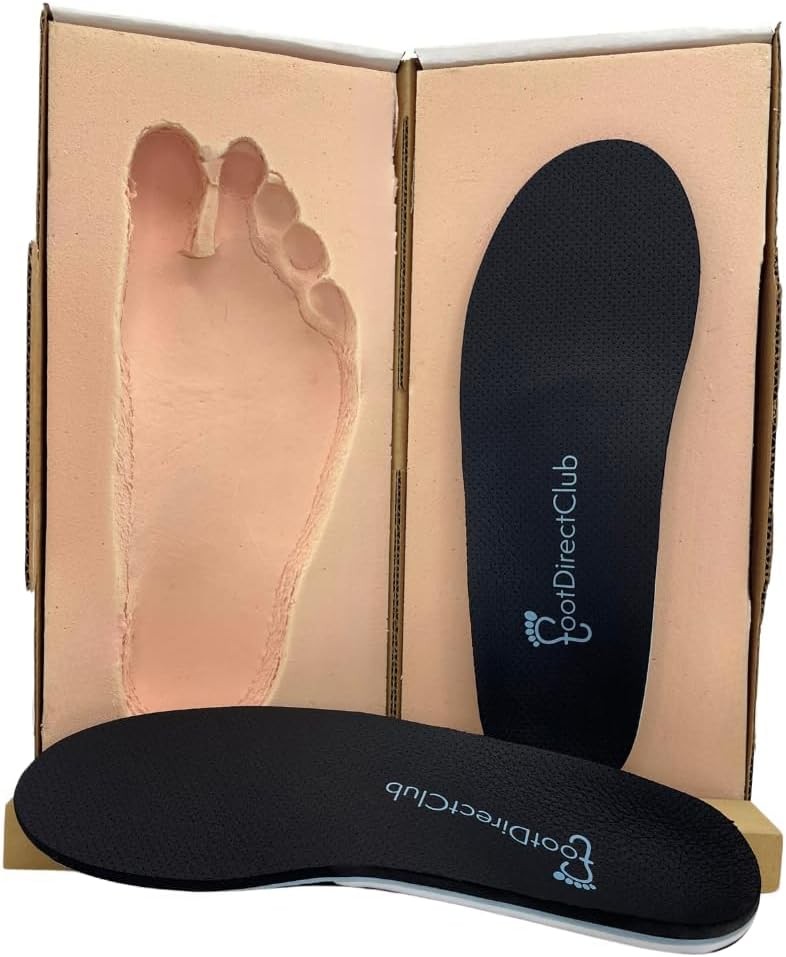
Foot Direct Club Custom Orthotic Insoles
Check Price on AmazonAs an Amazon Associate we earn from qualifying purchases.

SOLE Active Medium Insoles use a recycled cork footbed that gradually conforms to your unique foot shape through passive heat molding activated by body warmth during normal wear. This process creates a semi-custom fit over 2-3 days without requiring oven heating or specialized equipment. The cork material provides structured medium-height arch support while allowing individual adaptation, combining standardized biomechanical design with personalized comfort.
The deep heel cups stabilize the rear foot and promote proper alignment during the gait cycle. Research on prefabricated orthoses with heel cup geometry shows consistent improvements in contact area and pressure distribution across the medial arch and heel regions.[8] The structured heel cradle controls excessive pronation while maintaining flexibility for natural foot motion, supporting the subtalar joint without the rigid constraints of some custom orthotic designs.
The medium arch height accommodates most foot types, though individuals with very flat feet or extremely high arches may require more specialized options. The Polygiene odor control treatment inhibits bacterial growth and maintains freshness during extended wear, addressing a common complaint with closed-cell foam insoles that trap moisture and develop odors. The moisture-wicking top fabric enhances breathability and reduces friction.
The 4mm cushioning layer beneath the cork base absorbs shock during heel strike and toe-off, reducing impact forces transmitted to the plantar fascia and lower extremity joints. This combination of structured support and shock absorption addresses both biomechanical correction and comfort—the dual therapeutic goals that research shows both custom and quality prefabricated orthoses can achieve.
Users report that the passive molding process requires minimal adjustment, with most experiencing immediate comfort improvement that enhances over the first week as the cork fully conforms. The gradual adaptation may provide advantages over rigid custom orthotics requiring longer break-in periods. Durability typically ranges from 12-18 months with regular use, requiring more frequent replacement than custom orthotics but lasting longer than budget prefabricated options.
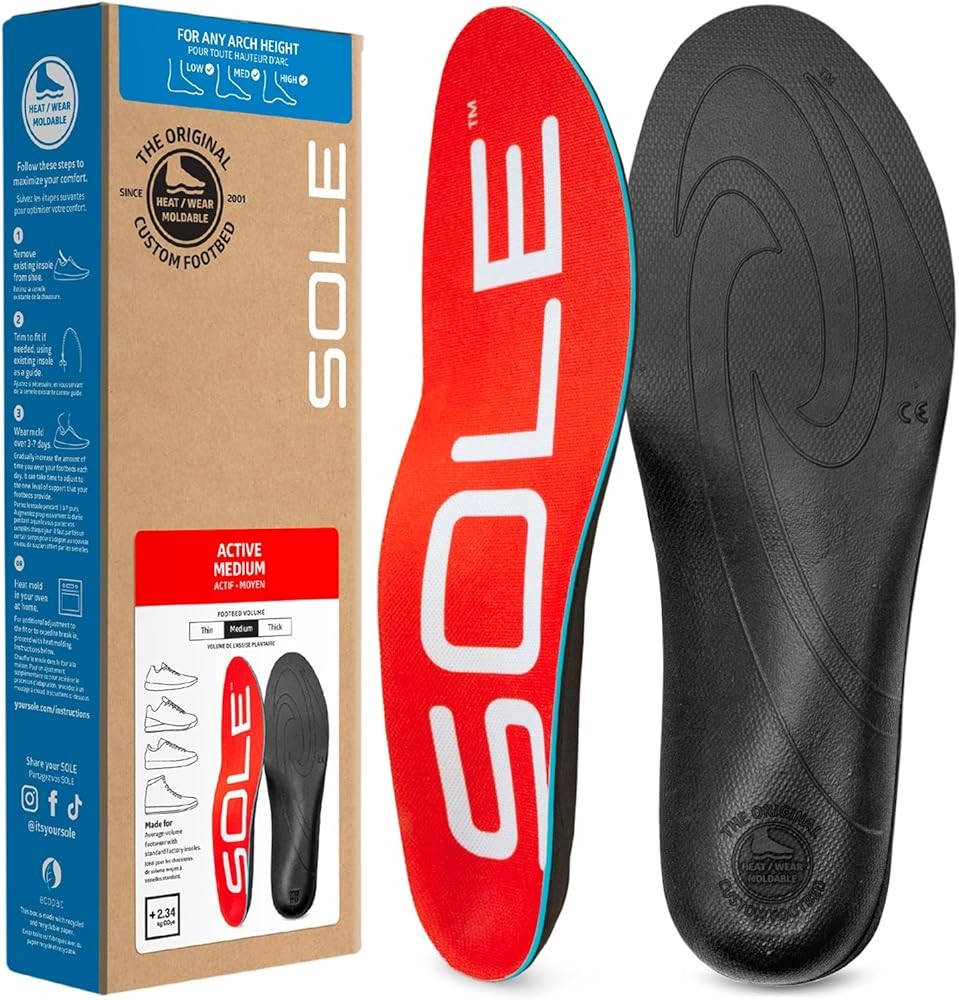
SOLE Active Medium Insoles
Check Price on AmazonAs an Amazon Associate we earn from qualifying purchases.

VALSOLE Heavy Duty Support Pain Relief Orthotics address the specific needs of heavier individuals requiring enhanced structural support and durability. Designed for users over 220 pounds, these prefabricated insoles provide firm arch support and reinforced construction that maintains biomechanical effectiveness under greater load. At just $22 per pair, they deliver research-backed orthotic features at the lowest price point among quality options.
The firm arch support uses high-density EVA foam that resists compression under body weight, maintaining the medial longitudinal arch in a neutral position throughout the gait cycle. Research demonstrates that prefabricated orthoses with appropriate arch geometry can neutralize pronated foot posture, with 39.3% of users achieving neutral alignment.[9] The structured support controls the arch collapse that contributes to plantar fasciitis, posterior tibial tendon dysfunction, and medial knee stress.
Deep heel cups measuring 1.5 inches provide rear-foot stability and control, centering the calcaneus and reducing excessive motion during heel strike. This geometric feature appears consistently in research showing prefabricated orthotic effectiveness, with heel cup designs producing measurable reductions in peak pressure and pressure-time integral.[8] The substantial heel cradle reduces lateral rollover and supports proper alignment throughout the kinetic chain.
Multiple cushioning layers combine polyurethane foam with gel inserts at high-pressure zones, distributing impact forces across a larger surface area. This cushioning system addresses the increased ground reaction forces experienced by heavier individuals, protecting the plantar fascia and heel fat pad from excessive stress. The reinforced construction maintains structural integrity under repetitive loading that would compress standard insoles.
The fabric top cover provides moisture management and friction reduction, though the bulkier profile requires adequate shoe volume. Users report that athletic shoes and work boots accommodate the thickness better than dress shoes or narrow casual footwear. The firm feel requires a 3-7 day adjustment period, with gradual increase in wearing time recommended to avoid overuse discomfort during biomechanical adaptation.
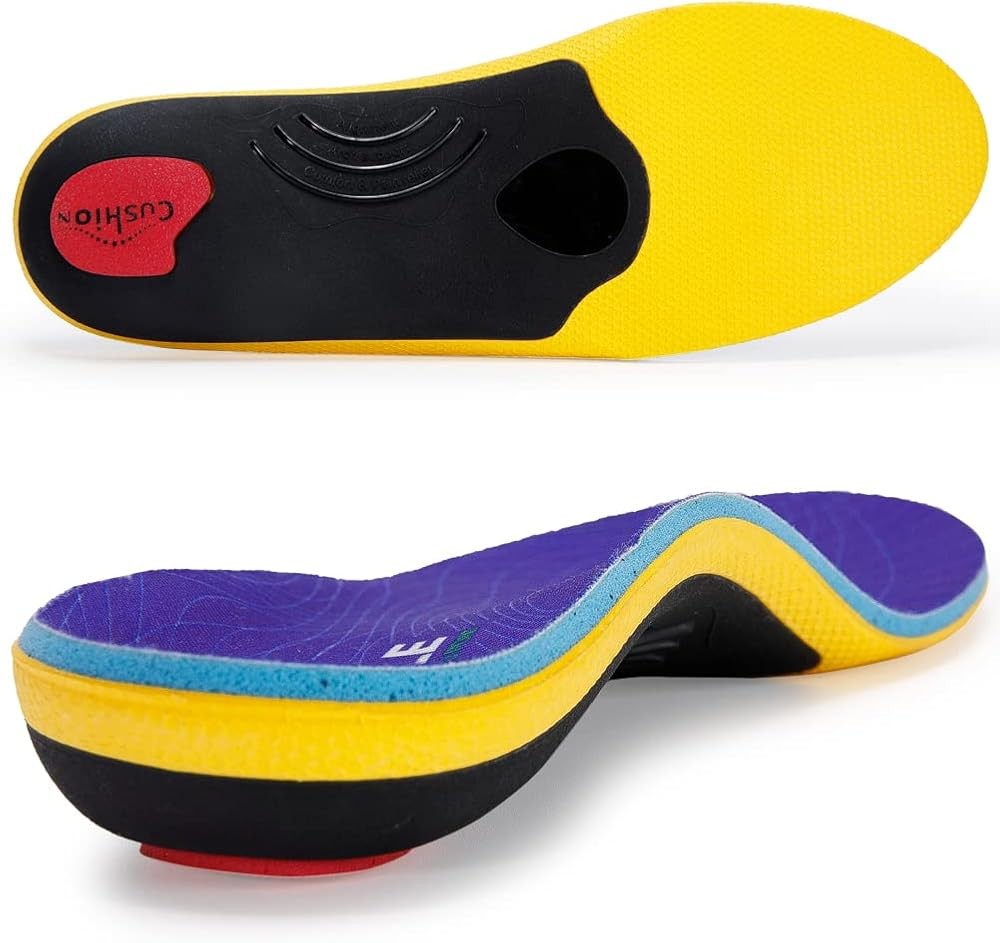
VALSOLE Heavy Duty Support Pain Relief Orthotics
Check Price on AmazonAs an Amazon Associate we earn from qualifying purchases.

Maximum Support Plantar Fasciitis Insoles combine firm arch support with heel cradles and metatarsal pads in a comprehensive biomechanical design addressing multiple foot pain sources. At $44 per pair, these prefabricated orthoses provide therapeutic features comparable to custom devices at approximately one-tenth the cost. The multi-component design targets plantar fasciitis, metatarsalgia, and general arch strain simultaneously.
The firm polypropylene shell maintains arch position under body weight, preventing the medial collapse that strains the plantar fascia origin at the medial calcaneal tubercle. Research shows that both custom and prefabricated orthoses reduce plantar fasciitis pain through this biomechanical mechanism, with multiple studies finding equivalent effectiveness.[1][2] The structured support offloads the plantar fascia during the propulsive phase of gait when tension peaks.
Integrated metatarsal pads positioned behind the metatarsal heads redistribute forefoot pressure, reducing loading on painful neuromas and inflamed metatarsophalangeal joints. This feature addresses the complete foot rather than focusing solely on arch and heel support, providing comprehensive treatment for users experiencing multiple pain sites. The metatarsal support also reduces forefoot pressure during toe-off, complementing the plantar fascia offloading provided by arch support.
The deep heel cup centers the calcaneus and provides cushioning to protect the heel fat pad and reduce bone bruise risk. Dual-density cushioning combines firm support with shock absorption, balancing biomechanical correction with comfort. The design philosophy mirrors professional custom orthotic fabrication, which aims to control foot mechanics while maintaining tolerable comfort for consistent daily wear.
Users report improved symptoms within 1-2 weeks of consistent use, with optimal results occurring after 4-6 weeks of biomechanical adaptation. The firm construction requires gradual increase in wearing time, starting with 2-3 hours daily for the first week. Most users successfully transition to full-day wear within 2 weeks, experiencing significant pain reduction that research shows matches custom orthotic outcomes for plantar fasciitis and general foot pain.
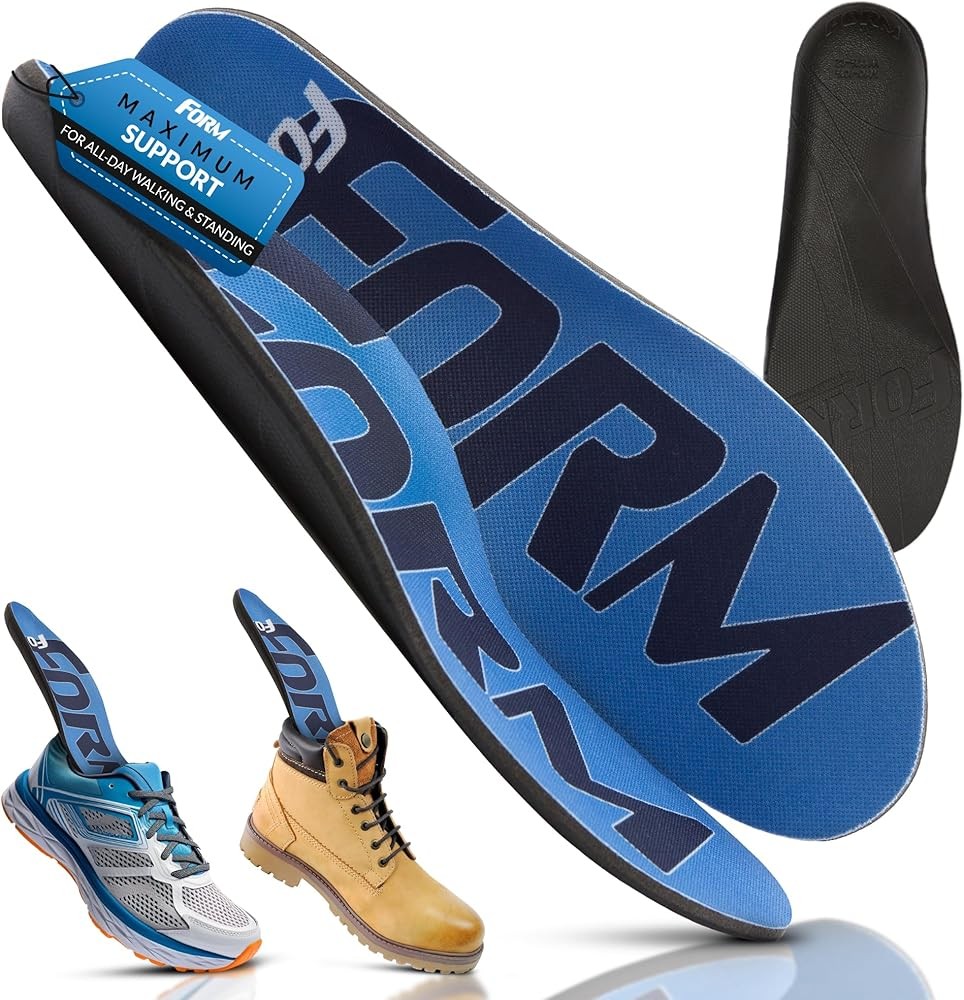
Maximum Support Plantar Fasciitis Insoles
Check Price on AmazonAs an Amazon Associate we earn from qualifying purchases.
What Does Research Show About Long-Term Outcomes With Custom vs Prefabricated Orthoses?
Long-term outcome data provides crucial insights into whether initial effectiveness differences persist or diminish over extended follow-up periods. The 2006 Landorf trial followed participants for 12 months after initial orthotic dispensing, measuring pain and function at 3, 6, and 12 month intervals.[2] While prefabricated orthoses showed slightly better outcomes at 3 months, both custom and prefabricated groups maintained similar improvements throughout the full year. By 12 months, no statistically significant differences existed between custom and prefabricated effectiveness for either pain or functional outcomes.
This convergence of outcomes over time suggests that initial prescription differences matter less than consistent daily orthotic use for achieving long-term therapeutic benefits. Both device types modified foot mechanics sufficiently to reduce plantar fascia strain, with the specific fabrication method becoming less relevant once biomechanical correction was established and maintained through regular wear.
A 2018 systematic review and meta-analysis examining 19 trials with 1,660 participants assessed foot orthotic effectiveness across multiple time points.[15] The review found moderate-quality evidence that foot orthoses reduce plantar heel pain in the medium term (6-12 weeks), with a standardized mean difference of -0.27. Importantly, direct comparisons between custom and prefabricated orthoses showed no significant effectiveness differences at any time point examined. Short-term and long-term evidence quality was rated as very low due to limited long-duration studies.
The limited number of studies extending beyond 12 months represents a significant gap in the research literature. Most randomized controlled trials conclude at 3-6 months, with a smaller subset extending to 12 months. Virtually no high-quality evidence examines custom versus prefabricated orthotic effectiveness beyond one year of use, leaving questions about very long-term outcomes unanswered.
Clinical experience suggests that orthotic replacement patterns differ between custom and prefabricated devices based on durability and cost considerations. Custom orthotics typically receive professional refurbishment or replacement every 3-5 years, while prefabricated insoles are replaced more frequently based on visible wear and comfort degradation. Whether these different replacement patterns affect long-term foot health outcomes remains an open research question.
The 2025 study examining prefabricated orthotic effects on foot posture over 6 months demonstrated sustained structural changes in Foot Posture Index measurements.[9] The -1.1 point improvement in the orthotic group compared to +1.2 point worsening in controls suggests that prefabricated devices can produce lasting biomechanical modifications when worn consistently. The 39.3% rate of foot posture neutralization indicates that structural improvements persist beyond initial pain reduction.
What the evidence shows: Available 12-month follow-up data shows no long-term effectiveness differences between custom and prefabricated orthoses for plantar fasciitis and general foot pain, though very limited research beyond one year leaves questions about multi-year outcomes unanswered, while evidence shows prefabricated devices can produce sustained structural improvements in foot posture with consistent use.
How Do Different Orthotic Types Affect Specific Biomechanical Parameters?
Detailed biomechanical analysis reveals how custom and prefabricated orthoses modify specific gait parameters, pressure distributions, and joint kinematics. The rheumatoid arthritis study quantifying ankle moment changes provides precise measurements of custom orthotic biomechanical effects.[5] The 0.4% body weight times body height reduction in plantarflexion moment and 0.16% reduction in eversion moment represent clinically meaningful alterations in ankle joint loading. The 9 kilopascal decrease in average forefoot plantar pressure directly reduces stress on inflamed metatarsophalangeal joints common in rheumatoid arthritis.
These specific biomechanical modifications require the precise geometric control that custom fabrication enables, explaining why prefabricated orthoses showed limited gait modification effects in this particular patient population. The contrast between rheumatoid arthritis findings and plantar fasciitis research suggests that condition-specific biomechanics determine whether custom fabrication provides therapeutic advantages.
The 3D-printed custom orthotic study measured peak pressure at specific anatomical landmarks, revealing targeted pressure reduction effects.[6] Hallux and first metatarsal peak pressures decreased significantly with custom devices compared to prefabricated insoles, while mid-heel and lateral heel pressures also showed statistically significant reductions. These anatomically-specific effects demonstrate that custom fabrication can target pressure relief to particular foot regions based on individual pathomechanics.
Conversely, the 2024 study examining six prefabricated insole designs found consistent biomechanical effects across standard geometric variations.[8] Heel cups and medial arch support increased contact area by measurable amounts regardless of individual foot anatomy, while peak pressure and pressure-time integral decreased 8-14% across medial arch and heel regions. These standardized effects suggest that well-designed geometric features produce beneficial biomechanical changes without individual customization for many users.
Contact area analysis provides insights into pressure distribution mechanisms. Increased contact area spreads loading forces across larger surface areas, reducing peak pressure magnitudes that cause localized tissue damage. Both custom and prefabricated orthoses increase contact area through arch support that engages more plantar surface during weight-bearing. Custom devices may optimize contact area distribution more precisely, while prefabricated orthoses achieve substantial contact area improvements through standard arch and heel cup geometry.
The 2026 study examining custom orthoses with heel plugs demonstrates that specific design modifications within custom fabrication enhance therapeutic effects.[7] Heel plugs significantly reduced hindfoot pressure parameters beyond standard custom orthoses, indicating that detailed design features matter even when overall customization is controlled. This finding suggests that custom fabrication enables iterative design refinement based on individual response patterns.
The practical takeaway: Custom orthotics demonstrate superior biomechanical modification for conditions requiring precise joint moment control or targeted pressure relief at specific anatomical sites, while well-designed prefabricated orthoses achieve substantial improvements in contact area and pressure distribution through standardized geometric features that benefit most users without individual fabrication.
What Role Does Orthotic Stiffness Play in Therapeutic Effectiveness?
Orthotic stiffness represents a critical design parameter that affects both biomechanical control and patient tolerance. Stiffer orthotic materials provide greater resistance to foot deformation during weight-bearing, exerting stronger corrective forces on foot structure and motion. Softer materials offer less biomechanical control but generally provide superior initial comfort and require shorter accommodation periods.
The 1999 Pfeffer study compared orthotics of different stiffness levels, including rigid custom orthoses and three types of softer prefabricated inserts.[1] The superior performance of prefabricated silicone, rubber, and felt inserts compared to rigid custom orthoses suggests that excessive stiffness may reduce effectiveness for plantar fasciitis treatment. The softer materials likely provided adequate biomechanical support while offering better pressure distribution and shock absorption.
However, condition-specific requirements may favor stiffer orthotic construction. The rheumatoid arthritis study showing that custom orthoses modified ankle moments while prefabricated devices had limited effects suggests that greater stiffness enables more substantial biomechanical control.[5] Stiffer orthotic shells resist foot deformation more effectively, producing larger moment changes at proximal joints. This increased control may benefit conditions requiring significant gait modification.
Patient tolerance represents a practical limitation on orthotic stiffness. Rigid orthotic shells can cause pressure points, blisters, and discomfort during initial wear, leading to reduced compliance or complete abandonment of treatment. The 7-14 day break-in period reported for firmer orthoses reflects the time required for soft tissues to adapt to altered pressure distributions. Excessively rigid devices may never achieve comfortable tolerance regardless of adaptation time.
Modern custom orthotic fabrication often incorporates variable stiffness zones, using rigid materials for arch support and heel cups while adding softer cushioning at high-pressure areas like the heel and metatarsal heads. This hybrid approach attempts to combine biomechanical control with pressure relief, theoretically optimizing both therapeutic effectiveness and patient comfort. Prefabricated orthoses increasingly adopt similar multi-density designs.
The heat-moldable insole category occupies an intermediate stiffness range, with semi-rigid materials that provide structured support while allowing some individual conforming. This moderate stiffness may explain the popularity of heat-moldable options among users seeking better support than soft insoles without the rigidity of traditional custom orthoses. Research directly comparing therapeutic outcomes across stiffness levels would clarify optimal firmness for different conditions.
Clinical insight: Moderate orthotic stiffness appears optimal for plantar fasciitis and general foot pain based on research showing softer prefabricated inserts outperformed rigid custom orthoses, while conditions requiring substantial gait modification may benefit from stiffer custom devices, though excessive rigidity reduces patient tolerance and compliance with treatment.
How Important Is Professional Assessment Versus Self-Selection of Orthotics?
The role of professional biomechanical assessment in orthotic prescription represents a fundamental question in the custom versus prefabricated debate. Traditional custom orthotic fabrication includes detailed clinical examination, gait analysis, and manual assessment of joint motion and muscle function. This comprehensive evaluation theoretically identifies specific biomechanical abnormalities requiring targeted correction through custom device design.
However, research showing equivalent or superior outcomes with prefabricated orthoses challenges the necessity of professional assessment for many common foot conditions. The 1999 Pfeffer study enrolled patients through orthopedic centers where clinicians presumably performed thorough evaluations before recommending treatment.[1] Despite professional assessment and custom orthotic prescription, prefabricated inserts selected based on standard sizing achieved better outcomes. This suggests that professional evaluation adds limited value when treating straightforward plantar fasciitis.
The 2006 Landorf trial controlled for assessment effects by having the same clinical team evaluate all participants and provide standardized footwear advice regardless of treatment assignment.[2] Both custom and prefabricated orthoses were professionally prescribed after biomechanical examination, yet outcomes remained equivalent. This finding indicates that professional assessment benefits patients equally when combined with either orthotic type, rather than specifically enabling custom fabrication advantages.
Conversely, the Cochrane review identifying specific conditions that benefit from custom orthoses (pes cavus, rheumatoid arthritis, juvenile idiopathic arthritis, hallux valgus) suggests that professional diagnosis of these particular conditions guides appropriate custom orthotic prescription.[10] The number-needed-for-benefit calculations indicate that not all patients with these diagnoses benefit from custom devices, implying that additional biomechanical assessment factors help identify the subset most likely to respond.
The 2025 survey finding that 56.3% of UK healthcare professionals use prefabricated orthoses more frequently than custom options (24.2%) reflects real-world clinical judgment.[13] Experienced practitioners apparently determine that most presentations are adequately addressed with prefabricated devices, reserving custom fabrication for specific cases where professional assessment identifies biomechanical factors requiring individualized correction.
Self-selection of over-the-counter orthoses eliminates professional assessment costs and appointment delays, providing immediate access to treatment. For simple plantar fasciitis or general arch support needs, research suggests this direct-to-consumer approach achieves comparable outcomes to professionally-prescribed custom devices. However, complex conditions or failed responses to initial prefabricated treatment may warrant professional evaluation to identify underlying factors requiring custom intervention.
Here’s what matters: Research demonstrates that professional biomechanical assessment does not enhance outcomes when combined with prefabricated orthoses for straightforward plantar fasciitis, though specific conditions identified through clinical examination (pes cavus, rheumatoid arthritis, complex foot deformities) benefit from custom fabrication that professional assessment guides.
What Are the Practical Considerations for Choosing Between Custom and Prefabricated Options?
Beyond research evidence, practical factors influence real-world orthotic selection decisions. Acquisition time differs substantially between custom and prefabricated options. Custom orthotics require an initial clinical appointment for assessment and mold creation, followed by 2-4 weeks for fabrication and a second appointment for dispensing and fitting adjustment. Total time from decision to treatment ranges from 3-6 weeks. Prefabricated orthoses purchased online arrive within days, while retail purchases provide immediate treatment initiation.
For acute plantar fasciitis causing significant pain and functional limitation, treatment delay represents a meaningful consideration. The 2008 crossover study showing faster initial pain relief with custom orthoses (over one point reduction on the pain scale in 3 weeks) must be weighed against the 3-6 week acquisition delay.[11] Prefabricated insoles initiated immediately may provide earlier absolute pain relief despite potentially slower therapeutic onset once treatment begins.
Insurance coverage affects cost calculations significantly. Some insurance plans cover custom orthotic fabrication with modest copayments, reducing out-of-pocket costs to $50-150. Other plans exclude orthotic coverage entirely or apply high deductibles that make custom devices fully patient-funded. Prefabricated orthoses rarely receive insurance reimbursement but cost less than most copayments, making insurance coverage status a critical economic factor.
Shoe compatibility represents a practical limitation for both orthotic types. Custom orthoses fabricated to precise specifications may fit poorly in shoes different from those used during the molding process, limiting footwear versatility. Prefabricated orthoses with standard dimensions may not fit narrow dress shoes or specialized footwear like cycling shoes or ski boots. Both types typically require athletic shoes or boots with removable insoles and adequate volume to accommodate the device thickness.
Bilateral versus unilateral foot conditions affect relative costs. Custom orthotics are typically prescribed in pairs even for unilateral symptoms, while prefabricated options can be purchased individually for single-foot treatment. This flexibility reduces costs for asymmetric conditions, though bilateral use is generally recommended to maintain gait symmetry and reduce compensation patterns.
What Does a Complete Orthotic Support System Look Like?
Research consistently demonstrates that orthotic interventions achieve best results when combined with complementary treatments addressing multiple aspects of foot pathomechanics. The 2025 UK survey found that 88% of healthcare professionals prescribe strengthening exercises, 85.5% recommend stretching, and 65.2% include balance training alongside orthotic treatment.[13] This multifaceted approach addresses the underlying weakness, tightness, and proprioceptive deficits that contribute to foot pain rather than relying solely on passive orthotic support.
Calf stretching reduces tension on the Achilles tendon and plantar fascia, decreasing strain during the propulsive phase of gait when orthotic support alone may not fully offload inflamed tissues. Hold each stretch for 30 seconds and repeat 3-4 times daily, focusing on both gastrocnemius (knee straight) and soleus (knee bent) to address the entire posterior chain. The 1999 Pfeffer study included a stretching-only group that achieved 72% improvement, demonstrating significant therapeutic value.[1]
Intrinsic foot strengthening addresses the muscular support system that complements orthotic biomechanical control. Toe curl exercises, marble pickups, and short-foot exercises activate the small muscles within the foot that help maintain arch structure. Research shows that custom orthoses increase physical activity levels more than prefabricated options,[3] suggesting that combining orthotic support with progressive strengthening enables higher activity levels that further enhance foot function.
Best insoles for plantar fasciitis can be integrated with physical therapy protocols for comprehensive treatment. Night splints maintain dorsiflexion positioning during sleep, reducing plantar fascia shortening that causes severe morning pain. Plantar fasciitis night splints provide this complementary passive stretching while orthotic insoles control daytime biomechanics.
Gradual activity progression reduces overload during the initial treatment phase when tissues are healing. Reduce high-impact activities by 30-50% during the first 2-4 weeks of orthotic use, allowing biomechanical adaptations to occur before resuming full training volumes. Complementary tools like foot massagers can support recovery during this transition period. The naval recruit study showing injury prevention with prefabricated orthoses involved controlled activity progression throughout basic training,[12] suggesting that combined orthotic use and graduated loading optimizes outcomes.
Insoles for flat feet and insoles for high arches require arch-specific exercise protocols addressing the particular biomechanical patterns associated with each foot type. Flat feet benefit from posterior tibial strengthening and arch activation exercises, while high arches require focused attention to shock absorption and flexibility to avoid rigid cavus-related complications.
Frequently Asked Questions
Are custom orthotics better than over-the-counter insoles?
Research shows mixed results depending on the specific foot condition being treated. Several large randomized controlled trials found prefabricated insoles performed as well as or better than custom orthotics for plantar fasciitis and general foot pain. The landmark 1999 Pfeffer study with 236 patients showed prefabricated silicone inserts achieved 95% improvement rates compared to 68% for custom orthoses (P=0.022). However, custom orthoses demonstrated advantages for specific conditions like rheumatoid arthritis foot pain, pes cavus (high arches), and when faster initial relief is needed. A 2008 study found custom orthoses reduced pain by 1.39 units in 3 weeks when prescribed as initial treatment (P=.02).
How much do custom orthotics cost compared to over-the-counter options?
Traditional custom orthotics fabricated by podiatrists typically cost $400-600 per pair without insurance coverage, with insurance reimbursement varying widely based on plan coverage and deductibles. Direct-to-consumer custom options like the Foot Direct Club insoles cost $160-250 per pair. Over-the-counter prefabricated insoles range from $20-60 per pair, representing a 6-20 fold cost difference compared to traditional custom orthotics. Custom devices typically last 2-5 years while prefabricated insoles require replacement every 6-12 months, partially offsetting the initial cost difference but still providing substantial savings with prefabricated options.
Do custom orthotics work better for plantar fasciitis?
Multiple high-quality studies demonstrate that prefabricated insoles work as well as or better than custom orthotics specifically for plantar fasciitis treatment. The 1999 Pfeffer trial found prefabricated inserts significantly outperformed custom orthoses (combined prefab groups P=0.022 versus custom). A 2006 randomized trial showed similar effectiveness at 3 months and 12 months between custom and prefabricated orthoses. A 2009 double-blind RCT with 142 adults found no difference between custom and prefabricated EVA orthoses at 4 or 8 weeks. A 2018 meta-analysis of 19 trials confirmed no significant differences between custom and prefabricated effectiveness at any time point for plantar heel pain.
How long do custom orthotics last compared to over-the-counter insoles?
Custom orthotics typically last 2-5 years with proper care due to higher-quality materials like carbon fiber, polypropylene shells, and premium cushioning layers. The more substantial construction resists compression and maintains structural integrity under repetitive loading. Over-the-counter insoles generally last 6-12 months depending on activity level, body weight, and product quality. High-quality prefabricated options with cork or EVA foam bases may last 12-18 months. The longer lifespan of custom orthotics partially offsets their higher initial cost—a $500 custom orthotic lasting 4 years costs $125 annually compared to $40 annually for prefabricated insoles replaced yearly.
Can heat-moldable insoles provide custom-like support?
Heat-moldable insoles create a semi-custom fit by conforming to individual foot anatomy when heated and worn, positioning them between fully custom and standard prefabricated options. Passive heat-moldable insoles like SOLE Active use cork that softens with body heat over 2-3 days, gradually adapting to foot contours. Active heat-moldable insoles require intentional oven heating before molding. While these provide more personalized fit than standard prefabricated designs, limited research directly compares heat-moldable to fully custom devices. Studies showing that standard prefabricated geometric features (heel cups, arch support) reduce peak pressure by 8-14% suggest well-designed standard geometry may provide similar benefits to semi-custom molding for many users.
Do I need a prescription for custom orthotics?
Traditional custom orthotics require a prescription from a podiatrist, orthopedic specialist, physical therapist, or other qualified healthcare provider who performs biomechanical assessment, gait analysis, and creates a foot mold using plaster casts, foam impressions, or 3D scanning. Insurance coverage for custom orthotics typically requires this prescription documentation. Direct-to-consumer custom options like Foot Direct Club use at-home impression kits or smartphone 3D scanning apps, eliminating the prescription requirement and clinical visit but also removing professional biomechanical assessment that may identify specific conditions requiring targeted correction beyond standard customization.
What conditions benefit most from custom orthotics?
Cochrane review evidence identifies specific conditions where custom orthotics demonstrate documented effectiveness: pes cavus/high arches (NNTB: 5), rheumatoid arthritis rearfoot pain (NNTB: 4), juvenile idiopathic arthritis foot pain (NNTB: 3), and hallux valgus (NNTB: 6). Biomechanical research shows custom orthoses provide superior gait modification for rheumatoid arthritis, reducing ankle plantarflexion moment by 0.4% body weight times body height and ankle eversion moment by 0.16% (P<0.05). Complex foot deformities requiring precise biomechanical control benefit from custom fabrication, while straightforward plantar fasciitis shows equivalent outcomes with quality prefabricated options.
How quickly do custom orthotics relieve pain compared to prefab insoles?
Research indicates custom orthotics may provide faster initial pain relief in some cases. A 2008 crossover study found that custom orthoses prescribed as initial treatment produced more than a full point of pain reduction on a 10-point scale within 3 weeks (P=.02), while switching from custom to prefabricated devices increased pain noticeably (P=.01). However, long-term follow-up studies show convergence of outcomes. The 2006 Landorf trial found similar effectiveness at 3 months and no differences at 12 months between custom and prefabricated orthoses. The faster initial relief with custom devices must be weighed against the 3-6 week acquisition delay for fabrication, while prefabricated insoles provide immediate treatment initiation.
Are 3D-printed custom orthotics better than traditional custom options?
A 2019 randomized controlled trial with 60 patients found 3D-printed custom ankle-foot orthoses significantly reduced peak pressure at the hallux and first metatarsal compared to prefabricated insoles (P<0.05). Mid-heel and lateral heel pressures also decreased significantly with 3D-printed custom devices. Patients reported significantly better comfort after 8 weeks of use. The precision of 3D printing technology enables exact reproduction of foot geometry captured through 3D scanning, potentially providing superior customization compared to traditional plaster casting methods. However, limited research directly comparing 3D-printed to traditionally fabricated custom orthotics limits definitive conclusions about superiority of the newer technology.
Can prefabricated insoles reduce injury risk as well as custom orthotics?
High-quality research demonstrates significant injury risk reduction capability with prefabricated orthoses. A randomized controlled trial followed 306 naval recruits through 11 weeks of basic training, comparing prefabricated orthoses to standard military footwear. The prefabricated orthoses group showed 34% reduction in developing medial tibial stress syndrome, patellofemoral pain, Achilles tendinopathy, or plantar fasciitis (incidence rate ratio 0.66, P<0.05). Injury rates were 17.6% with prefabricated orthoses versus 26.1% in controls. This demonstrates substantial protective effects without custom fabrication, suggesting that well-designed geometric features provide biomechanical protection during high-demand activities.
Our Top Recommendations
Based on comprehensive research analysis, a tiered approach to orthotic selection aligns with evidence-based effectiveness and cost-benefit considerations. For initial treatment of plantar fasciitis, flat feet, or general arch support needs, start with high-quality prefabricated options like the VALSOLE Heavy Duty Support Orthotics ($22) or Maximum Support Plantar Fasciitis Insoles ($44). Multiple large-scale randomized controlled trials demonstrate that prefabricated orthoses achieve equivalent or superior outcomes compared to custom devices for these common conditions while providing 10-20 fold cost savings.
If prefabricated insoles provide inadequate relief after 4-6 weeks of consistent use, or if you have specific conditions shown to benefit from customization (rheumatoid arthritis, pes cavus, complex foot deformities), consider semi-custom heat-moldable options like SOLE Active Medium Insoles ($59). These provide personalized fit at moderate cost, potentially delivering custom-like benefits without full custom fabrication expenses.
For cases requiring maximum customization—failed response to prefabricated and heat-moldable options, professional recommendation based on biomechanical assessment, or specific conditions documented to benefit from custom fabrication—the Foot Direct Club Custom Orthotic Insoles ($160) offer direct-to-consumer custom orthotics at substantially lower cost than traditional podiatrist-fabricated devices while maintaining professional-grade design and construction quality.
Combine orthotic treatment with comprehensive management including calf stretching, intrinsic foot strengthening, gradual activity progression, and condition-specific interventions. Research shows the vast majority of healthcare professionals prescribe exercise alongside orthotics,[13] recognizing that passive support alone provides suboptimal outcomes compared to multifaceted treatment addressing underlying biomechanical factors.
Join the discussion: Facebook | X | YouTube | Pinterest
Conclusion
The extensive research comparing custom orthotics and over-the-counter insoles reveals a more nuanced picture than the traditional assumption that custom fabrication universally provides superior outcomes. Large-scale randomized controlled trials consistently demonstrate that well-designed prefabricated orthoses achieve equivalent or better therapeutic results for plantar fasciitis and general foot pain—the most common indications for orthotic treatment. The landmark Pfeffer study showing nearly all prefabricated silicone insert users improved versus roughly two-thirds of custom orthotic users, combined with multiple trials finding no long-term effectiveness differences, establishes prefabricated options as appropriate first-line treatment for most presentations.
However, condition-specific research identifies populations where custom orthotics demonstrate clear advantages. Rheumatoid arthritis foot pain, pes cavus, juvenile idiopathic arthritis, and complex biomechanical abnormalities show superior outcomes with custom fabrication that enables precise gait modification and targeted pressure relief. The challenge lies in accurately identifying which patients fall into these custom-benefiting categories versus the majority who achieve excellent results with less expensive prefabricated alternatives.
Cost-effectiveness analysis strongly favors prefabricated orthoses for initial treatment given equivalent therapeutic outcomes at 6-20 times lower cost. Even accounting for shorter lifespan and more frequent replacement, prefabricated options provide substantial economic advantages while delivering research-validated symptom relief. Direct-to-consumer custom options occupy a middle ground, offering customization at $160-250 compared to $400-600 for traditional podiatrist-fabricated devices.
The convergence of custom and prefabricated outcomes over 12-month follow-up periods suggests that consistent biomechanical support matters more than fabrication method for long-term success. Both device types modify foot mechanics sufficiently to reduce tissue strain when worn regularly, with patient compliance potentially influencing outcomes more than orthotic type. Combining orthotic treatment with strengthening, stretching, and gradual activity progression—as the vast majority of experienced clinicians recommend—optimizes therapeutic benefits regardless of whether devices are custom or prefabricated.
For most individuals experiencing plantar fasciitis, flat feet, or general foot pain, high-quality prefabricated orthoses represent the evidence-based first choice. Reserve custom fabrication for specific conditions documented to benefit from individualized design, failed response to quality prefabricated options after adequate trial periods, or when professional biomechanical assessment identifies factors requiring precise custom correction beyond standard geometric features.
Related Reading
- Best Insoles for Plantar Fasciitis — Comprehensive guide to research-backed insole options
- Superfeet vs PowerStep Comparison — Detailed analysis of leading prefabricated brands
- Best Insoles for Flat Feet — Arch support options for overpronation
- Best Insoles for High Arches — Cushioning and support for pes cavus
- Plantar Fasciitis Night Splints — Complementary passive stretching treatment
- Toe Spacer Benefits — Additional foot alignment interventions
- Best Foot Massagers for Neuropathy and Plantar Fasciitis — Active recovery tools
- Best Acupressure Mats — Whole-body pain management approaches
References
[1] Pfeffer G, Bacchetti P, Deland J, et al. Comparison of custom and prefabricated orthoses in the initial treatment of proximal plantar fasciitis. Med Sci Sports Exerc. 1999;31(8):1119-1124. PMID: 10229276.
[2] Landorf KB, Keenan AM, Herbert RD. Effectiveness of foot orthoses for plantar fasciitis: a randomized trial. Arch Intern Med. 2006;166(12):1305-1310. PMID: 16801514.
[3] Wrobel JS, Fleischer AE, Crews RT, et al. A randomized controlled trial of custom foot orthoses for the treatment of plantar heel pain. J Am Podiatr Med Assoc. 2015;105(4):281-294. PMID: 25941995.
[4] Baldassin V, Gomes CR, Beraldo PS. Effectiveness of prefabricated and customized foot orthoses made from low-cost foam for noncomplicated plantar fasciitis: a randomized controlled trial. Arch Phys Med Rehabil. 2009;90(4):701-706. PMID: 19345789.
[5] Simonsen MB, Hirata RP, Næsborg-Andersen K, et al. Different types of foot orthoses effect on gait mechanics in patients with rheumatoid arthritis. J Biomech. 2022;130:110496. PMID: 33994179.
[6] Xu R, Wang Z, Ma T, et al. Effect of 3D Printing Individualized Ankle-Foot Orthosis on Plantar Biomechanics and Pain in Patients with Plantar Fasciitis: A Randomized Controlled Trial. Med Sci Monit. 2019;25:1392-1400. PMID: 30789873.
[7] Balsdon MER, Dombroski CE. Custom-made foot orthoses with and without heel plugs and their effect on treatment outcomes and plantar pressures in patients with plantar fasciitis. Prosthet Orthot Int. 2026. PMID: 40366378.
[8] Cooper S, Hanning J, Hegarty C, et al. Effects of a range of 6 prefabricated orthotic insole designs on plantar pressure in a healthy population. Prosthet Orthot Int. 2024. PMID: 39140763.
[9] Cáceres-Madrid MV, Calderón-García JF, Rodríguez-Velasco FJ, et al. The Influence of Prefabricated Foot Orthosis Use on the Modification of Foot Posture in Adults with Pronated Feet: A Randomised Controlled Trial. Healthcare (Basel). 2025;13(2):163. PMID: 39857190.
[10] Hawke F, Burns J, Radford JA, du Toit V. Custom-made foot orthoses for the treatment of foot pain. Cochrane Database Syst Rev. 2008;(3):CD006801. PMID: 18646168.
[11] Trotter LC, Pierrynowski MR. Short-term effectiveness of full-contact custom-made foot orthoses and prefabricated shoe inserts on lower-extremity musculoskeletal pain: a randomized crossover trial. J Am Podiatr Med Assoc. 2008;98(5):357-363. PMID: 18820037.
[12] Bonanno DR, Murley GS, Munteanu SE, et al. Effectiveness of foot orthoses for the prevention of lower limb overuse injuries in naval recruits: a randomised controlled trial. Br J Sports Med. 2018;52(5):298-302. PMID: 29056595.
[13] Drake C, Chapman L, Burnett C, et al. Plantar Heel Pain Management: A Survey of UK Registered Healthcare Professionals. J Foot Ankle Res. 2025;18(1):e70087. PMID: 41075286.
[14] Lewis RD, Wright P, McCarthy LH. Orthotics Compared to Conventional Therapy and Other Non-Surgical Treatments for Plantar Fasciitis. J Okla State Med Assoc. 2015;108(5-6):245-252. PMID: 26855444.
[15] Whittaker GA, Munteanu SE, Menz HB, et al. Foot orthoses for plantar heel pain: a systematic review and meta-analysis. Br J Sports Med. 2018;52(5):322-328. PMID: 28935689.
Recommended Products