Best Insoles for Flat Feet: Arch Support That Research Actually Backs
Summarized from peer-reviewed research indexed in PubMed. See citations below.
Flat feet affect 20-30% of adults and can lead to overpronation, plantar fasciitis, and pain radiating up through the ankles, knees, and lower back through kinetic chain dysfunction. The PowerStep Pinnacle Breeze ($54) is the best overall insole for flat feet, featuring a semi-rigid polypropylene arch that reduces rearfoot eversion while maintaining natural foot mobility, plus an antimicrobial top fabric and dual-layer cushioning that balances support with comfort during all-day wear. A 2024 meta-analysis of 24 studies found foot orthoses reduced peak rearfoot eversion by 2.53 degrees and peak ankle eversion moment by 0.25 Nm/kg, demonstrating measurable biomechanical correction in people with pes planus. For those on a tight budget, the Walk Hero Arch Support Insoles ($15) provide semi-rigid support and a deep heel cup at a fraction of the cost. Here’s what the published research shows about which insole designs actually work for flat feet and overpronation control.
Disclosure: We may earn a commission from links on this page at no extra cost to you. Affiliate relationships never influence our ratings. Full policy →
Flat feet—medically termed pes planus—occur when the longitudinal arch of the foot collapses, allowing the entire sole to contact the ground during weight bearing. This structural variation affects approximately 20-30% of the adult population and can range from flexible flatfoot (arch appears when non-weight bearing) to rigid flatfoot (no arch in any position). While some people with flat feet experience no symptoms, many develop overpronation, where the foot rolls excessively inward during gait, leading to a cascade of biomechanical compensations.
The research on orthotic insoles for flat feet has expanded significantly over the past decade. A 2024 meta-analysis by Jafarnezhadgero and colleagues examined 24 studies and found that foot orthoses reduced peak rearfoot eversion by 2.53 degrees and peak ankle eversion moment by 0.25 Nm/kg in people with flat feet. More recently, a 2025 meta-analysis by Jor and colleagues focused specifically on runners with flatfeet, analyzing 12 studies and finding that orthoses with medial posts decreased peak ankle eversion (SMD=-0.41) and Achilles tendon loading rates (SMD=-0.94).
The mechanism behind these improvements involves controlling the pronation phase of gait. As Desmyttere and colleagues demonstrated in their 2018 meta-analysis of 11 studies, medial posting was the most effective orthotic feature for reducing peak rearfoot eversion in pes planovalgus. This design element creates a wedge on the medial (inside) edge of the insole, effectively resisting the inward roll of the foot and redistributing plantar pressures.
Material selection and rigidity also matter. Sheykhi-Dolagh and colleagues (2015) compared rigid UCBL (University of California Biomechanics Laboratory) orthoses, semi-rigid designs, and soft insoles in 20 participants. They found rigid UCBL orthoses produced the highest arch height index, while semi-rigid designs provided the highest foot mobility at 90% weight bearing—suggesting a trade-off between maximum correction and functional comfort.
| Feature | PowerStep Pinnacle Breeze | Sof Sole Insoles | Superfeet RUN Comfort | Walk Hero |
|---|---|---|---|---|
| Price | $54 | $24 | $54 | $15 |
| Arch Type | Semi-rigid polypropylene | Moderate EVA | Carbon fiber stabilizer | Semi-rigid |
| Heel Cup | Deep, encapsulating | Moderate with gel | Deep, structured | Deep |
| Top Fabric | Antimicrobial CoolMax | Standard textile | High-density foam | Antimicrobial |
| Pronation Control | Medial post, rigid arch | Moderate | High with stabilizer cap | Moderate |
| Weight | Medium | Light | Medium | Light |
| Best For | All-day wear, mild-moderate flatfoot | Casual use, budget buyers | Running, athletic activity | Value, first-time users |
| Trim-to-Fit | Yes | Yes | No (sized precisely) | Yes |
What Causes Flat Feet and Overpronation?
Flat feet develop through multiple pathways, both congenital and acquired. Congenital pes planus results from genetic factors affecting tarsal bone development, ligament laxity, or neuromuscular conditions. Tax (1989) noted that excessive pronation was essentially universal in children, though most develop normal arches as foot structures mature through adolescence.
Acquired flatfoot develops later in life through several mechanisms. Posterior tibial tendon dysfunction (PTTD) is the most common cause in adults, where progressive degeneration of the tendon that supports the medial longitudinal arch leads to gradual arch collapse. Sobel and colleagues (1999) reviewed orthotic interventions for rearfoot problems including PTTD, emphasizing that early-stage intervention with appropriate orthoses could slow or limit progression to more severe deformity requiring surgical reconstruction.
Obesity places additional stress on foot structures. The increased mechanical load accelerates arch collapse in predisposed individuals, creating a feedback loop where altered gait mechanics lead to further soft tissue strain. Pregnancy can temporarily induce flatfoot through hormonal changes that increase ligament laxity, combined with weight gain—some women experience permanent arch reduction after multiple pregnancies.
Age-related degeneration affects the spring ligament complex (plantar calcaneonavicular ligament) and plantar fascia, both critical to maintaining arch integrity. As these structures lose elasticity and tensile strength, the arch gradually flattens even in individuals who had normal foot structure in youth.
The biomechanical consequence of flat feet is almost always excessive pronation—the inward rolling motion of the foot during the stance phase of gait. Normal pronation serves an important shock-absorption function, but in pes planus this motion becomes exaggerated and prolonged. O’Leary and colleagues (2013) conducted a systematic review linking flat feet and excessive pronation to chronic low back pain through kinetic chain mechanisms. The altered foot position forces compensatory rotations at the ankle, knee, and hip, potentially affecting spinal alignment and loading patterns.
Kirby (1992) introduced the medial heel skive technique specifically to address this pronation problem. By removing a wedge of material from the medial heel of the orthotic during fabrication, the device generates a supination moment at heel strike, effectively countering the excessive pronation tendency throughout the gait cycle.
Bottom line: Flat feet result from genetic factors, posterior tibial tendon dysfunction, obesity, pregnancy, or age-related degeneration, leading to excessive pronation that research links to pain up through the kinetic chain including chronic low back pain.
How Do Orthotic Insoles Work for Flat Feet?
Orthotic insoles function through multiple biomechanical mechanisms to address the structural and functional deficits in pes planus. The primary action involves providing external support to the medial longitudinal arch, partially compensating for the compromised intrinsic support normally provided by the plantar fascia, spring ligament, and posterior tibial tendon.
Arch support alone, however, represents only one component. Cooper and colleagues (2024) tested six different prefabricated insole designs and found that heel cups combined with medial arch support increased contact area and reduced plantar pressure by 8-14%. The heel cup creates a more stable base by centering the calcaneus (heel bone) and limiting excessive eversion (outward tilting) that contributes to arch collapse.
Medial posting—the wedge configuration on the inside edge mentioned earlier—generates what biomechanists call a “supination moment.” This external torque resists the pronation tendency throughout stance phase. Desmyttere’s 2018 meta-analysis demonstrated this was the single most effective design feature across 11 studies for reducing peak rearfoot eversion in pes planovalgus.
The degree of rigidity affects both correction and comfort. Semi-rigid materials like polypropylene or carbon fiber provide structural support while allowing some dynamic adaptation during gait. This appears optimal for most users. Sheykhi-Dolagh and colleagues (2015) found that while rigid UCBL orthoses achieved the highest arch height index, semi-rigid designs permitted the highest foot mobility at 90% weight bearing—a critical factor for maintaining normal gait patterns and preventing secondary problems from overly restrictive devices.
Pressure redistribution represents another key mechanism. Cheng and colleagues (2021) studied 3D-printed orthoses in 10 subjects with flexible flatfoot and measured significant reductions in hindfoot pressure alongside increased peak ankle dorsiflexion. By spreading load more evenly across the plantar surface, well-designed orthoses reduce concentrated stress on vulnerable structures like the plantar fascia and metatarsal heads.
Recent research has explored augmenting orthoses with additional interventions. Sever and colleagues (2024) studied 50 juvenile athletes with flatfoot, comparing UCBL orthoses alone versus UCBL combined with Kinesio tape. The combined approach yielded significantly higher AOFAS (American Orthopaedic Foot and Ankle Society) scores, suggesting that external tape support may enhance orthotic effectiveness, particularly during high-demand activities.
Neuromuscular adaptation also plays a role. Siu and colleagues (2020) applied Kinesio tape to runners with flatfoot and measured not only reduced navicular drop distance but also increased tibialis anterior muscle activity. This suggests that external support—whether from tape or orthoses—may facilitate improved recruitment of muscles that actively support the arch, creating beneficial adaptation beyond pure mechanical propping.
Research shows: Orthotic insoles work through arch support, heel stabilization, medial posting to resist pronation, pressure redistribution that reduces hindfoot loading by 8-14%, and potentially neuromuscular facilitation that increases tibialis anterior activity.
What Does Research Say About Custom vs. Prefabricated Insoles?
The custom versus prefabricated debate has practical implications given the substantial cost difference—custom orthoses typically range from $200-500, while quality prefabricated options cost $15-60. Wrobel and colleagues (2015) directly addressed this question in a study of 77 patients with plantar fasciitis, a condition commonly associated with flat feet and overpronation.
Their randomized trial compared custom orthoses fabricated from plaster casts against prefabricated over-the-counter devices. Both groups experienced significant pain reduction, with no statistically significant difference in outcomes between custom and prefabricated orthoses. The authors concluded that prefabricated devices should be considered as first-line intervention before investing in custom fabrication.
This finding aligns with the broader biomechanical literature. Ferber and Hettinga (2016) compared several over-the-counter devices including Superfeet and PowerStep brands, measuring their effects on plantar fascia strain. All tested devices reduced strain compared to the control shoe condition, with no clear superiority of one brand over another—effectiveness appeared more related to proper fit and consistent use than to custom fabrication.
However, certain presentations may benefit from custom approaches. The 3D-printed orthoses studied by Cheng and colleagues (2021) were individually designed based on foot scans and showed significant biomechanical improvements in flexible flatfoot. Similarly, Park and colleagues (2025) found that 3D-printed insoles improved gait mechanics and corrected center of force medial deviation during uphill walking in 20 young adults. These emerging technologies may eventually bridge the gap between prefabricated and traditional custom orthoses.
Severe or rigid flatfoot deformities represent another potential exception. Orejana and Monteagudo (2026) emphasized that medial arch support design should be based on disease stage, with more aggressive pronator wedges and support required for advanced arch collapse. Traditional prefabricated devices may lack sufficient rigidity or precise contouring for these cases.
Blake and Ferguson (1991) described an “inverted orthotic” technique specifically for severe flatfoot in athletes, where the orthotic itself is posted in varus (inverted) during fabrication to generate greater supination moments. This level of customization exceeds what prefabricated devices offer, though it represents a specialized intervention for a specific population.
Key finding: Research shows no significant difference in pain reduction between custom and prefabricated orthoses for typical flat feet and plantar fasciitis, suggesting quality over-the-counter insoles should be tried first before investing in $200-500 custom fabrication.
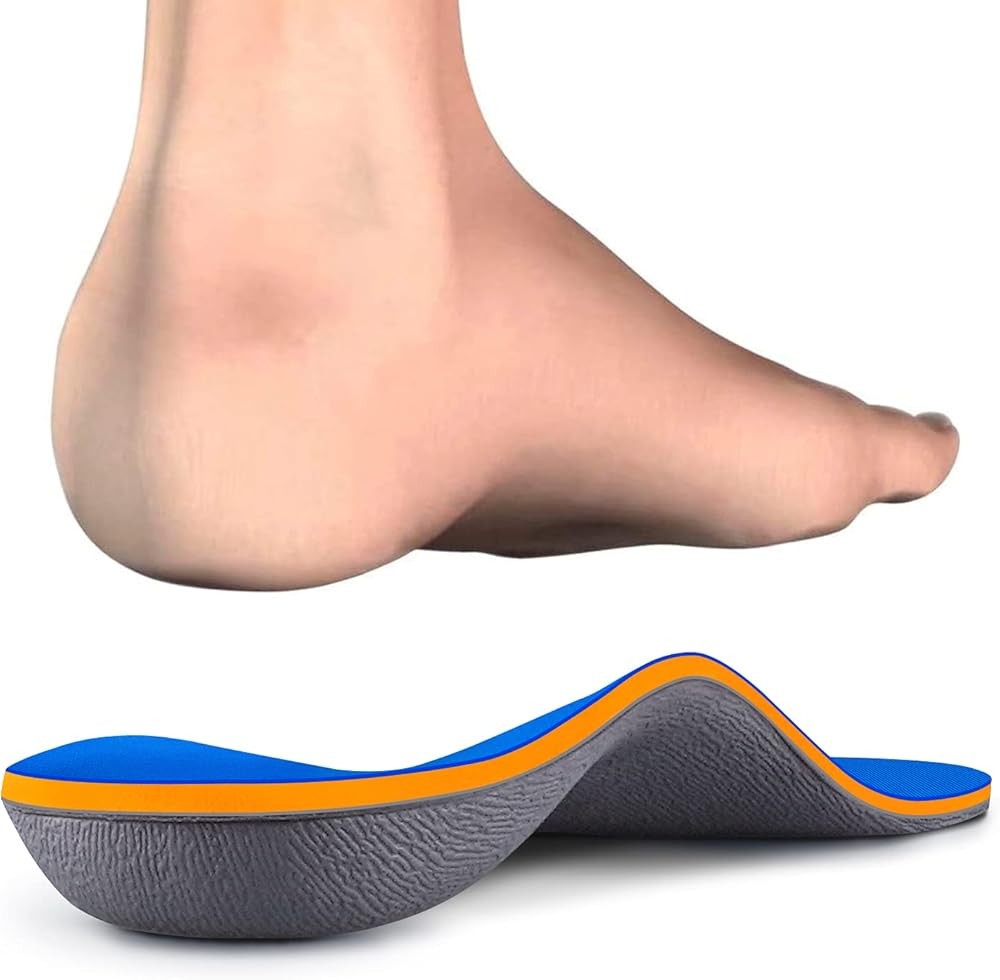
The Sof Sole Insoles provide basic arch support and cushioning at an accessible $24 price point, making them appropriate for those uncertain about investing in higher-end orthoses or experiencing mild flat feet with minimal symptoms. The lightweight EVA foam construction offers moderate arch support—less rigid than semi-rigid polypropylene designs but more supportive than standard shoe insoles.
The gel heel pod provides targeted cushioning for heel strike impact, addressing comfort during walking and standing. While this doesn’t directly correct pronation mechanics the way medial posting does, it reduces discomfort that might otherwise discourage consistent use during an adaptation period.
The moderate arch height works for flexible flatfoot where some arch structure exists during non-weight bearing. For rigid flatfoot or severe pes planus, the Sof Sole likely lacks sufficient support to achieve meaningful biomechanical correction. The device functions better as an upgrade from minimal shoe insoles rather than a therapeutic intervention for significant dysfunction.
Durability represents a consideration at this price point. The EVA foam compresses with use, losing supportive properties faster than semi-rigid materials. Users should expect to replace these insoles every 3-6 months with regular use, whereas higher-end devices like the PowerStep often maintain function for 6-12 months.
The Sof Sole fills a specific niche: individuals with mild flat feet seeking modest improvement in comfort and support without significant financial commitment, or those wanting to test whether any insole provides benefit before investing in research-backed designs with proven biomechanical effects. For someone experiencing fatigue or mild foot discomfort but not acute pain, this represents a reasonable starting point.
What Role Does Heel Cup Depth Play in Flat Feet Support?
The heel cup—the raised border surrounding the heel portion of an insole—serves critical stabilization functions often underappreciated compared to arch support features. Cooper and colleagues (2024) specifically tested heel cup effects in their six-design comparison, finding that heel cups combined with medial arch support increased contact area and reduced plantar pressure by 8-14%.
The biomechanical mechanism involves calcaneal (heel bone) positioning. In normal foot mechanics, the calcaneus maintains a relatively neutral position during stance phase. In flat feet with excessive pronation, the calcaneus everts (tilts outward), contributing to arch collapse and internal rotation up through the kinetic chain. A deep heel cup physically contains the calcaneus, limiting this eversion motion.
This containment effect works synergistically with medial posting. While the medial wedge generates a supination moment, the heel cup provides a stable base from which that moment can act effectively. Without adequate calcaneal control, the benefits of arch support and medial posting diminish because the foundation itself remains unstable.
Depth matters. Shallow heel cups—less than 10mm of vertical rise—provide minimal containment. The PowerStep Pinnacle Breeze and Walk Hero insoles both feature deep heel cups (approximately 15-18mm), creating sufficient structure to influence calcaneal position. The Superfeet RUN Comfort employs a particularly structured heel cup design integrated with its stabilizer cap for maximum control during high-impact running.
The trade-off involves initial comfort. Deep heel cups can feel restrictive during the first few uses, particularly for individuals accustomed to minimal footwear or those with wide heels. This sensation typically resolves within 1-2 weeks as users adapt, but it represents a common reason for premature discontinuation. Gradual break-in—starting with 2-4 hours daily and increasing incrementally—helps manage this adaptation period.
For severe flatfoot, heel cup depth becomes even more critical. Orejana and Monteagudo (2026) emphasized comprehensive design including adequate calcaneal posting and containment as part of their stage-based approach to arch collapse. In advanced cases, the heel cup may need to be deeper and more rigid than standard prefabricated designs offer, potentially necessitating custom fabrication.
Research demonstrates: Deep heel cups increase foot contact area, reduce plantar pressure by 8-14%, and stabilize the calcaneus to limit the eversion that contributes to arch collapse, making them essential for effective flat feet support beyond arch support alone.
How Do Running Insoles Differ for Flat Feet?
Running places substantially higher and more repetitive loads on foot structures compared to walking—impact forces reach 2-3 times body weight with each foot strike versus approximately 1-1.2 times during normal walking. For runners with flat feet, this magnifies the pronation problem and accelerates fatigue in structures attempting to control excessive motion.
Jor and colleagues (2025) conducted a meta-analysis specifically on runners with flatfeet, examining 12 studies. They found that foot orthoses with medial posts decreased peak ankle eversion (SMD=-0.41) and, critically, Achilles tendon loading rates (SMD=-0.94). This Achilles effect is particularly relevant for runners, as the tendon experiences tremendous cumulative stress during distance running, and excessive pronation increases tensile loads through altered ankle mechanics.
Running-specific insoles typically incorporate features addressing these higher demands. The Superfeet RUN Comfort uses a carbon fiber stabilizer cap—a rigid plate that bridges the arch and heel to provide structural support while adding minimal weight. This represents a material upgrade from standard polypropylene, offering superior strength-to-weight ratio critical for minimizing the mass runners must accelerate with each stride.
High-density foam in running insoles serves a dual purpose: providing cushioning for repetitive impact while maintaining adequate firmness for support. The foam density must be carefully balanced—too soft and the material bottoms out under running loads, losing protective function; too firm and the ride becomes harsh, increasing injury risk through excessive impact transmission.
Deep, structured heel cups become even more important for running. Siu and colleagues (2020) found that even Kinesio tape—which provides minimal physical structure—reduced navicular drop distance and increased tibialis anterior activity in runners with flatfoot. A properly designed rigid heel cup amplifies these effects, controlling rearfoot motion throughout the stance phase of running gait.
Durability considerations differ for running insoles. The higher forces and repetition accelerate compression and wear. Runners should expect to replace insoles every 300-500 miles, or approximately every 3-6 months for someone logging 25-30 miles weekly. This maintenance schedule ensures continued biomechanical support rather than running on compressed, ineffective materials.
The Superfeet RUN Comfort addresses these running-specific needs through its carbon fiber construction, structured heel cup, and high-density foam system. While the $54 price point matches the PowerStep Pinnacle Breeze, the specialized design justifies the cost for regular runners with flat feet experiencing overpronation during training.
For those just beginning a running program or running only occasionally, the PowerStep Pinnacle Breeze handles moderate running loads adequately. But for runners logging 15+ miles weekly or experiencing Achilles discomfort, investing in running-specific orthoses aligned with the research on reducing tendon loading rates makes biomechanical sense.
The data shows: Running insoles for flat feet require carbon fiber or rigid materials for high-load structural support, deep heel cups to control rearfoot motion, and high-density foam that maintains function under 2-3 times body weight impact forces while reducing Achilles tendon loading rates by SMD=-0.94.

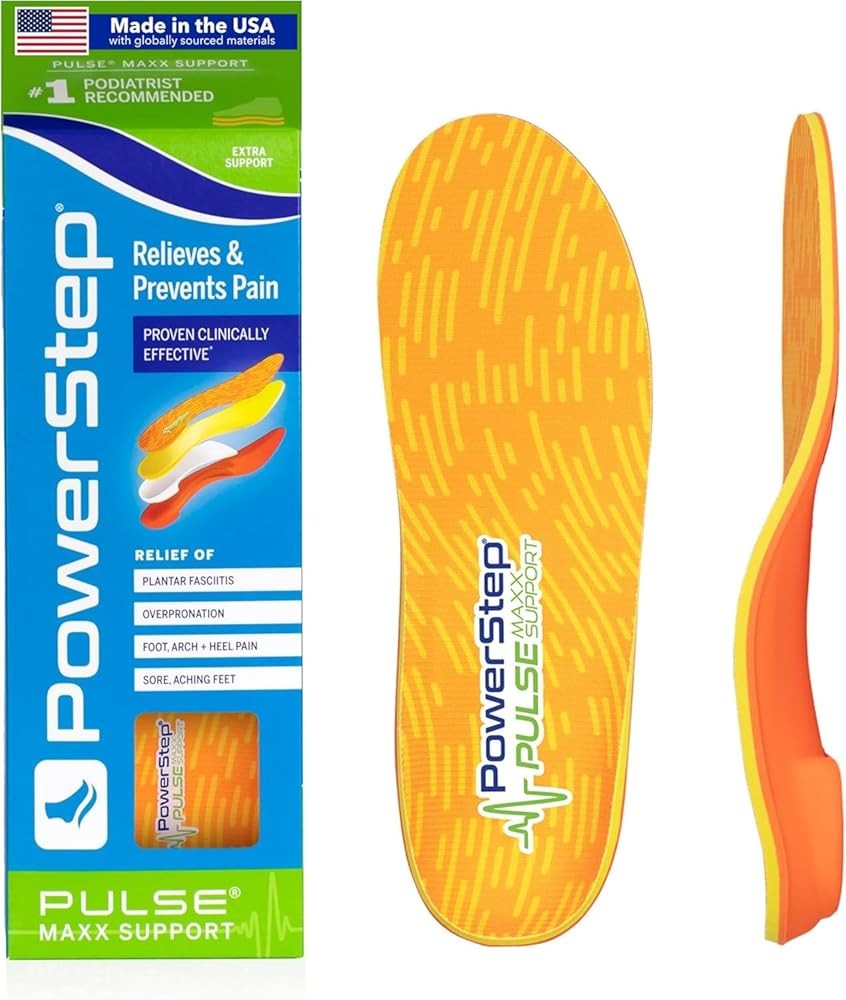
Superfeet RUN Comfort Insoles
Check Price on AmazonAs an Amazon Associate we earn from qualifying purchases.
The Superfeet RUN Comfort is engineered specifically for the biomechanical demands of running with flat feet. The carbon fiber stabilizer cap provides rigid arch support while adding minimal weight—a critical consideration given that research shows even small increases in foot mass significantly affect running economy and fatigue over distance.
The deep, structured heel cup design controls calcaneal positioning during the high-impact loading of foot strike. Combined with the rigid stabilizer, this creates the foundation for addressing the peak ankle eversion and Achilles tendon loading issues that Jor’s meta-analysis identified in runners with flatfeet. The device implements the medial posting principle that decreased peak ankle eversion by SMD=-0.41 across 12 studies.
The high-density foam layer provides cushioning calibrated for running impact forces—soft enough to attenuate shock but firm enough to avoid bottoming out under 2-3 times body weight loads. This foam selection distinguishes running insoles from walking-focused designs that can use softer materials given lower force demands.
Unlike trim-to-fit designs, Superfeet sizes its RUN Comfort line precisely, with multiple width and length options. This ensures proper fit without compromising the structural integrity of the carbon fiber plate. The trade-off is less size flexibility—buyers need to measure carefully and select the correct size rather than trimming a universal design.
The antimicrobial coating addresses the moisture and odor issues inherent in running footwear. The elevated activity level and foot temperature during running accelerate bacterial growth and breakdown of materials. The coating extends both hygiene and functional lifespan, though runners should still replace these insoles every 300-500 miles as the foam compresses and the stabilizer plate may develop micro-fatigue.
At $54, the RUN Comfort costs the same as the PowerStep Pinnacle Breeze but offers specialized features justifying the investment for regular runners. The carbon fiber construction alone represents a material upgrade that translates to better long-term performance under running-specific loads. For runners with flat feet logging significant weekly mileage, this represents an evidence-based intervention addressing the specific biomechanical dysfunctions research has identified in this population.
What About Insoles for Standing All Day With Flat Feet?
Occupations requiring prolonged standing—retail, healthcare, food service, manufacturing—present a distinct challenge for people with flat feet. Unlike walking or running where the gait cycle provides intermittent unloading, static standing maintains continuous load on foot structures. This sustained pressure accelerates fatigue in the muscles and ligaments supporting the arch, exacerbating symptoms in pes planus.
The biomechanical stresses differ from dynamic activities. During standing, the foot experiences relatively constant pressure rather than the repetitive impact of running. This shifts the design priority toward comfort and fatigue resistance while maintaining adequate support. Excessive rigidity that works well for running may become painful during prolonged static loading, as the foot cannot escape uncomfortable pressure points through movement.
Cooper and colleagues’ finding that heel cups and medial arch support reduced pressure by 8-14% takes on particular relevance for standing workers. This pressure redistribution over an 8-12 hour shift can mean the difference between tolerable discomfort and debilitating pain. The increased contact area spreads load across more plantar surface, reducing concentrated stress on vulnerable points.
Cushioning becomes more important for standing versus running. While runners need firm platforms for propulsion efficiency, standing workers benefit from softer top layers that compress slightly to accommodate micro-shifts in weight distribution. The PowerStep Pinnacle Breeze’s dual-layer system—firm base for support, softer top for comfort—aligns well with these requirements.
The antimicrobial fabric in both the PowerStep and Walk Hero matters more during all-day wear. Enclosed work shoes plus 8-12 hours of continuous use creates ideal conditions for moisture buildup and bacterial growth. Materials that wick moisture and resist microbial colonization reduce skin irritation and odor issues that can make consistent use uncomfortable.
For standing workers with flat feet, the adaptation period requires particular attention. Starting insoles during a full 8-hour shift can cause significant discomfort as feet adjust to altered biomechanics. A more gradual approach—beginning with 2-3 hour periods and building up over 1-2 weeks—allows tissues to adapt while avoiding the negative experience that leads many to abandon orthoses prematurely.
Those who spend significant time standing at work might also benefit from complementary interventions. Our guide to the best standing desks explores workstation modifications that can reduce overall standing duration through sit-stand cycling. Similarly, walking pads allow movement during work that can relieve static loading while maintaining productivity.
The evidence suggests: For all-day standing with flat feet, insoles should prioritize pressure redistribution over maximum rigidity, featuring dual-layer cushioning systems, antimicrobial fabrics for moisture management, and gradual break-in over 1-2 weeks to avoid the discomfort that causes premature discontinuation.

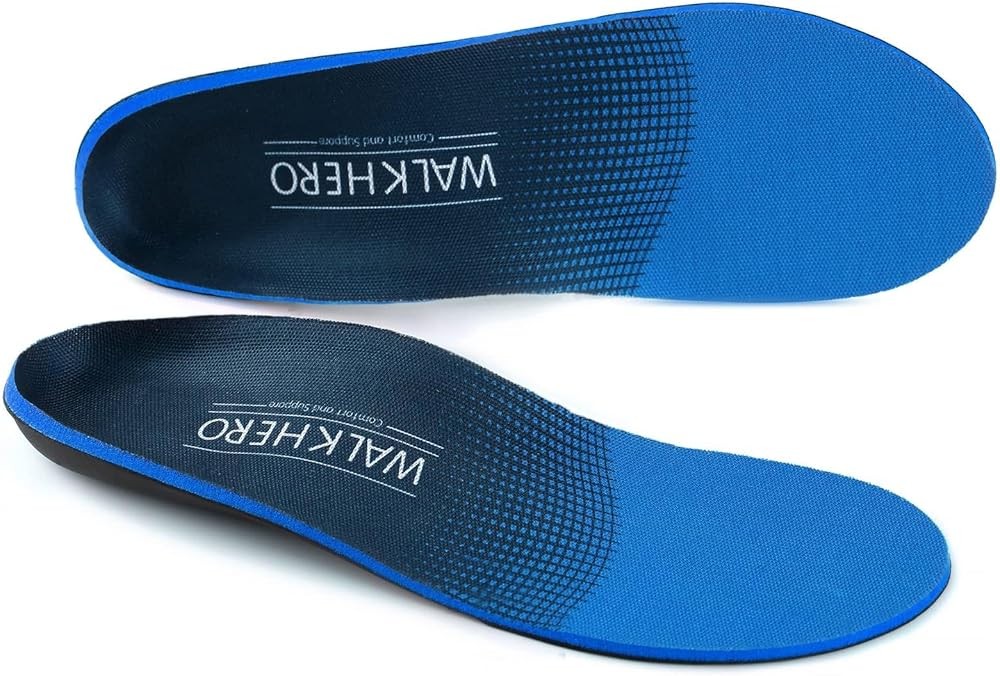
Walk Hero Arch Support Insoles
Check Price on AmazonAs an Amazon Associate we earn from qualifying purchases.
The Walk Hero Arch Support Insoles deliver core flat feet support features at an exceptional $15 price point, making them ideal for first-time orthotic users, those uncertain about investing in higher-end devices, or individuals needing multiple pairs for different shoes. The semi-rigid arch support provides structural correction aligning with research principles, though with less rigidity than the PowerStep’s polypropylene shell.
The deep heel cup implements the stabilization mechanism Cooper and colleagues identified as critical for increasing contact area and reducing pressure. While not as aggressively structured as the Superfeet RUN Comfort, the Walk Hero heel cup provides adequate calcaneal containment for walking and standing activities.
The antimicrobial fabric top covering addresses odor and hygiene—noteworthy at this price point where budget insoles often omit such features. This makes the Walk Hero more viable for all-day wear scenarios where moisture management affects both comfort and device longevity.
Material durability represents the main compromise. The semi-rigid arch support will compress faster than higher-durometer materials in premium insoles. Users should expect 4-6 months of effective use rather than the 6-12 months typical of $50+ devices. However, at $15, replacing Walk Hero insoles every 4 months costs less over a year than a single pair of PowerStep ($54) while providing similar biomechanical benefits during their functional lifespan.
The trim-to-fit design provides sizing flexibility, though careful trimming is essential—cutting too aggressively compromises the arch support structure. Following the manufacturer’s guidelines and trimming conservatively, then testing fit before making additional cuts, prevents the common mistake of over-trimming that ruins the insole.
For people with mild to moderate flat feet, particularly those new to orthotic insoles, the Walk Hero provides an evidence-aligned entry point. The device incorporates the key features research identifies as effective: arch support, heel cup stabilization, and medial posting for pronation control. While the materials and construction don’t match premium options, the fundamental design principles do.
The Walk Hero also makes sense for those needing insoles in multiple shoes—work boots, athletic shoes, casual footwear. At $15 per pair, equipping three different shoes costs $45, still less than a single pair of Superfeet while ensuring consistent support across all footwear rather than moving one pair of expensive insoles between shoes.
Can Children and Adolescents Use Flat Feet Insoles?
Pediatric flatfoot presents unique considerations. Tax (1989) found that excessive pronation was essentially universal in young children, with many naturally developing normal arches through adolescence as bones mature, ligaments strengthen, and neuromuscular control improves. This raises the question of when intervention is appropriate versus when observation is sufficient.
Flexible pediatric flatfoot—where an arch appears when the child stands on tiptoes or sits with legs dangling—typically requires no treatment if asymptomatic. The American Academy of Pediatrics and American Academy of Orthopaedic Surgeons generally recommend observation rather than intervention for flexible flatfoot in children without pain or functional limitations.
However, symptomatic pediatric flatfoot—causing pain, limiting activity, or showing progression—may benefit from orthotic intervention. Sever and colleagues (2024) studied 50 juvenile athletes with flatfoot, comparing UCBL orthoses alone versus UCBL combined with Kinesio tape. The combined approach yielded significantly higher AOFAS scores, demonstrating measurable improvement in foot function and symptom control.
The key distinction lies in symptoms and functional impact. A child with flat feet who runs, plays, and participates in activities without pain likely needs no intervention beyond monitoring. A child experiencing foot or leg pain, avoiding physical activity, or showing gait abnormalities may benefit from orthotic support to limit progression or secondary problems.
Rigid pediatric flatfoot—no arch even during non-weight bearing—represents a more concerning presentation potentially indicating tarsal coalition (abnormal fusion of foot bones) or neuromuscular conditions. These cases require specialist evaluation rather than over-the-counter insole trials, as the underlying pathology may need surgical intervention or specialized bracing.
For adolescents with persistent flexible flatfoot approaching skeletal maturity, orthotic intervention follows similar principles as adult treatment. The research on pronation control, medial posting, and heel cups applies equally. However, growing feet require attention to sizing—insoles need replacement not just when materials compress but when foot size increases, potentially every 6-12 months during growth spurts.
Starting children on orthotic insoles should involve professional guidance. A pediatrician, podiatrist, or pediatric orthopedist can assess whether intervention is indicated, rule out conditions requiring specialized treatment, and provide sizing and break-in guidance appropriate for the child’s age and activity level. While adult use of over-the-counter insoles carries minimal risk, growing feet deserve more conservative evaluation.
Research indicates: Most children with flexible flatfoot need no intervention, but symptomatic cases in juvenile athletes showed significantly higher AOFAS scores with UCBL orthoses plus Kinesio tape, suggesting intervention benefits when pain or functional limitations exist rather than for asymptomatic arch variation.
How Does Foot Alignment Affect Knees, Hips, and Back?
The kinetic chain concept—where position and movement at one joint affects joints above and below—provides the framework for understanding how flat feet can cause pain far from the foot itself. O’Leary and colleagues (2013) conducted a systematic review specifically examining this relationship, finding evidence linking flat feet and excessive pronation to chronic low back pain.
The mechanical pathway involves several links. Excessive foot pronation creates compensatory internal rotation at the tibia (shin bone). This tibial rotation affects knee alignment, potentially increasing stress on the medial (inside) knee compartment and contributing to patellofemoral pain syndrome—anterior knee pain related to tracking problems of the kneecap.
The femur (thigh bone) responds to tibial positioning through a coupled motion—internal tibial rotation tends to drive internal femoral rotation. This affects hip mechanics and can alter pelvic position. When the pelvis tilts or rotates abnormally, the lumbar spine must compensate to maintain upright posture and visual horizon, potentially creating or exacerbating low back pain.
Barati Ashtiani and colleagues (2025) developed a protocol specifically addressing this chain in women with patellofemoral pain syndrome and pronated feet. Their 117-participant study combines exercise with foot orthoses, recognizing that fixing the foundation (foot alignment) while strengthening compensating structures (knee and hip muscles) may be necessary for comprehensive resolution.
This research has practical implications. Someone experiencing knee or back pain without obvious knee or back injury should consider foot mechanics as a potential contributing factor. The seemingly unrelated symptoms may actually trace to pronation dysfunction initiating a cascade of compensatory movements.
For individuals with flat feet experiencing knee or back pain, addressing foot alignment through appropriate insoles represents a mechanistically sound intervention. However, chronic pain patterns often involve multiple factors. Someone who’s had knee pain for months or years may have developed secondary muscle imbalances, movement pattern compensations, or even structural changes that won’t fully resolve with insoles alone.
This is where complementary approaches matter. Our guide to inversion tables for back pain explores spinal decompression options that may work synergistically with improving foot alignment. Similarly, PEMF mats for pain relief address inflammation and promote healing that supports recovery from chronic kinetic chain dysfunction.
The evidence supports a comprehensive approach: addressing the foundation through foot orthoses while simultaneously addressing affected areas through appropriate exercise, manual therapy, or other modalities based on individual presentation. The foot insoles represent one critical component rather than an isolated solution.
What the evidence shows: Flat feet and excessive pronation create internal tibial rotation affecting knee alignment and potentially causing patellofemoral pain syndrome, with compensatory femoral and pelvic rotation that systematic reviews link to chronic low back pain through kinetic chain mechanisms.
What About Combining Insoles With Other Interventions?
While orthotic insoles provide measurable biomechanical benefits as standalone interventions, emerging research suggests combining approaches may yield superior outcomes. Sever and colleagues (2024) demonstrated this in juvenile athletes, where UCBL orthoses plus Kinesio tape produced significantly higher AOFAS scores than orthoses alone.
The mechanisms differ between modalities. Orthotic insoles provide continuous passive support—they work regardless of muscle activation or conscious effort. Kinesio tape, by contrast, appears to facilitate neuromuscular function, increasing tibialis anterior activity as Siu and colleagues (2020) measured. The combination addresses both structural support and active muscle recruitment.
Exercise interventions target yet another component. While insoles correct alignment and tape may enhance muscle activation, neither directly strengthens weak muscles or improves motor control patterns. The Barati Ashtiani protocol combining foot orthoses with exercise for patellofemoral pain syndrome recognizes this—fixing the foot while strengthening the knee creates comprehensive improvement addressing multiple dysfunction levels.
Stretching programs complement orthotic use, particularly for individuals with tight calf muscles or Achilles tendons. Limited ankle dorsiflexion (upward foot movement) can exacerbate pronation as the body compensates for restricted motion. Calf stretching, ankle mobilization, and Achilles flexibility work may enhance insole effectiveness by removing movement restrictions that force compensatory pronation.
Manual therapy—particularly to the foot and ankle complex—may facilitate adaptation to orthotic insoles. The altered biomechanics from insole use can initially stress soft tissues accustomed to functioning in abnormal positions. Myofascial release, joint mobilization, or massage to plantar foot muscles, posterior tibialis, and peroneals may ease this transition and reduce discomfort during break-in.
Footwear selection matters tremendously. The best insole provides limited benefit in an unsupportive shoe that allows excessive motion. Conversely, a supportive shoe with proper heel counter rigidity, midfoot shank, and appropriate width works synergistically with insoles to optimize alignment control. The combination exceeds what either element achieves alone.
For comprehensive approaches to lower extremity pain and dysfunction, considering complementary therapies makes sense. Foot massagers can reduce pain and improve circulation during orthotic adaptation. Vibration therapy may enhance bone density and neuromuscular function, supporting the structural changes insoles promote.
Research supports: Combining orthotic insoles with Kinesio tape produced significantly higher AOFAS scores than orthoses alone in juvenile athletes, while protocols combining foot orthoses with exercise for patellofemoral pain syndrome recognize that comprehensive intervention addressing multiple dysfunction levels may exceed single-modality approaches.
How Long Should You Wear Insoles Each Day?
The adaptation period for orthotic insoles requires strategic management. Abrupt transition to full-time wear in rigid orthoses can cause significant discomfort as feet, ankles, knees, and hips adjust to altered biomechanics. A gradual approach minimizes adverse effects while allowing beneficial adaptation.
Research protocols typically implement insoles immediately at full-time use, but these studies involve monitored participants who’ve consented to potential discomfort. For real-world application, a more conservative approach makes sense. Starting with 2-4 hours daily for the first 3-5 days allows initial tissue adaptation while limiting exposure if significant problems arise.
If the initial period causes only mild discomfort—achiness or fatigue rather than sharp pain—gradually increase wear time by 1-2 hours every few days. Most people tolerate full-time wear within 2-3 weeks following this progression. The timeline varies based on foot flexibility, severity of flatfoot deformity, and rigidity of the chosen insole.
Rigid orthoses like UCBL designs or the Superfeet carbon fiber models require longer adaptation than semi-rigid options like the PowerStep or softer designs like the Sof Sole. If starting with a very rigid device, consider a 3-4 week gradual progression versus 1-2 weeks for semi-rigid designs.
Pain during break-in requires evaluation. Mild achiness in foot arches, calf muscles, or even anterior tibial muscles (shin area) represents normal adaptation as tissues work in new positions. Sharp, localized pain—particularly at pressure points like the medial arch or heel borders—suggests fit problems requiring insole adjustment or different sizing.
Once adapted, full-time wear during weight-bearing activities provides maximum benefit. However, this doesn’t necessarily mean 24-hour use. Wearing insoles to bed serves no purpose as the foot isn’t loaded. Some people prefer removing them during evening relaxation at home, though maintaining use during any standing or walking optimizes biomechanical correction.
For occupations involving all-day standing, achieving full-shift wear represents the goal. The pressure redistribution Cooper and colleagues measured—8-14% reduction—operates cumulatively over hours. Partial-day use provides partial benefit, but comprehensive symptom control requires consistent use during the activities that load the foot and provoke symptoms.
After the initial adaptation period, long-term compliance becomes critical. The research showing biomechanical improvements and symptom reduction assumes consistent use. Intermittent wear likely provides intermittent benefits. For people with symptomatic flat feet, orthotic insoles should become part of the standard routine, like wearing prescription glasses for vision correction.
Best practice: Gradually increase wear time starting with 2-4 hours daily and building to full-time use over 2-3 weeks for semi-rigid designs or 3-4 weeks for rigid orthoses, with mild achiness representing normal adaptation while sharp localized pain suggests fit problems requiring adjustment.
When Should You Replace Orthotic Insoles?
Material fatigue degrades insole function over time. Foam compresses, reducing cushioning and allowing the foot to sit lower in the shoe, which decreases effective arch support. Semi-rigid shells can develop micro-cracks or permanent deformation from repeated loading cycles. Top fabrics wear through, exposing underlying layers to accelerated breakdown from moisture and friction.
The timeline varies by design, materials, and use intensity. Budget EVA foam insoles like the Sof Sole typically require replacement every 3-6 months. The foam compresses relatively quickly under daily use, losing the moderate support it initially provided. Visual inspection reveals the problem—flattened appearance, permanent compression indents where the heel and metatarsal heads load.
Semi-rigid polypropylene or carbon fiber designs last longer. The PowerStep Pinnacle Breeze and similar devices maintain function for 6-12 months with regular use. The rigid shell resists compression, though the foam cushioning layers still degrade. When the arch support begins rocking or twisting in the shoe—indicating the rigid shell has lost its bond to the base—replacement is overdue.
Running insoles face accelerated wear from higher impact forces. Runners should replace insoles every 300-500 miles regardless of time elapsed. For someone logging 25 miles weekly, this translates to 12-20 weeks, or roughly 3-5 months. The Superfeet website explicitly recommends this mileage-based replacement schedule for their running line.
Warning signs that replacement is needed include:
- Visible compression of foam layers
- Arch support no longer feels prominent
- Top fabric worn through to underlying materials
- Insole rocks or moves excessively in the shoe
- Return of symptoms that had previously resolved with insoles
- Visible cracks in rigid shell components
That last point—return of symptoms—provides functional assessment beyond visual inspection. If foot pain, fatigue, or biomechanical problems that had improved with insoles begin recurring, worn-out insoles represent a likely cause. Even if the device looks acceptable visually, functional deterioration indicates replacement is needed.
Proactive replacement prevents the gradual decline in support that users may not notice consciously. As insoles slowly degrade, the foot adapts to progressively worse support, and symptoms may creep back subtly. Scheduling replacement based on time or mileage rather than waiting for obvious failure maintains consistent biomechanical correction.
The cost of replacement should be factored into initial insole selection. The Walk Hero at $15 every 4 months costs $45 annually. The PowerStep at $54 every 8 months costs $81 annually. The Superfeet at $54 every 400 miles costs $108 annually for someone running 1,200 miles per year. These recurring costs matter for budget planning, though all remain far cheaper than custom orthoses requiring refabrication.
Evidence-based guidance: Replace EVA foam insoles every 3-6 months, semi-rigid designs every 6-12 months, and running insoles every 300-500 miles, with symptom recurrence indicating functional degradation even if visual appearance seems acceptable.
Frequently Asked Questions
Do insoles actually work for flat feet according to research?
Yes. A 2024 meta-analysis of 24 studies found that foot orthoses reduced peak rearfoot eversion by 2.53 degrees and peak ankle eversion moment by 0.25 Nm/kg in people with flat feet. A 2025 review of 12 studies on runners with flatfeet showed orthoses with medial posts decreased peak ankle eversion and Achilles tendon loading rates significantly.
What type of arch support is most effective for flat feet?
A 2018 meta-analysis of 11 studies found medial posting was most effective for reducing peak rearfoot eversion in pes planovalgus. A 2015 study comparing rigid UCBL, semi-rigid, and soft orthoses found rigid designs produced the highest arch height index, while semi-rigid provided the highest foot mobility at 90% weight bearing.
Can insoles help with overpronation from flat feet?
Research shows yes. A 2025 meta-analysis found orthoses with medial posts decreased peak ankle eversion by SMD=-0.41 and Achilles tendon loading rates by SMD=-0.94 in runners with flatfeet. A 2020 study on runners found Kinesio tape significantly reduced navicular drop distance and increased tibialis anterior activity.
How much should I spend on insoles for flat feet?
A 2015 study of 77 patients found both custom and prefabricated orthoses reduced plantar fasciitis pain with no significant difference between groups. Quality prefabricated insoles range from $15-60, while custom orthoses can cost $200-500. Research suggests starting with higher-quality prefabricated options before investing in custom.
What features should flat feet insoles have?
Research indicates the most effective designs include semi-rigid arch support, medial posting to control pronation, deep heel cups for stability, and adequate cushioning. A 2024 study found heel cups combined with medial arch support increased contact area and reduced pressure by 8-14%.
Can flat feet cause back pain?
A 2013 systematic review linked flat feet and excessive pronation to chronic low back pain through kinetic chain mechanisms. The altered foot mechanics from pes planus can affect alignment up through the ankles, knees, hips, and spine, potentially contributing to pain in these areas.
Are 3D-printed insoles better for flat feet?
Emerging research shows promise. A 2021 study of 10 subjects found 3D-printed orthoses for flexible flatfoot significantly increased peak ankle dorsiflexion and reduced hindfoot pressure. A 2025 study of 20 adults found 3D-printed insoles improved gait mechanics and corrected center of force medial deviation during uphill walking.
Should children with flat feet wear orthotic insoles?
A 1989 study found excessive pronation was universal in children, emphasizing the importance of early intervention. However, many children naturally develop arches as they grow. A 2024 study on 50 juvenile athletes found UCBL orthoses combined with Kinesio tape significantly improved AOFAS scores, suggesting intervention may benefit symptomatic pediatric flatfoot.
How long does it take for insoles to work for flat feet?
Research timelines vary. Studies typically assess outcomes at 4-12 weeks. A 2021 study on 3D-printed orthoses showed immediate biomechanical changes in a single session. Clinical improvement in pain and function often requires 2-6 weeks of consistent use as tissues adapt to improved alignment.
Can you use flat feet insoles for running?
Yes, research specifically supports this. A 2025 meta-analysis of 12 studies on runners with flatfeet found orthoses with medial posts significantly decreased peak ankle eversion and Achilles tendon loading rates. A 2020 study showed Kinesio tape reduced navicular drop and increased tibialis anterior activity in runners with flatfoot.
References
- Comparative efficacy of double and triple arthrodesis in adult-acquired flatfoot deformity: a retrospective analysis.. PubMed 42393669
- Investigation of biomechanical effect of inverted orthotic insoles on flexible flatfeet.. PubMed 42379241
- Effect of Insoles on Plantar Fascia Tension During Running in Individuals with Flatfoot.. PubMed 42346879
- [Clinical application and research progress of foot and ankle assistive devices].. PubMed 42338212
- Personalized training and orthopedic inserts bring significant benefits in the posturographic assessment of patients with early gonarthrosis - a randomized controlled trial.. PubMed 42286081
References
- 3D-printed foot orthoses with customized somatosensory stimulation knobs enhance balance and stability in older adults.. PubMed 42412203
- Biomechanical effects of foot orthoses in children with flexible flat foot; a systematic review.. PubMed 41883837
- Effects of 3D printed somatosensory stimulation foot orthoses with customized knob heights on postural balance and gait in older adults.. PubMed 41547093
- 3D-Printed Arch Supports Combined with Toe Spreaders Modulate Phase-Specific Ankle Alignment and Muscle Activity in Young Adults with Functional Flat Foot.. PubMed 41303053
References
- 3D-printed foot orthoses with customized somatosensory stimulation knobs enhance balance and stability in older adults.. PubMed 42412203
- Biomechanical effects of foot orthoses in children with flexible flat foot; a systematic review.. PubMed 41883837
- Effects of 3D printed somatosensory stimulation foot orthoses with customized knob heights on postural balance and gait in older adults.. PubMed 41547093
- 3D-Printed Arch Supports Combined with Toe Spreaders Modulate Phase-Specific Ankle Alignment and Muscle Activity in Young Adults with Functional Flat Foot.. PubMed 41303053
Related Reading
Understanding flat feet and choosing appropriate insoles connects to broader foot health and biomechanical optimization:
Our comprehensive guide to plantar fasciitis insoles explores the specific relationship between arch support, fascia strain reduction, and pain relief for this common condition that frequently develops alongside flat feet.
For those comparing major brands, our Superfeet vs PowerStep comparison examines the biomechanical differences between these research-backed designs and how to choose based on foot type and activity level.
Lower extremity pain from biomechanical dysfunction often benefits from complementary approaches. Our review of foot massagers for neuropathy and plantar fasciitis covers devices that can reduce pain and improve circulation as you adapt to orthotic insoles.
For those spending significant time on their feet at work, our guide to standing desks for posture and health explores workstation modifications that reduce static loading while maintaining proper alignment from feet through spine.
Adding movement throughout the day can complement the biomechanical improvements from insoles. Our walking pads review examines devices that allow low-impact walking during work to reduce static loading and maintain circulation.
Kinetic chain dysfunction from flat feet can contribute to back pain. Our review of inversion tables for back pain covers spinal decompression options that may work synergistically with improving foot alignment.
For comprehensive musculoskeletal health, our guide to vibration plates for bone density examines how whole-body vibration may support the structural improvements orthotic insoles promote.
Finally, our review of PEMF mats for pain relief and recovery explores electromagnetic field therapy that addresses inflammation and promotes tissue healing in chronic kinetic chain dysfunction.
Recommended Products