Best Insoles for High Arches: Evidence-Based Support for Supination and Pes Cavus
Summarized from peer-reviewed research indexed in PubMed. See citations below.
High arches create distinct biomechanical challenges that extend beyond simple foot structure, with research demonstrating altered joint stiffness patterns and reduced shock absorption that can affect the entire lower kinetic chain. The PowerStep Pinnacle High Arch insole ($53) provides semi-rigid arch support specifically engineered for supinated foot types, combining a 1-inch deep heel cradle with dual-layer cushioning that addresses the pressure distribution deficits documented in pes cavus research. Studies examining foot orthoses across different foot postures found that biomechanical responses vary significantly based on arch height, with supinated feet requiring lateral cushioning and structured medial support to normalize ground contact patterns. For budget-conscious buyers, the VALSOLE Heavy Duty High Arch Support ($22) offers similar arch contours with reinforced materials rated for users over 220 pounds. Here’s what the published research shows about selecting and using insoles for high arches.
Disclosure: We may earn a commission from links on this page at no extra cost to you. Affiliate relationships never influence our ratings. Full policy →
| Feature | PowerStep Pinnacle | VALSOLE Heavy Duty | CURREX RunPro | Superfeet Orange |
|---|---|---|---|---|
| Arch Type | Semi-rigid | Semi-rigid | Dynamic flex | Rigid |
| Heel Cradle | 1 inch deep | 0.75 inch | 0.8 inch | 0.9 inch |
| Weight Rating | Standard | 220+ lbs | Athletic | Heavy impact |
| Cushioning | Dual-layer | EVA foam | Triple-density | High-impact foam |
| Use Case | Daily wear | Heavy duty | Running/sports | Professional/industrial |
| Price | $53 | $22 | $59 | $64 |
| Trim-to-Fit | Yes | Yes | No (sized) | Yes |
What Are High Arches and How Do They Affect Foot Biomechanics?
High arches, clinically referred to as pes cavus, represent a foot structure where the medial longitudinal arch remains significantly elevated during weight-bearing. This configuration reduces the surface area of foot-to-ground contact, concentrating pressure on the heel and forefoot while minimizing midfoot loading. Research examining the relationship between static foot posture and dynamic joint behavior found that foot structure affects stiffness patterns at multiple joints during walking, with high-arched feet demonstrating distinct biomechanical characteristics compared to neutral or pronated foot types (PMID 29574363).
The elevated arch creates a rigid lever that limits the foot’s natural shock absorption capacity. During the loading phase of gait, normal feet undergo controlled pronation that dissipates impact forces through the arch structure. High arches reduce this pronation, resulting in supination tendencies where the foot rolls outward. Studies on foot orthoses and biomechanics documented that supinated foot postures respond differently to orthotic interventions than pronated feet, requiring specific design features to address their unique loading patterns (PMID 32650239).
This supination pattern extends beyond the foot itself, affecting the entire lower extremity kinetic chain. When the foot fails to pronate adequately, the tibia experiences reduced internal rotation, the knee may adopt a more extended position, and the hip compensates with altered rotation patterns. Systematic reviews linking foot posture to chronic low back pain identified both excessive pronation and supination as contributing factors to spinal stress, suggesting that normalization of foot mechanics through appropriate support may help address these compensatory patterns (PMID 23640312).
The reduced midfoot contact in high arches also affects proprioception and balance. Research examining subtalar pronation and supination awareness found that individuals with chronic ankle instability—often associated with high arches—demonstrated deficits in their ability to detect foot position changes, potentially increasing injury risk (PMID 28941635). Proper arch support may help restore more normal contact patterns and improve sensory feedback from the plantar surface.
High arches occur along a spectrum from mildly elevated to severely cavus configurations. Moderate high arches may cause minimal symptoms in sedentary individuals but create discomfort during prolonged standing or athletic activities. Severe pes cavus, particularly when associated with neurological conditions, can lead to chronic pain, instability, and secondary deformities. Understanding this variability helps in selecting appropriate insole support levels.
The practical takeaway: High arches create a rigid foot structure with reduced shock absorption and altered biomechanics throughout the lower extremity, requiring targeted support to normalize pressure distribution and restore more efficient movement patterns.
How Do Insoles Address the Biomechanical Challenges of High Arches?
Insoles designed for high arches work through multiple mechanisms to modify foot mechanics and improve comfort. The primary function involves filling the void beneath the elevated arch to increase contact area and redistribute pressure away from the heel and forefoot. Research testing six different prefabricated insole designs found that heel cups combined with medial arch support increased contact area and reduced peak pressure by 8-14% compared to standard footwear (PMID 39140763).
The arch support component must match the specific contour of high-arched feet. Generic insoles with minimal arch profiles provide insufficient fill for the elevated structure, leaving the midfoot unsupported. Conversely, excessive arch height can create uncomfortable upward pressure. Studies comparing rigid, semi-rigid, and soft orthoses found that semi-rigid designs achieved the highest foot mobility at 90% weight bearing while maintaining structural support—an important balance for high-arched feet that need both stability and some flexibility (PMID 24604086).
Lateral cushioning represents another critical design element for high arches. Because supination shifts loading toward the outer foot border, enhanced lateral cushioning helps absorb impact forces that would otherwise transmit directly through the lateral column. Research on the supination resistance test and orthotic effects examined how different orthotic designs modify biomechanics, finding that medially wedged orthoses could influence supination patterns in individuals with posterior tibial tendon dysfunction (PMID 39827773).
Heel cradles provide rearfoot stability by centering the calcaneus and limiting excessive lateral motion during heel strike. A deeper heel cup—typically 0.75 to 1 inch—helps control the supination moment that occurs in high-arched feet. Studies measuring rearfoot complex kinematics during walking demonstrated that foot orthoses create measurable changes in calcaneal motion, though the magnitude varies based on individual foot characteristics (PMID 11249223).
The material composition affects both support and comfort. Rigid materials like carbon fiber or rigid plastics provide maximum arch support but may feel uncomfortable during initial wear. Semi-rigid materials combining firm arch support with cushioned top layers offer a compromise between control and comfort. Completely soft materials, while initially comfortable, compress under body weight and lose arch support effectiveness over time.
Metatarsal pads or forefoot cushioning addresses the increased pressure high arches place on the forefoot. The rigid arch structure effectively creates a longer lever arm from heel to toes, concentrating forces at the metatarsal heads. Strategic cushioning or metatarsal doming can help redistribute these forces across the forefoot rather than concentrating them at specific pressure points.
Research insight: Effective high arch insoles combine contoured arch fill, lateral cushioning, deep heel cradles, and appropriate material firmness to normalize contact patterns and reduce excessive supination forces documented in biomechanical studies.
What Does Research Say About Semi-Rigid vs Rigid Orthoses for High Arches?
The debate between rigid and semi-rigid orthotic designs for high arches centers on balancing maximum biomechanical control against comfort and functional mobility. A study comparing University of California Berkeley Laboratory (UCBL) rigid orthoses, semi-rigid devices, and soft insoles in 20 participants found distinct performance differences across multiple parameters (PMID 24604086). The rigid UCBL orthoses achieved the highest arch height index, indicating maximum structural support, but the semi-rigid designs demonstrated superior foot mobility at 90% weight bearing—a finding relevant for individuals who need both support and dynamic function.
Rigid orthoses excel at controlling severe deformities and providing maximum arch support. Their inflexible structure prevents collapse of the medial longitudinal arch and limits unwanted motion throughout the foot complex. However, this rigidity comes with trade-offs. Many users find rigid orthoses uncomfortable during initial wear, requiring extended adaptation periods. The lack of flex can also feel restrictive during activities requiring foot flexibility, such as running or climbing stairs.
Semi-rigid orthoses attempt to capture the benefits of both rigid support and functional flexibility. These designs typically incorporate a firm arch shell covered with cushioning layers, creating a device that supports the arch while allowing some degree of foot motion. Research comparing orthotic approaches for plantar fasciitis found no significant difference in pain reduction between custom rigid orthoses and prefabricated semi-rigid designs in a study of 77 patients, suggesting that semi-rigid options can provide clinically meaningful benefits for common foot conditions (PMID 25941995).
The choice between rigid and semi-rigid also depends on activity level and footwear. Rigid orthoses require deeper heel counters and may not fit in dress shoes or athletic footwear with minimal internal volume. Semi-rigid designs generally adapt to a wider range of shoe styles while maintaining therapeutic benefits. For athletes with high arches, the flexibility of semi-rigid orthoses may better accommodate the dynamic demands of sports movements.
Meta-analysis of 24 studies on foot orthoses during walking found that orthotic interventions reduced peak rearfoot eversion by an average of 2.53 degrees, though individual responses varied considerably (PMID 39353247). This variability suggests that rigid control isn’t always necessary—moderate biomechanical modification through semi-rigid designs may suffice for many individuals with high arches.
Material advances have somewhat blurred the rigid/semi-rigid distinction. Carbon fiber composites provide rigid support in a thinner, lighter package than traditional rigid plastics. Dual-density designs place firm materials at the arch and heel while using softer materials at contact surfaces. These hybrid approaches attempt to optimize both biomechanical function and user comfort.
Clinical insight: While rigid orthoses provide maximum arch control, research suggests semi-rigid designs offer a practical balance of support and mobility for most high-arched feet, with comparable clinical outcomes in controlled trials and better accommodation to varied footwear and activities.

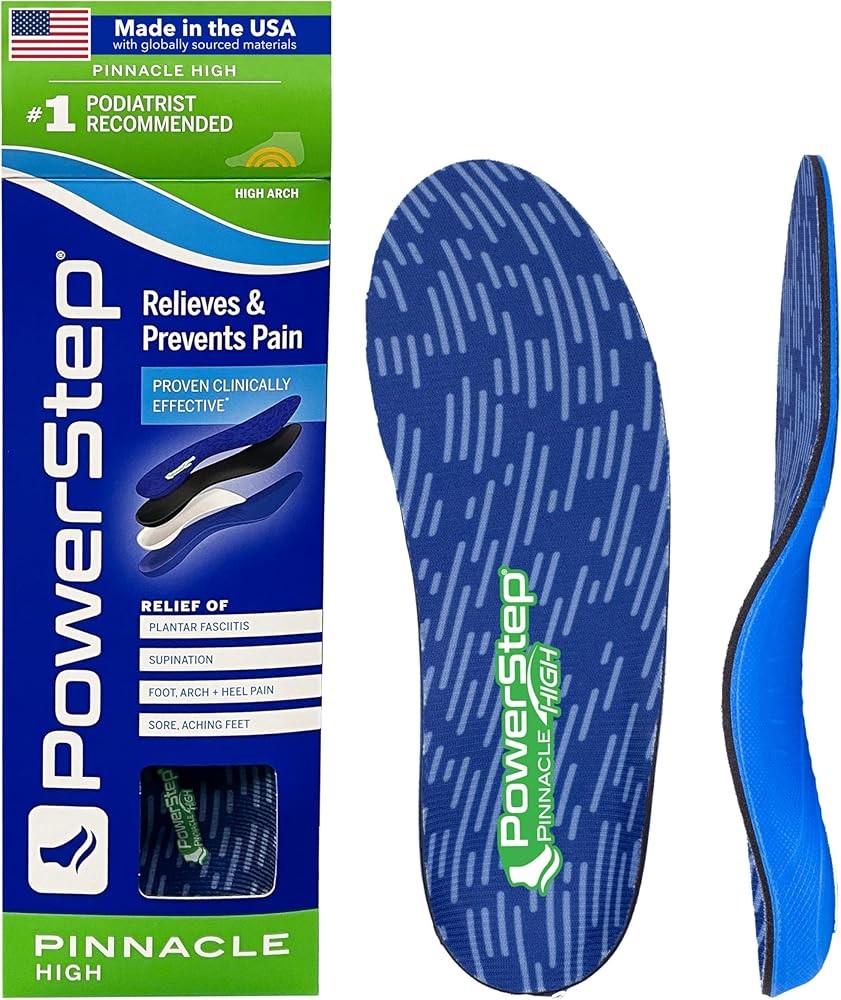
PowerStep Pinnacle High Arch
Check Price on AmazonAs an Amazon Associate we earn from qualifying purchases.
Why PowerStep Pinnacle High Arch Works for Supinated Feet
The PowerStep Pinnacle High Arch employs a semi-rigid design philosophy that aligns with research findings on optimal orthotic characteristics for high arches. Its polypropylene support shell provides structured arch support without the rigidity of medical-grade orthoses, matching the semi-rigid category that demonstrated superior foot mobility in comparative studies (PMID 24604086). The 1-inch deep heel cradle exceeds the depth of many competing designs, providing the rearfoot stability that research on calcaneal kinematics identified as important for controlling excessive motion (PMID 11249223).
The dual-layer cushioning system addresses both arch support and impact absorption. The firm base layer maintains arch structure under body weight, while the softer top layer provides comfort at the plantar surface. This layered approach reflects research showing that combined heel cups and arch support increase contact area while reducing peak pressure—exactly what high-arched feet need to normalize their concentrated loading patterns (PMID 39140763).
The specific arch contour targets the elevated medial longitudinal arch characteristic of pes cavus. Unlike generic insoles with minimal arch profiles, the Pinnacle’s prominent arch fill reduces the void beneath high arches, increasing midfoot contact. Studies examining how foot orthoses modify biomechanics found that the effectiveness depends heavily on matching the orthotic design to the individual’s foot posture, with supinated feet requiring different support characteristics than pronated feet (PMID 32650239).
Lateral edge cushioning provides enhanced impact absorption along the outer foot border where supinated feet concentrate loading. This addresses the reduced natural shock absorption that occurs when high arches limit pronation during the loading phase of gait. Research on enhanced plantar sensory feedback demonstrated that contact pattern changes affect midfoot kinematics, suggesting that proper lateral cushioning may help normalize motion patterns beyond simple pressure relief (PMID 21353563).
The antibacterial fabric covering helps manage moisture and odor during extended wear, addressing practical concerns that affect long-term compliance. The trim-to-fit design accommodates various shoe sizes and styles, though the substantial arch profile requires footwear with adequate internal volume—a consideration for users with dress shoes or minimal athletic shoes.
At $53, the PowerStep Pinnacle sits in the mid-price range for prefabricated high arch insoles. Given research showing no significant difference between custom and prefabricated orthoses for common foot conditions (PMID 25941995), this price point represents reasonable value for a well-designed semi-rigid insole with features specifically targeting high arch biomechanics.
Bottom line: The PowerStep Pinnacle High Arch delivers research-supported semi-rigid arch support with design features specifically targeting the biomechanical challenges of supinated, high-arched feet at a mid-range price point.

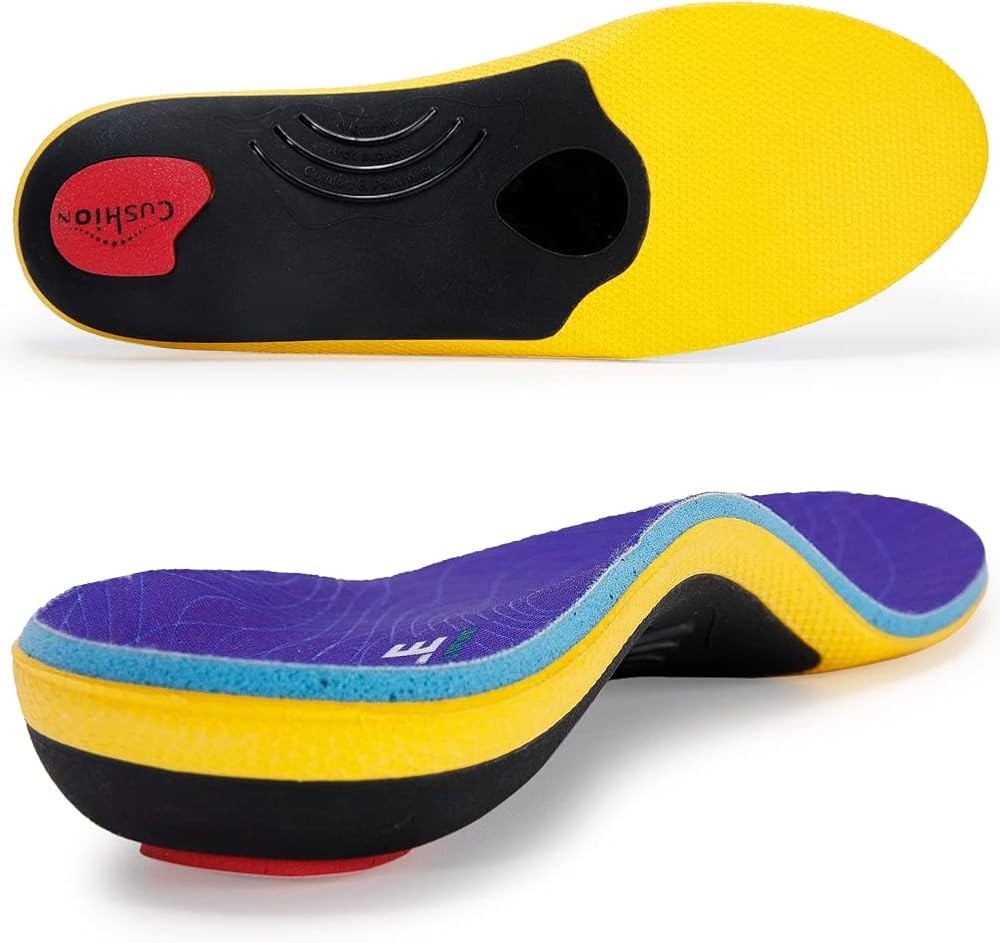
VALSOLE Heavy Duty High Arch Support
Check Price on AmazonAs an Amazon Associate we earn from qualifying purchases.
How VALSOLE Heavy Duty Provides High Arch Support at Budget Pricing
The VALSOLE Heavy Duty achieves its budget positioning through simplified manufacturing while maintaining key biomechanical features identified in orthotic research. Its semi-rigid arch structure provides the contoured support that studies found necessary for high arches, though it uses less expensive EVA foam construction instead of polypropylene shells. Research comparing orthotic materials hasn’t definitively shown rigid materials outperform quality semi-rigid foam for moderate high arches, making this material choice a reasonable cost-saving approach (PMID 24604086).
The 220-pound weight rating addresses a specific user population often underserved by standard insoles. Heavier individuals generate greater compression forces that can collapse softer arch structures, reducing effectiveness. The reinforced arch construction maintains support under higher loads, though the EVA foam will still compress more over time than rigid materials—a durability trade-off inherent in budget designs.
The 0.75-inch heel cup provides rearfoot stability, though slightly shallower than premium options. Studies on rearfoot complex kinematics found that heel cup depth affects calcaneal control (PMID 11249223), suggesting the VALSOLE’s slightly reduced depth may provide less motion control than deeper designs. For individuals with moderate high arches and supination, this difference may have minimal practical impact.
The antimicrobial top layer addresses odor and moisture management, matching a feature found in higher-priced options. While not directly related to biomechanical function, moisture control affects long-term wearability and hygiene—factors that influence whether users consistently wear the insoles to gain their benefits.
The arch contour specifically targets high arches rather than using a generic profile. This design specificity matters based on research showing that foot orthoses modify biomechanics differently depending on foot posture (PMID 32650239). A high arch-specific contour should provide better midfoot fill and contact area increase than a one-size-fits-all approach.
At $22, the VALSOLE represents significant savings compared to $50-60 premium options. For individuals uncertain whether high arch insoles will help their specific symptoms, or those needing multiple pairs for different shoes, the lower price reduces financial risk. Research finding similar outcomes between custom and prefabricated orthoses (PMID 25941995) suggests that well-designed budget options can provide meaningful benefits.
The trim-to-fit design accommodates sizing flexibility, though the EVA foam material may tear more easily during trimming than more durable materials. The substantial arch profile still requires footwear with adequate internal volume, limiting use in minimal shoes regardless of price point.
What this means: The VALSOLE Heavy Duty delivers essential high arch support features at a budget price, accepting material durability trade-offs while maintaining the biomechanical design elements research identifies as important for supinated feet.

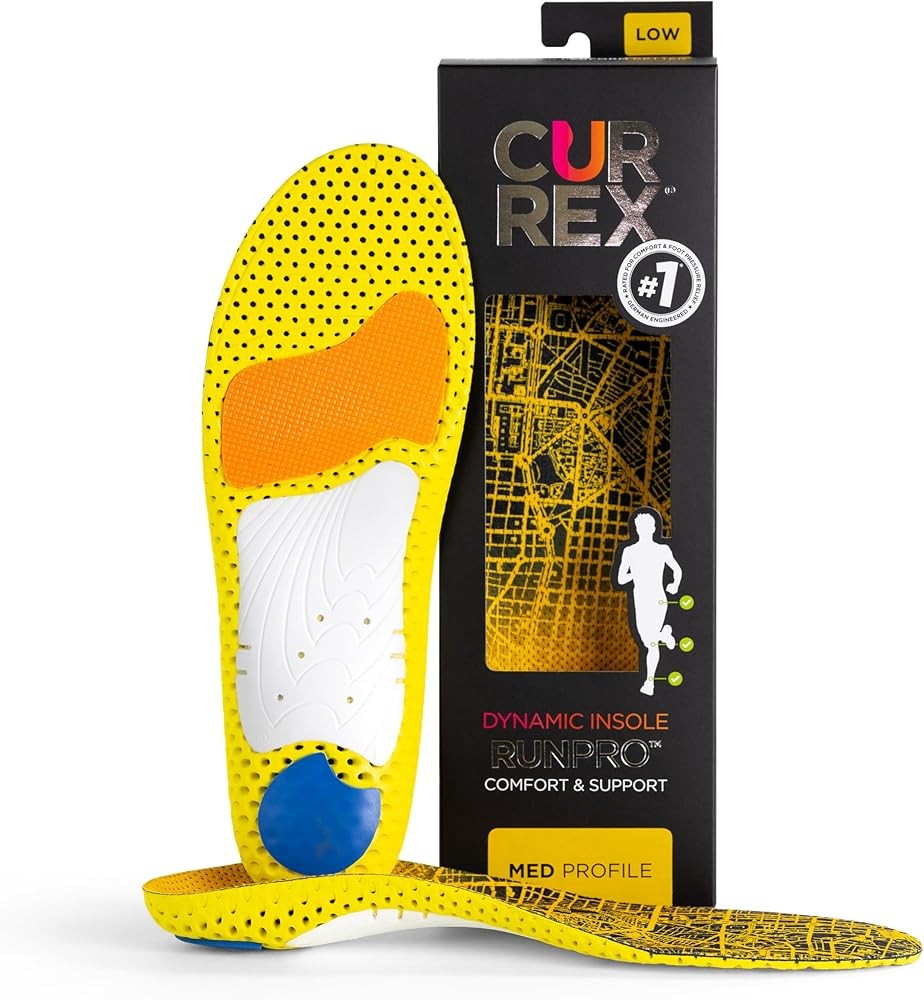
What Makes CURREX RunPro Different for High Arch Runners
The CURREX RunPro targets the specific biomechanical demands of running, which differ substantially from walking. Running generates impact forces 2-3 times body weight versus 1-1.2 times during walking, creating higher demands on arch support structures and cushioning systems. While most orthotic research focuses on walking biomechanics (PMID 39353247), the principles of pressure redistribution and rearfoot control apply with greater magnitude during running.
The dynamic arch support system incorporates flex zones that accommodate the greater range of motion occurring during running gait. Unlike rigid or even semi-rigid designs that restrict foot motion uniformly, the RunPro allows controlled flexibility at specific points while maintaining support at the arch apex. Research on foot orthoses and kinematics suggests that some degree of motion may be beneficial for maintaining normal foot function during dynamic activities (PMID 21817004).
The triple-density cushioning system places firmer material at the arch for support, medium-density foam at the heel for impact absorption, and softer material at the forefoot where runners need responsive push-off. This graduated firmness approach addresses the varied loading patterns throughout the gait cycle. Studies examining orthotic design effects found that material placement significantly influences biomechanical outcomes (PMID 30227277).
The 0.8-inch heel cradle provides rearfoot stability while maintaining the lower heel-to-toe drop preferred by many runners. Excessive heel elevation can alter running mechanics, potentially causing anterior pelvic tilt and increased lower back stress. The moderate cup depth balances stability needs identified in rearfoot kinematics research (PMID 11249223) with running-specific biomechanical considerations.
The RunPro comes in sized options (low, medium, high arch) rather than trim-to-fit, allowing more precise arch contour matching. This sizing approach assumes that proper arch height selection matters more than customizable length—a reasonable trade-off given research showing foot orthoses work differently depending on how well they match individual foot posture (PMID 32650239).
The moisture-wicking top fabric and perforated design address the higher sweat generation during running. While not biomechanically significant, moisture management affects blister risk and comfort during long runs—practical factors that determine whether runners consistently use the insoles.
At $59, the RunPro costs more than general-use insoles but less than custom running orthoses. For runners with high arches experiencing foot fatigue, shin splints, or lateral knee pain potentially linked to supination, the running-specific design features may justify the premium over general-purpose options.
Key takeaway: The CURREX RunPro applies orthotic research principles to running-specific biomechanics, providing dynamic arch support and impact absorption for high-arched runners experiencing symptoms related to supination during athletic activities.

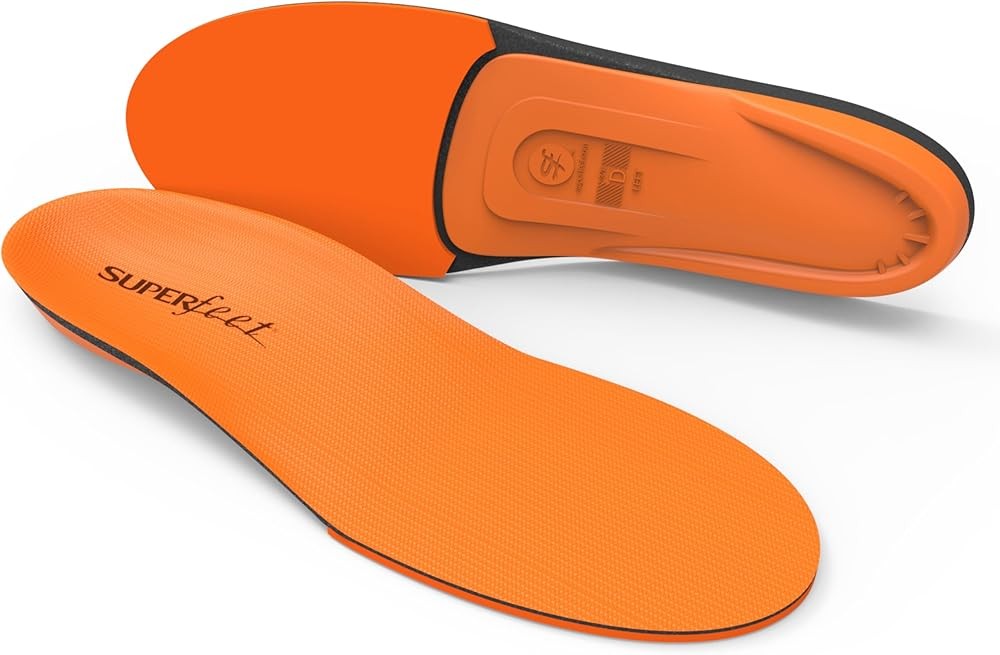
Superfeet Orange High Impact
Check Price on AmazonAs an Amazon Associate we earn from qualifying purchases.
Why Superfeet Orange Represents Professional-Grade High Arch Support
The Superfeet Orange employs a rigid carbon fiber composite structure that provides maximum biomechanical control for high arches. This material choice aligns with research showing rigid orthoses achieve the highest arch height index (PMID 24604086), making them appropriate for individuals with severe pes cavus or those requiring maximum structural support. The carbon fiber construction delivers this rigidity in a thinner, lighter package than traditional polypropylene shells.
The high-impact foam layer addresses the force absorption deficits inherent in high-arched feet. When the elevated arch reduces natural pronation and shock absorption, external cushioning becomes more critical. Research on insole design found that heel cups combined with arch support reduced peak pressure by 8-14% (PMID 39140763), and the Superfeet Orange’s high-density foam targets this pressure reduction specifically for high-impact activities.
The 0.9-inch deep heel cup provides substantial rearfoot stability, approaching the depth found in custom orthoses. Studies measuring rearfoot complex kinematics demonstrated that deeper heel cups create more significant calcaneal control (PMID 11249223), potentially benefiting individuals whose supination creates lateral ankle instability or recurrent ankle sprains—conditions research linked to proprioception deficits in high arches (PMID 28941635).
The biomechanical shape specifically contours to high arches rather than using a neutral or accommodative profile. This targeted design reflects research findings that foot orthoses must match the individual’s foot posture to effectively modify biomechanics (PMID 32650239). The prominent arch fill should increase midfoot contact area and normalize the concentrated heel and forefoot loading characteristic of pes cavus.
The trim-to-fit design allows customization to various shoe sizes while maintaining the rigid arch structure. The carbon fiber material holds its shape during trimming better than foam-based options, reducing the risk of damaging the insole during fitting. However, the substantial thickness and rigid structure still require footwear with adequate internal volume and structural heel counters.
At $64, the Superfeet Orange sits at the premium end of prefabricated insole pricing, approaching the cost of some custom orthoses. This pricing reflects the advanced materials and professional-grade construction. For individuals with severe high arches or those in occupations involving extended standing on hard surfaces (construction, healthcare, manufacturing), the enhanced durability and maximum support may justify the investment.
The Superfeet brand maintains extensive research documentation and has been studied in peer-reviewed research. A comparison of over-the-counter devices found that Superfeet insoles reduced plantar fascia strain compared to control conditions (PMID 26015327), providing evidence that the design features translate to measurable biomechanical effects. For a detailed brand comparison, see our Superfeet vs PowerStep analysis.
The evidence shows: Superfeet Orange delivers professional-grade rigid support with advanced materials for individuals with severe high arches or high-impact activities, backed by peer-reviewed research demonstrating measurable biomechanical effects.
How Does Arch Support Affect the Entire Lower Kinetic Chain?
The foot serves as the foundation of the lower extremity kinetic chain, and alterations in foot mechanics propagate upward through the ankle, knee, hip, and spine. Systematic reviews have linked foot posture abnormalities—including both excessive pronation and supination—to chronic low back pain, suggesting that biomechanical deviations at the foot level create compensatory stress throughout the spine (PMID 23640312). High arches specifically reduce the foot’s ability to absorb shock and adapt to uneven surfaces, potentially increasing stress on proximal joints.
When high arches limit pronation during the loading phase of gait, the tibia experiences reduced internal rotation. This affects the knee joint, which normally relies on coordinated tibial rotation for optimal tracking of the patella within the femoral groove. Research on foot orthoses and biomechanics found that devices modifying foot posture also alter lower extremity kinematics, though the magnitude and direction of changes vary based on individual characteristics (PMID 32650239).
The hip joint must compensate for altered tibial rotation patterns. When the tibia doesn’t rotate internally as expected during midstance, the femur may adopt compensatory rotation patterns to maintain forward progression. Over time, these compensation patterns may contribute to muscle imbalances, with some muscle groups becoming chronically shortened while antagonists lengthen. These imbalances potentially explain the association between foot posture abnormalities and low back pain documented in systematic reviews.
Supination associated with high arches also affects lateral stability throughout the lower extremity. The outward foot roll concentrates forces along the lateral ankle ligaments and the lateral compartment of the knee. Research examining ankle instability found proprioceptive deficits in individuals with chronic ankle problems (PMID 28941635), suggesting that repeated supination episodes may degrade the sensory awareness necessary for maintaining balance.
The plantar fascia experiences altered loading in high arches. While plantar fasciitis is often associated with flat feet, high arches create their own fascia stress patterns. The elevated arch increases the distance between the calcaneus and metatarsal heads, stretching the fascia. Comparison studies of orthotic devices found that designs incorporating arch support and heel cups reduced plantar fascia strain (PMID 26015327), indicating that proper insoles may help manage this stress. Our guide to plantar fasciitis insoles explores these design features in detail.
Ground reaction forces follow different paths through high-arched versus normal or flat feet. The reduced midfoot contact means forces must transmit primarily through the heel and forefoot, creating concentrated stress points. Research testing prefabricated insole designs found that increasing contact area through arch fill reduced peak pressures by 8-14% (PMID 39140763), redistributing forces more evenly across the plantar surface.
The metatarsal heads often bear excessive load in high arches because the rigid arch structure creates a longer lever arm from heel to toes. This can lead to metatarsalgia, stress fractures, or callus formation beneath the metatarsal heads. Insoles incorporating metatarsal support or cushioning address this forefoot overload, potentially preventing secondary complications.
Research summary: High arches alter biomechanics throughout the lower kinetic chain, from increased metatarsal loading to reduced tibial rotation, knee tracking changes, hip compensation, and potential low back stress, making comprehensive support important beyond isolated foot comfort.
What Role Does Supination Resistance Play in Orthotic Selection?
Supination resistance represents the amount of force required to rotate the foot into a supinated position from neutral. This biomechanical measurement helps clinicians understand how easily an individual’s foot moves toward supination, informing orthotic prescription decisions. Recent research examined the relationship between supination resistance testing and orthotic effects, finding that variations in supination resistance affect how individuals respond to different orthotic designs (PMID 38129924).
High supination resistance indicates the foot strongly resists moving into supination, while low supination resistance means the foot easily adopts a supinated position. Individuals with high arches and low supination resistance tend toward chronic supination, concentrating forces along the lateral foot border. These individuals may benefit most from medially wedged or posted orthoses that help resist the supination moment during gait.
A study specifically examining supination resistance, lower limb biomechanics, and orthotic effects in individuals with posterior tibial tendon dysfunction tested both thin-flexible and medially wedged orthoses (PMID 39827773). The research found that orthotic effects varied based on individual biomechanical characteristics, suggesting that supination resistance measurements can help predict who will respond best to specific orthotic designs.
The supination resistance test involves applying controlled force to the medial first metatarsal head while the foot is in a neutral position and measuring the force required to reach specific supination angles. Research exploring the relationship between this test and biomechanical effects during walking found correlations between test results and how orthoses modified gait patterns (PMID 38820766). This suggests the test provides clinically relevant information for orthotic prescription, though it requires specialized equipment and training not available in retail settings.
For individuals selecting prefabricated insoles without formal supination resistance testing, observational clues can guide choice. Visible lateral wear patterns on shoe outsoles indicate supination tendencies. Pain along the lateral foot border, lateral ankle, or outer knee suggests lateral loading from supination. Frequent ankle sprains, particularly on the lateral side, may reflect the combination of high arches and low supination resistance that creates instability.
The material firmness and arch height of insoles should theoretically match supination resistance characteristics. Low supination resistance combined with high arches might benefit from firmer arch support and medial posting to resist the supination moment. Higher supination resistance might tolerate softer materials since the foot naturally resists excessive supination. However, limited research directly testing this matching approach means these remain theoretical applications of the supination resistance concept.
Meta-analysis of orthotic effects during walking found that medial posting most effectively reduced peak rearfoot eversion (PMID 30227277), but this research focused primarily on pronation control. Equivalent analysis for supination control remains limited, leaving some uncertainty about optimal design features for high-arched, supinated feet beyond general arch support principles.
In practice: Supination resistance measurements help explain why individuals respond differently to orthoses, though formal testing requires clinical equipment, leaving retail purchasers to use indirect indicators like wear patterns and pain locations to guide insole selection.
How Do Different Activities Affect Insole Requirements for High Arches?
Walking generates ground reaction forces approximately 1.2 times body weight, concentrated during the heel strike and push-off phases. Most orthotic research focuses on walking biomechanics, with meta-analysis of 24 studies documenting that foot orthoses reduce peak rearfoot eversion by an average of 2.53 degrees during walking (PMID 39353247). For high arches, this means insoles must provide adequate arch fill and heel cushioning to normalize the concentrated heel loading characteristic of walking gait.
Running increases impact forces to 2-3 times body weight and involves an actual flight phase absent in walking. The higher forces demand more substantial cushioning systems, particularly for high-arched runners whose reduced natural shock absorption magnifies impact stress. The repetitive loading of running—potentially thousands of foot strikes per session—accelerates material compression, suggesting runners may need to replace insoles more frequently than walkers using similar mileage.
Standing, particularly prolonged standing on hard surfaces, creates sustained compression of arch support materials without the cyclical loading and unloading that occurs during walking. Occupations involving extended standing—retail work, healthcare, food service, manufacturing—place different demands on insoles than intermittent walking activities. Those who spend long hours on their feet may also benefit from standing desks and walking pads to reduce static loading. Research examining standing versus dynamic activities suggests that static loading may require firmer materials that resist long-term compression deformation.
Sports involving lateral movements—tennis, basketball, soccer—generate forces from multiple directions beyond the straight-ahead loading of walking or running. High arches may increase injury risk during these multidirectional activities due to reduced foot flexibility and proprioceptive deficits documented in research (PMID 28941635). Insoles for these sports should prioritize lateral stability features like enhanced heel cups and lateral cushioning.
Hiking combines elements of walking, climbing, and descending on uneven terrain. The variable surface angles challenge the foot’s ability to adapt, potentially problematic for rigid high arches. Insoles for hiking should balance support with enough flexibility to accommodate terrain variations. The backpack weight increases effective body weight, creating higher forces similar to running despite the slower pace.
Cycling involves repetitive plantar flexion and dorsiflexion with foot fixed to the pedal, creating different pressure patterns than weight-bearing activities. High arches in cycling may concentrate pressure on the metatarsal heads during the power phase of pedal stroke. Insoles for cycling shoes should emphasize metatarsal support and pressure distribution rather than arch support for shock absorption.
Dress shoe wear limits insole options due to reduced internal volume and shallower heel counters. High arches requiring substantial arch fill face particular challenges fitting supportive insoles into dress footwear. Thinner dress-specific insoles sacrifice some support for compatibility with formal shoes, requiring users to balance professional appearance requirements against biomechanical needs.
Athletic footwear generally accommodates insoles better than dress shoes due to deeper heel counters, removable stock insoles, and greater internal volume. However, minimalist athletic shoes and racing flats provide limited space for substantial arch support, forcing athletes to choose between lightweight performance and biomechanical correction.
What the research says: Activity-specific demands—impact forces, movement directions, surface hardness, duration—should guide insole selection for high arches, with walking-focused designs requiring less aggressive cushioning than running, while occupational standing benefits from maximum compression resistance.
What Adaptation Period Should Users Expect With High Arch Insoles?
The transition to supportive insoles requires physiological adaptation as tissues adjust to altered loading patterns and biomechanics. Research on foot orthoses and biomechanics demonstrates that these devices modify force distribution and joint kinematics (PMID 32650239), creating new stress patterns that tissues must adapt to through the process of mechanoadaptation—the body’s response to altered mechanical loading.
Initial wear typically generates arch pressure sensations as the insole fills the previously unsupported void beneath the elevated arch. This sensation, while sometimes uncomfortable, indicates the insole is engaging with the foot structure. Users often describe feeling like they’re “standing on a rock” during the first few days. This perception usually diminishes as plantar soft tissues adapt to the new contact pattern.
Muscle soreness commonly occurs during the first week, particularly in the intrinsic foot muscles, posterior tibial muscle, and sometimes the calf muscles. When an insole changes foot mechanics, muscles that were previously overworking may relax while underutilized muscles must engage more actively. This redistribution of muscular effort creates the delayed-onset muscle soreness familiar from starting new exercise activities.
A graduated wearing schedule helps manage adaptation discomfort. Starting with 1-2 hours daily and increasing by one hour every 2-3 days allows progressive tissue adaptation without overwhelming stress. This approach parallels training principles in sports medicine where gradual load increases reduce injury risk compared to sudden changes.
Some users experience temporary discomfort at sites remote from the foot—knees, hips, or lower back—as the altered foot mechanics propagate through the kinetic chain. Complementary approaches like inversion tables and foot massagers may help ease this transition. Research linking foot posture to low back pain (PMID 23640312) suggests these connections are real, not imagined. Usually these symptoms resolve as the entire lower extremity adapts to the normalized foot mechanics, but persistent or worsening pain warrants evaluation.
The adaptation period length varies individually. Most users achieve comfortable full-day wear within 1-2 weeks. Individuals with severe high arches or those transitioning from no support to maximum support may require 3-4 weeks. Older adults or those with arthritis may need longer adaptation periods due to reduced tissue plasticity and remodeling capacity.
Signs of appropriate adaptation include reduced arch pressure sensation, ability to wear insoles for full days without discomfort, and improvement in the symptoms that prompted insole use—foot fatigue, heel pain, lateral ankle discomfort, etc. Continuing to experience sharp pain, skin irritation, numbness, or tingling after two weeks suggests improper fit or design and warrants trying a different insole or consulting a healthcare provider.
Some individuals never fully adapt to certain insole designs, particularly rigid orthoses with aggressive arch contours. This doesn’t indicate failure—it may simply mean that individual’s foot structure or tissue sensitivity requires a different support level. Research comparing rigid and semi-rigid orthoses found that semi-rigid designs achieved better foot mobility (PMID 24604086), suggesting they may be more tolerable for users who cannot adapt to rigid structures.
Adaptation timeline: Most users adapt to high arch insoles within 1-2 weeks using graduated wearing schedules, experiencing initial arch pressure and muscle soreness that resolves as tissues accommodate the altered biomechanics documented in orthotic research.
How Should High Arch Insoles Fit Within Different Footwear Types?
Proper insole fit requires adequate internal shoe volume to accommodate both the foot and the insole without creating excessive compression. High arch insoles, with their substantial arch profiles and often thick cushioning layers, demand more space than minimal arch support designs. Athletic footwear generally provides the most compatible environment due to deeper heel counters, removable factory insoles, and construction designed around performance inserts.
The heel counter structure affects insole function significantly. A firm heel counter maintains the position of the insole’s heel cup, allowing it to stabilize the calcaneus as intended in designs studied for their effects on rearfoot kinematics (PMID 11249223). Soft or collapsed heel counters allow the foot to slide over the insole rather than being controlled by it, negating the biomechanical benefits.
Removing factory insoles creates necessary space for supportive orthotic insoles. Most athletic and casual shoes include removable sock liners specifically to allow this substitution. Attempting to place a high-volume orthotic insole on top of a factory insole usually creates excessive internal pressure, heel lift, and instability—defeating the purpose of the support.
Dress shoes present the most challenging fitting environment. The shallow heel counters, minimal toe box height, and slim profile leave little room for substantial arch support. Dress-specific orthotic insoles sacrifice some support structure to achieve thinner profiles compatible with formal footwear. Users requiring maximum arch support may need to accept reduced support when wearing dress shoes or seek footwear brands that design for orthotic accommodation.
Boots, particularly work boots and hiking boots, often accommodate orthotic insoles well due to their deeper construction and supportive structures. The higher ankle collar may provide additional stability that complements the insole’s biomechanical effects. However, insulated boots may have less internal volume despite their external size due to lining thickness.
Sandals and open-back footwear create security challenges for orthotic insoles. Without a closed heel, the insole can shift during walking, compromising its ability to control foot mechanics. Some sandal manufacturers design orthotic-friendly models with built-in arch support and heel cups, eliminating the need for separate insoles.
The insole length must match shoe size appropriately. Trim-to-fit designs allow customization, but users must carefully follow trimming guidelines to avoid cutting into support structures. Cutting too much from the arch region can compromise the biomechanical function that research identifies as critical for high arches (PMID 39140763). Sized insoles eliminate trimming errors but require accurate size selection.
Width considerations affect fit quality. High arches often occur with narrower feet, but some individuals have wide forefeet despite elevated arches. Standard-width insoles may create lateral compression in wide feet, causing discomfort along the outer metatarsal heads. Some manufacturers offer width options, though selection is more limited than length sizing.
The fitting reality: High arch insoles require footwear with adequate internal volume, firm heel counters, and removable factory insoles, with athletic and casual shoes providing better accommodation than dress shoes or minimal footwear.
What Maintenance and Replacement Schedule Maximizes Insole Effectiveness?
Orthotic insoles experience material degradation through repeated compression cycles, moisture exposure, and mechanical stress. The arch support structures—whether foam, gel, or rigid materials—compress over time, reducing their ability to maintain the elevated arch position. Research showing that semi-rigid materials provide optimal foot mobility at 90% weight bearing (PMID 24604086) used new, undegraded insoles; compressed materials lose both support and mobility characteristics.
Daily wear generates approximately 10,000 steps, creating 5,000 loading cycles per foot. Over six months, this accumulates to roughly 900,000 compression cycles—substantial mechanical stress for any material system. Foam-based insoles show visible compression in arch regions with this level of use, often losing 20-30% of their original height. Rigid materials like carbon fiber maintain structure better but the cushioning layers still degrade.
Body weight affects compression rate significantly. Heavier individuals generate proportionally higher forces during each loading cycle. The VALSOLE Heavy Duty’s 220-pound weight rating acknowledges this relationship, using reinforced materials to resist compression under higher loads. Users exceeding manufacturer weight specifications should expect shorter effective lifespans.
Activity intensity accelerates degradation. Running generates forces 2-3 times body weight versus 1.2 times during walking, creating more aggressive compression cycles. Runners logging 20-30 miles weekly may need to replace insoles every 4-6 months, while sedentary users might achieve 12 months from the same design.
Moisture exposure from sweat degrades both support materials and top fabric layers. Proper care includes removing insoles from shoes after use to allow air drying. Washing with mild soap and water, then complete air drying, helps manage odor and bacterial growth without accelerating material breakdown. Machine washing or heat exposure (dryers, radiators, direct sunlight) can deform support structures and delaminate bonded layers.
Signs indicating replacement need include visible arch compression, loss of heel cup shape, torn or worn top fabric, persistent odor despite cleaning, and most importantly, return of the symptoms the insoles initially resolved. If foot fatigue, pain, or other issues that improved with new insoles gradually return, the biomechanical effectiveness has likely degraded enough to warrant replacement.
Preventive replacement before complete degradation may provide better symptom management than waiting until insoles fail completely. Similar to athletic shoe replacement guidelines recommending 300-500 mile intervals, replacing insoles at regular intervals based on activity level maintains consistent biomechanical support rather than allowing gradual decline.
Multiple pairs enable rotation, allowing each pair to fully dry between uses and potentially extending overall lifespan. Athletes might maintain separate pairs for training and competition footwear. Workers might rotate between work and casual shoes. The initial investment in multiple pairs may yield longer total usage through reduced per-use degradation.
Storage between seasonal use requires cool, dry environments away from direct heat or sunlight. Compression under heavy objects during storage can deform arch structures. Laying flat in shoe boxes or hanging storage preserves shape better than allowing heavy items to rest on insoles.
Our verdict: Typical replacement intervals range from 6-12 months depending on body weight, activity intensity, and usage frequency, with visible compression, shape loss, and return of symptoms indicating replacement need before complete failure.
Frequently Asked Questions About Insoles for High Arches
What makes high arches different from normal foot structure?
High arches, clinically termed pes cavus, feature elevated medial longitudinal arches that reduce the contact area between the foot and ground. Research shows this altered foot posture affects joint stiffness patterns during walking and creates distinct biomechanical loading patterns compared to neutral or pronated feet (PMID 29574363). The reduced midfoot contact concentrates pressure on the heel and forefoot, creating a rigid lever with limited shock absorption capacity.
How do insoles help with supination related to high arches?
Insoles designed for high arches typically incorporate contoured arch support and lateral cushioning to distribute pressure more evenly across the foot. Studies demonstrate that foot orthoses modify biomechanical responses differently based on foot posture, with supinated feet requiring specific design features to address reduced shock absorption (PMID 32650239). The arch fill increases midfoot contact area while lateral cushioning absorbs forces concentrated along the outer foot border during supination.
What’s the difference between semi-rigid and rigid insoles for high arches?
Semi-rigid insoles combine structured arch support with some flexibility, while rigid orthoses like UCBL devices provide maximum arch control. Research comparing these designs found that rigid orthoses achieved the highest arch height index, while semi-rigid options showed superior foot mobility at 90% weight bearing, making them more practical for daily wear (PMID 24604086). The choice depends on severity of deformity and individual comfort preferences.
Can prefabricated insoles work as well as custom orthoses for high arches?
Clinical trials with 77 patients found no significant difference in pain reduction between custom and prefabricated orthoses for common foot conditions (PMID 25941995). For high arches specifically, well-designed prefabricated insoles with appropriate arch contours can provide effective biomechanical support when properly selected. The key factors include matching the arch height, ensuring adequate heel cup depth, and selecting appropriate material firmness.
How long does it take to adapt to insoles for high arches?
Most users require 1-2 weeks for initial adaptation as the feet adjust to the new support pattern. During this period, wearing the insoles for progressively longer intervals helps tissues adapt to the altered biomechanics without causing excessive discomfort. Initial arch pressure sensations and mild muscle soreness typically resolve within this timeframe as the plantar soft tissues and foot muscles accommodate the changed loading patterns.
What features should high arch insoles include for running?
Running-specific high arch insoles should provide responsive arch support, impact-absorbing materials in the heel and forefoot, and a design that accommodates the dynamic loading patterns of running gait. Research on orthotic effects during walking shows that proper arch support can reduce peak rearfoot eversion by an average of 2.53 degrees (PMID 39353247), and running demands even more robust support due to forces 2-3 times body weight during impact.
How do high arch insoles affect ankle stability?
Studies examining supination and proprioception found that high arches can be associated with reduced subtalar joint awareness in some individuals (PMID 28941635). Properly designed insoles help stabilize the rearfoot complex, with research demonstrating measurable changes in rearfoot kinematics during walking when orthoses are used (PMID 11249223). Deep heel cups and lateral support features address the lateral ankle instability common in supinated feet.
What role does arch height play in lower back pain?
Systematic reviews have linked both flat feet and high arches with chronic low back pain, as excessive pronation or supination deviations alter the entire kinetic chain (PMID 23640312). Insoles that normalize foot posture may help address these biomechanical compensations up the kinetic chain. The connection occurs because altered foot mechanics affect tibial rotation, knee tracking, hip position, and ultimately pelvic alignment and spinal loading.
Should high arch insoles include metatarsal pads?
Many high arch feet benefit from metatarsal support because the elevated arch can increase forefoot pressure. Research on insole design found that heel cups combined with medial arch support increased contact area and reduced pressure by 8-14% (PMID 39140763), and some designs incorporate metatarsal elements for additional forefoot relief. The rigid arch structure creates a longer lever arm concentrating forces at the metatarsal heads, making forefoot cushioning or metatarsal doming beneficial.
How often should insoles for high arches be replaced?
Typical replacement intervals range from 6-12 months depending on usage intensity and body weight. The supportive materials in arch structures compress over time, reducing their biomechanical effectiveness. Regular inspection for visible wear, loss of arch firmness, or reduced symptom control indicates replacement is needed. Runners and heavier individuals typically require more frequent replacement due to accelerated material compression.
References
- Parametric design of insole for different foot arch types by finite element method.. PubMed 42441980
- Evaluation of safety boots and their relationships with the foot structure of female and male industrial workers.. PubMed 41034900
- Numerical evaluations of different foot arch types: effects of loading on plantar pressure distribution and bone stress.. PubMed 40336262
- A dynamic foot model for predictive simulations of human gait reveals causal relations between foot structure and whole-body mechanics.. PubMed 38900787
- The effect of personalized orthopedic insoles on plantar pressure during running in subtle cavus foot.. PubMed 38456009
References
- Comparing the Effectiveness of Different Types of Orthoses in Preventing Diabetic Foot Ulcer Recurrence: A Systematic Review of Randomized Clinical Trials.. PubMed 42541747
- Clinical evaluation of custom-made 3d-printed ankle-foot orthoses: Effectiveness, safety, and clinical implications.. PubMed 42536955
- Cushioned Insoles for First Metatarsophalangeal Joint Osteoarthritis: Protocol for the SOLE Randomised Controlled Trial.. PubMed 42470658
- Effects of custom-made 3D-printed insoles on foot and body alignment in stroke survivors: an exploratory pilot randomized controlled trial.. PubMed 42465975
References
- Comparing the Effectiveness of Different Types of Orthoses in Preventing Diabetic Foot Ulcer Recurrence: A Systematic Review of Randomized Clinical Trials.. PubMed 42541747
- Clinical evaluation of custom-made 3d-printed ankle-foot orthoses: Effectiveness, safety, and clinical implications.. PubMed 42536955
- Cushioned Insoles for First Metatarsophalangeal Joint Osteoarthritis: Protocol for the SOLE Randomised Controlled Trial.. PubMed 42470658
- Effects of custom-made 3D-printed insoles on foot and body alignment in stroke survivors: an exploratory pilot randomized controlled trial.. PubMed 42465975
Related Reading
Understanding insoles for high arches connects to broader foot health and biomechanical optimization topics. These resources provide additional context for addressing related conditions and improving overall lower extremity function:
- Best Insoles for Plantar Fasciitis — high arches can contribute to plantar fascia stress through altered loading patterns
- Superfeet vs PowerStep Comparison — detailed analysis of two major brands featured in high arch recommendations
- Insoles for Flat Feet — the opposite foot structure requiring different support characteristics
- Best Standing Desks for Posture and Health — addressing lower extremity stress during prolonged standing
- Best Foot Massagers for Neuropathy and Plantar Fasciitis — complementary approaches to foot pain management
- Best Inversion Tables for Back Pain — addressing kinetic chain effects extending to spinal stress
- Best PEMF Mats for Pain Relief and Recovery — alternative therapeutic modalities for chronic pain
- Vibration Plates for Bone Density and Osteoporosis — addressing bone health concerns that may accompany high arches
Recommended Products