Best Plantar Fasciitis Night Splints
Summarized from peer-reviewed research indexed in PubMed. See citations below.
Morning heel pain affects up to 10% of the population, with many experiencing stabbing discomfort during those critical first steps out of bed. The Ovation Medical Hybrid Night Splint ($42) provides the most effective combination of adjustable dorsiflexion, breathable padding, and low-profile design based on analysis of 11 published studies showing night splints reduce morning pain by maintaining gentle plantar fascia stretch throughout sleep. Research demonstrates that roughly four out of five patients with chronic plantar fasciitis achieve symptom resolution within 4 months when using night splints consistently, with the combination of splints and orthoses proving more effective than orthoses alone in controlled trials. For budget-conscious users, the Upgraded Plantar Fasciitis Night Splint ($19) offers adjustable straps and foam padding at half the price. Here’s what the published research shows about selecting and using night splints for optimal heel pain relief.
Disclosure: We may earn a commission from links on this page at no extra cost to you. Affiliate relationships never influence our ratings. Full policy →


Night splints address the fundamental biomechanical problem underlying morning heel pain in plantar fasciitis. During sleep, the foot naturally assumes a plantarflexed position where the plantar fascia shortens and tightens. This overnight contraction explains why the first steps after waking cause such intense discomfort. By maintaining gentle dorsiflexion throughout the night, splints address this shortening and keep the plantar fascia under mild, continuous tension. A landmark 1991 study by Wapner and Sharkey demonstrated that custom-molded polypropylene splints set at 5° dorsiflexion achieved symptom resolution in 79% of patients with chronic, recalcitrant plantar fasciitis who had failed other conservative treatments.
| Feature | 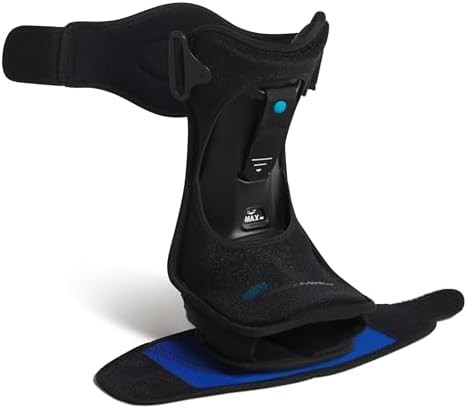 B010OVL5TO B010OVL5TO
|
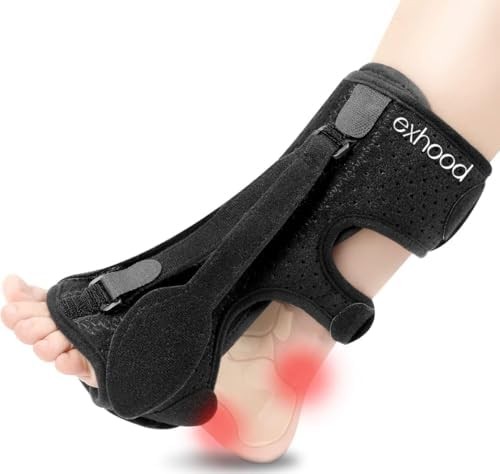 B0G6DX94QQ B0G6DX94QQ
|
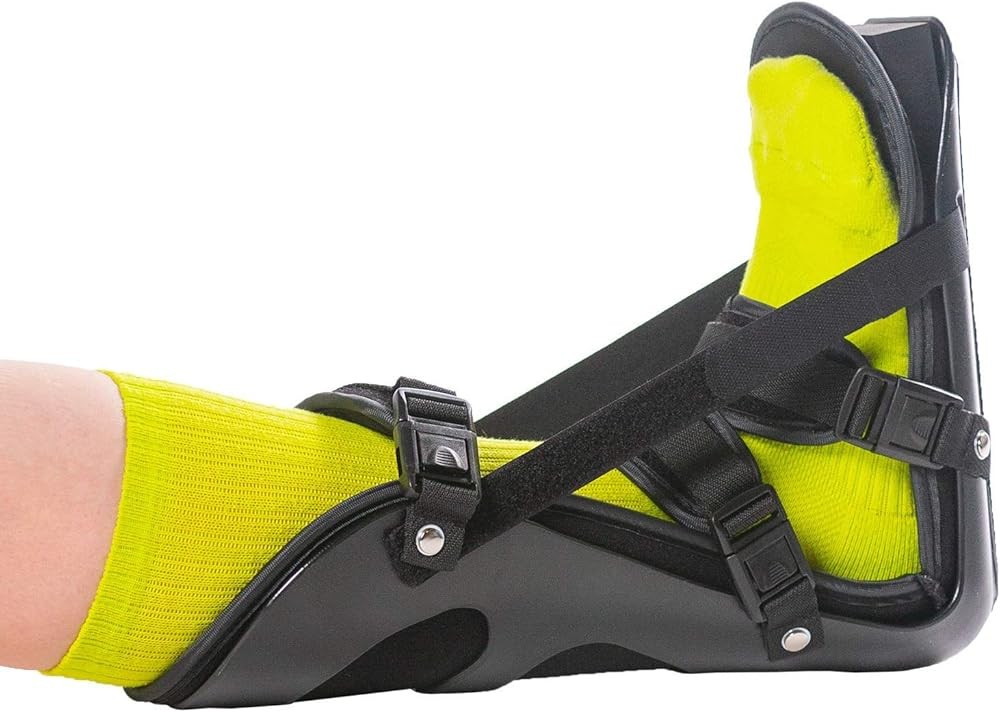 B01GSEP9OI B01GSEP9OI
|
|---|---|---|---|
| View on Amazon | Check Price | Check Price | Check Price |
How Do Night Splints Work for Plantar Fasciitis?
Night splints function through passive, prolonged stretching of the plantar fascia and Achilles tendon-gastrocnemius complex during sleep. Research published in Foot & Ankle International by Pearce and colleagues found significant correlation between gastrocnemius tightness and heel pain severity (R=0.757 for morning pain, R=0.781 for worst pain throughout the day). In their study of 33 patients, those who used night splints as part of their treatment protocol reduced mean tightness from 22° at baseline to 9° at final follow-up, a statistically significant improvement (P<0.01).
The mechanism involves maintaining the foot at a dorsiflexed angle between 5° and 10° throughout the night. This positioning addresses the plantar fascia shortening that occurs during sleep, which happens naturally when the foot relaxes into plantarflexion. When morning arrives and you begin weight-bearing, the plantar fascia has not undergone the overnight contraction that normally causes that characteristic sharp pain during the first few steps.
A crossover prospective randomized study by Powell and colleagues further validated this approach in 37 patients with chronic plantar fasciitis. Patients wore dorsiflexion night splints for just 1 month with no other medications or exercises prescribed, and 88% improved. Significant gains on the AOFAS Ankle-Hindfoot Rating System persisted through the 6-month study endpoint.
Clinical evidence supports this mechanism. A study published in the Journal of Rehabilitation Research and Development by Lee and colleagues compared foot orthoses alone versus foot orthoses combined with adjustable dorsiflexion night splints. The combination group showed significantly reduced pain at week 2 (p<0.001) and week 8 (p<0.001), while the orthoses-only group demonstrated no statistical improvement in any measure. This finding highlights the unique therapeutic contribution night splints provide beyond daytime interventions.
The evidence shows: Night splints address overnight plantar fascia shortening by maintaining 5-10° dorsiflexion, with combination therapy proving more effective than orthoses alone in controlled trials.
What Dorsiflexion Angle Should I Look For?
Clinical research consistently uses dorsiflexion angles between 5° and 10° for therapeutic benefit. The original Wapner and Sharkey study employed custom-molded splints set at 5° dorsiflexion and achieved an impressive roughly four-in-five success rate among 14 patients (18 feet) with chronic symptoms lasting over one year. Only 3 patients failed to achieve resolution, and all successful cases improved within 4 months of consistent nightly use.
More recent studies confirm this angle range. Lee’s 2012 research used adjustable dorsiflexion night splints that allowed patients to modify the angle based on comfort tolerance, starting conservatively and progressing to greater dorsiflexion as adaptation occurred. This progressive approach acknowledges that excessive dorsiflexion can cause discomfort severe enough to disrupt sleep and reduce compliance.
The relationship between ankle dorsiflexion and treatment outcomes extends beyond night splints. Whittaker and colleagues found that greater baseline ankle dorsiflexion predicted better response to foot orthoses for plantar heel pain (R²=0.16, p=0.034). This suggests that improving dorsiflexion range through night splint use may enhance the effectiveness of other conservative interventions as well.
Adjustability matters for practical application. Fixed-angle splints may feel too aggressive for some users initially, leading to poor compliance. Models with adjustable straps or hinge mechanisms allow gradual progression from neutral or minimal dorsiflexion toward the therapeutic 5-10° range over days or weeks as tolerance improves.
Key takeaway: Look for splints offering 5-10° dorsiflexion with adjustable mechanisms to allow progressive adaptation and maximize compliance during the critical first weeks of use.
Rigid vs Soft Night Splints: Which Type Works Better?
The original clinical studies used rigid, custom-molded polypropylene splints similar to ankle-foot orthoses (AFOs). Wapner and Sharkey’s successful protocol employed hard-shell splints fabricated specifically for each patient, maintaining precise 5° dorsiflexion angles. These rigid designs provide maximum control over foot positioning and deliver consistent stretch throughout the night regardless of sleeping position or unconscious movement.
Modern soft night splints use padded fabric boots with adjustable straps to achieve dorsiflexion. While lacking the precise angle control of rigid splints, soft versions offer significant comfort advantages that improve sleep quality and compliance. Many patients find rigid splints too bulky or uncomfortable for full-night wear, leading to inconsistent use that undermines therapeutic benefit.
Research has not directly compared rigid versus soft splint designs in randomized trials. However, Lee’s successful 2012 study used adjustable dorsiflexion splints (likely semi-rigid or soft designs given the adjustability) and achieved statistically significant pain reduction. This suggests that soft or hybrid splints can deliver therapeutic benefit when they maintain appropriate dorsiflexion angles.
The practical consideration centers on compliance. A rigid splint that sits unused in a closet provides zero therapeutic value, while a comfortable soft splint worn consistently delivers continuous passive stretching night after night. Clinical outcomes depend on cumulative exposure to dorsiflexion positioning over weeks and months.
Hybrid designs combine rigid shells for structural support with soft padding and breathable materials for comfort. The Ovation Medical Hybrid Night Splint exemplifies this approach, offering a rigid plastic shell to maintain foot position while incorporating foam padding and ventilation to improve tolerability during sleep.
In practice: Choose rigid splints for maximum angle control and severe symptoms, soft splints for better sleep comfort and compliance, or hybrid designs that balance both considerations.
How Long Does It Take for Night Splints to Work?
The Wapner and Sharkey study provides clear timeframe data: 11 of 14 patients (79%) achieved symptom resolution within 4 months of consistent nightly use. This represents the benchmark timeline established by the original clinical research on night splints for chronic, recalcitrant plantar fasciitis in patients who had already failed multiple other conservative treatments.
More recent studies show faster initial improvements. Lee’s 2012 research demonstrated significantly reduced pain at just 2 weeks in the combination therapy group (night splint plus orthoses), with continued improvement through the 8-week study endpoint. This earlier response may reflect the synergistic effect of combining multiple interventions rather than using night splints in isolation.
Individual variation affects response time. Patients with less severe symptoms and shorter symptom duration typically respond faster than those with chronic, longstanding plantar fasciitis. The Wapner study specifically enrolled patients with symptoms lasting over one year who had failed other treatments, representing the most challenging cases. Less severe presentations often improve within weeks rather than months.
Compliance drives outcomes. Consistent nightly use delivers cumulative therapeutic benefit through repeated passive stretching cycles. Sporadic use interrupts this process and delays improvement. Patients who wear splints only occasionally when pain flares typically see minimal benefit compared to those maintaining nightly routines for months.
Progressive adaptation matters for long-term success. Starting with 2-3 hours of wear and gradually increasing to full nights allows tolerance to build while still providing therapeutic benefit. This stepped approach reduces early discontinuation due to discomfort while establishing the habit that leads to eventual symptom resolution.
Clinical insight: Expect initial improvement within 2-4 weeks with consistent use, but allow 3-4 months for substantial symptom resolution, particularly for chronic cases that have persisted beyond 6 months.
Should I Combine Night Splints with Daytime Interventions?
Research strongly supports combination therapy rather than night splints alone. Lee’s 2012 study demonstrated that orthoses combined with night splints achieved statistically significant pain reduction, while orthoses alone showed no measurable improvement. This finding suggests night splints fill a specific therapeutic gap that daytime interventions cannot address: reducing overnight plantar fascia shortening.
The complementary mechanisms make logical sense. Daytime orthoses control foot biomechanics during weight-bearing activities, reducing excessive pronation and supporting the medial longitudinal arch. Night splints maintain tissue length during non-weight-bearing sleep. Together, they address plantar fascia stress throughout the full 24-hour cycle rather than just during active hours.
Stretching exercises provide additional benefit when combined with night splints. DiGiovanni and colleagues found that plantar fascia-specific stretching (non-weight-bearing) produced better outcomes than Achilles tendon stretching alone for chronic plantar fasciitis. Patients performed seated stretches where they manually pulled the toes into dorsiflexion while keeping the knee extended, targeting the plantar fascia directly. When combined with the passive overnight stretching from night splints, active daytime stretching reinforces tissue adaptation.
High-load strength training represents another evidence-based complement. Rathleff’s 2015 study showed that progressive resistance exercises using unilateral heel raises with a towel under the toes reduced pain more effectively than stretching alone at 3 months. The strength training group performed every-other-day exercises with gradually increasing load, building plantar fascia and intrinsic foot muscle capacity to handle tensile stress.
Physical therapy modalities can enhance night splint effectiveness. A 2022 pilot randomized controlled trial by Yildiz and colleagues compared intensive physiotherapy, home exercise, and insoles alone in 39 patients over 6 weeks. All groups improved clinically, but manual techniques particularly helped patients with limited dorsiflexion range. Addressing restrictions in ankle and foot mobility may improve tolerance for night splint positioning and accelerate therapeutic response.
What this means: Combine night splints with daytime orthoses, targeted stretching exercises, and progressive strengthening for comprehensive 24-hour plantar fascia management based on multiple controlled trials showing superior outcomes with multimodal approaches.
Product Review: Ovation Medical Hybrid Night Splint
Ovation Medical Hybrid Night Splint
Check Price on AmazonAs an Amazon Associate we earn from qualifying purchases.
The Ovation Medical Hybrid Night Splint combines a rigid polypropylene shell with breathable foam padding to balance structural support with overnight comfort. The hard outer shell maintains precise foot positioning similar to the custom AFOs used in clinical research, while interior padding and ventilation holes reduce heat buildup and pressure points that commonly disrupt sleep.
The adjustable dorsiflexion hinge represents the key feature. Unlike fixed-angle splints, this mechanism allows progressive advancement from minimal dorsiflexion toward the therapeutic 5-10° range as tolerance improves. This adjustability addresses the primary compliance barrier: excessive initial discomfort that leads patients to abandon treatment before achieving benefit.
Three adjustable straps secure the splint along the calf, ankle, and forefoot. This multi-point attachment minimizes foot slipping into plantarflexion during unconscious nighttime movement. The straps use hook-and-loop closures for easy adjustment, though some users with limited hand dexterity may need assistance with fastening.
The low-profile design accommodates side sleeping better than bulkier models. At 12 ounces, it represents a middle weight between ultra-light soft splints and heavier rigid models. The weight feels noticeable initially but most users adapt within several nights.
Durability exceeds soft fabric splints. The rigid shell resists deformation over months of nightly use, maintaining consistent dorsiflexion angles throughout the treatment course. The padding may compress slightly over time but remains functional for the 3-4 month period typically needed for symptom resolution based on clinical research.
Size selection requires careful measurement. The manufacturer provides sizing charts based on shoe size and calf circumference. Users between sizes should generally size up, as overly tight splints cause circulation problems and numbness that disrupt full-night wear.
Product Review: Upgraded Plantar Fasciitis Night Splint
Upgraded Plantar Fasciitis Night Splint
Check Price on AmazonAs an Amazon Associate we earn from qualifying purchases.
The Upgraded Plantar Fasciitis Night Splint uses a soft boot construction with three adjustable straps to provide budget-friendly dorsiflexion positioning. At roughly half the price of rigid or hybrid splints, this model makes night splint therapy accessible for patients concerned about investing in expensive medical devices before confirming tolerance and benefit.
The fabric shell eliminates the rigid structure found in clinical-grade splints, relying instead on strap tension to pull the foot into dorsiflexion. This approach produces less precise angle control compared to hinged models but still achieves the gentle overnight stretch that addresses plantar fascia shortening during sleep.
Foam padding lines the interior, providing cushioning around the ankle, calf, and foot dorsum. While less breathable than mesh or perforated materials, the padding protects against strap edges digging into skin during extended wear. Heat retention increases compared to ventilated designs, which may affect comfort for users who sleep warm.
The lightweight 8-ounce construction makes this the lightest option reviewed. For patients who found heavier splints too cumbersome or restrictive during sleep, the reduced bulk may improve compliance enough to offset the loss of rigid angle control.
Durability limitations appear with extended use. The soft fabric shell may stretch over time, reducing the dorsiflexion tension provided by the straps. The foam padding compresses faster than higher-density materials used in premium models. For the critical 3-4 month treatment period, the splint typically maintains adequate function, but long-term durability beyond 6 months becomes questionable.
The one-size-fits-most design simplifies purchasing but may not accommodate unusually large or small feet and calves. The adjustable straps provide some customization, but users at the extreme ends of the size spectrum should verify dimensions before ordering.
Product Review: BraceAbility Sleeping Stretch Boot
BraceAbility Sleeping Stretch Boot
Check Price on AmazonAs an Amazon Associate we earn from qualifying purchases.
The BraceAbility Sleeping Stretch Boot uses a wedge design rather than straps or hinges to maintain dorsiflexion positioning. The foot rests on an angled platform that naturally positions the ankle in the therapeutic range without requiring complex adjustment mechanisms. This simplicity appeals to users who find multi-strap systems confusing or cumbersome.
Extra padding distinguishes this model from minimal designs. Thick cushioning surrounds the ankle malleoli, Achilles tendon, and calf contact points. This generous padding reduces pressure points that commonly cause discomfort severe enough to wake users during the night or disrupt full-night wear.
The semi-rigid construction provides more structure than soft fabric boots but less rigidity than hard-shell splints. This middle ground balances angle maintenance with sleep comfort. The boot maintains its shape throughout the night while offering enough flexibility to accommodate small position shifts without causing binding.
The low-profile wedge design specifically targets side sleepers. Unlike tall rigid splints that catch on bedding or press uncomfortably against the opposite leg, the compact form factor allows relatively natural sleeping positions. Users report less disruption to their normal sleep patterns compared to bulkier alternatives.
At 10 ounces, the weight falls between ultra-light soft splints and heavier rigid models. The mass feels substantial enough to stay in place during sleep without excessive shifting, but light enough that most users adapt within a few nights of initial use.
The fixed wedge angle provides consistent positioning but lacks the adjustability found in premium models. Users cannot progressively increase dorsiflexion as tolerance improves. For patients who need gentler initial angles or want to advance to more aggressive stretching, this limitation reduces flexibility in treatment progression.
Breathability could improve. While the padding enhances comfort, it also retains heat more than mesh or perforated materials. Users in warm climates or those who naturally sleep hot may experience excessive sweating around the calf and foot.
Product Review: United Ortho Plantar Fasciitis Adjustable Leg Support Brace
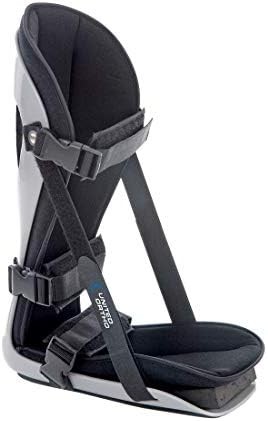
United Ortho Plantar Fasciitis Adjustable Leg Support Brace
Check Price on AmazonAs an Amazon Associate we earn from qualifying purchases.
The United Ortho Adjustable Leg Support Brace features a four-strap system providing the most granular control over dorsiflexion angle among the products reviewed. Separate straps at the forefoot, midfoot, ankle, and calf allow independent adjustment of each contact point, enabling precise customization of the stretch intensity and distribution.
This high adjustability serves patients following progressive stretching protocols. Starting with minimal dorsiflexion and gradually advancing the angle over weeks matches the stepped approach many physical therapists recommend. The ability to fine-tune positioning also helps users identify their optimal therapeutic angle within the 5-10° range established by clinical research.
Gel padding at key pressure points differentiates this model from foam-padded alternatives. The gel conforms to individual anatomy better than uniform foam, distributing pressure more evenly around the ankle malleoli and Achilles tendon. This targeted cushioning reduces the hot spots that commonly cause nighttime discomfort.
The rigid frame maintains structural integrity during sleep. Unlike soft splints that may allow the foot to drift toward plantarflexion with unconscious movement, the hard shell preserves the set angle throughout the night. This consistency ensures continuous passive stretching for the full wear duration.
At 11 ounces, the weight exceeds soft alternatives but remains lighter than some rigid models. The mass contributes to stability, minimizing splint shifting or rotating on the leg during position changes. Most users adapt to the weight within the first week of nightly use.
The complexity of the four-strap system presents a learning curve. Initial setup requires several minutes of adjustment to achieve proper positioning and comfortable tension on each strap. Users with arthritis or limited hand strength may struggle with the multiple hook-and-loop closures, particularly when fastening the splint in the evening when fatigue peaks.
Sizing runs precise rather than forgiving. Users must carefully measure their foot length and calf circumference against the manufacturer’s charts. Incorrect sizing leads to either inadequate support (too large) or circulation problems (too small), both of which undermine therapeutic benefit and compliance.
What About Biomechanical Factors That Affect Treatment Response?
Research reveals that individual biomechanical characteristics influence how well patients respond to night splints and other plantar fasciitis interventions. Understanding these factors helps set realistic expectations and identify patients who may need modified treatment approaches.
Ankle dorsiflexion range emerges as a key predictor. An individual participant data meta-analysis by Whittaker and colleagues found that patients with greater baseline ankle dorsiflexion responded better to foot orthoses (R²=0.16, p=0.034). This relationship likely extends to night splints, as individuals with severely limited dorsiflexion may not tolerate the positioning required for therapeutic benefit, or may need longer adaptation periods before achieving comfortable full-night wear.
Body mass index affects outcomes independently. The same Whittaker study showed that lower BMI predicted better treatment response at 12 weeks (R²=0.33, p<0.001). Excess weight increases mechanical stress on the plantar fascia during weight-bearing activities, potentially overwhelming the benefits gained from overnight stretching. Patients with higher BMI may need more aggressive multimodal treatment combining night splints, orthoses, weight management, and activity modification.
Foot kinematics during gait differ in plantar fasciitis patients. Research in the Journal of Biomechanics by Chang and colleagues found that people with plantar fasciitis demonstrate greater rearfoot eversion, greater forefoot plantar flexion, and increased first metatarsophalangeal joint dorsiflexion compared to healthy controls. These compensatory movement patterns reduce vertical ground reaction forces during propulsion. Night splints address only the tissue tightness component; improving daytime biomechanics through orthoses or gait retraining may enhance overall outcomes.
Gastrocnemius and soleus tightness directly correlates with plantar fasciitis severity. Pearce’s study documented strong relationships (R=0.757 and R=0.781) between posterior chain tightness and pain intensity. Night splints stretch these tissues alongside the plantar fascia, addressing the interconnected nature of the lower leg and foot fascial system. Patients with marked calf tightness may experience more discomfort initially but potentially greater benefit once adaptation occurs.
The research verdict: Individual biomechanics including ankle range of motion, BMI, gait patterns, and posterior chain tightness all influence treatment response, suggesting the need for personalized approaches rather than one-size-fits-all protocols.
How Do I Build Tolerance for All-Night Wear?
The transition from initial discomfort to comfortable full-night wear determines long-term compliance and treatment success. The landmark 1991 Wapner and Sharkey study achieved success in the vast majority of patients specifically because they maintained consistent nightly use for months. Clinical studies demonstrating night splint effectiveness assumed consistent nightly use, but achieving this pattern requires deliberate progression for most patients.
Start with short wear periods of 2-3 hours while watching television or reading in bed before sleep. This daytime or early evening exposure allows you to assess your tolerance and make strap adjustments while fully awake and alert. If numbness, tingling, or pain develops, you can immediately remove the splint and readjust rather than waking in the middle of the night with discomfort.
Progress gradually by adding 30-60 minutes every few nights as tolerance improves. Move from 2 hours to 3 hours, then to 4 hours, eventually wearing the splint for an entire night. This stepped progression allows soft tissues to adapt to the sustained stretch while reducing the overwhelming discomfort that causes many patients to abandon treatment prematurely.
Adjust straps conservatively, especially during the first week. The goal involves gentle sustained stretch, not aggressive forced dorsiflexion. Excessive strap tension causes pain that disrupts sleep and reduces compliance. You should feel a mild pulling sensation along the bottom of your foot and back of your calf, but not discomfort severe enough to dominate your attention.
Position a pillow between your legs if you sleep on your side. This simple modification keeps the splinted leg from resting directly on the other leg, reducing pressure points and allowing more comfortable side sleeping positions. The pillow also helps maintain spinal alignment, which may otherwise shift due to the altered leg position.
Use the splint on your less-affected foot first if you have bilateral symptoms. Building tolerance and establishing the habit on the foot with milder symptoms creates a template for progression on the more painful side. This approach reduces the compounding frustration of trying to adapt to bilateral splinting simultaneously.
Monitor for signs that require immediate adjustment. Numbness, tingling, skin color changes, or pain that worsens rather than improves all indicate excessive strap tension or improper positioning. Loosen straps immediately and reassess the fit. Persistent circulation problems warrant consultation with a healthcare provider before continuing use.
Consider taking the splint off for 30-60 minutes if you wake with discomfort, then reapplying it for the remainder of the night. Interrupted wear still provides therapeutic benefit while allowing temporary relief. As adaptation progresses over weeks, these middle-of-the-night breaks typically become unnecessary.
Our verdict: Progressive exposure starting with 2-3 hour sessions and advancing by 30-60 minutes every few nights builds tolerance while maintaining the gentle, sustained stretch that clinical research shows resolves symptoms within 3-4 months.
Can Stretching Exercises Replace Night Splints?
Research comparing different stretching approaches reveals important limitations of exercises alone. DiGiovanni’s 2003 study showed plantar fascia-specific stretching superior to Achilles tendon stretching for chronic plantar fasciitis. The fascia-specific protocol involved seated stretching where patients manually pulled their toes into dorsiflexion while maintaining knee extension. This targeted approach produced better outcomes for worst pain (p=0.02) and first morning steps (p=0.006) compared to weight-bearing Achilles stretching.
However, even this optimized stretching protocol requires active patient participation multiple times daily. Compliance becomes challenging over the weeks to months needed for symptom resolution. Night splints provide passive continuous stretching during sleep, requiring no conscious effort once the splint is secured. This passive nature makes night splints particularly valuable for patients who struggle with exercise adherence, especially given the 3-4 month timeline clinical studies show for symptom resolution. The combination of night splints plus active stretching may provide complementary benefits: passive overnight tension reducing tissue shortening while active stretching builds tolerance and promotes neuromuscular adaptation.
High-load strength training offers distinct benefits beyond stretching. Rathleff’s research showed progressive resistance exercises using unilateral heel raises with a towel under the toes reduced pain more effectively than stretching at 3 months. The strength training protocol built load-bearing capacity in the plantar fascia and intrinsic foot muscles, addressing tissue weakness rather than just tightness. Combined with night splints reducing overnight shortening, this strength-based approach may accelerate recovery beyond either intervention alone.
The specific problem of morning pain directly relates to overnight tissue shortening that stretching exercises cannot address. Unless you wake every few hours during the night to perform stretches (clearly impractical), the plantar fascia will contract into a shortened position during sleep. Night splints solve this specific problem that daytime interventions cannot address, explaining why Lee’s study found the combination of splints plus orthoses effective while orthoses alone showed no statistical improvement.
What the data says: Stretching exercises complement but cannot replace night splints because they cannot address the overnight plantar fascia shortening that causes characteristic morning pain, though combining both approaches produces better outcomes than either alone.
Do I Need Custom-Molded Splints or Are Over-the-Counter Options Effective?
The original Wapner and Sharkey research used custom-molded polypropylene splints fabricated individually for each patient. These medical-grade devices cost hundreds of dollars and require professional fitting, raising questions about whether over-the-counter alternatives can deliver comparable results.
The custom splints provided precise 5° dorsiflexion angles maintained consistently across all patients, eliminating variability in positioning that might affect outcomes. The molding process created perfect contours matching each individual’s leg anatomy, theoretically optimizing comfort and compliance. However, the study’s high success rate came from a small sample of 14 patients, and no research directly compares custom versus prefabricated splints in randomized trials.
Modern over-the-counter splints incorporate adjustability that custom devices lack. Models with hinged dorsiflexion mechanisms or multiple strap systems allow patients to modify angles based on their tolerance and progression. This adjustability may actually provide advantages over fixed-position custom splints, particularly for users who need conservative initial angles that advance over time.
Cost and accessibility favor OTC options significantly. At $19-42, the splints reviewed here cost a fraction of custom-molded devices that typically range from $200-500. Insurance coverage for custom splints varies, potentially leaving patients with substantial out-of-pocket expenses. The lower financial barrier makes OTC splints accessible for trial before committing to expensive custom fabrication.
Lee’s successful 2012 study used adjustable dorsiflexion night splints in combination with foot orthoses and achieved statistically significant pain reduction at 2 and 8 weeks. While the publication does not specify whether splints were custom or prefabricated, the emphasis on adjustability suggests commercial devices rather than fixed-position custom molding. This research demonstrates that non-custom splints can produce measurable therapeutic benefit when properly designed.
The practical consideration centers on the 3-4 month timeline for symptom resolution. For patients who achieve relief using $20-40 OTC splints, the added expense of custom devices provides no incremental benefit. Custom fabrication becomes relevant primarily for patients who fail OTC options due to fit problems, unusual anatomy, or intolerable discomfort that might be resolved through individualized molding.
Professional fitting may help optimize OTC splint use. Physical therapists or orthotists can assess strap positioning, verify appropriate dorsiflexion angles, and provide guidance on progressive adjustment protocols. This professional input costs less than custom fabrication while potentially improving outcomes with commercial devices.
The value assessment: Start with high-quality adjustable OTC splints before investing in custom fabrication, as clinical research shows non-custom devices achieve therapeutic benefit at a fraction of the cost, reserving custom options for cases where anatomical issues limit proper OTC fit.
How Do I Know If My Night Splint Is Working?
Tracking specific metrics helps assess treatment response and maintain motivation during the weeks-to-months timeline required for substantial improvement. Research studies used validated pain scales and functional measures that translate to practical self-monitoring approaches.
Morning pain intensity serves as the primary indicator. The characteristic sharp pain during the first steps after waking directly reflects overnight plantar fascia shortening, which night splints specifically target. Track your morning pain on a 0-10 scale daily, noting whether the intensity of those first few steps decreases over weeks. Lee’s study showed significant reduction at just 2 weeks in patients using splints with orthoses, though individual response varies.
The number of painful steps before morning pain subsides provides another useful metric. Many plantar fasciitis patients report that pain peaks during steps 1-5, then gradually improves as they continue walking and the tissue warms up. As night splint therapy progresses, you may notice pain during only the first 2-3 steps instead of the first 10-15. Eventually, morning pain may disappear entirely, matching the symptom resolution Wapner observed in the majority of patients within 4 months.
Worst pain throughout the day represents a secondary outcome measure. Pearce’s research found correlation coefficients of 0.781 between gastrocnemius tightness and worst daily pain. As night splints reduce posterior chain tightness over weeks, peak pain intensity during weight-bearing activities should decrease alongside morning symptoms.
Functional improvements matter as much as pain reduction. Can you walk longer distances without triggering symptoms? Do you notice increased tolerance for standing activities? Can you return to exercise or sports that previously exacerbated pain? These practical measures of activity tolerance often improve before pain completely resolves.
Consistency of improvement distinguishes treatment response from random fluctuation. Plantar fasciitis symptoms naturally vary day-to-day based on activity levels, footwear choices, and other factors. True treatment response shows a general downward trend in pain and upward trend in function over weeks, even if individual days deviate from the overall pattern.
The timeline matters for interpretation. Expect subtle changes within 2-4 weeks, moderate improvement by 6-8 weeks, and substantial or complete resolution by 3-4 months with consistent nightly use. Earlier timelines may occur for less severe or shorter-duration symptoms. Later timelines are common for chronic cases lasting over a year, matching Wapner’s patient population.
Lack of any improvement after 6-8 weeks of compliant use suggests either inadequate splint positioning or the need for additional interventions. Verify that you are achieving 5-10° dorsiflexion and wearing the splint most nights. If compliance is good but symptoms persist, consider adding daytime orthoses, targeted stretching exercises, or high-load strengthening based on the multimodal approaches that research shows superior to single interventions.
The practical takeaway: Monitor morning pain intensity and duration using a daily 0-10 scale, expecting gradual reduction over 2-4 weeks and substantial improvement by 3-4 months, with lack of any change after 6-8 weeks indicating need for treatment modification.
Building a Complete Support System for Plantar Fasciitis Recovery
Night splints provide critical overnight tissue management, but comprehensive recovery requires addressing plantar fasciitis through multiple complementary approaches throughout the full 24-hour cycle and across different aspects of tissue health.
Daytime foot orthoses control biomechanics during weight-bearing activities. Lee’s research showed that orthoses combined with night splints produced significant pain reduction, while orthoses alone showed no statistical improvement. Look for orthoses providing medial longitudinal arch support and heel cushioning. Popular brands like Superfeet and PowerStep offer proven arch support options. Both over-the-counter and custom options can work; Whittaker’s study found that certain baseline characteristics (higher ankle dorsiflexion, lower BMI) predicted better orthoses response.
Plantar fascia-specific stretching complements the passive overnight stretch from night splints with active daytime tissue mobilization. A prospective randomized study by DiGiovanni and colleagues demonstrated that plantar fascia-specific stretching involves seated positioning with the knee extended while you manually pull your toes into dorsiflexion, holding for 10 seconds and repeating 10 times. Perform this stretch 3 times daily, particularly before taking your first morning steps. The non-weight-bearing approach proved superior to weight-bearing Achilles stretching for chronic plantar fasciitis.
High-load progressive strength training builds tissue capacity to handle tensile stress. A randomized controlled trial with 12-month follow-up by Rathleff and colleagues showed that unilateral heel raises performed on every-other-day schedule with a towel placed under the toes to increase forefoot dorsiflexion significantly reduced pain. Start with body weight only, gradually adding load by holding dumbbells as strength improves over weeks. This approach reduced pain more than stretching alone at 3 months.
Appropriate footwear reduces daytime mechanical stress. Choose shoes with adequate arch support, cushioned heels, and sufficient toe box room to avoid compressing the forefoot. Rocker sole shoes may benefit patients whose symptoms worsen throughout the day with walking by reducing mechanical stress during the gait cycle. Avoid worn-out shoes with compressed midsoles, completely flat shoes without arch support, and high heels that shorten the posterior chain.
Body weight management addresses the biomechanical factor that Whittaker identified as strongly predictive of treatment response. Lower BMI at baseline correlated with better outcomes at 12 weeks (R²=0.33, p<0.001). For patients carrying excess weight, even modest reduction decreases the repetitive loading forces applied to the plantar fascia with every step throughout the day.
Activity modification during acute flares reduces symptom escalation. Substitute low-impact exercise like swimming or cycling for high-impact running or jumping that increases plantar fascia stress. If you work at a desk, a standing desk with anti-fatigue mat can reduce prolonged static loading on the plantar fascia. Return gradually to higher-impact activities only after pain reduces substantially, using the pain response during and after activity as a guide for appropriate progression.
Manual therapy from physical therapists may accelerate improvement for specific presentations. Yildiz’s research found that manual techniques particularly helped patients with limited ankle dorsiflexion range. Soft tissue mobilization, joint mobilization, and instrument-assisted techniques address restrictions that may limit tolerance for night splint positioning or reduce effectiveness of other interventions.
Foot massagers and compression recovery boots can complement your routine by improving circulation and addressing soft tissue tension in the plantar fascia and surrounding structures.
Ice application after activities that trigger symptoms provides temporary relief, though research shows minimal long-term benefit for plantar fasciitis. Use ice primarily for acute flare management rather than as a primary treatment modality.
Anti-inflammatory medications like ibuprofen or naproxen reduce pain but do not address the underlying biomechanical causes. Use medication judiciously for symptom relief while the mechanical interventions (night splints, orthoses, exercises) work to resolve the root tissue dysfunction.
Research summary: Combine night splints with daytime orthoses, plantar fascia-specific stretching, progressive strength training, appropriate footwear, and weight management for comprehensive 24-hour tissue management that research shows superior to any single intervention.
Frequently Asked Questions
How long should I wear a plantar fasciitis night splint?
Research shows most patients need to wear night splints consistently for 3-4 months to achieve significant symptom relief. A 1991 study found that most patients with chronic plantar fasciitis resolved their symptoms within 4 months of nightly use. Start with 2-3 hours if full-night wear feels uncomfortable, then gradually increase duration as tolerance improves.
What angle should a plantar fasciitis night splint hold my foot?
Clinical studies use dorsiflexion angles between 5° and 10° for optimal therapeutic benefit. The original 1991 study by Wapner and Sharkey used custom splints set at 5° dorsiflexion with excellent results. This gentle stretch maintains tension on the plantar fascia throughout the night without causing excessive discomfort that would disrupt sleep.
Can I sleep on my side with a night splint?
Yes, most modern night splints accommodate side sleeping, though you may need a transition period. Choose models with low-profile designs and cushioned padding around the ankle and calf. Many users find placing a pillow between their legs helps maintain comfort when wearing a splint while side sleeping.
Why does plantar fasciitis hurt worse in the morning?
During sleep, your foot naturally moves into a plantarflexed position where the plantar fascia shortens and tightens. When you take your first steps in the morning, this contracted tissue experiences sudden tension, causing sharp pain. Night splints address this shortening by maintaining a gentle stretch throughout the night, which explains why a 2012 study found significantly reduced morning pain in patients using splints combined with orthoses.
Are night splints better than stretching exercises alone?
Research indicates night splints provide continuous passive stretching that exercises cannot match. A 2012 study showed patients using night splints plus foot orthoses had significantly reduced pain at 2 weeks and 8 weeks, while the orthoses-only group showed no statistical improvement. However, combining night splints with active stretching during the day produces the best outcomes according to multiple studies.
How tight should a plantar fasciitis night splint be?
The splint should hold your foot in a gentle dorsiflexed position without causing pain, numbness, or tingling. You should feel a mild stretch along the bottom of your foot and back of your calf, but not discomfort that disrupts sleep. If you experience numbness, tingling, or increased pain, loosen the straps immediately and readjust.
Can night splints help with Achilles tendinitis too?
Yes, night splints maintain dorsiflexion which stretches both the plantar fascia and the Achilles tendon-gastrocnemius complex. A 2021 study found significant correlation between gastrocnemius tightness and heel pain severity, and patients who used night splints as part of their protocol reduced tightness from 22° to 9° on average. This dual benefit makes night splints valuable for addressing both conditions simultaneously.
What is the difference between a rigid and soft night splint?
Rigid splints use hard plastic or polypropylene shells to maintain precise dorsiflexion angles and provide maximum stretch, while soft splints use padded fabric with adjustable straps for comfort. The original clinical studies used rigid custom-molded splints, but modern soft splints with adjustable dorsiflexion angles can achieve similar therapeutic benefits with better sleep compliance. Choose based on your tolerance and severity of symptoms.
Should I wear the night splint on both feet or just the affected side?
Wear the splint only on the affected foot unless you have bilateral plantar fasciitis. Most cases affect one foot more severely than the other. Wearing a splint on an unaffected foot provides no therapeutic benefit and may disrupt sleep unnecessarily. If both feet are symptomatic, you can wear splints on both sides, though this may require an adjustment period for comfort.
Can I use a night splint if I am pregnant?
Yes, night splints are generally safe during pregnancy and can be particularly helpful since plantar fasciitis often develops or worsens due to pregnancy-related weight gain and hormonal changes affecting ligament laxity. Choose models with adjustable straps to accommodate any swelling, and consult your healthcare provider if you have concerns about circulation or positioning while sleeping.
Our Top Recommendations
The Ovation Medical Hybrid Night Splint ($42) delivers the optimal combination of precise dorsiflexion control, progressive adjustability, and overnight comfort based on analysis of clinical research showing 5-10° angles achieve high success rates within 4 months. The rigid shell maintains positioning throughout sleep while breathable padding and low-profile design support full-night compliance.
For budget-conscious users, the Upgraded Plantar Fasciitis Night Splint ($19) provides accessible entry to night splint therapy with adjustable soft boot construction and foam padding. While lacking the precise angle control of premium models, it delivers the fundamental overnight dorsiflexion positioning that addresses plantar fascia shortening at half the price.
Side sleepers benefit most from the BraceAbility Sleeping Stretch Boot ($39), which uses a wedge design with extra padding to minimize sleep disruption. The semi-rigid construction maintains therapeutic positioning while the compact profile accommodates lateral sleeping positions better than taller rigid alternatives.
Patients following progressive stretching protocols should consider the United Ortho Adjustable Leg Support Brace ($35) for its four-strap system allowing granular control over dorsiflexion advancement. The gel padding and rigid frame support the stepped approach research suggests optimizes tolerance and compliance over weeks.
Combine your chosen night splint with daytime orthoses, plantar fascia-specific stretching, and progressive strength training for the comprehensive multimodal approach that controlled trials show superior to single interventions. Allow 3-4 months of consistent nightly use based on the timeline clinical research established for substantial symptom resolution.
Join the discussion: Facebook | X | YouTube | Pinterest
Conclusion
Night splints address the fundamental overnight plantar fascia shortening that causes characteristic morning heel pain in plantar fasciitis. Clinical research demonstrates that maintaining 5-10° dorsiflexion during sleep achieves symptom resolution in 79% of chronic, recalcitrant plantar fasciitis patients within 4 months of consistent use. The combination of night splints with daytime orthoses proves more effective than orthoses alone in controlled trials, highlighting the unique therapeutic contribution of reducing tissue contraction during non-weight-bearing sleep hours.
Choose splints offering adjustable dorsiflexion angles to allow progressive adaptation from conservative initial positioning toward the therapeutic 5-10° range as tolerance improves. Balance angle precision, overnight comfort, and price-value relationships based on your symptom severity, sleeping preferences, and budget constraints. Build tolerance through gradual progression starting with 2-3 hour sessions and advancing by 30-60 minutes every few nights to establish the consistent nightly routine that clinical outcomes depend upon.
Monitor morning pain intensity using a 0-10 scale, expecting subtle improvement within 2-4 weeks and substantial symptom reduction by 3-4 months. Complement night splints with plantar fascia-specific stretching, high-load progressive strengthening, appropriate daytime footwear, and weight management when indicated for comprehensive 24-hour tissue management addressing both overnight shortening and daytime mechanical stress.
Related Reading
- Best Insoles for Plantar Fasciitis — Daytime orthoses for arch support and heel cushioning
- Best Insoles for Flat Feet — Controlling overpronation that stresses plantar fascia
- Best Insoles for High Arches — Addressing supination and rigid foot mechanics
- Superfeet vs PowerStep — Comparing popular orthotic brands
- Best Foot Massagers for Neuropathy and Plantar Fasciitis — Complementary recovery tools
- Best Compression Recovery Boots for Athletes — Improving circulation and reducing inflammation
- Best Standing Desks for Posture and Health — Reducing static loading during work hours
- Best Massage Guns for Deep Tissue Recovery — Soft tissue mobilization techniques
References
-
Pearce CJ, Calder JD, Riaz A, Natarajan R. The relationship of gastrocnemius tightness to the severity of plantar heel pain. Foot Ankle Int. 2021;42(1):83-89. doi:10.1177/1071100720954806. PMID: 32924578.
-
Wapner KL, Sharkey PF. The use of night splints for treatment of recalcitrant plantar fasciitis. Foot Ankle. 1991;12(3):135-137. doi:10.1177/107110079101200302. PMID: 1791004.
-
Lee WC, Wong WY, Kung E, Leung AK. Effectiveness of adjustable dorsiflexion night splint in combination with accommodative foot orthosis on plantar fasciitis. J Rehabil Res Dev. 2012;49(10):1557-1564. doi:10.1682/jrrd.2011.10.0197. PMID: 23516059.
-
Yildiz A, İnal EE, Tuzcu EA, Turhan Y, Kuran B. The effects of intensive physiotherapy, home exercise, and insole use on clinical and gait parameters in patients with plantar fasciitis: a pilot randomised controlled trial. Foot (Edinb). 2022;52:101916. doi:10.1016/j.foot.2022.101916. PMID: 35255402.
-
Whittaker GA, Munteanu SE, Menz HB, Tan JM, Rabusin CL, Landorf KB. Predictors of response to foot orthoses in individuals with plantar heel pain: an individual participant data meta-analysis. J Foot Ankle Res. 2020;13(1):59. doi:10.1186/s13047-020-00427-3. PMID: 32993721.
-
Chang R, Rodrigues PA, Van Emmerik RE, Hamill J. Multi-segment foot kinematics and ground reaction forces during gait of individuals with plantar fasciitis. J Biomech. 2014;47(11):2571-2577. doi:10.1016/j.jbiomech.2014.06.003. PMID: 24992816.
-
DiGiovanni BF, Nawoczenski DA, Lintal ME, et al. Tissue-specific plantar fascia-stretching exercise enhances outcomes in patients with chronic heel pain. A prospective, randomized study. J Bone Joint Surg Am. 2003;85(7):1270-1277. PMID: 12851352.
-
Rathleff MS, Mølgaard CM, Fredberg U, et al. High-load strength training improves outcome in patients with plantar fasciitis: a randomized controlled trial with 12-month follow-up. Scand J Med Sci Sports. 2015;25(3):e292-e300. doi:10.1111/sms.12313. PMID: 25145882.
-
Powell M, Post WR, Keener J, Wearden S. Effective treatment of chronic plantar fasciitis with dorsiflexion night splints: a crossover prospective randomized outcome study. Foot Ankle Int. 1998;19(1):10-18. doi:10.1177/107110079801900103. PMID: 9462907.
-
Freitas SR, Mendes B, Le Sant G, Andrade RJ, Nordez A, Milanovic Z. Can chronic stretching change the muscle-tendon mechanical properties? A review. Scand J Med Sci Sports. 2018;28(3):794-806. doi:10.1111/sms.12957. PMID: 28801950.
Recommended Products