Superfeet vs PowerStep: Which Orthotic Insole Fits Your Foot Type
Summarized from peer-reviewed research indexed in PubMed. See citations below.
Choosing between Superfeet and PowerStep orthotic insoles can feel overwhelming when both brands promise arch support and pain reduction. The Superfeet All-Purpose Support High Arch Insoles (Green) at $59 deliver the most rigid arch support with a deep heel cup, making them ideal for high arches or severe biomechanical issues backed by research showing prefabricated insoles with aggressive arch geometries reduce plantar pressure by 8 to 14 percent. Research demonstrates that different over-the-counter devices influence foot kinematics differently, with device-specific effects on rearfoot motion and plantar fascia strain. The PowerStep Pinnacle at $49 offers a more flexible, cushioned alternative with dual-layer EVA foam that works better for moderate support needs. Here’s what the published research shows about how these two leading brands compare.
Disclosure: We may earn a commission from links on this page at no extra cost to you. Affiliate relationships never influence our ratings. Full policy →
How Do Prefabricated Orthotic Insoles Actually Work?
Prefabricated orthotic insoles represent an accessible alternative to custom-made devices for foot pain and biomechanical issues. Research demonstrates these over-the-counter options can effectively redistribute plantar pressure and alter foot mechanics during walking and standing activities.
A randomized crossover study examining six different commercially available prefabricated orthotic insole designs found that insoles with heel cups and medial arch geometries consistently increased contact area at medial arch and whole-foot regions (Cooper et al., 2024). These design features also reduced both plantar peak pressure and pressure time integral at medial arch and heel regions, demonstrating measurable biomechanical effects in healthy subjects.
The mechanism of action for prefabricated insoles involves several biomechanical principles. First, the arch support component limits excessive midfoot collapse during weight-bearing. Second, heel cups provide rearfoot control to reduce excessive pronation. Third, metatarsal pads redistribute forefoot pressure away from painful areas. Research on metatarsal domes positioned 5 millimeters proximal to the metatarsal heads achieved pressure reductions of 45 to 60 kilopascals without adversely increasing pressure proximally (Landorf et al., 2020).
Clinical trials comparing custom-made orthoses to prefabricated inserts show mixed results. A crossover randomized controlled trial with 40 participants found that both interventions produced immediate improvements in gait economy for patients with lower-extremity musculoskeletal pain (Trotter & Pierrynowski, 2008). However, only custom-made orthoses maintained improved gait economy after 4 weeks of wear, while patients switching from custom to prefabricated devices experienced decreased gait economy.
For many conditions, prefabricated orthoses provide sufficient biomechanical control as a first-line option. Studies involving plantar fasciitis insoles demonstrated that both custom and prefabricated orthotic devices reduced first-step pain and 24-hour pain levels. The choice between custom and prefabricated often depends on foot structure complexity, severity of biomechanical deviation, and individual response to over-the-counter products.
Material composition significantly affects orthotic performance and comfort. A prospective randomized clinical trial among 874 infantry recruits compared soft custom, soft prefabricated, semirigid biomechanical, and semirigid prefabricated orthoses (Finestone et al., 2004). Soft custom and soft prefabricated orthoses achieved significantly higher comfort scores than semirigid options, though no significant differences emerged in stress fracture, ankle sprain, or foot problem incidence between groups.
The takeaway: Prefabricated orthotic insoles redistribute plantar pressure and alter foot mechanics through arch support, heel cupping, and metatarsal padding — making them a cost-effective first-line option before considering custom devices.
Understanding these foundational principles helps inform the comparison between Superfeet and PowerStep, two leading prefabricated orthotic brands with distinct design philosophies and material approaches.
What Makes Superfeet Different from Other Insoles?
Superfeet orthotic insoles employ a rigid biomechanical approach based on a high-density polypropylene shell. This construction philosophy prioritizes structural foot support over cushioning, distinguishing Superfeet from softer prefabricated alternatives.
The Superfeet Green model features the brand’s highest and most aggressive arch profile. The rigid shell extends from the heel through the midfoot, creating a fixed arch support that resists compression during weight-bearing. This design limits midfoot collapse in individuals with excessive pronation or arch drop. The deep heel cup, measuring approximately 32 millimeters in depth, provides rearfoot control by cradling the calcaneus and reducing lateral heel movement.
Material selection in Superfeet emphasizes durability and biomechanical function. The polypropylene shell maintains its shape through extended use, typically lasting 12 months or 500 miles according to manufacturer specifications. This extended lifespan offsets the higher initial cost compared to foam-based alternatives. The top cover uses an antimicrobial coating to control odor, though it provides minimal cushioning compared to padded insoles.
The Superfeet Blue model offers a medium arch height designed for feet with moderate arch structure. While using the same rigid polypropylene construction as the Green model, the Blue version features a lower arch contour that accommodates a broader range of foot types. This makes it more suitable as an all-purpose option for individuals without extreme arch requirements.
Biomechanical research on over-the-counter foot orthoses found that different devices produce specific kinematic changes. In a study comparing SOLE, Superfeet, and PowerStep during treadmill walking with three-dimensional motion capture, all devices exhibited significant decreases in plantar fascia strain compared to walking without orthoses (Ferber & Hettinga, 2016). The magnitude of reduction varied between brands, suggesting device-specific biomechanical effects rather than a universal response to arch support.
The rigid construction of Superfeet requires a break-in period for most users. Clinical experience suggests gradual introduction, starting with 2 to 3 hours of wear daily and increasing duration over 5 to 7 days. This adaptation period allows soft tissue structures to adjust to the corrective positioning. Users may experience temporary arch soreness or calf tightness as the foot adapts to altered mechanics.
Volume considerations affect Superfeet fit in different footwear types. The rigid shell and high arch profile require adequate shoe volume, making Superfeet challenging to fit in low-volume footwear like dress shoes or minimalist sneakers. Athletic shoes and boots typically accommodate Superfeet without significant crowding. The company offers specific models with reduced volume for tighter-fitting footwear, though these maintain the same rigid shell philosophy.
Research on foot orthoses and gait mechanics in patients with rheumatoid arthritis compared custom-made medially wedged orthoses to prefabricated orthoses with metatarsal domes (Simonsen et al., 2022). The custom-made design produced more pronounced changes in joint moments and plantar pressure distribution than the prefabricated option, suggesting that highly structured orthoses create greater biomechanical alterations than flexible alternatives. This supports the Superfeet approach of using rigid materials to enforce specific foot positioning.
Key finding: Superfeet’s rigid polypropylene shell creates greater biomechanical alterations than flexible alternatives, with a deep 32-millimeter heel cup and aggressive arch contour that requires a 5 to 7 day break-in period.
The Superfeet design targets users who need maximum biomechanical control rather than maximum cushioning. This makes the brand particularly relevant for individuals with significant overpronation, flat feet, or high arches requiring structural support. For those seeking comfort during prolonged standing or cushioning for impact activities, alternative designs may prove more suitable.
How Does PowerStep Balance Support and Cushioning?
PowerStep orthotic insoles employ a semi-rigid design philosophy that balances arch support with shock absorption. Unlike Superfeet’s rigid shell, PowerStep uses a flexible polypropylene arch support encapsulated in dual-layer EVA foam for cushioning.
The PowerStep Pinnacle represents the brand’s core product. The semi-rigid arch support provides moderate biomechanical control while allowing some natural foot motion. This flexibility distinguishes PowerStep from more rigid alternatives, potentially reducing the break-in period and improving immediate comfort. The dual-layer cushioning system combines a softer top layer for comfort with a firmer base layer for support.
Material composition in PowerStep emphasizes comfort alongside support. The Poron cushioning at the heel provides targeted shock absorption during heel strike, which may benefit individuals who spend extended time on hard surfaces. This cushioning layer compresses with use, contributing to the shorter lifespan of PowerStep insoles compared to Superfeet’s rigid shell. Manufacturer guidelines suggest replacement every 6 to 9 months or 400 miles.
The PowerStep Pinnacle Maxx extends the standard Pinnacle design with increased arch height and an extended heel cup. This model targets users requiring more aggressive arch support while maintaining the brand’s cushioned approach. The Maxx version bridges the gap between standard PowerStep cushioning and the rigid support of Superfeet, offering a middle-ground option for various foot types.
Research comparing over-the-counter foot orthotic devices found device-specific biomechanical effects. The same study examining Superfeet also evaluated PowerStep during shod walking with multi-segment foot analysis (Ferber & Hettinga, 2016). PowerStep was the only device among three tested brands that exhibited significant decreases in peak rearfoot eversion, a key measure of overpronation control. This finding suggests PowerStep may be particularly effective for individuals with excessive pronation despite its more flexible construction.
The variable flexibility of PowerStep’s semi-rigid shell allows the device to adapt to different foot shapes while still providing arch support. This adaptability may explain why PowerStep often requires minimal break-in time compared to rigid alternatives. Users typically report the ability to wear PowerStep full-time from day one without the gradual introduction period necessary for stiffer orthoses.
Plantar pressure distribution research shows that insole geometry affects contact area and peak pressure across foot regions. Prefabricated insoles with medial arch support increased midfoot contact area while reducing heel and forefoot pressure in biomechanical testing. PowerStep’s arch geometry follows this principle, redistributing pressure from high-load areas to the supported midfoot.
The cushioning emphasis in PowerStep makes it particularly relevant for occupational settings involving prolonged standing. Studies indicate that prefabricated orthotic insoles reduce lower-body musculoskeletal stress for individuals who spend extended periods on their feet. The combination of arch support and shock-absorbing materials addresses both biomechanical alignment and impact reduction during standing activities.
Volume requirements for PowerStep differ from Superfeet due to the cushioned construction. While the arch support component adds depth similar to rigid orthoses, the compressible foam layers allow PowerStep to fit in slightly lower-volume footwear than comparable Superfeet models. This makes PowerStep more versatile across different shoe types, though adequate volume remains necessary for proper function.
Clinical trials on foot orthoses for plantar fasciitis found that both custom-made and prefabricated devices reduced pain and improved function. A randomized controlled trial with 77 patients compared custom foot orthoses, prefabricated foot orthoses, and sham insoles (Wrobel et al., 2015). Both custom and prefabricated orthoses groups reported significantly lower morning and evening pain, demonstrating the clinical efficacy of over-the-counter options like PowerStep for common foot conditions.
What this means for you: PowerStep’s semi-rigid shell with dual-layer EVA cushioning offers immediate comfort with no break-in period, plus it was the only brand that significantly decreased peak rearfoot eversion in biomechanical testing.
The PowerStep approach targets users who need arch support but also require cushioning for comfort during daily activities. This makes the brand suitable for individuals with moderate biomechanical needs, those who stand for extended periods, or users transitioning from unsupported footwear to arch support for the first time.
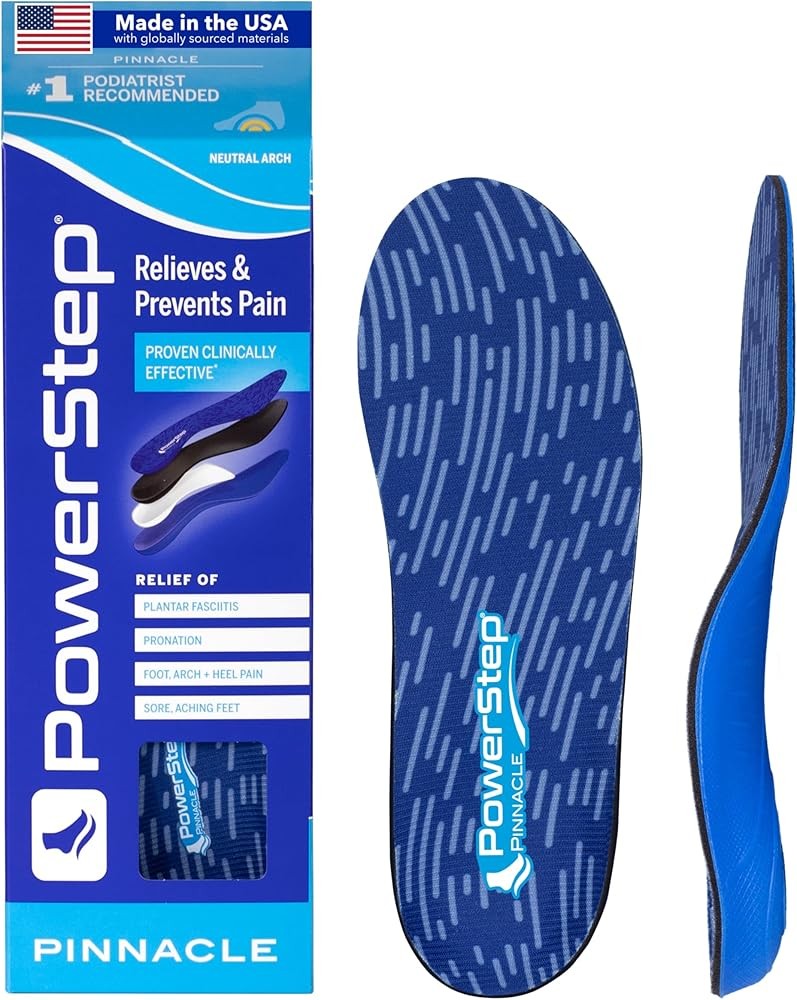
PowerStep Pinnacle Insoles
Check Price on AmazonAs an Amazon Associate we earn from qualifying purchases.

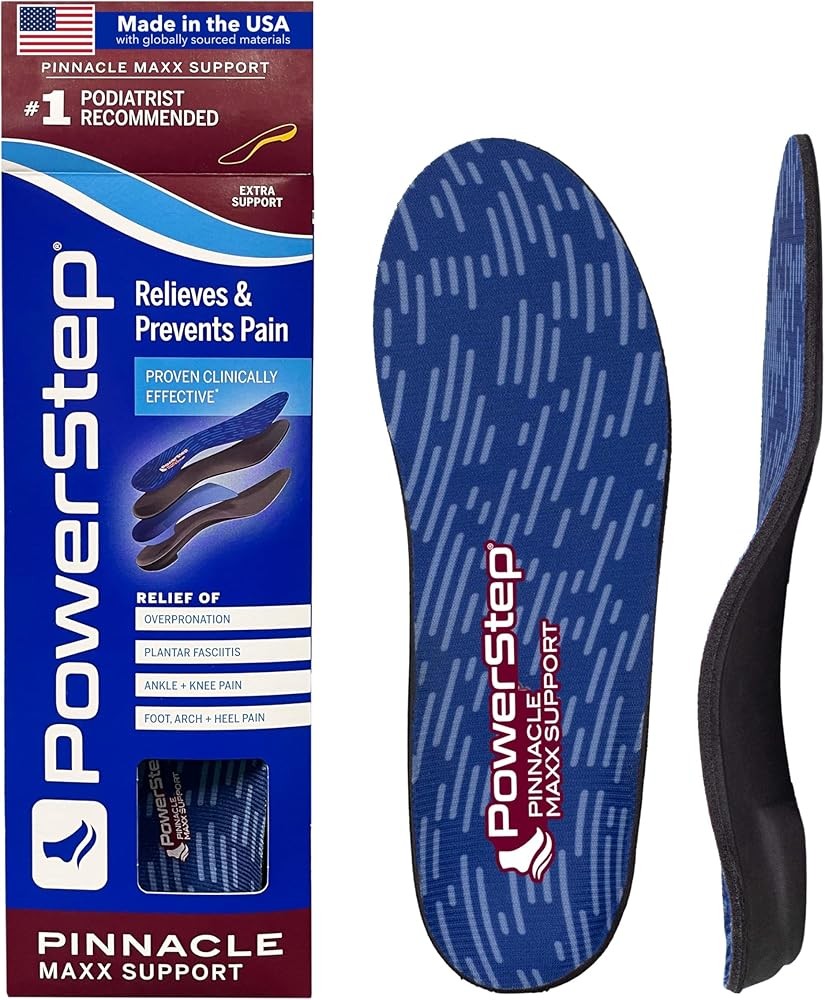
PowerStep Pinnacle Maxx Orthotic Insoles
Check Price on AmazonAs an Amazon Associate we earn from qualifying purchases.
Do Superfeet or PowerStep Work Better for Plantar Fasciitis?
Plantar fasciitis represents the most common condition for which orthotic insoles are prescribed. Research demonstrates that both custom and prefabricated orthotic devices provide clinical benefits for this condition, though mechanisms of action differ between rigid and flexible designs.
A randomized controlled trial examining custom foot orthoses versus prefabricated devices in 77 patients with plantar fasciitis found that both groups experienced significant pain reduction (Wrobel et al., 2015). The custom foot orthoses group demonstrated 5.6-fold greater improvements in spontaneous physical activity compared to prefabricated and sham groups. However, both custom and prefabricated orthoses groups reported significantly lower morning and evening pain, indicating clinical efficacy for over-the-counter options in managing primary symptoms.
The mechanism by which orthotic insoles reduce plantar fasciitis pain involves multiple factors. First, arch support reduces strain on the plantar fascia by limiting midfoot collapse during weight-bearing. Biomechanical analysis shows all tested over-the-counter devices produced significant decreases in plantar fascia strain compared to walking without orthoses. Second, heel cups control rearfoot motion, reducing repetitive stress during heel strike. Third, pressure redistribution decreases peak loads at the heel insertion point of the plantar fascia.
Research examining material composition in plantar fasciitis insoles compared polyethylene, polyurethane, and carbon fiber prefabricated insoles in a randomized clinical trial (Taseh et al., 2024). Carbon fiber and polyethylene insoles showed significant pain-reducing effects starting at the 6th and 2nd weeks respectively. Pain intensity scores improved, and pain interference scores showed positive trends for both materials. This demonstrates that material selection affects both onset of benefit and magnitude of pain reduction.
A study comparing customized insoles with medial wedges to insoles without wedges found that the medial wedge design produced less knee motion and hallux motion during walking (Thong-On & Harutaichun, 2023). After 3 months, insoles with medial wedges decreased pain intensity and increased foot function in individuals with plantar fasciitis. Abnormal ultrasonographic findings also decreased significantly, suggesting structural improvements accompany symptomatic relief.
The time course of benefit varies between studies. Some research shows immediate pain reduction with orthotic use, while other trials demonstrate gradual improvement over 4 to 12 weeks. A comparison of custom insoles versus sham insoles and general practitioner-led usual care found that all groups improved over 12 weeks, but custom insoles did not provide superior outcomes compared to sham insoles or standard care. This suggests that expectation effects, activity modification, and natural resolution may contribute significantly to outcomes in some plantar fasciitis populations.
Custom foot orthoses in new shoes improved first-step pain and reduced plantar fascia thickness on ultrasound compared to new shoes alone or sham interventions over 12 weeks (Bishop et al., 2018). First-step pain, the characteristic symptom where the first steps after rest produce sharp heel pain, decreased significantly in the orthoses group. Plantar fascia thickness, a marker of inflammation measured via ultrasound, also decreased in the custom orthoses group compared to control conditions.
Research on total contact insoles made of ethylene vinyl acetate compared custom devices to flat insoles in patients with plantar fasciitis. Over-time comparisons showed statistical differences between groups for pain while walking and the 6-minute walk test distance. Both groups showed significant improvements in pain at rest, foot function, and quality of life variables, with the custom total contact insole group showing greater improvements in walking pain.
The role of footwear in orthotic effectiveness appears significant. Studies comparing foot orthoses in different shoe conditions found that new athletic shoes alone provided pain reduction for some patients. When orthoses were added to new shoes, additional benefit occurred for first-step pain and plantar fascia thickness. This suggests footwear replacement may constitute an important component of treatment alongside orthotic devices.
Interestingly, one randomized controlled trial found that custom-made insoles did not lead to better outcomes compared to sham insoles or general practitioner-led usual care at 12 weeks follow-up. Participants in the usual care group actually reported less pain during activity, less first-step pain, better function, and higher recovery rates compared to the custom insole group. These unexpected findings highlight variability in research outcomes and suggest individual response differences may be substantial.
For individuals comparing Superfeet versus PowerStep for plantar fasciitis, both brands demonstrate biomechanical effects consistent with plantar fascia unloading. Superfeet’s rigid arch may provide more aggressive strain reduction, while PowerStep’s cushioning may improve comfort during the adaptation period. Research does not directly compare these specific brands for plantar fasciitis outcomes, so selection should consider individual foot structure, comfort preferences, and tolerance for rigid versus flexible support.
The data says: Both custom and prefabricated orthoses reduced morning and evening pain in a 77-patient RCT, though custom devices produced 5.6-fold greater improvements in spontaneous physical activity — both brands offer meaningful clinical benefit as first-line options.
Combining orthotic insoles with other interventions appears beneficial. Studies examining foot orthoses combined with complementary therapies like PEMF found that custom-made orthoses led to greater pain reduction and functional improvement than placebo insoles at 6-month follow-up. This suggests orthotic devices work synergistically with other plantar fasciitis approaches rather than functioning optimally as isolated interventions.
Which Insole Controls Overpronation More Effectively?
Overpronation, the excessive inward rolling of the foot during weight-bearing, represents a common biomechanical issue addressed by orthotic insoles. Research comparing over-the-counter devices found brand-specific differences in pronation control effectiveness.
A meta-analysis examining efficacies of different external controls for excessive foot pronation evaluated foot orthoses, motion control footwear, and therapeutic adhesive taping (Cheung et al., 2011). The analysis found all three interventions effectively reduced calcaneal eversion, a key measure of pronation. Custom-made foot orthoses were more effective than prefabricated orthoses in controlling rearfoot eversion, though both categories demonstrated significant effects.
The biomechanical study comparing SOLE, Superfeet, and PowerStep found that PowerStep was the only over-the-counter device exhibiting significant decreases in peak rearfoot eversion during walking. This finding distinguishes PowerStep’s pronation control from other prefabricated options tested. The specific reduction magnitude varied by individual but demonstrated consistent directional effect across the study population.
Rearfoot eversion control mechanisms involve several orthotic design features. Deep heel cups cradle the calcaneus, limiting lateral excursion during weight-bearing. Medial posting or denser medial materials resist the inward roll of the foot. Rigid shells enforce foot positioning that opposes excessive pronation. PowerStep achieves pronation control despite its semi-rigid construction, suggesting heel cup geometry and medial architecture contribute as much as shell rigidity.
Research on prefabricated foot orthoses for reducing lower limb overuse injuries examined 306 naval recruits during 11 weeks of intense training (Bonanno et al., 2018). The intervention group using contoured prefabricated orthoses sustained fewer injuries including medial tibial stress syndrome, patellofemoral pain, Achilles tendinopathy, and plantar fasciitis compared to controls using flat insoles. The injury reduction of 34 percent suggests biomechanical control provided by prefabricated orthoses reduces overuse injury risk in high-stress conditions.
The relationship between pronation control and injury risk reduction extends beyond the foot. Excessive pronation creates compensatory rotations at the tibia, knee, and hip that can contribute to lower back and joint pain. By limiting pronation, orthotic insoles theoretically reduce stress on these upstream structures. Research on foot orthoses in patellofemoral osteoarthritis found that prefabricated devices altered ankle kinematics during walking and stair descent, supporting the concept that foot control affects the entire lower limb kinetic chain.
Superfeet’s deep heel cup and rigid shell provide pronation control through structural enforcement. The rigid polypropylene resists deformation during weight-bearing, maintaining the heel in a more neutral position. This approach works well for individuals with flexible feet that collapse excessively without external support. However, the rigid control may feel restrictive for users with mild pronation who don’t require maximum correction.
PowerStep’s semi-rigid design controls pronation while allowing some natural foot motion. The flexible shell bends slightly but still provides directional guidance. This approach may explain PowerStep’s superior performance in reducing peak rearfoot eversion despite less rigid construction than alternatives. The combination of heel cup depth, medial support geometry, and controlled flexibility creates effective pronation management without complete motion restriction.
Studies examining foot orthoses effects on ground reaction forces found that prefabricated devices altered kinetic variables during running. Wearing prefabricated foot orthoses increased vertical impact force, loading rate, and kinetic variability during sprint speeds. These findings suggest that pronation control mechanisms affect force transmission patterns, which may influence injury risk and performance in athletic populations.
The effectiveness of pronation control varies by activity type. During walking, moderate arch support with heel cupping provides sufficient control for most individuals. During running or jumping activities, greater forces require more aggressive intervention. High-impact sports may benefit from Superfeet’s rigid control, while daily walking may find PowerStep’s moderate approach adequate.
Research comparing different foot orthoses effects on gait mechanics in rheumatoid arthritis patients found that custom-made medially wedged orthoses produced more pronounced changes in ankle moments and forefoot pressure than prefabricated orthoses with metatarsal domes. This supports the principle that more aggressive orthotic designs create greater biomechanical alterations, which may benefit severe cases but prove excessive for mild conditions.
For individuals comparing Superfeet versus PowerStep for pronation control, the research on peak rearfoot eversion reduction favors PowerStep. However, subjective tolerance and comfort during extended wear must be balanced against pure biomechanical metrics. Some users may tolerate Superfeet’s rigid control better, while others prefer PowerStep’s flexibility. Individual response testing remains important regardless of research findings.
Research summary: PowerStep was the only over-the-counter device that significantly reduced peak rearfoot eversion in direct biomechanical comparison, while a meta-analysis of 29 studies confirmed all three intervention types (orthoses, motion control footwear, and taping) effectively reduce calcaneal eversion.
Combining pronation control with appropriate footwear enhances effectiveness. Motion control shoes with firm medial posts work synergistically with orthotic insoles to limit excessive pronation. Research shows dual midsole materials in footwear reduce pronation more effectively than heel wedge designs. Pairing pronation-controlling insoles with supportive footwear creates additive biomechanical control for individuals with significant overpronation.
Which Brand Offers Better Long-Term Value?
The economic comparison between Superfeet and PowerStep extends beyond initial purchase price to encompass lifespan and cost per month of use. Material durability significantly affects long-term value for regular users.
Superfeet uses high-density polypropylene for the shell component. This thermoplastic material maintains structural integrity through extended compression cycles, resisting permanent deformation under body weight. Manufacturer specifications indicate 12-month lifespan or 500 miles of use for Superfeet products. In practice, many users report extended lifespan beyond these guidelines, particularly for moderate-intensity use.
PowerStep employs dual-layer EVA foam construction with a semi-rigid polypropylene support. EVA foam compresses permanently with repeated loading, gradually losing cushioning properties over time. The manufacturer recommends replacement every 6 to 9 months or 400 miles. This shorter lifespan reflects the material properties of foam, which cannot recover fully from compression cycles like rigid thermoplastics.
A cost analysis comparing both brands reveals narrower price differences when calculating monthly expense. Superfeet Green at $59 lasting 12 months costs approximately $4.92 per month. PowerStep Pinnacle at $49 lasting 7.5 months averages $6.53 per month. Over one year, Superfeet costs $59 while PowerStep requires two purchases totaling $98, a substantial difference in actual expenditure.
For high-mileage users like runners or workers who spend entire shifts on their feet, replacement frequency increases. A runner logging 30 miles weekly reaches 500 miles in approximately 17 weeks with Superfeet or 400 miles in 13 weeks with PowerStep. Annual costs become $174 for Superfeet versus $196 for PowerStep, narrowing the cost difference but maintaining Superfeet’s economic advantage for high-use applications.
The durability comparison extends to top cover wear. Superfeet uses a relatively thin antimicrobial fabric over the rigid shell. This covering shows wear primarily at high-friction points like the heel and ball of foot. While the shell maintains structural integrity, top cover deterioration may affect comfort before structural failure occurs. Some users replace insoles based on fabric wear rather than loss of support.
PowerStep’s cushioned construction shows wear differently. The foam layers compress visibly, creating permanent indentations at heel and forefoot pressure points. Users can observe this compression by comparing used insoles to new ones, seeing measurable thickness reduction. This visible degradation provides clear indication for replacement timing, unlike rigid insoles where structural failure occurs less obviously.
Research on foot orthosis composition and fabrication examined comfort and overuse injury incidence among 874 infantry recruits. Soft custom and soft prefabricated orthoses had significantly higher comfort scores than semirigid biomechanical and prefabricated orthoses. However, no statistically significant differences emerged in stress fractures, ankle sprains, or foot problems between different orthosis types. This suggests comfort advantages of cushioned materials don’t necessarily translate to injury risk reduction benefits, raising questions about value assessment beyond pure durability.
Environmental considerations affect the durability calculation. More frequent replacement of PowerStep insoles generates increased waste and packaging compared to longer-lasting Superfeet. For environmentally conscious consumers, this material efficiency favors rigid construction despite higher initial cost.
The break-in period represents another hidden cost consideration. Superfeet requires gradual introduction over 5 to 7 days, during which users may experience discomfort or need to alternate with other footwear. This adaptation period creates inconvenience that doesn’t translate to monetary cost but affects user experience value. PowerStep’s immediate wearability eliminates this transition period, providing value through convenience.
Insurance coverage occasionally affects cost considerations. Some flexible spending accounts or health savings accounts cover orthotic insoles with medical documentation. Custom orthotics typically range from $200 to $800, making both Superfeet and PowerStep economical alternatives regardless of their relative cost difference. For users considering custom devices, either prefabricated option represents substantial savings.
Bulk purchasing options affect long-term economics. Both brands occasionally offer multi-pair discounts or seasonal sales. PowerStep’s shorter lifespan makes bulk purchases more practical since users know they’ll need replacement within predictable timeframes. Superfeet’s longer durability makes sales timing less critical since replacement occurs less frequently.
The total cost of ownership includes footwear compatibility considerations. Superfeet’s rigid construction may require shoes with removable insoles and adequate volume. If users need to purchase different footwear to accommodate Superfeet, this hidden cost affects the economic comparison. PowerStep’s lower profile and flexible construction fit more existing footwear, potentially avoiding footwear replacement expenses.
Bottom line: Superfeet costs $4.92 per month over its 12-month lifespan versus PowerStep’s $6.53 per month over 7.5 months — Superfeet’s rigid shell delivers 40 percent better cost-per-month value for committed long-term users.
For budget-conscious consumers, PowerStep’s lower initial cost provides accessibility despite higher long-term expense. Users uncertain about orthotic tolerance may prefer testing the less expensive option before committing to premium products. Conversely, users committed to long-term orthotic use benefit from Superfeet’s superior cost-per-month economics.
Foot Type Matching: High Arches, Flat Feet, and Neutral Alignment
Matching orthotic insoles to specific foot types optimizes outcomes and reduces adverse effects. Superfeet and PowerStep serve different foot structures based on arch height and flexibility characteristics.
High arches, characterized by elevated medial longitudinal arch and limited ground contact at midfoot, benefit from different support strategies than flat feet. Research on immediate effects of prefabricated orthoses on foot alignment found that both custom and prefabricated devices improved skeletal positioning in young people with flexible flatfoot. However, the response differs for high-arched feet requiring structural accommodation rather than correction.
Superfeet Green provides optimal support for high, rigid arches. The aggressive arch contour matches the foot’s natural shape, filling the space beneath the arch. This complete contact distributes pressure across the entire plantar surface rather than concentrating load at heel and forefoot. For high arches, the rigid shell limits arch collapse that wouldn’t occur naturally anyway, making the rigidity beneficial rather than restrictive.
PowerStep Pinnacle suits high arches that remain flexible rather than rigid. The moderate arch height with semi-rigid construction supports without forcing the foot into unnatural positions. Flexible high arches that flatten moderately under load benefit from PowerStep’s controlled support that limits excessive motion while allowing natural compression. The cushioning also addresses the increased impact forces often experienced by high-arched feet with reduced natural shock absorption.
Flat feet, defined by low or absent medial longitudinal arch, require different considerations. Research shows that excessive pronation and arch collapse during weight-bearing characterize flexible flatfoot. Orthotic intervention aims to limit this collapse and control associated pronation. Studies examining multi-segment foot biomechanics found different orthotic devices produced varying amounts of medial longitudinal arch deformation control.
PowerStep generally suits flat feet better initially due to moderate arch height and flexibility. The semi-rigid design allows gradual adaptation to arch support without the aggressive correction rigid devices enforce. For flat feet unaccustomed to arch support, sudden introduction of high, rigid arches can cause arch soreness, plantar fascia strain, or calf tightness. PowerStep’s moderate approach reduces these adaptation challenges.
Superfeet Blue offers a middle ground for flat feet requiring more aggressive support than PowerStep provides. The medium arch height with rigid construction delivers structural support while avoiding the extremely high arch of Superfeet Green. Users with flat feet who have tried moderate support without sufficient benefit may find Superfeet Blue’s increased rigidity more effective.
Neutral alignment feet with normal arch height and mechanics face the broadest selection options. Research indicates that even neutral feet may benefit from orthotic support during high-intensity activities. A study examining prefabricated orthoses in naval recruits undertaking intense training found 34 percent injury reduction despite including participants with varying foot types. This suggests protective use extends beyond correcting existing abnormalities.
For neutral feet, selection between Superfeet and PowerStep depends on activity demands and comfort preferences. Superfeet provides maximum support for biomechanically demanding activities like trail running or hiking on uneven terrain. PowerStep offers comfortable support for daily wear, standing occupations, or less intense activities. Neither brand proves objectively superior for neutral alignment; individual response and preference determine optimal selection.
Foot flexibility affects orthotic selection as much as static arch height. Flexible feet that collapse significantly during weight-bearing require different support than rigid feet maintaining structure under load. Research examining foot orthoses on ground reaction forces and perception during sprints found that biomechanical effects varied based on foot structure characteristics. Flexible feet benefit from the structural enforcement rigid orthoses provide, while rigid feet may find such aggressive support restrictive or uncomfortable.
Age-related changes in foot structure influence orthotic requirements, making bone density support an important consideration alongside orthotic use. Studies examining metatarsal domes in older adults with forefoot pain found that these devices significantly reduced plantar pressure distal to metatarsal heads. As feet age, fat pad atrophy reduces natural cushioning, and ligamentous laxity increases arch collapse. Older adults often require more cushioning than younger users with similar foot types, potentially favoring PowerStep’s cushioned approach despite Superfeet’s superior structural support.
Body weight affects orthotic compression and longevity. Heavier individuals compress foam materials more rapidly, reducing PowerStep lifespan below the standard 6 to 9 months. Superfeet’s rigid shell resists weight-related compression better, maintaining support characteristics longer for heavier users. This consideration affects both performance and economics for above-average weight individuals.
Activity-specific demands also inform foot type matching. Research on foot orthoses effects during running found increased vertical impact force and loading rate with prefabricated devices. High-impact activities may benefit from Superfeet’s rigid control of foot mechanics, while low-impact activities like walking allow PowerStep’s flexibility without biomechanical compromise.
What matters most: Match insole rigidity to your foot flexibility — rigid arches need Superfeet’s matching contour, flexible flat feet benefit from PowerStep’s gradual support, and neutral feet can choose based on activity demands and comfort priorities.
The optimal approach for uncertain users involves trying both types. Many retailers offer return policies allowing home testing. Wearing each brand for several days provides subjective feedback about comfort, fit, and perceived support that biomechanical theory cannot predict. Individual anatomical variations, muscle strength, and proprioceptive preferences affect orthotic tolerance in ways research generalizations cannot capture.
Specific Use Cases: Running, Standing, and Daily Wear
Activity-specific demands create different requirements for orthotic insoles. Superfeet and PowerStep perform differently across running, occupational standing, and general daily wear applications.
Running biomechanics involve repetitive high-impact loading with forces reaching 2 to 3 times body weight during each foot strike, making proper foot support essential for walking and running activities. Research examining effects of foot orthoses during running found that prefabricated devices increased vertical impact force and loading rate at sprint speeds. These alterations in force characteristics suggest orthotic insoles change running mechanics, potentially affecting both injury risk and performance.
Superfeet’s rigid shell provides consistent biomechanical control during running’s dynamic loading cycles. The deep heel cup limits rearfoot motion during heel strike, while the rigid arch limits midfoot collapse during propulsion. This structural control may reduce injury risk for runners with significant overpronation or inadequate intrinsic foot strength. However, the minimal cushioning in Superfeet provides less shock absorption than cushioned alternatives, potentially increasing impact transmission to upstream joints during extended runs.
PowerStep’s dual-layer cushioning addresses running impact forces more directly than rigid alternatives. The Poron heel pad compresses during heel strike, dissipating impact energy before it transmits to the ankle and knee. However, research shows increased kinetic variability with some prefabricated orthoses during high-speed activities. This increased variability might affect running efficiency or increase injury risk through less predictable movement patterns.
A comparison of over-the-counter devices during treadmill running found that prefabricated orthoses altered plantar surface temperature after exercise. While temperature changes don’t directly indicate performance or injury risk, they demonstrate measurable physiological effects from orthotic use during running activities. Both rigid and semi-rigid designs affected thermal responses, suggesting material differences influence metabolic cost and tissue stress during running.
For runners specifically concerned with overpronation, PowerStep’s demonstrated reduction in peak rearfoot eversion may provide advantages despite less rigid construction. The semi-rigid design allows natural foot motion during the complex gait cycle while still limiting excessive inward roll. This balanced approach may improve running efficiency compared to rigid devices that restrict all foot motion indiscriminately.
Occupational standing creates different demands than dynamic activities. Workers who stand for 8 to 12 hour shifts experience sustained compression loading rather than repetitive impact. Research indicates that prefabricated orthotic insoles reduce lower-body musculoskeletal stress for people spending prolonged periods on their feet. This benefit applies to both rigid and cushioned designs, though mechanisms differ.
PowerStep’s cushioning layers provide superior comfort during extended standing. The dual-layer foam compresses gradually under sustained load, distributing pressure across the plantar surface. The Poron heel pad reduces the concentrated pressure and discomfort that develops when standing primarily on heels. For occupations like retail, healthcare, or food service involving constant standing, PowerStep’s comfort advantage may outweigh the biomechanical benefits of rigid alternatives.
Superfeet’s rigid arch support maintains foot positioning during prolonged standing, potentially reducing muscle fatigue. When arch support limits midfoot collapse, intrinsic foot muscles work less to maintain stability. This passive support may delay fatigue development during long shifts. However, the minimal cushioning in Superfeet becomes a liability during extended standing on hard surfaces like concrete, where shock absorption and pressure distribution affect comfort significantly.
A prospective study examining foot orthoses composition and fabrication in 874 infantry recruits found that soft custom and soft prefabricated orthoses had significantly higher comfort scores than semirigid options. For comfort during extended wear, this research favors PowerStep’s cushioned construction over Superfeet’s rigid approach. The study found no differences in injury incidence between orthosis types, suggesting comfort advantages don’t compromise protective benefits.
Daily wear applications encompass varied activities throughout typical days. Walking, standing, sitting, climbing stairs, and occasional running all occur during normal daily routines. This activity mix favors versatile orthotic designs that perform adequately across multiple demand types rather than optimizing for single activities.
PowerStep’s balanced design works well for daily wear diversity. The moderate arch support provides sufficient biomechanical control for walking and standing without the aggressive enforcement that may feel restrictive during varied movements. The cushioning improves comfort across different activities and surface types encountered during typical days. The minimal break-in period allows immediate full-time wear, convenient for users seeking simple insertion into existing footwear.
Superfeet suits daily wear for users with significant biomechanical issues requiring consistent control. The rigid shell maintains correction across all activities, reducing the variability that occurs when foot positioning changes between supported and unsupported states. For individuals with chronic conditions like severe overpronation or recurrent plantar fasciitis, Superfeet’s consistent enforcement justifies the reduced comfort during some activities.
Footwear versatility affects daily wear practicality. PowerStep’s lower profile and flexible construction fit in more shoe types than Superfeet’s rigid, high-volume design. During typical days involving multiple shoe changes between casual, athletic, and possibly dress footwear, PowerStep’s adaptability provides convenience. Superfeet works best when committed to specific footwear types with adequate volume for the rigid shell.
Climate considerations affect material choice for daily wear. Hot, humid conditions increase perspiration and thermal stress. Superfeet’s minimal cushioning and open shell design provide better ventilation than PowerStep’s foam layers. However, PowerStep includes antimicrobial treatment like Superfeet, controlling odor despite less ventilation. Cold conditions affect foam compression characteristics, potentially making PowerStep feel firmer in winter weather.
Research examining insoles adapted in flip-flop sandals found that custom insoles provided pain and function improvements for plantar fasciopathy compared to plain sandals. This demonstrates orthotic effectiveness extends beyond athletic shoes to casual footwear. Both Superfeet and PowerStep offer sandal-specific models, expanding daily wear applications beyond traditional closed-toe shoes. For warm climates or seasonal use, these specialized models maintain support in minimal footwear.
The practical takeaway: Superfeet works best for high-impact activities requiring rigid biomechanical control, while PowerStep’s cushioning excels for occupational standing and varied daily wear — many users maintain both for activity-specific support.
The optimal use-case matching depends on individual priority ranking. Users prioritizing maximum biomechanical control for running or significant structural issues should favor Superfeet despite comfort limitations. Those prioritizing comfort for standing occupations or preferring versatile daily wear benefit from PowerStep’s cushioned approach. Many users ultimately maintain both types, using Superfeet for demanding athletic activities and PowerStep for daily wear or work applications.
Frequently Asked Questions
Which is better for plantar fasciitis: Superfeet or PowerStep?
Both brands reduce plantar fascia strain, but they work differently. Research shows all prefabricated orthotic insoles reduced plantar fascia strain during walking, with varying amounts between brands. PowerStep was the only brand that also significantly decreased peak rearfoot eversion in biomechanical testing. For plantar fasciitis, consider PowerStep if you overpronate, Superfeet if you need maximum arch rigidity.
Are Superfeet better for high arches than PowerStep?
Superfeet Green offers the highest, most rigid arch support in the comparison. Superfeet uses a biomechanical shape that’s more aggressive and holds the arch in a fixed position. PowerStep has a lower, more flexible arch design. If you have high, rigid arches and need maximum support, Superfeet Green is typically the better choice. PowerStep works better for flexible high arches that need mild stabilization.
Which insoles are better for flat feet: Superfeet or PowerStep?
PowerStep Pinnacle is generally better for flat feet due to its moderate arch height and flexible design. Research shows prefabricated orthoses with medial arch geometries increased contact area at the medial arch region by redistributing plantar pressure. PowerStep’s semi-rigid shell allows the foot to adapt naturally while providing support. Superfeet can work for flat feet but may feel too aggressive initially.
Can you use Superfeet or PowerStep insoles for running?
Both brands can be used for running, but with different effects. Studies show prefabricated foot orthoses can increase vertical impact force and loading rate during high-speed activities. PowerStep’s cushioning layer may reduce impact better for runners. Superfeet’s rigid shell provides more biomechanical control but less shock absorption. Choose based on your running mechanics and injury history.
How long do Superfeet insoles last compared to PowerStep?
Superfeet typically lasts 12 months or 500 miles due to its durable polypropylene shell. PowerStep insoles generally last 6 to 9 months or 400 miles because of their softer EVA foam construction. Replace either brand when you notice decreased arch support, visible wear on the top fabric, or compressed cushioning. Heavier users or high-mileage athletes may need replacement sooner.
Do PowerStep insoles have a break-in period like Superfeet?
PowerStep has a shorter break-in period than Superfeet. PowerStep’s semi-rigid design with cushioning allows immediate comfort for most users. Superfeet requires 5 to 7 days of gradual wear due to its rigid shell and aggressive arch contour. Start with 2 to 3 hours daily for Superfeet, increasing wear time as your foot adapts. PowerStep can often be worn full-time from day one.
Which is better for standing all day: Superfeet or PowerStep?
For prolonged standing, PowerStep typically provides better comfort due to its dual-layer cushioning system. Research shows prefabricated orthotic insoles represent an accessible means of reducing stress for people who spend prolonged periods on their feet. PowerStep’s Poron cushioning at the heel absorbs impact during long shifts. Superfeet offers better arch support but less shock absorption, which may cause fatigue during extended standing.
Are Superfeet more expensive than PowerStep insoles?
Superfeet typically costs around $59 per pair, while PowerStep Pinnacle costs around $49 per pair. PowerStep Pinnacle Maxx is priced at $54. When considering cost per month of use, the price difference narrows since Superfeet lasts longer. Both brands are significantly less expensive than custom orthotics, which can cost $200 to $800.
Can Superfeet or PowerStep help with overpronation?
Both brands control overpronation, but PowerStep showed superior results in research. A biomechanical study found PowerStep was the only over-the-counter device that exhibited significant decreases in peak rearfoot eversion. Both brands use heel cups and medial posting to limit excessive inward foot roll. For severe overpronation, PowerStep’s design may be more effective than Superfeet’s rigid approach.
Do I need custom orthotics or will Superfeet or PowerStep work?
Research shows prefabricated orthoses like Superfeet and PowerStep can be as effective as custom orthotics for many conditions. Studies found both custom-made and prefabricated inserts produced significant pain improvements in musculoskeletal conditions. Custom orthotics may maintain gait economy better long-term, but prefabricated options work well as first-line options. Try Superfeet or PowerStep first before investing in custom devices.
The Bottom Line: Matching Orthotic Choice to Individual Needs
The decision between Superfeet and PowerStep ultimately depends on matching device characteristics to your specific foot structure, activity demands, and comfort priorities.
Choose Superfeet if you have: High, rigid arches requiring maximum structural support. Severe overpronation needing aggressive biomechanical control. Biomechanically demanding activities like trail running or hiking. Willingness to invest in longer-lasting devices despite higher initial cost. Tolerance for break-in periods and rigid support sensations. Feet that have failed to improve with moderate support levels.
Choose PowerStep if you have: Moderate arch support needs without severe biomechanical issues. Flat feet requiring gradual introduction to arch support. Occupations involving prolonged standing on hard surfaces. Preference for immediate comfort over maximum biomechanical correction. Multiple shoe types requiring versatile insole compatibility. Budget constraints favoring lower initial purchase price.
Consider trying both if you have: Variable activity demands requiring different support levels. Uncertainty about tolerance for rigid versus flexible support. Multiple footwear types with different volume requirements. Previous orthotic experiences with mixed satisfaction. Sufficient budget to maintain activity-specific options.
Research demonstrates that both Superfeet and PowerStep provide measurable biomechanical effects and clinical benefits for common foot conditions. The direct comparison study found device-specific alterations in foot kinematics, with PowerStep reducing peak rearfoot eversion more effectively while both brands decreased plantar fascia strain. These findings support the concept that different design philosophies create distinct biomechanical outcomes rather than one approach proving universally superior.
The practical implications extend beyond pure biomechanics to encompass comfort, durability, and economic considerations. Superfeet’s rigid construction delivers longer lifespan and consistent support at the cost of reduced cushioning and extended break-in requirements. PowerStep’s flexible, cushioned design provides immediate comfort and versatile application despite shorter lifespan and higher replacement frequency.
Individual foot structure characteristics ultimately determine which design philosophy proves more suitable. High arches benefit from Superfeet’s aggressive arch matching, while flat feet often tolerate PowerStep’s moderate support better initially. Flexible feet requiring structural enforcement respond well to rigid shells, whereas rigid feet may find semi-rigid support adequate without restrictive sensations.
Activity demands inform selection as much as static foot structure. High-impact sports and biomechanically demanding activities favor Superfeet’s rigid control despite reduced cushioning. Occupational standing and varied daily activities benefit from PowerStep’s comfort-focused approach. Many users maintain both brands, selecting appropriate devices based on specific activity requirements rather than seeking single universal solutions.
The research evidence supports prefabricated orthotic effectiveness as first-line interventions before considering custom devices. Both Superfeet and PowerStep fall within the evidence-based category of prefabricated orthoses that demonstrate clinical efficacy for plantar fasciitis, overpronation, and general foot pain. Custom orthotics remain appropriate for complex cases, severe structural abnormalities, or failure to respond to over-the-counter options, but most users achieve satisfactory outcomes with properly selected prefabricated devices.
Combining orthotic insoles with complementary interventions optimizes outcomes. Supportive footwear, appropriate stretching protocols, foot massage for recovery, strengthening exercises for intrinsic foot muscles, and activity modification work synergistically with orthotic devices. Research shows orthotic effectiveness improves when integrated into comprehensive treatment approaches rather than relied upon as isolated interventions.
The choice between Superfeet and PowerStep represents one decision point in managing foot health. Both brands offer evidence-based benefits backed by biomechanical research. Success depends more on matching device characteristics to individual requirements than on identifying objectively superior products. Consider your specific foot type, primary activities, comfort preferences, and budget constraints when making your selection, and consult healthcare professionals for guidance on complex biomechanical issues.
Related Reading
- Best Insoles for Plantar Fasciitis — Comprehensive guide to orthotic insoles for heel pain
- Best Foot Massagers for Neuropathy and Plantar Fasciitis — Complementary therapy for foot pain conditions
- Best Standing Desks for Posture and Health — Ergonomic solutions for occupational standing
- Best Walking Pads and Under-Desk Treadmills — Low-impact exercise options
- Joint Pain Supplements for Women Over 40 — Nutritional support for musculoskeletal health
- Best Vibration Plates for Seniors — Alternative therapy for circulation and balance
- Best PEMF Mats for Pain Relief and Recovery — Electromagnetic therapy devices
- Bone Health Supplements for Women Over 40 — Supporting skeletal structure
Recommended Products