Best Toe Spacers for Bunions and Foot Alignment
Summarized from peer-reviewed research indexed in PubMed. See citations below.
Bunions, medically known as hallux valgus, affect approximately 23% of adults aged 18-65 and up to 36% of people over 65, causing progressive toe misalignment, pain, and difficulty wearing shoes. The YogaToes GEMS Gel Toe Stretcher & Separator ($36) stands out as the best overall choice, offering an established brand reputation with medical-grade gel construction that gently separates and stretches toes. Research published in Prosthetics and Orthotics International demonstrates that custom silicone toe separators decreased hallux valgus angle by 3.3 degrees over 12 months compared to controls whose angles increased by 1.9 degrees, with an 85.7% patient satisfaction rate (PMID: 28318407). For budget-conscious buyers, the VYCE PrimalStep Toe Separators ($4) deliver quality toe spacing at an accessible price point. Here’s what the published research shows about how toe separators can support foot alignment and when they work best as part of a comprehensive approach to bunion management.
Disclosure: We may earn a commission from links on this page at no extra cost to you. Affiliate relationships never influence our ratings. Full policy →


A comprehensive network meta-analysis of 11 randomized controlled trials examining conservative hallux valgus interventions found that toe separators, particularly when combined with exercise programs, rank among the most effective non-surgical approaches for reducing hallux valgus angle and intermetatarsal angle while improving patient-reported outcomes (PMID: 33917568). The analysis revealed that exercise plus toe separator combinations, along with night splints and targeted therapies, showed the highest probability of being the best interventions for structural correction. What makes these findings particularly relevant is that toe separators demonstrated advantages in subjective patient outcomes, meaning people not only saw measurable changes in foot alignment but also experienced meaningful improvements in comfort, function, and quality of life.
This evidence-based guide examines the research supporting toe spacers for bunions and foot alignment, reviews the top products based on clinical evidence and design features, and provides practical guidance on integrating toe spacers into a comprehensive foot care approach. All product recommendations reflect current research on toe separator effectiveness, material safety, and user compliance factors that influence long-term outcomes.
| Product | Price | Material | Best For | Key Features | Wear Time |
|---|---|---|---|---|---|
| YogaToes GEMS | $36 | Medical-grade gel | Overall use | Separates all 5 toes, established brand | 6+ hours rest |
| VYCE PrimalStep | $4 | Soft silicone | Budget option | Basic spacing, comfortable | 6+ hours rest |
| APEX Adjustable | $20 | Thick silicone | Customization | Enhanced thickness, 2 size pairs | 6+ hours rest |
| Spacer Mobility | $19 | Firm silicone | Active wear | 4-loop design, low profile | Light activity |
What Does Research Show About Toe Spacers for Bunions?
The strongest clinical evidence for toe separators comes from a 2018 prospective randomized controlled trial that followed 90 patients with moderate hallux valgus for 12 months (PMID: 28318407). Participants in the study group wore custom-molded room temperature vulcanizing silicone toe separators for 6 hours each night, while the control group received no intervention. The results showed statistically significant differences between groups. The hallux valgus angle decreased by 3.3 degrees (±2.4 degrees) in the study group, while it actually increased by 1.9 degrees (±1.9 degrees) in the control group. The difference between groups was significant at p<0.05, indicating this outcome was unlikely due to chance.
Patient satisfaction reached 85.7% in the separator group, with no serious complications reported throughout the year-long study period. These findings suggest that consistent nightly use of toe separators can not only slow the progression of bunions but potentially reduce the deformity angle, contrasting sharply with the natural progression seen in the untreated control group. The study used custom-molded separators, which may offer advantages over over-the-counter options, but the fundamental mechanism of gentle toe spacing and realignment applies to quality commercial products as well.
Additional research has examined toe separators as part of multimodal interventions. A randomized clinical trial published in the Journal of the American Podiatric Medical Association studied 56 women with moderate hallux valgus who received 36 sessions of foot mobilization and exercise over 3 months combined with toe separator use (PMID: 29683337). The comprehensive intervention group showed greater improvements compared to controls across every measured outcome at both 3-month and 1-year follow-up assessments. Improvements included pain scores, American Orthopaedic Foot and Ankle Society scores, ankle range of motion, hallux strength, toe grip strength, and radiographic angles, with all comparisons reaching statistical significance at p<0.001.
This study illustrates an important principle supported by network meta-analysis: combination approaches typically outperform single interventions. While toe separators alone show benefits, integrating them with exercises that strengthen intrinsic foot muscles and improve joint mobility appears to enhance outcomes. The sustained improvements at 1-year follow-up also suggest that benefits can be maintained long-term when interventions are continued or when they successfully modify foot mechanics.
Research comparing different orthotic approaches provides context for where toe separators fit in the conservative management spectrum. A 2025 study compared toe separators to dynamic hallux valgus orthoses over 4 weeks in 30 participants (PMID: 39721066). Neither intervention significantly changed hallux valgus angle in this short timeframe, though the dynamic orthosis improved plantar pressure distribution and quality of life scores. These findings highlight that structural changes typically require longer intervention periods, consistent with the 3-month and 12-month timelines in studies showing angle reductions. Short-term benefits tend to focus on symptom relief rather than structural correction.
Bottom line assessment: Clinical trials demonstrate that toe separators can produce measurable hallux valgus angle reductions over 3-12 months when used consistently, with the strongest evidence supporting 6 hours of nightly use. Combination approaches integrating separators with exercises show superior outcomes across pain, function, strength, and structural measures. Short-term use primarily offers symptom relief, while structural improvements require months of consistent application.
How Do Toe Spacers Compare to Other Conservative Bunion Approaches?
A landmark randomized controlled trial published in JAMA in 2001 compared three approaches to hallux valgus management in 209 patients (93% women, mean age 48 years): immediate surgery, orthosis use for 1 year, or watchful waiting (PMID: 11368700). At the 1-year follow-up, the orthosis group showed decreased pain compared to controls, with an adjusted mean difference of -14 points (95% confidence interval -22 to -6). The proportion of patients who improved was 83% in the surgery group, 46% in the orthosis group, and 24% in the watchful waiting group.
These results established that orthotic interventions, which include toe separators, bunion pads, and corrective splints, provide measurable short-term symptomatic relief and fall between surgical correction and no intervention in terms of effectiveness. The 46% improvement rate in the orthosis group represents nearly double the natural improvement rate seen with watchful waiting alone, suggesting meaningful therapeutic benefit for patients seeking to avoid or delay surgery. Users exploring complementary conservative approaches can combine toe spacers with orthotic insoles for high arches or flat feet depending on their foot type.
The same research team conducted a 2-year follow-up study that revealed important long-term patterns (PMID: 12807332). At the 1-year mark, the surgery group reported the least pain, but by the 2-year follow-up, pain levels had become similar across all three groups. Notably, a substantial proportion of patients initially assigned to the orthosis group eventually underwent surgery by the 2-year point. These findings indicate that while orthoses including toe separators provide effective short-term management and can serve as a safe bridge during surgical waiting periods, many patients with progressive bunions may ultimately require surgical correction for definitive long-term results.
Comparative research on different orthotic designs offers insights into which features matter most. A crossover study comparing dynamic and static hallux valgus orthoses in 24 participants found both types decreased hallux valgus angle by a few degrees after 1 month of use (PMID: 31675599). Static orthoses reduced the angle by 2.67 degrees (p=0.001), while dynamic orthoses reduced it by 2.13 degrees (p=0.02). The dynamic orthosis additionally increased range of motion by 9.77 degrees (p=0.01), suggesting that devices allowing some movement during correction may offer functional advantages alongside structural benefits.
These comparable outcomes between device types suggest that consistent application matters more than specific orthotic design for achieving modest angular corrections. The choice between static separators (which hold toes in a fixed position) and dynamic orthoses (which allow controlled movement) may depend more on patient comfort, compliance, and functional goals rather than significant differences in structural correction.
Long-term research adds another dimension to the comparative evidence. A 5-year double-blind randomized controlled trial in 102 subjects with rheumatoid arthritis examined whether foot orthoses could modify hallux valgus development (PMID: 19078008). The intervention group showed significantly lower odds of developing new hallux valgus deformities compared to controls (adjusted odds ratio 0.27, 95% confidence interval 0.078-0.916, p=0.04). This effect demonstrates that orthotic interventions can modify disease progression over extended periods when initiated before significant deformity develops, suggesting potential value for early intervention in at-risk populations.
The research verdict: Orthotic interventions including toe separators show approximately 46% improvement rates compared to 24% with watchful waiting alone, positioning them as effective conservative management between no intervention and surgery. Both static and dynamic designs achieve small but meaningful angle improvements with consistent use. Early orthotic intervention may reduce the odds of hallux valgus development in at-risk populations, with one trial showing significant risk reduction over 5 years.
What Makes an Effective Toe Separator Design?
Material selection fundamentally influences toe separator effectiveness, comfort, and durability. Clinical research has primarily validated medical-grade silicone separators, particularly room temperature vulcanizing silicone used in custom-molded devices. This material offers several advantages: it maintains shape under sustained pressure, resists degradation from skin oils and moisture, can be cleaned and sanitized repeatedly, and provides firm yet comfortable separation force. The silicone used in research studies was firm enough to maintain toe spacing throughout 6-hour nightly wear sessions while remaining comfortable enough for high compliance rates.
Gel materials, typically proprietary blends of silicone and other polymers, provide an alternative approach prioritizing cushioning comfort. Gel separators tend to feel softer against the skin and may be better tolerated by users new to toe spacing or those with sensitive skin. The tradeoff is that gel materials may compress more under pressure, potentially providing less consistent spacing force compared to firmer silicone. Both material types appear safe based on published research, with no serious complications reported in studies using either approach.
The number and configuration of toe loops affects how separators function. Full five-toe separators that fit between all toes provide comprehensive forefoot realignment and are the design most closely matching the full toe stretchers used in some research protocols. These devices separate the big toe from the second toe while also addressing spacing between the lesser toes, which can improve overall forefoot mechanics. However, their larger profile limits use to rest periods when not wearing shoes.
Minimalist designs with one to four loops focus primarily on the hallux (big toe) position and the critical space between the first and second toes. These lower-profile separators can potentially be worn inside wider shoes during light activity, extending therapeutic time beyond rest periods. The 4-loop therapeutic designs represent a middle ground, providing more comprehensive toe spacing than single-loop options while maintaining a profile that fits inside accommodative footwear.
Thickness and firmness determine the magnitude of corrective force applied. Research comparing interventions hasn’t specifically examined different separator thicknesses, but biomechanical principles suggest that thicker separators create greater spacing and apply stronger realignment forces. Products marketed with enhanced thickness aim to provide more aggressive correction, which may benefit users with more flexible deformities or those who have adapted to standard-thickness separators and want to progress their intervention. Starting with thinner, softer separators and gradually progressing to firmer, thicker options allows tissues to adapt and may improve long-term tolerance.
Adjustability features in some separator designs allow users to customize fit and progression. Adjustable loops can be trimmed or positioned to accommodate different toe sizes and spacing needs. This customization mimics aspects of the custom-molded separators used in the strongest clinical research, potentially improving fit compared to one-size-fits-most designs. Including multiple size pairs in a single package extends the product’s useful life as users progress through different correction stages.
Wear environment considerations influence design choices. Separators intended for nighttime or rest use can be larger and more comprehensive, similar to the 6-hour nightly protocol validated in research. Active-wear separators must balance therapeutic spacing with low enough profiles to fit inside shoes, typically requiring firmer materials and minimal designs. Some users benefit from having both types: comprehensive separators for home use and lower-profile options for extending wear time during daily activities.
What you need to know: Medical-grade silicone provides the firmness and durability validated in clinical research, while gel materials prioritize cushioning comfort for new users. Full five-toe separators offer comprehensive realignment for rest periods, while 1-4 loop minimalist designs can extend wear time during light activity. Adjustable and progressive thickness options allow customization and advancement as feet adapt to improved alignment.
Which Toe Spacers Should You Choose for Overall Use?
The YogaToes GEMS represents the most established brand in the toe separator category, with the original YogaToes design dating back over two decades and a reputation built on medical-grade construction and comprehensive toe spacing. This full five-toe separator uses a proprietary gel formulation that balances firmness for effective toe spacing with cushioning comfort for extended wear sessions. The design separates all five toes simultaneously, lifting and spreading them to encourage natural alignment throughout the forefoot rather than focusing solely on the hallux position.
The gel material in the GEMS version provides a softer feel compared to firmer silicone alternatives, which may improve compliance for users new to toe separators or those with sensitive feet. The construction quality reflects medical-grade standards, with durable gel that resists tearing and maintains its shape through repeated use cycles. The device can be washed with soap and water and air-dried, maintaining hygiene over months or years of regular use.
YogaToes devices are designed for stationary use during rest periods, not for wear inside shoes during activity. This limitation aligns with the 6-hour nightly wear protocol validated in clinical research, though it does not extend therapeutic time into daily activities. The comprehensive five-toe spacing targets multiple aspects of forefoot alignment simultaneously: separating the hallux from the second toe (the primary hallux valgus correction), spacing the lesser toes to reduce overlapping and crowding, and lifting all toes to stretch the plantar fascia and intrinsic foot muscles.
The established brand reputation provides confidence in material safety and manufacturing consistency. While the price point is higher than basic toe separators, the comprehensive design and durable construction justify the investment for users seeking a research-aligned approach to long-term bunion management. The device comes in two sizes to accommodate different foot dimensions, with sizing based on shoe size and toe length.
User compliance tends to be high with YogaToes products among those who adapt to the initial sensation, which can feel intense during first uses as toes are stretched into positions they may not have experienced in years. Starting with 15-30 minute sessions and gradually building to the 6-hour target used in research helps tissues adapt and improves long-term tolerance. Some users report improved balance, reduced foot fatigue, and better proprioception in addition to bunion-related benefits, though these outcomes haven’t been systematically studied in clinical trials.
Key takeaway: YogaToes GEMS offers the most comprehensive toe spacing design with medical-grade gel construction and an established brand reputation spanning over 20 years. The five-toe separator design aligns with research protocols showing benefits from consistent nightly use, though the larger profile limits wear to rest periods rather than active use.
What Are the Best Budget Toe Spacers?
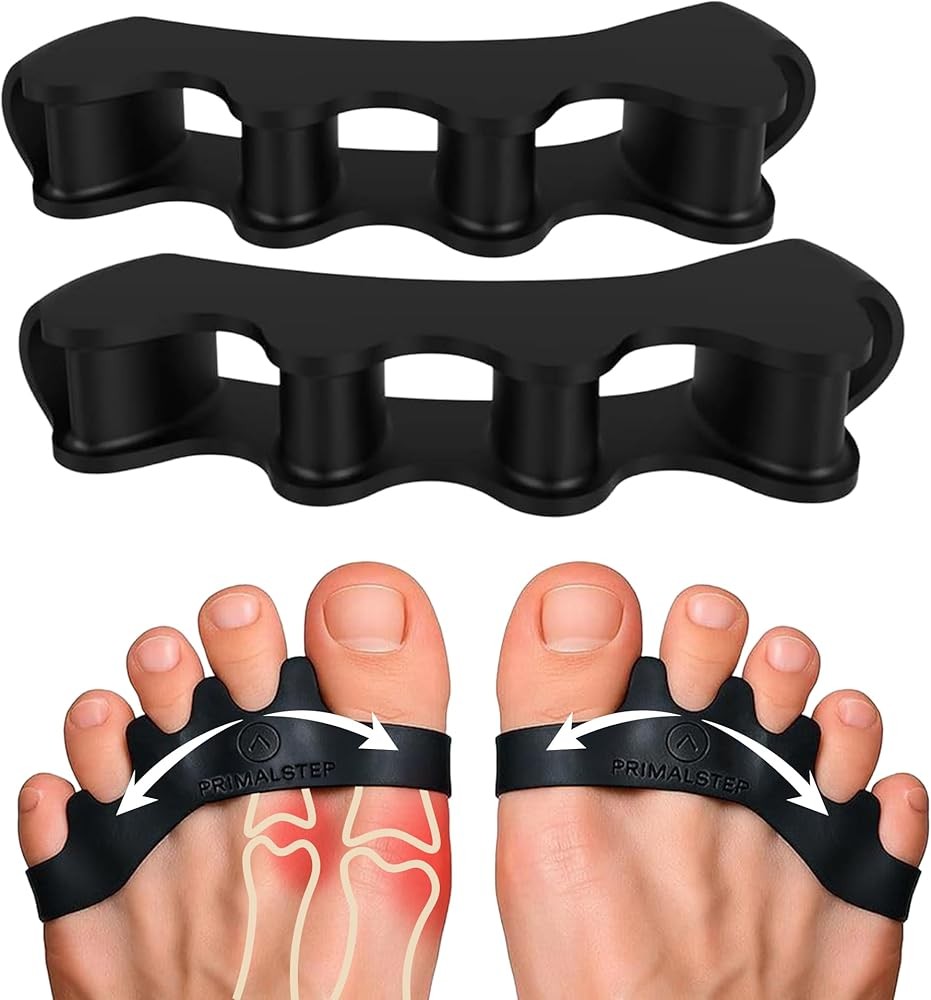
VYCE PrimalStep Toe Separators
Check Price on AmazonAs an Amazon Associate we earn from qualifying purchases.
The VYCE PrimalStep Toe Separators deliver essential toe spacing functionality at the most accessible price point in this category, removing financial barriers for people wanting to try toe separators without significant upfront investment. At approximately $4, these separators cost roughly one-tenth the price of premium options while still providing medical-grade soft silicone construction and the fundamental toe spacing mechanism validated in research.
The minimalist four-loop design fits between the four toe gaps (not including the gap between the fourth and fifth toes), focusing spacing force on the hallux position and the adjacent lesser toes where bunions and crowding most commonly occur. The soft silicone material prioritizes comfort, which can improve initial compliance for users new to toe separators who might find firmer materials uncomfortable during the adaptation period. The tradeoff for this softness is potentially less sustained spacing force compared to firmer alternatives, though for mild to moderate bunions, the gentle approach may provide sufficient therapeutic effect.
The compact size and lightweight construction make PrimalStep separators highly portable. They can be easily packed for travel, kept in a desk drawer for use during seated work periods, or stored in a bedside table for nightly use. The small footprint represents both an advantage and a limitation: while easy to transport and store, the lower profile provides less comprehensive toe stretching compared to full five-toe separators that also lift and separate the plantar surface.
Durability at this price point is reasonable but not comparable to premium gel or thicker silicone options. Users can expect several months of regular use before material fatigue or tearing may occur, making these separators an excellent entry point for testing whether toe spacing provides benefits before investing in more expensive long-term options. The low replacement cost also makes it practical to replace separators more frequently to maintain optimal spacing force as materials gradually compress.
The PrimalStep design focuses on spacing rather than active stretching, meaning it maintains natural toe alignment without the aggressive lifting and separating force of larger toe stretchers. This gentler approach may be preferable for users with painful bunions who find intense stretching uncomfortable, or for those combining separators with other interventions like exercises and proper footwear who need only moderate spacing support rather than maximum corrective force.
The S/M sizing accommodates most women and many men, though users with very large or very small feet may find the fit less optimal. The single size option reduces manufacturing complexity and cost but means less customization compared to products offering multiple sizes or adjustable features. For most users within the target size range, the fit is adequate for home use during rest periods.
Bottom line: VYCE PrimalStep Toe Separators provide the fundamental toe spacing mechanism at the lowest price point, making them ideal for budget-conscious buyers or those testing whether toe separators provide personal benefit before investing in premium options. Soft silicone construction prioritizes comfort over maximum corrective force.
Which Toe Spacers Offer the Best Adjustability?
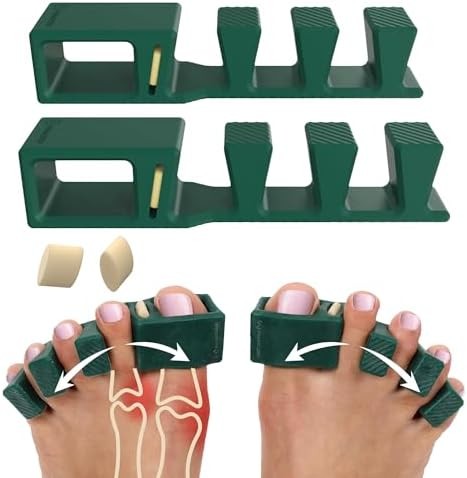
APEX Adjustable Toe Separators
Check Price on AmazonAs an Amazon Associate we earn from qualifying purchases.
The APEX Adjustable Toe Separators feature enhanced thickness construction compared to standard toe separators, providing increased firmness and spacing force for more aggressive alignment correction. This enhanced thickness translates to greater mechanical advantage in separating toes that have been chronically compressed, potentially offering benefits for users with moderate to severe bunions or those who have adapted to standard-thickness separators and want to progress their intervention intensity.
The adjustable loop design allows users to customize fit by trimming excess material or positioning loops to match their specific toe dimensions and spacing needs. This adjustability mimics aspects of the custom-molded separators used in the strongest clinical research, potentially improving outcomes compared to fixed-size alternatives. The ability to modify the device means it can adapt as foot mechanics change over months of use, extending the product’s useful life and therapeutic relevance.
Including two pairs in different sizes (S/M and L) within a single package provides exceptional value and flexibility. Users can start with the size that feels most comfortable and progress to the other size as their feet adapt, or alternate between sizes for different use scenarios. Having a backup pair also means users can continue their separator routine without interruption while cleaning the other pair, supporting the consistent daily use that research shows produces the best outcomes.
The thicker silicone construction enhances durability compared to thinner or softer alternatives. Users can expect extended product life measured in years rather than months with proper care, justifying the mid-range price point between budget and premium options. The firmer material maintains spacing force more consistently throughout extended wear sessions, though it may require a longer adaptation period for users accustomed to softer separators.
The four-loop design focuses spacing on the most clinically relevant toe gaps while maintaining a profile that’s less bulky than full five-toe stretchers. This balanced approach provides comprehensive forefoot alignment support during rest periods while remaining portable enough for travel or use in various settings. The loops fit between the first through fourth toe gaps, addressing hallux valgus correction while also spacing the lesser toes to reduce crowding and overlapping.
The adjustability extends beyond just trimming loops. Users can also modify the tension by adjusting how deeply the loops sit between toes, allowing fine-tuning of the spacing force to match comfort and tolerance levels. This progressive approach aligns with research suggesting that consistent long-term use matters more than maximum immediate force, as tissues need time to adapt to new alignment patterns.
Medical-grade silicone construction ensures safety for prolonged skin contact, with hypoallergenic properties that minimize reaction risks. The material resists degradation from skin oils, sweat, and regular washing, maintaining structural integrity and hygiene through extended use cycles. The ability to thoroughly clean and dry separators between uses blocks bacterial or fungal growth that could occur with porous materials.
Customization verdict: APEX Adjustable Toe Separators offer the best customization options with enhanced thickness construction for progressive correction, adjustable loops for personalized fit, and two size pairs for flexibility and backup availability. The firmer silicone provides sustained spacing force validated in clinical research while maintaining durability for long-term use.
What Are the Best Toe Spacers for Active Use?
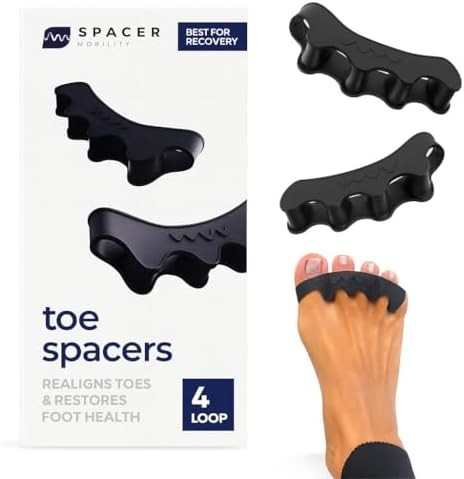
The Toe Spacer from Spacer Mobility
Check Price on AmazonAs an Amazon Associate we earn from qualifying purchases.
The Toe Spacer from Spacer Mobility uses a therapeutic 4-loop design specifically engineered for active wear during walking and light exercise, extending toe spacing benefits beyond rest periods into functional activities. This mobility-focused approach represents a different strategy than traditional rest-only separators, aiming to reinforce proper toe alignment during the movements that actually load and stress the forefoot. The lower profile and strategic loop placement allow the device to fit inside wider shoes, particularly those with roomy toe boxes designed for foot health.
The firmer silicone construction provides the structural integrity needed to maintain spacing during weight-bearing activities. Softer materials would compress excessively under the forces generated during walking, negating the therapeutic spacing effect. The firmness balance in this design maintains alignment support during movement while remaining comfortable enough to tolerate for extended periods. Users transitioning from rest-only separators to active use typically need an adaptation period to build tolerance for wearing separators while walking.
The therapeutic focus addresses not just static toe alignment but dynamic foot mechanics during gait. By maintaining toe spacing during push-off and other gait phases, active separators may reinforce neuromuscular patterns that support improved alignment even when separators are removed. This concept aligns with motor learning principles suggesting that practicing movements in corrected positions can gradually retrain habitual patterns, though specific research on active toe separator use during gait remains limited compared to studies examining rest-period use.
The 4-loop configuration spaces the hallux plus the three adjacent toe gaps, omitting only the smallest gap between the fourth and fifth toes. This comprehensive spacing pattern addresses multiple forefoot alignment issues simultaneously while maintaining a profile slim enough to fit inside appropriately-sized footwear. Users need shoes with adequate toe box width and depth to accommodate both feet and separators without compression, which typically means athletic shoes, walking shoes, or specialty footwear designed for foot health rather than narrow dress shoes.
Starting active wear gradually is essential. Initial sessions of 15-30 minutes during stationary standing or slow walking allow tissues to adapt before progressing to longer durations or faster walking speeds. Some users experience foot muscle fatigue initially as intrinsic foot muscles work differently when toes are held in separated positions, similar to muscle fatigue when starting any new exercise. This fatigue typically diminishes as muscles strengthen and adapt over several weeks of progressive use.
The mobility-focused design serves multiple use cases beyond just walking. Users can wear these separators during standing tasks, balance exercises, yoga or pilates sessions focused on foot awareness, or rehabilitation protocols emphasizing intrinsic foot strengthening. The ability to integrate toe spacing into active movement practices provides more opportunities for therapeutic time compared to rest-only options, potentially enhancing outcomes for motivated users willing to adapt their footwear and activities.
Material safety and durability match other medical-grade silicone separators, with the firmer construction potentially extending product life when properly cared for. The separators can be washed with soap and water between uses, which is particularly important for active wear applications that generate more sweat and skin cell contact than stationary rest use. Allowing separators to fully air-dry blocks moisture-related degradation and maintains hygiene.
Active-wear analysis: The Toe Spacer from Spacer Mobility uniquely enables active wear during walking and light exercise with a lower-profile 4-loop design that fits inside roomy shoes. The firmer silicone maintains spacing during weight-bearing activities, potentially extending therapeutic time and reinforcing improved alignment during functional movements.
How Should You Start Using Toe Separators Safely?
Beginning with brief sessions keeps from overwhelming tissues that may not have experienced proper toe spacing in years or decades. Clinical research protocols typically employed 6-hour nightly wear, but these studies enrolled participants who likely underwent some adaptation before formal data collection began. For new users, starting with 15-30 minute sessions allows gradual tissue adaptation while building confidence that the sensation, though unusual, is therapeutic rather than harmful.
Initial discomfort is normal and expected. Separators literally create space between bones, joints, soft tissues, and skin surfaces that have been compressed together, potentially for years. The sensation ranges from gentle stretching to more intense pressure depending on separator firmness, toe flexibility, and deformity severity. This discomfort should feel like a stretch rather than sharp pain. If sharp, shooting, or burning pain occurs, the separators may be too firm, too large, or positioned incorrectly, and modifications are needed.
Progression follows individual tolerance rather than fixed timelines. Some users comfortably reach 6-hour sessions within 2-3 weeks, while others need 6-8 weeks or longer to build tolerance. The goal is consistent long-term use rather than rapid progression, so moving at a sustainable pace that doesn’t cause injury or discourage continued use matters more than reaching target durations quickly. Adding 5-10 minutes every few days provides gradual progression that most tissues tolerate well.
Positioning affects both comfort and effectiveness. Separators should sit snugly between toes without excessive force that could cause pressure injuries or circulation restriction. The loops should rest in the web spaces between toes rather than pushed all the way to the base or sitting too superficially near the tips. Proper positioning may require some adjustment during initial uses as you learn how the particular separator design interfaces with your specific foot anatomy.
Combining separators with complementary practices enhances outcomes based on research showing superior results with multimodal approaches. Gentle toe and foot stretches before applying separators can warm up tissues and improve tolerance. Foot massagers can also help warm up foot tissues and improve circulation before separator sessions. Intrinsic foot strengthening exercises, such as toe spreading without separators, marble pickups, or towel scrunches, build the muscle control needed to actively maintain improved alignment even when separators aren’t worn. Proper footwear with adequate toe box room blocks re-crowding toes during daily activities, extending the benefits achieved during separator wear.
Skin care minimizes complications during long-term use. Washing and thoroughly drying feet before applying separators reduces moisture that could promote fungal growth or skin maceration. Some users apply a light dusting of cornstarch or foot powder to reduce friction in particularly sensitive areas, though this isn’t necessary for most people. Inspecting skin between toes regularly identifies any redness, blisters, or irritation early before they progress to more significant problems.
Cleaning separators maintains hygiene and material integrity. Washing with mild soap and water after each use or at least several times weekly removes skin cells, oils, and bacteria. Thorough drying before storage blocks material degradation and microbial growth. Most silicone and gel separators air-dry within a few hours, so washing in the morning after overnight use allows drying before the next application.
Realistic expectations support sustained use. Toe separators can produce modest angular improvements over months, slow progression, and improve pain and function. They cannot completely reverse established bony deformities or replace surgery for severe bunions. Viewing separators as one component of comprehensive bunion management, alongside appropriate footwear, exercises, activity modifications, and medical follow-up when needed, creates a realistic framework that supports long-term engagement rather than disappointment when separators don’t provide miracle solutions.
Monitoring progress helps maintain motivation and identify when adjustments are needed. Taking photos of bare feet from the top at monthly intervals creates visual records of alignment changes that may be subtle day-to-day but noticeable over months. Tracking pain levels, difficulty with specific shoes or activities, and subjective function provides outcome data beyond just structural measures. If no improvements appear after 3 months of consistent use, reassessment with a healthcare provider may identify whether different separators, additional interventions, or other approaches are needed.
Implementation guidance: Start with 15-30 minute sessions and progress by 5-10 minutes every few days as tolerance builds toward the 6-hour target used in research. Normal stretching sensations differ from sharp pain requiring adjustment. Combine separators with exercises and proper footwear for multimodal approaches shown to enhance outcomes, and maintain realistic expectations that gradual improvements over months represent successful conservative management.
Can Toe Spacers Help with Other Foot Conditions Beyond Bunions?
Research on custom foot orthoses provides insights into broader applications beyond just hallux valgus. A Cochrane systematic review analyzing 11 trials with 1,332 participants found custom orthoses effective for multiple forefoot conditions (PMID: 18646168). For painful hallux valgus, the number needed for beneficial outcome was 6, meaning 6 patients would need to use orthoses for 1 to benefit. The review also found effectiveness for pes cavus (high arches, NNTB 5) and rheumatoid arthritis rearfoot pain (NNTB 4), with orthoses classified as a safe intervention across all studies reviewed.
While this research examined custom foot orthoses rather than toe separators specifically, the mechanisms overlap. Both interventions aim to redistribute forces, improve alignment, and reduce stress on painful structures. Toe separators may offer particular benefits for conditions involving forefoot crowding, toe deformities, or plantar pressure imbalances. The safety profile established for orthoses generally extends to toe separators, given their less aggressive intervention compared to rigid orthotic devices.
A systematic review specifically examining custom orthoses for forefoot pain included 9 studies with 487 participants (PMID: 29423640). The review concluded that custom foot orthoses produced the most significant reduction in forefoot pain across multiple conditions, including rheumatoid arthritis, hallux abductus valgus, and metatarsalgia. Metatarsalgia refers to pain in the ball of the foot, often resulting from abnormal pressure distribution across the metatarsal heads. By improving toe alignment and spacing, toe separators may help redistribute these pressures more evenly, potentially reducing pain in the metatarsal region.
Morton’s neuroma, a painful condition involving nerve thickening between the third and fourth metatarsals, sometimes correlates with toe crowding and compression. While specific research on toe separators for neuromas is limited, the mechanical rationale suggests that increased toe spacing might reduce compression forces on the interdigital nerves. Some users report neuroma symptom improvements with toe separators, though this remains anecdotal rather than research-validated. Individuals with diagnosed neuromas should discuss toe separator use with their healthcare providers as part of comprehensive management.
Hammer toes and claw toes involve abnormal toe flexion at various joints, often developing alongside hallux valgus as part of progressive forefoot deformity. Toe separators that lift and straighten toes may help counteract these flexion deformities, particularly in flexible cases where joint changes haven’t become fixed. The combination of separation (addressing the transverse plane deformity) and lifting (addressing the sagittal plane deformity) provides multidirectional correction that standard orthotic insoles alone don’t achieve.
Plantar fasciitis involves inflammation and degeneration of the thick connective tissue band running along the bottom of the foot from heel to toes. While arch support and heel cushioning represent primary conservative approaches for plantar fasciitis, toe separators that lift and spread toes also stretch the plantar fascia. This stretching may provide some symptomatic relief and complement other plantar fasciitis interventions. Users with both bunions and plantar fasciitis might consider combining toe separators with dedicated plantar fasciitis insoles for comprehensive foot support.
Circulation and neuropathy considerations require careful evaluation. Toe separators apply pressure to create spacing, which theoretically could restrict blood flow if applied too tightly or in individuals with compromised circulation. People with diabetes, peripheral arterial disease, or significant neuropathy should consult healthcare providers before using toe separators, as reduced sensation might block detection of pressure injuries or circulation problems. Regular skin inspection becomes even more critical in these populations.
Balance and proprioception effects represent an under-researched area with potential benefits. Proper toe spacing may improve balance by allowing toes to better sense ground contact and participate in balance reactions. The intrinsic foot muscles that control toe position also contribute to ankle stability and overall postural control. Some yoga practitioners and balance specialists recommend toe separators as part of foot awareness and proprioception training, though systematic research quantifying these effects remains limited.
Broader application summary: Evidence supports custom foot orthoses for forefoot pain conditions including metatarsalgia, pes cavus, and rheumatoid arthritis, with mechanisms that partially overlap with toe separator effects. While research specifically validating toe separators for conditions beyond hallux valgus is limited, the mechanical rationale suggests potential benefits for hammer toes, plantar fasciitis, and balance when used appropriately. Individuals with circulation problems or neuropathy should consult healthcare providers before use.
What Role Do Toe Separators Play in a Complete Support System?
Comprehensive bunion management requires addressing multiple contributing factors rather than relying on any single intervention. Network meta-analysis demonstrates that combination approaches typically outperform individual options, with exercise plus toe separator interventions ranking among the most effective conservative strategies (PMID: 33917568). Building a complete support system means integrating separators with complementary strategies that address footwear, biomechanics, strength, flexibility, and activity modifications.
Footwear selection fundamentally influences foot alignment throughout the day. Shoes with narrow toe boxes force toes into crowded positions for hours, directly counteracting the spacing achieved during separator use. Research examining footwear interventions combined with orthoses and exercises established that multifaceted approaches addressing all aspects of foot loading show promise for hallux valgus management (PMID: 35655233). Choosing shoes with toe boxes wide enough to allow natural toe spread, avoiding high heels that force weight onto the forefoot, and selecting flexible soles that permit natural foot motion all support the alignment improvements targeted by toe separators.
Strengthening exercises targeting intrinsic foot muscles build active control of toe position rather than relying solely on passive devices. The research showing superior outcomes when combining exercise with toe separators highlights this synergy, similar to how night splints for plantar fasciitis work best alongside daytime orthotics. Effective exercises include toe spreading (actively separating toes without devices), toe yoga (independent control of individual toes), marble or towel pickups, and short foot exercises that engage the arch-supporting muscles. These exercises complement passive separator wear by developing the neuromuscular control needed to maintain improved alignment during functional activities.
Stretching addresses soft tissue restrictions that limit toe mobility and contribute to deformity progression. Gentle toe stretches, calf stretches, and plantar fascia stretches all influence forces acting on the forefoot. Tight calf muscles increase forefoot loading during walking, potentially accelerating bunion progression. Plantar fascia tightness restricts toe extension and natural foot mechanics. A comprehensive stretching routine addressing the entire lower extremity kinetic chain supports optimal foot function beyond what toe separators alone can achieve. Compression recovery boots can complement foot care by improving lower leg circulation after extended standing or exercise.
Manual therapy and mobilization techniques delivered by physical therapists, chiropractors, or other trained practitioners can address joint restrictions and soft tissue adhesions limiting toe mobility. The research protocol combining foot mobilization with exercise and toe separators showed exceptional results, with improvements across all measured outcomes reaching p<0.001 significance at 1-year follow-up. While self-mobilization techniques exist, professional assessment and care may accelerate progress and address restrictions that limit separator effectiveness.
Pain management during the intervention process supports sustained engagement. While toe separators aim to reduce pain long-term through improved mechanics, initial adaptation can be uncomfortable. Appropriate use of ice after separator sessions, over-the-counter anti-inflammatory medications when needed and approved by healthcare providers, and progression at sustainable rates all support continued use through the adaptation period. Persistent or worsening pain despite appropriate progression indicates the need for professional evaluation rather than pushing through problematic symptoms.
Activity modification sometimes becomes necessary during active bunion periods or when adjusting to new interventions. High-impact activities, prolonged standing (consider a standing desk with anti-fatigue mat), or specific movements that aggravate symptoms may need temporary reduction or modification while tissues adapt to improved alignment. This doesn’t necessarily mean complete activity cessation, but rather strategic adjustments that allow continued function while supporting healing and adaptation. Gradually returning to full activity as symptoms improve blocks deconditioning while respecting tissue tolerance.
Medical follow-up ensures appropriate progression and identifies when conservative management reaches its limits. Regular assessment by podiatrists, orthopedic surgeons, or primary care providers trained in foot conditions provides objective outcome tracking and helps determine if interventions are achieving goals or if escalation is needed. Some bunions progress despite optimal conservative management, and timely identification of these cases allows appropriate surgical referral before deformities become more complex and harder to correct.
Orthotic insoles complement toe separators by addressing arch support and pressure distribution. While separators focus on toe alignment, insoles support the arch and redistribute plantar pressures. Combined use of custom or over-the-counter orthotic insoles with toe separators addresses both forefoot and midfoot mechanics comprehensively. Research on foot orthoses in rheumatoid arthritis showed reduced odds of hallux valgus development, suggesting that arch support plays a role that toe separators alone might not achieve.
Weight management, when appropriate, reduces forces transmitted through the feet during weight-bearing activities. Higher body weights increase forefoot loading, potentially accelerating bunion progression and limiting the effectiveness of conservative interventions. While not applicable or appropriate for all individuals, weight optimization as part of overall health management can reduce biomechanical stress on feet and improve outcomes across multiple foot conditions.
Comprehensive care conclusion: The strongest research outcomes come from combining toe separators with exercise programs, with network meta-analysis ranking these combination approaches among the most effective conservative interventions. A complete support system also includes appropriate footwear with adequate toe box room, stretching and strengthening exercises, professional manual therapy when available, and orthotic insoles for comprehensive foot support. Medical follow-up ensures interventions are achieving goals and identifies when surgical referral becomes appropriate.
Are There Any Risks or Limitations You Should Know About?
Toe separators represent low-risk interventions with no serious complications reported in published clinical trials. The 12-month study following 90 patients found 85.7% satisfaction with no serious adverse events, establishing a favorable safety profile for consistent long-term use. However, minor complications can occur with improper use, inappropriate progression, or in specific populations requiring additional precautions.
Skin irritation represents the most common complaint, typically resulting from friction between separator materials and skin during extended wear or movement. Signs include redness, tenderness, or raw areas in the web spaces between toes. Strategies to minimize this include ensuring feet are clean and dry before application, avoiding separators that are too large or tight for your anatomy, and using medical-grade silicone or gel materials rather than cheaper alternatives that may contain irritating compounds. If irritation occurs, reducing wear time and applying a protective barrier like petroleum jelly often resolves the issue.
Circulation concerns arise primarily in individuals with peripheral arterial disease, diabetes, or other conditions affecting blood flow to the feet. Toe separators apply pressure to create spacing, which could theoretically restrict already-compromised circulation. Warning signs include increased coldness in toes, color changes (pale or bluish toes), numbness beyond normal adaptation sensations, or increased pain. Anyone with known circulation problems should consult healthcare providers before starting toe separators and monitor closely during initial use.
Neuropathy complicates toe separator use because reduced sensation blocks early detection of pressure problems. Diabetic neuropathy, peripheral neuropathy from other causes, or any condition causing numbness in the feet increases injury risk. Without normal sensation, users might not notice excessive pressure, developing blisters or skin breakdown before symptoms alert them to problems. Visual inspection before and after each use becomes essential, and more conservative progression with shorter initial sessions and gentler separators reduces risk in neuropathic populations.
Severe deformities with fixed bony changes have biomechanical limits on conservative correction. Research shows modest improvements with consistent separator use, but advanced bunions with hallux valgus angles exceeding 40 degrees or severe structural changes may not respond adequately to spacing alone. Attempting to force toes into positions that bony changes block can cause pain and frustration without achieving meaningful correction. Clinical evaluation helps determine whether conservative management remains appropriate or whether surgical consultation should be pursued for severe cases.
Progression time frames require patience that some users struggle to maintain. The research showing the most significant structural changes followed participants for 12 months, with radiographic improvements appearing at 3-month and 1-year follow-ups. Expecting dramatic changes within weeks leads to disappointment and premature abandonment of potentially beneficial interventions. Setting realistic expectations that conservative approaches work gradually over months rather than days or weeks supports sustained engagement long enough to achieve measurable benefits.
Activity limitations apply to most toe separator designs, which are intended for rest periods rather than active use. Attempting to wear rest-only separators inside tight shoes causes discomfort and may damage the devices or create pressure injuries. Only separators specifically designed and marketed for active wear should be used during walking or exercise, and even these require appropriate footwear with adequate toe box room. Most users need separate separators for rest use and active use if extending wear time into functional activities is a goal.
Cost considerations influence accessibility. While budget options exist at approximately $4, premium separators range up to $36 or more, and some users benefit from multiple pairs for different use scenarios. Long-term costs include replacement as materials eventually degrade, though durable silicone or gel options often last for years with proper care. Compared to surgical costs that can reach thousands of dollars, toe separators represent relatively inexpensive conservative management, though the long-term investment still requires consideration for some budgets.
Medical supervision gaps occur when individuals self-direct without appropriate diagnosis or follow-up. While toe separators are generally safe for self-directed use, some foot pain attributed to bunions actually stems from other conditions requiring different management. Stress fractures, arthritis, gout, infections, or neuromas might present similarly to bunion pain but need specific care. Persistent or worsening symptoms despite appropriate separator use warrant professional evaluation rather than continued self-management of potentially misdiagnosed conditions.
Combination with other interventions requires coordination. Users taking anti-inflammatory medications, receiving manual therapy, using night splints, or undergoing other concurrent foot care should ensure interventions complement rather than conflict with each other. Some combinations show synergistic benefits in research, while others might be redundant or create excessive intervention burden that reduces compliance. Discussing comprehensive plans with healthcare providers optimizes outcomes and blocks problematic interactions.
Safety considerations: Clinical trials report no serious complications with toe separator use, establishing favorable safety profiles for most users. Minor skin irritation represents the most common issue, minimized through proper sizing and hygiene. Individuals with circulation problems, neuropathy, or severe deformities should consult healthcare providers before starting separators. Realistic expectations about gradual angular improvements over months block premature abandonment of potentially beneficial interventions.
What Does Research Say About Long-Term Outcomes and Expectations?
The longest follow-up in published toe separator research extends to 12 months, with the landmark study tracking hallux valgus angle changes throughout a year of nightly separator use. The sustained improvement of over three degrees in the study group compared to nearly two degrees of worsening in controls demonstrates that benefits persist with continued use rather than fading over time. This sustained effect suggests that separators provide ongoing mechanical correction rather than merely temporary symptom relief, as long as use continues.
The 2-year follow-up study comparing surgery, orthoses, and watchful waiting provides additional long-term perspective. While pain levels equalized across groups by the 2-year mark, a substantial proportion of patients initially assigned to orthosis use eventually underwent surgery. This finding suggests that for many individuals with progressive bunions, conservative approaches including toe separators may serve as effective interim management but not permanent solutions. The decision to pursue surgery typically reflects continued progression, persistent pain, or functional limitations despite optimal conservative care.
Research on exercise plus toe separator combinations showed sustained benefits at 1-year follow-up, with improvements maintained across all measured outcomes including pain, function scores, range of motion, strength, and radiographic angles. The persistence of benefits a full year after the 3-month intervention period ended suggests that the combination approach may produce lasting adaptations in foot mechanics, strength, and alignment rather than merely providing temporary assistance. This supports the concept that active interventions building muscle control and motor patterns may produce more durable changes than passive devices alone.
The 5-year study in rheumatoid arthritis patients demonstrated that foot orthoses reduced hallux valgus development risk over the extended follow-up period. While this research examined broader orthotic interventions rather than toe separators specifically, it establishes the principle that conservative biomechanical interventions can modify disease progression over years when initiated early and continued consistently. The effect maintained over 5 years suggests that ongoing use provides continued benefits rather than just delaying inevitable progression.
Compliance emerges as a critical factor across long-term studies. The interventions showing the best outcomes required consistent daily use over months. Compliance rates weren’t always explicitly reported, but the studies achieving significant results likely enrolled participants with higher-than-average adherence to protocols. Real-world outcomes depend on whether individuals continue separator use long-term once initial enthusiasm fades and research participation ends. Comfort, convenience, visible results, and integration into daily routines all influence whether people maintain separator use over years.
Natural bunion progression without intervention provides context for interpreting conservative outcome data. The control group in the 12-month separator study showed nearly two degrees of angle worsening over a year, illustrating the progressive nature of hallux valgus. Conservative interventions that stabilize angles or produce small improvements thus represent success compared to natural progression, even when they don’t completely reverse deformities. Slowing progression matters for delaying or avoiding surgery, maintaining function, and preserving quality of life.
Surgical outcomes represent the comparison point for conservative management. Bunion surgery achieves more dramatic structural correction than conservative approaches, with typical angle corrections of 10-20 degrees or more depending on procedure and severity. However, surgery carries risks including infection, nerve damage, recurrence, and recovery periods limiting activity. The trade-off between conservative management providing 2-3 degree improvements without surgical risks versus surgical correction offering greater structural change but with procedural risks represents the fundamental decision point for individuals with symptomatic bunions.
Revision needs for both approaches inform long-term planning. Some conservatively managed bunions eventually progress to requiring surgery despite optimal non-surgical care. Conversely, some surgical corrections recur, potentially requiring revision procedures. Neither approach guarantees permanent resolution, though surgery typically achieves more durable structural correction when successful. Understanding that bunion management may represent lifelong engagement rather than one-time fixes helps individuals set realistic expectations regardless of chosen approach.
Quality of life considerations extend beyond just structural measurements or pain scores. The ability to wear desired footwear, participate in valued activities, and maintain independence in daily function all contribute to success from the patient perspective. Research measuring quality of life alongside clinical outcomes provides a more complete picture of intervention value. Studies showing improved quality of life scores with toe separators and other conservative approaches, even when structural changes are modest, validate the patient-centered value of these interventions.
Long-term perspective: The longest follow-up studies show sustained benefits over 12 months with continued separator use. Combination approaches with exercise show particularly durable outcomes at 1-year follow-up. Conservative interventions achieving small but measurable improvements or stabilization represent success compared to natural progression showing continued worsening without intervention, though they cannot match the structural correction achieved with surgery.
Frequently Asked Questions
Do toe spacers actually work for bunions?
Research shows toe spacers can produce measurable hallux valgus angle improvements when used consistently. A 2018 RCT of 90 patients found custom silicone separators achieved statistically significant angle reduction over 12 months while controls worsened (p<0.05). They work best when combined with exercises and proper footwear.
How long should you wear toe spacers each day?
Clinical studies typically recommend 6 hours per night or during rest periods. The most effective protocol from research involved wearing custom toe separators for 6 hours nightly over 12 months. Start with 15-30 minutes and gradually increase duration as your feet adapt to the new alignment.
Can toe spacers reverse bunions completely?
Toe spacers cannot fully reverse established bunion deformities but can slow progression and reduce pain. Studies show they can decrease hallux valgus angles by a few degrees and improve symptoms. For severe bunions, they serve as conservative management alongside other interventions or as a bridge before surgical correction.
What’s the difference between toe separators and bunion splints?
Toe separators fit between toes to restore natural spacing and are typically worn during rest. Bunion splints apply corrective force to realign the big toe and are often rigid nighttime devices. Network meta-analysis shows both approaches reduce hallux valgus angles, with combination interventions showing the strongest results.
Should I get gel or silicone toe spacers?
Both materials are effective. Medical-grade silicone offers durability and firmness for active use, while gel provides cushioning comfort for extended wear. Research validates custom silicone separators, but the best choice depends on your activity level and comfort preferences. Both materials are safe and hypoallergenic.
Can I wear toe spacers while walking or exercising?
Some toe spacers are designed for active use during walking and light exercise. Look for lower-profile designs that fit inside shoes. Research on mobility-focused separators shows they can be worn during functional activities. Start with stationary activities and gradually progress to movement as your feet adapt.
How long until toe spacers show results?
Pain relief can occur within weeks, but structural changes take months. Studies measuring hallux valgus angle changes used 1-month to 12-month protocols. The most significant radiographic improvements appeared at 3-month and 12-month follow-ups. Consistency matters more than duration for achieving measurable results.
Are toe spacers safe for rheumatoid arthritis?
Yes, toe separators are considered safe for rheumatoid arthritis patients. A 5-year randomized trial showed foot orthoses reduced the odds of developing hallux valgus. Research confirms orthoses and separators do not cause adverse range of motion effects in RA populations.
Can toe spacers help with plantar fasciitis?
While toe spacers primarily address forefoot alignment, improved toe positioning can support overall foot mechanics. Some users report reduced plantar fasciitis symptoms, though dedicated arch support insoles show stronger evidence. Combining toe separators with proper orthotic insoles may provide comprehensive foot support.
What size toe spacers should I get?
Most toe spacers come in small/medium and large sizes based on shoe size. Women typically use S/M for shoe sizes 5-9 and L for 9+. Men typically use S/M for sizes 7-10 and L for 10+. Adjustable designs accommodate wider size ranges. Check manufacturer sizing charts as designs vary between brands.
Our Top Recommendations
For most people seeking evidence-based bunion management, the YogaToes GEMS Gel Toe Stretcher & Separator delivers comprehensive toe spacing in a medical-grade construction that aligns with clinical research protocols showing significant hallux valgus angle improvement over 12 months. The established brand reputation, durable gel formulation, and five-toe design justify the premium price for users committed to long-term conservative management. Start with 15-30 minute sessions and gradually build to the 6-hour nightly target validated in research, combining separator use with toe strengthening exercises and proper footwear for optimal outcomes.
Budget-conscious buyers or those wanting to test toe separators before significant investment should consider the VYCE PrimalStep Toe Separators at approximately $4. The soft silicone construction provides comfortable introduction to toe spacing without financial risk, allowing users to determine whether separators provide personal benefit before upgrading to premium options. While less durable than thicker alternatives, the low replacement cost makes frequent updates practical.
Users seeking customization and progressive correction benefit from the APEX Adjustable Toe Separators with enhanced thickness construction, adjustable loops, and two size pairs included. The enhanced thickness provides stronger spacing force for moderate to severe bunions or those progressing from standard separators, while adjustability mimics custom-molded designs showing the strongest research outcomes. The dual size pairs offer flexibility and backup availability supporting consistent long-term use.
Active individuals wanting to extend therapeutic time beyond rest periods should consider The Toe Spacer from Spacer Mobility with its lower-profile 4-loop design engineered for wear during walking and light exercise. The firmer silicone maintains spacing under weight-bearing loads while fitting inside shoes with adequate toe box room, reinforcing proper alignment during functional activities that actually load the forefoot.
Regardless of product choice, success depends on consistent use over months rather than weeks, realistic expectations about gradual angular improvements representing meaningful progress, and integration of separators into comprehensive approaches including exercises, appropriate footwear, and medical follow-up when needed. The research demonstrates that toe separators can slow bunion progression and reduce symptoms when used as part of evidence-based conservative management rather than as standalone quick fixes.
Join the discussion: Facebook | X | YouTube | Pinterest
Conclusion
Toe spacers represent evidence-based conservative interventions for hallux valgus management, with clinical research demonstrating measurable angle reductions, slowed progression, and improved pain and function when used consistently over months. The strongest outcomes emerge from combination approaches integrating separators with exercise programs, proper footwear, and comprehensive foot care rather than relying on separators alone. While toe separators cannot completely reverse established bunion deformities or match surgical correction, they offer safe, accessible options for individuals seeking conservative management, symptom relief while awaiting surgery, or strategies in early or at-risk populations.
Product selection should reflect individual needs, activity levels, and progression goals. Comprehensive five-toe stretchers like YogaToes GEMS provide research-aligned nightly protocols, while budget options like VYCE PrimalStep remove financial barriers to testing toe separators. Adjustable designs like APEX separators support customization and progression, and mobility-focused options like The Toe Spacer from Spacer Mobility extend therapeutic time into functional activities.
Success requires patience with gradual tissue adaptation, realistic expectations about outcomes achievable through conservative approaches, and commitment to consistent long-term use. The research demonstrates that toe separators work best as components of comprehensive bunion management systems addressing biomechanics, strength, flexibility, and activity patterns rather than as isolated quick fixes. For individuals seeking to avoid surgery, slow progression, or optimize foot alignment and function, evidence-based toe separator use offers meaningful benefits when integrated appropriately into personalized care plans.
Related Reading
- Best Insoles for Plantar Fasciitis — Comprehensive arch support for heel and foot pain
- Superfeet vs PowerStep — Comparing leading orthotic insole brands
- Best Insoles for Flat Feet — Arch support for overpronation
- Best Insoles for High Arches — Cushioning for underpronation and supination
- Plantar Fasciitis Night Splint — Overnight stretching for heel pain
- Best Foot Massagers for Neuropathy — Circulation and pain relief devices
- Best Standing Desks — Ergonomic workstations reducing sitting time
- Best Compression Recovery Boots — Post-activity circulation support
- Best Knee Braces for Arthritis — Joint support and pain management
- Best Walking Pads — Low-impact movement throughout the day
References
-
Chadchavalpanichaya N, Charchaichaimongkol L, Arirachakaran A, Kongtharvonskul J. Effectiveness of the custom-mold room temperature vulcanizing silicone toe separator on hallux valgus: A prospective, randomized single-blinded controlled trial. Prosthet Orthot Int. 2018;42(2):163-170. PMID: 28318407
-
Abdalbary SA. Foot Mobilization and Exercise Program Combined with Toe Separator Improves Outcomes in Women with Moderate Hallux Valgus at 1-Year Follow-up A Randomized Clinical Trial. J Am Podiatr Med Assoc. 2018;108(6):478-486. PMID: 29683337
-
Camur S, Ozdemir Gorgu H. Comparison of the effects of orthoses on hallux valgus angle and plantar pressure in individuals with hallux valgus. Prosthet Orthot Int. 2025;49(1):61-67. PMID: 39721066
-
Ying J, Xu Y, István B, Ren F. Adjusted Indirect and Mixed Comparisons of Conservative Treatments for Hallux Valgus: A Systematic Review and Network Meta-Analysis. Int J Environ Res Public Health. 2021;18(8):3841. PMID: 33917568
-
Torkki M, Malmivaara A, Seitsalo S, Hoikka V, Laippala P, Paavolainen P. Surgery vs orthosis vs watchful waiting for hallux valgus: a randomized controlled trial. JAMA. 2001;285(19):2474-2480. PMID: 11368700
-
Torkki M, Malmivaara A, Seitsalo S, et al. Hallux valgus: immediate operation versus 1 year of waiting with or without orthoses: a randomized controlled trial of 209 patients. Acta Orthop Scand. 2003;74(3):209-215. PMID: 12807332
-
Moulodi N, Kamyab M, Farzadi M, Moghaddasi S. A comparison of the hallux valgus angle, range of motion, and patient satisfaction after use of dynamic and static orthoses. Foot (Edinb). 2019;41:6-11. PMID: 31675599
-
Budiman-Mak E, Conrad KJ, Roach KE, Moore JW, Lertratanakul Y, Koch AE, Skosey JL. Can foot orthoses reduce the odds of developing hallux valgus deformity in rheumatoid arthritis? A randomized clinical trial. J Clin Rheumatol. 1995;1(6):313-322. PMID: 19078008
-
Hawke F, Burns J, Radford JA, du Toit V. Custom-made foot orthoses for foot pain. Cochrane Database Syst Rev. 2008;3:CD006801. PMID: 18646168
-
Karabicak GO, Bek N, Tiftikci U. Short-Term Effects of Kinesiotaping on Pain and Joint Alignment in Conservative Management of Hallux Valgus. J Manipulative Physiol Ther. 2015;38(8):564-571. PMID: 26435086
-
Menz HB, Auhl M, Ristevski S, Frescos N, Munteanu SE. Footwear, foot orthoses and strengthening exercises for the non-surgical management of hallux valgus: protocol for a pilot feasibility randomised trial. J Foot Ankle Res. 2022;15(1):48. PMID: 35655233
-
Arias-Martin I, Bautista-Aguirre F, Losa-Iglesias ME, et al. Effectiveness of custom-made foot orthoses for managing forefoot pain: a systematic review. Int Orthop. 2018;42(8):1865-1875. PMID: 29423640
-
Munteanu SE, Cotchett MP, Bonanno DR, et al. Non-surgical interventions for osteoarthritis of the big toe joint. Cochrane Database Syst Rev. 2024;6:CD007809. PMID: 38884172
Recommended Products