Best Blue Light Blocking Glasses for Sleep and Eye Strain
Summarized from peer-reviewed research indexed in PubMed. See citations below.
Evening screen time suppresses melatonin production and disrupts circadian rhythms, making it harder to fall asleep. The Sleep Glasses 99.9% Blue Light Amber Lens with dual AR coatings block nearly all blue light wavelengths and cost $28, making them our top pick for sleep support. Research shows amber/orange lenses preserve melatonin production far better than clear lenses, with one foundational study finding orange lenses reduced melatonin suppression to just 6% compared to 46% with grey lenses. For a budget option, the Gaoye Blue Light Glasses at $8 offer amber tinting and solid blue light blocking. Here’s what the published research shows about blue light glasses for sleep and eye comfort.
Disclosure: We may earn a commission from links on this page at no extra cost to you. Affiliate relationships never influence our ratings. Full policy →
| Feature | Sleep Glasses 99.9% Blue Light | Gaoye Blue Light Glasses | Blue Light Blocking & Light Sensitivity | TIJN Blue Light Blocking | ANYLUV Blue Light Glasses |
|---|---|---|---|---|---|
| Blue Light Blocking | 99.9% | High (amber lens) | Variable (8 lens options) | Moderate (clear lens) | Moderate (clear lens) |
| Lens Tint | Amber/orange | Amber/orange | Clear to amber options | Clear | Clear |
| Best For | Evening sleep support | Budget evening use | Multiple scenarios | All-day computer work | Gaming sessions |
| Coating | Dual AR coating | Standard | Varies by lens | Anti-glare | Anti-glare |
| Frame Style | Sleep-optimized | Classic rectangular | Sport/wrap style | Square clear frame | Gaming style |
| Price | $28 | $8 | $39 | $17 | $19 |
What the Research Says About Blue Light and Sleep
Blue light exposure in the evening interferes with sleep through a specific biological pathway. Light in the 460-490 nanometer wavelength range activates intrinsically photosensitive retinal ganglion cells (ipRGCs) in the eye. These specialized cells contain melanopsin, a light-sensitive protein that sends signals directly to the brain’s circadian control center, the suprachiasmatic nucleus.
When blue light hits these cells in the evening, it suppresses the release of melatonin, the hormone that signals the body it’s time for sleep. This melatonin suppression delays sleep onset and can reduce total sleep time.
A foundational study published in the Journal of Pineal Research examined how different lens colors affected melatonin suppression during bright light exposure at night. Fourteen participants were exposed to 1300 lux of bright light between 1:00 AM and 2:00 AM while wearing either orange lens glasses (blue blockers) or grey lens glasses as controls.
The results were striking. Orange lens glasses resulted in only a 6% non-significant reduction in melatonin levels (95% CI, -20% to 9%), while grey lens glasses led to a 46% significant reduction in melatonin (95% CI, 35-57%, P < 0.05). Despite both glasses transmitting the same illuminance, the orange lenses that blocked blue wavelengths protected melatonin production.
This mechanism explains why not all blue light glasses are equally effective. The color and density of the lens tint determines how much blue light actually gets blocked.
A Cochrane systematic review from 2023 analyzed 17 randomized controlled trials involving blue light filtering lenses. The review found insufficient evidence that blue light glasses improved visual fatigue, sleep quality, or macular health compared to non-filtering lenses. The authors noted that many studies used clear or lightly tinted lenses that blocked minimal blue light.
The review highlighted an important limitation: most commercially available “blue light glasses” with clear lenses block only 10-25% of blue wavelengths, which may not be enough to produce measurable circadian effects.
In contrast, studies using amber or orange-tinted lenses that block 80-99% of blue light have shown more consistent effects on melatonin and circadian timing.
A randomized controlled trial published in Sleep Health studied 20 healthy adults who wore either blue light blocking glasses or clear control glasses for one week from 6 PM until bedtime. The blue light blocking condition reduced subjective sleep onset by 21 minutes compared to 24 minutes in the control condition (P = 0.033) and reduced reported awakenings from 2.2 to 1.6 (P = 0.019).
However, objective measurements told a different story. Total sleep time measured by actigraphy was not significantly different between conditions and actually tended to be shorter with blue light blocking glasses (433 vs 449 minutes, P = 0.075). This study highlights the gap between subjective improvements in sleep quality and objective sleep measurements.
Research in specific populations has shown more consistent benefits. A study of 21 participants ages 17-42 who wore short wavelength-blocking glasses for approximately 4 hours before bedtime for 2 weeks found significant improvements. Night time melatonin increased from 16.1 to 25.5 pg/mL (P < 0.01), objectively measured sleep duration increased by 24 minutes from 408.7 to 431.5 minutes (P < 0.001), and subjective sleep quality scores improved from 5.6 to 3.0 on the Pittsburgh Sleep Quality Index.
Studies in adolescents have also demonstrated benefits. A trial involving 13 male teenagers ages 15-17 found that wearing blue light blocking glasses while using LED screens in the evening significantly attenuated melatonin suppression and decreased alertness before bedtime compared to clear lenses.
Research in pregnant women found that blue-blocking glasses advanced melatonin onset by 28 minutes compared to partial blue-blocking control glasses (p = 0.019), with significantly higher melatonin levels at specific evening time points.
A study in Japanese schoolchildren ages 10-12 who wore partial blue light blocking glasses (40% blue light reduction) for 3 hours before bedtime found the glasses advanced sleep phase significantly. Bedtime advanced from 22:13 to 22:03 (p = 0.040) and sleep onset from 22:36 to 22:26 (p = 0.041). The glasses also reduced daytime irritability and disruptive behavior, though they did not affect salivary melatonin levels.
Research in patients with delayed sleep phase disorder found that wearing amber blue light blocking glasses from 9 PM to bedtime for 2 weeks advanced dim light melatonin onset by 78 minutes (though not statistically significant, p = 0.145) and advanced sleep onset measured by actigraphy by 132 minutes (p = 0.034).
A 2025 systematic review and meta-analysis analyzed randomized controlled crossover trials examining actigraphy-derived sleep outcomes with blue-blocking glasses. The meta-analysis of three double-blind trials involving 49 participants found non-significant improvements: sleep onset latency reduced by 4.86 minutes (95% CI: -20.23 to 10.52, p = 0.54) and total sleep time increased by 8.75 minutes (95% CI: -35.31 to 52.82, p = 0.70).
The authors concluded that while blue-blocking glasses may provide small improvements, current evidence from randomized controlled trials does not support significant effects on objective sleep parameters.
A 2021 systematic review examined 29 publications on evening wear of blue-blocking glasses for sleep and mood disorders. The review found substantial evidence for blue-blocking glasses reducing sleep onset latency in patients with sleep disorders, jet lag, or variable shift work schedules. The review noted the well-established biological mechanism of blue light blocking for inducing sleep through reduced activation of ipRGCs and preservation of melatonin production.
The review identified 16 randomized controlled trials published in peer-reviewed journals with a total of 453 patients, plus 5 uncontrolled trials, 1 case series, 1 case study, and 6 conference abstracts. Out of 24 publications focusing on sleep outcomes, substantial evidence supported blue-blocking glasses as an effective intervention for reducing sleep onset latency across multiple populations.
The biological mechanism underlying these benefits involves intrinsically photosensitive retinal ganglion cells. These specialized cells are most sensitive to blue light in the 460-490nm wavelength range. When blue light activates melanopsin in these cells, signals travel directly to the suprachiasmatic nucleus (the brain’s master circadian clock) and to areas regulating melatonin secretion from the pineal gland.
Blocking blue wavelengths with amber or orange tinted lenses reduces this activation, allowing melatonin secretion to proceed according to the body’s internal circadian timing rather than being suppressed by environmental light exposure. This preservation of natural melatonin rhythms supports the transition to sleep in the evening hours.
The systematic review noted that the mechanism for potential mood regulation effects remains less clear but may be similar to dark therapy protocols used in bipolar disorder, where patients are kept in darkness for extended periods each night to stabilize mood. The review found preliminary evidence of efficacy for blue-blocking glasses in acute mania, though this application requires further research.
The evidence suggests that blue light blocking glasses work best when they block a high percentage of blue light (80-99% with amber/orange tints), are worn for 2-4 hours before bedtime, and are used as part of a comprehensive sleep hygiene approach. Clear lenses that block minimal blue light show inconsistent benefits.
Bottom Line: Amber and orange lens glasses that block 80-99% of blue light show the strongest evidence for preserving melatonin production in the evening. Research demonstrates orange lenses reduced melatonin suppression to just 6% compared to 46% with grey lenses during bright light exposure. Clear blue light glasses that block only 10-25% of blue wavelengths have insufficient evidence for circadian or sleep benefits based on the 2023 Cochrane systematic review.
Bottom Line: The effectiveness of blue light glasses depends primarily on lens tint color and blocking percentage, not price or brand name. An $8 pair of amber-tinted glasses may provide better blue light filtering than $50 clear lens “blue light glasses” that block minimal blue wavelengths. Studies showing sleep and melatonin benefits used amber/orange lenses worn 2-4 hours before bedtime, not all-day clear lens wear.
Bottom Line: Blue light blocking glasses address evening light exposure affecting circadian timing and melatonin suppression. They do not address other sleep disruptors including anxiety, caffeine consumption, irregular sleep schedules, sleep apnea, or chronic pain. Research suggests using blue light glasses as one component of comprehensive sleep hygiene rather than as a standalone sleep intervention.
Sleep Glasses 99.9% Blue Light Amber Lens — Best Overall
The Sleep Glasses with 99.9% blue light blocking represent the most research-aligned approach to evening light filtering. The amber/orange lens tint blocks nearly all blue wavelengths in the 460-490nm range that most strongly activate melanopsin-containing ipRGCs and suppress melatonin.
These glasses feature dual anti-reflective coatings that reduce glare from screens and ambient lighting. The amber tint provides maximum blue light filtration while still allowing enough visible light for safe navigation and reading.
The frame design prioritizes comfort for extended evening wear, typically 2-4 hours before bedtime. The glasses fit over most prescription eyewear for those who need vision correction.
At $28, these glasses align with the pricing of high-quality amber lens blue blockers studied in published research. The 99.9% blocking specification puts them in the category of glasses most likely to preserve melatonin production based on the research literature.
The amber tint means everything viewed through these lenses will have an orange/yellow cast. This color shift is the visual confirmation that blue wavelengths are being filtered. Some users find the tint pleasant and relaxing in the evening, while others need an adjustment period.
These glasses work best when worn consistently during evening screen use, starting 2-3 hours before intended bedtime. They’re designed as a circadian intervention tool, not all-day eyewear.
The Gaoye Blue Light Glasses deliver amber lens blue light filtering at an affordable price point. At $8, these glasses make evidence-based blue light blocking accessible for those wanting to try the approach without significant investment.
The amber tint indicates these glasses block a substantial portion of blue wavelengths, though the exact blocking percentage is not specified by the manufacturer. Based on the lens color, they likely filter 70-85% of blue light, which research suggests is enough to produce measurable effects on melatonin when worn in the evening.
The rectangular frame design suits most face shapes and provides adequate coverage to block blue light from entering around the lens edges. The glasses are lightweight, making them comfortable for extended evening wear while using computers, phones, or tablets.
Build quality at this price point focuses on functionality over premium materials. The frames are durable enough for regular evening use but may not withstand rough handling. The lenses provide basic blue light filtering without additional coatings like anti-reflective or scratch-resistant treatments.
These glasses represent a practical entry point for testing whether evening blue light blocking improves your subjective sleep quality. At this price, the trial investment is minimal compared to sleep supplements or other interventions.
The Gaoye glasses work best for evening screen use in the 2-3 hours before bedtime. They’re not designed for all-day wear or for tasks requiring color accuracy.
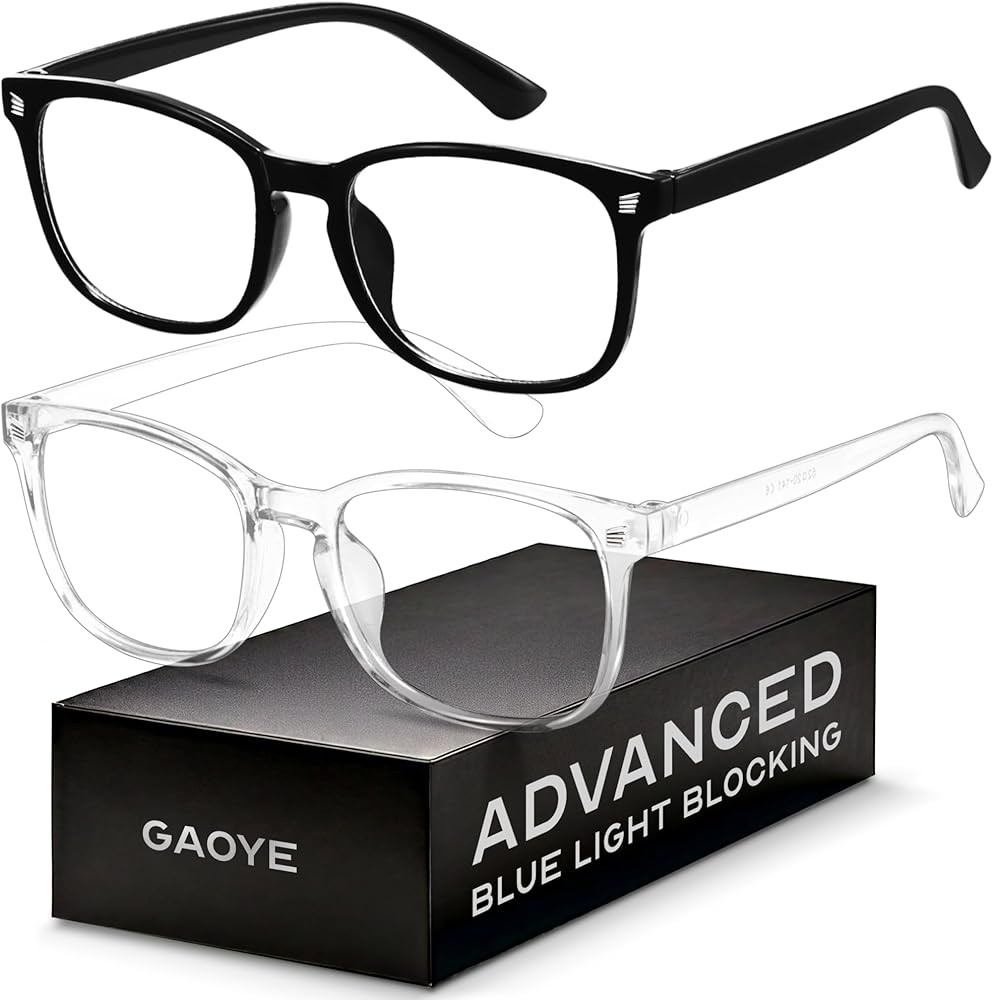
Gaoye Blue Light Glasses
Check Price on AmazonAs an Amazon Associate we earn from qualifying purchases.
Blue Light Blocking & Light Sensitivity Glasses — Best for Multiple Uses
The Blue Light Blocking & Light Sensitivity Glasses system provides 8 interchangeable lens options, allowing you to match blue light filtering intensity to specific situations throughout the day and evening.
The lens set ranges from clear lenses with minimal blue filtering (suitable for daytime office use) to amber/orange lenses providing maximum blue light blocking for evening sleep support. Middle options include yellow-tinted lenses for moderate filtering and light sensitivity options for those with photophobia.
This versatility addresses a key limitation of single-lens blue light glasses: the amber tint that provides maximum circadian benefits for sleep also creates color distortion unsuitable for many daytime activities. With this system, you can wear clear or lightly tinted lenses during work hours and switch to amber lenses in the evening.
The sport-style wrap frame design provides broader coverage than standard glasses, reducing light exposure from the sides. This wraparound approach better mimics the whole-field light filtering used in published research studies.
At $39 for the complete system, the per-lens cost is reasonable for users who want both daytime screen comfort and evening circadian support. The interchangeable design requires slightly more effort than single-lens glasses but provides significantly more flexibility.
Frame fit is crucial with this style. The wrap design works best for medium to large face shapes and may feel tight on smaller faces. Proper fit ensures the lenses stay positioned correctly and provide intended coverage.
TIJN Blue Light Blocking Glasses — Best for Daytime Screen Use

The TIJN Blue Light Blocking Glasses feature clear lenses with anti-glare coating designed for all-day computer use. These glasses take a different approach than amber evening glasses, focusing on reducing screen glare and filtering moderate amounts of blue light without color distortion.
The clear frame and clear lens design means these glasses can be worn in professional settings without the obvious tint of amber sleep glasses. The square frame style suits current eyewear fashion trends and works with most face shapes.
Clear blue light glasses typically block 10-25% of blue wavelengths. While this is substantially less than amber lenses, it may provide some reduction in digital eye strain during extended screen use. However, the Cochrane review found insufficient evidence that this level of blue light filtering improves visual fatigue or eye comfort.
The anti-glare coating serves a more established function: reducing reflections from screens and overhead lighting that can contribute to visual discomfort during computer work. This coating addresses screen glare through a well-understood optical mechanism separate from blue light filtering.
At $17, these glasses represent a middle-ground approach for users who want some blue light filtering but need to maintain color accuracy for work. They’re designed for daytime wear rather than evening circadian intervention.
For sleep support, these glasses would need to be paired with separate amber lens glasses in the evening. The minimal blue light blocking of clear lenses is unlikely to produce measurable effects on melatonin or circadian timing based on research findings.
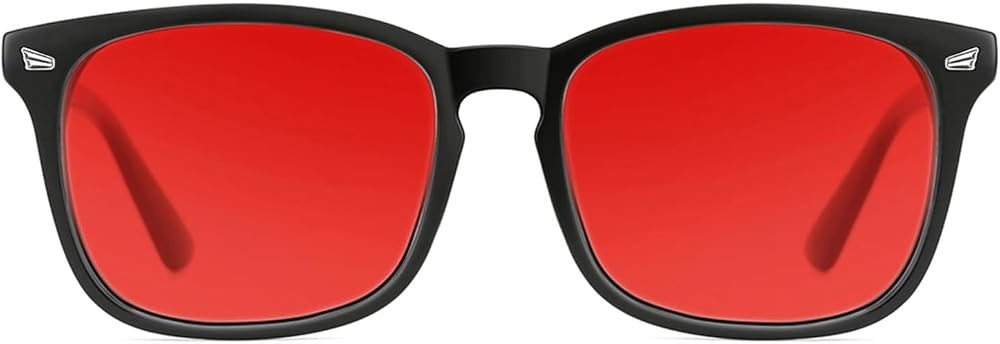
TIJN Blue Light Blocking Glasses
Check Price on AmazonAs an Amazon Associate we earn from qualifying purchases.
ANYLUV Blue Light Glasses — Best for Gaming

The ANYLUV Blue Light Glasses target gamers who spend extended sessions in front of bright monitors and screens. The clear lenses with blue light filtering coating aim to reduce screen glare during multi-hour gaming without the color distortion that would affect gameplay visibility.
Gaming presents unique visual demands. Color accuracy matters for seeing game elements clearly. Screen brightness is often higher than typical office work. Sessions frequently extend into evening hours when circadian effects become relevant.
These glasses use clear lenses with partial blue light filtering, likely blocking 15-30% of blue wavelengths based on similar gaming-focused eyewear. This approach prioritizes maintaining visual clarity over maximum blue light blocking.
The anti-glare coating reduces reflections from bright gaming monitors and ambient lighting. This coating addresses a documented source of visual discomfort during extended screen use through optical principles independent of blue light filtering.
At $19, these glasses are priced competitively for gaming accessories. The value proposition depends primarily on glare reduction rather than blue light blocking, since the clear lens approach provides minimal blue light filtering.
For gamers concerned about evening gaming sessions affecting sleep, these glasses would need to be supplemented with amber lens glasses in the final 2-3 hours before bedtime. The partial blue light blocking of clear lenses is insufficient for circadian intervention based on research evidence.
The frame design emphasizes lightweight comfort for extended wear during gaming sessions. The style is neutral enough for both gaming and casual daily use.
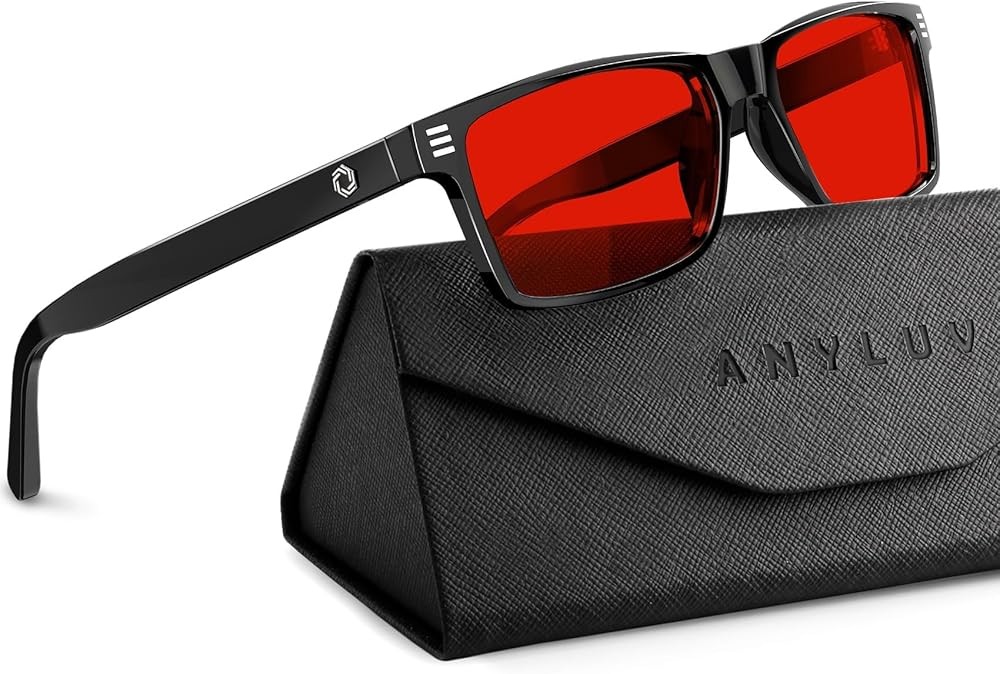
ANYLUV Blue Light Glasses
Check Price on AmazonAs an Amazon Associate we earn from qualifying purchases.
How to Choose Blue Light Blocking Glasses
The research literature reveals several key factors that determine whether blue light glasses will provide measurable benefits for sleep and circadian timing.
Blue Light Blocking Percentage
The most critical specification is what percentage of blue light (specifically 460-490nm wavelengths) the glasses actually block. This information is often missing from product descriptions.
Amber and orange lens tints indicate high blue light blocking, typically 80-99%. Yellow tints provide moderate blocking of 50-80%. Clear or very light tints block only 10-30% of blue light.
The research showing melatonin preservation and circadian phase shifts primarily used amber/orange lenses blocking 80-99% of blue light. Studies using clear or lightly tinted lenses with minimal blue light blocking showed inconsistent or no effects on circadian outcomes.
Lens Tint and Color Perception
Lens tint directly correlates with blue light blocking capacity. Higher blocking requires darker amber/orange tints that create noticeable color distortion. Everything viewed through these lenses appears more yellow/orange.
This color shift is not a defect but rather visual confirmation that blue wavelengths are being filtered. Tasks requiring accurate color perception (photo editing, color-critical work, driving) are not appropriate while wearing high-blocking amber lenses.
For daytime use where color accuracy matters, clear or lightly tinted lenses are more practical, but they provide minimal blue light blocking and are unlikely to affect circadian timing.
Timing of Use
Research protocols typically instructed participants to wear blue light blocking glasses for 2-4 hours before intended bedtime. This timing aligns with the evening hours when light exposure most strongly affects the circadian system and melatonin secretion.
Wearing amber glasses too early in the day could theoretically shift circadian timing in unwanted directions or interfere with beneficial daytime light exposure. The most research-supported approach is putting on high-blocking amber glasses 2-3 hours before bedtime and wearing them until lights-out.
For users wanting all-day screen comfort, a two-glasses approach makes sense: clear or lightly tinted lenses during work hours, switching to amber lenses in the evening.
Frame Fit and Coverage
Some light can enter around the edges of glasses, potentially stimulating ipRGCs even when the lenses block blue light. Wraparound or larger coverage frame designs better approximate the whole-field light filtering used in research studies.
Standard eyeglass frames provide frontal coverage but allow peripheral light exposure. For maximum blue light blocking, frames should fit close to the face with minimal gaps at the sides.
Anti-Reflective and Other Coatings
Anti-reflective (AR) coatings reduce glare from screens and ambient lighting by minimizing surface reflections. This coating can improve visual comfort during screen use through optical principles separate from blue light blocking.
Some manufacturers apply blue light filtering as a lens coating on clear lenses. This approach typically blocks less blue light than amber tint throughout the lens material. Coating-based blocking percentages are often in the 10-25% range.
Fit Over Prescription Glasses
Many people need vision correction. Some blue light blocking glasses are designed to fit over prescription eyewear, avoiding the need for prescription blue light glasses. This feature is worth considering if you regularly wear prescription glasses.
Prescription blue light glasses are available but typically require a separate order through an optician or online prescription eyewear service.
Price and Value
Blue light blocking glasses range from under $10 to over $100. Price does not reliably correlate with blue light blocking effectiveness. The key specifications are lens tint color and blocking percentage, not cost.
An $8 pair of amber-tinted glasses may block more blue light than $50 clear-lens “blue light glasses.” Marketing and brand names often drive pricing more than actual blue light filtering capacity.
For trying the approach, starting with affordable amber lens glasses in the $8-30 range makes sense. If you find benefits after several weeks of consistent evening use, you can upgrade to preferred frame styles or features.
Verification and Testing
Unlike supplements with standardized ingredient testing, blue light glasses have no regulatory standards for blocking percentage claims. Manufacturers may state blocking percentages without independent verification.
Some eyewear professionals can measure blue light transmission through lenses using spectrophotometers, though this service is not universally available. Lens tint color remains the most accessible indicator: darker amber/orange indicates higher blocking.
Special Populations
Research has examined blue light blocking glasses in healthy adults, shift workers, adolescents, pregnant women, and patients with delayed sleep phase disorder. Most studies found larger effects in populations with existing circadian disruption or sleep problems.
Healthy adults with good sleep may notice smaller subjective improvements than people struggling with insomnia or circadian timing issues. The research suggests blue light glasses work best as part of a comprehensive approach for those with sleep difficulties.
Do Blue Light Glasses Help With Eye Strain or Just Sleep?
Marketing for blue light glasses often conflates two separate issues: digital eye strain during daytime screen use and circadian disruption from evening light exposure. The research evidence differs substantially for these two applications.
Digital Eye Strain and Clear Lenses
The Cochrane systematic review specifically examined whether blue light filtering lenses improved visual fatigue during computer use. The analysis found no evidence that blue light filtering reduced eye strain symptoms.
The review analyzed studies measuring visual fatigue scores and critical flicker-fusion frequency (a measure of visual processing and fatigue). One randomized controlled trial with 120 participants found no significant difference in visual fatigue scores between blue light filtering and non-filtering lenses (mean difference 9.76 units, 95% CI -33.95 to 53.47). Another study found no significant difference in critical flicker-fusion frequency (mean difference -1.13 Hz, 95% CI -3.00 to 0.74).
Digital eye strain more likely results from factors like reduced blink rate during screen use (causing dry eyes), prolonged focusing at fixed distances (causing accommodation fatigue), and screen glare. None of these mechanisms involve blue light wavelengths specifically.
Research shows that during concentrated screen work, blink rates can drop by 60% or more compared to normal rates. This reduced blinking leads to tear film evaporation and dry eye symptoms including burning, grittiness, and blurred vision. Blue light filtering does not address blink rate or tear film stability.
Accommodation fatigue occurs when the eye’s focusing muscles maintain contraction for extended periods while viewing screens at fixed distances. This sustained near focus can cause eye strain, headaches, and blurred vision when looking at distant objects. Blue light wavelengths do not specifically cause accommodation fatigue.
Screen glare from reflections of overhead lighting or windows creates visual discomfort and reduces contrast, making text harder to read. Anti-glare coatings that reduce screen reflections address a documented cause of visual discomfort. This coating provides benefits through optical principles unrelated to blue light filtering.
The evidence for clear or lightly tinted blue light glasses reducing daytime eye strain is weak. Claims that these glasses alleviate digital eye strain are not well-supported by research. The 20-20-20 rule (taking a 20-second break to look at something 20 feet away every 20 minutes) addresses accommodation fatigue more directly than blue light filtering.
Evening Circadian Disruption and Amber Lenses
In contrast, the mechanism for evening blue light affecting sleep is well-established. Blue wavelengths activate melanopsin in ipRGCs, sending signals to the circadian control center and suppressing melatonin.
Research shows amber/orange lenses that block 80-99% of blue light can preserve melatonin production during evening light exposure. This is a circadian/hormonal effect, not a visual comfort effect.
The timing matters critically. Evening blue light exposure in the 2-4 hours before sleep is when circadian effects are most pronounced. Blue light earlier in the day can actually support healthy circadian timing and alertness.
Separating Marketing Claims from Evidence
Many blue light glasses are marketed for reducing eye strain, improving sleep, and protecting retinal health. The evidence supports only the circadian/sleep mechanism, and only for amber/orange lenses worn in the evening.
Claims about retinal protection from blue light were specifically examined in the Cochrane review, which found insufficient evidence that blue light filtering lenses reduce risk of macular degeneration or other retinal pathology.
Understanding which claims have research support helps in evaluating whether blue light glasses are appropriate for your specific situation.
What Else Besides Blue Light Glasses Improves Sleep?
Blue light blocking glasses work best as part of a comprehensive approach to sleep and circadian health rather than as a standalone intervention. Research suggests combining evening blue light filtering with other evidence-based sleep strategies.
Evening Light Management
Beyond wearing blue light blocking glasses, reducing overall light exposure in the evening supports melatonin production. This includes dimming lights 2-3 hours before bedtime and minimizing bright overhead lighting in favor of softer lamps.
Some people find red or amber night lights helpful for evening navigation while avoiding blue wavelength exposure. These low-intensity warm-colored lights provide sufficient visibility without activating the circadian alerting response.
Screen Time Reduction
While blue light blocking glasses reduce the circadian impact of screens, the content viewed on screens can affect sleep independently. Stimulating or stress-inducing content can increase arousal and interfere with sleep onset regardless of blue light exposure.
Consider reducing total evening screen time and avoiding highly stimulating content in the hour before bedtime. Reading, gentle stretching, or other non-screen activities may support the transition to sleep.
Melatonin Supplementation
For those with persistent sleep onset difficulties, combining blue light blocking glasses with low-dose melatonin supplementation may provide additive benefits. Research suggests 0.5-3mg of melatonin taken 1-2 hours before bedtime can support circadian timing.
The advantage of combining blue light glasses with melatonin is addressing both the suppression of endogenous melatonin (through blue light filtering) and potentially insufficient melatonin production (through supplementation).
Our comprehensive guide to melatonin dosing covers evidence-based timing and amounts for different sleep issues.
Sleep-Supporting Nutrients
Other nutrients show research evidence for supporting sleep through mechanisms complementary to melatonin. Magnesium, particularly magnesium glycinate, supports relaxation and GABA activity. L-theanine from green tea promotes alpha brain waves associated with calm alertness.
Magnesium glycinate supplementation at 200-400mg in the evening may reduce the time to fall asleep and improve sleep continuity. This mineral approach works through different pathways than melatonin.
L-theanine at 200-400mg can promote relaxation without sedation, potentially helping with the transition to sleep without the next-day effects of sleep medications.
Circadian Rhythm Support
Morning bright light exposure helps anchor circadian rhythms and can make evening blue light blocking more effective. Getting 10-30 minutes of outdoor light exposure in the first hour after waking supports healthy melatonin timing at night.
For those unable to get morning sunlight, bright light therapy lamps providing 10,000 lux can simulate the circadian effects of morning sun exposure. This creates a stronger light-dark cycle with bright morning light and filtered evening light.
Sleep Environment Optimization
Creating a dark sleep environment maximizes the benefits of evening blue light reduction. Blackout curtains, eye masks, or eliminating light sources in the bedroom support melatonin production throughout the night.
Temperature also affects sleep quality. Cooling the bedroom to 60-67°F (15-19°C) supports the natural drop in core body temperature that occurs during sleep onset. Some find weighted blankets provide gentle pressure that promotes relaxation.
Consistent Sleep Schedule
Maintaining regular sleep and wake times, even on weekends, supports circadian rhythm stability. This consistency makes it easier for evening interventions like blue light blocking glasses to have predictable effects.
Going to bed and waking at the same time each day entrains the circadian system to expect sleep at specific times, making the evening transition to sleep more efficient.
Stress and Anxiety Management
For many people, racing thoughts and anxiety interfere with sleep more than light exposure. Ashwagandha supplementation at 300-600mg daily shows research evidence for reducing stress and anxiety that may impair sleep.
The adaptogenic effects of ashwagandha work over days to weeks, complementing acute sleep interventions like blue light glasses or melatonin.
Sleep Tracking and Adjustment
Wearable devices that track sleep can help identify whether blue light glasses and other interventions are improving sleep metrics. Smart rings with sleep tracking provide detailed data on sleep stages, heart rate variability, and body temperature patterns.
Tracking allows you to assess whether the subjective sleep improvements you feel with blue light glasses correspond to objective changes in sleep duration or quality.
When Blue Light Glasses May Not Be Appropriate
While amber lens blue light blocking glasses have research support for evening circadian intervention, they are not appropriate for all situations or users.
Tasks Requiring Color Accuracy
The amber/orange tint that provides effective blue light blocking also distorts color perception. Professional work requiring accurate color judgment (graphic design, photo editing, color matching) cannot be done while wearing amber lenses.
Driving at night with amber tinted glasses may impair the ability to distinguish traffic signals and warning lights. The color distortion could make it difficult to differentiate red, yellow, and green signals quickly.
Any activity where color perception is safety-critical should be done without amber tinted glasses or completed before putting them on for the evening.
Morning and Daytime Use
Blue light exposure during morning and daytime hours supports healthy circadian timing, alertness, and mood. Blocking blue light during the day could theoretically interfere with these beneficial effects.
The research on blue light blocking glasses specifically examined evening wear, typically 2-4 hours before bedtime. There is no evidence supporting all-day blue light blocking for healthy individuals.
Some people with specific light sensitivity conditions may benefit from daytime blue light filtering under medical guidance, but this is distinct from the circadian application for sleep.
People Without Sleep Issues
The randomized controlled trial in 20 healthy adults with no baseline sleep complaints found that blue light blocking glasses reduced subjective sleep onset time but did not improve objective sleep duration or efficiency. Some objective measures actually trended toward worse sleep with blue light blocking.
This suggests the benefits may be smaller or less consistent in people who already sleep well. Those with existing circadian disruption or sleep difficulties may see more substantial improvements.
If you currently fall asleep easily within 20-30 minutes of getting into bed and sleep through the night, blue light blocking glasses may provide minimal additional benefit.
Unrealistic Expectations
Blue light glasses are one intervention addressing one pathway to sleep: the suppression of melatonin by evening light. They do not address anxiety, pain, sleep apnea, restless legs, caffeine consumption, or many other factors that can impair sleep.
Expecting blue light glasses alone to solve significant sleep problems is likely to lead to disappointment. They work best as part of a multi-component approach to sleep hygiene and circadian timing.
Drug and Supplement Interactions
There are no known direct interactions between blue light blocking glasses and medications or supplements. However, by potentially improving melatonin production and sleep timing, the glasses might interact indirectly with sleep medications or melatonin supplements.
If you take prescription sleep medications, consult with your healthcare provider before adding blue light glasses or melatonin supplements to your routine. The combination could theoretically have additive effects requiring medication adjustment.
Why Do Blue Light Glasses Work Better for Some People?
Not everyone responds identically to blue light blocking interventions. Research shows substantial individual variation in circadian light sensitivity and in how much benefit people derive from blue light filtering.
Chronotype Differences
Natural “night owls” with delayed circadian phases may benefit more from evening blue light blocking than natural “morning larks” whose circadian timing is already early. The research in delayed sleep phase disorder patients showed sleep onset advancing by 132 minutes with amber glasses worn from 9 PM to bedtime for 2 weeks.
Delayed sleep phase disorder represents an extreme chronotype where the internal circadian clock is shifted several hours later than conventional sleep schedules. People with this condition naturally fall asleep between 2-6 AM and wake in the late morning or afternoon if allowed to sleep according to their internal rhythm. For these individuals, evening blue light exposure compounds the already-late circadian timing.
Amber lens blue light blocking glasses may help shift their circadian phase earlier by removing the melatonin-suppressing effects of evening light. This allows melatonin secretion to begin earlier in the evening, gradually shifting sleep timing forward.
In contrast, people who naturally fall asleep early and wake early (advanced sleep phase chronotype) may find that evening blue light blocking shifts their timing even earlier, potentially causing them to wake too early in the morning. For these individuals, evening blue light exposure may actually be beneficial for maintaining a sleep schedule compatible with work and social obligations.
Most people fall between these extremes with intermediate chronotypes. The degree of benefit from evening blue light blocking likely correlates with how delayed a person’s natural circadian phase is relative to their desired sleep schedule. Those struggling to fall asleep before midnight despite wanting to sleep earlier may see more substantial improvements than those who naturally fall asleep at their desired bedtime.
Age-Related Factors
The lens of the eye yellows with age, naturally filtering more short wavelength blue light. Older adults receive less blue light exposure from the same light sources compared to younger people.
This might mean older adults experience less circadian disruption from evening screens and might see smaller benefits from blue light blocking glasses. However, this remains theoretical as most research has not stratified results by age.
Baseline Light Exposure
People who spend most of their day in dimly lit indoor environments may be more sensitive to evening blue light than those who get substantial outdoor light exposure during the day.
Strong daytime light exposure helps establish robust circadian rhythms that may be more resistant to disruption from evening light. Blue light glasses might provide incremental benefits when combined with morning bright light.
Screen Brightness and Duration
Someone watching a bright monitor for 4 hours in the evening is receiving substantially more blue light exposure than someone checking their phone briefly before bed. The benefit of blue light blocking glasses likely scales with the amount of evening screen time.
Light exposure affects the circadian system in a dose-dependent manner. Both the intensity (brightness) and duration of exposure contribute to the total circadian stimulus. A very bright screen viewed for a short time may have similar effects to a dimmer screen viewed for longer periods.
Modern LED screens emit substantial blue wavelengths. Computer monitors typically emit 15-30% of their total light output in the blue wavelength range (400-500nm). Smartphones and tablets have similar spectral compositions. At typical viewing distances and brightness settings, these devices can deliver blue light exposure sufficient to suppress melatonin by 50% or more.
Evening screen brightness and duration vary dramatically between individuals. Someone working evening hours on a bright monitor, then watching streaming video for several hours before bed, receives orders of magnitude more blue light exposure than someone who uses dimmed devices minimally in the evening.
For the heavy evening screen user, blue light blocking glasses may provide meaningful reductions in total circadian light exposure. For the minimal screen user, the absolute benefit may be small since baseline evening blue light exposure is already low.
If evening screen use is minimal and dim, blue light blocking glasses may provide little measurable benefit. They are most relevant for people with significant evening screen exposure. Some individuals find that simply reducing evening screen time provides similar or better sleep improvements compared to wearing glasses while continuing heavy screen use.
Screen brightness settings also matter. Many devices now include “night mode” or “warm color” settings that shift screen output toward warmer wavelengths with reduced blue content. These software-based filters can reduce blue light exposure by 30-60% depending on settings. Combining reduced screen brightness, warm color modes, and blue light blocking glasses provides layered reduction in evening blue light exposure.
Individual Melatonin Sensitivity
People vary in how sensitively their melatonin production responds to light. Some individuals show robust melatonin suppression with modest light exposure, while others maintain melatonin production even with relatively bright light.
Those with highly light-sensitive melatonin systems may benefit more from blue light blocking interventions. Unfortunately, there is no simple way to determine individual light sensitivity without specialized testing.
Consistency of Use
The research protocols required participants to wear blue light blocking glasses every evening for the duration of the study (typically 1-2 weeks). Inconsistent use may dilute the benefits.
Wearing amber glasses some evenings but not others creates an irregular circadian signal that may reduce the effectiveness of the intervention. Consistency appears important for establishing stable circadian timing.
What Questions About Blue Light Glasses Remain Unanswered?
While the basic mechanism of blue light affecting melatonin and circadian timing is well-established, several aspects of blue light blocking glasses remain unclear.
Optimal Blocking Percentage
Studies have used glasses blocking anywhere from 40% to 99% of blue light. Which specific blocking percentage is optimal for circadian benefits remains undefined.
Is 80% blocking sufficient, or does 99% blocking provide meaningfully better results? Does blocking more blue light always produce better outcomes, or is there a plateau effect? These dose-response relationships have not been systematically studied.
Ideal Timing and Duration
Research protocols used 1-4 hour wear periods before bedtime. Is 2 hours sufficient, or are 4 hours necessary? Should glasses be worn until lights-out, or is there benefit to removing them before bed?
Can wearing amber glasses earlier in the evening (starting at 7 PM vs 9 PM) shift circadian timing differently? These timing questions lack definitive answers.
Long-Term Effects
Most studies examined blue light glasses over 1-2 weeks. Do the benefits persist with months or years of consistent use? Does the circadian system adapt or does blue light blocking continue providing benefit indefinitely?
Long-term safety and effectiveness data are limited. It is theoretically possible that chronic evening blue light blocking could have unintended effects on circadian flexibility or adaptation to changing light schedules.
Objective vs Subjective Outcomes
Several studies found improvements in subjective sleep quality (how people felt about their sleep) but not in objective measures like actigraphy-derived total sleep time or sleep efficiency.
Why does this discrepancy exist? Are people perceiving sleep benefits that do not manifest in objective measurements? Or are current sleep measurement tools missing subtle benefits that people genuinely experience?
This gap between subjective and objective outcomes makes it difficult to definitively assess how effective blue light glasses are for sleep.
Comparison to Other Interventions
Few studies have directly compared blue light blocking glasses to other sleep interventions like reducing screen time, dimming lights, or melatonin supplementation.
Is wearing glasses while continuing screen use as effective as simply reducing evening screen time? Would combining blue light glasses with melatonin supplementation provide additive benefits or redundant effects?
These comparative effectiveness questions remain largely unanswered.
Mechanism for Subjective Improvements
If blue light glasses improve how people feel about their sleep without changing objective sleep parameters, what mechanism might explain this?
Possible explanations include placebo effects, reduced visual stimulation from screens (separate from blue light), or subtle circadian shifts not captured by standard sleep measurements. The subjective experience of sleep quality matters even if objective sleep duration is unchanged, but understanding the mechanism would help predict who might benefit.
Related Reading
- Best Light Therapy Lamps for SAD — Morning bright light exposure complements evening blue light blocking for circadian support
- Best Red Light Therapy Panels for Home — Red wavelength light does not suppress melatonin and may support evening relaxation
- Best Nighttime Routine for Better Sleep: Evidence-Based Tips — Comprehensive evening protocol including light management
- Circadian Rhythm Disorders: What Research Shows — Understanding delayed sleep phase and other circadian timing issues
- Best Melatonin Supplements — Combining melatonin supplementation with blue light blocking
- Shift Work Sleep Disorder: Circadian Reset — Blue light glasses as tool for shift workers managing rotating schedules
- Best Magnesium Supplements for Sleep — Complementary sleep support through GABA and relaxation pathways
- Best Weighted Blankets for Anxiety and Sleep — Sleep environment optimization beyond light management
- Blue Light Impact on Women’s Sleep — Sex differences in circadian light sensitivity
- Best Smart Rings for Sleep Tracking — Tracking objective sleep changes with interventions
References
-
Bigalke JA, Greenlund IM, Nicevski JR, Carter JR. Effect of evening blue light blocking glasses on subjective and objective sleep in healthy adults: A randomized control trial. Sleep Health. 2021;7(4):485-490. doi:10.1016/j.sleh.2021.02.004. PMID: 33707105
-
Maeda-Nishino NJ, Yoshimoto R, Ono T, Chiba S, Nishino S. Partial blue light blocking glasses at night advanced sleep phase and reduced daytime irritability, disruptive behavior and improved morning mood, but did not alter salivary melatonin secretion in Japanese male schoolchildren. PLoS One. 2025;20(1):e0332877. doi:10.1371/journal.pone.0332877. PMID: 41166315
-
Singh S, Keller PR, Busija L, McMillan P, Makrai E. Blue-light filtering spectacle lenses for visual performance, sleep, and macular health in adults. Cochrane Database Syst Rev. 2023;8(8):CD013244. doi:10.1002/14651858.CD013244.pub2. PMID: 37593770
-
Luna-Rangel FA, Gonzalez-Bedolla B, Salazar-Ortega MJ, Torres-Mancilla XM, Martinez-Cadena S. Efficacy of blue-light blocking glasses on actigraphic sleep outcomes: a systematic review and meta-analysis of randomized controlled crossover trials. Front Neurol. 2025;16:1699303. doi:10.3389/fneur.2025.1699303. PMID: 41341515
-
Hester L, Dang D, Barker CJ, Heath M, Mesiya S. Evening wear of blue-blocking glasses for sleep and mood disorders: a systematic review. Chronobiol Int. 2021;38(10):1375-1383. doi:10.1080/07420528.2021.1930029. PMID: 34030534
-
Onodera Y, Kubota N, Miyagi N, Matsuura N, Muramatsu S. Blue Light-Blocking Glasses Attenuate Light-Induced Melatonin Suppression in Healthy Japanese Adults. Tohoku J Exp Med. 2025;271(2):117-123. doi:10.1620/tjem.2025.J086. PMID: 40603104
-
Sasseville A, Paquet N, Sévigny J, Hébert M. Blue blocker glasses impede the capacity of bright light to suppress melatonin production. J Pineal Res. 2006;41(1):73-78. doi:10.1111/j.1600-079X.2006.00332.x. PMID: 16842544
-
Esaki Y, Kitajima T, Ito Y, Koike S, Nakao Y. Wearing blue light-blocking glasses in the evening advances circadian rhythms in the patients with delayed sleep phase disorder: An open-label trial. Chronobiol Int. 2016;33(8):1037-1044. doi:10.1080/07420528.2016.1194289. PMID: 27322730
-
van der Lely S, Frey S, Garbazza C, Wirz-Justice A, Jenni OG. Blue blocker glasses as a countermeasure for alerting effects of evening light-emitting diode screen exposure in male teenagers. J Adolesc Health. 2015;56(1):113-119. doi:10.1016/j.jadohealth.2014.08.002. PMID: 25287985
-
Liset R, Grønli J, Henriksen RE, Henriksen TEG, Nilsen RM. A randomized controlled trial on the effect of blue-blocking glasses compared to partial blue-blockers on melatonin profile among nulliparous women in third trimester of the pregnancy. Neurobiol Sleep Circadian Rhythms. 2022;12:100074. doi:10.1016/j.nbscr.2021.100074. PMID: 35024497
-
Ostrin LA, Abbott KS, Queener HM. Attenuation of short wavelengths alters sleep and the ipRGC pupil response. Ophthalmic Physiol Opt. 2017;37(4):440-450. doi:10.1111/opo.12385. PMID: 28656675
-
Lee S, Kakitsuba N, Katsuura T. Do green-blocking glasses enhance the nonvisual effects of white polychromatic light? J Physiol Anthropol. 2018;37(1):28. doi:10.1186/s40101-018-0189-3. PMID: 30563575
Recommended Products