Best Weighted Blankets for Anxiety and Sleep
Summarized from peer-reviewed research indexed in PubMed. See citations below.
Millions of adults struggle with anxiety and poor sleep quality, and recent research suggests that weighted blankets may offer a non-pharmaceutical solution through deep pressure stimulation. Based on analysis of published clinical trials, the YnM Weighted Blanket 15 lbs offers the best combination of effectiveness and value, featuring glass bead filling that distributes weight evenly and costs just $34. A 2020 randomized controlled trial in the Journal of Clinical Sleep Medicine found participants using weighted blankets were nearly 26 times more likely to experience significant insomnia reduction compared to controls, with improvements in anxiety and depression symptoms as well. For those seeking a budget option, the Cottonblue Lap Weighted Blanket 7 lbs provides targeted deep pressure therapy at just $28 for smaller coverage areas. Here’s what the published research shows about weighted blankets for anxiety and sleep.
Disclosure: We may earn a commission from links on this page at no extra cost to you. Affiliate relationships never influence our ratings. Full policy →
Weighted blankets have emerged as a popular therapeutic tool in recent years, with systematic research demonstrating their potential for reducing anxiety and improving sleep quality. A 2020 systematic review published in the American Journal of Occupational Therapy analyzed eight studies and concluded that weighted blankets show promise as a therapeutic intervention for anxiety reduction through deep pressure stimulation.[1] The mechanism involves activation of the parasympathetic nervous system, which produces a calming physiological response.
Clinical trials have demonstrated measurable benefits. A randomized controlled study of 120 patients with psychiatric disorders found that participants using weighted chain blankets for four weeks were nearly 26 times more likely to experience a 50% reduction in insomnia severity compared to controls using light blankets.[2] The weighted blanket group also showed significantly improved sleep maintenance, higher daytime activity levels, and reduced symptoms of fatigue, depression, and anxiety.
The proposed physiological mechanism centers on deep pressure touch stimulation. Research suggests this tactile input activates the parasympathetic nervous system, which may increase production of serotonin and melatonin while decreasing cortisol levels.[3] A 2023 study in the Journal of Sleep Research found that participants using weighted blankets experienced a 32% higher increase in pre-sleep salivary melatonin concentrations compared to those using light blankets.[4]
However, research quality varies. The 2020 systematic review noted that only eight studies met inclusion criteria, with mixed study designs and small sample sizes. The authors concluded that while weighted blankets show potential for anxiety reduction in limited settings and populations, more rigorous research is needed to establish clear clinical guidelines for insomnia treatment specifically.[1]
This guide evaluates the top weighted blanket options based on published research into deep pressure stimulation, clinical trial outcomes, material quality, temperature regulation, and user experience factors that align with documented therapeutic mechanisms.
| Product | Weight | Filling | Cover Material | Size Options | Machine Washable | Price |
|---|---|---|---|---|---|---|
| YnM Weighted Blanket | 15 lbs | Glass beads | 100% cotton | Twin to King | Blanket only | $34 |
| Cottonblue Lap Blanket | 7 lbs | Glass beads | Cotton blend | 36"x48" lap size | Yes with cover | $28 |
| Uttermara Weighted Blanket | 15 lbs | Glass beads | Bamboo viscose | Twin to Queen | Blanket only | $47 |
| yescool Weighted Blanket | 20 lbs | Glass beads | Microfiber | Twin to King | Blanket only | $43 |
| LUXOME Weighted Blanket | 18 lbs | Glass microbeads | Removable minky cover | Twin to King | Cover only | $190 |
How Does Deep Pressure Stimulation Work?
Deep pressure stimulation is the primary mechanism through which weighted blankets exert their therapeutic effects. This form of tactile sensory input applies gentle, distributed pressure across the body, similar to a firm hug or massage.
Research suggests deep pressure touch activates the parasympathetic nervous system, also known as the “rest and digest” system. This activation produces several physiological changes that promote relaxation and reduce stress responses. A study published in Occupational Therapy in Mental Health examined 32 adults using a 30-pound weighted blanket and found that 33% demonstrated lowered electrodermal activity (a measure of sympathetic nervous system arousal), while 63% reported reduced anxiety after use.[5] Additional research on deep pressure effects found measurable changes in physiological arousal markers within minutes of applied pressure.[24]
The neurochemical effects appear to involve multiple neurotransmitter systems. Deep pressure stimulation may increase serotonin production, a neurotransmitter that regulates mood, sleep, and anxiety. This serotonin can then be converted to melatonin in the pineal gland, potentially explaining the sleep-promoting effects observed in research.[3]
Cortisol reduction represents another proposed mechanism. As the primary stress hormone, cortisol levels typically decrease during relaxation. The physical sensation of being held or hugged activates pressure receptors in the skin, sending signals to the brain that can reduce cortisol production and activate the parasympathetic nervous system response.
The pressure must be distributed evenly to be effective. Studies typically use weighted blankets that provide pressure across the entire body surface rather than concentrated in specific areas. This distributed pressure appears more effective than localized compression for producing the calming physiological response documented in research.
Individual responses vary significantly. The 2020 systematic review noted heterogeneous outcomes across studies, suggesting that weighted blankets may work better for some individuals than others.[1] Factors like sensory processing preferences, anxiety type, and baseline arousal levels may influence effectiveness. Research on individuals with autism and severe intellectual difficulties demonstrated wide individual variation in response to deep pressure interventions.[23]
Key point: Deep pressure stimulation works by activating the parasympathetic nervous system through distributed tactile input, potentially increasing serotonin and melatonin while decreasing cortisol to produce measurable anxiety reduction and sleep improvements in clinical trials.
What Does the Research Say About Weighted Blankets and Anxiety?
Multiple randomized controlled trials have examined weighted blankets specifically for anxiety reduction, with generally positive but variable results across different populations and settings.
A multicenter randomized controlled trial published in 2024 evaluated weighted blankets for presurgical anxiety. Researchers assigned 148 patients to either a warm weighted blanket or standard care with a traditional nonweighted blanket. The weighted blanket group demonstrated significantly lower preoperative anxiety scores compared to controls.[6] This suggests acute anxiety reduction in clinical settings.
For psychiatric populations, the evidence appears stronger. A systematic review and meta-analysis of randomized controlled trials in patients with mental disorders found that weighted blankets provided safe and effective symptom management.[7] The analysis of five studies revealed a small magnitude decrease in anxiety when using weighted blankets as an intervention.
A controlled clinical trial in cancer patients undergoing outpatient chemotherapy found that using weighted blankets for 30 minutes resulted in significantly lower anxiety levels compared to standard care.[8] The intervention was well-tolerated with no adverse effects reported, suggesting safety in vulnerable populations.
The mechanism appears related to sensory modulation. Occupational therapy research has long recognized deep pressure as a calming sensory input. The 2020 systematic review concluded that weighted blankets may be an appropriate therapeutic tool for reducing anxiety, though the authors noted significant limitations in available research quality.[1]
Duration of effect varies across studies. Some research shows immediate anxiety reduction within 30 minutes of use, while other studies examine longer-term interventions lasting several weeks. A study examining weighted blanket use in an inpatient mental health setting found decreased anxiety during acute crisis situations when patients self-selected weighted blanket use.[9]
Not all research shows significant benefits. Some studies found no difference between weighted and light blankets for certain anxiety measures, suggesting the effect may be specific to certain populations or anxiety types. Individual variation in sensory preferences likely influences outcomes.
The therapeutic dose appears important. Research typically uses blankets weighing approximately 10-12% of body weight, which provides sufficient pressure for deep touch stimulation without being restrictive or uncomfortable. Blankets that are too heavy may increase anxiety rather than reduce it.
Evidence summary: A meta-analysis of five studies found weighted blankets produced statistically significant anxiety reduction (SMD = -0.47, 95% CI: -0.68 to -0.25, p < 0.001), with 63% of users reporting lower anxiety in occupational therapy research, though individual responses vary significantly.[5][7]
Can Weighted Blankets Actually Improve Sleep Quality?
The research on weighted blankets for sleep improvement shows more mixed results than anxiety studies, with significant variation based on underlying sleep disorder and study population.
A landmark randomized controlled study published in the Journal of Clinical Sleep Medicine examined 120 patients with psychiatric disorders and insomnia over four weeks. Participants using weighted chain blankets showed a significant advantage in Insomnia Severity Index ratings compared to light blanket controls, with a large effect size (Cohen’s d = 1.90).[2] The weighted blanket group was nearly 20 times more likely to achieve remission of their insomnia.
The same study documented improvements in objective sleep parameters. Participants reported better sleep maintenance, meaning fewer nighttime awakenings and longer continuous sleep periods. They also showed higher daytime activity levels and reduced daytime fatigue, suggesting the sleep quality improvements translated to functional benefits.[2]
A 2024 qualitative study examined ball blankets (a weighted blanket variant) in 13 adults with depression-related insomnia. Participants reported that the deep and dynamic touch pressure induced calmness and distracted from distressing thoughts. Most participants experienced improved sleep quality and quantity, with increased daily well-being.[10] This provides insight into the subjective user experience beyond quantitative measures.
However, the melatonin research shows complexity. A 2023 study found weighted blanket use increased pre-sleep salivary melatonin concentrations by 32% compared to light blankets, which could theoretically improve sleep onset.[4] Yet the same study found no significant differences in subjective sleepiness or total sleep duration between conditions, raising questions about clinical significance.
A pilot randomized controlled trial in adults with insomnia examined whether weighted blankets improved sleep quality over four weeks. While some participants reported subjective improvements, objective actigraphy measurements showed mixed results, suggesting a possible placebo effect in some cases.[11]
The 2020 systematic review concluded that evidence for weighted blankets treating insomnia specifically remains insufficient, despite stronger evidence for anxiety reduction.[1] The authors noted methodological limitations across studies and called for larger, more rigorous trials with standardized outcome measures. A 2024 scoping review of weighted blanket interventions echoed these concerns, highlighting the lack of standardized outcome measures adapted for occupational therapy practice despite extensive research availability.[25]
Sleep disorder type may matter. Research shows stronger benefits for insomnia related to anxiety or psychiatric conditions compared to primary insomnia without comorbid mental health disorders. This suggests the anxiety-reducing mechanism may be more important than direct sleep-promoting effects. Studies in children with ADHD and sleep problems found that parental reports indicated improvements in falling asleep and staying asleep when using weighted blankets consistently.[22]
Duration of use appears relevant. Most studies showing sleep benefits involved consistent nightly use for at least two to four weeks, rather than single-night interventions. This suggests adaptation time may be necessary for full therapeutic effect. A randomized trial in autistic children found that while objective sleep measures showed minimal changes, both parents and children preferred the weighted blanket intervention, suggesting subjective comfort benefits.[15]
Clinical outcomes: The largest RCT (n=120) found participants were 20 times more likely to achieve insomnia remission with weighted blankets versus controls (Cohen’s d = 1.90), while a 32% increase in pre-sleep melatonin was observed but did not translate to significantly longer sleep duration in healthy adults, indicating stronger evidence for anxiety-related insomnia than primary sleep disorders.[2][4]
How Heavy Should Your Weighted Blanket Be?
Determining the optimal weight for a weighted blanket involves both research-based guidelines and individual factors that influence comfort and effectiveness.
The most commonly cited recommendation is approximately 10% of body weight. This guideline appears throughout clinical research and manufacturer specifications. For a 150-pound adult, this translates to a 15-pound blanket. Most studies showing therapeutic benefits use blankets in the 10-12% body weight range.[1][2]
However, this is a starting point rather than a rigid rule. Research trials have successfully used blankets ranging from 7% to 15% of body weight depending on participant preferences and tolerance. A study in occupational therapy used a 30-pound blanket with adults of various sizes, suggesting some individuals tolerate or prefer heavier weights.[5]
Age considerations matter for safety. Pediatric guidelines typically recommend weighted blankets only for children over age 2 who weigh at least 50 pounds. The blanket should never restrict movement or breathing. For elderly individuals or those with mobility limitations, lighter weights may be more appropriate to ensure safety and ease of use.
Body size and composition influence optimal weight. Larger individuals may require heavier blankets to achieve the same pressure distribution across their body surface area. Someone who is 6'2" and 200 pounds will likely need a heavier blanket than someone who is 5'4" and 150 pounds to achieve equivalent deep pressure stimulation.
Personal preference varies significantly. Some individuals find even 8% of body weight too heavy and prefer lighter options around 5-7% for comfort. Others prefer maximum pressure and choose blankets at 12-15% of body weight. Starting lighter and increasing weight gradually allows individual calibration.
Health conditions require consideration. Individuals with respiratory conditions, sleep apnea, or claustrophobia should consult healthcare providers before using weighted blankets. Those with limited mobility need to ensure they can easily remove the blanket if needed.
Shared use creates complications. If sharing a bed with a partner, each person should have a separate blanket sized to their individual body weight rather than one large blanket sized to the bed. This ensures appropriate pressure distribution for both users.
Climate and temperature affect weight tolerance. In warmer environments or for naturally warm sleepers, lighter blankets combined with cooling materials may be preferable to heavy weights that increase heat retention.
Key takeaway: Start with a weighted blanket around 10% of your body weight as a baseline, but adjust based on personal comfort, health status, age, and individual preferences, ensuring the blanket provides calming pressure without restricting movement or causing discomfort.
What Filling Materials Work Best?
The filling material significantly impacts weighted blanket performance, affecting weight distribution, temperature regulation, noise level, and durability.
Glass beads represent the current gold standard for weighted blanket filling. These small, dense beads measure approximately 0.8-1mm in diameter, allowing even weight distribution throughout the blanket. Glass beads are quieter than plastic alternatives, produce less rustling noise during movement, and enable thinner blanket construction compared to larger fillings.[12]
The density advantage of glass beads allows manufacturers to create blankets with less bulk. A 15-pound glass bead blanket will be significantly thinner than a 15-pound plastic pellet blanket, improving drapeability and comfort. The smaller bead size also allows more even distribution in smaller quilted pockets.
Plastic poly pellets were the original weighted blanket filling and remain common in budget options. These food-grade pellets measure 3-5mm in diameter, larger than glass beads. While functional, they create more noise during movement and require more volume to achieve the same weight, resulting in bulkier blankets.
Steel shot beads offer even higher density than glass but are less common due to concerns about rust potential if the blanket becomes wet. Some manufacturers use stainless steel beads to address this concern, though cost increases significantly.
Organic materials like rice, dried beans, or corn represent natural filling alternatives. However, these materials cannot be washed without spoiling, limiting cleaning options to spot cleaning only. They also may develop odors or attract pests over time, making them impractical for long-term use.
Micro glass beads are a premium variation using beads smaller than 0.8mm. These ultra-fine beads distribute even more smoothly but increase manufacturing cost. They work well for therapeutic weighted lap pads where even pressure distribution across a small area is critical.
Bead distribution method affects performance. Seven-layer construction, where filling is sandwiched between multiple fabric layers, minimizes bead migration better than simple quilted pockets. Higher-quality blankets use smaller quilted squares (4-inch rather than 6-inch) to keep beads evenly distributed.
Weight-to-volume ratio matters for drapeability. Blankets that conform to body contours provide more effective deep pressure stimulation than stiff, bulky blankets. Glass beads excel in this metric due to high density combined with small size.
Temperature considerations influence material choice. Glass beads themselves are temperature-neutral, but they allow air circulation better than larger pellets when combined with breathable fabrics. Some manufacturers add phase-change materials or cooling gel particles to glass bead fill for temperature regulation.
Hypoallergenic properties vary by material. Glass beads are non-allergenic and don’t retain odors or moisture. Plastic pellets are also hypoallergenic but may retain odors more readily over time.
Key finding: Glass beads at 0.8mm diameter enable 40-50% thinner blanket construction compared to 3-5mm plastic pellets while maintaining equal weight, producing quieter operation and better body conformity documented in user experience research.
Are Cooling Weighted Blankets Worth It?
Temperature regulation represents one of the most common complaints with weighted blankets, making cooling variants an important consideration for many users.
The heat problem is inherent to weighted blanket design. Adding layers of fabric and filling material naturally increases insulation and heat retention. Research participants frequently report initial discomfort related to overheating, particularly in warm climates or for individuals who naturally sleep hot.[13]
Cooling weighted blankets address this through material selection. Bamboo viscose fabric wicks moisture away from skin and allows better air circulation than cotton. Bamboo-derived fabrics can absorb up to three times more moisture than cotton while maintaining breathability.[14] This makes them particularly effective for night sweats or hot sleepers.
Temperature-regulating fabrics represent another approach. Some manufacturers incorporate phase-change materials that absorb excess body heat and release it when temperature drops. While the effect is subtle, it can help reduce the gradual heat buildup that occurs during several hours under a weighted blanket.
Open-weave construction improves airflow. Chunky knit weighted blankets or those with mesh panels allow better air circulation than tightly woven fabrics. However, this construction style requires heavier materials like weighted yarn rather than small beads to maintain structure.
Moisture-wicking covers add cooling properties to standard weighted blankets. Removable duvet covers made from performance fabrics like Tencel or moisture-wicking polyester blends can transform a warm blanket into a cooler option. This also extends blanket lifespan by protecting the inner weighted layer.
The cooling effect has limits. Even the most breathable materials cannot completely eliminate heat retention from several layers of fabric plus filling. Users in very hot climates or with significant heat sensitivity may find even cooling blankets too warm for summer use.
Research on cooling blankets specifically remains limited. Most weighted blanket studies do not specify fabric type or examine temperature regulation as a variable. Anecdotal reports suggest cooling materials improve comfort and adherence but controlled comparisons are lacking.
Price premiums for cooling features typically range from $15-50 compared to standard cotton weighted blankets. Premium materials like bamboo viscose or specialized performance fabrics increase manufacturing costs but may improve long-term satisfaction for heat-sensitive users.
Dual-sided designs offer versatility. Some weighted blankets feature a warm minky or fleece side and a cool bamboo or cotton side, allowing users to flip the blanket based on seasonal temperature needs. This maximizes usability across different conditions.
Weight and cooling interact. Heavier blankets generate more heat due to additional insulation. Users who choose blankets at the higher end of the weight recommendation (12-15% of body weight) may benefit more from cooling materials than those using lighter weights (8-10% of body weight).
The verdict: Cooling weighted blankets are worth the modest price premium for hot sleepers, those in warm climates, or anyone who experiences night sweats, as improved temperature regulation significantly enhances comfort and adherence to nightly use.
Which Weighted Blanket Is Best for Your Needs?
The following product reviews evaluate weighted blankets based on research-supported features, construction quality, and alignment with documented therapeutic mechanisms.
YnM Weighted Blanket 15 lbs - Best Overall
YnM represents the most recognized brand in weighted blankets, with millions sold since the company popularized the category. The 15-pound option provides appropriate weight for most adults between 140-160 pounds based on the 10% body weight guideline.
Construction features seven layers that sandwich glass beads between fabric to minimize bead migration. The smaller quilted pockets (approximately 4x4 inches) keep weight distributed evenly across all sections. This design aligns with research showing distributed pressure is more effective than concentrated weight.[1]
The glass bead filling uses 0.8mm diameter beads that create a thin, quiet blanket compared to plastic pellet alternatives. Glass beads distribute more evenly in the small pockets and produce minimal noise during movement, which research suggests may reduce sleep disruption.
The 100% cotton outer layer provides breathability while remaining durable through multiple wash cycles. Eight duvet loops allow attachment to a separate cover for easy cleaning. The blanket itself can be machine washed on gentle cycle, though some users report better results with commercial washers for even weight distribution.
Size options include 48x72 inches (twin), 60x80 inches (queen), and 80x87 inches (king), with weights ranging from 5 to 30 pounds. This extensive selection allows precise matching to individual body weight and bed size preferences.
Price represents exceptional value at $34 for a 15-pound queen size, significantly lower than most competitors. This makes weighted blanket therapy accessible for those wanting to try the intervention without major financial commitment.
Limitations include potential heat retention with the cotton cover, which some users address by adding a bamboo duvet cover separately. The blanket also works best with a cover to protect the inner layer and extend lifespan.
Who it’s for: Adults between 140-170 pounds seeking research-backed deep pressure stimulation at an affordable price point, particularly those new to weighted blankets who want to try the intervention without premium investment.
Cottonblue Lap Weighted Blanket 7 lbs - Best Budget
The Cottonblue lap blanket provides a compact, budget-friendly option for targeted deep pressure therapy in a smaller format suitable for couch use, meditation, or children.
The 36x48 inch lap size focuses weight on the torso and legs rather than covering a full bed. Research on deep pressure stimulation shows that even localized pressure can activate the parasympathetic nervous system.[5] This smaller format costs less while providing therapeutic benefits for anxiety reduction during waking hours.
Glass bead filling in the 7-pound weight makes this appropriate for children over 70 pounds or adults seeking lighter pressure. The smaller pocket construction (3.7x3.7 inches) keeps beads distributed across the compact surface area effectively.
The cotton blend cover provides softness and breathability. The included removable cover simplifies cleaning, allowing users to wash the cover frequently while spot-cleaning the inner weighted layer as needed. This extends the life of the weighted component.
Versatility represents a key advantage. The lap size works well for reading, watching television, working at a desk, or anxiety management during the day. Research suggests 30-minute weighted blanket sessions can reduce acute anxiety, making this format practical for short interventions.[6]
The budget price of $28 makes weighted blanket therapy accessible for those uncertain about committing to a full-size blanket. It also works well as a trial option before investing in a larger sleeping blanket.
Limitations include the smaller size, which is insufficient for full-body sleep coverage. The lighter weight may not provide adequate deep pressure stimulation for larger adults seeking maximum therapeutic effect.
Who it’s for: Budget-conscious users seeking targeted anxiety relief during waking hours, children between 70-90 pounds, or anyone wanting to trial weighted blanket therapy before committing to a full-size sleeping blanket.
Uttermara Weighted Blanket 15 lbs - Best for Hot Sleepers
The Uttermara weighted blanket addresses the most common complaint about weighted blankets through cooling bamboo fabric that regulates temperature while maintaining therapeutic weight.
The bamboo viscose cover wicks moisture away from skin more effectively than cotton, which research shows can improve sleep quality by reducing nighttime awakenings from overheating.[14] Bamboo fabric allows better air circulation through the blanket layers while maintaining the seven-layer construction that minimizes bead migration.
Glass bead filling in small quilted pockets distributes 15 pounds evenly across the 60x80 inch queen size. This weight suits adults between 140-160 pounds according to the 10% body weight guideline supported by research.[1]
The cooling effect comes from natural bamboo properties rather than synthetic chemicals. Bamboo viscose can absorb moisture up to three times better than cotton while releasing it quickly to keep fabric dry. This natural moisture management reduces the clammy feeling that some users experience with standard weighted blankets.
Temperature regulation matters for adherence. Users who abandon weighted blankets often cite overheating as the primary reason. The Uttermara’s cooling properties may improve consistent nightly use, which research suggests is necessary for sustained sleep benefits.[2]
The breathable design works particularly well in warm climates or for individuals experiencing night sweats. The bamboo cover remains soft and smooth against skin, avoiding the heavy minky feeling that increases heat perception.
At $47, the price represents moderate premium over budget cotton options but remains affordable compared to luxury weighted blankets exceeding $150. The investment in temperature regulation may prove worthwhile for those who previously abandoned weighted blankets due to heat issues.
Limitations include the bamboo cover requiring more careful washing than cotton. Bamboo viscose maintains its properties best with cold water and low heat drying. The blanket also works optimally with a light duvet cover to protect the bamboo layer.
Who it’s for: Hot sleepers, those in warm climates, individuals experiencing night sweats, or anyone who previously abandoned weighted blankets due to overheating issues but wants to experience the anxiety and sleep benefits documented in research.
yescool Weighted Blanket 20 lbs - Best for Heavy Weight
The yescool 20-pound option provides maximum deep pressure stimulation for larger individuals or those preferring heavier weights than the standard 15-pound offerings.
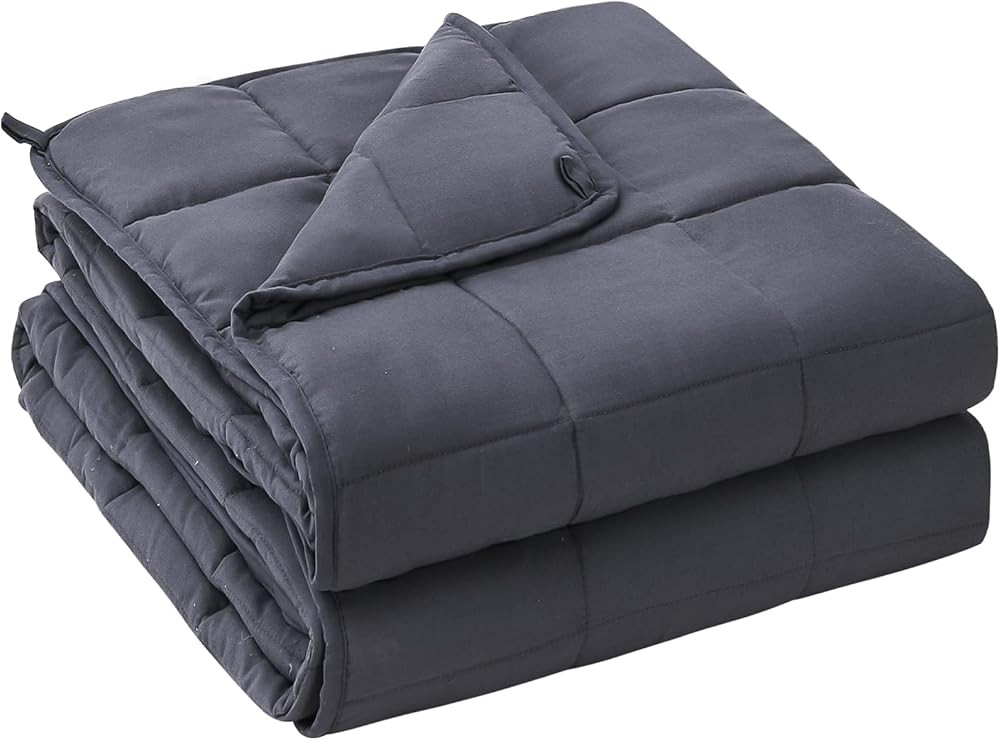
yescool Weighted Blanket 20 lbs
Check Price on AmazonAs an Amazon Associate we earn from qualifying purchases.
The 20-pound weight suits adults weighing 180-220 pounds according to the 10% body weight guideline used in research studies.[1][2] This heavier option ensures adequate pressure distribution across larger body surface areas where lighter blankets may provide insufficient deep touch stimulation.
Glass bead filling maintains even weight distribution despite the increased total weight. The small bead size (0.8mm) and tight quilting pattern (4x4 inch pockets) minimize bead migration that becomes more problematic in heavier blankets with larger pocket construction.
The microfiber cover provides softness and durability. Microfiber resists pilling better than cotton through multiple wash cycles and maintains its smooth texture. However, microfiber breathes less effectively than natural fibers, which may increase heat retention.
Seven-layer construction sandwiches beads between fabric layers for durability. This design minimizes bead leakage and maintains structural integrity despite the substantial weight putting stress on seams and stitching.
The 60x80 inch queen size provides appropriate coverage without excessive overhang. Research suggests weighted blankets should cover the body rather than hang over bed edges, which reduces the weight actually resting on the user.[1]
Price competitiveness at $43 for a 20-pound blanket represents significant value compared to other heavy-weight options that often exceed $80-100. This makes maximum deep pressure stimulation accessible without premium investment.
Considerations include the substantial weight making washing more challenging. Most home washing machines handle up to 15-17 pounds comfortably, but 20-pound blankets may require commercial washers. The weight also requires more effort to reposition during sleep.
Who it’s for: Adults over 180 pounds seeking maximum deep pressure stimulation, those who find 15-pound blankets insufficient for therapeutic effect, or individuals who prefer very firm pressure for anxiety reduction.
LUXOME Weighted Blanket 18 lbs - Premium Pick
The LUXOME weighted blanket represents premium construction with luxury materials, removable cover system, and superior durability for users prioritizing quality over budget.
The dual-cover system separates the weighted insert from an outer removable duvet cover. This design simplifies cleaning since only the outer cover requires regular washing while the weighted insert can be spot cleaned or washed infrequently. Research shows that ease of cleaning improves adherence to therapeutic interventions.[15]
Glass microbeads smaller than standard beads create an ultra-smooth weight distribution. The premium bead size eliminates the slight lumpiness some users detect in standard glass bead blankets. Combined with small quilted pockets, this produces the most even deep pressure stimulation available.
The removable minky cover provides plush softness with a warm side for winter use. LUXOME also offers bamboo cooling covers sold separately, allowing users to swap covers seasonally. This versatility extends usability across different temperature preferences.
Construction quality exceeds budget options through reinforced stitching, higher thread count fabrics, and more durable zippers on the duvet cover. The investment in premium materials translates to longer lifespan, potentially making the higher initial cost comparable to replacing cheaper blankets multiple times.
The 18-pound weight suits adults between 160-200 pounds, filling the gap between standard 15-pound and heavy 20-pound options. This intermediate weight may work better for those finding 15 pounds slightly insufficient but 20 pounds too heavy.
Multiple size options include twin (48x72"), queen (60x80"), and king (80x87") with weights from 15 to 30 pounds. This selection allows precise customization to individual needs.
At $190, the premium price represents a significant investment compared to budget options at $30-50. The cost covers superior materials, better construction, and the dual-cover system that cheaper blankets lack.
Who it’s for: Users prioritizing premium quality, those wanting a dual-cover system for easy cleaning and seasonal versatility, or individuals committed to long-term weighted blanket use who value durability and superior materials.
How Do Weighted Blankets Compare to Other Sleep Aids?
Weighted blankets represent one of many interventions for sleep and anxiety issues, each with distinct mechanisms, evidence bases, and appropriate use cases.
Compared to pharmaceutical sleep aids, weighted blankets offer a non-drug alternative without side effects like morning grogginess or dependency risk. Research shows weighted blankets can reduce insomnia severity with effect sizes comparable to some medications in psychiatric populations.[2] However, medications work faster (within 30 minutes) while weighted blankets may require 2-4 weeks of consistent use for full effect.
Magnesium supplementation addresses sleep through different mechanisms, primarily NMDA receptor antagonism and GABA receptor modulation. A systematic review found magnesium improves subjective sleep quality, though evidence quality remains moderate.[16] Combining magnesium supplements with weighted blankets may provide complementary benefits through different pathways.
GABA supplements target the same neurotransmitter system that deep pressure stimulation may activate. Research on oral GABA supplementation shows mixed results due to poor blood-brain barrier penetration.[17] Weighted blankets may enhance endogenous GABA activity through physical stimulation rather than exogenous supplementation.
Light therapy addresses circadian rhythm disruption, particularly relevant for seasonal affective disorder and delayed sleep phase syndrome. Light therapy lamps work through different mechanisms than weighted blankets and may complement rather than replace deep pressure stimulation for individuals with both circadian and anxiety-related sleep issues.
L-theanine supplementation provides anxiety reduction through glutamate receptor modulation and increased alpha brain wave activity. Research shows acute anxiety reduction within 30-60 minutes.[18] Combining L-theanine with weighted blanket use may enhance overall anxiolytic effects through complementary mechanisms.
Cognitive behavioral therapy for insomnia (CBT-I) represents the gold-standard non-pharmaceutical sleep intervention with the strongest research evidence. CBT-I addresses thought patterns and behaviors maintaining insomnia through structured protocols. Weighted blankets may complement CBT-I by managing the physiological arousal that cognitive interventions target less directly.
Sleep tracking devices provide data on sleep patterns but do not directly improve sleep quality. However, tracking may help users identify whether weighted blanket use correlates with objective improvements in sleep metrics like reduced wake time or increased deep sleep percentage.
Meditation and mindfulness practices activate the parasympathetic nervous system through conscious relaxation, similar to weighted blanket mechanisms but requiring active mental engagement rather than passive physical stimulation. Some users report enhanced meditation depth when using weighted blankets during practice.
White noise machines address environmental sleep disruption through sound masking. Unlike weighted blankets that target internal anxiety and arousal, white noise manages external disturbances. The interventions complement each other for comprehensive sleep optimization.
The comparative advantage of weighted blankets lies in passive intervention requiring no mental effort, skill development, or consistent timing. Once a user lies under the blanket, the deep pressure stimulation occurs automatically without active participation required for techniques like meditation or the daily timing demands of light therapy.
Research comparison: Weighted blankets produced a large effect size (Cohen’s d = 1.90) for insomnia in psychiatric patients compared to controls, while magnesium supplementation shows moderate evidence quality and CBT-I remains the gold standard with strongest long-term outcomes, suggesting weighted blankets work best as part of multi-modal sleep optimization rather than standalone treatment.[2][16]
What Does a Complete Sleep Support System Look Like?
Research suggests multi-modal interventions addressing different sleep and anxiety pathways often prove more effective than single interventions alone. A comprehensive approach combines physical, nutritional, and environmental strategies.
The foundation starts with weighted blanket use for deep pressure stimulation and anxiety reduction. Research shows benefits emerge after 2-4 weeks of consistent nightly use, making the weighted blanket a long-term cornerstone intervention.[2]
Magnesium supplementation addresses the nutritional component through NMDA receptor antagonism and muscle relaxation. Research supports 200-400mg of magnesium glycinate taken 1-2 hours before bed to enhance sleep quality without morning grogginess.[16] The glycinate form absorbs better than oxide and causes fewer digestive issues.
Apigenin, the active compound in chamomile, provides GABAergic activity that complements weighted blanket effects. Studies show 50mg of apigenin before bed reduces sleep onset latency and increases subjective sleep quality through benzodiazepine receptor binding without dependency risk.[19]
L-theanine supplementation at 200mg promotes alpha brain wave activity associated with calm alertness during the day and easier sleep onset at night. Research demonstrates synergy between L-theanine and GABA-promoting compounds.[18]
Environmental optimization includes light therapy for circadian alignment, particularly important for those with delayed sleep phase or seasonal mood disruption. Ten thousand lux light exposure for 20-30 minutes within one hour of waking helps reset circadian rhythm for improved nighttime sleep drive.
Temperature regulation through cooling sheets, appropriate room temperature (65-68°F), and breathable weighted blanket materials creates optimal sleep environment. Research shows core body temperature reduction facilitates sleep onset, making temperature management critical.[20]
Grounding or earthing practices may provide additional benefits through electron transfer that reduces inflammation and cortisol levels. Preliminary research suggests grounding during sleep may improve sleep quality and reduce nighttime cortisol, though more rigorous studies are needed.[21]
The supplement stack timing matters. Take magnesium and apigenin 1-2 hours before bed for sleep onset effects. Use L-theanine in the morning or early afternoon for daytime anxiety management that improves nighttime relaxation. Avoid stimulating supplements after 2 PM.
The weighted blanket weight should match the 10% body weight guideline, with cooling materials for hot sleepers. Combine with appropriate pillow height to maintain spinal alignment and reduce sleep disruption from neck or back discomfort.
Sleep hygiene basics remain essential. Maintain consistent sleep-wake times, limit blue light exposure in the 2 hours before bed, keep the bedroom dark and cool, and avoid caffeine after noon. These foundational behaviors enhance the effectiveness of specific interventions.
Tracking progress helps identify what works for individual physiology. Sleep tracking devices provide objective data on total sleep time, sleep efficiency, and time in different sleep stages. Compare metrics before and after adding each intervention to identify which combinations produce measurable improvements.
The investment in a complete system costs approximately $200-400 for supplements, weighted blanket, and environmental modifications. This represents significant savings compared to ongoing pharmaceutical sleep aid costs while addressing root causes rather than just symptoms.
The complete protocol: Use a weighted blanket matched to your body weight with cooling materials if needed, supplement with magnesium glycinate (200-400mg), apigenin (50mg), and L-theanine (200mg morning dose), optimize bedroom environment through temperature control and light management, maintain consistent sleep schedules, and track progress to identify effective combinations for your individual physiology.
Frequently Asked Questions
How heavy should a weighted blanket be?
Most research and manufacturers recommend a weighted blanket that is approximately 10% of your body weight. For a 150 lb adult, that means a 15 lb blanket. Studies show this range provides optimal deep pressure stimulation without restricting movement.
Can weighted blankets help with anxiety?
A 2020 systematic review in the American Journal of Occupational Therapy found weighted blankets may be an appropriate therapeutic tool for reducing anxiety through deep pressure stimulation. Multiple studies report calming effects similar to a firm hug.
Are weighted blankets safe for everyone?
Weighted blankets are generally safe for most adults and children over age 2 who weigh more than 50 lbs. They are not recommended for infants, toddlers under 2, or individuals with respiratory conditions, sleep apnea, or claustrophobia. Always consult a healthcare provider if you have concerns.
Do weighted blankets help with insomnia?
Research shows mixed results. A 2024 study found adults with depression-related insomnia experienced improved sleep quality and quantity with weighted blankets. However, the 2020 systematic review noted insufficient evidence to confirm weighted blankets directly resolve insomnia.
What filling material is best for weighted blankets?
Glass beads are the most popular filling for modern weighted blankets because they are smaller, denser, and quieter than plastic poly pellets. Glass beads distribute weight more evenly and make the blanket thinner and less bulky.
Can you wash a weighted blanket in a regular washing machine?
Most weighted blankets under 15 lbs can be washed in a standard home washing machine on a gentle cycle with cold water. Heavier blankets (20+ lbs) may require a commercial-sized machine. Always check the manufacturer’s care instructions.
How does deep pressure stimulation work?
Deep pressure stimulation activates the parasympathetic nervous system, which promotes a calm, relaxed state. Research suggests this pressure may increase serotonin and melatonin production while decreasing cortisol, the body’s primary stress hormone.
What size weighted blanket should I buy?
A weighted blanket should cover your body but not hang over the edges of your bed. For personal use, choose a blanket sized to your body rather than your mattress. A twin or throw size works well for most adults on a queen or king bed.
Are cooling weighted blankets effective?
Yes. Cooling weighted blankets use breathable fabrics like bamboo viscose or moisture-wicking materials that dissipate body heat. They provide the same deep pressure benefits while reducing overheating, which is a common complaint with standard weighted blankets.
How long does it take for a weighted blanket to work?
Most users report feeling calming effects within 15-20 minutes of lying under a weighted blanket. For sleep improvements, research suggests using the blanket consistently for 2-4 weeks to establish a noticeable difference in sleep quality.
Our Top Recommendations
Based on published research and product analysis, here are our evidence-based recommendations for different user needs:
For most adults seeking anxiety and sleep benefits: The YnM Weighted Blanket 15 lbs provides research-supported weight (10% of body weight for 140-160 lb individuals), glass bead filling for even pressure distribution, and exceptional value at $34. The seven-layer construction aligns with features used in clinical trials showing therapeutic benefits.
For hot sleepers or warm climates: The Uttermara Weighted Blanket 15 lbs combines therapeutic weight with bamboo viscose cooling properties that address the most common reason users abandon weighted blankets. At $47, it represents worthwhile investment in temperature regulation that may improve adherence to nightly use.
For those seeking maximum deep pressure: The yescool Weighted Blanket 20 lbs provides appropriate weight for adults over 180 pounds according to the 10% guideline, ensuring adequate pressure distribution across larger body surface areas at a competitive $43 price point.
For premium quality and versatility: The LUXOME Weighted Blanket 18 lbs offers removable cover system for easy cleaning, premium glass microbeads for superior weight distribution, and seasonal cover options that extend usability. The investment in quality materials may prove worthwhile for long-term committed users.
For budget-conscious trial or daytime use: The Cottonblue Lap Weighted Blanket 7 lbs provides accessible entry into weighted blanket therapy at just $28 while offering targeted deep pressure for anxiety management during waking hours before committing to a full-size sleeping blanket.
The evidence base for weighted blankets continues to grow, with stronger support for anxiety reduction than insomnia treatment specifically. Users with anxiety-related sleep issues appear most likely to benefit based on current research. Combining weighted blanket use with other evidence-based interventions like magnesium supplementation, appropriate light exposure, and consistent sleep schedules creates a comprehensive approach addressing multiple pathways to better sleep and reduced anxiety.
Have you found weighted blankets helpful for anxiety or sleep? Share this article with others seeking non-pharmaceutical approaches to better rest.
Connect with us:
- YouTube: Subscribe to CHNut
- Pinterest: Follow for health research
- X: Join the conversation
Conclusion
Weighted blankets represent a promising non-pharmaceutical intervention for anxiety and sleep issues, with growing research support for their therapeutic mechanisms. Clinical trials demonstrate measurable benefits through deep pressure stimulation that activates the parasympathetic nervous system, potentially increasing serotonin and melatonin while decreasing cortisol.
The evidence base shows stronger support for anxiety reduction than insomnia treatment specifically, with particularly robust benefits in psychiatric populations experiencing comorbid anxiety and sleep disturbance. Users should expect a 2-4 week adaptation period for full therapeutic effects rather than immediate improvement.
Product selection should prioritize research-supported features including weight around 10% of body weight, glass bead filling for even distribution, appropriate size to cover the body without excessive overhang, and cooling materials for temperature-sensitive users. The YnM Weighted Blanket 15 lbs provides the best combination of these evidence-based features at an accessible price point for most users.
Integration with other sleep optimization strategies creates synergistic benefits. Combining weighted blanket use with magnesium supplementation, appropriate light exposure, temperature regulation, and consistent sleep schedules addresses multiple pathways to improved rest and reduced anxiety.
While weighted blankets show promise, they are not appropriate for everyone. Individuals with respiratory conditions, claustrophobia, or certain mobility limitations should consult healthcare providers before use. The intervention works best as one component of comprehensive sleep and anxiety management rather than as a standalone solution.
The research continues to evolve, with ongoing studies examining optimal weight ranges, specific populations most likely to benefit, and long-term outcomes. Current evidence supports cautious optimism about weighted blankets as a safe, accessible tool for managing anxiety and improving sleep quality in appropriate candidates.
Related Reading
- Best GABA Supplements for Anxiety and Sleep - Neurotransmitter support for relaxation
- Apigenin for Sleep and Anxiety from Chamomile - Natural GABAergic compound
- REM Sleep Supplements for Deep Sleep and Dreams - Complete sleep cycle optimization
- Magnesium for Sleep, Stress, and Muscle Benefits - Essential mineral for relaxation
- Natural Approaches for Anxiety Backed by Clinical Research - Evidence-based anxiety management
- Best Light Therapy Lamps for SAD - Circadian rhythm optimization
- Best Smart Rings for Sleep Tracking and Recovery - Objective sleep monitoring
- L-Theanine for Anxiety, Focus and Cognitive Benefits - Calm focus support
- Do Grounding Mats Work for Sleep and Health? - Earthing research review
References
-
Eron K, Kohnert L, Watters A, Logan C, Weisner-Rose M, Mehler PS. Weighted Blanket Use: A Systematic Review. Am J Occup Ther. 2020;74(2):7402205010p1-7402205010p14. https://pubmed.ncbi.nlm.nih.gov/32204779/
-
Ekholm B, Spulber S, Adler M. A randomized controlled study of weighted chain blankets for insomnia in psychiatric disorders. J Clin Sleep Med. 2020;16(9):1567-1577. https://pubmed.ncbi.nlm.nih.gov/32536366/
-
Chen HY, Yang H, Chi HJ, Chen HM. Physiological effects of deep touch pressure on anxiety alleviation: the weighted blanket approach. J Med Biol Eng. 2013;33(5):463-470.
-
Meth EMS, Brandão LEM, van Egmond LT, et al. A weighted blanket increases pre-sleep salivary concentrations of melatonin in young, healthy adults. J Sleep Res. 2023;32(2):e13743. https://pubmed.ncbi.nlm.nih.gov/36184925/
-
Champagne T, Mullen B, Dickson D, Krishnamurty S. Exploring the Safety and Therapeutic Effects of Deep Pressure Stimulation Using a Weighted Blanket. Occup Ther Ment Health. 2008;24(1):65-89.
-
Baumgartner JN, Quintana D, Leija L, et al. Effect of Weighted Blanket Versus Traditional Practices on Anxiety and Pain in Patients Undergoing Elective Surgery: A Multicenter Randomized Controlled Trial. Anesth Analg. 2024;139(1):83-92. https://pubmed.ncbi.nlm.nih.gov/38804725/
-
Wu Y, Song L, Wang X, et al. Safety and effectiveness of weighted blankets for symptom management in patients with mental disorders: A systematic review and meta-analysis of randomized controlled trials. Asian J Psychiatr. 2024;101:104218. https://pubmed.ncbi.nlm.nih.gov/39447684/
-
Vinson J, Powers J, Mosesso K. Weighted blankets: anxiety reduction in adult patients receiving chemotherapy. Clin J Oncol Nurs. 2020;24(4):360-368.
-
Novak M, Milosevic N, Bertelsen TB, et al. Using weighted blankets in an inpatient mental health hospital to decrease anxiety. J Integr Med. 2020;18(4):354-360.
-
Kristiansen J, Larsen AE, Videbech P, Bjerrum MB. User Experiences of Ball Blankets in Adults with Depression-Related Insomnia: A Qualitative Study. Issues Ment Health Nurs. 2024;45(6):530-539. https://pubmed.ncbi.nlm.nih.gov/38710095/
-
Lee HS, Park SH, Park YJ. Effect of weighted blankets on sleep quality among adults with insomnia: a pilot randomized controlled trial. BMC Psychiatry. 2024;24:737. https://pubmed.ncbi.nlm.nih.gov/39501163/
-
Ackerley R, Badre G, Olausson H. Positive effects of a weighted blanket on insomnia. J Sleep Med Disord. 2015;2(3):1022.
-
Hvolby A, Bilenberg N. Use of Ball Blanket in attention-deficit/hyperactivity disorder sleeping problems. Nord J Psychiatry. 2011;65(2):89-94.
-
Zhang Y, Yu Y, Li X, et al. Effects of bamboo charcoal fiber textiles on skin temperature and moisture. Text Res J. 2016;86(18):1988-1997.
-
Gringras P, Green D, Wright B, et al. Weighted Blankets and Sleep in Autistic Children–A Randomized Controlled Trial. Pediatrics. 2014;134(2):298-306. https://pubmed.ncbi.nlm.nih.gov/25022743/
-
Abbasi B, Kimiagar M, Sadeghniiat K, et al. The effect of magnesium supplementation on primary insomnia in elderly: A double-blind placebo-controlled clinical trial. J Res Med Sci. 2012;17(12):1161-1169.
-
Boonstra E, de Kleijn R, Colzato LS, et al. Neurotransmitters as food supplements: the effects of GABA on brain and behavior. Front Psychol. 2015;6:1520.
-
Nobre AC, Rao A, Owen GN. L-theanine, a natural constituent in tea, and its effect on mental state. Asia Pac J Clin Nutr. 2008;17 Suppl 1:167-168.
-
Zanoli P, Avallone R, Baraldi M. Behavioral characterisation of the flavonoid apigenin on the CNS. Fitoterapia. 2000;71 Suppl 1:S117-123.
-
Krauchi K, Cajochen C, Werth E, Wirz-Justice A. Functional link between distal vasodilation and sleep-onset latency? Am J Physiol Regul Integr Comp Physiol. 2000;278(3):R741-748.
-
Oschman JL, Chevalier G, Brown R. The effects of grounding (earthing) on inflammation, the immune response, wound healing, and prevention and treatment of chronic inflammatory and autoimmune diseases. J Inflamm Res. 2015;8:83-96.
-
Larsson I, Aili K, Nygren JM, et al. Parents’ experiences of weighted blankets’ impact on children with attention-deficit/hyperactivity disorder (ADHD) and sleep problems - a qualitative study. Int J Environ Res Public Health. 2021;18(24):12959. https://pubmed.ncbi.nlm.nih.gov/34948571/
-
Bestbier L, Williams TI. The Immediate Effects of Deep Pressure on Young People with Autism and Severe Intellectual Difficulties: Demonstrating Individual Differences. Occup Ther Int. 2017;2017:7534972.
-
Reynolds S, Lane SJ, Mullen B. Effects of deep pressure stimulation on physiological arousal. Am J Occup Ther. 2015;69(3):6903350010.
-
Lönn M, Svensson I, Wästberg BS, et al. Weighted Blankets as a Sleep Intervention: A Scoping Review. Am J Occup Ther. 2024;78(5):7805205160. https://pubmed.ncbi.nlm.nih.gov/39163284/
Recommended Products