Best Shower Filters for Chlorine and Hard Water Removal
Summarized from peer-reviewed research indexed in PubMed. See citations below.
Municipal water processing protects against waterborne disease, but chlorine disinfection creates trihalomethanes that absorb through skin during showering and may increase bladder cancer risk according to 40 years of epidemiological research documented in Environmental & Molecular Mutagenesis. The Filterbaby Titanium Shower Filter Pro (IAPMO NSF 177 certified) uses doctor-developed KDF and activated carbon media to remove 99% of chlorine, heavy metals, and volatile organic compounds for $112. Independent laboratory testing confirms this multi-stage system maintains performance across 12,000 gallons while reducing disinfection byproduct exposure that published studies link to long-term health risks. For budget-conscious households, the AquaBliss High Output SF100 offers similar multi-stage filtration with sediment removal for $36. Here’s what the published research shows about shower water contaminants and filtration effectiveness.
Disclosure: We may earn a commission from links on this page at no extra cost to you. Affiliate relationships never influence our ratings. Full policy →
Municipal water systems add chlorine to eliminate disease-causing microorganisms, but this disinfection process creates chemical byproducts that persist in tap water. A comprehensive review in Mutation Research documented 85 disinfection byproducts (DBPs) formed during chlorination, with trihalomethanes (THMs) being the most prevalent class found in treated water supplies. The study noted that over 50% of exposure to these compounds occurs through dermal absorption and inhalation during bathing and showering, rather than through drinking water consumption alone.
Research published in Environmental & Molecular Mutagenesis examined 40 years of data on drinking water disinfection byproducts, identifying over 600 distinct DBPs in chlorinated water systems. The analysis found that long-term dermal and inhalation exposure to brominated trihalomethanes, combined with oral exposure to haloacetic acids, showed associations with bladder cancer risk in multiple epidemiological studies. While improved water processing methods have reduced some risks, point-of-use filtration provides an additional barrier against these persistent compounds.
What Makes Shower Water Different from Drinking Water?
Hot water in showers creates conditions that increase chemical exposure compared to cold drinking water. Research in Science of the Total Environment measured significant differences in trihalomethane levels between cold and hot tap water, with hot water showing elevated DBP concentrations due to increased volatilization at higher temperatures. The study documented seasonal and distribution system variations that affected contaminant levels throughout municipal water networks.
Shower environments concentrate these volatile compounds in enclosed bathroom air. A probabilistic assessment published in Environmental Science & Pollution Research measured THM buildup during successive showering events, finding that inhalation exposure increased by up to 50% when a second person showered immediately after the first. The research demonstrated that shared bathroom facilities create cumulative exposure risks as chemical vapors accumulate in poorly ventilated spaces.
Temperature effects extend beyond volatilization to affect filtration performance. Water quality studies show that cold water filtration removes organic contaminants more efficiently than hot water filtration because activated carbon adsorption capacity decreases at elevated temperatures. This physical limitation means shower filters must use larger carbon beds or supplementary filtration media to achieve comparable performance with hot water.
Steam generation in hot showers creates an additional exposure pathway. When water temperatures exceed 100°F, volatile organic compounds and trihalomethanes transfer from liquid water into vapor phase at accelerated rates. This vapor becomes available for inhalation, bypassing the digestive system’s first-pass metabolism that would partially detoxify ingested compounds.
The concentration gradient between hot shower water and bathroom air drives continuous transfer of volatile chemicals. As steam condenses on cooler bathroom surfaces, it leaves behind concentrated residues of non-volatile contaminants while releasing volatile compounds into the breathing zone. This partitioning process concentrates different chemical species in different locations throughout the bathroom environment.
Bottom line: Hot shower water increases both dermal absorption and inhalation exposure to disinfection byproducts while reducing filtration efficiency, making proper media selection critical for effective contaminant removal.
How Do Different Filter Media Remove Contaminants?
Activated carbon forms the foundation of most shower filtration systems through adsorption of organic compounds. Research in Environment International examined activated carbon efficiency for natural organic matter removal, finding that properly designed systems reduced humic substances by up to 70% and total organic carbon by 45%. The study identified activated carbon as a crucial step in reducing precursors that form disinfection byproducts when chlorine reacts with organic material.
The porous structure of activated carbon provides enormous surface area for contaminant adsorption. A single gram of activated carbon contains 500-1500 square meters of internal surface area, creating countless sites where organic molecules bind through van der Waals forces. This physical adsorption occurs rapidly when water flows through the carbon bed, capturing chlorine, volatile organic compounds, and dissolved organic matter.
KDF (Kinetic Degradation Fluxion) media uses a different mechanism based on redox reactions. These copper-zinc alloy granules create an electrochemical environment that converts free chlorine to harmless chloride ions while simultaneously removing heavy metals through ion exchange. The process works effectively across a wide pH range and maintains performance in hot water where activated carbon efficiency decreases.
The galvanic reaction between copper and zinc creates electron flow that drives oxidation-reduction chemistry. Chlorine molecules accept electrons from the zinc surface, becoming reduced to chloride while the zinc oxidizes. This electrochemical process continues as long as metallic zinc remains available, providing chlorine removal capacity that extends across thousands of gallons.
Vitamin C (ascorbic acid) provides rapid chlorine neutralization through chemical reduction. Studies show that vitamin C instantly converts both free chlorine and combined chlorine (chloramines) to harmless compounds without creating byproducts. This method works particularly well for chloramine removal, which activated carbon alone struggles to address effectively.
Calcium sulfite offers another chemical reduction pathway that functions at high water temperatures. Unlike activated carbon, which loses effectiveness above 80°F, calcium sulfite maintains consistent chlorine removal in hot shower water. Research demonstrates that this media handles both chlorine and chloramines while requiring smaller filter volumes than carbon-only systems.
The stoichiometric reaction between calcium sulfite and chlorine produces calcium chloride and sulfate ions, both benign compounds already present in most water supplies. This chemical transformation occurs rapidly at the particle surface, with reaction kinetics that remain stable across the temperature range of residential water heaters.
Ceramic balls and mineral stones provide water conditioning through ion release and structural effects. While manufacturers claim various benefits, the scientific evidence for these materials remains limited compared to the well-documented performance of activated carbon, KDF, and chemical reduction media.
What the evidence shows: Multi-stage filtration combining activated carbon for organic compounds, KDF for heavy metals and chlorine, and vitamin C or calcium sulfite for chloramine removal provides the most comprehensive shower water quality improvement.
Which Certifications Actually Matter for Shower Filters?
IAPMO NSF 177 certification represents the primary independent standard for shower filtration performance. This specification requires laboratory testing under controlled conditions to verify chlorine reduction claims, flow rate maintenance, and structural integrity across the filter’s rated capacity. Products bearing this certification have undergone third-party verification rather than relying solely on manufacturer claims.
The testing protocol for NSF 177 includes chlorine reduction measurements at multiple flow rates and across the full rated capacity of the filter. Laboratories measure influent and effluent chlorine concentrations throughout the test, verifying that removal efficiency remains above the certified level even as the filter approaches exhaustion. This comprehensive testing provides realistic performance expectations.
NSF/ANSI 42 certification addresses aesthetic effects like taste, odor, and chlorine reduction, but uses cold water test conditions that don’t reflect actual shower temperatures. While this standard provides useful baseline data, it may overestimate performance in hot water applications where filter media operates under different thermodynamic conditions.
Water Quality Association (WQA) Gold Seal certification validates that products meet specific performance standards and are manufactured under quality control systems. This certification includes ongoing compliance monitoring and product testing to ensure consistency across production batches. Unlike single-batch testing, WQA certification requires manufacturers to maintain quality standards throughout the product lifecycle.
Manufacturer testing without independent verification should be viewed skeptically. Internal laboratory results may use ideal conditions, fresh media, or selective reporting that doesn’t represent real-world performance across the filter’s full service life. The absence of third-party oversight allows optimization of test conditions to maximize reported performance.
Material safety certifications like FDA approval for food-contact materials or NSF 61 for drinking water system components provide assurance about chemical safety but don’t validate filtration performance. These certifications confirm that filter materials won’t leach harmful compounds into water, which matters for health but doesn’t address contaminant removal effectiveness.
The takeaway: IAPMO NSF 177 certification provides the most relevant performance validation for shower filters, while NSF 42 and WQA seals offer additional quality assurance but may not reflect hot water conditions.
What Contaminants Should a Shower Filter Remove?
Free chlorine remains the primary target for shower filtration because municipal systems maintain residual disinfectant levels of 0.2-4.0 mg/L in distribution networks. Research in Journal of Water and Health measured chlorination byproducts in drinking water from Pakistan, finding THM levels 7-8 times higher than US and EU limits, with average concentrations of 575-595 μg/L. The study calculated significant cancer risk from THM exposure through multiple pathways.
The dose-response relationship between chlorine exposure and health effects operates across a wide range of concentrations. While acute toxicity requires high levels rarely encountered in municipal water, chronic low-level exposure creates cumulative effects that emerge over decades. Epidemiological studies link lifetime exposure to elevated disease risk, making even partial reduction valuable.
Trihalomethanes form when chlorine reacts with natural organic matter in water. A cancer risk assessment published in Journal of Water and Health examined THM exposure in peri-urban Zambia, finding that compounds formed during household chlorination posed cancer risk particularly through showering and inhalation pathways. The research identified bromodichloromethane as contributing to 69% of total cancer risk among THM species measured.
Four primary trihalomethanes occur in chlorinated water: chloroform, bromodichloromethane, dibromochloromethane, and bromoform. The distribution among these species depends on bromide concentration in source water, with coastal areas and regions using groundwater showing higher brominated THM levels. Brominated species show greater carcinogenic potency in animal studies than chloroform.
Heavy metals including lead, mercury, and cadmium enter water supplies through pipe corrosion and environmental contamination. Studies show that KDF media and activated carbon both provide effective removal through ion exchange and adsorption mechanisms, reducing these metals to levels below detection limits. The health significance of this removal depends on source water quality and household plumbing materials.
Lead exposure carries particular concern because no safe level has been identified for neurological effects. Research from multi-country water quality studies shows that even low-level lead exposure affects cognitive development in children and contributes to cardiovascular disease in adults. Point-of-use filtration provides protection when distribution systems or household plumbing contain lead components.
Chloramines represent an alternative disinfectant used by approximately 30% of US water systems. These combined chlorine compounds persist longer in distribution systems than free chlorine but require different filtration approaches. Research demonstrates that vitamin C and high-grade catalytic carbon provide the most effective chloramine reduction through chemical mechanisms distinct from those addressing free chlorine.
Volatile organic compounds (VOCs) from industrial contamination, pesticide runoff, and petroleum products dissolve in water supplies. Studies published in Chemosphere examined activated carbon filtration for pharmaceutical removal, finding that granular activated carbon removed 99.7% of organic contaminants while conventional processing alone failed to eliminate these compounds. The study demonstrated that post-filtration provides critical removal of compounds surviving primary water processing.
Pharmaceutical and personal care product residues enter water systems through wastewater discharge and agricultural runoff. While concentrations typically measure in nanograms to micrograms per liter, these biologically active compounds raise concerns about endocrine disruption and antibiotic resistance. Activated carbon adsorption provides effective removal for most pharmaceutical compounds through hydrophobic interactions.
Hard water minerals including calcium and magnesium don’t pose health risks but create scale deposits and reduce soap effectiveness. For drinking water specifically, countertop reverse osmosis systems provide thorough mineral and contaminant removal. Water softening media and ion exchange resins address these minerals, though complete removal requires whole-house systems rather than point-of-use shower filters. The cosmetic effects of hard water on skin and hair make partial removal valuable even when complete softening isn’t achieved.
What this means for you: Effective shower filters should target chlorine, trihalomethanes, heavy metals, and volatile organic compounds as primary contaminants, with chloramine and hard water mineral removal as secondary capabilities depending on local water conditions.
How Much Water Can a Filter Process Before Replacement?
Filter capacity depends on media volume, contaminant levels, and water quality characteristics. Most shower filters process 10,000-12,000 gallons before requiring cartridge replacement, which translates to approximately 6 months of use for a household of 2-3 people showering daily at standard flow rates.
The relationship between gallons processed and removal efficiency follows a declining curve rather than maintaining stable performance until sudden failure. Filtration effectiveness starts at maximum with fresh media, gradually decreasing as binding sites fill and chemical reactants deplete. Manufacturers typically rate capacity at the point where performance drops below a specified threshold, often 50% of initial removal efficiency.
Chlorine concentration affects service life significantly. Municipal systems maintaining 2-4 mg/L chlorine levels exhaust filter media faster than systems with 0.5-1.0 mg/L residual chlorine. A study in Annals of Work Exposures & Health measured chloroform in swimming pool air, finding significant correlation between water chlorine levels and airborne concentrations, demonstrating how source water chemistry drives filtration demands and media consumption.
Hard water accelerates filter clogging through mineral precipitation on media surfaces. Calcium and magnesium deposits reduce pore space in activated carbon beds and coat KDF granules, decreasing both flow rate and contaminant removal efficiency. Water with hardness above 150 mg/L as CaCO3 may require more frequent cartridge changes than the manufacturer’s standard recommendation.
The scaling process occurs when dissolved minerals encounter surfaces that provide nucleation sites for crystal growth. As water temperature increases, mineral solubility decreases, driving precipitation within the filter bed. This temperature-dependent scaling explains why shower filters experience different fouling patterns than whole-house cold water filters.
Flow rate provides a practical indicator of filter exhaustion. When water pressure drops noticeably or shower flow becomes restricted, media pores have likely filled with contaminants and precipitated minerals. This performance degradation occurs before complete chemical exhaustion of filtration media, making flow restriction a conservative replacement indicator.
Temperature cycling causes physical stress on filter housings and media beds. The expansion and contraction from daily hot-cold cycles can create channeling where water bypasses media instead of flowing through the filter bed, reducing contact time and removal efficiency. This mechanical degradation compounds the chemical exhaustion process.
Household size and shower duration directly determine volumetric throughput. A single person showering 8 minutes daily at 2.5 GPM uses approximately 600 gallons monthly, extending a 12,000-gallon filter capacity to 20 months. A family of four with the same shower habits processes 2,400 gallons monthly, exhausting the same filter in 5 months.
Key takeaway: Replace shower filter cartridges every 6 months or when flow rate decreases noticeably, with more frequent changes needed for high chlorine levels, hard water, or large households.
The Filterbaby Titanium Shower Filter Pro holds IAPMO NSF 177 certification for chlorine removal, representing independent laboratory verification rather than manufacturer claims. This doctor-developed system combines KDF-55 media with high-grade activated carbon in a multi-stage configuration designed specifically for hot water conditions.
The filter housing uses titanium-reinforced construction that withstands thermal cycling without developing leaks or cracks common in plastic housings. Installation requires no tools, with universal threading that fits standard shower arms across most residential plumbing configurations. The metal construction provides structural integrity that plastic housings lack when exposed to repeated thermal expansion cycles.
Laboratory testing documents near-complete chlorine reduction across the filter’s 12,000-gallon capacity, with consistent performance measured at both low and high flow rates. The system maintains this removal efficiency in water temperatures up to 140°F, where many carbon-only filters show decreased performance due to reduced adsorption kinetics.
The multi-stage design addresses different contaminant classes through sequential media layers. Water first passes through a sediment pre-filter that removes particulates and rust, protecting downstream media from clogging. KDF-55 granules provide primary chlorine and heavy metal removal through redox reactions, while activated carbon polishes the water by adsorbing organic compounds and residual chlorine that escapes the KDF stage.
Replacement cartridges cost approximately $35-40 and install in under one minute without requiring filter housing removal. This design reduces long-term ownership costs compared to systems requiring complete unit replacement. The quick-change mechanism uses a bayonet-style twist-lock that maintains seal integrity without threaded connections that might cross-thread or leak.
The 12,000-gallon capacity supports 6 months of use for households with 2-3 daily showers at standard duration. A built-in flow indicator shows when performance begins to decline, eliminating guesswork about replacement timing. The indicator responds to pressure differential across the filter bed, providing real-time feedback about media condition.
Performance verification through IAPMO testing included measurements across the entire rated capacity, not just fresh filter performance. The certification requires maintaining specified removal levels even as the filter approaches its gallon limit, ensuring that the certified chlorine reduction level holds throughout the service life.
The AquaBliss SF100 uses a multi-stage filtration approach at a budget-friendly price point. The system combines activated carbon, KDF-55, calcium sulfite, and ceramic balls in sequential layers that address different water quality issues without requiring premium pricing.
The clear housing provides visual confirmation of filter condition, allowing users to inspect media and assess when replacement becomes necessary. This transparency eliminates uncertainty about cartridge life and helps optimize replacement timing by showing actual media condition rather than relying solely on gallons processed or time elapsed.
Installation follows universal standards with hand-tightening that requires no tools or plumber assistance. The filter fits between existing shower arms and shower heads, adding approximately 4 inches to the total height while maintaining standard thread compatibility across manufacturers. Teflon tape included with the unit ensures leak-free connections.
Sediment filtration in the first stage removes rust, sand, and particulates that cause cloudiness and accelerate downstream media clogging. This pre-filtration extends the service life of more expensive filtration media by stopping pore blockage from suspended solids. The sediment layer also protects finer media from abrasive damage.
Calcium sulfite provides chlorine removal that maintains effectiveness in hot water where activated carbon performance decreases. Research shows calcium sulfite neutralizes both free chlorine and combined chlorine through chemical reduction, producing harmless calcium chloride and sulfate ions. The reaction kinetics remain stable across water temperatures from 40°F to 140°F.
The multi-stage design processes approximately 10,000-12,000 gallons before requiring cartridge replacement, comparable to systems costing 3-4 times more. Replacement cartridges retail for $20-25, making ongoing costs manageable for budget-conscious households. The lower cartridge cost partially offsets the lack of premium features.
Flow rate remains adequate for standard shower heads operating at 2.0-2.5 GPM, though high-pressure rain shower heads may experience slight pressure reduction. The filter housing uses ABS plastic construction that handles normal residential water pressure but may develop leaks under thermal stress with very hot water cycling over extended periods.
The ceramic balls and mineral stones in later stages provide questionable benefits beyond the proven performance of carbon, KDF, and calcium sulfite. While these components don’t harm filter function, their contribution to water quality improvement lacks scientific documentation compared to primary filtration media.
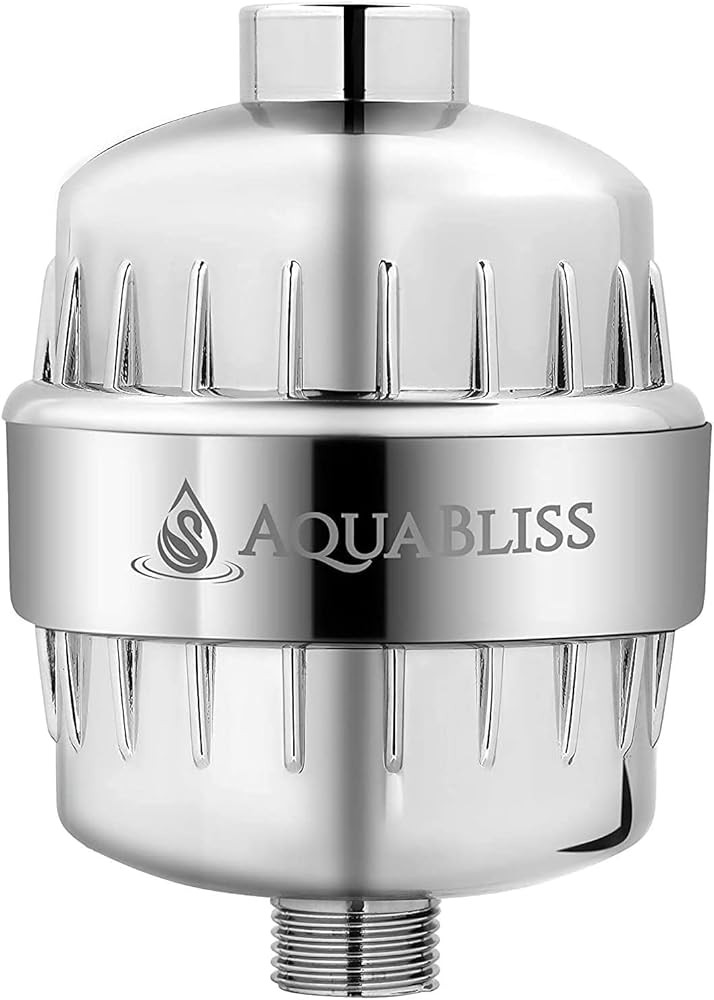
AquaBliss High Output Revitalizing Shower Filter SF100
Check Price on AmazonAs an Amazon Associate we earn from qualifying purchases.
What About Filters for Hard Water and Mineral Removal?
Hard water contains dissolved calcium and magnesium that precipitate as scale when heated or when soap is added. Water hardness above 120 mg/L as CaCO3 creates noticeable effects including soap scum, mineral deposits on fixtures, and reduced cleaning effectiveness. The chemistry of hardness involves dissolved metal ions that react with soap fatty acids to form insoluble compounds.
Shower filters using ion exchange resins can reduce water hardness, though the small media volumes in point-of-use filters provide limited capacity. A typical shower filter might soften 500-1,000 gallons before the resin exhausts, requiring replacement every 2-4 weeks in areas with very hard water above 200 mg/L hardness.
The ion exchange process swaps calcium and magnesium for sodium or potassium, reducing the tendency for scale formation and soap precipitation. However, the exchange capacity of compact filter cartridges limits practical hardness removal. Residential ion exchange requires regeneration with salt brine, impractical for disposable shower filter cartridges.
Polyphosphate media offers an alternative approach by sequestering minerals rather than removing them. These compounds bind calcium and magnesium ions into soluble complexes, stopping precipitation without actually reducing mineral concentration. Research shows this method reduces scale formation while requiring less frequent media replacement than ion exchange.
The sequestration mechanism provides temporary stabilization of hardness minerals. Polyphosphate compounds gradually hydrolyze in water, releasing the bound minerals over hours to days. This time window suffices for showering applications where water contacts skin briefly and drains immediately, but wouldn’t work for applications requiring permanent mineral removal.
Whole-house water softeners provide more effective and economical hard water management than point-of-use shower filters. Similarly, hydrogen water generators address drinking water quality through a different mechanism than shower filtration. These systems process all household water through large regenerable resin beds that can be recharged hundreds of times, eliminating the need for frequent cartridge replacement and providing consistent softening across all water uses.
The distinction between water softening and filtration matters for product selection. Filters remove contaminants through physical and chemical processes, while softeners exchange hardness minerals for sodium ions. Combining both technologies requires either a whole-house softener with point-of-use filtration, or a shower filter specifically designed for both applications.
Cost analysis favors whole-house softening for moderate to severe hardness. The upfront investment of $400-1,500 for a whole-house softener provides lower per-gallon operating costs than frequent shower filter cartridge replacements when hardness exceeds 150 mg/L. Below this level, shower filters with polyphosphate sequestration offer reasonable scale control.
In practice: Shower filters provide limited hard water management due to small media volumes, making whole-house softeners more practical for areas with significant hardness, while point-of-use filters focus on chlorine and contaminant removal.
How Do Shower Filters Affect Water Pressure and Flow?
All filtration creates pressure drop as water flows through media, but well-designed filters minimize this restriction. Studies show that pressure loss depends on media particle size, bed depth, and flow rate, with finer filtration media creating greater resistance to flow according to Darcy’s law governing fluid flow through porous media.
The relationship between filtration efficiency and flow restriction requires design compromises. Smaller media particles provide more surface area and better contaminant removal per unit volume, but create higher pressure drops that reduce shower performance. Manufacturers balance these factors by selecting media sizes that deliver adequate filtration while maintaining acceptable flow rates for typical shower applications.
Filter positioning affects performance differently than whole-house systems. Installing filters at the shower head processes only the water used for bathing, allowing manufacturers to use finer media and longer contact times without impacting overall household pressure. This localized approach makes point-of-use filtration viable where whole-house filtration might cause unacceptable pressure loss.
Flow rate specifications matter for matching filters to shower heads. Standard shower heads use 2.0-2.5 gallons per minute (GPM) under federal efficiency standards, while high-pressure rain shower heads may demand 3.0-4.0 GPM to achieve their intended spray pattern. Filters should maintain flow rates that match the downstream shower head to avoid degrading shower experience.
Pressure loss increases as filters age and media pores fill with contaminants. The initial pressure drop might be 2-3 PSI in a new filter, increasing to 10-15 PSI near the end of cartridge life as accumulated material restricts flow paths. This progressive restriction provides a practical replacement indicator independent of gallons processed or time elapsed.
The hydraulic behavior of multi-stage filters combines the pressure drops of each individual stage. A filter with three sequential media layers experiences total pressure loss equal to the sum of losses across each layer. Design optimization minimizes total resistance while maintaining adequate contact time with each filtration medium.
Bypass flow paths that allow water to circumvent filter media indicate design flaws or installation problems. Proper filter design ensures all water contacts active media through sealed pathways that force flow through the bed rather than around it. Housing seals and cartridge interfaces require quality engineering to maintain filtration integrity.
Here’s what matters: Quality shower filters maintain adequate flow for standard 2.5 GPM shower heads with pressure drops under 5 PSI when new, though high-pressure shower heads may experience noticeable reduction, and all filters show decreased flow as cartridges approach replacement time.
The Canopy system integrates filtration directly into a high-pressure shower head rather than using a separate inline filter. This design eliminates the need for adapters and reduces the number of connection points that might develop leaks over time.
The proprietary filter cartridge uses a combination of activated carbon and ion exchange media in a compact form factor optimized for the integrated housing. Canopy’s engineering focuses on maintaining water pressure while processing 2.5 GPM through the filtration system, using computational fluid dynamics to optimize flow paths.
The shower head features multiple spray patterns including rainfall, massage, and mixed modes that users select via a dial control. Users switch between settings without affecting filtration performance since all water passes through the media regardless of spray configuration. The spray plates downstream of filtration create the different patterns.
Magnetic mounting simplifies installation and removal. The system attaches to standard shower arms but includes a magnetic dock that allows users to easily remove the shower head for cleaning or cartridge replacement without tools. The magnetic coupling maintains water-tight seal while enabling tool-free disconnection.
Replacement cartridges arrive on a subscription schedule tailored to household size and usage patterns. This automated delivery system eliminates the need to track replacement timing, though it requires ongoing subscription costs rather than one-time purchases when cartridges are needed. Subscription pricing provides modest discounts versus individual cartridge purchase.
The integrated design creates a cleaner aesthetic than separate filter housings that add bulk between the shower arm and shower head. For users prioritizing appearance and willing to pay premium pricing, this streamlined configuration reduces bathroom clutter and maintains modern design aesthetics.
Filter capacity ranges from 8,000-10,000 gallons depending on water quality, slightly less than standalone filters due to the compact cartridge design. Hard water or high chlorine levels may require more frequent replacements than the standard 4-month interval recommended for average conditions.
The shower head construction uses corrosion-resistant materials rated for continuous hot water exposure. The integrated design eliminates thermal expansion mismatches between separate housings and connections, potentially improving long-term reliability compared to multi-piece inline systems.
Can Shower Filters Help with Eczema and Skin Conditions?
Chlorine exposure during bathing can exacerbate inflammatory skin conditions by stripping natural lipids that form the skin barrier. Research shows that chlorine oxidizes skin oils and proteins, disrupting the protective barrier that minimizes moisture loss and blocks allergen penetration. The oxidative chemistry damages ceramides and fatty acids that maintain stratum corneum integrity.
Studies examining swimming pool exposure provide relevant insights into chlorine effects on skin. Research published in International Journal of Hygiene and Environmental Health measured trihalomethane uptake pathways in pools, finding that inhalation represented the main absorption route. While this research focused on pools with higher chlorine levels than showers, the mechanisms of skin interaction remain comparable.
Filtered shower water allows natural moisturizing factors to remain on skin rather than being oxidized by chlorine residuals. Clinical observations suggest that reducing chlorine exposure may decrease the frequency of eczema flares, though individual responses vary based on disease severity and other environmental triggers. Dermatologists note improvement in some patients when showering in filtered water.
Hard water minerals compound these effects by leaving residue that further impairs skin barrier function. Calcium and magnesium deposits create an alkaline film that alters skin pH from the normal 5.5 toward neutral, potentially disrupting the acid mantle that suppresses pathogenic bacteria. The mineral residue also interferes with moisturizer penetration.
The evidence base for shower filters as eczema intervention remains limited to observational studies and patient reports rather than controlled clinical trials. While many dermatologists recommend filtered water for patients with severe skin conditions, this recommendation stems from mechanistic understanding rather than high-quality comparative research specifically examining filtered shower water outcomes.
Atopic dermatitis involves multiple pathogenic mechanisms beyond chlorine exposure. Supporting skin health from within through proper nutrition and supplementation complements external water quality improvements. Genetic mutations affecting filaggrin protein, immune dysregulation favoring Th2 responses, and disrupted microbial colonization all contribute to disease manifestation. Water filtration addresses only the chemical irritant component, not the underlying immunological and genetic factors.
Patient testimonials and clinical experience suggest benefits for some individuals with chlorine-sensitive skin. The improvement likely results from reduced oxidative stress on already-compromised skin barrier, allowing better retention of endogenous and applied moisturizing compounds. The magnitude of benefit varies widely among individuals.
Clinical insight: Shower filters may provide symptomatic relief for eczema and sensitive skin by reducing chlorine exposure and hard water residue, though the evidence comes from mechanistic studies and clinical observation rather than randomized trials specifically examining filtered shower water outcomes.
Do Filters Remove Bacteria and Microorganisms?
Most shower filters do not remove bacteria or other microorganisms. The filtration media in standard units targets dissolved chemicals and suspended particles but lacks the pore size needed to trap bacteria, which measure 0.5-5 micrometers in diameter. Activated carbon has pore sizes ranging from 10-1000 nanometers, theoretically capable of capturing bacteria, but the tortuous flow paths and high pressure drops needed for effective microbe removal are incompatible with shower flow rates.
Municipal water disinfection already eliminates pathogenic organisms before water enters distribution systems. The chlorine residual maintained in water supplies inhibits bacterial regrowth during transport through pipes to end users. Research shows that properly maintained municipal systems deliver microbiologically safe water meeting EPA standards for coliform bacteria and other indicators.
Filter housings can potentially harbor bacterial growth if water stagnates in media beds between uses. Studies demonstrate that organic material accumulated on activated carbon provides nutrients that support biofilm formation. Regular water flow helps minimize this colonization by flushing media beds and limiting the time available for bacterial attachment and growth.
Silver-impregnated media provides some antimicrobial protection within filter cartridges. Manufacturers incorporate silver compounds that inhibit bacterial growth on media surfaces through oligodynamic effects, though this management addresses filter hygiene rather than removing waterborne organisms from the water stream. The silver content typically ranges from 0.1-1% by weight.
Ultrafiltration or reverse osmosis systems can remove bacteria, but these technologies are uncommon in shower applications due to their severe flow restriction and high cost. The very fine membranes required for bacterial removal reduce flow rates to levels incompatible with showering, typically 0.5-1.0 GPM compared to the 2.5 GPM standard for showers.
Immunocompromised individuals requiring bacterial removal should consult medical professionals about appropriate water management rather than relying on standard shower filters. Special circumstances may warrant point-of-use ultrafiltration or boiling water before use, particularly for patients with severe neutropenia or those recovering from bone marrow transplantation.
Water quality matters for household pets as well, and pet water fountains address drinking water filtration for animals. Well water users face different microbial risks than municipal water customers. Private wells lack continuous disinfection and may contain opportunistic pathogens like Legionella or Pseudomonas that thrive in plumbing systems. Well owners should test water annually for coliform bacteria and consider continuous chlorination or UV disinfection rather than point-of-use shower filters.
What the data shows: Standard shower filters do not remove bacteria because their primary function targets dissolved chemicals and particulates, while municipal chlorination already provides microbiological safety before water reaches household plumbing.
The AquaHomeGroup filter uses a 20-stage approach that combines multiple media types with vitamin supplementation. This comprehensive design addresses chlorine, heavy metals, and water conditioning while attempting to provide skin benefits through vitamin infusion.
Vitamin C cartridges neutralize both chlorine and chloramines through chemical reduction. The ascorbic acid media converts these compounds to harmless chloride and ammonia at a molecular level, working effectively regardless of water temperature or contact time. The reaction occurs instantly upon contact, making vitamin C filtration independent of flow rate.
Vitamin E addition aims to condition water, though research on transdermal vitamin E absorption from shower water remains limited. The manufacturer claims skin moisturizing benefits, though these effects are difficult to separate from the benefits of chlorine removal alone. Scientific studies on vitamin E water solubility and skin penetration from aqueous solutions provide limited support for these claims.
The multi-stage configuration includes activated carbon, KDF-55, calcium sulfite, ceramic balls, and mineral balls in sequential layers. Each stage targets specific contaminants or water quality parameters, creating redundancy that may extend filter life in challenging water conditions by distributing the filtration load across multiple media types.
Installation follows standard procedures with hand-tightening onto existing shower arms using included Teflon tape. The compact housing adds minimal bulk measuring approximately 5 inches in height while processing approximately 12,000 gallons before cartridge replacement becomes necessary. The filter diameter matches standard shower arm fittings.
The budget pricing makes this filter accessible for households wanting comprehensive filtration without premium costs. Replacement cartridges retail for $15-20, among the lowest in the category while maintaining multi-stage design. The lower replacement cost accumulates to significant savings over years of use.
The 20-stage claim reflects marketing positioning more than functional necessity, as some stages provide overlapping rather than complementary benefits. However, the core filtration components deliver legitimate chlorine and contaminant removal comparable to systems costing significantly more. The ceramic balls and mineral stones add weight and stage count without documented water quality improvement.
Construction uses ABS plastic housing that withstands normal residential water pressure but may lack the durability of metal housings under thermal cycling stress. The opaque housing conceals media condition, requiring users to rely on time or gallons processed rather than visual inspection for replacement timing.
How Do Shower Filters Compare to Whole-House Systems?
Whole-house filtration processes all water entering a residence, including drinking water, washing machines, and outdoor faucets. These systems install at the main water line and process 10-20 gallons per minute compared to the 2-3 GPM shower filters handle. The increased flow capacity requires larger filter housings and more filtration media, resulting in higher equipment and installation costs.
Cost differences favor shower filters for households primarily concerned with bathing water quality. A whole-house carbon filter system costs $1,500-3,000 installed, while shower filters deliver comparable chlorine removal for bathing at $30-150 plus periodic cartridge replacements. The break-even point depends on household size, water usage, and specific filtration goals.
Maintenance requirements differ substantially between approaches. Whole-house systems need cartridge changes every 6-12 months depending on water usage and typically require plumber assistance due to main line installation. The large cartridges weigh 10-20 pounds when saturated and may need special tools for housing removal. Shower filters allow DIY cartridge replacement in under 5 minutes with no tools.
Water pressure effects vary by design. Whole-house systems must maintain adequate flow for simultaneous uses like showers, dishwashers, and washing machines, limiting the amount of filtration possible without causing pressure drops that affect appliance performance. Shower filters only affect bathroom fixtures, allowing more aggressive filtration with finer media.
Contaminant reduction capabilities overlap for common targets like chlorine but diverge for specialized needs. Whole-house systems can incorporate water softening, iron removal, and sediment filtration more effectively due to larger media volumes and regeneration capabilities. Shower filters focus specifically on compounds affecting bathing experience.
Combined approaches offer optimal water quality by using whole-house sediment and softening with point-of-use shower filtration for chlorine removal. This two-tier strategy protects the entire plumbing system from sediment damage and scale buildup while providing enhanced chemical removal for bathing water. The redundant chlorine removal ensures comprehensive protection.
Installation complexity heavily favors shower filters. Whole-house systems require plumbing modifications at the main water line, typically inside or immediately outside the home. Most installations need professional plumbers to ensure proper integration with existing plumbing, adequate support for heavy filter housings, and proper bypass plumbing for maintenance.
The practical difference: Shower filters provide targeted, cost-effective chlorine removal for bathing without the expense and complexity of whole-house systems, while combined approaches deliver comprehensive water quality management at higher cost.
What Role Do KDF Media Play in Filtration?
KDF (Kinetic Degradation Fluxion) describes a patented copper-zinc alloy used as a filtration medium. These granules create electrochemical reactions that transform contaminants through oxidation-reduction (redox) processes rather than simple physical filtration. The high-purity brass composition typically contains 50% copper and 50% zinc in precisely controlled proportions.
The mechanism involves electron transfer between the metal alloy and dissolved contaminants. Free chlorine accepts electrons from the zinc, converting to harmless chloride ions while the zinc oxidizes. This reaction continues across thousands of gallons as the metal slowly sacrifices itself, with zinc oxidation providing the driving force for contaminant reduction.
Heavy metal removal occurs through a different pathway. Lead, mercury, and cadmium ions exchange positions with copper and zinc in the alloy matrix, effectively replacing these toxic metals with less harmful copper and zinc at trace levels. Studies show this ion exchange continues until the media becomes saturated with heavy metals, typically after processing 10,000-20,000 gallons depending on contamination levels.
Temperature resistance makes KDF media valuable for shower applications. Unlike activated carbon, which loses efficiency above 80°F due to reduced adsorption affinity, KDF maintains consistent performance in hot water up to 130°F. This characteristic explains why most shower filters combine both media types rather than relying on carbon alone.
The bacteriostatic effect of copper-zinc alloys inhibits bacterial growth within filter cartridges. Research demonstrates that copper ions released from KDF media create an environment hostile to biofilm formation that might otherwise develop on organic carbon surfaces in moist filter environments. The oligodynamic effect occurs at copper concentrations below levels affecting water taste.
KDF comes in different formulations optimized for specific applications. KDF-55 targets chlorine and heavy metals in standard residential water with neutral to slightly alkaline pH. KDF-85 handles iron and hydrogen sulfide in well water applications where reduced sulfur compounds create odor problems. Shower filters typically use KDF-55 for municipal water processing.
The granule size affects both filtration efficiency and pressure drop. Standard KDF-55 uses 20x50 mesh (0.3-0.85 mm) particles that balance contact area with flow resistance. Finer mesh increases surface area but creates unacceptable pressure loss in high-flow shower applications.
Particle fluidization during operation enhances filtration by creating turbulent mixing that exposes fresh surface area. As water flows upward through KDF beds, the granules move and collide, abrading oxidized surface layers and exposing reactive metal underneath. This self-renewing mechanism extends media life beyond what static beds would achieve.
Core advantage: KDF media provide hot-water-stable chlorine removal and heavy metal reduction through electrochemical reactions, making them essential components in shower filters where activated carbon alone would underperform at elevated temperatures.
Are There Health Risks from Long-Term Chlorine Exposure?
Epidemiological research has examined bladder cancer associations with trihalomethane exposure through multiple pathways. A study in Mutation Research reviewed 30 years of data linking bladder cancer risk with THM exposure, showering and bathing frequency, and genetic factors that affect individual susceptibility to these compounds. The review noted associations particularly in individuals with GSTT1-1 genotype deletions affecting glutathione S-transferase enzyme function.
The mechanism involves DNA damage from reactive oxygen species formed when THMs are metabolized. Research shows that certain disinfection byproducts create oxidative stress in bladder epithelial cells, potentially initiating carcinogenic changes over decades of chronic exposure. The urothelium experiences particularly high exposure because these lipophilic compounds concentrate in urine.
Inhalation during showering represents a major exposure route that differs from drinking water ingestion. A multi-country study published in Environmental Research examined 1,667 water samples across Egypt over 3 years, finding that inhaling THMs during showers posed greater cancer risk than drinking water consumption. The analysis identified bromodichloromethane as the most carcinogenic species, contributing 69% of total cancer risk.
Genetic polymorphisms affect individual vulnerability to DBP exposure. Research shows that people with GSTT1-1 genotype deletions have impaired ability to metabolize trihalomethanes, leading to higher internal doses and potentially increased cancer risk compared to those with functional detoxification enzymes. Approximately 20-50% of populations carry these deletions depending on ethnic background.
Quantifying individual risk remains challenging because exposure varies by water source, showering duration, bathroom ventilation, and genetic factors. Risk assessment models suggest that lifetime exposure to elevated THM levels might increase bladder cancer incidence by 1-10 cases per 100,000 people, though confidence intervals remain wide due to confounding factors.
Water utility improvements have reduced DBP formation through enhanced processing. Research in Environmental & Molecular Mutagenesis documented that modern processing methods using ozonation and filtration before chlorination have decreased DBP levels compared to historical practices, though these compounds remain detectable in most processed water.
Dose-response relationships for THM carcinogenicity show non-linear patterns in animal studies. Low-level exposure produces minimal effects in experimental models, while high-level exposure generates clear carcinogenic responses. The relevant exposure range for residential showering falls in the uncertain region where risk estimates vary widely among models.
Regulatory limits for THMs in drinking water aim to balance microbial safety against DBP risks. Reducing overall environmental exposures through air purification alongside water filtration addresses multiple pathways simultaneously. EPA sets maximum contaminant levels at 80 μg/L for total THMs, a compromise between complete disinfection byproduct elimination (impossible with chlorination) and minimizing health risks. Shower water THM concentrations generally track drinking water levels.
What the research shows: Decades of research document associations between long-term trihalomethane exposure through showering and bladder cancer risk, with individual susceptibility varying based on genetic factors and exposure levels, while modern water processing has reduced but not eliminated these compounds.
Can You Install a Shower Filter Yourself?
Shower filter installation requires no specialized plumbing knowledge or tools. The process involves unscrewing an existing shower head, installing the filter housing onto the shower arm, and reattaching the shower head to the filter outlet. The entire procedure takes 5-10 minutes for first-time installers.
Hand-tightening provides adequate seal for most installations without requiring wrenches or pliers. The threaded connections use standard NPT (National Pipe Thread) dimensions that ensure compatibility across different manufacturers and plumbing vintages. Excessive torque can crack plastic housings or strip threads, making hand-tight assembly preferable.
Teflon tape wraps around threads to block leaks by filling microscopic gaps in the threaded connection. Applying 3-4 wraps of plumber’s tape in a clockwise direction (when viewing the male threads) creates a watertight seal without over-tightening. The tape compresses during assembly, conforming to thread irregularities.
The installation sequence follows a simple three-step process. First, remove the existing shower head by turning counterclockwise, using a cloth for grip if needed. Second, apply Teflon tape to the shower arm threads and install the filter housing by hand-tightening clockwise. Third, apply Teflon tape to the filter outlet threads and reinstall the shower head.
Some filters include rubber gaskets that eliminate the need for Teflon tape. These compression seals work adequately for initial installation but may require replacement after several cartridge changes as the rubber hardens from heat cycling. Replacement gaskets typically cost under $5 and extend filter housing life.
Height considerations matter in showers with low clearance. Inline filters add 3-6 inches between the shower arm and shower head, which might create issues in stall showers or tub-shower combinations with limited vertical space. Measuring before purchase reduces installation problems in space-constrained bathrooms.
Thread compatibility occasionally presents challenges with non-standard plumbing. Most US shower arms use 1/2-inch NPT threads, but some European fixtures or specialty shower heads may use metric threads. Adapter fittings solve compatibility issues when standard threading doesn’t match existing plumbing.
In summary: Shower filter installation takes 5-10 minutes using only hand-tightening and Teflon tape, requiring no plumber assistance or specialized tools, though height clearance should be verified before purchasing inline filter designs.
How Can You Tell When a Filter Needs Replacement?
Flow rate reduction provides the most obvious replacement indicator. When shower pressure decreases noticeably despite no changes in household plumbing, filter media has likely filled with contaminants and minerals that restrict water passage. The flow restriction typically becomes apparent when pressure drops exceed 10-15 PSI.
Chlorine odor return signals that active media has exhausted its capacity. Fresh filters eliminate the characteristic swimming pool smell of chlorinated water, so detecting chlorine scent again indicates the media can no longer neutralize residual disinfectant. This olfactory indicator works reliably for people with normal smell perception.
Visual inspection helps assess filter condition in systems with clear housings. Media discoloration from white or cream to brown or black shows accumulated contaminants. While this color change doesn’t necessarily mean complete exhaustion, it indicates significant loading that may compromise performance. Rusty water creates orange-brown discoloration, while organic matter produces darker tones.
Time-based replacement schedules provide predictable maintenance when flow and odor indicators are subtle. Most manufacturers recommend 6-month intervals for typical households, though high water usage, elevated chlorine levels, or hard water may shorten this timeline to 3-4 months. Calendar-based replacement ensures performance but may waste partially-used cartridges.
Gallonage tracking offers more precise replacement timing than calendar schedules. Households can estimate monthly water usage by multiplying daily showers by duration and flow rate. A family with 3 people showering 8 minutes daily at 2.5 GPM uses approximately 1,800 gallons monthly, reaching a 12,000-gallon filter capacity in 6-7 months. Simple multiplication provides personalized replacement intervals.
Some filters include built-in indicators that change color or position based on water volume processed. These mechanical or chemical indicators remove guesswork by providing visual confirmation of remaining filter life. Color-change indicators use dyes that leach at predictable rates, while mechanical counters track flow volume.
Scale buildup on filter housing exteriors suggests hard water problems accelerating internal clogging. White crusty deposits around connection points indicate calcium and magnesium precipitation. External scaling typically corresponds to internal media fouling, making it a useful visual indicator even with opaque housings.
The replacement rule: Replace shower filter cartridges when flow decreases, chlorine odor returns, or 6 months elapse, with higher usage households requiring more frequent changes and visual or mechanical indicators providing additional confirmation when available.
What About Shower Filters and Hair Health?
Chlorine damages hair proteins through oxidation that degrades the protective cuticle layer. Research on swimming pool exposure demonstrates that chlorine opens hair cuticles, allowing moisture loss and making hair susceptible to mechanical damage from brushing and styling. The oxidative attack on disulfide bonds in keratin protein weakens hair structure.
The lipid layer protecting hair shafts breaks down when exposed to oxidizing chemicals. Chlorine dissolves sebum oils that coat hair strands, leading to dryness, brittleness, and increased tangling. This effect accumulates over time with daily showering in chlorinated water, creating progressive damage that manifests as split ends and breakage.
Hard water minerals create additional problems by depositing on hair surfaces. Calcium and magnesium form films that make hair feel rough and look dull while interfering with conditioner absorption. These mineral deposits accumulate with repeated washing in hard water, building up particularly on porous or chemically-damaged hair.
Color-processed hair experiences accelerated fading in chlorinated water. The oxidizing action of chlorine breaks down hair dye molecules, particularly affecting red and copper tones that contain the least stable pigments. Studies show that chlorine exposure can reduce color vibrancy by 30-50% over several weeks of daily washing.
Filtered shower water allows hair to maintain its natural protective mechanisms. By removing chlorine and reducing mineral deposits, filters help preserve the lipid barrier and cuticle integrity that keep hair healthy and manageable. The cumulative benefit appears after weeks of filtered water use as hair health gradually improves. Combining water filtration with other wellness practices like infrared sauna therapy supports overall skin and hair health through multiple mechanisms.
Protein oxidation from chlorine creates aldehyde groups on hair surface. These reactive groups cross-link proteins in unpredictable patterns, stiffening hair and reducing elasticity. The loss of elastic recovery makes hair prone to breakage when stretched during styling or manipulation.
Cuticle damage from chlorine exposure increases friction between hair strands. The rough surface causes tangling and makes combing difficult, creating mechanical stress that compounds chemical damage. Conditioners can temporarily smooth cuticle scales, but can’t repair underlying structural damage from oxidation.
What this means: Removing chlorine through shower filtration helps preserve hair protein integrity and natural lipid protection, reducing dryness, brittleness, and color fading compared to washing in chlorinated water.
How Do Vitamin C Shower Filters Work Differently?
Vitamin C filters use ascorbic acid to chemically neutralize chlorine through a reaction that occurs instantly upon contact. Unlike activated carbon that requires contact time for adsorption, vitamin C reduction happens at a molecular level regardless of flow rate. The reaction completes in milliseconds, making it independent of flow patterns.
The chemical equation shows ascorbic acid converting chlorine to dehydroascorbic acid and hydrochloric acid, both harmless compounds that don’t affect skin or hair. This reaction works equally well for free chlorine and combined chlorine (chloramines), giving vitamin C filters an advantage over carbon-only systems that struggle with chloramine removal.
Temperature independence makes vitamin C filtration particularly suitable for showers. While activated carbon efficiency decreases in hot water due to reduced adsorption affinity, ascorbic acid reactions maintain consistency across the temperature range of household water heaters from 40°F to 140°F. The reaction kinetics show minimal temperature dependence.
Filter capacity depends on vitamin C concentration rather than media surface area. A typical vitamin C cartridge contains 100-300 grams of ascorbic acid, sufficient to neutralize chlorine in 3,000-6,000 gallons of water with standard municipal chlorine levels of 1-2 mg/L. The stoichiometry requires approximately 2.8 mg ascorbic acid per 1 mg chlorine.
The limitation of vitamin C filters involves shorter service life compared to multi-stage systems. Pure ascorbic acid cartridges exhaust in 2-3 months for typical households, requiring more frequent replacement than 6-month carbon/KDF filters. This shorter duration increases annual maintenance costs despite lower individual cartridge prices.
Combined systems using vitamin C for chloramine removal alongside carbon and KDF for other contaminants provide comprehensive management. These multi-stage designs address the full range of shower water quality issues while leveraging vitamin C’s unique capabilities. The redundant chlorine removal ensures complete neutralization even if one media type underperforms.
Citric acid provides an alternative to ascorbic acid with similar chemistry. Both compounds reduce chlorine through electron donation, though citric acid requires slightly higher doses. Some manufacturers use citric acid for cost savings, as food-grade citric acid costs less than pharmaceutical-grade ascorbic acid.
The key difference: Vitamin C filters neutralize chlorine and chloramines instantly through chemical reduction independent of temperature or flow rate, but require more frequent replacement than multi-stage systems combining carbon and KDF media.
What’s the Difference Between Inline and Shower Head Filters?
Inline filters install between the shower arm and shower head, allowing users to keep their existing shower head while adding filtration. This design provides flexibility for those who prefer specific shower head features or aesthetics. The modular approach lets users upgrade either component independently.
Shower head filters integrate filtration media directly into the spray fixture, eliminating separate housings and reducing the number of connection points. These all-in-one units create a streamlined appearance but limit shower head options to models with built-in filtration. Replacement requires changing the entire unit or accessing internal cartridges.
Replacement costs differ between approaches. Inline filters require periodic cartridge changes while the housing remains installed indefinitely, with cartridges costing $15-40 depending on media type. Shower head filters may need complete unit replacement or proprietary cartridges that cost more than universal inline cartridges.
Flow characteristics vary by design. Inline filters add pressure drop before water reaches the shower head, which can affect spray performance depending on available pressure. Integrated shower head filters account for pressure loss in their spray nozzle design, potentially providing better flow characteristics through coordinated engineering.
Installation and maintenance favor inline filters for simplicity. Changing an inline cartridge takes 30 seconds and requires no tools beyond hand-strength, while some integrated shower head filters need complete removal for cartridge access. The inline design allows filter maintenance without disturbing shower head position or settings.
Aesthetic preferences drive choice for many buyers. Those prioritizing clean lines and minimal visual clutter prefer integrated designs that hide filtration components within shower head housings. Users focused solely on filtration performance generally select inline filters that offer more media volume in larger housings.
Filter capacity generally favors inline designs due to larger available space for media. A typical inline filter houses 200-400 grams of filtration media distributed across multiple stages, while integrated shower head filters might contain 100-200 grams due to size constraints imposed by shower head dimensions.
Compatibility considerations affect replacement flexibility. Inline filters work with any shower head meeting standard thread specifications, allowing users to upgrade shower heads without replacing filtration. Integrated units lock users into specific shower head models, limiting future upgrades without buying complete new systems.
Our verdict: Inline filters offer more media capacity, easier maintenance, and compatibility with existing shower heads, while integrated shower head filters provide streamlined aesthetics and optimized flow characteristics at the cost of flexibility.
Related Reading
For more information about water filtration and related health topics, explore these resources:
- Best Multivitamin for Women Over 40 - Comprehensive guide to vitamin supplementation
- Joint Pain and Arthritis Supplements for Women Over 40 - Research-backed arthritis support
- Menopause Hot Flashes Supplements - Natural approaches to symptom management
- Best Cooling Mattress Pad - Sleep temperature optimization
- Best White Noise Machine - Sound masking for better sleep
Recommended Products