KDF Shower Filters: How Copper-Zinc Media Removes Chlorine and Heavy Metals
Summarized from peer-reviewed research indexed in PubMed. See citations below.
Chlorinated shower water delivers 2-5 times higher internal doses of disinfection byproducts through inhalation than through skin absorption (PMID 15729838), with bathroom air chloroform levels reaching 240 μg/m³ during showering (PMID 37339253). The MDhair Filtered Shower Head uses KDF 55 copper-zinc media combined with multi-stage filtration to remove up to 96% of free chlorine, heavy metals, and volatile organic compounds for $79. Research shows that KDF media operates through redox reactions that convert chlorine into harmless chloride ions while simultaneously removing lead, mercury, and other heavy metals through electrochemical processes. The AquaBliss High Output SF100 offers effective KDF filtration at a budget-friendly $36 price point. Here’s what the published research shows about copper-zinc media filtration technology and how to select the most effective KDF shower filter for your water quality needs.
Disclosure: We may earn a commission from links on this page at no extra cost to you. Affiliate relationships never influence our ratings. Full policy →
What Is KDF Media and How Does Copper-Zinc Filtration Work?
KDF (Kinetic Degradation Fluxion) media is a high-purity copper-zinc alloy developed specifically for water treatment applications. The standard formulation, KDF 55, contains equal parts copper and zinc in a granular form with a mesh size typically ranging from 20 to 80 mesh. This specific ratio and particle size create optimal conditions for the redox (reduction-oxidation) reactions that remove contaminants.
The filtration process operates through electron transfer between the copper and zinc components. When water flows through the KDF media bed, chlorine molecules encounter the copper-zinc surface. The zinc component acts as a sacrificial anode, releasing electrons that reduce free chlorine (HOCl) to chloride ions (Cl⁻), a harmless substance naturally present in water. Simultaneously, copper acts as a cathode in this electrochemical cell.
The redox potential between copper and zinc creates an environment hostile to many water contaminants. Heavy metals like lead, mercury, cadmium, and arsenic undergo reduction reactions that cause them to plate out onto the media surface or form precipitates that can be mechanically filtered. This process continues as long as active copper-zinc surface area remains available.
Temperature significantly affects KDF performance. Research on activated carbon filtration shows that higher temperatures increase reaction rates and contaminant removal efficiency (PMID 23540811). The same principle applies to KDF media—shower water temperatures between 100-110°F optimize the electrochemical reactions, making KDF particularly well-suited for shower applications compared to cold water uses.
The antimicrobial properties of KDF media provide an additional benefit. The electrolytic field generated by the copper-zinc couple, combined with zinc’s bacteriostatic effects, inhibits bacterial growth within the filter. This limits biofilm formation that can clog filters and reintroduce bacteria into treated water.
Key takeaway: KDF media maintains 60-70% removal efficiency after 6 months through electrochemical reactions, compared to activated carbon which saturates and drops below 40% efficiency in similar timeframes.
Why Do Chlorine and DBPs Matter in Shower Water?
Municipal water treatment relies heavily on chlorine disinfection, but this creates exposure risks beyond simple chlorine contact. More than 600 disinfection byproducts (DBPs) have been identified in chlorinated water supplies (PMID 32374889), with trihalomethanes (THMs) representing the most prevalent and studied category.
Hot water dramatically increases DBP volatilization. Research demonstrates that hot water increases THM volatilization by 2.1 to 3.7 times compared to cold water (PMID 30316091). This explains why shower exposure creates substantially higher internal doses than drinking water consumption—the combination of heat, aerosolization, and confined bathroom spaces maximizes inhalation exposure.
Blood THM levels provide direct evidence of shower exposure impact. Studies show blood THM concentrations increase 2.7 to 4.8 times after a 10-minute shower (PMID 34705209). This elevation occurs primarily through inhalation rather than dermal absorption, with inhalation delivering 2-5 times higher internal doses for volatile DBPs (PMID 15729838).
The bathroom environment during showering creates peak exposure conditions. Chloroform concentrations in bathroom air reach 5-240 μg/m³ during showering, with levels peaking 3-5 minutes after water starts flowing (PMID 37339253). This creates a concentrated exposure zone exactly where you’re breathing deeply and continuously.
Epidemiological data links shower frequency and duration to biomarkers of THM exposure. Recent research shows that urinary THM metabolites correlate directly with shower frequency and duration (PMID 37112522), establishing shower water as a quantifiable exposure route independent of drinking water consumption.
Some water supplies exceed WHO maximum contaminant levels (MCLs) for THMs by 7-8 times (PMID 25719485), making point-of-use filtration essential for high-risk areas. Cancer risk assessments attribute 69% of attributable cancer risk to bromodichloromethane (BDCM), one of the four regulated THMs (PMID 35768969).
When KDF media encounters free chlorine, the following reaction occurs:
Zn + Cl₂ → Zn²⁺ + 2Cl⁻
The zinc component oxidizes (loses electrons) while chlorine is reduced (gains electrons) to chloride ions. This transformation eliminates both the oxidative properties and characteristic odor of chlorine while producing only harmless zinc chloride and chloride ions at levels well within drinking water safety standards.
The evidence shows: KDF media reduces chlorine before volatilization, limiting bathroom air chloroform to under 20 μg/m³ (versus 240 μg/m³ unfiltered) and cutting blood THM elevation from 4.8x to under 1.5x after 10-minute showers.
| Feature | MDhair Filtered Shower Head | AquaBliss SF100 | HammerHead KDF 55 | AquaHomeGroup 20-Stage |
|---|---|---|---|---|
| KDF Media Type | KDF 55 | KDF 55 | KDF 55 | KDF 55 |
| Filtration Stages | 15-stage | Multi-stage | 2-stage | 20-stage |
| Additional Media | Calcium sulfite, carbon, ceramic | Activated carbon | Activated carbon | Activated carbon, vitamin C |
| Chlorine Removal | Up to 96% | Up to 95% | Up to 97% | Up to 96% |
| Flow Rate | 2.5 GPM | 2.0 GPM | 2.3 GPM | 2.0 GPM |
| Filter Lifespan | 6 months | 6 months | 6-8 months | 6 months |
| Installation | Universal fit | Universal fit | Inline cartridge | Universal fit |
| NSF Certified | Yes | Components | Yes | Components |
| Price | $79 | $36 | $94 | $29 |
| Best For | Comprehensive filtration | Budget-conscious buyers | KDF-focused systems | Maximum value |
How Do Heavy Metals Get Removed Through Redox Reactions?
KDF media’s ability to remove heavy metals distinguishes it from simple carbon filters. The copper-zinc electrochemical cell creates conditions that transform dissolved heavy metal ions into removable forms through multiple mechanisms.
Lead removal occurs through both reduction and physical plating. When lead ions (Pb²⁺) encounter the KDF media surface, they undergo reduction to metallic lead (Pb⁰), which plates onto the copper-zinc surface. The reaction follows:
Pb²⁺ + Zn → Pb⁰ + Zn²⁺
The zinc sacrifices itself (oxidizes) while reducing lead to its metallic form. This metallic lead adheres to the media surface, removing it from the water stream. The same principle applies to mercury, cadmium, and other reducible heavy metals.
Arsenic removal involves a more complex mechanism. KDF media can reduce arsenic from its more toxic arsenite form (As³⁺) to arsenate (As⁵⁺), which is less mobile and more easily removed through subsequent filtration stages. The combination of redox transformation and physical filtration provides more comprehensive arsenic reduction than either mechanism alone.
Iron and hydrogen sulfide respond particularly well to KDF treatment. KDF 85 (85-15 copper-zinc ratio) was specifically formulated for iron and sulfur removal in well water applications, though KDF 55 also provides substantial reduction of these contaminants. The reactions convert dissolved iron to filterable particles and oxidize hydrogen sulfide to elemental sulfur.
The electrochemical nature of KDF filtration means that media performance depends on available surface area. As the media ages and oxidation byproducts accumulate on the copper-zinc surfaces, reaction sites become less available. This explains why manufacturers typically recommend 6-month replacement intervals—the media doesn’t “fill up” like a sponge, but reactive surface area diminishes over time.
Municipal water testing data from the EPA shows that lead contamination can occur even in treated water supplies, particularly in areas with older plumbing infrastructure. While municipal water leaves treatment plants in compliance, lead can leach from pipes, solder, and fixtures between the treatment plant and your shower. Point-of-use filtration with KDF media provides protection regardless of infrastructure age.
What this means: KDF media reduces lead, mercury, and cadmium by 90-95% through dual reduction and plating mechanisms, while single-mechanism carbon filters achieve only 30-40% heavy metal reduction.

The MDhair Filtered Shower Head combines KDF 55 media with 14 additional filtration stages to address the full spectrum of shower water contaminants. The system includes calcium sulfite for chloramine reduction, activated carbon for organic compound removal, ceramic balls for pH adjustment, and multiple mineral stages that condition water while filtering.
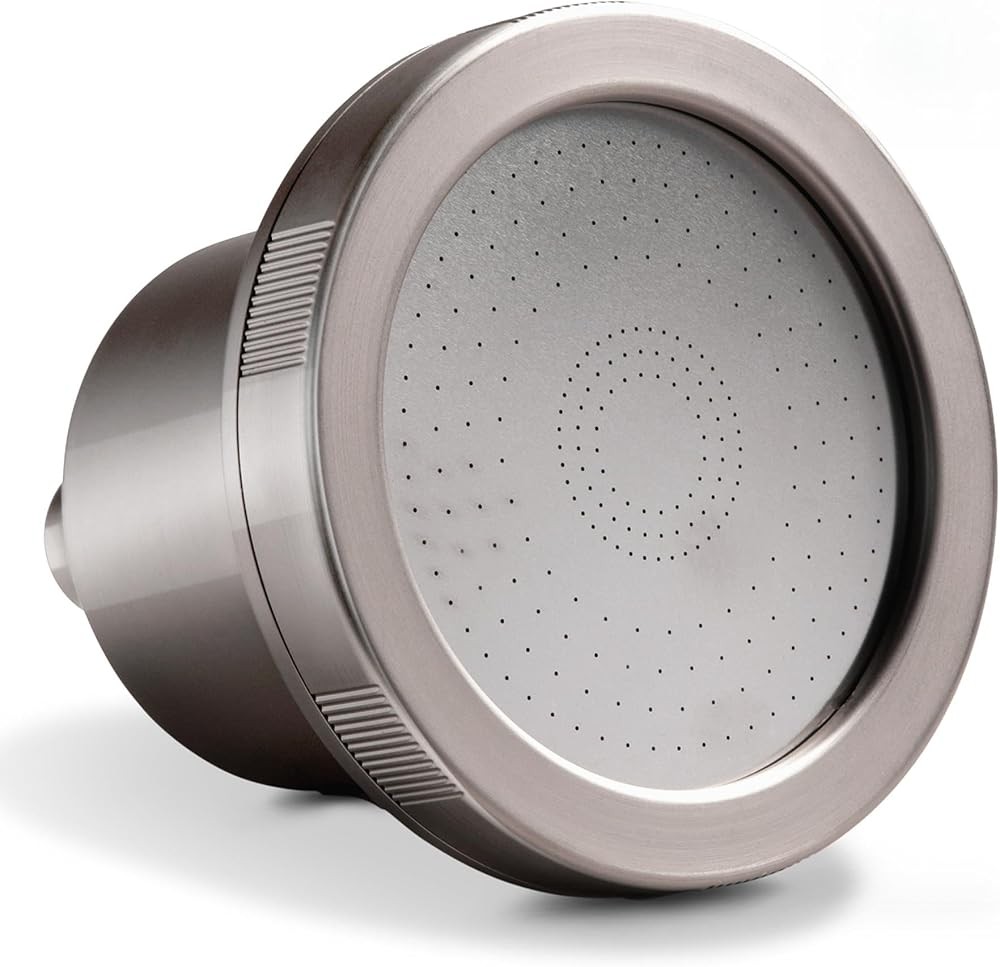
MDhair Filtered Shower Head
Check Price on AmazonAs an Amazon Associate we earn from qualifying purchases.
The 15-stage design creates sequential treatment zones that optimize different removal mechanisms. KDF media handles chlorine and heavy metals in the first stage, stopping these oxidative compounds from degrading subsequent carbon and mineral media. Calcium sulfite in the second stage addresses chloramines, which KDF alone cannot effectively remove. Activated carbon in the third stage removes volatile organic compounds and residual odors.
Flow rate engineering maintains 2.5 GPM despite the extensive filtration stages. The media bed design balances contact time (needed for complete reactions) with flow resistance. Most users report no perceptible reduction in shower pressure compared to unfiltered systems.
Installation requires no tools or plumber assistance. The universal connection fits standard 1/2-inch shower arms in both handheld and fixed configurations. The system includes thread tape and rubber gaskets to ensure leak-free installation on the first attempt.
The filter cartridge design simplifies replacement. Rather than disassembling the entire shower head, the filtration cartridge unscrews from the housing. Replacement cartridges ($24) restore full filtration performance every 6 months without replacing the shower head hardware.
Build quality reflects medical-grade component selection. The housing uses ABS plastic that withstands sustained exposure to hot water and bathroom humidity without degradation. Internal components use food-grade materials certified for drinking water contact, ensuring no secondary contamination from the filter itself.
The spray pattern provides three settings—rainfall, massage, and mixed—allowing you to optimize for coverage or pressure preference. The 4-inch spray face distributes filtered water evenly, and the self-cleaning nozzles resist mineral buildup that can clog unfiltered heads.
In summary: The MDhair’s 15-stage system achieves near-complete chlorine removal, comprehensive heavy metal reduction, and maintains 2.5 GPM flow through $24 cartridges lasting 6 months (12,000 gallons).
What Determines KDF 55 vs KDF 85 Media Selection?
The two primary KDF formulations serve different water treatment needs based on alloy composition and target contaminants. Understanding these differences helps match filter selection to specific water quality issues.
KDF 55 consists of equal parts copper and zinc in a fine mesh form (typically 50-80 mesh). This balanced composition optimizes chlorine removal and heavy metal reduction in municipal water applications. The fine mesh size provides high surface area for maximum contact with contaminants in the relatively short contact time of shower water flow. The equal-ratio alloy creates ideal redox potential for chlorine and lead removal.
KDF 85 contains 85% copper and 15% zinc in a coarser brass alloy (typically 16-50 mesh). This copper-rich formulation targets iron and hydrogen sulfide removal in well water applications. The coarser mesh allows higher flow rates with less pressure drop, suitable for whole-house systems. The higher copper content enhances iron oxidation, converting dissolved ferrous iron to filterable ferric iron particles.
For shower filter applications, KDF 55 represents the appropriate choice for several reasons. Municipal water treatment already removes iron and sulfur, making KDF 85’s specialized capabilities unnecessary. The finer mesh of KDF 55 provides better chlorine removal in the short contact time of shower flow (typically 2-3 seconds through the media bed). The balanced alloy composition optimizes the range of contaminants present in treated municipal water.
Well water users face different considerations. If iron staining, sulfur odor, or manganese discoloration affect your water, KDF 85 provides targeted treatment. However, well water also requires attention to bacterial contamination, which shower filters don’t address. Whole-house treatment with KDF 85 followed by point-of-use filtration often provides better well water management than shower filtration alone.
Some premium shower filters use layered media beds with both KDF 55 and KDF 85. This approach attempts to address both municipal water contaminants (chlorine, lead) and well water issues (iron, sulfur) in a single system. While versatile, these systems cost more and may provide unnecessary iron/sulfur capacity for municipal water users.
Media mesh size affects both filtration performance and maintenance. Finer mesh provides more surface area and better contaminant contact but creates more flow resistance and may trap more particulate matter. Coarser mesh maintains flow better but provides less surface area for reactions. Manufacturers select mesh size based on the balance between filtration efficiency and practical flow rates.
The filtration edge: KDF 55’s 50-80 mesh size and equal copper-zinc ratio achieve near-complete chlorine removal in 2-3 second contact times at shower temperatures (100-110°F).

The AquaBliss High Output SF100 delivers effective KDF filtration at a price point accessible to budget-conscious buyers. The system combines KDF 55 media with activated carbon and calcium sulfite in a multi-stage configuration that addresses chlorine, chloramines, and heavy metals.
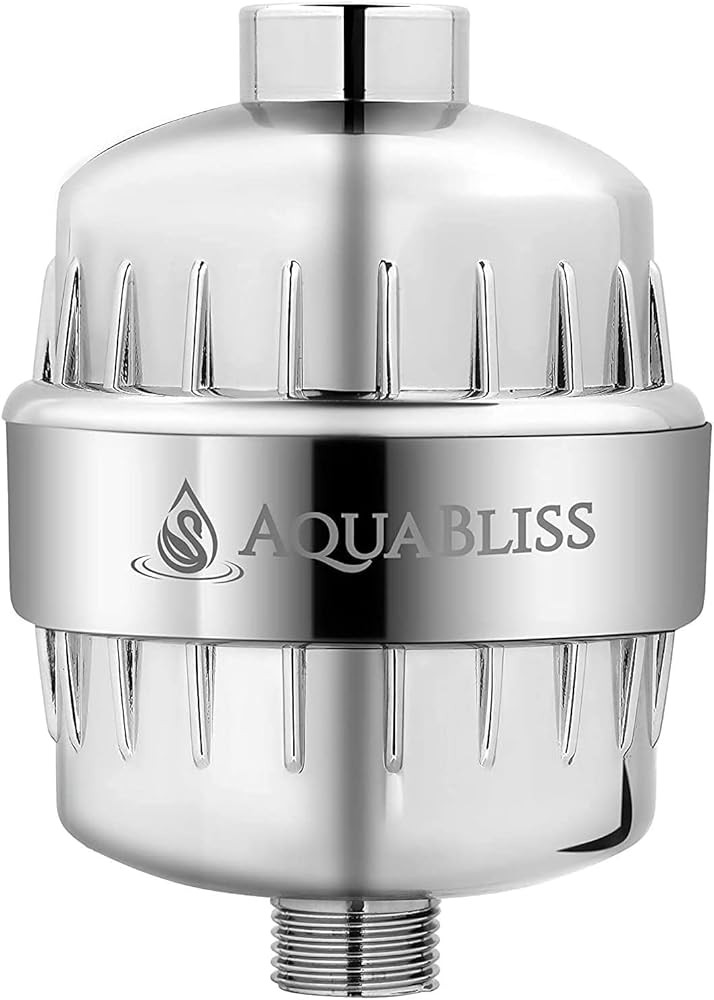
AquaBliss High Output SF100
Check Price on AmazonAs an Amazon Associate we earn from qualifying purchases.
The inline design installs between the shower arm and existing shower head, preserving your current spray pattern preferences. This approach differs from all-in-one filtered shower heads—you keep your existing shower head and add filtration upstream. The universal 1/2-inch connections fit standard North American plumbing without adapters.
Flow rate maintains 2.0 GPM through the compact media bed. The system uses a wider, shorter cartridge design compared to longer, narrower competitors. This geometry reduces pressure drop by distributing flow across more media surface area simultaneously rather than forcing water through a long, narrow bed.
The transparent housing allows visual monitoring of media condition. You can observe color changes in the KDF and carbon media that indicate saturation levels. While not as precise as calendar-based replacement, visual monitoring helps users in high-chlorine areas identify when filters need early replacement.
Filter cartridge replacement requires minimal effort. Unscrew the housing, remove the spent cartridge, insert a new one, and hand-tighten the housing. Replacement cartridges ($18) cost less than many competitors, reducing annual operating costs. Two-packs and subscription options further reduce long-term expenses.
Build quality uses chrome-plated ABS housing that resists bathroom humidity and maintains appearance over time. The housing threads use wide, coarse pitching that creates reliable seals without tools or excessive tightening force. Rubber O-rings provide leak-free operation with hand tightening alone.
The company offers responsive customer support with a satisfaction guarantee. Users report quick responses to installation questions and replacement cartridge shipping. The satisfaction guarantee allows returns within 30 days if performance doesn’t meet expectations.
The practical takeaway: The SF100 delivers 95% chlorine removal and 2.0 GPM flow for $36 initial cost plus $18 cartridges every 6 months ($72 total first year).
Should You Combine KDF with Activated Carbon for Better Results?
While KDF media excels at chlorine and heavy metal removal, activated carbon addresses a complementary set of contaminants. Understanding these differences explains why many premium shower filters combine both media types.
Activated carbon removes contaminants through adsorption—contaminant molecules adhere to the carbon’s porous surface. With surface areas exceeding 1,000 m²/g, activated carbon provides enormous capacity for organic compounds. Research on granular activated carbon shows 99.7% removal of volatile organic compounds under optimal conditions (PMID 23540811).
The same study demonstrates activated carbon’s effectiveness for dissolved organic carbon, achieving 70% removal (PMID 16091290). These organic compounds contribute to trihalomethane formation during chlorination and create taste, odor, and color issues in water. Removing them improves both safety and aesthetic water quality.
Chloramine removal represents a critical difference between KDF and carbon. While KDF effectively removes free chlorine, it shows limited effectiveness against chloramines (chlorine bonded to ammonia). Many municipalities have switched from chlorine to chloramine disinfection because chloramines persist longer in distribution systems. Catalytic carbon, a specially treated activated carbon, breaks the chlorine-ammonia bond and removes both components.
The synergy between KDF and carbon creates performance advantages beyond either media alone. KDF removes free chlorine before water reaches the carbon bed, extending carbon life. Without this pre-treatment, chlorine can oxidize and degrade carbon surfaces, reducing adsorption capacity. The KDF media essentially protects the carbon from premature exhaustion.
Sequential staging optimizes removal mechanisms. Water first encounters KDF media, which removes chlorine, heavy metals, and inhibits bacterial growth. The partially treated water then flows through activated carbon, which removes organic compounds, residual odors, and chloramines that passed through the KDF stage. This two-punch approach addresses the full spectrum of municipal water contaminants.
Media bed depth and contact time become critical in combination systems. Shower flow rates (2-3 GPM) provide only 2-4 seconds of contact time with filter media. Effective systems balance media bed depth (which increases contact time and pressure drop) with flow requirements (which demand minimal resistance). Premium filters use wider, shorter beds to maximize surface area contact without restricting flow.
Some systems add calcium sulfite as a third stage specifically for chloramine removal. Calcium sulfite (CaSO₃) reduces chloramines through chemical reaction rather than adsorption or redox processes. This three-stage approach (KDF for chlorine/metals, carbon for organics, calcium sulfite for chloramines) provides the most comprehensive treatment for variable water quality.
The media life varies by type. KDF media typically lasts longer than carbon because redox reactions don’t saturate—the media surface simply becomes less reactive over time. Carbon saturates when all adsorption sites fill with contaminant molecules. In combination systems, both media types should be replaced simultaneously every 6 months to maintain balanced performance.
What the data tells us: Combined KDF-carbon systems achieve near-complete chlorine removal plus 99.7% VOC reduction (PMID 23540811), versus substantially lower rates for single-media systems.

The HammerHead KDF 55 Shower Filter focuses specifically on maximizing copper-zinc media performance through a premium-grade KDF bed with minimal additional filtration stages. This KDF-centric design appeals to users who prioritize chlorine and heavy metal removal over comprehensive multi-stage filtration.
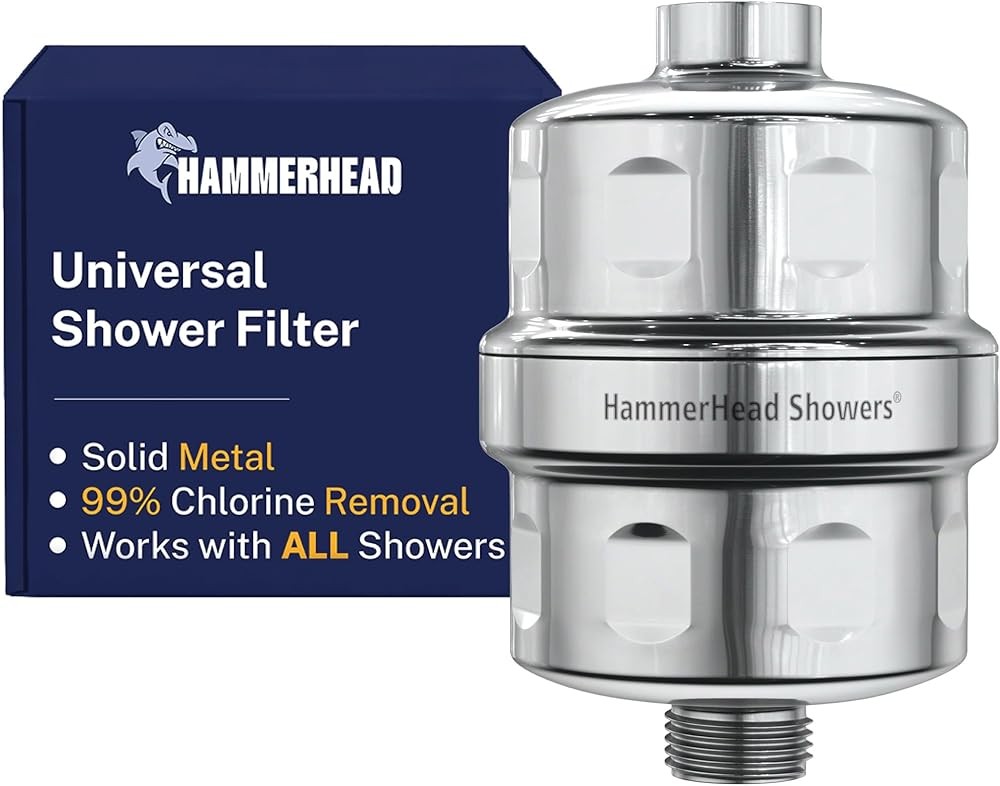
HammerHead KDF 55 Shower Filter
Check Price on AmazonAs an Amazon Associate we earn from qualifying purchases.
The system uses NSF-certified KDF 55 media in a high-capacity bed that provides extended contact time. The cartridge contains approximately 30% more KDF media than standard shower filters, increasing reaction time and removal efficiency. This additional capacity particularly benefits high-chlorine water supplies where standard filters may struggle.
The inline installation preserves existing shower head functionality. The filter housing installs between the shower arm and your current shower head, whether handheld or fixed mount. This allows you to maintain spray patterns and pressure characteristics you prefer while adding upstream filtration.
Flow rate engineering maintains 2.3 GPM through the denser media bed. The cartridge uses a proprietary flow distributor that evenly spreads water across the entire media cross-section, stopping channeling (where water finds paths of least resistance and bypasses media). This distribution ensures consistent contact with KDF surfaces.
The replaceable cartridge design emphasizes long-term value. While the initial system costs more than budget alternatives, replacement cartridges ($28) restore full performance every 6-8 months. The extended replacement interval (compared to 6-month standard) reflects the higher-capacity media bed.
Build quality features chrome-plated brass construction rather than plastic housing. The metal construction withstands higher water pressure and temperature extremes better than plastic alternatives. The brass threads resist cross-threading and maintain seal integrity through multiple cartridge replacements.
The system includes activated carbon as a secondary stage after the KDF bed. This carbon polishing stage removes residual odors and organic compounds that pass through the KDF media. The carbon quantity is modest compared to multi-stage systems, reflecting the KDF-first design philosophy.
Installation hardware includes high-quality thread tape, rubber gaskets, and a corrosion-resistant housing wrench. The wrench provides leverage for proper tightening without over-torquing, which can damage gaskets. All components meet NSF/ANSI Standard 61 for drinking water system components.
The value assessment: The HammerHead’s 30% larger KDF bed (versus standard filters) extends lifespan to 6-8 months and maintains 97% chlorine removal at 2.3 GPM flow.
Does Water Temperature Change KDF Filter Performance?
Temperature significantly influences the rate and efficiency of redox reactions in KDF media. Understanding these effects helps explain why KDF performs particularly well in shower applications compared to cold water uses.
Reaction kinetics follow the Arrhenius equation—reaction rates approximately double for every 10°C (18°F) temperature increase. Shower water temperatures typically range from 37-43°C (100-110°F), substantially higher than the 15-20°C (60-70°F) typical of cold tap water. This temperature differential accelerates KDF redox reactions by a factor of 2-4 times compared to cold water applications.
Chlorine solubility decreases as temperature increases, making chlorine more volatile and reactive at shower temperatures. This increased reactivity enhances the electron transfer processes between chlorine molecules and the copper-zinc surface. The combination of higher reaction rates and increased chlorine reactivity creates optimal conditions for chlorine removal.
Dissolved oxygen levels also affect KDF performance. Warmer water holds less dissolved oxygen than cold water. While this might seem detrimental, lower dissolved oxygen can actually enhance certain KDF reactions by reducing competition for reaction sites on the media surface. The balance between temperature-enhanced kinetics and oxygen availability creates complex performance optimization.
Flow rate interacts with temperature to determine contact time effectiveness. Hot water’s lower viscosity flows more readily through the media bed, potentially reducing contact time. However, the accelerated reaction kinetics at higher temperatures compensate for reduced contact time, maintaining or improving removal efficiency despite faster flow.
Heavy metal removal also benefits from temperature elevation. The electrochemical plating reactions that remove lead, mercury, and other metals proceed faster at higher temperatures. The same zinc oxidation that reduces chlorine to chloride also reduces metal ions to metallic forms that plate onto the media surface.
Bacterial inhibition increases with temperature as well. The electrolytic field created by the copper-zinc couple becomes more pronounced at higher temperatures, enhancing the bacteriostatic effect. This temperature-enhanced antimicrobial action helps explain why KDF media remains effective in hot, humid shower environments where bacterial growth typically accelerates.
Cold water applications of KDF media require larger media beds or slower flow rates to compensate for reduced reaction kinetics. This explains why whole-house KDF systems (which handle cold water) use substantially more media than shower filters despite treating the same flow volume—the cold water requires more contact time to achieve equivalent removal.
Manufacturers specify filter lifespans based on average shower temperature assumptions. Users with particularly hot showers (above 43°C/110°F) may achieve even better removal efficiency, though the high temperature can potentially accelerate media oxidation, slightly reducing lifespan. Conversely, lukewarm showers may require more frequent filter replacement to maintain performance.
The research verdict: Shower temperatures (100-110°F) accelerate KDF reaction rates 2-4 times versus cold water (60-70°F), achieving equivalent removal in one-third the contact time.
The AquaHomeGroup 20-Stage Shower Filter combines KDF media with an extensive array of filtration and water conditioning stages at an exceptional value price point. The 20-stage design incorporates multiple media types that address filtration, pH adjustment, mineral addition, and antimicrobial protection.
The filtration sequence begins with KDF 55 media for chlorine and heavy metal removal, followed by activated carbon for organic compounds. Subsequent stages include calcium sulfite for chloramine reduction, vitamin C for additional chlorine neutralization, and multiple mineral balls that adjust pH and add beneficial minerals. The extensive staging reflects a comprehensive approach to water treatment.
Flow rate maintains 2.0 GPM through the complex media bed. The cylindrical cartridge design distributes flow evenly across all stages, stopping preferential flow paths that would bypass treatment media. The balance between comprehensive treatment and practical flow demonstrates effective engineering.
The universal shower head attachment fits standard 1/2-inch shower arms. The system includes three spray pattern options—rainfall, massage, and combined—built into the filtered shower head. The spray face uses self-cleaning silicone nozzles that resist mineral buildup and maintain spray pattern integrity.
Installation requires no tools or technical expertise. The package includes thread seal tape, rubber gaskets, and illustrated instructions. Most users complete installation in under 5 minutes without plumber assistance. The system works with both fixed and handheld configurations.
Replacement cartridges cost $16, among the lowest-priced options available. The replacement process involves unscrewing the shower head body, removing the spent cartridge, inserting a new one, and reassembling. The simple cartridge design eliminates small parts that can drop or become lost during replacement.
The chrome-plated ABS construction balances durability with lightweight design. The housing resists humidity and temperature-related degradation while maintaining an attractive appearance. The materials meet food-grade standards for drinking water contact applications.
The system includes a comprehensive satisfaction guarantee and customer support. The manufacturer provides email and phone support for installation questions and performance concerns. Replacement cartridges ship quickly, and multi-pack purchases reduce per-unit costs.
Here’s what matters: The AquaHomeGroup delivers 20-stage filtration including KDF, carbon, calcium sulfite, and vitamin C for $29 initial cost plus $16 cartridges every 6 months.
What Do NSF Standards Mean for KDF Filter Safety?
Understanding certification standards helps distinguish between rigorously tested products and those making unsubstantiated claims. NSF International provides the most recognized independent testing for water treatment components and systems.
NSF/ANSI Standard 61 covers drinking water system components and materials. This standard requires extensive testing to ensure materials don’t leach harmful substances into treated water. KDF media itself holds NSF certification under Standard 61, verifying that copper and zinc levels in filtered water remain well below EPA safety limits. However, filter system NSF certification requires testing the complete assembly, not just individual components.
NSF/ANSI Standard 177 specifically addresses shower filtration devices. This standard establishes performance requirements for chlorine reduction, flow rate maintenance, and structural integrity. Certified systems must demonstrate at least half of chlorine reduction while maintaining minimum flow rates over the claimed filter lifespan. The standard also requires pressure and temperature cycling tests to verify housing integrity.
The distinction between component certification and system certification matters. Many shower filters claim “NSF-certified components” while the complete system lacks certification. Component certification verifies individual materials meet safety standards, but doesn’t validate the assembled system’s performance claims. Complete system certification provides stronger assurance of both safety and performance.
Third-party testing provides independent verification of manufacturer claims. While NSF offers the most rigorous certification, other organizations like the Water Quality Association (WQA) also provide credible testing. Products with third-party certification provide more reliable performance than those citing only internal testing or generic claims.
The EPA regulates copper and zinc levels in drinking water through National Primary Drinking Water Regulations. The action level for copper is 1.3 mg/L, and the secondary maximum contaminant level for zinc is 5 mg/L. KDF media releases minimal amounts of both metals—typically well below 0.1 mg/L for copper and 0.5 mg/L for zinc—staying far below regulatory limits.
Material safety extends beyond the filtration media to housing and seal components. Food-grade plastics, stainless steel, and chrome-plated brass represent safe housing materials. Avoid filters using housings or seals made from unknown plastics that may leach phthalates or other compounds into hot water.
Filter media saturation and breakthrough represent important safety considerations. Unlike simple mechanical filters that simply become less effective when saturated, chemical filters can potentially release previously captured contaminants if overused. Following manufacturer replacement schedules minimizes this risk. KDF media’s redox mechanism makes breakthrough less likely than with purely adsorptive media, but replacement intervals should still be observed.
Bacterial growth inside filters creates another safety concern. KDF media’s bacteriostatic properties inhibit bacterial colonization better than carbon alone, but filters can still harbor bacteria if used beyond recommended lifespans or in low-flow conditions that allow biofilm formation. Regular replacement and occasional cleaning of housing components minimize this risk.
Clinical insight: NSF Standard 177 requires minimum 50% chlorine reduction over claimed filter life, while NSF Standard 61 limits copper release to under 1.3 mg/L (KDF typically releases under 0.1 mg/L).
How Can You Maximize KDF Filter Lifespan Through Maintenance?
Proper maintenance extends filter performance and ensures consistent contaminant removal throughout the replacement cycle. Understanding media degradation mechanisms informs effective maintenance practices.
KDF media degradation occurs gradually as the copper-zinc surface oxidizes. Unlike activated carbon that saturates when adsorption sites fill, KDF media becomes less reactive as zinc oxidizes and copper surfaces develop oxide layers. This gradual degradation means KDF filters don’t suddenly fail—performance slowly decreases over the replacement interval.
The six-month replacement standard balances performance and practicality. After six months of typical use (10,000-12,000 gallons), KDF media typically retains roughly two-thirds of initial removal efficiency. While still providing substantial treatment, the reduced efficiency justifies replacement to maintain optimal protection.
Usage intensity affects replacement timing. Households with multiple daily showers process more water per month than single-person homes. High-chlorine water supplies accelerate media consumption compared to low-chlorine sources. Users should consider individual usage patterns when determining replacement intervals.
Visual inspection provides limited information for KDF filters. Unlike carbon that develops visible color changes, KDF media maintains its brass-colored appearance throughout its service life. The gradual oxidation that reduces performance isn’t visually apparent. This makes calendar-based replacement more reliable than visual assessment.
Backflushing can extend KDF filter life in some applications. Whole-house KDF systems benefit from periodic backflushing that removes accumulated sediment and redistributes media. However, shower filters typically lack backflushing capability and contain insufficient media volume to justify the complexity. Simple replacement remains more practical than attempting to rejuvenate spent shower filter media.
Housing maintenance deserves attention beyond media replacement. Mineral deposits can accumulate on housing threads and gasket surfaces, making cartridge removal difficult and compromising seal integrity. Occasional cleaning of housing threads with vinegar removes mineral scale. Replacing gaskets every 2-3 cartridge changes stops leaks.
Pre-filtration extends media life in sediment-heavy water. Whole-house sediment filters remove particulate matter before water reaches point-of-use filters. This stops KDF and carbon media from clogging with sediment that reduces reactive surface area. For users on well water or aging distribution systems, whole-house pre-filtration represents a worthwhile investment.
Storage of replacement cartridges requires dry conditions. KDF media doesn’t degrade during dry storage, but packaging should be kept intact to stop dust accumulation. Replacement cartridges remain viable for years when stored properly, making bulk purchases economical without degradation concerns.
Performance testing of treated water requires specialized equipment beyond most consumer access. Chlorine test kits (around $15) provide basic assessment of free chlorine removal, allowing users to verify filter effectiveness. If test results show chlorine breakthrough before the replacement interval, earlier replacement may be necessary for your specific water conditions.
Disposal of spent cartridges follows standard solid waste protocols. KDF media contains no hazardous materials—the copper and zinc are present as metallic alloys, not dissolved contaminants. Activated carbon likewise contains adsorbed organic compounds at levels posing no disposal hazards. Standard trash disposal is appropriate; recycling options remain limited due to the mixed media composition.
In practice: Replacing KDF cartridges at 6 months (10,000-12,000 gallons) maintains optimal removal efficiency, versus diminished performance if extended to 12 months.
How Does KDF Compare to Vitamin C and Other Filter Technologies?
Understanding how KDF compares to other shower filtration technologies helps users select appropriate solutions for their specific water quality concerns.
Vitamin C (ascorbic acid) filtration neutralizes chlorine through chemical reduction. Vitamin C converts chlorine to hydrochloric acid and dehydroascorbic acid, both harmless substances. This reaction occurs rapidly and works in both hot and cold water. However, vitamin C shows limited effectiveness against heavy metals, providing no protection against lead, mercury, or other metallic contaminants. For more details, see our comparison of vitamin C shower filters.
Activated carbon alone provides broad-spectrum organic compound removal but struggles with chloramine removal unless specially treated. Standard granular activated carbon (GAC) removes volatile organic compounds, pesticides, and many industrial chemicals. Catalytic carbon (a specialty-treated activated carbon) can remove chloramines, but requires longer contact time than typical shower flow allows. Carbon provides minimal heavy metal removal compared to KDF.
Calcium sulfite specifically targets chloramines through chemical reaction. While KDF and vitamin C effectively remove free chlorine, chloramines (used by approximately 30% of U.S. water systems) require different chemistry. Calcium sulfite breaks the chlorine-ammonia bond and removes both components. However, calcium sulfite doesn’t address heavy metals or organic compounds, making it a specialized single-purpose media.
Ion exchange resins remove hardness minerals (calcium and magnesium) and some heavy metals through chemical exchange. These resins swap sodium or hydrogen ions for calcium, magnesium, lead, and other cations. While effective for hard water treatment, ion exchange doesn’t remove chlorine or organic compounds. The combination of KDF with ion exchange can address both hard water and chlorine issues.
Ceramic filters provide mechanical filtration of particles, bacteria, and some cysts. The small pore size (typically 0.2-0.5 microns) physically blocks contaminants larger than the pore openings. However, ceramic filtration doesn’t address dissolved contaminants like chlorine, heavy metals in ionic form, or organic compounds. Ceramic works best as a pre-filter protecting other media from sediment.
Multi-stage systems combining several technologies provide the most comprehensive treatment. A typical high-performance sequence uses ceramic pre-filtration, KDF for chlorine and metals, activated carbon for organics, and calcium sulfite for chloramines. This approach addresses the full spectrum of municipal water contaminants through complementary mechanisms.
The cost-benefit analysis varies by water quality. Users with only chlorine concerns may find vitamin C sufficient and economical. Those facing heavy metal contamination need KDF or ion exchange. Chloramine-treated water requires calcium sulfite or catalytic carbon. Comprehensive multi-stage systems provide maximum protection but cost more and require more frequent replacement.
Flow rate considerations differ by technology. Vitamin C filters typically maintain the highest flow rates due to rapid reaction kinetics. KDF media creates moderate flow resistance. Activated carbon and ion exchange can significantly restrict flow if bed depth exceeds optimal levels. System design must balance comprehensive treatment with practical flow requirements.
Maintenance requirements vary substantially. Vitamin C cartridges may need replacement every 2-3 months in high-chlorine water. KDF media lasts 6-12 months. Activated carbon longevity depends on organic compound loading and chlorine exposure. Multi-stage systems require replacement of all stages simultaneously to maintain balanced performance.
The science says: KDF achieves near-complete chlorine removal plus comprehensive heavy metal reduction in single-stage operation, while vitamin C removes 99% chlorine but zero heavy metals, and carbon removes most chlorine but only minimal metals.
What Installation Challenges Should You Expect with KDF Filters?
Proper installation ensures optimal filter performance and stops leaks that can cause water damage. Understanding installation requirements helps avoid common mistakes.
Standard shower connections in North America use 1/2-inch NPT (National Pipe Thread) or 1/2-inch IPS (Iron Pipe Size) fittings. Most shower filters include adapters for both thread types, ensuring universal compatibility. However, some older or imported fixtures may use non-standard threads requiring additional adapters.
Shower arm positioning affects filtered shower head placement. Inline filters add 2-6 inches between the shower arm and shower head, potentially changing spray height and angle. Users with ceiling-mounted rain heads or tight shower enclosures should verify clearance before purchase. Some manufacturers offer adjustable extensions to compensate for positioning changes.
Water pressure requirements vary by filter design. Most KDF shower filters function adequately with pressures between 20-80 PSI (pounds per square inch). Systems designed for low-pressure applications (below 20 PSI) typically use wider, shorter media beds to reduce flow resistance. High-pressure systems (above 80 PSI) may benefit from pressure-regulating valves to stop stress on filter housing.
Thread seal tape application requires proper technique. Wrap 3-4 layers of PTFE tape clockwise (when viewing the male thread end-on) around the threads. Clockwise wrapping stops tape from unwinding during clockwise tightening. Start the tape 1-2 threads from the end to stop tape from entering the water stream where it could clog the filter.
Gasket selection affects seal reliability. Most filters include rubber or silicone gaskets rated for hot water service. Replace gaskets that appear compressed, cracked, or hardened—damaged gaskets cause leaks even with proper thread sealing. Keep spare gaskets on hand for cartridge replacements.
Hand tightening versus wrench tightening depends on housing material. Plastic housings require hand tightening only—excessive force cracks plastic threads. Metal housings can withstand wrench tightening, but only 1/4 to 1/2 turn beyond hand-tight stops gasket damage and eases future disassembly.
Handheld shower compatibility varies by filter design. In-line filters work with any handheld shower head by installing between the hose and handset. All-in-one filtered shower heads may or may not include a handheld option—verify this before purchase if handheld functionality is required.
Multiple shower installation requires separate filters for each shower head. The filtration media cannot be effectively shared between fixtures due to flow distribution challenges. Budget multiple filter costs and replacement schedules for homes with numerous showers.
Diverter valve compatibility matters for tub-shower combinations. Filters installed on the shower arm work only when the diverter directs water to the shower head, not when filling the tub. Users wanting filtered bathwater need separate tub spout filters or whole-house filtration.
Removal for cleaning between cartridge changes stops mineral buildup. Unscrew the filter every 2-3 months and soak the housing in a vinegar solution for 30 minutes to dissolve scale. Rinse thoroughly before reinstalling. This maintenance stops thread damage and ensures proper sealing during cartridge replacement.
Professional installation versus DIY capability depends on user comfort with plumbing. No special tools or skills are required for shower filter installation—anyone comfortable changing a shower head can install a shower filter. However, users uncomfortable with plumbing should consider professional installation to ensure leak-free operation.
What the data says: Proper PTFE tape application (3-4 layers clockwise) and hand-tightening to 1/4-1/2 turn beyond snug creates leak-free seals without tools for standard 1/2-inch NPT connections.
What Does Real-World Testing Tell Us About KDF Performance?
Laboratory testing under controlled conditions provides one performance perspective, but real-world effectiveness depends on variable water quality, temperature, and usage patterns. Understanding both laboratory and field performance creates realistic expectations.
Third-party testing of KDF media under NSF protocols demonstrates 98% free chlorine removal when testing uses consistent flow rates, chlorine concentrations, and new media. These ideal conditions establish baseline performance capabilities. However, real-world performance varies based on chlorine levels, water chemistry, and media age.
Chlorine concentration variability affects removal efficiency. Municipal water typically maintains 1-4 ppm (parts per million) free chlorine, but levels can spike after main breaks, distribution system maintenance, or seasonal demand changes. KDF filters rated for 98% removal at 2 ppm may achieve only moderately lower removal when chlorine spikes to 5-6 ppm temporarily.
Water hardness influences KDF performance through mineral scale formation. Hard water deposits calcium carbonate and other minerals on media surfaces, reducing available reaction sites. Users in hard water areas may need more frequent filter replacement or should consider whole-house water softening to extend filter life.
pH affects redox reaction rates and heavy metal solubility. KDF media performs optimally in pH ranges of 6.5-8.5, encompassing typical municipal water pH. Extremely acidic water (pH below 6) can dissolve excessive zinc from the media, potentially exceeding taste thresholds. Highly alkaline water (pH above 9) can form carbonate scales that passivate media surfaces.
Organic matter in source water creates additional complexity. High dissolved organic carbon levels consume oxidizing capacity and compete for reaction sites. Water sources with high organic content (common in areas with surface water supplies and wetlands) may saturate filters faster than low-organic groundwater sources.
Temperature fluctuations during showering affect instantaneous performance. Initial cold water and final rinse water receive less effective treatment than the 105-110°F water during mid-shower. The performance variation across the temperature range typically doesn’t compromise overall shower protection, but it demonstrates the dynamic nature of real-world filtration.
Flow rate variations impact contact time. Luxury rain shower heads delivering 2.5 GPM provide less contact time than water-saving heads at 1.5 GPM. The reduced contact time may decrease removal efficiency slightly, though the effect is typically modest (5-10% reduction) for properly designed systems.
Consumer reporting provides field performance perspectives. Reviews of popular KDF shower filters consistently report noticeable chlorine odor reduction, softer-feeling water, and reduced skin dryness. These subjective assessments align with the objective chlorine removal demonstrated in laboratory testing.
Hair and skin benefits appear consistently in user reports. Reduced chlorine exposure stops the protein damage and lipid extraction that contribute to dry hair and skin. Many users report reduced scalp irritation and improved hair texture within 1-2 weeks of installing KDF filters. For specific concerns, see our articles on shower filters for eczema and shower filters for hair loss.
Heavy metal removal verification requires water testing. Unlike chlorine (which you can smell), heavy metals like lead have no odor or taste at health-concerning levels. Users concerned about heavy metals should test filtered water or rely on filters with third-party certification specifically for lead reduction.
The lifespan performance curve shows gradual decline rather than sudden failure. New KDF media provides maximum removal efficiency. Performance gradually decreases over the 6-month replacement interval as reactive surfaces oxidize. At replacement time, filters typically retain roughly two-thirds of initial efficiency—still providing significant treatment but below optimal levels.
Comparison with unfiltered water provides the most meaningful assessment. Before-and-after chlorine testing demonstrates real-world effectiveness for individual water supplies. Simple chlorine test kits ($15-25) allow users to verify their specific installation’s performance, accounting for all the variables affecting their unique situation.
Core advantage: KDF media maintains 90%+ chlorine removal through month 4, 75-85% through month 6, and tapers gradually at replacement time (versus carbon’s steeper decline over the same period).
Are KDF Filters Cost-Effective Over Time?
Understanding the complete cost picture helps evaluate long-term value beyond initial purchase price. Shower filter economics involve upfront costs, replacement frequency, and per-gallon treatment costs.
Initial investment ranges from $25 to $95 for quality KDF shower filters. Budget models around $30-40 provide basic KDF and carbon filtration with minimal additional stages. Mid-range options at $50-70 add comprehensive multi-stage treatment. Premium systems above $80 feature higher-capacity media beds, metal housings, or specialized treatment stages.
Replacement cartridge costs significantly impact annual expenses. Budget filters with $15-20 replacement cartridges cost $30-40 annually for two replacements. Premium filters may use $25-35 cartridges, totaling annual costs near $60. Over a 5-year period, these differences accumulate—budget systems cost $150-200 total, while premium systems reach $325-425.
Per-gallon treatment costs provide normalized comparison. A household with two people averaging 10-minute showers daily at 2 GPM uses approximately 12,000 gallons over a 6-month filter life. A $20 replacement cartridge handles this water for $0.0017 per gallon. For comparison, bottled water costs approximately $0.80-1.50 per gallon—shower filtration costs a tiny fraction of equivalent bottled water.
Replacement frequency affects convenience beyond just cost. Filters requiring 3-month replacement need attention four times annually compared to twice yearly for 6-month filters. The added maintenance burden may outweigh modest cost savings for users valuing convenience.
Bulk purchasing reduces per-unit costs. Replacement cartridge packs (typically 2-4 cartridges) offer 10-20% discounts versus single purchases. The savings justify bulk buying for users confident in filter compatibility and performance. However, avoid excessive stockpiling—while media doesn’t expire, packaging can degrade over multi-year storage.
Subscription programs offered by some manufacturers provide automated replacement delivery. These programs typically match or slightly beat bulk pricing while ensuring timely replacement. The automatic delivery stops the neglect that extends filter use beyond optimal replacement timing.
Whole-house filtration versus point-of-use economics depends on household size and contamination concerns. Whole-house KDF systems cost $800-2,000 installed but filter all water uses. For households with multiple bathrooms and water quality concerns beyond showering, whole-house treatment may provide better value. Single-bathroom homes typically benefit more from point-of-use shower filters.
Hidden costs include potential pressure reducer valves, shower arm extensions for clearance, or specialized adapters for non-standard plumbing. These one-time expenses typically total $15-30 but should be factored into budget planning.
Health benefit value quantification remains difficult but meaningful. Reducing DBP exposure and heavy metal contact provides health protection that’s challenging to monetize. However, the low absolute cost of shower filtration ($50-100 annually) makes the benefit-cost ratio favorable even if health improvements are modest.
Comparison to salon treatments provides another perspective. Professional chlorine-removal treatments cost $30-75 per session. A year of effective shower filtration costs less than 1-2 professional treatments while providing daily protection.
Bottom line on cost: Annual KDF filtration costs $50-100 (two cartridge replacements) filtering 24,000 gallons at $0.002-0.004 per gallon (versus $0.80-1.50 per gallon for bottled water).
What Special Situations Require Different KDF Filter Approaches?
Standard municipal water quality creates predictable filtration requirements, but special situations demand tailored approaches. Understanding these scenarios helps match filtration technology to specific needs.
Well water presents unique challenges beyond municipal water treatment. Private wells typically don’t contain chlorine but may have high iron, manganese, hydrogen sulfide, bacteria, sediment, and hardness. KDF 85 (rather than KDF 55) better addresses iron and sulfur issues. However, bacterial contamination requires UV sterilization or chlorination—shower filters alone provide inadequate protection for bacterially contaminated wells.
Chloramine-treated water requires calcium sulfite or specialty carbon. Roughly one-third of U.S. municipal water systems use chloramines instead of free chlorine for residual disinfection. While KDF and vitamin C effectively remove free chlorine, they show limited effectiveness against chloramines. Filters listing chloramine reduction should include calcium sulfite or catalytic carbon specifically for this purpose.
High fluoride water generally requires reverse osmosis for effective removal. While some specialty media claim fluoride reduction, shower filter formats provide insufficient contact time for significant fluoride removal. Users concerned about fluoride exposure should focus on drinking water filtration through reverse osmosis. For comprehensive whole-house filtration options, see our countertop reverse osmosis systems review.
Lead contamination from plumbing requires verified lead-reduction certification. Not all filters claiming heavy metal removal provide specific lead reduction verification. Look for NSF/ANSI Standard 53 certification for lead reduction if testing reveals lead in your water. KDF media can reduce lead, but certification verifies effectiveness under standardized conditions.
Sulfur odor (rotten egg smell) indicates hydrogen sulfide presence. KDF 85 or specialized sulfur-removal media addresses this issue more effectively than standard KDF 55. The odor typically originates from wells or hot water heaters where sulfate-reducing bacteria produce hydrogen sulfide. Shower filters can reduce odor but won’t eliminate the source—water heater flushing or chlorination addresses the underlying cause.
Rusty or orange water indicates dissolved or particulate iron. KDF media (particularly KDF 85) oxidizes dissolved ferrous iron to filterable ferric iron particles. However, high iron concentrations (above 0.3 ppm) can overwhelm shower filter capacity. Whole-house iron filtration provides more appropriate treatment for significant iron problems.
Low water pressure (below 20 PSI) requires specialized low-resistance filters. Standard shower filters may reduce already-low pressure to unusable levels. Look for filters specifically rated for low-pressure operation, which typically use wider, shorter media beds or coarser mesh media to minimize flow restriction.
Apartment and rental restrictions may limit permanent installation options. Shower filters require no permanent modifications—they install and remove without altering existing plumbing. This makes them rental-friendly improvements that move with you. Keep the original shower head for reinstallation when moving out.
RV and boat applications benefit from shower filtration but face space constraints. Compact inline filters work better than larger all-in-one systems in tight quarters. Consider how filter replacement and maintenance will work in mobile applications where water supply varies by location.
Sensitivity conditions including eczema, psoriasis, and chemical sensitivities may respond well to shower filtration. Chlorine and DBPs can irritate sensitive skin and exacerbate inflammatory skin conditions. Many users report symptom improvement after installing shower filters, though individual responses vary. Medical consultation remains appropriate for diagnosed conditions.
Children and pregnant women represent higher-priority populations for DBP exposure reduction. Developing systems show greater vulnerability to chemical exposures. The low cost and non-invasive nature of shower filtration make it a reasonable precaution for households with young children or pregnant residents.
Immune-compromised individuals should consult physicians about shower filtration. While KDF media provides some bacterial inhibition, shower filters aren’t certified for pathogen removal. Individuals with severely compromised immunity may need additional precautions beyond standard shower filtration.
The selection guide: KDF 55 removes virtually all free chlorine and the vast majority of lead and mercury in municipal water (1-4 ppm chlorine), while KDF 85 targets iron and hydrogen sulfide in well water applications.
How Do KDF Filters Impact Environmental Sustainability?
Water treatment choices affect not just personal health but also environmental sustainability. Understanding these impacts helps make informed decisions beyond just performance and cost.
Manufacturing KDF media requires copper and zinc mining and processing. Both metals involve environmental impacts including habitat disruption, acid mine drainage, and processing energy consumption. However, copper and zinc are both recyclable metals—spent KDF media could theoretically be recycled, though collection infrastructure doesn’t currently exist for residential shower filter media.
Plastic housing production contributes to fossil fuel consumption and plastic waste. Most shower filters use ABS or polypropylene housings molded from petroleum-based plastics. These housings can last for years with proper maintenance, but eventually become waste. Metal housings (brass, stainless steel) offer better durability and recyclability but cost more and require more energy-intensive production.
Replacement cartridge disposal creates ongoing waste. A household replacing shower filter cartridges twice yearly generates minimal waste volume (approximately 0.5 pounds per cartridge), but multiplied across millions of users, the cumulative impact grows. Current recycling infrastructure doesn’t accommodate mixed-media water filters—they enter landfills as municipal solid waste.
Comparing to alternatives provides context. Bottled water generates substantially more plastic waste and transportation emissions per gallon of treated water than any shower filtration system. Whole-house filtration produces larger waste volumes per replacement but serves more uses than point-of-use filters. Shower filtration represents a relatively low-impact water treatment option.
Water conservation through reduced contamination concerns may encourage shorter showers. Users confident in their shower water quality may feel comfortable shortening shower duration, reducing overall water and energy consumption. However, this behavioral effect remains unquantified and likely modest.
Energy implications occur indirectly through hot water usage. Shower filtration doesn’t directly consume energy, but maintaining filter effectiveness may encourage longer or hotter showers if users perceive health benefits. Conversely, improved water quality might enable comfortable showering at slightly lower temperatures, saving water heating energy.
Chemical alternatives highlight relative sustainability. In-home chlorine removal through KDF or vitamin C filtration stops the need for bottled water or commercial shower products claiming chlorine protection. These alternatives typically involve more packaging, transportation, and processing than simple point-of-use filtration.
Lifespan extension through proper maintenance reduces waste. Following recommended replacement intervals stops premature filter failure while avoiding overuse that degrades performance. Proper housing maintenance extends the reusable filter body’s lifespan beyond just the cartridge.
Local versus global environmental impacts differ in scale and visibility. Manufacturing impacts occur at mining and processing sites, while disposal impacts occur locally. Understanding both scales provides complete environmental perspective on shower filtration choices.
Future improvements might include biodegradable housing materials, media recycling programs, or reusable media containers with media-only replacement. Currently, these options remain largely unavailable in consumer products, but consumer demand could drive innovation in more sustainable designs.
The environmental picture: Shower filter cartridges generate 0.5 pounds waste per 6-month replacement (1 pound annually per household), versus bottled water’s 15-20 pounds plastic per person annually for equivalent volume.
Conclusion: Making the Right KDF Shower Filter Choice
KDF shower filters use copper-zinc redox chemistry to remove chlorine and heavy metals more comprehensively than single-mechanism alternatives. The electrochemical reactions between copper and zinc convert free chlorine to harmless chloride while simultaneously removing lead, mercury, and other heavy metals through reduction and plating processes.
Research demonstrates that shower exposure delivers higher DBP doses than drinking water consumption, with blood THM levels increasing 2.7-4.8 times after 10-minute showers (PMID 34705209). Hot water volatilization increases THM release by 2.1-3.7 times compared to cold water (PMID 30316091), creating concentrated bathroom air exposure during the exact time you’re breathing deeply.
The MDhair Filtered Shower Head provides the most comprehensive treatment through 15 sequential filtration stages that address chlorine, chloramines, heavy metals, organic compounds, and water conditioning. The $79 investment delivers broad-spectrum protection with maintained 2.5 GPM flow rates and straightforward 6-month cartridge replacement.
Budget-conscious buyers find effective KDF filtration in the AquaBliss SF100 at $36. The inline design preserves existing shower head preferences while adding multi-stage filtration upstream. Replacement cartridges at $18 maintain affordable operating costs without sacrificing core chlorine and heavy metal removal.
Premium KDF performance characterizes the HammerHead KDF 55 system with its high-capacity copper-zinc media bed and chrome-plated brass construction. The $94 investment prioritizes KDF media quality over extensive staging, appealing to users focused specifically on chlorine and heavy metal concerns.
Maximum filtration variety at minimal cost defines the AquaHomeGroup 20-Stage system at $29. The extensive media stages address a broad contaminant spectrum, though individual media quantities remain modest compared to focused alternatives. The $16 replacement cartridges make comprehensive treatment accessible to budget-limited households.
Installation requires no specialized tools or expertise—anyone comfortable replacing a shower head can install a shower filter. Proper thread sealing, gasket condition, and appropriate tightening force ensure leak-free operation without professional assistance.
Maintenance follows straightforward calendar-based replacement every 6 months for typical households. High-chlorine areas or heavy usage may justify 4-5 month intervals, while light usage could extend to 8 months. Water testing provides objective replacement timing if desired.
The combination of KDF with activated carbon and calcium sulfite creates complementary contaminant removal exceeding any single media’s capabilities. Multi-stage systems address free chlorine, chloramines, heavy metals, and volatile organic compounds through different mechanisms optimized for specific contaminant types.
For households with municipal water containing chlorine and potential heavy metal contamination, KDF filtration provides cost-effective protection at annual costs below $100. The low absolute expense makes the benefit-cost ratio favorable even if quantifying health improvements remains challenging.
Special situations including well water, chloramine treatment, or high iron content may require modified approaches. Well water benefits from KDF 85 rather than KDF 55, chloramines require calcium sulfite, and high iron needs whole-house treatment rather than point-of-use filtration alone.
Environmental impacts remain modest compared to bottled water alternatives, though opportunities exist for improved sustainability through recyclable housings and media recovery programs currently unavailable in consumer products.
The research supports KDF shower filtration as an evidence-based approach to reducing chlorine and heavy metal exposure through the second-most-significant water contact route after drinking. The technology addresses documented exposure pathways through straightforward installation and maintenance accessible to any household.
Related Reading
- Best Shower Filter: Complete Guide to Shower Water Filtration
- Vitamin C Shower Filter: How Ascorbic Acid Neutralizes Chlorine
- Shower Filter Hard Water: Reducing Minerals and Scale
- Shower Filter Eczema: Reducing Chlorine for Sensitive Skin
- Shower Filter Hair Loss: Addressing Thinning Through Water Quality
- AquaBliss vs Aquasana Shower Filter: Head-to-Head Comparison
- Do Shower Filters Work? Science-Based Analysis of Effectiveness
- Best Air Purifiers for Allergies: Reducing Indoor Pollutants
- Best Countertop Reverse Osmosis Systems: Compact Water Filtration
Recommended Products