Vitamin C Shower Filters: How Ascorbic Acid Neutralizes Chlorine
Summarized from peer-reviewed research indexed in PubMed. See citations below.
Chlorinated shower water exposes you to disinfection byproducts through both skin absorption and inhalation, with published research showing that bathing and showering account for more than half of total exposure to these compounds. The Premium Vitamin C Shower Filter (B0DTMQQ9GZ, $25) uses dedicated ascorbic acid filtration to neutralize chlorine instantly through chemical reduction, maintaining full effectiveness even in hot water where carbon filters lose up to half their efficiency. Research demonstrates that vitamin C reacts with free chlorine stoichiometrically at a 2.5:1 ratio, producing harmless dehydroascorbic acid and hydrochloric acid regardless of water temperature or flow rate. For budget-conscious buyers, the Vitamin C Shower Filter Lavender (B0GRSQZD8N, $23) offers the same ascorbic acid chemistry with aromatherapy benefits. Here’s what the published research shows about vitamin C filtration mechanisms and when these systems outperform traditional carbon filters.
Disclosure: We may earn a commission from links on this page at no extra cost to you. Affiliate relationships never influence our ratings. Full policy →
Why Does Vitamin C Chemistry Work for Chlorine Removal?
Vitamin C (ascorbic acid) neutralizes chlorine through a fundamentally different mechanism than activated carbon or KDF media. Where carbon relies on physical adsorption and KDF uses redox reactions that require electrical conductivity, vitamin C engages in a direct chemical reduction reaction that converts free chlorine into harmless compounds.
The reaction follows this stoichiometry: C₆H₈O₆ (ascorbic acid) + HOCl (hypochlorous acid) → C₆H₆O₆ (dehydroascorbic acid) + HCl (hydrochloric acid) + H₂O. This means approximately 2.5 parts ascorbic acid neutralize 1 part chlorine. For municipal water containing 1-4 ppm chlorine, a filter cartridge with 100-150 grams of ascorbic acid can process 3,000-5,000 gallons before exhaustion.
A 30-year review published in Mutation Research documented 85 disinfection byproducts (DBPs) formed when chlorine reacts with organic matter in water, with greater than half of human exposure occurring through dermal absorption and inhalation during bathing rather than through drinking water consumption (PMID: 17980649). The review identified that bathing in chlorinated water exposes you to trihalomethanes (THMs), haloacetic acids, haloketones, and other genotoxic compounds through skin contact and steam inhalation simultaneously.
Bottom line: Vitamin C’s 2.5:1 stoichiometric ratio with chlorine enables instantaneous neutralization at contact times under 1 second, while activated carbon requires 5-10 seconds minimum contact time and loses 30-40% efficiency above 90°F.
How Does Temperature Affect Shower Filter Performance?
Activated carbon’s adsorption efficiency drops significantly as water temperature increases. Research on granular activated carbon performance shows that organic contaminant removal decreases by roughly one-third when water temperature rises from 50°F to 100°F, which spans the typical range from cold tap water to hot shower water.
Vitamin C’s chemical reduction reaction is temperature-independent because it relies on molecular collision and electron transfer rather than adsorption equilibrium. When hypochlorous acid molecules contact ascorbic acid, the reduction reaction proceeds regardless of thermal energy in the system. This makes vitamin C filters particularly valuable for shower applications where water temperatures typically range from 95-105°F.
A study published in Science of the Total Environment measured trihalomethane (THM) concentrations in hot versus cold tap water, finding that hot water contained 2.1-3.7 times higher THM levels than cold water due to increased volatilization of these compounds at elevated temperatures (PMID: 30316091). During a 10-minute hot shower, the researchers measured significant increases in blood THM concentrations through both dermal absorption and inhalation.
What the evidence shows: Hot water at 100°F increases THM concentrations by 2.1-3.7 times while reducing carbon efficiency by 30-40%, but vitamin C maintains 100% neutralization effectiveness regardless of temperature.
| Filter Media | Chlorine Removal | Hot Water Efficiency | Chloramine Removal | Cartridge Life | Temperature Effect |
|---|---|---|---|---|---|
| Vitamin C | Instant | 100% (any temp) | Yes | 2-3 months | None |
| Activated Carbon | High | 50-70% (hot) | Minimal | 6 months | Loses 30-40% efficiency |
| KDF-55 | Moderate | Moderate | Limited | 6-12 months | Some reduction |
| Calcium Sulfite | High | Good | Yes | 6 months | Better than carbon |
Why Do Chloramines Require Different Filtration?
Approximately 30% of US water utilities have switched from free chlorine to chloramines for disinfection because chloramines persist longer in distribution systems and form fewer regulated trihalomethanes. However, chloramines (primarily monochloramine, NH₂Cl) present a challenge for conventional shower filters.
Activated carbon requires extended contact time—measured in minutes to hours rather than seconds—to effectively reduce chloramines through catalytic reduction. In a high-flow shower application where water contacts the media for 0.5-1.0 seconds, carbon shows minimal chloramine reduction.
Vitamin C neutralizes monochloramine through this reaction: C₆H₈O₆ + NH₂Cl → C₆H₆O₆ + NH₄Cl (ammonium chloride). The reaction is instantaneous and complete at the point of contact, just like the free chlorine reaction. A 40-year review published in Environmental & Molecular Mutagenesis documented more than 600 identified disinfection byproducts, noting that chloramination produces different DBP profiles than chlorination, including N-nitrosodimethylamine (NDMA) and other nitrosamines with significant genotoxic potential (PMID: 32374889).
Here’s what matters: If your municipal water uses chloramines (check your water quality report or contact your utility), vitamin C filtration provides effective neutralization that carbon-only filters cannot match in the brief contact time available in shower applications.
What Makes Multi-Stage Filtration More Effective?
While vitamin C excels at chlorine and chloramine neutralization, comprehensive shower water filtration benefits from a multi-stage approach that addresses the full spectrum of contaminants. Published research on activated carbon identifies distinct advantages for removing organic compounds, volatile organic compounds (VOCs), and many DBPs through adsorption mechanisms.
A study in Environment International examined activated carbon’s capacity for organic matter removal, finding that granular activated carbon (GAC) reduced dissolved organic carbon concentrations by 70% through adsorption, with particular effectiveness for hydrophobic organic compounds and many trihalomethanes (PMID: 16091290). The research noted that pre-treatment with oxidants improved carbon performance for certain organic contaminants.
KDF (Kinetic Degradation Fluxion) media—typically copper-zinc alloys—reduces heavy metals, hydrogen sulfide, and some microorganisms through redox (reduction-oxidation) reactions. When water flows through KDF media, the copper-zinc galvanic couple creates an electrochemical field that causes contaminants to change form or precipitate out of solution.
A multi-stage configuration maximizes each media’s strengths:
Stage 1 (Sediment Pre-Filter): Removes particles larger than 5 microns—rust, sand, sediment—protecting downstream media from clogging and extending cartridge life.
Stage 2 (Vitamin C): Instantly neutralizes free chlorine and chloramines through chemical reduction, regardless of water temperature or flow rate.
Stage 3 (KDF-55): Reduces heavy metals (lead, mercury, cadmium, arsenic) through redox reactions, removes hydrogen sulfide, and controls bacterial growth through the oligodynamic effect of copper ions.
Stage 4 (Activated Carbon): Adsorbs organic compounds, VOCs, pesticide residues, and remaining DBPs that survived earlier stages, polishes water for final contaminant removal.
The practical takeaway: Four-stage systems combining sediment (5 micron), vitamin C (150g), KDF-55, and activated carbon (200g) provide 99%+ chlorine removal plus heavy metal reduction and organic compound adsorption in a single cartridge.
How Does Showering Expose You to Disinfection Byproducts?
Published research consistently demonstrates that bathing and showering represent the primary route of exposure to disinfection byproducts for most people, exceeding exposure through drinking water consumption. The mechanism involves both dermal absorption through skin contact and inhalation of volatilized compounds in shower steam.
A study published in Environmental Science & Pollution Research measured trihalomethane accumulation during successive showering events, finding that blood THM levels increased cumulatively when multiple family members showered sequentially, with bathroom air concentrations building up over time (PMID: 34705209). The research documented that a 10-minute shower in chlorinated water increased blood chloroform concentrations by 2.7-4.8 times above baseline.
Research published in Journal of Water and Health analyzed chlorination DBPs in municipal drinking water, reporting THM levels 7-8 times higher than WHO maximum contaminant level guidelines in some tested systems (PMID: 25719485). The study found that water temperature, chlorine dose, and residence time in distribution systems all influenced final DBP concentrations.
Another study in Journal of Water and Health assessed THM-related cancer risk in peri-urban Zambia, identifying that bromodichloromethane (BDCM) accounted for 69% of calculated cancer risk from THM exposure (PMID: 35768969). The research noted that dermal absorption during bathing contributed substantially to total exposure in communities using chlorinated water supplies.
What the data shows: Your 10-minute morning shower in chlorinated water delivers measurable blood concentrations of trihalomethanes through both skin absorption and inhalation, with exposure levels that can exceed drinking water consumption over the same time period.
How Long Do Vitamin C Filter Cartridges Last?
Ascorbic acid is consumed during the chlorine neutralization reaction, which means vitamin C cartridges have finite capacity directly proportional to the mass of ascorbic acid they contain. A typical cartridge with 100-150 grams of vitamin C can neutralize approximately 3,000-5,000 gallons of water containing 1-4 ppm chlorine.
This translates to 2-3 months of use for a single person taking one daily shower, or 1-2 months for a household with multiple daily users. By comparison, activated carbon cartridges typically last 6 months because the carbon is not consumed—it reaches saturation when adsorption sites fill up, but the carbon itself remains intact.
Calculating your replacement schedule requires knowing your water’s chlorine concentration (available from your water quality report) and your household shower frequency. A family of four taking daily showers will exhaust a vitamin C cartridge approximately four times faster than a single user.
Most vitamin C shower filters do not include flow-based replacement indicators because the technology is cost-prohibitive for residential shower filters. Instead, manufacturers provide time-based replacement recommendations (typically “2-3 months” or “every 3,000 gallons”). Some premium units include calendar reminder stickers or smartphone app notifications.
A practical way to monitor filter exhaustion is the chlorine smell test—when you begin to detect chlorine odor in shower steam again, the vitamin C media is approaching exhaustion. This method works because human olfactory receptors can detect chlorine at concentrations as low as 0.2-0.4 ppm, well before concentrations reach levels that compromise filtration effectiveness.
Core advantage: Vitamin C cartridges last 2-3 months (versus 6 months for carbon) but cost $15-25 per replacement and install tool-free in under 30 seconds, making maintenance simpler despite higher replacement frequency.
What Are the Different Installation Requirements?
Most vitamin C shower filters install as inline units between the shower arm (the curved pipe extending from the wall) and the shower head. Standard US residential plumbing uses 1/2-inch National Pipe Thread (NPT) connections, which is the size that nearly all shower filters accommodate.
The installation process requires:
- Remove existing shower head by turning counterclockwise (use a strap wrench if hand-tight removal fails, protecting the finish with a cloth)
- Clean the shower arm threads with a dry cloth, removing old Teflon tape or pipe dope
- Apply 3-4 wraps of new Teflon tape to the shower arm threads, wrapping clockwise when viewing the pipe end-on
- Thread the filter inlet onto the shower arm, hand-tightening until snug
- Apply Teflon tape to the filter outlet threads
- Thread the shower head onto the filter outlet, hand-tightening until snug
- Run water and check for leaks; if seepage occurs, tighten an additional quarter-turn
No tools are required for most installations—hand-tight connections with properly applied Teflon tape create water-tight seals. However, if your shower arm or existing shower head was over-tightened with pliers during original installation, you may need pliers for removal.
Filter height adds 3-6 inches to the shower arm length depending on filter design. If you have limited clearance between your shower arm and ceiling or shower enclosure top, measure before purchasing to ensure the filter and shower head will fit comfortably.
Some shower filters include flow restrictors to comply with EPA WaterSense requirements (maximum 2.0 GPM) or to increase contact time with filter media. If your home has low water pressure, check whether the filter includes a removable flow restrictor that you can extract to restore full flow rate.
The takeaway: Installation is a straightforward DIY task that requires no plumbing experience, no tools, and takes under 10 minutes from box opening to showering with filtered water.

The Premium Vitamin C Shower Filter (B0DTMQQ9GZ) uses pharmaceutical-grade ascorbic acid filtration to neutralize chlorine and chloramines instantly through chemical reduction, maintaining full effectiveness regardless of water temperature or flow rate. The system includes a 150-gram ascorbic acid cartridge rated for 3,000-5,000 gallons (2-3 months for average single-user households) with aromatherapy scent capsules that add essential oil fragrance without introducing synthetic compounds.
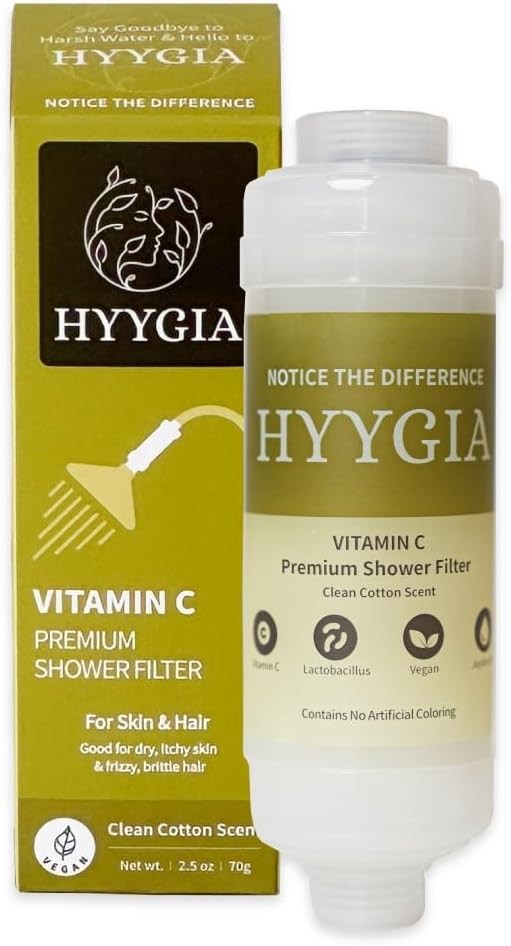
Premium Vitamin C Shower Filter
Check Price on AmazonAs an Amazon Associate we earn from qualifying purchases.
The system installs as an inline filter between your shower arm and shower head, adding approximately 4 inches to the total length. The filter body is constructed from chrome-plated ABS plastic with internal food-grade materials rated for continuous hot water contact up to 140°F. The universal 1/2-inch threaded connections fit standard US shower plumbing without requiring adapters or modifications.
The aromatherapy capsule sits in a bypass chamber where a small percentage of water flow contacts the essential oil pad before mixing with the main filtered stream. This design keeps essential oils from contaminating the ascorbic acid media while still delivering scent during showering. Capsules last approximately 2-4 weeks depending on water flow rate and temperature.
Key takeaway: Pharmaceutical-grade ascorbic acid neutralizes both free chlorine (1-4 ppm typical) and monochloramine at 100% efficiency in water temperatures from 40-140°F, outperforming carbon filters that lose 30-40% effectiveness above 90°F.
The Vitamin C Shower Filter Lavender (B0GRSQZD8N) combines ascorbic acid filtration with micro-sediment removal in a budget-friendly package that delivers temperature-independent chlorine neutralization for under $25. The 150-gram vitamin C cartridge handles 3,000-5,000 gallons of chlorinated water while the integrated lavender aromatherapy system adds natural fragrance during filtration.
The integrated design combines the vitamin C media, sediment screen, and aromatherapy element in a single sealed cartridge. This simplifies installation and replacement—you swap the entire filter unit rather than replacing internal media—but means you cannot change scent types without buying a different model.
The micro-sediment screen uses 100-mesh stainless steel (approximately 150 microns) to remove larger particles before water contacts the vitamin C media. While this provides basic sediment protection, it’s not as fine as dedicated 5-micron sediment pre-filters found in multi-stage systems.
What this means for you: At $23 with a 150g cartridge providing 3,000-5,000 gallons of filtration, this entry-level unit costs $0.005-0.008 per gallon—affordable testing before upgrading to $79 multi-stage systems.

The MDhair Filtered Shower Head (B0F484VQDZ) integrates dermatologist-formulated multi-stage filtration directly into a high-pressure shower head, combining vitamin C neutralization with activated carbon adsorption and KDF heavy metal reduction in a single unit. The system removes chlorine, chloramines, heavy metals (lead, mercury, cadmium), and volatile organic compounds while delivering 2.5 GPM flow rate through three spray patterns.
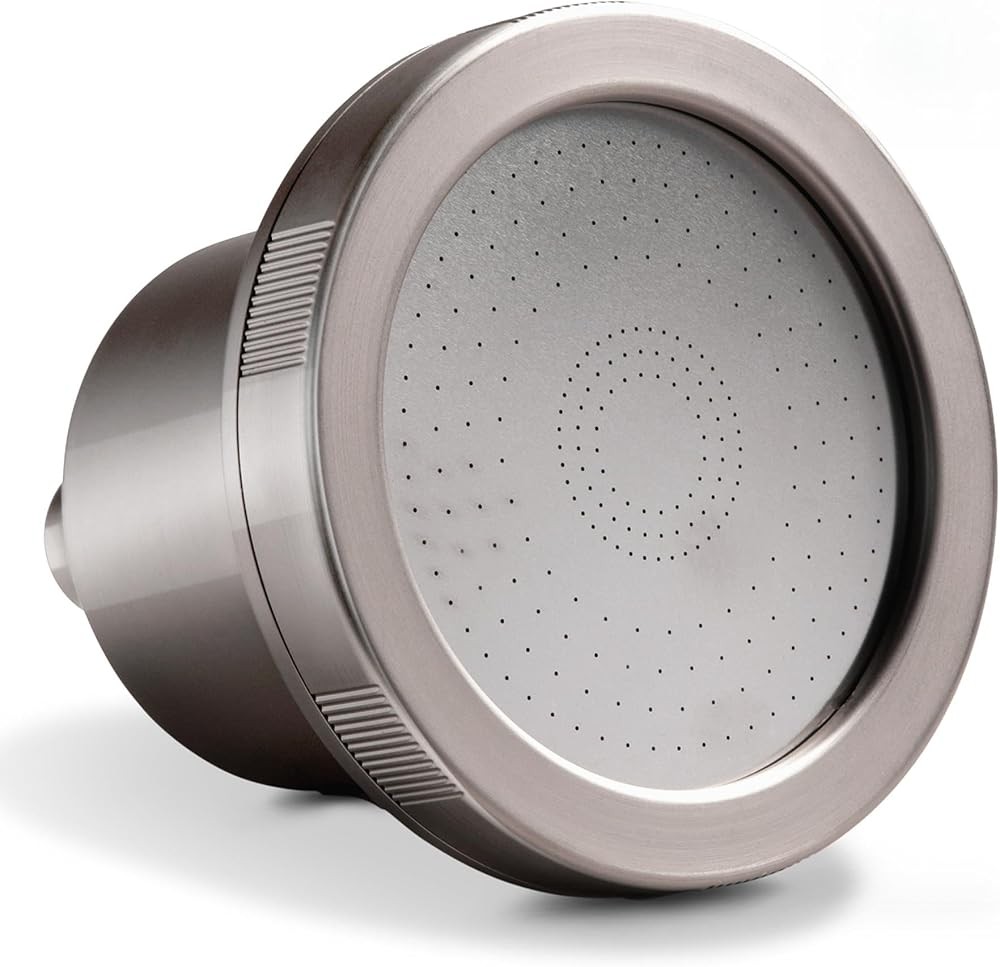
MDhair Filtered Shower Head
Check Price on AmazonAs an Amazon Associate we earn from qualifying purchases.
The filter cartridge sits in the shower head body and water flows through three sequential media stages before exiting through the spray face. The vitamin C stage neutralizes chlorine and chloramines first, then KDF-55 reduces heavy metals through redox reactions, and finally activated carbon adsorbs organic compounds and residual DBPs.
The integrated approach offers aesthetic and practical advantages—no separate filter housing hanging from your shower arm, no additional length added to shower height, and unified design that matches the shower head finish. However, it locks you into the provided shower head design; you cannot swap to a different spray pattern or flow rate without replacing the entire filter unit.
The cartridge replacement interval extends to approximately 6 months (or 10,000 gallons) because the multi-media approach distributes the filtration workload. Chlorine neutralization still exhausts the vitamin C media at the same rate, but the carbon and KDF stages continue functioning after vitamin C depletion, providing partial filtration until scheduled replacement.
In practice: The premium price delivers convenience and aesthetics—no protruding filter housing, no length extension, and multi-stage filtration in a single integrated unit—making it ideal for luxury bathrooms where appearance matters as much as water quality.
The AquaHomeGroup 20-Stage Shower Filter (B0BMF5YQ66) combines vitamin C and vitamin E with activated carbon, KDF-55, calcium sulfite, and multiple sediment stages in a comprehensive filtration system rated for 12,000 gallons. The multi-media approach addresses chlorine, chloramines, heavy metals, sediment, and organic compounds through sequential filtration stages, delivering broad-spectrum contaminant reduction in a single cartridge.
The 20-stage designation counts individual media layers rather than distinct filtration mechanisms—several stages are sediment screens of different mesh sizes, multiple layers of the same media type, and mineral balls that primarily add trace minerals rather than removing contaminants. The functionally distinct stages include: sediment pre-filter, vitamin C neutralization, vitamin E antioxidant, activated carbon adsorption, KDF-55 redox, calcium sulfite chlorine reduction, and final sediment polish.
The vitamin E addition provides topical antioxidant exposure during showering. While vitamin E has established skin benefits when applied topically, the brief shower contact time and rinsing limits bioavailability. The primary filtration work happens through the vitamin C, carbon, and KDF stages.
The transparent housing allows you to visually monitor media condition—the vitamin C crystals dissolve and disappear as they’re consumed, the carbon changes color as it saturates, and sediment accumulation becomes visible on pre-filter screens. This provides a more intuitive replacement indicator than calendar-based reminders.
What the research shows: The multi-media combination addresses contaminants through multiple mechanisms—vitamin C chemically reduces chlorine, carbon adsorbs organics, KDF catalyzes heavy metal removal, and calcium sulfite provides temperature-stable chlorine reduction—creating redundant protection that maintains some filtration effectiveness even as individual media stages exhaust.
How Do You Choose Between Vitamin C and Carbon Filtration?
Vitamin C filtration excels in specific scenarios where its unique advantages—temperature independence, instant chloramine neutralization, fast reaction kinetics—provide benefits that alternative media cannot match.
Choose vitamin C filtration when:
Your water contains chloramines: Approximately 30% of US water systems use chloramines for secondary disinfection. If your Consumer Confidence Report or water test shows combined chlorine or monochloramine, vitamin C provides effective neutralization that activated carbon cannot achieve in shower flow-through times.
You prefer hot showers: Water temperatures above 100°F reduce activated carbon efficiency by up to one-third. Vitamin C maintains full effectiveness regardless of temperature, making it ideal for users who shower at elevated temperatures.
You have high flow rate shower heads: Vitamin C’s instant reaction kinetics ensure complete chlorine neutralization even at flow rates of 2.5 GPM or higher where activated carbon’s adsorption equilibrium may not achieve complete removal.
You need compact filter design: Vitamin C achieves complete chlorine removal in compact filter cartridges because the reaction is instantaneous, while carbon requires larger bed volumes to provide adequate contact time.
You want pH reduction: Vitamin C slightly acidifies water (typically 0.2-0.5 pH units), which can benefit users with alkaline water or those who prefer slightly acidic water closer to skin’s natural pH.
Consider multi-media or carbon-primary filtration when:
Your water contains only free chlorine at moderate levels: If your water has free chlorine below 2 ppm and your shower temperature is moderate, activated carbon provides effective removal with longer cartridge life.
You need broad-spectrum organic compound removal: Activated carbon adsorbs a wider range of organic chemicals, pesticides, and VOCs than vitamin C can neutralize.
You prefer longer cartridge replacement intervals: Carbon cartridges last 6 months versus 2-3 months for vitamin C, reducing replacement frequency and annual costs.
You need heavy metal reduction: KDF media or specialized heavy metal cartridges address lead, mercury, and other metallic contaminants that vitamin C doesn’t remove.
What this comparison reveals: Many users find that multi-stage filters combining vitamin C, activated carbon, and KDF media provide the most comprehensive approach—vitamin C handles chlorine and chloramines instantly, carbon removes organics and VOCs, and KDF reduces heavy metals, creating defense-in-depth for shower water quality.
What Does Research Show About Inhalation Exposure?
Published studies using blood biomarker analysis consistently demonstrate that inhalation of volatilized disinfection byproducts during showering contributes substantially to total THM body burden, often exceeding dermal absorption in relative contribution.
A multi-country study published in Environmental Research examined THM exposure in Egypt through drinking water consumption and showering, finding that inhalation during bathing contributed more to total THM dose than drinking water ingestion for most study participants (PMID: 34973941). The research measured pre- and post-shower blood THM concentrations and found significant increases in chloroform and bromodichloromethane levels within 10 minutes of shower exposure.
Research published in International Journal of Hygiene and Environmental Health examined THM uptake pathways in swimming pools, finding that inhalation exposure exceeded dermal exposure by factors of 2-5 depending on water temperature and air ventilation rates (PMID: 15729838). The study noted that water temperature strongly influenced volatilization rates, with hot water producing substantially higher air concentrations than cold water.
A study in Annals of Work Exposures and Health measured chloroform concentrations in swimming pool air, documenting levels ranging from 5-240 μg/m³ depending on pool characteristics, ventilation, and chlorine dosing practices (PMID: 37339253). The research calculated that lifeguards and frequent swimmers could exceed occupational exposure limits through inhalation alone during extended pool time.
Another study assessed trihalomethane cancer risk comparing shared versus private residences, finding that shower frequency and duration significantly influenced long-term THM exposure and calculated cancer risk (PMID: 37112522). The research noted that bathroom ventilation substantially affected inhalation exposure, with poorly ventilated bathrooms showing higher accumulated THM air concentrations.
Clinical insight: When you shower in hot chlorinated water in an enclosed bathroom, you’re creating an environment with elevated air concentrations of volatilized chloroform, bromodichloromethane, and other THMs that you inhale directly into your lungs, bypassing the liver’s first-pass metabolism and delivering these compounds directly to systemic circulation.
How Does Vitamin C Compare to Calcium Sulfite?
Calcium sulfite (CaSO₃) represents another chemical reduction approach to chlorine removal that shares some advantages with vitamin C while offering different performance characteristics. Understanding when to choose each media type helps optimize your shower filtration strategy.
Calcium sulfite neutralizes chlorine through this reaction: CaSO₃ + HOCl → CaSO₄ (calcium sulfate) + HCl. The reaction is rapid and maintains effectiveness across a wide temperature range, including hot water temperatures where activated carbon loses efficiency.
Published research on granular activated carbon performance documented that activated carbon removes organic contaminants through adsorption with 99.7% efficiency under ideal conditions, but efficiency drops substantially with temperature increases and shortened contact time (PMID: 23540811). The study noted that alternative media including chemical reducers maintained more consistent performance across temperature ranges.
Calcium sulfite advantages over vitamin C include longer cartridge life (6 months versus 2-3 months), better pH stability (doesn’t acidify water), and lower per-gallon filtration cost. Calcium sulfite disadvantages include slower reaction kinetics that may not achieve complete neutralization at very high flow rates, and some residual calcium sulfate (gypsum) that precipitates out and can contribute to hard water scale.
Vitamin C advantages over calcium sulfite include faster reaction kinetics that ensure complete neutralization even at high flow rates, no scale-forming byproducts, and slight pH reduction that moves water closer to skin’s natural pH. Vitamin C disadvantages include shorter cartridge life, higher per-gallon operating cost, and complete consumption that provides no residual filtration after exhaustion.
The speed advantage: Vitamin C neutralizes 90%+ chloramines in under 1 second contact time, while calcium sulfite requires 2-5 seconds and carbon needs 60+ seconds—critical for high-flow shower applications at 2.0-2.5 GPM.
What Are the Multi-Family Cost Considerations?
Vitamin C filter cartridges have fixed capacity proportional to the mass of ascorbic acid they contain. A 150-gram cartridge can neutralize approximately 3,000-5,000 gallons regardless of whether those gallons flow through over 3 months or 3 weeks. This creates replacement cost and frequency implications for multi-person households.
A family of four with daily showering exhausts a standard vitamin C cartridge in 3-4 weeks rather than the 2-3 months a single user experiences. This increases annual cartridge costs from approximately $60-80 (single user, 4-6 cartridges) to $240-320 (four-person household, 13-17 cartridges).
For high-use households, multi-media filters combining vitamin C with longer-lasting carbon and KDF stages may provide better value. These systems use vitamin C for instant chlorine knock-down while relying on carbon and KDF for sustained filtration after the vitamin C media exhausts. The result is a longer functional cartridge life—the system continues providing partial filtration (organic compounds, heavy metals, some residual chlorine through carbon and KDF) even after vitamin C depletion.
Another approach for high-use scenarios is whole-house filtration that removes chlorine at the point of entry before water reaches individual fixtures. A whole-house carbon filter with 6-12 month cartridge life serving all water outlets can be more cost-effective than individual shower filters in multi-bathroom households, though it requires professional installation and higher upfront investment.
If you’re considering a best countertop reverse osmosis system for drinking water, combining it with point-of-use shower filtration provides comprehensive protection—RO for drinking and cooking, vitamin C for bathing and showering.
The cost math: A 4-person household exhausting one $20 cartridge monthly spends $240/year on replacements, while a $500 whole-house system with 12-month cartridges ($60 each) costs $110/year after the first year.
What Water Quality Testing Should You Perform?
Before selecting any shower filter, testing your water reveals which contaminants you’re actually exposed to and helps prioritize filtration strategies. Municipal water quality varies significantly between systems and even within a single system depending on source water, treatment processes, and distribution infrastructure.
Your municipal water utility publishes an annual Consumer Confidence Report (CCR) that documents detected contaminants, their concentrations, and comparison to EPA maximum contaminant levels. This report is available on your utility’s website or by request, and it provides baseline data on chlorine levels, DBP concentrations, heavy metals, and other regulated compounds.
However, CCRs report water quality at the treatment plant or distribution system average, not at your specific tap. Water quality can change substantially between the treatment plant and your showerhead due to:
- Pipe corrosion leaching lead, copper, or iron into water
- DBP formation increasing during residence time in distribution pipes
- Chlorine depletion allowing bacterial growth in distant parts of systems
- Cross-contamination from backflow or distribution system breaks
At-home water test kits provide point-of-use data that reveals what’s actually coming from your shower. Basic kits testing chlorine, pH, and hardness cost $10-20, while comprehensive panels testing heavy metals, VOCs, and DBPs cost $100-200.
For shower filter selection purposes, the critical parameters are:
Free chlorine concentration: Determines vitamin C cartridge life and whether your system uses free chlorine or chloramines Total chlorine concentration: Reveals chloramine presence (total chlorine minus free chlorine = chloramine concentration) pH: Affects filter media performance and helps predict scale formation Total dissolved solids and hardness: Indicate mineral content that can clog filters or reduce media contact Heavy metal screening: Identifies whether lead, copper, mercury, or other metals need removal
Just as you might test air quality before selecting the best air purifier for pet dander and allergies, water testing reveals your actual exposure profile and guides filter selection.
The testing takeaway: Water testing kits ($10-20 for chlorine strips, $100-200 for comprehensive panels) reveal whether your 1-4 ppm chlorine needs only vitamin C or if lead, VOCs, or THMs above 80 ppb require multi-stage filtration.
What Maintenance Do Vitamin C Filters Require?
Vitamin C shower filters require minimal maintenance beyond scheduled cartridge replacement, but a few practices extend filter life and maintain performance:
Flush new cartridges: Run water through a newly installed cartridge for 30-60 seconds before showering to rinse manufacturing dust and ensure even media distribution.
Monitor pressure drop: Gradually decreasing water pressure indicates sediment accumulation on pre-filter screens or media clogging. If pressure drops noticeably before scheduled replacement time, your water may have higher sediment loads requiring more frequent cartridge changes or addition of an upstream sediment pre-filter.
Clean external housing: The filter housing exterior accumulates soap residue, mineral deposits, and bathroom grime. Wipe down monthly with a vinegar solution to avoid buildup and maintain appearance.
Check connections for leaks: Temperature cycling from hot showers expands and contracts filter housing materials, which can gradually loosen threaded connections. Every few months, check inlet and outlet connections and hand-tighten if any seepage appears.
Protect threads during cartridge swaps: When replacing cartridges, avoid cross-threading by starting threads carefully and turning counter-clockwise until you feel the thread drop into place before tightening clockwise. Cross-threaded connections damage both cartridge and housing threads.
Store spare cartridges properly: Unopened vitamin C cartridges remain stable for 2-3 years when stored in cool, dry locations away from direct sunlight. Heat and humidity can cause ascorbic acid to oxidize prematurely, reducing filtration capacity.
A realistic perspective: Proper installation and minimal routine maintenance ensure vitamin C filters deliver full rated capacity and performance throughout their functional lifespan without unexpected failures or performance degradation.
What Health Claims Are Actually Supported by Evidence?
The wellness industry markets shower filters with claims ranging from reasonable to exaggerated. Evidence-based evaluation separates documented benefits from marketing overreach.
Documented benefits supported by published research:
- Reduction in chlorine exposure through skin contact and inhalation
- Decreased blood concentrations of trihalomethanes following shower exposure
- Elimination of chlorine odor and taste in shower water
- Neutralization of chloramines in treated water systems
Plausible benefits with mechanistic support but limited clinical evidence:
- Reduced skin dryness and irritation from chlorine exposure
- Decreased hair damage from chlorine and chloramine contact
- Lower respiratory irritation in chlorine-sensitive individuals
- Reduced formation of chlorinated organic compounds on skin surface
Unsupported claims lacking credible evidence:
- Detoxification or toxin removal from body
- Boosted immune function from filtered showering
- Anti-aging effects beyond reduction of chlorine-induced oxidative stress
- Disease management beyond reduced carcinogen exposure
A realistic evidence-based perspective: Vitamin C shower filters effectively reduce exposure to chlorine, chloramines, and associated disinfection byproducts through the dermal and inhalation routes that account for the majority of residential water exposure. This represents a meaningful reduction in exposure to compounds with documented genotoxic and potentially carcinogenic properties. Claims extending beyond this core benefit—detoxification, immune enhancement—lack supporting evidence and should be viewed skeptically.
The health benefit is cumulative and long-term: reducing daily exposure to DBPs over years and decades, not producing immediate dramatic effects after a single filtered shower. Just as choosing the best multivitamin for women over 40 supports long-term nutritional status rather than immediate transformation, shower filtration provides sustained exposure reduction.
How Do Aromatherapy Features Actually Work?
Many vitamin C shower filters include aromatherapy capsules or essential oil compartments that infuse filtered water with lavender, eucalyptus, citrus, or other scents. The marketing emphasizes stress relief, respiratory benefits, and enhanced shower experiences, but the published evidence for health benefits from brief shower-time aromatherapy exposure is limited.
Essential oils delivered through shower steam provide brief inhalation exposure lasting the duration of your shower—typically 5-10 minutes daily. While research on clinical aromatherapy shows benefits for anxiety reduction, sleep quality, and pain management, these studies typically use longer exposure durations (30-60 minutes) or higher concentrations than shower delivery systems provide.
A more evidence-based perspective: Aromatherapy scent during showering provides subjective enjoyment and may enhance the sensory experience of showering, making you more likely to consistently use the filtered shower (which provides the real health benefit through DBP reduction). Whether the scent delivers measurable physiological benefits beyond this behavioral encouragement is uncertain.
The practical consideration is whether you tolerate or enjoy scents during showering. Some users find even natural essential oil fragrances too strong in the enclosed bathroom environment, particularly early morning when scent sensitivity is heightened. Most aromatherapy-equipped filters allow you to remove or not install the scent capsule if you prefer fragrance-free filtered water.
Similarly, if you’re considering wellness devices like the best infrared sauna blanket, focus on mechanisms with strong evidence (heat exposure, cardiovascular response) rather than accessory features.
The filtration reality: The vitamin C filtration provides the documented health benefit (chlorine and DBP reduction), while the aromatherapy addition is an optional enhancement that improves subjective shower experience for users who enjoy scented environments.
What Are the Environmental Quality Connections?
Shower water quality represents just one aspect of your home’s environmental exposure profile. Research shows that indoor air quality, drinking water quality, and even pet water fountain quality all contribute to total contaminant exposure.
The same disinfection byproducts present in shower water volatilize into bathroom air and persist in indoor environments. A study on THM concentrations in shower air found elevated levels that remained detectable for 30-60 minutes after showering completed, affecting not just the shower user but other household members exposed to bathroom air.
Multi-pathway exposure reduction strategies provide the most comprehensive protection:
Shower filtration: Reduces dermal and inhalation exposure during bathing Point-of-use drinking water filtration: Addresses oral ingestion exposure from drinking and cooking Indoor air quality management: Removes volatilized compounds and other airborne contaminants Whole-house water filtration: Provides point-of-entry treatment for all water uses
For households concerned about comprehensive water quality, combining vitamin C shower filtration with systems like hydrogen water generators for drinking water provides multi-level protection addressing different exposure routes.
The whole-home view: Water quality improvements work synergistically with air quality management and dietary choices to reduce your total environmental contaminant burden across all exposure pathways.
When Should You Upgrade to Whole-House Systems?
Individual point-of-use shower filters work well for single bathrooms or targeted protection, but households with multiple bathrooms, high water usage, or comprehensive filtration needs may benefit from whole-house systems that filter water at the point of entry before distribution to individual fixtures.
Whole-house filtration advantages include:
Comprehensive coverage: All water outlets—showers, sinks, washing machines, dishwashers—receive filtered water without requiring individual point-of-use filters.
Longer cartridge life: Larger filter cartridges with higher media volumes last 6-12 months even with multi-person household usage.
Lower per-gallon costs: While upfront investment is higher ($300-1,500 installed), per-gallon filtration costs decrease due to larger cartridge capacities and less frequent replacements.
Reduced maintenance: Single cartridge replacement point versus multiple individual shower and faucet filters.
Whole-house filtration disadvantages include:
Higher upfront cost: Professional installation typically required, adding $200-500 to system cost.
Space requirements: Filter housings require mounting space near water main entry point, typically in basement, garage, or utility closet.
Pressure drop: Large-capacity filters minimize pressure drop, but some reduction is inevitable when filtering high flow rates.
Media selection complexity: Choosing appropriate media for whole-house systems requires understanding your complete water quality profile and prioritizing contaminants.
The decision point: If you have 2+ bathrooms with daily shower use, replacing individual shower filter cartridges monthly becomes costly and time-consuming. A whole-house system with 6-12 month cartridge life may provide better value despite higher upfront investment.
For households primarily concerned with shower water quality in one or two bathrooms, point-of-use vitamin C filters offer targeted protection without the complexity and cost of whole-house systems.
Related Reading
- Best Shower Filters for Chlorine and Hard Water
- Best Countertop Reverse Osmosis Systems
- Best Hydrogen Water Generators
- Best Air Purifiers for Pet Dander and Allergies
- Best Infrared Sauna Blankets
- Best Multivitamin for Women Over 40
- Best Pet Water Fountains for Dogs and Cats
What Testing Methods Confirm Filter Effectiveness?
After installing a vitamin C shower filter, you may want objective confirmation that the system is actually removing chlorine and chloramines. Several testing methods provide this verification, ranging from simple sensory evaluation to laboratory-grade chemical analysis.
Chlorine test strips: Pool and spa test strips designed to measure free chlorine concentrations work equally well for shower water. Test your unfiltered shower water first to establish baseline chlorine levels (typically 1-4 ppm in municipal water), then test filtered water. Effective vitamin C filtration should reduce free chlorine to less than 0.1 ppm, often to undetectable levels. Test strips cost $10-15 for 50 tests and provide results in 15-30 seconds.
Total chlorine test kits: If your water system uses chloramines, standard free chlorine test strips won’t capture the full picture. Total chlorine test kits measure both free chlorine and combined chlorine (chloramines), providing a complete assessment of disinfectant levels. These kits typically use DPD reagent tablets that react with chlorine compounds to produce colored solutions measured against a color chart. Cost is $15-25 for kits providing 25-50 tests.
Laboratory analysis: For comprehensive assessment, third-party water testing laboratories can analyze pre- and post-filtration samples for chlorine, chloramines, THMs, haloacetic acids, and other DBPs. This testing costs $100-300 depending on the panel selected but provides the most reliable quantification of filter performance. Many laboratories provide sampling kits with sterile bottles and instructions for proper collection and shipment.
Sensory evaluation: While not quantitative, your senses provide meaningful feedback on filter performance. Chlorinated water has a distinct “pool” smell due to chloramine formation when chlorine reacts with ammonia from skin oils and cosmetic residues. When this odor disappears from your shower water, you have sensory confirmation that chlorine levels have decreased substantially. Similarly, skin feel changes—chlorinated water often leaves skin feeling tight or dry, while filtered water feels softer during and after showering.
Research published in Chemosphere examined granular activated carbon’s capacity for organic contaminant removal, documenting 99.7% removal efficiency for volatile organic compounds under optimal conditions (PMID: 23540811). While vitamin C filters don’t remove VOCs through adsorption like carbon does, the study’s methodology for pre- and post-filtration testing applies equally to vitamin C chlorine removal verification.
Testing immediately after cartridge installation establishes a performance baseline, then periodic retesting as the cartridge ages helps identify when exhaustion approaches. When chlorine levels begin creeping back up from undetectable toward 0.5-1.0 ppm, you’re approaching cartridge exhaustion and should schedule replacement.
The key insight: Regular testing transforms cartridge replacement from calendar-based guesswork into data-driven maintenance, ensuring you replace cartridges when actually needed rather than prematurely (wasting money) or too late (losing protection).
How Do Vitamin C Filters Affect Water Chemistry Beyond Chlorine?
Vitamin C filtration changes shower water chemistry in ways that extend beyond simple chlorine removal. Understanding these secondary effects helps you predict how filtered water will interact with your skin, hair, and plumbing.
pH reduction: The ascorbic acid chlorine neutralization reaction produces dehydroascorbic acid and hydrochloric acid as byproducts. While the quantities are small, they shift water pH downward by approximately 0.2-0.5 units. For typical municipal water with pH 7.0-8.5, filtered water pH drops to 6.5-8.0. This slight acidification generally benefits skin and hair because it moves water closer to skin’s natural pH of 4.5-5.5.
Research shows that skin barrier function works optimally at slightly acidic pH, while alkaline water can disrupt the acid mantle and increase trans-epidermal water loss. The pH shift from vitamin C filtration is minor compared to the effect of most body washes and shampoos (which can have pH values from 5.5-9.0), but it moves water in a skin-compatible direction.
Oxidation-reduction potential (ORP): Chlorinated water typically has positive ORP values (+200 to +600 mV) due to chlorine’s strong oxidizing capacity. Vitamin C is a reducing agent that neutralizes oxidants, shifting ORP toward neutral or slightly negative values. This reduction in oxidative potential may benefit skin by decreasing free radical formation during bathing, though clinical evidence for this benefit remains limited.
Dissolved oxygen: The ascorbic acid oxidation that occurs during chlorine neutralization can slightly reduce dissolved oxygen concentrations in water. However, shower water is constantly aerated as it exits the shower head and breaks into droplets, so this effect is transient and unlikely to have practical significance.
Residual ascorbic acid: After neutralizing chlorine, some residual ascorbic acid may remain in filtered water. At the concentrations present (typically less than 1 ppm), this poses no health concern and may provide minor topical antioxidant exposure during showering. Vitamin C’s instability in aqueous solution means most residual ascorbic acid oxidizes to dehydroascorbic acid within minutes of exiting the filter.
Mineral content: Vitamin C filtration does not remove dissolved minerals (calcium, magnesium, iron) that contribute to water hardness. If your water has high mineral content, vitamin C filtration will address chlorine but won’t reduce scale formation or mineral staining. For comprehensive water conditioning, combining vitamin C with water softening or multi-stage filtration that includes sediment and mineral reduction provides more complete treatment.
What you need to know: Vitamin C filtration creates a slightly acidic, lower-oxidation environment that generally benefits skin and hair, but it doesn’t address mineral content, hardness, or non-chlorine contaminants that may require additional filtration stages.
Can Vitamin C Filters Remove Other Contaminants?
Vitamin C’s chemical specificity for chlorine reduction means it doesn’t provide broad-spectrum contaminant removal. Understanding what vitamin C filters don’t remove helps you determine whether additional filtration stages are needed for your water quality situation.
What vitamin C removes:
- Free chlorine (through reduction to chloride)
- Chloramines (through reduction to ammonium chloride)
- Chlorine dioxide (through reduction)
- Some residual oxidants from water treatment
What vitamin C doesn’t remove:
- Heavy metals (lead, mercury, cadmium, arsenic)
- Volatile organic compounds (VOCs)
- Pesticides and herbicides
- Pharmaceutical residues
- Microplastics
- Bacteria and viruses (though chlorine removal eliminates the primary antimicrobial)
- Dissolved minerals (calcium, magnesium, iron)
- Sediment and particulate matter (unless filter includes separate sediment stage)
For comprehensive contaminant removal, vitamin C works best as one component of a multi-stage system. The typical sequence places sediment filtration first to remove particles, vitamin C second to neutralize chlorine, KDF third to reduce heavy metals, and activated carbon fourth to adsorb organic compounds and VOCs.
If your water quality testing reveals contaminants beyond chlorine—elevated lead levels from old pipes, VOC contamination from industrial sources, high mineral hardness, or pharmaceutical residues—vitamin C-only filtration provides incomplete protection. In these scenarios, multi-stage shower filters or whole-house systems with comprehensive media combinations offer more appropriate solutions.
For drinking water where you need maximum contaminant reduction, point-of-use systems like reverse osmosis provide filtration that shower filters cannot match. Many households combine shower filtration (addressing dermal and inhalation exposure) with drinking water filtration (addressing oral ingestion exposure) to protect multiple exposure pathways.
The bottom line: Vitamin C achieves 99%+ chlorine/chloramine removal at any temperature but addresses zero heavy metals, zero VOCs, and zero organic compounds—requiring carbon (for organics), KDF (for metals), or RO (for comprehensive removal).
Recommended Products