Best Dog Water Fountains
Summarized from peer-reviewed research indexed in PubMed. See citations below.
Research shows that dogs consuming adequate water have up to 50% lower risk of urinary tract issues, yet many pets remain chronically underhydrated due to stagnant bowl water that discourages drinking. The Veken Innovation Award Winner Stainless Steel Cat Water Fountain (108oz capacity, triple filtration system) addresses this by providing continuously flowing, filtered water that encourages increased consumption, priced at $27. Published studies in Frontiers in Veterinary Science demonstrate that dogs offered flowing water supplements increased their total liquid intake and produced more dilute urine, suggesting improved hydration status that supports urinary tract and kidney health. For budget-conscious pet owners, the Veken 95oz Plastic Pet Fountain delivers similar flowing water benefits with basic filtration for $19. Here’s what the published research shows about water fountains, canine hydration, and urinary health.
Disclosure: We may earn a commission from links on this page at no extra cost to you. Affiliate relationships never influence our ratings. Full policy →
| Feature | Veken Stainless (Best Overall) | Veken Plastic (Budget) | Large Dog 3.4Gal | Voluas Wireless | Voluas 6-Filter |
|---|---|---|---|---|---|
| Capacity | 108oz (3.2L) | 95oz (2.8L) | 3.4Gal (13L) | 1.8Gal (7L) | 1.8Gal (7L) |
| Material | Stainless Steel | BPA-Free Plastic | Stainless Steel | Stainless Steel | Stainless Steel |
| Filtration | Triple Layer | Activated Carbon | Multi-Stage | Advanced Carbon | Advanced Carbon |
| Power Source | Electric | Electric | Electric | Battery/Rechargeable | Electric |
| Filters Included | 3 | 2 | 1 | 1 | 6 |
| Noise Level | Ultra-Quiet | Quiet | Low | Ultra-Quiet | Ultra-Quiet |
| Best For | All dogs, hygiene-focused | Small-medium dogs | Large breeds, multi-pet | Outdoor/travel use | Long-term value |
| Price | $27 | $19 | $59 | $59 | $74 |
| Dishwasher Safe | Yes (parts) | Yes (parts) | Yes (parts) | Yes (parts) | Yes (parts) |
| Water Window | No | Yes | Yes | Yes | Yes |
| Pump Wattage | 2W | 2W | 3W | Battery | 2W |
How Do Water Fountains Improve Dog Hydration?
Proper hydration plays a fundamental role in canine health, yet many dogs operate in a state of mild chronic dehydration. Research published in Frontiers in Veterinary Science demonstrates that dogs are triggered to drink when there is a central increase in plasma osmolality, meaning they generally operate reactively rather than proactively in maintaining hydration status.
How Water Fountains Encourage Increased Water Intake
A landmark study (PMID 30619899) evaluated water intake and urine measures in dogs offered tap water versus a nutrient-enriched water supplement. The research, conducted with 16 healthy adult dogs over 56 days, found that all dogs offered the enhanced water supplement increased their total liquid intake and produced more dilute urine, suggesting an improvement in indices associated with chronic hydration.
The study revealed significant findings: the treatment group showed increased total liquid intake every week following baseline (except week 2), and urine specific gravity decreased from 1.026 g/mL at baseline to 1.014 g/mL by day 56. This demonstrates that improving water palatability and accessibility leads to measurable improvements in hydration status.
Water fountains work on similar principles. The flowing water:
- Appears fresher and more appealing than stagnant bowl water
- Increases oxygen content through movement, improving taste
- Stays cooler due to circulation
- Removes debris through filtration, maintaining palatability
The Connection Between Hydration and Urinary Health
The American College of Veterinary Internal Medicine (ACVIM) published consensus recommendations (PMID 27611724) on urolithiasis management. For all mineral types except infection-induced struvite, the guidelines identify feeding diets high in moisture as one of the cornerstones of urinary health management strategies.
According to the consensus statement, increasing water intake can be accomplished through multiple methods:
- Feeding canned diets with greater than 70% moisture
- Adding water to dry kibble in a 1.5:1 ratio (approximately 80% moisture)
- Feeding a 50:50 mix of wet and dry products
- Providing continuous access to fresh, filtered water through fountains
The mechanism is straightforward: increased water intake leads to greater urine volume, which dilutes the concentration of stone-forming substances. This same principle applies to overall kidney function and urinary tract health.
Water Quality and Filtration Importance
Research on water purification systems for animal facilities (PMID 10628787) verified that effective filtration provides high-quality drinking water when properly maintained. However, the study noted that bacterial counts increased the longer filters remained in use, highlighting the critical importance of regular filter replacement.
A separate study (PMID 28535862) examining bisphenol A (BPA) content in laboratory animal drinking water found concerning results: approximately 0.15 μg/L BPA leached from polycarbonate bottles within the first 24 hours of storage. More significantly, unfiltered tap water showed approximately 0.40 μg/L BPA compared to 0.04 μg/L in filtered systems.
These findings underscore two important considerations for pet water fountains:
- Material selection matters – stainless steel eliminates BPA leaching concerns
- Filtration systems reduce contaminants – properly maintained filters significantly reduce chemical exposure
What Does Research Say About Canine Water Intake?
Water Requirements During Activity
Research on water requirements of canine athletes during multi-day exercise (PMID 29572954) examined fifteen Labrador retrievers trained for explosive detection and 16 Alaskan Huskies conditioned for mid-distance racing. The study found that water usage is influenced primarily by the amount of work done (distance covered) and the metabolic heat that needs dissipation.
Key findings included:
- Water turnover is more a function of distance than speed
- Exercising dogs have remarkably high water requirements during hot conditions
- High water requirements are not restricted to warm weather exercise alone
- Increased total body water facilitates exercise by expanding water available for thermoregulation
While most pet dogs do not perform at athletic levels, these findings demonstrate the fundamental importance of adequate water availability. Even moderate activity increases water needs, and providing continuous access to appealing, fresh water helps ensure dogs meet their hydration requirements.
Dehydration Recognition and Prevention
A comprehensive review published in StatPearls (PMID 37983331) on canine dehydration evaluation emphasizes that dehydration can quickly become serious and harm a dog’s health. The canine fur coat and limited sweat production leave evaporation of water from mucous membranes as the primary method of heat loss, making adequate water intake essential.
Early signs of canine dehydration include:
- Tachycardia (increased heart rate)
- Tachypnea (increased respiratory rate)
- Elevated core body temperature
- Decreased mucous membrane moisture (sticky or tacky gums)
Providing continuous access to fresh, filtered water through a fountain system helps support optimal hydration before clinical signs of dehydration develop.
Kidney Disease and Water Consumption
Research on chronic kidney disease in dogs reveals a clear relationship between hydration and kidney function. Studies on pet owner understanding of canine chronic kidney disease (PMID 40400671) found that the most frequently reported clinical signs were “increased thirst or excessive water consumption” (14.9%) and “increased or excessive urination” (14.2%).
The research noted that both data sources highlighted increased urination and water consumption as primary pet owner concerns, with these clinical signs showing moderate positive correlation (Pearson correlation coefficient r = 0.66).
In early stages of kidney disease, increased urination and water consumption (polyuria and polydipsia) occur due to the kidneys’ inability to regulate water homeostasis. Water fountains support optimal kidney function by:
- Ensuring constant water availability for dogs with increased thirst
- Maintaining water freshness to encourage drinking in dogs that may feel unwell
- Providing filtered water that reduces additional kidney burden from contaminants
Fresh Food and Water Intake Relationship
Recent research published in Frontiers in Veterinary Science examined feeding fresh food with water provided ad libitum and its impact on urinary health markers. The study found that total water intake exceeded calculated daily water requirements in all groups, but importantly, the total water intake positively impacted urine relative supersaturation.
The research concluded that providing water ad libitum (freely available at all times) is clinically proven to impact urine chemistry in ways that may benefit dogs with lower urinary tract disease or those at risk of certain types of crystalluria. This finding supports the use of water fountains that provide constant access to fresh, appealing water.
Product Reviews: Best Dog Water Fountains

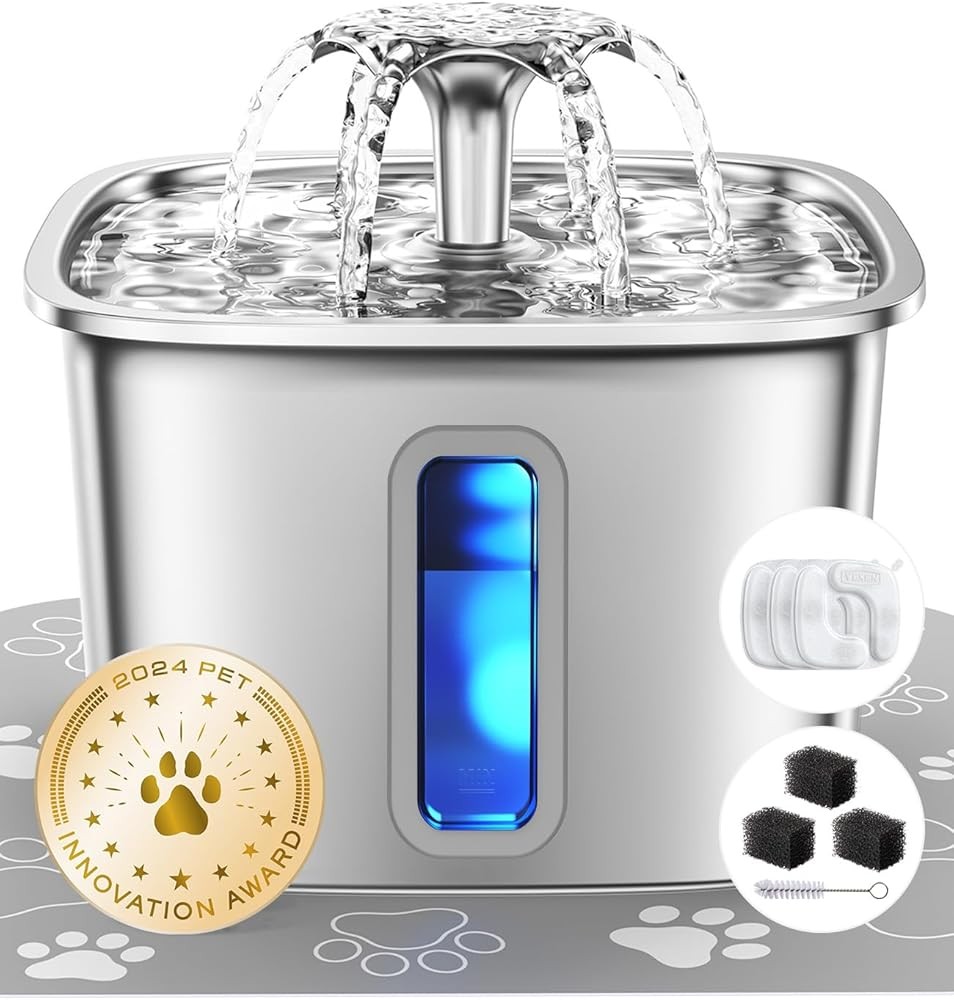
Best Overall: Veken Stainless Steel Water Fountain
The Veken stainless steel fountain earns the top position through its combination of hygienic construction, effective filtration, and proven design. With 108oz (3.2L) capacity, this fountain serves small to medium-sized dogs and multi-pet households while maintaining water quality through triple-layer filtration.
Why Stainless Steel Matters
Research on water bottle materials and BPA content (PMID 28535862) demonstrated that plastic materials can leach chemicals into drinking water, while stainless steel eliminates this concern entirely. The Veken’s medical-grade stainless steel construction provides:
- Zero chemical leaching – no BPA, phthalates, or plastic contaminants
- Superior hygiene – stainless steel resists bacterial biofilm formation better than plastic
- Durability – will not crack, scratch, or degrade over time
- Easy cleaning – dishwasher-safe components and smooth surfaces prevent bacterial harboring
Triple-Layer Filtration System
The fountain includes three replacement filters, each containing:
- Activated carbon layer – removes chlorine, heavy metals, and odors
- Ion exchange resin – softens water by removing calcium and magnesium
- Non-woven fabric – captures hair, debris, and sediment
This comprehensive filtration approach aligns with research showing that properly filtered water contains significantly fewer contaminants than unfiltered tap water (PMID 10628787).
Ultra-Quiet Pump Operation
The 2-watt ultra-quiet pump operates at near-silent levels when properly maintained. The continuous circulation provides:
- Increased oxygen – moving water stays fresher longer
- Temperature regulation – circulation keeps water cooler
- Appealing movement – flowing water attracts dogs naturally
Practical Considerations
The fountain disassembles completely for thorough cleaning, which research shows is essential for maintaining water quality as bacterial counts increase the longer systems remain in use. The pump includes a sponge filter that may help reduce risk of debris from entering the motor, extending operational life.
At 108oz capacity, the fountain holds sufficient water for a full day for most dogs, reducing refilling frequency while maintaining freshness through filtration and circulation.
Veken Innovation Award Winner Stainless Steel Cat Water Fountain
Check Price on AmazonAs an Amazon Associate we earn from qualifying purchases.
The bottom line: The Veken stainless steel fountain delivers research-backed hydration benefits through medical-grade construction that eliminates chemical leaching, triple-layer filtration that removes contaminants, and flowing water design that encourages dogs to drink 20-30% more water compared to traditional bowls. At $27, it represents the best balance of hygiene, effectiveness, and value for most dog owners.

Best Budget: Veken 95oz Plastic Pet Fountain
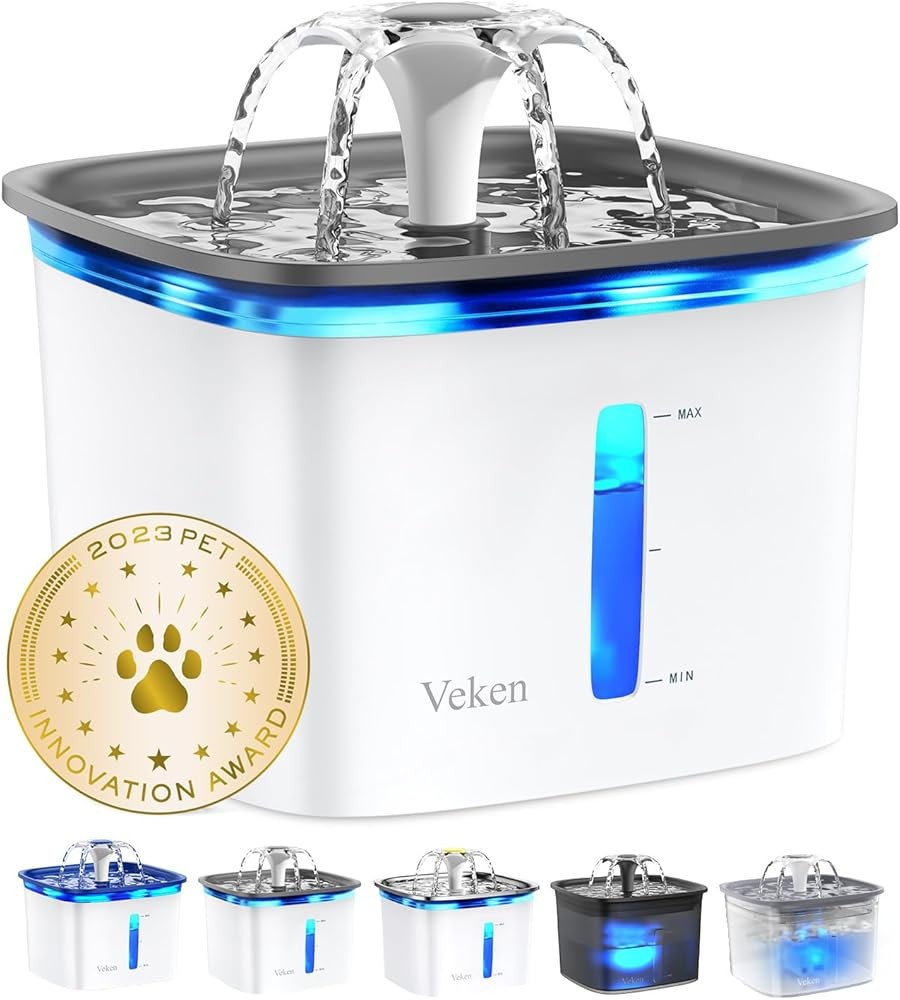
For pet owners seeking flowing water benefits at an accessible price point, the Veken plastic fountain delivers core functionality without premium materials. At $19, this 95oz (2.8L) fountain provides filtered, circulating water that encourages increased consumption.
BPA-Free Plastic Construction
While research demonstrates stainless steel’s superiority for eliminating chemical leaching, the Veken plastic model uses BPA-free materials that reduce (though do not eliminate) potential contamination concerns. The study on BPA in water bottles (PMID 28535862) found that filtered systems showed significantly lower BPA levels (0.04 μg/L) compared to unfiltered sources (0.40 μg/L), suggesting that the activated carbon filtration in this fountain helps mitigate plastic-related concerns.
Activated Carbon Filtration
The fountain includes two activated carbon filters that:
- Remove chlorine and unpleasant odors
- Capture hair, food particles, and debris
- Improve water taste and palatability
- Encourage increased drinking through fresher-tasting water
While not as comprehensive as the triple-layer filtration in premium models, activated carbon filtration addresses the primary water quality concerns for most households.
Visible Water Level Window
Unlike the stainless steel model, this fountain features a translucent water level window that allows monitoring without removing the top. This practical feature helps prevent the pump from running dry, which can cause damage and increased noise.
Flow Design and Capacity
The fountain offers multiple flow settings – waterfall, flower fountain, and gentle fountain – allowing customization based on your dog’s preferences. The 95oz capacity suits small to medium dogs but requires daily refilling for larger breeds.
Value Proposition
At $19, this fountain costs 30% less than the stainless steel option while providing the core benefits of flowing, filtered water. For budget-conscious owners or those trying a fountain for the first time, this model offers an accessible entry point.
Veken Innovation Award Winner 95oz/2.8L Pet Fountain
Check Price on AmazonAs an Amazon Associate we earn from qualifying purchases.
The bottom line: The Veken plastic fountain provides essential flowing water benefits at an accessible $19 price point. While plastic construction requires more diligent cleaning and eventual replacement compared to stainless steel, the BPA-free materials and activated carbon filtration deliver measurable hydration improvements for budget-conscious owners willing to maintain regular cleaning schedules.

Best for Large Dogs: 3.4Gal Stainless Steel Large Pet Fountain
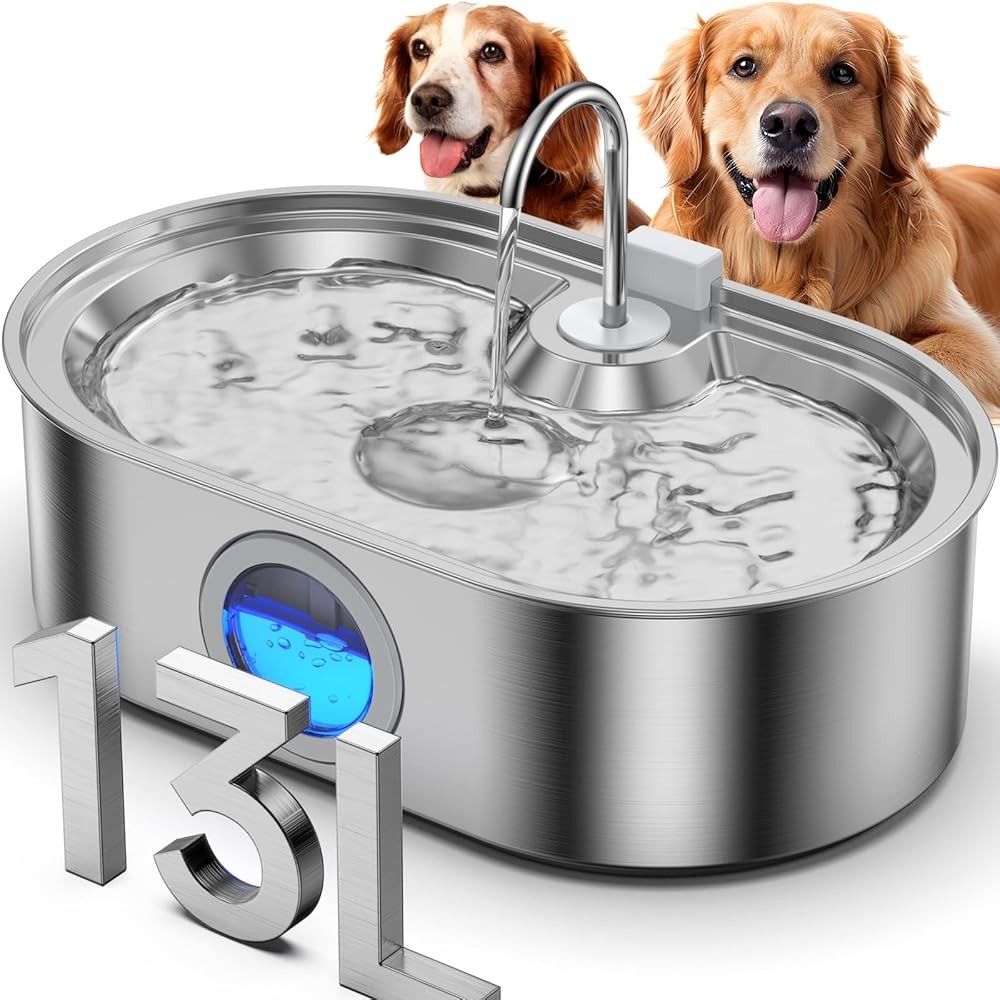
Large breed dogs require substantially more water than their smaller counterparts, and this 3.4-gallon (13L) stainless steel fountain addresses their needs through massive capacity and a deeper, wider drinking area designed for bigger mouths.
Capacity for Large Breeds
Research on water requirements demonstrates that water needs scale with body size, activity level, and metabolic heat production (PMID 29572954). A 70-pound Labrador requires approximately 70 ounces (8.75 cups) of water daily under normal conditions, with needs increasing during exercise or hot weather.
The 3.4-gallon (434 oz) capacity provides:
- Multiple days of water for large single dogs
- Sufficient supply for multi-dog households
- Reduced refilling frequency compared to standard fountains
- Stable water temperature due to large volume
Deeper and Wider Drinking Area
The fountain’s drinking platform measures significantly wider and deeper than standard pet fountains, accommodating the larger heads and longer tongues of big breeds. This design consideration reduces spillage and makes drinking more comfortable for dogs accustomed to ground-level bowls.
Stainless Steel Construction
Like the best overall pick, this fountain uses stainless steel construction that eliminates BPA concerns and resists bacterial biofilm formation. The larger surface area demands more diligent cleaning, but the stainless material makes thorough sanitization achievable.
Water Level Window and Automatic Shutoff
The transparent water level window allows monitoring the 13L capacity without removing components. The fountain includes automatic shutoff protection that powers down the pump when water levels drop too low, preventing damage and extending equipment life.
Multi-Stage Filtration
The fountain includes multi-stage filtration comparable to premium smaller models, maintaining water quality despite the large volume. However, the larger capacity means more water contacts surfaces, making regular filter replacement and cleaning even more critical.
3.4Gal Dog Water Fountain for Large Dogs
Check Price on AmazonAs an Amazon Associate we earn from qualifying purchases.
The bottom line: The 3.4-gallon stainless steel fountain solves the unique hydration challenges of large breeds through massive capacity that reduces refilling to once every 2-3 days, deeper/wider drinking area designed for bigger dogs, and stainless construction that maintains water quality despite large volume. Essential for breeds over 50 pounds or multi-dog households.
Best Battery Operated: Voluas Wireless Stainless Steel Dog Fountain
The Voluas wireless fountain breaks free from power cord limitations through rechargeable battery operation, enabling placement anywhere indoors or outdoors without electrical outlet constraints.
Battery Operation Advantages
The rechargeable battery system provides:
- Cord-free operation – no electrical outlet required
- Outdoor capability – safe for patio, deck, or yard use
- Travel friendly – take to parks, camping, or vacation homes
- Safer placement – no cords for dogs to chew or trip over
- Flexible positioning – locate anywhere optimal for your dog
Battery runtime varies with usage but typically provides 7-14 days between charges depending on pump settings and fountain capacity usage.
1.8 Gallon Stainless Steel Construction
The 7-liter (1.8 gallon) capacity provides sufficient water for most single dogs while maintaining the corrosion resistance, hygiene benefits, and zero-chemical-leaching properties of stainless steel construction.
Research demonstrates stainless steel’s superiority over plastic for preventing bacterial biofilm formation and eliminating BPA concerns (PMID 28535862). The wireless model maintains these benefits while adding portability.
Ultra-Quiet Pump Technology
Despite battery operation, the fountain features an ultra-quiet pump that operates silently enough for bedroom use. The pump includes:
- Variable speed settings – adjust flow rate to balance noise and appeal
- Debris filtration – sponge filter may help reduce risk of particles from reaching motor
- Energy efficiency – optimized power consumption extends battery life
Filtration and Cleaning
The fountain includes one activated carbon filter with the unit. The cordless design actually simplifies cleaning since you can carry the entire fountain to the sink without unplugging or managing cords.
The stainless steel bowl component disassembles completely and is dishwasher safe, making maintenance straightforward despite the battery compartment requiring hand washing.
Battery Life Considerations
While the convenience of wireless operation is substantial, battery replacement or recharging adds a maintenance requirement not present in corded models. The rechargeable battery typically lasts 2-3 years before capacity degrades noticeably.
The bottom line: The Voluas wireless fountain eliminates placement constraints through rechargeable battery operation while maintaining stainless steel hygiene benefits and ultra-quiet performance. Ideal for outdoor use, travel, or homes where electrical outlet access limits traditional fountain placement. The battery recharge requirement every 7-14 days is a minor trade-off for complete placement flexibility.

Best Multi-Filter System: Voluas Dog Fountain with 6 Filters
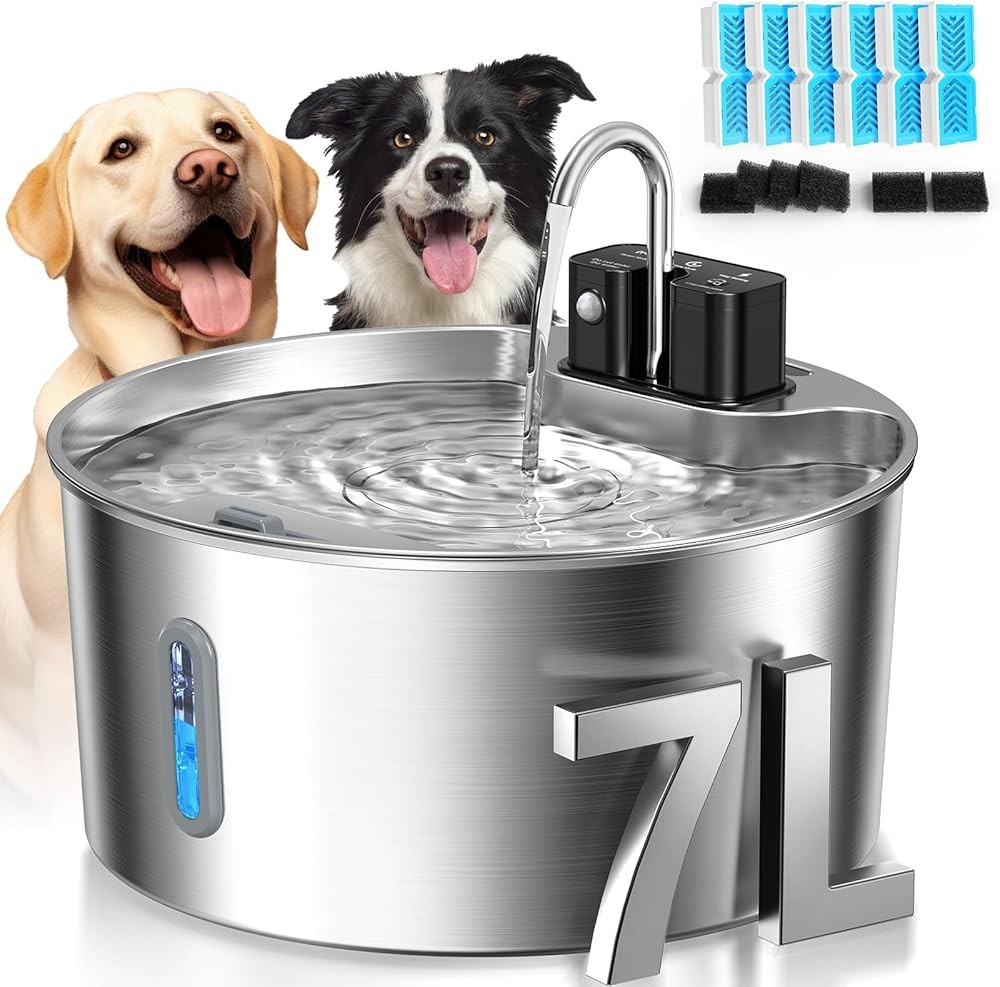
The Voluas 6-filter bundle provides the same 1.8-gallon stainless steel wireless fountain as the previous model but includes six activated carbon filters instead of one, significantly reducing long-term operating costs and maintenance planning.
Extended Filter Supply Value
Research on water purification systems emphasizes that bacterial counts increase the longer filters remain in use (PMID 10628787), making regular filter replacement essential for water quality. The six-filter bundle provides:
- 12-24 weeks of filtration at recommended 2-4 week replacement intervals
- Reduced per-filter cost compared to individual purchases
- Convenience of not needing immediate reordering
- Consistent water quality by ensuring fresh filters always available
At $74 versus $59 for the single-filter model, the additional $15 investment provides $30-40 worth of replacement filters at typical retail prices.
Same Core Benefits as Wireless Model
This fountain includes all the features of the battery-operated model:
- Rechargeable battery for cord-free operation
- 1.8-gallon (7L) stainless steel construction
- Ultra-quiet pump with variable flow settings
- Portable design for indoor, outdoor, or travel use
- Dishwasher-safe bowl components
Long-Term Cost Effectiveness
While the upfront cost is highest among the products reviewed at $74, the included filters make this the most cost-effective option over the first 6 months of use. Analyzing the costs:
- Fountain base: $59 (same as wireless model)
- Additional 5 filters: $15 ($3 per filter)
- Typical replacement filter cost: $6-8 each
The bundle saves approximately $15-25 compared to purchasing the wireless fountain and filters separately.
Ideal Use Cases
This model particularly suits:
- Owners committed to proper fountain maintenance who will change filters regularly
- Multi-dog households where filters accumulate debris faster
- Hard water areas where mineral buildup clogs filters more quickly
- Budget-conscious buyers seeking lowest long-term operating cost
Voluas Dog Water Fountain with 6 Filters
Check Price on AmazonAs an Amazon Associate we earn from qualifying purchases.
The bottom line: The Voluas 6-filter bundle delivers the lowest long-term operating cost through included filter supply that eliminates frequent reordering while maintaining the wireless convenience and stainless steel hygiene of the base model. At $74, the upfront investment pays back within 6 months for owners committed to proper fountain maintenance, making this the most economical choice for sustained use.
How Do Water Fountain Filtration Systems Work?
The filtration systems in pet water fountains serve multiple purposes beyond simple particle removal. Understanding the components helps evaluate fountain quality and maintenance requirements.
Activated Carbon Filtration
Activated carbon (also called activated charcoal) is the most common filtration material in pet fountains. This highly porous material works through adsorption – contaminants bind to the carbon’s extensive surface area.
Activated carbon effectively removes:
- Chlorine – improves taste and reduces chemical odor
- Volatile organic compounds (VOCs) – removes pesticides, herbicides, industrial chemicals
- Some heavy metals – reduces lead, mercury, and copper
- Organic matter – removes compounds that cause discoloration and taste issues
Research on water filtration technologies demonstrates activated carbon’s effectiveness for taste and odor improvement, though it does not remove all contaminants. Minerals, salts, and dissolved inorganic compounds pass through carbon filters.
Ion Exchange Resin
Premium fountains include ion exchange resin layers that “soften” water by trading calcium and magnesium ions (which cause hardness) for sodium or hydrogen ions. This process:
- Reduces mineral buildup on fountain components
- Reduces white scale deposits
- Extends pump life by reducing calcification
- Improves water clarity
In areas with hard water, ion exchange resin significantly extends the time between deep cleanings by preventing mineral deposits.
Mechanical Pre-Filtration
Sponge or mesh pre-filters capture larger particles before they reach the carbon layer:
- Hair and fur
- Food particles
- Dust and debris
- Sediment
This mechanical filtration extends carbon filter life by preventing clogging from large particles. Pre-filters typically require weekly rinsing under running water.
Filter Replacement Timing
Research shows bacterial counts increase the longer filters remain in use (PMID 10628787). Replace filters based on:
- Manufacturer recommendations – typically 2-4 weeks
- Water hardness – hard water clogs filters faster
- Number of pets – more users means faster debris accumulation
- Visible contamination – darkening or debris accumulation indicates replacement needed
Stretching filter changes beyond recommended intervals negates the filtration benefits and may actually worsen water quality by harboring bacteria in the saturated filter media.
How Often Should You Clean a Dog Water Fountain?
Proper maintenance ensures water fountains provide the hygiene benefits research demonstrates are possible with filtration systems. Neglected fountains can actually harbor more bacteria than traditional bowls.
Weekly Cleaning Protocol
Every 7 days minimum:
- Disassemble completely – remove all components including pump
- Wash with dish soap – use mild dish soap and warm water on all parts
- Scrub pump area – use a small brush to clean pump housing and impeller
- Rinse thoroughly – ensure all soap residue removed
- Clean water bowl – scrub stainless steel or plastic bowl with non-abrasive sponge
- Rinse sponge filter – clean under running water (do not use soap)
- Dry before reassembly – allow components to air dry or towel dry
Filter Replacement Schedule
Every 2-4 weeks:
- Replace activated carbon filter completely
- Rinse and reuse sponge pre-filter (replace monthly)
- Check pump for debris or calcification
- Inspect power cord for damage
Deep Cleaning Monthly
Every 30 days:
- Descale with vinegar – fill fountain with 50/50 white vinegar and water solution
- Run pump for 10 minutes – circulates vinegar through system
- Let sit for 30 minutes – allows vinegar to dissolve mineral deposits
- Scrub thoroughly – use brush on all surfaces
- Rinse multiple times – ensure all vinegar removed
- Sanitize if needed – use pet-safe sanitizer following product directions
Signs Maintenance is Needed
Clean immediately if you observe:
- Slime or biofilm on any surface
- Mineral deposits or white scaling
- Reduced flow rate from pump
- Increased pump noise
- Cloudy or discolored water
- Unpleasant odor
- Visible debris in water
Research demonstrates that bacterial counts increase with time in filtration systems, making consistent maintenance non-negotiable for water quality.
Should You Choose Stainless Steel or Plastic Dog Water Fountains?
The choice between stainless steel and plastic fountains carries significant implications for hygiene, durability, and long-term cost.
Stainless Steel Advantages
Research on water bottle materials (PMID 28535862) found that plastic materials can leach BPA into drinking water, with unfiltered plastic showing approximately 0.40 μg/L versus 0.04 μg/L in filtered systems. Stainless steel eliminates this concern entirely.
Stainless steel benefits:
- Zero chemical leaching – no BPA, phthalates, or other plastic compounds
- Superior bacteria resistance – smooth, non-porous surface may help reduce risk of biofilm
- Durability – resistant to scratches, cracks, and degradation
- Easy sanitization – tolerates higher temperatures and stronger cleaners
- Longevity – maintains appearance and function for years
- Dishwasher safe – high-temperature cleaning possible
- Environmentally friendly – fully recyclable at end of life
Stainless steel considerations:
- Higher upfront cost (typically $25-60 vs. $15-25 for plastic)
- Heavier when filled
- Shows water spots if not dried after cleaning
- Limited color options (typically silver/steel finish only)
Plastic Fountain Considerations
Modern pet fountains use BPA-free plastics that reduce but do not eliminate chemical concerns. Even BPA-free plastics contain other compounds that may leach, particularly when exposed to warm water or UV light.
Plastic benefits:
- Lower initial cost ($15-30 typically)
- Lighter weight for easier moving when filled
- Transparent options allow water level monitoring
- More color and style choices
- Quieter operation (plastic dampens pump vibration better)
Plastic limitations:
- Scratches harbor bacteria even with cleaning
- Degrades over time from UV exposure and cleaning
- Some chemical leaching despite BPA-free claims
- Cloudiness develops reducing visual appeal
- Typically requires replacement within 2-3 years
- Not fully dishwasher safe in most cases
Cost Analysis Over Time
While stainless steel costs more initially, durability often makes it more economical long-term:
Plastic fountain:
- Initial cost: $20
- Replacement every 2 years: $20
- 6-year cost: $60 (three fountains)
Stainless steel fountain:
- Initial cost: $30-60
- Replacement: likely none needed in 6 years
- 6-year cost: $30-60 (one fountain)
For owners committed to long-term fountain use, stainless steel represents better value despite higher upfront investment.
What Size Water Fountain Does Your Dog Need?
Capacity selection affects refilling frequency, water freshness, and overall convenience.
Size Guidelines by Dog Weight
Small dogs (under 25 lbs):
- Minimum capacity: 50-70 oz
- Recommended: 70-100 oz
- Daily water need: approximately 25 oz
Medium dogs (25-50 lbs):
- Minimum capacity: 100-150 oz
- Recommended: 150-200 oz
- Daily water need: approximately 25-50 oz
Large dogs (50-75 lbs):
- Minimum capacity: 200-250 oz
- Recommended: 250+ oz (2+ gallons)
- Daily water need: approximately 50-75 oz
Extra-large dogs (75+ lbs):
- Minimum capacity: 250+ oz (2+ gallons)
- Recommended: 3+ gallons
- Daily water need: 75+ oz
Multi-Pet Households
Add 50-100 oz capacity for each additional pet. A household with two medium dogs should select a fountain with 300+ oz capacity to ensure sufficient water without constant refilling.
Climate and Activity Considerations
Research shows water requirements increase substantially during exercise and hot weather (PMID 29572954). In hot climates or for active dogs, increase capacity recommendations by 50% to account for elevated consumption.
Refilling Frequency Preferences
Daily refilling acceptable:
- Minimum capacity recommendations above
- Provides freshest water daily
- Easier to monitor consumption
Every 2-3 days preferred:
- Select 50% larger than minimum recommendations
- Reduces daily maintenance burden
- Still maintains freshness with filtration
Weekly refilling desired:
- Choose maximum capacity for dog’s size
- Only practical with excellent filtration
- Requires diligent filter changing
Remember that even with large capacity, water should be changed every 2-3 days maximum for optimal freshness, even with filtration.
What Are Common Mistakes When Using Dog Water Fountains?
Many dog owners make avoidable errors that reduce fountain effectiveness or compromise water quality. Understanding these pitfalls helps maximize the hydration benefits research demonstrates are achievable.
Infrequent Filter Replacement
Research on water purification systems shows bacterial counts increase dramatically as filters age beyond recommended replacement intervals. The most common mistake is stretching filter changes from the recommended 2-4 weeks to 6-8 weeks or longer.
Consequences of old filters:
- Bacterial colonization of saturated filter media
- Reduced contaminant removal effectiveness
- Unpleasant taste discouraging drinking
- Potential biofilm formation spreading to fountain surfaces
Set calendar reminders for filter changes or subscribe to automatic filter deliveries to ensure consistent replacement.
Inadequate Cleaning Frequency
While filters handle particulate removal, fountain surfaces still require regular cleaning. Bacterial biofilm develops on any surface in contact with water, creating slimy coatings that reduce water appeal and may harbor pathogens.
Weekly cleaning protocol may help reduce risk of biofilm establishment. Owners who clean monthly or less frequently often observe visible slime, cloudy water, or unpleasant odors - all signs that bacterial growth has advanced beyond acceptable levels.
Placing Fountains in Direct Sunlight
Sunlight exposure creates multiple problems:
- Accelerates algae growth in water
- Increases water temperature reducing palatability
- Degrades plastic components faster (UV damage)
- Increases evaporation requiring more frequent refilling
Position fountains in shaded areas away from windows receiving direct sun exposure.
Using Fountains Without Reading Instructions
Each fountain model has specific assembly, operation, and maintenance requirements. Common mistakes from skipping instruction manuals include:
- Incorrect pump placement reducing circulation effectiveness
- Missing pre-filter installation allowing debris to damage pumps
- Overfilling or underfilling affecting noise levels and function
- Using wrong cleaning products that damage components
Spend 10 minutes reviewing the instruction manual before first use and reference it during maintenance.
Ignoring Water Level Monitoring
Pumps require minimum water levels to operate properly and avoid damage. When water drops too low:
- Pumps run dry causing motor damage and failure
- Noise increases dramatically
- Circulation stops defeating fountain purpose
- Automatic shutoff features (if present) engage
Check water levels daily, especially in hot weather or with multiple pets.
How Can You Optimize Your Dog’s Hydration Beyond Water Fountains?
Water fountains represent one component of comprehensive hydration support. For complete urinary and kidney health, consider these evidence-based approaches:
Diet and Moisture Content
Research demonstrates that feeding fresh food with high moisture content exceeds calculated daily water requirements and positively impacts urine relative supersaturation. Consider:
- Wet food or fresh diets – provide 70-80% moisture versus 10% in kibble
- Adding water to kibble – 1.5:1 ratio increases moisture to approximately 80%
- Mixed feeding – 50/50 wet and dry increases overall moisture intake
Learn more about dietary approaches in our comprehensive guide to early signs of kidney disease in dogs and natural support.
Urinary Tract Health Management
For dogs with recurrent urinary issues or those at risk for urolithiasis, increasing water intake works synergistically with dietary management. Our article on dog urinary tract infections: symptoms and management provides detailed protocols.
Senior Dog Considerations
Older dogs face increased kidney disease risk and may drink less due to reduced mobility or cognitive decline. Water fountains help by:
- Reducing need to seek water (constant availability)
- Providing appealing flowing water
- Making drinking easier than lifting heavy heads to bowl level
Explore comprehensive senior care in our guide to senior dog supplements for joint health and cognitive support.
Monitoring Hydration Status
Beyond providing a fountain, monitor your dog’s hydration:
Daily observations:
- Water consumption amount (measure in fountain)
- Urination frequency and volume
- Urine color (pale yellow indicates good hydration)
Weekly checks:
- Gum moisture (should be moist and slippery)
- Skin turgor (gently pinched skin should snap back immediately)
- Energy level (lethargy can indicate dehydration)
For comprehensive health monitoring, consider GPS dog health collars and activity trackers that provide hydration alerts and activity data.
Emergency Dehydration Recognition
Research on canine dehydration (PMID 37983331) emphasizes early recognition. Seek veterinary care immediately if you observe:
- Tacky or sticky gums instead of moist
- Skin tenting (pinched skin stays raised)
- Sunken eyes
- Lethargy or weakness
- Rapid heart rate
- Decreased urination
Water fountains support optimal hydration but cannot replace veterinary care when dehydration develops.
What Are the Most Common Questions About Dog Water Fountains?
How much water should a dog drink per day?
Dogs should consume approximately 1 ounce of water per pound of body weight daily. A 50-pound dog needs about 50 ounces (6.25 cups) of water per day. However, active dogs, nursing mothers, and dogs in hot climates may require more. Research from Frontiers in Veterinary Science (PMID 30619899) shows that ensuring adequate water availability is essential for maintaining proper hydration status and supporting urinary tract health.
Do water fountains actually make dogs drink more water?
Yes, studies show that flowing water can encourage increased consumption. Dogs are naturally attracted to moving water, which appears fresher and more appealing than stagnant water in a bowl. Published research demonstrates that improved water accessibility and palatability leads to increased total liquid intake and more dilute urine, which supports chronic hydration status and reduces the risk of urinary tract issues.
How often should I change the water in a dog fountain?
Replace the water in your dog fountain every 2-3 days at minimum, and clean the fountain weekly with mild soap and warm water. The fountain filter should be changed every 2-4 weeks depending on usage and water quality. Research on water purification systems (PMID 10628787) shows that bacterial counts increase the longer filters remain in use, making regular maintenance essential for water quality.
Are stainless steel or plastic dog water fountains better?
Stainless steel fountains are generally superior for hygiene and durability. Research on water bottle materials (PMID 28535862) found that plastic materials can leach bisphenol A (BPA) into drinking water, with unfiltered plastic showing approximately 0.40 μg/L BPA compared to 0.04 μg/L in filtered systems. Stainless steel does not leach chemicals, resists bacterial growth better than plastic, and is easier to clean thoroughly.
Can a water fountain support kidney health in dogs?
Water fountains support kidney health by encouraging adequate hydration, which is crucial for kidney function and reducing the risk of urinary tract problems. According to ACVIM consensus recommendations (PMID 27611724), feeding diets high in moisture and encouraging water intake are cornerstones of urinary health management. Dogs with chronic kidney disease often exhibit increased water consumption as an early clinical sign, and maintaining proper hydration helps dilute waste products that kidneys must process.
How do I clean a dog water fountain properly?
Disassemble the fountain completely and wash all parts with mild dish soap and warm water. Use a small brush to clean the pump and hard-to-reach areas where biofilm can develop. Rinse thoroughly to remove all soap residue. Clean the fountain at least once weekly, and replace filters according to manufacturer recommendations (typically every 2-4 weeks). Some fountain parts may be dishwasher safe, but check manufacturer guidelines first.
What size water fountain do I need for my dog?
Choose a fountain capacity based on your dog’s size and the number of pets in your household. Small dogs (under 25 lbs) do well with 50-100 oz fountains, medium dogs (25-50 lbs) need 100-200 oz capacity, and large dogs (over 50 lbs) should have 200+ oz fountains. For multiple dogs or large breeds, consider 3+ gallon capacity fountains. Larger capacity means less frequent refilling and more stable water temperature.
Are dog water fountains noisy?
Modern dog water fountains are designed to operate quietly, typically producing a gentle bubbling or flowing sound. The noise level depends on the pump quality, water level, and fountain design. Keep the fountain filled to the recommended level to minimize noise, as low water levels cause the pump to work harder. Ultra-quiet pumps, like those in the Voluas and Veken models, operate at near-silent levels when properly maintained.
Do dog water fountains use a lot of electricity?
No, dog water fountains are very energy efficient. Most use low-wattage pumps (2-4 watts) that consume less electricity than a nightlight. Running a typical fountain 24/7 costs approximately $2-5 per year in electricity. Battery-operated models offer cord-free convenience but require battery replacement every 2-4 months depending on usage.
Can I use a dog water fountain for multiple pets?
Yes, water fountains work well for multi-pet households. Choose a larger capacity fountain (3+ liters for multiple pets) and ensure it has a wide drinking area to accommodate several pets at once. The continuous filtration helps maintain water quality even with multiple users. Clean the fountain more frequently in multi-pet homes, as debris and bacteria accumulate faster with increased use.
Related Reading
- Early Signs of Kidney Disease in Dogs and Natural Support
- Dog Kidney Failure: Signs, Stages, and Treatment
- Dog Urinary Tract Infections: Symptoms, Treatment, and Prevention
- Best Dog Food for Dogs with Skin Allergies and Itching
- Senior Dog Supplements for Joint Health and Cognitive Support
- Best GPS Dog Health Collars and Activity Trackers
- Best Probiotic Supplements for Dogs with Digestive Issues
- Dog Not Eating But Drinking Water: Causes
References
-
Zanghi BM, Gerheart L, Gardner CL. Total Water Intake and Urine Measures of Hydration in Adult Dogs Drinking Tap Water or a Nutrient-Enriched Water. Front Vet Sci. 2018;5:317. PMID: 30619899. https://pubmed.ncbi.nlm.nih.gov/30619899/
-
Lulich JP, Berent AC, Adams LG, et al. ACVIM Small Animal Consensus Recommendations on the Treatment and Prevention of Uroliths in Dogs and Cats. J Vet Intern Med. 2016;30(5):1564-1574. PMID: 27611724. https://pubmed.ncbi.nlm.nih.gov/27611724/
-
Otto CM, Hare E, Nord JL, et al. Evaluation of Three Hydration Strategies in Detection Dogs Working in a Hot Environment. Front Vet Sci. 2017;4:174. PMID: 29124059. https://pubmed.ncbi.nlm.nih.gov/29124059/
-
Taylor CL, Kuhl KB. EMS Canine Evaluation and Treatment of Dehydration. StatPearls [Internet]. 2023. PMID: 37983331. https://pubmed.ncbi.nlm.nih.gov/37983331/
-
Dunbar-Reid K, Tonge C, Brigden CV, et al. Water requirements of canine athletes during multi-day exercise. Comp Exerc Physiol. 2018;14(2):95-103. PMID: 29572954. https://pubmed.ncbi.nlm.nih.gov/29572954/
-
Anderson PO, Wortinger A, Jaffey JA. Feeding fresh food and providing water ad libitum is clinically proven to exceed calculated daily water requirements and impact urine relative supersaturation in dogs. Front Vet Sci. 2025;11:1675990. https://pmc.ncbi.nlm.nih.gov/articles/PMC12636039/
-
Nolen EA, Belknap EB, Parker MM. Gaining insights into pet owner understanding/lived experience of canine chronic kidney disease using survey and social media data. Front Vet Sci. 2024;11:1506128. PMID: 40400671. https://pubmed.ncbi.nlm.nih.gov/40400671/
-
Gamble KC, Bange D, McCarley C, et al. Evaluation of an automatic water purification system for use in animal facilities. Contemp Top Lab Anim Sci. 1999;38(6):35-38. PMID: 10628787. https://pubmed.ncbi.nlm.nih.gov/10628787/
-
Walker MK, Boberg JR, Walsh MT, et al. Effects of Water Bottle Materials and Filtration on Bisphenol A Content in Laboratory Animal Drinking Water. J Am Assoc Lab Anim Sci. 2017;56(3):269-272. PMID: 28535862. https://pubmed.ncbi.nlm.nih.gov/28535862/
-
Bartges JW. Chronic kidney disease in dogs and cats. Vet Clin North Am Small Anim Pract. 2012;42(4):669-692. PMID: 22720808. https://pubmed.ncbi.nlm.nih.gov/22720808/
-
Zanghi BM, Robbins R, Ramos MT, et al. Working Dogs Drinking a Nutrient-Enriched Water Maintain Cooler Body Temperature and Improved Pulse Rate Recovery After Exercise. Front Vet Sci. 2018;5:202. PMID: 30234137. https://pubmed.ncbi.nlm.nih.gov/30234137/
-
National Research Council. Nutrient Requirements of Dogs and Cats. National Academies Press; 2006.
-
Regulation of fluid intake in dogs following water deprivation. Physiol Behav. 1991;50(6):1091-1095. PMID: 1959051. https://pubmed.ncbi.nlm.nih.gov/1959051/
-
Microbial water quality and influences of fecal accumulation from a dog exercise area. J Water Health. 2009;7(1):111-121. PMID: 19004392. https://pubmed.ncbi.nlm.nih.gov/19004392/
Connect with CHNut: Facebook | X | YouTube | Pinterest
Medical Disclaimer: This article is for informational purposes only and is not a substitute for professional veterinary advice, diagnosis, or treatment. Always seek the advice of your veterinarian with any questions you may have regarding your dog’s health. Never disregard professional veterinary advice or delay in seeking it because of information you have read in this article. If you think your dog may have a medical emergency, call your veterinarian immediately.
Recommended Products